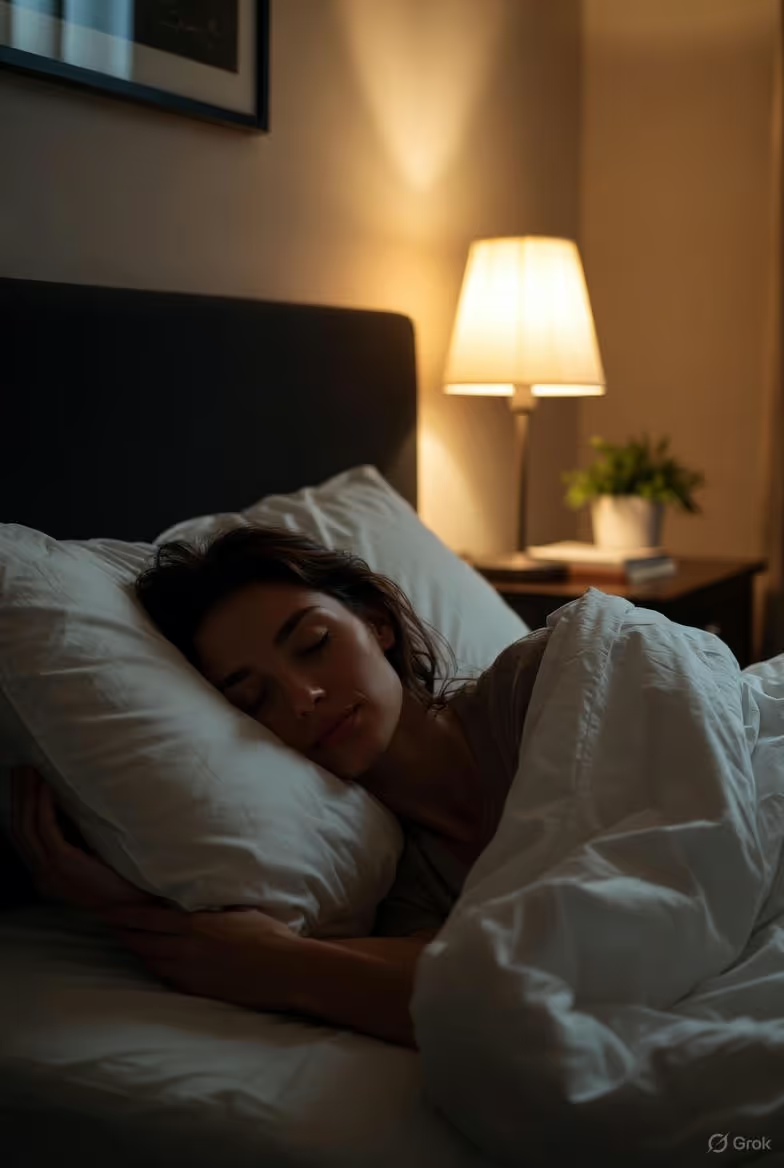
Sleep Tracking During Pregnancy: What Changes to Expect
Sleep tracking during pregnancy shows expected changes as rest patterns naturally shift. This maternity-focused guide explains normal alterations in sleep stages, duration, quality, and frequency throughout trimesters, helping expectant mothers understand what tracking reveals and when changes warrant concern.
The Silent Revolution in Sleep: Unlocking Quality Rest Beyond the Wristband
For decades, the quest for perfect sleep was shrouded in mystery. We relied on vague feelings of morning grogginess or the harsh judgment of a blaring alarm clock to gauge our nightly rest. Then, the wearable revolution promised answers. Wristbands and smartwatches flooded the market, transforming our arms into data hubs that tracked every toss, turn, and heartbeat in the night. Sleep became a score, a graph, a piece of quantified data to optimize.
But what if you don’t want to wear a device to bed? What if the very idea of a chunky watch or a tight band contradicts the feeling of freedom and relaxation essential for true rest? A quiet, yet powerful, question is emerging in the wellness community: Can you truly track and understand your sleep quality without any wearable technology?
The answer is not only a resounding "yes," but it opens a fascinating exploration into the art and science of sleep. This journey takes us beyond silicon sensors and into the realms of environmental cues, physiological awareness, and intuitive observation. It challenges the notion that data must be collected externally, proposing instead that some of the most profound insights come from within and from our immediate surroundings.
In this comprehensive guide, we will delve deep into the world of non-wearable sleep tracking. We’ll explore the sophisticated methods that exist, from ancient practices validated by modern science to cutting-edge, contactless technology. We will rigorously examine the pros and cons, helping you navigate whether a device-free approach is your path to more restful nights. This is not a rejection of technology, but an expansion of the conversation—a search for holistic understanding where self-awareness and smart tools can coexist. By the end, you will have a toolkit of strategies to assess and enhance your sleep, with or without a gadget on your wrist, empowering you to take control of your recovery in the way that feels most natural and effective for you.
Understanding the Pillars of Sleep Quality: What Are We Really Tracking?
Before we can measure something, we must define it. "Sleep quality" is often lumped into a single number—a "sleep score" out of 100—but this oversimplifies a complex, multi-layered physiological process. To track sleep effectively, with or without wearables, we first need to understand its fundamental architecture. Quality sleep isn't just about duration; it's about the intricate dance of cycles, stages, and biological processes that occur throughout the night.
The Stages of Sleep: A Nightly Journey Sleep is divided into two primary types: Non-Rapid Eye Movement (NREM) and Rapid Eye Movement (REM). NREM sleep is further broken down into three stages (N1, N2, N3), each progressively deeper.
N1 (Light Sleep): The gateway to sleep, lasting several minutes. Your heartbeat, breathing, and eye movements slow. Muscles may twitch. It's easy to be awakened here.
N2 (Intermediate Sleep): You spend about 50% of your night here. Body temperature drops, heart rate further slows, and brain waves show characteristic "sleep spindles" and "K-complexes" that are believed to play a role in memory consolidation and sensory processing.
N3 (Deep Sleep or Slow-Wave Sleep): This is the most restorative phase. It’s crucial for physical recovery, immune function, and growth hormone release. Waking someone from deep sleep is difficult, and they often feel disoriented.
REM Sleep: Typically occurring about 90 minutes after falling asleep, this is where most dreaming happens. Your brain is highly active, eyes dart rapidly, but your voluntary muscles are paralyzed (a state called atonia). REM is essential for cognitive functions like memory, learning, and creativity.
A full sleep cycle through all stages takes about 90-120 minutes, and you will experience 4-6 of these cycles per night. The proportion of each stage shifts as the night progresses, with more deep sleep in the first half and more REM in the second.
Key Metrics of Sleep Quality With these stages in mind, we can define the core metrics that constitute "quality":
Sleep Latency: How long it takes you to fall asleep. Ideally, this is between 10-20 minutes. Taking much longer may indicate stress or poor sleep hygiene; falling asleep instantly often points to significant sleep deprivation.
Sleep Duration: The total time spent asleep. While 7-9 hours is the general adult recommendation, consistency and individual needs are paramount.
Sleep Efficiency: The percentage of time in bed actually spent sleeping. (Total Sleep Time / Time in Bed) x 100. An efficiency of 85% or higher is considered good.
Sleep Architecture: The distribution and progression through NREM and REM stages. Disrupted architecture (e.g., insufficient deep or REM sleep) is a key indicator of poor quality, even if duration is adequate.
Wake After Sleep Onset (WASO): The total time spent awake after initially falling asleep. Frequent or long awakenings fragment sleep and degrade its restorative power.
Subjective Feelings: How you feel upon waking and throughout the day—alert, refreshed, and energized versus groggy, irritable, and fatigued. This subjective measure is arguably the most important, as it’s the ultimate goal of sleep.
Wearable devices attempt to estimate these metrics using sensors like accelerometers (for movement) and optical heart rate monitors (for heart rate variability, a proxy for sleep stages). The critical question for our exploration is: How many of these pillars can we assess through observation, environment, and non-contact technology? As we'll see, while we may not get a precise graph of our sleep stages without a device, we can build a remarkably accurate and actionable picture of our sleep quality through other means. For a deeper dive into how modern technology interprets these signals, you can explore our blog on the science of sleep tracking.
The Wearable Dilemma: Why Some Seek Alternatives
The widespread adoption of sleep-tracking wearables is undeniable. They have democratized access to personal health data and spurred a global conversation about sleep hygiene. Yet, for a growing number of individuals, these devices come with a set of trade-offs that prompt them to look for other paths. Understanding this "wearable dilemma" is key to appreciating the value of alternative methods.
The Intrusiveness of Constant Monitoring For some, the very act of tracking can become a source of anxiety—a phenomenon sometimes called "orthosomnia," where an unhealthy preoccupation with achieving perfect sleep data ironically leads to worse sleep. The constant feedback loop can turn rest into a performance metric. The glowing screen, the nightly ritual of charging and syncing, and the morning verdict of a "poor sleep score" can add cognitive load rather than reduce it. Sleep, at its core, requires surrender and a release of conscious control, which constant data monitoring can subtly undermine.
Physical Discomfort and Sleep Disruption It seems counterintutive: wearing a device to improve sleep that might actually impede it. Many users report discomfort from a wristband—finding it too tight, too loose, too warm, or simply a persistent, unfamiliar presence. For side sleepers, a bulky device can dig into the wrist or be pressed uncomfortably against the body. This physical sensation can be enough to mildly disturb the onset of sleep or cause micro-awakenings throughout the night, ironically skewing the very data the device is trying to collect.
Accuracy Concerns and the "Black Box" Problem While technology has advanced rapidly, consumer wearables are not medical-grade devices. Their algorithms, which interpret motion and heart rate data into sleep stages, are proprietary and can vary significantly in accuracy. They can mistake lying still while awake for sleep, struggle to distinguish between light and deep sleep phases accurately, and are often poor at detecting short awakenings. This leads to a "black box" scenario: you receive a score or a graph, but without a clear understanding of its methodological limitations or true margin of error. Blind trust in this data can lead to misguided conclusions about one's health.
Accessibility and Cost Barriers High-quality sleep-tracking wearables represent a significant financial investment. This puts advanced sleep data out of reach for many, creating a wellness gap. Furthermore, not everyone can or wants to wear a device. This includes people with skin sensitivities, certain medical conditions, or those who simply have a strong preference for sleeping completely unencumbered.
The Desire for a Holistic, Low-Tech Approach A segment of the wellness community is consciously moving towards a more intuitive, less quantified relationship with their bodies. They prioritize listening to internal signals—morning energy levels, mental clarity, emotional balance—over external data points. This philosophy aligns with mindful practices and a belief that the body's innate wisdom, when attended to, provides the most relevant feedback. For these individuals, non-wearable tracking isn't a second choice; it's a preferred method that aligns with a broader lifestyle of conscious, tech-minimalist wellness.
This dilemma doesn't invalidate wearables; for millions, they are incredibly useful tools. But it clearly establishes a need and a desire for alternative pathways to understanding sleep. It frames our central question not as a step backward, but as a parallel track forward—one that may lead to a more peaceful and intuitive relationship with our nightly rest. For those curious about how one company is navigating the balance between advanced tech and holistic wellness, you can read about our mission and approach here.
Method 1: The Power of Subjective Sleep Journals & Morning Questionnaires
Long before the first accelerometer was conceived, the most powerful tool for sleep tracking was already in existence: the human mind. Subjective tracking through journals and structured questionnaires remains a cornerstone of both clinical sleep medicine and personal wellness. This method bypasses hardware altogether, relying on your conscious awareness to build a nuanced, longitudinal picture of your sleep patterns.
How It Works: Building Your Personal Sleep Narrative The process is elegantly simple. Each morning, you spend 3-5 minutes recording key observations about the night that just passed and your current state. The magic lies not in a single entry, but in the patterns that reveal themselves over weeks and months. A basic sleep diary should include:
Time you got into bed.
Estimated time you fell asleep.
Number and duration of nighttime awakenings (e.g., "woke up once for 10 minutes around 2 AM").
Final wake time.
Time you got out of bed.
Subjective sleep quality rating (e.g., on a scale of 1-10).
Notes on factors that may have influenced sleep: stress levels, evening meals, caffeine/alcohol intake, exercise timing, wind-down routine.
Morning feelings: Energy level, mood, cognitive clarity.
Structured Tools: The Pittsburgh Sleep Quality Index (PSQI) and Beyond For those seeking a more scientific framework, adapted versions of clinical questionnaires can be immensely valuable. The Pittsburgh Sleep Quality Index (PSQI) is a gold-standard tool that assesses sleep quality and disturbances over a one-month interval. While the full clinical version is lengthy, its core concepts can be informally applied. It looks at components like:
Subjective sleep quality.
Sleep latency.
Sleep duration.
Habitual sleep efficiency (calculated from your diary data).
Using even a simplified version monthly can provide structured, benchmarkable insights that a daily diary alone may not highlight.
Pros of the Journaling Method
Zero Cost & High Accessibility: All you need is a notebook or a notes app.
Captures Subjective Experience: It records how you felt, which is the ultimate metric wearables aim to predict. It integrates the psychological component of sleep perfectly.
Identifies Lifestyle Correlations: By logging behaviors (diet, stress, routine), you can directly spot cause-and-effect relationships that raw movement data cannot reveal. You might see that a late dinner consistently leads to a lower quality rating, or that a wind-down ritual improves sleep latency.
Promotes Mindfulness: The act of daily reflection itself increases awareness of your sleep habits and their connection to your daily life, fostering a proactive mindset.
No Disruption or Discomfort: It exists entirely outside your sleep environment.
Cons and Limitations of the Journaling Method
Relies on Memory and Perception: Your estimates of sleep onset and awakenings can be inaccurate. You may not recall brief arousals, and time perception is notoriously distorted at night.
Lacks Granular Stage Data: It provides no insight into your balance of light, deep, and REM sleep.
Subject to Bias: Your rating of "sleep quality" can be influenced by your morning mood or external stressors, not just the objective sleep experience.
Requires Consistency and Honesty: The value is entirely dependent on your commitment to regular, truthful logging. It’s a practice of discipline.
Making It Effective: Tips for Success To maximize this method, consistency is key. Keep your journal by your bed. Use consistent scales (always 1-10). Review your entries weekly to spot trends. Consider combining it with one objective measure—like a simple sunrise alarm clock that tracks sunrise/sunset times as a proxy for in-bed duration—to enrich the subjective data. This method proves that you don't need a microchip to begin a profound investigation into your sleep; you simply need the intention to pay attention. For more structured guides and templates on starting a wellness journaling practice, our blog offers a wealth of resources.
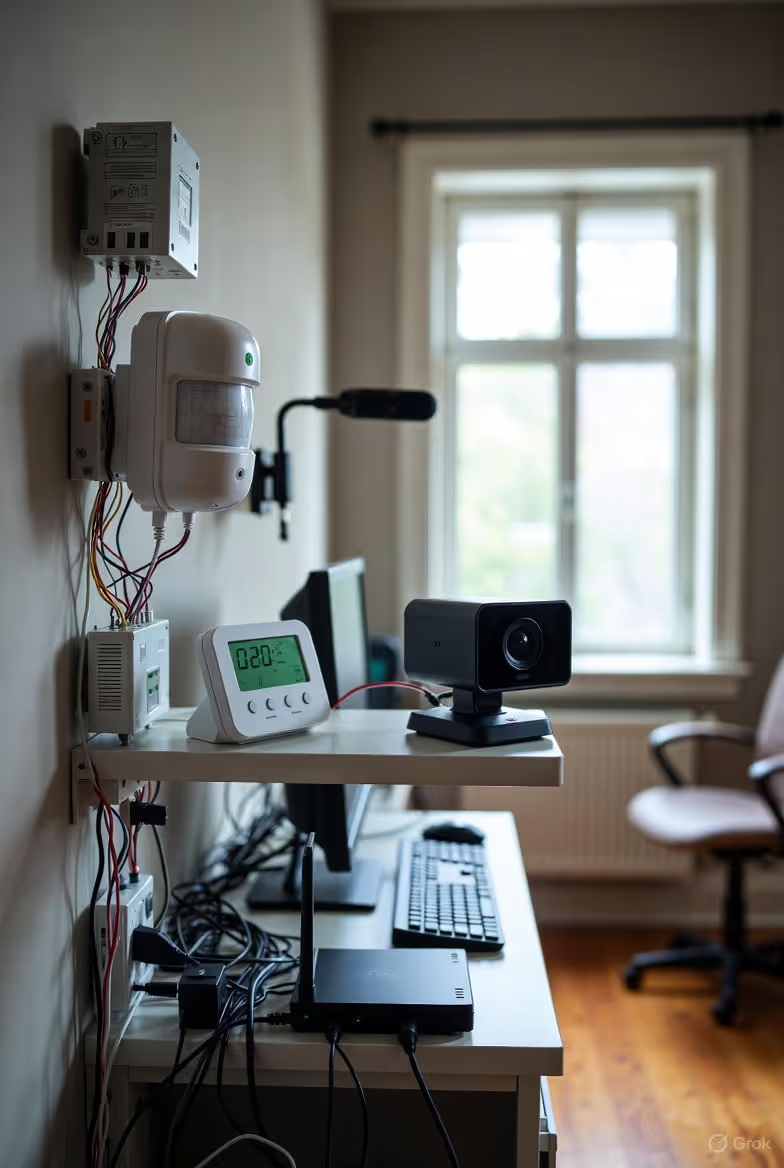
Method 2: Environmental & Behavioral Sensors (The Non-Wearable Tech)
If the journaling method represents the art of sleep tracking, environmental sensing embodies its science—without requiring you to wear a thing. This category leverages "passive" technology placed in your bedroom to infer sleep quality by monitoring the conditions around you and your presence in bed. It’s a form of external, rather than internal, data collection.
Types of Non-Wearable Sensing Devices
Under-Mattress Sleep Pads: These thin, durable pads slide between your mattress and bed frame. They typically use ballistocardiography (BCG) or piezoelectric sensors to detect the minute vibrations and movements caused by your heartbeat, respiration, and gross body movements. Advanced pads can derive heart rate, respiratory rate, and movement without any physical contact with your body.
Bedside or Stand-Alone Sleep Monitors: These are compact devices placed on your nightstand. They use a combination of technologies:
Biofilm Sensors: Some emit a very low-power radio frequency (RF) signal that reflects off your body. Micro-movements from breathing and heartbeats cause variations in the reflected signal, which are analyzed to extract vital signs and movement.
Sonar/Voice Recognition: A subset may use ultrasonic sound waves (inaudible to humans) in a similar reflect-and-analyze manner. Others might use passive sound analysis to detect snoring or sleep talking.
Smart Home Ecosystem Integration: This is a distributed sensor approach. By combining data from multiple devices already in a smart home, you can build a sleep profile. For example:
Smart Lights: Dimming schedule and final "lights out" time.
Smart Plugs: Time when a white noise machine or fan is turned on/off.
Smart Thermostats: Bedroom temperature profile throughout the night.
Motion Sensors: (Placed outside the bedroom or with careful placement) Can infer time getting into bed and final wake-up/get-up time.
Dedicated Sleep Environment Monitors: These devices focus on ambient conditions, measuring variables critically linked to sleep quality: light levels, noise levels (decibels), temperature, and humidity. They log when disruptions occur—a sudden noise spike, a temperature drift outside the ideal range (typically 60-67°F or 15-19°C), or light pollution from outside.
What Data Can These Methods Provide? Collectively, these sensors can offer surprisingly detailed proxies for sleep metrics:
Time In Bed & Time Asleep: Derived from movement cessation (pads, RF) or environmental cues (lights out, motion sensor inactivity).
Restlessness & Sleep Fragmentation: Frequent, significant movement detected by under-mattress pads or RF sensors indicates poor sleep continuity.
Heart Rate & Respiratory Rate: A core feature of BCG and RF technology, providing trends that can suggest stress, arousal, or even sleep apnea events (not a diagnosis, but a flag for further investigation).
Sleep Environment Quality: Quantified data on noise, light, and temperature disruptions that directly correlate with sleep depth and awakenings.
Snoring & Cough Detection: Audio-based analysis can log the duration and intensity of snoring, a key piece of data for sleep hygiene.
Pros of Environmental Sensing
Truly Non-Intrusive: Once set up, you literally forget it's there. There is no physical sensation or habit change required.
Excellent for Partners: It can track sleep for two people in a bed simultaneously without requiring both to wear devices.
Rich Contextual Data: It uniquely provides objective data on the cause of sleep disruptions (e.g., "you were restless at 2:15 AM when the room temp rose to 72°F and a truck passed by").
Good Accuracy for Macro-Metrics: For bedtime, wake time, and overall restlessness, these methods can be very accurate and reliable.
Continuous Monitoring: Doesn't require charging or wearing; it simply works night after night.
Cons and Limitations
Can't Accurately Discern Sleep Stages: While heart rate variability (HRV) derived from these sensors can be a proxy, the precision for classifying NREM and REM stages is lower than with wearables that have direct skin contact for photoplethysmography (PPG).
Calibration and Placement Sensitivity: An under-mattress pad must be positioned correctly; an RF sensor needs a clear path to the sleeper. Results can be skewed by pets on the bed or a very restless partner.
Privacy Considerations: Devices using audio or RF data collection raise valid privacy questions about data storage and usage. It's crucial to understand a manufacturer's data policies.
Initial Cost: High-quality under-mattress pads or standalone monitors can be a significant one-time investment.
Limited to One Location: It only tracks sleep in that specific bed.
Environmental sensing offers a powerful middle ground: the objectivity of technology without the physical burden of a wearable. It shifts the focus from just measuring you to measuring and optimizing the ecosystem in which your sleep occurs. For individuals who are tech-savvy but averse to wearables, this is often the preferred route to high-quality, actionable sleep data. If you're considering integrating such technology into a holistic wellness routine, you can explore how different tracking philosophies align with modern health goals.
Method 3: Smartphone Apps & Audio Analysis
Perhaps the most accessible form of non-wearable tech is already in your pocket: your smartphone. A plethora of apps have emerged that claim to track sleep using only your phone's built-in sensors, primarily the microphone and accelerometer. This method turns your phone into a passive bedside monitor, offering a low-barrier entry into the world of sleep data.
The Technology Behind the App There are two primary approaches smartphone apps use:
Accelerometer-Based Tracking (Phone on Mattress): You place your phone on the mattress near your pillow or torso before sleep. The phone's highly sensitive motion sensor detects vibrations and movements transmitted through the mattress as you shift, breathe, and turn. The algorithm interprets periods of stillness as sleep and movement as wakefulness or light sleep. Some apps claim to differentiate between sleep stages based on movement patterns, though this is less reliable than physiological measures.
Audio Analysis (Phone on Nightstand): You place your phone on your nightstand, screen down, and grant microphone access. The app listens to the sounds of the night:
Ambient Noise: To establish a baseline.
Movement Sounds: Rustling sheets, creaks of the bed.
Sonar/Pulse Reflection: Some advanced apps emit a high-frequency sound (inaudible to humans) and analyze the echo to detect micro-movements like breathing, similar to the standalone RF devices but using sound waves.
Snoring, Coughing, Sleep Talking: Clear audio signatures are detected and logged.
Smart Alarm Function: Many use a 30-minute "wake-up window" before your set alarm. They aim to wake you during a period of lighter sleep (inferred from sound/movement) to reduce grogginess.
What Can You Realistically Learn? A good smartphone app can provide useful, if broad-stroke, insights:
Estimated Sleep and Wake Times: Often surprisingly accurate for determining when you fell asleep and finally woke up.
Sleep Duration and Efficiency: Basic calculations of total sleep time and time awake in bed.
A "Restlessness" Metric: A graph showing periods of significant movement or sound throughout the night.
Snoring & Sound Events: A timeline showing when snoring occurred and its duration, along with other loud noises like coughs or external disruptions.
Environmental Sound Level: A graph of the decibel level in your room overnight.
Pros of the Smartphone App Method
Extreme Accessibility and Low Cost: Most people already have the required hardware. Many apps have robust free versions or low one-time fees.
Zero Wearable Discomfort: The phone stays on the nightstand or mattress, not on your body.
Provides Objective, Time-Stamped Data: It removes the guesswork from "what time did I finally fall asleep?" and can objectively prove a snoring issue.
Excellent for Identifying Environmental Disruptions: The audio log can catch a barking dog, a noisy heater, or street noise you may have been semi-consciously ignoring.
Smart Alarm Feature: For many users, this is the killer feature that genuinely improves the waking experience.
Cons and Serious Limitations
Severe Limitations for Couples: If you share a bed, the app cannot distinguish your movements or sounds from your partner's. The data becomes a jumbled mix of two people, rendering most metrics useless.
Questionable Sleep Stage Accuracy: Claims of detecting deep and REM sleep via mattress movement or sound analysis are scientifically tenuous at best. This data should be viewed as highly speculative.
Battery Drain and Phone Heating: Running sensors and audio all night can significantly drain your battery and may cause the phone to become warm, which is not ideal if it's on your mattress.
Major Privacy Concern: Granting an app permission to listen to you all night is a serious privacy decision. You must thoroughly trust the developer's data handling, encryption, and privacy policy. Where is this audio data stored? Is it analyzed on-device or sent to the cloud?
Placement Sensitivity: Data quality is heavily dependent on precise phone placement. If it falls off the bed or is placed on a wobbly nightstand, the data will be corrupted.
No Physiological Data: It cannot measure heart rate, HRV, or respiration rate, which are key to understanding sleep quality and recovery.
Smartphone apps serve as a compelling introduction to sleep tracking. They can successfully identify major issues like chronic snoring, highly fragmented sleep, or problematic environmental noise. However, their limitations—particularly for couples and in the realm of sleep staging and privacy—mean they are best viewed as informational tools rather than definitive diagnostic aids. They democratize access to basic sleep awareness, which is a powerful first step. For those who later seek more advanced, personal, and private physiological tracking, this initial awareness can be a stepping stone to other solutions, like exploring the kind of detailed, user-focused technology we've developed at Oxyzen.
Method 4: The Art of Intuitive & Mindfulness-Based Tracking
At the furthest end of the spectrum from high-tech wearables lies a method that requires no external tools whatsoever: intuitive and mindfulness-based tracking. This approach is rooted in the ancient practice of self-observation and somatic awareness. It’s less about collecting data points and more about cultivating a deep, felt-sense connection to your body's natural rhythms and signals. For its practitioners, this isn't a compromise; it's the most authentic form of sleep assessment.
Core Practices of Intuitive Sleep Tracking
The Mindful Wake-Up: Instead of jolting awake to an alarm and immediately checking a device, you practice a few moments of stillness. Before you even open your eyes, you scan your body and mind. You ask gentle, non-judgmental questions:
How does my body feel? Heavy or light? Achy or relaxed?
What is the quality of my mind? Foggy or clear? Anxious or calm?
Do I feel rested? On a scale from "deeply replenished" to "utterly exhausted," where do I land?
Do I recall any dreams? What was their emotional tone?
Daytime Symptom Logging: Intuitive tracking extends beyond the morning. Throughout the day, you pay attention to key markers of sleep quality:
Energy Peaks and Troughs: When do you feel naturally alert? When do you hit a wall?
Cognitive Performance: Is your focus sharp? Is your memory reliable? Is decision-making easy or laborious?
Emotional Resilience: Are you reacting to minor stresses with equilibrium or irritability?
Physical Signs: Do you have heavy eyelids, yawning frequently, or craving stimulants?
Pre-Sleep Body Scanning: A nightly practice of mentally scanning your body for areas of tension or relaxation can serve as both a wind-down ritual and a data point. A body that readily relaxes often predicts easier sleep onset.
Dream Recall as a Metric: While not universal, the vividness and recall of dreams can be an informal indicator of REM sleep quality for some individuals.
Connecting Behaviors to Feelings (The Cause-and-Effect Map) The power of this method is in connecting daily actions to next-morning sensations. You learn to become a detective of your own habits. You might notice:
"When I have a heavy meal after 8 PM, I wake up feeling heavy and sluggish, regardless of how long I slept."
"When I spend 30 minutes reading a physical book before bed, my mind feels clearer in the morning."
"On nights after intense evening workouts, I sleep deeply but wake a bit achy."
"My energy is most stable when I wake up naturally with the sun, even if it's earlier than my alarm."
Pros of the Intuitive Method
Cultivates Profound Body Awareness: It trains you to trust and understand your body's intrinsic signals, moving away from external validation.
Holistic and Integrative: It naturally incorporates all factors—physical, mental, emotional, and even spiritual—into your assessment of "good sleep."
Completely Free and Private: It requires no technology, no internet connection, and shares no data with third parties.
Eliminates Performance Anxiety: There is no score to chase, removing the "orthosomnia" risk entirely.
Empowering: It places you as the ultimate expert on your own well-being.
Cons and Challenges
Highly Subjective and Non-Quantifiable: You cannot graph or share this data. It's personal and qualitative, which can be frustrating if you desire hard numbers.
Requires Practice and Honesty: It demands a level of mindfulness and self-honesty that can be difficult to develop in our distraction-filled world. It's easy to ignore or rationalize away subtle signals.
Vulnerable to Cognitive Biases: Your assessment can be overly influenced by a bad day at work or a morning argument, wrongly attributing the feeling to poor sleep.
Misses Subtle, Asymptomatic Issues: It cannot detect issues like sleep apnea (unless accompanied by clear symptoms like gasping) or subtle chronic sleep deprivation that you may have acclimated to.
No Historical Baseline for Comparison: It's hard to compare how you feel today to how you felt three months ago with precision.
The intuitive method is the ultimate low-tech, high-touch approach. It is less about "tracking" in the modern sense and more about "tuning in." It's ideal for those on a mindfulness journey, those recovering from data-driven anxiety, or anyone who wants to rebuild a natural, trusting relationship with their body's need for rest. While it may not satisfy the data-hungry, it often leads to the most sustainable and peaceful long-term sleep habits. For those interested in how mindful technology can support, rather than replace, this kind of awareness, our approach to wellness design is built on this very principle.
The Verdict on Non-Wearable Tracking: A Summary of Pros and Cons
Having explored four distinct non-wearable pathways—from the analog journal to the high-tech under-mattress pad—we can now synthesize a clear verdict. Each method has its own profile of strengths and weaknesses, but collectively, they form a robust ecosystem of alternatives to the wearable. Let's distill the overarching advantages and disadvantages of going device-free.
The Compelling Advantages of Tracking Sleep Without Wearables
Enhanced Comfort and Uninterrupted Sleep: This is the most immediate benefit. Removing a physical device eliminates a potential source of irritation, pressure, or temperature discomfort, allowing for a more natural and less distracted sleep experience. You sleep as nature intended—unencumbered.
Reduced Anxiety and Data-Driven Stress: For those prone to "orthosomnia," non-wearable methods can liberate you from the performance treadmill. Subjective and intuitive methods focus on felt experience, while environmental sensors provide data about your surroundings rather than critiquing your body's performance. This can lead to a healthier, less obsessive relationship with sleep.
Superior for Couples and Bed Partners: Methods like under-mattress pads, standalone monitors, and even basic journals excel in a shared bed scenario. They can track both individuals simultaneously (pads/sensors) or allow for separate, personalized logging (journals) without the complexity and cost of two wearables.
Focus on Causation, Not Just Correlation: Environmental sensors and detailed journals uniquely highlight the why behind poor sleep. Seeing a graph that shows your restlessness spiked exactly when the room temperature climbed past 70°F is an actionable insight that a wearable's "light sleep" notification cannot match.
Elimination of Charging and Maintenance Hassles: Once set up, bedside or under-mattress systems work autonomously. There's no daily or weekly ritual of taking a device on and off, syncing, or worrying about battery levels.
Increased Privacy (for Non-Audio Methods): Techniques like journaling, intuitive tracking, and under-mattress pads that process data locally do not involve transmitting intimate biometric or audio data to the cloud, addressing a major concern for privacy-conscious individuals.
The Inherent Limitations and Drawbacks
General Lack of Granular Sleep Stage Data: This is the most significant technical limitation. While environmental sensors can estimate sleep/wake patterns and even heart/respiratory rates, they cannot match the (relative) accuracy of skin-contact PPG for determining the cyclical transitions between light, deep, and REM sleep. If detailed sleep architecture is your primary goal, non-wearables have a blind spot.
Accuracy Varies Widely by Method and Product: The market for non-wearable tech is less standardized than for wearables. The accuracy of an under-mattress pad from a reputable company will far exceed that of a free smartphone app. The "buyer beware" factor is higher, and research is essential.
Potential for Privacy Invasion (Audio-Based Methods): Smartphone apps and some bedside monitors that use constant audio monitoring pose serious privacy questions. The security of sensitive audio data is paramount and not guaranteed by all developers.
Can Be Less "Personal" and Actionable for Solo Sleepers: For someone sleeping alone, a journal's subjective data or an environmental sensor's room data might feel less directly connected to their physiology than a heart-rate-based wearable report. The feedback loop can feel less tight.
Initial Cost and Setup for Hardware Solutions: A high-quality under-mattress pad or standalone sensor requires a significant one-time investment and careful setup, whereas many people start with a wearable they already own (like a smartwatch).
Requires More Discipline and Interpretation: Subjective and intuitive methods demand a consistent practice of self-reflection. You are the analyst, and the "data" requires thoughtful interpretation to become wisdom.
Final Verdict: Yes, you can absolutely track sleep quality meaningfully without wearables. The optimal method depends entirely on your personal goals, preferences, and concerns.
Seek causality and hate wearing devices? Environmental sensors are your best bet.
On a mindfulness journey and distrust tech? Embrace intuitive tracking and journaling.
Want a free, easy starting point to identify major issues? Try a reputable smartphone app (with privacy caution).
Share a bed and want dual tracking? An under-mattress pad is the clear solution.
Non-wearable tracking shifts the paradigm from "How did my body perform?" to "What conditions and habits lead to my best rest?" It's a powerful, viable, and often more holistic approach to understanding the cornerstone of health. For further comparison of different wellness tracking philosophies, our FAQ section addresses many common questions.
Who Should Consider Ditching the Wearable? Identifying Your Profile
The decision to track sleep without a wearable isn't right for everyone, but for specific profiles, it can be a transformative choice that leads to better rest and less stress. By examining your habits, sensitivities, and goals, you can determine if you fall into one of these archetypes that would benefit from a device-free approach.
1. The Sensitive Sleeper (The Comfort-Seeker)
Profile: You are acutely aware of physical sensations. Tags on clothing bother you, you prefer loose-fitting pajamas, and the feeling of anything constricting on your wrist or finger is a guaranteed distraction. You may be a side sleeper who finds wearables dig into your wrist.
Why Non-Wearable is Better: Any discomfort, no matter how minor, can increase sleep latency and cause micro-awakenings. For you, the mere act of wearing a tracker may be sabotaging the very metric you're trying to improve. An under-mattress pad or environmental sensor provides data without any physical intrusion, honoring your need for sensory neutrality.
2. The Data-Anxious Individual (The Orthosomnia-Prone)
Profile: You find yourself compulsively checking your sleep score each morning. A "poor" score puts you in a bad mood and creates a self-fulfilling prophecy of worry for the next night. You fixate on optimizing numbers rather than listening to how you feel. You experience sleep as a test to be graded.
Why Non-Wearable is Better: Moving to a journal or intuitive tracking reframes sleep as a personal experience, not a quantified performance. It breaks the cycle of anxiety by removing the external "judge." An environmental sensor that focuses on room conditions (light, noise, temp) can redirect your optimization energy towards factors you can control without making your body the subject of critique.
3. The Tech-Minimalist or Privacy Advocate
Profile: You consciously limit your exposure to screens and connected devices, especially in the bedroom. You are concerned about the long-term health implications of constant RF/Bluetooth emissions and have deep reservations about sharing biometric or audio data with large corporations.
Why Non-Wearable is Better: Analog journaling or intuitive tracking aligns perfectly with a low-tech philosophy. If you desire some tech assistance, you can seek out under-mattress pads that process data locally and do not require a constant cloud connection or app dependency. This allows you to gain insights while maintaining your boundaries.
4. The Couple or Family-Focused Tracker
Profile: You share your bed with a partner, and you're both interested in understanding your sleep. Buying two high-end wearables is prohibitively expensive, and smartphone apps fail entirely in a shared space.
Why Non-Wearable is Better: This is the clearest use case. A single under-mattress pad with dual-sleep tracking capability or two separate, simple journals provide an effective and cost-efficient solution for understanding both individuals' patterns and how they might interact (e.g., one partner's snoring disrupting the other).
5. The Holistic Wellness Enthusiast
Profile: You view health as an integrated system of mind, body, and environment. You prefer practices like yoga, meditation, and whole-food nutrition. You are skeptical of reductionist data and believe in the body's innate intelligence.
Why Non-Wearable is Better: Intuitive tracking and mindful journaling are practices that deepen mind-body connection, fitting seamlessly into your existing wellness routine. They treat sleep as a qualitative, felt experience to be sensed and honored, not just a dataset to be mined.
6. The Budget-Conscious Beginner
Profile: You're new to sleep tracking and don't want to invest hundreds of dollars before knowing if you'll find it valuable. You want to dip your toes in the water.
Why Non-Wearable is Better: Starting with a free smartphone app (for solo sleepers) or a simple paper journal is risk-free. It can help you identify glaring issues (like massive snoring or inconsistent bedtimes) and build the habit of paying attention to sleep. This foundational awareness can then inform a future decision about whether to invest in more advanced tech, wearable or not.
Who Should Probably Stick with a Wearable (For Now)? If your primary goal is to obtain detailed, personalized feedback on sleep stages (deep/REM) and heart rate variability (HRV) for athletic recovery or specific health monitoring, and you don't experience discomfort or anxiety from the device, a high-quality wearable may still be your best tool. The key is intentionality: choosing the method that serves your sleep, not disrupts it. Hearing how others have navigated this choice can be enlightening; you can read real user experiences and decisions in our testimonials.
Integrating Methods: Creating a Hybrid, Holistic Sleep Dashboard
The most insightful approach to understanding your sleep may not be choosing one single method, but rather, strategically combining them. By creating a "hybrid sleep dashboard," you can leverage the unique strengths of different non-wearable techniques to build a comprehensive, multi-dimensional picture that surpasses what any single method can offer. This integrated model balances objective data with subjective wisdom, providing both the "what" and the "why."
The Power of a Triangulated Approach Imagine correlating data from three sources over the same night:
An Under-Mattress Pad: Reports high restlessness and an elevated heart rate between 3:00 AM and 4:00 AM.
An Environmental Monitor: Logs a significant temperature spike in the room starting at 2:45 AM, peaking at 3:15 AM.
Your Morning Journal Entry: You note, "Woke up feeling hot and agitated around 3 AM, had trouble falling back asleep. Felt groggy and irritable this morning."
Suddenly, you have a powerful, causal story: The room got too hot → this caused physiological stress (elevated HR) and restlessness → this led to a conscious awakening and poor subjective feeling. The solution is clear: address bedroom temperature control. No wearable needed.
Building Your Personalized Hybrid System You can mix and match based on your needs and resources. Here are potent combinations:
Secondary: Simple Sleep Journal (for subjective rating and notes).
Insight Gained: Objective proof of how your environment impacts your perceived sleep quality.
For the Wellness-Focused Tech User:
Primary: Under-Mattress Sleep Pad (for physiological trends & sleep/wake timing).
Secondary: Mindful Morning Intuitive Check-in.
Insight Gained: How your body's measured recovery (via HR/restlessness) aligns with your felt sense of restoration. You learn to trust your intuition by correlating it with subtle physiological data.
For the Couple Seeking Harmony:
Primary: Dual-Tracking Under-Mattress Pad.
Secondary: Two separate, brief journal entries comparing notes.
Insight Gained: Identifies partner-specific patterns (e.g., "Partner A's snoring starts when the room humidity drops below 40%, which correlates with Partner B's recorded awakenings").
For the Beginner on a Budget:
Primary: Smartphone App (for solo sleepers) to get objective sleep/wake times and snoring detection.
Secondary: Basic habit log in your notes app (caffeine, alcohol, exercise, stress).
Insight Gained: Low-cost discovery of basic patterns and potential major issues like sleep apnea indicators (loud snoring).
The Central Role of the Journal as the Integrator Regardless of your tech choices, the sleep journal remains the indispensable hub of a hybrid system. It is the place where you synthesize all the information. Each morning, you can note:
The subjective feeling (Intuitive method).
The key data points from your sensor or app (e.g., "sensor showed 92% efficiency, but 3 noise events").
The previous day's behaviors (Journal method).
Over time, you stop looking at data in isolation. You see a tapestry where environment, physiology, behavior, and perception intertwine. This holistic view is far more actionable than any single metric. It moves you from being a passive recipient of data to an active architect of your sleep sanctuary.
This integrated philosophy is at the heart of modern wellness—using technology not as a crutch, but as a lens to enhance self-awareness. It’s a principle we believe in deeply, and you can learn more about our holistic approach to health technology here. By creating your own hybrid dashboard, you empower yourself with knowledge that is both deep and broad, paving the way for genuinely personalized and effective sleep optimization.
Optimizing Your Sleep Sanctuary: Environment-First Strategies
Having established that you can indeed track sleep without wearables, the logical next step is to act on that data. The most powerful insights from non-wearable tracking—particularly from environmental sensors and journals—often point directly to your sleep environment. This is your most significant leverage point. While wearables focus on optimizing the sleeper, an environment-first strategy focuses on optimizing the stage upon which sleep occurs. By refining your bedroom into a true sanctuary, you address the root causes of sleep disruption proactively, often rendering detailed all-night biometric tracking less necessary.
The Core Pillars of a Sleep Sanctuary Sleep science consistently identifies four environmental factors as paramount for quality rest: darkness, temperature, noise, and air quality. A non-wearable tracking approach excels at diagnosing issues in these areas, allowing for targeted, effective interventions.
1. Mastering Darkness: Beyond "Turning Off the Lights" Light is the most powerful regulator of your circadian rhythm. Even small amounts of ambient light can suppress melatonin production and fragment sleep.
The Data You Can Track: An environmental monitor will quantify lux levels throughout the night. You might be shocked to see spikes from a streetlamp, a charging LED, or early morning sun.
Actionable Optimization Strategies:
Blackout is Non-Negotiable: Invest in high-quality blackout curtains or shades. For a complete seal, consider a blackout sleep mask made from breathable, comfortable materials.
Eliminate Internal Light Pollution: Use electrical tape to cover every LED on chargers, electronics, and appliances. Consider a simple outlet cover for bright power strips.
Embrace Dim, Amber Light Pre-Bed: In the 60-90 minutes before sleep, swap overhead lights and blue-heavy screens for dim, warm-amber lamps or smart bulbs set to a sunset schedule. This supports your body's natural wind-down.
Mind the Dawn: If early morning light is a trigger for awakening, ensure your blackout solution is comprehensive, or use a timed sunrise alarm clock that simulates a gradual dawn at your chosen wake time.
2. Thermoregulation: Finding Your Goldilocks Zone Your core body temperature needs to drop by about 1-2 degrees Fahrenheit to initiate and maintain sleep. A room that's too warm stifles this critical drop; a room that's too cold causes discomfort and awakenings.
The Data You Can Track: An environmental sensor provides a nightly temperature and humidity graph. Correlate periods of restlessness or wakefulness (from a journal or under-mattress pad) with temperature spikes or drops.
Actionable Optimization Strategies:
Aim for 60-67°F (15.5-19.5°C): This is the widely accepted ideal range. Use a programmable thermostat or a smart plug with a space heater/fan to maintain it.
Focus on Bedding, Not Just Air: Your mattress and bedding are your microclimate. Choose breathable, moisture-wicking materials (e.g., cotton, linen, Tencel, bamboo) for sheets and sleepwear. Consider a duvet with a toggle fill that can be adjusted seasonally.
The Pre-Sleep Thermal Dump: Take a warm bath or shower 60-90 minutes before bed. As you exit, your dilated blood vessels release heat into the environment, accelerating the core temperature drop needed for sleep.
Cooling Technology: For hot sleepers, a bedside fan, a cooling mattress pad, or even a ChiliPad or Ooler sleep system can be transformative investments.
3. Engineering Silence: The Science of Sound Masking Unexpected, variable noises—a slamming car door, a barking dog, a snoring partner—are arch-enemies of sleep continuity, pulling you out of deeper stages. The goal isn't always absolute silence, but auditory consistency.
The Data You Can Track: An audio-based app or environmental monitor will create a decibel graph, time-stamping every disruptive event. This is invaluable for proving a noise problem you might have acclimated to.
Actionable Optimization Strategies:
White Noise & Sound Machines: These are the most effective tools. They generate a consistent, fan-like sound that masks disruptive noises by reducing the difference between background sound and peak noises. Pink or brown noise (deeper sounds) can be even more soothing for some.
Earplugs: For a physical barrier, high-fidelity musician's earplugs or custom-molded options can block noise without the discomfort of foam.
Address Structural Issues: Use draft stoppers under doors, add rugs and heavy curtains to absorb sound, and check for rattling windows or vents.
The "Hum" of Appliances: A quiet air purifier or a fan serves the dual purpose of cleaning the air/moving it and providing a consistent masking sound.
4. Breathing Easy: The Overlooked Role of Air Quality The air you breathe for 8 hours directly impacts inflammation, recovery, and respiratory health. Poor air quality can exacerbate allergies, asthma, and snoring, leading to fragmented sleep.
The Data You Can Track: While more advanced, some environmental monitors measure particulate matter (PM2.5) and volatile organic compounds (VOCs). A simpler metric is humidity—aim for 40-60% to prevent mold growth and keep nasal passages comfortable.
Actionable Optimization Strategies:
HEPA Air Purifier: A must for any bedroom. It removes allergens, dust, and airborne particles. Run it continuously on a low, quiet setting.
Control Humidity: Use a dehumidifier in damp climates and a humidifier in dry, winter climates to maintain the 40-60% sweet spot.
Ventilate: When possible, air out the room during the day. If you have HVAC, ensure filters are changed regularly.
Go Green (Carefully): Certain houseplants like snake plants and peace lilies can help improve air quality, but avoid overwatering to prevent mold.
The Sanctuary Mindset Ultimately, optimizing your environment is about creating a space that your brain and body associate exclusively with rest and relaxation. This is known as good "sleep hygiene." Keep work materials, clutter, and stimulating electronics out of the bedroom. Reserve the bed for sleep and intimacy only. This strengthens the mental association between your bedroom and sleepiness.
By taking an environment-first approach informed by non-wearable tracking, you work with your biology, not against it. You remove the external obstacles to good sleep, allowing your body's natural sleep mechanisms to function unimpeded. This foundational work often yields greater improvements in sleep quality than any amount of biometric tracking alone. For more practical tips on creating a holistic wellness environment, our blog is a continual source of curated advice.
Harnessing Your Body's Natural Signals: Biofeedback and Sleep
Beyond the bedroom walls, the most sophisticated sleep tracking system is housed within you. Your body provides a constant stream of real-time feedback about its state of arousal or relaxation. Learning to interpret these signals—a practice known as biofeedback—allows you to influence your nervous system directly, aiding sleep onset and quality without a single external sensor. This method turns you into both the tracker and the regulator.
Understanding the Autonomic Nervous System (ANS) Sleep is governed by the balance between two branches of your ANS:
The Sympathetic Nervous System (SNS): "Fight or Flight." Activated by stress, anxiety, and stimulation. It increases heart rate, blood pressure, and alertness—the exact opposite of the sleep state.
The Parasympathetic Nervous System (PNS): "Rest and Digest." Promotes calm, recovery, and readiness for sleep. It slows the heart rate, lowers blood pressure, and stimulates digestion.
The goal for sleep is to consciously encourage a PNS-dominant state. While wearables measure outputs of this system (like heart rate), biofeedback teaches you to control the inputs.
Key Physiological Signals You Can Learn to Sense and Influence
1. Heart Rate and Heart Rate Variability (HRV):
The Signal: A lower, steady heart rate indicates PNS activity. HRV—the subtle variation in time between heartbeats—is a particularly powerful metric. Higher HRV generally indicates a healthier, more resilient nervous system with a strong PNS response, closely linked to sleep quality and recovery.
Non-Wearable Tracking & Influence: You can manually check your pulse. More importantly, you can use paced breathing to directly influence it. The cardiac coherence or resonant breathing technique (inhaling for 5-6 seconds, exhaling for 5-6 seconds, aiming for about 6 breaths per minute) has been shown to synchronize heart rate and breathing, maximizing HRV and triggering a powerful PNS response. Doing this for 5-10 minutes before bed is a potent sleep signal.
2. Respiratory Rate and Depth:
The Signal: When stressed (SNS-dominant), breathing becomes shallow, rapid, and high in the chest. In a relaxed state (PNS-dominant), breathing is slow, deep, and diaphragmatic.
Non-Wearable Tracking & Influence: Simply place one hand on your chest and the other on your belly. Which hand moves more? Chest breathing correlates with stress; belly breathing with relaxation. Practice 4-7-8 breathing (inhale 4, hold 7, exhale 8) or box breathing (4-4-4-4) to force a shift into diaphragmatic, PNS-activating patterns.
3. Muscle Tension:
The Signal: The SNS prepares muscles for action, creating unconscious tension in the jaw, shoulders, forehead, and hands.
Non-Wearable Tracking & Influence: Perform a progressive muscle relaxation (PMR) scan. Lying in bed, systematically tense and then fully release each major muscle group, from your toes to your forehead. This builds awareness of hidden tension and teaches your body the feeling of deep release.
4. Skin Temperature:
The Signal: As the PNS activates for sleep, blood vessels dilate in the extremities (hands and feet) to release core heat, warming the skin. Cold hands and feet can indicate impaired thermoregulation and SNS activity.
Non-Wearable Tracking & Influence: Notice the feel of your own hands and feet. If they're cold, donning a pair of socks can actually aid the body's heat redistribution process and speed up sleep onset. A warm (not hot) bath uses the same principle on a larger scale.
Creating a Biofeedback-Informed Wind-Down Routine Combine these awareness practices into a consistent 20-30 minute pre-sleep ritual:
Dim the lights (environmental cue).
Perform 5 minutes of resonant breathing to lower heart rate and increase HRV.
Do a 10-minute PMR scan to release muscular tension.
Spend 5 minutes in mindful awareness of the warmth in your extremities and the calm, slow rhythm of your belly breathing.
The Power of Interoception This practice sharpens your interoception—your sense of the internal state of your body. Over time, you become exquisitely sensitive to the earliest signs of SNS activation (a quickened pulse, shallow breath, clenched jaw) and can deploy a breathing or relaxation technique to counter it. This self-regulation is the ultimate form of sleep tracking and optimization. You are no longer a passive subject of your physiology; you become an active participant in guiding it toward rest.
While dedicated wearables can graphically show you your HRV improving with practice, the true proof is in your subjective experience: falling asleep faster, sleeping more soundly, and waking more refreshed. This embodied practice demonstrates that the highest-resolution feedback system is, and always has been, your own conscious attention. For those interested in how technology can be designed to support, rather than replace, this kind of innate body wisdom, it’s a core part of our design philosophy at Oxyzen.
The Role of Diet, Exercise, and Circadian Rhythms
Your sleep is not an isolated event; it is the culmination of your entire day's choices. Non-wearable tracking, especially journaling, excels at revealing the connections between your daily habits and your nightly rest. Three pillars—diet, exercise, and circadian timing—form the behavioral trinity of sleep hygiene. Understanding and optimizing these allows you to program your body for success long before your head hits the pillow.
1. Nutritional Timing and Composition: Fueling for Sleep What and when you eat sends powerful signals to your circadian system and impacts sleep architecture.
The Data You Can Track: In your sleep journal, log your last meal/snack time and its general composition (heavy/light, spicy, sugary, etc.). Correlate this with sleep latency and subjective quality.
Key Principles for Sleep-Optimized Nutrition:
The 3-Hour Rule: Aim to finish your last large meal at least 3 hours before bedtime. Digestion is an active process that can raise core body temperature and disrupt sleep onset.
Macronutrient Balance: A small, sleep-promoting snack, if needed, should combine complex carbohydrates with a bit of protein or healthy fat (e.g., banana with almond butter, whole-grain crackers with cheese). Carbs can facilitate tryptophan uptake to the brain, a precursor for melatonin and serotonin.
Beware of Sleep Disruptors:
Caffeine: Its half-life is 5-6 hours. Consuming it even 6 hours before bed can significantly reduce total sleep time. Consider a 2:00 PM cutoff.
Alcohol: While it may induce sleepiness, it fragments sleep architecture, dramatically suppressing REM sleep and leading to non-restorative sleep and mid-night awakenings.
High-Glycemic & Spicy Foods: Can cause blood sugar fluctuations and indigestion, leading to restlessness.
2. Exercise: The Double-Edged Sword of Activity Physical activity is one of the most potent sleep promoters, but its timing and intensity are critical.
The Data You Can Track: Log the type, intensity, and timing of your daily exercise. Look for patterns: Do vigorous evening workouts correlate with delayed sleep onset or feeling "wired"? Do days with no movement correlate with poorer sleep quality?
Key Principles for Sleep-Optimized Exercise:
Consistency Over Intensity (for sleep): Regular, moderate exercise is a cornerstone of good sleep, helping to reduce sleep latency and nighttime awakenings.
The Timing Sweet Spot: Morning or afternoon exercise is ideal. It reinforces your circadian rhythm by raising core body temperature early, leading to a more pronounced drop at night. Exposure to natural light during outdoor exercise further strengthens this signal.
Evening Exercise Nuances: Gentle, restorative movement in the evening (e.g., yoga, stretching, leisurely walk) can be beneficial by promoting relaxation. However, high-intensity training within 2-3 hours of bedtime can be over-stimulating for some, raising core temperature and releasing stimulants like adrenaline.
3. Circadian Rhythm Synchronization: Living in Sync with the Sun Your circadian rhythm is your internal 24-hour master clock, regulating sleep, hormones, and metabolism. Modern life (indoor lighting, screen time, erratic schedules) easily desynchronizes it.
The Data You Can Track: Your journal can track your natural sleep-wake tendencies ("chronotype")—are you a lark, owl, or somewhere in between? Note your energy levels throughout the day.
Key Principles for Circadian Health:
Light: The Prime Zeitgeber: Get bright, natural light exposure within 30-60 minutes of waking. This signals your suprachiasmatic nucleus (SCN) that the day has begun, setting in motion the hormonal cascade that will culminate in melatonin release ~14-16 hours later.
Consistent Schedule: Go to bed and wake up at roughly the same time every day, even on weekends. This regularity is the bedrock of a strong circadian rhythm.
Evening Light Management: This is non-negotiable. As discussed, dim amber lights and eliminate blue light from screens 90 minutes before bed. Consider blue-light-blocking glasses if screen use is unavoidable.
Meal Timing: Try to eat meals at consistent times. A large, irregular late dinner confuses your peripheral circadian clocks in your digestive organs.
The Synergistic Effect These three pillars work in concert. Morning light and exercise anchor your rhythm. Consistent meal times support it. An appropriate evening wind-down that includes light management, a balanced snack, and gentle movement prepares the body for the drop into sleep. Your non-wearable sleep journal is the tool that reveals your personal formula. You might discover you are highly sensitive to caffeine after 10 AM, or that an evening swim relaxes you while a run wires you. This personalized insight is far more valuable than generic advice. By becoming a student of your own daily rhythms, you master the art of setting the stage for perfect sleep, night after night. For more on building consistent, health-supporting routines, our community often shares their successful strategies.
When to Seek Professional Help: Red Flags Non-Wearable Tracking Can Reveal
One of the most valuable outcomes of any sleep tracking endeavor—wearable or not—is the ability to identify patterns that warrant professional medical attention. Non-wearable methods, through consistent journaling and audio monitoring, are exceptionally good at capturing symptomatic evidence of underlying sleep disorders. Your subjective observations and logged data become crucial information for a sleep specialist. Ignoring these red flags can mean neglecting serious health conditions.
Major Red Flags Your Tracking Might Uncover
1. Chronic, Loud Snoring, Especially with Gasping or Choking Sounds
What to Track: A smartphone app or audio-based monitor is perfect for this. It can record the duration, frequency, and volume of snoring. More importantly, listen (or review the audio log) for periods of silence followed by a loud gasp, snort, or choking sound.
What It May Indicate: Obstructive Sleep Apnea (OSA). The silence is an apnea event—the airway has collapsed, and breathing has stopped. The gasp is the brain's panic response to restart breathing. OSA is linked to high blood pressure, heart disease, stroke, and type 2 diabetes. It is a serious medical condition.
2. Persistent, Unrefreshing Sleep Despite Adequate Time in Bed
What to Track: Your sleep journal is key here. You might log a consistent 8 hours in bed with decent efficiency (per an under-mattress pad), yet your morning subjective rating is perpetually low ("I feel exhausted," "Woke up with a headache," "Brain fog all day").
What It May Indicate: This is a hallmark symptom of many sleep disorders, including Sleep Apnea, Periodic Limb Movement Disorder (PLMD), or Narcolepsy. It suggests your sleep architecture is being severely disrupted, preventing you from reaching or maintaining restorative deep and REM sleep, even if you're not fully aware of the awakenings.
3. Excessive Daytime Sleepiness (EDS) That Impacts Safety
What to Track: In your journal, note if you consistently struggle to stay awake during passive activities like reading, watching TV, or—critically—while driving. Do you rely on multiple coffees just to function?
What It May Indicate: EDS is a cardinal symptom of Sleep Apnea, Narcolepsy, or Idiopathic Hypersomnia. Falling asleep during conversations or while driving is a severe safety risk and a clear sign that your nighttime sleep is not serving its restorative function.
4. Witnessed Limb Movements or Restless Legs Sensations
What to Track: A bed partner may report repetitive kicking or jerking movements throughout the night. Alternatively, you might journal an irresistible, creepy-crawly sensation in your legs when trying to relax in the evening (Restless Legs Syndrome - RLS).
What It May Indicate: Periodic Limb Movement Disorder (PLMD) or RLS. These movements cause micro-awakenings that fragment sleep, leading to daytime fatigue. RLS can also severely delay sleep onset.
5. Consistently Long Sleep Latency or Nighttime Awakenings with Racing Thoughts
What to Track: Your journal may show it consistently takes over 45 minutes to fall asleep, or you have long, conscious awakenings in the middle of the night where you can't quiet your mind.
What It May Indicate: While often related to stress or poor sleep hygiene, persistent Insomnia is a clinically diagnosable disorder. If behavioral strategies (like those in this article) don't help after several weeks, cognitive behavioral therapy for insomnia (CBT-I) is the gold-standard treatment and should be pursued with a professional.
How to Prepare for a Doctor's Visit Your non-wearable tracking data is your greatest asset. Do not go empty-handed. Prepare:
A 2-Week Sleep Journal: Show your bedtime, wake time, estimated sleep, subjective quality, and daily habits.
Audio Evidence: If you've recorded snoring with gasps, have a short clip ready (with a partner's permission if applicable).
A List of Symptoms: Be specific. "I feel tired" is less helpful than "I fell asleep at a red light twice last week," or "My partner says I stop breathing and then gasp loudly."
Family History: Note if any family members have sleep apnea or other sleep disorders.
The Bottom Line Non-wearable tracking empowers you to be a proactive patient. It moves the conversation from "I'm tired" to "Here is the data showing my sleep is fragmented, I snore with gasping episodes, and I have severe daytime sleepiness." This objective, symptom-based evidence is exactly what a sleep specialist needs to justify further testing, such as a home sleep apnea test or an in-lab polysomnography.
Tracking your sleep, in any form, is an act of self-care. Recognizing when your own observations point to a problem beyond the scope of lifestyle tweaks is the ultimate responsible use of that data. Your health is worth it. If you have questions about how different tracking methods can support health conversations, our FAQ may provide helpful guidance.
The Future of Contactless Sleep Tracking: Emerging Technologies
While journaling and under-mattress pads represent the present of non-wearable tracking, the horizon is shimmering with innovations that promise to make contactless sleep analysis more sophisticated, seamless, and integrated into our living spaces. This future moves beyond simply inferring sleep from movement or sound, aiming to capture clinical-grade data without any conscious interaction from the sleeper. For those interested in the cutting edge of wellness tech, these developments are fascinating glimpses of what's to come.
1. Advanced Radar and RF Sensing The next generation of radio-frequency sensing is moving far beyond simple movement detection. Researchers and startups are developing ultra-wideband (UWB) radar and advanced frequency-modulated continuous wave (FMCW) radar systems.
How it Works: These systems emit precise radio waves and analyze the reflected signal with extreme sensitivity. They can detect the micrometric movements of the chest wall from breathing and the pulse wave from heartbeats—a technology known as ballistocardiography at a distance.
The Promise: This could allow for the accurate, contactless measurement of sleep stages (by deriving heart rate variability), respiratory rate, and even sleep apnea events with a precision approaching that of wearables, all from a small device on the nightstand or integrated into a wall. It preserves privacy, as it's not an audio recording but a motion analysis.
2. Computer Vision and Thermal Imaging Using cameras with low-light capabilities or thermal imaging sensors, combined with sophisticated AI, offers another path.
How it Works: A camera (with explicit user consent and privacy safeguards) can track body movement and breathing patterns. Thermal imaging can map temperature distribution, showing heat loss from the core—a key signal of sleep onset and circadian phase.
The Promise: This could provide a visual map of sleep posture changes, pinpoint restless periods, and correlate them with temperature changes. It could be particularly useful in clinical or research settings. The major hurdle, of course, is widespread consumer acceptance due to privacy concerns, necessitating robust on-device processing.
3. Smart Bed Integration The bed itself is becoming the sensor. Major mattress companies and tech startups are integrating arrays of sensors directly into mattresses, moving beyond a single under-mattress pad.
How it Works: A grid of fiber-optic sensors, pressure sensors, or biometric sensors woven into the mattress fabric can map sleep posture, heart rate, respiration, and movement for each sleeper with pinpoint accuracy. They can adjust firmness or temperature in response.
The Promise: The ultimate in seamless integration. You don't set up a device; you simply sleep on your normal bed, and it gathers data. This could provide the most accurate non-wearable picture of sleep architecture and partner sleep dynamics.
4. Ambient Health Intelligence (The "Smart Room") This is the holistic vision: your entire bedroom becomes a health monitoring suite. Data from multiple fused sensors—radar, environmental (temp, humidity, air quality), and even ambient WiFi signal analysis—is processed by artificial intelligence to build a comprehensive health picture.
The Promise: Beyond sleep, such a system could monitor for falls in the elderly, detect signs of illness (like a fever or persistent cough), and optimize the environment in real-time. It would understand that to improve your sleep, it needs to lower the temperature at your specific circadian time and turn on white noise when it detects a disruptive sound outside.
Ethical and Practical Considerations The future is not without its challenges. Data privacy and security will be paramount, especially for camera- and cloud-based systems. Consumers will need clear guarantees that intimate biometric data is processed locally or encrypted impeccably. Cost and accessibility will also determine how quickly these technologies move from high-end luxury to mainstream wellness tools. Finally, there is the risk of over-medicalization of the bedroom; the line between a helpful tool and an oppressive surveillance system must be carefully navigated.
The Convergence with Wearables Interestingly, the future may not be a choice between wearable and non-wearable, but a synergistic blend. A low-profile wearable (like a smart ring) could provide impeccable heart-rate-derived data, while environmental sensors provide context. The wearable could tell you what happened in your body, and the room sensors could explain why. This multi-modal approach would yield the most complete and actionable picture of sleep health imaginable.
For those excited by this frontier where ambient technology meets holistic wellness, it's a space we are passionately exploring. You can discover more about our vision for the future of integrated health technology. The goal remains constant: to provide insightful, actionable data that empowers better health, all while respecting the natural, undisturbed state of sleep itself.
Making Your Choice: Building a Personalized, Sustainable Sleep Practice
After this deep exploration, you stand at a crossroads with multiple, well-lit paths. The question is no longer "Can you track sleep without wearables?" but rather "What is the optimal combination of methods for me?" The goal is not to collect the most data, but to build a sustainable, insightful practice that leads to tangible improvements in your rest and daily life. This final section is a guide to crafting that personal practice.
Step 1: Define Your "Why" – Clarify Your Goals Begin with intention. What do you truly hope to achieve?
"I just want to feel more rested in the morning." (Focus: Subjective tracking, environment, habits)
"I need to identify what's waking me up at night." (Focus: Environmental sensors, audio app)
"I suspect I might snore or have sleep apnea." (Focus: Audio recording, journaling symptoms for a doctor)
"I want to optimize my recovery from training." (Focus: This may lean towards wearable HRV, but start with journaling fatigue/soreness and sleep duration)
"I want to break my anxiety about sleep data." (Focus: Intuitive tracking, mindfulness, environment-only sensors)
Your goal dictates your toolset. A vague goal leads to vague actions.
Step 2: Start Simple – The 2-Week Journaling Baseline Regardless of your ultimate path, everyone should start here. For two weeks, commit to the morning sleep journal and a basic habit log (caffeine, alcohol, exercise, stress). Do not add any technology yet. This achieves several things:
It builds the foundational habit of paying attention.
It provides a pure, subjective baseline free from the influence of other data.
It may reveal obvious patterns immediately (e.g., "Alcohol = terrible sleep").
It's free and has zero downside.
Step 3: Layer in Objective Data Based on Need After two weeks, review your journal. Let its questions guide your next step.
If your journal says: "I feel like my room is noisy/hot."
Add: An environmental sensor to measure light, noise, and temperature objectively.
If your journal says: "I have no idea when I actually fall asleep or wake up."
For solo sleepers: Try a smartphone app (with privacy caution) or a simple under-mattress pad.
For couples: Research a dual-track under-mattress pad.
If your journal says: "I wake up feeling like I fought a battle."
Add: A mindfulness/body scan before bed and upon waking to investigate tension.
If your journal shows persistent issues (snoring, gasping, extreme fatigue)...
Action: Use your journal as evidence to consult a healthcare professional.
Step 4: Synthesize, Don't Just Collect – The Weekly Review Data is useless without synthesis. Choose one time per week (e.g., Sunday morning) to review your integrated dashboard:
Look at your journal's subjective ratings.
Review any objective data from apps or sensors.
Search for correlations. *"Every night the temp spiked above 70°, my restlessness spiked, and I rated my sleep a 4/10."*
Form one hypothesis and one small action for the coming week. "Hypothesis: My room is too warm. Action: Set the thermostat to start cooling at 10 PM and buy lighter pajamas."
Step 5: Embrace Iteration and Let Go of Perfection Your sleep practice is a living experiment. Some tools will work for you; others won't. You may use an under-mattress pad for 6 months, gain all the insights you need, and then stop using it, maintaining only your journal. You might find a mindfulness app transformative. The practice should serve you, not chain you. If a method causes stress, drop it. The ultimate metric is this: Are you sleeping better and feeling better?
The Sustainable Sleep Practice Creed:
Awareness over Anxiety.
Insight over Intrusion.
Consistency over Complexity.
Rest over Results.
Whether you choose a pen and paper, a high-tech sensor grid, or a blend of both, you are now equipped to navigate the world of sleep understanding on your own terms. You have the knowledge to track, analyze, and improve your sleep without ever strapping a device to your body, unless you choose to. This empowerment is the true goal. You are the expert on your own rest. Now, go forth and build the practice that lets you reclaim it.
For ongoing support, community experiences, and the latest insights on blending technology with natural wellness, remember that resources like the Oxyzen blog are here to support your journey towards truly intelligent and holistic health.



%402x.svg)