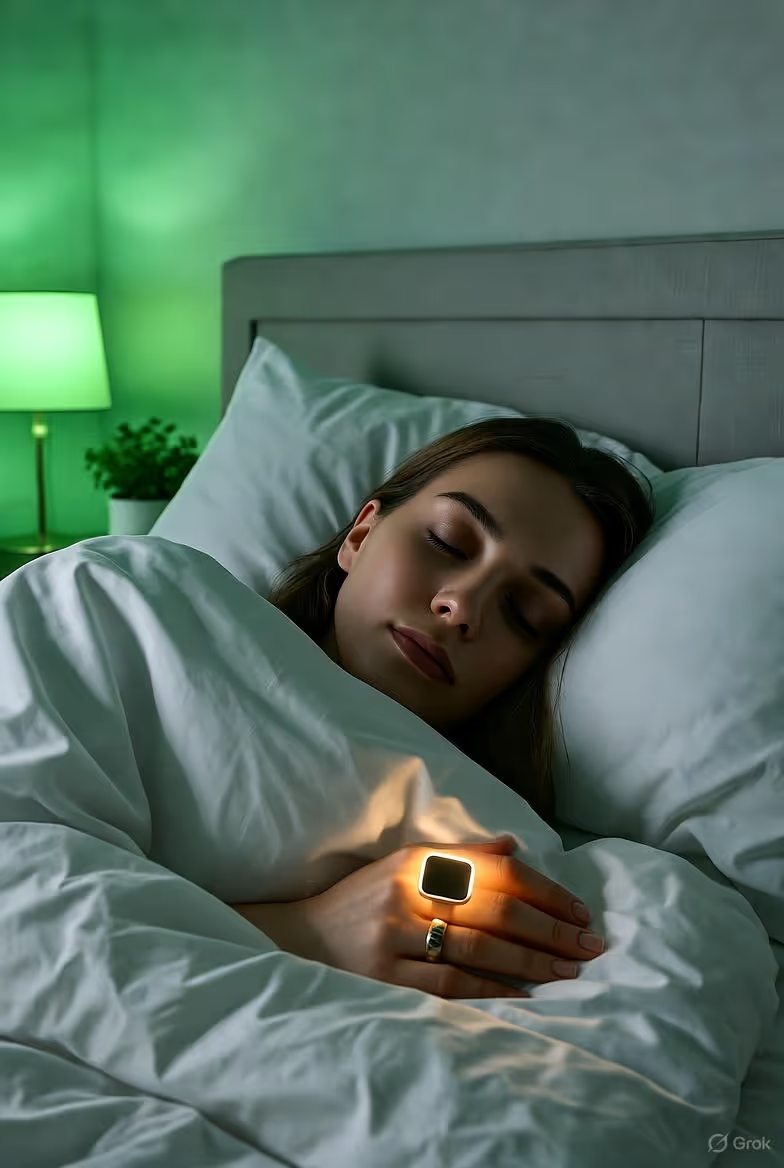
Sleep Tracking Mistakes That Give You False Data (Avoid These)
Common sleep tracking mistakes produce false or misleading data that undermines the value of monitoring. This troubleshooting guide identifies setup errors, wearing mistakes, interpretation problems, and behavioral pitfalls to avoid, ensuring your tracking provides reliable insights for better decision-making.
The Sleep Tracking Mistakes That Give You False Data (Avoid These)
You know that unsettling feeling when your smartwatch tells you that you had a “perfect” night of sleep—complete with generous deep sleep and smooth sleep cycles—but you wake up feeling like you just ran a marathon in your dreams? Or when your sleep tracker shows a solid 8-hour sleep score while your heavy eyelids and mental fog tell a different story? This conflict between data and reality isn’t just a minor glitch; it’s a fundamental breakdown in how most people interpret the numbers their sleep trackers provide.
In the quest for better sleep, millions have turned to wearable technology. One survey suggests one in three Americans has used a sleep-tracking device, with most finding them helpful . But here’s the uncomfortable truth many manufacturers don’t emphasize: your sleep tracker is likely lying to you. Not out of malice, but because of inherent technological limitations and, more often, because of how we use them.
Recent scientific reviews reveal that while these devices are getting better, they often overestimate total sleep time and struggle mightily to detect when you’re lying awake but still . For people with conditions like insomnia, this inaccuracy is even more pronounced. Some studies comparing consumer devices to medical-grade polysomnography show they correctly identify wakefulness only 20-50% of the time . This isn’t about having a “bad device”—it’s about understanding that every piece of technology has blind spots, and your behavior can either widen or narrow those gaps.
This comprehensive guide will walk you through the ten most common—and often invisible—mistakes that corrupt your sleep data. More importantly, we’ll provide actionable solutions to transform your tracker from a source of anxiety into a genuinely useful tool for better rest. The goal isn’t to achieve a perfect “100” sleep score (a proprietary metric often based on opaque calculations). The goal is to establish a Subjective-Objective Alliance—a partnership between your lived experience and the device’s sensors—to uncover the true story of your sleep .
The Core Problem: Believing the Machine Can Read Your Mind
Before we dive into specific mistakes, we must address the foundational error. The greatest misconception about sleep technology is the belief that the device automatically knows your intent to sleep . It doesn’t. It cannot sense when you close your book, turn off your thoughts, and genuinely try to drift off. It only measures proxies: movement and physiology.
This creates what experts call the “Intention Trap” . Your device sees you lying motionless in bed scrolling through your phone and registers it as the beginning of your sleep period. This single error at the boundary between wakefulness and sleep cascades through every metric that follows, inflating your total sleep time and distorting your sleep efficiency. The path to accurate tracking begins with acknowledging that you are the most important sensor in the system. Your conscious input is the missing context that the algorithms desperately need.
Mistake 1: Not Manually Setting Your “Intent to Sleep” Boundary
You slip into bed at 10:30 PM, spend 45 minutes reading a novel on your tablet, then finally decide to try to sleep around 11:15 PM. Your wearable, however, likely started your “sleep” log the moment you became still at 10:30 PM. This error—confusing Time In Bed (TIB) with the true Time Attempting to Sleep (TATS)—is the most common source of data corruption .
Why It Creates False Data: Sleep Onset Latency (SOL)—the time it takes you to fall asleep—is a critical health metric. Clinically, insomnia is often defined by a latency of more than 30 minutes. If your device thinks your attempt started at 10:30 PM when it really started at 11:15 PM, it will report a falsely short SOL (e.g., “5 minutes to fall asleep!”) and overestimate your total sleep time by 45 minutes . This paints a deceptively rosy picture, potentially masking a real sleep onset issue.
The Evidence: Validation studies consistently show that without this manual anchor, devices systematically underestimate sleep latency and overestimate total sleep time. They are notoriously bad at detecting “quiet wakefulness”—those still, but very much awake, periods .
The Solution: Implement the TATS Protocol.
Manually Mark the Moment: The single most effective thing you can do is use your device’s app to manually log the moment you stop engaging with the world and intentionally try to sleep. Many apps have a “Begin Sleep” or “Start Wind Down” feature. Use it religiously.
Do a Morning Review: If manual marking feels disruptive, make a habit of reviewing your sleep data each morning. Most apps allow you to edit your sleep start and end times. Adjust the start time to when you remember genuinely trying to sleep, not just when you got into bed.
Keep a Micro-Journal: For one week, pair your tracker data with a simple notepad. Jot down: 1) Time I got in bed, 2) Time I tried to sleep (lights off, phone down), 3) Estimated time I fell asleep, and 4) How I felt in the morning. Compare these notes to your app data. The discrepancies will be enlightening.
This simple act of providing context transforms your tracker from an arrogant guesser into a calibrated tool. It bridges the gap between the objective data and your subjective experience, which is the cornerstone of accurate interpretation. For more on building a holistic approach to wellness data, you can explore resources on our blog .
Mistake 2: Misinterpreting “Quiet Wakefulness” as Sleep
You wake up at 3:00 AM, glance at the clock, and lie there perfectly still for 20 minutes, willing yourself back to sleep. Your wearable’s accelerometer detects no significant movement, and its heart rate sensor may show a resting pattern. The algorithm’s verdict? You were in light sleep the entire time.
Why It Creates False Data: This error directly corrupts one of the most important metrics for sleep quality: Wake After Sleep Onset (WASO). WASO measures sleep fragmentation, and high WASO is linked to non-restorative sleep and daytime impairment. When your device misses these quiet wake episodes, it falsely reports low WASO and artificially inflates your Sleep Efficiency (the percentage of time in bed actually spent sleeping) . You’re left wondering why you feel exhausted despite a tracker-reported 92% sleep efficiency.
The Evidence: This is a well-documented structural flaw. As one source puts it, “if you wake up at 3 a.m. and just stare at the ceiling without moving, your device has almost no chance of realizing you’re awake” . The problem is amplified in populations with insomnia, where anxiety often leads to precisely this type of motionless arousal .
The Solution: Listen to Your Body, Not Just the Graph.
Cross-Reference with How You Feel: Never look at your sleep data in a vacuum. Always hold it up against your subjective sense of restoration. Did you sleep “deeply” or were you drifting in and out? Your perception is valid data.
Understand the “Sensitive” vs. “Normal” Setting: Some devices, like older Fitbits, offer a sensitivity setting. “Sensitive” mode tags more movement as “awake,” which can sometimes capture these quiet wakes but also risks over-counting normal sleep movement as wakefulness, creating a different kind of inaccuracy . “Normal” is best for most people, but knowing this limitation is key.
Look for Physiological Clues: While movement is the primary signal for wakefulness, some advanced devices (like smart rings) also track heart rate variability (HRV). A sudden, brief spike in heart rate or a dip in HRV can sometimes coincide with a micro-awakening, even without movement. Learn to read these subtle patterns in your data.
Mistake 3: Obsessing Over Sleep Stage Percentages
“I only got 12% deep sleep last night! My app says I need 20%!” This daily ritual of scrutinizing the colorful pie chart of light, deep, and REM sleep stages is a major source of tracking anxiety—and it’s based on notoriously unreliable data for consumer devices.
Why It Creates False Data: Sleep stages are formally defined by specific brain wave patterns, measured in a lab by an electroencephalogram (EEG). Your wrist-worn or finger-worn device does not have an EEG. It uses educated guesses based on movement, heart rate, and HRV patterns . While these algorithms are sophisticated, they are making inferences, not measurements.
A 2025 study of ring trackers on patients with sleep disorders found their accuracy for classifying specific sleep stages was highly variable, with sensitivity for REM sleep as low as 0.14 for one device (meaning it missed 86% of actual REM sleep) .
Another large 2023 study of 11 different trackers found macro F1 scores (a measure of accuracy) for sleep stage classification ranging from a poor 0.26 to a moderate 0.69 .
The Evidence: Research is clear: “Sleep stage data from your tracker should be viewed as an estimate, not a fact” . Devices are reasonably good at telling sleep from wake but much less consistent at differentiating between the stages of sleep itself .
The Solution: Focus on the Macro, Not the Micro.
Demote Sleep Stages to “Trend Data Only”: Stop checking your stage percentages daily. Instead, look at them weekly or monthly. Is there a broad trend over time? For instance, “My deep sleep seems generally lower in weeks when I don’t exercise,” is a useful observation. “I lost 3% deep sleep last night,” is not.
Prioritize Simpler, More Robust Metrics: Shift your focus to metrics that devices are better at measuring consistently:
Total Sleep Time (TST) Trends: Are you consistently near 7+ hours over the week?
Sleep Consistency: Are you going to bed and waking up at roughly the same time every day? This circadian rhythm metric is powerful and well-tracked.
Resting Heart Rate: A lower, stable overnight resting heart rate is a strong indicator of good recovery.
Use Stages as a Story Prompt, Not a Diagnosis: If your tracker consistently shows wildly low deep sleep and you feel perpetually unrefreshed, let that be a prompt to investigate lifestyle factors (stress, alcohol, late eating) or speak to a doctor—not to take the specific number as gospel.
Mistake 4: Wearing Your Device Incorrectly (The Fit Problem)
You strap your smartwatch to your wrist with the same casual snugness you use during the day. Or, you wear your smart ring on a finger where it spins loosely. This seemingly minor detail is a major source of signal noise and false data.
Why It Creates False Data: Most wearables use Photoplethysmography (PPG)—flashing green LEDs that measure blood flow changes to determine heart rate and HRV . If the device is too loose, it moves excessively, creating motion artifacts that obscure the clean pulse signal. If it’s too tight, it can constrict blood flow, also distorting the signal. A poor fit means the core physiological data feeding the sleep algorithm is garbage in, leading to garbage out.
For ring wearers, a 2025 study noted that data loss often occurred due to “problems with ring fit, such as rings that fell off or were taken off prematurely” .
Wrist tattoos, dark skin pigmentation, and even excessive arm hair can also absorb or scatter the LED light, degrading PPG accuracy .
The Solution: Achieve the Goldilocks Fit.
For Smartwatches/Bands: The device should be snug but not constricting. You should not be able to slide more than one finger underneath the band. It should sit one finger’s width above your wrist bone. Wash and dry your skin before bed to ensure good contact.
For Smart Rings: The ring should fit comfortably on your finger without being able to spin freely or slip off with a light shake. It should not leave deep indentations or feel numb. Manufacturers usually provide sizing kits—use them. Find the finger that offers the most consistent, secure fit throughout the day and night.
Experiment and Validate: Try wearing the device slightly tighter for a few nights, then slightly looser. See if there’s a noticeable difference in the stability of your overnight heart rate graph. A smoother, cleaner line indicates a better fit.
Mistake 5: Ignoring the Impact of Travel & Time Zones
You fly from New York to Los Angeles. You go to bed at 11 PM Pacific Time, but your phone and wearable are still set to Eastern Time. Your device logs your sleep from 2 AM to 10 AM (Eastern), creating a bizarre, shifted sleep block in your app that makes you look like a night owl. This isn’t just a calendar quirk; it breaks your sleep trend analysis.
Why It Creates False Data: Consistent sleep timing is a pillar of circadian health. When your device fails to adjust for time zones, it destroys your historical data’s consistency. Your sleep midpoint, bedtime, and wake time trends become meaningless because they’re plotted against the wrong clock. This can falsely suggest extreme irregularity when, in fact, you’re maintaining a locally appropriate schedule .
The Evidence: This is a recognized technical shortfall of many wearable platforms. As one analysis notes, “If a device doesn’t account for the local time, it might register sleep at incorrect hours, disrupting sleep trend analysis” .
The Solution: Manually Manage Your Time Context.
Force a Sync in Your New Location: As soon as you land, ensure your smartphone’s time zone updates automatically or is manually set to your new location. Then, open your health or tracker app and force a data sync. This often prompts the app to re-process sleep data against the new time zone.
Use a Travel-Friendly App Feature: Some advanced platforms, like the one mentioned by Thryve, explicitly advertise time-zone adjustment as a feature to maintain clean data . Investigate if your app has similar settings.
Review and Edit: Each morning while traveling, quickly check your sleep block. If it’s plotted incorrectly, use the edit function to adjust the times to reflect when you actually slept according to the local clock.
Mistake 6: Treating Your Tracker as a Diagnostic Tool
You’ve been feeling exhausted. Your tracker shows poor sleep scores and frequent awakenings. You search online and convince yourself you have sleep apnea or insomnia. This is a dangerous and extremely common mistake. Consumer sleep trackers are not medical devices.
Why It Creates False Data (and Risk): This mistake goes beyond false data—it leads to false conclusions. For example:
Sleep Apnea: Trackers, especially older models, cannot diagnose sleep apnea. This requires monitoring breathing effort, airflow, and continuous blood oxygen saturation . While some newer devices have SpO2 sensors, they are not FDA-cleared for diagnosis and can miss events. You could have severe apnea while your tracker reports “fair” sleep.
Insomnia: As discussed, trackers overestimate sleep time in people with insomnia . Relying on them can lead you to dismiss your symptoms (“My watch says I’m sleeping 7 hours, so I must be fine”) or become overly anxious about them, fueling a condition now called orthosomnia—an obsession with perfect sleep data that actually causes insomnia .
The Evidence: Medical professionals are clear: “Watch-style sleep tests cannot reliably diagnose sleep apnea” or other disorders . A 2025 clinical study on ring trackers concluded that despite some average group-level accuracy, “individual-level differences often remained large,” prohibiting their use in clinical sleep medicine .
The Solution: Use Your Tracker as a Trend Monitor and Conversation Starter.
Adopt the Right Mindset: Think of your tracker as a weather app, not a MRI machine. It gives you a general forecast (trends, patterns), not a definitive diagnosis.
Know the Red Flags: Use your tracker to identify potential issues, then take that information to a professional. Red flags include: consistently low scores despite good habits, partner reports of snoring/choking, or persistent daytime fatigue that doesn’t match the data.
Start a Sleep Diary for Your Doctor: If you’re concerned, use your tracker’s historical data (showing patterns over weeks) as one component of a sleep diary to show your doctor. Say, “Here’s what my device shows, and here’s how I’ve been feeling.” This objective-subjective combo is valuable for clinicians.
Mistake 7: Forgetting to Account for Naps (or Merging Them with Core Sleep)
You take a 90-minute afternoon nap. Your wearable dutifully logs it. The next morning, you see your total “sleep” for the past 24 hours is a whopping 9 hours and 30 minutes! But this conflates two biologically distinct processes: consolidated nighttime sleep and discretionary napping.
Why It Creates False Data: Merging nap data with your core sleep inflates your 24-hour sleep total and muddies the waters. The architecture of a nap (mostly light sleep) is different from a full night cycle (which includes deep and REM sleep). A long, late nap can also suppress your sleep drive, leading to worse core sleep that night—a dynamic you’ll miss if everything is lumped together.
The Evidence: Sleep researchers emphasize distinguishing between primary sleep periods and naps. Advanced sleep analysis platforms highlight the importance of identifying the “main sleep cycle” for clear interpretation .
The Solution: Isolate and Label Your Sleep Periods.
Enable Nap Detection (But Review It): Most modern trackers have automatic nap detection. Ensure this is on, but don’t let the nap time automatically add to your “daily sleep.” Review it separately.
Mind the 24-Hour View: When assessing your sleep, always look at two numbers: 1) Your Core Nighttime Sleep duration and quality, and 2) your Total Sleep in 24 Hours (including naps). They tell different stories.
Nap Strategically: If you nap, aim for earlier in the afternoon (before 3 PM) and keep it short (20-30 minutes). This minimizes disruption to your core sleep. See how these “clean” naps affect your core sleep data versus long, late naps.
Mistake 8: Chasing a Perfect “Sleep Score” into Anxiety (Orthosomnia)
You wake up, immediately grab your phone, and feel a pang of disappointment at a score of 76/100. You spend the day ruminating on what you did “wrong,” and the anxiety makes it harder to sleep the next night, creating a self-fulfilling prophecy of poor scores. This phenomenon has a name: orthosomnia .
Why It Creates False Data & Harm: The obsession itself becomes the disruptor. The anxiety and hyper-arousal caused by checking and worrying about sleep data is incompatible with the relaxation needed for sleep onset. This can lead to clinically significant insomnia symptoms where none existed before. Furthermore, you begin to trust the faulty “score” over your own bodily feelings .
The Evidence: Psychology researchers note that “a preoccupation with sleep tracking may lead to sleep problems in the long term,” and that consumer technology is not as accurate as clinical devices . People with orthosomnia “may overestimate the reliability of their tracking device,” preventing them from seeking proper help.
The Solution: Break the Score Addiction.
Hide the Score for a Week: Use app settings or sheer willpower to avoid looking at your sleep score or detailed stages for one full week. Just wear the device.
Practice Sleep Effortlessness: Remind yourself that sleep is a passive process you cannot force. Your job is to create the right conditions (dark, cool, quiet room; consistent schedule; relaxed mind), then let it happen. The score is an outcome, not a performance metric.
Re-engage on Your Terms: After a break, look at your weekly data. Focus on one simple, positive trend (e.g., “I was consistent with my bedtime four nights this week”). Celebrate that behavior, not the number. If you find yourself unable to disengage from the anxiety, it may be time to take a longer break from tracking altogether. Your peace of mind is more important than any dataset. Our story is rooted in the belief that technology should serve wellness, not undermine it .
Mistake 9: Using Multiple Trackers That Conflict
You wear a smart ring at night and a smartwatch during the day. Or you have a mattress pad tracker and a wearable. Out of curiosity, you compare the data: the ring says you slept 7 hours with 1.5 hours of deep sleep; the watch says 6.5 hours with 45 minutes of deep sleep. Which one is right? This conflicting data breeds confusion and paralysis.
Why It Creates False Data: Different devices use different sensors, wear locations, and proprietary algorithms. A ring on your finger may get a cleaner PPG signal than a watch on your wrist . A mattress pad detects macro-movements but may not capture heart rate. When they disagree, you have no “ground truth,” rendering both datasets less useful and increasing anxiety.
The Evidence: Data harmony is a known challenge. As noted in sleep technology analysis, “Without a standardized approach to resolving discrepancies, users may be left confused about their actual sleep quality” .
The Solution: Choose One Primary Source of Truth.
Pick Your Champion: Decide which device best fits your lifestyle and provides the metrics you care about most. Commit to it for a minimum of one month to establish a consistent baseline.
Understand Their Strengths: If you must use multiple devices, assign them different roles. Perhaps you use a ring for detailed overnight biometrics (HRV, temperature) and a watch for daytime activity and sleep schedule tracking. Don’t expect their sleep stage numbers to match—they won’t.
Look for Concordance, Not Identical Numbers: Instead of asking “which is right?”, ask “what story do they agree on?” Do both show you slept poorly after drinking alcohol? Do both show an earlier bedtime improves your metrics? This high-level concordance is valuable, even if the numbers differ.
Mistake 10: Never Calibrating Your Data with a “Ground Truth”
You’ve been tracking for a year. You see all the trends, but you have no idea how closely they map to reality. You’ve never once attempted to calibrate your device’s reporting against a known reference point. This means you could be making major life decisions based on a consistent, but consistently wrong, dataset.
Why It Creates False Data: All measurement devices have bias. The 2025 ring tracker study found that ring-derived metrics “were characterized by complex bias, indicating that their correction is non-trivial” . In simpler terms, your device might always add 20 minutes to your sleep or subtract 10% from your deep sleep. If you don’t know your device’s bias, you can’t correct for it mentally.
The Solution: Establish Your Personal Calibration Points.
The Lab Comparison (Gold Standard): If you ever undergo a professional in-lab or home sleep test (polysomnography), wear your consumer tracker simultaneously. The PSG report is your ultimate ground truth. Compare the total sleep time, wake times, and broad sleep architecture (not minute-by-minute stages) to see your device’s bias. One user in a forum did this and found their CPAP therapy dramatically improved both their clinical results and their Fitbit data, providing a clear calibration point .
The Subjective-Objective Alliance Check (Practical Standard): Periodically, conduct a self-experiment. For 3-5 nights:
Manual Logging: Before bed, note the exact time you intend to sleep. When you wake up for the day, before looking at your tracker, estimate your total sleep time and rate your sleep quality on a scale of 1-5.
Compare: Then, check your device. Is there a consistent offset? For example, “My device always reports about 40 minutes more sleep than I feel I got.” That’s your personal calibration factor.
Use a Secondary, Different Method: Try using a very simple, unrelated method for a week—like a audio recorder app that logs sounds of restlessness/talking. Compare the “restless” periods it flags with the “awake” periods on your wearable. The overlaps and discrepancies are telling.
Moving Forward: From Error-Correction to Empowerment
Correcting these ten mistakes transforms sleep tracking from a source of confusion into a powerful lens for self-awareness. The end goal is not a flawless spreadsheet, but informed agency over your sleep health. You learn to see the data as a guide, not a gospel.
This requires a fundamental shift from passive consumption to active collaboration with your technology. It’s about building that Subjective-Objective Alliance, where your lived experience provides the context that gives the raw numbers true meaning .
The journey continues. In the next portion of this guide, we will move beyond fixing mistakes and into the realm of optimization. We will explore how to use your newly calibrated data to design powerful, personalized sleep interventions, how to choose the right tracker for your specific needs, and how to integrate sleep data with other wellness metrics (like activity and nutrition) for a complete picture of your health. We’ll also delve into the future of sleep tracking, examining the emerging technologies that promise to close the current accuracy gaps. For ongoing support and answers to common questions, remember our FAQ is a valuable resource .
The path to better sleep isn’t found in a perfect score. It’s found in the thoughtful, balanced, and slightly skeptical partnership between you and the technology on your wrist. Start by fixing these ten mistakes, and you’ll take the first—and most important—step toward genuinely understanding your sleep.
The Sleep Tracking Mistakes That Give You False Data (Avoid These): Part Two
In the first part of this guide, we dismantled the ten most common technical and behavioral mistakes that corrupt sleep data—from mis-set sleep boundaries to the anxiety of orthosomnia. Correcting those errors is the essential first step, transforming your tracker from a source of confusion into a reliable tool. But what comes next? Once the data stream is clean, the real work begins: interpreting the patterns, designing intelligent experiments, and moving from passive tracking to active, personalized sleep optimization.
This next section shifts the focus from error-correction to empowerment. We will explore how to use your calibrated data not as a daily report card, but as a dynamic feedback system for your life. The goal is to build what leading sleep psychologists call "Sleep Intelligence"—the ability to understand your unique sleep architecture and its levers, and to make informed, incremental changes that lead to sustained improvement.
We'll move through three critical phases:
Pattern Recognition & Hypothesis: Learning to read the story your data tells over weeks and months, not just days.
The Science of Self-Experimentation: How to safely and methodically test lifestyle interventions (like caffeine timing, exercise, or wind-down routines) to see what actually works for your biology.
Integration & Advanced Optimization: Connecting sleep data to other health metrics and exploring the next frontier of personalized sleep tech.
Phase 1: Becoming a Detective of Your Own Data—Pattern Recognition & Hypothesis
With clean data, you now have a trustworthy historical record. The daily score matters less; the longitudinal trend is everything. This phase is about moving from "How did I sleep last night?" to "What patterns emerge when I sleep well versus poorly?"
The 30,000-Foot View: Identifying Macro-Patterns
Your first task is to zoom out. Use your app’s weekly, monthly, or even yearly view (if available) to look for cycles and correlations.
The Weekly Rhythm: Do you see a consistent "sleep debt" pattern? Perhaps your total sleep time dips from Thursday to Saturday and recovers on Sunday night. This is a classic social jetlag pattern, indicating your social schedule is fighting your biological clock.
The Seasonal Shift: Does your deep sleep percentage subtly decrease in winter? Your resting heart rate increase during high-stress work quarters? These macro-trends connect your sleep to broader environmental and life rhythms.
The Lifestyle Correlation: This is the most powerful analysis. Manually note major lifestyle events on your sleep calendar:
Days of intense evening workouts.
Evenings with alcohol consumption (even one glass).
Periods of high work stress or travel.
Changes in diet or medication.
Now, look at the data surrounding these markers. The evidence is often stark: a 2023 meta-analysis in Sleep Medicine Reviews confirmed that alcohol, while potentially aiding sleep onset, consistently reduces REM sleep and increases sleep fragmentation in the second half of the night—a pattern your tracker should now reliably show you if you look for it.
Focusing on Foundational Metrics: The "Big Four"
To avoid analysis paralysis, focus your detective work on four robust metrics that consumer devices measure reasonably well and that have a direct link to how you feel.
Sleep Consistency (Bedtime & Wake Time Variability): This is arguably the most important metric for circadian health. Calculate the standard deviation of your bedtime over a month. A variability of less than 30 minutes is excellent; more than 90 minutes signals significant circadian disruption. The data is clear: a study in Scientific Reports found that greater sleep timing irregularity was associated with poorer subjective sleep quality, mood, and well-being, independent of sleep duration.
Resting Heart Rate (RHR) Overnight Average: A true indicator of recovery. Don't just look at the single number; look at the graph. A smooth, U-shaped curve (lowest in the middle of the night) is ideal. A jagged, elevated line suggests stress, illness, or poor recovery. Track how your average overnight RHR shifts with training load, stress, or dietary changes.
Heart Rate Variability (HRV) Trends: HRV is your body's "readiness" metric—higher generally indicates better recovery and autonomic nervous system balance. Look at your weekly average HRV, not the nightly fluctuation. A sustained downward trend is a bright red flag from your body to dial back stress or intensity.
Wake After Sleep Onset (WASO): Now that you're manually setting sleep start times, your WASO data becomes more meaningful. Track the frequency of wake-ups. Is it one long 30-minute wakefulness (common with stress or noise) or ten 3-minute awakenings (more common with sleep apnea or pain)? The pattern points to different root causes.
Forming Your First Hypothesis
Once you spot a pattern, turn it into a testable hypothesis. Be specific and behavioral.
Weak Hypothesis: "I need to sleep better."
Strong Hypothesis: "My data shows my resting heart rate is 8-10 bpm higher and my HRV drops by 15% on nights after I have a glass of wine after 8 PM. I hypothesize that eliminating alcohol on weeknights will improve my sleep depth and morning readiness scores."
This strong hypothesis sets the stage for Phase 2: a clean, informative self-experiment. For more ideas on forming wellness hypotheses and tracking their outcomes, a wealth of related articles can be found on our blog.
Phase 2: The Art & Science of Self-Experimentation
Armed with a hypothesis, you can now move from observation to intervention. Self-experimentation, or N-of-1 research, is the gold standard for personalizing health advice. The core principle is simple: change one variable at a time, measure the outcome consistently, and compare the results to your baseline.
Designing a Valid Sleep Experiment
A poorly designed experiment will give you useless—or worse, misleading—results. Follow this framework:
Establish a Baseline (1-2 Weeks): Before changing anything, continue your normal routine while meticulously tracking. This gives you a clear "before" picture to compare against. Ensure you're not in an unusual life period (e.g., a vacation or a major work crisis).
Choose ONE Intervention Variable: This is the most critical rule. You cannot test "no alcohol, earlier bedtime, and meditation" all at once. If you see improvement, you won't know which lever was responsible. Pick the one your pattern analysis suggested is most impactful.
Common Intervention Variables:
Caffeine Curation: No caffeine after 2 PM (or 10 AM!).
Alcohol Elimination: No alcohol for 14 nights.
Light Exposure: 10 minutes of morning sunlight within 30 minutes of waking; blue-light blocking glasses after 8 PM.
Temperature: Lowering bedroom thermostat to 65°F (18°C).
Wind-Down Routine: A consistent 45-minute routine (e.g., reading a physical book, light stretching, meditation).
Implement the Intervention (2-3 Weeks): Adhere strictly to your new rule for a sufficient period. Sleep changes often take several days to manifest in the data. Consistency is key.
Return to Baseline or Try a New Variable: For the purest experiment, return to your old habits for a week (the "washout" period) and see if the metrics revert. Then, you can test a new variable or cement the successful change as a permanent habit.
Measuring Outcomes: Beyond Sleep Scores
Your outcome measures should be the "Big Four" metrics from Phase 1, plus your subjective feeling.
Primary Outcome: Choose one key data metric. For an alcohol experiment, it might be % of deep sleep or average overnight resting heart rate.
Secondary Outcomes: Monitor others for supporting evidence (e.g., WASO, HRV).
Subjective Outcome: Every morning, rate your "feeling of restoration" on a scale of 1-10 before you look at your data. This keeps your lived experience central.
The Power of a Single Case: Imagine you run the alcohol experiment. Your data shows a 25% average increase in deep sleep and a 5-bpm drop in RHR on no-alcohol nights. Your morning restoration score jumps from a 5 to a 7. This is powerful, actionable evidence for you. It's more meaningful than a generic population study saying "alcohol disrupts sleep," because you have quantified its exact effect on your own body. Our testimonials page is filled with stories of users who made similar discoveries through their own data.
The Pilot Study: A 14-Day Temperature Experiment
Let's apply the framework to a concrete example.
Hypothesis: "My data shows I often wake up feeling warm. I hypothesize that lowering my bedroom temperature from 70°F to 66°F will reduce nighttime awakenings (WASO) and improve my sleep efficiency."
Baseline (7 nights): Sleep at 70°F. Record average WASO (e.g., 35 minutes), Sleep Efficiency (e.g., 85%), and restoration score (e.g., 6/10).
Intervention (14 nights): Sleep at 66°F. Keep all other habits identical.
Measure & Analyze: Compare the average WASO (did it drop to 20 min?), Sleep Efficiency (did it rise to 90%?), and restoration score (did it improve to 8/10?). Use your app's trend lines to visualize the shift.
Conclusion: If the data and subjective feeling align positively, you've found a powerful, free tool for better sleep. Make 66°F your new default.
Phase 3: Integration & Advanced Optimization
Sleep does not exist in a vacuum. It is the foundation upon which your daily activity, stress, and nutrition are built. The final phase of empowerment is integrating your sleep data with other health streams to see the complete picture of your well-being.
The Recovery-Activity Feedback Loop
This is the most critical integration. Your wearable's "Readiness" or "Recovery" score is often a direct algorithm of your last night's sleep data (RHR, HRV, duration) combined with recent activity load.
How to Use It: Let this score guide your day.
High Readiness (80-100) + Poor Sleep Data? Investigate. Are you under-reporting stress? Is the score flawed? Don't push hard just because a metric says so.
Low Readiness (0-50) + Good Sleep Data? This could indicate an underlying illness, high non-exercise stress, or that you're on the edge of overtraining despite sleeping well.
The Ideal Flow: Use yesterday's sleep data to inform today's activity. A poor sleep night is a perfect day for a gentle walk, yoga, or complete rest—not a high-intensity interval training (HIIT) session. This is called autoregulation—letting your body's signals dictate your training, not a pre-set calendar.
Connecting Sleep to Nutrition & Glucose
The emerging frontier of personalized health is the sleep-nutrition connection. While continuous glucose monitors (CGMs) are not yet standard, the principle is vital.
The Science: A large meal, especially high in refined carbohydrates and fat, right before bed can cause elevated blood glucose levels throughout the night. This creates metabolic stress, which can increase nighttime awakenings and reduce sleep quality. Conversely, poor sleep disrupts the hormones leptin and ghrelin, increasing hunger and cravings for high-calorie foods the next day—a vicious cycle.
Your Experiment: Even without a CGM, you can test this. For two weeks, enforce a "kitchen closed" rule 3 hours before bedtime. Note any changes in your sleep depth metric and morning restoration feeling. Your data may reveal you are far more sensitive to late eating than you realized.
The Future: Personalized Sleep Technology
The next generation of sleep tech is moving beyond generic algorithms to truly personalized insights.
Biometric Calibration: Future devices may use short user-initiated calibration tests (like a 5-minute quiet resting measurement) to learn your specific heart rate and HRV baselines, making their nightly deviations more accurate.
Adaptive Algorithms: Imagine an app that, after 90 days of data, gives you a personalized report: "Based on your unique physiology, you are particularly sensitive to caffeine after 1 PM and see the greatest sleep benefit from exercising in the early afternoon."
Multi-Sensor Fusion: The most accurate consumer devices will combine data from a wearable (pulse, movement) with non-wearable ambient sensors (room temperature, humidity, light, and sound levels). This creates a complete picture of your sleep environment. Some companies already offer this holistic approach, which you can learn more about on our about us page, where we detail our integrated philosophy.
Knowing When to Seek Professional Help
Your empowered tracking becomes a powerful diagnostic aid for professionals. You are no longer arriving saying, "I'm tired." You are arriving with a data dossier.
What to Bring: A printout of your monthly trends, highlighting concerning patterns (consistently high WASO, elevated RHR, low HRV trend). Your sleep diary correlating subjective feelings with the data.
When to Go: If your self-experiments fail to move the needle on persistent symptoms like severe daytime fatigue, loud snoring/gasping (partner-reported), or unrefreshing sleep despite 8+ hours in bed, it's time to see a sleep specialist. Your clean data can help rule things in or out faster, potentially speeding up your path to diagnosis and treatment.
Conclusion of Part Two: From Data Slave to Sleep Sovereign
The journey through these three phases—Pattern Recognition, Self-Experimentation, and Integration—culminates in a state of informed agency. You are no longer a passive recipient of sleep scores, subject to their arbitrary judgement. You are an active investigator, an experimenter, and the ultimate interpreter of your own health signals.
You understand that the perfect night is not a 95/100 on an app, but a night where your chosen behaviors align with your biology to produce deep, restorative rest that you can feel. Your tracker is now a loyal scribe, documenting the effects of your choices, not a stern judge handing down a verdict.
This mastery turns sleep from a source of anxiety into a pillar of strength. It allows you to confidently adjust your sails when life brings stress, travel, or change, because you understand the fundamental mechanics of your own sleep. You have built your Sleep Intelligence.
In the final portion of this guide, we will look outward—to the technology horizon and the bigger picture of sleep in society. We will explore how to choose the right tracker in a crowded market, critique the ethical landscape of sleep data, and envision a future where technology and biology work in seamless harmony for human well-being. We'll also provide a comprehensive toolkit, including checklists and resource guides, to consolidate everything you've learned. For any immediate questions on applying these concepts, our FAQ is always available as a resource.
The path to true sleep wellness is not paved with more data, but with more wisdom. You are now well on your way.
The Sleep Tracking Mistakes That Give You False Data (Avoid These): Part Two
In the first part of this guide, we dismantled the ten most common technical and behavioral mistakes that corrupt sleep data—from mis-set sleep boundaries to the anxiety of orthosomnia. Correcting those errors is the essential first step, transforming your tracker from a source of confusion into a reliable tool. But what comes next? Once the data stream is clean, the real work begins: interpreting the patterns, designing intelligent experiments, and moving from passive tracking to active, personalized sleep optimization.
This next section shifts the focus from error-correction to empowerment. We will explore how to use your calibrated data not as a daily report card, but as a dynamic feedback system for your life. The goal is to build what leading sleep psychologists call "Sleep Intelligence"—the ability to understand your unique sleep architecture and its levers, and to make informed, incremental changes that lead to sustained improvement.
We'll move through three critical phases:
Pattern Recognition & Hypothesis: Learning to read the story your data tells over weeks and months, not just days.
The Science of Self-Experimentation: How to safely and methodically test lifestyle interventions (like caffeine timing, exercise, or wind-down routines) to see what actually works for your biology.
Integration & Advanced Optimization: Connecting sleep data to other health metrics and exploring the next frontier of personalized sleep tech.
Phase 1: Becoming a Detective of Your Own Data—Pattern Recognition & Hypothesis
With clean data, you now have a trustworthy historical record. The daily score matters less; the longitudinal trend is everything. This phase is about moving from "How did I sleep last night?" to "What patterns emerge when I sleep well versus poorly?"
The 30,000-Foot View: Identifying Macro-Patterns
Your first task is to zoom out. Use your app’s weekly, monthly, or even yearly view (if available) to look for cycles and correlations.
The Weekly Rhythm: Do you see a consistent "sleep debt" pattern? Perhaps your total sleep time dips from Thursday to Saturday and recovers on Sunday night. This is a classic social jetlag pattern, indicating your social schedule is fighting your biological clock.
The Seasonal Shift: Does your deep sleep percentage subtly decrease in winter? Your resting heart rate increase during high-stress work quarters? These macro-trends connect your sleep to broader environmental and life rhythms.
The Lifestyle Correlation: This is the most powerful analysis. Manually note major lifestyle events on your sleep calendar:
Days of intense evening workouts.
Evenings with alcohol consumption (even one glass).
Periods of high work stress or travel.
Changes in diet or medication.
Now, look at the data surrounding these markers. The evidence is often stark: a 2023 meta-analysis in Sleep Medicine Reviews confirmed that alcohol, while potentially aiding sleep onset, consistently reduces REM sleep and increases sleep fragmentation in the second half of the night—a pattern your tracker should now reliably show you if you look for it.
Focusing on Foundational Metrics: The "Big Four"
To avoid analysis paralysis, focus your detective work on four robust metrics that consumer devices measure reasonably well and that have a direct link to how you feel.
Sleep Consistency (Bedtime & Wake Time Variability): This is arguably the most important metric for circadian health. Calculate the standard deviation of your bedtime over a month. A variability of less than 30 minutes is excellent; more than 90 minutes signals significant circadian disruption. The data is clear: a study in Scientific Reports found that greater sleep timing irregularity was associated with poorer subjective sleep quality, mood, and well-being, independent of sleep duration.
Resting Heart Rate (RHR) Overnight Average: A true indicator of recovery. Don't just look at the single number; look at the graph. A smooth, U-shaped curve (lowest in the middle of the night) is ideal. A jagged, elevated line suggests stress, illness, or poor recovery. Track how your average overnight RHR shifts with training load, stress, or dietary changes.
Heart Rate Variability (HRV) Trends: HRV is your body's "readiness" metric—higher generally indicates better recovery and autonomic nervous system balance. Look at your weekly average HRV, not the nightly fluctuation. A sustained downward trend is a bright red flag from your body to dial back stress or intensity.
Wake After Sleep Onset (WASO): Now that you're manually setting sleep start times, your WASO data becomes more meaningful. Track the frequency of wake-ups. Is it one long 30-minute wakefulness (common with stress or noise) or ten 3-minute awakenings (more common with sleep apnea or pain)? The pattern points to different root causes.
Forming Your First Hypothesis
Once you spot a pattern, turn it into a testable hypothesis. Be specific and behavioral.
Weak Hypothesis: "I need to sleep better."
Strong Hypothesis: "My data shows my resting heart rate is 8-10 bpm higher and my HRV drops by 15% on nights after I have a glass of wine after 8 PM. I hypothesize that eliminating alcohol on weeknights will improve my sleep depth and morning readiness scores."
This strong hypothesis sets the stage for Phase 2: a clean, informative self-experiment. For more ideas on forming wellness hypotheses and tracking their outcomes, a wealth of related articles can be found on our blog.
Phase 2: The Art & Science of Self-Experimentation
Armed with a hypothesis, you can now move from observation to intervention. Self-experimentation, or N-of-1 research, is the gold standard for personalizing health advice. The core principle is simple: change one variable at a time, measure the outcome consistently, and compare the results to your baseline.
Designing a Valid Sleep Experiment
A poorly designed experiment will give you useless—or worse, misleading—results. Follow this framework:
Establish a Baseline (1-2 Weeks): Before changing anything, continue your normal routine while meticulously tracking. This gives you a clear "before" picture to compare against. Ensure you're not in an unusual life period (e.g., a vacation or a major work crisis).
Choose ONE Intervention Variable: This is the most critical rule. You cannot test "no alcohol, earlier bedtime, and meditation" all at once. If you see improvement, you won't know which lever was responsible. Pick the one your pattern analysis suggested is most impactful.
Common Intervention Variables:
Caffeine Curation: No caffeine after 2 PM (or 10 AM!).
Alcohol Elimination: No alcohol for 14 nights.
Light Exposure: 10 minutes of morning sunlight within 30 minutes of waking; blue-light blocking glasses after 8 PM.
Temperature: Lowering bedroom thermostat to 65°F (18°C).
Wind-Down Routine: A consistent 45-minute routine (e.g., reading a physical book, light stretching, meditation).
Implement the Intervention (2-3 Weeks): Adhere strictly to your new rule for a sufficient period. Sleep changes often take several days to manifest in the data. Consistency is key.
Return to Baseline or Try a New Variable: For the purest experiment, return to your old habits for a week (the "washout" period) and see if the metrics revert. Then, you can test a new variable or cement the successful change as a permanent habit.
Measuring Outcomes: Beyond Sleep Scores
Your outcome measures should be the "Big Four" metrics from Phase 1, plus your subjective feeling.
Primary Outcome: Choose one key data metric. For an alcohol experiment, it might be % of deep sleep or average overnight resting heart rate.
Secondary Outcomes: Monitor others for supporting evidence (e.g., WASO, HRV).
Subjective Outcome: Every morning, rate your "feeling of restoration" on a scale of 1-10 before you look at your data. This keeps your lived experience central.
The Power of a Single Case: Imagine you run the alcohol experiment. Your data shows a 25% average increase in deep sleep and a 5-bpm drop in RHR on no-alcohol nights. Your morning restoration score jumps from a 5 to a 7. This is powerful, actionable evidence for you. It's more meaningful than a generic population study saying "alcohol disrupts sleep," because you have quantified its exact effect on your own body. Our testimonials page is filled with stories of users who made similar discoveries through their own data.
The Pilot Study: A 14-Day Temperature Experiment
Let's apply the framework to a concrete example.
Hypothesis: "My data shows I often wake up feeling warm. I hypothesize that lowering my bedroom temperature from 70°F to 66°F will reduce nighttime awakenings (WASO) and improve my sleep efficiency."
Baseline (7 nights): Sleep at 70°F. Record average WASO (e.g., 35 minutes), Sleep Efficiency (e.g., 85%), and restoration score (e.g., 6/10).
Intervention (14 nights): Sleep at 66°F. Keep all other habits identical.
Measure & Analyze: Compare the average WASO (did it drop to 20 min?), Sleep Efficiency (did it rise to 90%?), and restoration score (did it improve to 8/10?). Use your app's trend lines to visualize the shift.
Conclusion: If the data and subjective feeling align positively, you've found a powerful, free tool for better sleep. Make 66°F your new default.
Phase 3: Integration & Advanced Optimization
Sleep does not exist in a vacuum. It is the foundation upon which your daily activity, stress, and nutrition are built. The final phase of empowerment is integrating your sleep data with other health streams to see the complete picture of your well-being.
The Recovery-Activity Feedback Loop
This is the most critical integration. Your wearable's "Readiness" or "Recovery" score is often a direct algorithm of your last night's sleep data (RHR, HRV, duration) combined with recent activity load.
How to Use It: Let this score guide your day.
High Readiness (80-100) + Poor Sleep Data? Investigate. Are you under-reporting stress? Is the score flawed? Don't push hard just because a metric says so.
Low Readiness (0-50) + Good Sleep Data? This could indicate an underlying illness, high non-exercise stress, or that you're on the edge of overtraining despite sleeping well.
The Ideal Flow: Use yesterday's sleep data to inform today's activity. A poor sleep night is a perfect day for a gentle walk, yoga, or complete rest—not a high-intensity interval training (HIIT) session. This is called autoregulation—letting your body's signals dictate your training, not a pre-set calendar.
Connecting Sleep to Nutrition & Glucose
The emerging frontier of personalized health is the sleep-nutrition connection. While continuous glucose monitors (CGMs) are not yet standard, the principle is vital.
The Science: A large meal, especially high in refined carbohydrates and fat, right before bed can cause elevated blood glucose levels throughout the night. This creates metabolic stress, which can increase nighttime awakenings and reduce sleep quality. Conversely, poor sleep disrupts the hormones leptin and ghrelin, increasing hunger and cravings for high-calorie foods the next day—a vicious cycle.
Your Experiment: Even without a CGM, you can test this. For two weeks, enforce a "kitchen closed" rule 3 hours before bedtime. Note any changes in your sleep depth metric and morning restoration feeling. Your data may reveal you are far more sensitive to late eating than you realized.
The Future: Personalized Sleep Technology
The next generation of sleep tech is moving beyond generic algorithms to truly personalized insights.
Biometric Calibration: Future devices may use short user-initiated calibration tests (like a 5-minute quiet resting measurement) to learn your specific heart rate and HRV baselines, making their nightly deviations more accurate.
Adaptive Algorithms: Imagine an app that, after 90 days of data, gives you a personalized report: "Based on your unique physiology, you are particularly sensitive to caffeine after 1 PM and see the greatest sleep benefit from exercising in the early afternoon."
Multi-Sensor Fusion: The most accurate consumer devices will combine data from a wearable (pulse, movement) with non-wearable ambient sensors (room temperature, humidity, light, and sound levels). This creates a complete picture of your sleep environment. Some companies already offer this holistic approach, which you can learn more about on our about us page, where we detail our integrated philosophy.
Knowing When to Seek Professional Help
Your empowered tracking becomes a powerful diagnostic aid for professionals. You are no longer arriving saying, "I'm tired." You are arriving with a data dossier.
What to Bring: A printout of your monthly trends, highlighting concerning patterns (consistently high WASO, elevated RHR, low HRV trend). Your sleep diary correlating subjective feelings with the data.
When to Go: If your self-experiments fail to move the needle on persistent symptoms like severe daytime fatigue, loud snoring/gasping (partner-reported), or unrefreshing sleep despite 8+ hours in bed, it's time to see a sleep specialist. Your clean data can help rule things in or out faster, potentially speeding up your path to diagnosis and treatment.
Conclusion of Part Two: From Data Slave to Sleep Sovereign
The journey through these three phases—Pattern Recognition, Self-Experimentation, and Integration—culminates in a state of informed agency. You are no longer a passive recipient of sleep scores, subject to their arbitrary judgement. You are an active investigator, an experimenter, and the ultimate interpreter of your own health signals.
You understand that the perfect night is not a 95/100 on an app, but a night where your chosen behaviors align with your biology to produce deep, restorative rest that you can feel. Your tracker is now a loyal scribe, documenting the effects of your choices, not a stern judge handing down a verdict.
This mastery turns sleep from a source of anxiety into a pillar of strength. It allows you to confidently adjust your sails when life brings stress, travel, or change, because you understand the fundamental mechanics of your own sleep. You have built your Sleep Intelligence.
In the final portion of this guide, we will look outward—to the technology horizon and the bigger picture of sleep in society. We will explore how to choose the right tracker in a crowded market, critique the ethical landscape of sleep data, and envision a future where technology and biology work in seamless harmony for human well-being. We'll also provide a comprehensive toolkit, including checklists and resource guides, to consolidate everything you've learned. For any immediate questions on applying these concepts, our FAQ is always available as a resource.
The path to true sleep wellness is not paved with more data, but with more wisdom.
The Sleep Tracking Mistakes That Give You False Data (Avoid These): Choosing Your Tools & Building a Sleep-Centric Life
Having transformed your relationship with sleep data from passive consumption to active investigation, you now possess "Sleep Intelligence"—the ability to interpret patterns, run self-experiments, and integrate sleep with your overall health. This final section completes the journey by looking outward: to the technology market, the broader societal context of sleep, and the future. Here, we equip you to make informed choices about your tools, protect your data, and build a lifestyle where optimal sleep is not just a metric, but a sustainable foundation.
This part focuses on two key areas:
Strategic Tool Selection: How to cut through marketing hype and choose a sleep-tracking solution that aligns with your specific needs, goals, and lifestyle—now and in the future.
The Ecosystem of Sleep: Moving beyond the device to create an environment, routine, and mindset that collectively foster restorative rest, turning insights into irreversible habits.
Section 11: How to Choose the Right Sleep Tracker for YOU (Beyond the Hype)
The market is flooded with rings, watches, pads, and patches, each claiming supremacy. The "best" tracker is not the one with the most features, but the one you will use consistently and that provides the specific insights you need. Selection should be a strategic decision, not an impulse buy.
Step 1: Define Your Primary "Job-to-Be-Done"
What is the fundamental reason you want this device? Your answer will narrow the field dramatically.
Job 1: "I want to improve my sleep schedule and consistency." (Focus: Behavioral Nudging)
Tool Needs: A device with strong, customizable sleep/wake alarms and a simple app that clearly shows bedtime/waketime consistency. A basic fitness tracker or smartphone app may suffice.
Key Feature: Reliable, gentle alarms (like a vibrating alarm on a watch or ring) and clear circadian rhythm graphs.
Job 2: "I want to understand my body's recovery and readiness for daily performance." (Focus: Physiological Insight)
Tool Needs: A device that accurately measures overnight Heart Rate Variability (HRV), resting heart rate (RHR), and skin temperature. This is the domain of advanced wearables like Oura, Whoop, or Garmin.
Key Feature: A validated HRV sensor and an algorithm that provides a meaningful "Readiness" or "Recovery" score based on multiple physiological markers.
Job 3: "I suspect I have a sleep disorder and want to gather data for my doctor." (Focus: Medical Triage)
Crucial Advice: No consumer device is a diagnostic tool. However, some can gather useful screening data.
Tool Needs: A device with a validated pulse oximeter (SpO2) sensor to track blood oxygen drops and a sensitive microphone/snore detection algorithm. Note: The gold standard is a prescribed Home Sleep Test (HST).
Key Feature: Detailed, shareable PDF reports of nocturnal SpO2 and sound events.
Job 4: "I want a holistic view of my health, with sleep as one integrated component." (Focus: Health Ecosystem)
Tool Needs: A device that seamlessly integrates sleep, activity, and stress data into one dashboard (e.g., Apple Health, Google Fit, or a dedicated platform). Prioritize open APIs and data exportability.
Key Feature: Strong integration with other apps you use (like MyFitnessPal, Strava, or meditation apps).
Step 2: The Wearability Audit: Which Form Factor Fits Your Life?
Your device is useless if it's uncomfortable and you stop wearing it.
Smartwatches/Wristbands:
Pros: Always visible, often includes GPS/full smart features, good daytime functionality.
Cons: Can be bulky for sleep, may irritate the wrist, PPG signal can be noisier due to wrist movement/bone interference. Tattoos or dark skin can affect accuracy.
Best For: Those who want one device for 24/7 activity, notifications, and sleep; people focused on daytime metrics.
Smart Rings (e.g., Oura, Ultrahuman):
Pros: Unobtrusive and comfortable for sleep, excellent PPG signal from the finger's vascularity, no screen to disrupt sleep, long battery life.
Cons: Limited daytime functionality (no notifications/GPS), can be easy to lose, sizing is critical, data is often accessed via phone only.
Best For: Sleep and recovery purists who prioritize comfort and physiological data accuracy; those who dislike wristwear.
Non-Wearable Bed Sensors (Under-mattress pads, Beddit-like strips, bedside devices):
Pros: No need to wear anything, good at measuring ballistocardiogram (body movement/heartbeat vibrations), respiration, and sleep vs. wake.
Cons: Cannot measure detailed physiology like HRV outside the bed, only track sleep in one location, poor at detecting quiet wakefulness.
Best For: Couples where one partner doesn't want to wear a device; people who want basic sleep timing and presence data without a wearable.
Step 3: The Accuracy & Transparency Interrogation
Don't take marketing claims at face value. Ask these questions:
"Is your sleep staging algorithm validated by peer-reviewed research?" Look for citations of studies published in journals like Sleep or Nature and Science of Sleep. Be wary of vague claims like "clinically validated."
"What is the basis of your 'Score'?" A good company will explain the components of its sleep or readiness score (e.g., 30% sleep duration, 30% efficiency, 20% restfulness, 20% latency). Avoid black-box scores.
"What is your data privacy and ownership policy?" This is critical. Do they sell aggregated, anonymized data? Can you delete your data? Can you export your raw data? Your biometric data is extremely sensitive.
Step 4: The Long-Term Cost & Commitment Evaluation
Consider the total cost of ownership:
Upfront Cost vs. Subscription: Many rings and advanced platforms now require a monthly subscription to access your own insights. Calculate the 2-year cost. Is the ongoing coaching or algorithm updates worth it?
Battery Life & Charging: A device that needs daily charging is more likely to be forgotten. 4-7 day battery life is ideal for consistency.
Durability & Water Resistance: It should withstand showers, sweat, and the occasional knock.
Making the Choice: Create a simple scorecard with your top 3-5 options. Rate them on Wearability (40%), Accuracy/Transparency (30%), Job-to-be-Done Fit (20%), and Cost (10%). The winner will be clear. You can compare different philosophies behind these tools by reading about the vision and values that drive some companies on pages like our our story section.
Section 12: Building Your Sleep-Centric Environment: The "Outside-In" Approach
Your tracker gives you data; your environment dictates your reality. Optimizing your sleep habitat is the highest-yield action you can take.
The Non-Negotiable Trinity: Dark, Cool, Quiet
Pitch Darkness: Even small amounts of light can suppress melatonin and fragment sleep.
Action: Invest in blackout curtains or a high-quality sleep mask. Cover or remove all LED lights (chargers, smoke detectors). Consider using a red nightlight for bathroom trips, as red light has the least impact on circadian rhythms.
The Cool Zone: Core body temperature must drop to initiate and maintain sleep.
Action: Set your bedroom thermostat between 65-68°F (18-20°C). Use breathable, natural-fiber bedding (cotton, linen). Consider a cooling mattress pad or pillow if you sleep hot. A warm bath 1-2 hours before bed actually helps by drawing heat to your extremities as you cool down.
Sound Sanctuary: Noise, even if it doesn't wake you, can cause micro-arousals and shift you into lighter sleep stages.
Action: Use earplugs (silicone putty ones are often most comfortable) or a white noise machine. The consistent hum of white or pink noise masks disruptive environmental sounds (traffic, snoring partners).
The Pre-Bed "Buffer Zone": Ritual Over Rule
The hour before bed is not for willpower; it's for a predictable, calming ritual that signals safety to your nervous system.
The Digital Sunset: Enforce a strict 60-minute screen-free period before bed. The blue light and cognitive stimulation from phones/TVs are powerfully alerting. If you must use a device, enable night mode and keep it brief.
The Light Transition: Dim overhead lights and use lamps with warm bulbs. This mimics the natural sunset and stimulates melatonin production.
The Ritual Ingredients: Your ritual should be enjoyable, not a chore. Combine 2-3 of these:
Gentle Movement: 10 minutes of restorative yoga or light stretching.
Mindfulness: A short guided meditation or simple breathing exercise (e.g., 4-7-8 breathing).
Passive Relaxation: Reading a physical book (non-stimulating content), listening to calm music or an audiobook.
Gratitude or Planning: Writing down 3 things you're grateful for or making a simple list for tomorrow to offload mental chatter.
Section 13: Mastering the Day to Win the Night
Sleep quality is largely determined by your daytime behaviors. This is the concept of "Sleep Pressure" (adenosine build-up) and "Circadian Timing."
Morning Light Anchor: View bright, outdoor light within 30-60 minutes of waking. This is the single strongest signal to set your master circadian clock, improving sleep drive that night. Even 5-10 minutes on a cloudy day is effective.
Exercise as a Timing Tool: Regular exercise improves sleep depth and resilience. Timing matters: Morning/afternoon exercise reinforces circadian rhythms. Vigorous exercise within 3 hours of bedtime can be too alerting for some, raising core temperature and adrenaline. Use your tracker to test your personal tolerance.
The Caffeine Cliff: Caffeine has a half-life of 5-6 hours. That means at 5 PM, half your 2 PM coffee is still in your system. Establish a "caffeine curfew" (e.g., 2 PM) and observe the effect on your sleep latency data.
Alcohol & Food: As confirmed in self-experimentation, alcohol is a sedative that destroys sleep architecture. Large, heavy meals before bed divert energy to digestion, potentially disrupting sleep. Aim to finish eating 2-3 hours before bed.
Section 14: The Mindset Shift: From Sleep Striving to Sleep Allowing
The final, and perhaps most important, pillar is psychological. The anxiety of "trying" to sleep is its greatest enemy. This is where all your data work culminates—in letting go.
Embrace Sleep Effortlessness: Sleep is a passive, involuntary state. You cannot force it. Your role is to create the ideal conditions (dark, cool, quiet, relaxed mind) and then step back. The act of "trying" is a state of arousal.
Reframe the Bed: Your bed must be a sanctuary for sleep (and intimacy) only. If you cannot sleep after 20 minutes, get up. Go to another room and do something relaxing in dim light (read, listen to music). Return to bed only when you feel sleepy. This rebuilds the powerful association between bed and sleep.
Practice Radical Data Acceptance: Some nights will be poor. Stress, illness, a late meal—life happens. View your data with curiosity, not judgement. A bad night is not a failure; it's a data point. Look for the rebound: often, a night of poor sleep is followed by a night of deeper, more efficient sleep as your body compensates. This resilience is a sign of health.
The Future of Sleep Technology & Ethical Considerations
As we look ahead, the technology will become more integrated and personalized, but this raises important questions.
The Promising Future:
Multi-Sensor Fusion: Combining wearable data (HRV, temperature) with ambient room data (light, noise, temperature) for a complete causal picture.
Closed-Loop Systems: Your smart home automatically adjusts thermostat and lighting based on your real-time sleep stage (e.g., cooling the room as you enter deep sleep).
AI-Powered Personal Coaching: Algorithms that learn your patterns and provide hyper-personalized, contextual suggestions ("Given your high stress yesterday and elevated RHR, a 20-minute walk today is better than your planned run.").
The Ethical Imperatives:
Data Sovereignty: You must own and control your biometric data. Companies should provide clear, easy paths to data deletion and export.
Algorithmic Bias: Sleep stage algorithms are often trained on homogeneous populations. They can be less accurate for different age groups, body types, or ethnicities. Transparency in training data is needed.
The Wellness Divide: As sleep tech becomes more advanced (and expensive), there's a risk of creating a health divide between those who can afford these insights and those who cannot. The core, non-tech principles of sleep hygiene (dark, cool, quiet, consistent) must remain central to the public health message.
Your Complete Sleep Optimization Toolkit: A Summary Checklist
Use this to audit your journey and maintain your gains.
Phase 1: Data Integrity (Weeks 1-2)
I manually set my "intent to sleep" start time or edit it each morning.
I wear my device with a snug, correct fit.
I interpret sleep stage percentages as fun estimates, not clinical facts.
I keep a simple sleep diary to pair subjective feeling with objective data.
My bedroom is pitch dark, cool (65-68°F), and quiet (using white noise if needed).
I observe a 60-minute digital sunset before bed with a relaxing ritual.
I get bright morning light exposure daily.
I have a caffeine curfew and avoid alcohol close to bedtime.
I use my sleep/recovery data to autoregulate my daily activity intensity.
If I can't sleep, I get out of bed and do something relaxing until sleepy.
Phase 4: Mindset & Maintenance
I view sleep as a passive state I allow, not a performance I achieve.
I accept that some nights will be poor and look for the rebound.
I periodically recalibrate by checking my subjective feelings against my data.
I know when to take my data dossier to a professional if problems persist.
Conclusion: Reclaiming Rest in a Tracked World
We began this journey confronting the false promises of sleep data—the perfect scores that didn't match our fatigue. We navigated through the pitfalls of misuse, the anxiety of orthosomnia, and the confusion of conflicting metrics. We emerged with a framework for clean data, self-experimentation, and intelligent tool selection.
The ultimate truth we've uncovered is this: The most sophisticated sleep tracker in the world is the one that wakes up feeling rested. Technology is a powerful lens, but you are the subject. The numbers are a guide, but your lived experience is the destination.
The goal is not to become a perfect sleeper. The goal is to become an informed, resilient sleeper—someone who understands their own rhythms, respects their body's needs, and uses tools wisely to build an unshakable foundation of rest. In doing so, you reclaim sleep from the domain of biohacking and productivity and return it to its rightful place: as a natural, nourishing, and non-negotiable pillar of a life well-lived.
May your data be accurate, your experiments revealing, and your nights deeply restorative. The journey to better sleep is a lifelong practice, and you now have the map. For continued learning and community support as you implement these practices, remember that resources like our blog and our supportive community are here for you.



%402x.svg)