The Sleep Tracking Revolution: From Lab to Your Bedroom
The sleep tracking revolution transformed rest understanding from laboratory science to bedroom consumer technology. This historical guide chronicles the journey from polysomnography to wearables, explaining how accessible monitoring democratized sleep optimization and changed both personal and clinical approaches to rest.
The Sleep Tracking Revolution: From Lab to Your Bedroom
For centuries, sleep was a silent, mysterious third of our lives—a vague necessity measured only by the grogginess of morning or the depth of dreams half-remembered. We knew it was important, but its mechanics, its architecture, and its profound impact on our waking hours remained locked in the black box of the night. Our only metrics were crude: "I slept like a log" or "I tossed and turned." That era of ignorance is over. We are now living through a seismic shift in our relationship with slumber: the Sleep Tracking Revolution.
This revolution isn't just about counting hours. It’s about translating the nocturnal symphony of our biology into a comprehensible, actionable data stream. It’s the story of how the gold-standard science of the sleep lab, once accessible only to those with severe disorders, has been miniaturized, democratized, and placed on our own fingers. We’ve moved from the polysomnography (PSG) suite, with its intimidating tangle of wires, to the elegant, continuous embrace of a smart ring. This journey—from the clinical lab to the personal bedroom—is fundamentally changing how we understand health, wellness, and human potential.
The implications are vast. For the first time in human history, we have a nightly, objective window into our cardiovascular resilience, nervous system recovery, and metabolic restoration. This data is empowering a new paradigm of proactive health, where we can correlate our daily choices—from that late-afternoon espresso to an evening meditation session—with their precise impact on our sleep quality and, by extension, our entire next day. Brands like Oxyzen are at the forefront of this shift, pioneering the use of medical-grade sensors in unobtrusive wearable forms. You can discover how Oxyzen works to see this philosophy in action.
This article will trace the fascinating arc of this revolution. We’ll explore the intricate science of sleep that researchers have painstakingly uncovered in labs over decades. We’ll then deconstruct the technological breakthroughs that made it possible to capture this complexity at home, culminating in the rise of the smart ring as the ultimate sleep-tracking form factor. Finally, we’ll dive into the practical, life-changing insights this data provides, transforming users from passive sleepers into active architects of their own recovery and vitality.
Welcome to the new frontier of rest. Let’s begin at the beginning, in the hallowed, wired halls where sleep first gave up its secrets.
The Gold Standard: How Sleep Science Was Born in the Lab
To appreciate how far we’ve come, we must first understand where sleep tracking began. The modern science of sleep is surprisingly young. While philosophers and physicians mused about sleep for millennia, it wasn’t until the mid-20th century that we developed the tools to objectively measure its stages and rhythms. The birthplace of this knowledge was—and for complex diagnostics, still is—the sleep laboratory.
The cornerstone of lab-based sleep analysis is polysomnography (PSG). Think of it as a comprehensive physiological multi-track recording. During a PSG study, a patient spends the night in a clinic room that’s equal parts hotel and hospital, wired with an array of sensors that monitor key bodily functions simultaneously:
Brain Waves: Via electroencephalography (EEG) electrodes on the scalp, tracking electrical activity to define sleep stages (Wake, N1, N2, N3, and REM).
Eye Movements: Via electrooculography (EOG), crucial for identifying Rapid Eye Movement (REM) sleep.
Muscle Activity: Via electromyography (EMG), typically on the chin and legs, to detect muscle tone loss during REM and periodic limb movements.
Heart Rhythm: Via electrocardiography (ECG), monitoring heart rate and its variability.
Breathing Effort & Airflow: Using belts around the chest/abdomen and sensors at the nose/mouth to diagnose sleep apnea.
Blood Oxygenation: Via a pulse oximeter on the finger, measuring oxygen saturation drops.
This multi-pronged approach allowed scientists to create the first detailed maps of the sleep architecture. They discovered that sleep is not a uniform state of unconsciousness but a dynamic, cyclical journey through distinct stages, each with unique physiological purposes.
The Five Stages of the Sleep Cycle:
N1 (Light Sleep): The gateway, lasting several minutes. Brain waves begin to slow from their daytime wakeful patterns (beta/alpha) to theta waves. Easy to awaken from.
N2 (Light Sleep): The most abundant stage, constituting about 50% of the night. Characterized by sleep spindles (brief bursts of brain activity) and K-complexes, which are thought to play a role in memory consolidation and keeping you asleep amidst minor disturbances.
N3 (Deep Sleep or Slow-Wave Sleep): The most restorative phase. Dominated by slow, high-amplitude delta waves. This is when the body performs critical repair—tissue growth, immune system strengthening, and energy restoration. It’s very difficult to wake someone from deep sleep.
REM Sleep: The stage of vivid dreams. The brain becomes highly active (similar to wakefulness), but the body experiences temporary muscle paralysis (atonia). This stage is essential for memory processing, learning, and emotional regulation. REM periods lengthen as the night progresses.
The lab revealed that we cycle through these stages approximately every 90 minutes, with deep sleep dominating the first half of the night and REM sleep the latter half. This foundational knowledge, derived from the clunky, expensive, one-night snapshot of PSG, became the Rosetta Stone for understanding sleep health. It set the benchmark for accuracy—the "gold standard"—against which all future consumer technologies would be measured, however imperfectly. For a deeper dive into the science of these stages, explore our blog for more wellness tips.
Yet, for all its precision, PSG had (and has) profound limitations. It’s expensive, inaccessible, and measures only a single night in an unfamiliar, uncomfortable environment—the very "first-night effect" often disrupts the sleep it aims to measure. It provides a monumental snapshot, but not the moving picture of sleep across weeks, months, and seasons of a person’s life. The revolution began when technology asked: What if we could capture the essence of this data, continuously, in the real world?
From Clunky to Convenient: The Wearable Evolution
The quest to break sleep science out of the lab unfolded in distinct waves, each marked by a trade-off between accuracy, convenience, and user compliance. The goal was clear: find a method that people would actually use every night, in their own beds, without turning their bedroom into a clinical outpost.
The First Wave: Subjective Logs & Actigraphy Initially, sleep tracking was either purely subjective (sleep diaries, morning recall) or crude and indirect. A significant step forward was the adoption of actigraphy. Originally used in scientific studies, actigraphs are wrist-worn devices that use an accelerometer to detect movement. The simple premise: when you’re still for an extended period, you’re likely asleep; when you move, you’re likely awake.
While revolutionary for long-term field studies, actigraphy had major flaws. It couldn’t distinguish between lying still awake and actual sleep, and it was completely blind to sleep stages. It could estimate when you slept, but not how well you slept. It was a step out of the lab, but still a distant cousin to the rich data of PSG.
The Second Wave: The Smartphone & Early App Era The proliferation of smartphones in the late 2000s sparked a new idea: could the sensors already in our pockets track our sleep? Apps emerged that used the phone’s microphone to listen for snoring or movement sounds, or its accelerometer (if placed on the mattress) to detect vibrations. This was sleep tracking at its most accessible and affordable—but also at its most error-prone. A partner’s movement, street noise, or simply forgetting to activate the app rendered the data useless. The phone, an external device, was inherently separate from the body’s signals.
The Third Wave: The Fitness Tracker & Smartwatch Boom This was the game-changer for mass adoption. Companies like Fitbit, Jawbone, and later Apple and Garmin, integrated accelerometer-based sleep tracking into wrist-worn fitness bands and smartwatches. They added heart rate sensors, enabling a more sophisticated algorithm that combined movement and heart rate trends to make educated guesses about sleep stages (Light, Deep, REM). For the first time, millions had nightly graphs on their phones showing a rough approximation of their sleep architecture.
But the wrist brought its own set of compromises. Watches can be uncomfortable to wear at night for some. They are prone to "motion confounders"—the device might interpret your still arm while reading in bed as sleep. Most critically, the wrist is a suboptimal location for capturing the most accurate physiological signals, especially heart rate variability (HRV) and blood oxygen saturation (SpO2), due to its distance from the core and the bone structure of the wrist. The revolution needed a better form factor.
The Pivotal Insight: The true leap forward came when innovators realized that for continuous, medical-grade physiological monitoring, the finger is superior to the wrist. The finger contains dense capillary beds, allowing photoplethysmography (PPG) sensors to get a cleaner, stronger signal for pulse rate, blood oxygen, and HRV. This realization, coupled with the human desire for an unobtrusive, "wear-and-forget" device, set the stage for the final wave: the smart ring. This journey from clunky to convenient is a core part of our mission at Oxyzen, which you can learn more about by reading our story and vision.
The Rise of the Ring: Why Your Finger is the Perfect Sensor
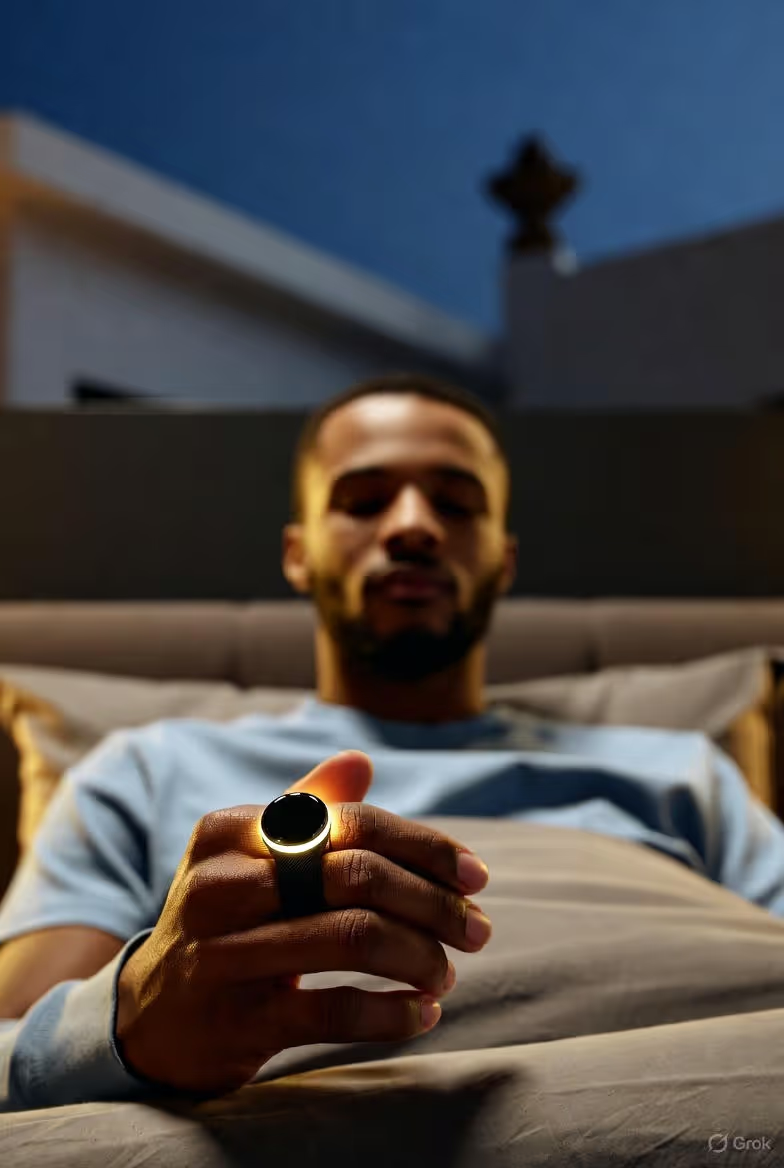
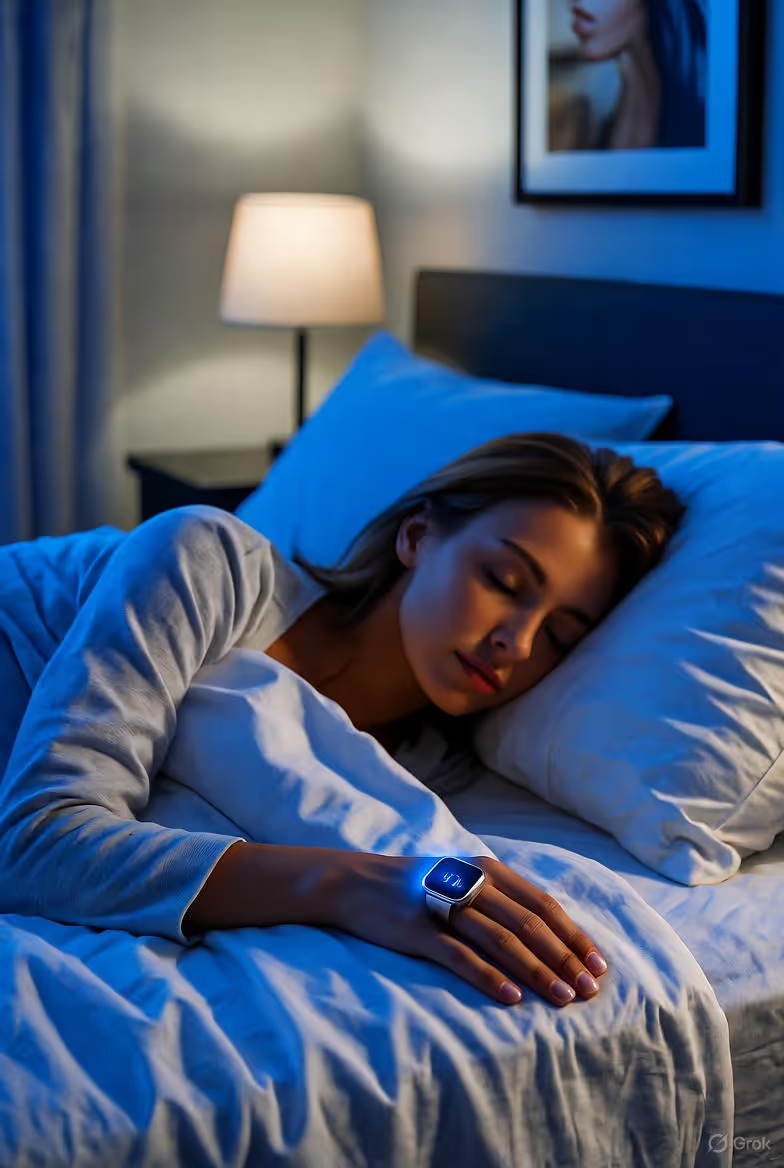
In the evolution of wearables, the smart ring represents a paradigm shift—a move from a device you wear to a device that becomes part of you. It’s the culmination of the quest for the optimal balance between clinical-grade data and seamless user experience. The ring form factor isn’t just an aesthetic choice; it’s a biomechanical and practical masterstroke for 24/7 health monitoring, especially for sleep.
The Biometric Advantage of the Finger:
Optimal Vascular Access: The finger’s palmar digital arteries provide a rich, pulsatile blood flow very close to the surface. PPG sensors, which use light to measure blood volume changes, get a stronger, less noisy signal here than on the bony, tendon-filled wrist. This translates to more accurate and reliable readings of heart rate, heart rate variability (HRV), and respiratory rate—the foundational metrics for sleep staging and recovery assessment.
Reduced Motion Noise: During sleep, your fingers are naturally still, especially compared to your wrists, which can twist and turn with body movements. This minimal artifact allows the ring’s sensors to capture clean physiological data without the "motion noise" that plagues wrist-worn devices, leading to more precise sleep/wake detection and stage estimation.
Perfect for SpO2: Measuring blood oxygen saturation (SpO2) reliably requires a strong, uninterrupted signal. The fingertip is the standard location for clinical pulse oximeters for this exact reason. A well-designed smart ring can therefore provide continuous, overnight SpO2 monitoring—a critical feature for detecting breathing disturbances like sleep apnea—in a way most wrist devices cannot match consistently.
The User Experience Revolution: Beyond pure biometrics, the ring wins on human factors critical for long-term adherence:
Unobtrusive Comfort: Once properly sized, a ring disappears. There’s no bulky screen to dig into your wrist, no need to take it off for charging every day (most rings last 4-7 days on a charge). You can wear it in any scenario—sleeping, showering, typing, working out—without a second thought.
24/7 Continuity: Because it’s so comfortable and socially invisible, the ring enables true continuous monitoring. You don’t have a "wear-time" gap. This creates an unparalleled longitudinal dataset, showing how your sleep impacts your day and how your day impacts your sleep in a continuous feedback loop.
Psychological Simplicity: Unlike a smartwatch, which buzzes with notifications and tempts you to check the time, a ring is a passive observer. It doesn’t contribute to digital anxiety or the temptation for sleep-disrupting "midnight clock checks." It silently gathers data while you live your life.
This convergence of superior signal acquisition and ideal user compliance makes the smart ring not just another wearable, but arguably the definitive form factor for sleep and recovery tracking. It brings us closer than ever to having a personal, at-home sleep lab that doesn’t interfere with the very rest it’s measuring. For those curious about the practicalities of this technology, many common questions are answered in our comprehensive FAQ section.
Decoding the Night: What Your Sleep Data Actually Means
With a sophisticated device like a smart ring now gathering data nightly, you’re presented with a dashboard of metrics and graphs. But raw data is just noise without interpretation. Understanding what these numbers represent is the key to transforming information into insight. Let’s decode the core pillars of modern sleep tracking.
1. Sleep Stages (Architecture): Your ring uses your heart rate, HRV, movement, and sometimes temperature to algorithmically estimate your time in Light, Deep, and REM sleep. The goal isn’t to match PSG with 100% medical accuracy, but to provide a highly reliable trend.
Deep Sleep Trend: Consistently low deep sleep can be a sign of physical overtraining, high stress, late-night eating, or alcohol consumption (which suppresses deep sleep in the latter half of the night).
REM Sleep Trend: Suppressed REM can be linked to anxiety, certain medications (like SSRIs), and irregular sleep schedules. Since REM is crucial for emotional processing, low REM often correlates with mood disturbances.
2. Heart Rate Variability (HRV) – The Master Metric of Recovery: HRV is not your heart rate, but the subtle variation in time between each heartbeat. Controlled by the autonomic nervous system, a higher HRV (more variability) indicates strong parasympathetic ("rest-and-digest") tone and good resilience. A lower HRV suggests your body is under stress—physical, mental, or emotional—and is in a sympathetic ("fight-or-flight") dominant state.
Overnight Average HRV: Tracks your nervous system’s recovery state during sleep. Seeing your HRV trend upwards over weeks is one of the best objective signs your lifestyle interventions (better sleep, stress management, training modulation) are working.
Nightly HRV Dip: A significant drop in HRV from your baseline can be an early warning sign of impending illness, overtraining, or excessive stress load.
3. Resting Heart Rate (RHR): Your lowest heart rate during sleep is a classic indicator of cardiovascular fitness and recovery. A lower RHR generally indicates better fitness. A RHR that is elevated 5-10+ BPM above your personal baseline can signal that your body is fighting something—an infection, dehydration, high stress, or inadequate recovery from exercise.
4. Blood Oxygen (SpO2) & Breathing: Overnight SpO2 monitoring can reveal subtle dips in blood oxygen saturation.
Consistent, significant dips (usually 4% or more from baseline) can be indicative of sleep-disordered breathing, like sleep apnea.
A stable, high SpO2 (98-100%) throughout the night is a strong sign of healthy respiratory function.
5. Sleep Temperature & Trends: Core body temperature naturally drops to initiate sleep. Some advanced rings track skin temperature trends.
A higher-than-normal sleep temperature can disrupt sleep cycles and be caused by a too-warm sleep environment, hormonal changes, or the onset of an immune response.
Longitudinal temperature data can also help women identify patterns related to their menstrual cycle.
The true power lies not in any single night’s data, but in the trends. A smart ring provides this longitudinal view, allowing you to see how changes in your behavior move the needle on your physiology. You move from asking "How did I sleep last night?" to "What is my sleep telling me about my overall health?" This shift is at the heart of the revolution, and seeing how real people experience it can be incredibly powerful, as seen in the real customer reviews at Oxyzen.
Beyond the 8-Hour Myth: Redefining "Good Sleep"
For decades, the monolithic mantra of "get 8 hours of sleep" dominated public health advice. While a useful rule of thumb, the Sleep Tracking Revolution has shattered this one-size-fits-all notion. We now understand that sleep quality is multidimensional, and the perfect night’s sleep is deeply personal. "Good sleep" is now defined by a combination of quantitative metrics and qualitative feelings.
The Pillars of Quality Sleep:
Consistency (Timing): Your body craves a regular schedule. Going to bed and waking up at roughly the same time every day (even on weekends) strengthens your circadian rhythm, making it easier to fall asleep and wake up naturally. A smart ring’s timeline makes your sleep/wake consistency visually obvious.
Continuity (Solidity): Good sleep is uninterrupted. Waking up multiple times throughout the night (micro-awakenings you may not even remember) fragments your sleep architecture and reduces its restorative power. High sleep efficiency (time asleep vs. time in bed) is a key metric here.
Architecture (Depth & Rhythm): A healthy proportion and cycling of sleep stages is crucial. This means sufficient deep sleep for physical restoration and adequate REM sleep for cognitive and emotional health. It’s not just about hitting a stage target, but about having smooth, cyclical transitions between them.
Regularity (Circadian Alignment): Quality sleep happens when your internal body clock is in sync with your external environment. This is influenced by light exposure, meal timing, and activity. A misaligned circadian rhythm, even with 8 hours in bed, leads to unrefreshing sleep.
Personal Baselines Are Key: The revolution empowers you to discover your unique sleep needs.
Genetic Variation: Some people genuinely thrive on 6.5 hours (short sleepers), while others need a solid 9 (long sleepers). Tracking helps you find your genetic sweet spot.
Lifestyle Phase: A training athlete needs more deep sleep for repair. A student during exams may need more REM for memory consolidation. A new parent’s needs are entirely different. Your "good sleep" changes with your life context.
The Feel-Good Correlation: The ultimate test is how you feel. The goal of tracking is to correlate your data (e.g., high HRV, balanced stages) with subjective markers: waking up refreshed, stable energy throughout the day, clear thinking, and emotional balance. When data and feeling align, you’ve defined good sleep for you.
This personalized framework moves us beyond guilt over not hitting an arbitrary 8-hour target and towards a nuanced understanding of what our individual bodies need to recover and thrive. It’s a more compassionate and effective approach to sleep health, which we explore in various contexts on our blog dedicated to holistic wellness.
The Day-Night Feedback Loop: How Your Day Sabotages or Supports Your Sleep
Sleep does not exist in a vacuum. The Sleep Tracking Revolution illuminates a powerful truth: your sleep quality is largely determined by your daytime choices. This creates a day-night feedback loop—a continuous cycle where your actions fuel or starve your recovery. Understanding this loop is the first step to breaking bad cycles and building virtuous ones.
Daytime Saboteurs (The Sleep Disruptors):
Light & Circadian Chaos: Insufficient bright light in the morning and excessive blue light from screens in the evening confuse your pineal gland, suppressing the sleep hormone melatonin. Your ring might show a delayed sleep onset or restless early sleep as a result.
Stress & Anxious Rumination: Unmanaged daytime stress leads to elevated cortisol, which can linger into the night, reducing deep sleep and increasing nighttime awakenings. You’ll see this reflected in a lower overnight HRV and a elevated resting heart rate.
Nutrition & Timing: A heavy, spicy, or high-fat meal too close to bedtime forces your digestive system to work overnight, raising core body temperature and disrupting sleep. Alcohol, while initially sedating, is a potent REM sleep suppressant and leads to fragmented sleep later in the night. Your data may show a spike in nighttime heart rate and poor sleep stage distribution.
Caffeine’s Long Shadow: Caffeine has a half-life of 5-6 hours. A 3 PM coffee can still be significantly blocking adenosine (a sleep-promoting neurotransmitter) at 9 PM, delaying sleep onset. The ring’s sleep latency metric tells this tale.
Sedentary Living vs. Overtraining: A completely sedentary day can lead to restless, unsatisfying sleep. Conversely, an extremely intense late-evening workout can raise core temperature and cortisol too close to bedtime, impairing sleep onset and quality.
Daytime Supporters (The Sleep Promoters):
Morning Light Anchor: Getting 10-30 minutes of bright outdoor light within an hour of waking firmly sets your circadian clock, promoting melatonin release at the appropriate time later.
Strategic Movement: Regular daily activity and exercise—especially finishing intense sessions at least 3 hours before bed—promote deeper sleep and increase sleep drive. Your ring will often show higher deep sleep percentages and better HRV on days with balanced activity.
Stress Management Buffers: Practices like mindfulness, meditation, or even a leisurely walk in nature lower sympathetic nervous system arousal. This pays a "sleep debt" during the day, resulting in a calmer transition into sleep, reflected in a quicker drop in heart rate as you fall asleep.
Nutritional Timing: Finishing your last large meal 2-3 hours before bed and opting for sleep-supportive nutrients (like magnesium, found in leafy greens or nuts) can significantly improve sleep continuity.
The smart ring acts as the objective judge in this feedback loop. You can conduct personal experiments: have a late coffee, log it, and see the impact on your sleep latency. Introduce a 10-minute evening meditation, and observe the effect on your HRV and deep sleep. This turns guesswork into guided self-knowledge, which is central to the philosophy behind tools like those developed by Oxyzen. To understand the mission driving this kind of innovation, you can learn more about our company’s purpose.
From Data to Action: Practical Hacks for the Modern Sleeper
Armed with an understanding of your personal data and the day-night loop, the next step is actionable change. The goal isn’t to become obsessed with perfect scores, but to use data to inform small, sustainable tweaks that compound into significantly better sleep and energy. Here are practical, data-informed hacks across the 24-hour cycle.
The Morning (6 AM - 12 PM): Set Your Rhythm
Light First, Phone Second: For at least 15 minutes after waking, seek bright light (outdoor is best) before diving into emails. This cortisol spike is natural and healthy when triggered by light, not stress.
Move Early: Even 10 minutes of gentle movement (stretching, walking) helps solidify the wake signal in your brain.
Caffeinate Strategically: Delay your first caffeine by 60-90 minutes after waking to avoid the afternoon crash and interference with adenosine clearance. Note the time and observe its effect in your app.
The Afternoon (12 PM - 6 PM): Sustain Energy, Prep for Wind-Down
Post-Lunch Walk: Combat the natural afternoon dip with a 10-15 minute walk outside. This boosts energy without disrupting nighttime sleep drive.
Caffeine Cut-off: Establish a personal caffeine curfew (often 1-2 PM) based on your sleep latency data. Your ring will show you if your current cut-off is too late.
Hydration Check: Dehydration increases nighttime waking and elevates heart rate. Aim to front-load fluids and taper in the evening to minimize bathroom trips.
The Evening (6 PM - 10 PM): The Critical Wind-Down
Digital Sunset: Implement a 60-minute screen-free buffer before bed. Use blue-light blockers if necessary, but aim for analog activities: reading a physical book, light tidying, conversation.
Temperature Drop: Take a warm bath or shower 1-2 hours before bed. The subsequent cool-down of your core body temperature is a strong sleep-onset signal. You can track how this affects your "time to fall asleep" metric.
The "Brain Dump": Spend 5-10 minutes writing down tomorrow’s tasks or lingering worries in a notebook. This gets anxious thoughts out of your head and onto paper, reducing cognitive arousal.
Darkness & Coolness: Make your bedroom a cave—cool (65-68°F or 18-20°C is ideal), dark (consider blackout shades or a sleep mask), and quiet (white noise can mask disruptions).
The In-Bed Experimentation:
Side Sleeping: If you snore or have mild sleep apnea, side sleeping can dramatically improve breathing. Your ring’s SpO2 and restfulness graph will show the improvement.
Consistency is King: Pick a bedtime and wake time you can stick to within a 30-minute window, 7 days a week. Your sleep regularity score will improve, and you’ll feel the difference.
The key is to implement one change at a time and observe its impact on your data for at least a week. Did your sleep efficiency improve? Did your deep sleep increase? Did you wake up feeling more refreshed? This methodical, data-informed approach turns sleep optimization from a vague goal into a tangible personal science project. For more structured guidance and answers to common implementation questions, our FAQ resource is a valuable tool.
The Silent Alarm: Using Sleep Data to Predict Illness & Overtraining
One of the most profound aspects of the Sleep Tracking Revolution is its shift from retrospective explanation to prospective prediction. Your physiological data, especially during sleep when external variables are minimized, can act as a sophisticated early-warning system, alerting you to issues long before overt symptoms appear. Two of the most critical areas are immune response and training overload.
HRV & RHR: The Canaries in the Coal Mine Your autonomic nervous system is exquisitely sensitive to internal stress. When your body starts mobilizing resources to fight a pathogen (virus, bacteria) or recover from excessive physical strain, it creates a state of systemic stress that is clearly visible in your nighttime data.
The "Sickness Signal": Often 24-48 hours before you feel a sore throat or fatigue, your body’s immune activation can cause a noticeable dip in your HRV and a concurrent rise in your resting heart rate. Waking up to see your HRV significantly below your baseline and your RHR elevated is a strong cue to prioritize rest, hydration, and immune-supportive measures. It’s your body’s whisper before it has to scream.
The "Overtraining Alert": For athletes and active individuals, the line between optimal training and detrimental overreaching is thin. Chronically low HRV, elevated RHR, and increased wakefulness at night (especially in the early hours) are classic signs the body is not recovering from training load. Ignoring these signals can lead to performance plateaus, injury, or full-blown overtraining syndrome. Data allows for autoregulation—taking an extra rest day or opting for light movement instead of a hard session based on objective recovery metrics.
Temperature Trends & Menstrual Cycle Insights: For women, nightly temperature tracking can provide powerful insights into hormonal health and cycle phases. A sustained rise in basal body temperature confirms ovulation has occurred. Over time, this data can help map the length and regularity of cycles, identify potential anomalies, and understand how sleep quality fluctuates with hormonal changes (e.g., poorer sleep in the luteal phase for some). This turns the ring into a holistic health tool that connects different aspects of physiology.
Sleep & Mental Health Correlation: While not a diagnostic tool, sleep data is a powerful correlative indicator of mental well-being. Periods of high anxiety or low mood are frequently mirrored in the data: reduced total sleep, fragmented sleep architecture (particularly suppressed REM), and lower HRV. Observing these patterns can be the nudge someone needs to seek support or double down on stress-management techniques. Seeing sleep improve can also provide objective hope during recovery.
This predictive power transforms a sleep tracker from a lifestyle gadget into a genuine health guardian. It fosters a deeper mind-body connection, teaching us to listen to the subtle language of our physiology. These real-world impacts are reflected in the experiences shared by users, which you can find in their own words on our testimonials page.
Demystifying Sleep Disorders: When to Use Data and When to See a Doctor
The democratization of sleep data empowers individuals, but it also raises important questions about the line between self-knowledge and medical diagnosis. Smart rings and wearables are powerful screening and management tools, but they are not, and should not be considered, replacements for a board-certified sleep physician or a clinical PSG study. Understanding this distinction is crucial for using the technology responsibly.
What Your Ring Can Alert You To:
Possible Sleep Apnea Indicators: Consistent, significant dips in nightly SpO2 (oxygen saturation), coupled with a high resting heart rate and frequent movement/awakenings, can be strong indicators of sleep-disordered breathing. Snoring intensity (if tracked via a companion app) adds another data point. This pattern warrants a professional evaluation.
Chronic Sleep Insufficiency & Irregularity: The data can unequivocally show you if you’re chronically short on sleep or have a highly irregular schedule—both major risk factors for long-term health issues. It provides the objective proof to take your own sleep hygiene seriously.
Circadian Rhythm Disruptions: Clear graphs showing you consistently fall asleep and wake up at widely varying times provide evidence of a delayed or irregular circadian rhythm, which can be discussed with a doctor or sleep specialist.
The Unmatched Power of a Clinical Sleep Study: A diagnostic PSG in a lab is still necessary for definitive diagnosis and complex cases because:
Direct Brain Measurement: EEG is the only way to definitively score sleep stages. Consumer devices make educated estimates.
Comprehensive Breathing Analysis: Lab studies directly measure breathing effort (chest/abdomen belts) and nasal/oral airflow, differentiating between obstructive and central sleep apnea with precision.
Leg Movement Detection: EMG on the legs diagnoses Periodic Limb Movement Disorder (PLMD).
Expert Supervision: A sleep technologist monitors the study in real-time and can adjust sensors if needed.
The Ideal Partnership: Data-Informed Healthcare The revolutionary model is a collaborative one. You use your ring to:
Identify a Potential Problem: Notice a concerning pattern over weeks (e.g., poor SpO2, terrible sleep efficiency).
Gather Concrete Evidence: Bring multi-week trend graphs to your doctor, not just a vague complaint of "tiredness." This objective data can help triage and justify a referral for a sleep study.
Track Treatment Efficacy: If diagnosed with sleep apnea and prescribed a CPAP machine, you can use your ring to track how your SpO2, resting heart rate, and sleep quality improve with treatment compliance. The same goes for tracking the impact of cognitive behavioral therapy for insomnia (CBT-I).
This approach makes you an informed, active participant in your healthcare, equipped with longitudinal data that a single night in a lab cannot provide. It’s about using technology to bridge the gap between annual check-ups and daily life. For those seeking to understand the broader vision of integrating technology with wellness, you can learn more about our mission at Oxyzen.
The Future of Slumber: Where the Sleep Tracking Revolution is Headed Next
We are still in the early chapters of the Sleep Tracking Revolution. The convergence of advanced sensors, powerful AI, and a growing cultural priority on sleep is driving innovation at a breathtaking pace. The future promises not just more data, but smarter interpretation, proactive intervention, and deeper integration into our healthcare and daily lives.
1. Hyper-Personalized AI Sleep Coaches: The next generation of algorithms will move beyond descriptive analytics ("you had 1.2 hours of REM") to prescriptive insights. Imagine your app analyzing months of your data alongside your calendar, saying: *"Based on your high-stress meeting tomorrow at 9 AM and your current low HRV trend, I recommend a 20-minute meditation at 8 PM tonight and lights out by 10:15 PM to optimize your REM sleep for emotional resilience."* The AI becomes a true coach, learning your unique patterns and suggesting micro-adjustments.
2. Non-Contact, Ambient Sensing: While wearables like rings are minimally intrusive, the ultimate convenience is no device at all. Advanced radar (mmWave), ultrasonic sensors, and piezoelectric bed mats are being refined to capture heart rate, respiration, and sleep stages from a distance. These will integrate into smart homes, allowing for seamless monitoring, especially for older adults or those resistant to wearables.
3. Deeper Biomarker Discovery: Research is exploring how sleep data correlates with long-term disease risk. Future devices may track more advanced biomarkers—like nocturnal glucose trends via interstitial fluid or core body temperature with clinical precision—providing early insights into metabolic health, hormonal imbalances, and neurodegenerative disease risk.
4. Closed-Loop Environmental Integration: Your sleep tracker won’t just monitor; it will automatically optimize your environment. It could sync with your smart thermostat to lower the bedroom temperature as you enter deep sleep, or with motorized blinds to gradually introduce light at the optimal point in your sleep cycle for a natural awakening. It could even signal a white noise machine to adjust its sound profile to mask a sudden bout of outside noise.
5. Standardization & Clinical Adoption: As data quality improves, we will likely see moves to standardize metrics and validate consumer devices against clinical standards. This could lead to certain tracked data being accepted in remote patient monitoring programs, allowing doctors to monitor the sleep health of cardiac, diabetic, or psychiatric patients continuously from home.
The trajectory is clear: sleep tracking is evolving from a niche curiosity into a foundational pillar of predictive and preventative health. It will become less about isolated nighttime metrics and more about a continuous, holistic stream of recovery data that seamlessly integrates with our fitness, nutrition, and medical profiles. The bedroom is becoming the most important health clinic we own, and the journey from the lab to our fingertips is just the beginning of this transformative era. To stay updated on these evolving trends and insights, our blog is a continually updated resource.
The Ethics of Sleep Data: Privacy, Obsession, and the Quest for Balance
The Sleep Tracking Revolution, for all its benefits, arrives with a suite of ethical dilemmas and potential pitfalls. As we invite ever-more intimate data streams about our unconscious hours into the digital ecosystem, critical questions arise: Who owns this data? How is it used? And perhaps most personally, when does helpful self-quantification become harmful obsession? Navigating this new terrain requires a thoughtful balance between empowerment and excess.
The Privacy Paradox: Your Most Vulnerable Data Sleep data is uniquely sensitive. It’s not just about steps taken or calories burned; it’s a direct window into your autonomic nervous system, your stress resilience, and your potential health vulnerabilities. A night of poor sleep data could, in a dystopian scenario, be misconstrued by an insurer or employer as a sign of unreliability or future health cost. While regulations like GDPR and HIPAA provide some frameworks, the landscape for consumer wellness data remains a grey area.
Data Ownership & Portability: Users must scrutinize terms of service. Do you own your data, or does the company? Can you easily export your raw data in a standardized format (like Apple Health or Google Fit)? Transparency here is paramount. Companies that prioritize user trust make this process clear and simple.
Anonymization & Aggregation: Much of the value for companies comes from aggregated, anonymized datasets used to improve algorithms. The ethical line is drawn at ensuring data is truly anonymized and cannot be re-identified to link sensitive sleep patterns back to individual users.
Third-Party Sharing: The biggest concern is the sale or sharing of granular sleep data with third parties for advertising, lending, or insurance purposes. The principle of data minimalism—collecting only what is necessary for the core service—should be a guiding light for ethical companies in this space.
Orthosomnia: When Perfect Sleep Becomes the Enemy of Good Sleep A more subtle, personal ethical challenge is the rise of orthosomnia—a term coined by researchers to describe the obsession with achieving perfect sleep scores. This paradox occurs when the pursuit of ideal data actually increases anxiety and undermines sleep itself.
The Anxiety Feedback Loop: Lying in bed, worried because your heart rate hasn’t dropped to your desired level yet, or compulsively checking your app after a nighttime waking, directly activates the stress response that inhibits sleep. The tracker becomes a source of performance anxiety, not a tool for relaxation.
Misplaced Trust in Imperfect Algorithms: Placing absolute faith in the stage breakdown from a consumer device can be misleading. Becoming despondent over a "low" deep sleep percentage based on an estimate can create distress over a problem that may not exist as severely as the data suggests.
Losing the Subjective Connection: The ultimate metric of good sleep is how you feel. Orthosomnia risks severing that connection, making you feel terrible despite "good" data, or vice versa. The data should inform your feelings, not override them.
Cultivating a Healthy Relationship with Your Data: To harness the revolution without being consumed by it, adopt these balanced practices:
Trends Over Daily Scores: Ignore the daily number. Focus on weekly and monthly trends. One bad night is noise; a two-week decline is a signal.
The "Three-Day Rule": Never make a drastic lifestyle change based on a single night’s data. Look for a pattern over at least three days before investigating causes.
Regular Data Fasts: Consider taking one night off per week from wearing your tracker, or refrain from checking the app first thing in the morning. Start your day with your own feelings, then consult the data later with curiosity, not anxiety.
Use It as a Guide, Not a Grade: Reframe the data as a friendly report on your body’s needs, not a report card on your worth. Ask: "What is my body trying to tell me?" rather than "How did I fail?"
The ethical use of sleep technology requires vigilance from both companies and consumers. It demands products designed with privacy-by-design principles and a user culture that prioritizes holistic well-being over numeric perfection. This balanced philosophy is central to creating tools that truly enhance life, a topic we explore in our ongoing mission to improve holistic wellness.
The Wearable Wars: A Comparative Look at Smart Rings vs. Smartwatches for Sleep
With the sleep-tracking market booming, consumers face a critical choice: the traditional smartwatch on the wrist or the emerging smart ring on the finger? This isn't a trivial decision; the form factor dictates the quality of data, the user experience, and ultimately, the insights you'll gain. Let's conduct a detailed, data-driven comparison to illuminate the strengths and trade-offs of each.
The Core Differentiator: Signal Quality & Physiological Accuracy This is the most significant battleground, and it hinges on sensor placement.
Heart Rate & HRV: The finger's vascular density provides a stronger, cleaner PPG signal. Rings typically offer more consistent, medical-grade HR and HRV readings, especially during periods of low movement (i.e., sleep). Watches, positioned on the bony wrist, are more susceptible to motion artifact and "gap" errors where no reading is captured.
Blood Oxygen (SpO2): The fingertip is the clinical gold standard. Rings are inherently positioned to capture reliable, continuous overnight SpO2 for breathing disturbance screening. Most watches use wrist-based SpO2, which is less reliable for continuous monitoring and better suited for spot checks.
Skin Temperature: Both can measure this, but the ring's fit and placement often provide a more stable reading of long-term trends, which is more valuable than absolute accuracy.
The User Experience & Compliance Battle
All-Day & Night Comfort: A well-fitted ring disappears. It doesn't catch on sheets or hair, and there's no bulky face to press into your wrist while side-sleeping. For 24/7 wear, the ring has a distinct comfort advantage, which directly leads to higher compliance and more complete datasets.
Battery Life & Charging: Smart rings excel here, with most lasting 5-7 days on a single charge. This enables true continuous tracking without the daily "charging gap" that plagues smartwatches, which often need charging every 1-2 days. Missing nights of sleep data defeats the purpose of longitudinal tracking.
Durability & Lifestyle: Rings are generally waterproof and less prone to screen damage. However, they can be susceptible to scratches from heavy manual labor. Watches, with their larger screens, are more vulnerable to impacts but may be preferred for intense gym sessions where you want real-time workout metrics on your wrist.
Functionality & Ecosystem: Different Tools for Different Jobs
The Smartwatch: A Connected Command Center. This is its core strength. Notifications, calls, apps, GPS, contactless payments, and comprehensive fitness tracking with a visible screen. For sleep, it's an added feature to a multi-purpose device. The screen, however, is a double-edged sword—it's useful by day but can be disruptive at night.
The Smart Ring: A Dedicated Health Sentinel. Its design philosophy is passive and focused. It prioritizes collecting the highest-fidelity physiological data with zero interaction. It doesn't buzz with notifications. It's a specialist tool for recovery, stress, and sleep, designed to be forgotten until you review its insights. It often pairs with a more comprehensive app ecosystem for analysis.
The Verdict: It’s About Priority
Choose a Smart Ring IF: Your primary goal is unobtrusive, clinical-grade sleep and recovery data with 24/7 compliance. You want the most accurate HRV, SpO2, and temperature trends to guide your health and training decisions. You are content to use your phone or a separate watch for notifications and workout tracking.
Choose a Smartwatch IF: You need an all-in-one connectivity device where sleep tracking is one of many important features. You value seeing notifications on your wrist, using apps, and having GPS for runs. You are willing to sacrifice some sleep data accuracy and deal with nightly charging for this multifunctionality.
For many seeking the purest insight into their sleep health, the ring’s focused excellence is winning the war. It represents the maturation of the wearable category from a generalist gadget to a specialist health tool. To see how this philosophy translates into a specific product's capabilities and user experiences, you can read real customer reviews of Oxyzen.
Special Populations: Tailoring Sleep Tracking for Shift Workers, Parents, and Seniors
The "ideal" 10 PM to 6 AM sleep schedule is a reality for only a portion of the population. The true test of the Sleep Tracking Revolution’s utility is how well it serves those with non-traditional sleep patterns and unique challenges. For shift workers, new parents, and older adults, the insights can be life-changing, but they require a tailored approach to interpretation.
For the Shift Worker: Mastering Circadian Realignment Shift work is a profound assault on the body's natural rhythm, linked to increased risks for metabolic disorders, cardiovascular disease, and mood issues. Trackers don't solve this, but they provide the map to navigate it.
Tracking the "Anchor Sleep": The goal is to protect a core block of sleep, even if it's split. Data can help identify the most restorative 4-5 hour period to defend fiercely. Is it the sleep after a night shift, or the nap before it? The ring’s data shows which segment yields the deepest sleep and best HRV recovery.
Light Exposure Management: Using the day-night feedback loop knowledge, a shift worker can deliberately use light to hack their rhythm. Data can validate if wearing blue-light blocking glasses after a night shift and seeking bright light before an evening shift helps improve sleep quality during the day.
Monitoring Long-Term Strain: Consistently poor HRV and elevated RHR across cycles are objective signs of cumulative strain. This data can be a powerful motivator to advocate for better shift rotations or to prioritize recovery strategies on days off.
For New Parents: Surviving and Optimizing Fragmented Sleep The early years of parenting are a marathon of sleep deprivation. Here, tracking shifts from optimizing perfect sleep to managing survival and spotting opportunities.
Redefining "Good Sleep": The metric shifts from "total sleep" to "sleep efficiency." When you are in bed, how much are you actually asleep? This helps maximize the yield from short, precious windows.
Identifying Micro-Recovery: Even 20 minutes of deep sleep can be revitalizing. The tracker can show a partner, "You got a solid block of deep sleep during my 4 AM feed, you should feel a bit more alert today," providing objective hope and guiding decisions about who takes which shift.
Watching for Maternal/Paternal Health: Postpartum recovery is physical. Tracking HRV and RHR can offer signs of returning to baseline or flag excessive stress. For both parents, data can help communicate the shared load and need for support beyond subjective "tiredness."
For Older Adults: Understanding Changing Sleep Architecture Aging naturally changes sleep. Deep sleep decreases, nighttime awakenings increase, and circadian rhythms can advance (becoming "early birds"). Tracking helps distinguish normal aging from treatable disorders.
Sleep Apnea Screening: The risk of sleep-disordered breathing increases with age. Continuous, at-home SpO2 monitoring is a non-invasive way to screen for potential oxygen desaturations that warrant a doctor’s visit, far more effectively than subjective snoring complaints.
Differentiating Causes of Wakefulness: Is the 3 AM waking due to anxiety, pain, a full bladder, or a circadian shift? Correlating wake-up times with heart rate spikes (suggesting stress/pain) or gentle rises (suggesting circadian) can guide solutions, from pain management to adjusted meal times.
Validating the Need for Daytime Naps: If nighttime sleep is consistently fragmented and short, a strategic daytime nap may be essential for total daily rest. Data can help time that nap (e.g., early afternoon to avoid evening sleep disruption) and show its benefit on afternoon/evening alertness.
For all these groups, the technology provides something invaluable: objectivity and personalization. It moves the conversation from "You should sleep more" to "Here is how your unique sleep pattern looks, and here are targeted strategies that might help you." This empathetic application of technology is a core part of creating inclusive wellness tools, as discussed in our company's vision.
Building a Sustainable Sleep Practice: Beyond the Hype and Helix Scores
The initial excitement of sleep tracking can fade, leaving the device in a drawer. The true revolution isn't in the purchase, but in the long-term integration of insights into a sustainable lifestyle. This final section is about moving from being a tracker of sleep to becoming a steward of your recovery—building a practice that lasts for years, not weeks.
Phase 1: The Discovery & Detective Period (Months 1-3) This is the data-gathering and hypothesis-testing phase. Your goal is to establish your personal baselines and learn how your body responds.
Observe, Don't Judge: Wear your device consistently without making major changes. Let it paint a picture of your "normal."
Log Context Meticulously: Use the journal feature in your app. Note stress events, late meals, alcohol, workouts, and caffeine. This creates the correlations that turn data into understanding.
Run Single-Variable Experiments: Based on initial observations, test one change at a time. "This week, I'll move my caffeine cut-off to 2 PM." "Next week, I'll try a 10 PM digital sunset." Observe the impact on your trends for at least 5-7 days.
Phase 2: The Integration & Habit Stacking Period (Months 3-12) Now, take the learnings that worked and weave them into automatic habits.
Identify Your Non-Negotiables: From your experiments, find the 2-3 sleep-supporting behaviors that yield the biggest ROI for you. It might be morning light and a consistent wake time. Make these non-negotiable, like brushing your teeth.
Create Rituals, Not Rules: Frame your wind-down as a pleasurable ritual—a cup of herbal tea, a few pages of a novel, gentle stretching by candlelight. This makes it sustainable, not a chore.
Use Data for Course-Correction, Not Micromanagement: Check your weekly trends, not your daily score. Use a downward trend in HRV or an uptick in wakefulness as a gentle cue to audit your recent stress, diet, and schedule—a course-correction, not a crisis.
Phase 3: The Mastery & Intuition Period (Year 1 and Beyond) At this stage, the external device supports a heightened internal awareness.
Data-Validated Intuition: You'll start to feel when your HRV is likely low or your sleep was fragmented. The tracker confirms and refines this intuition. The goal is for the data to become a backup system to your own bodily awareness.
Strategic Use: You may not need to wear the device every single night forever. You might use it for a month each season to see how changing light and routines affect you, or during periods of high stress or new training blocks to optimize recovery.
Focus on the Macro-Variables: You realize the biggest levers are timeless: light, timing, stress, and diet. The tracker simply shows you how sensitively your body responds to these fundamentals, reinforcing their eternal importance.
Letting Go of Perfection: A sustainable practice acknowledges life’s variability. There will be nights out, sick children, stressful deadlines, and travel that disrupts sleep. The data during these times isn't a failure; it's a record of your resilience. The recovery after the disruption—seeing your HRV climb back—is the true victory.
The Sleep Tracking Revolution, at its best, doesn't create dependency on a device. It fosters a deeper, more respectful dialogue with your own body. It returns agency to you, providing the language to understand your needs and the feedback to meet them. That is the ultimate promise: not a perfect sleep score, but a more awake, vibrant, and resilient life. For continued learning and support on this lifelong journey, a wealth of resources awaits on our dedicated wellness blog.
The Data Gold Rush: How Sleep is Fueling the Future of Personalized Medicine
The proliferation of sleep data is creating a seismic shift beyond individual wellness, rippling into the very foundations of healthcare. This vast, longitudinal dataset—captured not in episodic clinic visits but in the continuous flow of home life—is becoming the bedrock of a new era: true personalized and predictive medicine. The sleep tracker is evolving from a consumer gadget into a vital node in a distributed health monitoring network.
From Population Averages to the N-of-1 Model Traditional medicine often relies on population-level guidelines. The sleep data revolution enables the N-of-1 study model, where each individual is their own control. A doctor is no longer limited to comparing your one-night lab study to a broad average; they can review months of your personal trends.
Baseline-Driven Diagnosis: What constitutes a "low" HRV or a "bad" night of sleep is unique to you. A physician can identify deviations from your established healthy baseline, which is far more sensitive than spotting deviations from a population mean. A night that looks "normal" on a population chart might be a significant red flag in your personal history.
Medication & Treatment Response: How does a new blood pressure medication affect your sleep architecture and overnight HRV? Does cognitive behavioral therapy for insomnia (CBT-I) objectively improve your sleep efficiency over eight weeks? Continuous data provides quantitative, objective feedback on treatment efficacy, allowing for precise titration and personalization.
The Predictive Power of Longitudinal Biomarkers The real gold lies in pattern recognition over time. Research is increasingly linking specific sleep data signatures to future health risks.
Sleep Fragmentation & Neurodegeneration: Studies suggest that increased sleep fragmentation and reduced slow-wave sleep are correlated with higher levels of amyloid-beta and tau proteins in the brain, hallmarks of Alzheimer's disease. Continuous tracking could provide an early, at-home screening tool for neurological resilience.
Nocturnal HRV & Cardiovascular Risk: Chronically low overnight HRV is a robust predictor of cardiovascular events. Ambulatory, long-term HRV monitoring via a wearable could identify at-risk individuals far earlier than traditional annual check-ups, prompting preventative lifestyle interventions.
SpO2 Variability & Metabolic Health: Emerging research points to a link between subtle, non-apneic oxygen desaturations during sleep and insulin resistance. This data could provide an early warning sign for metabolic syndrome, long before fasting glucose levels rise.
Integrating the Data Stream: The Future Health Dashboard The future lies not in isolated sleep data, but in its integration with other continuous biomarkers. Imagine a unified health dashboard that synthesizes data from your ring (sleep, HRV, SpO2), a continuous glucose monitor (blood sugar trends), a smart scale (body composition), and your electronic health record.
The Cause-and-Effect Matrix: Did that late, high-glycemic dinner cause a glucose spike that correlated with a restless night and a low morning HRV? Did a period of high work stress (logged) precede a week of sleep fragmentation, which then preceded a gradual rise in resting heart rate? These interconnected narratives provide a holistic view of health that is dynamic and causal.
Remote Patient Monitoring (RPM): For patients with chronic conditions like heart failure, COPD, or diabetes, continuous sleep and vital sign data transmitted to a care team can enable early intervention. A trending increase in resting heart rate and decrease in SpO2 in a heart failure patient could signal fluid retention before the patient feels symptomatic, preventing a costly hospitalization.
This data-driven future requires robust partnerships between technology companies, medical researchers, and healthcare providers to validate signals and build clinical-grade tools. It represents a shift from sick care to true health care, where the focus is on maintaining wellness by preemptively addressing imbalances revealed in our daily—and nightly—data. For a deeper look at how one company is approaching this integrated vision, you can learn more about Oxyzen’s comprehensive approach.
The Dark Side of Light: How Our 24/7 World Hijacks Sleep at a Cellular Level
To master our sleep, we must understand its greatest modern adversary: artificial light. The invention of the electric light bulb was a triumph that effectively severed humanity from the natural solar cycle. Today, we are immersed in an endless "digital daylight," and the physiological consequences for our sleep are profound. This isn't just about feeling alert; it’s about a biochemical cascade that disrupts our most fundamental rhythms.
The Melanopsin Mechanism: Your Eyes' Secret Sleep Sensor The process begins with a specialized photoreceptor in your eyes called melanopsin. Unlike rods and cones (which help you see), melanopsin cells are dedicated to detecting light intensity, specifically short-wavelength "blue" light, and sending signals directly to your brain's master clock—the suprachiasmatic nucleus (SCN).
Day Signal: When melanopsin detects strong blue light (as in sunlight), it signals the SCN to suppress melatonin production, boost cortisol for alertness, and set in motion the wakeful phases of your circadian rhythm.
Night Signal: As blue light fades at dusk, the signal ceases, allowing the pineal gland to release melatonin, the "hormone of darkness," which promotes sleepiness and initiates a cascade of reparative processes.
The Digital Intruder: How Screens Simulate Noon at Midnight Every smartphone, tablet, computer, and LED bulb emits a high proportion of melatonin-suppressing blue light. When we use these devices after sunset, we are essentially telling our melanopsin cells, and thus our SCN, that it is still midday.
The Melatonin Squelch: Studies show that even moderate screen use before bed can suppress melatonin onset by over 50% and delay its peak by over 90 minutes. You are biochemically fighting your own desire to feel sleepy.
Circadian Phase Delay: Chronic evening light exposure doesn't just delay sleep onset one night; it progressively shifts your entire circadian rhythm later. This leads to a form of social jetlag, where you struggle to wake for morning obligations.
Beyond Sleep: The Systemic Health Impact The disruption extends far beyond poor sleep. A misaligned circadian rhythm, driven by mistimed light, is linked to:
Metabolic Dysregulation: Confused circadian clocks in liver and fat cells impair glucose metabolism and promote weight gain.
Mood Disorders: The delicate balance of serotonin (a precursor to melatonin) and other neurotransmitters is disrupted, correlating with increased risk of depression and anxiety.
Hormonal Imbalances: Cortisol rhythms become flattened or inverted, and reproductive hormone cycles can be disturbed.
Reclaiming Your Rhythm: A Practical Light Hygiene Protocol Knowledge is power. You can harness your understanding of light to become your own circadian architect.
Morning (5 AM - 9 AM): Seek High-Intensity Light. Get at least 15-30 minutes of outdoor light without sunglasses. If impossible, use a bright light therapy lamp (10,000 lux) within an hour of waking. This is your most important signal.
Daytime (9 AM - 6 PM): Maintain Bright Environmental Light. Work near windows. Avoid dim, cave-like offices. This reinforces the strong day signal.
Evening (6 PM - Bedtime): Implement a Digital Sunset.
2-3 Hours Before Bed: Dim overhead lights. Use lamps with warm, dimmable bulbs.
90 Minutes Before Bed: Activate system-wide "Night Shift" or "Blue Light Filter" settings on all devices. Remember, these filters only reduce—not eliminate—the problem.
60 Minutes Before Bed: The ideal goal is to eliminate all screen exposure. This is the time for analog activities.
The Bedroom: Make it a light-proof sanctuary. Use blackout curtains. Eliminate all standby LEDs (tape them over). Consider a sleep mask if complete darkness isn't possible.
By mastering your light exposure, you stop fighting your biology and start working with it. This foundational pillar of sleep hygiene, informed by cutting-edge chronobiology, is a topic we frequently explore with practical tips on our wellness-focused blog.
The Temperature Tango: Why Getting Cold is the Secret to Deep Sleep
While light is the primary driver of your sleep timing, temperature is the master regulator of sleep quality and depth. The relationship between core body temperature and sleep is a delicate, ancient dance that modern life often disrupts. Understanding this "temperature tango" is a powerful lever for unlocking more restorative rest.
The Biology of the Nightly Cool-Down Your circadian rhythm governs not just melatonin, but also your core temperature. It naturally peaks in the late afternoon and begins a steady decline about two hours before your usual bedtime. This drop is not a passive event; it's an active process essential for sleep initiation and maintenance.
Vasodilation: To lose heat, your body sends more blood to the extremities (hands and feet), which act as radiators. This is why people with insomnia often have cold hands and feet—the vasodilation process is impaired.
The Sleep Switch: The falling temperature is a direct signal to the sleep-promoting neurons in the brain's hypothalamus. It tells your body it's safe to transition into unconsciousness and, crucially, into deep, slow-wave sleep.
How Modern Comforts Disrupt the Dance We live in thermally static environments. Central heating and thick duvets, while comfortable, can trap heat and prevent the necessary cooling.
The Overheated Bedroom: The ideal sleep environment is cool, between 65-68°F (18-20°C). Many bedrooms are kept much warmer, blunting the core temperature drop and leading to more light, fragmented sleep.
The Wrong Bedding: Non-breathable materials (certain synthetics, high-thread-count polyester blends) trap moisture and heat, creating a microclimate that inhibits cooling.
Strategic Cooling: Hacking Your Thermoregulation You can actively promote this cooling process to enhance sleep.
The Warm Bath Paradox: Taking a warm bath or shower 1-2 hours before bed is profoundly effective. As you step out, your dilated blood vessels rapidly release heat into the cooler ambient air, accelerating the core temperature drop. Data from sleep trackers often shows a faster sleep onset and increased deep sleep following this ritual.
Bedroom Climate Control: Invest in a programmable thermostat to lower the bedroom temperature at night. If that's not possible, use fans for air circulation. The sensation of slight coolness on the skin is a cue for sleep.
The Bedding System: Ditch the single heavy duvet. Use layered, breathable natural fabrics (cotton, linen, wool). This allows you to peel off layers as your body heats up throughout the night. Consider a cooling mattress pad or pillow.
The Sock Secret: If you have cold feet, wear socks. This prevents vasoconstriction (the narrowing of blood vessels) in the feet, actually promoting overall better heat distribution and the core cooling process.
Mind the Midnight Spike: Many people experience a core temperature rise in the very early morning (around 4 AM), which can precipitate waking. Keeping the room cool can mitigate this.
Tracking the Trend: Advanced wearables that track skin temperature are invaluable here. They don't give you a clinical core temperature reading, but they show the trend. You can see if your nighttime temperature is consistently elevated and correlate it with poor sleep scores. Then, implement a cooling strategy and watch the trend line—and your deep sleep—improve.
Mastering the temperature tango is a beautiful example of using simple, natural principles, backed by modern data, to work in harmony with your body's innate intelligence. For more detailed guidance on optimizing your sleep environment and other biohacks, our FAQ section offers a wealth of practical advice.
The Sound of Silence (and Noise): How Auditory Environments Shape Sleep Architecture
Sound is the sense that never sleeps. Our auditory system remains on high alert overnight, a evolutionary safeguard against threats. In the modern world, this vigilance is triggered not by predators, but by traffic, partners, pets, and the hum of electronics. The auditory landscape of your bedroom is a critical, and often overlooked, component of sleep hygiene that directly impacts sleep architecture.
The Physiology of Sleep Disruption: From Cortisol to Micro-Arousals Unexpected noises don't have to wake you fully to damage sleep quality. They trigger micro-arousals—brief shifts in brainwave pattern toward wakefulness that fragment the sleep cycle.
Sympathetic Activation: Even if you don't remember it, a sudden noise can cause a spike in heart rate and a release of stress hormones like cortisol and adrenaline, pulling you out of deeper sleep stages.
The Light Sleep Trap: Noisy environments can prevent you from descending into deep N3 and REM sleep, trapping you in lighter, less restorative N2 sleep. Your tracker might show high "restlessness" and low "deep sleep" percentages.
The Urban Challenge & The Brain's Filter Constant, low-level noise (like city traffic) presents a different problem. While you may think you've gotten used to it, your brain has not. It continues to process the sound, elevating stress hormones and preventing full relaxation. The brain's noise-filtering mechanism works less effectively during sleep.
Curating Your Sonic Environment: Solutions from Simple to High-Tech
The Gold Standard: Continuous White Noise or Pink Noise
White Noise: Contains all audible frequencies at equal intensity (like a static hiss). It acts as a "sonic blanket," masking irregular noises by filling the auditory spectrum. Studies show it can improve sleep continuity, especially in noisy environments.
Pink Noise: Emphasizes lower frequencies (like steady rain or a waterfall). More recent research suggests pink noise may have a unique benefit: by gently synchronizing with brain waves, it has been shown in some studies to enhance slow-wave deep sleep and improve memory recall. Your smart ring could be the tool to validate this for you—try a week with pink noise and monitor your deep sleep trends.
Other Sound Masking Options: Brown noise (even deeper frequencies), fan sounds, or dedicated nature soundscapes (forest, ocean) can also be effective. The key is consistency and lack of sudden variations.
Physical Barriers: For intermittent noise (a snoring partner), high-quality foam earplugs can be transformative. For constant low-frequency noise (like traffic), soundproofing curtains or window inserts may be necessary.
The Silence Paradox: For some, absolute silence can be unsettling and make internal thoughts louder. This is where consistent, gentle background sound becomes therapeutic.
Using Your Tracker as a Sonic Sleuth Your sleep data is a powerful tool for diagnosing noise problems.
Correlate nights with high "awake" or "restless" times with environmental factors. Was there a storm? Is there construction on weekdays?
Experiment with a sound machine for two weeks and compare your "sleep efficiency" and "deep sleep" averages to the two weeks prior. The data provides objective proof of what works for your sleep in your environment.
By taking control of your sonic environment, you move from being a passive victim of noise pollution to an active architect of a soundscape conducive to deep, uninterrupted restoration. This holistic attention to detail reflects a comprehensive approach to wellness, something we delve into as part of our story at Oxyzen.
The Supplement Sleuth: Separating Sleep Aid Science from Hype
The market for sleep supplements is a multi-billion-dollar arena filled with potent remedies, gentle botanicals, and outright placebo. For the data-driven individual, navigating this landscape requires moving beyond anecdote and into the realm of evidence and personal biochemistry. Your sleep tracker becomes an essential tool for conducting your own N-of-1 trials, separating what truly works for you from marketing hype.
The Evidence-Based Front Runners A few supplements have robust scientific backing for specific sleep-related issues.
Melatonin (The Timing Hormone):
What it does: It's not a "sleeping pill." It's a chronobiotic—it signals when it's time for sleep. It's most effective for resetting circadian rhythms (jet lag, shift work, Delayed Sleep Phase Disorder) and is less effective for general insomnia.
Data-Driven Use: Use low doses (0.5-3 mg) 30-60 minutes before your desired bedtime. Track if it reduces your "time to fall asleep" metric. It should not be used as a long-term crutch for general sleep.
Magnesium (The Relaxation Mineral):
What it does: Many are deficient. Magnesium supports the function of GABA, the brain's primary calming neurotransmitter. It can help quiet mental chatter and muscle tension. Glycinate and L-threonate are well-absorbed forms noted for calmness.
Data-Driven Use: Take 200-400 mg in the evening. Look for improvements in your "restlessness" graph and perhaps a modest increase in HRV, indicating better nervous system relaxation.
Glycine (The Cooling Amino Acid):
What it does: This amino acid has been shown to lower core body temperature, facilitating the critical sleep-onset cool-down. Studies indicate it can improve subjective sleep quality and reduce daytime sleepiness.
Data-Driven Use: Take 3 grams before bed. Correlate its use with your sleep "onset" time and your wearable's skin temperature trend.
The Botanical Contenders: Proceed with Measured Hope
Valerian Root: The data is mixed, but some meta-analyses show a modest benefit for sleep quality. It may work by increasing GABA. Its effects can be subtle and cumulative.
Apigenin (from Chamomile): This flavonoid binds to GABA receptors similarly to benzodiazepines, but much more gently. Chamomile tea's effect may be partly psychological, but concentrated apigenin is being studied for its sleep-promoting potential.
L-Theanine (from Green Tea): Promotes alpha brain waves (associated with relaxed alertness) and can reduce anxiety-induced sleep disruption. It's better for calming pre-sleep anxiety than inducing sleep itself.
The Pitfalls & The Protocol for Personal Testing
The Placebo & Nocebo Effect: Belief is powerful. Your tracker provides objectivity. You might feel you slept better, but did your deep sleep increase or your wakefulness decrease?
Interaction & Quality: Supplements can interact with medications. Quality varies wildly between brands. Look for third-party testing seals (USP, NSF).
The Personal Experiment Protocol:
Establish a Baseline: Track your sleep for two weeks without any new supplements.
Introduce One Variable: Choose one supplement. Take it consistently for at least two full weeks. The body needs time to adjust.
Analyze the Trends: Don't look at daily scores. Compare the two-week average of key metrics (Sleep Efficiency, Deep Sleep %, HRV, RHR) during the trial period to your baseline.
Cycle Off: Take a week or two off. See if your metrics revert. This confirms the effect.
When to See a Professional: Chronic, severe insomnia is a medical condition. Supplements are tools for optimization at the margins, not substitutes for treating underlying disorders like anxiety, sleep apnea, or chronic pain. Always discuss new supplements with your doctor.
By approaching supplements with the skepticism of a scientist and the tools of a biohacker, you can build a personalized, evidence-based toolkit that supports—not dictates—your sleep health. For ongoing discussions about biohacking and evidence-based wellness strategies, our blog is a continually evolving resource.



%402x.svg)