Sleep Tracking Tips: Getting the Most Accurate Data Possible
Getting the most accurate sleep tracking data requires optimization strategies and best practices. This expert guide provides tips for proper device placement, calibration, consistent wearing, data hygiene, and interpretation approaches that maximize measurement reliability and insight quality for better decisions.
Sleep Tracking Tips: Getting the Most Accurate Data Possible
Imagine spending hundreds of dollars on a sophisticated sleep-tracking device, only to have it whisper a comforting lie to you each morning. You think you’re getting a solid eight hours, but in reality, your sleep is fragmented, shallow, and anything but restful. For the one in three Americans now using electronic sleep trackers, this is a common paradox. The promise of these devices—to deliver objective truth about our most vulnerable and essential state of being—often collides with the messy reality of their limitations. New research reveals a sobering truth: while popular trackers are good at detecting when you’re asleep, they often misclassify sleep stages and may significantly overestimate your total sleep time.
You’re not just a passive recipient of data from a watch or a ring. You are the conductor of your own sleep symphony, and the tracking device is just one instrument in the orchestra. The accuracy of its reading depends entirely on how it’s positioned, calibrated, and interpreted within the unique context of your life. This guide is your roadmap to moving beyond guesswork. We’ll translate the latest scientific findings into actionable, practical steps that will transform your tracker from a source of occasional anxiety into a tool of genuine insight. By understanding what your device can truly measure, how to wear it correctly, and how to prepare your body and environment for sleep, you can achieve something remarkable: accurate, personalized data that finally tells the real story of your night.
Introduction: The Promise and Peril of the Quantified Self
We are in the midst of a global sleep-tracking revolution. Millions wake up and consult their wrist or smartphone before they even speak to another human. They seek a verdict: Was it a “good” night? Did they hit their deep sleep target? How do they compare to their sleep score from last week? This data-driven approach to wellness is empowering. For many, the simple act of measurement leads to positive behavioral changes. It can reveal hidden patterns, like how a late afternoon coffee sabotages sleep efficiency or how a consistent bedtime is the single biggest predictor of feeling rested.
However, this empowerment comes with a significant caveat. The technology, while advancing at a breakneck pace, is not infallible. A major 2023 multicenter study that analyzed over 3,800 hours of sleep data found a vast disparity in the performance of 11 popular devices. Some showed “substantial agreement” with the clinical gold standard (polysomnography), while others were only “partially consistent.” This means two people could have identical sleep but receive wildly different reports from different brands. Even within a single device, accuracy isn’t uniform; research shows trackers are generally better at detecting periods of sleep than periods of wakefulness, which can lead to an inflated sense of total sleep time.
Furthermore, a lack of scientific validation plagues the industry. A stark 2021 review pointed out that of the countless sleep apps available, very few have undergone rigorous validation studies against polysomnography (PSG), and those that have often show weak correlations. This creates a landscape where consumers are often flying blind, trusting numbers that may have more to do with marketing than medicine.
This article exists to bridge that gap between promise and reality. Our goal is not to make you distrust your tracker, but to empower you to use it intelligently. We will explore not just what your device is telling you, but how it gathers that information, why it might be wrong, and—most importantly—what you can do to ensure the data it provides is as meaningful and accurate as possible. Think of this as moving from a passive data consumer to an active sleep scientist, with your own life as the most important study you’ll ever conduct. For those looking to dive deeper into the technology itself, you can explore our comprehensive resources at our blog.
The Unseen Architecture of Your Sleep: Understanding the Sleep Cycle
To truly master sleep tracking, you must first understand what you’re trying to track. Sleep is not a monolithic state of unconsciousness. It is a dynamically evolving architecture, a precisely choreographed cycle of distinct stages that your brain and body repeat multiple times each night. A consumer device doesn't "see" your dreams or feel your fatigue; it infers the stage of this architectural blueprint from indirect signals.
A typical night’s sleep consists of multiple cycles, each lasting about 90 to 110 minutes. Within each cycle, you journey through a series of stages:
Stage 1 (N1): This is the doorway to sleep, a brief (1-5 minute) period of light dozing. Your muscles relax, your brain waves begin to slow, and you can be easily awakened. Your tracker often struggles most with this stage, sometimes misclassifying it as wakefulness or light sleep.
Stage 2 (N2): You have now entered unequivocal sleep. Your heart rate slows, your body temperature drops, and your brain shows characteristic sleep spindles and K-complexes—bursts of activity believed to be crucial for memory consolidation and sensory processing. You spend nearly half of your total sleep time in this stage.
Stage 3 (N3) - Deep Sleep: Often called “slow-wave sleep,” this is the most restorative phase. It’s when tissue growth and repair occur, energy is restored, and the immune system is bolstered. Waking someone from deep sleep is difficult, and they will often feel groggy and disoriented. Trackers, using movement and heart rate data, try to identify this critical phase, but studies show they can be inconsistent, sometimes overestimating and other times underestimating its duration.
REM Sleep: Named for the Rapid Eye Movements that characterize it, this is the stage most associated with vivid dreaming. Your brain becomes highly active, almost akin to being awake, but your voluntary muscles are paralyzed (a state known as atonia). REM is crucial for emotional regulation, memory processing, and learning. Cycles of REM sleep grow longer as the night progresses.
Why does this architecture matter for tracking? Because your device is making millions of micro-guesses. It detects no movement and a steady, slow heart rate—it might label that epoch as deep sleep. It senses a spike in heart rate coupled with tiny twitches—it might flag that as REM. But these are inferences, not direct measurements. The clinical gold standard, polysomnography (PSG), uses electrodes on the scalp to measure brain wave (EEG) activity, which is the only definitive way to stage sleep. Your wearable is, in essence, a skilled translator trying to interpret a complex language (your physiology) using only a limited dictionary (motion and optical heart rate).
Understanding this fundamental limitation is the first step to wisdom. When your ring tells you you got only 45 minutes of deep sleep, it’s not giving you a medical-grade diagnosis. It’s giving you a probable estimate based on its algorithm’s interpretation of your biometrics. The goal of the following sections is to refine those inputs so that the algorithm’s estimate becomes as reliable as possible, turning your tracker from a vague interpreter into a precise translator of your personal sleep story. The journey to better sleep data starts with this foundational knowledge of what sleep actually is, a philosophy deeply embedded in our mission to make advanced wellness accessible.
The Accuracy Equation: What Science Says About Your Tracker
Before you can optimize your tracker’s performance, you need a clear-eyed view of its capabilities and flaws. The explosion of the consumer sleep technology market has thankfully been followed by a wave of independent scientific validation. This research provides a crucial reality check, separating marketing hype from measurable performance.
The most comprehensive insights come from studies that pit consumer devices against polysomnography (PSG) in a controlled lab setting. A landmark 2023 study published in the Journal of Medical Internet Research did precisely this, simultaneously testing 11 devices across categories—wearables (watches and rings), nearables (bedside devices and under-mattress pads), and airables (smartphone apps). The results were revealing:
Performance Varies Dramatically: The study found a wide range of accuracy. The "macro F1 score," a statistical measure of overall accuracy in classifying sleep stages, ranged from a high of 0.69 to a low of 0.26 among the devices. This means some devices were more than twice as accurate as others in aligning with the gold standard.
Strengths Depend on Device Type: The research identified distinct trends based on technology. Wearables like the Google Pixel Watch and Fitbit Sense 2 showed strength in detecting deep sleep, while nearables like the Withings Sleep Mat had particular biases in estimating sleep latency (how long it takes to fall asleep). Smartphone apps (airables) like SleepRoutine excelled at detecting periods of wakefulness and REM sleep. This highlights that no single type of device is perfect for every metric.
Sleep vs. Wake is Easier Than Staging: Confirming prior findings, the study reinforced that all devices are significantly better at answering the basic question “Was the person asleep or awake?” than at determining “What stage of sleep were they in?”.
More recent, focused studies provide additional nuance. A 2024 study in the journal Sensors specifically compared three top wearables: the Oura Ring (Gen3), Fitbit Sense 2, and Apple Watch Series 8. In healthy adults, all three were excellent at detecting sleep periods (sensitivity ≥95%). However, their ability to discriminate between sleep stages was more moderate, with sensitivities ranging from 50-86%. The Oura Ring showed no statistically significant difference from PSG in estimating any sleep stage duration, while the Fitbit overestimated light sleep and underestimated deep sleep, and the Apple Watch underestimated both wake and deep sleep while overestimating light sleep.
What This Means for You:
Your Tracker is a Trend Monitor, Not a Diagnostic Tool. Its absolute numbers for REM or deep sleep may be off by several minutes. However, its consistency means it is superb for tracking relative changes. If your deep sleep percentage drops by 30% for three nights in a row, that’s a meaningful trend worth investigating, even if the baseline number wasn’t perfect.
Not All Data Points Are Created Equal. Pay more attention to robust metrics like total sleep time and time asleep vs. awake, and view detailed sleep stage breakdowns with a slightly more interpretive lens.
The Lab is Not Your Bedroom. It’s important to remember that these validation studies are done in controlled lab environments. Your sleep at home, in your own bed, with your unique routines, is the data that truly matters. The ultimate validation is how well the tracker’s data correlates with your subjective feeling of being rested. If you feel great but your device says you had a poor night, consider the device’s potential error before you become anxious.
By grounding your expectations in this scientific reality, you can avoid “orthosomnia”—a dysfunctional preoccupation with perfect sleep data—and instead use your tracker as the powerful, if imperfect, tool for self-discovery it was designed to be.
Choosing Your Champion: Wearable vs. Nearable vs. Airable
With a clear understanding of the accuracy landscape, your next critical decision is selecting the right type of tool for the job. Not all sleep trackers are created equal; they come in different forms, each with unique advantages, drawbacks, and underlying technologies that directly impact the data you receive.
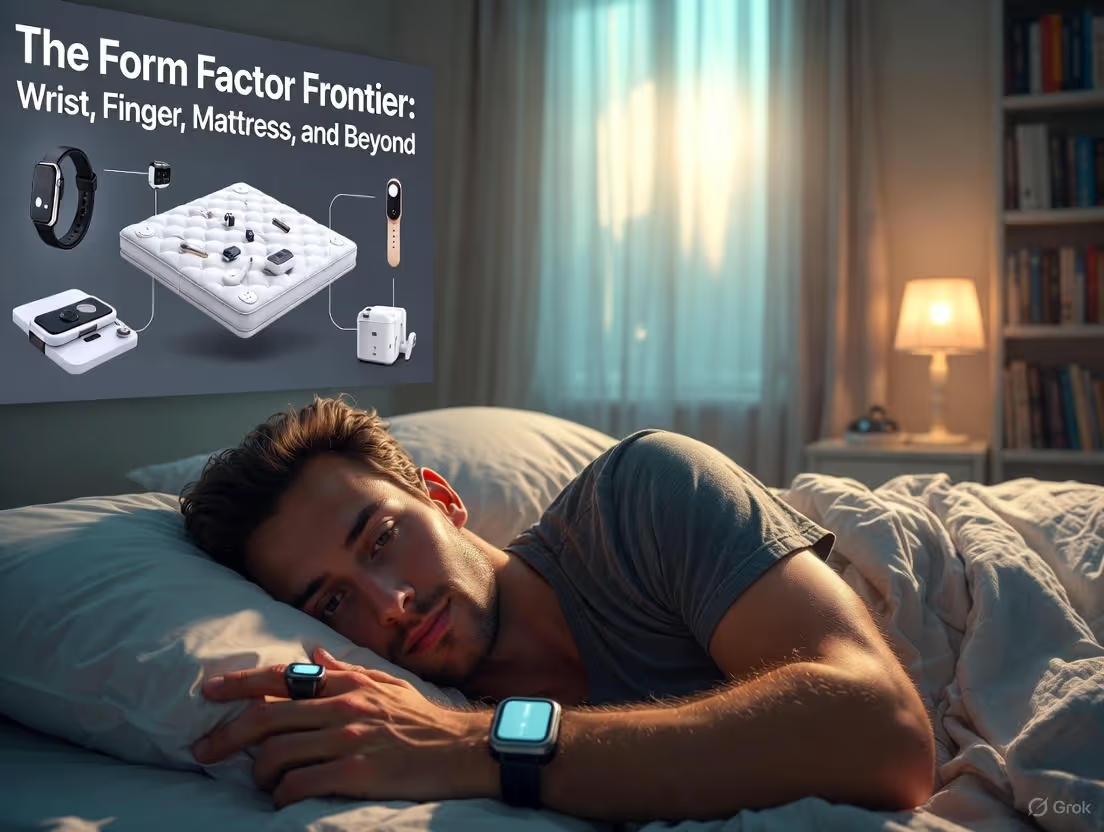
Let’s break down the three main categories, as defined by contemporary sleep science:
Wearables: The Personal Biometric Monitors
This category includes devices you wear on your body, predominantly smartwatches and smart rings.
How They Work: They primarily use a combination of accelerometers (to measure movement) and photoplethysmography (PPG)—a tiny LED light that measures blood flow changes under the skin to derive heart rate and heart rate variability (HRV). Some advanced models also include skin temperature sensors and pulse oximeters (SpO₂) to measure blood oxygen levels.
Pros:
Rich, Multimodal Data: They capture a comprehensive suite of biometrics (movement, heart rate, HRV, sometimes temperature and SpO₂) that algorithms use to infer sleep stages and overall readiness.
Continuous Tracking: They can collect data 24/7, providing context about how daytime activity and stress affect your night.
Portability: You wear them day and night, making data collection effortless.
Cons:
Potential Discomfort: Some people find it difficult to sleep with a watch or ring on.
Battery Life: Requires regular charging, which can interrupt continuous tracking if forgotten.
Form Factor Bias: A loose-fitting ring or watch can lead to poor PPG signal quality and inaccurate data.
Nearables: The Silent Bedside Observers
These devices sit in your sleep environment without requiring you to wear anything. This category includes under-mattress pads (e.g., Withings Sleep Mat), bedside radar sensors (e.g., Google Nest Hub), and non-contact devices placed on a nightstand.
How They Work: They use ballistocardiography (BCG—detecting tiny body movements from mattress vibrations), radar, or piezoelectric sensors to sense movement, breathing patterns, and sometimes heart rate from a distance.
Pros:
Unobtrusive: You don’t have to wear or remember to put on anything. Ideal for people who find wearables uncomfortable.
Excellent for Couples: Can often track two people independently if placed correctly.
No Battery Management: They are typically plugged into a wall outlet.
Cons:
Limited Biometrics: Generally can’t measure heart rate variability or blood oxygen as accurately as a wearable in direct contact with the skin.
Placement-Sensitive: Accuracy depends heavily on correct placement under the mattress or on the bedside table.
Less Daytime Context: Only tracks you while you’re in bed.
Airables: The Smartphone in the Room
This refers to smartphone apps that use your phone’s built-in sensors or microphone to analyze sleep.
How They Work: You place your phone on the mattress near your pillow. It uses the accelerometer to detect movement and the microphone to listen for sounds like snoring or sleep talking.
Pros:
Low Cost/Barrier to Entry: Often free or inexpensive if you already own a smartphone.
Simple Setup: No extra hardware to buy or wear.
Cons:
Lowest Accuracy: As noted in the research, these apps generally have the weakest correlation with PSG. They can’t measure heart rate or biometrics, so sleep staging is a very rough estimate based on movement and sound alone.
Phone-Dependent: Drains your phone battery and requires you to sleep with your phone in bed, which some people prefer not to do.
Making the Right Choice: Your decision should be guided by your priorities:
Choose a Wearable (Smart Ring or Watch) if you want the most detailed biometric insights, care about 24/7 health tracking, and don’t mind wearing a device. For those interested in the cutting-edge potential of wearable technology, our story delves into the innovation behind these devices.
Choose a Nearable if you value absolute comfort, don’t want to wear anything, and primarily care about sleep timing and basic movement patterns.
An Airable might be a good starting point for the casually curious, but for anyone serious about improving sleep accuracy, investing in dedicated hardware is recommended.
Remember, the best device is the one you’ll use consistently and correctly. In the next section, we’ll dive into the crucial steps of setup and wear—factors that dramatically influence data quality regardless of which champion you choose.
The Foundation of Accuracy: Perfect Placement and Setup
You’ve chosen your device. The box is open, the battery is charged, and the app is installed. This moment of setup is far more critical than most people realize. A device that is poorly positioned, incorrectly fitted, or hastily configured is like a high-performance telescope that’s out of focus—it will gather data, but that data will be blurred and unreliable. Scientific studies explicitly note that researchers ensure devices are "properly fitted" to mitigate inaccuracies, underscoring that this is a prerequisite for valid data.
For Wearables: The Art of the Snug Fit
Whether it’s a ring or a watch, the principle is the same: secure, consistent skin contact.
Smart Rings (e.g., Oura, RingConn):
The Golden Rule: It should feel like a snug wedding band. It must not spin easily on your finger, but it also shouldn’t leave an indentation or feel tight when you make a fist.
Finger Choice Matters: The optimal finger is typically the index finger. It generally has better blood flow and less tendon movement than the ring finger, leading to a cleaner PPG signal for heart rate and HRV. The middle finger is also a good alternative. Avoid the pinky or thumb.
Hand Choice: Wear it on your non-dominant hand. This hand typically experiences less movement and bending during sleep, reducing motion artifacts in the data.
Use the Sizer! Never guess your size. Companies provide sizing kits for a reason. Wear the plastic sizer for a full day and night, including during activity, to ensure it’s comfortable in all conditions.
Smartwatches:
Position on the Wrist: Wear the watch higher on your wrist, about one to two finger widths above the wrist bone (the ulnar styloid process). This ensures the optical sensor maintains contact with skin that has adequate blood flow, not the bony part of the wrist.
Strap Tightness: Cinch the strap one notch tighter for sleep than you would during the day. It should not be uncomfortable, but you should not be able to slide a finger easily between the strap and your skin. A loose watch will bounce and fail to get a consistent heart rate reading.
For Nearables: The Science of Placement
Under-Mattress Pads (e.g., Withings Sleep):
Location is Everything: The pad must be placed directly under the area where your torso lies in bed. This is usually the center third of the mattress. If you sleep with a partner and have a dual-zone model, ensure your side is aligned correctly.
Flat and Secure: Ensure the pad lies completely flat with no folds or bunches. It should be sandwiched firmly between the mattress and the bed base (box spring or slats).
Bedside Devices (e.g., Google Nest Hub, radar sensors):
Sightlines: Place the device on a stable nightstand, pointing directly at your chest from about 2-4 feet away. Clear any obstructions like books, glasses, or large alarm clocks from the line of sight.
Height: The device should be roughly level with the top of your mattress.
Universal Setup Steps:
Update Firmware: Before your first night, ensure your device and its app are running the latest software. Researchers disable automatic updates during studies to ensure consistency, but for you, updates often contain crucial algorithm improvements that boost accuracy.
Populate Your Profile: Enter accurate details in the app—age, weight, height, gender. These factors are used to calibrate baseline expectations for your heart rate, breathing, and sleep architecture.
Set Your Sleep Schedule: If the app allows, input your target bedtime and wake-up time. This helps the algorithm know when to expect sleep and can improve the precision of sleep onset and wake time detection.
Taking these 10-15 minutes to get the setup perfect pays dividends for months or years to come. It establishes a clean, consistent signal—the raw material from which all your insights will be forged. For specific questions on device setup and compatibility, our FAQ page is an excellent resource.
Preparing the Canvas: Your Pre-Sleep Routine
Your tracking device is a sophisticated sensor, but it is not an isolated system. It is measuring a biological process—your sleep—that is profoundly influenced by everything you do in the hours leading up to it. Think of your pre-sleep routine as preparing the canvas for a painting. A rough, poorly primed canvas will distort even the most skilled artist’s work. Similarly, a body and mind agitated by poor habits will create a “noisy” physiological signal that is difficult for any algorithm to interpret accurately. Furthermore, these habits directly impact the very thing you’re trying to measure: sleep quality itself.
The Circadian Rhythm: Your Internal Conductor
At the core of sleep is your circadian rhythm, a 24-hour internal clock regulated by light exposure. Light, especially blue light from screens, is the most powerful signal to your brain that it’s time to be awake. It suppresses the production of melatonin, the hormone that promotes sleepiness.
Actionable Tip: Implement a "digital sunset" 60-90 minutes before bed. Use blue light filters on devices, or better yet, avoid screens entirely. Opt for reading a physical book or practicing gentle meditation.
The Chemical Landscape: Fuel for Sleep or Wakefulness
What you consume acts as direct instructions to your nervous system.
Caffeine: This stimulant has a half-life of 5-6 hours. A coffee at 4 PM means half that caffeine is still active in your system at 9 or 10 PM. Research using trackers can clearly show how caffeine after lunchtime disrupts sleep continuity.
Alcohol: While it may induce sleepiness initially, alcohol is a sedative that fragments sleep architecture. It suppresses REM sleep in the first half of the night and can lead to rebound awakenings as it metabolizes. Your tracker will likely show increased restlessness and a skewed sleep stage distribution.
Large Meals: Digestion is an active process. Eating a heavy meal too close to bedtime can cause discomfort, elevate body temperature, and lead to more movement—all of which your tracker will register as disrupted sleep.
The Wind-Down Ritual: Signaling Safety to Your Brain
Modern life keeps the sympathetic nervous system (fight-or-flight) engaged. Sleep requires the parasympathetic nervous system (rest-and-digest) to take over. A ritual bridges this gap.
Consistency is Key: Try to go to bed and wake up at roughly the same time every day, even on weekends. This reinforces your circadian rhythm.
Create a Buffer Zone: Dedicate the last 30-60 minutes before bed to calming activities. This could include taking a warm bath (the subsequent drop in body temperature is a sleep signal), light stretching, journaling to dump anxieties from the day, or listening to soothing music or a sleep story.
Optimize Your Environment in Advance: Part of your ritual should be preparing the bedroom itself. Lower the thermostat (aim for 65-68°F or 18-20°C), ensure it’s dark (consider blackout curtains), and minimize noise (use earplugs or a white noise machine if needed).
By consciously crafting your pre-sleep hours, you do two things. First, you genuinely improve your sleep quality by aligning your biology with your intentions. Second, you provide your sleep tracker with a cleaner, less chaotic physiological signal to analyze. The result is data that more accurately reflects your true sleep potential, not just the aftermath of a chaotic evening. You can read inspiring accounts of how consistent routines transformed sleep for others in our user testimonials.
Crafting the Sanctuary: Optimizing Your Sleep Environment
Your bedroom is not just where you sleep; it is the dedicated laboratory for your nightly restoration. The environment you create within its walls is the final, critical variable under your direct control. It is the physical stage upon which the drama of your sleep cycle plays out. An environment that is at odds with human sleep biology will create disturbances—both obvious and subtle—that your tracker will faithfully record as fragmented, low-quality sleep. Optimizing this space is about removing obstacles so that both you and your device can perform at their best.
The Prime Directive: Darkness
Light is the arch-nemesis of deep sleep. Even small amounts of ambient light from a streetlamp, a charging LED, or a digital alarm clock can penetrate your eyelids and disrupt melatonin production and sleep continuity.
Actionable Steps:
Invest in Blackout: Use blackout curtains or a high-quality sleep mask. The goal is pitch blackness.
Eliminate Light Pollution: Tape over or turn away any electronic LEDs (TV, charger, smoke detector). Consider a sunrise alarm clock that uses gradually increasing light to wake you, but ensures complete darkness while you sleep.
Mind the Glow: If you get up at night, use a dim red-light nightlight if needed, as red light has the least impact on circadian rhythms.
The Thermal Sweet Spot: Coolness
Your core body temperature needs to drop to initiate and maintain sleep. A room that’s too warm actively fights this biological process.
The Science: The sleep foundation suggests a cool room is critical. A temperature between 65-68°F (18-20°C) is ideal for most people.
Beyond the Thermostat: Use breathable, natural-fiber bedding (cotton, linen, bamboo). Consider a cooling mattress pad or pillow if you tend to sleep hot. A warm bath 1-2 hours before bed works because it draws blood to the skin’s surface, and the subsequent cooling effect signals sleep readiness.
The Sound of Silence (or Consistency)
Unexpected noises—a car alarm, a snoring partner, a creaking house—cause micro-arousals, pulling you out of deeper sleep stages. Your tracker will record these as periods of wakefulness or restless sleep.
Solutions:
White Noise: A white noise machine, fan, or app creates a consistent auditory blanket that masks disruptive variable noises. This steady soundscape allows for more stable sleep.
Earplugs: High-fidelity musician’s earplugs or moldable silicone plugs can be very effective for side-sleepers.
The Bed Itself: Support and Space
Your mattress and pillows are the foundation of physical comfort. Discomfort leads to tossing and turning, which your tracker interprets as light sleep or wakefulness.
Assess Your Setup: Is your mattress supportive? Do your pillows keep your neck and spine in neutral alignment? Pain and poor alignment are direct causes of movement and sleep fragmentation.
A Dedicated Space
Finally, reinforce the mental association that your bed is for sleep (and intimacy) only. Avoid working, eating, or watching stimulating media in bed. This strengthens the brain’s connection between getting into bed and the expectation of sleep, reducing sleep latency (the time it takes to fall asleep)—a key metric your tracker measures.
By systematically auditing and optimizing these environmental factors, you create a sanctuary that supports the natural sleep process. You minimize external triggers for disturbance, allowing your physiology to follow its natural, healthy course. For your sleep tracker, this means the movement, heart rate, and breathing signals it detects are more likely to be true reflections of your sleep architecture, not confused reactions to a hot, bright, or noisy room. The goal is to make your bedroom a place where great sleep is inevitable, and your tracker’s data is a pure reflection of that success.
Interpreting the Hieroglyphics: Making Sense of Your Data
You’ve chosen the right device, set it up perfectly, and optimized your routine and environment. Now, each morning, you are presented with a dashboard of numbers, graphs, and scores. This is the moment of truth—or rather, the moment of interpretation. Reading sleep data is not like reading a simple gauge; it’s more like interpreting a complex set of hieroglyphics that tell the story of your night. The key is to look for patterns and correlations over time, not to obsess over a single night’s absolute values.
Focus on Trends, Not Single Points
One night of poor sleep data is a statistical blip. Three consecutive nights of declining deep sleep is a trend. Your tracker’s greatest power is revealing these longitudinal patterns that you would never notice subjectively.
Use the Weekly/Monthly View: Always review your data in the context of the past week or month. Is your sleep efficiency trending up or down? Is your resting heart rate creeping higher?
Correlate with Lifestyle Tags: Most good apps let you tag days (“alcohol,” “late workout,” “stressed,” “caffeine after 2pm”). Use this feature religiously. In a week, you might see a clear pattern that “late workout” tags correlate with longer sleep latency, or “alcohol” tags correlate with low REM sleep. This is actionable, personalized science.
Understanding Key Metrics
Let’s decode the most common metrics and what they truly indicate, based on how trackers derive them:
Total Sleep Time: This is usually reliable for showing you the total duration you were likely asleep. Compare it to your time in bed to get your sleep efficiency percentage.
Sleep Latency: The time it takes to fall asleep. Consistently high latency (over 20-30 minutes) can indicate anxiety, poor sleep hygiene, or circadian misalignment. This is where pre-sleep routine data is crucial.
Wake After Sleep Onset (WASO): The total time spent awake after initially falling asleep. High WASO is a key indicator of fragmented sleep. Look for environmental causes (noise, temperature, partner disturbance) or internal causes (stress, digestion, sleep apnea).
Sleep Stages (Light, Deep, REM): Interpret these relatively. Don’t fixate on hitting a specific number of minutes. Instead, note your personal baseline. If your typical deep sleep is 60-90 minutes and it suddenly drops to 30 for several nights, investigate. Remember the research: deep sleep is often the most misestimated stage.
Resting Heart Rate (RHR) & HRV: These are perhaps the most insightful biometrics. RHR typically drops during sleep. A trend of an elevated nightly RHR can indicate your body is under stress (from illness, overtraining, or psychological stress). HRV (Heart Rate Variability) is a measure of nervous system resilience. Higher HRV during sleep is generally good, indicating strong parasympathetic (rest-and-digest) activity. A sustained drop in HRV is a powerful warning sign of accumulated fatigue or stress.
The "Sleep Score" – A Composite View
Many devices provide a single “Sleep Score.” This is a proprietary algorithm that weights the above metrics. Understand what goes into your device’s score. Does it prioritize total sleep time? Sleep consistency? HRV? Don’t worship the score alone, but use a significant change in the score as a flag to drill down into the underlying metrics that caused it.
Listening to Your Body
The most important data point is one your tracker can’t measure: how you feel. This is the ultimate validation. Use the tracker’s data to explain your feelings.
Scenario A: You feel exhausted. Your tracker shows short total sleep time, high WASO, and low HRV. The data confirms your feeling and points to clear issues (not enough time in bed, frequent disruptions, high stress).
Scenario B: You feel great. Your tracker shows a mediocre sleep score with low deep sleep. This is where you trust your body over the device. The algorithm may have misclassified your stages, or your personal need for deep sleep may be less than the algorithm’s model expects.
Your sleep data is a conversation starter with yourself, not the final word. By learning its language—focusing on trends, correlating with lifestyle, and balancing it with subjective feeling—you transform raw numbers into a powerful narrative of your health. This narrative is what allows you to make informed, intelligent adjustments to your life. For more perspectives on how real people interpret and use their data, the experiences shared in our testimonials can be very enlightening.
The Pitfalls of Perfection: Avoiding Orthosomnia and Data Anxiety
In the quest for perfect sleep data, a paradoxical and counterproductive condition can emerge: orthosomnia. Coined by sleep researchers, this term describes an unhealthy preoccupation with achieving perfect sleep as measured by a tracker, leading to increased anxiety, worsened sleep, and a vicious cycle of data-chasing. The very tool meant to empower you can become a source of stress that undermines its own purpose. Recognizing and avoiding this trap is as crucial as any technical setup tip.
How Orthosomnia Manifests
Obsessive Checking: Constantly reviewing your data throughout the day, feeling anxious about the score hours before bedtime.
Misplaced Trust: Prioritizing the tracker’s verdict over your own bodily feelings of rest and energy. (“I feel fine, but my ring says I’m depleted, so I must be.”)
Behavioral Rigidity: Becoming so fearful of disrupting your data that you avoid social events, travel, or spontaneous changes to your routine, harming your overall quality of life.
Sleep Performance Anxiety: Lying in bed worrying about what your sleep score will be, which of course, makes falling asleep harder—a classic self-fulfilling prophecy.
The Antidote: Adopting a Healthy Data Mindset
Embrace the “Good Enough” Night: Not every night will be optimal. Life happens. A good sleeper is not someone who has perfect data every night, but someone who can have an imperfect night and bounce back quickly without anxiety. Your tracker should help you see this resilience, not punish you for variability.
Schedule Data Reviews: Don’t check your sleep score first thing in the morning. Let your subjective feeling be your first guide. Then, perhaps later in the day or once a week, sit down to review the data analytically to look for trends. This breaks the anxious, reactive cycle.
Remember the "Why": Reconnect with your original goal. Was it to have more energy? To feel less groggy in the morning? To improve your mood? Use the tracker’s data to serve those goals, not to become a goal in itself. If you’re achieving the feeling you want, the numbers are secondary.
Take a Data Vacation: If you find yourself becoming anxious, take the device off for a few nights or a week. Relearn to listen to your body’s natural signals. This can be a profoundly liberating reset that restores a healthy relationship with both sleep and your tracker.
Understand the Limits (Again): Revisit the science. Remind yourself that the sleep stage data is an estimate with a known error margin. The tracker is a tool providing clues, not a medical device delivering verdicts.
The most accurate sleep data in the world is useless if it makes you miserable. The aim is to use technology to foster a more intuitive, trusting relationship with your own body, not to outsource that trust to an algorithm. By maintaining perspective and prioritizing how you feel over a perfect score, you ensure your sleep tracker remains a helpful guide on your wellness journey, not a demanding taskmaster. If you ever have questions about the intended use and limitations of wellness technology, our FAQ is always available for guidance.
Beyond the Basics: Advanced Insights and Health Indicators
Once you have mastered the fundamentals of accurate tracking and sane interpretation, you can begin to explore the deeper, more advanced insights your device may offer. Modern wearables, especially those with advanced sensors, can provide clues about health conditions that extend far beyond simple sleep quality. This moves you from being a sleep observer to a holistic health monitor. Crucially, these insights are for awareness and discussion with a healthcare professional, not for self-diagnosis.
The Vital Signs of Sleep: Heart Rate and Oxygen
Resting Heart Rate (RHR) Trends: While a single night’s RHR is not diagnostic, a sustained, unexplained upward trend in your sleeping RHR over weeks can be an early indicator of various issues, including onset of illness, overtraining, chronic stress, or potential thyroid problems.
Heart Rate Variability (HRV): This is a powerful metric of your autonomic nervous system’s balance and resilience. A consistently low or dropping HRV trend is a strong signal that your body is under significant allostatic load (stress). It can help you identify when you need more recovery before it manifests as fatigue or illness.
Blood Oxygen (SpO₂): Some rings and watches now include pulse oximetry. While not medical-grade, they can track trends.
Noticeable Dips: Frequent, significant drops in blood oxygen saturation during sleep (especially if below 90%) can be a red flag for sleep-disordered breathing, like obstructive sleep apnea (OSA). Devices like the RingConn Gen 2 specifically track an Apnea-Hypopnea Index (AHI) estimate over multiple nights for this purpose.
Nocturnal Bradycardia: Very low heart rate during sleep that is normal for conditioned athletes but could be a sign of other issues in non-athletes.
Tracking for Specific Conditions
Sleep Apnea Screening: As highlighted earlier, some devices have dedicated modes for this. They track metrics like AHI (events per hour) and ODI (oxygen desaturation index). If you have symptoms like loud snoring, daytime fatigue, and your tracker shows consistent low SpO₂ and high nighttime heart rate variability, it provides compelling data to take to a doctor for a formal sleep study.
Illness Onset: Many users report their wearable detects an elevated RHR and lower HRV 1-2 days before they feel symptoms of a cold or flu. This can be a cue to prioritize rest and hydration.
Recovery Monitoring: For athletes, sleep data (especially deep sleep and HRV) is critical for assessing recovery from training. Poor recovery metrics can inform decisions to take a rest day or decrease training intensity.
How to Use Advanced Data Responsibly
Look for Patterns, Not Panic Over Points: A single night of low SpO₂ is not sleep apnea. Look for consistent, nightly patterns.
Correlate with Symptoms: Do you have the daytime sleepiness, morning headaches, or poor concentration that would align with the data? If the data is concerning but you have no symptoms, it may be a device error. If you have symptoms and concerning data, it’s time to act.
Start a Conversation with Your Doctor: This is the most important step. Bring your trend data (weekly/monthly charts) to a healthcare appointment. Say, “My tracker has been showing a consistent pattern of X, and I’ve been experiencing Y symptoms. What do you think?” You become an informed partner in your own healthcare.
Respect the Line: These devices are wellness tools, not medical devices. They are for awareness, screening, and trend analysis. They cannot and should not be used to diagnose any medical condition.
By thoughtfully engaging with these advanced metrics, you leverage the full potential of your investment. You gain a window into your body’s subtle signals, allowing for earlier interventions and more productive conversations with health professionals. It represents the pinnacle of using technology not just to track sleep, but to understand the foundational rhythms of your overall health. For a deeper understanding of the science and intent behind these advanced features, you can learn more about our approach on our about us page.
Conclusion of Part One: From Data Collection to Personal Wisdom
We have journeyed from the fundamental science of the sleep cycle, through the practicalities of device selection and setup, into the art of interpreting data and finally to the advanced frontiers of health monitoring. This comprehensive foundation transforms you from a passive consumer of sleep scores into an active architect of your own restorative rest.
The core truth that binds all these sections together is this: Your sleep tracker is a powerful tool, but you are the craftsman. Its accuracy is not a fixed property of the device; it is a dynamic outcome shaped by your choices. Your choice of where to wear it, your commitment to a wind-down routine, your curation of the sleep environment—all these factors directly influence the quality of the signal the device receives and the validity of the story it tells.
Remember the key principles:
Seek Trends, Not Perfection: The real value lies in longitudinal patterns, not single-night scores. Use your data to identify what helps or hurts your sleep over time.
Balance Objectivity with Subjectivity: The numbers are clues, but how you feel is the ultimate metric. Let the data explain your feelings, not define them.
Avoid the Anxiety Trap: Guard against orthosomnia. Use the tracker to build a better relationship with sleep, not a more anxious one.
Progress Over Perfection: Small, consistent improvements in sleep hygiene will yield more meaningful results than chasing mythical perfect sleep data.
You now possess the knowledge to ask better questions of your technology and of yourself. In doing so, you move beyond mere tracking into the realm of true understanding and intentional living. The journey to optimal sleep is a continuous one of observation, experimentation, and adjustment. With the insights from this guide, you are now equipped to navigate that journey with confidence, using accurate data as your compass to guide you toward more restful nights and more energized days. This pursuit of personalized, data-informed wellness is at the very heart of our vision, and we are excited to be part of your journey.
The Second Pillar of Sleep Accuracy: Daily Habits, Data Synergy, and Long-Term Mastery
In the first part of our deep dive, we established the essential groundwork: understanding the architecture of sleep, choosing the right tool, setting it up flawlessly, and creating the optimal environment for it to capture clean data. We moved from being passive data consumers to informed interpreters, learning to read the stories our trackers tell without falling into the trap of data anxiety.
But the story of a single night’s sleep does not exist in a vacuum. It is a chapter in the ongoing biography of your life, intimately connected to everything you do while the sun is up. The data on your screen each morning is not just a record of the night; it is the consequence of the day.
This next section elevates the pursuit of accuracy from a nightly checklist to a holistic lifestyle integration. We will explore how your daily choices—from your morning light exposure to your evening workout—create the physiological preconditions for the sleep your tracker measures. We’ll then unlock the next level of insight: combining your sleep data with other streams of wellness information to see the full picture of your health. Finally, we’ll address the inevitable challenges—travel, illness, schedule disruptions—and provide a strategic framework for using your accurate data to enact lasting, personalized change. This is where tracking transcends observation and becomes a powerful engine for transformation.
The Daytime Domino Effect: How Daily Habits Dictate Nightly Data
Your sleep tracker begins its official work when you go to bed, but the signals it will read are set in motion hours, even days, before. Think of your daytime physiology as a series of dominoes. The choices you make tip the first one, creating a chain reaction that culminates in the quality of your sleep architecture. By understanding and aligning these daily rhythms, you ensure the dominoes fall in a pattern that leads to restorative sleep and, consequently, clearer, more meaningful data.
The Morning Anchor: Light and Consistency
The single most powerful signal for your circadian clock is morning light exposure. Within 30-60 minutes of waking, aim to get at least 10-15 minutes of bright, natural light (even on cloudy days). This light floods your retina, shutting off melatonin production and starting a timer that will tell your body to produce it again roughly 14-16 hours later. This simple act "anchors" your rhythm, making it easier to fall asleep at a consistent time. Your tracker will reflect this with more stable sleep onset (latency) times.
Fueling for Sleep: Nutrition’s Long Shadow
What you eat doesn’t just affect your energy levels; it directly influences sleep-promoting neurotransmitters and hormones.
The Protein-Tryptophan Connection: Foods rich in the amino acid tryptophan (turkey, chicken, eggs, nuts, seeds) are precursors to serotonin and melatonin. Including these in your afternoon or evening meal can support natural sleep chemistry.
Blood Sugar Stability: Large spikes and crashes in blood sugar can cause nighttime awakenings. Opt for complex carbohydrates with fiber (like sweet potatoes or oats) earlier in the day and avoid high-sugar snacks close to bedtime. Your tracker may show lower "Wake After Sleep Onset" (WASO) scores when your blood sugar is stable.
Hydration Timing: Proper hydration is crucial, but timing matters. Chugging water right before bed will almost certainly lead to disruptive bathroom trips. Your tracker will faithfully record these as periods of wakefulness. Front-load your hydration earlier in the day and taper off in the evening.
The Movement Paradox: Exercise as a Sleep Regulator
Physical activity is one of the best promoters of deep sleep, but its timing is key.
The Deep Sleep Dividend: Regular exercise, particularly aerobic activity, has been shown to increase the duration of slow-wave (deep) sleep. Your body uses this phase for physical repair, so it demands more of it when you’ve placed stress on your systems.
The Timing Tightrope: The stimulating effect of exercise—elevated core temperature, cortisol, and adrenaline—can interfere with sleep onset if done too close to bedtime. For most people, finishing moderate to intense exercise at least 2-3 hours before bed is ideal. However, this is highly individual. Some people can work out late and sleep fine, while others cannot. This is where your tracker is invaluable: tag your late workouts and see if your data shows an increase in sleep latency or restless sleep.
The Stress Cascade: Managing the Mental Load
Chronic, unmanaged stress keeps your sympathetic nervous system (fight-or-flight) engaged, flooding your system with cortisol. High evening cortisol is a direct antagonist to melatonin.
Mindfulness as a Buffer: Practices like meditation, deep breathing, or gentle yoga in the late afternoon or early evening can act as a "circuit breaker" for the stress response. They activate the parasympathetic nervous system, initiating the wind-down process hours before bed.
The "Brain Dump": If anxiety and racing thoughts keep you awake, try a "brain dump" journaling session 1-2 hours before bed. Getting worries out of your head and onto paper can prevent them from hijacking your sleep onset. You might see this reflected in improved sleep latency scores.
By viewing your entire day as the prelude to sleep, you take proactive control. You’re not just hoping for a good night; you’re engineering the biological conditions for one. When you do this, your sleep tracker’s report becomes a validation of your daily discipline and a precise measure of how different lifestyle levers truly affect you. It moves from telling you what happened to helping you understand why.
The Synergy of Signals: Cross-Referencing Sleep with Other Health Data
Your sleep data is a rich story, but when read in isolation, it can be a mystery. Why was your deep sleep low? Why was your heart rate elevated? The answers often lie in other data streams. The most powerful insights emerge from data synergy—the practice of cross-referencing your sleep metrics with other daily health indicators to form a complete, causal picture of your well-being.
The Activity-Sleep Feedback Loop
This is the most direct and powerful synergy. Your tracker (whether a ring or a watch) likely captures both.
Exertion -> Recovery: A day of high activity (long run, heavy strength training, lots of steps) should be followed by a night with increased deep sleep duration and a higher resting heart rate (RHR). The deep sleep is for repair; the elevated RHR is a sign of the metabolic cost of recovery. If you see high activity but no increase in deep sleep or a spiking RHR, it’s a sign you may not be recovering adequately—a warning of potential overtraining.
Recovery -> Readiness: Conversely, a night of excellent sleep (high HRV, low RHR, good deep sleep) should prime you for better daytime performance and energy. Many apps now provide a "Readiness" or "Recovery" score that explicitly uses last night’s sleep and HRV data to advise on today’s activity load. Heed these recommendations; they are your body’s data-driven feedback.
The Nutrition Connection
While most wearables don’t directly track nutrition, you can manually create this synergy.
Tagging and Correlating: Use your app’s tagging feature (or even a simple notes app) to log days of poor diet, high sugar intake, alcohol consumption, or late meals. After a few weeks, look for patterns. You may discover that "alcohol" tags correlate strongly with low REM sleep and high resting heart rate. Or that "late meal" tags correlate with increased wakefulness (WASO) in the first half of the night. This turns vague suspicions into personal, data-backed facts.
The Stress and Mental Load Metrics
Some advanced devices estimate stress through HRV and skin temperature. Combine this with sleep.
Daytime Stress -> Nighttime Fallout: A day marked by high, sustained stress scores will often result in poorer sleep efficiency and lower HRV at night. Seeing this pattern can be the motivation you need to prioritize stress-management techniques.
Sleep as a Stress Buffer: Notice the opposite pattern: after a night of exceptionally good, deep sleep, your daytime stress scores might remain lower, showing how quality sleep builds resilience.
Female Health Tracking Integration
For those who menstruate, this is a non-negotiable layer of context. Hormonal fluctuations across the cycle profoundly affect sleep.
Follicular Phase: After menstruation, rising estrogen can often lead to better sleep quality and easier time falling asleep.
Luteal Phase: After ovulation, rising progesterone increases core body temperature and can disrupt sleep, leading to more wakefulness and less deep sleep. Pre-menstrually, sleep disturbances are common.
The Insight: By syncing your health tracker with a menstrual cycle app, you can view your sleep data in this hormonal context. Seeing a predictable dip in sleep scores during your luteal phase removes anxiety—it’s not that something is "wrong," it’s your normal physiology. This prevents you from chasing phantom solutions for a cycle-driven change.
Creating Your Own Dashboard
The goal is mental integration. Don’t just look at your sleep score in the morning. Look at it alongside your activity from yesterday, your stress graph, and your cycle day. Ask: "Do these pieces tell a coherent story?"
Example Narrative: "Yesterday was a high-stress workday (high stress scores), I had a late workout, and I’m in my luteal phase. My sleep last night showed long latency and high WASO. The data explains why I feel tired today, and it points to multiple factors. Tonight, I’ll prioritize a longer wind-down and accept that my sleep might be lighter—it’s my biology right now."
This synergistic approach transforms isolated data points into a dynamic map of your health. It provides explanations, reduces guesswork, and empowers you to make interventions that address root causes, not just symptoms. For more on how integrated data leads to holistic wellness, explore the resources and philosophy on our blog.
When Life Intervenes: Tracking Accurately During Travel, Sickness, and Disruption
Even the most meticulously crafted sleep routine meets its match in real life. Business travel, vacations, sick kids, personal illness, and shifting work schedules are inevitable. During these times, your sleep tracker can feel like a harsh critic, reporting poor scores when you’re doing your best just to get through. However, with the right mindset and adjustments, your device can become your most valuable ally during disruption, providing objective feedback and helping you manage your energy and recovery.
Conquering Jet Lag: Using Data to Adapt Faster
Jet lag is a brute-force mismatch between your internal circadian clock and the external light-dark cycle. Your tracker can quantify the disruption and guide your adaptation.
Strategy: As soon as you board the plane, set your wearable’s time to your destination timezone. This frames all incoming data correctly.
Seek and Dodge Light: Use the destination clock to guide light exposure. If you need to shift your rhythm later (flying west), seek bright light in the evening at your destination. If you need to shift earlier (flying east), seek morning light and avoid evening light. Your tracker will show you how quickly your sleep onset and wake times adjust to the new schedule. Watch for your resting heart rate to settle down as your body adapts.
The Reality Check: Accept that your sleep scores will be poor for the first few days. The goal isn’t to fight for a high score, but to use the data to see your progress toward alignment. A gradually improving "time asleep" metric is a win.
For shift workers, the challenge is chronic circadian misalignment. Accuracy here is about tracking your unique rhythm, not a societal norm.
Anchor Your "Night": Regardless of when you sleep, make your bedroom absolutely dark, cool, and quiet during your main sleep period. Use blackout curtains, a white noise machine, and eye masks religiously. Your tracker will show you which environmental interventions most improve your sleep efficiency.
Consistency is Key: Try to keep your sleep/wake times as consistent as possible, even on your days off. This is incredibly hard but pays the highest dividend in sleep quality and data stability.
Watch the Biometrics: Shift work is a major stressor. Pay close attention to trends in resting heart rate and HRV. A chronically elevated RHR or depressed HRV is a serious signal from your body to prioritize recovery and discuss schedule impacts with your healthcare provider.
Sleeping Through Sickness: The Tracker as an Early-Warning System
When you’re ill, sleep is medicine. Your tracker provides a fascinating and useful window into your body’s fight.
The Signature of Sickness: Expect and accept dramatically altered data. Your resting heart rate will be significantly elevated—this is your immune system ramping up metabolism. HRV will plummet as your body directs all resources to fighting the pathogen. Sleep will likely be fragmented, with more wakefulness and potentially more deep sleep as your body prioritizes repair.
Tracking Recovery: The most valuable use of your tracker during illness is to monitor your return to baseline. Don’t rush back to normal activity just because you feel subjectively better. Wait until your RHR has returned to its normal range and your HRV is climbing back up. This data-driven approach can help prevent relapse.
Managing Schedule Disruptions (New Baby, Projects)
During periods of forced sleep fragmentation (like caring for a newborn), change your goals.
Track for Trends, Not Scores: Let go of any expectation of a good sleep score. Instead, use the tracker to capture snippets of data. Can you identify which 3-hour block is your most restorative? Can you see the effect of a 20-minute power nap on your heart rate?
Focus on Recovery Metrics: Even in short sleep windows, you can aim to improve the quality of the sleep you get. Perfect your environment (dark, cool, quiet) to maximize efficiency. A high "sleep efficiency" percentage (time asleep/time in bed) during your limited opportunity is a major victory.
During life’s disruptions, your tracker shifts from a performance optimizer to a resilience monitor. It gives you grace by showing the objective reason for your fatigue, and it provides a clear signal of when you are truly recovering. The accuracy during these times comes from interpreting the data through the correct, chaotic context.
From Insight to Action: Building Your Personalized Sleep Optimization Plan
Accurate data is not an endpoint; it is the starting line for meaningful change. After 4-6 weeks of consistent tracking with the techniques we’ve covered, you will have amassed a goldmine of personal insights. You’ll see your baseline, your trends, and the clear impact of your lifestyle choices. Now comes the most rewarding phase: turning this self-knowledge into a structured, personalized plan for lasting improvement. This is where you move from being a sleep scientist to becoming your own sleep coach.
Step 1: The Data Audit – Identifying Your Leverage Points
Set aside an hour to review your historical data. Look for:
Your Strongest Correlations: What is the single habit that, when you do it, most reliably predicts a good night’s sleep? Is it the days you exercise before 5 pm? The days you avoid alcohol? The days you meditate? This is your highest-impact lever.
Your Most Damaging Disruptors: Conversely, what is the surest way to ruin your sleep? A late cup of coffee? A stressful work deadline? A late, heavy meal? This is your primary sleep saboteur.
Your Baselines: What are your typical, healthy-range values for Total Sleep Time, Deep Sleep %, REM %, RHR, and HRV? Knowing your normal is crucial for spotting meaningful deviations.
Step 2: The Focused Hypothesis – One Change at a Time
You cannot fix everything at once. Based on your audit, form a simple, testable hypothesis.
Poor Example: "I’m going to sleep better by exercising more, eating earlier, and meditating daily." (Too vague, too many variables)
Excellent Example: "Hypothesis: For the next two weeks, if I finish all caffeine consumption by 12:00 PM, my sleep latency will decrease by an average of 10 minutes, and my deep sleep will increase by 5%."
Step 3: The Two-Week Experiment – Tracking the Intervention
Commit to your single change for a full 14 days. Maintain all your other habits as consistently as possible. Continue wearing your tracker normally.
Tag Your Days: Use the app’s tag or note feature to mark each day of the experiment (e.g., "Caffeine by noon").
Observe, Don’t Obsess: Check your data weekly, not daily, to avoid noise.
Step 4: The Analysis – Did It Work?
At the end of the two weeks, compare the experimental period to the two weeks prior.
Look at Averages: Did your average sleep latency go down? Did your average deep sleep go up?
Look for Consistency: Was the effect present on 10 out of 14 days, or only on 3?
How Do You Feel? Subjectively, did you feel any difference in morning alertness or daytime energy?
Step 5: Iterate and Build – The Compound Effect
If It Worked: Formalize this change into your routine. It’s now part of your personal sleep protocol. Then, choose your next highest-impact lever from your audit and run a new two-week experiment.
If It Didn’t Work: That’s valuable data too! It means caffeine timing may not be a primary driver for you. Cross it off the list and test your next hypothesis (e.g., "If I take a 10-minute walk outside within 30 minutes of waking...").
Building Your Plan: The Pillars of Your Sleep
Over months of this iterative process, you will build a plan anchored in your personal data, not generic advice. Your final plan might rest on four unique pillars:
The Morning Pillar: 15 mins of morning light + protein-rich breakfast.
The Evening Pillar: Digital sunset at 8:30 PM + consistent 10:30 PM bedtime.
The Nutrition Pillar: Last caffeine at 11 AM + last meal 3 hours before bed.
The Recovery Pillar: Exercise finished by 7 PM + 5-min breathwork after work.
This personalized plan is your ultimate achievement. It is dynamic, living, and based on incontrovertible evidence from your own life. Your sleep tracker, once a mysterious gadget, is now the core feedback mechanism in a beautiful loop of self-experimentation and mastery. For inspiration from others who have undertaken this journey, the real-world results shared in our testimonials can be incredibly motivating.
The Cutting Edge: Emerging Technologies and the Future of Sleep Tracking
The quest for perfect sleep data is driving some of the most exciting innovations in consumer health technology. While today’s wearables and nearables are powerful, the next generation of devices promises to close the accuracy gap with clinical tools even further, offering deeper, more physiological insights. Understanding this horizon helps you appreciate the trajectory of the technology and make informed choices about future upgrades.
Beyond PPG: New Sensor Modalities
Electrodermal Activity (EDA): Already featured in some advanced wearables, EDA measures tiny changes in skin sweat, a direct indicator of sympathetic nervous system arousal. In sleep, this could help more precisely identify periods of stress or micro-arousals that current movement-based methods miss, offering a clearer picture of sleep fragmentation.
Advanced Temperature Sensing: Current skin temperature sensors are good for tracking circadian rhythms. The future lies in continuous core body temperature estimation via advanced algorithms combining skin temp, heart rate, and movement. Since the core body temperature drop is a fundamental driver of sleep onset, tracking this directly could revolutionize sleep stage prediction and circadian rhythm analysis.
Radar and Ultra-Wideband (UWB) Sensing: Next-gen nearables may move beyond simple movement to using radar to map breathing patterns and heart rate with clinical-grade accuracy from a bedside device, without any wearables. This could make lab-quality sleep staging accessible at home for the masses.
The AI Revolution: Smarter, More Personal Algorithms
The hardware is only half the story. The software is undergoing its own revolution.
Personalized Baselines: Instead of comparing you to population averages, future algorithms will establish a hyper-personalized baseline for you. They will learn that your optimal deep sleep is 70 minutes, not the 90-minute average, and that a heart rate of 55 is normal for you, not "low."
Predictive Insights and Prescriptive Guidance: Moving from descriptive to predictive, AI may analyze your daytime data and evening biometrics to forecast your sleep quality before you even go to bed, suggesting tailored interventions ("Consider a 15-minute meditation tonight; your stress metrics indicate high sleep latency risk"). It could then prescribe next-day advice based on your recovery ("Today is ideal for low-intensity steady-state cardio based on your high HRV recovery").
Multimodal Data Fusion: The most accurate insights will come from fusing data from multiple devices. Your ring’s HRV, your mattress pad’s breathing signal, and your smart lamp’s light exposure data could be synthesized by a central AI to give a picture of sleep health that is greater than the sum of its parts.
Integration with Smart Ecosystems and Treatment
Two-Way Communication with Your Environment: Imagine your tracker detecting you are in light sleep as you near your wake time and signaling your smart lights to begin a gradual sunrise simulation. Or detecting a prolonged period of wakefulness and triggering your speaker to play a soothing soundscape. The sleep tracker becomes the brain of a responsive sleep ecosystem.
Digital Therapeutics for Sleep Disorders: For conditions like insomnia or sleep apnea, trackers are evolving into part of treatment plans. They could deliver and monitor your adherence to Cognitive Behavioral Therapy for Insomnia (CBT-I) exercises or work in tandem with a prescribed CPAP machine, providing feedback on therapy effectiveness directly to you and your doctor.
The Democratization of Sleep Medicine
The ultimate goal is to make sophisticated sleep analysis and early problem detection accessible to everyone. While these devices will never replace sleep specialists, they will empower individuals with unprecedented awareness and provide clinicians with rich, longitudinal data from a patient’s natural environment, leading to faster, more accurate diagnoses.
Staying informed about these trends allows you to see your current device as part of an ongoing journey. The core principles you’ve mastered—consistent wear, environmental optimization, and intelligent interpretation—will remain the foundation, regardless of how advanced the technology becomes. The future of sleep tracking is not just about more data; it’s about more meaningful, actionable, and personalized wisdom to fuel a lifetime of better rest. To stay updated on these technological evolutions and our role in them, you can follow our ongoing story.
Navigating the Ecosystem: Apps, Community, and Professional Support
Your sleep tracker’s hardware and core app are the foundation, but the true ecosystem extends far beyond them. To fully leverage your accurate data for growth and support, you can tap into a wider world of complementary apps, knowledgeable communities, and professional guidance. This external framework turns a solitary pursuit into a supported journey.
Maximizing Your Core App: Hidden Features and Logging
First, ensure you are using your device’s native app to its full potential.
Explore All Metrics: Don’t just glance at the sleep score. Dive into the graphs for HRV, temperature deviation, and breathing rate. Understand what each one means.
Master the Tagging/Journalling System: This is your most powerful tool for correlation. Be consistent and detailed. Tags for "Work Stress," "Social Event," "Changed Workout Time," "PMS," "Allergies," "Nap" are all valuable.
Set Useful Alerts and Goals: Use the app’s goal-setting features for bedtime consistency or total sleep time. Set gentle, non-anxiety-inducing alerts to remind you to start your wind-down routine.
Complementary Apps for a Holistic View
Your sleep data becomes more powerful when viewed alongside other aspects of your life. Consider syncing data with or manually logging in:
Nutrition Trackers (e.g., Cronometer, MyFitnessPal): While tedious long-term, tracking food for a week can reveal stunning correlations between macro/micro-nutrient intake and sleep metrics.
Meditation and Mindfulness Apps (e.g., Calm, Headspace): Many sync with Apple Health or Google Fit. Seeing a "meditation" tag automatically applied on days you practice can help you visualize its impact on your sleep latency or HRV.
Cycle Tracking Apps (e.g., Natural Cycles, Clue): As discussed, this is essential context for half the population. Ensure your sleep app is allowed to read this data or manually note your cycle phase.
Centralized Health Platforms (Apple Health, Google Fit, Samsung Health): Use these as the "hub" where all your wellness data from different devices and apps congregates. It’s the best place to see the full, synergistic picture.
The Value of Community: Learning from Others
Brand-Specific Forums and Subreddits: Communities like the Oura Ring or Whoop subreddits are treasure troves of user experience. You can learn how others interpret odd data spikes, get advice on wearables care, and see how people with similar lifestyles and goals are optimizing their routines.
General Sleep and Biohacking Groups: Broader communities focused on sleep optimization or biohacking can introduce you to novel techniques (e.g., temperature manipulation, nutritional supplements like magnesium) that you can then test on yourself using your tracker’s data. A critical note: Always approach anecdotal advice with skepticism and test changes one at a time.
Knowing When to Seek Professional Support
Your tracker is a wellness tool, not a doctor. There are clear lines where professional help is needed.
Consistent Symptoms Despite Good Data: If you consistently feel exhausted, unrefreshed, or struggle with daytime sleepiness, but your tracker shows "good" sleep, see a doctor. You may have a sleep quality issue (like alpha-intrusion sleep) the tracker cannot detect.
Data Red Flags: If your device shows persistent, dramatic indicators of potential sleep apnea (very low SpO₂, high and variable heart rate, frequent movement) and you have symptoms like snoring or gasping, seek a sleep specialist for a diagnostic test.
Chronic Insomnia: If you struggle with falling or staying asleep most nights for more than a month, Cognitive Behavioral Therapy for Insomnia (CBT-I) is the gold-standard treatment. A therapist can help you use your tracker data effectively within a structured therapeutic program.
General Practitioner Consultation: Bring your long-term trend data (monthly views of RHR, HRV, sleep duration) to your annual physical. It provides objective evidence of your overall stress and recovery patterns that can inform a broader health conversation.
By building this support ecosystem, you ensure your journey with sleep tracking is informed, balanced, and safe. The device provides the raw data, the apps provide context, the community provides shared learning, and professionals provide the essential guardrails and medical expertise. This multi-layered approach is the hallmark of a truly sophisticated and effective wellness practice. For any technical questions about device integration or data, remember our FAQ is a reliable resource.



%402x.svg)