Sleep tracking without wearables is increasingly possible through alternative technologies. This guide evaluates under-mattress sensors, bedside devices, smartphone apps, and smart home integration, explaining how each approach measures sleep and comparing accuracy to wearable-based monitoring methods.
Sleep Tracking Without Wearables: Is It Possible?
In the quiet hours of the night, as you drift between wakefulness and sleep, your body and mind undergo a profound transformation. For decades, unlocking the secrets of this nightly journey required cumbersome wires, clinical visits, or, more recently, a device strapped to your wrist or finger. But what if you could understand the architecture of your sleep—the delicate dance between light, deep, and REM stages—without wearing a single thing? What if your rest could be measured as effortlessly as the room’s temperature?
This is the compelling promise of non-wearable sleep tracking: a seamless, invisible technology that monitors your slumber from your bedside or within your mattress. As wearables like the Oura Ring, celebrated by CEOs and celebrities alike, race toward $1 billion in annual sales, a parallel revolution is brewing. This movement asks a simple but profound question: Is accurate, insightful sleep tracking possible when you remove the device from your body?
The answer is reshaping our bedrooms and our understanding of rest. From radar-based sensors that detect your breath from across the room to AI-powered mattresses that learn your patterns, the landscape of sleep technology is expanding beyond the wrist and finger. These innovations aren't just about convenience; they aim to fill critical gaps. They promise solutions for those who find wearables uncomfortable, for partners who share a bed, for clinical settings where continuous monitoring is vital, and for anyone seeking a more natural, uninterrupted sleep experience.
In this exploration, we will journey from the established world of wearables into the emerging frontier of contactless sleep tech. We’ll dissect the science behind the sensors, weigh the trade-offs between convenience and accuracy, and peer into a future where your sleep environment is not just a passive space, but an intelligent partner in your pursuit of perfect rest. Welcome to the invisible revolution in sleep science.
The Unseen Observer: Defining Non-Wearable Sleep Tracking
To understand the future, we must first define the present. Non-wearable sleep tracking, at its core, is the measurement and analysis of sleep parameters without any device that must be physically worn on the body. This stands in direct contrast to the wearable ecosystem of smart rings, watches, and headbands that have dominated the consumer health market.
The clinical gold standard for sleep analysis is polysomnography (PSG), an exhaustive test conducted in sleep labs. PSG involves attaching a multitude of sensors to the scalp, face, chest, and limbs to monitor brain waves (EEG), eye movement (EOG), muscle activity (EMG), heart rhythm (ECG), and blood oxygen levels. While incredibly precise, it is expensive, intrusive, and completely impractical for daily life. Consumer wearables emerged as a bridge, offering a compromise between convenience and insight by using proxies like movement and heart rate to estimate sleep stages.
Non-wearable trackers seek to build a new bridge—one that leans closer to the convenience of consumer devices while moving away from physical contact. They achieve this by transforming the sleep environment itself into a sensing platform. The fundamental principle is remote sensing: using technology to detect physiological signals from a distance. The most common metrics these systems aim to capture include:
Sleep Duration & Onset: Precisely identifying when you fall asleep and wake up.
Sleep Architecture: Estimating time spent in light, deep, and REM sleep stages.
Vital Sign Monitoring: Tracking heart rate, respiratory rate, and sometimes even blood oxygen saturation (SpO2) indirectly.
Restlessness & Movement: Quantifying periods of wakefulness or major body movements during the night.
The applications for this technology are vast and growing. In clinical and long-term care settings, non-wearable monitors allow staff to observe patient sleep patterns continuously without disruption, potentially shortening hospital stays by providing objective data for care adjustments. At home, they appeal to individuals sensitive to the feel of a wearable, technology skeptics who want minimal gadgetry, or couples where one partner's wearable data is skewed by the other's movements.
However, this shift from contact to contactless is not just a change of location; it's a fundamental shift in methodology. As one research review notes, the move from wearables represents a significant step in making sleep monitoring "unobtrusive," but it also introduces new challenges in ensuring the data's reliability for quality care. The journey from the lab to the bedside table is fraught with questions of accuracy, privacy, and technological limitation, setting the stage for an in-depth look at the tools making this invisible observation possible.
How It Works: The Science of Sensing Sleep from Afar
The magic of non-wearable sleep tracking lies in its ability to infer the complex internal state of sleep from external, often imperceptible, signals. Without direct skin contact, these devices rely on a blend of physics, advanced signal processing, and machine learning. Broadly, the technological approaches fall into two categories: environmental sensor systems and biometric sensor systems.
Environmental Sensor Systems: "Listening" to the Room
These devices monitor the space around you, detecting the physical consequences of your breathing and movement.
Ballistocardiography (BCG) & Piezoelectric Sensors: Often integrated into mattress pads or bed strips, these sensors are exceptionally good at detecting the minute vibrations your body makes with each heartbeat and breath. As your heart beats, it ejects blood into the aorta, causing a subtle recoil that travels through your body to the mattress. A high-fidelity BCG sensor can capture this "ballistic" force, extracting not just respiratory rate but also a proxy for heart rate. Studies using mattress-based analyzers have shown they can effectively track sleep cycles and vital signs for patient care without any wearables.
Radar and Sonar (Radio Frequency) Sensing: This is perhaps the most futuristic of the non-wearable methods. A small device on your nightstand emits low-power radio waves (radar) or sound waves (sonar) toward the bed. Your body's movements—most importantly, the rise and fall of your chest with each breath—modulate the reflected signal. Sophisticated algorithms can then separate the breathing signal from other movements, calculating respiratory rate with surprising accuracy. Some advanced systems can even detect the micro-movements associated with cardiac activity. The SleepScore Max, used in research, is an example of a sonar-based commercial device.
Audio and Video Analysis: Using microphones and low-light cameras, these systems analyze sound patterns (snoring, coughing, talking) and movement. Modern systems use machine learning to distinguish between different types of sounds and to ensure visual analysis is done with privacy in mind, often using abstract motion maps instead of raw video.
Biometric Sensor Systems: The "Smart Bed" Ecosystem
This approach builds sensing directly into the furniture and fabrics of your sleep environment, creating a more integrated, holistic profile.
Mattress-Integrated Sensor Grids: Going beyond a simple strip, high-end smart mattresses contain a network of pressure sensors. This grid can map your body position, pinpoint movement of individual limbs, and assess restlessness throughout the night. When combined with temperature and humidity sensors, they can provide feedback on the microclimate of your bed, linking environmental factors to sleep quality.
Smart Bedding: The next frontier involves textile-based sensors woven into sheets, pillowcases, or even pajamas. These smart fabrics can measure biometrics through capacitive or conductive threads. While technically in contact with the body, they represent a non-wearable form factor that many find less intrusive than a rigid device.
The Role of the Hub and Artificial Intelligence The raw data from these sensors—waveforms, pressure maps, audio snippets—are meaningless without interpretation. This is where the smartphone app or dedicated hub becomes crucial. It serves as the brain, running proprietary algorithms that perform a critical task: sleep-wake discrimination and sleep stage prediction.
Using machine learning models trained on vast datasets (often validated against PSG or actigraphy), the software looks for patterns. The cyclic nature of respiration, the correlation between heart rate variability and sleep stages, and the timing of prolonged motionlessness all become inputs for the algorithm to generate your nightly sleep report. As noted in industry trends, generative AI is poised to take this further, not just reporting data but acting as a predictive health coach that can offer real-time recommendations.
However, this indirect method is the source of both its elegance and its greatest challenge. As one field study starkly demonstrated, when four different validated tracking technologies—including a mattress sensor and a sonar device—were used simultaneously, the reported sleep duration for a single night could vary by up to 1 hour and 36 minutes between devices. The science is powerful, but its translation into consistent, consumer-ready accuracy is an ongoing endeavor.
The Current Landscape: From Mattress Pads to Nightstand Radars
The market for non-wearable sleep trackers is no longer a speculative future; it's a growing reality with products ranging from simple under-mattress pads to sophisticated AI-powered hubs. Understanding this landscape reveals who these tools are for and how they are being used today.
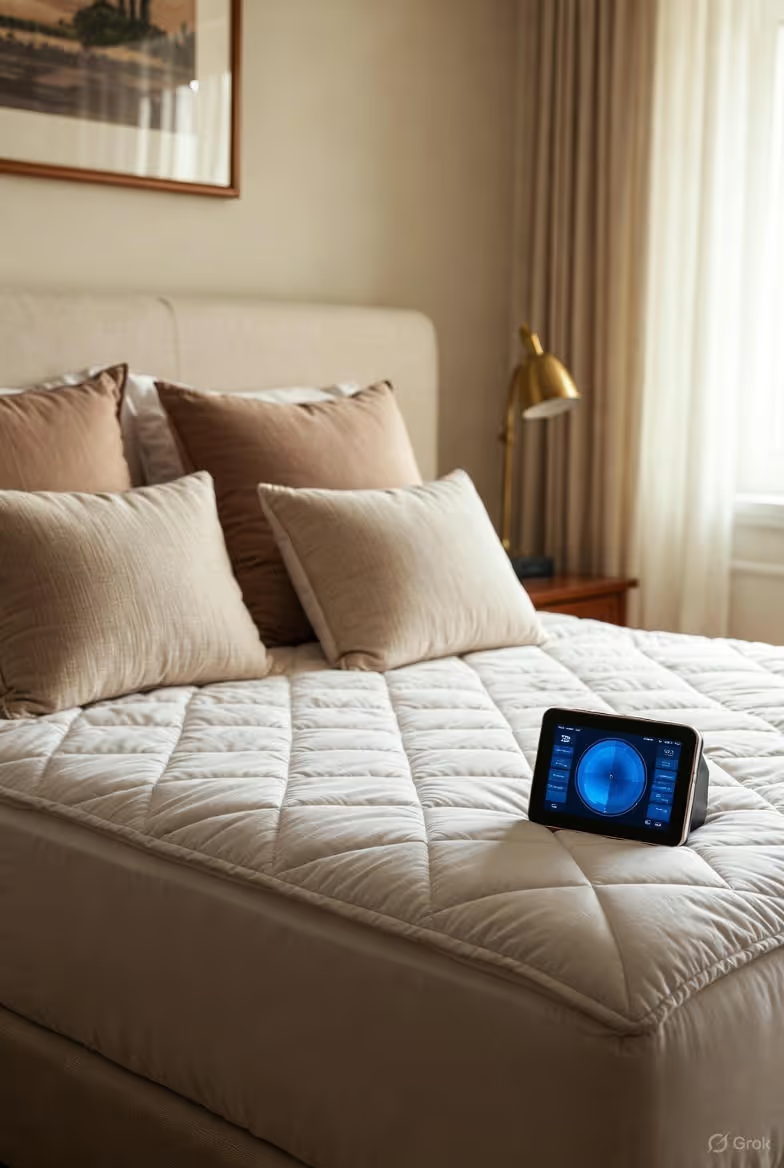
One of the most established and clinically relevant categories is the mattress sensor pad. Devices like the Withings Sleep Analyzer (used in the research study comparing trackers) slip discreetly under the mattress. They use ballistocardiography to track heart and breathing rates, movement, and snoring episodes, syncing data directly to a smartphone app. Their value in home-based and long-term care settings is particularly noted, as they provide objective sleep quality data without requiring any action from the sleeper or caregiver. For seniors or patients, this continuous, unobtrusive monitoring can be a game-changer.
On the nightstand, radar and sonar-based devices like the SleepScore Max offer a truly zero-contact experience. These sleek units project their sensing field across the bed, making them ideal for couples, as they can often track two sleepers simultaneously by distinguishing between breathing patterns. They focus on core metrics: sleep duration, time awake, and a calculated sleep score, often with simple, actionable feedback.
The high-end of the market is converging on the integrated smart bed. Companies like Sleep Number, Eight Sleep, and Bryte offer mattresses with built-in sensors that not only track but also actively respond. They may adjust firmness, heat, or even cooling throughout the night based on your sleep stage and biometrics. This represents the pinnacle of the "smart bedroom" concept, where tracking is seamlessly blended with environmental optimization.
A quieter but significant trend is the growth of hybrid systems that combine modalities. A bedside device might use both radar and audio analysis, for instance, to cross-validate snoring detection. This sensor fusion is key to improving accuracy, as weaknesses in one method (e.g., radar struggling with very still sleepers) can be compensated for by another.
It's crucial to view this landscape in the shadow of the wearable giants. While a smart ring like Oura focuses on the "biometric truth" from the finger's pulse, boasting accuracy for heart rate and temperature trends, the non-wearable sector competes on a different value proposition: absolute comfort, partner-friendly tracking, and holistic environment integration. Their promise isn't necessarily to beat wearables in raw sensor precision, but to win on user experience and provide "good enough" data for the vast majority of consumers focused on behavioral trends over clinical diagnosis.
The Promise: Why Ditch the Wearable?
The surge in interest for non-wearable sleep technology isn't driven by a flaw in wearables, but by a compelling set of advantages that address very human needs and limitations. For a significant segment of the population, the promise of tracking sleep without a device is not just a minor convenience—it's the only viable path to gaining sleep insights.
Unparalleled Comfort and Habit Formation The most immediate benefit is the complete elimination of physical discomfort. Many people are sensitive to the feeling of wearing a ring, watch, or headband to bed. It can cause skin irritation, feel constrictive, or simply be a psychological barrier to relaxation. A 2022 field study on sleep tracker usability highlighted that comfort and the device's effect on sleep disturbances were primary factors in user assessment. Non-wearable tracking removes this barrier entirely, allowing for perfectly natural sleep. Furthermore, it eliminates the "forgetfulness factor." You never have to remember to put it on or charge it at night (though the base unit itself needs power), leading to more consistent, long-term data collection.
The Partner-Friendly Solution For those who share a bed, wearable data can become corrupted. The movement of a partner can be misinterpreted as your own restlessness, and the close contact can sometimes affect sensor readings. Non-wearable systems, particularly radar and advanced mattress grids, are designed to distinguish between multiple sleepers. This makes them an ideal, conflict-free solution for couples who both want to understand their sleep without doubling the wearable budget or compromising data integrity.
Ideal for Clinical and Specialized Care The potential of non-wearable trackers extends far beyond the wellness-focused consumer. In hospitals, rehabilitation centers, and long-term care facilities, continuous patient monitoring is crucial but challenging. Attaching wearables to disoriented or frail patients can be impractical, unhygienic, or even a safety risk. A scoping review on the use of non-wearable trackers in care settings concluded that this technology can provide the objective evidence needed for quality care and has been shown to effectively shorten hospital stays through better monitoring. For patients with dementia, severe disabilities, or burns, contactless monitoring is not just convenient—it's a more humane and practical standard of care.
Holistic Environment Sensing While a wearable tells you about your body, a non-wearable system can tell you about your room. Many devices integrate environmental sensors that monitor room temperature, humidity, light levels, and noise pollution. This creates a powerful cause-and-effect dataset. You can finally see the direct correlation between a stuffy room, a spike in nighttime noise, and a plummeting deep sleep score. This turns the tracker from a passive reporter into an active diagnostic tool for your sleep hygiene, empowering you to make tangible changes to your surroundings.
Reduced Anxiety and "Orthosomnia" A paradoxical side effect of sleep tracking is "orthosomnia"—an unhealthy preoccupation with achieving perfect sleep data. The constant physical presence of a wearable can serve as a reminder and potentially amplify this anxiety. For some, removing the device from their body helps separate the experience of sleep from the quantification of it. The tracking happens in the background, allowing them to check in on their trends in the morning without letting the device dictate their nighttime mindset.
These promises collectively build a strong case for the non-wearable approach. They shift the value proposition from "more accurate biometrics" to "a more natural, holistic, and sustainable sleep insight practice." For the right user, this trade-off isn't a compromise; it's the main attraction.
The Skeptic's Corner: Limitations and Accuracy Concerns
For all its promise, the world of non-wearable sleep tracking is not without its significant skeptics and legitimate scientific concerns. The core challenge is fundamental: inferring complex physiological states from indirect, external signals is an inherently noisy and difficult problem. Before investing in a contactless future, it's critical to understand the current limitations.
The Gold Standard Problem and Validation Gaps The benchmark for any sleep assessment is the in-lab polysomnogram (PSG). While consumer wearables like the Oura Ring and WHOOP undergo rigorous third-party validation studies comparing their data to PSG, the non-wearable sector often lacks this same depth of public, peer-reviewed validation. Many companies validate their algorithms against actigraphy (movement-based tracking) or smaller in-house studies. As one research review cautiously noted, sleep quality assessments using these trackers may facilitate better care, but also pointed out the lack of studies investigating specific caregiver and nursing outcomes. The question remains: how does the data from a mattress pad or radar device truly compare to the gold standard when measuring subtle sleep stages like REM?
The Stark Reality of Inconsistent Data Perhaps the most eye-opening evidence comes from real-world comparative studies. A 2022 field study published in Frontiers in Computer Science had participants use four different sleep trackers—including a wearable smartwatch (Fitbit), an EEG headband, a mattress sensor (Withings), and a sonar device (SleepScore Max)—simultaneously for one week. The results were sobering. While each device was individually validated, when used in the same home environment on the same nights, they reported highly variable results. Differences in measured total sleep duration between devices on a single night averaged a staggering 1 hour and 36 minutes. This inconsistency highlights that different technological approaches and proprietary algorithms can tell very different stories about your sleep, raising major questions about reliability for individual night-to-night feedback.
Technical and Environmental Vulnerabilities Non-wearable systems are uniquely exposed to their surroundings:
Placement is Paramount: A radar device must be aimed correctly at the chest. A mattress pad must be centered properly. Incorrect placement can drastically reduce accuracy or cause complete failure.
The "Two-Body" Problem: While marketed for couples, distinguishing between two closely intertwined sleepers remains a technical challenge. Movements and breathing can become entangled in the signal.
Pets and False Signals: A cat or dog jumping on the bed can be interpreted as a major sleep disturbance or even an additional sleeper.
Signal Interference: Other electronic devices or even certain building materials can potentially interfere with radio-frequency-based sensors.
Limited Biometric Scope While advancing, most non-wearable systems cannot directly measure what wearables can. They excel at respiration and movement, but proxy measurements for heart rate and blood oxygen (SpO2) are less reliable than the photoplethysmography (PPG) sensors in rings and watches. For users concerned with cardiovascular health, nocturnal HRV, or blood oxygen dips related to sleep apnea, this is a critical shortcoming. As one industry analysis of wearables notes, the drive for clinical-grade sensors in wearables is intensifying; non-wearables have not yet closed this gap.
Privacy in the Bedroom Placing an always-on sensor, especially one with audio or radio-wave capabilities, in the bedroom raises inevitable privacy questions. Users must trust the company's data policies, security measures, and its definition of what data is processed locally versus sent to the cloud. While most reputable companies design systems with privacy-first principles (e.g., processing audio into anonymized event tags on-device), the concern is a legitimate barrier to adoption for many.
In essence, the skeptic's corner urges caution. Non-wearable sleep tracking offers a compelling user experience, but it may currently trade some degree of biometric precision and validation rigor for that comfort and convenience. For the general consumer tracking broad trends, this may be acceptable. For those with serious health concerns or a need for clinical-grade data, it may not be enough.
Wearables vs. Non-Wearables: A Detailed Comparative Analysis
The choice between wearing your tracker and letting your room do the tracking is not a simple one. It represents a fundamental decision between two different philosophies of quantified self. To make an informed choice, let's break down the key dimensions of comparison, illustrated by real-world data and user experiences.
Accuracy and Measured Parameters: The Data Divergence This is the most critical battleground.
Wearables (Rings/Watches): Their strength is in direct biometric capture. By maintaining skin contact, devices like the Oura Ring can measure peripheral arterial temperature trends, heart rate variability (HRV), and blood oxygen (SpO2) with a high degree of reliability. These are direct inputs that are powerfully correlated with sleep stages, recovery, and overall autonomic nervous system status. They are considered accurate enough for detecting trends in illness, menstrual cycles, and general readiness.
Non-Wearables: Their strength is in deducing state from external manifestations. They excel at measuring respiratory rate, macro-movements, and presence/absence with high accuracy. However, their measurements of heart rate and SpO2 are indirect estimates. The aforementioned field study lays this bare: the different technological principles led to wide discrepancies in reported sleep stages between a mattress sensor, a sonar device, and wearable actigraphy. For night-to-night sleep stage breakdown, wearables currently hold an edge in direct measurement validity.
Consistency and Reliability: The Human Factor
Wearables: Face the "user compliance" challenge. You must remember to wear and charge them. In research settings, this is a noted problem; participants forget, find them uncomfortable, or choose not to wear them, creating gaps in data.
Non-Wearables: Once set up, they offer passive, continuous monitoring. There is no habit to form. This makes them exceptionally reliable for longitudinal studies in care homes or for individuals who know they won't consistently use a wearable. Their data stream is unbroken by human forgetfulness.
Use Cases and Ideal Users: Different Tools for Different Needs The following breakdown clarifies which technology serves whom best:
The Wellness Optimizer & Athlete: If you're tying sleep data to athletic recovery, training load (like WHOOP's Strain score), or detailed physiological trends, the direct biometrics from a wearable ring or band are indispensable.
The Comfort-Seeker & Tech-Minimalist: If you cannot stand wearing anything to bed, have skin sensitivities, or simply want the least intrusive experience, a non-wearable bedside or mattress device is the only viable option.
Couples: For two people wanting independent data without buying two wearables, a dual-sleeper non-wearable system (radar or advanced mattress grid) is the superior and more cost-effective choice.
Clinical & Care Applications: In settings where patients cannot or should not wear devices, non-wearable monitors provide a safe, hygienic, and continuous solution for observing sleep patterns and vital signs.
The Environment-Focused Sleeper: If your primary goal is to optimize your bedroom (temperature, noise, light) and see its impact, a non-wearable system with environmental sensors provides the perfect integrated dashboard.
Cost and Accessibility
Wearables: Carry a significant upfront cost ($300-$500 for a ring like Oura) and often a subscription fee to access full insights (Oura is $6/month). This locks you into an ongoing ecosystem.
Non-Wearables: Pricing varies widely. A basic mattress pad can be under $100, while a full smart bed can cost thousands. Most, however, do not require a subscription for core functionality, representing a one-time investment.
In summary, the comparison isn't about which is universally "better," but which is better for you. It's a choice between the biometric intimacy of a wearable and the ambient intelligence of a non-wearable system. For a deep dive into how modern wearables like smart rings balance these features, you can explore our detailed analysis on the Oxyzen.ai blog.
The Cutting Edge: AI, Radar, and the Future of Contactless Sleep Tech
While today's non-wearable trackers are impressive, the horizon holds innovations that promise to blur the lines between indirect sensing and clinical-grade diagnosis. The next wave is being driven by advances in artificial intelligence, sensor fusion, and material science, aiming directly at the current limitations of accuracy and scope.
Generative AI as a Personalized Sleep Coach The most significant trend across all of wearable tech is the integration of generative AI. For non-wearable systems, this means moving beyond simple data reporting. Future devices will act as proactive health partners. Imagine a system that doesn't just tell you you slept poorly; it analyzes weeks of your sleep data, cross-references it with environmental factors (e.g., "Room temperature was 3°C higher than optimal on restless nights"), and your own lifestyle logs to generate personalized, conversational recommendations. It could suggest an adjusted bedtime, a specific wind-down routine, or even integrate with smart home systems to pre-emptively adjust your thermostat based on a predicted rough night. This transforms the tracker from a historian into a strategist.
Next-Generation Radar and Sensor Fusion Radar technology is becoming more sophisticated and miniaturized. Researchers and startups are developing ultra-wideband radar and frequency-modulated continuous wave (FMCW) radar that can not only detect chest rise but also map micro-movements with millimeter precision. This could allow for the non-contact measurement of heart rate variability—a holy grail for recovery tracking—by detecting the subtle pulsations of arteries. The future lies in multi-modal sensor hubs that combine radar, low-frequency sound, and passive infrared thermal sensing. By fusing these data streams, AI can cross-validate signals, dramatically reducing errors caused by a single sensor's weakness and providing a much richer physiological picture.
The Rise of True Smart Fabrics and Ambient Intelligence The boundary between "non-wearable" and "environment" will dissolve further with smart fabrics. Bedsheets woven with capacitive fiber can map body position and sweat detection. Carpet pads under the bed could add another sensing layer. The goal is ambient intelligence: your entire bedroom subtly working in concert. The bed detects you're in a light sleep phase and signals the smart blinds to remain closed; the room detects increased snoring and slightly elevates the head of the smart bed frame.
Bridging the Gap with Medical-Grade Monitoring A key frontier is the pursuit of non-invasive, medical-grade biomarkers. Companies are researching ways to use advanced radar and thermal imaging to estimate blood pressure and cardiac output during sleep. Others are exploring the use of laser Doppler vibrometry from a distance to measure the cardiac pulse. Success here would catapult non-wearable systems from wellness gadgets into powerful tools for remote patient monitoring of chronic conditions like hypertension or heart failure.
Privacy by Design and On-Device AI As capabilities grow, so do privacy concerns. The industry's response is a shift toward on-device AI processing. Instead of sending raw audio or sensitive radio wave data to the cloud, the next generation of devices will process everything locally on a dedicated chip. Only anonymized, high-level insights (e.g., "15 snoring events between 2-3 AM") would ever leave your home. This "privacy by design" approach will be essential for gaining consumer trust as these devices become more powerful.
These innovations, detailed in analyses of future wearables, point to a future where the question isn't "wearable or non-wearable?" but rather "which blend of ambient and personal sensing is right for my life?" The most advanced sleep health system might involve a minimalist wearable for core biometrics paired with an ambient room system for environment and partner tracking, all synchronized and interpreted by a powerful, private AI. To learn more about the vision driving such integrated health technologies, you can read about our story at Oxyzen.ai.
Privacy and Security: The Invisible Cost of an Invisible Tracker
Placing an always-on sensor in the sanctum of the bedroom—a device that listens, emits waves, or maps your presence—naturally raises profound questions about privacy and data security. While wearables collect intimate data from your body, non-wearables collect intimate data about your behavior and environment. This distinction creates a unique set of concerns that consumers must weigh against the benefits of convenience.
The Nature of the Data Collected Non-wearable sleep systems can gather a surprisingly rich dossier:
Presence and Routine Data: They know when you go to bed, when you get up, and if you get up in the middle of the night. This establishes a precise pattern of your life.
Biometric Proxy Data: Your breathing patterns, heart rate estimates, and movement signatures are unique to you.
Environmental and Audio Data: Room conditions, sound events (snoring, coughing, talking), and, in some cases, raw audio or detailed movement maps.
Partner and Family Data: In a shared bed, information about another person is inevitably collected.
Key Risks and Consumer Concerns
Data Breaches and Unauthorized Access: A vulnerable device could expose highly personal behavioral patterns. Could insurance companies gain access to data showing irregular sleep patterns? Could it be used in legal proceedings?
Function Creep and Commercialization: There is a risk that collected data could be used for purposes beyond sleep improvement, such as targeted advertising based on inferred health conditions or lifestyle. As noted in analyses of wearable data privacy, user control over data-sharing is becoming a non-negotiable demand.
Intrusion in Shared Spaces: The ethical dimension of monitoring a shared space is complex. Does every person in the bed (or room) provide informed consent? How is data for individuals separated and protected?
Psychological Impact: Knowing you are being monitored, even by a benign device, can create a subtle sense of surveillance that undermines the relaxation essential for good sleep.
How Responsible Companies Are Responding The industry is aware these are barriers to mass adoption. Leading companies are implementing "privacy by design" principles:
On-Device Processing: The most important trend. Instead of streaming sensitive data to the cloud, AI chips inside the device process raw signals (audio, radar) locally. Only anonymized, high-level insights ("snoring event detected," "sleep duration: 7h 22m") are transmitted. This minimizes the attack surface and the volume of sensitive data stored externally.
Transparent Data Policies and User Control: Reputable companies provide clear, granular privacy dashboards. Users should be able to see exactly what data is collected, choose what is shared, and have the option to delete their data entirely. As security analyses state, user consent management tools are becoming a standard feature.
Adherence to Regulations: Compliance with frameworks like GDPR, HIPAA, and others is critical, especially for devices used in care settings. This legally enforces standards for data minimization, security, and user rights.
Obfuscation Techniques: For audio, converting sound to a waveform and then analyzing it for specific events (like snoring) without ever creating a recordable audio file. For radar, not storing raw spatial maps.
Questions You Must Ask Before Buying As a consumer, due diligence is essential:
Where is the data processed? (Look for "on-device AI" or "edge processing").
What is the company's data retention and sharing policy? (Read the privacy policy; who do they share aggregate data with?).
Can I opt out of specific data collections? (e.g., audio recording).
What security certifications does the device/hub have? (Look for mentions of encryption, like end-to-end encryption for data transmission).
How is data for multiple sleepers handled and separated?
The path forward for non-wearable sleep tracking depends heavily on trust. The technology offers incredible convenience, but it will only achieve widespread adoption if companies prove they are responsible stewards of our most private hours. For those seeking clarity on how a responsible health tech company handles data and user trust, our FAQ at Oxyzen.ai addresses many of these critical concerns.
Real-World Applications: Where Non-Wearable Tracking Is Making a Difference
The value of non-wearable sleep tracking extends far beyond the curiosity of biohackers optimizing their deep sleep. Its true power is being realized in settings where wearables are impractical, intrusive, or simply insufficient. These applications demonstrate that this technology is more than a consumer gadget; it's a tool for improving health outcomes and quality of life at a systemic level.
Transforming Patient Care in Clinical Settings Hospitals and long-term care facilities are notoriously poor places for sleep. Noise, light, and frequent clinical interruptions lead to sleep deprivation, which can impede recovery. A 2024 scoping review in the International Journal of Nursing Practice specifically investigated this use case, finding that non-wearable sleep trackers are being successfully deployed in acute, non-acute, and long-term care facilities. The benefits are multifaceted:
Objective, Continuous Monitoring: Nurses no longer rely solely on patient self-reports or sporadic checks. They get an objective, all-night view of a patient's sleep patterns, restlessness, and vital signs like respiratory rate.
Early Intervention: Unusual patterns—such as a sudden increase in apnea events or erratic breathing—can alert staff to potential complications before a crisis occurs.
Outcome Improvement: The review highlighted evidence that real-time monitoring with these devices effectively shortened the length of hospital stay. Better sleep directly correlates with faster healing, reduced pain sensitivity, and improved immune function.
Dignity and Comfort: For elderly patients, those with dementia, or individuals with sensitive skin (e.g., burn victims), avoiding any attached device is a significant benefit to their comfort and dignity.
Enabling Remote Patient Monitoring and Telehealth The explosion of telehealth has created a need for reliable, at-home patient data. Non-wearable sleep trackers are ideal for remote patient monitoring (RPM) programs. A patient with congestive heart failure can be sent home with a mattress sensor that monitors for signs of paroxysmal nocturnal dyspnea (severe nighttime breathlessness), a key indicator of worsening condition. The data is transmitted securely to a clinician's dashboard, enabling timely intervention without a hospital readmission. This aligns perfectly with the broader trend in wearables toward managing chronic conditions remotely.
Supporting Mental Health and Sleep Disorder Management For individuals undergoing treatment for insomnia, anxiety, or depression, sleep is both a symptom and a therapeutic target. Therapists can use data from a non-wearable tracker as an objective baseline to measure the effectiveness of Cognitive Behavioral Therapy for Insomnia (CBT-I). It helps move the conversation from "I think I slept better" to "Your data shows your sleep latency has decreased by 20 minutes on average." For suspected sleep apnea, while not a diagnostic replacement for a PSG, a home radar device showing frequent breathing pauses can provide the compelling evidence needed to seek a formal clinical evaluation.
Academic and Athletic Performance Optimization Universities and professional sports teams are leveraging this technology. In dormitories or athlete training facilities, non-wearable trackers can monitor sleep patterns at a group level without burdening individuals with wearables. Coaches and wellness staff can identify team-wide trends related to travel, training load, or academic stress, and tailor recovery protocols accordingly. The passive nature of the data collection ensures higher compliance over long seasons.
A Tool for Caregivers For family members caring for aging parents at home, peace of mind is invaluable. A simple under-mattress sensor can alert a caregiver if their loved one does not return to bed within a certain time after a nighttime bathroom visit, or if there is an unusual lack of movement in the morning. This allows for independence for the elderly while providing a safety net.
These applications reveal that non-wearable sleep technology's greatest contribution may be in the background—silently supporting healthcare systems, extending care into the home, and providing insights where other tools fail. It's a powerful testament to the idea that sometimes, the best way to understand something is not to hold it tighter, but to observe it gently from afar. The real-world impact of technology is best understood through experience; you can read about user experiences with ambient health monitoring in testimonials from our community.
Looking Ahead: The Integrated Sleep Ecosystem of Tomorrow
The journey through the world of non-wearable sleep tracking reveals a field not at war with wearables, but on a convergent path toward a more holistic, personalized, and intelligent understanding of human rest. The future of sleep health is not a single device, but an integrated ecosystem that seamlessly blends the strengths of both contact and contactless technologies, all guided by sophisticated artificial intelligence.
The Convergence of Wearable and Non-Wearable Data The most likely near-future scenario is the rise of multi-modal sleep profiles. Imagine a system where:
A minimalist smart ring (like the Oura or a more accessible option like OxiZen) provides gold-standard core biometrics: precise heart rate, HRV, and blood oxygen from the vascular-rich finger.
A non-wearable mattress or radar system provides complementary data: partner-independent movement, detailed respiratory patterns, and bedroom environment metrics (temperature, humidity, noise).
A centralized AI health platform (likely on your smartphone) fuses these data streams. It doesn't just average them; it uses one to validate and contextualize the other. For instance, if the ring shows a blood oxygen dip, the radar can confirm it was accompanied by a breathing pause. If the mattress shows high restlessness, the ring can confirm it was coupled with an elevated heart rate.
This fusion creates a data picture far more reliable and insightful than any single device could provide. As Oura's CEO Tom Hale hinted at the future of health tech, the power lies in combining insights from multiple sources for a better overall understanding.
The Bedroom as an Active Health Partner This ecosystem will make your sleep environment proactive and adaptive. Your integrated system will learn your ideal conditions. Upon detecting the early signs of light sleep, it could:
Signal smart blinds to block an early sunrise.
Engage a white noise machine to mask a sudden outdoor disturbance.
Instruct a smart bed to gently adjust temperature or firmness to encourage deeper sleep. As highlighted in analyses of luxury sleep tech, this level of smart home integration is already emerging as a key differentiator.
Predictive Health and True Prevention With enough longitudinal, multi-modal data, the AI's role will shift from reporting to prediction and prevention. By analyzing trends in your biometrics, sleep stability, and environmental factors, the system could offer warnings: "Your resting heart rate has been elevated for three nights, and sleep efficiency is dropping. This pattern has preceded past minor illnesses. Consider prioritizing rest." This moves health management from reactive to genuinely proactive, a core promise of next-generation wearables.
Democratization and Accessibility For this future to be meaningful, it must be accessible. The cost of high-end smart rings and smart beds is currently prohibitive for many. The trend, however, is toward technology trickle-down. The advanced sensors and AI algorithms in today's premium devices will become standard in mid-range and budget products within a few years. The goal is not just luxury sleep optimization for the few, but improved sleep health literacy and tools for the many.
In conclusion, the question "Is sleep tracking without wearables possible?" has a clear answer: Yes, and it's already here. But the more profound revelation is that it represents only one piece of a larger puzzle. The ultimate goal is not tracking for tracking's sake, but actionable insight that leads to better rest and better health. Whether that insight comes from your finger, your mattress, or the quiet hum of a radar on your nightstand is becoming less important than the intelligence that synthesizes it all into a coherent, empowering story about your well-being.
The invisible observer in your room is not a replacement for you or your doctor; it is an ally, gathering the subtle clues of the night to help you write a better story for your days. To begin exploring how personalized, integrated health technology can fit into your life, learn more about our approach at Oxyzen.ai.
Beyond the Wrist: The Contactless Sleep Revolution and What It Means for You
As we established in the first part of our exploration, sleep tracking without wearables is not only possible—it's a rapidly advancing reality. Devices that monitor your rest from your nightstand or within your mattress are moving from niche curiosities to mainstream tools, offering a compelling alternative for those who seek insights without intrusion. This technology, built on ballistocardiography, radar, and sophisticated AI, promises unparalleled comfort, partner-friendly tracking, and a holistic view of your sleep environment.
However, understanding that it works is only the beginning. The more critical questions lie in the practical realm: How does this data translate into a better night's sleep for you? What are the real costs, both financial and in terms of effort? And as this invisible technology becomes more woven into the fabric of our homes, what broader implications does it hold for our health, our privacy, and our relationship with rest itself?
This next portion of our deep dive shifts from the "what" and "how" to the "so what." We will move beyond the specifications of the devices to examine the human experience of using them. We will provide a hands-on guide for anyone considering making the switch from a wearable or starting their sleep-tracking journey contact-free. We will dissect the true value proposition, not in terms of sensor counts, but in improved sleep quality and peace of mind. Finally, we will cast our gaze further forward, exploring how this trend fits into the larger narratives of healthcare, data sovereignty, and the fundamental human need for restorative sleep in a hyper-connected world.
The journey from data to wisdom is where the true revolution happens. Let's take the next steps together.
Making the Switch: A Practical Guide for Wearable Users
If you're accustomed to the routine of charging and wearing a smart ring or watch at night, transitioning to a non-wearable system requires a shift in mindset and habit. It's less about a daily ritual and more about a "set-and-forget" philosophy. For those considering the switch, here is a practical, step-by-step guide to ensure a smooth and successful migration.
Step 1: Define Your "Why" and Set Realistic Expectations Before purchasing anything, revisit your core motivation. Are you switching because:
Your wearable is uncomfortable or causing skin irritation?
You want to track sleep with a partner without data interference?
You're curious about environmental factors (room temp, noise) affecting your sleep?
You simply hate the feeling of wearing something to bed?
Clarifying your goal will guide your device selection. Crucially, temper your expectations regarding data parity. As we saw in the comparative studies, different technologies can tell different stories. Don't expect your new non-wearable device to replicate your wearable's sleep stage breakdown exactly. Focus instead on trends over time—is your overall sleep duration improving? Are you waking up less often? These broader metrics tend to be more consistent across platforms and are ultimately more actionable.
Step 2: Choosing Your Device Type: Mattress, Bedside, or Bed? Your sleeping style and bedroom setup are the biggest deciding factors.
For the Solo Sleeper or Tech Minimalist: A simple under-mattress sensor pad (like Withings) is often the easiest and most cost-effective entry point. It's invisible, requires no bedside table space, and focuses on core metrics.
For Couples or Those with Complex Bed Setups: A bedside radar/sonar device (like SleepScore Max) is superior. It can be placed on a nightstand aimed at the center of the bed, and most models are designed to distinguish between two sleepers. This is also the best option if you have an adjustable bed frame or a very thick mattress that might dampen pad-based sensors.
For the Premium Experience and Environmental Control: If budget allows and you're in the market for a new mattress, an integrated smart bed offers the most seamless experience. It combines tracking with active comfort adjustments (heating, cooling, firmness). This is for the user who wants their sleep environment to be a fully automated partner in their rest.
Step 3: The Setup and Calibration Period Proper installation is non-negotiable for accuracy.
Mattress Pads: Must be placed flat on the bed frame, centered under the area where your torso lies. Follow the manufacturer's instructions precisely regarding orientation (which end goes toward the head of the bed).
Bedside Devices: Placement is an art. The unit typically needs a clear line of sight to your chest area, about 2-3 feet away. Avoid placing it behind books, lamps, or other clutter. Most apps include a calibration or "signal check" mode—use it.
The Two-Week Rule: Do not judge the device on the first night or even the first week. Your body (and the algorithm) needs time to adjust. Use this period to establish a baseline. Sleep as normally as possible and resist the urge to constantly check the app in the middle of the night.
Step 4: Interpreting Your New Data Language You'll be looking at different metrics and visualizations.
Focus on Respiratory Rate: This is a standout metric for non-wearables. A stable, low respiratory rate (typically 12-20 breaths per minute during sleep) is a great indicator of relaxation and sleep quality. Note your baseline and watch for significant, sustained increases.
Understand "Sleep Stages" as Estimates: View the light/deep/REM graph as a helpful guide to your sleep architecture, not an infallible truth. Look for the overall shape—do you see cycles? Is there a decent block of deep sleep in the first half of the night?
Correlate with Environment: This is your new superpower. When you see a bad night, immediately check the environment tab. Was the room hotter? Was there a spike in noise? This direct cause-and-effect is where non-wearables provide unique, actionable insight that a wearable cannot.
Step 5: Syncing with Your Existing Health Ecosystem For a complete picture, don't let your non-wearable data live in a silo. See if the device's app syncs with Apple Health, Google Fit, or Samsung Health. This allows you to correlate your sleep data with daytime activity (from your wearable or phone), mindfulness minutes, and nutrition logs from other apps. This integrated view is the future of holistic health management.
Managing the Transition Mentally The biggest challenge for former wearable users is often psychological—the lack of that physical token, the "device on the finger." It can feel like you're not "doing" anything. Embrace this. The goal is to make sleep tracking a passive, background process so you can focus on the actual sleep. For more support and answers to common transition questions, our comprehensive FAQ at Oxyzen.ai is an excellent resource.
Beyond the Sleep Score: Translating Data into Actionable Insights
A sleep score is a convenient summary, but it's just the headline. The real value of any sleep tracker—wearable or not—lies in digging into the sub-headlines and turning observations into behavior change. Non-wearable systems, with their unique environmental data, empower you to become a detective of your own sleep hygiene in powerful new ways.
Decoding the Core Metrics for Action Move beyond the score and focus on what you can control:
Sleep Latency (Time to Fall Asleep): If consistently longer than 20-30 minutes, this is a direct signal to audit your wind-down routine. Your non-wearable data can't see your pre-bed screen time, but it can show you the result. Action: Implement a strict 60-minute digital curfew. Use the evening to read a physical book, practice gentle stretching, or listen to calming music or a podcast.
Sleep Efficiency (Time Asleep vs. Time in Bed): A low percentage indicates frequent or prolonged awakenings. Cross-reference this with the environmental data log. Action: If awakenings correlate with noise spikes, consider a white noise machine or earplugs. If they correlate with temperature rises, lower your thermostat or invest in more breathable bedding. Your device has just given you a targeted hypothesis to test.
Restlessness/Movements: High restlessness can indicate discomfort, stress, or an undiagnosed sleep disorder like periodic limb movement. Action: First, check your physical comfort—is your mattress too soft or too hard? Are your pajamas restrictive? If physical factors are ruled out, consider stress-reduction techniques like daytime exercise or journaling before bed to quiet a racing mind.
Respiratory Rate & Consistency: This is a goldmine from non-wearable tech. A high or highly variable respiratory rate can be a sign of stress, anxiety, or even the onset of a physical illness. Action: Practice diaphragmatic breathing for 5-10 minutes before bed. During the day, monitor your stress levels. A creeping upward trend in nighttime respiratory rate over several days is a powerful, objective cue to prioritize relaxation.
The Power of Environmental Correlation This is where non-wearables shine. Your app isn't just telling you that you slept poorly; it's giving you clues why.
The Temperature Story: The ideal sleep temperature for most people is around 18-19°C (65-67°F). If your data shows poor sleep efficiency on nights where room temp exceeded 21°C (70°F), you have a clear, data-driven reason to adjust your thermostat or use a fan.
The Noise Pollution Map: Sudden awakenings paired with noise spikes pinpoint specific disruptors—a partner's snoring, street traffic, a noisy pet. Action: Targeted solutions like a white noise machine, earplugs, or even having a gentle conversation with your partner about their snoring (using the data as a neutral third party) become obvious.
The Humidity Factor: High humidity can make it feel stuffy and disrupt sleep. Low humidity can dry out airways and increase snoring. If your device tracks humidity, you can optimize it with a humidifier or dehumidifier.
Building a Personalized Sleep Hypothesis Treat your sleep data like a science experiment.
Observe: "My deep sleep was 30% lower than average last night."
Review Correlations: "The room was 2.5°C warmer, and my respiratory rate was 15% higher."
Form a Hypothesis: "A cooler room and calmer breathing might improve my deep sleep."
Test: For the next week, lower the thermostat to 18°C and do 5 minutes of deep breathing before bed.
Analyze: Did the trends improve? This iterative, data-informed process is how you move from passive tracking to active sleep optimization. For a wealth of ideas on optimizing your routines and environment, explore the curated content on the Oxyzen.ai blog.
The Cost of Convenience: A Value Analysis of Non-Wearable Sleep Tech
Embracing the contactless sleep revolution requires an investment. The price spectrum is wide, ranging from a one-time sub-$100 purchase to a multi-thousand-dollar commitment for a fully integrated smart bed. To determine if it's worth it, we must move beyond the sticker price and conduct a true value analysis, weighing financial cost against the tangible and intangible returns on investment (ROI).
Breaking Down the Financial Landscape
Entry-Level (Under $150): This tier consists of basic under-mattress sensor pads and some older-model bedside devices. They track core metrics (sleep duration, restlessness, basic breathing) and sync to a smartphone app. The value proposition is simplicity and affordability. ROI Question: Can a $100 device provide enough insight to improve my sleep?
Mid-Range ($150 - $500): This is the competitive sweet spot. It includes advanced bedside radar devices with partner tracking, higher-fidelity mattress pads with detailed sleep stage algorithms, and some smart pillow or standalone hub systems. They often include environmental sensors and more polished apps with coaching insights. *ROI Question: Does the additional data and features justify 3-5x the cost of an entry-level device?*
High-End / Ecosystem ($500+): This tier is dominated by integrated smart beds and premium, subscription-based systems. Here, you are paying for: 1) Active intervention (automatic temperature adjustment, firmness changing), 2) Superior materials and comfort (a high-quality mattress itself), and 3) Advanced data integration. ROI Question: Can an automated bed improve my sleep quality enough to warrant a cost comparable to a high-end wearable plus a new mattress?
The Hidden Costs: Subscriptions and Compatibility A critical factor often hidden in marketing is the software subscription. While most non-wearables don't have them, some are introducing premium tiers. Always check if full historical data, advanced insights, or smart home integrations are locked behind a monthly fee. Compare this to the common wearable model (e.g., Oura's $6/month). Over 3 years, a $5/month fee adds $180 to your total cost of ownership.
Additionally, consider compatibility costs. Does the device require a specific smartphone OS? Does it work with an adjustable bed frame? Will it fit under a mattress topper? These hidden hurdles can add expense or frustration.
Quantifying the Intangible ROI: What Is Better Sleep Worth? The true value is measured in life improvement, not dollars. Consider the ROI in these terms:
Health ROI: Consistently better sleep is linked to a stronger immune system, better weight management, lower stress (cortisol), and reduced risk of chronic conditions like hypertension and diabetes. The potential reduction in future healthcare costs and sick days is significant but hard to quantify.
Performance ROI: Improved sleep leads to better focus, memory, and cognitive function. For a knowledge worker, this could mean higher productivity and fewer errors. For an athlete, it means better recovery and performance. What is a 10% improvement in your daily focus worth to you?
Relational ROI: For couples, a device that reduces sleep conflict (by objectively identifying snoring or different temperature preferences) and improves both partners' rest can have a profound positive impact on relationship harmony.
Peace of Mind ROI: For an adult child caring for an aging parent living alone, an under-mattress sensor that provides alerts for falls or unusual inactivity offers invaluable peace of mind, which is priceless.
The Verdict: Who Gets the Best Value?
High Value: Couples (cost split, dual tracking), comfort-first individuals (who would otherwise not track at all), and those using it for specific care or monitoring purposes (e.g., post-surgery, elderly safety).
Moderate Value: Solo sleepers who are curious about environmental factors and already have good sleep hygiene. The data may confirm what they know rather than revolutionize their routine.
Lower Value: Individuals already satisfied with a wearable who are seeking identical biometric data. For them, the cost may not provide a commensurate new insight.
Ultimately, the value of non-wearable sleep tech is deeply personal. It's not about having the most data, but about having the right data presented in a way you will actually use to make positive, lasting changes. If the convenience leads to consistent engagement and insight, the investment is justified.
The Science of Sleep: How Non-Wearables Are Contributing to Research
While consumer devices are often focused on individual optimization, their underlying technology is quietly playing an increasingly important role in the scientific understanding of sleep itself. Non-wearable trackers, by virtue of being unobtrusive and scalable, are opening new doors for large-scale, real-world sleep research that was previously impractical or prohibitively expensive.
Enabling Large-Scale Population Studies Traditional sleep research is constrained by the "polysomnography bottleneck." PSG studies are small-scale, expensive, and conducted in artificial lab settings. Non-wearable devices, particularly simple mattress sensors, allow researchers to monitor sleep longitudinally in participants' natural home environments. A study can now enroll thousands of participants, have them sleep in their own beds for weeks or months, and collect terabytes of data on sleep patterns, breathing, and movement. This is revolutionizing our understanding of how sleep varies across:
Demographics: Age, sex, ethnicity.
Geographies and Cultures: Sleep habits in different countries and climates.
Lifestyles: The impact of shift work, parenting, and socioeconomic factors on sleep architecture.
Advancing the Study of Sleep Disorders Non-wearables are proving to be powerful tools for screening and monitoring chronic sleep conditions.
Sleep Apnea Monitoring: While not a diagnostic replacement for PSG, radar and BCG devices can effectively track respiratory event frequency over many nights. This is crucial because apnea severity can vary greatly from night to night. A patient being monitored at home with a non-wearable can provide a clinician with a two-week snapshot of their breathing patterns, leading to more personalized treatment plans. A 2023 feasibility study published in Nature and Science of Sleep found that a contactless mattress sleep monitor showed "acceptable agreement" with PSG in detecting sleep-disordered breathing events, highlighting its potential as a screening tool.
Insomnia Research: For studying insomnia, the ability to passively monitor sleep-wake patterns over long periods is invaluable. Researchers can observe the natural progression of insomnia, test the real-world efficacy of Cognitive Behavioral Therapy for Insomnia (CBT-I), and identify environmental and behavioral triggers for sleeplessness that would be invisible in a single-night lab study.
Unique Insights from Environmental Data This is a frontier where non-wearables contribute uniquely. By synchronizing biometric sleep data with continuous environmental logs (temperature, humidity, light, noise), researchers can build sophisticated models of how our surroundings impact sleep on a population level.
They can quantify the exact sleep disruption caused by a 5-decibel increase in nighttime noise from traffic.
They can model the optimal bedroom temperature curve for different age groups.
They can study the impact of light pollution on circadian rhythms in urban vs. rural populations. This research directly feeds back into public health guidelines and architectural design for healthier living spaces.
Challenges and the Need for Scientific Rigor The research community approaches consumer-grade devices with cautious optimism. The primary challenge is validation and standardization. Each device uses proprietary algorithms, making it difficult to compare data across studies. The scientific call is for:
Open Validation: More peer-reviewed studies directly comparing specific non-wearable devices against PSG in diverse populations.
Algorithm Transparency: Greater openness from companies about how their sleep staging and event detection algorithms work, allowing scientists to understand their biases and limitations.
Data Interoperability: Standardized data export formats so that information from different devices can be aggregated and analyzed in large research databases.
As these challenges are met, non-wearable sleep trackers will evolve from consumer wellness gadgets into validated digital biomarkers for sleep health. They represent a bridge between the controlled clinic and the messy reality of life, allowing science to finally study sleep as it truly is—a fundamental biological process embedded in the context of our daily lives and environments. The journey of innovation in this space is ongoing; to understand the vision driving such research-focused health technology, you can learn about our story and mission at Oxyzen.ai.
The Ethical Frontier: Privacy, Consent, and Data Ownership in the Smart Bedroom
As non-wearable sleep technology advances from simple motion detectors to sophisticated ambient intelligence platforms, it forces a necessary and complex conversation about ethics. When our most private spaces—our bedrooms—become data collection fields, we must establish clear boundaries and principles to ensure this technology serves humanity without exploiting it.
The Core Ethical Dilemma: Surveillance vs. Care The fundamental tension lies in the dual-use nature of the technology. The same sensor grid that provides a caregiver peace of mind about an elderly parent can, in a different context, become a tool for surveillance by a landlord, employer, or insurance company. The ethical deployment of these devices hinges on context, consent, and clear purpose limitation.
Informed Consent in Shared and Vulnerable Spaces Obtaining consent is straightforward for a single adult in their own home. It becomes ethically murky in other scenarios:
Shared Bedrooms (Couples, Children): Does one person's consent to track "sleep" encompass the collection of data on their partner or child? Ethical design requires systems to have individual user profiles with separate consent gates. Data for one sleeper should be inaccessible to the other without explicit permission.
Care Settings (Hospitals, Nursing Homes): Patients and residents are inherently vulnerable. Using non-wearable monitors must be framed as a clinical care tool, not a convenience for staff. Consent should be part of the admission process, with clear opt-out rights. The data must be treated as Protected Health Information (PHI) under regulations like HIPAA.
Rental Properties and Employer-Sponsored Housing: As smart home tech becomes standard, landlords or employers might install these systems. This is a high-risk area. Ethical practice demands that tracking capabilities must be explicitly disclosed and never made a condition of tenancy or employment. Tenants/employees must have the right to disable sensors and must retain ownership of any data collected.
Data Ownership and the Right to Explanation When you use a sleep tracker, who owns the data? The prevailing model in consumer tech is that you own it, but you grant the company a broad license to use it. With sensitive health-adjacent data, this must be stricter.
The Right to Access and Portability: Users should be able to easily download all their raw and processed data in a standard, open format (like JSON or CSV).
The Right to an Explanation (Algorithmic Transparency): If a device flags you for "poor sleep efficiency," you should have a right to understand the key factors behind that score. Companies should provide accessible explanations of how their algorithms work, not as trade secrets, but as a matter of user trust. As data privacy analyses of wearables stress, transparency builds the essential trust for long-term adoption.
The Right to Be Forgotten: Users must be able to permanently delete their account and all associated data from company servers.
Mitigating Bias and Ensuring Equity The algorithms powering these devices are trained on datasets. If those datasets are not diverse (e.g., over-representing young, healthy, Caucasian males), the algorithms may be less accurate for women, older adults, or people of different ethnicities or body types. An ethical imperative for the industry is to actively build diverse training sets and audit algorithms for bias to ensure the benefits of this technology are equitable.
A Framework for Ethical Development Moving forward, developers, regulators, and users should advocate for a framework built on:
Privacy by Design: Data processing should occur on the device whenever possible. Data should be anonymized and aggregated before leaving the home.
Purpose Limitation: Data collected for sleep improvement should not be repurposed for advertising, insurance underwriting, or employment decisions without explicit, renewed consent.
User Sovereignty: The individual must be the central agent, with clear controls and the ultimate say over their intimate data.
The smart bedroom should feel like a sanctuary, not a panopticon. By addressing these ethical challenges head-on, we can harness the incredible promise of non-wearable sleep technology to enhance well-being without compromising the fundamental rights and dignity it is meant to support.
The Future is Integrated: Where Wearables and Non-Wearables Converge
The debate often framed as "wearables vs. non-wearables" is, in fact, a temporary dichotomy. The most compelling and powerful future of personal health technology lies not in the supremacy of one approach, but in their intelligent convergence. The next generation of sleep and wellness insights will come from sensor-fused ecosystems that seamlessly combine the intimate biometric fidelity of wearables with the contextual, environmental intelligence of non-wearable systems.
The "Best of Both Worlds" Hybrid Model Imagine a system comprised of:
A minimalist biosensor: A ring or patch that measures clinical-grade heart rate, HRV, blood oxygen (SpO2), and skin temperature with high accuracy. It's small enough to be forgotten.
An ambient room hub: A device that maps your sleep position, respiration, room climate, and sound environment, and distinguishes you from a partner.
A unified AI health platform: This is the brain. It doesn't just display two streams of data; it fuses them to create a validated, holistic health narrative.
How Sensor Fusion Solves Current Problems This integration directly addresses the major limitations of each standalone system:
Problem: Non-wearables provide proxy heart rate data. Fusion Solution: The wearable's direct optical heart rate measurement validates and calibrates the non-wearable's ballistocardiographic estimate, creating a supremely reliable cardiac dataset.
Problem: Wearables can be confused by a partner's movement. Fusion Solution: The room hub identifies which movements belong to which sleeper, cleaning the wearable's accelerometer data and providing accurate "out-of-bed" detection.
Problem: It's hard to know if a bad night is due to internal stress or external factors. Fusion Solution: The AI cross-references elevated nighttime cortisol (inferred from wearable HRV) with a noisy environment log from the hub. It can then suggest: "Last night's restlessness was likely due to street noise, not stress. Try white noise."
The Rise of the Context-Aware Health Coach This fused data ecosystem will enable truly personalized and dynamic coaching. The AI won't just report; it will prescribe contextual interventions.
Scenario: The wearable detects a rising resting heart rate trend, and the bed sensor detects increased tossing. The room hub notes the temperature is optimal.
AI Action: The system sends a midday notification: "Your body is showing elevated stress signals. To protect your sleep tonight, your 9 PM wind-down routine has been extended by 15 minutes, and your meditation app is queued up." It might even signal your smart lights to dim earlier.
Interoperability and the Open Health Platform For this to work, the walled gardens of current tech giants must fall. The future belongs to open standards and interoperable platforms (like the continued evolution of Apple Health and Google Health Connect). Your Oura ring, your Withings pad, your Eight Sleep mattress, and your Whoop strap should all be able to contribute data to a single, user-controlled health record that you own and can share with your doctor or coach on your terms. This is the vision of a decentralized, patient-centric health model.
The Long-Term Vision: Predictive and Preventive Health With a multi-year dataset from both personal and environmental sensors, the AI's role shifts to longitudinal risk assessment and prevention. By identifying subtle, correlated shifts in biomarkers, sleep stability, and environmental responses, the system could provide early, gentle warnings about trends that may indicate rising risks for conditions like anxiety disorders, hypertension, or metabolic issues—long before clinical symptoms appear.
The trajectory is clear. We are moving from isolated devices to interconnected systems, from generic insights to hyper-personalized context, and from retrospective reporting to proactive partnership. In this integrated future, the question won't be which device to buy, but which ecosystem best understands and supports the unique rhythm of your life. The companies that will lead are those building not just better hardware, but smarter, more open, and more empathetic connections between all the facets of our well-being. To see how one company is approaching this integrated vision, you can explore the broader mission about us at Oxyzen.ai.
Conclusion: Reclaiming Sleep in a Quantified World
Our journey through the landscape of non-wearable sleep tracking has taken us from the fundamental science of ballistocardiography to the ethical frontiers of data privacy, from the practicalities of device setup to the grand vision of an integrated health ecosystem. We've seen that sleep tracking without wearables is not just a clever workaround; it is a legitimate, maturing field that offers unique advantages for comfort, partnership, and environmental insight.
The core revelation is that the "best" way to track sleep is not a universal truth, but a personal equation. It balances your tolerance for devices, your specific health questions, your sleeping situation, and your desire for actionable data. For the comfort-seeker or the couple, a non-wearable device may be the only path to consistent insight. For the athlete or biohacker, the direct biometrics of a wearable remain crucial. And for the forward-looking individual, the most powerful solution may soon be a hybrid of both.
As we stand at this technological crossroads, it's vital to remember the ultimate goal. We do not track sleep for the sake of data; we track sleep to reclaim it. In a world of constant stimulation and burnout, sleep is our most fundamental act of rebellion and restoration. Technology, whether worn or ambient, should be a servant to this goal—a tool that provides clarity, removes guesswork, and empowers us to make the changes that lead to truly restorative rest.
The promise of non-wearable tracking is a promise of effortless awareness. It allows us to understand the invisible rhythms of the night without making sleep itself a performance metric. By moving the sensors off our bodies and into our environments, we take a step towards a more natural, integrated relationship with our own health. We learn to listen to the subtle dialogue between our physiology and our surroundings.
As this technology continues to evolve, let us advocate for a future that prioritizes privacy, equity, and human-centric design. Let us choose tools that give us insight without anxiety, and data that leads to wisdom, not worry. The final measure of this sleep-tracking revolution will not be in the resolution of its sensors or the elegance of its algorithms, but in the quiet, profound improvement of our nights and the vitality of our days.
In the end, the most advanced sleep tracker is the one that helps you forget about tracking altogether, and simply sleep.



%402x.svg)