


How Smart Ring Benefits Compound Over Time (Long-Term Value)
How the benefits of a smart ring increase in value the longer you use it.
How the benefits of a smart ring increase in value the longer you use it.
%402x.svg)
In a world obsessed with instant results, we often overlook the most powerful force in personal well-being: gradual, consistent progress. We try crash diets for rapid weight loss, push through intense workouts for quick fitness gains, and seek shortcuts to better sleep. Yet, lasting health isn't built in dramatic leaps; it's constructed in the quiet, daily increments of data-informed choices. This is the realm where the smart ring transitions from a novel gadget to a transformative life tool.
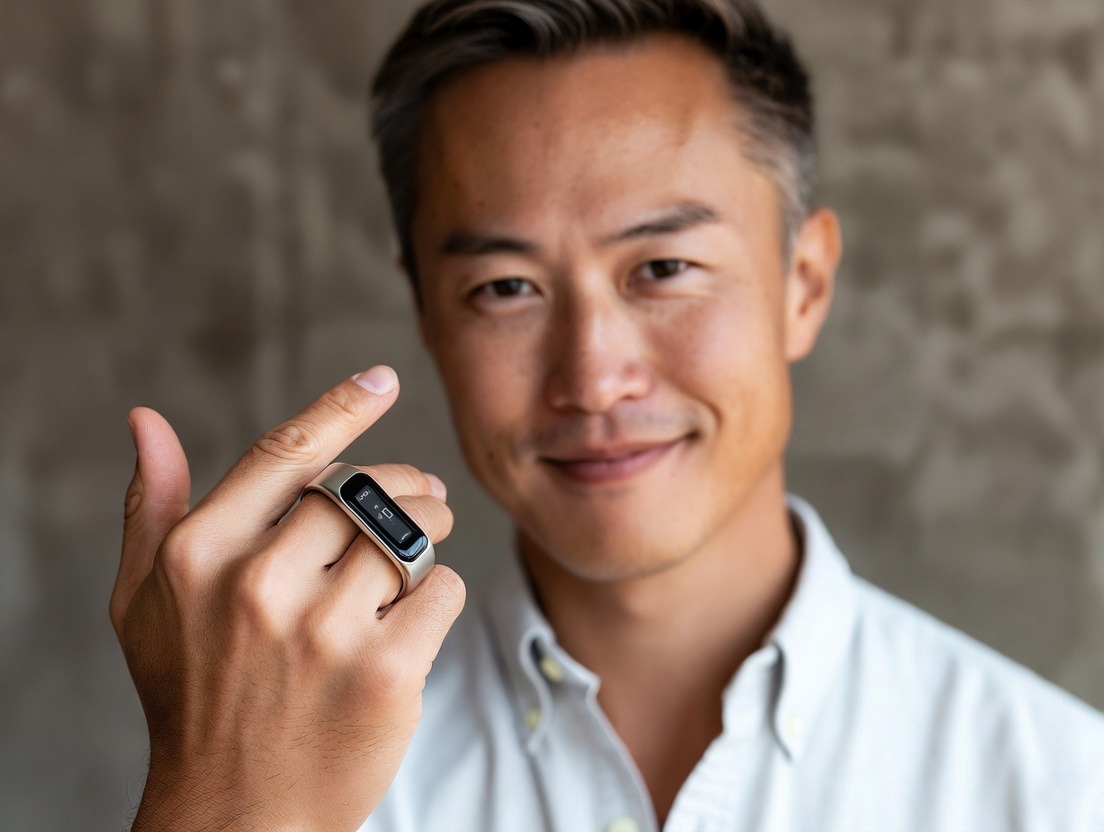
Unlike a smartwatch that shouts for your attention, a smart ring operates with silent, persistent intelligence. It gathers the most intimate biometric data—your heart's rhythm, your body's temperature, the quality of your rest—continuously and unobtrusively. The initial value is clear: you get a snapshot of your health. But the true magic, the profound return on investment, is not in the snapshot. It's in the feature-length film of your life that it compiles over weeks, months, and years.
This article explores a central, powerful concept: the compounding benefits of smart ring data. Much like compound interest grows wealth exponentially, the insights from a continuous wear device grow in wisdom and actionable power. A single night's sleep score is a data point. A year's worth of sleep data, correlated with your activity, stress, and lifestyle, is a diagnostic treasure map. It reveals patterns invisible to the naked eye, highlights insidious trends, and provides the evidence base to make changes that stick.
We will journey through the multi-layered, long-term value of wearing a smart ring. From building your unique biometric baseline to enabling proactive healthcare, the narrative is one of deepening self-knowledge and preventative power. We'll see how this unassuming piece of technology becomes your personal health auditor, sleep scientist, stress consultant, and fitness strategist—all rolled into one. The story isn't about technology; it's about the future of you, informed by a relentless, gentle stream of truth.
Let's begin by understanding the foundational layer of all long-term value: your personal biometric blueprint.

Imagine a doctor trying to diagnose a fever without knowing your normal body temperature. Or a financial advisor assessing your portfolio without knowing your starting point. It would be guesswork. In health and wellness, context is everything. What's "normal" for one person can be a warning sign for another. This is the first and most critical long-term benefit of a smart ring: it moves you from generalized population averages to your own, precise personal baseline.
From Average to Personal
When you first strap on a fitness tracker, it compares you to generic benchmarks. A smart ring, worn continuously, does something far more valuable. Over the first month, it learns you. It establishes your normal resting heart rate (RHR), your baseline heart rate variability (HRV), your typical sleep architecture, and your core temperature rhythms. This period of data collection is like a calibration phase, where the device ceases to see you as "a user" and starts to recognize you as a unique biological entity.
This personalized baseline is the cornerstone of all meaningful insight. For instance, a resting heart rate of 65 might be healthy for John but could represent a significant, concerning increase from Jane's personal baseline of 58. Without knowing Jane's baseline, that 65 reading would be dismissed as "normal." With it, it becomes a potential flag—a signal that her body may be fighting an infection, experiencing elevated stress, or not recovering adequately from training.
The Power of the Trend Line
With a solid baseline established, the smart ring’s value compounds through trend analysis. A single data point is a snapshot; a trend line is a story.
This evolving health map becomes your most trusted reference. It turns subjective feelings of "I feel run-down" into objective observations: "My HRV has been trending down for five days, and my RHR is 7 bpm above my baseline." This is the shift from guessing to knowing. As you continue your journey, you can explore resources like our comprehensive blog on understanding biometrics to deepen your interpretation of these trends.
A Living Document
Importantly, this baseline isn't static. It's a living document that evolves with you. As you get fitter, your RHR baseline may drop. As you manage stress better, your HRV baseline may rise. The smart ring continuously refines its understanding, ensuring that its insights remain relevant to the person you are today, not the person you were six months ago. This dynamic, ever-accumulating dataset is the bedrock upon which all other compounding benefits are built.
Knowledge, as the saying goes, is power. But without a mechanism for application, knowledge remains inert data. This is where the smart ring evolves from a passive sensor to an active agent of change. Its second major compounding benefit is its role as a constant, unbiased accountability partner and behavioral reinforcement system.
Closing the Feedback Loop
The core of lasting behavior change is a tight feedback loop: Action -> Measured Result -> Adjusted Action. Traditional wellness goals often fail because the feedback loop is too slow or too vague. ("I'll eat better and see if I lose weight in a month.") A smart ring accelerates and refines this loop into hours, not weeks.
Consider sleep. You decide to cut off caffeine after 2 PM. The very next morning, your ring shows an increase in deep sleep and a higher HRV score. That's immediate, positive reinforcement. You try a new evening meditation. The next day, your "readiness" or "recovery" score is notably higher. This isn't just data; it's reward. The device provides tangible, objective proof that your positive behavior had a direct, measurable effect on your physiology.
Conversely, it’s an honest auditor. That late-night work session or extra glass of wine reflects in a tanked sleep score and low readiness. The ring doesn't judge, but it doesn't lie. This objective feedback creates a powerful form of natural consequence, making the abstract cost of poor choices concretely visible.
Micro-Decisions and Macro-Impact
The real power of this accountability compounds in the realm of micro-decisions. Over time, the awareness fostered by the ring begins to influence choices before you even make them.
This is behavioral compounding. Each data-informed good decision makes the next one easier. Over months, these thousands of reinforced micro-choices solidify into automatic habits—habits built not on flimsy willpower, but on a foundation of personal, empirical evidence. For those curious about how others have harnessed this accountability, our testimonials page is filled with stories of transformation.
The Motivation of Visible Progress
Long-term goals can feel distant. The ring provides a dashboard of daily progress. Watching your average sleep score climb from 72 to 85 over a quarter, or seeing your resting heart rate trend steadily downward as your fitness improves, provides a continuous stream of motivation. It breaks down the monolithic goal of "get healthier" into daily, winnable battles, each victory recorded and celebrated in your personal data. This transforms the wellness journey from a grueling marathon into a rewarding series of observable, celebrated sprints.
Perhaps the most profound long-term value of a smart ring lies in its potential to shift your healthcare paradigm from reactive to proactive. By establishing a deep, longitudinal understanding of your body's unique rhythms, the device becomes a sophisticated early warning system, detecting subtle deviations long before they manifest as noticeable symptoms.
Detecting the Signal in the Noise
Our bodies send signals constantly, but we are often poor at interpreting them until they become shouts. Fatigue, irritability, or general "run-down" feelings are vague. Smart ring data translates these feelings into objective metrics. A sustained deviation from your personal baselines is a biological flag.
The Power of Longitudinal Data in Healthcare
Imagine walking into a doctor's office not just with a description of your current symptoms, but with a detailed, months-long chart showing precisely when your physiological patterns began to shift. This is transformative.
For conditions like hypertension, sleep apnea, or metabolic issues, long-term trend data provides a richer diagnostic context than a single point-in-time measurement in a clinical setting (which can be skewed by "white coat syndrome"). It can help differentiate between episodic events and chronic patterns. This data empowers you to be a more informed participant in your healthcare, facilitating more productive conversations with your provider. When you have questions about how this data can be used, our FAQ section addresses many common queries on data integration and health.
A Partnership in Prevention
The ultimate goal is prevention. By identifying sub-optimal patterns early—chronically truncated sleep, persistent elevated nighttime heart rate, poor recovery scores—you gain the opportunity to address root causes through lifestyle medicine. You're no longer waiting for a diagnosis; you're actively optimizing to prevent one. Over years, this vigilant, data-informed self-care can compound into a significantly reduced risk for a host of lifestyle-related conditions, representing an invaluable investment in your long-term health capital.

Sleep is the foundation upon which all other pillars of health are built. Yet, for most of history, it has been a black box. We knew we had it, but we understood little of its architecture or quality. A smart ring, worn night after night, acts as a sleep archaeologist, sifting through the layers of your rest to uncover hidden patterns, disruptions, and opportunities for optimization that have compounding effects on every aspect of your waking life.
Beyond Duration: The Architecture of Quality
Anyone can track hours in bed. The ring's value compounds by revealing the structure of your sleep: the cyclical journey through light, deep, and REM stages. Over time, you don't just see if you slept "well" last night; you see your unique sleep architecture.
The Compounding Impact of Sleep Debt and Payback
Sleep isn't just a nightly event; it's a running balance sheet. The ring helps you visualize your sleep debt. A few short nights create a deficit. The data will often show the consequences: lower HRV, higher RHR, and reduced daytime scores. Then, you can witness the payback: a night of longer, high-quality sleep that resets your metrics. Over time, you learn the true cost of that sleep debt and the non-negotiable value of the payback, reinforcing the discipline to protect your sleep schedule.
Environmental and Lifestyle Forensics
Because the ring gathers data every night, it becomes a powerful tool for forensic sleep analysis. You can conduct personal experiments:
After a year, you possess a customized sleep owner's manual. You know exactly what your body needs for optimal restoration. This deep, proven understanding leads to consistently better sleep, which compounds into better energy, mood, resilience, and cognitive function every single day. This is a return on investment that literally pays dividends overnight. To delve deeper into the science of sleep optimization, we regularly publish new findings on our wellness blog.
In our modern world, stress is ubiquitous, but its effects are deeply personal and often insidious. It's not the presence of stress that defines our health, but our body's ability to recover from it. This is where a smart ring provides a compounding advantage that is almost impossible to replicate through self-awareness alone: it creates a dynamic blueprint of your autonomic nervous system (ANS), revealing in real-time how you react to and recover from life's pressures.
HRV: The Window to Resilience
The primary metric here is Heart Rate Variability (HRV). While a smartwatch might give you an HRV number, the ring’s 24/7 wear provides the context that makes HRV meaningful. It's not about a single high or low score; it's about the trend and context.
From Reaction to Intelligent Management
With this blueprint, you move from being a victim of stress to a manager of your nervous system. The compounding benefit is the development of stress intelligence.
This ongoing dialogue with your nervous system builds resilience. You're not avoiding stress; you're strategically engaging with it and ensuring adequate recovery. Over months and years, this practice can lead to a higher HRV baseline—a biological marker of greater resilience, adaptability, and cardiovascular health. For insights into how we designed technology to support this journey, you can learn more about our story and mission.
The Long-Term Detox from Chronic Stress
Chronic, unmanaged stress contributes to inflammation, hypertension, anxiety, and a weakened immune system. By using your ring to actively manage your ANS, you are engaging in a long-term "stress detox." You are training your body to return to balance more quickly, reducing the cumulative wear and tear of chronic sympathetic activation. The compounding benefit is a physiological state that is better protected against the diseases of modern life, leading to not just a longer life, but a higher-quality, more resilient one.
The fitness industry has long been dominated by output metrics: steps, calories burned, miles run, weight lifted. While these have value, they represent only half of the equation—the strain. The other, more crucial half is readiness: Is your body prepared to handle that strain and adapt positively? This is where the long-term, 24/7 data from a smart ring compounds to revolutionize your fitness journey, moving it from simple workout tracking to holistic performance management.
The Readiness Score: Your Daily Green Light
Many advanced smart rings synthesize data (like HRV, RHR, sleep quality, and temperature) into a single "Readiness" or "Recovery" score. The power of this score compounds dramatically with time. Early on, it's a suggestion. After a year of data, it's a highly personalized, predictive algorithm based on your body's historical response patterns.
Precision in Periodization
For serious athletes, the ring becomes a tool for precision periodization—the strategic planning of training cycles. Over a full macrocycle (often a year), you can observe:
This turns training from an art into a more precise science, guided by your body's continuous feedback.
The Injury Prevention Dividend
This is perhaps the most valuable compounding benefit in fitness. Injuries are the ultimate setback, wiping out months of progress. The ring's early warning system is a potent injury prevention tool.
Over a multi-year period, the cumulative effect of these informed decisions—training when ready, resting when needed, preventing illness and injury—can be staggering. It can mean the difference between sporadic, injury-plagued progress and a smooth, consistent upward trajectory in health and performance. It transforms fitness from a series of workouts into an intelligently managed, lifelong practice of physical development.
We often compartmentalize our lives: fitness is the gym, nutrition is the kitchen, sleep is the bedroom, work is the office. But our physiology is an interconnected system, where every input affects every output. A smart ring’s most intellectually satisfying long-term benefit is its ability to weave these disparate threads into a cohesive data mosaic, revealing the hidden cause-and-effect relationships between all aspects of your lifestyle.
Correlation Becomes Causation (For You)
With enough longitudinal data, patterns emerge that move beyond general health advice to personal truth.
Lifecycle Analysis
The ring becomes a witness to your life's chapters, providing a physiological narrative.
Empowered Experimentation
This understanding turns you into a scientist of your own life. You can run targeted experiments:
Over years, this mosaic becomes an incredibly detailed portrait of your unique biological operating manual. You know with precision how every lever—sleep, food, drink, stress, exercise, travel—pulls on your system. This is the ultimate form of self-knowledge, empowering you to craft a lifestyle that doesn't just feel good, but is proven to optimize your biology.
Aging is not merely the passage of time; it is the gradual accumulation of changes in our biological systems. While we cannot stop time, we can profoundly influence the rate and quality of our biological aging. This is a long-term game measured in decades. A smart ring, worn consistently, becomes one of the most powerful tools in this endeavor, providing a dashboard of longitudinal biomarkers that can help you gauge your "healthspan" and make interventions that compound over a lifetime.
Tracking the Trajectory of Key Metrics
Certain metrics tracked by a smart ring are strong proxies for biological age and systemic health. Watching their trajectory over years is incredibly informative.
The "Healthspan" Dashboard
The goal of modern wellness is to extend "healthspan"—the number of years we live in good health—not just lifespan. Your smart ring data provides a real-time healthspan dashboard. Are your key vitality metrics holding strong, or are they beginning to drift in an unfavorable direction? This early awareness is everything. It allows for mid-course corrections while you still have a long runway.
Proactive Aging vs. Reactive Aging
This transforms aging from a passive process you endure to an active process you manage. Instead of reacting to age-related diagnoses (hypertension, type 2 diabetes, sleep apnea), you use the data to proactively create a lifestyle that minimizes your risk for these conditions. You have the evidence to see that your daily walk, consistent sleep schedule, and meditation practice aren't just making you feel good today—they are actively bending the curve of your biological aging toward more vitality and resilience.
The compounding benefit over 10, 20, or 30 years is incalculable. It's the difference between entering your later decades with a robust, well-understood physiology and entering them with a collection of unmanaged conditions. The smart ring becomes a lifelong companion in the project of aging well, providing the feedback necessary to make the daily choices that truly add life to your years. Our about us page details our commitment to creating technology that supports this very journey of lifelong wellness.
We meticulously track physical fitness, but often neglect our most important asset: our brain. Cognitive performance—focus, memory, creativity, and emotional regulation—is not a static trait. It fluctuates daily based on physiological inputs. The long-term data from a smart ring provides a missing link, revealing the biophysical underpinnings of mental performance and allowing you to systematically optimize for clarity and acuity.
The Brain-Body Feedback Loop
The brain is an energy-intensive organ, deeply affected by the body's state. The ring’s metrics serve as proxies for cognitive readiness.
Optimizing Your Schedule for Mental Performance
With months of data, you can reverse-engineer your ideal cognitive work schedule.
Long-Term Brain Health
The compounding benefit here extends to long-term brain health. Chronic poor sleep, unmanaged stress, and low-grade inflammation (all detectable through ring data trends) are known risk factors for cognitive decline. By using the data to actively manage these factors over years and decades, you are not just optimizing for today's productivity; you are potentially investing in the longevity and health of your brain itself. You are building a lifestyle that supports a sharp, resilient mind for the long haul.
Nutrition advice is notoriously generic and conflicting. What works for one body can fail for another. A smart ring cuts through the noise by providing a direct, physiological feedback loop for your dietary choices. Over the long term, it helps you build a deeply personalized understanding of how food truly fuels—or hinders—your unique biology.
Beyond Calories: The Metabolic and Inflammatory Response
While rings don't track calories directly, their sensors measure the downstream effects of what you eat on your system.
Experimenting with Dietary Patterns
Thinking of trying intermittent fasting, a plant-based diet, or reducing processed foods? The ring provides an objective measure of success beyond the scale.
Building Your Personal Food Philosophy
After a year or two of this observational data collection, you move away from diet dogma and toward a personalized food philosophy. You know which foods make you feel energized and recovered, and which foods leave you sluggish and inflamed. This isn't about restriction; it's about empowerment. You choose foods that align with your physiological well-being because you have seen the proof in your own data. The compounding benefit is a sustainable, enjoyable way of eating that actively supports your long-term health goals, reducing the risk of metabolic disease and inflammation-driven conditions. For more on integrating data with lifestyle choices, our community blog offers ongoing discussions and case studies.
As the dataset grows from months to years, the relationship with the smart ring evolves. It transitions from a data recorder to an intelligent, silent coach. Advanced algorithms begin to analyze your unique longitudinal patterns, moving from telling you what happened to suggesting what you should do to stay on track or correct course. This predictive guidance represents the pinnacle of compounded value.
From Descriptive to Predictive Analytics
Early on, insights are descriptive: "Your sleep was poor last night." With a vast historical dataset, the software can become predictive:
Personalized Benchmarking
You're no longer compared to "men your age." You're compared to you at your best. The system can identify your personal record periods—times when your HRV was highest, sleep was most consistent, and readiness scores were peak. It can then help you reverse-engineer the lifestyle conditions that led to that peak state, offering actionable suggestions to recreate them.
The Evolution of the User Interface
The coach manifests through a refined user experience:
This silent coaching relationship compounds in value because it reduces the cognitive load of self-analysis. The device does the heavy lifting of pattern recognition, freeing you to focus on taking the right actions. Over time, you develop a deep trust in this guidance because it's based on thousands of hours of data specific to you. It becomes less of a device and more of a partner in your wellness journey, helping you make the daily choices that lead to a healthier, more vibrant life.

A smart ring's power is not confined to its own app. Its long-term value multiplies exponentially when it functions as the central, integrative node in your personal health ecosystem. By connecting with other apps, devices, and services over years, it weaves a comprehensive, holistic tapestry of your well-being that is far greater than the sum of its parts. This "Ecosystem Effect" is a critical phase of compounding, transforming isolated data streams into unified wisdom.
The Hub of Your Health Data
Think of your smart ring as the hub of a wheel. The spokes are the other specialized tools in your life:
Creating a Single Source of Truth
The compounding benefit of this integration is the creation of a longitudinal health data warehouse that belongs to you. Instead of fragmented insights scattered across a dozen apps, you build a centralized repository where lifestyle inputs (food, exercise, meditation) are continuously correlated with physiological outputs (sleep, recovery, stress). This becomes an invaluable resource for anyone serious about optimizing their health, from biohackers to individuals managing chronic conditions.
Future-Proofing with Open Integration
The most forward-looking smart rings embrace open APIs and partnerships. This means their long-term utility isn't locked in. As new health apps, wearable devices (like continuous glucose monitors or blood pressure cuffs), or even electronic health record systems develop better integration capabilities, your years of ring data remain relevant and connective. Your historical baseline becomes the constant against which new data streams can be compared, deepening your insights further. Exploring a platform built for this integrative future starts with understanding its core philosophy, which you can discover in our company's story and vision.
The Professional Interface
This ecosystem value extends to healthcare professionals. Imagine being able to generate a report for your doctor that includes not just your recent sleep data, but correlated trends in your activity, self-reported stress from a journaling app, and even dietary notes—all synchronized on a single timeline. This holistic context can be transformative for functional medicine practitioners, therapists, and nutritionists, enabling more nuanced, personalized care plans. The ring becomes the translator between your daily life and clinical understanding.
Humans are social creatures, and motivation is often fueled by community. However, in health, comparison can be a double-edged sword. The long-term use of a smart ring cultivates a healthier, more productive form of community engagement—one based on shared learning and normalized personal progress rather than competition against others' arbitrary metrics.
From Leaderboards to Learning Boards
Many fitness platforms thrive on leaderboards, which can be demotivating or encourage unhealthy behaviors. The ring ecosystem, over time, often fosters communities focused on shared understanding.
Anchoring in Your Own Journey
The primary social benefit that compounds is actually anti-social: it's the deep anchoring in your own data. After years of seeing your personal charts, the noise of comparison fades. You are no longer chasing a generic "10,000 steps" because an article said so. You are chasing a personal best in your own recovery score because you know exactly how that state feels and performs. Your motivation becomes intrinsically tied to your unique biology. Your progress is measured against your past self, which is the only meaningful comparison.
The Value of Shared Stories
This is where social proof becomes powerful in its rightful context. Reading authentic testimonials and long-term user experiences is not about envy; it's about seeing possibility. It’s understanding how someone else used five years of data to identify a food intolerance, optimize their training for a personal best, or manage a chronic condition more effectively. These stories provide a roadmap and reinforce the belief that long-term, consistent tracking yields life-changing results. They illustrate the compound effect in human terms.
Building Accountability Partnerships
With a solid foundation in your own data, community can then serve as gentle accountability. Sharing goals with a friend who also uses a ring—like a 30-day sleep consistency challenge—is informed by personal baselines. You're not competing to see who sleeps "better"; you're supporting each other to hit your own personal targets, using your shared understanding of the data as a common language for encouragement and problem-solving.
Purchasing a high-quality smart ring is a meaningful upfront investment. To view it merely as a consumer electronics purchase is to miss its true nature. When used consistently over years, it is better understood as a capital investment in your human infrastructure. The financial return on investment (ROI) compounds in both direct and indirect ways, often far exceeding the initial cost.
Preventative Healthcare Savings
This is the most direct financial compounding. The modern healthcare system is overwhelmingly reactive and treatment-focused, which is extraordinarily costly. The ring is a tool for proactive, preventative self-care.
Performance & Productivity Dividends
Your health is your capacity to earn, create, and perform. The ring optimizes this capacity.
The Intangible Equity of Wellbeing
Beyond direct savings and earnings, there is the compounded equity of wellbeing itself.
When viewed through this lens, the annualized cost of the device becomes negligible. Spread over five years of constant use, it amounts to pennies per day for what amounts to a continuous health audit and personal optimization coach. It shifts the purchase from an expense to one of the highest-return investments you can make in yourself. For those considering this investment, our FAQ page addresses common questions about durability, subscriptions, and value.
A profound compounding benefit that is often overlooked is the effect of zero friction. Unlike a smartwatch that can be bulky, require daily charging, and constantly buzz with notifications, a premium smart ring achieves something remarkable: it disappears. It becomes an invisible, seamless part of you. This isn't just a convenience feature; it is the fundamental enabler of all the long-term value discussed thus far.
The Psychology of "Forgetability"
For a device to provide true longitudinal data, it must be worn always. Any barrier to this—discomfort, charging hassle, social awkwardness, interference with activities—creates data gaps that break the continuity of your health narrative. The smart ring's form factor is its ultimate feature.
Unobtrusive Data Collection
The ring’s passive nature means it collects data without you acting as an intermediary. You don't need to start a "sleep session" or a "workout." It observes your body's natural state during rest and its response to life's spontaneous activities—a pick-up basketball game, a stressful commute, an afternoon gardening session. This results in a more authentic, holistic dataset than one curated by manually logged events.
Social and Aesthetic Neutrality
A well-designed smart ring looks like a piece of modern jewelry or a simple band. It doesn't scream "tech gadget" in a business meeting or a social event. This social acceptability removes a subtle but real barrier to constant wear, especially for professionals or those who prefer a minimalist aesthetic. It fits into your identity, rather than requiring you to adapt to it.
Durability and "Set-and-Forget" Reliability
Long-term value requires a product built to last. A ring designed with premium materials (titanium, ceramic, durable coatings) to withstand years of daily wear compounds its value by being a reliable tool you don't have to think about replacing. Coupled with a long battery life (often 7+ days) that minimizes charging interruptions, it achieves a state of dependable utility. You trust it to be there, working in the background, freeing your mind to focus on living, not on managing your tracker.
This seamless integration is the silent engine of the compound effect. By removing all points of friction, it ensures the data flow never stops. Years of unbroken, passive data collection are what enable the deep baselines, the detection of subtle trends, and the truly personalized insights that make the device not just a purchase, but a lifelong companion in health. To see a device designed with this philosophy of seamless integration, you can explore the Oxyzen approach to wearable design.
In an era where personal data is a valuable commodity, the long-term accumulation of your most intimate biometric information raises critical questions of ownership, privacy, and legacy. The final, and perhaps most forward-looking, compounding benefit of a smart ring is the establishment of your personal health ledger—a sovereign, lifelong record of your physiology that you own and control. This asset grows in value with every passing year.
Owning Your Biological Narrative
Your health data is the story of your life written in the language of your biology. Over decades, a smart ring can amass a dataset that is uniquely precious: a continuous record of how you lived and how your body responded.
Privacy as a Premium Feature
The compounding value of this ledger is contingent on robust privacy and user ownership. The ideal model is one where:
The Future Value of Consolidated Health Data
As precision medicine advances, consolidated longitudinal data will become the key to hyper-personalized health insights, treatments, and preventative strategies. Your 20-year dataset could be used (with your explicit consent) to train algorithms that detect early, ultra-subtle signs of specific conditions unique to your profile. It could help researchers understand the long-term effects of lifestyle on aging. By being an early adopter and consistent user, you are building this asset now.
A Time Capsule of You
Ultimately, this lifelong health ledger is a profound act of self-documentation. It shows not just your health, but the history of your life's efforts, stresses, recoveries, and triumphs. It is the ultimate compound interest: each day's data points, seemingly insignificant on their own, accruing into a vault of self-knowledge that can guide your future, inform your legacy, and deepen your understanding of what it means to be you, in your one precious body, across the full span of your life.
Welcome back. If the first part of our journey was about laying the foundation—building baselines and establishing the core feedback loops—then this next phase is about the architecture that rises upon it. Here, the compounding benefits of long-term smart ring use transition from insightful to transformative, from reactive to predictive, and from habit-forming to identity-shaping. The data is no longer just a record; it's a co-pilot. The device is no longer just a tracker; it's an integral part of your biological operating system.
We move now beyond the initial years of learning into the realm of mastery. This is where the silent, persistent accumulation of data begins to yield its most sophisticated fruits: the automation of wellness, the nuanced management of life's seasons, and the profound confidence that comes from truly understanding the language of your own body. Let's explore the deepening layers of value that unfold when you commit to the long game.
For the first year or two, using a smart ring requires conscious engagement. You check scores, interpret trends, and deliberately make adjustments. But as the years pass, a remarkable shift occurs. The insights become internalized, and the data-informed choices transition from conscious decisions to automated behaviors. The ring’s feedback loop has successfully reprogrammed your defaults, creating what can be called "unconscious excellence" in daily living.
The Internalization of Rhythms
Your body's optimal rhythms, once discovered through data, become your new normal.
Contextual Automation and Smart Notifications
The technology itself evolves to support this automation. With a rich historical dataset, the app's notifications become supremely contextual and prescient.
The Cognitive Freedom Dividend
This is the ultimate compounding gift: freed mental bandwidth. The countless daily decisions about sleep, food, exercise, and recovery are no longer decisions; they are executed protocols based on a proven, personal algorithm. The mental energy once spent on "Should I go to the gym?" or "Is this food good for me?" is liberated. It can be redirected towards creativity, relationships, deep work, and passion projects. The smart ring, by automating the fundamentals of health, literally gives you back your most precious resource: your attention and focus.
The Emergence of a Personal Health Protocol
After half a decade, you don't just have habits; you have a personal health protocol. This is a customized set of rules, derived from empirical self-experimentation over thousands of days, that you know will keep your system in its optimal zone. It covers sleep hygiene, workout scheduling, nutritional frameworks, and stress reset techniques. It's your personal constitution for vitality. This protocol becomes so ingrained that following it feels effortless, and deviating from it feels physically and psychologically discordant. You have, in essence, engineered a lifestyle that is perfectly attuned to your biology.
We've discussed early warning systems. Predictive health is the next evolutionary stage: moving from detecting early deviations to forecasting future states based on complex, longitudinal modeling. This is where the smart ring transitions from a health mirror to a health crystal ball, offering a "foresight advantage" that is the pinnacle of preventative care.
Algorithmic Personal Forecasting
With a multi-year dataset, machine learning algorithms can move beyond simple correlations to complex predictive modeling.
The "What-If" Simulator
Imagine an interactive dashboard where you can simulate lifestyle choices and see their predicted impact on your physiology.
This turns decision-making into an evidence-based simulation, allowing you to weigh the true physiological cost of choices before you make them.
Long-Term Trajectory Modeling
This is the most profound application. The ring could model your current health trajectory based on your last five years of data. It could project key biomarkers (like HRV, RHR, sleep efficiency) forward in time under different scenarios: "If you maintain your current lifestyle, your biological age trajectory is X. If you improve sleep consistency by 10%, it improves to Y. If you reduce chronic stress load by 15%, it improves to Z." This provides a powerful, motivating visualization of how today's choices literally shape your future self.
Integrating with Broaker Health Data
The predictive power multiplies when the ring's data is combined with other periodic tests. Imagine syncing your quarterly blood test results (cholesterol, HbA1c, inflammatory markers) with your continuous ring data. The algorithm could begin to identify the precise continuous metrics (e.g., a specific sleep HRV pattern or nighttime heart rate dip) that correlate with optimal blood markers for you. It could then work in reverse: use your daily ring data to estimate your metabolic health in near-real-time, flagging when it's truly necessary to get a lab test. For individuals managing specific conditions, this foresight can be life-changing, a topic often explored in user experiences on our testimonials page.
Our bodies are not static; they go through profound, predictable transitions. For decades, navigating periods like perimenopause or andropause has been a process of managing confusing, disparate symptoms often in isolation. Long-term smart ring data provides a revolutionary framework: a continuous, objective dashboard to track these transitions, quantify symptoms, and measure the efficacy of interventions. This turns a bewildering life stage into a manageable, data-informed journey.
The Hormonal Shift Dashboard
Hormonal fluctuations have dramatic, measurable effects on autonomic nervous system function, sleep architecture, and thermoregulation—all domains perfectly captured by a smart ring.
Personalized Intervention Tracking
The real power lies in using the data to manage the transition.
Aging with Agency
Beyond specific transitions, the ring normalizes and demystifies the aging process. It allows you to differentiate between "normal, healthy aging" (a gentle decline in certain metrics) and "problematic aging" (sharp, unhealthy deviations). This empowers you to advocate for yourself, seek timely medical advice, and implement lifestyle changes that maximize your healthspan, ensuring your later decades are defined by vitality, not just longevity. To understand how our technology is designed to support these lifelong journeys, you can learn more about our foundational philosophy.
For the millions living with chronic conditions like hypertension, insomnia, anxiety disorders, or long-term recovery from illness, the healthcare journey is often defined by infrequent check-ins and subjective symptom reporting. A smart ring introduces a paradigm shift: it becomes a 24/7 partner in co-piloting your condition, providing continuous, objective data that bridges the gap between clinical appointments and empowers daily self-management.
Objective Data for Subjective Experiences
Many chronic conditions manifest in physiological changes that are perfectly trackable.
Enhancing the Patient-Provider Partnership
Walking into a doctor's office with a PDF report showing months of nightly sleep, daily stress patterns, and recovery trends transforms the conversation. It moves from "I feel tired" to "My data shows my deep sleep is consistently below 10%, and my HRV drops every weekday afternoon." This facilitates more accurate diagnoses, more personalized treatment plans, and a collaborative relationship where the patient is an active, informed participant.
Medication & Treatment Monitoring
The ring can serve as a sensitive monitor for treatment side effects. Does a new medication cause sleep disruption or a change in heart rate patterns? Does a change in dosage correlate with improved recovery metrics? This continuous feedback loop allows for finer-tuned treatment adjustments in consultation with a healthcare provider.
The Empowerment of Self-Efficacy
Perhaps the greatest benefit for chronic condition management is the restoration of agency. Living with a chronic condition can make you feel at the mercy of your body. The ring provides a dashboard of control. It shows you the levers you can pull (sleep, diet, gentle movement, stress management) and the direct, positive results of pulling them. This evidence-based self-management reduces fear, improves mental health, and significantly enhances quality of life. For practical advice on using wearables in this way, our blog features dedicated resources and guides.
Beyond the graphs and numbers lies a profound psychological shift. Long-term engagement with your physiological data cultivates a state of biometric self-efficacy. You develop a deep, unshakeable confidence in your ability to understand and manage your own body. This psychological benefit compounds quietly but powerfully, transforming your relationship with health from one of anxiety to one of agency.
From Uncertainty to Embodied Certainty
Health anxiety often thrives on ambiguity. A weird pang, a night of poor sleep, a day of low energy—these can spiral into "What's wrong with me?" With years of ring data, you have a reference library.
The Confidence of Self-Knowledge
There is immense power in feeling like the world's leading expert on your own body. You know how much sleep you need to thrive. You know how your body reacts to sugar, alcohol, or caffeine. You know the signs that you are overreaching versus overtrained. This expertise eliminates the need to jump on every new health fad. You have an internal compass, calibrated by years of personal data, that guides you toward what works for you. This confidence permeates your decisions, making you less susceptible to misinformation and more trusting of your own judgment.
The Reduction of "Bio-Hype" and Quick Fixes
The wellness industry is built on promises of rapid transformation. Long-term data tracking is the antidote to this "bio-hype." You see firsthand that real change—a sustained increase in HRV, a lower resting heart rate, consistently better sleep—happens over months and years of consistent practice, not from a 7-day detox or a miracle supplement. This instills a patient, process-oriented mindset. You become invested in the compound interest of daily healthy habits, not the lottery ticket of a quick fix.
Agency Over Aging and Health Destiny
This is perhaps the most significant psychological shift. You move from a passive view of health ("I hope I stay healthy") to an active one ("I am building my health every day"). The ring is your tool for that construction. You see the direct line between your actions and your biomarkers. This creates a powerful sense of control over your health destiny. You are not waiting to see what genes or luck will hand you; you are actively writing your health story with your daily choices, informed by continuous feedback. This sense of agency is fundamentally empowering and life-affirming.
As we accumulate years of our most intimate data—a record of our passions, stresses, illnesses, and sleeps—the relationship with the company that facilitates this storage becomes paramount. The long-term value of a smart ring is inextricably linked to the ethical data compact between user and maker. This compact defines issues of privacy, ownership, and use, and its strength compounds trust over the decades.
Data as a Sacred Asset, Not a Product
The most critical element of this compact is a fundamental philosophical stance: Your biometric data is your asset, a digital extension of your self. It is not a product to be harvested, sold, or monetized through advertising.
Technological Architecture of Trust
This philosophy must be baked into the technology itself.
The Future of Biometric Citizenship
As these devices become more prevalent, we are entering a new era of "biometric citizenship." We will need new social and legal frameworks to define the rights and responsibilities that come with generating such sensitive data.
Choosing a smart ring is, in part, choosing a partner in this ethical landscape. The long-term value of your data ledger is protected only if the steward of that ledger is trustworthy. This is why a company's stated mission and values are not just marketing; they are a core feature. You can read about our commitment to these principles in our story. The strength of this compact determines whether your ring remains a tool for empowerment or becomes a source of vulnerability.
A smart ring is a significant investment. For its value to compound over a decade or more, it cannot be a static piece of hardware or software. It must be a future-proof platform—one that evolves alongside advancements in sensor technology, data science, and our understanding of human health. This forward compatibility is a hidden but crucial layer of long-term value.
Sensor Fusion and New Biomarkers
The rings of today track HR, HRV, temperature, and movement. The rings of tomorrow will likely integrate new, non-invasive sensors.
A future-proof device is designed with this in mind—through hardware that can accommodate new sensor types via firmware or a modular design philosophy that allows for sensible upgrades without obsolescence.
Software as a Living Intelligence
The algorithms that interpret your data should never be static. They must learn and improve.
The Upgrade Path and Sustainability
True future-proofing also considers the product lifecycle responsibly.
Your Data as the Constant
In this evolving landscape, the one constant is your accumulated dataset. A future-proof ecosystem ensures that this data is portable and upgradeable. When you move to a new generation of hardware, your five-year baseline should seamlessly transfer, making the new device instantly smarter about you than the old one was on its first day. This continuity is the ultimate form of value compounding—your historical self always informing your present and future tools. For the latest on how we approach technological evolution, keep an eye on our blog for updates and insights.


