


How Smart Ring Benefits Create Better Health Habits Long-Term
How smart rings help create lasting healthy habits.
How smart rings help create lasting healthy habits.
%402x.svg)
In the quiet, persistent quest for better health, we are surrounded by noise. Smartphone notifications ping, wellness influencers preach, and wearable screens glow with a relentless stream of data that often feels more overwhelming than enlightening. For years, the promise of "quantified self" technology has been to illuminate the path to well-being through numbers. Yet, for many, the result has been data fatigue—a pile of disconnected metrics that fail to translate into lasting change.
This is where a subtle, yet profound, shift is occurring on our very fingertips. The smart ring, an unassuming band of titanium or ceramic, is moving health tracking from our wrists and pockets into a realm of constant, unconscious, and deeply personal monitoring. Unlike its bulkier predecessors, it doesn’t shout for attention; it whispers insights. It operates on the fundamental principle that the most powerful health transformations are not born from frantic, short-term fixes, but from the quiet, daily reinforcement of positive habits.
This article delves into the unique psychology and technology behind the smart ring, exploring how this discreet device is uniquely positioned to bridge the gap between knowing what’s good for you and consistently doing it. We’ll journey through the science of habit formation, the critical importance of physiological stress and recovery metrics, and how 24/7 wearability fosters a new kind of health consciousness. We will uncover how moving beyond step counts to metrics like Heart Rate Variability (HRV), body temperature, and sleep architecture provides the holistic feedback loop necessary for sustainable change.
The ultimate goal is not just to present data, but to show how a device like the Oxyzen smart ring can become a seamless partner in your long-term health narrative, helping you listen to your body’s true signals and build habits that last a lifetime. Welcome to the future of personalized, persistent, and passive health coaching.
Lasting health is not a destination reached through a single heroic effort; it is a landscape shaped by the small, repeated paths we walk every day—our habits. At the core of every habit, good or bad, lies a neurological loop identified by researchers as the "habit loop." It consists of three elements: a Cue (the trigger for the behavior), a Routine (the behavior itself), and a Reward (the benefit gained from the behavior). This loop, when repeated, becomes increasingly automatic, carving a neural pathway that makes the behavior almost subconscious.
Traditional health wearables often focus only on the routine—logging the workout, counting the steps—and provide a superficial reward in the form of a badge or celebration on a screen. This external validation can be motivating initially, but it frequently fails to create a deep, intrinsic reward that sustains the loop long-term. The cue is also often external and intrusive: a reminder buzz that interrupts your flow, creating friction rather than seamless integration.
The smart ring introduces a paradigm shift by operating within a more sophisticated, biologically-anchored habit loop. Its constant wearability means it can detect cues you might miss. For instance, a subtle, sustained elevation in your resting heart rate and a dip in your Heart Rate Variability (HRV) could be the cue—a biological signal of accumulated stress or impending illness. The routine becomes a conscious choice to prioritize recovery: perhaps a 20-minute meditation, an early night, or a gentle walk instead of an intense workout. The reward is both immediate and data-confirmed: you see your HRV improve, your sleep depth increase, and your readiness score climb the next morning.
This transforms health management from a game of external compliance to an exercise in internal listening. The ring provides the mirror to see your body’s true state, making the cue more accurate and personal. The reward shifts from an abstract digital trophy to a tangible feeling of vitality and balance, reinforced by concrete physiological data. By aligning technology with our innate biology, the smart ring doesn’t just track habits; it helps redesign the habit loop from the inside out, creating a foundation for change that is resilient because it is deeply understood.
For a deeper exploration of the science behind habit formation and technology, our resource library on the Oxyzen blog offers extensive reading on behavioral psychology and wearable tech.
The most insightful health data isn't captured in a 60-minute workout; it's woven into the 23 other hours of the day. How your body recovers, how it manages stress during a work meeting, how it transitions through sleep cycles—these are the narratives that truly define your well-being. This is where the smart ring’s form factor confers an almost unfair advantage.
A device on the wrist, while useful, faces significant limitations. It can be cumbersome during sleep, leading many to remove it, thus creating a critical data gap. It can be impractical during certain exercises (weightlifting, rock climbing, yoga) or social occasions. Every removal is a break in the data stream, a missing chapter in your health story. The ring, by contrast, becomes a part of you. Its design ethos is forgettable comfort. You wear it during sleep, showers, workouts, and formal events. This 24/7 wearability enables truly passive monitoring.
Passive monitoring is the holy grail of health tech. It means the device gathers rich, contextual data without requiring a single button press, screen tap, or manual log entry. It measures your heart rate as you give a presentation, your skin temperature variation as you fight off a virus, and your blood oxygen levels as you ascend a mountain. This passive stream creates a comprehensive baseline that is dynamic and incredibly personal. Your "normal" is defined not by population averages, but by millions of data points specific to you.
This constant presence allows the ring to identify patterns invisible to sporadic checking. It can detect the early signs of illness through nocturnal biometric shifts, track the impact of caffeine or alcohol on sleep architecture over weeks, and understand how your menstrual cycle affects your physiological readiness. The power isn't just in collecting this data, but in presenting it as a coherent story of your life’s impact on your body. You’re no longer taking snapshots; you’re streaming a high-definition documentary of your physiology. This uninterrupted narrative is the bedrock upon which intelligent, long-term habit formation is built, a principle central to the Oxyzen mission of providing effortless, holistic health insight.
For a decade, the cardinal metric of health wearables was the step count. It’s a simple, comprehensible, and utterly incomplete picture. Taking 10,000 steps while chronically stressed, sleep-deprived, and fighting inflammation is not a path to health. The smart ring evolves the conversation by conducting a symphony of biometrics, where each metric is an instrument, and their interplay reveals the true melody of your well-being.
When viewed in a dashboard, these metrics stop being isolated numbers. You see how a poor HRV reading one morning correlates with fragmented deep sleep the night before, possibly preceded by a late meal that elevated your nocturnal skin temperature. This holistic view is what enables meaningful change. You stop chasing a single metric and start cultivating an ecosystem of health. This symphonic approach to data is what users often discover when they explore real user experiences and see how others have connected these dots in their own lives.
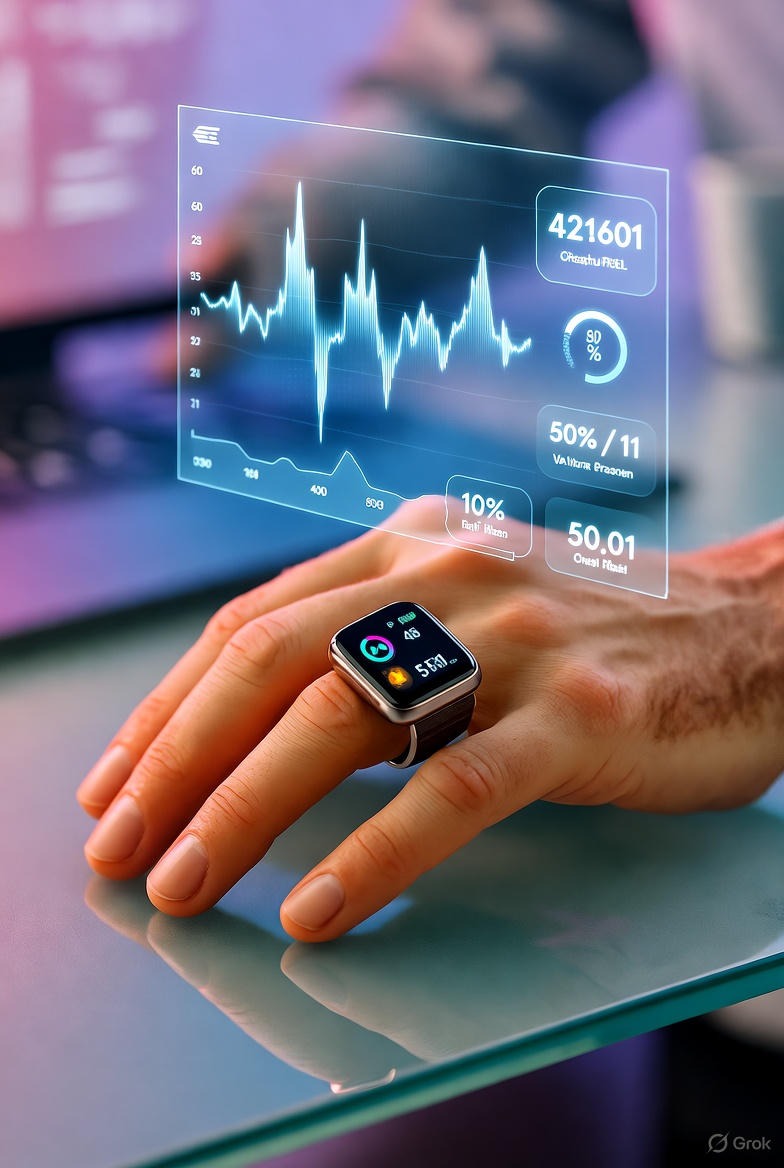
Armed with a symphony of data, the challenge becomes synthesis: How do you turn multiple data streams into a single, actionable piece of advice? This is the genius of the Readiness Score (or Recovery Score), a composite metric pioneered by smart rings and advanced wearables. It distills your HRV, sleep quality, recent activity, body temperature, and sometimes resting heart rate into a single, easy-to-understand number or percentage each morning.
Think of it as your body’s daily "forecast." A high readiness score suggests your body is primed for challenge—it’s a good day for that intense workout, important project, or social engagement. A low score is a clear signal from your nervous system that resources are depleted; it’s a day to prioritize recovery, gentle movement, stress reduction, and nourishment.
The long-term habit-forming power of the Readiness Score cannot be overstated. It directly combats the pervasive "no days off" mentality that leads to burnout and injury. It teaches the discipline of strategic recovery, which is just as important as the discipline of effort. By honoring a low score and taking a restorative day, you reinforce a habit of listening to your body. This prevents the cycle of overtraining, illness, and frustration that derails so many fitness journeys.
Over weeks and months, this daily guidance cultivates a more intuitive relationship with your body. You begin to anticipate your score. You learn how two glasses of wine, an argument, or a poor night’s sleep in a hotel bed impacts your system. The score moves from being a surprising verdict to a predictable confirmation of your self-awareness. It becomes the cornerstone habit—the practice of checking in and planning your day accordingly—that organizes all other health habits around it. It is the embodiment of the principle that to build sustainably, you must balance stress with rest, a philosophy detailed in our FAQ on optimizing recovery.
If the Readiness Score is your daily guide, then sleep is the bedrock upon which it is built. We’ve long known sleep is crucial, but for most, "sleep hygiene" is a list of generic tips: avoid caffeine, limit screens, keep it dark. The smart ring transforms this from a one-size-fits-all prescription into a personalized laboratory.
Continuous ring-based sleep tracking provides a level of detail previously only available in clinical sleep studies. It doesn’t just tell you you slept for 7 hours; it reveals that you took 45 minutes to fall asleep, had 5 awakenings you don’t remember, spent only 12% of your night in crucial deep sleep, and experienced a dip in blood oxygen during REM. This granular data turns abstract concepts into concrete cause-and-effect relationships.
Here’s how this fuels long-term habit formation:
By making the invisible visible, the ring empowers you to build a sleep sanctuary tailored to your unique physiology. The habit of reviewing your sleep data each morning reinforces the importance of the previous night’s choices, creating a powerful feedback loop that makes excellent sleep a non-negotiable pillar of your life. For countless users, this has been the most transformative aspect, as shared in the personal journeys found in our story section.
Modern stress is often chronic, low-grade, and insidious—a looming deadline, financial worry, relational tension. Unlike the acute stress of running from a predator, it doesn’t always feel overwhelming, yet it constantly drips, draining your physiological reserves. The dangerous habit many form is ignoring these signals until they manifest as illness, burnout, or anxiety.
Smart rings bring this hidden stress to light through objective biomarkers, primarily HRV. Your HRV doesn’t care if you think you’re handling stress well; it shows how your nervous system is actually coping. A downward trend in HRV is a canary in the coal mine, an early warning system long before you consciously feel depleted.
This measurable feedback is the foundation for building real-world resilience habits:
The long-term benefit is the cultivation of interoceptive awareness—the skill of perceiving your internal state. Over time, you start to feel the physiological signs of stress (shallow breathing, shoulder tension) that correspond to a dipping HRV. The ring trains you to become your own biofeedback instrument. The habit of checking in with your body and using data-driven techniques to regulate your nervous system becomes your primary tool for navigating a demanding world, a core topic of discussion in our wellness community on the Oxyzen blog.
A health tool can only be effective if it is used. A common failure point for wrist-worn wearables is "wearer fatigue"—the device becomes annoying, uncomfortable, or socially awkward, leading to extended periods in a drawer. The smart ring, by its very nature, solves this through radical unobtrusiveness.
Its design philosophy is the opposite of the smartwatch. It seeks to be forgotten, to become a natural extension of the body. There is no bright screen to light up a dark bedroom or interrupt a conversation. There are no constant buzzes for notifications (unless configured for singularly important alerts like prolonged elevated heart rate). This discretion is not a minor feature; it is the central catalyst for long-term habit formation.
In an age of fragmented digital health records and app silos, the smart ring offers something rare: a unified, longitudinal health journal that you own. This is not just data for the sake of weekly reports; it is the evolving story of your body over seasons, life events, and changing habits.
The power of viewing your biometric trends over months and years is transformative for long-term health:
Owning this narrative fosters a sense of agency and stewardship over your health. The habit of periodically reviewing your long-term trends—celebrating improvements, investigating dips—reinforces your role as the primary author of your well-being. It turns health from a series of disconnected episodes into a coherent, managed journey. Questions about data privacy, security, and how to interpret long-term trends are some of the most common, and we address them comprehensively in our support and FAQ section.
The internet is awash in generic health advice: "Drink 8 glasses of water." "Get 8 hours of sleep." "Do 150 minutes of cardio." While well-intentioned, this prescriptive approach ignores the beautiful complexity of human individuality. Your optimal sleep might be 7 hours and 15 minutes. Your ideal workout schedule depends on your unique recovery rhythm. The smart ring, through continuous data collection and intelligent analysis, is the key to moving from prescription to true personalization.
Advanced algorithms and simple AI in these devices don't just show you numbers; they learn your patterns and provide context unique to you.
This cultivates the ultimate long-term health habit: self-experimentation and curiosity. You become a scientist of your own life, using the ring’s data to test what truly works for your unique biology. This empowerment is the antidote to diet culture and fitness fads, leading to a sustainable, intuitive, and deeply personalized approach to wellness that evolves with you. To see how this personalization works in practice, you can discover how Oxyzen's technology adapts to individual users.
Human beings are social creatures, and habits are profoundly influenced by our social environment. While the smart ring provides the internal feedback loop, integrating this journey with a supportive community adds a powerful external layer of motivation and accountability that can solidify long-term change.
The ecosystem around advanced smart rings often includes community features, challenges, and safe, opt-in data sharing that transcend solitary number-crunching:
The habit of health, when shared, becomes woven into the fabric of your relationships. It moves from a private pursuit to a connected one, providing both inspiration on difficult days and the joy of shared celebration on days of progress. This social layer, combined with deep personal data, creates a robust support structure that makes abandoning new, healthy habits far less likely.
No single device is an island, and true holistic health management exists at the intersection of multiple data streams. The modern health-conscious individual might use a nutrition app, a meditation platform, a workout tracker, and an electronic health record. The smart ring’s true power is amplified when it acts as the central, physiological hub in this ecosystem, connecting disparate data points into a unified cause-and-effect model.
Through open APIs and strategic partnerships, leading smart rings can integrate data from other apps and services, creating a richer, more actionable story.
This integrative capability fosters the long-term habit of systems thinking about your health. You stop viewing diet, exercise, sleep, and stress as separate silos and start to see them as dynamically interacting components of a single system—your body. The smart ring, with its 24/7 physiological baseline, provides the common language that translates the outputs of all your other health behaviors into a single, comprehensible narrative of your daily readiness and long-term resilience. For those interested in the technical specifics of how this integration works, our FAQ section covers compatibility and data syncing in detail.
The pinnacle of smart ring technology is its evolution from a retroactive diary to a proactive guide. By applying machine learning to your longitudinal data, these devices begin to identify patterns and make predictions, moving from telling you what happened to suggesting what you might need next. This transforms the ring from a tool into a "silent coach"—a constant, knowledgeable presence that supports habit formation through anticipation, not just recollection.
This predictive capacity manifests in several habit-forming ways:
The beauty of this "silent coach" model is its lack of nagging. It doesn’t bark orders. It provides a quiet, data-driven insight—a gentle nudge—and leaves the agency with you. This respects your autonomy while providing expert guidance, a combination that is far more effective for long-term adherence than rigid, automated commands. Over time, you internalize this coaching logic, developing an intuitive sense for what your body needs, which is the ultimate goal of any health tool: to make itself obsolete as you become your own expert. This philosophy of empowering, rather than replacing, the user is central to the Oxyzen vision.
The long arc of using a smart ring is not a lifetime of dependency on a device. It is a journey toward mastery—a journey from external data-driven awareness to internal, felt intuition. This cultivated intuition is often called "body literacy" or "interoceptive awareness": the ability to accurately perceive and interpret the internal signals of your body without needing a screen to translate them.
This is the final and most profound habit the ring helps form: the habit of listening to, and trusting, yourself.
This journey from awareness to intuition is the ultimate defense against burnout and chronic illness. It empowers you to make moment-to-moment choices that align with your body’s true needs, preventing the accumulation of micro-stressors that lead to breakdown. The ring facilitates this by providing consistent, unbiased feedback that trains your internal sense. When this intuition is fully developed, the device has accomplished its highest purpose: it has helped you rebuild a trusting, communicative relationship with your own body, making lasting health habits not a chore, but a natural expression of self-care. Many of our long-term users share that this development of body literacy is the most valuable outcome, a theme echoed in the personal stories we've collected.
For all their transformative potential, smart rings are not magic. Their effectiveness in building long-term habits hinges on navigating real challenges. Acknowledging and addressing these head-on is crucial for sustainable use and setting realistic expectations.
The smart ring’s story is just beginning. Its form factor—proximate to major blood vessels and in constant contact with the skin—makes it an ideal platform for a new wave of non-invasive biomarkers that will further revolutionize personalized habit formation. The next decade will see rings evolve from health monitors to health analyzers.
These advancements will push personalization to a level we can scarcely imagine today. The habit loop will become exquisitely precise: your ring detects a metabolic shift suggesting a coming energy crash (cue), you eat a handful of nuts (routine), and you see your glucose curve stabilize and your energy sustain (reward). This is the future of hyper-contextual, real-time health optimization, all facilitated by a silent, intelligent loop on your finger. To stay updated on these evolving technologies and what they mean for you, following our company's journey and research is a great way to stay informed.
The journey toward lasting health is not a straight line plotted on a chart; it is a winding path of discovery, setbacks, adjustments, and triumphs. What the smart ring provides is not a shortcut, but a reliable compass and a detailed map of that path—a map written in the unique language of your own physiology.
We have explored how this discreet device operates at the intersection of technology and behaviorism. By enabling a biologically-anchored habit loop, providing 24/7 passive monitoring, and synthesizing holistic metrics into actionable guidance like the Readiness Score, it creates the conditions for sustainable change. It transforms sleep hygiene into a personal science, makes invisible stress measurable, and uses its unobtrusive design to foster constant, gentle awareness rather than interruption.
More than that, it empowers a journey from data dependency to body literacy. It starts by giving you external feedback, helps you integrate that feedback into your daily decisions, and ultimately trains you to internalize that knowledge, rebuilding your innate intuition. It connects the dots across your entire health ecosystem and, with emerging biometrics, promises a future of even deeper personalization.
The ultimate benefit of the smart ring is not found in any single morning score or sleep graph. It is found in the compound interest of better daily choices. It is in the avoided burnout because you honored a recovery day. It is in the strengthened immune response because you heeded an early illness alert. It is in the consistent, deep sleep that forms the bedrock of mental and physical resilience. It is in the profound understanding that you are no longer guessing about your health; you are engaging in a informed, respectful dialogue with your body.
This is the promise of long-term habit formation through technology: not to create a slave to data, but to cultivate a master of self. The ring is the tool that, over years, helps you write a healthier, more vibrant story for your life, informed by the most authoritative source there is: the silent, intelligent wisdom of your own body, finally made audible.
To begin your own journey of building data-informed, lasting health habits, you can discover how the Oxyzen smart ring is designed to be your guide. For deeper dives into any of the topics covered here, from sleep science to stress management, our extensive library of resources is available on the Oxyzen blog.
The graveyard of good intentions is often a bedside drawer, filled with abandoned fitness trackers and smartwatches. This phenomenon, dubbed the "drawer of doom," highlights the critical challenge of long-term user adherence. It's not enough for a health device to be powerful; it must be effortlessly integrated into a user's life. Here, the smart ring's psychology of design delivers a masterclass in sustainable engagement.
The wristwatch, for all its utility, carries cognitive baggage. It is an intentional accessory, often chosen daily to match an outfit or occasion. It demands conscious decisions: to wear it, to charge it nightly, to tolerate its bulk during sleep. Each of these decisions represents a point of friction—a tiny cognitive hurdle that, over time, can lead to abandonment. The smart ring, by contrast, leverages the psychology of invisibility and identity.
By minimizing friction, maximizing comfort, and blending into social contexts, the smart ring sidesteps the psychological pitfalls that doom other wearables. It transforms health tracking from a conscious, often burdensome, task into a passive, background process. This is the foundational psychological hack that makes all subsequent long-term habit formation not just possible, but probable.
Our current healthcare paradigm is overwhelmingly reactive. We seek help when symptoms become too disruptive to ignore, often after a condition has progressed. Smart ring technology, with its focus on longitudinal trend analysis and early deviation detection, spearheads a shift toward a proactive and preventive model. The long-term habit cultivated here is not just personal wellness, but active health stewardship, with profound economic and personal implications.
The long-term financial and personal ROI of this proactive habit is immense. It represents a shift from paying for sickness treatment to investing in wellness maintenance. It turns health from a cost center into a performance asset, for both individuals and organizations wise enough to embrace this new model. For teams or individuals looking to understand the tangible benefits of this approach, exploring real-world case studies and testimonials can provide compelling evidence.
The first wave of the "Quantified Self" movement was often critiqued for its focus on "vanity metrics"—data points that are easy to measure and brag about but offer limited insight into true health. Step counts, active calories burned, and even weekly exercise minutes can be gamed and often miss the point. The smart ring refines this movement by shifting the focus to foundational, autonomic metrics—the signals that govern the very operating system of the body.
This refined "Quantified Self" is wiser and more sustainable. It asks not "How much did I do?" but "How well is my system functioning?" and "What is the cost of my activity?" The long-term habit formed is one of resource management. You begin to see your body's energy, focus, and resilience as a finite daily budget, and the ring's data becomes the balance sheet, helping you spend wisely and invest in replenishment.
James Clear, in his seminal work Atomic Habits, champions "habit stacking"—the practice of tying a new habit to an existing one. The smart ring provides the perfect trigger and feedback mechanism for powerful health habit stacks, particularly at the two most critical bookends of the day: morning and evening.
The Morning Stack (The Planning Session):
The Evening Stack (The Wind-Down Ritual):
These tiny stacks, performed consistently, leverage the ring's data as the connective tissue between intention and action. They embed health consciousness into the existing architecture of your day, making it automatic. Over time, you may not even need to open the app; the physical act of seeing the ring on your finger as you sip your coffee becomes the cue to mentally check in with your body. For more ideas on building effective wellness routines, our blog features numerous guides on habit formation.
Gamification—using game-like elements such as points, levels, and streaks—is a double-edged sword in health tech. Poorly implemented, it can encourage unhealthy behaviors (e.g., walking 5,000 extra steps while sick to "close a ring"). However, when aligned with foundational health principles, gamification in smart ring apps can provide a powerful, positive reinforcement system for long-term habits.
The key distinction is what is being gamified. Smart rings are best positioned to gamify consistency and balance, not sheer output.
This supportive gamification works because it externalizes the positive feedback for habits that are intrinsically good for you. The streak provides a little hit of dopamine for doing what you already know you should do, helping to bridge the motivation gap on days when willpower is low. It turns the long, slow march of health improvement into a series of small, celebrated victories, making the journey more engaging and sustainable. To see how different users interact with these motivational features, you can read about diverse experiences in our community testimonials.
A one-size-fits-all approach to health is a fallacy. The stressors and priorities of a 25-year-old professional athlete, a 40-year-old new parent, and a 55-year-old executive are worlds apart. The smart ring's value lies in its ability to provide relevant, contextual insights across these varied life stages, helping each group form the specific habits they need most.
In each case, the same device provides a different lens, fostering the specific habits required for resilience in that particular chapter of life. This adaptability ensures the ring remains a relevant and valuable partner for decades, not just for a single fitness phase. Understanding how the technology can be applied to different lifestyles is a common topic in our comprehensive FAQ.
Your body does not exist in a vacuum. It is constantly reacting to its environment—the air you breathe, the light you see, the noise you hear, and the pace you keep. A sophisticated smart ring ecosystem can begin to correlate this external data with your internal biometrics, creating a powerful feedback loop that helps you engineer a healthier lifestyle environment.
This expansive view turns the smart ring into an environmental audit tool. It helps you answer the question: "How is my life affecting my body?" The long-term habit formed is one of conscious lifestyle design. You begin to curate your days, your spaces, and your interactions not just based on preference or obligation, but on a growing body of evidence about what truly allows you to thrive. Exploring these connections between lifestyle and data is a rich topic covered in various articles on the Oxyzen blog.
As a device that collects the most intimate data possible—continuous physiological signals—the smart ring relationship is built on a foundation of trust. For users to commit to it as a lifetime health partner, they must have absolute confidence in how their data is used, stored, and protected. Navigating these ethical considerations is not a side note; it is central to the long-term habit of entrusting your health to technology.
By prioritizing ethics and sovereignty, companies transform the smart ring from a surveillance tool into a collaborative partner. The long-term habit this fosters is one of confident self-exploration. Users can delve into their data, experiment with habits, and learn about their bodies in a safe, private, and empowering digital space. This trust is the bedrock upon which a device can transition from a novelty to a lifelong wellness companion. For any user, understanding these policies is crucial, and they are clearly outlined in our dedicated support and FAQ pages.
Your Trusted Sleep Advocate: Sleep Foundation — https://www.sleepfoundation.org
Discover a digital archive of scholarly articles: NIH — https://www.ncbi.nlm.nih.gov/
39 million citations for biomedical literature :PubMed — https://pubmed.ncbi.nlm.nih.gov/
Experts at Harvard Health Publishing covering a variety of health topics — https://www.health.harvard.edu/blog/
Every life deserves world class care :Cleveland Clinic - https://my.clevelandclinic.org/health
Wearable technology and the future of predictive health monitoring :MIT Technology Review — https://www.technologyreview.com/
Dedicated to the well-being of all people and guided by science :World Health Organization — https://www.who.int/news-room/
Psychological science and knowledge to benefit society and improve lives. :APA — https://www.apa.org/monitor/
Cutting-edge insights on human longevity and peak performance:
Lifespan Research — https://www.lifespan.io/
Global authority on exercise physiology, sports performance, and human recovery:
American College of Sports Medicine — https://www.acsm.org/
Neuroscience-driven guidance for better focus, sleep, and mental clarity:
Stanford Human Performance Lab — https://humanperformance.stanford.edu/
Evidence-based psychology and mind–body wellness resources:
Mayo Clinic — https://www.mayoclinic.org/healthy-lifestyle/
Data-backed research on emotional wellbeing, stress biology, and resilience:
American Institute of Stress — https://www.stress.org/


