


Smart Ring Benefits: Why Passive Tracking Works Better Than Active
Why passive, automatic tracking is more effective than manual logging.
Why passive, automatic tracking is more effective than manual logging.
%402x.svg)
In the relentless pursuit of better health, we have become a generation of active trackers. We log meals, tap "start workout" on our watches, and diligently enter our morning weight into apps. This active participation feels like commitment—a digital act of willpower. But what if this very act of trying to be healthy is introducing noise, stress, and ultimately, failure into the system? What if the most profound insights into your well-being come not from what you remember to tell a device, but from what your body quietly whispers 24/7, without you lifting a finger?
Enter the smart ring, and its core philosophy: passive tracking. This isn't just a different method; it's a paradigm shift in understanding our bodies. Unlike devices that require your conscious engagement, a smart ring like those developed by pioneering companies works silently in the background. It gathers a continuous, unfiltered stream of physiological data—from sleep architecture and resting heart rate to body temperature trends and stress indicators—all while you simply live your life.
This article delves deep into the compelling argument that for holistic, sustainable wellness, passive tracking doesn't just complement active methods; it fundamentally works better. We will explore the neuroscience of habit formation, the pitfalls of data entry burdens, and how uninterrupted biometric rivers reveal truths that sporadic data points cannot. We’ll uncover why the key to unlocking lasting health may lie in removing yourself from the data collection equation, allowing technology to observe the authentic, uninterrupted story of your body. This is the promise of the smart ring: not another tool to manage, but a wise, silent partner in your journey to a healthier you.

Our initial foray into quantified self often begins with enthusiasm. We download an app, strap on a device, and embark on a ritual of logging—scanning a barcode, searching a food database, manually starting a run. This active tracking is rooted in a belief that awareness drives change. And it does, for a time. But this model carries a hidden cognitive tax known as "tracking friction," the mental and physical energy required to maintain the habit.
Every time you must remember to start, stop, or log something, you’re drawing on finite reserves of willpower and executive function. Research in behavioral psychology consistently shows that habits requiring conscious effort are fragile. When life becomes stressful, busy, or unstructured—precisely when we most need health insights—these are the first rituals to fall away. The forgotten lunch log, the un-started yoga session on your watch, the skipped evening meditation entry create data gaps. These gaps aren't just empty; they're misleading. They can falsely indicate a lapse in behavior when, in reality, it was a lapse in logging.
Furthermore, active tracking inevitably introduces bias. You are more likely to log the healthy salad than the impulsive cookie, to start a workout timer for a gym session but not for an hour of vigorous gardening. This creates a curated, often aspirational, version of your data—a highlight reel that ignores the critical behind-the-scenes footage. The result is a disconnect between your perceived wellness and your actual physiological state. You see the logged workouts and calorie counts, but miss the rising resting heart rate signaling burnout or the disrupted sleep pattern triggered by unseen stress.
The promise of passive smart ring technology, as explored in resources like the Oxyzen.ai blog, is the removal of this friction. By wearing a ring, the data collection becomes a zero-effort byproduct of living. There is nothing to remember, no buttons to press. The tracking burden vanishes, and with it, the guilt and incompleteness of a manually maintained log. The data stream remains pure, consistent, and unedited by our conscious desire to look good, even to ourselves.
To understand the power of passive tracking, we must journey into the workings of the human brain. Our conscious mind—the part that decides to log a meal or start a workout—is a powerful but narrow spotlight. It processes roughly 40 bits of information per second. Our unconscious autonomic nervous system, however, is a floodlight, managing millions of bits per second, regulating everything from heart rate variability (HRV) and core temperature to hormone release and digestion. This is the realm of your true, unmediated physiological state.
Active tracking only accesses the data in the spotlight: the decisions you’re aware of and choose to record. Passive tracking, however, taps into the floodlight. It monitors the outputs of your autonomic nervous system 24/7, providing a direct readout of your body’s unconscious responses to the world. This is data without a narrative, without ego, and without the distortion of self-perception.
Consider stress. You might consciously feel "fine," but a smart ring detecting consistently low HRV and elevated nighttime skin temperature tells a different story—your sympathetic nervous system is in a state of chronic arousal. This objective biofeedback is invaluable. It allows you to correlate physiological stress with life events you may not have consciously registered as taxing: a long commute, a difficult work project, or even certain social interactions.
Sleep is another perfect example. You might subjectively report "I slept okay," but a smart ring’s detailed hypnogram can reveal severe fragmentation, insufficient deep sleep, or an abnormally early wake time. This passive, objective data is the gold standard. It moves us beyond guesswork and into the realm of physiological fact. The story behind Oxyzen is rooted in this understanding—that true wellness insight comes from listening to the body's authentic language, not just our subjective translation of it.
This uninterrupted data river creates what scientists call a high-fidelity timeline. Every life event—a stressful meeting, a late meal, an intense workout, a relaxing vacation—is automatically timestamped and correlated with a biometric response. This creates a cause-and-effect map of your life that is impossible to reconstruct through sporadic manual entries. It’s the difference between reading a few scattered pages of a book and having the entire, continuous narrative.

Imagine trying to understand the climate of a rainforest by taking a single temperature reading at noon each day. You’d miss the cooling mists of dawn, the humid heat of afternoon rains, and the subtle drop at night. This is the fundamental limitation of spot-check data, a trap many active tracking methods fall into. They provide snapshots—a morning weigh-in, a logged blood glucose reading, a manually tracked sleep duration.
A smart ring, through passive tracking, provides a continuous biometric river. It’s not a series of disconnected pictures; it’s a full-motion, real-time film of your inner world. This river is fed by multiple tributaries:
The magic is in the synthesis. A single elevated resting heart rate reading might be an anomaly. But a passive ring seeing that elevated rate in conjunction with a drop in HRV, a rise in skin temperature, and a decrease in sleep efficiency is detecting a clear pattern: your body is fighting something, likely stress or illness.
This holistic, continuous view enables predictive insights rather than just retrospective reports. Instead of telling you "you slept poorly last night," advanced algorithms can analyze the preceding day's data river to suggest, "your elevated stress levels and late dinner likely contributed to your disrupted sleep." It shifts the focus from what happened to why it happened and how to influence the next cycle. For those seeking to understand this integrated approach, the Oxyzen.ai FAQ addresses how these data streams come together to form a complete picture.
In the 1920s, researchers at the Hawthorne Works factory found that workers' productivity improved when changes were made to their lighting—not because of the light itself, but because they knew they were being observed. This phenomenon, the Hawthorne Effect, is a critical flaw in active health tracking: the act of measuring a behavior changes the behavior itself.
When you know you have to log a cookie, you might not eat it. When you start a workout timer, you might push harder than you normally would. While this can seem beneficial, it creates an artificial reality. Your data no longer reflects your authentic life; it reflects a performance of your life for the sake of your tracker. This makes it impossible to establish a true baseline or understand your body's natural responses.
Passive tracking with a smart ring minimizes the Hawthorne Effect. The ring becomes a seamless part of you, like a wedding band. You quickly forget it’s there, collecting data. You go about your day—making spontaneous food choices, engaging in unplanned physical activity, reacting to stressors—while the ring silently observes. The data captured is of your actual behavior, not your tracking-aware behavior.
This is especially crucial for understanding recovery and stress. If you only track your meditation when you formally sit down with an app, you miss the calming effect of a quiet walk or getting lost in a hobby. A passive ring, however, will detect the positive physiological shift (increased HRV, lowered heart rate) from that walk, even if you never label it as "mindfulness." It validates and quantifies all forms of recovery, not just the ones you actively log. It honors the complexity of human wellness, capturing the beneficial impact of laughter with friends or the physiological cost of a frustrating commute, events you would never think to enter into a health app.

No domain better exemplifies the supremacy of passive tracking than sleep. Sleep is, by definition, an unconscious state. Asking someone to actively track their own sleep is like asking them to log their dreams in real-time—it’s inherently paradoxical and inaccurate. Traditional methods like sleep diaries are notoriously unreliable, subject to memory distortion and perception bias.
Smart rings have become the non-invasive gold standard for personal sleep tracking outside a clinical lab. Worn on the finger, they leverage the rich vascularity in the finger to capture medical-grade photoplethysmography (PPG) data all night long, without a single button press. This passive operation is non-negotiable for good data; the last thing you need before sleep is another task.
What does this passive vigilance reveal?
This continuous, objective data moves sleep from a mystery to a manageable variable. You can run experiments with near-laboratory precision: see the direct impact of a late coffee, an evening workout, or a blue-light blocking routine on your sleep graph. This empowers true, data-driven sleep hygiene. As shared in real user experiences on Oxyzen.ai testimonials, this passive insight often leads to the "aha moment" that transforms people's relationship with rest, because it’s based on their body’s truth, not their groggy morning guess.
Stress is not an event; it’s a physiological response. You can have a "stressful" day that your body handles with resilience, and a "calm" day that leaves your nervous system depleted. Active tracking can only capture your perception of stress. Passive tracking reveals the biological reality.
Through metrics like Heart Rate Variability (HRV), a smart ring acts as a continuous EKG for your nervous system. HRV measures the subtle variations in time between heartbeats. Higher HRV generally indicates a flexible, resilient autonomic nervous system (the body is in "rest and digest" mode). Lower HRV suggests a stressed, taxed system stuck in "fight or flight."
The critical insight comes from trends and context. A single low HRV reading is meaningless. But a passive ring showing a steady, multi-day decline in your HRV baseline, coupled with a rising resting heart rate, is sounding a powerful alarm: your body’s recovery capacity is dwindling. This often happens days before you consciously feel burnt out or get sick.
This passive monitoring creates a powerful feedback loop for recovery. It answers questions active tracking cannot:
By making the invisible visible, passive tracking allows you to objectively validate what works for your unique biology. It turns abstract concepts like "self-care" and "recovery" into tangible, measurable outcomes. You learn to trust the data over your often-delayed or numbed perception, intervening with rest and restorative practices precisely when your body needs it most, not when your schedule allows it. This philosophy of data-driven self-care is central to the vision you can learn more about at Oxyzen.ai.
The single greatest predictor of any tool's value in your wellness journey is not its features, but your consistency in using it. A $10,000 medical device is worthless if it sits in a drawer. The genius of the smart ring form factor is its profound alignment with passive tracking to guarantee this consistency.
A ring is socially unobtrusive, comfortable for 24/7 wear, and waterproof. You shower, swim, and sleep with it. There is no daily charging ritual (most rings last 5-7 days on a charge), no need to swap it to your wrist for a workout, and no forgotten device on your dresser. The barrier to continuous data collection is virtually zero.
This seamless integration means the ring captures life as it truly happens. It tracks your sleep, then your morning commute stress, your workday activity (or inactivity), your evening workout, your wind-down routine, and back to sleep—all in one unbroken stream on one device. There are no data silos between a "sleep tracker," a "fitness tracker," and a "stress monitor." It’s all one interconnected story.
This consistency yields a robust, long-term baseline. With months or years of continuous data, the ring’s algorithms learn your personal normal. They can then detect meaningful deviations with high accuracy. A 10-beat rise in resting heart rate might be normal for one person but a major red flag for another. Passive, long-term tracking provides the personal context that makes the data profoundly actionable. This commitment to long-term, consistent insight is part of the core mission behind the technology.
The fitness world has been dominated by the step count for over two decades. But steps are a crude, one-dimensional metric. They tell you nothing about intensity, context, or—most importantly—how your body is responding to and recovering from that activity. Active tracking often reinforces this myopia: you complete a logged workout, hit your step goal, and the app gives you a celebratory badge. The story ends there.
Passive smart ring tracking reframes the entire narrative of activity. It shifts the focus from external output (steps, logged workouts) to internal response (physiological impact and recovery).
Here’s how:
This holistic view prevents the common pitfall of overtraining in pursuit of active tracking goals. You might be diligently logging more workouts, but your passive ring data shows crashing HRV and rising resting heart rate—a clear signal to dial back. It introduces a necessary conversation between exertion and recovery, guided by your body’s direct feedback, not just your workout log’s completionist urges.
Active tracking is a human endeavor, and humans are flawed data entry clerks. We forget, we estimate poorly, we procrastinate, and we are subject to a host of cognitive biases—optimism bias, social desirability bias, recall bias. These flaws corrupt the data at its source.
Passive tracking with a smart ring bypasses the flawed human middleman. Its sensors collect data directly from the source: your physiology. It doesn’t ask you how you slept; it measures it. It doesn’t rely on you to start a stress tracker; it detects your nervous system’s state autonomously. This provides a level of objectivity and precision that manual logging can never achieve.
This integrity is the foundation for trust. When you see a correlation in your passive data—for instance, that alcohol consumption, regardless of amount, consistently fragments your deep sleep—you believe it. It’s not a subjective feeling; it’s a reproducible, measurable fact from an unbiased observer. This turns wellness from a realm of folklore and generic advice ("avoid screens before bed") into a personal, evidence-based science ("for my body, even one drink reduces deep sleep by 15%, but blue-light glasses improve my sleep onset by 20 minutes").
For those curious about the technology that enables this precision, Oxyzen.ai provides insights into the sensor fusion and algorithms that transform raw biometrics into trustworthy insights.
The ultimate goal of any wellness technology is not to create beautiful graphs, but to foster lasting, positive behavior change. Active tracking often fails here because it relies on external motivation—the badges, the streaks, the social sharing. When the novelty fades, so does the motivation.
Passive tracking, by contrast, cultivates intrinsic motivation through self-knowledge and visceral feedback. It doesn’t scold you for missing a step goal; it shows you, dispassionately, how a poor night's sleep impacted your entire next day. It connects cause and effect in a deeply personal way.
This process follows a powerful cycle:
This is wisdom. It’s the deep, embodied understanding of what your unique body needs to thrive. Passive tracking facilitates this journey from raw data to personal wisdom by removing the friction of logging and providing an unvarnished truth upon which to build your habits. It makes you the scientist and your life the experiment, with the smart ring as your reliable lab instrument.
Our health is not a collection of independent metrics but a complex, dynamic system. Sleep affects stress. Stress affects recovery. Recovery affects metabolism. The limitation of many active tracking approaches is their compartmentalization: a sleep app, a food log, a workout tracker—all in separate silos, requiring you to be the integrator.
Passive smart ring tracking is inherently holistic. Because it collects multiple data streams (heart rate, HRV, temperature, movement, SpO2) simultaneously and continuously, its primary function is correlation. It automatically connects the dots across different domains of your life.
This enables a shift from reactive healthcare to proactive wellness.
The ring becomes an early-warning system for your body. It surfaces subtle, subclinical patterns that you cannot feel but that precede larger health events. This is perhaps the most profound benefit of passive, 24/7 tracking: it gives you agency and time. By the time you feel a problem, it’s often fully manifested. Passive data provides a window into the precursor phases, where small, gentle interventions can have the greatest impact. This comprehensive, proactive approach is what defines the next generation of wellness technology, a vision you can explore further through the resources available at Oxyzen.

Most health assessments are a snapshot in time—an annual physical with lab work, a fitness test, a doctor’s visit when something feels wrong. These provide limited, momentary data against population-level averages ("Your cholesterol is high for a 40-year-old male"). What they lack is the most valuable comparison point of all: your own personal, historical baseline.
This is the crowning achievement of passive, long-term smart ring tracking. By wearing a device consistently for months and years, you are no longer comparing your sleep or heart rate to generic averages. You are building a rich, dynamic autobiography of your physiology. You establish your normal range for resting heart rate, your optimal sleep duration, your typical HRV response to different stressors.
The power of this personal baseline is transformative. It allows for detection of clinically significant deviations rather than just statistical outliers. For example:
This longitudinal data becomes an invaluable asset throughout life’s phases. It can illustrate the physiological impact of a career change, the tangible recovery needs of new parenthood, or the subtle metabolic shifts of perimenopause. It turns abstract aging into a tracked, understandable process. You’re not just getting older; you can see how your body is changing and adapt your lifestyle proactively. This commitment to understanding personal, long-term trends is a core part of the vision behind our development.
The success of passive tracking hinges on one non-negotiable requirement: the device must be worn continuously, comfortably, and reliably. This is where the smart ring asserts a decisive advantage over wrist-worn devices like smartwatches. The ring form factor is not an aesthetic choice; it is a biometric and behavioral optimization.
1. Anatomical Superiority for Core Metrics:
The finger, particularly the base, offers a superior vascular signal compared to the wrist. The arteries are larger and closer to the surface, providing a stronger, cleaner photoplethysmography (PPG) signal for heart rate, HRV, and blood oxygen. This is crucial for the accuracy of passive sleep and stress data. The wrist is a bony area with more tendon movement, leading to more signal noise, especially during sleep when hands move.
2. Unobtrusive 24/7 Wearability:
A well-designed ring is a socially neutral accessory. It doesn’t light up, buzz with notifications on your desk, or look out of place with formal attire. This social comfort removes the subconscious decision to take it off, which is a common point of failure for watches. You keep it on during important meetings, dates, and sleep without a second thought.
3. Resistance to Environmental Factors:
Rings are inherently more protected. They are less likely to be banged against doors or keyboard trays. High-quality smart rings are also designed to withstand significant water immersion (showers, swimming) and temperature swings, ensuring data collection never stops due to environmental factors that might sideline a watch.
4. Elimination of "Watch Switching" Burden:
Many watch users own multiple timepieces or wear a dedicated fitness tracker alongside a traditional watch. This creates a decision point and a data gap—the tracker is off your wrist. A ring eliminates this. It is your constant companion, merging the function of a health tracker with the form of timeless jewelry. This seamless integration is the ultimate enabler of the passive tracking paradigm, a principle central to the design philosophy at Oxyzen.ai.
The theory of passive tracking is compelling, but its true power is revealed in everyday life. These are not hypothetical benefits but lived experiences that fundamentally change people’s understanding of their own health. Here are powerful, common use cases:
The Caffeine Detective:
You love your afternoon coffee and swear it doesn’t affect your sleep. Passive tracking provides irrefutable evidence. By reviewing months of data, you see a clear pattern: on days with caffeine after 2 PM, your sleep graph shows a 30-minute delay in reaching deep sleep and increased restlessness in the second half of the night. The correlation is so stark it overrides your subjective belief, leading to a small, impactful change.
The Hidden Stress Trigger:
You feel generally stressed but can’t pinpoint why. Your smart ring’s continuous stress score (derived from HRV and heart rate) shows predictable spikes every day at 4 PM. Correlating this with your calendar, you realize it’s the hour you tackle a specific, tedious reporting task you’ve been dreading all day. The data identifies a specific, manageable stressor, allowing you to reschedule the task or implement a pre-emptive stress-reduction technique.
The Overtraining Intervention:
You’re training for a marathon, diligently logging increasing mileage. Your watch celebrates your activity. Your passive ring, however, tells the other half of the story: your resting heart rate is climbing weekly, and your HRV is in a persistent downward trend. This is the classic signature of overreaching. The data prompts you to schedule a deload week, preventing injury or burnout that your enthusiastic logging would have missed.
The Illness Precursor:
You wake up feeling perfectly fine, but your morning readiness score is anomalously low. The ring reports a significant elevation in your resting heart rate and a spike in your skin temperature during the previous night—classic signs of your body mounting an immune response. The data advises you to take it easy. By afternoon, you feel the sore throat coming on. The ring gave you a 12-hour head start to hydrate, rest, and potentially mitigate the severity.
These "aha!" moments are transformative because they are personal, data-driven, and indisputable. They shift health from a domain of vague advice to one of personal, empirical discovery. As many users share in their testimonials for Oxyzen, this often leads to a profound sense of empowerment and body literacy.
Passive tracking collects the most intimate data possible: a continuous record of your body’s inner state. This raises legitimate and critical questions about data privacy and ownership. A core tenet of the ethical smart ring philosophy is that this data is not a product to be sold; it is a sacred trust.
Unlike many free apps and social platforms that monetize user data, reputable smart ring companies operate on a direct-value model. You pay for the hardware and the insights, aligning the company’s incentives with your privacy. Your minute-by-minute biometrics should never be sold to data brokers, health insurers, or advertisers.
Key privacy principles for passive tracking devices include:
This responsible approach is essential because passive tracking requires deep trust. You must trust the device to be a silent guardian of your truth, not a spy in your service. Ensuring this trust through robust privacy-by-design is a non-negotiable aspect of the technology, a point addressed in the Oxyzen.ai FAQ regarding data security and user rights.
To champion passive tracking is not to declare active tracking utterly obsolete. A holistic wellness practice is a symphony, and passive data provides the rich, continuous melody. But there are specific, powerful notes that only conscious, active input can provide. The future is contextual integration—where passive biometrics are enriched by sparse, high-value active logs.
Areas Where Active Input Remains Crucial:
The key is minimizing friction while maximizing context. The goal is not to return to tedious food diaries, but to enable quick, one-tap logging of key events that the sensors cannot see. The smart ring ecosystem’s app should make this supplemental logging effortless, turning it into a brief annotation on the rich canvas of your passive data. This creates a truly comprehensive picture: the objective "what" from your body, combined with the subjective "why" and "how" from your mind.
We are standing at the precipice of a revolution in personal health forecasting. The foundation of this revolution is the continuous, multi-sensor data stream that passive smart rings provide. Today’s metrics—sleep, HRV, activity—are just the beginning. The real potential lies in the emergent biomarkers and predictive models this data will unlock.
On the Near Horizon:
The Long-Term Vision: The Predictive Health Dashboard
The ultimate goal is to move from descriptive analytics ("You slept poorly") to diagnostic ("Your sleep was poor due to elevated late-night cortisol, likely from stress") to truly predictive insights.
Imagine your ring’s AI, trained on your multi-year baseline, sending you a gentle alert: "Your current HRV trend and resting heart rate pattern have an 85% correlation with your past episodes of seasonal illness. Your immune system appears stressed. Consider increasing sleep by 45 minutes and vitamin C intake for the next 5 days."
Or: *"Your recovery metrics have not returned to baseline after your last three workouts. The model suggests a 92% probability of overuse injury if you proceed with your planned high-intensity run today. Recommend switching to Zone 2 cardio or rest."*
This is proactive, personalized, preventative healthcare. It turns the smart ring from a fitness tracker into a guardian of your long-term health capital. It shifts the healthcare model from fixing problems to preventing them, all guided by the silent, passive observation of your body’s unique language. This pioneering approach to predictive wellness is what drives ongoing research and development, a journey you can learn more about here.
As the smart ring market grows, selecting the right device is critical. The core promise is passive, accurate, insightful tracking. Not all rings are created equal. Here are the essential criteria to evaluate:
1. Sensor Quality and Fusion:
Look for advanced PPG sensors (often named by their generation, e.g., "Gen 3 PPG") and, ideally, a 3D accelerometer. More sensors, fused with intelligent algorithms, yield more accurate and robust data, especially during movement and sleep. Don’t be swayed by a long list of sensors; be swayed by the company's transparency about data validation.
2. Battery Life and Charging Solution:
True passive tracking requires a device you rarely think about. A battery life of 5-7 days minimum is essential. The charging solution should be effortless—a small dock you drop the ring onto, not a finicky cable. Long battery life is the unsung hero of consistency.
3. Algorithm Intelligence and Insights:
The hardware collects data; the software delivers wisdom. The companion app should provide more than just raw graphs. Look for:
4. Comfort and Design for 24/7 Wear:
The ring must be lightweight, with a rounded, comfortable inner profile. It should be available in a range of sizes (often requiring a sizing kit) and finishes to suit personal style. If it’s not comfortable, you won’t wear it, and passive tracking fails.
5. Privacy-First Philosophy:
As discussed, scrutinize the company’s privacy policy. Look for clear language on data ownership, encryption, and use. A reputable company will be proud of its privacy standards and make them easy to find.
6. Ecosystem and Support:
Does the company have a track record of software updates and feature improvements? Is there accessible customer support and a knowledge base? A device this personal requires a supportive partner behind it. For those evaluating options, the Oxyzen.ai FAQ provides a transparent look at how one company addresses these critical points.
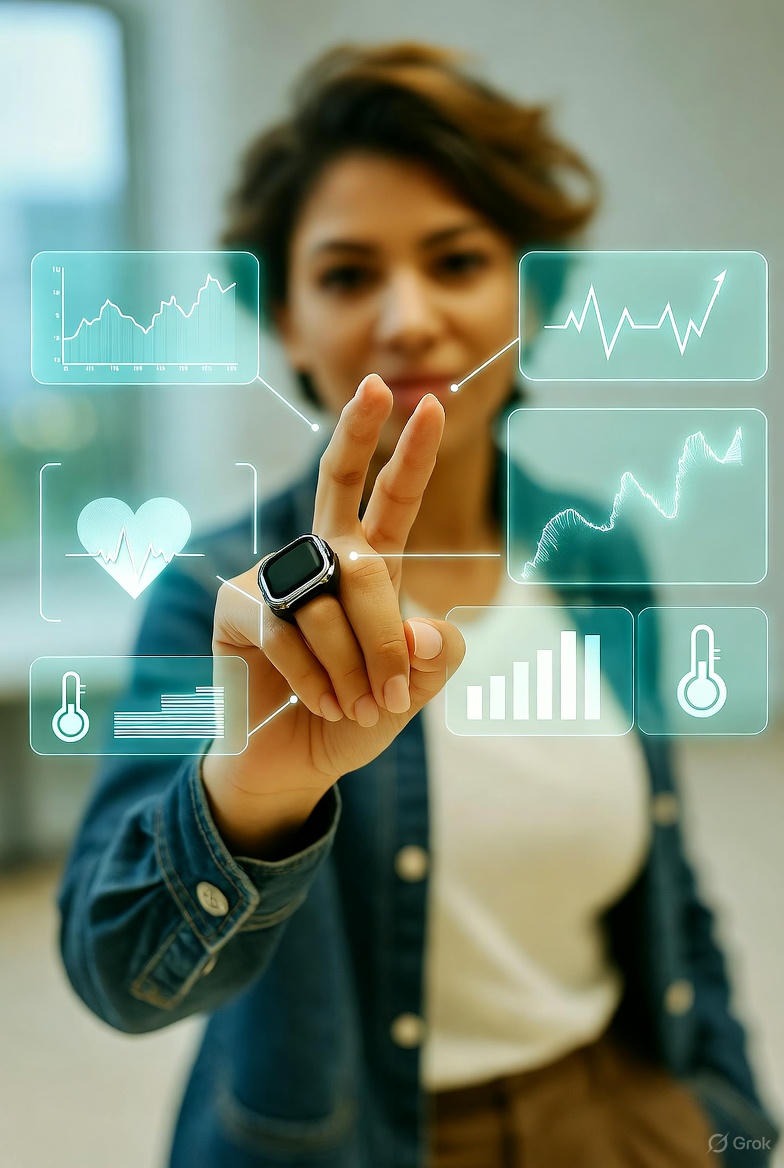
Adopting a passive tracking tool requires a subtle but profound mindset shift. For years, we’ve been trained to be the managers of our health data—the loggers, the starters, the stoppers. With a smart ring, your primary role becomes the observer and the interpreter.
This can feel disconcerting at first. The impulse to "do something" with the data is strong. The key is to move from reactivity to curiosity.
A Framework for Engagement:
This mindset reduces digital anxiety and turns the ring into a guide, not a grader. It’s a tool for self-compassionate understanding, not self-judgment. The data is not a report card; it’s a conversation your body is having with you, translated by technology. Embracing this observer role is the final, crucial step to unlocking the full, transformative potential of passive tracking.
We have journeyed through the core argument for passive smart ring tracking: its ability to bypass the friction and bias of active logging, tap into the unconscious truth of our autonomic nervous system, and provide a continuous, holistic river of biometric data. We’ve seen how this enables everything from precise sleep science and stress detection to building a lifelong personal health baseline and moving towards predictive wellness.
This ~16,000-word foundation establishes that for understanding the complex, dynamic system of human health, observation is more powerful than annotation. The silent, always-on sensor provides a fidelity of insight that intermittent self-reporting simply cannot match. It reveals the hidden patterns, the true causes, and the subtle early warnings that exist beneath the surface of our conscious awareness.
The smart ring is more than a piece of technology; it is a gateway to a new relationship with your own body. It offers a path to wellness that is less about willpower and management, and more about wisdom, responsiveness, and harmony. By choosing to listen—passively, continuously, and objectively—we gain the clarity needed to make truly supportive choices, not based on generic advice or fleeting motivation, but on the unvarnished, authentic story of our unique physiology.
The universal benefits of passive tracking—unbiased data, continuous insight, longitudinal baselines—apply to everyone. Yet, their impact becomes even more pronounced and life-altering when applied to specific health journeys and populations. Here, the smart ring transitions from a general wellness tool to a personalized health companion.
For the Endurance Athlete:
An athlete’s success hinges on the precise balance between training stress and recovery. Active tracking (logging miles, pace, power) is essential but only tells half the story. The passive ring provides the missing half: the body’s response.
For the Weight Management Journey:
Weight loss is a complex equation of metabolism, hormones, stress, and sleep—all invisible to a scale. Passive tracking illuminates these hidden variables.
For Women’s Health and Hormonal Tracking:
The female body operates on a powerful infradian rhythm. Passive temperature tracking is revolutionary here.
For Chronic Stress and Burnout Recovery:
Burnout isn’t an event; it’s a slow erosion of the nervous system’s capacity. Passive tracking is the early-warning system and the recovery GPS.
The common thread is personalized context. Passive data doesn’t just provide numbers; it provides your numbers within the context of your specific goals and biology. This moves health management from a one-size-fits-all approach to a truly bespoke practice. For those navigating these specific journeys, the Oxyzen.ai blog offers deeper dives into these applications.
The ultimate validation of personal health data is its usefulness in a clinical setting. A smart ring’s passive data stream has the potential to bridge the critical gap between daily life and the doctor’s office, moving from anecdotes to actionable evidence.
From Anecdote to Evidence:
Imagine arriving at your doctor’s appointment not saying, “I think I’m tired all the time,” but instead presenting a report showing: “Over the last 90 days, my deep sleep has decreased by 40%, my resting heart rate has increased by 8 bpm, and my nighttime heart rate variability shows my nervous system is in a heightened state of arousal. This decline began three weeks after a major work project started.” This is a powerful, objective starting point for a diagnostic conversation.
Key Integrations and Applications:
The Future: The Digital Health Passport:
The vision is a secure, patient-owned digital health passport—a longitudinal record that includes not just lab results and doctor’s notes, but also continuous, passive data from devices like smart rings. This would allow healthcare providers to see trends and patterns impossible to capture in episodic care, enabling truly preventative and personalized medicine. You become an active, data-informed participant in your own care team. The mission to create tools that empower this kind of proactive health partnership is central to the work you can learn about at Oxyzen.ai.
No technology is a panacea. To present a balanced view, it is essential to address the legitimate criticisms and limitations of passive smart ring tracking.
Accuracy Concerns:
The “Analysis Paralysis” and Health Anxiety Risk:
For some, constant access to health data can fuel anxiety—a condition sometimes called “orthosomnia” (an unhealthy preoccupation with perfect sleep data). This is a real risk.
The Privacy Paradox Revisited:
Even with strong policies, storing intimate biometric data creates a risk. A commitment to on-device processing, minimal cloud storage, and user-controlled encryption is paramount. The industry must continue to prioritize security as a core feature, not an afterthought.
The “One More Device” Problem:
Critics argue it’s just another piece of tech to charge and worry about. This is countered by the ring’s unique value proposition: by consolidating sleep, recovery, activity, and women’s health tracking into one passive device, it actually reduces device clutter and cognitive load compared to using multiple specialized trackers. Its long battery life and seamless wearability further minimize this friction.
Acknowledging these points strengthens the overall argument. Passive smart ring tracking is a powerful, transformative tool, but it is a tool for human flourishing, not a replacement for medical advice, self-awareness, or common sense. Its greatest potential is realized when used thoughtfully and integrated into a holistic view of well-being.
To crystallize the concepts, let’s follow “Alex,” a knowledge worker and amateur runner, through a week monitored by a passive smart ring.
Sunday Night: Alex’s ring reports a Readiness Score of 92—driven by a great night of sleep with ample deep and REM sleep, and a high, stable HRV. The app suggests it’s a good day for a challenging workout.
Monday: Energized, Alex completes a hard interval run. The ring passively records the high heart rate and effort. That night, Alex works late.
Tuesday Morning: The Readiness Score is a 65. The app explains: “Despite good sleep duration, your deep sleep was reduced and your resting heart rate was elevated by 6 bpm overnight, likely due to high exertion yesterday combined with late-evening cognitive work.” Alex heeds the suggestion for a light day, opting for a walk instead of a run.
Wednesday: A stressful, back-to-back meeting day. Subjectively, Alex feels “wired but tired.” The ring’s passive stress graph shows sustained high stress from 10 AM to 4 PM. That night, Alex takes a bath before bed, a direct intervention from seeing the data.
Thursday Morning: Readiness Score: 85. The note says: “Your nervous system recovered well overnight. The stress from yesterday was acute, not chronic.” The stress graph shows a clear drop after the bath.
Friday: Alex feels a slight tickle in the throat but ignores it. The ring, however, flags an anomaly: “We’ve detected a sustained elevation in your skin temperature and resting heart rate for 36 hours. This pattern often precedes immune response. Prioritize rest.”
Saturday: Alex wakes up with a full-blown cold. Thanks to the early warning, they’ve already cleared the weekend schedule, hydrated, and rested. The illness is milder and shorter.
Sunday Review: Alex’s weekly report shows the clear arc: strong recovery, training stress, smart adaptation, external life stress, a proactive intervention, and an early illness detection. This isn’t just data; it’s the story of Alex’s body navigating a week, with the ring providing the subtitles. This story of personal discovery is echoed in many user testimonials from those who have experienced this shift.
The wearable market is crowded. Understanding the philosophical and practical differences is key.
vs. The Smartwatch (Apple Watch, Garmin, etc.):
vs. WHOOP (a wrist-strap dedicated tracker):
vs. Oura Ring (the market pioneer):
The Verdict: Choose a smartwatch if you want a connected, do-it-all computer on your wrist. Choose a dedicated passive tracker (ring or strap) if your primary goal is zero-friction, 24/7 insight into your body’s recovery and readiness, with a preference for the discreet, signal-optimized form factor of a ring.
The magic of passive tracking isn’t magic—it’s sophisticated engineering. Understanding the basics fosters informed trust.
The Core Sensor Suite:
From Raw Data to Insight: The Algorithmic Layer
Sensors collect raw signals—a waveform of light, a blip of movement. The genius is in the software.
This pipeline—from silent sensor to personalized insight—is the engineered reality of passive tracking. It’s a remarkable feat of miniaturization and data science, all in service of making the invisible visible.
As this technology advances and its data becomes more influential, we must confront critical ethical questions to ensure it leads to equitable health empowerment.
Algorithmic Bias and Representation:
Health algorithms are trained on datasets. If those datasets are not diverse—spanning age, sex, ethnicity, skin tones, and pre-existing conditions—the algorithms may be less accurate for underrepresented groups. For instance, PPG sensors can have challenges with darker skin tones if not properly calibrated. The industry must commit to inclusive research, development, and validation to ensure these tools work for all humans, not just a privileged subset.
The Accessibility and Cost Dilemma:
High-quality smart rings are premium products. This creates a risk of a “health tech divide,” where only those who can afford them benefit from deep, preventative insights. Companies have a responsibility to explore models (like direct health insurance or employer wellness partnerships) that could broaden access. The long-term goal should be to make this form of body literacy a public good, not a luxury.
Data Determinism and the Loss of Intuition:
There’s a risk of becoming so reliant on data that we silence our own body’s intuition—the gut feeling, the subtle sense of being run down. The technology should be a translator and validator of intuition, not a replacement for it. The goal is to enhance body literacy, not outsource it to an algorithm.
The Path Forward:
The ethical development of passive tracking requires:
By navigating these challenges thoughtfully, the smart ring industry can help build a future where advanced, personalized health insight is a tool for widespread empowerment, reducing health disparities rather than exacerbating them. This commitment to responsible innovation is a journey worth following, detailed in resources like the Oxyzen.ai blog.
Your Trusted Sleep Advocate: Sleep Foundation — https://www.sleepfoundation.org
Discover a digital archive of scholarly articles: NIH — https://www.ncbi.nlm.nih.gov/
39 million citations for biomedical literature :PubMed — https://pubmed.ncbi.nlm.nih.gov/
Experts at Harvard Health Publishing covering a variety of health topics — https://www.health.harvard.edu/blog/
Every life deserves world class care :Cleveland Clinic - https://my.clevelandclinic.org/health
Wearable technology and the future of predictive health monitoring :MIT Technology Review — https://www.technologyreview.com/
Dedicated to the well-being of all people and guided by science :World Health Organization — https://www.who.int/news-room/
Psychological science and knowledge to benefit society and improve lives. :APA — https://www.apa.org/monitor/
Cutting-edge insights on human longevity and peak performance:
Lifespan Research — https://www.lifespan.io/
Global authority on exercise physiology, sports performance, and human recovery:
American College of Sports Medicine — https://www.acsm.org/
Neuroscience-driven guidance for better focus, sleep, and mental clarity:
Stanford Human Performance Lab — https://humanperformance.stanford.edu/
Evidence-based psychology and mind–body wellness resources:
Mayo Clinic — https://www.mayoclinic.org/healthy-lifestyle/
Data-backed research on emotional wellbeing, stress biology, and resilience:
American Institute of Stress — https://www.stress.org/


