


How Smart Ring Benefits Personalize to Your Unique Biology
How smart rings adapt and personalize to your unique body.
How smart rings adapt and personalize to your unique body.
%402x.svg)
For decades, the promise of personalized health has shimmered on the horizon—a tantalizing vision of medical care and wellness guidance tailored not to the average, but to the individual. We’ve been handed generalized advice: 10,000 steps, eight glasses of water, eight hours of sleep. Yet, we intuitively know that what energizes one person depletes another, that one person’s perfect workout is another’s path to injury, and that our best sleep doesn’t always fit neatly into a standard cycle chart. This gap between population-level data and personal reality isn't just frustrating; it’s the fundamental roadblock to achieving sustainable, optimized well-being.
Enter the smart ring: a sleek, unassuming piece of wearable technology that is quietly revolutionizing how we understand our bodies. Unlike its wrist-worn counterparts, the ring leverages the unique vascularity of the finger—a rich, high-flow point where arteries run close to the skin—to capture a continuous, clinical-grade stream of biometric data. But the true revolution lies not in the data collection itself, but in the sophisticated, personalized insights it generates. This is not a one-size-fits-all dashboard. This is a dynamic, learning system that maps the intricate, living blueprint of your biology.
Imagine a device that doesn’t just tell you your heart rate, but learns what your resting heart rate truly looks like when you are healthy, stressed, or fighting off an illness. It doesn’t merely track sleep; it deciphers your unique sleep architecture, identifying the specific habits that lead to your most restorative rest. It moves beyond counting steps to measuring readiness, telling you not just how much you can do, but how much you should do today based on your nervous system’s current state.
This article will delve deep into the physiological and technological mechanisms that allow a device like the Oura Ring or the advanced platform from Oxyzen.ai to transcend generic tracking. We will explore how it personalizes across eleven critical domains of health, transforming raw data into a bespoke guide for your life. This is the frontier of bio-individuality, powered not by guesswork, but by the intimate, continuous dialogue between your unique biology and a deeply intelligent piece of technology.
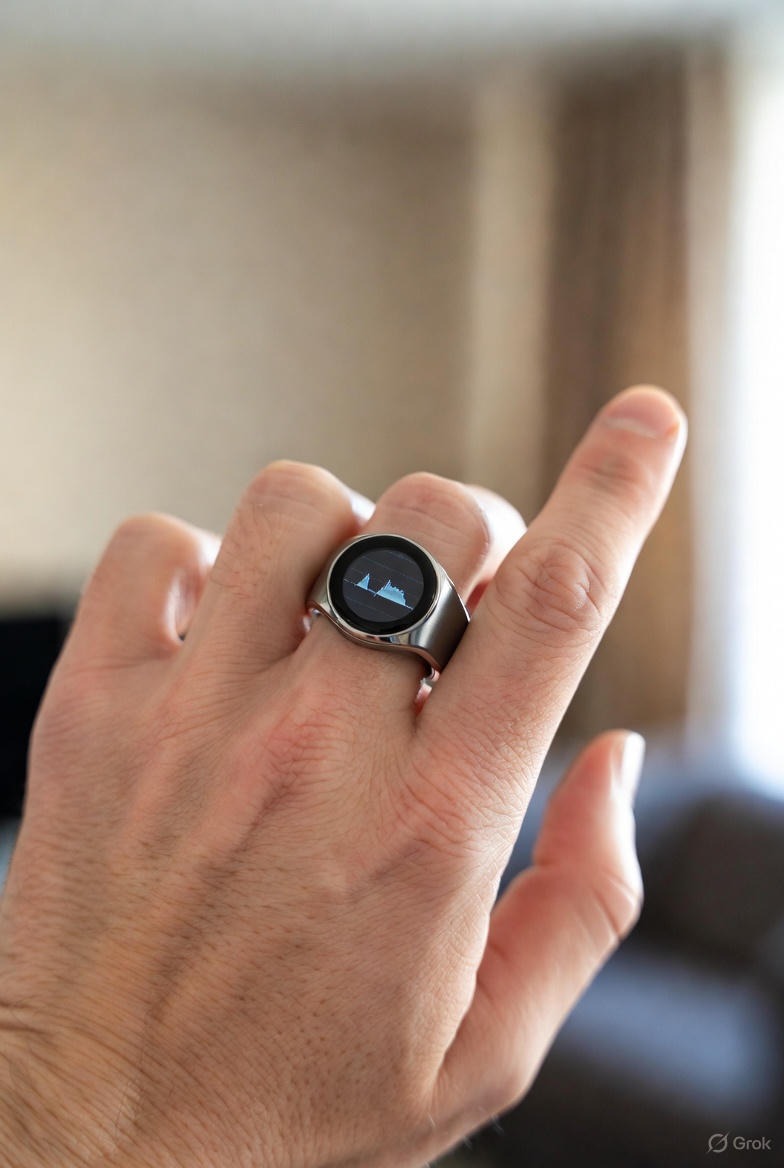
To understand the profound personalization a smart ring offers, we must first appreciate its chosen vantage point: your finger. While smartwatches dominate the wearable landscape, the wrist is, from a physiological data-capture perspective, a crowded and noisy neighborhood. The finger, however, is a unique biometric portal.
The primary reason is vascular access. The digital arteries in your fingers are rich, superficial, and high-flow. They are closer to the skin's surface than the radial artery in the wrist, with less tissue and fat in the way. This provides a stronger, cleaner signal for photoplethysmography (PPG)—the optical technique used to measure blood volume changes. Simply put, the ring gets a clearer, more direct view of your pulse wave. This superior signal fidelity is the foundational bedrock for all subsequent personalization; garbage data in means garbage insights out, but high-fidelity data enables precise, individual baselines.
Furthermore, the finger is a naturally stable platform. A well-fitted ring experiences minimal motion artifact compared to a watch on the wrist, which is in constant motion relative to the skin. This stability is crucial for capturing accurate data during sleep—the very period when our bodies reveal their most restorative (or distressed) states. A watch can confuse an arm movement for a heartbeat; a ring, sitting snugly on a largely still finger, maintains a consistent reading.
This unique positioning allows for a multi-sensor suite focused on core autonomic metrics:
The magic begins when this continuous, high-fidelity data stream is no longer compared to population averages, but is instead used to establish your personal baseline. The system learns that your normal resting heart rate is 58 BPM, not the "good" 60-100 BPM range. It learns that your typical HRV is 42 ms, and that a drop to 35 ms for two consecutive nights is a significant deviation for you. It maps your nightly temperature fluctuation pattern. This establishment of a personal "normal" is the first and most critical step in personalized health intelligence. It transforms the device from a reporter into an interpreter, speaking the specific language of your body. For a deeper dive into the science behind this technology, the team at Oxyzen.ai has detailed resources on their mission to leverage this precise data for personalized wellness.
Sleep is the ultimate bio-individual experience. While sleep stages (light, deep, REM) are universal, the proportion, timing, and quality of these stages are as unique as a fingerprint. Generic sleep scores often punish the night owl or the naturally biphasic sleeper. Smart ring personalization changes this narrative entirely.
Instead of judging you against a rigid ideal, the ring spends its first weeks learning your sleep signature. It answers questions like: What is your natural sleep-wake propensity (chronotype)? How long does it typically take you to fall asleep? What is your normal balance of deep and REM sleep? How does your heart rate dip and your body temperature drop during a good night?
With this signature established, the ring can then detect meaningful deviations. For instance:
The personalization extends to the advice given. Rather than suggesting a generic "wind down at 10 PM," the insights become specific: "Your data shows you consistently get higher quality sleep when you finish eating 3 hours before bed," or "Your resting heart rate is elevated tonight. Consider your 10-minute breathing exercise to improve readiness." This moves sleep tracking from a report card to a coaching system built on the empirical evidence of your own body's responses. Countless users have shared how this personalized sleep insight has transformed their rest; you can read some of their transformative experiences in the Oxyzen.ai testimonials.
If one metric embodies the concept of personalization, it is Heart Rate Variability (HRV). HRV measures the subtle variations in time between each heartbeat, governed by the autonomic nervous system. A higher HRV generally indicates better resilience and parasympathetic ("rest-and-digest") activity, while a lower HRV can signal stress, fatigue, or illness.
The critical nuance is that HRV is profoundly individual. Comparing your HRV of 35 ms to someone else's 80 ms is meaningless. A 35 ms might be dangerously low for one person and a personal best for another. The power of continuous ring-based monitoring is that it establishes your HRV baseline and your normal range of fluctuation.
The ring learns how your HRV responds to different life inputs:
By tracking HRV in the context of your life, the ring provides a personalized, real-time readout of your nervous system state. Its advice becomes bespoke: "Your HRV is 20% below your baseline. Today is ideal for light recovery, not intensity." Or, "Your HRV recovery after yesterday's workout was faster than average—your fitness is adapting." This transforms HRV from an abstract number into a daily dialogue with your own physiological resilience, a story detailed further in resources available on the Oxyzen.ai blog.

Basal body temperature (BBT) tracking has long been used by women to chart fertility cycles. A smart ring automates and supercharges this concept, capturing continuous temperature data with a precision and convenience previously impossible. This isn't about a single morning reading; it's about understanding your personal temperature rhythm.
The ring learns your unique circadian temperature curve—how your body temperature naturally fluctuates throughout the day and night. It establishes what "normal" looks like for you. With this blueprint, it can detect anomalies that are personally significant.
For Illness Forecasting: An elevated resting temperature, even a slight 0.5°C increase sustained overnight, can be an early signal of an inflammatory response or infection. Because the ring knows your personal norm, it can flag this deviation days before you feel overt symptoms, prompting you to prioritize rest, hydration, and self-care. This proactive, personalized early-warning system is a game-changer for managing health.
For Hormonal & Menstrual Cycle Mapping: For women, the ring can become a powerful tool for understanding their cycle beyond calendar estimates. It learns the specific thermal shift that indicates ovulation for you. It can map the entire biphasic pattern of the cycle, providing personalized insights into energy levels, recovery needs, and sleep patterns across follicular and luteal phases. This data empowers women to align their training, nutrition, and work demands with their biological rhythms—a practice known as cycle syncing, backed by their own empirical data.
For Metabolic & Recovery Insights: Temperature data also personalizes recovery insights. A failure of your body temperature to drop adequately at night can indicate poor recovery or systemic stress. The ring can correlate these thermal patterns with other data (like sleep disturbances or high resting heart rate) to offer a holistic, personalized picture of your recovery status.
The era of the step count as a universal metric is over. 10,000 steps may be a healthy challenge for one person and an undertraining day for a conditioned athlete, or an overexertion for someone recovering from illness. Personalization in activity is about contextualizing movement within the broader story of your body's readiness.
This is where the smart ring’s synthesis of data creates its most powerful personalized metric: Readiness or Recovery Scores. Instead of passively recording activity, the ring uses your overnight data (HRV, resting heart rate, sleep quality, temperature) to assess how prepared your body is to perform each morning.
The algorithm asks: Based on your unique physiological responses last night, how recovered are you today? It then offers personalized activity guidance:
This flips the fitness script. The goal is no longer to hit arbitrary activity targets at all costs, but to harmonize your activity with your body's actual capacity. It personalizes training to prevent overtraining and injury while optimizing performance on days when you are truly capable of it. It acknowledges that the most productive training day might sometimes be a rest day. To see how this philosophy is applied in practice, explore the approach taken by Oxyzen.ai in their holistic wellness platform.
While a smart ring cannot directly measure the glucose spike from a specific meal (yet), it provides powerful, personalized proxies for how your nutrition influences your physiology. By monitoring how your body responds in the hours and night after eating, it creates an indirect but highly valuable feedback loop.
The ring learns how different dietary patterns affect you:
This turns nutrition into a personal science experiment. Instead of following a generic "clean eating" plan, you use your body's autonomic responses (via the ring) as a biofeedback tool to discover which eating patterns truly support your energy, recovery, and sleep. You move from dogma to data-driven personalization.
We all experience stress, but our physiological responses are wildly different. What debilitates one person might energize another. Smart ring personalization shines a light on your unique stress signature and, more importantly, your personalized resilience toolkit.
By continuously monitoring your autonomic nervous system through HRV, resting heart rate, and respiratory rate, the ring learns what "stressed" looks like for you. It can then identify patterns:
This allows you to build a personalized stress-resilience plan based not on theory, but on the measured impact on your body. The advice becomes specific: "When you see this stress pattern, your data shows that practice X is most effective for recovery." It empowers you to become an expert on your own capacity and recovery needs, a journey supported by the educational content found on the Oxyzen.ai blog.
At its core, the smart ring is a sophisticated cardiovascular monitor. Beyond HR and HRV, it provides deeply personalized insights into your heart's function and vascular health.
The ring establishes your cardiovascular baseline over time. This includes:
This continuous, personalized monitoring offers a powerful window into one of your most vital systems, turning the ring into a preventative health guardian that speaks in the specific language of your own heart.
Your chronotype—whether you are a morning lark, a night owl, or somewhere in between—is a fundamental aspect of your biology, influenced by genetics. Fighting against it is a recipe for poor sleep, suboptimal performance, and increased stress. Smart rings personalize their insights by first identifying and then respecting your chronotype.
By analyzing your sleep onset times, wake times, and the consistency of your circadian rhythms (through temperature and movement), the ring can infer your natural propensity. It doesn't scold a night owl for a later bedtime; instead, it provides guidance optimized for your rhythm.
Personalized chronobiology insights might include:
This alignment with your innate biological timing, known as entrainment, reduces internal friction and enhances overall well-being, performance, and health. It’s a validation of your unique rhythm in a world often designed for the early riser.
The ultimate power of a smart ring lies in its longitudinal view. While a doctor's visit provides a single snapshot, the ring creates a continuous, high-resolution movie of your health. This long-term data set is the key to truly personalized medicine and preventive health.
Over months and years, the ring builds an irreplaceable archive of your normal. This becomes your personal health benchmark. When something changes—whether it's a subtle shift in a metric or a rapid deviation—you and your healthcare provider have a rich context for understanding it.
Applications include:
This longitudinal personal dataset is perhaps the most valuable asset the ring creates, transforming you from a passive patient into an informed, data-empowered custodian of your own health journey. For answers to common questions about building and interpreting these long-term trends, the Oxyzen.ai FAQ is an excellent resource.
The personalization we see today is just the beginning. The future lies in advanced artificial intelligence and machine learning models that can analyze your unique, multi-layered biometric data stream to make predictive, hyper-personalized recommendations.
Imagine a system that doesn't just tell you your sleep was poor, but predicts that based on your current stress load and recovery state, you are 70% likely to catch a cold in the next 48 hours unless you take specific actions. Or an AI coach that analyzes your workout performance, sleep data, and HRV to dynamically adjust your weekly training plan in real-time, optimizing for your adaptation rate.
Future personalization may include:
This hyper-personalized future is being built today on the foundation of continuous, biometric data. It promises a shift from reactive healthcare to truly proactive, personalized wellness, all centered on the most important subject: you. This visionary future is at the heart of the ongoing development and research you can learn about through Oxyzen.ai's story.
Understanding your unique biology is a profound revelation, but knowledge without action is merely an interesting anecdote. The true transformation occurs in the seamless integration of these personalized insights into the fabric of your daily life. This is where the smart ring evolves from a fascinating observer into an indispensable guide. The data it provides—your sleep signature, your stress fingerprint, your cardiovascular rhythm—becomes the foundational language for a more intentional, responsive, and harmonious existence. The gap between knowing and doing is bridged not by sheer willpower, but by contextual, timely, and deeply personal nudges that align with your body’s authentic needs, not a generic textbook.
This next phase of our exploration moves from the "what" and "how" of personalization to the "so what" and "now what." We will examine how these hyper-personalized metrics translate into concrete decisions about training, recovery, work, and relationships. We'll navigate the delicate art of bio-hacking without becoming a slave to data, and address the critical ethical dimensions of owning such intimate information. The goal is to cultivate a symbiotic relationship with technology, where it amplifies your intuition rather than replaces it, empowering you to live not by external standards, but in fluent dialogue with your own, one-of-a-kind biology.
The fitness industry is built on generalized programs: 5x5 strength, Couch to 5K, 75 Hard. These can be effective entry points, but they inevitably hit a plateau because they are not designed for you. Personalized biometrics dismantle the generic plan, enabling you to build a fitness protocol that dynamically adapts to your body's readiness, recovery capacity, and long-term adaptation trends.
This is the death of the arbitrary workout schedule. Instead of forcing a heavy leg day on a Tuesday because the calendar says so, you learn to let your readiness score guide your exertion. Your personalized fitness protocol might look like this:
This approach transforms fitness from a punishing grind of "shoulds" into an elegant dialogue. You are not skipping a workout out of laziness; you are strategically opting for recovery because your biometrics indicate it is the most productive choice for long-term progress. It’s the difference between driving a car with only a calendar versus driving one with a full, real-time diagnostic dashboard. For those looking to understand how to start this dialogue, Oxyzen.ai offers guidance on interpreting these signals for your training.
In a culture that glorifies hustle, recovery is often an afterthought—something you do only when you're broken. Personalized biometrics reframe recovery as the active, essential, and productive phase of growth. It moves regeneration from a passive state to a practiced art form, with techniques tailored to what your body needs today.
Your smart ring data provides a precise measurement of your recovery debt, allowing you to choose the most effective repayment method.
This proactive, measured approach to recovery ensures you are always building from a foundation of strength, not digging out of a hole of fatigue. It turns downtime into upgrade time.
Stress is inevitable, but chronic, unmanaged stress is a primary driver of disease and dysfunction. Generic stress advice—"just meditate"—often fails because it's not targeted. Smart ring personalization offers a biofeedback loop that turns stress management into a precise science.
The process is powerful:
This loop allows you to empirically determine your most potent stress antidotes.
This moves you from guessing to knowing. You build a hierarchy of effective interventions for different stress scenarios. The ring’s morning report can then say, "You showed signs of elevated stress last night. Your historical data shows that a 15-minute walk in sunlight is 85% effective at resetting your metrics on days like this." This is hyper-personalized resilience training. It empowers you to not just manage stress, but to master your response to it, building a stronger, more adaptable system over time—a core tenet of the wellness philosophy you can explore further at Oxyzen.ai/about-us.
Your brain does not operate in a vacuum; it is inextricably linked to the state of your body. Fluctuations in heart rate variability, sleep quality, and circadian rhythm have direct, measurable impacts on cognitive function, creativity, and emotional regulation. Personalized biometrics allow you to schedule your mental work in harmony with your biological rhythms, unlocking sustained focus and deeper thinking.
This optimization leads to a work life that feels less like a battle against fatigue and distraction, and more like a graceful flow, where your efforts are amplified by being in sync with your body's natural energy cycles.
For women, whose physiology is governed by complex, cyclical hormonal conversations, the personalization offered by a smart ring is nothing short of revolutionary. It moves women's health from a paradigm of mystery and normalization of discomfort to one of clarity, prediction, and empowerment.
The continuous temperature sensor is the star here, automating and perfecting basal body temperature (BBT) tracking. But the integration of other metrics creates a holistic picture.
This bio-individual approach to women's health fosters a profound sense of agency. A woman is no longer at the mercy of her cycle; she is in informed partnership with it, using her unique data to navigate life with greater grace, performance, and well-being. Many have shared how this empowerment has changed their lives, as seen in the personal stories within the Oxyzen.ai testimonials.
Longevity is not merely about adding years to life, but adding life to years—a concept known as "healthspan." A smart ring provides the personalized metrics necessary to optimize for healthspan, focusing on the slow, gradual trends that define aging well.
Instead of worrying about distant future risks, you focus on present-moment biomarkers of aging at the systemic level.
This transforms longevity from an abstract goal into a daily practice of measurable, personalized choices. You are no longer following generic "anti-aging" tips; you are curating a lifestyle proven, by your own data, to support the robust functioning of your unique biology over time.
Our physiology is not an isolated system; it is deeply interwoven with our social connections. This is a frontier of personalization often overlooked: understanding how your relationships and social interactions affect your biology, and vice versa.
Smart ring data can reveal fascinating interpersonal dynamics:
This data, when reflected upon, can improve relational health by encouraging communication about needs for connection, space, and support, grounded in the objective reality of your shared biological experiences.
The depth of personalization carries a risk: the potential to become obsessive, anxious, or overly reliant on the data—a phenomenon sometimes called "orthosomnia" (an unhealthy preoccupation with perfect sleep data) or more broadly, "quantified-self anxiety." The goal is insight, not imprisonment.
Cultivating a healthy relationship with your biometrics is essential:
The most personalized insight of all may be learning when to ignore the data and simply live, trusting the resilience you've built through your informed choices.
With great personal data comes great responsibility—both for the user and the company collecting it. The intimate nature of continuous biometric monitoring raises critical ethical questions about privacy, security, and ownership. True personalization must be built on a foundation of trust.
As a user, it is your right to demand this ethical framework. Your biometric data is a digital extension of your physical self. Partnering with a company that treats it with the corresponding level of respect and protection is non-negotiable for a positive, sustainable personalized health journey.
The smart ring’s full potential is unlocked not in isolation, but as the central hub of a personalized health ecosystem. Its true power lies in interoperability—the ability to seamlessly share its rich data with other apps and devices you use, creating a unified, holistic picture.
This connected ecosystem moves personalization from a single-device experience to a ambient, contextual layer that supports your well-being across every domain of life. It represents the culmination of the personalized health revolution, where technology recedes into the background, silently orchestrating your environment and choices to support the unique, magnificent biology that is you. This vision of an integrated future is part of the ongoing narrative you can follow in Oxyzen.ai's story.
We have journeyed from the microscopic precision of PPG sensors capturing your pulse to the macroscopic view of a life lived in greater harmony. We've seen how a smart ring deciphers your unique sleep signature, maps your personal stress fingerprint, and whispers insights about your hormonal tides. We've explored how to translate these insights into dynamic fitness, proactive recovery, and optimized cognition. Now, we arrive at the synthesis: the point where data, intuition, and purpose converge. This is where you move from being a patient, or even a participant, to becoming the author—the conscious, informed, and empowered architect of your own well-being narrative.
The culmination of this deeply personalized journey is not a perfect score or an immutable set of rules. It is a state of fluent body literacy. It is the quiet confidence that comes from understanding your body's language—its peaks of readiness, its whispers of fatigue, its signals of stress, and its celebrations of recovery. The smart ring is the translator, but you are the protagonist. The final chapters of this exploration are dedicated to weaving all these threads into a coherent, sustainable, and profoundly personal practice. We'll provide a roadmap for getting started, discuss navigating the inevitable plateaus, and envision the future of this technology, all while keeping the human experience—your experience—firmly at the center.
The initial period with a smart ring is a foundational phase of discovery. It’s less about immediate optimization and more about attentive listening. This is when the device moves from a blank slate to a rich repository of your normal. How you approach this onboarding sets the stage for all future insights.
Phase 1: The Silent Observer (Weeks 1-4)
Phase 2: The Gentle Experimenter (Weeks 5-8)
Phase 3: The Integrated Strategist (Weeks 9-12+)
Throughout this process, leverage available resources. The Oxyzen.ai blog is filled with guides on interpreting initial data and structuring self-experiments. The community and support teams, accessible via Oxyzen.ai/faq, can help you navigate confusing data points. This structured, patient approach ensures the personalization is built on a rock-solid foundation of your own empirical evidence.
No biological system is static. There will be times when progress stalls, or when familiar data patterns shift unexpectedly—a phenomenon sometimes called "data drift." This isn't a failure of the technology or your effort; it's a sign of a living, adapting system. Navigating these phases is a critical aspect of long-term engagement.
Understanding the Plateau:
Strategies for the Plateau:
Responding to Data Drift:
When your established baselines seem to shift permanently (e.g., a new, lower HRV normal), it’s a powerful signal to investigate.
Embracing these phases as part of the journey prevents burnout and data anxiety. It reinforces that you are not optimizing a machine, but nurturing a complex, dynamic biological organism.
One of the most powerful, yet underutilized, applications of personalized biometrics is enriching the dialogue with healthcare professionals. You arrive at an appointment not just with symptoms, but with context.
Preparing for a Clinical Visit:
A New Paradigm of Collaborative Care:
Forward-thinking practitioners are beginning to welcome this kind of patient-generated health data (PGHD). It turns the episodic "sick visit" into a longitudinal partnership. You become a proactive contributor to your health record, providing real-world evidence of how you live and respond outside the clinic walls. This can lead to more precise diagnoses, better-tailored treatment plans (e.g., adjusting medication timing based on your circadian rhythms), and a shared focus on prevention.
Sharing your story and how data empowered your healthcare journey can inspire others. Reading how others have done this can be equally inspiring, as seen in the community narratives within Oxyzen.ai testimonials.
The horizon of this technology stretches toward a future where personalization becomes predictive and seamlessly ambient.
AI-Driven Predictive Insights:
The next leap is from descriptive ("your sleep was poor") to predictive ("based on your current stress load and sleep debt, you have a high probability of catching a cold this weekend"). Machine learning models, trained on vast anonymized datasets while rooted in your personal history, could forecast:
Passive, Frictionless Monitoring:
Future devices will become even more unobtrusive, with extended battery life and even more sensors (like non-invasive glucose or blood pressure monitoring) integrated seamlessly. The goal is to remove all friction from data collection, making personalized health a passive background process.
The Integrated Digital Twin:
The ultimate expression is the concept of a "digital twin"—a dynamic, computer-based model of your unique physiology. This model, fed by your smart ring and other data streams, could be used to simulate the likely outcomes of lifestyle choices, medication changes, or surgical interventions before you try them in the real world. It would be the ultimate personalized health simulator.
These advancements, guided by strong ethical principles as discussed in the Oxyzen.ai story, promise a future where healthcare is not something that happens to you, but a continuous, collaborative process that you actively steer, powered by an intimate understanding of your one and only body.
We began with the premise that generic health advice is a mismatch for our unique biologies. We have traversed the science, the application, and the philosophy of correcting that mismatch. The journey with a personalized tool like a smart ring is, at its heart, the journey of self-discovery. It is the process of turning the gaze inward with unprecedented clarity and compassion.
The numbers on the screen—the HRV, the resting heart rate, the temperature deviation—are not the final product. They are the notes in the symphony of your life. The product is the increased harmony you experience when you learn to play in tune with your own rhythm. It is the energy you gain from sleeping in sync with your chronotype, the resilience built by respecting your recovery, the performance unlocked by training with your readiness, and the peace fostered by managing stress with proven, personal tools.
This is not about achieving a state of perpetual, data-optimized perfection. That is neither possible nor desirable. It is about cultivating body literacy. It is about replacing anxiety with understanding, guesswork with knowledge, and external validation with internal authority. The ring is a mirror, reflecting back the magnificent, complex, and utterly unrepeatable experiment that is you.
The invitation is to begin that experiment. To approach your own biology with the curiosity of a scientist and the care of a gardener. To use the data not as a judge, but as a guide. To write your health story not from a template, but from the deep, personal truth of your own living, breathing, and uniquely intelligent biology. The path to personalized wellness is, ultimately, the path home to yourself.
We stand at a fascinating crossroads in human history, where the most ancient wisdom—"know thyself"—is being illuminated by the most modern of tools. The journey through personalized biometrics with a smart ring is not a destination but an ongoing evolution, a dialogue that deepens with each passing day, season, and life chapter. Having explored the mechanics, the applications, and the future visions, we must now anchor this knowledge in the tangible, often messy, reality of human existence. How does this profound self-knowledge weather the storm of a stressful job, the joy of a new relationship, the challenge of parenting, or the simple desire for spontaneity? The final synthesis is about integration not just of data, but of a new mindset into the very soul of how we live.
This concluding portion moves beyond the individual metrics and even the tailored protocols, into the realm of philosophy and daily practice. We will explore how to maintain this practice through life’s major transitions, how to share this journey ethically with others, and how to ensure that the pursuit of optimized biology enhances, rather than eclipses, the simple, unquantifiable joys of being human. The goal is to arrive at a place of balance, where the smart ring is not a taskmaster, but a wise companion on your unique life path, helping you write a story of health that is as dynamic, nuanced, and beautiful as you are.
Your biology is not a fixed point; it is a river, flowing and changing course through the landscapes of your life. A personalized health practice must be agile enough to adapt to these major seasons. The smart ring becomes a compass, helping you navigate each new territory.
Major Life Transitions:
In each season, the core question shifts from "How do I optimize?" to "How do I support and understand my body through this?" The personalization becomes less about peak performance and more about resilient navigation.
While deeply personal, this data can also enrich shared lives when approached with respect and consent. The goal is never comparison, but mutual understanding and support.
For Couples:
For Families and Teams:
In a world that often glorifies "more"—more productivity, more fitness, more efficiency—the most radical personalized insight may be learning what "enough" feels like for you. The smart ring’s data can be a powerful ally in resisting the cultural pull toward burnout.
This philosophy aligns with the core mission of many in this space, who aim not to create biohacked robots, but to foster deeper human well-being, a principle you can explore in the vision behind Oxyzen.ai.
For all its power, the data stream is incomplete. It cannot measure laughter, the feeling of awe in nature, the creative flow state, the warmth of connection, or the sense of purpose. A life lived solely by the numbers is a life half-lived.
It is crucial to carve out spaces and times for the unquantifiable:
Balancing quantification with qualia is the art of modern well-being. The smart ring should expand your self-awareness, not constrict your lived experience.
After months or years of observation, experimentation, and integration, you can distill your learnings into a personal set of core wellness principles. This is your bespoke manifesto, written in the language of your own body’s truths.
It might include statements like:
This manifesto becomes your north star. It simplifies decision-making and reduces daily cognitive load. When life gets chaotic, you can return to these few, proven principles that you know work for you. It is the ultimate synthesis of data into wisdom. For inspiration on how others have crafted their approach, the Oxyzen.ai blog often features user insights and holistic strategies.
Your personalized journey, when aggregated and anonymized with millions of others, has the power to advance human health understanding. Participating in ethical research is a way to give back.
Your Trusted Sleep Advocate: Sleep Foundation — https://www.sleepfoundation.org
Discover a digital archive of scholarly articles: NIH — https://www.ncbi.nlm.nih.gov/
39 million citations for biomedical literature :PubMed — https://pubmed.ncbi.nlm.nih.gov/
Experts at Harvard Health Publishing covering a variety of health topics — https://www.health.harvard.edu/blog/
Every life deserves world class care :Cleveland Clinic - https://my.clevelandclinic.org/health
Wearable technology and the future of predictive health monitoring :MIT Technology Review — https://www.technologyreview.com/
Dedicated to the well-being of all people and guided by science :World Health Organization — https://www.who.int/news-room/
Psychological science and knowledge to benefit society and improve lives. :APA — https://www.apa.org/monitor/
Cutting-edge insights on human longevity and peak performance:
Lifespan Research — https://www.lifespan.io/
Global authority on exercise physiology, sports performance, and human recovery:
American College of Sports Medicine — https://www.acsm.org/
Neuroscience-driven guidance for better focus, sleep, and mental clarity:
Stanford Human Performance Lab — https://humanperformance.stanford.edu/
Evidence-based psychology and mind–body wellness resources:
Mayo Clinic — https://www.mayoclinic.org/healthy-lifestyle/
Data-backed research on emotional wellbeing, stress biology, and resilience:
American Institute of Stress — https://www.stress.org/


