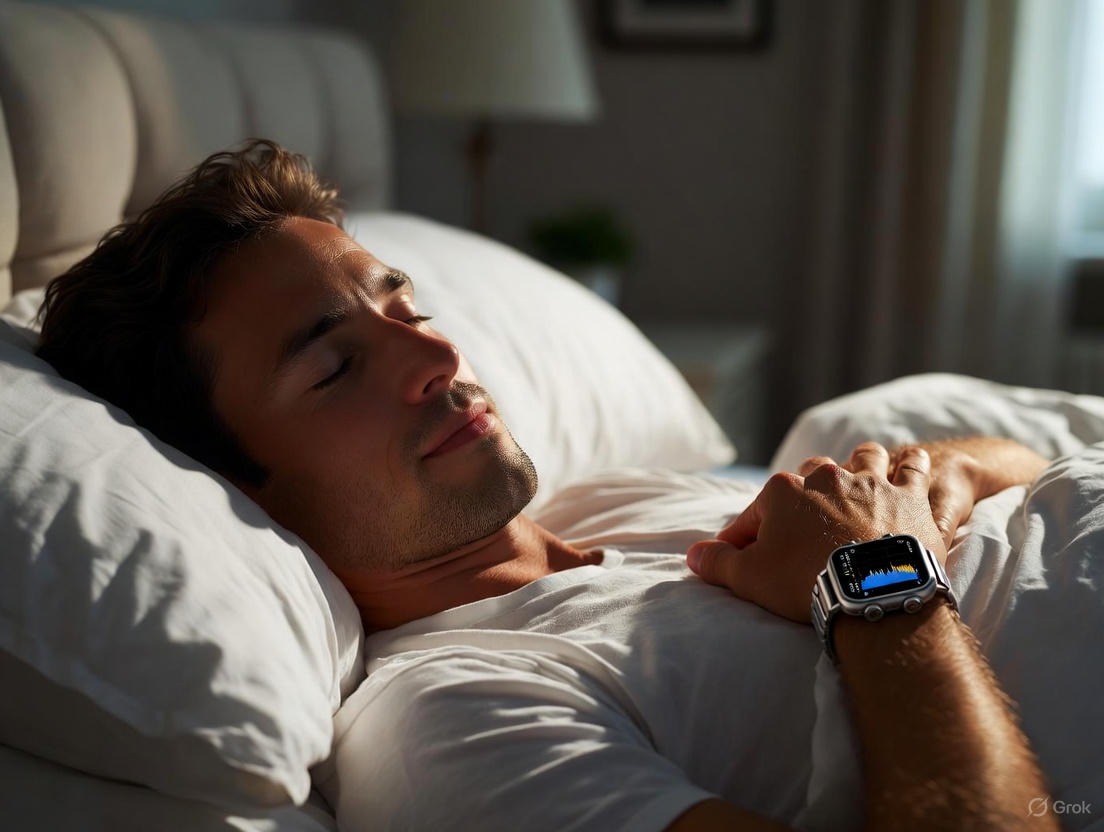
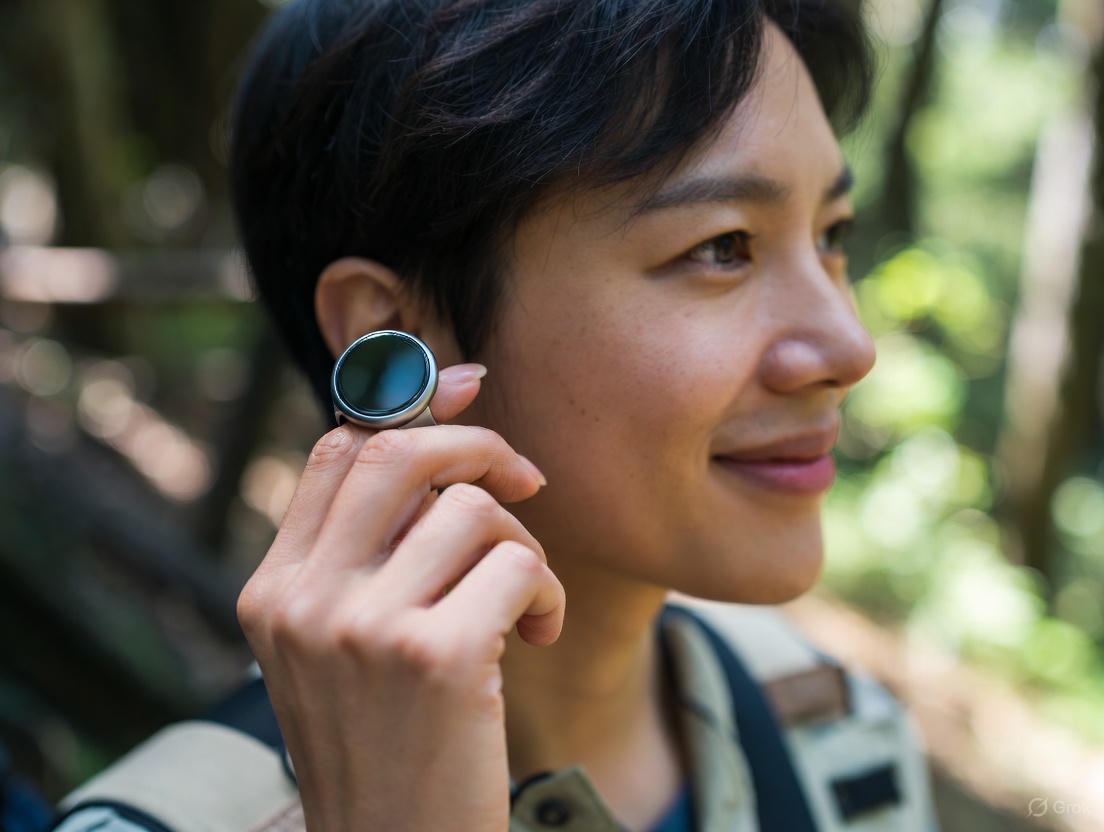
Smart Ring Benefits for Remote Workers: Home Office Wellness
Benefits for people who work from home, related to home office wellness.
The Invisible Guardian: How a Smart Ring Became the Remote Worker’s Essential Wellness Tool
The home office was supposed to be the ultimate perk. Liberation from the commute, the fluorescent lighting, the rigid schedule. Yet, for millions of remote workers, a silent shift occurred. The boundary between “work” and “life” didn’t just blur—it evaporated. The kitchen table became the conference room. The couch transformed into an ergonomic hazard. The workday stretched, punctuated not by colleague chats but by the relentless ping of notifications. We traded the physical stressors of the office for a new set of invisible, insidious ones: digital fatigue, sedentary atrophy, chronic stress, and the profound loneliness of working in a vacuum.
In this new landscape, traditional wellness advice often falls short. Telling someone to “get more sleep” or “take a walk” is meaningless without context. How much sleep is your body actually recovering with? What is the physiological cost of that 3 PM mental block? How does your nervous system react to back-to-back video calls?
Enter the smart ring: a discreet, unassuming piece of wearable technology that is quietly revolutionizing how remote workers understand and optimize their well-being. This isn’t another screen demanding your attention. It’s a silent bio-sensor, working 24/7 to translate your body’s complex language into actionable insights. From tracking sleep architecture and stress load to monitoring activity and predicting illness, it provides the data-driven foundation for a truly sustainable remote work life. This article delves deep into the multifaceted benefits of smart rings for the remote workforce, exploring how this elegant technology is becoming the indispensable guardian of home office wellness.
The Remote Worker's Paradox: Freedom at a Physical Cost
The image of the remote worker is often one of serene productivity—sipping coffee in a sunlit nook, effortlessly balancing deep work with personal life. The reality, as many of us have learned, can be starkly different. The freedom of remote work comes with a hidden tax on our physical and mental health, a tax levied in subtle, cumulative ways.
Without the natural structure of an office—the walk to a meeting, the commute separating work from home, the social cues from coworkers—our bodies fall into unnatural patterns. We can sit for six hours straight, engrossed in a project, only to stand up with a stiff back and foggy brain. We skip lunch because there’s no one to go with, or we snack incessantly from the pantry. The blue light from our screens extends late into the night, disrupting our circadian rhythms. The constant pressure to “be online” and visibly productive creates a low-grade, perpetual stress state that our ancestors would have reserved for encountering predators.
This paradox creates a unique wellness challenge. The problems are often subjective and hard to quantify. “I feel tired all the time.” “I can’t seem to focus.” “I’m just burned out.” Without objective data, we’re left guessing. Are we tired because of poor sleep, nutritional deficiencies, or mental overload? Is our back pain from our chair, our stress, or lack of movement?
A smart ring cuts through this ambiguity. By providing continuous, biometric data, it moves wellness from the realm of guesswork to the realm of science. It shows the direct line between that late-night work session and your degraded sleep score. It reveals how your heart rate variability (HRV) plummeted during a stressful deadline day. It quantifies the sheer sedentariness of your workday. This objective feedback is the first, most crucial step in breaking the remote work paradox—you cannot fix what you cannot see. For a deeper exploration of the science behind these metrics, our blog features extensive resources on understanding your biometric data.
The cost of ignoring these signals is high, leading to burnout, chronic pain, and diminished cognitive performance—the very things that undermine the benefits of remote work. The smart ring, therefore, isn’t a luxury gadget; it’s a foundational tool for preserving the health that makes remote work possible in the long term. At Oxyzen, we built our technology precisely to address this modern dilemma, a commitment rooted in our story of merging human-centric design with advanced sensor technology.
Beyond the Step Counter: What Makes a Smart Ring Unique?
When we think of wearables, fitness trackers and smartwatches dominate the imagination. They are screens on the wrist, designed for glances and notifications. The smart ring takes a fundamentally different, and for the remote worker, a more powerful approach. Its uniqueness lies in its form factor, sensor placement, and philosophical purpose.
First, discretion and wearability. A smart ring is unobtrusive. It doesn’t light up with emails during a focused work session. It doesn’t look like a piece of tech, allowing it to blend seamlessly into both professional video calls and personal time. Most importantly, people are far more likely to wear a ring 24/7 than a watch, especially to sleep. This continuous wear is the holy grail of biometrics. It enables true all-day and all-night monitoring, capturing a complete picture of your physiological baseline, not just snippets during waking hours.
Second, superior sensor location. The finger is a rich vascular site. It provides strong, consistent signals for heart rate, blood oxygen saturation (SpO2), and skin temperature—metrics that are crucial for understanding stress, recovery, and overall health. A ring’s position also makes it excellent for tracking sleep stages with remarkable accuracy, as hand movement is a key indicator of sleep phases. This data fidelity is central to its value.
Third, a focus on recovery and readiness. While step counting has its place, the remote worker’s wellness struggle is less about formal exercise and more about recovery from cognitive and emotional labor. Smart rings excel here. They prioritize metrics like:
Heart Rate Variability (HRV): Your body’s ultimate stress and recovery scorecard. A higher HRV generally indicates a more resilient nervous system.
Resting Heart Rate (RHR): A foundational metric for cardiovascular health and fatigue.
Sleep Stages (Deep, Light, REM): Understanding sleep quality, not just duration.
Body Temperature: Tracking subtle shifts that can indicate illness onset or hormonal changes.
Respiratory Rate: A key vital sign, often overlooked.
By synthesizing these metrics into simple “Readiness” or “Recovery” scores, a smart ring gives you a clear, each-morning answer to the question: “What is my body capable of today?” Should I tackle that high-stakes project, or do I need a lighter, administrative day? This kind of insight is transformative for planning a sustainable workweek. To see how real users integrate this data into their daily lives, you can read their experiences in our collection of user testimonials.
Quantifying the Unquantifiable: Stress and Burnout Prevention
For the remote worker, stress isn’t always a dramatic event. It’s the slow drip of isolation, the ambiguity of constant availability, the cognitive load of managing your own time and space. This chronic, low-grade stress is a primary driver of burnout, but it’s notoriously difficult to measure subjectively. We adapt to it, normalizing a state of heightened alertness.
A smart ring brings this invisible enemy into the light. Its primary weapon is Heart Rate Variability (HRV). In simple terms, HRV is the variation in time between your heartbeats. A healthy, resilient nervous system has a high, variable HRV—it can rapidly adapt to challenges and then recover. A stressed, fatigued system has a low, steady HRV—it’s stuck in “fight or flight” mode.
By tracking your HRV trends, a smart ring acts as an early-warning system. You can see your HRV dip after a week of tight deadlines. You can observe how it improves after a true weekend off versus a weekend spent catching up on emails. This data moves stress from a feeling to a metric.
Practical Applications for the Home Office:
Identifying Stressors: Did that difficult client call actually spike your stress levels for two hours? The ring will show the physiological aftermath, helping you identify which tasks are most draining.
Validating Recovery Techniques: Is your evening meditation or walk actually helping you decompress? A rising HRV trend afterward provides concrete validation.
Preventing Cumulative Load: By watching a multi-day decline in your HRV or readiness score, you can proactively schedule a lighter day before you crash, rather than after. This is the essence of burnout prevention—managing your energy bank account with data.
Creating Boundaries: Seeing the tangible physiological benefit of turning off notifications after 6 PM can be the motivation needed to enforce healthier digital boundaries.
This objective feedback loop is empowering. Instead of pushing through fatigue on willpower alone, you learn to collaborate with your body’s signals. You begin to schedule deep work during your predicted high-energy windows and save low-cognitive tasks for when your metrics suggest you’re in recovery mode. It’s a shift from reactive survival to proactive sustainability. For more on managing remote work stress, our blog offers a range of science-backed strategies.
The Sleep Science Revolution: Optimizing Your Night for Your Day
Sleep is the remote worker’s non-negotiable performance enhancer. Yet, the home office environment is rife with sleep saboteurs: irregular schedules, screen overuse, and the lack of physical separation between work and rest. Telling someone “get 8 hours” is outdated advice. Sleep quality, governed by the cyclical journey through light, deep, and REM stages, is what truly matters for cognitive function, emotional regulation, and physical repair.
A smart ring is a premier sleep laboratory on your finger. It doesn’t just track when you’re in bed; it analyzes the architecture of your sleep. This granular view unlocks powerful insights for your workday.
Key Sleep Metrics and Their Impact:
Deep Sleep: This is the physical restoration phase. It’s when tissue repair, immune function strengthening, and energy renewal occur. Poor deep sleep leads to physical fatigue, aches, and a weakened ability to handle stress.
REM Sleep: This is the mental and emotional processing phase. It’s crucial for memory consolidation, learning, creativity, and mood regulation. Skimping on REM sleep directly impairs the cognitive skills a knowledge worker relies on: problem-solving, innovation, and focus.
Sleep Latency & Restlessness: How long does it take you to fall asleep? How often do you toss and turn? These metrics are direct reflections of daytime stress and pre-sleep habits (like late-night screen work).
SpO2 & Respiratory Rate: Drops in blood oxygen or elevated respiratory rates during sleep can indicate issues like sleep apnea, which fragments sleep and destroys its restorative quality, leading to daytime grogginess no amount of coffee can fix.
Actionable Insights for the Remote Worker:
By reviewing your sleep data each morning, you can make informed adjustments:
Schedule by Sleep Type: Had a night rich in deep sleep but low in REM? Your body is physically recovered but may not be primed for highly creative tasks. Plan accordingly.
Correlate with Daytime Choices: See a pattern of poor sleep after days you skipped your afternoon walk or scrolled social media before bed? The data makes the cause-effect relationship undeniable.
Optimize Your Environment: Use temperature data to see if your room is too warm. Use restlessness metrics to assess if noise or light is disrupting you.
Predict and Prevent: A consistent drop in sleep quality or a rising nighttime resting heart rate can be an early sign of overtraining, impending illness, or chronic stress buildup.
In essence, your smart ring ensures your most powerful recovery tool—sleep—is working effectively. It turns night-time from a black box into a strategic asset for daytime performance and resilience. If you have questions about how specific sleep metrics are tracked, our comprehensive FAQ page provides detailed answers.
Taming the Sedentary Beast: Activity & Movement Intelligence
The remote workday can be a marathon of stillness. Without the need to walk to a colleague’s desk, commute, or even go out for lunch, it’s frighteningly easy to log only a few thousand steps. Prolonged sitting is linked to a host of health issues, from cardiovascular risks to musculoskeletal pain and metabolic slowdown. But the solution isn’t just “move more”—it’s about moving strategically throughout the day, in a way that sustains energy without causing disruption.
Smart rings excel at providing movement intelligence, not just activity counting. They track not only steps but also active minutes, calorie expenditure, and, crucially, periods of prolonged inactivity.
Implementing a Data-Driven Movement Strategy:
Inactivity Alerts: Many rings can gently vibrate to remind you to move after a set period of sitting (e.g., 50 minutes). This transforms a vague intention into a prompted action.
Micro-break Validation: A 5-minute walk around the block or some light stretching isn’t just good for your body; it can improve circulation and briefly lower stress. Seeing a positive blip in your metrics after such breaks reinforces their value.
Understanding Non-Exercise Activity Thermogenesis (NEAT): This is the energy you burn from all activity outside of formal exercise. For remote workers, NEAT is often the difference between a metabolically healthy day and a sedentary one. A smart ring quantifies your NEAT, showing you the cumulative impact of taking the stairs, pacing during calls, or doing household chores.
Balancing Activity & Recovery: The ring’s recovery score will tell you if your body needs a gentle movement day (like yoga or walking) versus a day for higher-intensity exercise. Pushing a hard workout when your body is pleading for recovery is counterproductive and can be seen in declining readiness scores.
This holistic view prevents the common remote worker trap of being either completely sedentary or occasionally over-exercising to compensate. It fosters a rhythm of gentle, consistent movement woven into the fabric of the workday—the true antidote to the sedentary beast. This philosophy of balanced, intelligent activity is core to our mission at Oxyzen, which you can learn more about on our about page.
Cognitive Performance & Focus: Timing Your Deep Work
The promise of remote work is uninterrupted focus—the ability to enter a state of “deep work” where complex problems are solved and high-value output is created. Yet, most of us schedule this work arbitrarily, based on deadlines or whim, not on our biological capacity for focus.
Your cognitive resources are not constant. They fluctuate in rhythms—ultradian rhythms (90-120 minute cycles) throughout the day and larger circadian rhythms from morning to night. A smart ring helps you map your personal cognitive landscape by proxy through physiological metrics.
How Biometrics Guide Your Schedule:
The Morning Readiness Score: This composite score (based on HRV, RHR, sleep, and temperature) is your best indicator of your body’s potential for cognitive demand. A high score suggests your nervous system is resilient and recovered—prime time for your most challenging analytical or creative tasks.
Tracking Energy Depletion: As you engage in focused work, you expend mental energy. While not directly measured, the cumulative stress and gradual changes in metrics like heart rate can indicate depletion. Scheduling a break before you see a severe dip is more effective than waiting until you hit a wall.
Identifying Your Personal Prime Time: Do your metrics consistently show higher resilience in the late morning? Or are you a true night owl whose body only fully wakes up in the afternoon? Over time, the data will reveal your unique peaks, allowing you to defend that time for deep work ruthlessly.
The Role of Movement Breaks: Data often shows that a short movement break can “reset” physiological stress markers. Using this, you can structure your day into 90-minute focused sprints, followed by a movement break, sustained by the knowledge that this pattern is optimizing your physiology for output, not undermining it.
By aligning your most demanding work with your body’s natural readiness, you move from forcing productivity to flowing with it. The result is not just more output, but higher-quality output achieved with less perceived effort and frustration.
The Early Warning System: Predicting Illness & Managing Health
For a remote worker, getting sick isn’t just unpleasant—it can mean a complete work stoppage, especially for solopreneurs or those without robust sick leave. The traditional approach is reactive: you feel symptoms, then you rest. A smart ring offers a powerful proactive defense by detecting subtle physiological shifts that often occur before symptoms appear.
The ring’s 24/7 monitoring establishes a highly personalized baseline for you. When it detects significant deviations from this norm, it raises a flag.
Key Predictive Metrics:
Basal Body Temperature: A sustained elevation in your nighttime temperature is one of the clearest early signs your body is fighting an infection. Spotting this trend a day or two before you feel “off” allows you to proactively hydrate, rest, and perhaps adjust your schedule.
Resting Heart Rate (RHR): When your body mounts an immune response, your metabolic rate increases, often raising your resting heart rate. A consistently elevated RHR is a classic sign of illness or overtraining.
Heart Rate Variability (HRV): As your body diverts resources to fight a pathogen, your autonomic nervous system is affected, typically causing a sharp drop in HRV.
Sleep Disruption: The body’s repair processes during illness often disrupt normal sleep patterns. An unexplained change in sleep quality or increased restlessness can be a supporting data point.
The Remote Work Advantage:
With this early warning, you have a critical advantage. You can:
Cancel non-essential meetings and shift to lighter work.
Prioritize sleep and hydration with the seriousness the data commands.
Potentially shorten the illness duration by supporting your body at the very onset of its fight.
This transforms health management from reactive to strategic. It empowers you to protect not just your well-being, but also your professional momentum and responsibilities. It’s like having a personal health analyst working silently in the background, dedicated to keeping you in the game.
Creating a Holistic Home Office Wellness Routine
Data is only as valuable as the actions it inspires. The ultimate power of a smart ring lies in its ability to inform and reinforce a personalized, holistic wellness routine tailored to the unique challenges and opportunities of the home office. This routine integrates insights from all the previous sections into a sustainable daily practice.
A Sample Data-Informed Daily Framework for the Remote Worker:
Morning (0-1 hour after wake-up):
Check your Readiness Score. Don’t check email first; check your body’s data. Let this score set the intention for your day.
Review Sleep Data. What was your deep/REM split? Did you recover well? This tells you what kind of fuel is in your tank.
Plan Your Day Accordingly: High score? Block time for your most demanding project. Low score? Schedule administrative tasks, gentle movement, and consider what might have contributed (late work, stress, poor sleep hygiene).
Throughout the Workday:
Honor Movement Alerts: When your ring reminds you to move, do it. Even 2-3 minutes of stretching or walking improves circulation.
Schedule Focus Sprints: Work in 75-90 minute blocks, then take a true break. Use break time for a short walk (boosting NEAT), not social media.
Hydrate with Purpose: Use a large water bottle and aim to finish it by certain times. Mild dehydration significantly impacts cognitive function and can skew stress metrics.
Evening Wind-Down (1-2 hours before bed):
Let Data Guide Relaxation: If your stress metrics were high, choose a deliberate de-stressor like meditation, reading, or a warm bath—not passive TV scrolling.
Enforce a Digital Sunset: The blue light from screens suppresses melatonin. Use your ring’s sleep data as motivation to put devices away.
Reflect Briefly: Note any correlations you observed. Did a midday walk improve your afternoon focus? Did a difficult call impact your evening relaxation?
Weekly Review:
Analyze Trends: Look at your weekly averages for sleep, HRV, and activity. Is your readiness score trending up or down? What patterns emerge?
Adjust Your Environment/Routine: Based on trends, you might invest in a better chair, install blue-light filters, or commit to a standing desk schedule.
Plan for Recovery: Intentionally schedule lighter workdays or true days off to allow for cumulative recovery, preventing the burnout spiral.
This framework turns the smart ring from a passive tracker into an active partner in co-designing a work life that is productive, sustainable, and healthy. It provides the feedback loop necessary for continuous improvement. For more ideas on building such routines, explore the curated content on our blog.
Overcoming the Isolation Factor: Data as a Connection Tool
One of the most profound challenges of remote work is the loss of casual, organic connection—the watercooler chat, the lunchroom laugh. This social isolation can have measurable negative effects on mental and even physical health. While a smart ring can’t replicate human connection, it can provide a unique form of self-connection and, when used thoughtfully, a bridge to others.
Self-Connection Through Biofeedback: In isolation, we can become disconnected from our own bodily sensations, ignoring signals until they become screams. The ring’s data re-establishes this connection objectively. It’s a conversation with your physiology. “Oh, my body is stressed,” becomes a measurable fact, not an abstract feeling, which can reduce anxiety and foster self-compassion. This internal connection is the foundation of resilience.
Shared Data for Shared Understanding (With Consent): For remote teams or distributed couples, sharing high-level wellness data (with explicit consent and boundaries) can foster empathy and better collaboration.
A team lead, seeing a trend of declining team-wide readiness scores, might proactively declare a “recovery Friday” with no meetings.
Couples working from home together can understand if their partner’ low score means they need space, not confrontation.
Sharing with a coach or therapist provides them with objective context, enhancing the support they can give.
Community and Benchmarking: Many smart ring platforms have anonymous community data or norms. Seeing how your sleep or activity compares to others in your age/gender group (in a healthy, non-competitive way) can provide motivation or reassurance. It subtly counters the feeling of working in a vacuum, reminding you that you’re part of a larger human experience striving for balance.
This aspect transforms the ring from a purely individual tool into a potential node in a network of well-being, helping to mitigate one of remote work’s most intractable problems. The vision for a more connected, health-aware future is what drives the team at Oxyzen, a journey you can discover in our founding story.
Choosing Your Ring: A Buyer's Guide for the Remote Professional
The market for smart rings is growing, and choosing the right one is crucial to ensure it meets the specific needs of a knowledge worker. It’s not about the most features, but the right features, presented in a usable way. Here are the key considerations for a remote work-focused purchase:
1. Accuracy & Core Metrics: Prioritize devices with proven accuracy in: * HRV & Resting Heart Rate: The bedrock of stress/recovery analysis. * Sleep Staging: Look for independent reviews validating its sleep tracking against clinical-grade devices. * SpO2 & Temperature: Essential for the early illness detection capability.
2. Battery Life & Charging: A ring should last at least 4-7 days on a single charge. The less often you need to charge it, the less data you’ll miss. A charging dock that lives on your desk is ideal for the home office.
3. App Experience & Insights: The hardware is only half the product. The app must translate data into actionable wisdom, not just charts. * Look for a clear, intuitive Readiness/Recovery Score that synthesizes multiple metrics. * The app should provide contextual insights (“Your low HRV may be linked to poor sleep last night”). * It should allow for note-taking to correlate subjective feelings (e.g., “big presentation today”) with objective data.
4. Design & Comfort: You’ll wear this 24/7. It must be: * Lightweight and low-profile enough for comfortable sleep and typing. * Durable with a scratch-resistant coating. * Aesthetically versatile enough that you don’t feel compelled to take it off for video calls or social occasions.
5. Ecosystem & Privacy: Understand where your sensitive biometric data is stored and how it is used. Opt for companies with clear, transparent privacy policies. Consider if it integrates with other apps you use (like Apple Health, Google Fit, or fitness platforms).
For the remote worker, the best smart ring is the one you forget you’re wearing, but whose insights you consistently remember to use. It should feel less like a piece of tech and more like a seamless extension of your own self-awareness. To understand how one brand approaches these priorities, you can explore the design and technology behind Oxyzen.
Integrating Your Smart Ring: A Practical Onboarding Guide
Bringing a smart ring into your life is not like setting up a new phone. It’s the beginning of a partnership with your own physiology. To move from unboxing to true insight requires a deliberate, patient onboarding process. Rushing to judgment based on the first day or week of data is a common mistake. Here is a step-by-step guide to integrating your smart ring for maximum benefit in your remote work life.
Week 1-2: The Baseline Establishment Period
This is the most critical phase. Your ring’s algorithms need time to learn your normal. During this period, your job is not to change anything, but to simply wear the ring consistently and live your typical life.
Wear Consistency is Key: Commit to wearing the ring 24/7, only removing it for charging (which should be done at your desk during a work session). The goal is to capture a complete picture, including sleep.
Resist the Urge to Optimize: Don’t start changing your sleep schedule or workout routine yet. The objective is to get an honest baseline of your current state, warts and all.
Use the Note-Taking Feature: Log simple observations. “Late work night,” “dinner with friends,” “felt anxious before presentation,” “drank alcohol.” This creates a crucial layer of subjective context for the objective data.
Focus on Trends, Not Single Data Points: A single low sleep score or high resting heart rate is meaningless. Look at the averages starting to form by the end of the second week.
Week 3-4: The Observation & Correlation Phase
Now you have a baseline. Begin the detective work of connecting your life to your data.
Review Morning Readiness with Intent: Each morning, review your score and the contributing factors (sleep, HRV, RHR). Ask: “Does this score feel accurate to how I woke up?”
Identify Clear Patterns: Do you see a trend of poor sleep every Sunday night (the “Sunday Scaries” effect)? Does your HRV consistently dip on days with back-to-back video calls? Does a single glass of wine in the evening show up in your deep sleep data? These are your first powerful insights.
Start One Gentle Experiment: Based on an obvious pattern, make one small, sustainable change. For example, if late screens correlate with poor sleep, institute a 9 PM digital curfew for a week and observe the impact on your sleep scores.
Month 2 and Beyond: The Refinement & Personalization Phase
You now understand your body’s language. The ring transitions from a data collector to a daily guide.
Let Data Inform Daily Decisions: Use your morning readiness score as a genuine input for your daily plan. A low score isn’t a failure; it’s information to schedule a lighter cognitive load.
Build Your Personal Rules: Formulate “if-then” statements. “If my sleep score is below 80, then I will prioritize a 20-minute nap or meditation in the afternoon.” “If my inactivity alert goes off, then I will do 5 minutes of stretching before sitting back down.”
Cycle Between Metrics: You don’t need to optimize everything at once. You might spend a month focused on improving sleep consistency, then a month focused on integrating movement breaks, then a month on stress management techniques.
This gradual, respectful onboarding ensures the technology serves you, not the other way around. It builds a foundation of trust in the data, which is essential for making lasting behavioral changes that support a sustainable remote career. For troubleshooting common setup questions, our support FAQ is an invaluable resource.
The Long-Term Data Dividend: From Tracking to Transformation
The initial benefits of a smart ring—better sleep, managed stress, improved activity—are profound. But the true, transformative power reveals itself over months and years. This is the long-term data dividend: the compound interest earned on daily biometric investments. It moves you from reactive tracking to predictive understanding and profound self-knowledge.
Seeing Your Health Narrative Unfold:
Seasonal Patterns: You’ll discover your personal rhythms. Do you sleep better in winter? Is your stress resilience lower in the frenetic spring? This knowledge allows you to anticipate and plan for these cycles in your work projects.
Aging with Awareness: How does your baseline HRV or recovery speed change year over year? This isn’t about fighting aging, but about understanding it intelligently, allowing you to adjust your workload, recovery needs, and wellness strategies proactively.
The Impact of Life Events: A career change, a move, a period of family stress—these events leave a clear signature in your long-term data. Observing this not only provides context but also shows your resilience and recovery trajectory, offering concrete evidence of your ability to navigate challenges.
Quantifying Lifestyle Changes: Decided to go sober-curious, commit to a meditation practice, or change your diet? The long-term trends in your sleep, HRV, and readiness scores provide unambiguous, personalized evidence of the impact. This is far more motivating than any generic health article.
This historical record transforms the ring into a personal health journal written in the immutable language of physiology. It allows you to have informed conversations with healthcare providers, backed by data. It turns abstract notions of “wellness” into a concrete, personal story of how your body responds to the world you create for it. This journey of discovery through data is a theme we cherish, as reflected in the experiences shared by our community.
Navigating Privacy and Data Security in an Intimate Tech
A device that sleeps with you and measures your innermost rhythms inherently raises valid questions about privacy and data security. This is not a casual fitness tracker; it’s a repository of your most intimate biometric patterns. Addressing these concerns head-on is not just good practice—it’s a necessity for trust.
Key Questions Every Remote Worker Should Ask:
Where is my raw data stored and processed? Is it on your phone (device-side), on the company’s servers (cloud), or a hybrid model? Cloud processing often enables more powerful insights but requires rigorous security.
Who has access to my data within the company? Is it anonymized and aggregated for research, or could individual data be accessed? A transparent privacy policy should clearly state this.
Is my data sold or shared with third parties? The answer must be a definitive “no” for biometric data. Be wary of free services; if you’re not paying, your data may be the product.
What security protocols are in place? Look for mentions of encryption (both in transit and at rest), regular security audits, and compliance with frameworks like GDPR or HIPAA (the latter is crucial if health data is involved).
Practical Steps for Protecting Your Biometric Privacy:
Use Strong, Unique Credentials: Never reuse a password for your ring’s associated account. Use a password manager.
Review App Permissions: Only grant the app permissions it absolutely needs. Does it need access to your contacts or call log? Likely not.
Understand Anonymized Aggregation: Most companies use anonymized, aggregated data to improve algorithms (e.g., “we found that users aged 30-40 with X sleep pattern benefit from Y”). This is generally beneficial, as it improves your product, but you should be able to opt out.
Regularly Audit Connected Apps: If your ring data syncs to other platforms (Apple Health, Google Fit, Strava), periodically review which third-party apps have access to that data and revoke any that are unnecessary.
Choosing a company that is transparent and respectful about data is paramount. At Oxyzen, we believe your biometric data belongs to you. It is the journal of your life, and we are merely its stewards. You can read more about our commitment to this principle in our detailed about us and privacy philosophy.
The Future of Work is Wearable: What’s Next for Smart Rings?
The smart ring is not a endpoint, but a beginning. As sensor technology, battery efficiency, and machine learning algorithms advance, the role of the ring in the remote worker’s ecosystem will expand from a wellness monitor to an integrated productivity and wellness co-pilot. Here’s a glimpse at the horizon.
Near-Future Advancements (1-3 Years):
Glucose Monitoring (Non-Invasive): While still in development, non-invasive glucose trend monitoring would be a game-changer for energy management. Remote workers could see how different meals and snacks impact their cognitive energy levels, optimizing nutrition for sustained focus without crashes.
Advanced Stress Typing: Moving beyond a generic “stress” metric to identify different physiological signatures—cognitive frustration, social anxiety, deadline pressure—and suggesting context-specific interventions (a breathing exercise vs. a physical break).
Seamless Smart Home/Business Integration: Your ring could communicate with your environment. Low readiness score in the morning? Your smart lights adjust to a more energizing spectrum. Detecting a period of high focus? Your smart speaker automatically silences notifications and your office door lock engages (if in a co-working space).
Predictive Cognitive State Forecasting: Beyond a morning score, algorithms could predict your likely focus and energy windows throughout the day based on your sleep data and calendar, suggesting the optimal times to schedule different types of work.
Longer-Term Vision (3-5+ Years):
True Autonomic Nervous System Coaching: The ring could guide real-time biofeedback sessions, using gentle haptics to coach your breathing to instantly improve HRV and lower stress during a tense moment.
Comprehensive Metabolic Health Dashboard: Integrating continuous temperature, pulse oximetry, and potentially new biomarkers to provide a holistic view of metabolic health, inflammation, and recovery.
Decentralized Health Networks: With your explicit consent, securely share specific, relevant data streams with your healthcare provider, fitness coach, or therapist, creating a continuous care loop far more informative than an annual checkup.
For the remote worker, this evolution promises a future where our workspaces aren’t just physically ergonomic, but physiologically intelligent. The technology will fade further into the background, while its supportive role in our health, focus, and sustainability becomes ever more profound. To stay abreast of these evolving trends and technologies, we regularly publish insights on our dedicated blog.
Beyond the Individual: How Smart Rings Could Reshape Remote Teams
The potential of smart rings extends beyond personal optimization. At an organizational level, with careful ethical implementation and absolute respect for individual privacy, aggregated and anonymized data could revolutionize how companies support distributed workforces. This is not about surveillance, but about creating systems of support informed by genuine human needs.
Ethical, Anonymized Organizational Insights:
Identifying Systemic Stressors: If anonymized data shows a team-wide plunge in recovery scores every quarter during fiscal closing, leadership has concrete evidence of a chronic workflow problem, not just anecdotal complaints. This can drive structural change in deadlines or resource allocation.
Informing Flexible Work Policies: Data could reveal that, on average, employees have their highest cognitive readiness scores in late morning. This could inform policies around “no-meeting blocks” or support for individualized work schedules, moving beyond one-size-fits-all mandates.
Measuring the Impact of Company Initiatives: Does implementing a company-wide “quiet week” or mandating meeting-free Fridays actually improve aggregate wellness metrics? Leadership could measure the ROI of wellness programs in hard data, justifying further investment.
Preventing Burnout at Scale: Trends in anonymized, aggregated readiness data could serve as an early-warning system for team-wide burnout risk, prompting proactive interventions like additional days off or bringing in temporary support.
Crucial Ethical Guardrails:
For this to be a force for good, non-negotiable principles must be in place:
Individual Opt-In Must Be Voluntary & Informed: Participation in any data aggregation must be a clear, explicit choice, with the ability to opt out at any time without penalty.
Absolute Anonymization & Aggregation: Data must be stripped of all personal identifiers and viewed only in large-group aggregates (e.g., “Department A,” never “Employee X”).
Transparency on Use: The company must be crystal clear on what aggregated data is used for—to improve systems and support—and what it will never be used for (performance evaluation, promotion decisions, etc.).
Focus on Systemic Support, Not Individual Monitoring: The goal is to fix the work environment, not to “fix” the employee.
In this model, the smart ring becomes a tool for human-centric leadership, giving organizations the empathy of data to build remote work cultures that are not just productive, but truly sustainable and humane. This vision of technology empowering healthier work ecosystems is central to the story and values we hold at Oxyzen.
Making the Investment: Cost vs. Value for the Remote Professional
A high-quality smart ring represents a significant investment, often comparable to a premium smartwatch. For the remote worker evaluating this purchase, it’s essential to frame it not as a consumer electronics expense, but as a professional and health investment. The true calculus lies in comparing the upfront cost to the potential value gained over its lifespan (typically 2-3 years).
The Cost Side of the Equation:
Upfront Price: Typically ranges from $250 to $400+.
Potential Subscription: Some brands require a monthly fee for advanced analytics. Factor this into the long-term cost.
The Value Side of the Equation – Quantifiable & Subjective Returns:
Protected Earning Potential: Preventing even one major burnout-induced break or period of diminished productivity can save thousands in lost income or preserve your career trajectory. The ring is an insurance policy against this.
Healthcare Cost Mitigation: By promoting better sleep, managing stress, and encouraging movement, you are actively investing in preventive health, potentially reducing future medical costs related to chronic stress, cardiovascular issues, or musculoskeletal problems from poor ergonomics and sedentariness.
Enhanced Cognitive Output: If the ring helps you gain even 30 minutes of truly focused, high-quality work per day through better energy management, that translates to ~125 hours of premium productivity per year. What is that worth to your output, projects, or business?
Quality of Life & Job Sustainability: The intangible value is immense. Reduced anxiety, better mood, more energy for life outside of work, and the confidence that you are working with your body. This improves not just your work life, but your entire life, making a remote career viable and enjoyable for the long haul.
Reframing the Purchase:
Think of it as:
A Ergonomic Office Chair for Your Nervous System: You invest in a good chair for your physical spine. The ring supports your physiological and cognitive “spine.”
A Continuous Health Coach: For less than the cost of a few months of personal training or therapy, you get a 24/7 biofeedback coach.
A Business Intelligence Tool for Your Body: It provides the market analytics you need to manage your most important asset: yourself.
When viewed through this lens, the smart ring transitions from a discretionary gadget to a core tool for anyone serious about building a thriving, resilient, and long-lasting remote work life. To understand the specific value proposition of one such tool, you can explore the features and benefits of the Oxyzen ring.
The Ergonomics of the Invisible: Posture, Movement & Environmental Optimization
While we often think of ergonomics as the domain of chairs, desks, and monitor arms, true physical wellness for the remote worker extends far beyond static setups. It's about the dynamic interplay between your body and your environment over a 8-12 hour period. A smart ring, surprisingly, becomes a central tool in this expanded view of ergonomics, providing feedback on the physiological consequences of your posture and environment in real-time.
From Static Setup to Dynamic Awareness:
A perfect chair is meaningless if you sit in it motionless for four hours. The ring introduces a layer of kinetic intelligence. Its inactivity alerts are the most basic form of this, but the deeper insights come from correlating movement (or lack thereof) with other metrics.
The Sedentary Stress Signal: Prolonged sitting isn't just bad for your back; it creates low-grade physiological stress. You may see a gradual increase in resting heart rate or a decrease in HRV during a long, immobile work block. This data makes the abstract "sitting is the new smoking" adage personally tangible.
Posture's Hidden Impact: While a ring can't directly monitor spinal alignment, it can detect its downstream effects. Slumped, shallow breathing (common with poor posture) can affect heart rate patterns and oxygen saturation. A spike in physical stress indicators without movement could prompt you to check in with your posture.
Micro-Movement as a System Reset: The data validates the power of tiny breaks. You can literally watch your heart rate dip and your HRV improve after a two-minute walk to the kitchen to get water. This turns micro-breaks from a nice idea into a non-negotiable system command, backed by your own physiology.
Environmental Optimization Through Biometric Feedback:
Your home office environment—its light, temperature, and air quality—directly impacts your biometrics. The ring helps you fine-tune it.
Light & Circadian Rhythm: Persistent poor sleep scores or low morning readiness might be linked to light exposure. Are you getting enough bright, blue-light-rich light in the morning? Is your workspace too dim, causing eye strain and fatigue? The ring’s sleep data can motivate you to invest in a light therapy lamp or adjust your workspace to a window.
Temperature Regulation: Your ring’s continuous skin temperature reading is invaluable. A consistently warm or stuffy office might be contributing to afternoon lethargy. Seeing a correlation between high afternoon skin temperature and a cognitive slump could lead you to adjust your thermostat, use a fan, or dress in layers for optimal thermal regulation.
The Air You Breathe: While not a direct air quality monitor, subtle changes in resting respiratory rate or overnight SpO2 could, over time, hint at environmental factors like dry air or allergens in your workspace, prompting you to consider an air purifier or humidifier.
In this way, the smart ring closes the loop. You adjust your chair, then the ring tells you if you're still becoming stressed from stillness. You buy a new lamp, and the ring shows you if your sleep improves. It turns your home office into a living lab for your personal peak performance. For more tips on crafting the optimal home workspace, our blog features a series of practical, evidence-based guides.
The Fuel Gauge: Nutrition, Hydration & Metabolic Energy for the Mind
The remote worker's diet is a minefield of convenience: quick snacks, skipped meals, endless coffee, and pantry raids. The cognitive energy needed for deep work is metabolically expensive, and fueling it poorly leads to the infamous 3 PM crash. While a smart ring cannot (yet) scan your lunch, it provides a brilliant proxy: your body's energetic and metabolic response to what you consume.
Connecting the Dots Between Intake and Output:
This requires diligent note-taking, but the payoff is a personalized nutrition guide.
The Glycemic Roller Coaster Revealed: Note when you eat a high-sugar snack or a heavy, carbohydrate-rich lunch. Then, observe your biometrics 60-90 minutes later. Do you see a spike in resting heart rate followed by a crash in HRV? This is the physiological signature of a glucose spike and crash, manifesting as brain fog and irritability. Conversely, a balanced meal with protein, fat, and fiber may show stable, calm metrics.
Caffeine: Friend or Foe? Log your coffee intake. The ring can show you how it truly affects you. Does it cause a sharp, stressful rise in heart rate that lingers? Does it improve your focus metrics, or just mask fatigue while degrading your sleep later that night? You might discover your personal caffeine cut-off time.
Hydration as a Cognitive Baseline: Even mild dehydration (as little as 1-2%) impairs concentration, memory, and mood. A subtle, unexplained rise in resting heart rate or a dip in HRV can often be the first sign. Use this as a prompt to drink a glass of water. Over time, you'll see how consistent hydration supports more stable energy metrics throughout the day.
Alcohol's Long Shadow: The impact of alcohol on sleep architecture is dramatic and clearly visible in ring data. It typically suppresses REM sleep and fragments the second half of the night. Seeing the concrete data—a night of high restlessness and low REM after two glasses of wine—is far more persuasive than any generic warning.
Developing Food-as-Fuel Intelligence:
Armed with this feedback, you can move from dieting to strategic fueling.
Pre-Deep Work Fuel: Learn which snacks or meals give you sustained, stable biometrics, and consume them before a planned focus block.
Recovery Nutrition: After a high-stress mental workday, your body may need specific nutrients to recover. If your data shows poor recovery after stressful days, it might prompt you to evaluate your post-work nutrition.
Meal Timing: Do you work better fasted in the morning? Does a late lunch cause an afternoon slump? Your energy and focus metrics throughout the day will tell you.
The ring transforms your relationship with food from one of calories and restriction to one of energy and cognitive performance. You learn to eat not for your tongue, but for your brain's demanding work. This personalized approach to metabolic health is a cornerstone of modern wellness, a topic we frequently explore in depth through our curated content.
The Mental Gym: Using Biofeedback for Mindfulness & Emotional Regulation
Remote work can be an emotional pressure cooker. Frustration simmers without an outlet, anxiety builds in silence, and the lack of social buffering means emotions land with full force. Traditional mindfulness apps offer guided sessions, but a smart ring adds a revolutionary layer: real-time, objective biofeedback. It turns abstract meditation into a tangible, measurable skill-building exercise for your nervous system.
Biofeedback: Seeing Your Calm:
Biofeedback is the process of gaining awareness and control over physiological functions by receiving real-time data about them. Your smart ring is a continuous biofeedback device for your autonomic nervous system (ANS).
HRV as the Target Metric: In mindfulness practice, a higher HRV (in the moment) is associated with the "rest and digest" state. You can use a ring-compatible app or simply watch your live heart rate graph during a breathing exercise. The goal is to see your heart rate rhythm become more variable and coherent as you breathe slowly and deeply.
Breathing Paced by Haptics: Some advanced rings or their apps can use gentle vibrations to guide your inhales and exhales at a rate (often 5-6 breaths per minute) scientifically shown to maximize HRV and trigger relaxation. This is like having a meditation coach physically guiding your physiology.
Stress Inoculation Training: Before a known stressor (a big presentation, a difficult conversation), use a 3-minute breathing session with your ring. Seeing your physiological stress markers decrease before the event trains your nervous system to regain control under pressure. Over time, this "inoculates" you against reactive stress.
Emotional Regulation Through Physiological Awareness:
We often identify with our emotions. Biofeedback creates a powerful separation: "I am experiencing a stress response" versus "I am stressed." This cognitive shift is itself a regulatory tool.
The Pre-Emotional Spike: Sometimes, your body signals stress before your mind registers an emotion. A notification from your ring showing a rising heart rate might prompt you to ask, "What's causing this?" allowing you to address a simmering frustration before it boils over.
Validating Recovery Techniques: After an angry email exchange, you might go for a walk or do a breathing exercise. The ring provides concrete evidence of its efficacy—a lowering heart rate, rising HRV—reinforcing that these actions aren't just "taking a break," they are actively repairing your state.
Building Resilience Scores: Over months, as you consistently practice, you'll see your baseline HRV rise and your resting heart rate lower. This is the biometric proof of a more resilient, emotionally regulated nervous system—a direct result of your "mental gym" workouts.
For the isolated remote worker, this transforms the smart ring from a passive tracker into an active partner in building the emotional and mental fortitude required to thrive independently. It provides the missing link between intention and physiological outcome, making the cultivation of inner peace a data-driven practice. To understand how this technology integrates into a holistic wellness philosophy, you can learn more about our mission at Oxyzen.
The Social Sync: Managing Relationships & Communication From Afar
One of the most complex challenges of remote work is maintaining healthy professional and personal relationships without physical proximity. Miscommunication is easier, loneliness is real, and the emotional labor of connecting digitally can be draining. Here, the smart ring’s insights move from the purely personal into the interpersonal realm, fostering empathy and better communication.
Self-Regulation for Better Interaction:
Your physiological state profoundly colors your communication. Responding to a colleague's message while you are in a high-stress state (low HRV, elevated heart rate) is more likely to result in a curt, defensive, or overly emotional reply.
The "Pulse Check" Before You Type: Developing the habit of checking in with your ring's stress indicators or simply noting your own physical state before responding to a potentially charged message can prevent conflict. If your metrics are high, it's a signal to use a delaying tactic: "Let me think on this and circle back," or to use a calming breath exercise first.
Scheduling Hard Conversations: Use your historical data to identify when you are typically most physiologically resilient. Schedule difficult one-on-ones or feedback sessions during these windows, when you have the greatest capacity to listen calmly and respond thoughtfully.
Fostering Empathy Through Shared Understanding (With Consent):
This is a delicate but powerful application. For close-knit remote teams, couples, or co-founders, choosing to share high-level wellness data can build profound understanding.
The "Not Today" Signal: Imagine being able to see that your business partner or spouse has a very low readiness score. This isn't an invitation to pry, but it provides context. You might interpret their short response not as anger, but as depleted capacity, prompting you to offer support or space instead of confrontation.
Team-Wide Rhythms: With aggregated, anonymized opt-in data, a team lead might see that the entire team's recovery scores drop mid-sprint. This could lead to a proactive decision to extend a deadline or bring in temporary help, demonstrating leadership that genuinely cares for sustainability.
Balancing Connection and Recovery:
The ring also helps manage the fatigue of constant connection. Video calls are intensely demanding, requiring sustained focus on faces and a performative awareness of your own image—a phenomenon dubbed "Zoom fatigue."
Quantifying the Cost of Calls: You may see a clear physiological stress signature after a day packed with video meetings. This data justifies building buffers between calls, advocating for asynchronous communication where possible, or making camera-off breaks standard practice.
Scheduling Social Recharge: For the socially introverted remote worker, social interaction—even digital—is draining. The ring can help you see how much recovery time you need after team socials, allowing you to schedule quiet, restorative time afterward without guilt.
In essence, the smart ring becomes a tool for social and emotional intelligence. It helps you manage your own state to show up better for others and provides a new, more compassionate lens through which to interpret the behavior of your remote colleagues and loved ones. For stories on how technology can foster connection, browse the real-world experiences shared by our users.
The Traveling Remote Worker: Maintaining Wellness on the Road
The ultimate freedom of remote work is location independence. Yet, travel—whether to a co-working space across town, a client site, or a digital nomad hub—is a massive disruptor to routine and wellness. Jet lag, unfamiliar environments, poor sleep setups, and erratic schedules can derail even the most disciplined professional. Here, the smart ring shifts from an optimizer to an essential anchor, providing continuity and guidance amidst the chaos.
Jet Lag Mitigation & Circadian Re-alignment:
Travel across time zones decouples your internal clock from the external day. A smart ring is your personal circadian scientist, helping you adapt faster.
Establishing a New Baseline: Upon arrival, your ring immediately begins collecting data in the new environment. Its sleep and temperature data are critical, as your core body temperature rhythm is a primary driver of your circadian clock.
Guiding Light Exposure: Based on your sleep data and the direction of travel, you can use the ring's feedback to time your light exposure strategically. If you're waking too early, avoiding morning light and seeking afternoon sun (as per your data's adaptation pace) can help shift your rhythm.
Monitoring Adaptation Progress: Are you actually adapting? The ring tells you. Improving sleep scores and a stabilizing resting heart rate in the new time zone show your progress. This data can inform when you schedule important work; a client presentation should wait until your readiness score recovers.
Wellness in Unpredictable Environments:
Sleep Quality in Strange Beds: Hotel and Airbnb sleep is notoriously poor. Your ring quantifies just how bad it is (due to noise, light, unfamiliarity), motivating you to travel with sleep aids like a white noise machine, eye mask, and your own pillow. It also helps you choose accommodations more wisely in the future.
Maintaining Movement: Travel often means long sits (planes, trains) and disrupted workout routines. The ring's inactivity alerts and activity tracking keep you accountable. It can motivate you to do hotel room workouts, take walking meetings, or simply explore a new city on foot to hit your movement goals.
Managing Travel Stress: The stressors of travel—logistics, delays, unfamiliarity—are significant. Seeing your stress metrics spike allows you to acknowledge the toll and deliberately employ recovery techniques. A 10-minute meditation in an airport lounge, guided by your ring's biofeedback, can reset your system before a long flight.
For the digital nomad or frequent business traveler, the ring becomes the one constant in a changing world—a tether to your body's needs when everything else is in flux. It ensures that your wellness and performance aren't casualties of your mobility. For answers to common questions about using wearable tech while traveling, our FAQ section provides helpful guidance.
The Leader's Edge: Smart Rings for Managing Remote Teams
For those who lead remote teams, the challenges are magnified. How do you support the well-being of people you rarely see? How do you spot burnout before a key contributor leaves? How do you foster a culture of sustainable performance without physical cues? While the ethical use of individual data is paramount, smart rings can empower leaders through personal use and anonymized, opt-in cultural insights.
Leading by Example & Sharing Insights:
The most powerful application is personal. A leader who uses a smart ring and transparently shares general learnings (not raw data) models a new kind of leadership.
Vulnerability and Trust: A leader might say in a team meeting, "My recovery data has been low this week because I've been over-scheduled. It's a good reminder for all of us to protect our focus time. I'm blocking 'no meeting' afternoons for myself, and I encourage you to do the same." This connects leadership decisions to personal wellness data, making them more human and credible.
Informing Policy with Personal Data: A leader who sees their own data ravaged by back-to-back meetings has concrete evidence to reform meeting culture—making them shorter, requiring agendas, or instituting meeting-free days.
Ethical Aggregation for Cultural Health (The "Weather Report" Model):
Imagine if, with 100% opt-in and full anonymity, you could get a "weather report" on your team's collective well-being. This is the potential.
The Burnout Barometer: Aggregated readiness scores could show a team trending towards chronic strain over a project cycle. This gives a leader the objective impetus to intervene with additional resources, adjust timelines, or mandate time off before breakdowns occur.
Measuring Policy Impact: Does that new "Flexible Friday" policy actually help people recover? Anonymized aggregate data from before and after the policy could show a positive shift in weekend recovery scores, proving its value.
Identifying Systemic Stressors: If every team that interacts with a particular department or process shows depressed aggregate metrics, it points to a systemic, workflow-based problem, not a people problem. This allows leadership to fix the process, not blame the teams.
Crucial Leadership Responsibilities:
A leader advocating for or using this technology must be the chief ethics officer.
Voluntary is Non-Negotiable: Any form of data sharing must be a choice, with zero career implications for opting out.
Transparency on Use & Access: Be crystal clear: "This data will only be viewed in large aggregates to improve our work culture. No individual will ever be identified or evaluated based on this."
Focus on Support, Not Surveillance: The message must always be: "We are using this to build a better, healthier place to work for you."
Used wisely, smart rings can give remote leaders the empathy of data, helping them transition from managing output to stewarding human energy and building truly resilient, high-performing distributed teams. This vision of human-centric leadership is integral to the story behind Oxyzen.
The Deeper Dive: Understanding Your Key Metrics (HRV, HR, SpO2, Temp)
To truly partner with your smart ring, you must move beyond scores and understand the language of the underlying metrics. This knowledge transforms you from a passive recipient of data to an active interpreter of your body's signals. Let's demystify the core biomarkers.
Heart Rate Variability (HRV): The Master Metric of Resilience
What it is: The variation in time between consecutive heartbeats, measured in milliseconds. It's controlled by your autonomic nervous system (ANS).
What it tells you: A higher HRV indicates a healthy balance between your "fight or flight" (sympathetic) and "rest and digest" (parasympathetic) systems. It means your heart can rapidly adapt to demands. A lower HRV suggests your ANS is stressed, fatigued, or unbalanced, often stuck in a sympathetic-dominant state.
For the Remote Worker: Your HRV is your ultimate recovery and stress tolerance score. It will drop after intense mental work, emotional stress, poor sleep, or illness. It rises with good recovery. Focus on long-term trends, not daily numbers. A downward trend over a week is a red flag for accumulating stress.
Resting Heart Rate (RHR): The Baseline Engine Speed
What it is: Your heartbeats per minute (bpm) when you are truly at rest, best measured during sleep.
What it tells you: A lower RHR generally indicates better cardiovascular fitness and efficient heart function. An elevated RHR can signal dehydration, stress, fatigue, illness, or overtraining.
For the Remote Worker: Watch for sustained elevations (5+ bpm above your baseline for several days). This is a clear sign your body is under load—from work stress, an oncoming cold, or lack of recovery. A gradual decrease in your baseline RHR over months is a fantastic sign of improved fitness and recovery.
Blood Oxygen Saturation (SpO2): The Cellular Fuel Gauge
What it is: The percentage of oxygen-saturated hemoglobin in your blood.
What it tells you: A normal reading is 95-100%. Consistent readings below 95% (especially during sleep) can indicate breathing issues like sleep apnea, which severely disrupts sleep quality and next-day cognitive function. Acute drops can signal respiratory illness.
For the Remote Worker: Primarily a sleep and health metric. Poor overnight SpO2 is a major, often hidden, cause of unrefreshing sleep and daytime fatigue. It’s a key metric for the "early warning system" for illness.
Skin Temperature: The Subtle Shift Detector
What it is: The temperature at the surface of your skin, which follows a circadian rhythm and reacts to internal changes.
What it tells you: A elevated baseline temperature is a classic sign of infection or inflammation. For women, it can track ovulatory cycles. A disrupted circadian temperature rhythm (not dropping enough at night) correlates with poor sleep.
For the Remote Worker: Its greatest power is in detecting deviations from your personal norm. A sustained upward creep is one of the best early signs your body is fighting something, allowing you to rest proactively.
Mastering these metrics turns your ring's app into a fascinating biography of your body. You begin to see the story of your workweek, your travels, your challenges, and your recoveries written in a physiological script. For a continuously updated resource on understanding these biomarkers, our blog is an essential destination.
Case Study: A Month in the Life – Data-Driven Transformation
To synthesize everything, let's follow "Alex," a hypothetical but realistic remote product manager, through a month with a smart ring. We'll see how data informs decisions and leads to tangible change.
Week 1 (Baseline): The Sobering Truth Alex gets the ring. The first week's data is jarring.
Sleep: Average score 68. Consistently short on deep sleep, frequent wake-ups after 3 AM.
Readiness: Average 72. Low HRV trend.
Activity: 4,200 avg steps/day. Long sedentary blocks.
Notes: "Usual work week, stressed about Q3 planning."
Week 2 (First Intervention): Targeting Sleep Alex focuses on one thing: the 3 AM wake-ups. Notes show they often check email after 10 PM. Intervention: Strict 9:30 PM digital curfew, read a book instead.
Result: Sleep score average rises to 75. 3 AM wake-ups reduce by 50%. Morning readiness improves slightly. The direct correlation is clear and motivating.
Week 3 (Second Intervention): Breaking Sedentary Patterns Encouraged, Alex tackles inactivity. Uses the ring's 50-minute alert. Commits to 5-min of stretching or walking each alert.
Result: Daily steps climb to 6,500. Alex notes "fewer afternoon slumps." Biometrically, resting heart rate during work hours shows less of a gradual rise. The physical "stuck" feeling diminishes.
Week 4 (Integration & A Test): A stressful project deadline hits in Week 4. Pre-ring, this would have meant all-nighters and crashing.
Alex's Data-Informed Response: Morning readiness is low on Day 1 of crunch. Alex negotiates to delegate one task, protects sleep fiercely (using the proven curfew), and uses 5-minute breathing exercises (guided by the ring's heart rate display) before meetings. They take movement breaks even when busy.
Result: Sleep scores dip but don't crash. Recovery happens over the weekend. Alex finishes the project exhausted but not burned out, and the data shows a swift return to baseline by the following Tuesday. The key outcome: The crisis didn't derail the new healthy habits; the habits helped navigate the crisis.
The Month's Summary: Alex moved from a state of chronic, unmeasured strain to one of managed, resilient performance. The ring didn't add more to-dos; it provided the clarity to focus on the right to-dos for well-being. The transformation wasn't dramatic overnight but was undeniable and sustainable over 30 days.
This is the promise realized: not a life of perfect scores, but a life where you have the tools to navigate imperfection without breaking. To read about similar real-world journeys, visit our testimonials page for authentic user stories.
Conclusion of This Portion: The Integrated Human
As we reach the midpoint of this exploration, a central theme emerges. The smart ring for the remote worker is not merely a tracker of isolated metrics. It is the nucleus of a new, integrated self-awareness. It bridges the gaps that remote work creates: the gap between effort and recovery, between intention and impact, between the mind's demands and the body's needs.
We've seen how it transforms every pillar of the remote work experience:
The Physical: From passive sitting to dynamic, responsive movement.
The Mental: From forced focus to strategic, energy-aligned cognitive work.
The Emotional: From reactive stress to regulated resilience.
The Environmental: From a static setup to a finely-tuned bio-habitat.
The Social: From isolated effort to empathetic, data-informed connection.
This integration turns wellness from a separate project—something you do after work—into the very medium through which you work. Performance and well-being cease to be a trade-off and become a synergistic loop: better well-being enables higher-quality performance, and sustainable performance protects long-term well-being.
The data from the ring provides the continuous feedback necessary to stay in this virtuous cycle. It is the compass for the remote worker navigating the vast, unstructured sea of the home office, pointing always toward true north: a state of integrated health where you are not just working from home, but thriving from home.
In the next and final portion of this guide, we will look forward, exploring the cutting-edge horizon of this technology, addressing common critiques, and providing a definitive roadmap for building your own personalized, data-empowered remote work wellness system for the long haul. The journey from simply working remotely to mastering the art of remote vitality continues. To be a part of this ongoing conversation about the future of work and wellness, we invite you to explore the broader vision at Oxyzen.



%402x.svg)