


Smart Ring vs Smartwatch: The Finger vs Wrist Accuracy Debate
The debate over whether the finger or wrist provides more accurate data.
The debate over whether the finger or wrist provides more accurate data.
%402x.svg)
In the relentless pursuit of quantified self, we've strapped computers to our wrists, pocketed sensors, and even laced them into our shoes. For over a decade, the smartwatch has reigned supreme as the emblem of wearable tech, a miniature command center buzzing with notifications and tracking our every step. But a quiet, yet formidable, challenger has emerged from an unexpected place: your finger. The smart ring, a sleek band of titanium or ceramic, promises a revolution not in screen size, but in something far more fundamental—accuracy.
This isn't merely a debate about form factor or convenience. It’s a foundational clash about the very nature of how we measure the human body. The wrist, a dynamic hub of tendons and bones in constant motion, versus the finger, a vascular-rich, relatively stable outpost of the circulatory system. Each location tells a different story about your heart, your sleep, your stress, and your readiness. Which narrator is more truthful?
The question “Which is more accurate?” is deceptively simple. The answer is a nuanced exploration of physiology, sensor technology, and the specific biomarker you seek to measure. A smartwatch might excel at tracking your GPS distance during a marathon, while a smart ring could provide a more precise read on your overnight heart rate variability (HRV)—a critical metric for recovery. The choice between finger and wrist becomes a choice about what data you value most and how you intend to use it.
As we peel back the layers of this debate, we move beyond marketing claims into the realm of signal quality, clinical validation, and real-world application. This is about understanding the science on your skin—or under it. Whether you're a biohacker optimizing for peak performance, a professional seeking to manage stress, or someone on a holistic wellness journey, the stakes of this decision are personal. The right device can offer a clearer window into your well-being, while the wrong one might feed you digital noise.
In this comprehensive analysis, we will dissect the accuracy debate from every angle. We’ll start by examining the core physiological battlegrounds of the wrist and finger, dive deep into the sensors that power these devices, and benchmark their performance across sleep, heart rate, stress, activity, and more. We’ll explore what the emerging research says, and why the very discreteness of a smart ring might be its ultimate advantage in capturing your body’s true signals. The future of wearable accuracy isn't about bigger screens; it's about better data. And it might just be circling your finger.

To understand the accuracy debate, we must first become amateur anatomists. The body is not a uniform data source; it’s a complex landscape where the quality of the biometric signal changes dramatically from one location to another. The wrist and the finger represent two vastly different physiological environments, each with unique advantages and inherent challenges for optical sensors.
The Wrist: A Noisy, Dynamic Junction
The wrist is a masterpiece of engineering—a nexus of bones (carpals), tendons, ligaments, and muscles that enables the hand's vast range of motion. For a wearable sensor, this is both a blessing and a curse.
The Finger: A Vascular-Rich, Stable Outpost
In contrast, the base of the finger—specifically the proximal phalanx—is a remarkably stable and vascular environment.
The Core Differentiator: Signal-to-Noise Ratio
This is the most critical concept in the accuracy debate. Think of the true biometric signal (your blood volume pulses) as a whisper in a crowded room. The "noise" is everything else: motion, ambient light, poor sensor contact.
The finger, due to its stability and vascular density, often provides a higher signal-to-noise ratio. The whisper is clearer. The wrist, while capable of a strong signal when perfectly still, is often a much noisier room. Advanced algorithms in both devices work to filter out this noise, but they start from different baselines. As you’ll see when we explore specific metrics like HRV and sleep, this foundational difference in signal quality has profound implications for the data you trust to guide your daily decisions.
Both smart rings and smartwatches are, at their core, sensor platforms. They use similar technological components but deploy them in different form factors and often with different priorities. Understanding these components is key to decoding their accuracy claims.
1. Photoplethysmography (PPG): The Heart of the Matter
This is the primary sensor for most continuous health tracking. It works by shining LED light (usually green, sometimes red or infrared) into the skin and measuring the amount of light reflected back. Blood absorbs light, so with each heartbeat, blood volume increases slightly, causing a tiny dip in reflected light. This waveform is the PPG signal, from which heart rate, heart rate variability, and even blood oxygen (SpO2) are derived.
2. Accelerometers & Gyroscopes: Tracking Motion
These micro-electromechanical systems (MEMS) measure acceleration and orientation. They count steps, detect activity type (running vs. cycling), and gauge overall movement.
3. The Silent Hero: Algorithms & Machine Learning
Hardware is only half the story. The raw data from PPG and accelerometers is messy. Sophisticated algorithms are the translators, turning noise into insight.
The takeaway is that while the sensor components are cousins, their performance is dictated by their physiological neighborhood and the intelligence of their algorithmic police force.

If there is one domain where the smart ring has consistently demonstrated a significant accuracy advantage, it is sleep. The reason circles back to the core tenets of physiology and signal-to-noise ratio. Sleep is a period of relative physical stillness, but it is a period of immense internal physiological dynamism. Capturing these subtle internal shifts requires pristine, uninterrupted data.
Why the Finger Wins for Sleep:
The Smartwatch's Struggle:
Wrist-based sleep tracking has improved dramatically, especially with newer generations of hardware. However, it still fights an uphill battle against its form factor. The "noisy room" of the wrist leads to two common issues:
The Gold Standard & Real-World Impact
While no consumer wearable is a substitute for a medical sleep study, the ring's proximity to clinical-grade accuracy makes it a powerful tool for trend analysis. Seeing accurate, longitudinal data on your deep sleep duration, sleep latency, and restfulness empowers you to experiment with lifestyle changes—like adjusting caffeine intake, evening light exposure, or meal timing—and see their true impact. For anyone serious about sleep optimization, the ring's form factor isn't just an alternative; based on current evidence, it is the superior tool. For a deeper dive into how sleep data can be interpreted, our blog features numerous guides on optimizing sleep hygiene.
Heart rate (HR) and Heart Rate Variability (HRV) are the twin pillars of autonomic nervous system insight. HR is the number of beats per minute; HRV is the microscopic variation in the time intervals between those beats. While a smartwatch can reliably track your HR during a steady-state run, the battle for accuracy intensifies with HRV and with rapid HR fluctuations.
Resting Heart Rate & Baseline Measurements:
For measuring resting heart rate (RHR), especially during sleep or seated meditation, the smart ring's stable platform offers a distinct advantage. The lower noise floor allows for a more precise calculation of your true resting baseline, free from movement-induced spikes.
Heart Rate Variability: The Ring's Crown Jewel?
HRV is a supremely delicate metric. It’s measured in milliseconds and is exquisitely sensitive to noise. It is also one of the best proxy indicators we have for recovery, stress, and overall autonomic resilience. Because HRV requires detecting the precise timing of each heartbeat from the PPG waveform, any motion artifact can create false peaks or troughs, completely skewing the calculation.
Dynamic Heart Rate & High-Intensity Interval Training:
This is where the smartwatch traditionally shines. During high-motion activities like running, cycling, or HIIT workouts, the wrist is in a predictable, rhythmic motion. Modern watch algorithms are exceptionally fine-tuned to lock onto your heart rate during these activities, often pairing PPG with accelerometer data for motion correction. A ring can track HR during exercise, but sudden, jerking hand movements (like kettlebell swings) can temporarily challenge the sensor. For pure sports performance tracking, the watch currently holds an edge in dynamic scenarios.
The verdict? For the metrics that matter most to internal readiness and recovery—resting HR and HRV—the ring's physiological advantage provides consistently superior data quality. For tracking heart rate during intense, rhythmic exercise, the watch remains a robust choice.

Modern wearables don't just report raw numbers; they synthesize them into holistic scores intended to guide your daily decisions: "How hard should I train today?" "Am I genuinely stressed, or just busy?" These scores—like Garmin's Body Battery, Whoop's Recovery, Oura's Readiness, or Oxyzen's own wellness indicators—are the ultimate test of a device's accuracy. Their value is entirely dependent on the quality of the inputs.
Building a Recovery Score: The Inputs That Matter
These scores are complex algorithms that typically weigh:
Given that the smart ring demonstrably excels at measuring the first three inputs—especially during sleep when these metrics are most basally expressed—it follows that a ring-based recovery score is built on a firmer foundation. A score that uses potentially noisy wrist-derived sleep and HRV data is interpreting a blurrier picture.
Stress Detection: The Autonomic Nervous System Snapshot
Many devices now offer on-demand or continuous stress monitoring. This typically works by analyzing the balance between your sympathetic ("fight or flight") and parasympathetic ("rest and digest") nervous systems, primarily through HRV and heart rate patterns.
The Real-World Test: Predictive Value
Accuracy here isn't about matching a lab test; it's about predictive utility. Does the score correlate with how you actually feel? Do high-recovery days align with your personal best workouts? Do stress alerts match emotionally taxing moments?
Users of ring-based systems often report a stronger, more intuitive correlation between their daily scores and their subjective sense of readiness. This isn't magic; it's the result of algorithms working with higher-fidelity physiological data from a superior measurement site. To see how this translates into real-life experiences, browse through user testimonials on Oxyzen's platform.
When the goal is to map a run, count every rep in the gym, or track swim laps, the smartwatch is in its element. This is the domain of outward kinetic energy, and the wrist is a perfect observatory.
GPS & Distance Tracking:
Most advanced smartwatches have built-in GPS, allowing them to track pace, distance, and route for runs, cycles, and hikes with great precision without needing a phone. Smart rings do not have GPS and rely on a connected phone for any mapping, making them unsuitable for independent, detailed outdoor activity tracking.
Rep Counting & Exercise Recognition:
The accelerometer and gyroscope on a watch, positioned at the wrist, are excellent at recognizing specific movement patterns. It can differentiate between a bicep curl and a shoulder press, count your strokes on an elliptical, and automatically detect when you've started a walk or run. The finger's movement profile is less distinct for these types of whole-body exercises.
Calorie Burn (Active Energy Expenditure):
This is one of the least accurate metrics across all wearables, regardless of location. Estimates are based on algorithms combining heart rate, movement, and user-provided biometrics (age, weight, height). While a watch might have a slight edge in capturing full-body movement, the margin of error is still significant (often 15-30%). Neither device should be trusted for absolute calorie counts, only for relative trend analysis.
The Ring's Activity Philosophy:
The smart ring approaches activity differently. It is less about the specifics of the workout and more about the physiological impact. It excels at measuring your total daily movement (via accelerometer), your heart rate response to any activity, and, most importantly, how that activity affects your recovery metrics afterward. It answers "What did that workout do to my body?" rather than "Exactly how many miles did I run?" For many in the wellness community, this outcome-oriented data is more valuable than the exercise minutiae.
Beyond heart rate and motion, next-generation wearables are venturing into more advanced biomarkers, where measurement location becomes even more critical.
Blood Oxygen Saturation (SpO2):
This measures the percentage of oxygen-carrying hemoglobin in your blood. It's traditionally measured with a clip-on pulse oximeter on the fingertip—the clinical gold standard location.
Body Temperature:
Continuous temperature tracking, especially basal body temperature, is a game-changer for fertility awareness, illness prediction, and understanding circadian rhythms.
In these advanced domains, the smart ring isn't just competing; its form factor aligns it with established medical measurement sites, giving it a compelling credibility advantage.
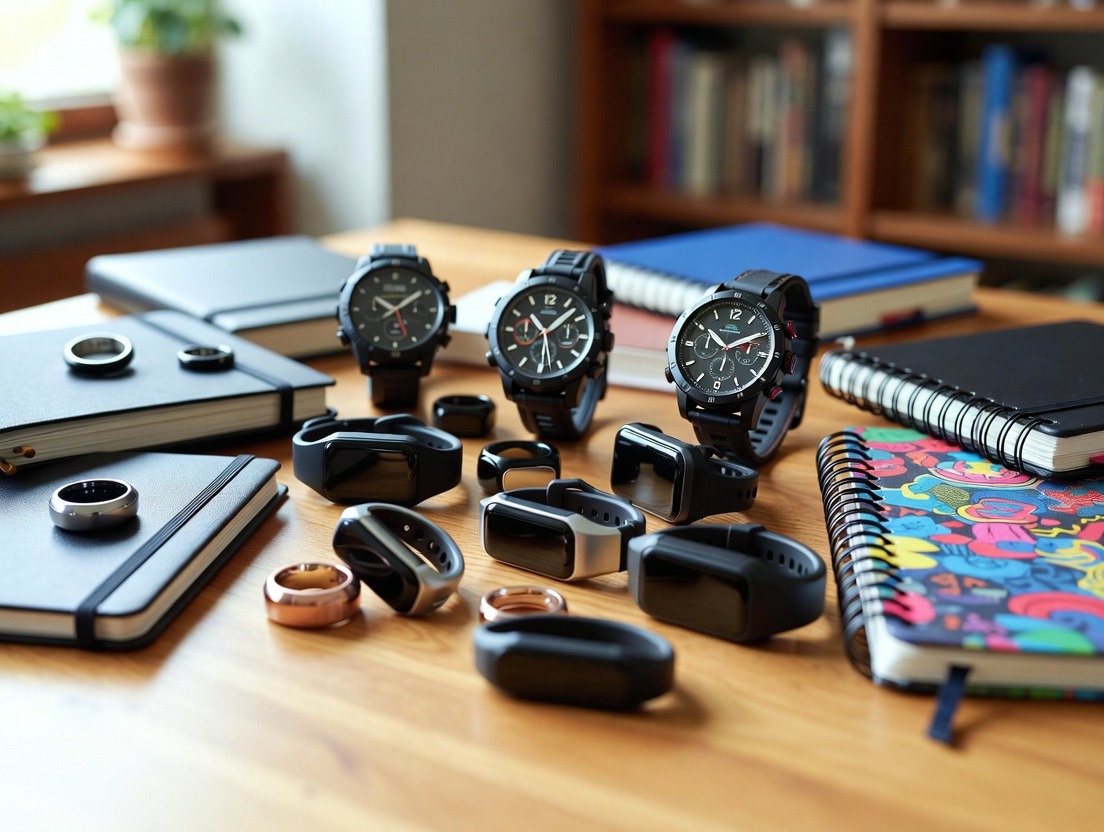
Accuracy isn't only a function of sensor physics; it's also a function of human behavior. Will you actually wear the device consistently? This is where the smart ring's subtlety creates a powerful, often overlooked, data advantage.
The 24/7 Wearability Mandate:
For recovery metrics, sleep staging, and body temperature trends to be meaningful, they require continuous, uninterrupted data collection. Any gap in data creates a blind spot.
The Hawthorne Effect & Natural Data:
A large, noticeable device on your wrist can subtly change your behavior—a phenomenon known as the Hawthorne Effect. You might be more conscious of checking it, fidget with it, or even alter your activity because you're being "tracked." A ring, by its innocuous nature, tends to fade into the background. You forget it's there. This leads to the collection of more natural, unselfconscious physiological data, which is ultimately the most valuable for understanding your baseline state.
Social & Professional Acceptance:
In formal meetings, social gatherings, or while sleeping next to a partner, a glowing screen on your wrist can be distracting or socially awkward. A simple metallic band on your finger raises no eyebrows. This social invisibility removes barriers to constant wear, directly translating to more complete datasets.
A device that's constantly dead is an inaccurate device. Battery life is not a mere spec; it is the linchpin of continuous monitoring and, by extension, data reliability.
The Smartwatch Charging Cycle:
Most full-featured smartwatches require charging every 24 to 48 hours. This forces users into a daily charging ritual, almost always overnight. This design flaw directly sabotages the device's core health-tracking mission: it cannot track sleep while it's on the charger. Some users try to charge during the day, but this still creates significant data gaps in activity and heart rate trends.
The Smart Ring Advantage:
Smart rings, with their smaller screens (or no screen) and focus on efficient sensor polling, typically boast 5 to 7 days of battery life. This changes everything:
This practical difference is profound. The ring's design philosophy prioritizes the uninterrupted flow of biometric data, while the watch's need for frequent charging inherently interrupts it. For a tool whose value is in longitudinal trends, consistency is king.
The "best" device doesn't exist in a vacuum. It depends entirely on the user's primary goals and lifestyle. Let's segment the audiences.
The Smart Ring is Ideal For:
The Smartwatch is Ideal For:
The Hybrid Approach:
A growing number of serious wellness enthusiasts are adopting a hybrid strategy: they wear a smart ring 24/7 for sleep, recovery, and baseline health metrics, and use a smartwatch during dedicated workouts for GPS and performance analytics. This "best of both worlds" approach acknowledges the strengths of each location. If you're considering this path, our FAQ page addresses common questions about data integration and device synergy.
The current landscape of finger versus wrist is just the opening chapter. The true potential of wearables lies in the sensors yet to be miniaturized and the biomarkers we have only begun to decode non-invasively. The next generation of smart rings and smartwatches won't just be tracking more—they’ll be diagnosing, predicting, and personalizing in ways that blur the line between consumer wellness and clinical healthcare. The form factor that can best integrate these advanced sensors will gain a decisive edge.
Non-Invasive Blood Glucose & Metabolic Monitoring
This is the holy grail of wearable tech. Continuous glucose monitoring (CGM) currently requires a subcutaneous sensor. Multiple companies are racing to develop optical (using Raman spectroscopy or NIR spectroscopy) or electrochemical sensors that can estimate glucose levels through the skin.
Continuous Blood Pressure Monitoring
Today, we have cumbersome cuff-based measurements. The future promises cuffless, continuous blood pressure estimation, typically using Pulse Wave Analysis (PWA) or Pulse Transit Time (PTT) derived from PPG signals.
Advanced Biomarkers: Hydration, Lactate, & More
The Form Factor Arms Race
The race will be about who can reliably miniaturize and power these clinical-grade sensors. Rings have the advantage in signal stability for optical sensing but are limited by space and battery. Watches have the advantage in battery and real estate but fight signal noise. We may see a divergence: rings becoming the premium, clinical-grade biomarker monitors, while watches evolve into comprehensive health & fitness hubs with broader, if slightly less precise, sensing suites.
The ultimate winner in sensing may not be one device, but a constellation of devices. Your ring might handle core cardiopulmonary and metabolic metrics, your watch handles activity and BIA, and a separate patch handles specialized biomarkers, all syncing to a single AI-powered health dashboard. This interoperable future is where true precision health lives. For a glimpse into how one company is thinking about this integrated future, you can learn more about Oxyzen's vision and development.
As wearables aspire to move from "informative" to "actionable" and even "diagnostic," the question of clinical validation becomes paramount. Can the data from your finger or wrist be trusted by a doctor? The path to medical credibility is steep, expensive, and will fundamentally reshape the industry. It's here that the smart ring's inherent signal advantages could translate into significant scientific and regulatory wins.
The "V" in Validation: From Consumer to Clinical
Why Rings Are Poised for Clinical Leadership
The Smartwatch's Medical Play: ECG & On-Demand
Smartwatches have made huge strides with on-demand ECG (electrocardiogram) sensors. By placing a finger on the watch's crown, you complete a circuit across your chest, allowing for a single-lead ECG that can detect atrial fibrillation. This is a brilliant use case that plays to the watch's strength: a large device with multiple contact points. For continuous, passive monitoring of biomarkers, however, the wrist's limitations remain.
The Convergence Point: Remote Patient Monitoring (RPM)
The true medical revolution will be in RPM. Imagine a patient recovering from heart surgery being sent home with a clinically-validated smart ring that continuously monitors their HR, HRV, and SpO2, alerting their care team to concerning trends. Or a sleep apnea patient using their ring to track therapy effectiveness nightly. In these scenarios, accuracy, comfort, and wearability are non-negotiable. The device that can combine medical-grade data with a form factor people will actually wear 24/7 holds the key to this future. It’s a future being actively built by companies focused on deep health insights, not just notifications.
The hardware is merely the data-gathering scout. The real intelligence—the general that turns reconnaissance into strategy—is the artificial intelligence and machine learning platform in the cloud. This is where the raw streams of PPG, accelerometer, and temperature data are synthesized into your personalized health story. The battle for accuracy is increasingly a battle of algorithms.
From One-Size-Fits-All to "N-of-1" Modeling
Early wearables applied broad population-based algorithms. "If HRV is above X, you are recovered." Modern systems are moving towards personalized baselines. Your device learns your normal ranges for HRV, resting HR, temperature, and sleep over weeks of observation. An "abnormal" reading for you might be perfectly normal for someone else. This personalization is critical for accuracy, as it accounts for your unique physiology, lifestyle, and even genetics.
Predictive Analytics & Proactive Insights
The next level is not just reporting what happened, but predicting what might happen. AI models can identify patterns preceding known events.
Contextual Awareness: The Missing Piece
The most advanced systems are beginning to incorporate context. Did your HRV drop because of a hard workout (expected) or because of a stressful workday (actionable)? By allowing users to tag events ("drank alcohol," "late work deadline," "vaccination") or by passively pulling in environmental data (local pollen count, weather), the AI can explain why your metrics changed. This turns data into wisdom. For examples of how users are applying these insights, browse through real-world experiences shared in our testimonials.
The Privacy Imperative
This level of personalization requires immense trust. Your AI model is trained on the most intimate dataset possible: your continuous body diary. Companies that lead in AI will also need to lead in data ethics, employing robust encryption, clear data ownership policies, and on-device processing where possible. The accuracy of your insights must not come at the cost of your privacy.
A device's value is not isolated to its hardware. It is multiplied or diminished by the ecosystem it lives in. Can your ring's recovery score inform your watch's workout recommendation? Can your wearable data be seamlessly reviewed by your doctor in your electronic health record? Interoperability—the ability of systems to exchange and make use of information—is the next critical frontier for practical accuracy.
The Walled Garden Problem
Today, most major players (Apple, Fitbit/Garmin, Oura) operate as "walled gardens." They expertly collect and analyze your data within their own app, but sharing that data out to other platforms is often clunky (relying on limited APIs or third-party apps like Apple Health or Google Fit). This locks you into a single ecosystem and fragments your holistic health picture if you use devices from different brands.
The Promise of Open Standards
The future belongs to open standards like FHIR (Fast Healthcare Interoperability Resources). Imagine if your wearable could write validated data (e.g., "average sleeping HRV: 45ms") directly to a standardized personal health record that you control. You could then grant permission to your fitness coach's app to see your recovery score, your nutritionist's app to see your glucose trends, and your cardiologist's portal to see your weekly heart rhythm report.
The Hybrid Ecosystem: A Practical Reality
For many, the ideal setup is hybrid: a ring for 24/7 baseline health and a watch for activity and connectivity. Today, this often means juggling two separate apps. The best-in-class experience will come from platforms that can ingest and synthesize data from multiple external devices. For instance, a primary health AI (like Oura's or a future platform) could accept workout intensity data from your Garmin watch and use it to refine your recovery analysis. This creates a truly unified health dashboard.
Your Data, Your Control
True interoperability puts you at the center. It acknowledges that no single device does everything best and empowers you to build your own optimal toolkit. The most accurate overall health picture will be a composite image built from the best-in-class data sources you choose. As you consider adding a device, ask: Can it easily share what it knows? Can it play well with others? The answer determines whether your data becomes a dynamic, living tool or a static trophy inside a single app. To see how one platform approaches holistic data integration, you can explore the resources on our blog.

At checkout, the price tags can give you pause: a premium smart ring can cost $300-$450, while a high-end smartwatch runs $400-$800+. But viewing this as a simple product purchase misses the point. You are investing in a long-term health monitoring system. The real analysis is Total Cost of Ownership and Return on Investment in your well-being.
Upfront Cost Breakdown
The Subscription Model Consideration
This is a critical differentiator.
Calculating Long-Term Value
To compare, project costs over 2-3 years (a typical device lifespan):
The financial gap narrows significantly. The question becomes: What are you buying?
The Intangible Value: Health Capital
Beyond dollars, consider the investment in your health capital. The right device can help you make lifestyle changes that compound over decades: better sleep hygiene, managed stress, optimized exercise. Preventing a single health crisis due to early awareness is priceless. The device that you will wear consistently, and whose data you actually trust and act upon, offers the highest intangible return.
There is no universally "better" value. It hinges on your priorities. The watch offers a one-time fee for a multifunctional tool. The ring is an ongoing investment in a specialized health intelligence service. Choose the model that aligns with what you truly intend to monitor and improve.
After this deep dive into physiology, technology, and practicalities, the final decision is personal. This framework will help you move from analysis to action, ensuring your choice aligns with your body, your goals, and your life.
Step 1: Define Your "North Star" Metric
What is the one thing you most want to improve or understand? Be brutally honest.
Step 2: Assess Your Lifestyle & Wearability
Step 3: Consider Your Tech Ecosystem
Step 4: Try Before You Commit (If Possible)
Step 5: Acknowledge the Hybrid Option
If your budget allows, the "Ring for Health, Watch for Fitness" hybrid approach is the ultimate setup for the data-serious individual. It acknowledges the strengths of each. Use the ring 24/7 for baseline metrics and the watch for workouts and connectivity. You can start with one and add the other later.
Final Reflection: It's About Behavior Change
The most accurate device in the world is useless if you ignore it. Choose the device whose data presentation motivates you. Do you prefer the watch's instant, on-screen haptic nudges to stand up? Or the ring's morning app report that prompts you to plan a lighter day based on your recovery score?
The goal is not to collect data, but to inspire action. The right device feels less like a gadget and more like a trusted advisor. For further guidance, our FAQ page answers many common questions from users making this exact decision.
The "Finger vs. Wrist Accuracy Debate" does not end with a knockout victory. It concludes with a revelation of specialization. We have moved from asking "Which is better?" to understanding "Better for what?"
The smartwatch stands as the undisputed champion of the active, connected, outward-focused life. It is a coach on your wrist, a map on your trail, and a window to your digital world. Its accuracy is optimized for motion and moment-to-moment interaction.
The smart ring has carved its domain as the guardian of the internal, restorative, and subtle. It is a sleep scientist on your finger, a stress barometer in your nervous system, and a sentinel for your baseline health. Its accuracy is rooted in physiological advantage and silent, constant vigilance.
This divergence is not a flaw in the market; it is a sign of maturity. Wearable technology is growing up, moving beyond the one-device-fits-all promise to a more nuanced understanding of human health, which exists on a spectrum between intense activity and deep rest, between external performance and internal readiness.
Your path forward is now clear. Listen to your priorities. If your primary quest is to quantify your output, strap on a watch. If your journey is to understand your input—how sleep, stress, and recovery truly affect you—let a ring circle your finger. The most accurate device for you is the one that measures what you value most and fits seamlessly into the life you lead.
The ultimate truth in this debate is personal. It is found not in a spec sheet, but in the correlation between the data on your screen and the feeling in your body. It is discovered when a device stops being a tracker and starts being a translator—turning the silent language of your physiology into a daily dialogue about your well-being. That is the future of wearable accuracy, and it is waiting for you to wear it.
While we've established the smart ring's collective advantages for specific metrics, not all rings are created equal. The market has evolved from a single pioneer to a vibrant field of contenders, each with unique strengths, design philosophies, and target users. Choosing the right ring requires looking under the hood at sensor configurations, algorithm focus, and the overall user experience. This section will analyze the key players shaping the smart ring landscape.
The Incumbent: Oura Ring
Oura is synonymous with the smart ring category. Having pioneered the form factor for wellness, it sets the benchmark that others are measured against.
The Challenger: Ultrahuman Ring Air
Ultrahuman emerged as a direct, subscription-free challenger to Oura, focusing on the metabolic health and biohacking community.
The New Entrant: RingConn Smart Ring
Positioning itself as a balanced alternative, RingConn focuses on delivering core wellness features without a subscription.
The Fitness-Focused: Circular Ring Slim
Circular takes a slightly different approach by incorporating a unique "haptic alert" system (a tiny vibrating motor) and a small LED light on the ring itself.
The Horizon: Oxyzen and the Next Wave
The market continues to attract innovation. Emerging players like Oxyzen are entering the space with fresh perspectives, often focusing on specific niches like advanced stress analytics, unparalleled battery life, or seamless integration with other digital health platforms. When evaluating newer entrants, key questions include: What is their unique algorithmic insight? How transparent are they about sensor accuracy? What is their vision for the ecosystem? To understand how one such company is approaching this from the ground up, you can read about Oxyzen's foundational story and mission.
Choosing Your Ring: The Core Questions
The "best" ring is subjective. It aligns with your values around data ownership, your desire for simplicity or depth, and your aesthetic preference. The good news is that competition is driving rapid innovation, giving consumers more powerful choices than ever before.
The smartwatch arena is a fiercely competitive battlefield of tech giants and dedicated sports brands. Unlike rings, which converge on a similar wellness mission, smartwatches diverge sharply based on operating system, primary use case, and ecosystem. Your choice here often locks you into a broader technological world.
The Ecosystem King: Apple Watch
For iPhone users, the Apple Watch is the default—and for good reason. It offers unmatched integration with the iOS ecosystem.
The Fitness Powerhouse: Garmin
Garmin dominates the serious athlete segment. Its watches are built for endurance, with unparalleled battery life and metrics for runners, cyclists, triathletes, and outdoor adventurers.
The Wellness Mainstream: Fitbit (by Google)
Fitbit popularized the step counter and remains a gateway into health tracking for millions, now powered by Google’s resources.
The Android Integrator: Samsung Galaxy Watch
For Android (especially Samsung phone) users, this is the flagship alternative to Apple's offering.
The Pure Hybrid: Whoop Strap
Though not a traditional watch, Whoop deserves mention as it directly competes in the recovery-focused wearable space. It’s a wrist-worn strap (or now, clothing-integrated) with no screen.
The Verdict on Watches: Choose Your World
Your smartwatch choice is often an extension of your phone brand and your primary athletic identity. For holistic ecosystem integration, choose Apple or Samsung. For deep athletic performance, choose Garmin. For accessible wellness and community, choose Fitbit. For pure, screen-free recovery analytics on the wrist, consider Whoop. Each platform has made significant strides in health accuracy, but their core DNA shapes how that data is presented and acted upon.
Beyond marketing claims and user reviews, what does the emerging scientific and expert consensus say? While long-term, large-scale comparative studies are still evolving, a clear pattern is emerging from published research, biomechanists, and sports scientists.
The Academic Perspective: Peer-Reviewed Findings
The Sports Science & Coaching Viewpoint
Elite performance coaches are increasingly integrating data from both sources but for different purposes.
The Clinical Medical Angle
Cardiologists and sleep specialists are cautiously optimistic about the potential of wearables for population health screening.
Consensus Summary
The expert and research landscape suggests a pragmatic hierarchy of trust:
For those who want to explore the scientific underpinnings of wearable health tech further, our blog features analyses of the latest research.
Specifications and studies tell one story. The lived experience of wearing a device day-in, day-out tells another. Does it become a trusted partner or a forgotten gadget? Does it simplify your life or add digital clutter? This is where the philosophical differences between rings and watches manifest most clearly.
The Morning Ritual: Waking Up to Data
Throughout the Day: Conscious vs. Subconscious Tracking
During Workouts: Focus vs. Feedback
At Night: Comfort & Consistency
The Social and Professional Dimension
This is a silent but powerful factor. A smartwatch screen glowing in a dark movie theater or during an intimate dinner can be a social faux pas. Checking your watch in a meeting, even for the time, can be perceived as disinterest. A smart ring is virtually invisible. It doesn't emit light or demand visual attention. In professional and social settings, the ring allows you to be present while still collecting data—a form of technological subtlety that many have come to value highly. This discreet nature is a core part of the philosophy behind devices designed for seamless living, as highlighted in Oxyzen's approach to wearable design.
The Verdict on Lifestyle:
The ring promotes a philosophy of mindful detachment—collecting data silently for intentional review. The watch enables a practice of engaged interaction—integrating data and digital life into your moment-to-moment awareness. Neither is inherently superior; they cater to different temperaments and daily rhythms. The right choice harmonizes with your tolerance for notifications, your sleep habits, and your desire for either a dedicated health tool or a multifunctional companion.
As with any rapidly evolving technology, myths and oversimplifications abound in the smart ring vs. smartwatch debate. Let’s clear the air on some of the most persistent misunderstandings.
Myth 1: "Smart Rings Are Just Sleep Trackers."
Reality: While they excel at sleep, modern smart rings are comprehensive wellness monitors. They track 24/7 heart rate, HRV (a key metric for stress and recovery), skin temperature trends, blood oxygen, and activity levels. They synthesize this into holistic scores for readiness and recovery. They are, in essence, continuous autonomic nervous system monitors, with sleep being one critical application of that capability.
Myth 2: "Smartwatches Are Always Less Accurate for Health Metrics."
Reality: This is an overgeneralization. For dynamic heart rate during steady-state cardio (like running or cycling), modern smartwatches are extremely accurate, often within 1-2% of a chest strap. Their accuracy suffers more during high-intensity interval training (HIIT) with erratic movements, or for nocturnal HRV, where motion artifacts are problematic. The statement should be: "Smartwatches can be less accurate for specific, delicate biomarkers measured during periods of rest or subtle motion."
Myth 3: "You Can't Track Workouts with a Ring."
Reality: You can, but the experience and data are different. A ring will track your heart rate throughout the workout and the overall physiological strain. What it won't do is provide GPS mapping, pace-per-mile, or rep counting. It answers "How hard was that on my body?" rather than "What was my average 500m split?" For many strength training, yoga, or casual cardio sessions, the ring's strain data is perfectly sufficient.
Myth 4: "The Larger Sensors on a Watch Must Be More Accurate."
Reality: In sensor design, bigger isn't always better; placement and signal quality are paramount. A large PPG sensor on a noisy, moving wrist can be outperformed by a smaller, well-placed sensor on a stable finger. It's about the signal-to-noise ratio, not the sensor's physical size. Medical pulse oximeters, the gold standard for SpO2, are clipped on the finger, not the wrist, for this exact reason.
Myth 5: "All Smart Rings Require a Subscription."
Reality: This was initially true but is changing. While pioneers like Oura use a subscription model, newer entrants like Ultrahuman and RingConn offer full data access with a one-time hardware purchase. The market is diversifying, giving consumers a choice between a service-based model (funding ongoing algorithm updates) and an ownership model.
Myth 6: "The Data is Too Complex for the Average Person."
Reality: Both ecosystems have evolved. Smartwatch apps (Apple Health, Garmin Connect, Fitbit) present data in clear, visual dashboards with plain-language summaries. Smart ring apps (Oura, etc.) focus heavily on simple, color-coded scores (Ready, Pay Attention, Rest) that distill complex data into an immediate recommendation. The barrier to understanding is lower than ever. For those who want to dive deeper, the resources are there; for those who don't, a simple score suffices.
Myth 7: "These Devices Can Diagnose Medical Conditions."
Reality (The Critical One): Consumer wearables are wellness devices, not medical devices (with specific exceptions like FDA-cleared ECG for Afib). They are designed for health awareness, trend tracking, and lifestyle guidance. A low HRV score suggests you may need more recovery; it does not diagnose anxiety. A fluctuating SpO2 trend at night may suggest you discuss sleep apnea with a doctor; it does not diagnose it. This distinction is crucial for safe and realistic expectations. For any health concerns, always consult a healthcare professional. Our FAQ page reiterates this important disclaimer and offers guidance on using data responsibly.
Dispelling these myths allows for a clearer, more informed decision based on the actual capabilities and limitations of each form factor, moving beyond hype and towards practical utility.
In our quest for personal optimization, we must also consider the broader impact of our devices. The wearable tech industry, like all electronics, faces significant challenges regarding environmental footprint, ethical sourcing, and data privacy. The choices companies make in these areas are becoming increasingly important to consumers.
The Environmental Cost: Miniaturization vs. Disposability
Ethical Sourcing & Supply Chains
The minerals in our devices (like cobalt, lithium, tin) can be linked to conflict zones and poor labor practices. Ethical consumers should look for companies that:
Data Privacy: Your Most Valuable Asset
If the device is free (or subsidized), you are the product. This adage holds profound weight in wearables.
The Path to Ethical Wearables
As a user, you have power. Support companies that are transparent about their sustainability efforts, have clear and respectful privacy policies, and design for longevity over planned obsolescence. The most accurate device for a healthier you should also contribute to a healthier planet and respect your digital autonomy. As you evaluate brands, consider their commitment to these principles as part of their overall value proposition. The story behind a brand often reveals its values, which you can explore for companies like Oxyzen on their Our Story page.
Predicting the future of technology is fraught with error, but based on current trajectories in material science, sensor tech, and consumer behavior, we can map probable paths for the evolution of both smart rings and smartwatches. The endgame may not be one defeating the other, but a strategic convergence where the line between them blurs.
The "Invisible" Wearable: Biosensor Integration
The ultimate wearable is one you don't perceive. We are moving towards sensors embedded in everyday objects.
The Multimodal Sensor Fusion Future
No single point on the body tells the whole story. The future is sensor fusion from multiple devices.
The Rise of the "Health Agent" AI
Beyond an app that shows data, we will interact with an AI health agent. This digital companion, accessed via voice or AR glasses, will interpret your multimodal data in real-time.
Regulatory Status as a Feature
We will see a stratification in the market:
The Form Factor Endgame: A Personal Network
The debate of "ring vs. watch" will become quaint. You will own a personal area network of specialized, interoperable sensors. You might wear a beautiful, jewelry-grade ring for 24/7 baseline health, a watch for time, communications, and GPS during adventures, and don specialized gear for specific activities. All will work together seamlessly.
The "accuracy debate" will then be settled not by a single device, but by the synergistic intelligence of the network, with each sensor positioned on the ideal body location for its specific purpose. The journey towards that future is already underway, driven by companies innovating at the intersection of design, biology, and data science.
Your Trusted Sleep Advocate: Sleep Foundation — https://www.sleepfoundation.org
Discover a digital archive of scholarly articles: NIH — https://www.ncbi.nlm.nih.gov/
39 million citations for biomedical literature :PubMed — https://pubmed.ncbi.nlm.nih.gov/
Experts at Harvard Health Publishing covering a variety of health topics — https://www.health.harvard.edu/blog/
Every life deserves world class care :Cleveland Clinic - https://my.clevelandclinic.org/health
Wearable technology and the future of predictive health monitoring :MIT Technology Review — https://www.technologyreview.com/
Dedicated to the well-being of all people and guided by science :World Health Organization — https://www.who.int/news-room/
Psychological science and knowledge to benefit society and improve lives. :APA — https://www.apa.org/monitor/
Cutting-edge insights on human longevity and peak performance:
Lifespan Research — https://www.lifespan.io/
Global authority on exercise physiology, sports performance, and human recovery:
American College of Sports Medicine — https://www.acsm.org/
Neuroscience-driven guidance for better focus, sleep, and mental clarity:
Stanford Human Performance Lab — https://humanperformance.stanford.edu/
Evidence-based psychology and mind–body wellness resources:
Mayo Clinic — https://www.mayoclinic.org/healthy-lifestyle/
Data-backed research on emotional wellbeing, stress biology, and resilience:
American Institute of Stress — https://www.stress.org/


