


Stress Relief Techniques for Public Spaces and Social Situations
Establishing predictable routines reduces uncertainty, a major cognitive stressor, and conserves mental energy.
Establishing predictable routines reduces uncertainty, a major cognitive stressor, and conserves mental energy.
%402x.svg)
You feel it first as a low hum—a buzzing in your chest that syncs with the flickering fluorescent lights. Then comes the tightening in your shoulders as you navigate the crowded grocery aisle, each cart a potential collision. Your breath grows shallow waiting in line at the bank, the person behind you standing just a little too close. The dinner party laughter grows louder, but inside, a silent alarm rings: your heart rate climbing, palms damp, thoughts beginning to scatter like leaves in a windstorm.
This isn't just discomfort. This is the physiology of modern social stress, and it’s transforming our shared spaces—airports, offices, public transit, social gatherings—into arenas of quiet anxiety. In a world that demands constant connection and public performance, our nervous systems are paying a hidden tax. The American Institute of Stress reports that 77% of people regularly experience physical symptoms caused by stress, with a significant portion triggered specifically by social and public situations. Yet, we’re expected to smile through it, to “just relax” amid the chaos.
But what if relief wasn't about escaping these spaces, but about transforming your experience within them? What if you could carry a toolkit of subtle, science-backed techniques that work not in a quiet meditation room, but right there in the bustling terminal, the packed meeting, or the networking event? This isn't about avoiding life; it's about fully engaging with it, from a place of grounded calm rather than reactive stress.
The evolution of stress management is here, and it’s both profoundly personal and elegantly technological. We’re moving beyond generic advice to personalized, real-time intervention. Imagine a device that understands your unique stress signature—detecting the earliest spike in your heart rate variability (HRV), the subtle change in your skin temperature—and guides you discreetly toward the exact technique that works for you in that moment. This is the new frontier of wellness, where ancient wisdom meets cutting-edge biometrics. At Oxyzen, we believe that true calm is not a passive state, but a skill you can build, measure, and master, anywhere.
This guide is your comprehensive manual for navigating the invisible currents of public and social stress. We’ll explore the hidden science behind why crowded spaces trigger us, dismantle the physiological cascade of a stress response, and equip you with a powerful arsenal of subtle, effective techniques. From covert breathing methods that reset your nervous system to cognitive reframes that change your entire experience, you’ll learn to reclaim your sense of agency. We’ll also explore how modern tools like advanced smart rings are providing unprecedented self-awareness, turning your body’s signals from mysterious warnings into clear, actionable data. Your journey from overwhelmed to centered starts here.
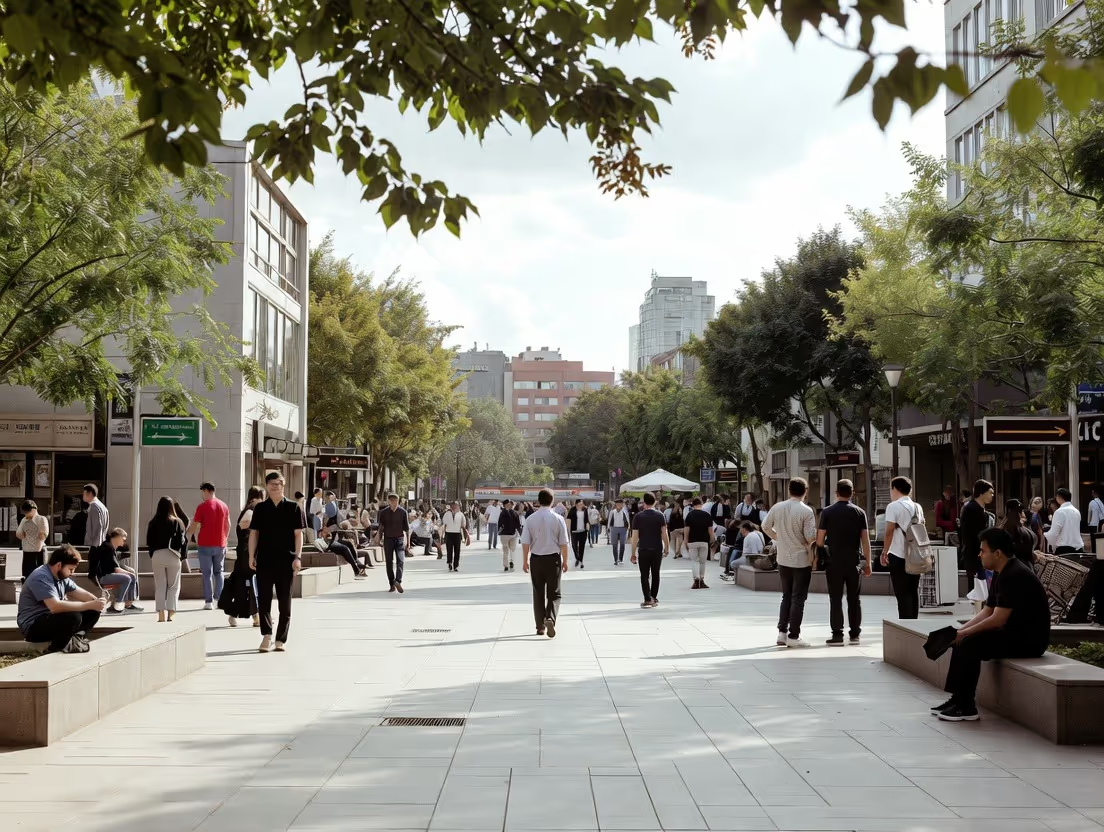
We’ve all felt it: that distinct shift from neutral to nervous when stepping into a crowded room or a congested street. But this reaction isn't a personal failing or mere “shyness.” It’s a complex, often primal, response wired into our biology and amplified by modern life. To effectively manage public stress, we must first become detectives of our own discomfort, understanding its origins.
The Evolutionary Echo: Crowds as Threat
From an evolutionary perspective, our ancestors survived by being acutely aware of their social and physical environment. A crowded space, for much of human history, could signal competition for resources, potential conflict, or heightened risk of disease. The amygdala, our brain’s threat-detection center, is still running this ancient software. In a busy mall or transit station, it can interpret the close proximity of strangers, the loud and unpredictable noises, and the limited escape routes as potential dangers, triggering a low-grade “fight-or-flight” response. This is why you might feel a surge of irritability or anxiety in a crowd for no apparent reason—your nervous system is following an old playbook.
The Cognitive Load of Modern Public Life
Today’s public spaces bombard us with a level of “cognitive load” our ancestors never faced. Every flashing advertisement, overlapping conversation, phone notification, and navigational decision (Which line is shortest? Where’s the exit?) consumes mental processing power. A study published in the Journal of Environmental Psychology found that high levels of “sensory crowding” lead to significant cognitive fatigue and increased stress hormones. Your brain is trying to monitor dozens of micro-stimuli simultaneously, a task that is inherently draining and anxiety-provoking.
Performance Anxiety and the Social Mirror
Social situations add another potent layer: the fear of negative evaluation. Whether it’s a business lunch, a party, or even a casual chat with a neighbor, we often feel we are “on stage.” This triggers what psychologists call “social-evaluative threat,” a powerful stressor linked to spikes in cortisol. We become hyper-aware of ourselves—monitoring our words, our posture, our facial expressions—while simultaneously trying to interpret the reactions of others. This internal surveillance is exhausting and pulls us out of the present moment, directly fueling anxiety.
The Role of Personal History and Temperament
Our personal histories write unique subroutines into our stress code. A person who experienced bullying may have a heightened response in crowded social settings. Someone with a naturally high-sensitive personality (HSP) will process sensory information more deeply, making a noisy, bright environment genuinely overwhelming. These aren't imagined stresses; they are the result of a sensitive system working exactly as designed. Recognizing your personal triggers is not about labeling yourself, but about gaining strategic insight. For a deeper dive into how biometrics can help you identify your unique stress patterns, our blog offers extensive resources on personalized stress mapping.
Understanding the “why” is the first, crucial step toward empowerment. It moves stress from being a vague, shameful experience to a observable phenomenon with identifiable causes. When you can name the elements—sensory overload, social evaluation, cognitive fatigue—you begin to separate yourself from the storm. You are not the anxiety; you are the person experiencing a predictable biological and psychological reaction to a challenging environment. This shift in perspective is the foundation upon which all effective techniques are built. With this awareness, we can now turn to the very real, physical cascade that occurs in your body during these moments—the process we must learn to intercept.
When your brain perceives a threat—be it a looming deadline or a stranger standing too close—it doesn't send a polite email. It initiates a lightning-fast, full-body broadcast via your autonomic nervous system (ANS). This is the stress cascade: a precise, ancient sequence designed for survival. By understanding its stages, you gain the power to intervene at multiple points, turning a runaway reaction into a manageable event.
Stage 1: The Alarm (Sympathetic Nervous System Activation)
The initial signal originates in the hypothalamus, which sounds the alarm to the pituitary gland, which in turn signals the adrenal glands: “Release the catecholamines!” Almost instantly, adrenaline (epinephrine) and noradrenaline flood your bloodstream. This is the “bolt” of stress. Your heart rate and blood pressure spike, shunting blood to your large muscles (preparing for fight or flight). Your pupils dilate to take in more visual information. You might feel a jolt of energy, a tightening in your chest, or a rush of heat. In a social setting, this can manifest as a sudden feeling of being “on edge,” your mind racing as you scan the room.
Stage 2: The Sustain (The HPA Axis and Cortisol)
If the brain perceives the threat as ongoing, a second, slower system engages: the hypothalamic-pituitary-adrenal (HPA) axis. This results in the release of cortisol, the primary stress hormone. Cortisol’s job is to keep you in a state of readiness. It increases glucose in the bloodstream for immediate energy, enhances your brain’s use of glucose, and curbs non-essential functions (like digestion, reproduction, and immune system activity). This is why chronic stress can lead to digestive issues, lowered libido, and frequent illness. In a long meeting or a draining social event, this sustained cortisol release leads to that familiar feeling of being “wired but tired”—agitated yet exhausted.
Stage 3: The Sensory Shift (Tunnel Vision & Auditory Narrowing)
To help you focus on the perceived threat, your senses undergo a dramatic change. Peripheral vision can literally narrow—a phenomenon known as “tunnel vision”—as your focus sharpens on the immediate source of stress (e.g., the intimidating person you’re talking to). Similarly, “auditory narrowing” can occur, where background noise fades and you become hyper-attuned to specific sounds. While this was useful for spotting predators, in a modern context it cuts you off from the broader, often calming context of your environment, amplifying your sense of isolation and threat.
The Hidden Metric: Heart Rate Variability (HRV)
While heart rate increases with stress, a more subtle and telling biomarker is Heart Rate Variability (HRV). HRV is the measure of the variation in time between each heartbeat. It’s controlled by your ANS. High HRV indicates a healthy, resilient nervous system that can fluidly switch between arousal (sympathetic) and recovery (parasympathetic) states. Low HRV indicates a stressed, fatigued, or inflexible system stuck in “go” mode. When you’re stressed in public, your HRV typically plummets. Monitoring HRV isn't just about measuring stress; it’s a direct window into your nervous system’s balance and your capacity to self-regulate. Advanced wearables now make tracking this once-clinical metric accessible to everyone.
The Feedback Loop: How Thoughts Fuel Physiology
Crucially, this cascade is not a one-way street. Your physical state feeds back to your mind. A racing heart can be interpreted by your brain as “I am in danger,” which then prompts the release of more stress chemicals, creating a vicious cycle. The key to breaking this loop is to intervene at the physical level. By consciously slowing your breath, relaxing your muscles, or changing your posture, you send a powerful signal upstream to your brain: “Stand down. We are safe.” This is the principle behind all somatic (body-based) stress relief techniques.
Recognizing these physical signs is your early-warning system. The tight jaw, the shallow breath, the cool fingertips—these are not just symptoms; they are messages. By learning to read them, you can act before the cascade becomes a flood. This deep understanding of the mind-body dialogue is central to our philosophy at Oxyzen. As detailed in our story, our mission is to provide tools that translate these biological signals into clear, actionable insight, empowering you to take control. Now, let’s explore the foundational skill that directly targets this physiological cascade: the art of covert breathing.

Breathing is your body's built-in remote control for your nervous system. Unlike trying to “think” your way out of anxiety, which often adds mental fuel to the fire, working with your breath directly influences the autonomic nervous system. The best part? With practice, these techniques can be executed invisibly, in the middle of a conversation, a crowded train, or a high-stakes presentation. This is your most accessible and immediate stress-intervention tool.
The Science of the Sigh: The Physiological Sigh
Discovered by researchers at Stanford, the physiological sigh is arguably the most efficient real-time stress reset available. It mimics the body’s natural pattern to reinflate collapsed alveoli (tiny air sacs) in the lungs, which improves oxygen exchange and rapidly reduces carbon dioxide levels. High CO2 is a key signal that triggers feelings of panic and breathlessness.
Box Breathing: The Navy SEAL’s Secret for Steady Focus
Also known as square breathing, this technique balances the nervous system by creating equal, controlled durations for each part of the breath cycle. It’s used by elite military operatives to maintain composure under extreme pressure.
The 4-7-8 Method: The Natural Sedative
Developed by Dr. Andrew Weil, this technique emphasizes a long, slow exhale, which is key to activating the parasympathetic (rest-and-digest) nervous system. The prolonged exhale stimulates the vagus nerve, the main nerve of calm and restoration.
Nasal Breathing & Grounding: The Anchor in the Storm
Simply shifting from mouth breathing to quiet, deliberate nasal breathing is a profound intervention. Nasal breathing filters air, increases nitric oxide production (which improves blood flow), and naturally slows the breath rate. Pair it with a grounding technique for a powerful one-two punch.
Mastering even one of these breath techniques gives you a superpower: the ability to change your physiological state in seconds, without anyone knowing. It’s the ultimate stealth tool for well-being. For more techniques and guidance on integrating breathwork into a modern lifestyle, our blog is a constantly updated resource. Once you’ve used breath to steady the physical ship, the next step is to manage the environment itself through strategic sensory engagement.
Our senses are portals. In a stressful public space, they often feel like floodgates, letting in a torrent of overwhelming data. The key to managing this isn't to shut down completely (which is rarely possible), but to become the curator of your sensory experience. By consciously choosing where to direct your attention and subtly managing input, you can create pockets of calm within chaos. This is about strategic engagement, not passive endurance.
Sight: Directing Your Gaze with Intention
Vision is often our dominant sense, and in crowded spaces, our eyes dart uncontrollably, contributing to cognitive overload.
Sound: Creating Your Own Audio Buffer
Noise is a primary stressor in public spaces. While you can’t always eliminate it, you can reshape your relationship to it.
Touch & Proprioception: The Grounding Force
Your sense of touch and body position (proprioception) is a direct line to the present moment and safety.
Smell: The Direct Pathway to the Limbic System
The olfactory bulb is part of the brain’s limbic system, which processes emotion and memory. This is why scent can bypass cognition and alter mood instantly.
By actively managing your sensory input, you move from being a passive recipient of the environment to an active participant in crafting your experience. This sense of agency is itself profoundly calming. It aligns with our vision at Oxyzen, detailed in our about page, of empowering individuals with both knowledge and tools for self-mastery. Once your external senses are managed, we must turn inward to address the engine of stress: your own thoughts and internal narrative.

Your thoughts in a stressful situation are not neutral news reports; they are often a dramatic, fear-based narration. “Everyone is judging me.” “I’m going to say something stupid.” “I can’t handle this.” This internal script directly fuels the physiological stress cascade. Cognitive reframing is the practice of identifying these distorted thoughts, challenging their accuracy, and consciously choosing a more helpful, realistic perspective. It’s not about positive thinking; it’s about accurate thinking.
Identifying the “Cognitive Distortions”
First, learn to spot the common thinking traps:
The 3-Step Reframe: Challenge, Choose, Connect
When you notice a stress-inducing thought, pause and engage this mental process.
The “External Observer” Technique
Imagine you are a friendly, neutral scientist observing the situation—including yourself—from a slight distance. Label the emotions and thoughts without becoming them. “Interesting. Subject is experiencing a rise in heart rate and thoughts of evaluation in response to the social crowd. This is a classic stress response to perceived social threat.” This depersonalizes the experience, creating space between you and the reaction.
From Threat to Challenge: The Excitement Reframe
Groundbreaking research by Dr. Alison Wood Brooks found that simply saying “I am excited” out loud is more effective at improving performance under pressure than trying to calm down. Why? Anxiety and excitement are physiologically similar (increased heart rate, arousal). By relabeling the feeling as excitement, you harness that energy as fuel for engagement rather than a signal to flee. Before walking into a nerve-wracking situation, tell yourself, “I’m excited to meet new people,” or “I’m excited to share my ideas.”
The “And” Technique for Self-Acceptance
Replace “but” with “and” to hold space for complexity. “I am nervous and I am capable.” “This is uncomfortable and I am safe.” This stops you from negating your experience and allows multiple truths to coexist, reducing internal conflict.
Gratitude as a Cognitive Interrupt
In the midst of social stress, forcing a moment of genuine gratitude can shift brain activity from the anxiety-ridden amygdala to the prefrontal cortex. Silently think: “I’m grateful for this person’s time,” “I’m grateful for the air conditioning in this hot room,” or “I’m grateful I have the ability to feel—it means I’m alive.” It’s a powerful circuit breaker for negative thought loops.
Mastering these cognitive tools turns your mind from a frenzied commentator into a wise, supportive coach. This internal work is complemented perfectly by external data. For instance, seeing an objective metric like a lowered HRV on a wellness device can validate your feeling of being drained after a social event, prompting you to use these reframes or other techniques proactively. It’s this synergy of internal and external awareness that creates lasting resilience. For common questions on integrating these practices with technology, our FAQ section provides clear answers. Next, we’ll look at how to physically position and move your body to project and cultivate calm.
Your body and mind are in a constant, two-way conversation. While anxious thoughts can make you slouch, the reverse is also powerfully true: adopting the physical posture of calm can actually induce a calmer state of mind. In public and social settings, you can use deliberate, subtle movements and positions to manage your stress, influence your physiology, and even shape how others interact with you. This is embodied confidence.
The Foundation: Grounded Posture
Stress often pulls us into a protective, closed-off stance: rounded shoulders, lowered head, crossed limbs. To counter this, seek “grounded openness.”
Covert Movement Breaks: Discreet Energy Release
When you can’t get up and walk away, these tiny movements can discharge nervous energy.
The Power of the Pause: Strategic Stillness
In social anxiety, we often rush—our words, our movements, our exits. Consciously slowing down is an act of reclamation.
Facial Softening: The Micro-Expression of Ease
Our faces hold immense tension when stressed—a furrowed brow, tight jaw, fixed smile.
The Role of Proxemics: Managing Your Space
Proxemics is the study of personal space. Feeling your space is invaded is a huge stressor.
By directing your body, you direct your mind. These techniques give you an ongoing, physical practice of self-regulation that operates beneath the surface of social interaction. They transform your body from a container of stress into an instrument of calm. Hearing from real users about how small behavioral shifts led to big changes in confidence is a constant inspiration; you can read some of these powerful journeys in our testimonials. With your mind and body aligned, we can now explore how to leverage your immediate environment as an active partner in your stress relief.

You may not control the airport terminal, the office floorplan, or the restaurant layout, but you almost always have agency over your immediate micro-environment—the few feet of space directly around you. By making deliberate, subtle choices about your position, your belongings, and your engagement with that small zone, you can engineer a pocket of tranquility. This is about becoming an active architect of your experience, not a passive occupant of a stressful space.
The Strategic Seat: Choosing Your Territory
Where you sit or stand has a profound psychological impact.
Personal Zone Creation: The Invisible Bubble
Use your belongings and posture to define your personal space politely.
Visual Sanctuaries: Directing Your Gaze to Refuge
When the overall visual field is chaotic, create a smaller, calming visual focus.
Temporal Structuring: Breaking Endurance into Chunks
The thought of enduring a two-hour event can be daunting. Break it into manageable, mission-based chunks.
Digital Environment Management: Your Phone as a Tool, Not a Trap
While phones can be a stress source, used wisely they can be part of the solution.
By treating your immediate surroundings as a malleable space you can influence, you reclaim a profound sense of agency. This practice dovetails beautifully with the use of a smart wellness device. For example, if your device alerts you to rising stress, that’s your cue to enact one of these environmental shifts—to change your seat, to find your visual anchor, to take your scheduled break. This responsive, rather than reactive, approach is the essence of modern stress mastery. To understand the full vision behind creating technology that facilitates this kind of proactive wellness, you can explore our story. Now, let’s examine how technology itself, particularly biometric wearables, is revolutionizing our ability to understand and manage stress in real-time.
For generations, understanding our stress has been a subjective, fuzzy endeavor—relying on vague feelings of being “wound up” or “drained.” Today, biometric technology is pulling back the curtain on the hidden physiology of stress, transforming it from a mysterious force into a measurable, manageable phenomenon. This isn't about adding more data for data’s sake; it’s about gaining a precise, personalized language for your body’s signals, enabling intervention before stress becomes overwhelming.
Your Body’s Silent Language: Key Metrics Decoded
Modern smart rings and sensors track a suite of biomarkers that paint a detailed picture of your nervous system state:
From Reaction to Prediction: The Power of Trend Analysis
The true power lies not in a single data point, but in trends over time. Biometric wearables allow you to answer critical questions:
Discreet, Real-Time Biofeedback: The On-Body Coach
This is where the magic happens for public situations. Imagine your device detecting a stress spike via HRV and skin temperature during a difficult conversation. It could then:
Breaking the Denial Cycle with Objective Data
We are often poor judges of our own stress levels, either minimizing (“I’m fine”) or catastrophizing. Biometric data serves as a neutral, objective mirror. It can validate your need for a break when you’d otherwise push through, or reassure you that your body is handling a challenge well, reducing meta-anxiety (worrying about worrying).
Integrating Data with Practice: The Synergy
The data is useless without action, and action is more effective with data. They form a virtuous cycle:
This empirical, personalized approach is at the core of what we’re building. At Oxyzen, we believe technology should deepen self-knowledge, not create more noise. By translating your body’s whispers into clear insights, you gain the ultimate tool for empowerment: understanding. For a closer look at how this technology works in practice and answers to common questions, our FAQ page is a great next step. With this foundation of awareness, we can now build a robust, personalized toolkit you can deploy in any scenario.
Knowledge is power, but implementation is victory. The goal is to move from having a list of techniques to having a fluid, intuitive playbook you can deploy seamlessly in real life. This section organizes strategies by common high-stress scenarios, combining breath, cognition, movement, and environment into integrated responses. Think of this as your field manual for modern composure.
Scenario 1: The Crowded Commute (Train, Bus, Subway)
Scenario 2: The High-Stakes Meeting or Presentation
Scenario 3: The Overwhelming Social Event (Party, Networking)
Scenario 4: The Tense Interpersonal Conflict (Public or Private)
Scenario 5: The Waiting Room Anxiety (Doctor, Interview, Airport)
By practicing these integrated responses, you build neural pathways that make calm, strategic action your default in stressful situations. This toolkit is dynamic—add to it, refine it, make it yours. For ongoing inspiration and new evidence-based strategies, our blog is your companion on this journey. The final piece of the puzzle is ensuring that the resilience you build in public is supported by a foundation of recovery in private.
Managing stress in the moment is a critical skill, but it’s only half the battle. If you constantly draw from your nervous system’s reserves without replenishing them, you will eventually deplete your capacity to cope, making every public outing feel like a monumental challenge. True resilience is built on a foundation of deliberate recovery. These practices, done consistently in your private life, raise your baseline of calm, making you less reactive to begin with and ensuring you have the resources to employ your in-the-moment tools effectively.
Sleep: The Non-Negotiable Reset
Sleep is the master recovery system. During deep sleep, your brain clears metabolic waste, memories are consolidated, and your HPA axis (stress hormone system) is recalibrated. Poor sleep lowers your stress threshold dramatically.
Nutrition: Fueling the Nervous System
What you eat directly influences neurotransmitter production and inflammation, both of which affect stress reactivity.
Movement: The Stress Energy Release
Physical activity is not just for fitness; it’s a primary mechanism for metabolizing stress hormones like cortisol and adrenaline.
Digital Hygiene: Creating Mental Space
Constant connectivity is a form of chronic, low-grade stress. It prevents true mental downtime and exposes you to a stream of social-evaluative and anxiety-provoking content.
Mindfulness & Meditation: Training the Attention Muscle
Formal meditation practice is like weightlifting for your prefrontal cortex. It strengthens your ability to observe thoughts and sensations without being hijacked by them.
Connection: The Antidote to Social Threat
Paradoxically, while social situations can be stressful, positive, secure social connection is one of the most powerful buffers against stress. Oxytocin, released through warm connection, dampens cortisol release.
Periodization: The Art of Strategic Rest
Just as athletes periodize training with rest days, you must periodize your social and cognitive load.
Building this foundation transforms stress management from a series of emergency interventions into a sustainable lifestyle. It’s the deep work that makes the surface work possible. This holistic approach to well-being—honoring both the public challenge and the private recharge—is embedded in everything we do. To learn more about the philosophy driving this integrated approach, you can read about our mission and values. With a strong foundation in place, we are ready to look forward, to the cutting-edge future of stress management and how it will further empower us in the spaces we share.
We stand at a fascinating inflection point in the human relationship with stress. The conversation is shifting from mere coping to mastery, from reactive fixes to proactive cultivation of resilience. The future of managing stress in public and social spaces is not about creating sterile, silent bubbles in a noisy world, but about equipping individuals with hyper-personalized, real-time, and context-aware tools that integrate seamlessly into life. This future is being shaped by converging advancements in biometrics, artificial intelligence, material science, and urban design.
Hyper-Personalized Biometric Feedback
The next generation of wearables will move beyond tracking to true interpretation. Instead of simply showing you a graph of your heart rate, future devices will synthesize multiple data streams—HRV, electrodermal activity (EDA) for sweat, skin temperature, blood flow, even subtle micromovements—to identify your unique stress signature.
Context-Aware and Ambient Technology
Technology will become more discreet and environmentally integrated, reducing the cognitive load of self-tracking.
AI-Powered Digital Coaches and Mental Training
Artificial intelligence will provide 24/7, adaptive coaching that evolves with you.
Pharmacological and Nutraceutical Personalization
The line between technology and biology will blur with advances in personalized wellness.
The Rise of “Calm by Design” Public Spaces
The responsibility for managing public stress won’t rest solely on the individual. Urban planners, architects, and employers will increasingly adopt “human-centric design” informed by neuroscience.
The future is one of empowered symbiosis: we will use sophisticated tools to understand ourselves with unprecedented clarity, and we will shape our environments to support, rather than sabotage, our well-being. This is not a distant sci-fi fantasy; the foundational technologies are being developed and integrated now. At Oxyzen, we are actively engaged in this frontier, exploring how to make these advanced insights accessible and actionable for everyone. The journey toward a calmer, more resilient society is just beginning. For a look at how we’re contributing to this future, explore the vision outlined in our story.
While personal mastery is essential, stress in public spaces is also a collective, cultural phenomenon. The tense person on the subway, the irritable customer in line, the withdrawn colleague in a meeting—these are not isolated islands of anxiety. They are part of an ecosystem. The final, and perhaps most profound, layer of managing public stress involves shifting from a purely individualistic model to one that fosters collective calm. This is about cultivating social norms, communication styles, and shared spaces that reduce the ambient stress load for everyone, creating a virtuous cycle where calm begets more calm.
The Ripple Effect of Regulated Nervous Systems
It’s a neuroscientific fact: our nervous systems are designed to co-regulate. We catch each other’s emotional and physiological states through mirror neurons and subtle cues like facial expression, tone of voice, and posture. A calm, grounded person can have a pacifying effect on those around them, just as a frantic person can elevate the anxiety of a group.
Compassionate Communication as a Stress-Reducer
Much social stress arises from miscommunication, perceived judgment, and defensive posturing. Adopting a framework of compassionate, non-violent communication can de-escalate potential stressors before they trigger a full-blown reaction.
Advocating for and Creating “Third Spaces” of Respite
Sociologist Ray Oldenburg coined the term “third places”—the social anchors of community life that are neither home (first place) nor work (second place). Modern life has eroded these (cafés, libraries, parks). We can advocate for and patronize businesses and public areas that intentionally design for low-stress social interaction: places with comfortable seating, ambient but not overwhelming noise levels, and a culture of lingering without pressure.
The Role of Community Rituals and Shared Practices
Collective calm can be cultivated through shared, simple practices that signal a transition or create a moment of unity.
Educating for Emotional & Social Literacy
Ultimately, a less stressful public sphere requires a population that understands the basics of nervous system regulation and social-emotional dynamics. This is a long-term cultural project.
Moving beyond the individual does not diminish the importance of personal work; it amplifies its impact. When we view public spaces as shared nervous systems, our personal commitment to calm becomes an act of civic responsibility. It is the recognition that my regulated breath might steady the person next to me, and their smile might, in turn, ease my journey. This ethos of collective well-being is central to our vision. For stories of how individuals are using personalized data not just for themselves but to improve their interactions and communities, visit our testimonials page.
Knowledge remains theoretical until it is woven into the fabric of your daily life. This final section is a practical, step-by-step guide to moving from learning to living. The goal is not perfection, but integration—creating a sustainable practice that builds resilience over weeks, months, and years. Forget overhauling your entire life overnight. We’ll focus on micro-habits, strategic stacking, and compassionate consistency.
Phase 1: The Foundation Week (Awareness & Baseline)
Phase 2: The Integration Fortnight (One Technique, Anywhere)
Phase 3: The Expansion Month (Building the Toolkit)
Phase 4: The Synergy Quarter (Data and Personalization)
Sustaining the Practice: The Rules of Compassion
This action plan is not a rigid prescription but a flexible framework. The most important step is the first one: deciding that your experience of public life can be different. That you can move from enduring spaces to inhabiting them with a sense of choice and agency. The path to mastering public stress is a lifelong practice of returning—returning to the breath, returning to the body, returning to the present moment, again and again. It is the ultimate act of self-respect and, as we’ve seen, a profound gift to the shared spaces we all inhabit.
We began this journey in the midst of that low hum of public anxiety—the clenched shoulders, the scattered thoughts, the longing for an exit. We’ve traveled through the neuroscience of the stress cascade, the covert power of the breath, the strategic curation of our senses and environment, and the cognitive reframing that changes our internal narrative. We’ve explored the biometric revolution that turns our physiology into a readable language and looked ahead to a future where our tools and spaces actively support our well-being. Most importantly, we’ve recognized that this pursuit is both deeply personal and inherently collective.
The goal has never been to eliminate stress entirely. Stress is a signal, a part of the rich tapestry of human experience. The aim is to transform your relationship with it—to hear the signal without letting it become a siren, to feel the adrenaline without letting it hijack your system. It is about widening the space between stimulus and response, and in that space, finding your choice, your agency, your calm.
Mastering stress in public and social situations is, at its core, the practice of reclaiming your presence. It is the decision to be here, now, in this body, in this space—even when it’s challenging. The techniques you now possess are not tricks to escape reality, but tools to meet it more fully. A calm nervous system is not a withdrawn one; it is a receptive, intelligent, and resilient one. It allows you to listen more deeply, connect more authentically, and engage more creatively with the world around you.
This journey is iterative and compassionate. Some days, you will remember to breathe and feel the grounding weight of your feet, and the crowded room will feel manageable, even interesting. Other days, the old patterns will grip tightly, and that’s okay. Each moment of awareness, each conscious breath, each gentle reframe is a stitch in the fabric of a more resilient you.
As you move forward, carry this understanding: your calm is a quiet revolution. In a world that often equates busyness with importance and noise with vitality, choosing regulated calm is a radical act. It improves your health, enriches your relationships, and, as your steady presence influences your corner of the world, it contributes to a more compassionate and less reactive public sphere.
You now have the map and the tools. The path is yours to walk, one conscious breath, one grounded step, one compassionate thought at a time. The journey from overwhelmed to centered is not a destination you reach, but a practice you live. And it starts right here, right now.
Your Trusted Sleep Advocate: Sleep Foundation — https://www.sleepfoundation.org
Discover a digital archive of scholarly articles: NIH — https://www.ncbi.nlm.nih.gov/
39 million citations for biomedical literature :PubMed — https://pubmed.ncbi.nlm.nih.gov/
Experts at Harvard Health Publishing covering a variety of health topics — https://www.health.harvard.edu/blog/
Every life deserves world class care :Cleveland Clinic - https://my.clevelandclinic.org/health
Wearable technology and the future of predictive health monitoring :MIT Technology Review — https://www.technologyreview.com/
Dedicated to the well-being of all people and guided by science :World Health Organization — https://www.who.int/news-room/
Psychological science and knowledge to benefit society and improve lives. :APA — https://www.apa.org/monitor/
Cutting-edge insights on human longevity and peak performance:
Lifespan Research — https://www.lifespan.io/
Global authority on exercise physiology, sports performance, and human recovery:
American College of Sports Medicine — https://www.acsm.org/
Neuroscience-driven guidance for better focus, sleep, and mental clarity:
Stanford Human Performance Lab — https://humanperformance.stanford.edu/
Evidence-based psychology and mind–body wellness resources:
Mayo Clinic — https://www.mayoclinic.org/healthy-lifestyle/
Data-backed research on emotional wellbeing, stress biology, and resilience:
American Institute of Stress — https://www.stress.org/


