


Stress Relief Through Organization and Environmental Control
For relationship stress, techniques include time-outs, "I" statements, active listening, and shared relaxation practices.
For relationship stress, techniques include time-outs, "I" statements, active listening, and shared relaxation practices.
%402x.svg)
We live in an era of unprecedented comfort and unprecedented stress. Our ancestors faced acute physical threats—predators, famine, exposure—but their stress was often short-lived. Our modern stressors are different: they’re chronic, psychological, and relentless. The ping of a late-night email, the infinite scroll of news cycles, the pressure to perform, to be always "on." This low-grade, persistent stress isn't something we’re evolutionarily wired to handle well. It erodes our resilience, disrupts our sleep, clouds our thinking, and diminishes our quality of life.
For decades, the prevailing wisdom in wellness has centered on avoidance and elimination: eliminate stressors, create a bubble of calm, practice avoidance techniques. While valuable for acute relief, this approach has a critical flaw: it treats stress as a toxin to be purged, not a force to be understood and harnessed. It can leave us more fragile, not more resilient. The very attempt to avoid all stress becomes a source of stress itself.
What if there was a better way? A method that doesn’t just help you cope with stress, but fundamentally rewires your capacity to handle it? Enter The Progressive Exposure Method—a systematic, science-backed framework for building stress tolerance, much like an athlete builds muscle. This isn’t about seeking out unnecessary suffering; it’s about intelligent, gradual training of your nervous system and cognitive responses. It’s the difference between hiding from the waves and learning to surf them.
This paradigm shift is perfectly aligned with the mission of modern wellness technology. At Oxyzen, we believe true wellness isn’t about achieving a perfect, stress-free state, but about cultivating the resilience to navigate life’s inevitable challenges with grace and strength. Our story is rooted in this vision of empowered, proactive health, which you can explore in depth on our Our Story page.
In this comprehensive guide, we will dive deep into the neuroscience and psychology of stress tolerance, unpack the step-by-step mechanics of Progressive Exposure, and provide you with a practical blueprint for implementation. This is not a quick fix, but a lifelong skill set. By the end, you will understand how to transform your relationship with stress from one of fear and avoidance to one of confidence and mastery.

To understand why we need a method like Progressive Exposure, we must first diagnose the problem at its root. Human physiology evolved over millennia to respond to immediate, physical threats—the famous "fight-or-flight" response orchestrated by the sympathetic nervous system. This system floods the body with cortisol and adrenaline, sharpening focus, boosting energy, and preparing muscles for action. Once the threat passes, the parasympathetic "rest-and-digest" system takes over, restoring calm.
Modern stressors hijack this elegant, ancient system. A critical comment from a boss, financial anxiety, or social comparison on digital platforms triggers the same physiological cascade as a physical threat. However, there’s no physical action to discharge the energy. The tiger never arrives, and never leaves. The stress response is activated, but not completed. This leads to a state of chronic, low-grade sympathetic arousal.
This mismatch creates what experts call the "Resilience Gap." Our stress loads have increased in complexity and duration, but our innate capacity to process and recover from stress has not evolved at the same pace. The consequences are measurable and severe:
The traditional "stress management" toolkit—deep breathing, meditation, vacation—addresses the symptoms at the recovery end. They are essential for activating the parasympathetic system. But they do little to expand the capacity of the system itself. It’s like only ever cooling down after a workout but never increasing the weight you lift. You recover, but you don’t grow stronger.
Progressive Exposure proposes a radical complement to recovery: stress inoculation. Just as vaccines introduce a weakened virus to train the immune system, we can introduce manageable doses of stress to train the nervous system. The goal is not to feel stressed all the time, but to raise your threshold—the point at which stress becomes overwhelming—so that the demands of daily life fall comfortably within your window of tolerance.
This shift from fragile stability to anti-fragile resilience is the core promise of the method. It aligns with a growing body of research in post-traumatic growth, neuroplasticity, and peak performance psychology, which shows that systems—including human beings—can grow stronger when exposed to volatile environments, as long as the exposure is graduated and recovery is adequate.
Understanding your own unique stress signatures is the first step in closing your Resilience Gap. This is where objective data becomes invaluable. For a deeper look at how technology can illuminate these patterns, our blog features extensive resources on interpreting physiological signals.
The term "anti-fragile" was popularized by scholar Nassim Nicholas Taleb. He distinguishes between three states:
Most traditional stress management aims for robustness—building thicker walls, creating safer bubbles. The Progressive Exposure Method aims for anti-fragility. It embraces the fundamental truth that growth requires challenge. A muscle atrophies without resistance. The immune system remains naive without exposure to pathogens. The mind becomes rigid without cognitive challenge.
The core philosophy rests on three foundational pillars:
1. Stress is a Dose-Dependent Phenomenon.
In pharmacology, the dose makes the poison. The same is true for stress. An overwhelming dose is toxic and destructive. A completely absent dose leads to atrophy and boredom. But a therapeutic dose—just beyond your current comfort zone—is a growth stimulant. Progressive Exposure is the science of finding and carefully administering that therapeutic dose.
2. Tolerance is a Trainable Skill.
We accept that physical endurance, strength, and flexibility are trainable. We have gyms, running plans, and yoga studios. Why do we assume our capacity for psychological and emotional stress is a fixed trait? Stress tolerance is a composite skill involving autonomic regulation, cognitive appraisal, emotional regulation, and behavioral response. Each of these can be trained with deliberate practice.
3. Recovery is Non-Negotiable for Growth.
Anti-fragility is not about constant stress. It is the cycle of stress + recovery = growth. Without adequate recovery, stress becomes cumulative and destructive—this is the path to burnout and injury. The method places equal emphasis on strategic exposure and intentional, high-quality recovery. This is where practices like sleep hygiene, mindfulness, and true disconnection become critical.
This philosophy represents a major shift in personal agency. It moves us from being passive victims of our stressors to active architects of our resilience. It asks: "What skill is this stressor offering me the opportunity to develop?" rather than "How do I make this feeling go away?"
Implementing this philosophy requires moving from theory to a structured framework. It requires a method. The next sections will break down that method into its actionable components, but the underlying mindset is key: you are not trying to eliminate stress; you are engaging in a respectful, progressive dialogue with it to expand your capabilities.
For those curious about how our team at Oxyzen embodies this philosophy in our mission to build tools for resilience, you can learn more about our foundational values on our About Us page.

To trust the process of Progressive Exposure, it helps to understand the remarkable adaptability of your own brain. The principle at work here is neuroplasticity—the brain's ability to reorganize itself by forming new neural connections throughout life. Every time you learn a new skill or face a challenge, you are literally rewiring your brain. Stress, when applied correctly, is a powerful catalyst for this rewiring.
Let’s look at the key neural players:
The Amygdala: The Alarm Bell.
This small, almond-shaped structure deep in the brain is your threat detector. It’s fast, emotional, and primal. When it perceives a threat (real or imagined), it sounds the alarm, activating the hypothalamic-pituitary-adrenal (HPA) axis and triggering the fight-or-flight response. In chronic stress, the amygdala can become overactive and hypersensitive, seeing danger everywhere—a state known as amygdala hijack.
The Prefrontal Cortex (PFC): The Executive Center.
Located behind your forehead, the PFC is responsible for executive functions: rational thinking, decision-making, emotional regulation, and impulse control. It’s the "wise leader" that can assess the amygdala’s alarm and decide if it’s warranted. However, under high stress, blood and energy flow away from the PFC to the more primal regions, impairing its function. This is why we make poor decisions and struggle to regulate emotions when overwhelmed.
The Hippocampus: The Memory Integrator.
This seahorse-shaped region is crucial for forming new memories and contextualizing experiences. It helps place a stressful event in perspective ("This is similar to that challenge I handled last month"). Chronic, high cortisol levels are toxic to the hippocampus and can impair its function, making it harder to learn from experience and see stressors in context.
How Progressive Exposure Rewires the Circuit:
The method works by creating repeated, controlled experiences where:
This sequence does two powerful things:
Furthermore, engaging in challenging but manageable tasks promotes the release of brain-derived neurotrophic factor (BDNF), often called "miracle-gro" for the brain. BDNF supports the survival of existing neurons and encourages the growth of new ones, particularly in the hippocampus, enhancing learning and resilience.
In essence, Progressive Exposure is a targeted workout for your brain's resilience circuitry. You are not just "coping better" subjectively; you are creating measurable, physical changes in your brain's structure and function that elevate your baseline capacity for handling life’s demands.
You cannot train effectively for a marathon without knowing your current fitness level, nor can you build stress tolerance without a clear map of your current "stress landscape." This phase is the critical foundation of the Progressive Exposure Method. It moves you from a vague sense of being "stressed out" to a precise, objective understanding of your unique profile.
This mapping involves two parallel tracks: Subjective Self-Awareness and Objective Physiological Data.
Subjective Mapping: The Stress Inventory
Begin with a period of mindful observation (1-2 weeks). Carry a small notebook or use a notes app to log:
The goal is not to judge these responses, but to collect data. Patterns will emerge. You’ll likely discover that 80% of your stress comes from 20% of your triggers.
Objective Mapping: The Biometric Blueprint
This is where modern wellness technology transforms the process. Your subjective perception of stress is important, but it can be biased. Your body tells the unbiased truth. A smart ring like Oxyzen provides a continuous, passive stream of physiological data that paints a precise picture of your stress load and recovery status.
Key metrics to monitor during your mapping phase:
By correlating your subjective logs with this objective data, you achieve a powerful insight. You might feel equally stressed by two different meetings, but your HRV shows one causes a massive dip while the other doesn’t. This tells you where to focus your exposure training. You can also identify your personal recovery signatures—what activities truly calm your nervous system (as shown by rising HRV) versus what just feels relaxing.
This mapping phase answers the fundamental question: "What am I training for, and where do I start?" It prevents you from applying a generic solution to a personal problem and allows you to design a Progressive Exposure plan that is tailored, relevant, and effective.
For common questions on how to interpret this kind of biometric data, our comprehensive FAQ provides clear, science-backed answers.
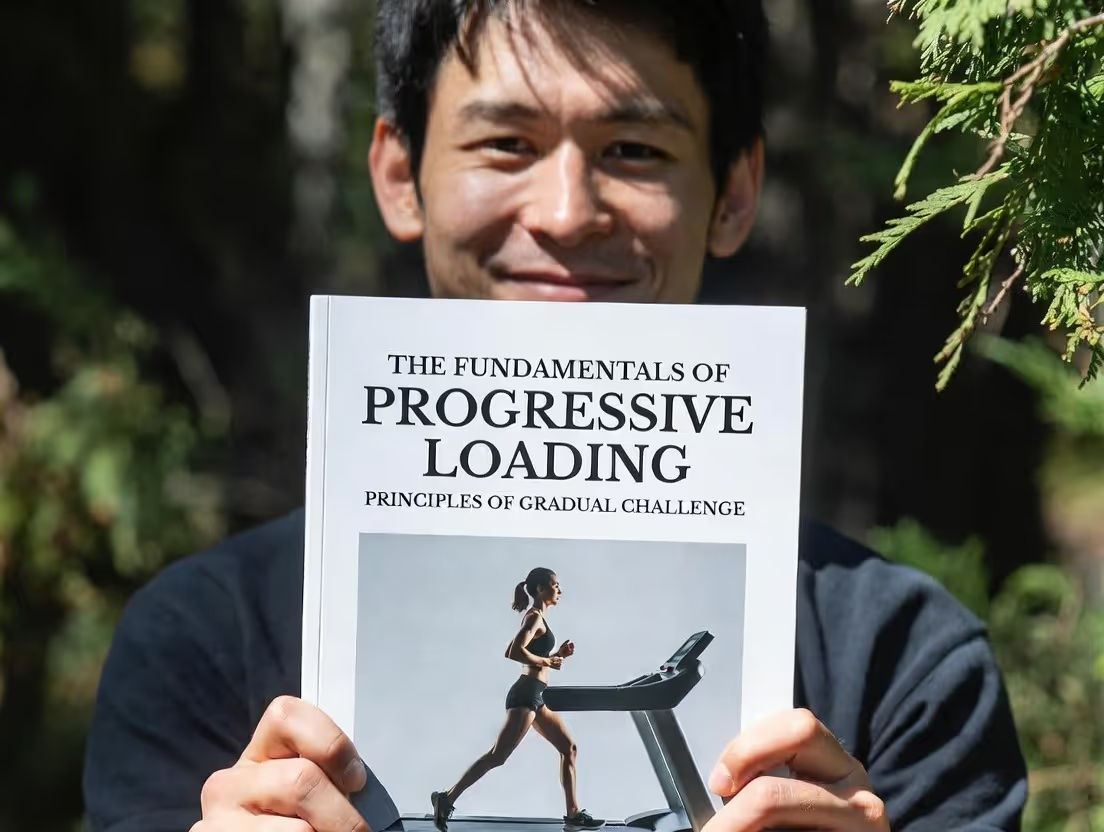
With a clear map of your stress landscape in hand, you are ready to begin the training itself. The central engine of the Progressive Exposure Method is the principle of Progressive Load—a concept borrowed directly from strength and endurance sports. You would not try to bench press 300 pounds on your first day in the gym. You start with a manageable weight that challenges you without causing injury, and you gradually increase the load over time as your muscles adapt.
The same strict, respectful logic applies to building stress tolerance. The goal is to find the "just-manageable challenge"—the level of stress that nudges you slightly outside your comfort zone but not into the panic zone.
The Three Zones of Stress Exposure:
Applying Progressive Load to Stress:
Let’s say your mapped stressor is "having difficult feedback conversations with direct reports." Your panic zone might be "giving annual performance reviews to the whole team." Your comfort zone is "avoiding all feedback." The progressive load plan might look like this:
The Critical Rules of Progression:
This disciplined approach ensures the process is safe, sustainable, and effective. It turns the abstract concept of "facing your fears" into a measurable, scientific training regimen. The power lies not in the intensity of the exposure, but in the consistency and gradualism of the practice.
If Progressive Loading is the hardware of the method—the structured plan—then Cognitive Reappraisal is the essential software. It is the mental skill that allows you to reinterpret a stressor, changing its emotional impact and determining whether an experience lands in the Growth Zone or the Panic Zone. Without this skill, exposure is just exposure; with it, exposure becomes transformative training.
Cognitive reappraisal is based on the core insight of cognitive-behavioral therapy (CBT): it is not events themselves that disturb us, but the views we take of them. The same event—a missed deadline—can be framed as a catastrophic failure (triggering panic) or as a valuable learning opportunity about planning (triggering focused problem-solving).
During your Progressive Exposure exercises, you are not just enduring the stressor; you are actively practicing reappraisal in real-time. Here’s how:
1. Labeling and De-centering.
When you feel the physiological signs of stress (noted in your mapping phase), the first step is to label the experience without judgment: "Ah, my heart is racing and my shoulders are tight. This is my stress response activating." This simple act of naming it engages the prefrontal cortex and creates a small gap between you and the reaction. It de-centers the experience from being "who you are" to being "a state you are observing."
2. Challenge the Catastrophic Narrative.
Our stressed minds love worst-case scenarios. Reappraisal asks for evidence. "My boss wants to talk unexpectedly. My thought is, 'I'm in trouble.' What is the actual evidence for that? The evidence against? What is a more likely, balanced perspective? Perhaps she needs a quick update or has a new opportunity." This is not naive positivity; it’s disciplined realism.
3. Reframe from "Threat" to "Challenge."
This is the most powerful shift. A threat mindset focuses on potential loss, harm, and your inadequacy ("I might fail and look stupid"). A challenge mindset focuses on potential gain, mastery, and your resources ("This is difficult, and I have skills to meet it. This is a chance to grow"). Research shows that viewing stress as a challenge fundamentally alters the physiological response, leading to a healthier cardiovascular profile and better performance.
4. Find the Purpose or Value.
Connect the stressful situation to a deeper value. "This difficult conversation is stressful, but it aligns with my value of being an honest and supportive leader." "This tight deadline is anxiety-provoking, but it serves my goal of contributing to an important project." Stress with purpose is called eustress—the positive, motivating form of stress.
5. Practice Self-Compassion.
Reappraisal isn't just about the event; it's about your relationship with yourself in the midst of it. Instead of "I shouldn't be feeling this way," try "This is hard, and it's understandable that I'm feeling stressed. I'm doing my best to handle it." Self-compassion has been shown to lower cortisol and increase resilience.
By weaving these reappraisal techniques into your graduated exposures, you are doing double-duty training: you’re desensitizing the amygdala and building stronger, more adaptive neural pathways in the prefrontal cortex. You are literally installing new mental software for processing adversity. This cognitive work is what turns a stressful event from a trauma into a training session.
To see how real people apply these principles in their lives with the aid of technology, explore the transformative experiences shared in our Testimonials section.
If Progressive Exposure is the "stress" part of the stress-recovery cycle, then Strategic Recovery is the non-negotiable other half. This is the phase where growth is physically cemented. Without deliberate, high-quality recovery, exposure leads not to anti-fragility, but to breakdown. Think of recovery not as passive rest, but as an active, skilled practice that optimizes the gains from your training.
Recovery happens on multiple timescales, and the Progressive Exposure Method requires you to become a master of all of them.
Micro-Recovery (Seconds to Minutes): The Breath and the Pause.
This is the practice of inserting tiny pockets of parasympathetic activation throughout your day, especially during or immediately after a controlled exposure.
Mezzo-Recovery (Hours): The Deliberate Detachment.
This is about creating clear boundaries between "stress exposure" time and "replenishment" time.
Macro-Recovery (Daily & Weekly): Sleep and Rhythm.
This is the foundation. Nothing is more critical for resilience than sleep.
Using Data to Guide Recovery:
This is where a tool like the Oxyzen ring moves from being an interesting tracker to an essential coach. By monitoring your HRV and sleep data, you get an objective answer to the most important recovery question: "Am I recovered enough for my next exposure?"
If your HRV is trending downward and your deep sleep is low, that’s a signal from your body to prioritize recovery, perhaps by making your next exposure lighter or taking an extra recovery day. You learn to trust your body’s signals over your mind’s ambition. This prevents overtraining and ensures every exposure is productive.
Strategic Recovery transforms the cycle from a haphazard oscillation between burnout and collapse into a deliberate, rhythmic dance of challenge and renewal. It is the practice of teaching your nervous system that safety and rest are always available, making it more willing to engage bravely with challenge.

Let's move from theory to concrete application. One of the most pervasive modern stressors is cognitive overload—the feeling of having too much to think about, decide, and remember—coupled with uncertainty. This manifests as procrastination, mental fatigue, anxiety about the future, and difficulty focusing. Here’s how to apply Progressive Exposure to build tolerance in this domain.
Step 1: Map Your Cognitive Stressors.
Identify specific triggers: Is it an overflowing email inbox? A complex project with no clear starting point? Making high-stakes decisions with incomplete information? Multitasking demands? Log the moments you feel mentally overwhelmed and note the accompanying thoughts ("I'll never get through this," "I don't know what to do").
Step 2: Design a Progressive Loading Plan.
The exposure here is to stay engaged with the cognitively demanding task without escaping into distraction or avoidance. Start small.
Step 3: Monitor and Recover.
After a cognitive exposure session, note your mental state. Did you feel a sense of accomplishment? Or mental exhaustion? Use your biometrics: did a focused work session spike your stress readings, and how quickly did they come down during your break? Your recovery from cognitive stress might involve true mental detachment—a walk without a podcast, a period of daydreaming, or a tactile hobby that occupies your hands but not your planning mind.
Social threats are processed by the brain with similar intensity to physical threats. Fear of rejection, criticism, conflict, or being misunderstood can trigger profound stress. Building tolerance here is crucial for healthy relationships and professional success.
Step 1: Map Your Social-Emotional Stressors.
What interactions drain you or cause dread? Public speaking? Asserting a boundary? Receiving criticism? Navigating conflict? Attending large social gatherings? Be specific about the context and the feared outcome ("If I say no, they'll be angry," "If I speak up, I'll sound foolish").
Step 2: Design a Progressive Loading Plan.
The exposure is to engage authentically while managing the internal arousal.
Step 3: Monitor and Recover.
Social and emotional exposures can be particularly draining because they engage multiple brain networks. Recovery here is often about solitude and sensory quiet. After a significant social exposure, schedule time alone to decompress. Physical recovery practices like gentle yoga, a bath, or time in nature can help the nervous system discharge the heightened arousal. Monitor your sleep after emotional exposures—you may need more of it to fully process the experience.
The ultimate goal of the Progressive Exposure Method is not to complete a finite "program," but to integrate its principles into the fabric of your daily life, transforming your default relationship with challenge. It becomes a lens through which you view the world and a set of automatic responses. This is the habit of anti-fragility.
Shifting Your Identity: From "Stress-Avoider" to "Resilience-Builder."
This is the deepest level of change. Instead of thinking "How can I get rid of this stress?" you begin to ask:
You start to see minor daily hassles—a traffic jam, a misplaced item, a change of plans—not as annoyances, but as micro-exposure opportunities. You can practice patience, cognitive flexibility, and equanimity in these small moments, building your baseline resilience without extra time commitment.
Creating a Personal "Stress Gym" Routine.
Just as you might schedule physical workouts, you can create a light structure for resilience training:
The Role of Community and Support.
Resilience is not built in isolation. Sharing your Progressive Exposure goals with a trusted friend, coach, or community can provide accountability, normalization, and support. It can be incredibly powerful to hear others’ experiences and to reframe challenges collectively. For a community of individuals focused on data-driven wellness and growth, the stories and support found through platforms like ours can be invaluable. Engage with others who are on a similar journey by exploring the shared experiences on our blog.
Embracing the Lifelong Journey.
Building stress tolerance is not a destination with a finish line. Life will always present new, unexpected challenges. The Progressive Exposure Method equips you with a permanent framework for meeting them. There will be periods where you need to prioritize recovery, periods where you can push growth, and periods of consolidation. The method, guided by your own self-awareness and physiological data, gives you the tools to navigate these seasons intelligently.
You are moving from a life spent trying to calm the storm, to a life spent learning to dance in the rain. And eventually, to building a stronger ship.
The modern quest for productivity has often led us astray, championing hustle over harmony and busyness over brilliance. Yet, peak performance—whether in focused analysis or creative ideation—is not a product of force, but of flow. Psychologist Mihaly Csikszentmihalyi defined flow state as the optimal experience of being fully immersed, energized, and focused in an activity, to the point where time seems to dissolve. While skill and challenge level are intrinsic to entering flow, our physical workspace is the critical, and often overlooked, stage upon which this state either emerges or is stifled. Designing an environment for flow means engineering out distractions and engineering in cues that signal to your brain, “It’s time to dive deep.”
A flow-conducive workspace is the antithesis of the stereotypical, chaotic “genius’s mess.” Research indicates that visual disorder directly competes with the focused attention required for flow. Instead, the principles of the tokonoma and mindful possession are applied with a specific purpose: to facilitate sustained, undivided attention. This is your Flow State Floorplan.
The Four Pillars of a Flow Workspace:
The impact of such a designed environment is quantifiable. You’ll likely find you can achieve in 90 minutes of flow what might otherwise take a fragmented four hours. The downstream effect on stress is profound. The anxiety of looming deadlines dissipates when you are confidently making progress. The frustration of constant interruption is eliminated. You finish a work session feeling accomplished, not depleted.
This is where biometrics offer fascinating validation. During a true flow state, the nervous system often exhibits a unique signature: a lowered heart rate coupled with high focus (contrary to the elevated heart rate of stress). By reviewing your data after a deep work session in your optimized space, you might see a pattern of stable, low heart rate variability (indicating focused attention on a single task, not stress) followed by a positive recovery period. It’s concrete proof that your environmental design is not just about comfort—it’s about enabling a higher, more sustainable state of performance that inherently reduces work-related stress. To explore more data-backed strategies for performance and recovery, our resource library is available; you can explore our blog for more wellness tips on achieving balance.
We often compartmentalize organization as a static endeavor—a state of being tidy. And we see movement as its own separate category of wellness: exercise. But this is a false dichotomy. There is a profound, kinetic relationship between the way we move through our spaces and the stress we feel. An organized environment facilitates healthy, efficient movement, and conversely, mindful movement can be a powerful tool for creating and maintaining order. This synergy, the Kinetics of Calm, reveals that our physical navigation of space is a direct dialogue with our nervous system.
Consider the experience of a morning in a disorganized home. You move from room to room in a staccato, inefficient pattern: a zigzag to the kitchen around a chair piled with clothes, a detour to search for shoes, a pause to move a stack of mail to plug in your phone. This movement is reactive, wasteful, and jarring. It’s a physical manifestation of cognitive clutter. Each unnecessary step and minor obstacle is a micro-stressor, subtly elevating tension in the body. It’s movement as friction.
Now, envision an organized home. Movement becomes fluid and intentional. You walk a clear path to the kitchen. Your shoes are by the door. Your charging station is clear. Your journey through your morning routine has a graceful, economical flow. This is movement as ease. This kind of movement is inherently calming. It mirrors the state of a relaxed body and mind. It’s what architects and designers refer to as functional flow—the design of spaces to support the natural sequences of human activity.
Applying Kinetic Principles for Stress Relief:
The interplay here is powerful. Organization removes kinetic friction, reducing the low-grade physical irritation of daily life. This calms the body. A calmer body, in turn, has more energy and patience for the gentle movement that maintains order, creating a virtuous cycle. Biometric wearables can track this cycle’s output. You may notice that on days when your movement is more fluid (less time sedentary, more spontaneous activity), your stress scores are lower, even if you didn’t have a formal workout. The ring tracks the outcome of a life in kinetic flow. It highlights how an organized environment isn’t just about what you see—it’s about how you effortlessly, calmly move. For support in interpreting how daily activity patterns relate to overall stress, our FAQ and support resources can provide helpful insights.
Our exploration has traversed the tangible: clearing desks, silencing notifications, designing flow spaces. But the ultimate power of organization and environmental control lies in its intangible, transformative effect on our very sense of self. This is the Legacy of Order—the understanding that the daily practice of curating your environment is not merely a management technique, but an active process of identity formation and a potent antidote to a deep, modern anxiety: existential stress.
Existential stress arises from feelings of meaninglessness, lack of control, and the overwhelming pressure of infinite possibility. In a world offering endless choices in careers, possessions, and lifestyles, the paralysis of “What should I do? Who should I be?” can be debilitating. A chaotic environment amplifies this stress by providing a constant, physical metaphor for internal confusion. It screams, “You can’t manage this small space; how can you possibly manage your life?”
Intentional organization flips this script. By making deliberate choices about what to keep, what to discard, and how to structure your surroundings, you are engaging in a continuous dialogue about your values and priorities. Every time you choose to donate clothes that no longer suit you, you are clarifying your present identity. When you design a reading nook instead of leaving a corner as a dumping ground, you are prioritizing reflection and learning. Your environment becomes a mirror, not of who you think you should be, but of who you are and who you are becoming. This process fosters self-authorship.
Consider the profound psychological shift:
This integrated identity is the bedrock of resilience. When external storms hit—a professional setback, a personal loss—you have a core self, reflected and reinforced by your environment, to which you can anchor. Your organized home is a physical sanctuary. Your clear mind, trained through managing information, is a mental sanctuary. This reduces the terrifying, floating anxiety of existential stress by providing tangible, daily proof of your agency and purpose.
The legacy you build is twofold. First, it’s a legacy for your future self—a life where less energy is spent on managing chaos, and more is available for creativity, connection, and contribution. Second, it’s a legacy for those around you, modeling a life of intention and calm. Your organized space and controlled environment become a gift of peace to your family, a platform for collaboration to your colleagues, and a testament to a different way of being.
Tracking this journey with a device like the Oxyzen ring provides a longitudinal narrative of growth. Over months and years, the aggregated data tells a story not just of better sleep and lower stress scores, but of a nervous system that is increasingly resilient, capable of deeper recovery, and less reactive to minor stimuli. It is the biometric signature of a life moving from fragmentation to integrity. To understand the long-term vision behind creating technology that supports this holistic journey, you can delve into the company information and mission that drives such innovation.
We have laid a comprehensive foundation, exploring the multifaceted relationship between our external environments and our internal state of stress. From the neuroscience of clutter to the psychology of control, from creating sensory sanctuaries to designing for kinetic flow, the evidence is clear and compelling: our surroundings are not passive backdrops. They are active, dynamic forces that can either deplete us or empower us.
We’ve learned that stress relief through organization is not about achieving a sterile, magazine-perfect aesthetic. It is about the deliberate, ongoing practice of creating zones of control—in your physical space, your digital world, your sensory inputs, your time, and your relationships. It is about reducing the cognitive and kinetic friction that drains your energy and amplifies anxiety. Each clear surface, each managed notification, each designated home for your belongings is a vote for a calmer nervous system and a more resilient mind.
This journey is deeply personal. What brings calm to one person may feel sparse to another. The key is mindful experimentation, using both your subjective feeling and, where possible, objective biometric feedback to discover what works for your unique biology and lifestyle. The Oxyzen smart ring or similar technology serves as a invaluable companion on this path, transforming intuition into insight and effort into evidenced-based progress.
You now possess the framework and the tools to begin. Start small. Establish your first tokonoma. Conduct a digital notification purge. Implement a weekly review. Observe the shifts, both in your mood and in your physical sense of ease. Remember, the goal is not perfection, but progression—a steady movement toward a life where your environment consistently supports your well-being, rather than sabotaging it.
In the next portion of this guide, we will build upon this foundation. We will delve into advanced applications of these principles, exploring topics such as:
The path to lasting stress relief is a path of intentional creation. You have begun by learning to curate your immediate world. Continue with us as we expand this vision, building a life where calm is not an occasional escape, but your everyday reality.
Life is not static. It is a series of transitions—some chosen, some thrust upon us. A new job, a move, the arrival of a child, an empty nest, a career pivot, retirement. Each transition, whether joyful or daunting, brings with it a tidal wave of stuff, both physical and mental, that can overwhelm our carefully built systems and plunge us back into chaos-induced stress. The key to navigating these periods with grace, rather than grief, lies in proactive transition design. This is the practice of applying organizational principles not just to a stable life, but to the architecture of change itself, creating adaptable systems that flex with you instead of fracturing under pressure.
Transition stress is unique. It combines the cognitive load of learning new routines with the emotional weight of the change itself, all while your physical environment is often in flux. A disorganized move, an unprepared nursery, a cluttered home office for a new remote job—these become more than inconveniences; they are amplifiers of the inherent anxiety of the unknown.
Principles of Proactive Transition Design:
By designing for transition, you reclaim agency during a time that can feel uncontrollable. You exchange reactive scrambling for proactive sequencing. The physiological benefit is clear: you replace the sustained high cortisol of chronic disorganization with the sharper, shorter cortisol spikes of specific, completed tasks, followed by recovery. Your wearable data during a well-planned transition should show stress peaks and valleys related to activity, rather than a sustained, weeks-long plateau of high stress. It’s the difference between riding waves and being dragged by the undertow.
Our discussion of environmental control has so far focused on the human-made: our possessions, our digital files, our furniture arrangements. But there is a master class of organization that existed long before human ingenuity—the natural world. Biophilia, the hypothesis that humans possess an innate tendency to seek connections with nature, is not merely poetic; it’s physiological. Integrating natural elements and patterns into our built environments—Biophilic Design—is one of the most powerful yet underutilized tools for stress relief. It is organization on an ecological scale, bringing the inherent, calming order of nature indoors to regulate our frantic, modern nervous systems.
The stress-reducing effects of nature exposure are well-documented: lower blood pressure, reduced cortisol, improved mood, and enhanced cognitive restoration. But you don’t need a daily forest bath to reap these benefits. Biophilic design principles allow you to curate micro-doses of nature that deliver macro impacts on calm.
Core Biophilic Strategies for Stress Relief:
Organizing your space with biophilia in mind is the ultimate form of sensory sanitation. You are curating sensory inputs that your nervous system is evolutionarily primed to interpret as safe and restorative. The stress reduction is not just psychological; it’s a biological homecoming.
When you combine this with biometric tracking, the synergy is compelling. You might notice that your afternoon stress dip is deeper on days you’ve worked by a sunlit window surrounded by plants, compared to days in a windowless conference room. Your sleep data might show more stable heart rates when your bedroom features natural materials and allows for total darkness. It provides a data-driven reason to invest in that fiddle-leaf fig or those linen sheets—they’re not just decor; they’re stress-management infrastructure. For more ideas on creating a holistic, restorative home environment, you can explore our blog for more wellness tips that blend technology and nature.
Life’s calm seas are inevitably punctuated by storms—a family crisis, a critical work deadline, personal illness. These high-stress periods are when our hard-won organizational systems are most vulnerable to collapse. Yet, they are also when we need the cognitive clarity and saved energy these systems provide the most. The solution is not to hope for the best, but to build organizational resilience—a blueprint for stress-proofing your environments and routines so they can bend, not break, under pressure. This involves designing systems with built-in redundancy, simplicity, and grace, transforming them from fair-weather friends into storm-season allies.
A resilient system acknowledges that during high stress, your executive function and willpower are depleted. Therefore, the systems must run on autopilot as much as possible.
Elements of the Resilience Blueprint:
Wearable data is crucial here for both prevention and recovery. By monitoring your stress and sleep scores, you can often see a crisis building before your conscious mind acknowledges it. A sustained rise in resting heart rate or a drop in HRV can be your early warning signal to activate your Resilience Blueprint—to simplify meals, enforce digital boundaries, and lean on your emergency defaults. Conversely, the data provides objective markers of recovery, showing you when your nervous system has truly returned to baseline, guiding you to gradually resume your full routines. This turns organizational resilience from a theoretical concept into a bio-feedback-informed practice. For support in setting up these kinds of personalized alerts and interpretations, our FAQ and support resources can be a valuable guide.
Our pursuit of environmental control cannot end at our private property lines. The stress we experience is collective, fed by chaotic public spaces, inefficient community design, and a lack of shared sanctuaries. Expanding the principles of organization and biophilic design to the meso-environment—our shared workplaces, libraries, parks, and neighborhoods—represents a powerful frontier for public health and communal well-being. Designing for collective calm is about creating spaces that reduce ambient stress and foster pro-social behavior, making the healthy choice the easy choice for everyone.
The impact of poorly designed shared spaces is profound. Open-plan offices with no acoustic control create chronic noise stress. Parks devoid of seating or shade offer no refuge. Civic buildings with confusing layouts induce anxiety and frustration. When our shared environments are stressful, they deplete our individual resilience reserves before we even get home.
Principles for Designing Lower-Stress Shared Spaces:
Advocating for and participating in this level of environmental design shifts the focus of stress relief from a purely private responsibility to a shared public good. When your commute is along a tree-lined bike path, your workplace offers a quiet pod for focused work, and your local park is a haven, your individual capacity for managing life’s challenges expands. The stress you don’t have to manage because your community has already managed it for you is the most profound stress relief of all.
This vision aligns with a broader philosophy of wellness that sees technology and community as partners. Just as a smart ring helps an individual understand their internal environment, civic technology and participatory design can help communities understand and optimize their shared external environment. To see how a focus on holistic well-being extends beyond the individual, you can learn about the brand journey and vision that seeks to connect personal data with a larger purpose of collective health.
We stand at the precipice of a revolution in environmental control. The future moves beyond passive organization and reactive adjustments into the realm of predictive, responsive environments—spaces that learn from our biometrics and automatically adapt to support our nervous systems in real-time. This is the convergence of the Internet of Things (IoT), artificial intelligence, and biometric wearables like the Oxyzen ring, creating a seamless feedback loop between our internal state and our external world. The goal is no longer just to design a calm space, but to create a living space that actively orchestrates calm.
Pillars of the Predictive Calm Environment:
This future is not about technology for technology’s sake; it’s about technology in service of human biology. The core principles remain—reducing friction, controlling sensory input, creating sanctuary—but the execution becomes dynamic, personalized, and effortless. The smart ring transitions from a tracker to a conduit, a translator between your body’s silent language and your environment’s capacity to respond.
Of course, this future requires thoughtful design to avoid new forms of digital stress or privacy concerns. The focus must remain on user sovereignty, transparent data use, and systems that empower rather than enslave. The ultimate promise is an environment that acts as a true extension of our self-care, not as another thing to manage. It represents the final stage of environmental control: a symbiotic relationship where our spaces don’t just hold us, they hold space for us, adapting in real-time to nurture our well-being. To understand the pioneering work being done at this intersection of wellness and technology, you can discover how Oxyzen works and its role in this emerging ecosystem of smart, responsive health.
We have journeyed from the microscopic—the neuroscience of clutter—to the macroscopic—the future of smart, responsive ecosystems. The throughline is undeniable: the spaces we inhabit, from our minds to our homes to our communities, are the most consistent and powerful mediators of our stress response. The path to relief is not a single, monumental act, but the intentional, daily practice of curating control across all these domains.
This final synthesis is your personalized roadmap. It is not a prescriptive to-do list, but a strategic framework to audit, design, and iterate upon your own life. Think of it as composing your unique Symphony of Calm, where each section of the orchestra—your physical space, your digital life, your body, your time, your relationships—plays in harmony.
Phase 1: The Audit – Listening to the Current Noise (Week 1-2)
Phase 2: The Design – Composing the Score (Week 3)
Phase 3: The Implementation – The First Rehearsal (Week 4-6)
Phase 4: The Iteration – Conducting and Refining (Ongoing)
The Ultimate Metric: Ease, Not Perfection
Your roadmap’s success is not measured by a spotless home or an empty inbox. It is measured by a subjective, visceral metric: increased ease. It’s the feeling of breathing freely in your own home. It’s the absence of the morning scramble. It’s the ability to find what you need without thinking. It’s the energy you have leftover at the end of the day for joy, not just recovery.
This is a lifelong practice of alignment. There will be backslides—after a trip, during a crisis, in a busy season. The resilient systems you’ve built and the self-knowledge you’ve gained (especially when augmented by biometric feedback) will allow you to recalibrate quickly, without self-judgment. You are not seeking a static state of order, but a dynamic equilibrium with your environment.
You now possess the knowledge—the science, the psychology, and the strategies—to build a life where your surroundings are allies in your well-being. The journey from stress to serenity is, in large part, a journey from chaos to composed spaces. Begin with a single, clear corner. The calm will follow.
Your Trusted Sleep Advocate: Sleep Foundation — https://www.sleepfoundation.org
Discover a digital archive of scholarly articles: NIH — https://www.ncbi.nlm.nih.gov/
39 million citations for biomedical literature :PubMed — https://pubmed.ncbi.nlm.nih.gov/
Experts at Harvard Health Publishing covering a variety of health topics — https://www.health.harvard.edu/blog/
Every life deserves world class care :Cleveland Clinic - https://my.clevelandclinic.org/health
Wearable technology and the future of predictive health monitoring :MIT Technology Review — https://www.technologyreview.com/
Dedicated to the well-being of all people and guided by science :World Health Organization — https://www.who.int/news-room/
Psychological science and knowledge to benefit society and improve lives. :APA — https://www.apa.org/monitor/
Cutting-edge insights on human longevity and peak performance:
Lifespan Research — https://www.lifespan.io/
Global authority on exercise physiology, sports performance, and human recovery:
American College of Sports Medicine — https://www.acsm.org/
Neuroscience-driven guidance for better focus, sleep, and mental clarity:
Stanford Human Performance Lab — https://humanperformance.stanford.edu/
Evidence-based psychology and mind–body wellness resources:
Mayo Clinic — https://www.mayoclinic.org/healthy-lifestyle/
Data-backed research on emotional wellbeing, stress biology, and resilience:
American Institute of Stress — https://www.stress.org/


