


Stress Tracking for Athletes: Optimizing Training and Recovery
For athletes, tracking stress helps balance training load with recovery to prevent overtraining and optimize performance.
For athletes, tracking stress helps balance training load with recovery to prevent overtraining and optimize performance.
%402x.svg)
For an athlete, the final seconds on the clock, the roar of the crowd, and the singular focus on the finish line represent the culmination of a lifetime of effort. We see the grueling training sessions, the meticulous nutrition plans, and the obsessive pursuit of physical perfection. But what about the silent, invisible force that can derail it all? The force that lurks not in the muscles or lungs, but in the nervous system, dictating performance from behind the scenes. That force is stress.
For decades, athletic training has been a game of external metrics: weight lifted, miles run, seconds shaved off a personal best. Recovery was measured by soreness, and readiness was a gut feeling. But we stand at the precipice of a revolution, one where the most significant gains are no longer found in the weight room, but in the intricate, data-rich landscape of our physiological state. This is the era of biohacking the athlete, of moving beyond counting reps to understanding the body’s deepest signals of strain and resilience.
At the heart of this revolution is a deceptively simple question: What if you could quantify your stress, not as a vague feeling of being “worn out,” but as a precise, physiological dataset as clear as your heart rate or sleep duration? What if you could see, in real time, the exact toll a brutal training block takes on your nervous system, or measure how effectively your recovery protocol is working? This isn't science fiction. It's the new frontier of athletic optimization, powered by continuous, non-invasive biometric tracking.
This article is your guide to that frontier. We will dismantle the monolithic concept of “stress” and rebuild it as the most critical performance metric you’re not tracking. We will explore how modern technology, particularly the advent of sophisticated smart rings like those pioneered by Oxyzen, is making this deep physiological insight accessible 24/7. We’ll journey through the science of the stress response, decode the biomarkers of strain, and provide a actionable framework for integrating stress data into every facet of your training and life. Welcome to the future of performance, where the ultimate advantage is self-knowledge.

To master stress, you must first understand it. Far from being merely a mental state, stress is a full-body, hardwired physiological cascade known as the "fight-or-flight" response. Orchestrated by the sympathetic nervous system (SNS) and a symphony of hormones led by cortisol, this system is your body's ancient, brilliant survival mechanism.
When your brain perceives a threat—whether it’s a predator, a looming deadline, or a heavy barbell—the hypothalamus sounds the alarm. It signals the pituitary gland, which in turn commands the adrenal glands to release adrenaline (epinephrine) and cortisol. Adaline provides the instant surge: heart rate and blood pressure skyrocket to pump oxygen-rich blood to muscles, pupils dilate for heightened awareness, and non-essential systems like digestion are temporarily shut down. Cortisol, the "stress hormone," follows up to maintain this state. It increases blood sugar for quick energy, alters immune system responses, and suppresses functions deemed non-essential in a crisis.
For an athlete, this system is a double-edged sword. In the short term, it’s performance-enhancing. That pre-race jitters that sharpen your focus? That’s the SNS. The surge of power needed for a final sprint? Thank adrenaline. Acute stress is the spark that ignites peak performance.
The danger lies in chronic activation. When the body is constantly bathed in cortisol—due to relentless training, poor sleep, nutritional deficits, or life pressures—the system never resets. The parasympathetic nervous system (PSN), responsible for "rest-and-digest" functions, is suppressed. This leads to a state of systemic inflammation, impaired tissue repair, reduced glycogen storage, and disrupted sleep architecture. It’s a physiological debt that eventually must be paid, often in the currency of injury, illness, burnout, or overtraining syndrome (OTS).
The key distinction for the modern athlete is this: All stress is cumulative. Your body doesn’t differentiate between the stress of a 20-mile run, an argument with a coach, or financial anxiety. It all flows through the same physiological pipeline, adding to your allostatic load—the wear and tear on the body from repeated stress. To optimize performance, you must account for the total load, not just the training load. The first step in doing that is learning to listen to your body’s specific stress signals, a task where subjective feeling falls short and objective data becomes indispensable.
For years, athletes have used heart rate as a proxy for effort. While valuable, resting heart rate (RHR) and heart rate variability (HRV) are just the tip of the iceberg in the stress-biomarker landscape. Today, we can assemble a holistic picture by tracking a constellation of interlinked physiological signals.
1. Heart Rate Variability (HRV): The Gold Standard of Autonomic Balance
HRV measures the subtle variations in time between consecutive heartbeats, controlled by the constant tug-of-war between the sympathetic (stress) and parasympathetic (recovery) nervous systems. A higher HRV typically indicates greater parasympathetic activity, resilience, and recovery readiness. A downward trend in your HRV baseline is one of the clearest early warnings of excessive stress, insufficient recovery, or impending illness. It’s a sensitive, non-invasive window into your autonomic nervous system’s state.
2. Resting Heart Rate (RHR): The Body's Basal Metric
A elevated resting heart rate, especially upon waking, can be a straightforward sign that your body is under strain. The SNS is keeping your "engine" idling higher than normal, diverting energy from repair and rebuilding.
3. Skin Temperature & Peripheral Blood Flow
Chronic stress and sympathetic activation cause vasoconstriction—the narrowing of blood vessels in the extremities to preserve core blood volume. This leads to cooler skin temperature, particularly in the fingers and toes. Continuous temperature tracking can reveal these subtle shifts, indicating a prolonged stress state even when you feel calm.
4. Electrodermal Activity (EDA) or Galvanic Skin Response (GSR)
This measures tiny changes in the skin’s electrical conductivity, which increases with sweat. Sweat gland activity is directly controlled by the sympathetic nervous system. Spikes in EDA can signal acute stress events—physical or emotional—providing a tangible log of when your body’s alarm system was triggered throughout the day and night.
5. Nocturnal Biomarkers: The Truth Revealed in Sleep
Sleep is when the parasympathetic system should dominate and the real work of recovery happens. Therefore, sleep is not just recovery; it’s the most honest diagnostic window for stress.
The power lies not in any single metric, but in their correlation. A day of hard training might see a temporary dip in HRV. But if that dip coincides with a higher RHR, cooler skin temperature, and restless sleep, you have a multi-faceted, irrefutable picture of a significant stress load. This is the kind of nuanced understanding that moves you from guessing to knowing. For a deeper dive into the science behind these biomarkers and how they are measured, our blog features ongoing research and expert insights.

Ignoring the cumulative load of stress isn't just a suboptimal strategy; it's a direct path to athletic derailment. The consequences are not abstract; they are clinical, predictable, and often devastating to a career.
Overtraining Syndrome (OTS): The Point of No Return
OTS is not simply being tired after a hard week. It’s a severe, maladaptive stress response where the body loses its ability to recover from training stimuli. The line between highly trained and overtrained is crossed when stress overwhelms resilience. Symptoms are systemic:
The Injury Connection: Stress as the Weakest Link
Stress directly compromises the tissues you’re trying to strengthen. Cortisol breaks down collagen, the essential protein in tendons, ligaments, and bone. Elevated stress impairs proprioception (your body’s spatial awareness), coordination, and fine motor control. A fatigued, stressed central nervous system leads to poor movement patterns and technical breakdowns. The result? You become exponentially more susceptible to stress fractures, tendonitis, and non-contact musculoskeletal injuries. The “freak accident” is often the final failure in a chain of events that began with unmanaged physiological strain.
Burnout: The Flame That Goes Out
Burnout is the psychological and emotional correlate to OTS. It’s characterized by emotional exhaustion, depersonalization (a cynical detachment from your sport), and a reduced sense of accomplishment. An athlete experiencing burnout doesn’t just need a rest day; they need a reconnection to their purpose. Chronic physiological stress is a primary driver of this state, depleting the neurotransmitters and neural energy required for passion and grit.
The Real-World Example: Consider a collegiate swimmer in peak training. She’s logging 10,000 meters a day, her RHR is up 8 bpm, her HRV has been trending down for two weeks, and her sleep data shows plummeting deep sleep. Subjectively, she feels “flat” but pushes through, attributing it to hard work. This is the critical window. Without this data, she and her coach likely increase volume, seeking a breakthrough. With this data, they have an objective mandate to pivot: to deload, prioritize sleep, and address life stressors. This data-driven intervention could prevent a season-ending case of shoulder tendonitis or mononucleosis. This is the power of seeing the invisible adversary before it lands a knockout blow.
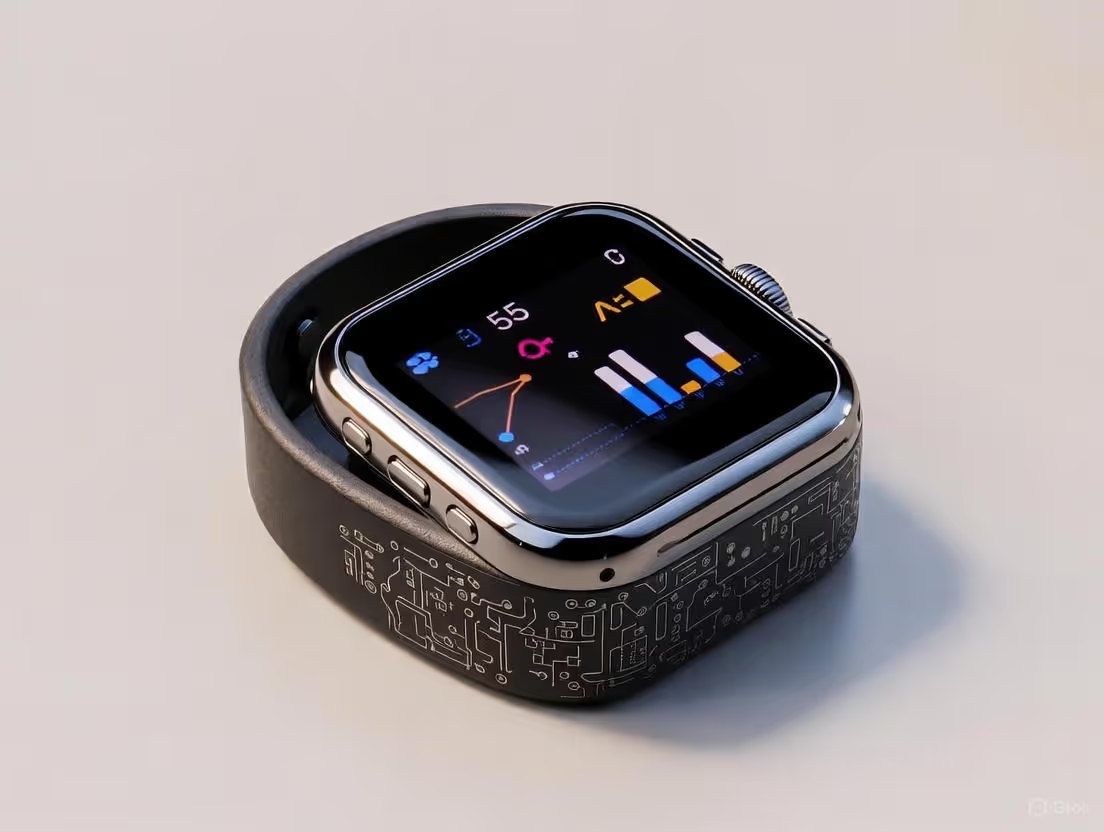
How do you capture this rich, continuous stream of physiological data without turning an athlete’s life into a clinical study? Wrist-based wearables have been the go-to, but they come with limitations: bulkiness, skin irritation, and the "wrist flip" problem where movement can corrupt data. The breakthrough has come from an unexpected form factor: the smart ring.
A device like the Oxyzen smart ring represents a paradigm shift in personal biometrics. Worn on the finger, it leverages unique advantages that make it ideal for the serious athlete:
1. The Optimal Vascular Access Point:
The palmar digital arteries in the finger provide a strong, clean photoplethysmogram (PPG) signal for measuring heart rate, HRV, and blood oxygen. The fit is naturally snug, minimizing motion artifact that plagues wrist devices during sleep or intense activity.
2. True 24/7 Wearability:
A ring is unobtrusive, lightweight, and safe for nearly all activities, including contact sports (with appropriate protection). You can wear it swimming, sleeping, and lifting without a second thought. This enables truly continuous monitoring, capturing your body’s story not just during a workout, but during the critical 22+ hours of recovery and daily life that determine your readiness for the next session.
3. A Multi-Sensor Hub in a Tiny Package:
Advanced rings pack a suite of medical-grade sensors into a sleek band:
4. The Power of Baselines and Trends:
The magic isn't in a single data point; it’s in the longitudinal baseline. A smart ring learns your normal. It establishes personalized ranges for your HRV, RHR, and temperature. Deviations from these baselines become meaningful alerts, not just abstract numbers. Seeing that your nighttime respiratory rate is 2 breaths per minute higher than your personal average after a travel day is profoundly more actionable than a generic sleep score.
This technology democratizes the kind of physiological insight once reserved for labs. It moves data collection from the occasional snapshot to a feature-length film of your body’s inner workings. For athletes and coaches, this isn't a gadget; it's an essential piece of athletic intelligence infrastructure. To understand the philosophy behind creating such a seamless and powerful tool, you can explore the vision and mission that drives Oxyzen.
Data is useless without interpretation. A dashboard full of graphs can be overwhelming. The goal is to translate raw biometrics into a simple, daily answer to the most important question: "Am I ready to perform, or do I need to recover?"
The "Readiness Score" Concept:
Many platforms synthesize key metrics (like HRV, RHR, sleep quality, and temperature) into a single, easy-to-grasp Readiness or Recovery Score. While helpful as a quick glance, the savvy athlete looks under the hood. Don’t just follow the score; understand why it is what it is. Did a low score come from poor sleep, or from a deliberately brutal training session that your body is effectively responding to? Context is king.
Establishing Your Personal Baseline:
You cannot interpret deviations if you don’t know your norm. This requires consistent wear (especially during sleep) for at least 2-4 weeks during a period of normal, healthy training and life. This establishes your unique fingerprint.
The Art of Trend-Spotting:
Actionable Triggers:
Create simple, personal rules based on your data. For example:
This framework turns abstract data into a dynamic conversation with your body. It replaces the coach’s (or your own) potentially biased “gut feel” with an objective, physiological dialogue. For athletes who often struggle with the fine line between dedication and overreach, this data provides a permission structure for rest that is backed by science, not just sentiment.
Modern training is built on the principle of periodization—the systematic planning of athletic training to peak for key events. It involves cycling through phases of stress (loading) and recovery (deloading). Historically, these cycles were based on the calendar. Now, with biometrics, we can evolve to bio-periodization: structuring training based on the athlete’s physiological state.
From Fixed Blocks to Fluid Adaptation:
A traditional 3-week loading / 1-week deloading schedule assumes all athletes recover at the same rate. We know this is false. Stress data allows for autoregulation.
Daily Micro-Adjustments:
The daily readiness assessment directly informs session planning.
Peaking and Tapering with Precision:
The taper—the reduction in training volume before a competition—is an art. Cut too much, and you lose fitness. Cut too little, and you’re fatigued. Biometric data provides the perfect guide. The goal of a taper is to see a marked, sustained rebound in HRV and sleep quality, and a drop in RHR. The athlete and coach can adjust the taper in real-time until those biomarkers hit their optimal personal peaks, signaling the body is fully recovered, super-compensated, and primed for peak performance.
Long-Term Planning and Fatigue Management:
By tracking biomarkers across an entire season, you can identify patterns. Does the athlete consistently show strain after travel? Do certain types of workouts (e.g., high-volume eccentric) create a longer recovery shadow? This historical data becomes invaluable for planning the next season’s calendar, managing travel, and selecting training modalities that maximize adaptation while minimizing systemic stress.
This integration represents a fundamental shift from coach-driven to athlete-centered programming. The plan is a living document, responsive to the most important input: the athlete’s own physiology. It fosters a partnership where the athlete brings concrete data to the conversation, empowering a collaborative and truly optimized training journey.

If stress is the accelerator, sleep is the most powerful brake in the athletic system. It is not passive rest; it is an anabolic, reparative, and regulatory state essential for reversing the damage of stress. Therefore, tracking sleep isn't optional—it's the cornerstone of stress management.
Sleep Architecture Under Stress:
As we’ve touched on, chronic sympathetic activation destroys sleep quality. You may be in bed for 8 hours, but the data reveals the truth:
Biomarkers of Nocturnal Recovery:
Your smart ring provides a detailed autopsy of your night:
Actionable Sleep Hygiene for Athletes:
Data highlights the problem; discipline provides the solution. Based on biometric feedback, athletes must prioritize:
When your sleep scores are high, you can handle more stress. When they dip, it’s your first signal to pull back on training and double down on recovery protocols. Think of sleep not as downtime, but as your most important training session of the day. For a comprehensive look at optimizing this critical pillar, including user-tested strategies, our blog is an ever-growing resource.
The food you eat is more than fuel for your muscles; it is the raw material for your stress-response machinery and the rebuilding process. Under physical strain, nutritional demands skyrocket. Poor nutrition amplifies the stress response, creating a vicious cycle.
The Cortisol-Nutrition Axis:
Chronic stress and elevated cortisol directly impact metabolism:
Dietary Strategies to Bolster Stress Resilience:
Hydration: The Fluid of Recovery
Dehydration is a potent physiological stressor. Even mild dehydration (~2% body weight loss) elevates cortisol, increases heart rate, reduces blood volume, and impairs thermoregulation and cognitive function.
Using Data to Inform Nutrition:
Your biometrics provide feedback on your nutritional strategies. Notice that your sleep HRV is consistently higher on days you consume a nutrient-dense meal post-training? Or that your RHR is lower when you’re diligent about electrolytes? This turns nutrition from a generic prescription into a personalized, data-validated protocol. The goal is to eat in a way that not only powers performance but actively dampens the stress response and accelerates the return to homeostasis.
The body's stress response is exquisitely blind to the source of the threat. The cortisol spike from a missed penalty kick is chemically identical to the spike from a heavy squat. For the athlete, psychological and emotional stressors are not separate from training stress; they are additive components of the allostatic load.
Sources of the Hidden Load:
How Biometrics Reveal the Hidden Load:
This is where continuous tracking becomes a powerful psychological tool. You may think you’ve handled a stressful argument or a tough exam, but your physiology tells the truth.
This objective data serves two crucial purposes:
Managing the Mental Load:
By acknowledging and measuring the hidden load, you take a holistic approach to stress management. You stop fighting a war on one front while ignoring an invasion on another. The most prepared athlete is the one who tends to both body and mind with equal rigor.
An athlete’s stress load exists within an ecosystem. The environment you inhabit and the daily habits you keep either compound or alleviate your total strain. These factors are the background noise that can drown out your training signal if left unchecked.
1. Travel & Circadian Disruption:
Jet lag is a massive stressor, directly disrupting cortisol rhythms, sleep, and digestion. Even domestic travel with time zone changes matters. Biometric tracking is invaluable here: it objectively shows how long it takes your body to resynchronize. This data should dictate when you schedule your first hard training session post-travel, not an arbitrary 48-hour rule.
2. Training Environment:
3. Daily Habits & Rhythms:
Using Data to Engineer Your Environment:
The continuous nature of ring-based tracking allows you to run experiments.
By treating your lifestyle as a series of modifiable variables, you become the engineer of your own resilience. The biometric feedback loop allows you to identify which environmental factors are your personal "leaks" and patch them systematically. This turns the chaotic world into a more manageable performance environment. If you have specific questions about how to manage these lifestyle factors with technology, our FAQ section addresses many common user scenarios.
Knowledge is only power if it leads to action. The culmination of tracking, interpreting, and understanding your stress is the creation of a personalized, dynamic resilience protocol. This is your playbook for not just weathering stress, but thriving because of it.
Your protocol should have three tiers: Daily Maintenance, Proactive Recovery, and Emergency Response.
Tier 1: Daily Maintenance (The Non-Negotiables)
These are the habits you uphold regardless of what your data says, to maintain your baseline resilience.
Tier 2: Proactive Recovery (Data-Informed Adjustments)
When your data shows a "Yellow Light," you deploy these targeted tactics.
Tier 3: Emergency Response (The "Red Light" Protocol)
When biomarkers scream for a break, you have a pre-defined plan to avoid making poor decisions in a fatigued state.
The Role of Technology in Your Protocol:
Your smart ring is the dashboard for this entire system. It provides the early warning lights (Tier 2 triggers) and the blaring alarms (Tier 3 triggers). It also gives you the positive feedback when your protocol is working, showing the rebound in your metrics. This positive reinforcement is crucial for maintaining the discipline of recovery.
Iterate and Personalize:
Your protocol is a living document. As you learn more from your data—what works for you, what your unique stress signature is—you refine it. This is the essence of becoming a student of your own body. It’s the journey from being a passive recipient of training plans to being an active, informed architect of your own performance and health. To see how others have successfully built their own protocols and transformed their training, the real-world stories in our testimonials are powerfully instructive.
The journey through understanding and managing athletic stress culminates not in a state of avoidance, but of mastery. The goal is not a stress-free life—an impossibility for any competitor—but a state of stress resilience, where you can absorb, adapt to, and grow from the demands of training and life. By now, you understand that this resilience is not a vague mental trait; it is a physiological capacity that can be measured, trained, and optimized. The athlete who integrates this deep self-knowledge gains an almost unfair advantage: the ability to train at the very edge of their capacity without falling over it, to recover faster, and to perform with greater consistency. This is the true future of sport—a marriage of human willpower with empirical, personalized physiological intelligence.
This portion of our exploration delves into the practical application and forward-looking implications of this paradigm. We move from theory to advanced implementation, examining case studies, the role of the modern coach, and the ethical horizon of this powerful technology. We’ll also confront common pitfalls and answer the pressing questions athletes and coaches have as they embark on this data-driven journey.
Theory is compelling, but real-world application is convincing. Let’s examine how stress tracking principles manifest across different athletic disciplines, highlighting the unique stressors and strategic adaptations for each.
Endurance Athletes (Marathoners, Triathletes, Cyclists):
For the endurance athlete, volume is king, but it’s also the primary antagonist. The physical stress of high-mileage weeks is immense, compounded by the need for meticulous glycogen and electrolyte management.
Strength & Power Athletes (Weightlifters, Sprinters, CrossFit):
Here, the stress is more neurological and hormonal. Sessions are shorter but far more intense, placing huge demands on the central nervous system (CNS) and causing significant muscle damage.
Team Sport Athletes (Soccer, Basketball, Football):
The stress profile is mixed and chaotic: combining endurance, power, skill, and high cognitive load. Add in travel schedules, tactical pressure, and competition for starting positions, and the stress load is multifaceted.
The Martial Artist/Combat Sport Athlete:
A unique blend of weight management, impact stress, and acute fight-or-flight simulation. The stress of cutting weight is a massive, specific physiological insult.
Across all sports, the common thread is personalization and prevention. The data provides an objective, shared language between athlete and coach, replacing assumptions with evidence. For more detailed explorations of sport-specific applications, our resource library at the Oxyzen blog is continually updated with findings from the field.
The influx of biometric data fundamentally transforms the traditional coach-athlete dynamic. It shifts the relationship from a hierarchical "command-and-control" model to a collaborative "data-informed partnership." The coach becomes less of a drill sergeant and more of an expert interpreter and guide, while the athlete becomes an active, informed participant in their own development.
The New Role of the Coach: Interpreter and Context-Provider
A coach’s expertise in physiology, periodization, and psychology is now augmented by data literacy. Their critical role is to:
The Empowered Athlete: From Passive Recipient to Informed Agent
With access to their own biometrics, the athlete gains agency. They move from simply executing a program to understanding why it’s structured that way and how their body is responding.
Building a Data-Informed Culture (For Teams):
For team sports, this requires a cultural shift. Data must be presented as a tool for support and optimization, not for selection punishment. Transparency about how data will and will not be used is critical to gain athlete trust. The most successful environments use data to answer the athlete’s question: "How can this help me perform better and stay healthier?" The story of how leading sports organizations have navigated this shift is a fascinating one, reflecting a broader evolution in performance philosophy that you can learn more about here.
The smart ring is a powerhouse of passive, continuous data collection. But its true potential is unlocked when its data is integrated into a broader ecosystem of training, planning, and analysis tools. This creates a centralized dashboard for your entire athletic life.
Primary Integrations:
The "Single Source of Truth" Dashboard:
The goal is to avoid data silos. Imagine a coach’s dashboard that shows for each athlete:
With this view, decision-making becomes rapid, informed, and holistic. The ring is the foundational, always-on sensor feeding the most critical recovery metrics into this system. For technical guidance on achieving these integrations and making your data work seamlessly together, our FAQ section provides step-by-step support.
As with any powerful tool, there are ways to misuse biometric data. Awareness of these pitfalls is essential to stay on the path of productive optimization.
1. Chasing Numbers, Not Feeling:
Becoming obsessed with achieving a "perfect" HRV score or sleep score is itself a stressor. The data is meant to inform your lived experience, not replace it. If your data says "green" but you feel terrible, listen to your body. The data may be missing context (e.g., an impending illness the metrics haven’t yet caught). Use data as one input among many.
2. Overreacting to Acute Fluctuations:
Daily metrics are noisy. A single day of low HRV is meaningless. Trends are truth. A common mistake is making drastic program changes based on one bad day of data. The protocol should be responsive to sustained trends (3-5 days), not daily blips.
3. Misattributing the Stress Source:
Data tells you the "what," not the "why." A sustained low HRV trend could be from overtraining, but it could also be from a hidden infection, a new medication, dehydration, or emotional distress. The athlete and coach must play detective, using the data as a clue to investigate root causes, not assume the cause is always training load.
4. Neglecting Subjective Feedback:
The subjective markers—mood, motivation, energy, muscle soreness—are vital cross-references. A declining readiness score coupled with rising subjective fatigue is a strong signal. A declining score with high subjective energy might indicate you’re fighting an infection. Always pair the objective with the subjective.
5. Comparing Your Biomarkers to Others:
HRV is highly individual. Comparing your 45 ms to a teammate’s 80 ms is futile and anxiety-producing. What matters is your baseline and your deviations from it. Focus on intra-individual trends, not inter-individual comparisons.
6. Forgetting the Big Picture:
The ultimate goal is performance, not perfect biomarkers. There will be times—during a dedicated overreaching block or final competition taper—where the metrics will look "bad" by design. The coach’s expertise is crucial in distinguishing between productive, planned strain and dangerous, maladaptive strain.
By sidestepping these pitfalls, you ensure that the technology serves you, not the other way around. It becomes a lens for clarity, not a source of noise.
The technology we discuss today is merely the foundation. The frontier of athletic biometrics is advancing at a breathtaking pace, promising even deeper layers of insight and personalization.
1. Continuous, Non-Invasive Blood Biomarker Analysis:
The holy grail is tracking biomarkers like cortisol, testosterone, creatine kinase (muscle damage), and inflammatory markers (CRP) in real-time, without a blood draw. Research into spectroscopic sensors that can analyze interstitial fluid is progressing rapidly. Imagine your ring alerting you to a rising cortisol-to-testosterone ratio, signaling the need for a deload, before performance drops.
2. Advanced Glucose & Metabolic Monitoring:
While continuous glucose monitors (CGMs) exist, their integration into wearable form factors like a ring is imminent. For athletes, understanding real-time glucose dynamics in relation to training, sleep, and stress will revolutionize fueling strategies and metabolic health optimization.
3. Neurological & Cognitive Load Monitoring:
Future sensors may measure metrics like prefrontal cortex activity (focus/fatigue) or combine EDA/HRV with eye-tracking to assess cognitive workload during film study or complex tactical training. This could help optimize not just physical recovery, but mental recovery as well.
4. Predictive Analytics and AI Coaching:
As datasets grow, machine learning algorithms will become incredibly adept at predicting outcomes. An AI could analyze your last 90 days of training, sleep, stress, and performance data and predict your risk of injury in the next 14 days with high accuracy, suggesting pre-habilitation exercises. It could also generate truly personalized training variations in real-time based on your live biometric feed during a workout.
5. Emotional State Inference with Greater Fidelity:
While current EDA measures arousal, future multi-modal sensor fusion (combining PPG, EDA, temperature, and voice analysis from a paired device) could more accurately differentiate between types of stress—e.g., anxiety vs. excitement—providing even more nuanced mental health and performance insights.
These advancements will further blur the line between athlete and biohacker, between training and precision medicine. The core principle will remain: using objective data to make subjective decisions about human potential better. Staying abreast of these trends is key for any forward-thinking athlete or coach, a topic we frequently explore in depth on our company blog.
With great data comes great responsibility. The pervasive collection of intimate physiological data raises significant ethical questions that athletes, coaches, and organizations must proactively address.
Informed Consent and Ownership:
Athletes must fully understand what data is being collected, how it will be used, who will have access to it, and how long it will be stored. They must retain ultimate ownership of their personal biometric data. Data should be an asset that empowers the athlete, not a surveillance tool for the organization.
The Pressure to "Optimize" and the Right to Disconnect:
There is a risk that constant monitoring creates a culture of hyper-optimization where any deviation from perfect metrics is seen as a failure. Athletes must feel psychologically safe to have "bad data" days without fear of reprisal or losing standing. They must also have the right to occasionally disconnect from monitoring without stigma—to simply be a person, not a data stream.
Use in Selection and Contractual Decisions:
This is the most sensitive area. Should biometric data be used to make selection decisions or inform contract negotiations? Most ethicists argue it should not be used punitively. Its primary purpose should be health, performance, and longevity optimization. If data reveals an athlete is at high injury risk, the ethical response is to protect and adjust their load, not to bench them indefinitely. Policies must be clear, transparent, and co-created with athlete representation.
Data Security and Privacy:
The data collected is highly sensitive health information. Companies and teams must employ enterprise-grade encryption, anonymization where possible, and strict access controls. Athletes deserve to know their most personal information—their sleep patterns, their stress responses—is not vulnerable to leaks or misuse.
The Role of the Company:
As a creator of this technology, a company’s ethical framework is paramount. At Oxyzen, our commitment is to build tools that enhance human agency and well-being. We believe in transparent data practices, user-owned data, and designing products that provide insight without inducing anxiety. You can read more about our core principles and commitment to ethical innovation in our company story and values.
Navigating this new landscape requires a balance between the relentless pursuit of excellence and the fundamental respect for the individual athlete’s autonomy and health. The most successful environments of the future will be those that get this balance right.
The ultimate promise of mastering stress through data is not just a single season of personal bests, but the elongation and enrichment of an athletic career. It’s about moving from a model of "peak, break, repeat" to one of sustainable high performance.
From Peaking to Plateauing of Excellence:
Traditional models often burn athletes out in dramatic peaks and valleys. Stress intelligence allows for the management of load across a season, a year, and a career to create a higher, more stable performance plateau. The goal shifts from being the best you can be this Saturday to being the best you can be for the next decade.
Injury Prevention as Career Capital:
Every major injury is a withdrawal from an athlete’s career capital—taking time, confidence, and often physical capability. By using biomarkers as early warning systems for overuse and systemic fatigue, athletes can make small, proactive adjustments that prevent catastrophic withdrawals. This proactive health management is an investment in career longevity.
The Post-Competition Transition:
The data-driven understanding of one’s own physiology is a gift that keeps giving beyond competitive years. The athlete transitions into their next phase of life with a deep literacy in their body’s signals, setting them up for a lifetime of health, fitness, and well-being. They don’t lose their connection to their physical self when the uniform comes off.
The Mindset Shift: Strength in Recovery:
Perhaps the most profound cultural shift is redefining toughness. In the old paradigm, toughness was pushing through pain and ignoring signals. In the new paradigm, true toughness is the discipline to recover. It’s having the confidence to back off when the data suggests it, trusting that this intelligent restraint is what will allow for greater expression of power later. This mindset protects against the bravado that ends careers prematurely.
This long-view approach transforms an athlete from a short-lived comet burning brightly across the sky into a enduring star, consistently shining through intelligent self-management. The stories of athletes who have successfully made this transition, extending their careers and impact, are among the most inspiring testaments to this approach, many of which are shared by our community in their own words.
Embarking on this journey can feel overwhelming. This step-by-step guide for the first 30 days will help you build a solid, stress-free foundation for using your new biometric tool.
Days 1-7: The Baseline Phase – Observe, Don't Judge
Days 8-21: The Correlation Phase – Connect the Dots
Days 22-30: The Implementation Phase – Make One Change
Key Takeaways for Month One:
This phased approach prevents data anxiety and builds a meaningful, lasting relationship with your physiological intelligence. It’s the first step in a lifelong journey of optimized performance and health. For any technical questions that arise during this start-up phase, remember that a comprehensive FAQ and support system is always available.
Having established the foundational science, technology, and framework for athletic stress tracking, we now delve into the nuanced, high-resolution application of this knowledge. This is where theory meets the granular details of daily life, where the macro view of periodization fractures into a thousand micro-decisions about fuel, restoration, and mindset. The athlete who excels here understands that championship performances are not built in the hour of competition, but in the twenty-three hours of deliberate recovery and preparation that surround it. This portion of our guide illuminates the path to mastering those critical hours.
We will explore how to periodize nutrition not just around training, but around your physiological stress state. We will critically analyze the plethora of modern recovery tools, separating science from hype with the help of your biometric data. Most importantly, we will tackle the profound psychological journey of integrating data into your identity as an athlete—learning to use numbers as a guide without letting them define your worth. Finally, we will scale these principles from the individual to the team, creating a culture of shared resilience.
Nutrition is often periodized around training: pre-workout fuel, intra-workout hydration, post-workout repair. But what if we periodized it around our autonomic state? Eating for your stress state means adjusting your nutritional intake not just based on what you did, but based on what your biomarkers say you need to recover and adapt.
The Three Nutritional Protocols Based on Readiness:
1. The "Green Light / High Resilience" Protocol (Ready to Perform)
2. The "Yellow Light / Strained" Protocol (Proceed with Caution)
3. The "Red Light / Depleted" Protocol (Recovery Priority)
Using Your Ring for Nutritional Biofeedback:
This is where the feedback loop becomes powerful. After implementing a "Yellow Light" protocol for two days, do you see your HRV begin to rebound and your sleep deep sleep increase? That’s a successful nutritional intervention. Did that "cheat meal" high in processed sugar and fat correlate with a sharp dip in HRV and a restless night? That’s objective learning. Your biometrics turn nutrition from a belief system into an evidence-based practice. For ongoing research into nutritional biohacking for athletes, our blog features cutting-edge insights from sports dietitians and physiologists.
The modern athlete has access to a dizzying array of recovery tools: cryotherapy, compression, PEMF, infrared saunas, float tanks, and more. Marketing claims are abundant, but does your body actually benefit? Your biometric data is the ultimate arbiter, allowing you to conduct personal efficacy trials.
Evaluating Modalities with Your Personal Data:
The protocol is simple: Baseline → Intervention → Measurement.
Analysis of Common Modalities:
1. Cryotherapy (Whole Body or Localized):
2. Infrared Sauna:
3. Pneumatic Compression (e.g., NormaTec):
4. PEMF (Pulsed Electromagnetic Field) Therapy:
5. Floatation Therapy (Sensory Deprivation):
The Verdict from Your Fingertip:
The "best" recovery tool is the one that moves your biomarkers in the right direction. For one athlete, cryotherapy might be a powerful reset. For another, it might be counterproductive. The data ends the guesswork. By spending wisely on modalities that your body objectively responds to, you invest in true recovery, not just placebo. Sharing these personal findings with your community can be incredibly valuable, a practice we see often in the real-user experiences shared in our testimonials.
This may be the most critical chapter in the modern athlete's playbook. When your worth as a competitor becomes entangled with a daily HRV number or sleep score, you have entered dangerous territory. The technology's greatest strength—objectivity—can become a psychological trap if not managed wisely.
The Pitfall of "Metric Morality":
This is the subconscious belief that a high HRV makes you a "good" athlete (disciplined, tough, dedicated) and a low HRV makes you a "bad" one (lazy, weak, failing). This is a distortion. Biomarkers are information, not evaluation. They are a weather report of your internal physiology, not a report card on your character.
Strategies for Psychological Balance:
1. Adopt a Scientist's Mindset, Not a Judge's.
Reframe your relationship to the data. You are an experiment of one, collecting data. A low score is not a failure; it’s a fascinating data point that demands inquiry. "Fascinating, my HRV is low. What variables changed yesterday? Let's investigate." This cultivates curiosity over criticism.
2. Embrace the "Why" Over the "What."
When you see a negative trend, immediately pivot from "This is bad" to "What is this telling me I need?" A low readiness score isn't a condemnation; it’s a prescription for more sleep, better nutrition, or a lighter day. It’s your body’s way of communicating its needs in a language you can finally understand.
3. Set Data Boundaries.
4. Reconnect with the "Feel."
Use the data to become more attuned to your body, not less. When you see a low HRV, close your eyes and scan your body. Do you feel a specific fatigue? A mental fogginess? Over time, the data will train your interoception (sense of internal state). The goal is for your subjective feeling and the objective data to become aligned, so you eventually need the data less.
5. Share the Burden with Your Coach or Support Network.
Having a trusted person to discuss the data with can externalize the pressure. A coach can say, "I see the strain, let's adjust," taking the decision out of your hands and alleviating the guilt or anxiety you might feel about "backing off."
The mentally resilient data-driven athlete uses technology as a lighthouse—a guide in the fog of fatigue and effort. They never mistake the lighthouse for the shore; it simply helps them navigate safely to their own destination. Understanding this balance is core to our philosophy at Oxyzen, where we design for empowerment, not obsession.
Scaling stress intelligence from an individual pursuit to a team-wide culture is the next evolution in sports performance. It moves beyond managing individual athletes to optimizing the collective health and output of the entire squad. This requires a systematic, sensitive, and transparent approach.
Pillars of a Resilient Team Culture:
1. Education as Foundation:
Before any data is collected, educate everyone—athletes, coaches, medical staff, and management—on the why. Explain the science of cumulative stress, the goal of injury prevention and career longevity, and the non-punitive nature of the program. Use phrases like "performance optimization" and "health protection," not "surveillance" or "compliance monitoring."
2. Transparency and Co-Creation of Policy:
Athletes must be part of designing the program’s rules. How will data be used? (e.g., for individual feedback and load modification). How will it not be used? (e.g., not for game-day selection or contract negotiations, except in clear, pre-defined health-safety scenarios). This builds trust and ownership. The policy must be written and agreed upon.
3. The "Traffic Light" System for Training Design:
This system removes stigma; it’s a physiological classification, not a judgment of toughness. The team learns that being "yellow" is a normal, managed part of high performance, not a sign of weakness.
4. Aggregate Data for Organizational Intelligence:
While individual data is private, anonymized, aggregate data is gold for the performance staff.
5. Celebrating Recovery as a Team Value:
Publicly praise the discipline of recovery. Highlight athletes who, based on their data, made the smart choice to take an extra rest day and came back stronger. Make "listening to your body" (with data as the translator) a celebrated team virtue, as important as hard work.
Creating this culture is a long-term investment in both performance and the human capital of the organization. It signals to athletes that the team cares about their long-term health and career, fostering loyalty and a more sustainable, successful environment. The journey to build such an environment is challenging but transformative, echoing the core vision and values that guide our own mission.
In the data-informed model, the roles of the sports medicine doctor, physical therapist, athletic trainer, strength coach, and sport scientist converge into an integrated Performance Health Team. The athlete’s continuous biometric data stream becomes the shared patient chart, enabling proactive and collaborative care.
The Integrated Performance Health Dashboard:
Imagine a secure dashboard where:
Proactive Interventions Replacing Reactive Treatment:
The "Translator" Role:
A key role within this team is a Data Translator—often the sport scientist—who can explain the biomarker trends to the coach in simple terms and to the medical staff in clinical terms. They facilitate the conversation: "The athlete's low HRV correlates with their subjective knee irritation. The PT recommends lowering plyometric volume this week, which should help both."
This model creates a wrap-around support system where the athlete is seen as a whole person. Care is no longer siloed; the stress on the knee is understood in the context of the stress on the nervous system. This is the future of high-performance healthcare. For those interested in the professional side of this integration, our about section details our collaborations with performance experts.
Your Trusted Sleep Advocate: Sleep Foundation — https://www.sleepfoundation.org
Discover a digital archive of scholarly articles: NIH — https://www.ncbi.nlm.nih.gov/
39 million citations for biomedical literature :PubMed — https://pubmed.ncbi.nlm.nih.gov/
Experts at Harvard Health Publishing covering a variety of health topics — https://www.health.harvard.edu/blog/
Every life deserves world class care :Cleveland Clinic - https://my.clevelandclinic.org/health
Wearable technology and the future of predictive health monitoring :MIT Technology Review — https://www.technologyreview.com/
Dedicated to the well-being of all people and guided by science :World Health Organization — https://www.who.int/news-room/
Psychological science and knowledge to benefit society and improve lives. :APA — https://www.apa.org/monitor/
Cutting-edge insights on human longevity and peak performance:
Lifespan Research — https://www.lifespan.io/
Global authority on exercise physiology, sports performance, and human recovery:
American College of Sports Medicine — https://www.acsm.org/
Neuroscience-driven guidance for better focus, sleep, and mental clarity:
Stanford Human Performance Lab — https://humanperformance.stanford.edu/
Evidence-based psychology and mind–body wellness resources:
Mayo Clinic — https://www.mayoclinic.org/healthy-lifestyle/
Data-backed research on emotional wellbeing, stress biology, and resilience:
American Institute of Stress — https://www.stress.org/


