How Technology Aids Sleep Improvement (The Right Tools)
The right technology includes apps for wind-down routines, smart lights for circadian alignment, and trackers for trend data—not disruptive screens in bed.
How Technology Aids Sleep Improvement (The Right Tools)
Sleep. We chase it, crave it, and often sacrifice it. In our relentless, always-on world, a good night’s rest has become a modern luxury, a fragile commodity in the digital age. Yet, its importance is undeniable. Sleep is the foundation upon which our cognitive clarity, emotional resilience, and physical health are built. It’s when our bodies repair, our brains consolidate memories, and our hormonal systems reset. Without it, everything frays at the edges.
For decades, our approach to sleep was passive, governed by guesswork and vague notions of “eight hours.” We’d lie in the dark, wondering why we felt exhausted despite being in bed long enough, or why we woke up feeling unrefreshed. The answers remained shrouded in mystery, locked away in the silent, private theater of the night.
But a revolution is underway. We are no longer flying blind. A new paradigm has emerged, powered by a convergence of neuroscience, consumer electronics, and data analytics. Technology, often blamed for our sleep deprivation with its blue light and endless notifications, is now leading the charge to reclaim our rest. It provides the right tools—not just to measure, but to understand, personalize, and ultimately, master our sleep.
This journey into the nocturnal self is no longer the sole domain of sleep labs with their intimidating polysomnography machines. The power to decode your sleep architecture—the intricate dance of light sleep, deep sleep, REM sleep, and awakenings—now rests on your wrist, under your mattress, or even on your finger. From advanced wearables that track your biometrics in stunning detail to ambient sensors that curate your sleep environment, we have entered an era of hyper-personalized sleep optimization.
This article is your definitive guide to navigating this landscape. We will move beyond generic advice and explore how specific technologies act as levers you can pull to influence your sleep quality. We’ll dissect the science behind the sensors, demystify the data they provide, and provide a clear framework for choosing and using the right tools to build your perfect night. Whether you’re a biohacker seeking marginal gains or someone simply desperate for a solid block of restful sleep, understanding this technological ecosystem is the first step toward waking up transformed.
The promise is profound: to move from hoping for good sleep to engineering it.
The Silent Epidemic: Understanding Our Modern Sleep Crisis
Before we can appreciate the solution, we must grasp the scale of the problem. We are in the midst of a global sleep deficit, a silent public health epidemic with roaring consequences. The Centers for Disease Control and Prevention (CDC) has declared insufficient sleep a public health problem, with an estimated 1 in 3 adults not getting the recommended minimum of 7 hours per night. This isn’t merely about feeling groggy; it’s a systemic issue eroding our collective well-being.
The roots of this crisis are woven into the fabric of modern life. Our circadian rhythms—the internal 24-hour clock that dictates our sleep-wake cycle—are under constant assault. We spend our days indoors under artificial lighting, depriving our brains of the bright, blue-rich morning light needed to set our clocks correctly. Then, at night, we inundate our eyes with the same blue spectrum from smartphones, tablets, and laptops, tricking our pineal gland into suppressing melatonin, the very hormone that signals “sleep time” to our bodies.
Compounding this is chronic stress, the ever-present background hum of modern existence. Stress activates the sympathetic nervous system (our “fight or flight” response), releasing cortisol. When cortisol levels are elevated at night, it’s a biological contradiction; the body is primed for alertness, not rest. Furthermore, our diets, sedentary lifestyles, and irregular schedules create a perfect storm that fragments and lightens our sleep.
The cost is staggering, both personally and societally. On a cognitive level, sleep deprivation impairs attention, working memory, long-term memory, and logical reasoning. It’s akin to operating with a mentally drunk brain. Emotionally, it reduces our resilience, heightens negative emotional reactions, and diminishes our capacity for empathy and connection.
Physiologically, the effects are even more dire. Consistently shortchanging sleep is linked to a significantly increased risk for:
Obesity and Type 2 Diabetes: Sleep affects hormones that regulate hunger (ghrelin) and fullness (leptin).
Cardiovascular Disease: Poor sleep is associated with higher blood pressure, inflammation, and unhealthy cholesterol levels.
Weakened Immune Function: Sleep is when the immune system releases cytokines, proteins that fight infection and inflammation.
Mental Health Disorders: There is a powerful, bidirectional relationship between sleep and conditions like anxiety and depression.
The old adage “I’ll sleep when I’m dead” is not a badge of honor; it’s a dangerous prescription. Recognizing that our environment and habits are fundamentally at odds with our biology is the first step. The next step is to deploy targeted strategies—and tools—to fight back. This isn’t about adding more to our plates, but about using intelligent technology to create boundaries, generate insights, and automate recovery in a world designed to prevent it.
For a deeper look at how one company is approaching holistic wellness in this strained environment, you can explore the mission behind Oxyzen.
From Counting Sheep to Counting Data: The Quantified Sleep Revolution
The journey to better sleep begins with awareness. You cannot manage what you do not measure. This simple principle of optimization, long applied to fitness and nutrition, has finally come to the nocturnal realm, giving birth to the “Quantified Sleep” movement. We’ve moved far beyond the basic pedometer step count; we are now tracking the very architecture of our rest.
This revolution started with basic activity trackers that used movement (actigraphy) to guess at sleep and wake states. While a start, these were notoriously inaccurate—lying still while watching TV could be misread as sleep. The true breakthrough came with the integration of multi-sensor systems and advanced algorithms.
Modern sleep technology gathers a symphony of biometric data:
Heart Rate (HR) and Heart Rate Variability (HRV): This is the cornerstone of advanced sleep staging. As you transition from wakefulness to light sleep, deep sleep, and REM sleep, your heart rate and the subtle variations between beats (HRV) follow distinct, measurable patterns. Deep sleep is typically marked by a slow, steady heart rate and higher HRV, while REM sleep, where dreaming occurs, shows a faster, more variable heart rate similar to being awake.
Movement and Accelerometry: While not used in isolation, movement data helps confirm transitions, identify periods of restlessness, and detect full awakenings.
Skin Temperature: Nocturnal body temperature regulation is crucial for sleep initiation and maintenance. A drop in core temperature helps signal sleep onset. Some devices track this trend to provide insights into circadian timing.
Blood Oxygen Saturation (SpO2): Measured via photoplethysmography (PPG)—using light on the skin to detect blood volume changes—this can help identify events like sleep apnea, where breathing repeatedly stops and starts.
Respiratory Rate: The number of breaths per minute is another key vital sign that changes predictably across sleep stages and can flag disturbances.
By fusing these data streams with machine learning algorithms trained on millions of hours of clinical and user sleep data, today’s tools can generate a detailed hypnogram—a graph of your sleep stages throughout the night. This transforms a black box into a transparent, analyzable process.
Waking up to a dashboard that shows you spent 1 hour and 42 minutes in deep sleep, achieved 4 cycles, and had a sleep efficiency score of 94% is empowering. It replaces vague feelings of “I slept okay” with objective metrics. This data becomes the foundational language for your sleep improvement journey. It allows you to ask precise questions: Did that late coffee affect my deep sleep? How did my intense evening workout impact my sleep latency? Did the stress of that work project show up in my elevated resting heart rate?
This quantitative approach demystifies sleep and makes it a tangible, improvable aspect of your health. For those curious about the different types of devices that generate this data, from rings to pads, our blog offers detailed comparisons and guides to help you navigate the options.
The Wearable Guardians: Smartwatches, Fitness Bands, and the Rise of the Smart Ring
When most people think of sleep tracking, they picture a wearable device. This category has evolved rapidly, splitting into distinct sub-categories, each with its own strengths and trade-offs for the sleep-focused user.
Smartwatches & Fitness Bands: Devices from Apple, Fitbit, Garmin, and Whoop dominate this space. They are powerful, multi-function tools that sit on the wrist.
Strengths: They offer comprehensive daytime activity tracking, robust smartphone integration, and, in many cases, extensive third-party app ecosystems. The data is often presented in engaging, easy-to-understand interfaces.
Sleep-Specific Trade-offs: The wrist is a dynamic location. Movement artifacts can sometimes confuse algorithms. For some users, sleeping with a watch can feel bulky or uncomfortable, potentially affecting sleep itself. The need for frequent charging (often daily) also means you might forget or skip a night of tracking.
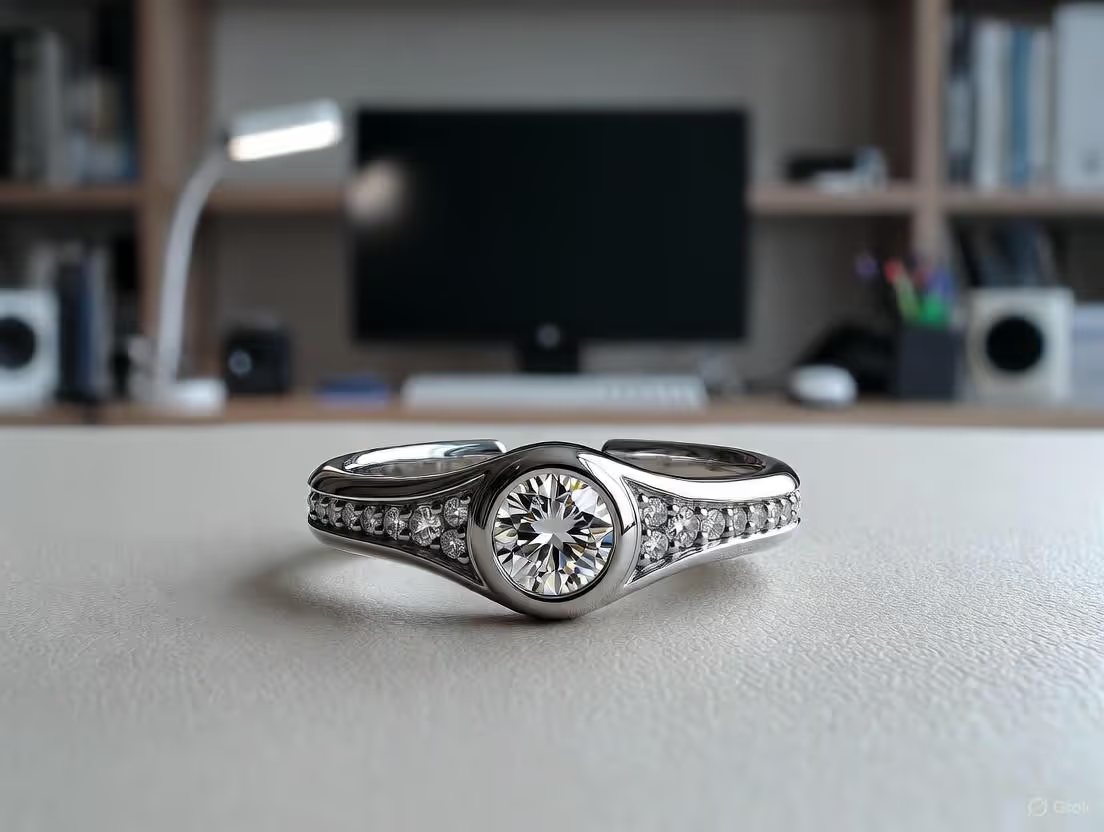
The Rise of the Smart Ring: This is where the landscape gets particularly interesting for the dedicated sleep optimizer. Devices like the Oura Ring, the Circular Ring, and others represent a paradigm shift in wearable design philosophy.
The Form Factor Advantage: The finger is an ideal location for physiological sensing. It has rich capillary density, providing a strong signal for PPG sensors to read heart rate, HRV, and SpO2. It is also relatively immobile during sleep compared to the wrist, reducing motion noise and increasing data accuracy for sleep staging.
Unobtrusive Comfort: A well-designed ring is often described as “forgetting you’re wearing it.” It doesn’t press against the mattress like a watch might, and its small size eliminates the comfort barrier for many. This leads to higher consistency in wearing it—the most critical factor for long-term trend analysis.
Extended Battery Life: Smart rings typically last 4-7 days on a single charge, making the tracking routine less fragile. You can charge it during a morning shower without worrying about missing a night.
Focused Wellness Insights: While they may lack a screen and some smart notifications, this can be a feature, not a bug. Smart rings are often purpose-built for 24/7 wellness and recovery monitoring, with sleep analysis as their core competency. They prioritize deep biometric insight over distraction.
The choice between a watch and a ring often comes down to priority. If you want a single device for communication, apps, fitness, and sleep, a high-end smartwatch is a formidable choice. However, if your primary goal is to gain the most accurate, comfortable, and consistent longitudinal sleep and recovery data possible, the smart ring form factor presents a compelling, specialized argument. It’s a tool designed not to interrupt your life, but to seamlessly understand it.
Beyond the Body: Ambient Sensors and the Smart Sleep Environment
Our sleep is not determined solely by internal biology; it is profoundly shaped by our external environment. The ideal sleep sanctuary is cool, dark, and quiet. Technology now allows us to not just hope for these conditions, but to actively create and monitor them with precision.
This is the realm of non-wearable, ambient sleep tech—devices that transform your bedroom into a responsive, sleep-conducive ecosystem.
Under-Mattress Pads & Bedside Devices: Products like the Withings Sleep Analyzer (a pad), or the SleepScore Max (a bedside device using bio-motion sensing) offer a wearable-free tracking alternative. They track sleep stages, heart rate, breathing rate, and even snoring episodes using ballistocardiography (measuring the micro-movements of your body on the mattress) or ultra-low-power radio waves. They are excellent for those who refuse to wear anything to bed or for tracking two people separately on a dual-zone pad.
Environmental Monitors: Devices like the Awair or View Plus track the key pillars of bedroom air quality: temperature, humidity, CO2 levels, volatile organic compounds (VOCs), and particulate matter. Why does this matter?
Temperature: The optimal range for sleep is around 60-67°F (15.5-19.5°C). A monitor can show you if your room deviates from this.
CO2: In a poorly ventilated bedroom, exhaled CO2 can build up. Elevated CO2 levels have been shown to reduce sleep depth and increase awakenings.
Humidity: Too dry can irritate airways; too humid can promote mold and dust mites, triggering allergies.
Integrated Smart Home Systems: This is where ambient control reaches its full potential. Your sleep data and environmental data can talk to each other via platforms like Google Home, Apple HomeKit, or IFTTT.
Smart Thermostats (e.g., Nest, Ecobee): Can be programmed to lower the temperature at your bedtime and warm up just before your wake time, aligning with your body’s natural thermal regulation.
Smart Shades/Blinds (e.g., Lutron Serena): Can automatically close at sunset to block artificial light pollution and open at sunrise to provide a natural light wake-up cue.
Smart Lights (e.g., Philips Hue): Can be set to emulate a sunset in the evening (dimming and shifting to red/orange tones to promote melatonin) and a sunrise in the morning (gradually brightening with cool light to suppress melatonin and encourage alertness).
White Noise/Smart Speakers: Can play soundscapes optimized for sleep masking or relaxation on a schedule.
Imagine a system where your smart ring detects you’ve entered light sleep, signaling the thermostat to drop one more degree. Or where your environmental sensor detects rising CO2 and triggers an air purifier on low. This holistic, ambient approach treats the bedroom itself as a tool—the ultimate sleep aid that works silently in the background. For real-world examples of how users integrate different tools, our testimonials page often features stories of creating the perfect sleep sanctuary.
Decoding the Night: How to Read and Act on Your Sleep Data
Data without insight is just noise. The true value of sleep technology lies not in the raw numbers, but in your ability to interpret them and identify meaningful patterns over time. A single night’s data is a snapshot; a month’s worth is a diagnostic film. Here’s how to move from overwhelming metrics to actionable intelligence.
Key Metrics and What They Truly Mean:
Sleep Duration: The total time from sleep onset to final awakening. While 7-9 hours is the general guideline, consistency is often as important as the total.
Sleep Efficiency: The percentage of time in bed actually spent asleep. A score above 90% is excellent. A low score suggests you’re spending too much time lying awake, which can be a target for cognitive behavioral therapy for insomnia (CBT-I) techniques.
Sleep Latency: The time it takes you to fall asleep. Ideally, this is between 10-20 minutes. Consistently under 5 minutes may indicate severe sleep deprivation; consistently over 30 minutes may indicate anxiety or poor sleep hygiene.
Sleep Stages (Light, Deep, REM): Look at the percentages and total time. Deep sleep is physically restorative. REM sleep is mentally and emotionally restorative. You generally get more deep sleep early in the night and more REM later. Tracking these helps you see if lifestyle changes are affecting your sleep architecture.
Resting Heart Rate (RHR) & HRV: Your nightly average RHR is a pure metric of cardiovascular strain. Your HRV is a powerful indicator of your autonomic nervous system balance and overall recovery status. A higher HRV generally indicates better resilience and recovery; a downward trend can signal overtraining, illness, or excessive stress.
Awakenings: Brief, conscious awakenings. One or two is normal. Frequent or long awakenings fragment sleep and reduce its quality.
The Art of Pattern Recognition: Don’t just look at last night. Use the weekly and monthly views in your app. Ask yourself:
Trends: Is my deep sleep gradually increasing since I started cooling my room? Is my HRV on a downward trend during a stressful work project?
Correlations: Use the app’s tagging/journal feature. Tag nights with “late dinner,” “alcohol,” “evening workout,” “high stress day.” After a few weeks, you can often see clear cause-and-effect. You might discover that a single glass of wine halves your deep sleep, or that a workout after 8 PM increases your sleep latency.
Baseline Establishment: What does a “good” night look like for you? Your perfect sleep score is personal. Establish your baseline during a period of good habits and low stress. This becomes your recovery target.
From Insight to Action: This is the critical step. Data should inform experiments.
Hypothesize: “I think drinking coffee after 2 PM is reducing my deep sleep.”
Intervene: Commit to a 2-week “caffeine curfew” at noon.
Measure: Watch the data in your app. Has your deep sleep duration increased? Has your sleep latency decreased?
Iterate: If it worked, lock in the habit. If not, test another variable (e.g., evening screen time).
This scientific, self-experimentation framework turns you from a passive patient into an active architect of your own sleep health. When you have questions about specific metrics or their implications, a great resource is our comprehensive FAQ section, which delves into the nuances of sleep data.
The Sound of Silence: Using Sound Technology for Sleep Induction and Maintenance
Sound is a double-edged sword for sleep. Unwanted noise (traffic, a snoring partner, a dripping tap) is one of the most common disruptors, fragmenting sleep stages and preventing deep restoration. Conversely, the right kind of sound can be a powerful tool to mask disruptions, calm the nervous system, and guide the brain into sleep.
Technology has evolved far beyond the simple white noise machine. We now have a spectrum of audio tools designed for specific sleep outcomes.
The Science of Sound Masking: The principle is based on auditory distraction. A consistent, bland background sound raises the auditory threshold, making intermittent, jarring noises less noticeable and less likely to trigger an arousal. White noise (containing all audible frequencies at equal power, like a static radio) is effective but can be harsh to some. Pink noise (with more power in the lower frequencies, like steady rain or wind) and Brown noise (even deeper, like a rushing river) are often perceived as more natural and soothing. Studies suggest pink noise may even enhance deep sleep by synchronizing brain waves.
Binaural Beats & Brainwave Entrainment: This is a more targeted form of audio technology. When you play two slightly different tones in each ear (e.g., 300 Hz in the left, 310 Hz in the right), your brain perceives a third, “phantom” beat at the difference (10 Hz). This is believed to encourage your brainwaves to synchronize to that frequency—a process called entrainment.
Delta waves (0.5-4 Hz): Associated with deep, dreamless sleep. Audio tuned to this range aims to promote deep sleep initiation.
Theta waves (4-8 Hz): Associated with the hypnagogic state (drifting off), deep meditation, and REM sleep. Useful for sleep onset.
Alpha waves (8-13 Hz): Associated with relaxed, calm wakefulness. Useful for pre-sleep wind-down routines.
Smart Soundscapes & Adaptive Sound Machines: Modern devices like the Bose Sleepbuds II or apps like Calm and Headspace combine these principles. They offer curated soundscapes (e.g., a campfire with crickets) that are scientifically designed to be non-repetitive and non-arousing. Some, like the Sleepbuds, are designed only for playing masking sounds and have no music streaming capability, ensuring they are a pure sleep tool. They also fit snugly to physically block noise.
Personalized Audio Feedback: Emerging technologies are taking this a step further. Imagine a system that uses a sensitive microphone to monitor your breathing in real time. Through bone conduction headphones, it plays a gentle tone that syncs with your inhalation and exhalation, then gradually slows the pacing of the tone to guide your breathing rate down, a practice known as paced breathing that actively stimulates the parasympathetic (“rest and digest”) nervous system.
The key is personalization. What works for one person may annoy another. The technological advantage is the sheer variety and control at your fingertips. You can experiment with different colors of noise, binaural beats, or guided meditations to find your unique auditory path to sleep. For more exploration on techniques like this, along with other wellness strategies, our blog is regularly updated with research-backed insights.
Light as a Drug: Harnessing Light Technology for Circadian Alignment
If sound is a tool for sleep maintenance, light is the master key that unlocks the entire circadian vault. Light is the most powerful zeitgeber (German for “time-giver”) for our internal clock. Its careful management, through both avoidance and strategic exposure, is arguably the most effective technological sleep intervention available.
The Problem: Circadian Disruption Our eyes contain specialized photoreceptor cells called intrinsically photosensitive retinal ganglion cells (ipRGCs). They are particularly sensitive to short-wavelength blue light (around 460-480 nm). When these cells are stimulated by morning sunlight, they send a direct signal to the brain’s suprachiasmatic nucleus (SCN), the master circadian clock, to suppress melatonin, increase cortisol, and promote alertness. At night, in the absence of this light, melatonin rises, preparing the body for sleep.
Modern life inverts this natural cycle. We get dim, blue-deficient light during the day (often indoors) and are bombarded with blue-rich light at night from screens and LEDs, sending chaotic signals that delay sleep onset and degrade sleep quality.
The Tech-Enabled Solutions:
Blue Light Blocking Technology: This is the defensive strategy.
Software: Apps like f.lux, Night Shift (iOS), and Night Light (Android) automatically shift the color temperature of your device screens to warmer, amber tones after sunset, reducing melatonin suppression.
Hardware: Blue light blocking glasses with lenses that filter the critical 400-500 nm range are a physical barrier. For serious sleep optimizers, wearing these for 2-3 hours before bed can be transformative, especially if evening screen use is unavoidable.
Smart Lighting: Smart bulbs can be programmed on an “circadian lighting” schedule, emitting bright, blue-enriched light during the day and shifting to warm, dim, red-dominated light in the evening.
Dawn Simulators & Strategic Morning Light: This is the offensive, proactive strategy. Waking up to a blaring alarm is a circadian shock. Dawn simulators (like those from Philips or Lumie) are alarm clocks that use light. They begin to emit a gradually brightening warm light 30-60 minutes before your wake time, mimicking a natural sunrise. This gentle increase in light begins to suppress melatonin and raise cortisol before you open your eyes, leading to a more natural, grogginess-free awakening. For those in dark climates or who wake before sunrise, this tool is invaluable.
Light Therapy Lamps: For individuals with delayed sleep-wake phase disorder, shift work disorder, or seasonal affective disorder (SAD), a 10,000-lux light therapy lamp used for 20-30 minutes first thing in the morning can be a powerful prescription. It provides the high-intensity, blue-rich light dose that morning sunlight would, forcefully resetting a misaligned clock.
The guiding principle is bright days, dark nights. Use technology to amplify bright light exposure in the first hour of your day (a walk outside, a light therapy lamp) and to defend against it in the last 2-3 hours of your evening. This simple, technology-supported rhythm does more to regulate sleep timing and quality than almost any other single intervention. The story of understanding and applying light is central to modern wellness, a journey you can learn more about in our brand’s story.
The Thermal Regulation Edge: Cooling, Heating, and Sleep Optimization
Temperature is not just a comfort issue; it is a core biological regulator of sleep. The process of falling asleep is intrinsically linked to a drop in core body temperature. This temperature decline, driven by increased blood flow to the skin (vasodilation) to release heat, is a signal to the brain that it’s time for sleep. Conversely, a rise in core temperature is part of the morning awakening process.
Therefore, manipulating your thermal environment is one of the most direct technological levers you can pull to improve sleep.
The Goldilocks Zone: Ideal Bedroom Temperature Research consistently points to a cool room temperature between 60-67°F (15.5-19.5°C) as optimal for most people. A room that is too warm inhibits the necessary core temperature drop, leading to restlessness, lighter sleep, and more awakenings. A room that is too cold can cause discomfort and muscle tension.
Advanced Tech for Thermal Control:
Smart Thermostats: Devices like the Nest Learning Thermostat or Ecobee go beyond simple schedules. They learn your patterns and can be integrated with other sleep data. You can program a “Sleep” comfort setting that automatically lowers the temperature 30-60 minutes before your bedtime and begins to warm the house 30 minutes before your wake-up time, supporting your natural circadian thermoregulation.
Bed-Centric Cooling/Warming Systems: This is where technology gets highly personalized.
Bed Cooling Pads: Systems like the ChiliSleep OOLER or Sleepme Dock Pro are pads placed under your sheets that circulate temperature-controlled water through a network of tubes. You can set it to cool to 55°F (13°C) or warm to 115°F (46°C). The cooling function is particularly powerful for initiating sleep by facilitating that critical core temperature drop. It also helps those who are naturally hot sleepers or experience night sweats.
Smart Mattresses & Mattress Toppers: Companies like Eight Sleep have integrated active thermal regulation directly into the mattress. Their Pod Cover uses water-based hydrotherapy to create a dual-zone climate for each side of the bed, with each person setting their perfect temperature. It can also automatically adjust throughout the night based on sleep stage (cooling more during deep sleep initiation) and even sync with wearables.
Smart Bedding: While not “active” cooling, breathable, moisture-wicking fabrics for sheets and pajamas made from Tencel, bamboo, or advanced synthetics work passively with your body’s thermoregulation, preventing the clammy, overheated feeling that can disrupt sleep.
The Personal Experiment: The ideal sleep temperature is individual. Use your sleep tracker data to experiment. Try lowering your bedroom thermostat by 2 degrees for a week. Observe your sleep latency, deep sleep percentage, and number of awakenings in your app. The data will tell you if you’ve hit your personal thermal sweet spot. For many, the investment in targeted bed cooling is a game-changer, providing a level of control over the sleep environment that was once unimaginable. Hearing how others have solved their sleep temperature challenges can be inspiring, and you can find such experiences shared in our customer testimonials.
The Mind-Body Bridge: Meditation, Biofeedback, and Neurotechnology
Sometimes, the greatest barrier to sleep is not the environment, but the environment of the mind—the racing thoughts, anxiety, and physical tension that keep the nervous system in a state of high alert. Technology now offers powerful tools not just to observe this state, but to actively train the mind and body to shift into a state conducive to sleep.
Meditation and Mindfulness Apps: Platforms like Calm, Headspace, and Insight Timer have democratized access to guided sleep meditations, body scans, and breathing exercises. The technology here is in the curation, accessibility, and personalization. These apps offer hundreds of sessions targeting specific issues: anxiety at night, difficulty falling asleep, returning to sleep after an awakening. The consistent use of these audio guides can train the brain to associate certain routines (like a specific narrator’s voice or a breathing pattern) with sleep onset, creating a powerful conditioned response.
Heart Rate Variability (HRV) Biofeedback: This is a step beyond passive tracking into active training. HRV is a direct readout of your autonomic nervous system. High HRV indicates a healthy balance between the sympathetic (“fight or flight”) and parasympathetic (“rest and digest”) systems. HRV biofeedback uses sensors (often from a chest strap or finger sensor) and an app to guide you through breathing exercises in real-time.
How it works: The app displays your HRV or your heart rate rhythm. It then guides you to breathe at a specific, resonant frequency (typically around 4.5-6.5 breaths per minute for most adults). As you sync your breathing to the pacer, you see your HRV increase and your heart rate rhythm become smooth and wave-like. This is visual proof that you are actively stimulating your vagus nerve and engaging the parasympathetic system.
Application for Sleep: A 10-20 minute session of HRV biofeedback before bed is a potent tool to lower physiological arousal, quiet mental chatter, and prepare the nervous system for sleep. It turns abstract “relaxation” into a measurable, skill-based practice.
Emerging Neurotechnology: The frontier of mind-based sleep tech involves direct interaction with brain activity.
EEG Headbands: Devices like the Muse S or the now-discontinued Dreem headband used dry-electrode EEG to detect brainwaves. They provided real-time audio feedback on your mental state—gentle rain sounds when your mind was calm, changing weather when it was active—to guide you into a meditative, pre-sleep state. Some also provided detailed sleep staging data.
Transcranial Direct Current Stimulation (tDCS) & Pulsed Electromagnetic Fields (PEMF): These are more experimental but growing in the consumer wellness space. Wearable devices claim to use gentle electrical or magnetic pulses to stimulate brain regions associated with relaxation and sleep. While research is ongoing, they represent a fascinating direction for non-pharmacological intervention.
The overarching theme here is agency. These technologies provide a feedback loop, allowing you to see and influence your internal state. Instead of lying in bed frustrated by your alertness, you can spend 15 minutes with a biofeedback app to actively downshift your physiology. This proactive approach to mental quietude is often the missing piece in a comprehensive sleep technology stack.
The Personalized Wind-Down: Crafting Your Tech-Supported Sleep Ritual
We’ve explored a suite of powerful, discrete technologies. The final, critical step is integration. The ultimate tool is not any single device, but a personalized, repeatable, and technology-enhanced pre-sleep ritual—a wind-down protocol that signals to your brain and body, in no uncertain terms, that it is time to shift into sleep mode.
A haphazard approach (“I’ll just check my phone until I feel tired”) is sabotaged by the very technologies designed to help. A deliberate ritual uses technology as a servant, not a master. Here’s how to build one, layer by layer, using the tools we’ve discussed.
Phase 1: The Digital Sunset (60-90 minutes before bed)
Action: Activate “Do Not Disturb” on all devices. Enable blue light filtering (Night Shift, f.lux) at maximum strength.
Tech Tools: Smartphone/tablet/computer settings, Blue light blocking glasses.
Rationale: This is the defensive cordon. It begins the process of melatonin secretion and reduces cognitive and emotional stimulation from alerts and content.
Phase 2: The Environmental Transition (60 minutes before bed)
Action: Dim the main lights. Activate “Evening” scene on smart lights (warm, dim). Start a calming soundscape (pink noise, gentle music) on a smart speaker or sound machine. Lower the thermostat to your sleep temperature.
Tech Tools: Smart bulbs/plugs, Smart thermostat, White noise machine/smart speaker.
Rationale: This shifts the external environment to match the desired internal state: cool, dark, and acoustically buffered.
Phase 3: The Mind-Body Wind-Down (30-45 minutes before bed)
Action: Engage in a screen-free relaxation practice. This could be:
A guided sleep meditation or body scan from an app like Calm.
A 10-minute HRV biofeedback session using a sensor and app.
Gentle stretching or yoga (perhaps following a quiet video on a TV placed far away).
Rationale: This actively downregulates the nervous system, directly combating the physical and mental residue of the day’s stress.
Phase 4: The Final Cues (In Bed)
Action: Put on your wearable tracker (ring, watch). If using a bed cooling system, activate its pre-sleep cooling program. Perhaps listen to a very short, familiar sleep story or soundscape.
Rationale: These final actions become strong conditioned cues. The feel of the ring, the sensation of cool sheets, and the specific sound all become signals that sleep is imminent.
The Power of Consistency: The magic is in the repetition. By performing the same sequence most nights, you build a powerful neurological association between the ritual and sleep onset. Technology here provides the structure, the content, and the environmental control to make this ritual not just a hope, but a reliable, automated process.
Your ritual will be unique. A biohacker might prioritize HRV training and precise cooling. Someone with anxiety might lean heavily on meditation apps and sound masking. The key is to intentionally select the tools that address your specific barriers and weave them into a seamless, calming sequence. This is where the art of sleep technology meets the science of habit formation, creating an unshakable foundation for nightly success. To see how others have crafted their routines and the tools they chose, our community’s stories can offer a wealth of personal insight.
Beyond Tracking: When Technology Becomes a Diagnostic Tool
For most, sleep technology is about optimization. But for a significant minority, it serves a more critical function: early detection and screening for serious sleep disorders. The data from consumer devices is not a medical diagnosis, but it can be a powerful flashlight, illuminating patterns that warrant a professional’s attention.
From Data Points to Red Flags: Modern sensors can pick up biomarkers suggestive of underlying conditions:
Sleep Apnea: Characterized by repeated pauses in breathing (apneas) and shallow breaths (hypopneas). Key indicators in your data:
Consistently Elevated Nightly Heart Rate: The struggle to breathe stresses the cardiovascular system.
SpO2 Dips: Blood oxygen saturation dropping repeatedly during the night (a feature now on many wearables and rings).
Excessive Snoring & Breathing Disturbance Events: Tracked by ambient devices or some wearables via microphone (with permission).
Fragmented Sleep Pattern: Frequent, brief awakenings (arousals) following breathing events, visible as a choppy sleep stage graph.
Insomnia: While often behavioral, data can confirm patterns.
Consistently High Sleep Latency: Regularly taking over 30 minutes to fall asleep.
Very Low Sleep Efficiency: Spending long periods awake in bed.
Early Morning Awakenings: Waking up hours before planned and being unable to return to sleep, clearly visible in the timing of your final awakening.
Circadian Rhythm Disorders:
Consistently Delayed Sleep Phase: A clear, unmovable pattern of falling asleep and waking up very late, even when trying to adjust.
High Sleep Regularity Score Failure: Inability to stick to a schedule, visible in the weekly view of your sleep times.
The Path from Insight to Action:
Document the Pattern: Use your device’s tagging or journal feature to note symptoms like “felt unrefreshed,” “partner reported loud snoring,” or “woke up gasping.”
Export the Data: Most professional apps allow you to export weekly or monthly summaries (PDF or CSV files).
Consult a Professional: Take this compiled data—your graphs, key metrics, and personal notes—to a primary care physician or a sleep specialist. It transforms the conversation from “I’m tired” to “Here is a month of data showing 15 nightly SpO2 dips below 90%, correlated with snoring and a high resting heart rate.”
This “data-informed” approach can accelerate the path to a formal diagnosis, which may involve an at-home sleep test or an in-lab polysomnography. Consumer technology becomes a pre-screening tool, empowering you to advocate for your health with concrete evidence.
It’s a crucial reminder that these tools sit on a spectrum from wellness to health. Being an informed user means knowing both their power for optimization and their potential role in signaling when something may be medically wrong. For common questions on how data relates to health or device capabilities, our FAQ page provides clear, detailed answers.
The Synergy Principle: Integrating Your Sleep Tech Stack for Maximum Impact
Owning a smart ring, a white noise machine, and a meditation app is one thing. Making them work together in a seamless, intelligent symphony is where the true magic of modern sleep optimization happens. This is the concept of tech stack synergy—where the combined effect of your integrated tools is greater than the sum of their individual parts. Moving from a collection of disparate gadgets to a coordinated system is the hallmark of a sophisticated approach to sleep hygiene.
The Problem of Fragmentation: Without integration, you face manual overload and missed opportunities. You must remember to turn on your sound machine, lower your thermostat, start your meditation app, and check your wearable data—all as separate acts. The cognitive burden itself can be counterproductive. More importantly, isolated devices can’t respond to the dynamic state of your sleep. A stand-alone thermostat cools at a fixed time, regardless of whether you’ve fallen asleep yet. A sound machine plays all night, even if you’ve been in deep sleep for hours.
The Power of Connectivity: The solution lies in platforms that allow these devices to communicate, typically through smart home ecosystems like Apple HomeKit, Google Home, Amazon Alexa, or IFTTT (If This, Then That). These act as central nervous systems for your sleep sanctuary.
Building an Automated Sleep Sanctuary: Imagine these scenarios, made possible by simple automated “routines” or “applets”:
“Lights Out” Routine: You say, “Hey Google, goodnight,” or tap a button on your phone. This one command triggers a cascade:
All smart lights in the house dim to 1% warm white, then turn off completely after 5 minutes.
The smart thermostat enters “Sleep” mode, lowering the temperature to 66°F.
The white noise machine powers on to your preset forest soundscape.
Your smart plugs cut power to the TV and gaming console.
Your phone goes into Do Not Disturb mode.
Data-Responsive Environment: This is the next level, where your wearable sleep data influences your environment in real-time or for the next night.
Wind-Down Cue: If your smart ring detects a sustained high-stress HRV reading 90 minutes before your target bedtime, it could trigger a notification suggesting an extended meditation session or automatically start a calming playlist.
Recovery-Based Alarm: Instead of a fixed alarm, you use a feature like “Smart Alarm” on many wearables. It wakes you during a period of light sleep within a 30-minute window before your set time, leading to a less groggy awakening.
Iterative Optimization: Your weekly sleep report shows frequent awakenings after 3 AM. You create a rule: “IF my sleep tracker shows more than 3 awakenings for 3 nights in a row, THEN gradually lower the nighttime thermostat by 1 degree for the following week.” The system learns and adapts.
Choosing a Central Hub: Your integration journey often starts with choosing a primary ecosystem. If you’re deeply invested in the Apple universe, focusing on HomeKit-enabled devices ensures smooth operation. For broader compatibility, Google Home or Alexa offer more options. For advanced, custom logic, IFTTT provides incredible flexibility, allowing you to connect services that aren’t natively linked (e.g., “IF my Oura Ring reports a Readiness score below 85, THEN send me a notification with a link to a restorative yoga video on YouTube”).
The goal is to minimize decision-making and manual intervention at night. Your willpower is lowest when you’re tired. A pre-programmed, synergistic system executes your perfect sleep protocol with robotic consistency, freeing your mind to simply let go and drift into a technologically-supported slumber. For those interested in the philosophy of seamlessly integrated wellness technology, the vision behind Oxyzen explores this harmonious approach.
Navigating the Marketplace: A Buyer’s Guide to Choosing Your Sleep Tech
With an overwhelming array of products claiming to revolutionize your sleep, making an informed choice is critical. Not every tool is right for every person or every problem. This buyer’s guide breaks down the decision-making process, helping you invest in technology that aligns with your specific needs, lifestyle, and budget.
Step 1: Diagnose Your Primary Sleep Challenge. Your first purchase should target your biggest pain point.
“I don’t know how I sleep.” → Start with a Tracker. You need data. A reliable wearable (ring or watch) or bedside sensor is your foundational tool.
“My mind races when I get into bed.” → Prioritize Mind-Body Tech. Invest in a premium meditation app subscription, an HRV biofeedback device, or EEG headband.
“I’m always too hot/cold at night.” → Solve the Thermal Problem. Look first at your bedding and pajamas, then consider a smart thermostat. If that’s insufficient, a bed cooling system is your high-impact solution.
“I’m sensitive to noise and light.” → Optimize Your Environment. A white noise machine/sound conditioner and blackout curtains are non-negotiable first steps. Then consider smart shades and blue-light blocking glasses.
“I can’t wake up feeling refreshed.” → Focus on Circadian Alignment. A dawn simulator alarm clock is likely your best first purchase, paired with a commitment to morning light exposure.
Step 2: Evaluate Key Product Criteria. For any category, ask these questions:
For Wearables (Rings/Watches):
Accuracy & Sensors: Does it measure HR, HRV, skin temperature, and SpO2? What is its clinical validation for sleep staging?
Battery Life & Charging: How many days? Does charging require removing a core from a ring? Can you easily integrate charging into your routine without missing a night?
Comfort & Design: Is it comfortable to wear 24/7? For rings, is sizing easy and accurate? Is the design something you’re willing to wear every day?
App & Insights: Is the data presentation clear and actionable? Does it provide meaningful insights beyond raw numbers? Does it offer guided programs or just tracking?
Ecosystem & Integration: Does it sync with other health apps (Apple Health, Google Fit)? Does it offer smart home integrations?
For Ambient & Environmental Tech:
Connectivity: Is it a “dumb” device or a smart one? Does it support Wi-Fi/Bluetooth and integrate with your chosen smart home platform?
Data & Control: Does it provide historical data on your environment (e.g., temperature, CO2 trends)? Can you control it remotely via an app?
Specificity of Function: Does it do one thing very well (e.g., a HEPA air purifier) or many things adequately (e.g., a multi-sensor that also has a weak speaker)?
Step 3: Consider Your Budget and Phasing. Sleep tech spans a wide range:
Mid-Range ($200-$600): Advanced smart rings or watches, smart thermostats, quality dawn simulators, HRV biofeedback sensors, under-mattress pads.
High-End ($600-$2000+): Smart mattresses or active bed cooling systems, whole-room circadian lighting setups, multi-sensor environmental monitors, premium smart home integration.
A smart strategy is to start foundational and build out. Begin with a great tracker and a solid environmental fix (e.g., darkness and noise). Use the data from your tracker for 1-2 months to identify your next most pressing issue, then invest in the tool to address it. This data-driven approach prevents wasteful spending on gadgets you don’t need.
Remember, the most expensive tool is not always the best for you. A perfectly sized, accurate smart ring you wear consistently is infinitely more valuable than a more advanced watch that sits on your charger because it’s uncomfortable. To compare specific features and understand the nuances of different wearable form factors, resources like our blog offer detailed analyses and user-focused reviews.
The Pitfalls and Privacy Paradox: A Critical Look at Sleep Tech
As we embrace the data-driven path to better sleep, it is imperative to pause and cast a critical eye on the potential downsides. Technology is a tool, and like any tool, it can be misused or have unintended consequences. Awareness of these pitfalls—from psychological traps to data privacy concerns—is essential for a healthy, balanced relationship with your sleep tech.
1. Orthosomnia: The Obsessive Pursuit of Perfect Sleep. This is perhaps the most insidious psychological risk. Coined by researchers in 2017, orthosomnia refers to a preoccupation with achieving perfect sleep data, which in turn increases anxiety and worsens sleep. The individual becomes so fixated on their sleep score, deep sleep percentage, or HRV number that the tracking itself becomes a source of stress.
Signs: Feeling anxious if you forget to wear your tracker. Making rigid, unsustainable life choices solely to “game” your sleep score. Feeling like a failure or experiencing heightened anxiety after a night of “poor” data, even if you subjectively felt you slept okay.
The Antidote: Remember that the data is a guide, not a grade. It is a trend line, not a nightly judgment. Use weekly or monthly averages. Occasionally, take a night off from tracking. Recalibrate with how you feel in the morning. Is your energy good? Is your mood stable? These subjective measures are ultimately as important as the objective data.
2. Data Inaccuracy and Over-Interpretation. No consumer device is as accurate as a clinical polysomnogram. Algorithms can make mistakes, especially in distinguishing between quiet wakefulness and light sleep, or in individuals with atypical sleep patterns.
The Risk: Making significant lifestyle changes based on a potentially flawed data point. For example, drastically altering your exercise routine because one night showed low deep sleep, which could have been an algorithmic error.
The Antidote: Look for patterns, not points. Trust consistent trends over time (e.g., “my deep sleep is consistently lower on nights I drink alcohol”) over a single night’s anomaly. Choose devices that are transparent about their validation studies.
3. The Privacy Paradox: Your Most Intimate Data. Sleep data is incredibly intimate. It reveals not just when you sleep, but your physiological response to stress, your potential health conditions, and your daily routines. This data is highly valuable, not just to you, but to the companies that collect it.
Key Questions to Ask: What is the company’s privacy policy? Is my biometric data sold to third parties or used for advertising? Where is the data stored and how is it encrypted? Can I delete my data permanently if I choose to?
Protective Actions: Opt for companies with a strong reputation for prioritizing user privacy and data security. Look for those who are transparent about their data use, employ “privacy by design” principles, and allow you to control your data. Consider if you need to share all your data in the cloud, or if some processing can be done locally on the device.
4. The Substitution Fallacy: Tech as a Crutch, Not a Cure. Technology can sometimes enable the avoidance of underlying issues. Using a sleep tracker and sound machine is not a substitute for treating clinical sleep apnea with a CPAP machine. Using a meditation app is helpful, but not a replacement for therapy addressing chronic anxiety.
The Principle: Technology should be an adjunct to healthy behavior and medical care, not a replacement. It is best used to support the fundamentals: consistent sleep schedules, a dark/cool/quiet environment, light exposure, and stress management.
Navigating these pitfalls requires a mindful approach. Use technology with intention, maintain a degree of skepticism toward the data, and fiercely protect your personal information. A balanced user is an empowered user. For any questions regarding data handling, security, and best practices, our FAQ section provides clear and transparent answers to help users make informed decisions.
The Future of Sleep: Emerging Technologies on the Horizon
As we stand at the intersection of biotechnology, artificial intelligence, and materials science, the future of sleep technology promises innovations that will make today’s tools seem rudimentary. These are not mere incremental updates, but paradigm shifts that will further blur the lines between monitoring, intervention, and enhancement.
1. Advanced, Non-Contact Sensing. The dream of truly passive, “nothing-to-wear” sensing is nearing reality. Researchers and startups are refining technologies like:
Ultra-Wideband (UWB) Radar & RF Sensing: Devices using radio frequencies can map micro-movements (chest rise, heartbeat) with stunning accuracy from across the room, providing full sleep staging and vital sign monitoring without any wearable. This could be integrated into a simple wall panel or bedside lamp.
Fiber-Optic Sheet Sensors: Threads of optical fiber woven into bedsheets can detect pressure, movement, and even heartbeat through light signal distortion, offering a completely seamless tracking experience.
2. Closed-Loop Sleep Optimization Systems. This is the culmination of the synergy principle. Future systems will create real-time feedback loops between your physiology and your environment.
Scenario: An advanced sensor detects the early brainwave patterns of a nightmare during REM sleep. It triggers a subtle, specific frequency of pulsed warmth through your smart mattress pad or a gentle shift in the soundscape to guide your brain out of the nightmare state without fully waking you.
Scenario: Your real-time core temperature reading (from an ingestible pill sensor or highly accurate wearable) shows you’re not cooling down efficiently at bedtime. Your bed cooling system automatically activates a more aggressive pre-sleep protocol, while your smart lights dim further to reinforce the signal.
3. Neuro-Stimulation for Sleep Enhancement. We are moving beyond sound and light to direct, gentle neural stimulation.
Targeted tACS (transcranial Alternating Current Stimulation): Wearable headbands that apply gentle, specific electrical currents to the scalp to entrain brainwaves. Imagine a device that actively promotes slow-wave (deep) sleep oscillations or stabilizes sleep to prevent unwanted awakenings.
Focused Ultrasound: An even more futuristic concept, using targeted low-intensity ultrasound pulses to modulate activity in deep brain structures like the thalamus, which plays a key role in sleep rhythm generation.
4. AI-Powered Hyper-Personalized Sleep Coaching. Beyond tracking and generic insights, future apps will act as true AI sleep coaches.
Longitudinal Learning: The AI will analyze years of your data—sleep, activity, diet (from connected apps), calendar stress, even local weather—to build a hyper-personalized model of your sleep.
Predictive and Prescriptive: It will not only tell you what happened but predict what will happen (“Based on your high stress today and tomorrow’s early meeting, you’re at 85% risk for poor sleep tonight”) and prescribe a precise, customized protocol (“We recommend your 15-minute ‘Stress Reset’ meditation, bed cooling set to 64°F, and avoiding any caffeine after 11 AM tomorrow.”).
5. Pharmacogenomics & Nutraceutical Integration. Your DNA influences your sleep. Future platforms may integrate genetic data (with your consent) to guide recommendations. Knowing you have a genetic variant that affects caffeine metabolism or melatonin production could lead to perfectly timed, personalized suggestions for supplement intake or dietary adjustments, all synchronized with your daily tracker data.
The future sleep sanctuary will be an adaptive, intelligent cocoon that listens to your body’s whispers and responds in real-time, not just with data, but with gentle, automated interventions that guide you seamlessly through the night’s architecture. It represents a shift from sleep tracking to sleep stewardship, where technology acts as a guardian of your nocturnal restoration. The journey toward this future is already underway, a narrative you can follow in our ongoing story.
Building a Sustainable Sleep Practice: Moving Beyond the Hype
Technology provides the maps, tools, and navigation aids, but you are still the one who must embark on the journey. The ultimate goal is not to become perpetually dependent on gadgets, but to use them as catalysts to internalize healthy sleep habits and build a sustainable sleep practice that stands on its own. This is where technology transitions from a crutch to a teacher.
The Internalization Process: Think of technology as training wheels for your sleep health.
Awareness (Months 1-3): Your tracker makes the invisible visible. You learn your personal patterns, triggers, and optimal conditions. This stage is all about data collection and discovery.
Experimentation (Months 3-6): You use the data to run controlled experiments. You test interventions (no caffeine after 2 PM, a strict digital curfew, a new wind-down routine) and use the data to confirm what works for you. This builds body literacy and self-trust.
Habit Formation (Months 6-12): The successful interventions from your experiments become non-negotiable routines. You no longer need the data to tell you that alcohol ruins your sleep; you’ve internalized the feeling and simply avoid it. The technology starts to fade into the background, its primary job done.
Maintenance & Check-Ins (Ongoing): You may not need to scrutinize your data daily. You use the wearable for consistency and occasional check-ins—like a quarterly review of your sleep fitness. You rely on the automated systems (smart lights, thermostat) to maintain the environment, but your habits are now the primary driver of your sleep quality.
Knowing When to Step Back: This is a critical skill. If you find yourself developing signs of orthosomnia or if checking your sleep score is the first thing you do every morning with a sense of dread, it’s time for a break. Put the ring in a drawer for a week. Use manual controls for your environment. Reconnect with the subjective, felt experience of rest. The tools will be there when you return, and the break will often provide valuable perspective.
The Non-Negotiables That Tech Supports (But Can’t Replace): Technology excels at optimizing the “hows,” but it cannot create the foundational “whys.” Your sustainable practice rests on these pillars, which tech can only support:
Consistency: A fixed wake-up time is the single most powerful circadian anchor. A smart alarm can help, but the commitment to get up at the same time, even on weekends, is a human discipline.
Light Exposure: While dawn simulators and blue-light blockers are fantastic aids, the irreplaceable core habit is getting bright, natural light into your eyes within an hour of waking.
Stress Management: Apps guide meditation, but the practice of creating mental space, setting boundaries, and cultivating mindfulness is a lifelong skill.
The Bed-Brain Connection: Technology can create the perfect bedroom, but the behavioral rule of reserving the bed only for sleep and intimacy (no work, no scrolling) is a cognitive habit that fortifies that association.
In the end, the most sophisticated sleep technology in the world is worthless without the user’s commitment to their own well-being. The tools provide leverage, but you must still exert the force. By using technology mindfully—as a tutor, not a tyrant—you can graduate from being a passive sleeper to an accomplished architect of your own restoration, capable of building a sanctuary of sleep anywhere, with or without the gadgets. The real proof of this journey’s success is found not just in data, but in lived experience, a sentiment echoed in the shared stories of our user community.
Sleep Tech for Specialized Populations: Beyond the One-Size-Fits-All Approach
The foundational principles of sleep—darkness, coolness, quiet, and regularity—are universal. However, the challenges to achieving them are not. Certain lifestyles and life stages present unique, formidable barriers to rest. For the shift worker, the new parent, or the elite athlete, generic sleep advice often falls painfully short. Here, technology steps in not as a luxury, but as a critical lifeline, offering tailored solutions for those operating outside the bounds of a conventional 9-to-5 circadian rhythm.
The Shift Worker’s Survival Kit
For the 16% of the workforce on non-traditional schedules, the world is literally turned upside down. Fighting against an evolutionary drive to sleep at night creates severe circadian misalignment, linked to higher risks of metabolic disorders, cardiovascular disease, and accidents. Technology for this population isn't about optimization; it's about damage control and strategic adaptation.
Core Tech Stack for Shift Work:
Circadian Lighting as a Weapon: Smart lighting is non-negotiable. The protocol flips the standard script.
Pre-Shift (Evening/Night): Use bright, blue-enriched light therapy lamps for 20-30 minutes before starting a night shift to simulate "morning" and boost alertness.
During Shift: If possible, use blue-light enriched task lighting at the workstation.
Post-Shift (Morning): This is the critical wind-down. The moment the shift ends, blue-light blocking glasses become essential. Wearing them on the commute home blocks morning sunlight, which would otherwise signal "wake up" to a brain begging for sleep. At home, blackout curtains or a sleep mask must create pitch darkness.
Aggressive Environmental Sealing: A bedroom used for daytime sleep must be a fortress against external time cues. This means:
Blackout Solutions: Not just curtains, but potentially blackout window film or removable panels to achieve total darkness.
Sound Masking: High-quality white noise machines or in-ear sleep buds to mask daytime noises (lawnmowers, traffic, family activity).
Temperature Control: A smart thermostat or bed cooler to maintain a sleep-conducive temperature during the warmer daytime hours.
Strategic Wearable Use: A smart ring or watch helps track sleep quality (not just duration) despite the unusual schedule. It can reveal if sleep is sufficiently deep and restorative or fragmented and light. The data helps fine-tune the timing of light exposure, meals, and caffeine to better anchor a new, artificial rhythm.
The New Parent’s Fragmented Reality
New parenthood is a state of acute, prolonged sleep deprivation. The goal shifts from achieving 8 hours of consolidated sleep to maximizing the quality of every minute of sleep and capitalizing on micro-opportunities for rest. Technology here functions as a triage system.
Tech for Survival and Sanity:
Ultra-Sensitive Baby Monitors with Parent-Focused Features: The latest monitors go beyond video.
Respiratory Wearables (for baby): Wearable socks or pads that monitor an infant's breathing and oxygen levels can provide profound peace of mind, reducing the anxiety-driven urge to check on the baby constantly, which disrupts a parent's own sleep.
Smart Sound Machines (for baby and parent): Machines that not only play white noise but also analyze crying, differentiating between a fuss and a true wake-up call, and can automatically respond with soothing sounds or notify a parent's phone.
Parent-Centric Wearables with Smart Alarms: A parent's wearable becomes crucial.
Sleep Stage Alarm for Nap Opportunities: When the baby finally sleeps, a parent can set a "Smart Alarm" on their wearable to wake them during light sleep within a 30-60 minute window, ensuring they get the most restorative nap possible without grogginess.
Recovery Tracking: Seeing an objective "Readiness" or "Recovery" score can help a parent be more compassionate with themselves and make informed decisions. A score in the red might mean asking for help or prioritizing rest over chores.
Shared Sleep Logging Apps: Apps like Huckleberry or Glow Baby allow partners to log feeds, diapers, and sleep in a shared platform. This reduces the cognitive load of remembering schedules and creates predictability, which is the first step toward regaining some control.
The Athlete’s Performance Engine
For athletes, sleep is the ultimate performance-enhancing drug. It’s when muscle repair, memory consolidation of skills, and hormonal rebalancing occur. Their technology stack is about precision and using sleep as a diagnostic tool for overtraining.
The High-Performance Sleep Stack:
Advanced Biometric Tracking: Athletes need more than basic sleep stages.
HRV (Heart Rate Variability) as the North Star: Daily HRV readings, taken consistently upon waking (often via a chest strap or finger sensor for accuracy), are the gold standard for measuring autonomic nervous system recovery. A downward trend is an early warning sign of overreaching or illness, prompting adjustments to training load.
Resting Heart Rate (RHR) Trends: Similarly, an elevated morning RHR can indicate incomplete recovery.
Sleep Consistency Metrics: For an athlete, going to bed and waking up at the same time every day is as important as training consistency. Wearables track this "sleep regularity" score rigorously.
Aggressive Recovery Environment:
Targeted Temperature Manipulation: Many elite athletes use bed cooling systems not just for comfort, but with a specific protocol: cooling to enhance deep sleep initiation and potentially using warming in the early morning to facilitate waking.
Normobaric Hypoxia (Simulated Altitude) Tents/Systems: While extreme, some endurance athletes use these systems to stimulate red blood cell production during sleep. This highlights how the sleep environment is viewed as an active component of training.
Integration with Training Platforms: The most valuable setup is one where sleep and recovery data (from a wearable like Whoop, Oura, or Garmin) syncs directly with training platforms (like TrainingPeaks or Strava). This allows coaches and athletes to see the direct correlation between last night's deep sleep and today's power output or perceived exertion, enabling truly personalized periodization.
For all these populations, technology provides the scaffolding to build a functional sleep practice in non-ideal circumstances. It offers control where society and biology have taken it away, turning a passive state of survival into an active, manageable component of a challenging lifestyle. The principles behind creating tools for such diverse needs stem from a core understanding of human physiology, something explored in the foundational philosophy at Oxyzen.
The Dream Frontier: Can We Track and Influence Our Dreams?
Sleep technology has masterfully decoded the macroscopic structure of sleep—our cycles and stages. But within the mysterious kingdom of REM sleep lies the even more enigmatic world of dreams. For centuries, dreams have been the domain of philosophers and psychoanalysts. Now, technology is beginning to illuminate this final frontier, offering not just to track dreaming, but potentially to influence it.
The Science of Dream Tracking
We know dreams occur predominantly, but not exclusively, during REM sleep. Identifying REM, therefore, is a proxy for identifying likely dreaming periods. This is where current wearables excel—they can pinpoint with reasonable accuracy when you are in a REM stage based on heart rate patterns (which become faster and more variable) and a lack of physical movement (due to muscle atonia).
What Current Tech Can Tell You About Dreams:
REM Duration and Timing: Your sleep report shows how long and at what times you were in REM. Since REM periods lengthen through the night, your final REM cycle, just before waking, is often the longest and most memorable for dreams.
Sleep Disruptions During REM: An awakening flagged in the middle of a long REM period is often correlated with remembering a vivid dream or even a nightmare.
Correlative Insights: By tagging nights in your app, you might discover that alcohol, while it may help you fall asleep, severely suppresses REM sleep in the first half of the night, leading to a "REM rebound"—lengthened, more intense REM—in the second half, which can be associated with vivid or unsettling dreams.
Lucid Dreaming and Emerging Tech
Lucid dreaming—the awareness that one is dreaming while still in the dream—has long fascinated scientists and enthusiasts. Technology is now being used as an induction tool through a method called External Sensory Stimulation.
The Principle: Certain cues, delivered during REM sleep when the brain is primed for dreaming, can be incorporated into the dream narrative. If the dreamer is trained to recognize this cue, it can trigger lucidity.
The Tech: Devices like the now-discontinued Remee mask or apps that use phone sensors attempted this with light flashes or sound cues during REM. More advanced prototypes and research devices use combined EEG (to detect REM precisely) with triggers like gentle audio tones, haptic vibrations, or specific patterns of light.
The Future: The ultimate goal is a reliable, consumer-friendly device that can consistently induce lucid dreams. Applications range from pure recreation and creativity enhancement to therapeutic uses for treating recurring nightmares, as practiced in Imagery Rehearsal Therapy.
The Potential for Dream Engineering
Beyond lucidity lies the concept of targeted dream incubation. Could we influence the content of dreams to serve psychological or emotional needs?
Memory Consolidation: Research shows that presenting smells or sounds associated with a learning task during slow-wave and REM sleep can enhance memory consolidation. A future device could play a subtle soundscape linked to your language study during specific sleep stages.
Emotional Processing: Therapy often involves processing difficult emotions. Could a wind-down routine involving specific guided imagery, paired with a wearable that reinforces those cues during sleep, help the brain process emotional material more effectively?
Creativity Boost: History is full of examples of insights born from dreams (Mendeleev's periodic table, Paul McCartney's "Yesterday"). A device designed to stimulate associative thinking during REM sleep could potentially become a tool for artists and innovators.
Ethical and Practical Considerations: This territory is fraught with questions. Who controls the dream content? What are the psychological effects of external manipulation of such an intimate mental space? The technology is in its infancy, but it forces us to consider sleep not just as a state of rest, but as an alterable conscious experience.
For now, the most practical application of dream-focused tech is in nightmare disorder treatment. Wearables that detect the physiological signs of a nightmare (increased heart rate, movement during REM) could trigger a gentle, non-awakening intervention—like a specific scent or a subtle shift in bed temperature—to steer the dream away from terror.
While we may not be fully "recording our dreams" for playback yet, technology is undeniably opening a window into this hidden third of our lives, transforming dreams from ephemeral mysteries into potential domains for exploration and healing. The curiosity to explore these inner landscapes is a driving force in the broader journey of self-knowledge through technology, a theme reflected in our brand's story of innovation.
Bridging Ancient Wisdom and Modern Tech: The Holistic Integration
In our rush toward biometrics and automation, there is a risk of losing touch with the timeless, intuitive practices that have supported human sleep for millennia. The most sophisticated sleep optimizer is not one who chooses technology over tradition, but one who skillfully integrates them. This fusion creates a practice that is both data-informed and soul-nourishing.
Where Technology Validates Tradition
Many "old wives' tales" and traditional practices are finding validation in modern sensor data:
The Evening Walk: Grandmother's advice to take a gentle evening stroll aligns with data showing that a mild drop in core body temperature post-walk can aid sleep onset—a drop your smart ring can actually graph.
Herbal Teas (Chamomile, Valerian): While a tracker can't measure the direct chemical impact, you can tag a night "herbal tea" and observe if your sleep latency decreases or deep sleep increases over time, creating personal, data-backed evidence for the tradition.
Sleep Hygiene Rituals: The timeless practice of a consistent, calming pre-bed routine is the behavioral bedrock upon which all smart home automation is built. Technology simply makes the ritual more consistent and powerful.
Using Tech to Deepen Mindfulness Practices
This is where the synergy becomes profound. Technology can remove barriers to ancient practices.
Meditation & Biofeedback: As discussed, HRV biofeedback devices provide a real-time, visual representation of a meditative state. This turns the abstract goal of "quieting the mind" into a tangible, achievable task of synchronizing your breath with a visual pacer. It's a technological bridge to a deeper meditative practice.
Yoga Nidra & Sleep Tracking: Yoga Nidra, or "yogic sleep," is a guided practice that induces a state of conscious deep relaxation. Using a wearable during a Yoga Nidra session can show the dramatic physiological shift: a plummeting heart rate, a spike in HRV, and even brainwaves bordering on the sleep threshold. This data can deepen one's commitment to the practice by proving its tangible effects.
Acoustic Resonance: The use of singing bowls, gongs, or mantra chanting in spiritual traditions to alter consciousness aligns directly with the principles of binaural beats and soundwave entrainment. A modern practitioner might use a singing bowl in person for its tactile vibration, and a scientifically tuned binaural beat audio track on nights when the bowl isn't practical.
Creating a "Digital Sunset" Ritual Rooted in Nature
A holistic wind-down might look like this:
7:00 PM (Tech-Enabled Cue): Smart lights automatically shift to sunset mode (warm, dim). A smart plug turns off the WiFi router for the family, reducing EMF exposure and signaling a digital detox. This automates the modern world's disconnection.
7:30 PM (Traditional Practice): Prepare a cup of herbal tea (tradition) while having a screen-free conversation or reading a physical book.
8:00 PM (Integrated Practice): Engage in 10 minutes of HRV biofeedback training (tech-enhanced mindfulness) followed by 10 minutes of journaling with pen and paper (traditional reflection).
8:30 PM (Sensory Blend): Apply a topical magnesium spray (a modern interpretation of the Epsom salt bath) while diffusing a lavender essential oil (aromatherapy tradition). Your white noise machine begins playing a soundscape of forest streams (tech-enabled nature immersion).
9:00 PM (Final Transition): Get into bed, put on your smart ring (data gathering), and listen to a 5-minute guided body scan meditation on an app. The bed cooling system activates.
In this ritual, technology is not the focus; it is the enabler and the amplifier. It handles the environmental control and data collection silently in the background, freeing your conscious mind to engage in the timeless, human practices of relaxation, reflection, and connection. This integrated approach respects the complexity of human rest, which is both a biological process and a sacred ritual.
For those seeking to build such a balanced practice, finding resources that honor both sides of this equation is key. You can explore our blog for articles that often sit at this intersection of science and holistic well-being.
The Dark Side of Blue Light: A Deeper Dive into Digital Eye Strain and Sleep
We've addressed blue light's impact on melatonin. But its effects are more systemic, contributing to Digital Eye Strain (DES) or Computer Vision Syndrome, a condition that itself can sabotage sleep quality. Understanding this full pathway highlights why managing light exposure is arguably the most important technological intervention.
The Physiology of Digital Eye Strain
Staring at bright, blue-light-emitting screens for hours causes:
Reduced Blink Rate: We blink less when focusing on screens, leading to dry, irritated eyes.
Accommodative Stress: The eyes' focusing muscles are locked in a state of tension, trying to maintain clarity on pixels that are constantly refreshing.
Glare and Contrast Strain: Dealing with screen glare and high contrast fatigues the visual system.
This constant muscular and neurological strain in the eyes doesn't just stay localized. It triggers a low-grade stress response in the ciliary ganglion and connected neural pathways, which can feed into the overall sympathetic ("fight or flight") tone of the autonomic nervous system.
The DES-Sleep Connection: A Vicious Cycle
Here’s how Digital Eye Strain directly undermines sleep:
Direct Neurological Carryover: The ocular stress from a day of screen use doesn't magically vanish at bedtime. The tense eye muscles and overworked visual processing centers can make it physically harder for the brain and body to relax. You lie down, but your visual system is still "on."
Exacerbation of Evening Blue Light Exposure: If your eyes are already fatigued and stressed, their exposure to evening blue light becomes even more damaging. The ipRGCs (the blue-light-sensitive cells) are part of this stressed system, potentially leading to a dysregulated melatonin response.
Headaches and Physical Discomfort: DES often manifests as tension headaches, which are a direct barrier to falling asleep.
Technological Defenses Against DES
Managing blue light is therefore a 24-hour strategy, not just an evening one.
Daytime Computer Glasses: Clear or slightly tinted lenses with a blue-light filter coating can be worn all day while working. They reduce the cumulative blue light load and contrast glare, lessening accommodative stress. This is proactive protection, reducing the baseline strain your eyes carry into the evening.
Screen Software & Hardware Settings:
Night Mode All Day: Consider keeping your devices in a warm color mode at a lower brightness during the day as well. The goal is to reduce peak intensity.
High Refresh Rate Monitors: Screens with 120Hz or higher refresh rates reduce flicker, which can be a subtle source of eye strain.
Matte Screen Protectors: These reduce glare significantly.
The 20-20-20 Rule, Augmented: Every 20 minutes, look at something 20 feet away for 20 seconds. Use a simple timer app or browser extension to enforce this. This breaks the cycle of accommodative spasm.
Evening Escalation: This is where your amber-tinted blue blocker glasses come in for the 2-3 hours before bed. After a day of reduced strain, your eyes are more receptive to this aggressive evening protection, allowing melatonin to rise unimpeded.
By treating blue light and Digital Eye Strain as a holistic, all-day issue, you use technology to defend your biology from the ground up. This approach doesn't just protect your sleep; it protects your daytime comfort, productivity, and long-term eye health. It’s a perfect example of using a simple technological tool (specialized glasses and software) to correct for a fundamental mismatch between our ancient physiology and our modern environment. For practical tips on implementing these defenses and other wellness tech solutions, our FAQ page is a continually updated resource.
The Bedroom as a Biosphere: Mastering Air Quality for Optimal Sleep
We obsess over light, sound, and temperature, but often breathe without a second thought. Yet, the quality of the air in your bedroom is a silent, invisible player in sleep quality. Indoor Air Quality (IAQ) is governed by factors like CO2, VOCs, particulate matter, and humidity—all of which can be monitored and managed with modern technology.
The Invisible Sleep Disruptors
Carbon Dioxide (CO2): In a closed, standard-sized bedroom, two people breathing overnight can elevate CO2 levels far above outdoor concentrations (which are ~400 ppm). Studies show that CO2 levels above 1000 ppm can cause drowsiness, headaches, and reduced cognitive function. Levels above 1500 ppm (easily reached in a sealed room) have been shown to increase awakenings, reduce sleep depth, and subjectively impair sleep quality. Your own exhaled breath becomes a pollutant.
Volatile Organic Compounds (VOCs): These are off-gassed from paints, furniture, cleaning products, and even some bedding. They can cause respiratory irritation and low-grade inflammation, disrupting breathing and comfort during sleep.
Particulate Matter (PM2.5): Dust, pet dander, and outdoor pollution that infiltrates indoors. These particles can irritate airways, exacerbate allergies and asthma, and lead to congestion and restless sleep.
Humidity: The Goldilocks zone is 40-60%. Too low (<30%) dries out mucous membranes, leading to snoring and dry throat. Too high (>60%) promotes dust mites and mold growth, major allergens.
Tech-Enabled Air Quality Management
Creating a pristine sleep biosphere requires sensing and acting.
The Monitor: A dedicated IAQ monitor (like those from Awair, View Plus, or AirThings) is your essential first purchase. It provides real-time and historical data on all the factors above. You can’t manage what you don’t measure. Place it on your nightstand.
The Solutions Stack:
Ventilation is King: The simplest solution for high CO2 is fresh air. Smart Air Vents or a Heat Recovery Ventilator (HRV) can automate this. A low-tech but effective method is to crack a window—even an inch can drastically lower CO2. Your monitor will show you the difference.
Air Purification: A HEPA air purifier with a carbon filter is essential for removing particulate matter and VOCs. Look for "smart" purifiers that can be set to "auto" mode, ramping up when your monitor detects a spike in PM2.5. Some can even sync directly with monitors.
Humidity Control: A smart humidifier/dehumidifier can maintain your bedroom in the ideal range year-round. In winter, a humidifier can prevent dry-air snoring; in summer, a dehumidifier can keep allergens at bay.
Low-VOC Choices: When renovating or buying new furniture, choose low-VOC or solid wood options. This is a low-tech but critical foundational step.
The Sleep-Specific Air Quality Protocol
Pre-Bed Flush: 30 minutes before bed, based on a smart home routine, open a window or activate a ventilation system to flush the bedroom with fresh air, lowering the baseline CO2.
Nighttime Operation: Close the window for security and temperature control (if using AC/heat). The air purifier runs on its quietest nighttime setting. The humidifier/dehumidifier maintains the set point.
Morning Review: Check your IAQ monitor's overnight graph. Did CO2 stay below 1000 ppm? Did humidity remain stable? This data helps you fine-tune your ventilation strategy (e.g., "I need to keep the window cracked 2 inches, not 1").
Breathing clean, optimally balanced air is a non-negotiable component of physiological rest. It reduces systemic inflammation, ensures efficient oxygen delivery, and prevents subtle irritations that cause micro-awakenings. By treating your bedroom air as a critical component of your sleep tech stack, you elevate your sanctuary to a true biosphere of recovery. Real-world experiences of users who have optimized their sleep environment often highlight these subtle but powerful changes, as seen in shared customer testimonials.
The Psychology of the Sleep Score: Motivation, Gamification, and Behavioral Change
The "Sleep Score"—that singular, digestible number generated by apps like Oura, Fitbit, and Sleep Cycle—is a powerful piece of behavioral technology. It's a distillation of complex biometric data into a simple metric. But its power is psychological as much as it is informational. Understanding how this gamification element works is key to using it effectively, not addictively.



%402x.svg)