


The Technology Effect: Managing Digital Stress in Daily Life
Manage digital stress through scheduled tech breaks, notification management, and conscious consumption of information.
Manage digital stress through scheduled tech breaks, notification management, and conscious consumption of information.
%402x.svg)
We awaken not to the gentle sound of birdsong, but to the digital chirp of a smartphone. We navigate our days guided by a constellation of glowing screens—laptops that demand our focus, notifications that fracture our attention, and endless streams of content that promise connection yet often breed comparison. This is the modern human condition: a life of profound technological convenience shadowed by a relentless, low-grade hum of anxiety. It’s a feeling of being perpetually "on," yet strangely disconnected; of having the world’s knowledge at our fingertips, yet feeling mentally depleted. Welcome to the era of Digital Stress, a byproduct of the very tools designed to liberate us.
Digital stress, or technostress, isn't just about spending too much time online. It’s the physiological and psychological toll exacted by the constant connectivity, information overload, performance pressure of social media, and the erosion of boundaries between work and rest. It manifests as brain fog, sleep disruption, heightened anxiety, irritability, and a pervasive sense of being overwhelmed. Our nervous systems, evolved for a world of tangible threats and clear rhythms, are now bombarded by a ceaseless barrage of virtual pings and perpetual urgency.
But what if the same innovative spirit that created this connected world could also provide the tools to navigate it healthily? This is the pivotal question at the heart of our exploration. We stand at an inflection point where awareness of our digital habits is becoming as crucial as monitoring our physical health. The emerging frontier of wearable wellness technology, particularly the sophisticated, unobtrusive smart ring, offers a profound opportunity. By delivering objective, biometric data about how our devices and digital behaviors truly affect our bodies—our stress levels, sleep quality, and recovery—we can move from feeling helpless to being empowered.
This journey is not about rejecting technology, but about forging a more conscious and sustainable relationship with it. It’s about leveraging data to create personal boundaries, understanding our unique stress signatures, and reclaiming agency over our well-being in a digital age. Through this deep exploration, we will uncover the science of digital stress, its insidious impacts, and the actionable strategies, supported by cutting-edge technology, to build a more balanced and resilient life. Think of this as your guide to not just surviving the digital world, but thriving within it.

We live in a world without an "off" switch. The office is no longer a place you go to, but a state of being you can access from your kitchen table, your couch, or even your bed. The social sphere follows you everywhere, a pocket-sized theater of curated lives and breaking news. This "always-on" culture, celebrated as the pinnacle of productivity and social integration, has stealthily rewired our expectations, our behaviors, and our very biology.
The genesis of this shift is a perfect storm of technological advancement and cultural change. The proliferation of affordable smartphones and ubiquitous high-speed internet dissolved the physical barriers that once contained work and social obligations. Cloud computing meant your files were always accessible. Messaging apps like Slack and Teams created persistent, real-time channels of communication, while social media platforms engineered their algorithms to maximize engagement, creating a potent fear of missing out (FOMO). The result? A blurred-life, not a work-life balance, where the mental load of potential demands never ceases.
The psychological cost is immense. The human brain is not designed for continuous partial attention. The state of perpetual vigilance—checking for new emails, glancing at notifications, wondering if you should respond to a message—keeps the sympathetic nervous system (the "fight-or-flight" response) subtly but persistently activated. This leads to a phenomenon psychologists call "cognitive overflow," where our working memory is so clogged with incoming alerts and unfinished tasks that deep, focused thought becomes nearly impossible. Creativity and problem-solving, which require periods of uninterrupted incubation, are stifled.
Consider the common modern ritual: the bedtime scroll. What feels like a way to unwind is, in fact, a direct assault on the very rest we seek. The blue light from screens suppresses melatonin production, but more insidiously, the content itself—whether it’s a stressful work email, a troubling news headline, or a social comparison trigger—activates the mind, setting the stage for poor sleep. This creates a vicious cycle: digital stress impairs sleep, and poor sleep lowers our resilience to stress the next day, making us more susceptible to digital overwhelm.
Breaking free from the always-on default requires first recognizing it as a construct, not an inevitability. It begins with auditing our own digital environments. Which apps have permission to interrupt us with sounds and banners? What unspoken expectations have we internalized about response times? The path to management starts with conscious awareness, a quality that can be powerfully honed with the right tools. For those seeking to understand their personal patterns of connectivity and stress, data can be a revelation. By tracking physiological markers like heart rate variability (HRV) and sleep stages, a device like the Oxyzen smart ring provides an objective report card on how your "always-on" habits are truly impacting your nervous system. Discover how Oxyzen works to translate digital habit patterns into actionable wellness insights, offering a first step toward reclaiming your downtime.
Digital stress is not a vague feeling of being "wired"; it is a measurable physiological state with a direct pathway from your screen to your cells. Understanding this science is crucial because it moves the conversation from moralizing about "screen time" to objectively addressing how technology interacts with our human hardware.
At the neurological level, every notification is a potential micro-interruption that triggers a dopamine-driven feedback loop. Dopamine, the "seek-and-find" neurotransmitter associated with reward and motivation, is released not when we find something satisfying, but when we anticipate a reward. The ping of a notification creates an anticipation of social validation, important news, or a task completed. This compels us to check, and the cycle reinforces itself, training our brains to crave and prioritize these interruptions over sustained, deep work. Over time, this can rewire neural pathways, diminishing our capacity for focused attention.
Concurrently, the content we consume activates our stress-response system. Encountering a contentious comment, a high-pressure work demand, or even an overly stimulating video game triggers the hypothalamic-pituitary-adrenal (HPA) axis. This leads to the release of cortisol, the primary stress hormone. In acute doses, cortisol is life-saving, mobilizing energy and sharpening focus. However, the chronic, low-grade cortisol drip fueled by persistent digital stressors is catastrophic. It has been linked to a suppressed immune system, increased blood pressure, elevated blood sugar, and the accumulation of visceral fat around the abdomen.
Perhaps the most profound impact is on the autonomic nervous system (ANS), which regulates involuntary functions like heart rate, digestion, and respiratory rate. The ANS has two main branches: the sympathetic (SNS), which gears the body for action ("fight-or-flight"), and the parasympathetic (PNS), which promotes "rest-and-digest" and recovery. Digital stress, with its demands for rapid switching and constant alertness, tilts the balance toward dominant SNS activity. We exist in a state of mild, sustained arousal.
This is where biometrics become a powerful lens. Heart Rate Variability (HRV)—the subtle variation in time between each heartbeat—is a key biomarker of ANS balance and resilience. High HRV generally indicates a healthy, adaptable system with strong PNS influence, capable of handling stress and recovering effectively. Low HRV is associated with SNS dominance, fatigue, burnout, and poor stress resilience. The constant pings and pressures of the digital world can directly depress HRV. By monitoring HRV trends, we gain an objective, personal metric for our nervous system state, far more telling than subjective feelings of being "stressed." For a deeper dive into the biomarkers of modern stress and how they are tracked, explore our blog for detailed articles on HRV, sleep physiology, and recovery science.
The science makes it clear: technostress is a full-body experience. It scrambles our neurochemistry, floods our system with hormones meant for short-term crises, and keeps our nervous system on a hair-trigger. Acknowledging this biological reality is the first step toward interventions that are not just digital detoxes, but systemic resets for our entire physiology.
Beyond the pings and alerts lies a deeper, more insidious strain: the sheer cognitive weight of the digital information age. We are exposed to more data in a single day than a person in the 15th century might have encountered in a lifetime. This "invisible load" of perpetual processing depletes our most precious mental resource: cognitive bandwidth, leading directly to decision fatigue and a state of mental exhaustion.
Every piece of information—an email subject line, a news alert, a social media update, a product comparison—requires a micro-decision: ignore, engage, save for later, or act? The cognitive load theory explains that our working memory has a severely limited capacity. When it is overloaded with these "open tabs" of unresolved information and decisions, our ability to think clearly, regulate emotions, and make sound choices plummets. This is why, after a long day of managing digital communications, you might find it difficult to choose what to make for dinner or react disproportionately to a minor inconvenience. Your brain's executive function is simply depleted.
Decision fatigue refers to the deteriorating quality of decisions made after a long session of decision-making. It’s why judges are more likely to grant parole after a break, and why you might impulsively add junk food to your online grocery cart late at night. The digital environment forces thousands of trivial decisions upon us, wearing down our willpower and discernment for the choices that truly matter. We default to the path of least resistance: scrolling passively, clicking on clickbait, or making poor purchases.
This overload also shatters our attention into fragments. The myth of multitasking has been thoroughly debunked by neuroscience; what we actually do is "task-switch," and each switch carries a cognitive cost known as the switching penalty. It can take the brain over 20 minutes to fully re-engage deeply with a complex task after an interruption. A workday punctuated by emails, messages, and app notifications is a day spent almost entirely in these costly switching penalties, leaving us feeling busy but profoundly unproductive and mentally drained.
Combating this invisible load requires strategic information hygiene. It involves creating systems to reduce trivial decisions: automating bills, meal planning, creating email filters, and scheduling focused "deep work" blocks with notifications silenced. The goal is to preserve cognitive bandwidth for what is meaningful. Furthermore, understanding your body's own capacity for load is key. Just as an athlete tracks recovery to avoid overtraining, knowledge workers need to track cognitive recovery. Biometric feedback, such as monitoring stress markers and sleep quality through a wearable like the Oxyzen ring, can serve as an external gauge for your internal cognitive reserves. When your data shows poor recovery, it’s a signal to simplify, to say no, and to protect your mental space fiercely. For practical strategies on creating these systems, our resource hub offers guidance; you can often find answers in our FAQ about integrating data into daily habit design.
Social media platforms are masterpieces of modern engineering, but their core mechanic—the curated, public display of life highlights—has turned them into potent engines for social comparison and anxiety. Unlike the always-on culture of work, the stress from social media is deeply psychological, tied to identity, belonging, and self-worth. We log on to connect but often walk away feeling less-than.
Social comparison theory posits that we determine our own social and personal worth based on how we stack up against others. In the pre-digital age, our "compare and despair" pool was limited to our immediate community. Today, it is global, perpetual, and brutally skewed. We compare our everyday reality—with its messy moments, doubts, and quiet struggles—to the polished, algorithmically amplified highlight reels of hundreds, even thousands, of others. This upward comparison, especially when focused on attributes perceived as unchangeable, is a direct path to lowered self-esteem, envy, and anxiety.
The platforms are architecturally designed to exploit this. Infinite scroll removes natural stopping points. Like counts and follower metrics provide quantified, public validation (or lack thereof). Algorithms feed us content that triggers strong emotional reactions, because engagement—even outrage or envy—keeps us on the platform. This creates a feedback loop: we feel a pang of insecurity, we seek validation by posting our own curated moment, and the cycle continues. The result is what researchers call "digital status anxiety," a chronic worry about how we are perceived online.
The impact on mental health, particularly among younger demographics, is well-documented, correlating with increased rates of depression, anxiety, and body dysmorphia. But it affects adults profoundly as well, fueling professional envy, parental guilt ("am I doing enough for my kids?"), and a general sense that everyone else is living a more successful, exciting, and fulfilling life.
Disengaging from this comparison engine requires conscious effort. It starts with curation over consumption: aggressively unfollowing accounts that trigger negative feelings and following those that inspire or educate. It involves changing your purpose on the platform: moving from passive scrolling to active connection—direct messaging a friend, sharing meaningful support, or using groups for genuine interest-based community.
Most importantly, it requires grounding in your own reality. This is where objective, self-focused data can serve as a powerful anchor. While social media metrics measure a volatile external validation, personal biometric data measures your internal state. Instead of checking likes in the morning, what if you checked your sleep score and readiness metrics from your Oxyzen ring? This practice shifts the focus inward, from "How am I perceived?" to "How do I actually feel?" It fosters a mindset of self-care over social comparison. Reading about others who have made this shift can be inspiring; you can see real user experiences in our testimonials to understand how a data-informed focus on self has changed their relationship with social platforms.

If digital stress has a ground zero, it is often the bedroom. Sleep, the non-negotiable foundation of mental and physical health, has become a primary casualty of our technological lives. The devices we rely on are ingeniously designed to capture and hold our attention, making them the ultimate adversaries of the quiet, unstimulated mind required for deep, restorative slumber.
The assault is two-pronged: physiological and psychological. Physiologically, the short-wavelength blue light emitted by LEDs in our screens is the primary culprit. This light spectrum is particularly effective at suppressing the secretion of melatonin, the hormone that signals to our body that it is night and time to prepare for sleep. Using a device before bed tricks the brain into believing it is still daytime, delaying sleep onset and disrupting the delicate circadian rhythm that governs not just sleep, but hormone release, body temperature, and metabolism.
Psychologically, the content itself is the enemy of mental descent. Engaging with work email activates problem-solving networks. Scrolling through social media can induce anxiety or excitement. Watching a thrilling show elevates arousal. All these states are antithetical to the calm required for the transition into sleep. Even the potential for interruption—the phone on the nightstand, buzzing with a notification—can create a state of low-grade vigilance, preventing the nervous system from fully powering down.
The consequences of this digital sleep sabotage are profound and cumulative. Poor sleep doesn't just make you tired. It directly impairs prefrontal cortex function, the brain region responsible for executive function, emotional regulation, and decision-making—making you more susceptible to stress and poor choices the next day. It lowers HRV, hinders physical recovery, weakens immune response, and is linked to long-term health risks including cardiovascular disease and weight gain. In essence, a poor night's sleep resets your baseline for handling digital stress to a far more fragile state.
Reclaiming sleep in a digital world demands a disciplined, multi-faceted approach known as sleep hygiene. This includes:
Technology, however, can also be part of the solution when used correctly. A smart ring like Oxyzen becomes a dedicated sleep scientist on your finger. It moves beyond guessing how you slept to providing detailed analysis: tracking sleep stages (light, deep, REM), disturbances, sleep latency (how long it takes to fall asleep), and overall efficiency. This data is transformative. It reveals the direct correlation between that late-night work session and a truncated REM cycle, or how your resting heart rate elevates after an evening of intense social media use. This objective feedback loop is powerful motivation to defend your sleep boundaries. For a comprehensive look at building a sleep-supportive lifestyle, our blog features numerous guides on sleep hygiene, wind-down routines, and understanding your sleep architecture.
In a world that glorifies busyness, digital multitasking has been worn as a badge of honor. The ability to juggle a video call, a chat window, and a report simultaneously is seen as the hallmark of a proficient modern professional. Yet, a robust body of neuroscience and psychology research delivers a clear and counterintuitive verdict: digital multitasking is a myth that makes us significantly less efficient, more error-prone, and mentally exhausted.
The human brain is incapable of truly focusing on multiple cognitively demanding tasks at once. What we call multitasking is, in reality, rapid task-switching. The brain must disengage from one task, activate the neural rules for the next, and then re-engage. Each of these switches, while feeling instantaneous, incurs a "switching cost" in time and cognitive resources. Studies show that chronic multitaskers take longer to complete tasks and make more mistakes than those who work sequentially. The constant context-switching also prevents the brain from entering a state of "flow," that deeply focused and productive zone where high-quality, creative work happens.
The damage extends beyond productivity. This fractured attention pattern has a neuroplastic effect—it can literally rewire the brain. Research suggests heavy media multitaskers may show differences in areas of the brain like the anterior cingulate cortex, which is involved in error detection and focus. They often perform worse on tests that require filtering out irrelevant information and maintaining sustained attention. In essence, by practicing distraction, we are strengthening the neural circuits for distraction and weakening those for deep concentration.
Furthermore, the emotional and stress toll is heavy. The sensation of having many tabs open, both literally and mentally, creates background anxiety—a feeling of never being fully on top of anything. This fractured state keeps the stress response simmering, as the brain is constantly monitoring multiple unfinished threads. It’s a recipe for shallow work and deep fatigue.
The antidote is monotasking or single-tasking. This is the deliberate practice of dedicating a block of time to one primary activity, with all potential digital interruptions silenced or removed. Techniques like the Pomodoro Technique (25 minutes of focused work followed by a 5-minute break) provide a structure for this. It requires:
The benefits of monotasking are proven: higher quality output, faster completion times, and a greater sense of control and satisfaction. To sustain this practice, you need to understand your personal energy rhythms. When are you most focused? When do you need a break? Biometric wearables can aid here. By tracking your activity and stress levels, a device can help you identify your optimal windows for deep work and signal when you genuinely need cognitive recovery, providing a science-backed reason to step away from the multitasking maelstrom and recharge. To learn more about structuring your day around your body's natural rhythms, you can explore resources on our site.
Our devices promise connection, but their constant presence often serves as a barrier to the very thing we crave: deep, present-moment engagement with our own lives and the people in them. This erosion of presence is one of the most subtle yet profound costs of digital stress. We are there, but not there—our attention partitioned between the physical world and the digital feed, diminishing the quality of all our experiences.
The phenomenon is so common it has entered our lexicon: "phubbing" (phone-snubbing), the act of ignoring a companion in favor of your mobile phone. It signals to others that a potential interaction in the virtual world is more valuable than the real human in front of them. On an individual level, this fragmentation robs us of the richness of undivided attention. The taste of a meal is less savored, the beauty of a walk in nature is less absorbed, and the creative spark that arises from boredom is extinguished before it can catch flame, because we immediately reach for stimulation.
Neurologically, this state of continuous partial attention means we are never fully encoding experiences into long-term memory. Memories are formed through focused attention and emotional salience. A fragmented experience creates fragmented, weak memories. This can lead to a paradoxical feeling: a life that feels busy and full of input, yet strangely hollow and unmemorable.
In relationships, the cost is intimacy. Presence is the currency of connection. Eye contact, shared laughter, the subtle reading of body language, and the feeling of being truly heard are all compromised when a device is a third party in the interaction. Studies have shown that the mere presence of a phone on a table, even face down, can reduce the perceived quality of a conversation and the empathy and connection felt between people.
Reclaiming presence is an act of rebellion in the digital age. It requires the intentional practice of digital mindfulness. This can be operationalized through specific rituals:
Cultivating presence is also about learning to be with yourself without digital mediation. This is where the practice of mindfulness or meditation, supported by technology in a positive way, can be transformative. Instead of using a device to escape, you can use it to guide you back to your center. Furthermore, a wellness wearable can serve as a gentle reminder to reconnect with your body. A silent vibration alerting you to prolonged stress or reminding you to move after an hour of sedentariness pulls your awareness out of the digital ether and back into your physical self. This foundational philosophy of reconnection is central to our mission at Oxyzen; you can read about our story and vision to understand how we aim to use technology to foster greater human presence, not diminish it.
While the psychological and neurological impacts of digital stress are often highlighted, the physical toll on our bodies is direct, pervasive, and increasingly common. Our physiology evolved for movement and varied postures, not for hours of static hunching over glowing rectangles. This mismatch has given rise to a new constellation of physical ailments, modern maladies rooted in our interaction with technology.
Postural Pandemics: "Text neck" and "tech posture" are colloquial terms for the forward head posture and rounded shoulders that develop from constantly looking down at phones and leaning into screens. This posture places immense strain on the cervical spine; for every inch the head moves forward, the effective weight on the neck muscles and spine increases by 10 pounds. This can lead to chronic neck and shoulder pain, tension headaches, reduced lung capacity, and even early spinal degeneration. Similarly, prolonged sitting at a desk contributes to weakened gluteal muscles, tight hip flexors, and lower back pain.
Visual System Overload: Digital Eye Strain (also called Computer Vision Syndrome) encompasses a range of symptoms: dry, irritated eyes, blurred vision, headaches, and difficulty focusing. It's caused by several factors: the sustained focus at a fixed distance, reduced blink rate (we blink 66% less often when using a screen), and exposure to blue light. Over time, this can contribute to more serious conditions like myopia (nearsightedness) progression.
Repetitive Stress Injuries (RSIs): The constant tapping, swiping, and typing can lead to inflammation and pain in the hands, wrists, and forearms. Conditions like carpal tunnel syndrome, tendonitis, and "smartphone thumb" (De Quervain's tenosynovitis) are becoming more prevalent.
The Sedentary Trap: Perhaps the broadest physical impact is the sheer sedentariness that device-centric work and leisure promote. Excessive sitting is now independently linked to a host of chronic diseases, including cardiovascular disease, type 2 diabetes, and certain cancers. Technology has engineered movement out of our daily lives, and our metabolic health is paying the price.
Addressing these physical manifestations requires a two-pronged approach: ergonomic optimization and movement integration.
Here, wellness technology shifts from being a potential cause to a powerful ally in prevention. A smart ring can track your activity and sedentary time, delivering gentle vibration alerts to nudge you to move. It can monitor your body's readiness and stress, which are often reflected in physical tension. By correlating periods of high physical stress with your activity log, you can identify postural or movement patterns that may be causing strain, allowing for proactive correction before pain becomes chronic. For specific questions on how wearables can support physical wellness, you can often find detailed support in our FAQ.
In the face of something as pervasive and subjective as digital stress, feelings alone are an unreliable guide. You might feel "fine" while your nervous system is in a state of chronic overdrive. The powerful antidote to this subjectivity is the "Quantified Self" movement—the practice of using technology to collect data about your own body and behaviors to gain self-knowledge and drive positive change. In the context of digital stress, this means moving from a vague sense of being "wired and tired" to having a clear, data-driven picture of how your digital life impacts your biology.
The core premise is simple: you cannot manage what you do not measure. By tracking key biomarkers, you establish a personal baseline and can observe deviations in response to your habits. The most relevant metrics for digital stress include:
The magic happens in the correlation. Imagine reviewing your data and seeing a clear pattern: on days with back-to-back video calls and constant Slack communication, your stress graph shows persistent spikes and your evening HRV plummets. You notice that on nights you use your phone in bed, your sleep latency increases and you get significantly less deep sleep. This isn't guesswork; it's personalized science.
This data empowers you to become a strategic experimenter with your own life. You can test interventions:
This process transforms wellness from a set of generic tips ("get more sleep") to a personalized, iterative optimization. A device like the Oxyzen smart ring is designed specifically for this purpose. It sits passively, collecting this rich biometric data 24/7, and presents it in an actionable interface. It turns the invisible effects of your digital day into visible, understandable patterns. To see how real people have used this data-driven approach to transform their relationship with technology and stress, browse our testimonials for compelling stories of insight and change.
Armed with an understanding of the science and personalized data, the next critical step is action. Building a healthier relationship with technology is not about ascetic denial; it's about creating intentional, sustainable boundaries that allow technology to serve you, not master you. These are practical, non-negotiable rules and rituals you establish to protect your attention, your time, and your well-being.
1. The Notification Purge: Notifications are the greatest source of digital interruption. Conduct a ruthless audit. Go into every app's settings and ask: "Does this truly need to interrupt me?" Turn off all notifications except for those from real people who need you urgently (e.g., direct messages from family, critical work alerts). Batch the rest (email, social updates) to be checked intentionally.
2. Designate Focus Fortresses: Use built-in phone and computer features like "Focus Mode," "Do Not Disturb," or apps like Freedom and Cold Turkey to block distracting websites and apps during your dedicated deep work hours. Schedule these blocks in your calendar as sacred appointments with yourself.
3. Implement a Physical Charging Station: Keep your phone out of the bedroom. Charge it in another room overnight. This single boundary improves sleep, reduces morning anxiety, and allows you to start your day with intention, not reaction.
4. The Single-Screen Meal Rule: Make mealtimes device-free zones. This applies whether you're alone (allowing you to taste your food and practice mindfulness) or with others (fostering real conversation).
5. Schedule Digital Downtime: Just as you schedule meetings, schedule time to be offline. This could be a "tech Sabbath" for a few hours on a weekend, a device-free evening, or a daily "digital sunset" before bed. Put it in your calendar and honor it.
6. Curate Your Digital Environment: Unfollow, mute, and unsubscribe relentlessly. Your social media feed and inbox should be sources of value, not anxiety or clutter. Follow accounts that educate and inspire, and use email filters to keep your inbox organized.
7. Embrace Analog Alternatives: When possible, choose the non-digital option. Read a physical book. Use a notebook for brainstorming. Have a face-to-face conversation instead of a long email thread. These choices re-engage different sensory pathways and slow down your cognitive pace.
8. Use Technology as a Tool for Boundaries: Leverage technology to enforce your boundaries. Use calendar blockers, wellness features on your devices (like Screen Time reports), and, most powerfully, use your biometric data from a wearable as your accountability partner. When your Oxyzen ring shows a poor recovery score, let that be the hard data that gives you permission to say "no" to extra commitments and yes to rest. For more structured guidance on implementing these strategies, our blog is a resource filled with step-by-step plans and community tips.
These boundaries are not one-size-fits-all. They require customization based on your job, lifestyle, and personal data. The goal is to move from being in a state of constant reaction to a state of intentional engagement, where you control when and how you connect, preserving your cognitive and emotional energy for what truly matters.
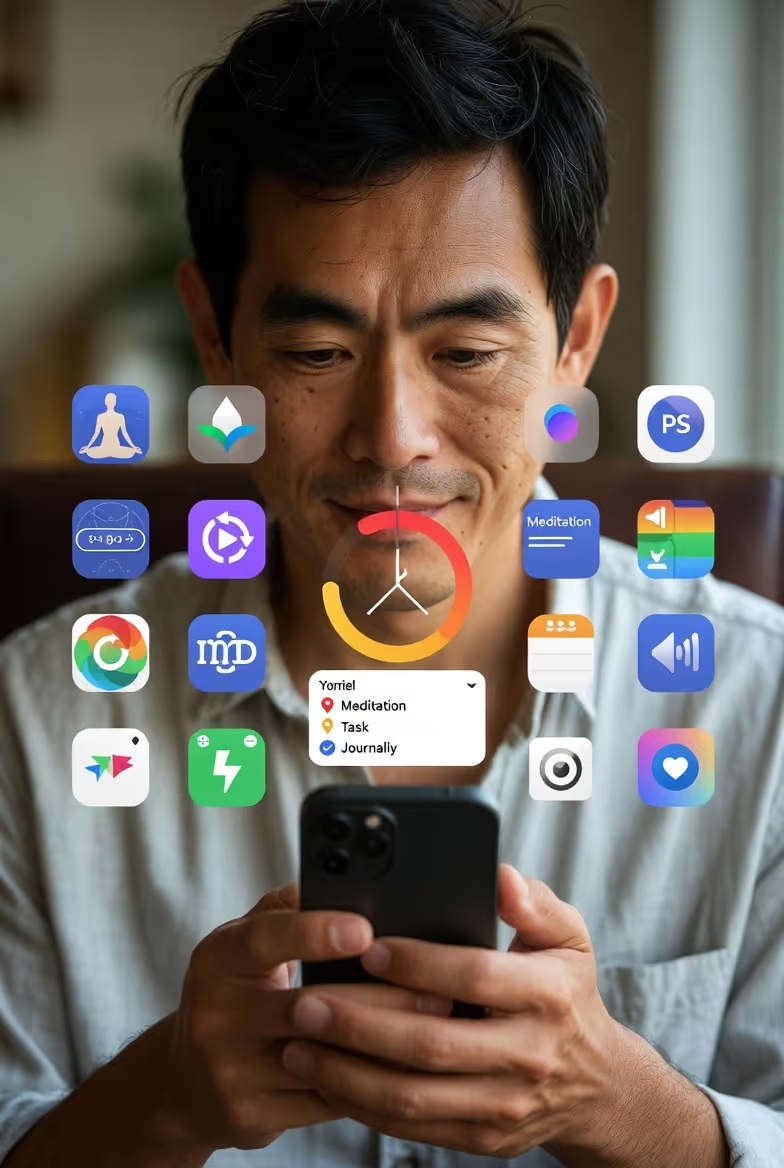
The narrative around technology and stress often casts all tech as the villain. But a new generation of digital tools is flipping the script. These applications and devices are explicitly designed with a "human-first" philosophy, aiming to reduce stress, enhance well-being, and promote healthier digital habits. This is the realm of mindful technology—where the medium becomes part of the solution.
Digital Wellness & Focus Apps: These tools help you implement the boundaries discussed earlier. Apps like Freedom and Cold Turkey allow you to block distracting websites and apps across all your devices on a schedule. Forest uses a gamified approach: set a focus timer, and a virtual tree grows; if you leave the app to check social media, the tree dies. These tools externalize willpower, making it easier to maintain focus.
Meditation and Mindfulness Platforms: Apps like Calm, Headspace, and Waking Up deliver guided meditations, sleep stories, and mindfulness exercises directly to your phone. They demystify meditation, making it accessible for beginners and providing structure for seasoned practitioners. The irony of using a screen to learn presence is not lost, but the benefits of a consistent practice—reduced anxiety, improved focus, better emotional regulation—are profound and scientifically validated.
Biofeedback and Breathwork Apps: These take mindfulness a step further by using your device's sensors or integrating with wearables to provide real-time physiological feedback. Apps like Elvie, Spire, or those paired with a smart ring guide you through breathing exercises (like coherent breathing at 5-6 breaths per minute) while showing your heart rate in real time, demonstrating the direct power of breath to calm the nervous system.
The Smart Ring as a Central Hub: This is where a device like the Oxyzen ring transcends simple tracking to become a proactive wellness companion. It consolidates multiple mindful tech functions:
The philosophy behind these tools is crucial: they are designed for agency and insight, not addiction and endless engagement. They are tools you use with intention, not platforms that use you. Choosing to incorporate mindful technology into your life is a conscious decision to redirect the power of innovation toward inner peace. To understand the principles that guide the development of such intentional technology, you can learn about our mission and the values that drive our approach at Oxyzen.
Understanding the problem and having the tools is only half the battle. The true transformation occurs when we synthesize this knowledge into a cohesive, personalized, and living plan—a Digital Stress Resilience Plan (DSRP). This is not a rigid set of restrictive rules, but a dynamic framework built on self-awareness, intentional design, and continuous refinement using your own data. It’s the operational manual for your well-being in the digital age.
The foundation of any effective DSRP is Baseline Awareness. Before you change anything, you must understand your starting point. This involves a dual-track assessment:
With this baseline, you can identify your personal Stress Signatures—the unique ways digital stress manifests for you. For some, it might be an elevated resting heart rate after a day of video calls. For others, it could be a significant dip in HRV following social media browsing, or a correlation between late-night screen use and reduced deep sleep. Your data makes these signatures visible.
The next phase is Strategic Intervention Design. This is where you create your personalized toolkit of countermeasures, categorized by the type of stressor:
The critical, often-missing component is the Feedback Loop & Iteration. This is what makes your plan "living." After implementing an intervention (e.g., no phones in bed for two weeks), you return to your biometric data. Did your sleep stability improve? Did your morning HRV rise? Did your stress graph show fewer nighttime spikes? If yes, the intervention is validated and becomes a cemented habit. If not, you iterate—maybe you need a longer sunset period, or you discover the issue is more related to afternoon caffeine. This data-driven iteration removes guesswork and builds self-trust.
Finally, your plan must include Recovery & Recharge Rituals. Resilience isn't just about deflecting stress; it's about actively rebuilding capacity. Schedule non-negotiable recovery activities based on your data: a walking meeting if your stress score is high, a yoga session on a low-recovery morning, or a complete digital detox day if your weekly data shows signs of systemic overload. The Oxyzen ring’s readiness score can be the guiding metric for this, helping you match your activity to your actual physiological state. For inspiration on building these rituals, our blog offers numerous user-shared routines and recovery protocols that have proven effective.
In the journey to manage digital stress, the smart ring emerges not as another piece of tech, but as a transformative tool—a 24/7 biometric guardian and guide. Unlike smartphones that are sources of distraction or wrist-worn devices that can be bulky and screen-focused, the ring form factor is uniquely positioned for this role. It is unobtrusive, always worn, and designed for passive, comprehensive data collection that provides an unprecedented window into your body’s subconscious responses to the digital world.
The core power of the smart ring lies in its proximity and precision. Worn on the finger, it has direct access to a rich vascular bed, allowing for highly accurate, continuous photoplethysmogram (PPG) sensor readings. This enables the tracking of heart rate, heart rate variability (HRV), and blood oxygen saturation (SpO2) with clinical-grade reliability. While you are immersed in a stressful work project, arguing online, or winding down before bed, the ring is quietly gathering the objective truth of your body’s reaction. It translates the invisible—your autonomic nervous system balance—into visible, trendable data.
This data coalesces into several key functions for stress management:
The true synergy happens when this biometric intelligence is woven into your daily decision-making. It creates a powerful feedback loop: Action → Data → Insight → Informed Action. You make a change (e.g., a new morning routine), the ring measures the outcome (improved HRV trend), you gain insight (this routine works for me), and you reinforce the positive behavior. It turns wellness from a philosophy into a personalized science. To explore the specific technology and sensors that enable this deep tracking, you can learn more about the Oxyzen smart ring and its capabilities on our technology page.
Digital stress is not solely an individual burden; it permeates our most important social units: our families and our workplaces. The collective digital habits of a household or a team create a culture that can either amplify or mitigate stress for everyone within it. Therefore, managing digital stress effectively requires a communal approach, establishing shared norms and supportive environments.
In the Family Unit:
The home should be a sanctuary from the demands of the outside world, yet it often becomes a battleground of competing screens and distractions. Cultivating digital wellness as a family starts with open, non-judgmental conversation. Instead of dictating rules, frame the discussion around shared values: connection, presence, and health.
In the Workplace:
Organizations have a profound responsibility and a clear incentive to address digital stress, as it directly impacts productivity, creativity, burnout rates, and healthcare costs. A culture of "always-on" responsiveness is a recipe for systemic depletion.
The goal in both settings is to shift from a default of constant digital availability to a culture of intentional engagement. By creating these shared containers for focused work and genuine connection, we protect the collective cognitive and emotional resources of our most important communities, leading to stronger relationships, more innovative teams, and happier, healthier homes.
As we look beyond the current landscape of digital stress, a more hopeful and intentional future is taking shape. The next wave of technological innovation is increasingly oriented toward human-tech harmony—designing systems, devices, and interactions that support human flourishing rather than exploiting cognitive vulnerabilities. This paradigm shift is being driven by a growing body of research, consumer demand for well-being, and a new ethos among designers and engineers.
One significant trend is the move toward calm technology. Pioneered by thinkers like Amber Case and Mark Weiser, calm technology aims to design devices that engage both the center and the periphery of our attention, moving in and out of our awareness as needed. Instead of demanding focus with jarring alerts, calm technology uses subtle, ambient signals—a gentle light that changes color, a soft sound, or a quiet vibration—to convey information. Imagine a desk lamp that glows a soft orange when your biometric data shows you’ve been sedentary too long, or a peripheral display that shows your family’s collective stress levels at a glance, encouraging a moment of connection. The smart ring is a prime example, residing quietly in the background of your awareness until it needs to deliver a gentle, haptic nudge.
Another frontier is the integration of affective computing and biometric feedback loops. Future devices will not only read our physiological states but also respond to them intelligently. Your streaming service could suggest a calming soundtrack when it detects elevated stress via your wearable. Your smart home system could gradually dim lights and lower the thermostat as it senses your body entering a pre-sleep state. Your work software could detect signs of cognitive fatigue (through typing patterns or webcam analysis, with strict privacy controls) and suggest a break or switch to a less demanding task. This creates a responsive environment that adapts to support your well-being in real-time.
Furthermore, we will see a rise in ethical design and digital well-being standards. Just as nutrition labels inform food choices, we may see "attention cost" labels on apps, indicating their potential for addictive design. Platforms may be required to offer genuinely minimalist, ad-free, and notification-free interfaces by default. Regulatory pressure and user advocacy are pushing for designs that respect user autonomy and time.
At the heart of this future is the principle of conscious choice and agency. Technology will increasingly be designed to provide us with insights and options, not to make choices for us or trap our attention. The role of devices like the advanced smart ring will evolve from a tracker to a personal health AI companion. It will synthesize your biometric, behavioral, and environmental data to offer predictive insights and personalized, proactive recommendations: "Based on your high stress load this week and declining sleep efficiency, it is recommended you schedule a digital detox this weekend and prioritize two nights of 8+ hours of sleep." This isn't about control; it's about empowerment through unparalleled self-knowledge.
This journey toward harmony is a collaborative one between users, developers, and companies. By supporting and demanding technology that aligns with our well-being, we shape the market. At Oxyzen, this future-oriented, human-centric design is our guiding principle. We believe technology should serve your life, not the other way around. To understand the deep thinking behind this approach, you can read about our founding vision on our story page, which details our commitment to being part of this positive technological evolution.

We have traversed a comprehensive landscape—from diagnosing the pervasive sources of digital stress in our always-on culture to examining its scientific impact on our brains and bodies. We've explored the personal toll of fractured attention and social comparison, and we've laid out a robust toolkit for counteraction: from setting practical boundaries and leveraging mindful apps to harnessing the deep, personal insights provided by biometric wearables like the smart ring.
The central thesis that emerges is one of conscious empowerment. The digital world is not inherently toxic; it is a realm of immense potential for connection, knowledge, and productivity. The toxicity arises from unconscious engagement—from allowing our interfaces and notifications to dictate the rhythm of our lives, our attention, and our nervous systems without our informed consent.
The path forward, therefore, is not Luddite rejection, but cultivated mastery. It begins with the fundamental act of paying attention to what you pay attention to. This meta-awareness is the first and most crucial step. From there, we employ strategy: we design our digital environments, we schedule our focus, we curate our inputs, and we protect our sleep and our relationships with intentional, non-negotiable boundaries.
In this endeavor, data is not cold numbers; it is the language of your own body, translated. The biometrics from a tool like the Oxyzen ring provide the objective truth that cuts through the fog of subjective feeling and societal "shoulds." It tells you when you are truly recovered and ready to perform, and when you are drained and in need of sanctuary. It reveals the direct lines between your digital habits and your physical state, creating a powerful feedback loop for positive change.
Ultimately, managing digital stress is an ongoing practice of integration. It is about integrating periods of high-tech engagement with periods of deep, low-tech restoration. It is about integrating the convenience of the cloud with the grounding of the physical earth. It is about integrating the global village of our networks with the intimate, present connection of our immediate circles.
This portion of our exploration has provided the foundational knowledge, the diagnostic tools, and the initial action plans. The journey continues as we delve even deeper into specialized topics, advanced recovery protocols, and long-term strategies for sustaining digital wellness across the different seasons of life. Remember, the goal is a life where technology feels like a graceful extension of human intent—a life of focus, connection, and vitality, unburdened by the constant low hum of digital stress.
The previous sections equipped us with tactical defenses against digital stress. Now, we must fortify the foundation itself: the human brain. Resilience is not a passive state of being unharmed; it is the active, dynamic process of adapting well in the face of adversity, trauma, or significant stress. In the context of the digital age, building neurobiological resilience is about training our brains to navigate high-stimulus environments without becoming chronically dysregulated, and to recover more swiftly when we do.
At the core of this process is neuroplasticity—the brain's remarkable ability to reorganize itself by forming new neural connections throughout life. The old adage "neurons that fire together, wire together" is paramount. Every time we engage in a habit—be it compulsively checking our phone or practicing mindful breathing—we strengthen specific neural pathways. The digital world, with its designed interruptions, often reinforces pathways of distraction, anxiety, and reactive stress. Our task is to consciously rewire these pathways toward focus, calm, and intentionality.
Key brain structures are involved in this resilience-building:
The goal of resilience training is to strengthen the "top-down" control of the PFC over the amygdala and to enhance the overall flexibility and health of these neural networks. This isn't abstract; it's achieved through specific, repeated practices:
1. Mindfulness Meditation: This is a keystone habit for neurobiological resilience. Regular meditation has been shown in fMRI studies to increase gray matter density in the PFC and hippocampus and decrease amygdala size and reactivity. It strengthens the very circuits needed for sustained attention and emotional regulation. Even 10 minutes a day can begin to rewire the brain's stress response, making it less reactive to digital interruptions.
2. Focused Attention Training: Deliberately practicing monotasking—reading a book without interruption, working on a puzzle, engaging in deep work—is a workout for the PFC and ACC. It reverses the neural fragmentation caused by multitasking, rebuilding your capacity for sustained concentration. Using tools like a smart ring to identify your peak focus times (when your physiological data shows calm alertness) allows you to schedule these training sessions when your brain is most receptive.
3. Novelty and Learning: Engaging in new, cognitively challenging offline activities—learning a language, playing a musical instrument, taking a new route on a walk—stimulates neuroplasticity across the brain. This builds cognitive reserve, making your neural networks more robust and adaptable, which can buffer against the cognitive depletion of digital overload.
4. Positive Social Connection: Face-to-face, positive social interaction releases oxytocin and endorphins, which dampen amygdala activity and promote feelings of safety and bonding. This directly counteracts the isolation and social threat perception that can be amplified by digital interactions.
The role of biometric data here is to provide a biofeedback loop for the brain. When you engage in a resilience-building practice like meditation, you can later observe its impact on your HRV trend or sleep graph. Seeing the tangible, physiological validation that a 15-minute meditation session lowered your resting heart rate and improved your sleep score reinforces the behavior at a neural level, creating a powerful positive feedback loop. It turns an intangible mental exercise into a measurable physiological event. For guided practices and science-backed techniques to begin this neuro-training, explore our blog for dedicated mindfulness and focus-building content.
Beyond tactics and brain training lies a foundational philosophy that can fundamentally reshape one's relationship with technology: Digital Minimalism. Coined by computer scientist Cal Newport, digital minimalism is not about using technology as little as possible, but about using it as intentionally as possible. It is a "philosophy of technology use in which you focus your online time on a small number of carefully selected and optimized activities that strongly support things you value, and then happily miss out on everything else."
This is a radical shift from the default position of using any tool that offers even minor value, to one of scrutinizing every digital tool for its significant contribution to your values and life goals. The process is akin to a digital decluttering, but one that is deeply values-driven.
The practice unfolds in three core steps:
1. The Digital Declutter (The 30-Day Reset): This is a period of aggressive abstinence from optional digital technologies—social media, streaming, gaming, news apps, etc. For 30 days, you step away completely. This is not a detox aimed at feeling miserable; it's a neutral experiment designed to create space and clarity. During this month, you actively rediscover and engage in high-quality, offline activities that you find meaningful: reading, conversation, nature, hobbies, exercise. The goal is to break the compulsive grip of digital habits and remember what a rich, low-tech life feels like.
2. The Reintroduction with Intent: After the 30 days, you do not simply revert. Instead, you reintroduce technology one tool at a time, asking a strict set of questions for each: Does this tool directly support a core value of mine (e.g., deep connection with distant family, professional education, community organizing)? Is it the best way to support this value? What is the specific, minimal way I need to use it to gain this value? If an app or platform doesn't pass this rigorous test, it is not allowed back onto your devices.
3. The Optimization of Allowed Tools: For the tools that make the cut, you then design strict, optimized operating procedures. For example, if Facebook makes the cut for keeping up with a specific community group, you might decide: "I will access Facebook only via my laptop browser (not the app) on Tuesday and Thursday evenings for 20 minutes to check the group feed and post updates." You remove the app from your phone, log out of the browser after each session, and never deviate from this protocol. This transforms the tool from a source of infinite distraction into a purposeful instrument.
Digital minimalism directly attacks the roots of digital stress: clutter, compulsion, and lack of agency. By drastically reducing the number of digital demands on your attention, you automatically reduce cognitive load and decision fatigue. By choosing only tools that serve your deepest values, you replace meaningless scrolling with meaningful engagement. The anxiety of missing out (FOMO) is replaced by the joy of missing out (JOMO) on the vast ocean of trivial digital noise.
Implementing this philosophy can be supported powerfully by biometric data. During the 30-day declutter, you will likely see dramatic improvements in sleep scores, HRV, and stress graphs. This objective data provides irrefutable proof of the physical cost of your previous digital clutter, solidifying your commitment to the minimalist approach. Post-declutter, your wearable can help you enforce your optimized protocols. If your data shows stress spikes creeping back in, it can prompt you to audit your digital life again, asking if a "minimal" tool has started to expand beyond its intended boundaries. To see how others have navigated this transformative process and the changes they've experienced, you can read real customer stories on our testimonials page, many of which involve journeys toward intentional tech use.
In the economy of the 21st century, the ability to perform Deep Work—professional activities performed in a state of distraction-free concentration that push your cognitive capabilities to their limit—is becoming increasingly rare and simultaneously increasingly valuable. As author Cal Newport argues, deep work is the superpower of the knowledge worker in an age of digital distraction. Yet, the very architecture of our work tools—instant messaging, email, collaborative docs—is often engineered against it, promoting constant, shallow communication.
Digital stress is both a cause and a consequence of a shallow work life. The constant context-switching prevents deep work, leading to a feeling of busyness without tangible accomplishment, which in turn fuels anxiety and the urge to stay "on" to catch up, creating a vicious cycle. Breaking this cycle requires a systematic, almost militant, defense of your cognitive capacity.
The Principles of Deep Work Scheduling:
The challenge, of course, is the cultural expectation of instant responsiveness. This requires proactive communication. Set clear expectations with colleagues: "I am offline for deep work from 9 AM to 12 PM daily. I will respond to all messages during my afternoon communication block." When people see that your deep work periods result in higher-quality output, they learn to respect the boundary.
This is where a wellness wearable transcends its health role to become a focus optimizer. By tracking your physiological readiness, it can help you identify your personal biological prime time for deep work. For many, this is in the morning when cortisol levels are naturally high and the mind is fresh. Your Oxyzen ring’s readiness score can confirm this—a high score in the morning is a green light to schedule your most demanding cognitive work.
Furthermore, the ring can help you manage the intensity of deep work. After a 90-minute focus session, checking your stress graph can show you the physiological cost of that intense concentration. This data encourages you to take a proper recovery break—a walk, some stretching, a mindful breath—before diving into another session, preventing cognitive burnout. It turns the abstract concept of "taking a break" into a data-informed recovery strategy. For professionals seeking to master this skill set, we offer deeper dives into productivity systems; you can often find answers in our FAQ about integrating wearables with productivity methodologies.
Your Trusted Sleep Advocate: Sleep Foundation — https://www.sleepfoundation.org
Discover a digital archive of scholarly articles: NIH — https://www.ncbi.nlm.nih.gov/
39 million citations for biomedical literature :PubMed — https://pubmed.ncbi.nlm.nih.gov/
Experts at Harvard Health Publishing covering a variety of health topics — https://www.health.harvard.edu/blog/
Every life deserves world class care :Cleveland Clinic - https://my.clevelandclinic.org/health
Wearable technology and the future of predictive health monitoring :MIT Technology Review — https://www.technologyreview.com/
Dedicated to the well-being of all people and guided by science :World Health Organization — https://www.who.int/news-room/
Psychological science and knowledge to benefit society and improve lives. :APA — https://www.apa.org/monitor/
Cutting-edge insights on human longevity and peak performance:
Lifespan Research — https://www.lifespan.io/
Global authority on exercise physiology, sports performance, and human recovery:
American College of Sports Medicine — https://www.acsm.org/
Neuroscience-driven guidance for better focus, sleep, and mental clarity:
Stanford Human Performance Lab — https://humanperformance.stanford.edu/
Evidence-based psychology and mind–body wellness resources:
Mayo Clinic — https://www.mayoclinic.org/healthy-lifestyle/
Data-backed research on emotional wellbeing, stress biology, and resilience:
American Institute of Stress — https://www.stress.org/


