


The Age-Related Changes in Heart Health Your Smart Ring Tracks
Age-related changes in heart health tracked by your smart ring.
Age-related changes in heart health tracked by your smart ring.
%402x.svg)
The human heart beats approximately 2.5 billion times over an average lifetime. Yet, for most of human history, this relentless, vital rhythm has been a profound mystery—a hidden symphony we could only hear fleetingly with an ear to a chest or feel pulsing at our wrists. We knew it slowed with rest and quickened with effort, but the subtle, daily story it told about our health, especially as we age, remained locked away. Until now.
We stand at the convergence of two transformative trends: an unprecedented global aging population and a revolution in personal biometric sensing. By 2030, 1 in 6 people worldwide will be aged 60 or over. Concurrently, wearable technology has evolved from counting steps to becoming a sophisticated, always-on health guardian. At the forefront of this revolution is the smart ring—an unassuming piece of jewelry that houses a clinical-grade biometrical lab.
This is not about vanity metrics. This is about the profound, often imperceptible, shifts in our cardiovascular system that unfold year by year. It’s about the gradual decline in heart rate variability, the subtle stiffening of arteries reflected in changing pulse wave velocity, the slow recalibration of resting heart rate, and the altered patterns of sleep and recovery that our bodies demand as we mature. These changes were once only visible in periodic, snapshot-style doctor's visits. Today, a smart ring like Oxyzen provides a continuous, longitudinal narrative of your heart’s journey through time.
This article is your definitive guide to understanding the age-related changes in heart health that your smart ring tracks. We will move beyond the basics of heart rate monitoring and delve into the sophisticated biomarkers that paint a comprehensive picture of cardiovascular aging. You will learn not just what these metrics mean, but how to interpret their long-term trends, how to distinguish between normal aging and potential warning signs, and how to use this data to have more informed, productive conversations with your healthcare provider. This is the dawn of personalized, preventative cardiology, powered by the silent sentinel on your finger.
Before we can understand change, we must establish a baseline. Your heart's function is a complex, dynamic symphony conducted by your autonomic nervous system (ANS)—the unconscious control center regulating everything from digestion to stress response. The ANS has two primary conductors: the sympathetic nervous system (the accelerator, preparing for "fight or flight") and the parasympathetic nervous system (the brake, promoting "rest and digest").
A young, healthy cardiovascular system is characterized by a high degree of autonomic flexibility—the ability to shift smoothly and powerfully between these states in response to life's demands. This flexibility is mirrored in several key biometrics.
Resting Heart Rate (RHR) in a fit young adult typically ranges from 60 to 100 beats per minute (BPM), with well-trained individuals often dipping into the 40s or 50s. A lower RHR generally indicates more efficient heart function and better cardiovascular fitness. Heart Rate Variability (HRV), the nuanced variation in time between each heartbeat, is typically higher in youth. Contrary to intuition, a higher HRV is better; it signifies a resilient, responsive nervous system that can adapt to stress and recover effectively. Think of it not as an irregular pulse, but as the heart's sophisticated micro-adjustments to breathing, thought, and environment.
Then there's blood oxygen saturation (SpO2), which in healthy individuals at sea level should consistently be at 95% or above, and respiratory rate, which normally sits between 12 to 20 breaths per minute at rest. Skin temperature and sleep architecture—the cyclical journey through light, deep, and REM sleep—complete the picture of baseline health.
Your smart ring establishes this baseline through 24/7 monitoring. Unlike a smartwatch you might take off to charge or during certain activities, a ring like Oxyzen is designed for constant wear, capturing data during sleep, exercise, and daily life. This creates a rich, multi-dimensional baseline unique to you. It’s not about comparing your 45 BPM RHR to a population average; it’s about understanding your normal. As you explore the data from your own device, you can learn more about smart ring technology and baseline establishment in our detailed support resources.
This baseline is the critical reference point. Aging, in many ways, is a gradual shift in this baseline and a reduction in that precious autonomic flexibility. The following sections will map exactly how this shift manifests in the data streaming from your finger.
If there is one metric that most eloquently captures the story of cardiovascular aging, it is Heart Rate Variability. HRV is the ultimate biomarker of your body's adaptability and resilience. It is the subtle, millisecond-level variation between consecutive heartbeats, and it is governed by the continuous tug-of-war between your sympathetic and parasympathetic nervous systems.
In a young adult, the heart is not a metronome. It speeds up slightly on inhalation (as sympathetic tone briefly increases) and slows down on exhalation (as parasympathetic, or vagal, tone takes over). This is called respiratory sinus arrhythmia, and it's a sign of health. A high HRV indicates a strong, dominant parasympathetic system capable of applying a effective "brake," promoting recovery, reducing inflammation, and maintaining homeostasis.
The Aging Trajectory: From around age 20-25, HRV begins a gradual, steady decline. Research shows this decline is linear through mid-life and can accelerate in later years. By age 65, an individual's HRV may be half of what it was in their 20s. This decline is one of the most consistent physiological markers of aging across species.
Why Does This Happen? Several age-related factors converge:
What Your Smart Ring Tells You: Your ring tracks HRV continuously, often providing a nightly average—a clean reading free from the day's activities. You'll see your HRV score (often presented as an ms value like RMSSD, or a proprietary "readiness" score). The critical insight isn't in a single day's number, but in the long-term trend.
A slowly declining trend line over years is a normal part of aging. However, your smart ring can alert you to acute, significant drops in your personal baseline. A sudden, sustained dip in HRV is a powerful signal that your body is under strain—from illness, overtraining, extreme stress, or poor sleep. For the aging individual, paying attention to these acute drops is crucial, as the body's reserve to handle such stressors is diminished. Recognizing this allows for proactive intervention: more rest, better hydration, stress management, or a consultation with a doctor.
Understanding this gradual decline empowers you. While you cannot stop time, you can influence the rate of decline. Consistent aerobic exercise, mindfulness practices, good sleep hygiene, and proper nutrition are all proven to support higher HRV. Your ring becomes the feedback tool, showing you how your lifestyle choices directly impact this key biomarker of aging. For more on interpreting these trends, our blog features deep dives on HRV and longevity.
While HRV measures the variability between beats, Resting Heart Rate (RHR) measures their frequency at rest. Together, they provide a more complete picture than either could alone. RHR is a classic, straightforward metric of cardiovascular efficiency: a stronger heart can pump more blood per beat (higher stroke volume), requiring fewer beats per minute to sustain the body at rest.
The Aging Trajectory: The relationship between age and RHR is not a simple linear decline. In childhood and adolescence, RHR is relatively high. It then declines through young adulthood as fitness often peaks, stabilizing in the 30s-50s for many individuals. However, as we move into our 60s and beyond, a paradoxical shift can occur: RHR may begin to creep upward. This increase is not a sign of improved fitness, but rather an indicator of declining efficiency.
Why Does This Happen? The age-related rise in RHR is tied to:
The Exercise Response Story: Perhaps even more telling than RHR alone is how your heart responds to and recovers from stress. This is where your smart ring's activity tracking becomes invaluable.
What Your Smart Ring Tells You: Your device doesn't just log your RHR; it tracks it in context. It shows you your sleeping heart rate (often the truest "resting" value), your daytime average, and how it fluctuates with stress and activity. It can automatically track Heart Rate Recovery after logged workouts.
By observing the long-term trends, you can see if your RHR is stabilizing healthily or beginning a concerning climb. More importantly, you can use this data to tailor your exercise. If your HRR is slowing, it might be a signal to incorporate more moderate, consistent cardio to rebuild aerobic base fitness rather than engaging in excessive high-intensity intervals. The ring transforms from a tracker to a coach, guiding you to work with your aging physiology, not against it. Discover how users leverage this data in their fitness journeys by reading real customer reviews and experiences.
Beneath the rhythm of the heartbeat lies the integrity of the vascular highway—the arteries. Youthful arteries are elastic and compliant, expanding with each heartbeat to cushion the pulse wave and deliver oxygenated blood smoothly. With age, arteries gradually stiffen. This process, called arteriosclerosis, is a central player in cardiovascular aging and a primary contributor to rising systolic blood pressure.
While most consumer smart rings do not yet measure blood pressure or arterial stiffness directly through Pulse Wave Velocity (PWV)—a clinical gold standard—they track powerful proxy metrics that are intimately connected to vascular health.
Pulse Arrival Time and the Photoplethysmogram (PPG) Waveform: Your ring's optical heart rate sensor works by emitting light (PPG) into your skin and measuring how much is absorbed by the blood pulsing beneath. The shape and timing of this PPG waveform contain a wealth of information.
The Blood Pressure Connection: Arterial stiffness is a key driver of isolated systolic hypertension—the classic pattern of aging where the top number (systolic) rises while the bottom number (diastolic) stays stable or even falls. This happens because stiff arteries don't expand to absorb the pressure from the heart's ejection, leading to a higher pressure peak (systole) and a faster drop-off (diastole).
What Your Smart Ring Tells You: Advanced algorithms in rings like Oxyzen are beginning to analyze the PPG waveform for these subtle features. While not a medical diagnosis, trends in these derived metrics can be incredibly informative. A gradual shift in the PPG waveform shape or in derived "vascular age" scores over months or years can be an early indicator of hardening arteries.
This data empowers a crucial conversation with your doctor. Instead of saying "I feel fine," you can say, "My wearable has shown a consistent trend suggesting increased vascular stiffness over the past year. Can we discuss my cardiovascular risk factors?" This shifts healthcare towards true prevention. To understand the science behind our sensing technology, you can explore our story and mission of innovation.
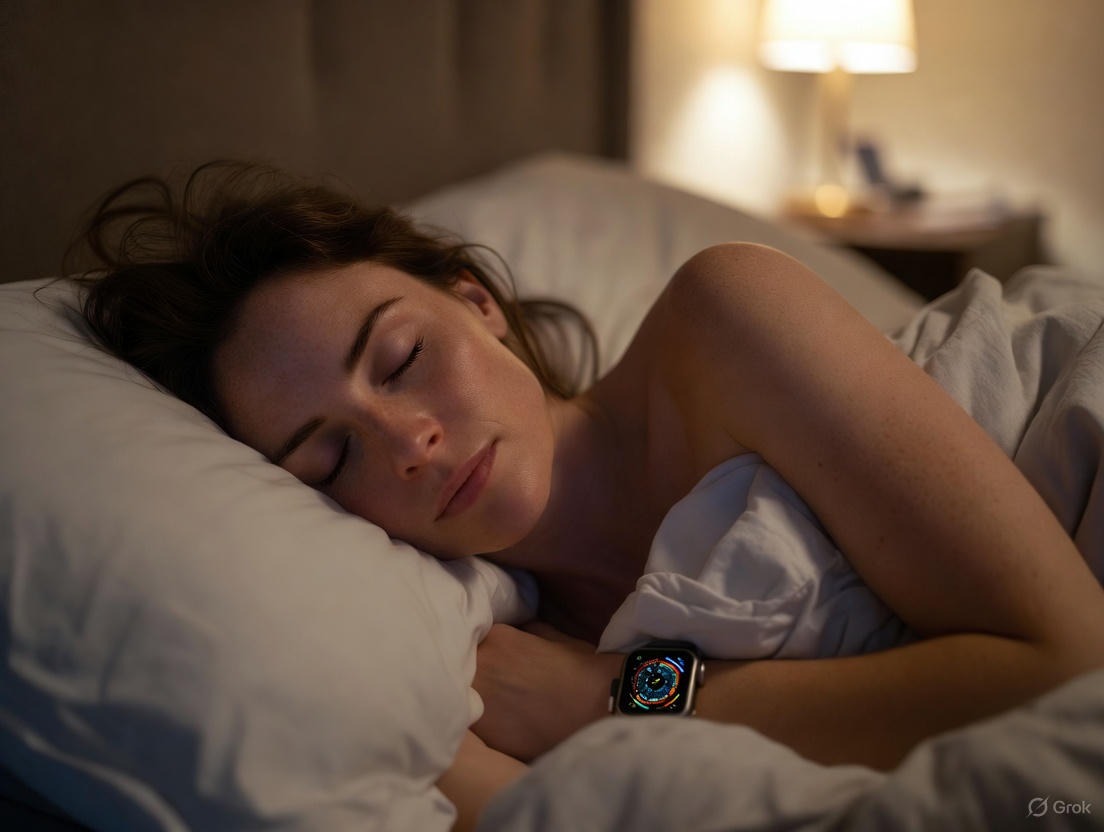
Sleep is non-negotiable for cardiovascular repair. During deep sleep (N3), heart rate and blood pressure reach their lowest daily points, growth hormone is released to repair tissues, and the brain clears metabolic waste. REM sleep, while more active, is crucial for cognitive and emotional regulation. Aging dramatically alters this architecture, and these changes are intimately reflected in your heart's nocturnal behavior.
The Aging Trajectory of Sleep:
Cardiac Signatures of Aging Sleep: Your smart ring captures the heart-sleep connection vividly.
What Your Smart Ring Tells You: Your sleep score isn't just about duration. It breaks down your light, deep, and REM sleep, correlates it with your heart rate and HRV data, and shows you the quality of your restoration. You'll see clear data on how fragmented your sleep was and how pronounced your nightly heart rate dip was.
Seeing a trend of declining deep sleep and a blunted heart rate dip over the years is a normal part of aging. However, the ring can flag acute deviations from your personal norm—like a sudden increase in nighttime resting heart rate or a plunge in sleep HRV. This could signal an oncoming illness, excessive stress, or the development of a sleep disorder like apnea. For the aging individual, protecting sleep quality becomes as important as diet or exercise. Your ring provides the objective evidence to prioritize it, helping you create a sleep sanctuary and consistent routine. Find more strategies for optimizing sleep at any age in our curated wellness blog resources.
Life's stressors—physical, mental, emotional—elicit a sympathetic nervous system response: heart rate rises, blood vessels constrict, cortisol is released. A young, resilient system mounts a strong response and then recovers quickly. Aging often blunts both the response and, more critically, the recovery. This decline in autonomic resilience is a core feature of cardiovascular aging, turning chronic, low-grade stress into a significant risk factor.
The Aging Stress Response:
Chronic Stress and Allostatic Load: When stressors are frequent and recovery is incomplete, the body pays a price called "allostatic load"—the wear and tear from chronic overactivation of stress systems. High allostatic load accelerates cardiovascular aging, promoting inflammation, hypertension, and insulin resistance.
What Your Smart Ring Tells You: Your ring is a continuous stress barometer. It doesn't measure your emotions, but it measures your body's physiological reaction to them. By analyzing heart rate, HRV, and their interaction, it provides a "stress" or "nervous system load" score throughout the day.
For the aging individual, managing stress is not a luxury; it is cardiovascular medicine. Your smart ring makes the invisible visible. It shows you which activities or times of day are most taxing and which practices (a walk, meditation, deep breathing) most effectively trigger your parasympathetic recovery. This data allows you to build "stress resilience" practices into your daily life deliberately, actively combating one of the key accelerants of heart aging. For guidance on building these practices, our team's vision for holistic health provides a foundational philosophy.
Core body temperature follows a circadian rhythm, dipping by 1-2 degrees Fahrenheit during the night to initiate and maintain sleep. This cooling process is facilitated by peripheral vasodilation—blood vessels near the skin's surface widen to release heat. This process is not just about sleep; it's a cardiovascular event regulated by the autonomic nervous system.
The Aging Trajectory: The efficiency of this thermoregulatory system declines with age.
The Heart Health Link: The mechanism of vasodilation for temperature regulation is mediated by the same endothelial and autonomic functions that govern blood pressure and arterial health. A blunted temperature rhythm can, therefore, be a proxy for broader vascular dysfunction. Furthermore, poor sleep due to thermal discomfort increases sympathetic activity at night, raising nocturnal heart rate and blood pressure.
What Your Smart Ring Tells You: A smart ring with a skin temperature sensor (like most advanced models) is uniquely positioned to track this. It measures the temperature at the finger—a key site for peripheral vasodilation.
This biometric adds a crucial layer to the heart health puzzle. It connects the dots between autonomic function, vascular health, and sleep quality—all key pillars of cardiovascular aging. By ensuring your sleep environment is cool and monitoring your personal temperature trends, you can support this vital physiological process. Understanding these interconnected metrics is part of the comprehensive approach we take, which you can discover more about on our homepage.
Breathing is the first step in the oxygen delivery chain that fuels every heartbeat. Respiratory rate (RR) and blood oxygen saturation (SpO2) are fundamental vital signs that change in telling ways as we age, especially during the vulnerable period of sleep.
Respiratory Rate with Age: At rest, respiratory rate itself changes very little with healthy aging. However, the response of breathing to exercise and stress can change—older adults may have a higher ventilatory response for a given workload. The critical monitoring zone is sleep.
Nocturnal Blood Oxygen (SpO2): In healthy waking hours, SpO2 should be ≥95% at sea level. During sleep, a slight dip of a few percentage points is normal. However, with age and especially with sleep apnea, these dips become more frequent and profound (called desaturations).
What Your Smart Ring Tells You: Advanced smart rings now include pulse oximeters (SpO2 sensors) that operate continuously through the night.
This is arguably one of the most potentially life-saving features of a smart ring for the aging population. Sleep apnea is massively underdiagnosed. Your ring cannot diagnose it, but it can provide powerful screening data. A report showing frequent oxygen desaturations and an elevated, variable nighttime heart rate is a clear signal to take to a sleep specialist. Addressing sleep apnea with CPAP therapy or other interventions is one of the most effective ways to reduce cardiovascular risk and improve quality of life. It turns silent, nightly strain into actionable data.
We have now journeyed through the eight key physiological landscapes your smart ring monitors: HRV, RHR, Exercise Response, Vascular Proxies, Sleep Architecture, Stress, Temperature, and Oxygen. The true power, however, lies not in viewing these metrics as isolated data points, but in synthesizing them into a coherent, personal story—your Personal Aging Dashboard.
This dashboard is a living document of your cardiovascular aging trajectory. It moves you from reactive healthcare ("I have a problem, let's fix it") to proactive health management ("Here is my trend, how do I optimize my path?").
Creating Context: The Interplay of Metrics
Spotting Meaningful Deviations vs. Normal Aging:
Your dashboard helps you distinguish between a gradual, expected decline and an acute red flag.
Empowering the Partnership with Your Doctor: This is the ultimate goal. Walk into your annual physical or cardiology appointment not with vague complaints, but with a summarized report. You can say:
This transforms the conversation. It provides objective, longitudinal data that can inform diagnostic decisions, medication adjustments, and lifestyle prescriptions. It makes you an engaged, informed partner in your own heart health.
Building this wisdom requires a commitment to observation and a reliable device designed for this depth of tracking. At its core, this journey is about using technology not to extend life at any cost, but to enhance the health and vitality of every year we have. It aligns perfectly with our foundational belief that knowledge is the first step toward empowerment, a principle you can explore in depth through our company's mission and values.
Data, in isolation, is merely noise. It’s the pattern over time—the longitudinal narrative—that holds the profound truth about your cardiovascular aging. The single most important skill you will develop with your smart ring is learning to read this story, to distinguish the signal from the noise. This is the art of interpretation, moving from a daily score to a wisdom about your own body.
Shifting from Daily Scores to Macro-Trends: It’s tempting to fixate on your morning "readiness" score or obsess over a single night of poor sleep. Resist this. The real gold is found in the trend lines over weeks, months, and years. Your smart ring’s app should allow you to view key metrics—HRV, RHR, Sleep Score, Stress Load—on a 30-day, 90-day, and yearly view. A single bad day is irrelevant. A two-week downward slope in HRV amidst high stress is highly relevant. A gradual, months-long creep in your sleeping RHR is critically important.
Establishing Your "Personal Normal" Band: Everyone’s baseline is unique. Your first 90 days of continuous wear are about establishing your personal biometric bandwidth. What is your typical HRV range (e.g., 40-65 ms)? What is your normal sleeping heart rate range (e.g., 48-55 BPM)? Once you know this, you can identify true outliers. An HRV reading of 30 ms might be catastrophic for one person and normal for another. Your ring’s algorithms do this for you, often flagging when you are outside your personal norm, but cultivating your own intuition is key.
Context is King: Tagging and Journaling. The data from your ring tells you the what, but you must often provide the why. Use the app’s tagging or journaling feature to annotate your life. Tag days with:
When you later see a dramatic dip in your metrics, you can scroll back and see the tag "Started new project at work" or "Flew to London." This turns confusing data into clear cause-and-effect learning. You begin to see your unique sensitivities: "Ah, even two glasses of wine halves my HRV," or "A 90-minute intense workout takes me three full days to recover from now, whereas it used to take two."
Identifying Key Patterns of Concern: Beyond tracking reactions, learn to spot these specific, meaningful patterns:
Mastering this art transforms anxiety into agency. Instead of worrying about aging, you are actively auditing it. You become the expert on your own physiology, using the ring as your research tool. For more insights on building this interpretive skill, our blog features user case studies and expert analyses.

Data without action is just a diary. The revolutionary promise of the smart ring is that it provides closed-loop feedback: you make a lifestyle change, and you see the direct, measurable impact on your cardiovascular biomarkers. This turns well-intentioned advice into a personalized, verified prescription. Here are key interventions for heart-healthy aging, directly guided by your ring’s data.
Exercise: Precision Dosing for the Aging Heart. "Just move more" is replaced with "move smarter."
Nutrition: The Inflammatory Response on Your Finger. Diet profoundly affects autonomic balance and vascular inflammation.
Sleep Hygiene: Engineering the Perfect Recovery Environment. Your ring tells you how well you slept; you must create the conditions for success.
Stress Resilience: Training Your Nervous System. We can’t eliminate stress, but we can train our recovery.
This proactive, data-informed approach turns aging from a passive process into an active collaboration with your body. Every positive change is reinforced by the data, creating a powerful positive feedback loop for sustainable health. For support and common questions on implementing these changes, our FAQ section is a valuable resource.
Your heart does not age in a vacuum. It is the central organ in a deeply interconnected system. The trifecta of Sleep, Activity, and Recovery forms a dynamic triangle, and the balance within this triangle shifts fundamentally as we age. Your smart ring is the only device that measures all three pillars continuously, providing a holistic picture of your systemic load and resilience.
The Aging Shift in the Balance Triangle:
How Your Ring Quantifies the Balance:
The Critical Concept of "Payback": With age, the lag time between cause and effect shortens, and the "debt" incurred must be paid back more promptly.
Practical Management Using the Holistic Data:
Understanding this holistic picture moves you beyond heart-centric thinking to system-centric health. You learn to manage your total load to keep your heart—and your entire organism—in sustainable balance for the long term. This philosophy of integrated wellness is central to our vision at Oxyzen.
Your smart ring is a powerful screening and awareness tool, but it is not a medical diagnostic device. Its paramount value in healthcare is early detection of deviations that warrant professional investigation. Think of it as a highly sensitive smoke alarm, not a fire investigation report. Knowing when and how to escalate the data is a critical part of responsible use.
Specific Data Patterns That Warrant a Professional Consultation:
How to Prepare for the Doctor's Visit: "The Data Dossier":
Walking in with raw data graphs can be overwhelming. Instead, prepare a concise, one-page summary:
This approach is respectful of the doctor's time and positions you as an engaged, informed partner. It transforms the conversation from subjective feelings ("I'm tired") to objective, observable phenomena. Your doctor is likely to welcome this data-driven collaboration. For stories of how others have used their data in healthcare partnerships, explore our testimonials from real users.
The technology embedded in your smart ring is not static. The combination of advanced sensor fusion, powerful edge computing, and artificial intelligence is poised to unlock an even deeper layer of understanding about cardiovascular aging in the coming years. What we consider cutting-edge today is merely the foundation for tomorrow’s insights.
Next-Generation Biomarkers on the Horizon:
The Role of AI and Personalized Baselines: The true revolution lies in artificial intelligence.
Integrating with the Broader Health Ecosystem: The future smart ring will be the central hub of your personal health data, seamlessly integrating with electronic health records (with your permission), sharing relevant trends with your care team, and receiving contextual guidance from your doctor’s recommendations. It will be a node in a connected, proactive healthcare system.
This is not science fiction; it is the logical extension of the technology you already wear. By choosing a platform committed to research and development, like Oxyzen, you are not just buying a product; you are investing in a partnership that will evolve to provide deeper insights into your healthspan. To follow this journey of innovation, you can explore our ongoing story and vision.
The end goal of all this tracking and analysis is not to become a passive data analyst of your own decline. It is to facilitate a transformation—the construction of a sustainable, daily practice that actively promotes healthspan and compresses morbidity. This is about adding life to your years, not just years to your life. Your smart ring is the compass, feedback tool, and accountability partner for this lifelong journey.
Shifting the Mindset: From Fixing to Building. Move away from a disease-centric model ("I need to lower my blood pressure") to a resilience-centric model ("I am building a system that maintains optimal blood pressure, recovers quickly from stress, and sleeps deeply"). Your ring provides the metrics for resilience: HRV, recovery speed, sleep quality, and autonomic balance.
The Pillars of a Data-Informed Longevity Practice:
Creating Your Personal Health Operating System (HOS): Synthesize your learnings into a simple, repeatable protocol—your HOS.
Embracing the Journey, Not the Destination: There will be setbacks. Illness, life crises, and travel will disrupt your data. The practice is not about maintaining a perfect graph, but about the speed and grace with which you return to your baseline after a disruption. That resilience, visible in your data, is the ultimate marker of a successful longevity practice.
This transformation turns aging from something that happens to you into a process you actively participate in shaping. With your smart ring as your guide, you move from hoping you’re healthy to knowing you are building health, day by day, beat by beat. For ongoing inspiration and community in this journey, we invite you to join the conversation and discover more resources on our blog.
The market for smart rings is expanding rapidly, but not all are created equal—especially when your goal is serious, longitudinal tracking of cardiovascular aging. Choosing the right device is a critical first step in your journey. It’s an investment in a health partner you’ll wear 24/7 for years. Here’s what to look for, moving beyond marketing claims to the technical and practical essentials.
Sensor Suite: The Non-Negotiable Foundation. For heart health and aging tracking, the sensor array is paramount.
Biometric Accuracy & Validation: A pretty graph is useless if it’s wrong.
Key Heart Health Metrics & Analytical Depth: Beyond just showing numbers, the ring’s app must provide meaningful analysis.
Battery Life & Form Factor: The Practicalities of 24/7 Wear.
Ecosystem, Privacy, and Company Philosophy:
When evaluating options like Oxyzen against others, scrutinize these factors. A ring designed for comprehensive heart health tracking is built on this foundation of clinical-grade sensing, analytical depth, and user-centric design, all aligned with a mission to empower proactive health. For a detailed look at how one company approaches this, you can explore our technology and mission.

Wearing a device that continuously monitors the most intimate rhythms of your life is a profound act of trust. As we embrace this technology, we must navigate its ethical landscape with eyes wide open. This involves not only how our data is protected but also how we protect our minds from the potential tyranny of the quantified self.
Data Privacy & Security: Your Biometric Fingerprint.
The data collected by your smart ring—your heart rate patterns, sleep cycles, stress responses—is uniquely identifiable, a biometric fingerprint. Its protection is paramount.
The Psychological Pitfalls: From Awareness to Anxiety.
For some, constant feedback can lead to "orthosomnia"—an unhealthy preoccupation with achieving perfect sleep data—or anxiety over every dip in HRV.
Cultivating a Healthy Relationship with Your Data:
Navigating this landscape requires choosing a partner that prioritizes ethical data use and designs its user experience to promote wellness, not worry. It’s a balance between radical awareness and peaceful acceptance—using technology to live better, not to become its servant. For a deeper discussion on our approach to these critical issues, you can read about our values and commitment.
Theory and data come alive through human stories. Let’s explore how individuals in different decades of life are using smart ring data to navigate their unique cardiovascular aging journeys. These composites, based on common user experiences, illustrate the practical application of everything we’ve discussed.
Case Study 1: David, 42 – The Stressed Executive (Early Intervention)
Case Study 2: Anya, 58 – The Active Menopausal Athlete (Optimizing Transition)
Case Study 3: Robert, 71 – The Proactive Grandfather (Medical Collaboration)
These stories exemplify the transformative potential of marrying continuous biometrics with personal agency. They show that it’s never too early or too late to start listening to the story your heart is telling. For more inspiring transformations, browse our collection of user testimonials and experiences.

The standalone smart ring is powerful, but its ultimate potential is realized as a synergistic node in a broader, connected health ecosystem. This is the future of proactive, personalized medicine: a seamless flow of data and insight between you, your devices, your care team, and your daily life.
Seamless Integration with Other Health Tech: Your ring won't replace other devices; it will contextualize them.
The Clinician's Dashboard: Bridging the Gap to Professional Care. The most significant integration is with the healthcare system.
The AI Health Coach: Your 24/7 Personalized Guide. Beyond integration, the future lies in intelligent synthesis.
Population Health and Research: On an aggregate level, consented, anonymized data from millions of users can unlock discoveries about human health that are impossible in a lab.
This connected future turns the smart ring from a personal curiosity into a vital component of a smarter, more preventive, and deeply personalized healthcare system. It fulfills the promise of technology as a tool for universal health empowerment. To see how one company is thinking about this interconnected future, you can learn more about our vision and partnerships.
We began with the 2.5 billion beats of a lifetime—a symphony once shrouded in mystery. We have now charted how the modern smart ring acts as a conductor’s score, allowing us to see the subtle changes in tempo, harmony, and rhythm that define the aging of our most vital organ. This is not a story of passive decline to be feared, but a narrative of active understanding to be embraced.
The journey through the metrics—from the declining flexibility of Heart Rate Variability and the shifting patterns of Resting Heart Rate, to the nocturnal stories told by sleep architecture, oxygen saturation, and skin temperature—reveals a fundamental truth: aging is not a single event but a gradual process of adaptation. Our bodies are constantly communicating their needs and their responses to the lives we lead. For millennia, we lacked the language to hear them. Now, we have a translator on our finger.
The power this technology grants us is the power of context and agency. It replaces anxiety about vague symptoms with clarity about specific trends. It swaps generic health advice for personalized, verifiable prescriptions. It transforms the annual doctor's visit from a snapshot into a rich conversation informed by months of continuous data. Most importantly, it shifts our role from passenger to co-pilot in our own healthspan journey.
The goal is not to achieve the biometrics of a 25-year-old at 65. That is a futile pursuit against biology. The goal is to optimize the trajectory of your own aging—to build resilience, compress morbidity, and ensure that your years are not just added to your life, but life is added to your years. It’s about maintaining the energy to play with grandchildren, the stamina to travel, the cognitive clarity to learn, and the vitality to engage deeply with the world.
This requires a partnership. A partnership with technology that is ethical, accurate, and insightful. A partnership with healthcare professionals who are open to data-informed collaboration. And, ultimately, a partnership with yourself—a commitment to listen to the data, interpret it with wisdom, and act with compassion towards your own body.
The age of guessing is over. The age of knowing and optimizing has begun. Your heart’s story is being written with every beat. With the silent, intelligent guardian of a smart ring, you now have the pen to help author its healthiest, most vibrant chapters. The journey of a thousand miles begins with a single step, and the journey of a lifetime of heart health begins with understanding a single, continuous beat.
Ready to begin listening to your heart’s story? Explore the technology designed to be your guide on this journey. Discover how Oxyzen can help you track, understand, and optimize your heart health as you age.
Your Trusted Sleep Advocate (Sleep Foundation — https://www.sleepfoundation.org/)
Discover a digital archive of scholarly articles (NIH — https://www.ncbi.nlm.nih.gov/
39 million citations for biomedical literature (PubMed — https://pubmed.ncbi.nlm.nih.gov/)
experts at Harvard Health Publishing covering a variety of health topics — https://www.health.harvard.edu/blog/)
Every life deserves world class care (Cleveland Clinic -
https://my.clevelandclinic.org/health)
Wearable technology and the future of predictive health monitoring. (MIT Technology Review — https://www.technologyreview.com/)
Dedicated to the well-being of all people and guided by science (World Health Organization — https://www.who.int/news-room/)
Psychological science and knowledge to benefit society and improve lives. (APA — https://www.apa.org/monitor/)
Cutting-edge insights on human longevity and peak performance
(Lifespan Research — https://www.lifespan.io/)
Global authority on exercise physiology, sports performance, and human recovery
(American College of Sports Medicine — https://www.acsm.org/)
Neuroscience-driven guidance for better focus, sleep, and mental clarity
(Stanford Human Performance Lab — https://humanperformance.stanford.edu/)
Evidence-based psychology and mind–body wellness resources
(Mayo Clinic — https://www.mayoclinic.org/healthy-lifestyle/)
Data-backed research on emotional wellbeing, stress biology, and resilience
(American Institute of Stress — https://www.stress.org/)


