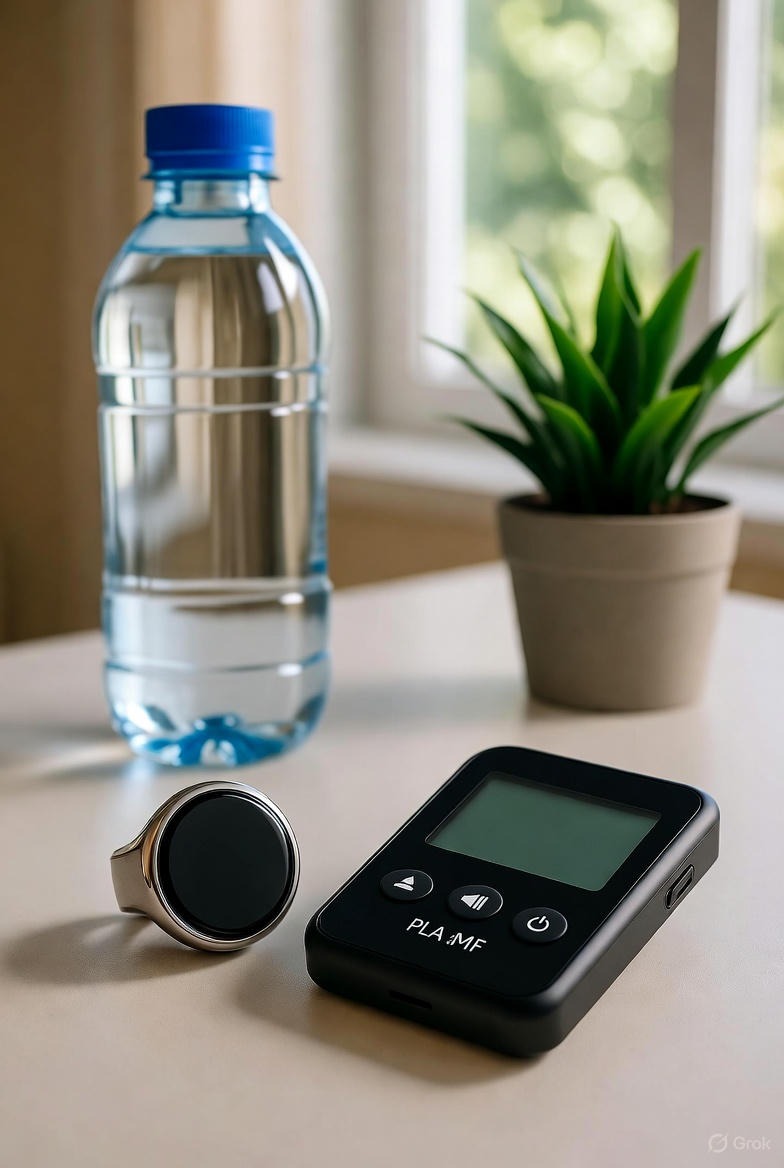
A 30-day challenge for beginners to get started with HRV tracking.
The Beginner's 30-Day HRV Tracking Challenge: Transform Your Body’s Hidden Language Into Lifelong Vitality
You know that feeling. You wake up after a solid eight hours, yet you’re dragging. Your coffee doesn’t quite kick in, your workout feels heavier than it should, and by mid-afternoon, you’re running on fumes. You might blame stress, poor sleep, or just “getting older.” But what if you had a precise, numerical gauge for your body’s true readiness—not just a guess? What if you could move from reactive health management to proactive, personalized vitality?
Enter Heart Rate Variability, or HRV. Far from being just another wellness buzzword, HRV is your nervous system’s most honest translator. It measures the subtle, millisecond variations between each heartbeat, revealing the delicate dance between your “gas pedal” (sympathetic nervous system) and your “brake pedal” (parasympathetic nervous system). A higher, more resilient HRV generally signals a body that is recovered, adaptable, and primed for stress. A lower HRV can be a whispered warning of overload, fatigue, or imbalance.
Yet, for most, HRV remains a mysterious metric glimpsed on a smartwatch, often misunderstood and almost always underutilized. That ends today.
Welcome to The Beginner’s 30-Day HRV Tracking Challenge. This is not another fleeting fitness fad. This is a deep-dive, evidence-backed journey into self-optimization. Over the next 30 days, you will learn to speak the language of your own physiology. You will transform that cryptic number into a daily guide for training, recovery, nutrition, and stress management. You’ll move from being a passenger in your health journey to becoming the expert pilot, with HRV as your trusted cockpit instrument.
And the best tool for this journey? A dedicated wellness wearable like the Oxyzen smart ring. While watches have their place, a ring offers continuous, unobtrusive, and medically-graded data—especially during sleep, when your body tells its most truthful story. Wearing Oxyzen is like having a 24/7 personal biofeedback coach on your finger, providing the consistent, accurate data you need to make this challenge a resounding success. Ready to decode your body and unlock a new level of well-being? Let’s begin.
What Exactly is HRV? Decoding Your Body's Master Metric
To embark on this 30-day challenge, you first need to understand what you’re measuring. Heart Rate Variability might sound complex, but its core principle is elegantly simple.
Contrary to popular belief, a healthy heart does not beat with the monotonous regularity of a metronome. If your ECG looked like a perfect, evenly-spaced line, it would actually be a sign of severe distress or pathology. Instead, a healthy, resilient heart exhibits subtle, constant variations in the time interval between successive beats. This variance is measured in milliseconds and is known as your HRV.
Why does this variation exist? It’s the direct output of a timeless tug-of-war inside your autonomic nervous system (ANS). Your ANS runs all your background operations—digestion, hormone release, temperature control, and, of course, heart rate.
Your Sympathetic Nervous System (SNS) is your “fight-or-flight” system. It’s the gas pedal. When activated by stress, excitement, or danger, it releases adrenaline and noradrenaline, making your heart beat faster and more rigidly, decreasing HRV to prepare for immediate action.
Your Parasympathetic Nervous System (PNS) is your “rest-and-digest” system. It’s the brake pedal. Often associated with the vagus nerve, it promotes relaxation, recovery, and digestion. When it’s in charge, it slows the heart and introduces more variability between beats, increasing HRV.
“HRV is essentially a snapshot of the conversation between your brain and your heart,” explains Dr. Ellen Chambers, a leading researcher in applied psychophysiology. “A high HRV indicates a robust, responsive system that can swiftly shift gears—revving up to meet a challenge and then smoothly downshifting to recover. A low HRV suggests one system is dominating, often the stressed sympathetic, leaving the body stuck in a state of high alert with limited capacity to relax and repair.”
It’s crucial to understand: HRV is highly personal. There is no universal “good” number. A 45 ms might be excellent for one person and a sign of trouble for another. Your age, genetics, sex, and overall fitness level all set your unique baseline. This is why the 30-day challenge is so powerful—it’s about tracking your trends over time, not comparing your score to anyone else’s.
Common methods for measuring HRV include the RMSSD (Root Mean Square of Successive Differences), which is excellent for shorter readings and is highly sensitive to parasympathetic activity, and SDNN (Standard Deviation of NN Intervals), often used over longer periods like 24 hours. For the purpose of this daily challenge, we’ll focus on morning, resting HRV readings, which provide the cleanest benchmark of your recovery status.
Think of your HRV as the most intimate form of biofeedback. It doesn’t lie about your lifestyle. That late-night alcohol, that intense argument, that poor night’s sleep, or that brilliant workout—they all leave their signature on your morning HRV score. By learning to read these signatures, you gain an unprecedented level of self-awareness. For a deeper dive into the science of how devices like smart rings capture this data, you can explore our blog for more detailed breakdowns.
Why HRV is the Ultimate Biohack for Modern Life
In a world saturated with health metrics—steps, calories, sleep stages, VO2 max—why does HRV deserve the spotlight? Because it is uniquely predictive, holistic, and actionable. It’s the ultimate biohack because it gives you a direct line to your body’s unconscious state, allowing you to make conscious, intelligent decisions.
1. The Predictive Power of HRV: Your Early-Warning System HRV isn’t just a report card on yesterday; it’s a forecast for today. Numerous studies in sports science have shown that a significant drop in an athlete’s morning HRV (typically 7-10% below their rolling baseline) can predict non-functional overreaching or increased injury risk before performance declines or pain sets in. This principle applies equally to the everyday “athlete” dealing with the marathons of work, family, and life. A sustained dip in your HRV can be your body’s earliest signal that you’re flirting with burnout, an impending cold, or chronic stress accumulation. It allows you to pivot proactively—perhaps opting for a gentle walk instead of a HIIT class, prioritizing an early night, or saying no to an extra commitment.
2. The Holistic Health Mirror Unlike a scale that only measures mass or a step counter that only measures volume, HRV reflects your total load. It integrates signals from virtually every system in your body:
Physical Load: Training intensity, muscle soreness, illness.
Mental Load: Work deadlines, cognitive effort, anxiety.
This is why you might see your HRV plummet after a night of poor sleep and after a stressful presentation. The body doesn’t differentiate between physical and psychological stress; it all contributes to your allostatic load. HRV measures the sum total.
3. The Gateway to Autonomic Nervous System Balance For those interested in meditation, breathwork, or cold exposure, HRV provides tangible proof of their efficacy. Practices like coherent breathing (~5-6 breaths per minute) have been shown to directly increase HRV by stimulating the vagus nerve and enhancing parasympathetic tone. By tracking your HRV, you can move from “I think meditation helps” to “My HRV improves by an average of 12% on days I do my 10-minute breathing exercise.” This turns wellness from a philosophy into a measurable science. You can discover how Oxyzen’s technology helps track these subtle changes with clinical-grade precision.
4. Personalization Beyond Guesswork The modern wellness trap is following generic advice. “Eight hours of sleep is a must!” “You must train six days a week!” “Never eat after 7 PM!” HRV smashes this one-size-fits-all approach. It answers the critical question: “What does MY body need TODAY?”
Fitness: Should you go hard or go home? Your HRV trend guides you.
Nutrition: Did that new food help your recovery or cause inflammation? Check your HRV.
Recovery: Is that extra rest day working, or are you becoming deconditioned? Your HRV trend tells the tale.
The power of this 30-day challenge lies in cultivating this responsive relationship with your body. You’ll stop ignoring whispers until they become screams. You’ll start honoring your body’s true needs, building resilience from the inside out. This journey aligns perfectly with our core mission at Oxyzen: to empower individuals with personalized, actionable data. You can read more about our vision and values here.
Gear Up: Choosing the Right Tool for Your HRV Journey (Why a Smart Ring Wins)
To succeed in this challenge, you need consistent, accurate data. You can’t manage what you don’t measure properly. While there are many ways to measure HRV, not all are created equal for the purpose of daily, long-term lifestyle tracking.
The Contenders:
Chest Strap Monitors (e.g., Polar H10): The gold standard for accuracy during exercise. They use ECG technology to detect each heartbeat’s electrical signal. However, they are impractical for 24/7 wear, especially sleep tracking, which is critical for HRV.
Wrist-Based Wearables (Smartwatches): Convenient and popular. They use optical PPG (photoplethysmography) sensors—flashing LED lights to measure blood flow under the skin. Accuracy can be compromised by motion, skin tone, tattoo ink, and loose fit. Wearing a watch tightly enough for good readings at night can be uncomfortable for many.
Finger-Worn Devices (Smart Rings): Like the Oxyzen ring, these also use advanced PPG sensors but with distinct advantages for HRV tracking.
The Case for the Smart Ring: Your Unobtrusive Biofeedback Partner
For a 30-day lifestyle-focused HRV challenge, a smart ring like Oxyzen offers a compelling blend of medical-grade accuracy and seamless wearability. Here’s why:
Optimal Measurement Site: The vascular structures in your finger (the palmar digital arteries) are rich and close to the surface, often providing a stronger PPG signal than the wrist. The ring’s fixed, snug fit ensures consistent sensor contact without a tight band.
The Sleep Advantage: This is the killer feature. The most valuable HRV reading for recovery is your nightly, resting HRV, particularly during deep sleep phases when external influences are minimized. A ring is comfortable and unintrusive to wear all night, capturing this pristine data while you rest. You wake up to a complete recovery score, not a groggy, manually-taken reading.
24/7 Continuity: Stress and recovery don’t operate on a 9-to-5 schedule. A ring provides passive, all-day monitoring, building a comprehensive picture of how your daily activities—meetings, meals, commutes—affect your nervous system. It can detect stress moments you might mentally override.
Behavioral Nudges: Advanced rings don’t just collect data; they interpret it. The Oxyzen app might notice a correlation between late meals and poor sleep HRV, or it could remind you to do a breathing exercise when it detects an acute stress spike.
Discreet and Durable: A ring is a piece of jewelry. It doesn’t light up your wrist at night, get in the way during typing or workouts, or require daily charging. It fits effortlessly into your life.
“Choosing the right sensor is about aligning the tool with the goal,” says tech wellness expert Marcus Thorne. “If your goal is to optimize daily life and recovery, you need a device you’ll wear consistently that excels at capturing data at rest. The comfort and sleep-tracking prowess of a modern smart ring make it an ideal choice for the serious HRV enthusiast.”
As you start this challenge, your device is your companion. Ensuring it’s one you’ll wear without fail is step zero. To understand the full capabilities of a modern smart ring, learn more about how Oxyzen’s technology and design are built for this exact purpose. If you have questions about device selection or setup, our comprehensive FAQ page is an excellent resource.
Setting Your Baseline: The Critical First 7 Days
You have your tool. You understand the “why.” Now, it’s time to establish your personal normal. The first week of this challenge is not about changing anything. It is purely about observation and data collection. Think of yourself as a scientist and your life as the ecosystem you’re studying. Your objective is to discover your unique HRV fingerprint without interference.
Your Week 1 Protocol:
Consistent Morning Reading: If using a device that requires a manual reading (like some apps with a chest strap or finger sensor), take it immediately upon waking, before you get out of bed, sit up, or check your phone. Stay still and breathe normally for the 60-90 second reading. If using a 24/7 device like Oxyzen, simply note your overnight/average HRV score each morning in the app.
Log Contextual Data (The “Why” Behind the Number): This is the most important step. Each day, record brief notes on these factors:
Sleep: Hours in bed, perceived quality (1-10), any wake-ups.
Resist the Urge to “Optimize”: Do not try to “game” your score this week. Eat, sleep, and train as you normally would. The goal is an honest baseline, not an artificially inflated one.
What You’re Looking For:
By Day 7, you should start to see patterns. Calculate your average HRV for the week. This is your preliminary baseline. More importantly, look at the daily fluctuations in relation to your notes.
Did HRV drop the day after your intense leg day?
Did it spike after a particularly restful weekend day?
Was it consistently lower on workdays versus weekends?
Did that glass of wine with dinner correlate with a lower score?
Understanding Your “Normal” Range: Your body isn’t a machine. A healthy HRV has natural variability. Don’t panic over a single low day. Instead, look for significant deviations—typically a consistent drop of more than 7-10% from your weekly average that lasts for several days. This “low zone” is what will later inform your decision to pull back.
This baseline week lays the foundation for everything that follows. It transforms HRV from an abstract number into a personal story. You begin to see the tangible impact of your choices. Many users are surprised by the clarity of this feedback. As one user shared on our testimonials page, “The baseline week was an eye-opener. I never realized how much my ‘normal’ Tuesday night wine was affecting my Wednesday recovery until I saw the data side-by-side.”
The Fundamentals: The 5 Pillars That Move Your HRV Needle
With your baseline established, we delve into the core lifestyle levers that most directly influence Heart Rate Variability. Over the next 21 days, you will experiment with these pillars systematically. Think of them as dials you can adjust to tune your nervous system for greater resilience.
Pillar 1: Sleep – The Non-Negotiable Foundation
Sleep is the primary time for parasympathetic (rest-and-digest) dominance and systemic repair. Poor sleep quality or quantity is the fastest way to suppress HRV.
Actionable Insight: Use your device to track not just duration, but consistency (going to bed/waking at the same time) and sleep architecture (deep/REM sleep). A higher proportion of deep sleep often correlates with better morning HRV.
30-Day Experiment: For one week, prioritize getting 7-9 hours of sleep and maintaining a consistent bedtime within a 30-minute window. Observe the effect on your HRV trend.
Pillar 2: Nutritional Rhythms – What, When, and How Much
Food is information that can trigger stress or support recovery. Large, heavy meals, excessive sugar, and alcohol are potent HRV depressants, especially close to bedtime.
Actionable Insight: Note the timing and composition of your last meal. A high-fat, large meal within 2-3 hours of sleep often forces your body to prioritize digestion over recovery, lowering overnight HRV.
30-Day Experiment: For one week, try finishing your last meal at least 3 hours before bed and observe your overnight HRV. In another week, note the impact of alcohol consumption on your next morning’s score.
Pillar 3: Strategic Movement – Train Smarter, Not Just Harder
Exercise is a hormetic stressor—the right dose builds resilience; too much breaks it down. Your HRV helps you find that sweet spot.
Actionable Insight: It’s normal for HRV to dip slightly the morning after intense training (a sign of adaptive stress). It should rebound within 24-48 hours. A failure to rebound signals possible overreaching.
30-Day Experiment: After a very intense workout, monitor your HRV for the next two mornings. Does it bounce back? Try following a hard training day with a genuinely easy recovery day (walking, stretching, rest) and see if it accelerates the rebound.
Pillar 4: Conscious Recovery – Active vs. Passive
Recovery isn’t just doing nothing. It’s an active process of down-regulating the nervous system.
Actionable Insight: Practices that directly stimulate the vagus nerve (the main parasympathetic highway) can boost HRV. This includes diaphragmatic breathing, meditation, yoga nidra, and even laughter.
30-Day Experiment: Incorporate a 5-10 minute guided breathing or meditation session (using an app like Insight Timer or Calm) into your daily routine, ideally in the evening. Track its effect on your sleep and morning HRV over a week.
Pillar 5: Emotional & Environmental Stress – The Silent Saboteurs
Chronic mental stress, toxic relationships, and cluttered environments keep your SNS subtly engaged, wearing down HRV over time.
Actionable Insight: Your device may show acute HRV dips during stressful events. Use this as a cue to practice a brief centering technique.
30-Day Experiment: Practice “stress inoculation.” When you feel stressed or see an HRV dip, pause for three deep, slow belly breaths. This simple act can initiate a parasympathetic shift.
Mastering these pillars is the essence of biohacking. You are no longer blindly following routines but intentionally designing a lifestyle that builds physiological resilience. For more detailed strategies on each of these pillars, from sleep hygiene to stress-busting techniques, our blog features a wealth of supporting articles.
Interpreting Your Data: From Numbers to Narrative
Data is just noise without interpretation. Now that you’re actively tracking and experimenting, you need a framework to understand the story your numbers are telling. Avoid the trap of daily obsession; instead, adopt a trend-based, inquisitive mindset.
The 3 Key Lenses for Viewing Your HRV Data:
The Acute Lens (Day-to-Day): “What happened yesterday?” Look for the most obvious correlations. A sudden 20% drop? Check your log: Was it the late-night work email session, the intense workout, or the spicy curry? This lens is for immediate cause-and-effect learning.
The Trend Lens (Weekly/Monthly): This is your most important view. Are your 7-day and 30-day averages moving up, down, or staying stable? A gradually rising trend suggests improving fitness and resilience. A gradually declining trend is a red flag suggesting chronic stress accumulation, overtraining, or an underlying health issue. Your device’s app should display this trend line clearly.
The Contextual Lens (Life Stages): HRV is sensitive to life phases. A stressful project at work, planning a wedding, or caring for a newborn will likely suppress your scores. This isn’t “bad”—it’s real. The goal here isn’t to have high HRV during these times, but to use the data to support yourself better, perhaps by doubling down on the fundamentals (sleep, nutrition) and managing expectations for performance.
How to Respond to Key Signals:
Signal: Single Low Day
Narrative: “My body is asking for a lighter day.”
Action: Honor it. Make it a recovery-focused day: prioritize sleep, eat nourishing foods, choose gentle movement like walking or yoga, and incorporate breathing exercises. Don’t add extra stress.
Signal: Consistently Low Trend (5-7+ days below baseline)
Narrative: “My system is under sustained pressure and not recovering fully.”
Action: Investigate deeply. Are you sick or fighting something off? Is work or home life exceptionally taxing? Have you been training hard without a deload week? This is a sign to pull back on intense training, audit your sleep and stress, and consider if you need a true break. Consulting the FAQ for common interpretation questions can be helpful here.
Signal: Consistently High or Rising Trend
Narrative: “My body is adapting well and building resilience!”
Action: Celebrate and consolidate. You’re likely nailing the balance between stress and recovery. This is a green light to maintain or even cautiously progress your training and other goals.
Remember, you are the expert on you. The data provides clues, but you hold the context. A low HRV day when you feel energetic and great might be less concerning than a “normal” HRV day when you feel drained. Always pair the metric with your subjective feeling. This synthesis of objective data and subjective experience is where true wisdom and personalized health strategy are born.
Building Your Personal HRV Protocol: A Day in the Life
Theory is powerful, but practice is everything. Let’s translate these principles into a concrete, actionable daily and weekly protocol that you can adapt throughout the 30-day challenge and beyond. This is a sample framework based on best practices—your personal version will evolve as you learn.
Morning Routine (The Check-In):
Upon Waking: Before grabbing your phone, take a mental note of how you feel. Rested? Drained? Achy?
Review Your Data: Open your app (e.g., Oxyzen). Look at your Overnight HRV and Sleep Score. Has your HRV increased, decreased, or stayed near your baseline? Note the trend, not just the single number.
Plan Your Day: Let the data guide your intentions.
HRV at or above baseline + Good Sleep: “Green Light.” You’re recovered. Proceed with planned workouts, challenging tasks.
HRV slightly below baseline (5-10%): “Yellow Light.” Proceed with caution. Consider moderating workout intensity, adding more recovery breaks, and being mindful of stress.
HRV significantly low (>10% below) or poor sleep: “Red Light.” Prioritize recovery. Swap intense training for walking, stretching, or rest. Focus on hydration, nutrition, and stress management. It’s a “listen to your body” day.
Throughout the Day (The Practice):
Fuel Strategically: Hydrate well. Time larger meals for when you’re less active, and aim for a lighter evening meal.
Move Intelligently: If it’s a green light day, attack your workout. If yellow or red, active recovery is key. A 20-minute walk can actually boost HRV more than pushing through a heavy session.
Manage Stress in Real-Time: Use your device’s stress alerts or your own awareness as a cue. When you feel tension rise, practice a 90-second reset: Stop, take three slow, deep breaths (5 seconds in, 5 seconds out), and release your shoulders. This micro-habit has macro impacts on your nervous system.
Evening Wind-Down (The Preparation):
Digital Sunset: Dim lights and avoid screens 60-90 minutes before bed. The blue light disrupts melatonin, impairing sleep quality and next-day HRV.
Activate the Parasympathetic: Engage in a down-regulation ritual. This could be:
Coherent Breathing: 5 minutes of breathing at 5-6 breaths per minute.
Gentle Mobility or Stretching: Yoga or simple stretches.
Gratitude Journaling: Writing down 3 good things shifts mental state.
Consistent Bedtime: Aim to get in bed at the same time each night, creating a powerful circadian rhythm cue.
Weekly Review (The Scientist): Each weekend, spend 15 minutes reviewing your weekly data and journal.
What were your highest and lowest HRV days? What was happening?
Did any experiment (e.g., earlier dinner, daily meditation) show a clear positive pattern?
What’s your average trend telling you?
This protocol turns HRV tracking from a passive activity into an active, engaging dialogue with your body. It’s the practical application of everything you’ve learned so far. For inspiration on how others have integrated this into busy lives, the real-world stories on our testimonials page are worth exploring.
The Mindset Shift: From Obsession to Insightful Partnership
As you move deeper into the challenge, a crucial evolution must take place: the shift in your relationship with the data. It’s easy to become neurotic, checking your score anxiously each morning, letting a low number ruin your day, or becoming addicted to “chasing” a high score. This defeats the entire purpose. The goal is not to have a perfect HRV; it is to use HRV to live a more balanced, vibrant, and resilient life.
Cultivating the Right Mindset:
Embrace Curiosity, Not Judgment: See a low score not as a “failure” but as a fascinating piece of biofeedback. Ask, “What is my body trying to tell me?” instead of “Why am I so bad at this?”
Look for Trends, Not Dots: A single data point is a snapshot; the trend is the movie. Don’t over-interpret one day. Focus on the direction over weeks and months.
HRV is a Guide, Not a God: It is one input among many. Always combine it with subjective feelings (energy, mood, motivation, soreness). If your HRV is low but you feel fantastic, trust your feeling. The metric serves you, not the other way around.
Practice Compassion: Your body is not a machine to be optimized into oblivion. It is a living, adapting system that experiences life. There will be low periods due to grief, passion projects, or celebration. That’s human. The data helps you navigate these periods with more grace, not avoid them.
This journey is as much about internal awareness as it is about external numbers. You are building a partnership with your physiology. This philosophy of compassionate, data-informed self-care is at the heart of what we do. You can read more about our mission to foster this kind of empowered wellness.
Your First Deep Dive Experiment: The "Recovery Response" Week
Now, it’s time to put all this knowledge into a focused, week-long experiment. We’ll call this “Recovery Response Week.” The goal is to explicitly test how quickly and effectively you can influence your HRV through intentional recovery practices.
The Experiment Design (Choose one focus for 7 days):
Option A: The Sleep Priority Experiment. For one week, make sleep your non-negotiable primary goal. Aim for 8 hours in bed, with a consistent bedtime and wake time. Implement a strict 60-minute screen-free wind-down routine. Every morning, record your HRV and sleep score.
Option B: The Stress-Downregulation Experiment. For one week, commit to two daily 10-minute sessions of a parasympathetic-activating practice. This could be guided meditation, box breathing (4-in, 4-hold, 4-out, 4-hold), or a gentle yoga flow. Do one session in the morning and one in the evening. Track your daily HRV and overall sense of calm.
How to Analyze Your Results:
At the end of the week, look at your data.
Did your average HRV for the week increase compared to your baseline week?
Was there less day-to-day variability (more stable scores)?
How did your subjective energy and mood correlate?
This experiment cements the learning. It moves theory into lived experience. You will have clear, personal evidence of what moves the needle for you. Perhaps you discover you’re incredibly sensitive to sleep timing, or that evening breathwork is a game-changer for your overnight recovery. This personalized insight is priceless and forms the cornerstone of your long-term health strategy.
Armed with your baseline, an understanding of the core pillars, a daily protocol, and the right mindset, you are now fully prepared to engage with the second phase of the 30-day challenge. The journey ahead involves refining your experiments, tackling common obstacles, and integrating these practices for lifelong resilience. The path to mastering your body’s hidden language is now clearly marked, and you are well on your way.
Navigating Plateaus, Dips, and Disruptions: The Advanced Troubleshooting Guide
By now, you’ve established your baseline, experimented with the core pillars, and developed a daily protocol. But what happens when, despite your best efforts, your HRV trend stagnates or takes an unexpected dive? This is not a sign of failure; it’s a critical part of the learning process. Advanced HRV interpretation involves navigating these nuances and understanding the difference between a harmless fluctuation and a meaningful signal.
Understanding Common HRV Patterns and Their Meanings
The Plateau: When Progress Stalls After an initial period of improvement, it’s common for HRV to level off. This is a normal adaptation. Your body has reached a new equilibrium.
Possible Causes: Your current routine is no longer a novel stressor. You may have adapted to your workout regimen, sleep routine, or diet.
The Actionable Response: This is an invitation to introduce a new, intelligent stimulus. Consider a controlled variable change:
Fitness: If you’ve been running, try adding a weekly strength session. If you’ve been lifting, incorporate some cardiovascular conditioning. The novel stress can prompt new adaptation.
Recovery: Deepen your practice. Move from 5 minutes of breathwork to 10, or try a new modality like thermal therapy (a contrast shower).
Nutrition: Experiment with meal timing variations or adding a new micronutrient-dense food. Track the effect of this single change over 7-10 days.
The Unexplained Dip: The Mystery Drop Sometimes, your HRV drops significantly without an obvious cause in your log. This can be frustrating but is incredibly informative.
Possible Causes:
Subclinical Infection: Your immune system may be fighting off a virus before any symptoms appear. HRV is exquisitely sensitive to this immune activation.
Environmental Stressors: Extreme heat or cold, poor air quality, or high altitude can increase systemic stress.
Dehydration or Electrolyte Imbalance: Often overlooked, hydration status directly impacts blood volume and nervous system function.
Hormonal Fluctuations: For women, specific phases of the menstrual cycle (particularly the luteal phase) can naturally lower HRV.
The Actionable Response: Treat it as a "Yellow Alert." Double down on the fundamentals without panic. Prioritize sleep, hydration, whole foods, and gentle movement. Avoid intense training. Observe for 2-3 days. If the dip persists or you develop symptoms, you may have caught an illness early, and your proactive rest could shorten its duration. If it rebounds quickly, note it as a reminder of your body's hidden battles.
The Overtraining/Overreaching Signal: A Sustained Downward Trend This is the most important pattern to recognize. A consistent, multi-week decline in your HRV baseline, often accompanied by a rise in your resting heart rate, is a classic sign of non-functional overreaching.
Key Indicators: HRV consistently >10% below your established baseline for 7+ days, coupled with feelings of fatigue, irritability, insomnia, or loss of motivation.
The Actionable Response: This requires a structured deload. This is not just taking a day off. It’s a planned week of significantly reduced training volume (cut by 50-60%) and intensity, coupled with maximal recovery focus. The goal is to provide a supercompensation signal. After a proper deload, you should see your HRV not just rebound but often surpass its previous baseline. Ignoring this signal is the fast track to burnout, injury, or illness.
The Positive Feedback Loop: When Everything Clicks You’ll also experience periods where your HRV trend is rising, sleep is deep, and energy is abundant. This is the "green zone."
The Actionable Response: Consolidate and explore. Maintain the routines that got you here. This is also a safe window to carefully push your limits in a targeted area—aim for a personal best in a workout, take on a challenging project at work, or engage in more socially demanding activities. Your high HRV indicates you have the resilience to handle and grow from these stressors.
Remember, context is everything. A low HRV during a vacation where you’re hiking all day and sleeping deeply is fundamentally different from a low HRV during a period of work chaos and poor sleep. One is a positive, adaptive stress; the other is depleting. Your journal is the key to differentiating them. For more nuanced discussions on interpreting complex data patterns, our community often shares insights on our blog.
HRV and Specific Life Stages: Tailoring the Challenge to Your Reality
Your life context dramatically influences your HRV and how you should apply its insights. A one-size-fits-all approach fails here. Let’s explore how to adapt the 30-day challenge to different life phases and demands.
For the Endurance Athlete or Serious Gym-Goer
For you, HRV is the ultimate training optimization tool, moving beyond generic periodization to daily, personalized readiness.
Primary Application: Load Management. Use your morning HRV to decide between a planned hard session or a modified, lighter day. The rule of thumb: If HRV is significantly low, convert a high-intensity day into a low-intensity, skill-based, or recovery session.
Key Experiment: Implement a “Flexible Periodization” week. Plan your workouts for the week but leave the intensity level as “TBD” based on your morning read. You’ll learn the delicate balance between pushing for adaptation and respecting recovery.
Watch For: The difference between a healthy post-training dip (which recovers in 1-2 days) and the chronic dip of overreaching. The former is your goal; the latter is your warning.
For the High-Stress Professional
Your nervous system is often bombarded with psychological stressors that are chronic and insidious. HRV becomes your gauge for cognitive load and emotional resilience.
Primary Application: Stress Buffer Management. Identify which activities deplete your HRV (e.g., back-to-back meetings, tight deadlines) and which restore it (e.g., a midday walk, a proper lunch break).
Key Experiment: The “Meeting Recovery” test. After a cognitively draining meeting or work block, take 2 minutes for a coherence breathing exercise (inhale 5 sec, exhale 5 sec). Use a quick spot-check on your wearable (if available) or simply note your subjective sense of calm. Over time, correlate these micro-recoveries with your overall HRV trend and afternoon energy levels.
Critical Insight: You may find that mental stress suppresses your HRV more than physical exercise. This knowledge is power—it justifies building non-negotiable recovery breaks into your calendar as essential for performance, not as laziness.
For Women: Navigating the Menstrual Cycle
Hormonal fluctuations across the cycle have a pronounced, predictable effect on HRV and resting heart rate. Tracking them together is revolutionary for female health.
Typical Pattern:
Follicular Phase (Post-period to Ovulation): HRV tends to be higher and more stable. This is often a "green zone" for higher-intensity training and new challenges.
Luteal Phase (Post-Ovulation to Period): Progesterone rises, increasing core body temperature and metabolic rate. HRV often naturally declines, and resting heart rate may increase by 3-8 BPM. This is a biological reality, not a failing.
Primary Application: Cycle-Synced Training & Recovery. Plan your month with your biology. Schedule demanding workouts, personal best attempts, and important presentations for your high-resilience follicular phase. Design your luteal phase for maintenance training, strength-focused (not peak) sessions, yoga, and extra recovery. This prevents you from misinterpreting a natural dip as overtraining.
Key Experiment: Simply track your HRV and RHR alongside your cycle for two months. The pattern will likely become clear, allowing you to work with your physiology, not against it.
For the Traveler or Shift Worker
Disrupting your circadian rhythm is one of the most powerful suppressors of HRV. Jet lag and irregular hours present a unique challenge.
Primary Application: Circadian Damage Control. Use HRV to gauge how severely a trip or shift affects you and to track your re-synchronization.
Actionable Strategies:
Pre-Travel/Shift: Prioritize sleep and consistency in the days leading up to the disruption.
During: Use light exposure strategically. Seek morning light in your new time zone; avoid bright light at night. Hydrate aggressively. Consider timed meals to help reset your internal clock.
Recovery Tracking: Upon returning or after a series of shifts, watch your HRV as a marker of recovery. Don’t expect to perform at your peak until your HRV has stabilized back to its baseline. This data can help you negotiate recovery time more effectively.
Tailoring the challenge to your life isn’t an optional extra; it’s the core of making HRV tracking sustainable and genuinely useful. It transforms it from a fitness metric into a life management system. Understanding these individual applications is part of our mission to deliver personalized health insights.
Advanced Recovery Techniques: Going Beyond the Basics
You’ve mastered sleep hygiene, breathwork, and nutrition timing. Now, let’s explore the next tier of evidence-based practices that can directly stimulate parasympathetic activity and boost HRV. These are powerful tools for your protocol, especially during "yellow" or "red" light days, or when you want to enhance your resilience ceiling.
1. Thermal Therapy: The Power of Heat and Cold
Exposure to extreme temperatures is a potent hormetic stressor that trains your autonomic nervous system to adapt more efficiently.
Cold Exposure (Ice Baths, Cold Showers): Acute cold exposure causes an initial sympathetic spike (the gasp), followed by a powerful parasympathetic rebound as your body works to regain homeostasis. This trains vagal tone. Protocol: A 2-3 minute cold shower (ending with 30-60 seconds of cold) or a 1-3 minute ice bath (50-59°F) can boost HRV in the subsequent 24 hours. Never combine with intense training stress on the same day.
Sauna & Heat Therapy: Heat stress increases heart rate and blood flow, mimicking a mild cardiovascular workout, and is followed by a deep relaxation response. Protocol: A 20-30 minute sauna session (at 160-180°F) 2-3 times per week has been shown to improve cardiovascular markers and may support HRV adaptation over time.
The Ultimate Hack: Contrast Therapy. Alternating between heat and cold (e.g., 3 minutes sauna, 1 minute cold plunge, repeated 3x) is believed to provide the benefits of both while powerfully "pumping" the autonomic nervous system, potentially leading to greater resilience.
2. Vagus Nerve Stimulation (VNS) Techniques
The vagus nerve is the superhighway of the parasympathetic system. Directly stimulating it can have immediate and cumulative effects on HRV.
Humming and Singing: The vagus nerve is connected to your vocal cords. Humming, chanting, or singing loudly creates internal vibrations that can stimulate it. Try humming a single note for 5-10 minutes.
Gargling and Gag Reflex: Vigorous gargling with water activates the muscles at the back of the throat connected to the vagus. Similarly, a gentle gag reflex (using a clean tongue depressor) can trigger a strong parasympathetic response. Proceed with caution.
Massage & Acupressure: Massaging the carotid sinus on the neck (very gently) or applying pressure to certain points like the tragus of the ear (the small flap in front of the ear canal) are being studied for their VNS potential.
3. Nature Immersion & "Awe" Experiences
This isn't just folklore; it's "neuroaesthetics." Spending time in natural environments, especially those that evoke a sense of awe, has been consistently linked to increased HRV and reduced markers of stress.
Protocol: A 20-minute "awe walk" where you consciously focus on vastness or natural beauty (a panoramic view, intricate patterns in leaves, the sky) can be more restorative than a distracted walk while listening to a podcast. This combines light movement, sensory engagement, and psychological shift.
4. Strategic Social Connection
Loneliness and social stress are major HRV suppressors. Positive, warm social interactions trigger the release of oxytocin, which has a calming effect on the amygdala and supports parasympathetic activity.
Protocol: Prioritize face-to-face or voice-to-voice connection with supportive people. Even a shared laugh can boost HRV. Notice if certain social interactions drain your score (obligatory, conflict-heavy) and which replenish it (joyful, relaxed).
Implementing Advanced Techniques: Don’t try all of these at once. During your 30-day challenge, pick one advanced technique to experiment with for a week. For example, add a 3-minute cold blast at the end of your daily shower and track its effect on your HRV trend and daily stress resilience. Document your experience. Does it help you recover faster from a dip? Does it improve your sleep?
These techniques are about expanding your recovery toolkit. They empower you to actively engineer resilience, not just hope for it. For more detailed guides on implementing specific advanced recovery protocols, our blog is a growing resource library.
The 30-Day Challenge Roadmap: Your Week-by-Week Playbook
Let’s synthesize everything into a clear, actionable 30-day plan. This roadmap provides structure while allowing for personalization based on your data.
Pre-Challenge Prep (Days -3 to -1):
Secure your tracking device (e.g., Oxyzen ring). Ensure it’s fitted and synced.
Download your chosen app and familiarize yourself with its HRV display.
Set up a simple journal (digital or analog) for your daily context notes.
Mentally commit to the observation phase.
Week 1: The Baseline & Observation Week
Theme: Be a Neutral Scientist.
Daily Task: Wear your device continuously. Record morning HRV/RHR. Log sleep, exercise, nutrition, stress, and mood. Do not change any habits.
Weekend Review: Calculate your average HRV for the week. This is your preliminary baseline. Look for one obvious correlation (e.g., "alcohol = lower next-day HRV").
Week 2: The Foundation Week (Pillar Focus)
Theme: Optimize One Keystone Habit.
Choose ONE pillar to improve: e.g., Sleep. Aim for a consistent bedtime and 7.5+ hours in bed each night.
Daily Task: Continue tracking. Consciously implement your chosen habit.
Weekend Review: Did your average HRV improve from Week 1? How did your subjective energy feel? Note the impact of your focused change.
Week 3: The Experimentation & Protocol Week
Theme: Build Your Daily System.
Daily Task: Implement your full "Day in the Life" protocol from earlier. Use morning HRV to guide daily activity (Green/Yellow/Red).
Experiment: Run your chosen "Deep Dive Experiment" (e.g., Recovery Response Week with breathwork).
Weekend Review: Is the protocol sustainable? What was the result of your experiment? Begin looking at 7-day trends, not daily numbers.
Week 4: The Advanced Integration & Troubleshooting Week
Theme: Refine and Personalize.
Daily Task: Continue your protocol, but now actively use the data to troubleshoot. If you hit a plateau, consider a controlled variable change.
Experiment: Try one advanced recovery technique (e.g., cold exposure).
Weekend Review: Calculate your final 30-day average. Compare to Week 1. What is your most significant learning? What one habit will you carry forward indefinitely?
This roadmap turns the challenge from an abstract concept into a concrete journey. Each week has a clear purpose, building towards profound self-knowledge. Users who follow a structured path often see the most dramatic insights, as shared in many of the real-world stories from our community.
The Social and Supportive Side: Why Community Matters in Biohacking
Tracking HRV can sometimes feel like a solitary pursuit. You’re immersed in your own data, navigating your unique physiology. However, integrating a social or community element can dramatically enhance your learning, motivation, and consistency.
The Benefits of Shared Tracking
Normalization: Seeing that others also experience unexplained dips, plateaus, and life-related crashes helps reduce anxiety and self-judgment. You learn what’s normal in the human experience of tracking.
Collective Wisdom: A community is a hive mind for troubleshooting. Someone else may have already discovered that a specific supplement, a particular type of yoga, or a meal timing strategy works wonders for a HRV pattern just like yours.
Accountability & Motivation: Sharing your commitment to the 30-day challenge with a friend or a group creates positive accountability. Celebrating each other’s green days and supporting each other through red days makes the journey more engaging.
How to Build Your HRV Support System
The Buddy System: Find one friend, partner, or colleague to take the 30-day challenge with you. Agree to share your weekly highs, lows, and learnings every Sunday. The simple act of explaining your data to someone else deepens your own understanding.
Join a Digital Community: Many wearable brands have associated community forums or social media groups. These are excellent places to ask specific questions, share graphs (anonymized), and learn from power users. Oxyzen’s user community (often accessed via support channels) is a great example where users exchange tips.
Work with a Coach: For those who want to take performance or health goals to the next level, consider working with a certified health coach, functional medicine practitioner, or training coach who understands HRV. They can help you interpret complex trends and design highly personalized interventions.
A Note on Healthy Comparison
Comparison is often the thief of joy, especially with a personal metric like HRV. Never compare your absolute HRV number to someone else’s. A buddy might have an average of 80 ms while yours is 45 ms—this is meaningless and could be genetic. Only compare trends and responses. For example: "We both had a hard training day Thursday. Your HRV dropped 15% and rebounded in a day; mine dropped 30% and is still low. What did your recovery look like on Friday?" This is productive, insightful comparison.
Embracing the social side transforms biohacking from a cold, technical exercise into a shared human exploration of potential. It reminds us that the goal of optimizing our physiology is ultimately to show up more fully in our lives and for others. This spirit of shared growth is central to the story behind why Oxyzen was created.
Common Pitfalls and How to Avoid Them
Even with the best intentions, it’s easy to fall into traps that can derail your HRV tracking progress or lead to misinterpretation. Being aware of these pitfalls from the outset will save you time and frustration.
The Trap: Checking your score multiple times a day, letting a low morning number dictate your mood, or constantly trying to “hack” a higher score for tomorrow.
The Solution: Adopt a ritualistic, once-daily check-in. Review your data each morning as part of your protocol, make an intentional plan for the day, and then close the app. Trust the process and focus on living your life. Remember, you’re tracking trends over weeks, not winning a daily high-score game.
Pitfall 2: Ignoring Subjective Feelings
The Trap: Slaving to the number even when it contradicts how you feel. Pushing through a workout because your HRV is "green" even though you feel exhausted, or skipping one because it’s "red" when you feel energetic.
The Solution: Use the “Metric + Feeling” Matrix. Your subjective feeling is data point #1. HRV is data point #2. Make decisions at the intersection.
High HRV + Feeling Great = Full steam ahead.
Low HRV + Feeling Drained = Prioritize rest.
High HRV + Feeling Drained = Proceed with caution. You may be fighting something off.
Low HRV + Feeling Energetic = This is a common "stress euphoria" or sympathetic drive state. It’s a yellow light. Do your planned activity but at a reduced intensity. Your body is stressed even if your mind is eager.
Pitfall 3: Changing Too Many Variables at Once
The Trap: In Week 2, you start cold showers, meditation, a new diet, and a new training program simultaneously. When your HRV improves (or crashes), you have no idea which change was responsible.
The Solution: The One-Variable Rule. When experimenting, change only one significant variable per 1-2 week observation period. This is the core of the n=1 experiment. It requires patience but yields clear, actionable insights.
Pitfall 4: Misattributing Causes
The Trap: Assuming a dip is due to your workout when it was actually due to a difficult conversation you had before bed, or vice versa.
The Solution: Meticulous Context Logging. The more detail you log, especially about non-physical stressors, the clearer the patterns become. Don’t just log “stressful day.” Note: “Had a tense performance review at 4 PM, felt anxious for hours after.”
Pitfall 5: Quitting After a "Bad" Week
The Trap: Life gets chaotic, your HRV tanks for a week, and you feel you’ve “failed” the challenge and stop tracking.
The Solution: Reframe the “Bad” Week. This is the most valuable data you can get! It shows your body’s honest response to real-life stress. Track through it. Your recovery curve back to baseline after the stressful period is incredibly informative. It shows your resilience. Don’t quit; get curious.
Pitfall 6: Neglecting Device Fundamentals
The Trap: Wearing a wearable incorrectly (too loose, on the wrong finger/wrist), forgetting to charge it, or not updating software, leading to inconsistent or inaccurate data.
The Solution: Treat your device as a precision instrument. Follow the manufacturer’s guidelines for wear and care. For ring wearers like Oxyzen, ensure a snug but comfortable fit on a finger with good blood flow. Consistency in placement is key for reliable trend data. If you ever have technical questions, the official FAQ and support page is your first stop.
By steering clear of these common mistakes, you ensure that your 30-day challenge is a smooth, enlightening journey of discovery rather than a source of confusion or stress.
Synthesizing Your Learnings: From 30-Day Challenge to Lifelong Practice
As you approach the final days of the formal challenge, the focus shifts from active experimentation to synthesis and integration. The goal is no longer just to complete 30 days, but to distill the experience into a sustainable, lifelong practice that supports your health and goals.
Conducting Your "30-Day Review"
Set aside an hour at the end of your challenge to answer these pivotal questions:
The Quantitative Summary:
What was my starting (Week 1) average HRV?
What is my ending (Week 4) average HRV?
What was my highest single reading and the context?
What was my lowest single reading and the context?
What is my most stable, typical range?
The Qualitative & Behavioral Insights:
What was my single biggest “A-ha!” moment? (e.g., "Alcohol affects me for two days, not one.")
Which one pillar (Sleep, Nutrition, etc.) has the most leverage for my HRV?
What is one habit I experimented with that I will definitely keep? Why?
What is one habit I tried that I will definitely drop? Why?
How has my relationship with stress, recovery, and my body changed?
The Personal Protocol Definition: Based on your answers, write your Personal HRV Constitution. This is a short, living document. For example:
"My Green Light (Proceed): HRV within 10% of my 30-day average, feeling rested."
"My Red Light (Recover): HRV >15% below average for 2+ days. Action: Cancel intense training, prioritize 8+ hours sleep, 2 daily breathing sessions, no alcohol."
"My Non-Negotiables: Last meal 3 hours before bed. No screens after 9:30 PM. A 10-minute walk after lunch on workdays."
"My Experiment Queue: Next month, test the impact of a weekly sauna session."
Making the Transition to a Maintenance Mindset
The challenge isn’t ending; it’s evolving. Here’s how to transition:
Reduce Measurement Frequency: You don’t need to journal in detail every day forever. Move to a weekly check-in. Each Sunday, review your weekly trend, note any major life events, and plan the coming week. Your device continues to collect data daily, providing a safety net.
Use HRV as a Check-In Tool, Not a Crutch: You’ve now internalized many of the cause-and-effect relationships. You’ll start to feel when your HRV is likely low. Use the metric as a periodic confirmation of your intuition, or as an early warning system when life gets too busy to listen to subtle cues.
Plan Seasonal or Goal-Based "Mini-Challenges": Every 3-6 months, or when embarking on a new training cycle or major life project, commit to a 7-day intensive tracking period to recalibrate and see how your baseline has shifted.
The true victory of the 30-day challenge is not a higher HRV number—though that may be a wonderful side effect. The victory is autonomic awareness. You now possess a sophisticated understanding of your body’s language. You can differentiate between good stress and bad stress, between needing to push and needing to rest. You have a framework for making intelligent, personalized decisions about your health that is rooted in your unique biology.
This journey from curiosity to mastery is what we envisioned when creating tools for precise, accessible biofeedback. To see how this philosophy continues to evolve and to discover the deeper story behind our commitment to this field, we invite you to explore further.
You are now equipped not just with data, but with wisdom. The final portion of this comprehensive guide will look ahead, exploring the future of HRV technology, its integration with other biomarkers, and how to build a truly resilient life far beyond the 30-day mark. The foundation is set, and the path forward is yours to design.
Beyond HRV: Creating Your Multimetric Dashboard for Holistic Health
While HRV is a powerful central metric, it doesn't tell the whole story in isolation. It's the conductor of your autonomic nervous system orchestra, but to understand the full symphony of your health, you need to listen to other key instruments. The true power of modern wearables like the Oxyzen smart ring lies in their ability to track multiple biomarkers simultaneously, allowing you to see the interconnected patterns. After mastering HRV, the next step is to build your personal multimetric dashboard.
The Core Triad: HRV, Resting Heart Rate (RHR), and Sleep
These three form the foundational health triangle. Analyzing them together provides a much clearer picture than any one alone.
The Relationship: Generally, as your cardiovascular fitness improves and your nervous system becomes more resilient, you see a higher HRV and a lower RHR. They often move in opposite directions. Sleep quality is the fuel for both.
Advanced Interpretation:
HRV ↓ & RHR ↑: This is a classic "red flag" combination, strongly suggesting systemic stress, insufficient recovery, or impending illness. It's a clear signal to dial back and prioritize rest.
HRV ↑ & RHR ↓: The "green flag" pattern, indicating good recovery, adaptation, and fitness improvements.
HRV ↓ & RHR ↓ or Stable: A more nuanced signal. This could indicate parasympathetic dominance from overreaching (the body is deeply fatigued) or simply be a normal, temporary dip from a single hard stressor. Context from your sleep data is crucial here.
The Sleep Connection: Poor sleep (short duration, low deep/REM sleep) will often blunt HRV and elevate RHR the next morning. Consistently good sleep is the platform upon which positive HRV/RHR trends are built.
Integrating Body Temperature & Respiratory Rate
Advanced wearables now track these subtle metrics, adding deeper layers of insight.
Basal Body Temperature (BBT): Tracking your temperature trend (especially overnight) can confirm ovulation in women, providing a complete hormonal cycle picture alongside HRV. For everyone, a sustained elevated temperature can be an early sign of infection or inflammation, often appearing before other symptoms.
Respiratory Rate (RR): Your breaths per minute during sleep is a remarkably stable and informative metric. A sudden, sustained increase in your sleeping respiratory rate (e.g., from 13 to 16 BPM) can be one of the earliest signs of respiratory infection, sleep apnea disruption, or cardiovascular stress. Like HRV, it's about the trend.
Activity & Strain: The Input Side of the Equation
Your dashboard isn't complete without measuring the stressors you apply. This is where Active Heart Rate, Heart Rate Zones, and estimated Strain/Exertion scores come in.
The Balance Equation: Your morning HRV/RHR (the status metrics) tell you your recovery level. Your daily activity/strain data (the input metrics) tell you the load you applied. The art is balancing the two.
Actionable Insight: Look for the time-to-recover relationship. After a day with a high strain score, how long does it take your HRV to return to baseline? 12 hours? 36 hours? 72 hours? This defines your personal recovery velocity. If your strain constantly outpaces your recovery velocity, you will see a declining trend.
Creating Your Dashboard View: In your weekly review, don't just look at HRV. Scan this sequence:
Sleep Score & Duration → Did I fuel the system?
Morning HRV & RHR → What's the system's status today?
Yesterday's Strain/Activity → What was the major input?
Temperature & Respiration Trends → Any stealth signals?
This multimetric approach turns you from an HRV specialist into a holistic health systems manager. It prevents the misinterpretation that can come from looking at a single data point. For example, a slightly low HRV after a great night's sleep and with a low RHR is far less concerning than the same low HRV with poor sleep and a high RHR. You can find deeper dives into correlating these different data streams in some of the advanced guides on our blog.
The Long Game: HRV as a Lifelong Biomarker of Aging & Resilience
Moving beyond weekly training adjustments, HRV has a profound story to tell about your long-term health trajectory. It is a validated biomarker of biological age and allostatic load—the cumulative wear and tear on your body from chronic stress.
HRV and Biological Age
Chronological age is the number of years you've lived. Biological age reflects how well your systems are functioning. Research consistently shows that HRV tends to decline with chronological age, but the rate of decline is highly variable and heavily influenced by lifestyle.
The Insight: A person with a higher HRV for their age group often has a "younger" autonomic nervous system. They exhibit greater cardiovascular flexibility and stress resilience. Conversely, a low HRV for one's age is associated with increased risk for a host of age-related conditions.
Your Long-Term Goal: The objective isn't to have the HRV of a 20-year-old at age 50. It's to slow the rate of decline and maintain the highest, most resilient HRV for your age. The lifestyle pillars you've practiced in this 30-day challenge are the very levers that achieve this.
HRV as a Gauge of Allostatic Load
Your body manages stress through allostasis—the process of achieving stability through change. When stress is chronic and recovery is insufficient, this leads to allostatic overload. This "load" damages systems over time.
HRV is a Direct Readout: A persistently low or declining HRV trend is a primary indicator of high allostatic load. It's your body saying the demands are consistently exceeding its capacity to adapt and recover.
The Lifelong Application: Use your HRV trend as a quarterly or yearly checkup on your life's "stress budget." Is your career phase, parenting stage, or personal project load sustainable according to your nervous system? A long-term downward trend is a non-negotiable signal to re-evaluate lifestyle, commitments, and coping strategies at a fundamental level.
Building "HRV Capital": Investing in Future Resilience
Think of your HRV as a form of physiological capital. The healthy habits you build are deposits. The stressful episodes are withdrawals.
Strategy: During periods of low stress (vacations, sabbaticals, calm life phases), double down on the pillars. This isn't just about feeling good now; it's about making "deposits" that build your reserve capacity. When an inevitable high-stress period hits (a new job, a family crisis, an intense training block), you have a larger buffer to draw from without crashing into allostatic overload.
The Mindset Shift: This transforms health from a daily chore into a strategic investment. Eating well today, sleeping deeply tonight, and managing stress aren't just about tomorrow's score—they're about building the resilience you'll need for life's future challenges.
Understanding HRV in this long-term context gives profound meaning to the daily practices. You're not just optimizing for a workout; you're investing in your vitality for decades to come. This vision of long-term, data-informed well-being is at the core of our company's mission and values.
Troubleshooting Persistent Low HRV: When to Dig Deeper
What if, after a dedicated 30-day challenge with excellent compliance, your HRV remains stubbornly low or in a clear declining trend? While often lifestyle-related, persistent low HRV can sometimes be a sign of underlying issues that require professional attention. Here’s a responsible troubleshooting hierarchy.
Step 1: The Lifestyle Audit (Revisited with Radical Honesty)
Before looking for medical causes, conduct a ruthless audit. Be brutally honest about these often-overlooked factors:
Caffeine & Stimulants: Are you consuming caffeine late in the day? Even if you "fall asleep fine," it can severely disrupt sleep architecture and depress overnight HRV.
Hidden Food Sensitivities: Low-grade inflammation from a food intolerance (e.g., gluten, dairy, nightshades for some) can create a chronic stress response. Consider an elimination diet under guidance.
Over-Training Syndrome (OTS): This goes beyond normal overreaching. Symptoms include prolonged fatigue, performance decline, mood disturbances, and frequent illness. OTS can suppress HRV for months. It requires complete rest, not just a deload, often for several weeks, followed by a very gradual return.
Psychological & Emotional Burdens: Unaddressed anxiety, depression, or chronic emotional stress are powerful, continuous suppressors of HRV. The data can be the catalyst to seek therapy or counseling.
Step 2: Investigate Common Health Imbalances
If lifestyle factors are ruled out, consider these common physiological contributors with the help of a healthcare professional:
Sleep Apnea: Undiagnosed sleep apnea causes repeated nighttime hypoxia and sympathetic activation, crushing HRV. Symptoms include snoring, daytime fatigue, and morning headaches. Your wearable may show elevated nighttime heart rate and respiratory rate variability.
Dysbiosis & Gut Health: The gut-brain axis is powerful. An imbalanced gut microbiome can promote systemic inflammation and affect neurotransmitter production, impacting the ANS. GI symptoms often accompany this.
Hormonal Imbalances: Beyond the menstrual cycle, issues like adrenal dysfunction (HPA-axis dysregulation), thyroid disorders (both hyper and hypo), and low testosterone can significantly alter HRV.
Chronic Infections & Inflammation: Low-grade, persistent infections (e.g., Lyme disease, Epstein-Barr virus reactivation) or autoimmune conditions create an inflammatory burden that keeps the sympathetic nervous system engaged.
Step 3: When and How to Seek Professional Guidance
Use your HRV data as a communication tool, not a diagnosis.
The Right Practitioner: Seek out a functional medicine doctor, integrative physician, or a sports medicine specialist familiar with HRV and autonomic function. They are more likely to understand this biomarker.
How to Present Your Data: Don't just say "my HRV is low." Come prepared with:
A summary graph showing your 30-day (or longer) trend.
Your detailed lifestyle log.
A list of your symptoms (fatigue, brain fog, poor sleep, etc.).
The specific patterns you've noticed (e.g., "HRV drops 40% after eating gluten," or "my sleeping respiratory rate is chronically elevated").
Possible Next Steps: A knowledgeable practitioner might order tests for nutrient deficiencies, full thyroid panels, cortisol rhythms (salivary or DUTCH test), advanced gut testing, or screenings for sleep apnea.
Persistent low HRV is your body's most persistent alarm bell. It warrants careful investigation. By taking a systematic approach—lifestyle first, then guided professional exploration—you honor the signal and take empowered steps toward root-cause resolution. For questions on how data from devices like Oxyzen can be shared with healthcare providers, our support FAQ provides helpful guidance.
The Future of HRV: Emerging Trends and Technologies
The field of autonomic tracking is evolving rapidly. The 30-day challenge has equipped you with today's knowledge; understanding the horizon prepares you for tomorrow's tools. Here’s what’s on the cutting edge.
1. Real-Time, Dynamic HRV Feedback
Currently, most people use HRV for morning readiness. The future is live HRV biofeedback throughout the day.
How it Works: Imagine your earbuds or smart glasses gently guiding your breathing pace in real-time to maximize your HRV coherence during a stressful work call, or your ring vibrating to suggest a mindfulness break when it detects a stress-induced HRV drop.
The Implication: This turns recovery from a scheduled practice into an embedded, moment-to-moment behavior, potentially training your nervous system more efficiently.
2. AI-Powered Personal Health Assistants
Artificial intelligence will move beyond showing data to interpreting it and making hyper-personalized recommendations.
The Future App: "Based on your HRV dip after your last three afternoon meetings and your elevated resting heart rate, your AI assistant suggests: 1) Schedule a 15-minute walk before your 3 PM meeting tomorrow. 2) Consider pushing your second coffee to after 10 AM. 3) Your recovery score predicts you'll be optimal for a hard workout on Thursday, not Wednesday as planned."
Predictive Health: By combining HRV with other data (calendar, location, voice stress analysis), AI may predict and help prevent burnout cycles before they fully manifest.
3. Expanded Biomarker Integration
Future wearables will move from a handful to dozens of continuous biomarkers.
On the Horizon: Non-invasive blood glucose monitoring, continuous blood pressure, cortisol levels, electrolyte status, and more. HRV will be the central integrator, helping to explain why glucose spiked or cortisol is flat—was it stress, food, or lack of sleep?
The Holistic Picture: This multimetric tapestry will provide an unparalleled view of metabolic, cardiovascular, and nervous system health in real-time.
4. Standardization in Healthcare
The biggest shift may be the adoption of HRV and wearable data in mainstream clinical practice.
Remote Patient Monitoring (RPM): Doctors will monitor post-surgical recovery, cardiac rehab progress, or mental health treatment efficacy via patient-worn devices tracking HRV trends.
Objective Mental Health Metrics: Therapists and psychiatrists may use HRV as an objective measure of anxiety disorder severity or treatment response, supplementing subjective questionnaires.
Your Post-Challenge Blueprint: Building a Resilient Life
The challenge concludes, but the practice deepens. The ultimate goal is to weave the principles of autonomic awareness into the fabric of your life so seamlessly that they become instinctual. Here is your blueprint for the next 6 to 12 months.
Quarterly "HRV Deep Dive" Weeks
Every three months, commit to a week of intensive tracking, mirroring Week 1 of the challenge. This serves multiple purposes:
Recalibration: Updates your personal baseline. As you get fitter or as seasons change, your normal range will shift.
Habit Re-alignment: It's a reset button to counteract lifestyle drift. We all slowly revert to old habits; a dedicated week brings conscious attention back.
New Experimentation: Use this week to test a single new advanced technique or lifestyle tweak you've been curious about.
The Annual HRV & Health Review
Once a year, perhaps around your birthday or the new year, conduct a formal review.
Compare Year-Over-Year Data: What is your average HRV now versus last year? Is the long-term trend stable, rising, or declining? This is your most important metric of long-term health.
Correlate with Life Events: Look back at your major life events—job changes, moves, relationships, injuries—and see their imprint on your physiology. This builds profound self-knowledge about what truly costs you energy and what replenishes it.
Set Intentional Goals: Based on the review, set goals for the coming year. Not just "increase HRV," but goals like: "Improve sleep consistency to stabilize my autumn HRV dip," or "Build more social recovery into my weekly routine to lower my workweek stress load."
Creating Your Personal Resilience Rituals
Identify 2-3 non-negotiable rituals that you know support your HRV and make them sacred. These become your anchors in turbulent times. Examples:
The Sunday Evening Reset: 30 minutes of planning, breathwork, and preparing for the week ahead.
The Post-Work Transition: A 10-minute walk or stretching routine to physically and mentally leave work stress behind.
The Quarterly Digital Detox: A full weekend away from non-essential screens.
Becoming a Guide for Others
One of the best ways to solidify your own knowledge is to teach it. Share your journey—not with arrogance, but with humility.
Mentor a Beginner: Guide a friend or family member through their own 7-day baseline observation.
Share in Community: Contribute your learnings in online forums or with communities like ours. Your experience with a specific pattern (e.g., managing HRV with shift work) could be a game-changer for someone else.
Your life is the ultimate experiment, and you are now its principal investigator. This blueprint ensures you continue to learn, adapt, and grow in resilience. The data is a tool for crafting a life not just of longer years, but of richer, more vibrant days.
Final Thoughts: The Journey from Metric to Wisdom
As we near the end of this comprehensive guide, it’s time to reflect on the transformation that has taken place. You began this 30-day challenge likely seeing HRV as a mysterious number on an app. You are now finishing it with a new lens through which to view your health, your performance, and your life.
You have learned that HRV is not a score to be maximized, but a conversation to be understood. It is the gentle, persistent voice of your body’s intelligence, cut through the noise of modern life and your own cognitive biases. You now know how to listen.
This journey embodies a paradigm shift in personal wellness:
From Reactive to Proactive: You no longer wait for fatigue, illness, or burnout to tell you something's wrong. You see the patterns forming and adjust course early.
From Generic to Personal: You’ve moved beyond blanket health advice to a deep understanding of what your unique organism needs to thrive.
From External Validation to Internal Authority: You no longer need a coach, a magazine, or a trend to tell you if you're "fit" or "healthy." You have a direct line to your body's truth. You are the authority on you.
From Fragmentation to Integration: You see the connections between a good night's sleep, a difficult conversation, yesterday's workout, and tomorrow's energy. Health is no longer a list of separate categories but an interconnected system you are learning to steward.
The Oxyzen smart ring, or any precise wearable, is not the end goal. It is the compass. The map is your life. The destination is a state of resilient vitality—the capacity to not only withstand life’s stressors but to grow from them, to engage fully with passion and purpose, and to recover with depth and grace.
This 30-day challenge was just the beginning of a lifelong practice. You have gathered the tools, the knowledge, and the framework. The path forward is one of curiosity, compassion, and consistent returning to the wisdom of your own body.
We are honored to have been part of your initial foray into this world of deep self-knowledge. This entire journey—from asking the first question to integrating the data into your life—is why we do what we do at Oxyzen. To discover more about our ongoing commitment to this journey, we invite you to explore further.
Thank you for embarking on this challenge with seriousness and openness. Your body has been speaking to you all your life. You have now learned its language. May you continue to listen, and may what you hear guide you to your most vibrant, resilient, and fulfilled life.



%402x.svg)