


The Brain's Recovery Process: Mental Restoration During Sleep
The brain clears metabolic waste, consolidates memories, and processes emotions during sleep, especially during deep and REM stages.
The brain clears metabolic waste, consolidates memories, and processes emotions during sleep, especially during deep and REM stages.
%402x.svg)
You know the feeling. You wake up after a truly restful night, your mind feeling crisp, your emotions balanced, and yesterday's mental fog completely lifted. It’s as if your brain has been meticulously cleaned, reorganized, and rebooted. This isn't just a poetic metaphor—it's a precise biological reality. While your body rests, your brain enters a state of intense, orchestrated activity, engaging in a complex recovery process essential for your mental health, cognitive function, and overall well-being. This silent, nightly restoration is arguably the most critical work your brain ever does.
For centuries, sleep was viewed as a passive state, a mere shutdown of consciousness. Today, neuroscience reveals a different truth: sleep is an active, dynamic, and neurologically expensive period of maintenance and repair. It’s when short-term memories are solidified into long-term knowledge, emotional experiences are processed and filed away, and the metabolic detritus of a day’s worth of thinking is cleared out. To neglect sleep is to halt your brain’s primary recovery protocol, leaving you cognitively impaired, emotionally volatile, and vulnerable to long-term neurological decline.
Understanding this process is no longer just academic. With the rise of consumer health technology, we can now move from passive observation to active optimization. Advanced wearables, like the sophisticated smart rings from innovators such as Oxyzen, provide a window into this nocturnal landscape, translating the brain's silent recovery into actionable data. This article will delve deep into the marvel of mental restoration during sleep, exploring the mechanisms, the consequences of disruption, and how modern technology empowers us to become architects of our own cognitive renewal.

Before we can appreciate the recovery, we must understand the stage upon which it unfolds. Sleep is not a monolithic block of unconsciousness. It’s a carefully choreographed cycle of distinct stages, each with its unique brainwave patterns and physiological purpose. These cycles, typically 90-120 minutes long, repeat throughout the night, and the composition of these cycles—how much time we spend in each stage—is crucial for specific types of mental restoration.
We broadly categorize sleep into two main types: Non-Rapid Eye Movement (NREM) sleep and Rapid Eye Movement (REM) sleep. NREM sleep is further divided into three stages (often labeled N1, N2, N3), progressing from light to deep sleep.
The sequence of these stages is not random. A typical night begins with N1, moves to N2, descends into the deep waters of N3, then ascends back through N2 before launching into the first REM period. As the night progresses, the duration of N3 (deep sleep) shrinks, while REM periods lengthen. This architecture is not a design flaw; it’s a deliberate program. The early-night dominance of deep sleep prioritizes physical and declarative memory restoration, while the late-night richness of REM focuses on emotional and procedural memory integration. Disrupting this architecture—through alcohol, sleep disorders, or erratic schedules—directly sabotages the brain’s recovery plan.
Imagine if you never took out the trash in your home. Waste would accumulate, creating a toxic, dysfunctional environment. Your brain faces a similar challenge, but on a cellular level. Throughout the day, neurons fire, communicate, and metabolize nutrients, generating metabolic byproducts, including proteins like beta-amyloid and tau. In excess, these proteins are associated with neurodegenerative diseases like Alzheimer's.
So, how does the brain, enclosed in a rigid skull with no traditional lymphatic vessels, take out its trash? The answer is a recently discovered (2012) and aptly named system: the glymphatic system.
This "brain-wide plumbing system" is most active during deep NREM sleep. Here’s how it works:
Think of it as a nightly power wash for your most vital organ. The pulsations of slow, synchronized delta waves during deep sleep are believed to help drive this cleansing flow. This discovery fundamentally changed our understanding of sleep’s purpose. It’s not just for memory; it’s for preventative brain maintenance. Skimping on sleep, particularly deep sleep, means leaving this neurotoxic waste to build up night after night, potentially accelerating cognitive decline. Monitoring your deep sleep patterns, a feature available with advanced wellness trackers like those from Oxyzen, becomes a powerful tool for gauging your brain’s fundamental cleansing cycle.

Your brain is not a video camera, passively recording every moment of your day. Instead, memories are initially formed in a fragile, temporary state in a seahorse-shaped region called the hippocampus. The hippocampus has limited storage capacity. For memories to become permanent and integrated into your broader knowledge network in the neocortex (the brain’s outer layer responsible for higher functions), they must be processed and transferred. This transfer is the essence of memory consolidation, and sleep is its foreman.
Different sleep stages manage different types of memories:
This process isn't just about storage; it’s about integration and insight. The relaxed, associative state of REM sleep allows the brain to connect disparate ideas, leading to "aha!" moments and creative solutions—the reason we’re often advised to "sleep on a problem." By tracking your sleep cycles, you can gain insights into whether your brain is getting the right balance of stages to optimize this cognitive filing system. For a deeper dive into how data can inform these habits, our blog offers extensive resources on sleep science.
If memory consolidation is about filing information, another critical process called synaptic homeostasis is about preventing informational overload. Throughout your waking day, you are learning, experiencing, and forming connections. Each new experience and learned fact strengthens the synapses (the communication junctions between neurons) involved. This process, called synaptic potentiation, is essential for learning, but it comes at a cost.
Continuously strengthening synapses requires enormous energy, increases cellular stress, and saturates the network, leaving little room for new learning the next day. Think of your brain as a chalkboard. By the end of the day, it’s completely filled with scrawls and equations. To learn anything new tomorrow, you need to erase it.
Sleep, specifically deep NREM sleep, provides the eraser. The synaptic homeostasis hypothesis (SHY) proposes that during deep sleep, the brain undergoes a global downscaling of synaptic strength. It systematically weakens the synapses that were strengthened during the day, but it does so proportionally. The strongest connections (the most important learnings) survive the downscaling, while weaker, "noisy" connections are pruned away. This process:
In essence, deep sleep resets your brain’s learning capacity. It’s a nightly recalibration of your neural network, ensuring efficiency and plasticity. Without this reset, the brain’s chalkboard remains full, leading to the cognitive fog, difficulty concentrating, and impaired learning that are hallmarks of sleep deprivation.
Have you ever noticed that a stressful day feels more manageable after a good night’s sleep? Or that a night of poor sleep makes you irritable and emotionally fragile? This is no coincidence. Sleep, and REM sleep in particular, plays the lead role in emotional and psychological recovery.
The brain’s emotional command center, the amygdala, is highly active during REM sleep, while the prefrontal cortex—the rational, executive-control region—is less active. This unique neurochemical environment, bathed in the stress-modulating neurotransmitter noradrenaline (norepinephrine), creates the perfect conditions for emotional processing.
Here’s what happens:
Chronic REM sleep deprivation disrupts this entire system. The amygdala becomes hyperreactive, and its connection with the prefrontal cortex becomes dysfunctional. This leads to a state of heightened emotional volatility—quickness to anger, anxiety, and an inability to place events in proper perspective. It’s a primary reason why sleep disorders are so tightly linked to mood disorders like depression and anxiety. Prioritizing sleep architecture is thus not a luxury, but a cornerstone of emotional resilience. For those navigating the challenges of modern stress, understanding this link is the first step, and tools that provide feedback, as discussed in our FAQ on wellness tracking, can be invaluable.
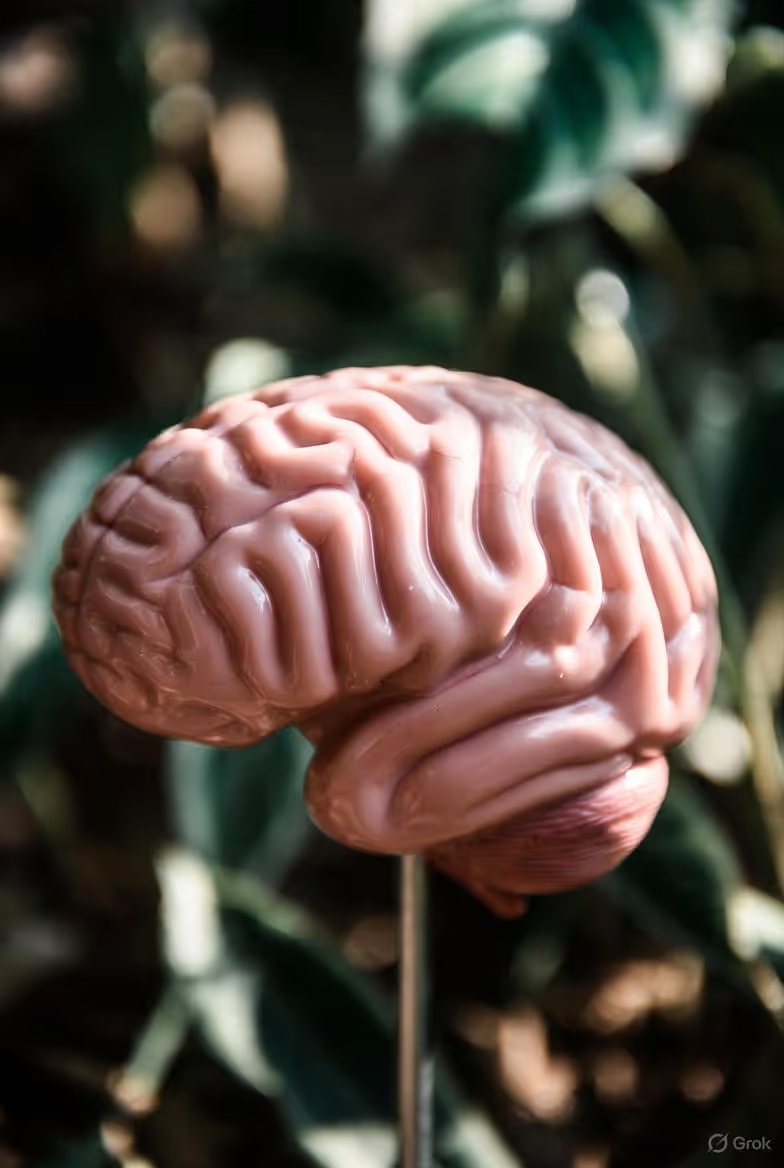
Neuroplasticity—the brain's lifelong ability to reorganize itself by forming new neural connections—is the physical basis of learning and adaptation. Once thought to be the sole domain of childhood, we now know the adult brain remains plastic. And sleep is the master regulator of this plasticity.
The processes described earlier—memory consolidation, synaptic homeostasis—are all expressions of neuroplasticity. Sleep doesn't just permit learning; it actively enhances the brain's capacity to learn anew.
Studies are unequivocal: sleep after learning stabilizes and enhances memory. Sleep before learning is equally critical, as it prepares the brain to receive and encode new information effectively. An all-nighter before an exam is therefore a double catastrophe: it prevents the consolidation of the last-minute study and leaves the brain in a suboptimal state for recall and performance. This science underscores why holistic wellness, including cognitive fitness, depends on respecting this cycle. Our approach at Oxyzen is rooted in this principle of providing data to support the body’s natural rhythms, not fight against them.
The brain’s recovery is not an isolated event; it’s conducted by a symphony of hormones and neurotransmitters that shift dramatically between wake and sleep. This chemical milieu creates the optimal environment for each stage of restoration.
This hormonal ballet is exquisitely sensitive to light, timing, and sleep quality. Disrupting your sleep schedule—through shift work, jet lag, or late-night screen use—scrambles these signals, undermining the very chemical foundation of recovery. Tracking not just sleep duration but its consistency and alignment with your circadian rhythm is key, a concept central to the design philosophy behind devices that monitor these patterns.
When the brain’s recovery process is chronically short-changed, the bill comes due, and it’s steep. Sleep deprivation is not merely about feeling tired; it’s a state of global brain impairment with cascading consequences.
Understanding this cost framework transforms sleep from an optional leisure activity into a non-negotiable pillar of health. It’s the foundation upon which mental acuity, emotional stability, and long-term brain health are built. The experiences of real people who have prioritized this pillar can be found in our collection of user testimonials and stories.
Dreaming, most vivid during REM sleep, is the conscious, though often bizarre, subjective experience of the brain’s recovery work. Far from being random neurological "static," dreaming is increasingly seen as a functional component of mental restoration.
Several theories elucidate dreaming’s role:
While the definitive theory of dreams remains elusive, their link to recovery is clear. Suppressing REM sleep (and thus dreaming) through alcohol or certain medications impairs emotional recovery and memory. Respecting your need for full, uninterrupted sleep cycles ensures you get your time in this vital subconscious workshop.

For most of human history, the brain’s recovery process was a black box. We knew the input (going to sleep) and the output (feeling rested or not), but the critical events in between were a mystery. Today, consumer health technology has changed the game. Advanced wearables, particularly smart rings, use a combination of sensors to provide unprecedented insight into this nocturnal realm.
Devices like the Oxyzen smart ring employ:
This data transforms abstract sleep science into personal, actionable intelligence. You’re no longer guessing if you slept well; you can see if you achieved sufficient deep sleep for glymphatic cleansing, if your REM cycles were truncated, or if a late dinner spiked your nighttime heart rate. This feedback loop is powerful. It allows you to experiment with lifestyle changes—adjusting caffeine intake, optimizing bedroom temperature, practicing mindfulness—and see their direct impact on your sleep quality and, by extension, your brain’s recovery metrics.
This is the new frontier of proactive brain health: using objective data to optimize the subjective experience of mental restoration. It aligns with a broader mission to empower individuals with knowledge about their own biology, a journey you can learn more about in our story. By quantifying the recovery process, we move from hoping we sleep well to actively engineering the conditions for our brain to perform its most vital work.
In the quest for optimal mental restoration, data is the compass, but wisdom is the map. Modern sleep trackers provide a torrent of metrics—Sleep Score, Deep Sleep, REM, HRV, Resting Heart Rate, Sleep Latency, Awake Time, Blood Oxygen Variation. The challenge is no longer accessing information; it’s knowing what to do with it. Interpreting these numbers through the lens of your own life context transforms raw data into a personalized blueprint for better brain recovery.
Key Metrics and Their Meaningful Interpretation:
The Art of Correlation:
The true power lies not in any single number, but in connecting the dots. This is where a journal or app notes feature becomes essential.
By building these personal cause-and-effect models, you move from passively observing your recovery to actively engineering it. This process of self-experimentation and learning is at the heart of modern, proactive wellness. For those beginning this journey, a great starting point is our FAQ section, which helps demystify the data from your wellness tracker.
You cannot sprint into sleep. The transition from the sympathetic-dominant, high-stimulus waking world to the parasympathetic, restorative state of sleep is a process that must be cultivated. A consistent, wind-down pre-sleep ritual is essentially a series of deliberate commands to your brain and nervous system, signaling that it is now safe to power down and begin recovery.
An effective ritual, practiced 60-90 minutes before your target bedtime, should systematically address each channel of arousal:
Consistency is the Secret Ingredient. Performing the same sequence of calming activities each night creates a powerful Pavlovian response. Your brain learns to associate these behaviors with the imminent onset of sleep, triggering the cascade of neurochemical changes needed for recovery more efficiently each time. This ritual isn't about perfection; it's about creating a predictable, gentle slope into the depths of sleep, rather than a frantic, last-minute cliff jump. Exploring different techniques to find your perfect ritual is a common theme in wellness communities, as seen in the shared experiences of our users.
The role of the nap in the brain's recovery process is a topic of much debate. When used strategically, a nap can be a powerful tool for cognitive reboot and mood enhancement. When used haphazardly, it can fragment nighttime sleep, undermining the very recovery it seeks to provide.
The Science of the Power Nap:
A short nap of 10-20 minutes, taken during the natural post-lunch circadian dip (typically 1-3 PM), can provide significant benefits without entering deep sleep. This "stage 2 nap" is primarily composed of light NREM sleep, which helps clear adenosine from the brain, boosting alertness, reaction time, and mood for several hours without sleep inertia (that groggy feeling).
The Deep Recovery Nap (Proceed with Caution):
A longer nap of 60-90 minutes allows you to complete a full sleep cycle, including deep NREM and REM sleep. This can enhance creativity, procedural memory, and emotional resilience. However, it carries significant risks:
Who Should (and Shouldn't) Nap:
The Rules of Smart Napping:
For the brain in recovery, the primary goal must always be to protect and optimize consolidated nighttime sleep. The nap is a tactical tool, not a replacement for the full, architecturally complex restoration that only a full night provides. Understanding this hierarchy is key to using all sleep periods effectively.
Some of humanity's greatest insights—from the periodic table to the melody of "Yesterday"—have emerged from the dream state or the space immediately upon waking. This is not mystical coincidence; it is a direct function of the brain's recovery process. Sleep, particularly REM sleep, serves as a nocturnal incubator for creativity and innovative problem-solving.
The creative process often involves two phases: divergent thinking (generating many novel ideas) and convergent thinking (synthesizing those ideas into a useful solution). Sleep enhances both.
The Practical Application: "Sleeping on It" is Real Strategy.
By understanding and respecting this creative function of sleep, you can stop viewing rest as time away from productive work and start viewing it as an essential, active phase of the creative work itself. It is the brain's way of working in the background, drawing connections that a focused, waking mind might never see. This holistic view of cognitive performance is central to the philosophy behind integrated wellness tracking.
Sleep deprivation doesn't just make you irritable; it fundamentally impairs your brain's social circuitry. The recovery processes of sleep are essential for maintaining the empathy, emotional intelligence, and communication skills that underpin healthy relationships.
The Neurological Toll of Sleep Loss on Social Function:
Sleep Recovery as Social Lubricant:
Conversely, a well-rested brain is a socially competent brain. The emotional processing of REM sleep helps you file away the social slights and stresses of the day with proper perspective. The prefrontal cortex reset allows for greater impulse control and patience. You are more likely to give others the benefit of the doubt, listen actively, and respond thoughtfully rather than reactively.
In relationships—romantic, familial, or professional—chronic sleep deprivation is a silent corrosive. Partners of individuals with sleep disorders often report feeling as though they are living with a different person. Prioritizing sleep, therefore, is not a selfish act; it is an investment in your capacity for connection, compassion, and collaborative success. It ensures your brain has the resources to be its best social self. Fostering this kind of holistic well-being, where personal recovery supports relational health, is a vision shared by many in the wellness technology space, including the team at Oxyzen.
We have explored how sleep supports tonight's memory and tomorrow's mood. But its most profound impact may be on the trajectory of your brain's health across decades. Consistent, high-quality sleep is now understood to be a fundamental pillar of neuroprotection—guarding against age-related cognitive decline and neurodegenerative diseases.
The mechanisms are the very recovery processes we've detailed:
The Cumulative Effect:
Think of each night of good sleep as a deposit into your "brain health savings account." Each night of poor sleep is a withdrawal. The goal is to build a large reserve through consistent good habits. This long-term perspective is crucial. It moves the conversation about sleep from "I need to perform tomorrow" to "I want to preserve my mind for the decades to come."
This isn't about fear; it's about empowerment. The lifestyle choices you make tonight—turning off screens, managing stress, creating a cool dark room—are direct interventions in your future cognitive health. They are the most accessible, non-pharmacological neuroprotective strategies available. Tracking your sleep quality over time gives you an ongoing audit of this critical investment. For more on the science of long-term wellness, our blog delves into ongoing research in this vital area.
The final, and perhaps most important, principle in optimizing the brain's recovery process is personalization. Sleep science provides the universal laws, but your biology, genetics, and lifestyle determine how those laws manifest for you.
Becoming Your Own Sleep Scientist:
This is the culmination of the journey. Using your subjective experience (How do I feel?) in dialogue with your objective data (What do my metrics say?), you can run gentle experiments.
This iterative process of self-discovery empowers you to build a recovery protocol that is uniquely and perfectly tailored to your brain's needs. It is the ultimate application of knowledge, turning the science of mental restoration into the art of living a restored life. This journey of personal discovery is at the core of our mission to provide tools for deeper self-understanding.
We have journeyed deep into the night, exploring the astonishingly active world of mental restoration during sleep. From the cellular plumbing of the glymphatic system to the emotional theater of REM, from the synaptic pruning of deep NREM to the circadian conductor orchestrating it all, we see that sleep is the brain's indispensable, non-negotiable recovery shift.
This knowledge carries a profound responsibility. In a culture that often wears sleep deprivation as a badge of honor, understanding the science is a form of liberation. It allows you to reframe sleep not as lost time, but as invested time—the most productive hours you spend "working" on your mental clarity, emotional balance, creative capacity, and long-term neurological health.
The path forward is one of intentionality. It involves:
Your brain is performing a miracle of restoration every single night. Your job is simply to get out of the way and provide the conditions it needs to complete its work. By doing so, you are not just sleeping; you are actively rebuilding, refreshing, and fortifying the very essence of who you are—your mind. This is the promise and the power of embracing the brain's recovery process.
To truly master the art of mental restoration during sleep, we must understand the master clock that governs it: the circadian rhythm. This is not a mere preference for being a "morning person" or a "night owl." It is a genetically encoded, 24-hour biological cycle that regulates nearly every physiological process in your body—from hormone release and body temperature to digestion and, most critically, your sleep-wake cycle and cognitive function. Think of it as the brain's internal conductor, ensuring all the instruments of recovery play in harmony and at the right time.
Located in the suprachiasmatic nucleus (SCN), a tiny region of the brain's hypothalamus, this master clock is synchronized primarily by light exposure, especially the blue-wavelength light from the sun. When light hits your eyes in the morning, it signals the SCN to suppress melatonin production, increase cortisol to promote alertness, raise body temperature, and sharpen cognitive function. As darkness falls, the SCN triggers the pineal gland to release melatonin, initiating the cascade toward sleep by lowering body temperature and promoting drowsiness.
The circadian rhythm's influence on brain recovery is profound:
Disrupting this rhythm through social jet lag (different sleep schedules on weekends vs. weekdays), shift work, or excessive evening screen time sends conflicting signals to the SCN. This circadian misalignment is like a conductor losing control of the orchestra. The result is poor-quality sleep, fragmented brain recovery, and long-term health risks. Honoring your unique circadian rhythm—and using tools to understand it—is the first step in designing a lifestyle that supports, rather than sabotages, your brain's recovery. For those curious about how technology can help map these personal rhythms, Oxyzen's approach is built on this foundational science.
While you sleep, a critical shift occurs in your autonomic nervous system (ANS)—the part of your nervous system that controls involuntary functions like heart rate, digestion, and breathing. The ANS has two primary branches: the sympathetic nervous system (SNS), your "fight or flight" accelerator, and the parasympathetic nervous system (PNS), your "rest and digest" brake. True recovery can only occur when the PNS is dominant, allowing the body and brain to enter a state of repair.
Sleep, particularly deep NREM sleep, is characterized by strong parasympathetic dominance. During this stage:
Conversely, periods of wakefulness during the night, or light, unconsolidated sleep, are often marked by sympathetic activation—increased heart rate and arousal. This is why the metric of Heart Rate Variability (HRV) has become a gold-standard, non-invasive window into ANS balance and recovery status. HRV measures the subtle, millisecond variations in time between heartbeats. A higher HRV (indicating a flexible, responsive heart rhythm) generally reflects strong parasympathetic activity and good recovery. A low, rigid HRV suggests sympathetic dominance and a system under stress.
Monitoring this overnight ANS balance is crucial because:
This is where the precision of modern wearables shines. A device that tracks your heart rate and HRV throughout the night, like the sophisticated sensors in a smart ring, provides a direct report card on your autonomic nervous system's state. It tells you not just that you slept, but how restorative that sleep truly was for your brain's need to downshift into repair mode. You can explore frequently asked questions about how these metrics work for a deeper technical understanding.
The adage "you are what you eat" extends powerfully into the night. The foods and substances you consume in the hours before bed act as chemical instructions, directly influencing the neurotransmitters, hormones, and inflammatory pathways that dictate the quality of your brain's recovery.
Substances That Sabotage Recovery:
Nutrients That Nurture Recovery:
The timing of your last meal is equally critical. Finishing eating 2-3 hours before bed allows your body to complete the initial stages of digestion (the "work" of the SNS) before it needs to transition fully into the parasympathetic, restorative state of sleep. This simple practice can dramatically improve sleep continuity and depth. For more insights on how daily habits intersect with nightly recovery, our blog features ongoing research and practical tips.
Physical activity is one of the most potent, non-pharmacological tools for enhancing sleep and, by extension, brain recovery. But this relationship is symbiotic and nuanced—it’s a careful dance, not a blunt instrument.
How Exercise Improves Sleep Recovery:
The Critical Importance of Timing and Type:
This is why an integrated view of wellness is essential. Tracking your activity, sleep, and recovery metrics together provides a holistic picture. You can see if your afternoon run led to a boost in deep sleep or if you've crossed into overtraining territory. This data-driven feedback allows you to personalize your exercise regimen to be a true ally in your brain's nightly renewal process.
For many, poor brain recovery isn't a choice but a consequence of an underlying sleep disorder. These conditions are among the most pervasive yet under-diagnosed disruptors of mental restoration, with severe long-term consequences.
The critical takeaway is that feeling unrefreshed despite "being in bed for 8 hours" is a major red flag. These disorders prevent the brain from executing its recovery protocols, no matter the opportunity. Recognizing the signs and seeking professional evaluation is a critical step in protecting long-term brain health. For individuals using wellness trackers, persistently poor scores on sleep quality, coupled with data on blood oxygen variation or frequent awakenings, can provide valuable objective evidence to bring to a healthcare provider, a topic we address in our support resources.
In the modern world, chronic psychological stress and anxiety are perhaps the most common thieves of mental restoration. They don't just keep you awake with worry; they biologically reconfigure your brain and nervous system to resist the state of sleep.
The mechanism is one of hyperarousal. When you are chronically stressed, the hypothalamic-pituitary-adrenal (HPA) axis remains on high alert. Cortisol rhythms flatten, and the sympathetic nervous system fails to disengage. At bedtime, this manifests as:
This creates a devastating bidirectional relationship: stress causes poor sleep, and poor sleep erodes emotional resilience, lowering your threshold for stress and anxiety the next day. It's a vicious cycle that directly impairs the brain's ability to perform the emotional recalibration and memory processing of REM sleep.
Breaking this cycle requires interventions that target the hyperaroused nervous system:
Tracking the impact of these practices is empowering. Seeing your resting heart rate decrease and your overnight HRV improve after a week of consistent meditation provides positive reinforcement, turning an abstract practice into a tangible tool for reclaiming your brain's recovery. The journey toward mastering this balance is a personal one, as reflected in the diverse stories of our community.
The brain's recovery process is not static. From the explosive neural plasticity of infancy to the wisdom of older age, sleep architecture and its restorative functions evolve dramatically. Understanding these changes helps us set realistic expectations and optimize recovery at every life stage.
These changes are not a sentence to poor recovery. While some decline is normative, much of what we associate with aging sleep is modifiable. Prioritizing sleep hygiene, managing light exposure, treating sleep disorders, and maintaining a consistent schedule become even more critical with age. The goal shifts from maximizing sleep duration to maximizing sleep efficiency and protecting the remaining deep and REM sleep. Technology that provides gentle insights into these patterns can help older adults maintain their cognitive vitality, aligning with a mission to support wellness at every age, a core part of our story at Oxyzen.
Your brain cannot perform its intricate recovery work in a chaotic environment. The bedroom must be transformed from a mere place to lie down into a sanctuary engineered for sleep. Every sensory input—light, sound, temperature, and touch—sends signals to the brain about whether it is safe to shut down for restoration.
Optimizing these factors is a direct investment in your brain's recovery efficiency. It reduces the "work" your brain has to do to ignore the environment and allows it to dive more quickly and deeply into its restorative cycles. It is the physical manifestation of valuing your cognitive health, a principle that guides everything from product design to user education at Oxyzen.
We live in an age of unparalleled connection and information, but our devices pose a significant threat to the brain's ancient recovery process. The relationship between technology and sleep is deeply paradoxical: the same innovations that allow us to track and understand our sleep are often the very things that ruin it.
The Disruptors (The Blue Light and Beyond):
The Enablers (Harnessing Tech for Good):
The Path Forward: A Digital Sunset
The key is intentionality. This involves:
By consciously wielding technology as a scalpel rather than a sledgehammer, we can reclaim our nights. We can use the insights from our data to make informed choices that protect the very recovery process that allows our brains to thrive in the digital day. For a balanced library of perspectives on navigating modern wellness, our blog offers ongoing discussion on this critical topic.
Your Trusted Sleep Advocate: Sleep Foundation — https://www.sleepfoundation.org
Discover a digital archive of scholarly articles: NIH — https://www.ncbi.nlm.nih.gov/
39 million citations for biomedical literature :PubMed — https://pubmed.ncbi.nlm.nih.gov/
Experts at Harvard Health Publishing covering a variety of health topics — https://www.health.harvard.edu/blog/
Every life deserves world class care :Cleveland Clinic - https://my.clevelandclinic.org/health
Wearable technology and the future of predictive health monitoring :MIT Technology Review — https://www.technologyreview.com/
Dedicated to the well-being of all people and guided by science :World Health Organization — https://www.who.int/news-room/
Psychological science and knowledge to benefit society and improve lives. :APA — https://www.apa.org/monitor/
Cutting-edge insights on human longevity and peak performance:
Lifespan Research — https://www.lifespan.io/
Global authority on exercise physiology, sports performance, and human recovery:
American College of Sports Medicine — https://www.acsm.org/
Neuroscience-driven guidance for better focus, sleep, and mental clarity:
Stanford Human Performance Lab — https://humanperformance.stanford.edu/
Evidence-based psychology and mind–body wellness resources:
Mayo Clinic — https://www.mayoclinic.org/healthy-lifestyle/
Data-backed research on emotional wellbeing, stress biology, and resilience:
American Institute of Stress — https://www.stress.org/


