


The Digital Minimalism Approach to Peaceful Living
Applying digital minimalism principles to cultivate peace.
Applying digital minimalism principles to cultivate peace.
%402x.svg)
We live in a world of infinite connection and constant distraction. Our pockets hum with notifications, our homes echo with the glow of multiple screens, and our minds are pulled in a dozen directions before we’ve even finished our morning coffee. This hyper-digital landscape, while offering unprecedented access to information and community, has come at a profound cost: our peace, our focus, and our ability to engage deeply with our own lives. The result is a low-grade, chronic anxiety—a feeling of being perpetually busy yet unfulfilled, connected yet deeply lonely.
This isn’t merely an inconvenience; it’s a crisis of attention. Our most precious resource—our focus—is being auctioned off to the highest bidder, siphoned away by apps engineered to captivate and algorithms designed to provoke. We scroll instead of sleep, react instead of reflect, and consume instead of create. The promise of technology to liberate us has, for many, become a chain of endless pings and updates.
But what if there was another way? A path that doesn’t require you to throw your phone into the sea or retreat to a cabin without Wi-Fi, but instead empowers you to intentionally and strategically use technology to support your life, not supplant it? This is the core philosophy of Digital Minimalism.
Digital Minimalism is more than a trendy buzzword or a set of quick tips. It’s a holistic philosophy of technology use, popularized by computer science professor Cal Newport, that advocates for a focused, value-driven approach to our digital tools. The minimalist doesn’t ask, “What can I add?” but rather, “What is essential?” They clear away the digital clutter—the optional apps, the mindless feeds, the constant notifications—to make room for what truly matters: meaningful conversation, high-quality leisure, and sustained concentration.
This article is your comprehensive guide to adopting this transformative approach. We will move beyond surface-level “digital detoxes” to build a sustainable, personalized digital environment that actively cultivates peace. And in this journey toward intentionality, we’ll explore how tools designed with mindfulness at their core—like the advanced wellness-tracking technology from Oxyzen—can serve not as sources of distraction, but as allies in reclaiming your focus and well-being.
The journey to peaceful living in the digital age begins not with less technology, but with more intention. Let’s begin.
Digital Minimalism is often misunderstood as simply using fewer apps or spending less time online. While those can be outcomes, the philosophy is fundamentally deeper. It is a deliberate and ongoing practice of curating your digital life so that it aligns with your core personal values, rather than letting it be shaped by the whims of tech companies and the fear of missing out (FOMO).
At its heart, Digital Minimalism operates on a few key principles:
This stands in stark contrast to the prevailing Digital Maximalism—the default state for most of us. The maximalist accepts every new tool, signs up for every service, and keeps all notifications on, operating under the anxiety that they might miss something important. The result is a digital environment of constant, low-grade stress.
The Cognitive Cost of Clutter
Why does this maximalist approach feel so draining? Neuroscience provides the answer. Each notification, each app icon, each unread badge represents a “micro-decision.” Your brain must repeatedly decide whether to engage or ignore. This constant, low-level decision-making depletes your finite cognitive resources, a phenomenon known as decision fatigue. It leaves you with less mental energy for the tasks that truly require deep thought, creativity, and presence.
By adopting digital minimalism, you are not just decluttering a screen; you are decluttering your mind’s decision-making pathways. You are creating cognitive space for peace, focus, and the things you genuinely care about. For those curious about the science of attention and stress, Oxyzen’s blog offers deeper dives into how technology impacts our nervous system.
The goal is to move from being a passive consumer of technology to becoming an empowered architect of your digital life. The first step in that architectural process is a fearless audit.
Theory is essential, but transformation requires action. The cornerstone practice of Digital Minimalism is the Digital Declutter. This is not a casual afternoon of deleting a few apps. It’s a structured, 30-day process designed to intentionally reset your relationship with technology by creating a temporary vacuum. Think of it as a nutritional cleanse for your digital diet.
Here is a step-by-step guide to conducting your own Digital Declutter:
Phase 1: Define Your Rules (Days 1-3)
Sit down with a notebook—analog is best for this. For the next 30 days, you will take a hiatus from optional digital technologies and entertainment. “Optional” is key. Define what is essential for your professional obligations, basic communication (like direct calls or texts from family), and practical necessities (like online banking or GPS for driving). Everything else is on the table for elimination: social media apps, news sites, streaming services, video games, and non-essential browsing.
Be specific. Instead of “I’ll use less social media,” write: “I will delete the Instagram, TikTok, and X apps from my phone and will not access these platforms via browser for 30 days. I will inform key contacts I’m reachable via text or call.”
Phase 2: The 30-Day Hiatus (The Most Important Step)
For the next month, live by your rules. This period is not meant to be a punishment of boredom. It is a diagnostic vacuum. Its primary purpose is to create space. Space to discover what you miss, what you don’t, and—most importantly—what you choose to fill your time with when the default digital options are removed.
You will experience withdrawal. The itch to pick up your phone during a spare moment will be powerful. This is the habit circuitry in your brain firing. Don’t fight the feeling with sheer willpower; instead, have a prepared list of “high-quality” analog or essential digital activities: read a physical book, go for a walk, call a friend, cook a new recipe, tackle a home project, or simply sit with your thoughts. This phase is where you rediscover your interests and capacities beyond the screen.
Phase 3: The Intentional Reintroduction (After Day 30)
At the end of the hiatus, the real work begins. You do not simply re-download everything. You reintroduce technology one tool at a time, and only after it passes a strict three-question filter:
If a tool doesn’t pass this test, it stays deleted. You might be surprised at how little you actually miss. Many people find that after 30 days, the anxiety of missing out has been replaced by the joy of missing out (JOMO) on the noise.
This process can feel daunting, which is why community and support are valuable. Reading about others’ experiences, such as those shared in Oxyzen’s testimonials, can provide the encouragement and perspective needed to begin. The declutter isn’t an end; it’s the essential, liberating starting point for building a minimalist digital life that lasts.
Your smartphone is the epicenter of the digital attention economy. It is deliberately designed to be a compelling, all-purpose portal. Transforming it from a source of distraction into a tool of intention is perhaps the most powerful single act of a digital minimalist. This isn’t about willpower; it’s about environmental design. You are architecting an environment that supports your focus, not one that sabotages it.
Let’s rebuild your phone, step by step:
1. The Ruthless App Purge (Beyond the Declutter)
Open your app library. For every app, ask Newport’s killer question: “Would I use this app at least once a week if it wasn’t on my phone?” If the answer is no, delete it. Be especially merciless with:
2. The Notification Nuclear Option
Navigate to your settings and turn off all notifications except for those from actual human beings trying to reach you directly (e.g., phone calls, SMS, and perhaps direct messages from a single messaging app). This means silencing: all social media, all email, all games, all news apps. Every ping is an interruption you did not choose. Reclaim your right to uninterrupted thought. If something is truly urgent, people will call you.
3. The Home Screen Sanctuary
Your home screen should be a place of calm, not a candy store of colorful icons. Strip it down to only the tools you use for utility and creation throughout the day. For most, this is: phone, messages, camera, maps, notes, calendar, and perhaps a music/podcast app. Everything else gets moved to folders on secondary screens, or better yet, deleted. Consider setting your background to a simple, peaceful image—a visual reminder of your intention.
4. Embrace Grayscale
This is a psychological hack with profound effects. In your phone’s accessibility settings, switch your display to grayscale. Without their vibrant colors, those app icons lose their subconscious, candy-like allure. The entire device becomes less stimulating, more utilitarian. You’ll find the urge to mindlessly tap diminishes significantly.
5. Curate Your Inputs
Be the editor of your own information intake. Unsubscribe from all promotional emails. Use an RSS reader (like Feeder) to follow a handful of high-quality blogs or news sources you choose, rather than being fed by an algorithm. Unfollow or mute accounts on social media that provoke anxiety, envy, or anger. Your digital world should inform and inspire you, not inflame you.
Designing for your specific wellness goals can be part of this intentional architecture. For instance, a tool like the Oxyzen ring is designed to work silently in the background, gathering meaningful biometric data without demanding your attention through constant pings. You can learn more about how Oxyzen works to see how technology can be designed to inform, not interrupt. The goal is to create a device that serves you, not one you serve.
Once you’ve decluttered and redesigned your digital environment, you’ll be faced with a beautiful, if initially uncomfortable, reality: time. The hours once lost to scrolling, gaming, and binge-watching are now yours again. Digital minimalism isn’t sustainable if this vacuum is filled with boredom or anxiety. The philosophy’s secret weapon is its emphasis on High-Quality Leisure.
Cal Newport argues that the human mind is not wired for constant passive consumption. It craves challenge, mastery, and creation. High-quality leisure activities are those that provide tangible, meaningful rewards for your effort. They engage your skills, produce a sense of accomplishment, and often connect you to the physical world or other people.
This is the active, joyful counterpart to passive digital consumption. Let’s explore categories of high-quality leisure:
1. The Art of Craft and Creation
This is about using your hands and mind to make something that didn’t exist before. The process itself is meditative, and the result is deeply satisfying.
2. Physical Endeavor and Body Awareness
Re-engaging with your physical self is a profound form of high-quality leisure. It grounds you in the present moment and builds resilience.
3. Structured Social Interaction
Replace the “likes” and comments with deep, scheduled, real-world connection.
4. Intellectual Exploration
Direct your curiosity with purpose, moving beyond algorithm-driven content.
The key is to schedule these activities. Don’t leave your leisure to chance. Block time in your calendar for your woodworking project, your Tuesday night climbing gym session, or your Saturday morning reading hour. By intentionally filling the vacuum left by digital clutter, you don’t just avoid temptation—you build a richer, more satisfying life that makes the digital world seem pale in comparison.

Digital minimalism isn’t only about leisure; it’s a professional superpower. In an economy that increasingly values the ability to quickly learn complex things and produce at an elite level, the capacity for Deep Work—the ability to focus without distraction on a cognitively demanding task—is becoming rare and incredibly valuable. Digital minimalism is the operating system that makes deep work possible.
Deep work, a concept also pioneered by Cal Newport, is the state of flow where you produce your best, most creative, and highest-impact work. It is systematically thwarted by the very technologies digital minimalism seeks to control: constant emails, instant messages, and the ingrained habit of “quick checks” that fracture your attention.
Here’s how to cultivate deep work within a minimalist framework:
1. Schedule Your Depth (And Your Shallowness)
Do not leave your focus to the whims of the day. Time-block your calendar. Assign specific, multi-hour blocks for deep work, and treat these appointments with the sanctity of a meeting with your most important client. During these blocks, the rules of your minimalist design are enforced: phone on Do Not Disturb and in another room, email and chat applications closed, internet browser tabs limited to only those essential for the task.
Conversely, also schedule blocks for “shallow work”: answering emails, attending meetings, handling logistics. This containment prevents shallow tasks from metastasizing to consume your entire day.
2. Create Rituals and Spaces
Signal to your brain that it’s time to dive deep. This could be a simple ritual: brewing a cup of tea, reviewing your goals for the session, putting on noise-canceling headphones with a specific focus playlist, or sitting at a clean, dedicated desk. The consistency of the ritual builds a powerful associative trigger for concentration.
3. Embrace Boredom (Train Your Focus Muscle)
Your ability to focus is like a muscle; it atrophies without practice. One of the most damaging habits of the digital age is reaching for our phones at every slightest hint of boredom—in line, waiting for a meeting, during a commercial. To strengthen your focus muscle, you must practice resisting this urge.
Start small. In a waiting room, just sit and observe. On a walk, leave your headphones at home and listen to the environment. This practice of letting your mind wander without digital input is not downtime; it’s essential training that increases your capacity for deep work when you need it.
4. Quantify Your Depth
What gets measured gets managed. At the end of each week, review your calendar and honestly tally the number of deep work hours you achieved. Aim to gradually increase this number. This data-driven approach turns the abstract goal of “being more focused” into a concrete, improvable metric.
The minimalist’s digitally clean environment is the perfect greenhouse for deep work to flourish. By removing the constant seeds of distraction, you allow the roots of concentration to grow deep. For knowledge workers, creatives, students, or anyone who needs to think seriously, this practice is the ultimate ROI of digital minimalism. For more strategies on productivity and mindful tech use, our resource library at Oxyzen’s blog offers ongoing insights and research.
You’ve decluttered, designed your phone, and filled your time with high-quality leisure. Now we must address the content itself—the information, entertainment, and social streams that still have a place in your life. Digital minimalism advocates for mindful consumption, which means being the conscious curator of every piece of information you allow into your mind. You are not a passive receptacle; you are a discerning editor.
This involves applying the same minimalist “value test” to content as you do to tools.
1. The Information Audit
Just as you audited your apps, audit your information streams. Make a list:
2. Shift from Push to Pull
The default digital model is push—content is pushed at you via notifications, algorithms, and endless feeds. The minimalist model is pull—you actively go and seek out specific information when you need or want it.
3. Prioritize Long-Form Over Fragmentary
The fragmentary nature of tweets, shorts, and status updates trains your brain for fragmentation. Counteract this by deliberately consuming long-form content that requires sustained attention.
This practice literally re-wires your brain for longer attention spans and deeper comprehension. Our commitment to this kind of thoughtful exploration is part of Oxyzen’s story, which centers on creating meaningful, not just more, data for wellness.
4. Implement the “10-Minute Rule” for Entertainment
For low-quality leisure that you still enjoy (like a certain TV show or mobile game), contain it with a strict rule. Use a timer. Enjoy it guilt-free for 10, 20, or 30 minutes, and when the timer goes off, you stop. This prevents the immersive, auto-play-driven binge that leaves you feeling drained. It transforms a potential time-sink into a deliberate, contained treat.
By curating your digital diet, you control the quality of the thoughts and ideas that shape your worldview. You move from being overwhelmed by information to being nourished by knowledge.
One of the most poignant ironies of the social media age is that while we are more “connected” than ever, rates of loneliness and perceived social isolation have skyrocketed. Digital minimalism directly tackles this by redefining what meaningful connection means and prioritizing the analog over the digital whenever possible.
The digital maximalist often confuses connection with communication. Liking a post, sending a reaction emoji, or even a brief text exchange is low-bandwidth communication. True, soul-nourishing connection is high-bandwidth: it involves tone of voice, body language, eye contact, shared physical space, and the unpredictable, meandering flow of a real conversation.
Here’s how to engineer a social life rooted in connection:
1. Prioritize Conversation over Connection
Make a list of the 5-10 people who matter most to you—family, close friends, mentors. Now, institute a policy: for these people, you will default to scheduled, high-quality conversations. This means a planned phone call, a video chat, or—best of all—an in-person meeting. Use low-bandwidth tools (texts, social media) only for logistics (“I’m running 5 mins late!”) or sending a quick article you know they’d love. The bulk of the relational “nutrients” come from the scheduled conversations.
2. Reclaim the Lost Art of the Visit
In the pre-digital age, people “dropped by.” While we must respect boundaries, the principle is sound: prioritize physical presence. Instead of a week-long text thread about a problem a friend is having, say, “That sounds tough. Can I come over Saturday morning and we can talk about it over coffee?” The act of sharing space is profoundly supportive in a way digital communication can never be.
3. Create Tech-Free Zones and Gatherings
Establish sacred spaces and times where devices are not welcome. The dinner table is the classic starting point. Implement a “phones in a basket by the door” policy when friends come over. Suggest a “phone-free walk” with a colleague. These constraints feel awkward at first, but they force the kind of uninterrupted engagement that builds deeper bonds.
4. Join a “Real” Community
Replace the time spent in digital communities (forums, group chats) with participation in a physical community. This could be a recreational sports league, a place of worship, a volunteer organization, a choir, or a makerspace. The regular, embodied interaction with a group working toward a shared goal fulfills a fundamental human need for tribal belonging.
5. Be the Architect of Your Social Life
Don’t wait for invitations. Be the person who organizes the dinner party, who starts the book club, who plans the weekend hike. Digital minimalism gives you the time and mental clarity to become the catalyst for real-world social connection in your circle.
This shift has a remarkable effect: your digital social feeds begin to feel less compelling. When you are getting your core need for connection met through rich, analog relationships, the allure of validation through likes and comments diminishes. You log on not out of loneliness, but out of specific, intentional purpose. Hearing how others have rebalanced their lives for better connection can be inspiring; you can find such stories in the real user experiences shared at Oxyzen’s testimonials.
Digital minimalism is about intentionality, and intention requires awareness. You cannot manage what you do not measure. This is where a new category of purpose-built technology becomes not a distraction, but a powerful ally: mindful tech. These are tools designed not to capture your attention, but to provide you with insightful feedback about your own body and mind, enabling more informed choices.
This represents a paradigm shift from tech that demands to tech that informs. The most powerful tools in this category are those that track biometric data—objective measurements of your physiological state.
Consider the data most of us are blind to:
Without this data, we’re guessing. We might feel tired and assume we need more coffee, when the data shows we’ve had chronically poor deep sleep for a week. We might feel anxious and not connect it to a sustained period of low HRV indicating a stressed nervous system.
How Mindful Tech Fits the Minimalist Philosophy
A device like the Oxyzen smart ring exemplifies this principle. Worn passively, it collects this biometric data without requiring you to constantly interact with a screen or an app. You don’t need notifications from it; instead, you can schedule a mindful review. Once a day or once a week, you open its companion app—as a planned, intentional act—to review your trends.
This turns data into self-knowledge:
The tool provides the objective feedback; your minimalist intention dictates the action. It closes the loop, allowing you to see the direct impact of your digital and lifestyle choices on your biology. For those with questions about how such technology integrates into a minimalist life, Oxyzen’s FAQ addresses common queries about data, usage, and philosophy.
This is technology in service of self-mastery. It helps you move from living on autopilot—buffeted by digital currents and subconscious stress—to living with agency, using concrete feedback to design a life that truly supports your peace and well-being.
Adopting digital minimalism is not a one-time project with a clear finish line. It is an ongoing practice, like physical fitness or healthy eating. The forces of the attention economy are relentless, and without a strategy for maintenance, the slow creep of digital clutter—and its attendant anxiety—is inevitable. The key is to build resilience through systems and community.
1. Schedule Quarterly Reviews
Every three months, put a “Digital Audit” appointment in your calendar. During this hour, repeat a mini-declutter process:
This systematic review prevents backsliding and allows you to course-correct.
2. Find or Create a Community of Practice
Willpower is a weak force against engineered persuasion. Social accountability is strong. Find others who are interested in this philosophy. This could be a real-life friend you do the digital declutter with, an online forum dedicated to digital minimalism (used intentionally!), or even a book club reading Newport’s work. Share your struggles and successes. Having people who understand the “why” makes the “how” much easier.
3. Develop a Personal “Constitution of Use”
Write down your core principles. This is your personal manifesto for technology use. It might include statements like:
When you feel tempted or confused, refer back to your constitution. It serves as an anchor to your original intentions.
4. Embrace Single-Tasking as a Spiritual Practice
The ultimate goal of all this is to reclaim your monolithic attention—the ability to pour your entire focus into one thing at a time. Practice this deliberately. When you are eating, just eat. Taste the food. When you are with a friend, just be with them. Listen completely. When you are working, work on one task until it’s done. This practice of deep presence is the antithesis of the fragmented digital mind and is the very essence of peaceful living.
5. Practice Gratitude for the Analog World
Actively notice and appreciate the experiences that digital minimalism affords you. The feeling of finishing a book, the satisfaction of a well-made meal, the deep laughter in a long conversation, the calm of a quiet morning without a screen. This positive reinforcement strengthens your new neural pathways, making the minimalist life not a restriction, but a cherished choice.
The journey toward digital minimalism is the journey back to yourself—to your attention, your time, and your capacity for deep life. It is a progressive revelation of peace. To learn more about the company behind tools designed for this mindful journey, you can explore Oxyzen’s mission and vision. Remember, the goal is not perfection, but persistent, intentional progress toward a life lived fully, both on and offline.

Our digital lives do not exist in a vacuum; they are deeply intertwined with our physical environments. The cluttered desk, the ever-glowing TV, the smartphone charging next to the bed—these are not neutral backdrops. They are active participants in our attention economy, silently cueing behaviors and mental states. A core, yet often overlooked, tenet of digital minimalism is the intentional design of our physical spaces to support, rather than undermine, our digital intentions. This is the practice of creating a Mindful Home.
A Mindful Home is an environment engineered to make positive choices easy and automatic, and distracting choices difficult. It applies the minimalist principle of curation to your surroundings, creating zones of focus, connection, and rest.
The Principle of Friction and Flow
Every object and device in your home exerts a gravitational pull, either toward flow or friction.
Let’s design your home room by room:
The Bedroom: A Sanctuary for Sleep
This should be the most aggressively minimalist digital zone. Its primary functions are sleep and intimacy; technology inherently conflicts with both.
The Living Room: A Space for Connection and Leisure
This is the heart of the home, and its design should pull people toward each other, not separate screens.
The Home Office: A Cathedral for Concentration
If you work or create from home, this space must be ruthlessly optimized for deep work.
The Kitchen & Dining Area: A Hub of Presence
Meals are fundamental opportunities for mindfulness and connection.
By architecting your home with this level of intention, you offload the cognitive burden of constant choice from your willpower to your environment. You create a world where peace is the default setting. For more ideas on creating wellness-centric environments, explore the resources on Oxyzen’s blog.
To solidify our commitment to digital minimalism, we must fully comprehend the transaction at its heart. When we use “free” social media platforms, entertainment apps, or news sites, we are not the customer. We are the product. The real customers are advertisers, and the commodity being sold is our attention and personal data. This isn’t a conspiracy; it’s the fundamental business model of the attention economy.
Understanding this economic reality reframes every minute spent. You are not merely “killing time”; you are trading your life’s most finite resource—your time and attention—for a service. The question becomes: Is it a fair trade?
Calculating Your Personal “Attention Tax”
Let’s move from abstraction to concrete calculation. Conduct a personal audit:
Example: 2.5 hours per day on optional digital consumption equals 912.5 hours per year. That’s over 38 full 24-hour days spent as a data point in an advertising algorithm. It’s the equivalent of a full-time job for over 22 weeks, spent not learning, creating, or connecting in a deep way, but consuming.
This is your Attention Tax—the portion of your conscious life you are voluntarily ceding to corporations whose sole incentive is to capture more of it. When you view it as a tax, minimalism becomes about tax avoidance in the most positive sense: legally and ethically retaining more of your own resources.
The Hidden Costs: Beyond Time
The tax isn’t just time. It includes:
Becoming a Conscious Investor
The minimalist flips the script. Instead of being a mined resource, you become a conscious investor of your attention. You ask: “What is the return on investment (ROI) for my attention in this app?”
This framework makes decisions stark. You begin to feel visceral resistance to wasting your attention capital, the same way a savvy investor feels about throwing money into a failing venture. The mission of companies that align with this mindful approach, like the team behind Oxyzen’s vision, is to create tools with a positive ROI for your well-being, not a negative drain on your attention.
When you internalize that your attention is your life energy, spending it wisely becomes the most important form of personal finance.
Digital minimalism reaches its fullest expression and faces its toughest challenges within the family unit. It’s one thing to curate your own digital life; it’s another to navigate the shared dynamics of a household where screens are often the default pacifier, social connector, and source of conflict. Implementing a family digital philosophy is less about rigid rules and more about creating a shared culture of intentionality—a “family minimalism.”
Start with “Why,” Not “What”
Gather the family and have a conversation about values, not screen time. Ask questions like:
This builds a shared “why” that everyone, including children, can understand. The goal isn’t to hate technology, but to love our family time, creativity, and peace more.
Create a Family Technology Charter
Co-create a simple, written agreement. This gives everyone ownership. It might include:
Embrace Boredom (It’s a Gift)
A major driver of children’s screen use is parental anxiety about boredom. Reframe boredom as the birthplace of creativity. When a child says “I’m bored,” see it not as a problem to be solved with a screen, but as an opportunity. Have a “Boredom Buster” jar with ideas written on popsicle sticks: “Build a fort,” “Draw a comic,” “Write a play,” “Bake something.” The goal is to guide them toward self-directed play, not to entertain them.
Practice Joint Media Engagement
When screens are used, make them social and active whenever possible. Watch a movie together and talk about it after. Play a cooperative video game as a family. Follow a cooking tutorial on a tablet while cooking together. This transforms passive consumption into a shared, engaging activity that can spark conversation and connection. It also models critical thinking about media.
Utilize Technology for Good
Use family-focused tech tools that align with minimalist values. Shared calendar apps for coordination, photo-sharing apps for grandparents, or even wearable wellness tech can be positive. For instance, a device like the Oxyzen ring can be part of family wellness conversations—comparing how a good night’s sleep feels, or seeing the physical impact of a relaxing weekend versus a hectic school week. It turns data into a shared language for health. You can explore how Oxyzen works to see its potential for family-focused wellness.
Navigating digital minimalism as a family requires patience, consistency, and continual conversation. The reward is a home atmosphere characterized by more presence, less conflict over screens, and stronger, more attentive relationships—a true digital haven.
Why does digital minimalism feel so good? The answer lies not in philosophy, but in biology. Our compulsive digital behaviors aren’t just bad habits; they are the result of a hijacking of our brain’s ancient reward pathways. Conversely, the practices of minimalism actively rewire our neural circuitry toward greater calm, focus, and satisfaction. Understanding this science turns the practice from a lifestyle choice into a form of brain training.
The Dopamine Loop of Maximalism
Every notification, like, and new piece of content triggers a release of dopamine, a neurotransmitter associated with motivation, desire, and reward-seeking. Social media and many apps are meticulously engineered to create variable rewards—you never know what you’ll get when you refresh, making the dopamine hit more potent (similar to a slot machine). This creates a powerful dopamine loop: See cue (phone buzz) → Perform routine (check phone) → Get reward (dopamine hit) → Repeat.
The brain adapts. It begins to crave these micro-hits, making the pull of your phone feel automatic and urgent. Simultaneously, the constant context-switching and decision-making elevate cortisol, the stress hormone, leading to a state of chronic, low-grade fight-or-flight.
How Minimalism Initiates Neural Change
In essence, digital minimalism isn’t just about having a cleaner phone; it’s about cultivating a calmer, more robust, and more creative brain. The peace you feel is not imaginary; it’s the sound of your nervous system shifting from a state of chronic threat to a state of engaged possibility.
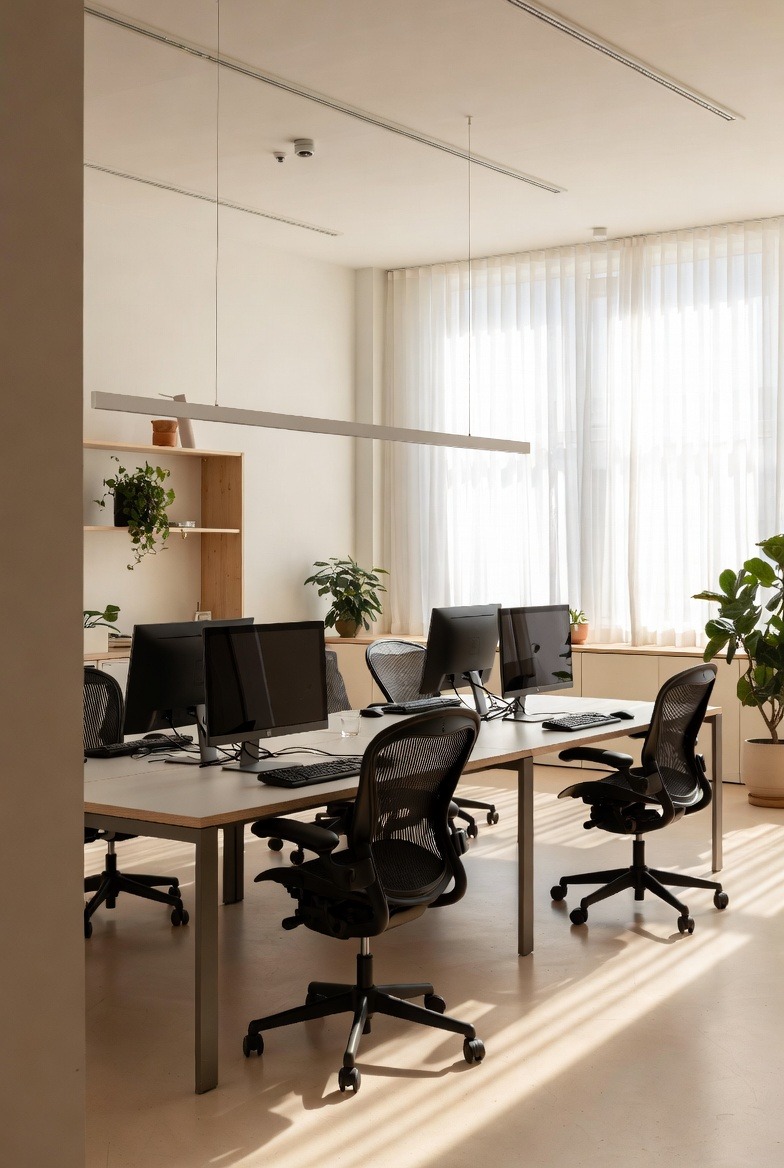
The principles of digital minimalism face their ultimate test in the modern workplace. The always-on email culture, the proliferation of messaging apps like Slack and Teams, and the expectation of instant responsiveness have blurred the lines between work and life, creating a state of perpetual “workishness” that erodes productivity and burns out even the most dedicated employees. Applying minimalism here is both a radical act of self-preservation and a path to becoming a more valuable professional.
The Myth of Responsiveness as Productivity
The first mental shift is to decouple responsiveness from performance. Answering emails quickly or being perpetually available on chat is not the same as doing meaningful work. In fact, they are often inversely related. The worker who is constantly reacting is rarely the one producing breakthrough analysis, elegant code, or compelling creative work.
Tactics for a Minimalist Workflow:
Leading by Example
If you are in a leadership position, modeling this behavior is the most powerful change lever you have. Respect your team’s focus blocks. Send emails scheduled for the start of their workday, not at midnight. Praise delivered work, not responsiveness. You will cultivate a culture that values depth over diffusion.
By applying minimalism at work, you reclaim ownership of your cognitive resources. You transition from a reactive employee, defined by your inbox, to a proactive professional, defined by your output and impact. The sense of control and accomplishment that follows is a profound source of peace, even in a demanding career. For more on balancing performance with well-being, the insights on Oxyzen’s blog offer continued exploration.
In our quest for digital minimalism, we’ve addressed tools, spaces, and workflows. Now, we turn to the content itself with a more nuanced approach: the Slow Media Diet. Inspired by the Slow Food movement, this philosophy rejects the fast, processed, and addictive nature of mainstream digital content in favor of media that is nourishing, intentional, and savored.
Slow Media is not defined by its format but by its consumption posture. It’s media you lean into, not fall into.
Principles of a Slow Media Diet:
How to Cultivate a Slow Media Diet:
Curate Your Sources, Don’t Just Consume Streams:
Implement the “Savouring Ritual”:
Create a specific context for consuming slow media. For example:
This ritualization elevates the act from consumption to ceremony.
Create, Don’t Just Consume:
The highest form of a slow media diet is to transition from consumer to creator. Use the time and mental clarity gained from minimalism to:
Creation forces deep engagement with ideas and provides the most meaningful “reward” of all: the pride of making something.
Adopting a Slow Media Diet changes your relationship with information. You stop feeling like you’re drowning in a sea of content and start feeling like a connoisseur, selectively tasting and appreciating the finest offerings. It turns media from a source of anxiety into a source of enrichment, aligning perfectly with the ultimate goal of a peaceful, intentional life. This journey of mindful consumption is part of a larger story of purposeful living, much like the narrative behind Oxyzen’s story of creating meaningful technology.
Digital minimalism is often the catalyst for a broader transformation—a shift in worldview that begins to touch every corner of one’s existence. When you clear the digital clutter and experience the mental spaciousness that follows, a natural question arises: Where else in my life is unnecessary complexity hiding? This is the emergence of the Minimalist Aesthetic, a holistic approach to living that prioritizes essence over excess, value over volume, and intention over accumulation in the physical world.
This isn’t about adopting a stark, barren lifestyle or a rigid set of rules about how many possessions you can own. It’s about cultivating a deep sense of enoughness. It’s the realization that peace is more often found in what you remove than in what you add. The clutter on your shelves, in your closet, and in your calendar creates the same cognitive noise as the clutter on your screens—it all demands attention, maintenance, and decision-making energy.
The Parallels Between Digital and Physical Clutter
The same minimalist principles apply:
Applying the Filter to Your Physical World:
1. The Capsule Wardrobe Approach:
Fashion is a realm of immense decision fatigue and social pressure. A capsule wardrobe—a small, curated collection of versatile, high-quality clothing that you love to wear—liberates time, money, and mental energy. Every morning becomes simple. The principle is not deprivation, but liberation from the “I have nothing to wear” paradox that stems from an overstuffed closet of mediocre options.
2. The Kitchen as a Workshop, Not a Warehouse:
How many specialized unitaskers fill your drawers? How much expired food lines your pantry? A minimalist kitchen contains well-loved, multi-purpose tools and a pantry stocked with fresh, regularly used ingredients. It encourages cooking as a mindful, high-quality leisure activity rather than a chore hampered by clutter.
3. The “One-In, One-Out” Rule:
To prevent the slow creep of physical clutter, institute this simple policy. For every new non-consumable item that enters your home, one similar item must leave. Buying a new book? Donate an old one. This forces conscious consideration of every acquisition and maintains equilibrium.
4. Digitalizing Memories, Not Hoarding Objects:
Sentimental clutter is the most challenging. We confuse objects with memories. Practice taking high-quality photographs of sentimental items (children’s artwork, tickets, gifts you don’t use) and then letting the physical object go. The memory is preserved without the box in the attic. For items you keep, like family photos, curate a single, beautiful album rather than multiple dusty boxes.
The Deeper Benefit: Environmental and Financial Peace
This aesthetic extends beyond your walls. A minimalist consumption habit is inherently sustainable and financially prudent. You buy less, but you buy better—choosing durability and ethical production over fast fashion and disposable goods. You repair instead of replace. This reduces your environmental footprint and frees up financial resources for experiences, savings, or investments that align with your values, such as technology that supports long-term well-being. Learning about companies built on sustainable and thoughtful principles, like the ethos detailed in Oxyzen’s story, can reinforce this value-driven approach.
By extending the minimalist philosophy to your physical space, you create an external environment that perfectly mirrors and supports your internal goal of digital peace. Your home becomes a sanctuary of calm, where every object has a purpose and a place, allowing your mind to rest fully. It is the ultimate foundation for a life of intention.
For most people, social media represents the thorniest, most emotionally charged frontier in digital minimalism. It is where our social needs, fear of missing out (FOMO), professional networks, and the attention economy’s most persuasive designs collide. A binary “quit all social media” stance, while valid for some, is impractical for many. The minimalist approach is more nuanced: it’s about moving from being a user (a passive product) to being a strategist (an active director) of your social media presence.
The Strategic Audit: What’s the ROI on Each Platform?
Conduct a cold-eyed analysis of every platform you use. For each one, define:
If the “Actual Use” and “Aftertaste” consistently contradict the “Value Proposition,” the platform is costing you more than it’s worth and should be deleted. If they align, you can proceed to strategic engagement.
The Three Strategic Postures:
1. The Leverager (For Professional/Brand Use):
This person uses a platform as a targeted, outbound tool. They do not consume the feed.
2. The Curator (For Specific, Nourishing Content):
This person uses a platform as a focused information source, not a social experience.
3. The Lobbyist (For Close-Knit Groups):
This person uses a platform solely for its group/community functions, which often provide genuine utility.
The “Social Media Sabbath” and Alternative Rituals
Even with strategy, periodic complete breaks are essential. Implement a weekly 24-hour “Social Media Sabbath”—from Friday night to Saturday night, for instance. Replace the habitual scroll with a pre-planned activity: a long hike, a movie at the theater, a visit to a museum. Notice the difference in your mental chatter and sense of time.
Furthermore, create analog social rituals. Instead of posting a vacation photo for everyone, send a physical postcard to your grandparents. Instead of a birthday message on a wall, make a phone call. These acts transfer the social energy from the low-bandwidth, performative digital sphere to the high-bandwidth, personal sphere.
For many, the anxiety around social media stems from a fear of disappearing or becoming irrelevant. This is the FOMO trap. The minimalist discovers JOMO—the Joy of Missing Out—the profound pleasure of being present in your own life, unobserved and uncurated. It’s the realization that the most meaningful moments are often the ones you don’t post about. Real user stories about reclaiming time and presence, like those found in Oxyzen’s testimonials, often highlight this powerful shift from FOMO to JOMO.

At first glance, the “Quantified Self” movement—the practice of tracking various personal metrics—seems at odds with minimalism. Isn’t it just more data, more screens, more obsession? When done poorly, yes. But when integrated through a minimalist lens, biometric tracking transforms from a source of neuroticism into the ultimate tool for self-awareness and intentional living. It becomes biohacking with a purpose: to simplify your understanding of what your body needs.
The minimalist biohacker doesn’t track everything. They track only the few key metrics that provide the highest leverage for peace and performance, and they review this data with calm curiosity, not anxious compulsion.
Minimalist Metrics: Less Data, More Insight
The goal is to identify the 2-3 biomarkers that serve as reliable proxies for your overall system state. For most people, these are:
The Minimalist Review Protocol:
The key to avoiding data anxiety is to schedule your reviews. Don’t check your stats compulsively throughout the day.
This approach uses technology to internalize authority. Instead of outsourcing your sense of well-being to external opinions or generic advice, you learn the unique language of your own body. You make decisions based on internal feedback, not external noise. This is the essence of mindful living. For those curious about the practicalities of this kind of focused tracking, Oxyzen’s FAQ provides clear guidance on how such tools are meant to be used for insight, not obsession.
In this framework, the wearable is not a distraction; it’s a compass. It quietly gathers data in the background, allowing you to live your life fully present, and then provides a clear, simplified report to guide your next intentional move toward peace and health.
Your digitally minimalist, intentionally designed home is your fortress of peace. But life requires you to venture out into the world—a world deliberately engineered to be distracting, stimulating, and demanding of your attention and wallet. From the screens at the gas pump to the promotional emails waiting in every store, the practice of minimalism must extend to how you move through public and commercial spaces. This is about cultivating ambient awareness and commercial resilience.
The Principle of Selective Engagement:
You are not obligated to engage with every demand for your attention. In public, your default setting can be “off.”
The Intentional Errand and the Shopping List:
Maximalism thrives on impulse. Minimalism thrives on plan.
Digital Minimalism in Transit:
Travel and commuting are prime zones for digital distraction. Redefine them as zones for mental transition or restoration.
Cultivating Commercial Detachment:
Recognize that advertising—in all its forms—is a professionalized system designed to create a sense of lack within you. Minimalism is the practice of cultivating a sense of “enough.” When you feel the pull of a new purchase, ask the minimalist’s question: “Will this add value, or just volume?” Will it become a cherished part of my life, or just more stuff to manage?
By taking your minimalist mindset on the road, you reclaim your attention and agency in environments designed to strip them away. You move through the world not as a passive consumer, but as a sovereign individual, selectively engaging on your own terms. This practice of sustained intentionality is what turns a philosophy into a lived, peaceful reality. For more on building a life resilient to external noise, the principles shared in the development of Oxyzen’s mission reflect a similar commitment to purposeful design in a crowded market.
Digital minimalism is not a destination you arrive at, stamp “done,” and forget. It is a dynamic, lifelong practice—a skill that must be maintained and adapted as your life, technology, and the world evolve. The greatest threat to your digital peace is not a single app, but complacency. The “set it and forget it” mindset will inevitably lead to the slow creep of complexity. Therefore, the final piece of the minimalist framework is the meta-skill of practice maintenance and evolution.
Embracing the Cycle of Declutter, Design, Drift, and Re-Declutter:
Understand that your relationship with technology will naturally go through phases:
Building Your Personal Board of Directors:
You are the CEO of your attention. Even the best CEO has a board for advice and accountability. Curate your own “Board of Directors” for your digital life:
Evolving with Life Stages:
Your minimalist practice will look different at 20, 40, and 60. A student’s needs differ from a parent’s, which differ from a retiree’s. The key is to keep asking the value-based questions:
The practice isn’t rigid; it’s the flexible application of a constant principle: Is this technology serving my current life priorities?
Legacy and Contribution:
Finally, as you master this practice, you begin to think about legacy. A life of cultivated attention and intention allows you to contribute more meaningfully. The projects you complete, the relationships you nurture, the art you create, the wisdom you share—these are the outputs of a mind that has been decluttered and focused. Your greatest contribution to a distracted world may be your own presence, calm, and capacity for deep work.
This long-game perspective transforms digital minimalism from a self-help project into a philosophy of human flourishing in the 21st century. It’s about building a life of depth in an age of superficiality, of connection in an age of contact, and of peace in an age of noise. It is, ultimately, about becoming more fully human. The journey of companies aligned with this vision, like the thoughtful progression detailed in Oxyzen’s story, often mirrors this same commitment to long-term, meaningful impact over short-term engagement.
Your Trusted Sleep Advocate (Sleep Foundation — https://www.sleepfoundation.org/)
Discover a digital archive of scholarly articles (NIH — https://www.ncbi.nlm.nih.gov/
39 million citations for biomedical literature (PubMed — https://pubmed.ncbi.nlm.nih.gov/)
experts at Harvard Health Publishing covering a variety of health topics — https://www.health.harvard.edu/blog/)
Every life deserves world class care (Cleveland Clinic -
https://my.clevelandclinic.org/health)
Wearable technology and the future of predictive health monitoring. (MIT Technology Review — https://www.technologyreview.com/)
Dedicated to the well-being of all people and guided by science (World Health Organization — https://www.who.int/news-room/)
Psychological science and knowledge to benefit society and improve lives. (APA — https://www.apa.org/monitor/)
Cutting-edge insights on human longevity and peak performance
(Lifespan Research — https://www.lifespan.io/)
Global authority on exercise physiology, sports performance, and human recovery
(American College of Sports Medicine — https://www.acsm.org/)
Neuroscience-driven guidance for better focus, sleep, and mental clarity
(Stanford Human Performance Lab — https://humanperformance.stanford.edu/)
Evidence-based psychology and mind–body wellness resources
(Mayo Clinic — https://www.mayoclinic.org/healthy-lifestyle/)
Data-backed research on emotional wellbeing, stress biology, and resilience
(American Institute of Stress — https://www.stress.org/)


