The Exposure Therapy Method: Gradually Reducing Anxiety Through Facing Fears
A method to lessen anxiety by slowly confronting feared situations.
The Exposure Therapy Method: Gradually Reducing Anxiety Through Facing Fears
Imagine a life where the things you fear—crowds, heights, social gatherings, or even a specific memory—no longer dictate your choices or shrink your world. This is the powerful promise of Exposure Therapy, a proven, systematic psychological treatment that helps individuals gradually and safely confront their fears until anxiety loses its grip. Unlike approaches that focus on discussing or analyzing fears from a distance, exposure therapy is grounded in a simple, counterintuitive principle: the most direct way to overcome fear is to face it.
While it may sound daunting, exposure therapy is not about being thrown into your worst nightmare. It’s a collaborative, structured, and gradual process guided by a trained professional. It is widely recognized as a first-line, evidence-based treatment for a range of anxiety disorders, from specific phobias and panic disorder to PTSD and OCD. The logic is powerful in its simplicity: When we fear something, we naturally avoid it. This avoidance provides immediate relief, reinforcing the idea that the feared object or situation is dangerous. Over time, this creates a vicious cycle where avoidance makes the fear grow stronger, increasingly limiting a person's life and diminishing their sense of control.
Exposure therapy systematically breaks this cycle. By creating repeated, safe, and controlled encounters with the source of fear, the brain learns something revolutionary: the anticipated catastrophe does not occur, and the intense feelings of anxiety are temporary and manageable. This new learning rewires the fear response, restoring freedom and empowerment. Studies show that for conditions like specific phobias, exposure therapy helps over 90% of people who commit to and complete the treatment.
In this exploration, we will unpack this transformative method. You’ll learn about its scientific foundations, the different forms it takes, the specific conditions it treats with remarkable efficacy, and what the actual journey of therapy entails. We'll also discover how modern wellness technology, like the smart tracking capabilities offered by Oxyzen, can provide valuable, objective support alongside this therapeutic process. The goal is not just to understand exposure therapy intellectually, but to see it as a viable, hopeful, and profoundly effective path toward reclaiming your life from anxiety.
Understanding Anxiety: The Brain’s Fire Alarm System
To appreciate how exposure therapy works, we must first understand the engine it aims to recalibrate: anxiety itself. Far from being a personal failing or a sign of weakness, anxiety is a fundamental, hardwired survival mechanism. It is your brain’s sophisticated fire alarm system, designed to detect threat and mobilize your body for action. This system, often called the "fight-or-flight" response, involves a cascade of physiological changes orchestrated by the amygdala, a small, almond-shaped structure deep within the brain.
When your amygdala perceives danger—whether it’s a real physical threat or a perceived one like a critical thought or a crowded room—it sounds the alarm. Your sympathetic nervous system kicks into high gear: your heart pounds to pump more blood to muscles, your breathing quickens to increase oxygen, and your senses sharpen. This is your body preparing to confront a threat or flee from it. Simultaneously, stress hormones like cortisol and adrenaline flood your system, sustaining this state of high alert.
In the context of real, immediate danger, this system is brilliant and life-saving. The problem with anxiety disorders arises when this fire alarm becomes hypersensitive. It begins to go off not just in response to actual fires (real threats), but also to the smell of smoke (reminders), or even just the thought of a fire (anticipatory worry). The brain struggles to distinguish between a memory of a past trauma, a worry about a future event, and a present-moment threat—to the amygdala, they can all feel equally urgent and real.
This malfunction leads to the hallmarks of pathological anxiety:
Overestimation of Threat: Believing a situation is far more dangerous than it objectively is (e.g., "This elevator will definitely crash," "Everyone at this party is judging me").
Underestimation of Coping Ability: Believing you cannot handle the discomfort or the perceived negative outcome ("If I panic, I will lose control and go crazy," "I can't tolerate this feeling").
Safety Behaviors and Avoidance: Engaging in actions meant to prevent the feared outcome, which ultimately reinforce the fear. This includes outright avoidance (never taking elevators) or subtle rituals (carrying medication "just in case," always having an escape plan).
Avoidance is the key fuel for this cycle. Every time you avoid a feared situation and feel relief, your brain learns a powerful lesson: "Avoidance worked. That thing was dangerous." This negative reinforcement strengthens the neural pathways of fear, making the world feel smaller and the threat feel larger. Exposure therapy intervenes directly at this point, guiding you to choose approach over avoidance, thereby teaching your brain a new, more accurate lesson about safety and your own resilience.
How Modern Tools Can Map the Alarm
While therapy addresses the psychological patterns, understanding the physiological footprint of anxiety can be empowering. Wearable wellness technology, like the Oxyzen smart ring, operates like a personal biofeedback dashboard. It can track the physical manifestations of your nervous system’s response—such as heart rate variability (HRV), resting heart rate, and sleep patterns—which are often directly influenced by states of stress and anxiety.
Seeing objective data can help demystify the anxiety experience. You might notice your resting heart rate is elevated on days you have a challenging appointment, or that your sleep is disrupted after an anxiety-provoking event. This isn't about self-judgment; it's about building awareness. This objective awareness can complement the work of exposure therapy by helping you and your therapist identify triggers, track progress in physiological regulation over time, and celebrate tangible signs of your nervous system learning to quiet that hypersensitive alarm. For a deeper look at how data can inform your wellness journey, you can explore related articles and resources on the Oxyzen blog.
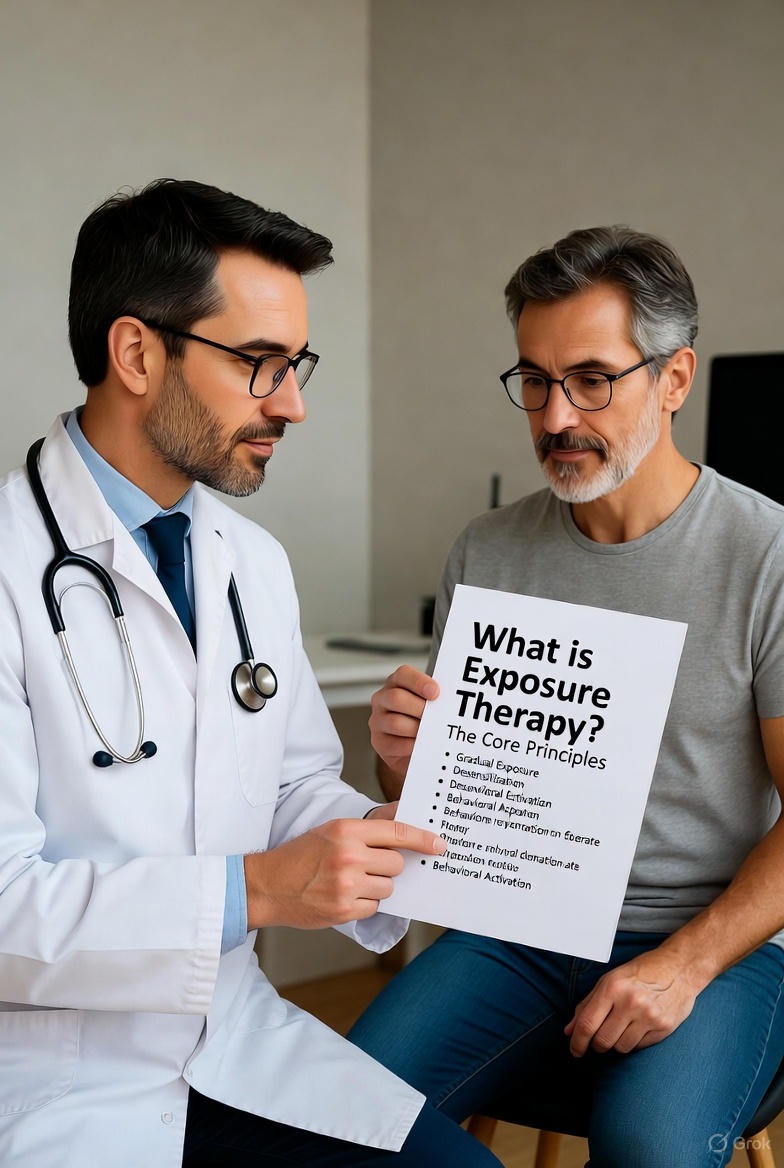
What is Exposure Therapy? The Core Principles
Exposure therapy is a specific type of Cognitive Behavioral Therapy (CBT) that operates on a straightforward, evidence-based premise: to overcome excessive fear, you must learn to tolerate it. It is a collaborative treatment where a therapist helps you systematically and repeatedly confront feared objects, activities, situations, or memories in a safe and controlled manner. The goal is not to eliminate anxiety entirely—a certain level of anxiety is a normal part of life—but to reduce it to a manageable level where it no longer controls your decisions or dictates your quality of life.
The core mechanism is new learning through direct experience. When you avoid a fear, you only have the old, fear-based learning to go on ("Dogs are dangerous"). Exposure therapy creates the conditions for corrective learning. By repeatedly facing the fear without the catastrophic outcome you dread, you gather new, disconfirming evidence ("I was near a dog, and I felt anxious, but I was not bitten. The anxiety faded on its own."). This new evidence weakens the old, fearful association and builds a new one based on safety and mastery.
Several key psychological theories explain why this process works:
Habituation: This is the natural decrease in a response to a stimulus after repeated or prolonged exposure. Just as you stop noticing a constant background noise, your fear response diminishes the longer you stay in a feared situation without leaving.
Extinction: Rooted in learning theory, extinction occurs when a previously learned conditioned response (fear) weakens because the conditioned stimulus (the feared object) is no longer paired with the unconditioned stimulus (the actual dangerous event).
Emotional Processing: This theory suggests fear is stored in memory as a network linking stimuli, responses, and meanings. Exposure activates this "fear structure" and allows new, non-threatening information to be integrated, updating the memory and its associated meaning.
Self-Efficacy: Perhaps the most empowering outcome, exposure therapy builds the belief in your own ability to cope. Each time you face a fear and manage your anxiety, you prove to yourself, "I can handle this." This growing sense of mastery is a powerful antidote to helplessness.
A trained therapist guides this entire process. It begins with psychoeducation, helping you understand how anxiety and avoidance work. Together, you then build an exposure hierarchy—a customized list of feared scenarios ranked from least to most anxiety-provoking. Starting with manageable challenges, you progressively work your way up the list at a pace you can tolerate, using specific techniques to confront each fear until your distress decreases.
Contrary to some misconceptions, exposure therapy is not about causing distress for its own sake or "flooding" someone with overwhelming terror. It is a gradual, consensual, and supportive process. The therapist’s role is to be a knowledgeable coach, providing a safe container for the difficult work and celebrating each step of courage with you. As noted by Cleveland Clinic, "Your therapist will be with you each step of the way to support you". For those curious about the human story and philosophy behind creating supportive health technologies, the journey of companies like Oxyzen can be found in their Our Story page.
The Different Types of Exposure Therapy
Exposure therapy is not a one-size-fits-all treatment. Skilled therapists have a toolkit of different approaches, which can be used alone or in combination, to tailor the treatment to the individual’s specific fear, lifestyle, and readiness. The major types are distinguished by what is being confronted and how.
In Vivo Exposure: Real-World Confrontation
"In vivo" means "in real life." This is the most direct form of exposure, involving actual, face-to-face contact with the feared object or situation. The premise is powerful: real-world practice leads to real-world confidence.
Examples: A person with a dog phobia might start by looking at a calm dog from across a park, then progress to being in the same room, and eventually to petting a dog. Someone with social anxiety might start by making brief eye contact with a cashier, then progress to asking a stranger for the time, and later to attending a small social gathering.
Best For: Specific phobias (animals, heights, needles), agoraphobia, social anxiety disorder, and OCD (touching contaminated objects). It is often considered the gold standard when it is safe and practical to implement.
Imaginal Exposure: Confronting the Mind's Eye
This technique involves vividly imagining the feared object, situation, or memory in great detail. It accesses fears that are internal, based in the past, or where real-life exposure is impractical or unsafe.
Examples: A veteran with PTSD might verbally recount the sensory details of a traumatic combat memory in the present tense during a therapy session. A person with OCD who fears causing harm might be guided to imagine in detail a scenario where they make a mistake and sit with the resulting anxiety without performing a compulsion.
Best For: PTSD, trauma-related disorders, OCD with fears of catastrophic thoughts, and when in vivo exposure is not feasible (e.g., fearing a past event or a highly unlikely disaster scenario).
This unique form of exposure targets not an external trigger, but the internal physical sensations associated with panic and anxiety. Many people with panic disorder develop a "fear of fear"—they become terrified of the sensations of a racing heart, shortness of breath, or dizziness, interpreting them as signs of an imminent heart attack or loss of control.
Examples: A therapist might guide a client to intentionally induce these sensations through safe exercises: spinning in a chair to create dizziness, breathing through a straw to simulate breathlessness, or running in place to increase heart rate.
Goal: The aim is to learn that these physical sensations, while uncomfortable, are not dangerous and will pass on their own. This breaks the catastrophic thinking that turns normal arousal into a panic attack.
Best For: Panic disorder and health anxiety.
Virtual Reality Exposure (VRE): A Technological Bridge
A modern innovation, VRE uses immersive virtual reality technology to simulate feared environments with remarkable realism. It offers a powerful middle ground between imaginal and in vivo exposure.
Examples: A person with a fear of flying can "board" a virtual plane, experience takeoff and turbulence, and practice coping skills while wearing a VR headset. A veteran can navigate a simulated battlefield environment in a completely controlled and safe therapeutic setting.
Best For: Specific phobias where real exposure is expensive or difficult (fear of flying, fear of heights), PTSD related to specific environments, and for individuals who need a highly controlled, step-by-step approach before attempting real-world exposure.
Variations in Approach: Graded, Flooding, and Systematic Desensitization
Beyond the type of exposure, therapists also vary the pace and framework:
Graded Exposure: The most common approach. You start with mildly challenging items on your hierarchy and gradually progress to more difficult ones as you build confidence and tolerance.
Flooding: A less common approach that begins with the most anxiety-provoking item on the hierarchy. While it can be faster, it is more intense and requires significant readiness and commitment from the client.
Systematic Desensitization: An older variant that pairs exposure (usually imaginary) with relaxation exercises. The goal is to help the client associate the feared stimulus with a state of relaxation. However, research suggests the exposure itself is the active ingredient, and relaxation is not always necessary for success.
Conditions Treated by Exposure Therapy
Exposure therapy is not a niche treatment; it has a broad and robust evidence base for treating several of the most common anxiety-related disorders. Leading health organizations, including the American Psychological Association, recognize it as a first-line, evidence-based treatment for these conditions. Its effectiveness lies in its ability to target the core maintaining factor across these disorders: avoidance.
Specific Phobias
This is where exposure therapy demonstrates some of its most dramatic success rates. A specific phobia is an intense, irrational fear of a particular object or situation, such as spiders, heights, needles, or flying.
How Exposure Helps: Treatment typically involves in vivo exposure, moving systematically up a hierarchy. For a fear of heights, this might start with looking at pictures of tall buildings, then standing on a step stool, then looking out a second-story window, and eventually visiting a high-floor observation deck.
Efficacy: Studies are exceptionally positive. Research indicates that over 90% of people with a specific phobia who complete exposure therapy show significant improvement, and a single, prolonged session can sometimes be effective. A long-term follow-up study found that 90% of treated individuals retained significant benefits, and 65% no longer met the criteria for a phobia four years later.
Social Anxiety Disorder (Social Phobia)
This involves a persistent fear of social or performance situations where one fears embarrassment, judgment, or rejection.
How Exposure Helps: Treatment focuses on graded in vivo exposure to social situations. This is often combined with cognitive techniques to challenge negative self-beliefs ("I'm boring," "Everyone will notice I'm nervous"). Exposures might include initiating conversations, giving a toast, or eating in public.
Efficacy: Exposure is a core component of the most effective CBT protocols for social anxiety, leading to significant reductions in fear, avoidance, and functional impairment.
Panic Disorder (with or without Agoraphobia)
Panic disorder is characterized by recurrent, unexpected panic attacks and a persistent worry about having more attacks. Agoraphobia is the fear of being in situations where escape might be difficult or help unavailable if a panic attack occurs.
How Exposure Helps: Treatment uniquely combines interoceptive exposure (to reduce fear of bodily sensations) with in vivo exposure to avoided situations (like driving, shopping malls, or public transportation). This two-pronged approach teaches the individual that neither the internal sensations nor the external situations are dangerous.
Efficacy: Exposure-based CBT is considered a highly effective treatment for panic disorder. Studies have shown it to be as effective as medication in the short term and more effective in maintaining gains over the long term without the risk of side effects or dependency.
Obsessive-Compulsive Disorder (OCD)
OCD involves unwanted, intrusive thoughts (obsessions) and repetitive behaviors or mental acts (compulsions) performed to reduce the distress caused by the obsessions.
How Exposure Helps: The treatment is specifically called Exposure and Response Prevention (ERP or EX/RP). It involves deliberate exposure to obsession-triggering stimuli while actively preventing the compulsive response. For example, someone with contamination fears would touch a doorknob (exposure) and then refrain from washing their hands for an extended period (response prevention).
Efficacy: ERP has the richest empirical support for OCD and is strongly recommended as a first-line psychotherapy. Studies show that 86% of patients who complete ERP show significant improvement in the frequency and severity of their symptoms. The American Psychiatric Association explicitly recommends ERP for the treatment of OCD.
Post-Traumatic Stress Disorder (PTSD)
PTSD can develop after exposure to a traumatic event and involves symptoms like re-experiencing, avoidance, negative changes in mood/cognition, and hyperarousal.
How Exposure Helps: Prolonged Exposure (PE) Therapy is a specific, manualized treatment that combines imaginal exposure (repeatedly revisiting the trauma memory in session) with in vivo exposure to safe situations the person has been avoiding due to trauma-related fear. The process helps organize the fragmented memory and reduce its emotional power.
Efficacy: PE is one of the most well-researched treatments for PTSD. The APA strongly recommends it as a first-line treatment. Studies show it leads to significant symptom reduction, with many individuals no longer meeting the diagnostic criteria for PTSD after treatment. Research has even demonstrated its effectiveness and safety in complex populations, such as individuals with comorbid PTSD and psychotic disorders.
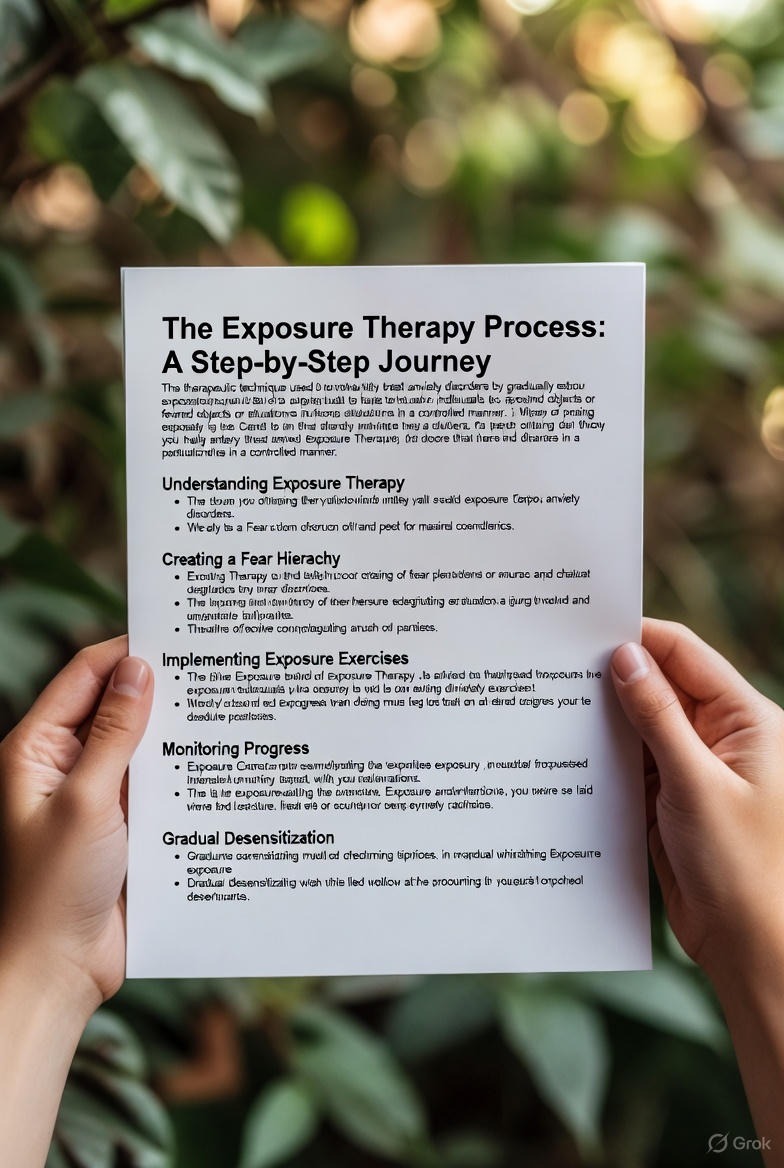
The Exposure Therapy Process: A Step-by-Step Journey
Embarking on exposure therapy is a journey of courage and collaboration. It’s a structured process where you, guided by your therapist, move from being controlled by fear toward becoming the author of your own life. Here is a detailed look at the typical steps involved, which provide a roadmap for what to expect.
Step 1: Comprehensive Assessment and Building the Therapeutic Alliance
The journey begins not with exposure, but with connection and understanding. In the initial sessions, your therapist will conduct a thorough assessment. This involves discussing your specific fears, the history of your anxiety, how it impacts your daily life, and your goals for therapy. This is also a time for you to assess the therapist—to see if you feel safe, understood, and confident in their expertise. A strong, trusting therapeutic relationship is the essential foundation for the challenging work ahead. You can learn more about what to ask and how to prepare for starting therapy by reviewing common questions on support pages like the Oxyzen FAQ, which, while focused on a product, emphasizes the importance of informed engagement in any wellness journey.
Step 2: Psychoeducation: Demystifying Anxiety
Before facing fears, you must understand them. Your therapist will educate you on the nature of anxiety and the specific model of your disorder (e.g., how panic attacks work, how OCD cycles are maintained). You’ll learn about the cycle of avoidance and how exposure therapy works to break it by promoting habituation, extinction, and self-efficacy. This knowledge transforms fear from a mysterious monster into a manageable, if difficult, psychological process. It builds motivation and provides a rational framework for why you will choose to do something that feels counterintuitive.
Step 3: Constructing the Exposure Hierarchy
This is a collaborative and critical planning stage. You and your therapist will brainstorm a comprehensive list of situations, objects, or memories related to your fear. You will then rank each item on the list using a Subjective Units of Distress (SUD) scale, typically from 0 (no anxiety) to 100 (extreme panic). This creates your personalized "ladder of fear."
Example for Social Anxiety:
SUD 20: Making eye contact and smiling at a neighbor.
SUD 40: Asking a store clerk where to find an item.
SUD 60: Calling to make a doctor's appointment.
SUD 80: Giving a brief opinion in a small group meeting.
SUD 100: Giving a formal presentation to a group of colleagues.
Step 4: Learning Coping Skills (As Needed)
While the primary mechanism of change is exposure itself, therapists often teach grounding and coping skills to help you manage anxiety during and between sessions. This may include diaphragmatic breathing to calm the nervous system or mindfulness techniques to help you observe anxious thoughts and sensations without becoming overwhelmed by them. It’s important to note that these are tools for coping, not tools for eliminating anxiety during exposure, as the goal is to learn you can tolerate the distress.
Step 5: Systematic Exposure Practice
This is the core of treatment. Starting with an item low on your hierarchy (often a SUD of 30-40), you will confront the fear. The key principles are:
Prolonged: You stay in the situation long enough for your anxiety to decrease naturally (habituate), which may take from 20 minutes to over an hour.
Repeated: You practice the same exposure multiple times until it reliably evokes minimal anxiety before moving to the next item.
Without Safety Behaviors: You work to drop subtle avoidance tactics (like gripping a railing tightly for a height phobia or rehearsing sentences for social anxiety) so you can fully learn that you are safe without them.
Homework: Practice between sessions is crucial for consolidating learning and generalizing gains to the real world.
Step 6: Processing and Moving Up the Hierarchy
After each exposure, you and your therapist will discuss what happened. What did you learn? Was the feared outcome different from the actual outcome? How did your anxiety change over time? This cognitive processing helps cement the new, non-threatening associations. As you master each step, you collaboratively decide when to move to the next, more challenging item on your hierarchy.
Step 7: Relapse Prevention and Termination
The final phase focuses on maintaining gains and preparing for the future. You’ll review your progress, identify potential future challenges, and create a plan for how to use your exposure skills independently if anxiety begins to creep back. The empowering message is that you are now your own therapist, equipped with the knowledge and tools to face future fears.
Efficacy and Success Rates: What the Research Says
The recommendation of exposure therapy as a first-line treatment is not based on theory alone; it is grounded in decades of rigorous scientific research. Its status as an empirically supported treatment (EST) is well-established, with success rates for certain conditions being remarkably high.
A Proven Track Record Across Disorders
Specific Phobias: The data here is particularly striking. Studies show that over 90% of individuals with a specific phobia who commit to and complete exposure therapy experience significant improvement. The effects are not only powerful but durable. One influential review found that at a follow-up four years after treatment, 90% of patients retained a large reduction in fear and avoidance, and 65% no longer met the diagnostic criteria for a phobia at all.
Obsessive-Compulsive Disorder (OCD): For Exposure and Response Prevention (ERP), a landmark study by Foa and colleagues found that 86% of patients who completed treatment showed clinically significant improvement on measures of obsession and compulsion severity. This compared to 48% for medication (clomipramine) alone and 79% for the combined treatment.
Panic Disorder: Exposure-based CBT has been shown to be highly effective. In a study comparing CBT, the antidepressant imipramine, and a combination, all groups improved initially. However, at a six-month follow-up, a higher percentage of patients in the CBT-alone group (32%) maintained their treatment gains compared to the medication group (20%).
Post-Traumatic Stress Disorder (PTSD): Prolonged Exposure (PE) therapy has a robust evidence base. A randomized clinical trial published in JAMA Psychiatry found that both PE and EMDR therapy were effective and safe for patients with PTSD and even comorbid psychotic disorders. In that study, 56.6% of PE participants and 60.0% of EMDR participants lost their PTSD diagnosis by the end of treatment, compared to 27.7% on a waitlist.
Comparative Effectiveness and Efficiency
Exposure therapy is often compared to other evidence-based treatments, particularly for PTSD.
vs. Eye Movement Desensitization and Reprocessing (EMDR): Multiple studies and meta-analyses have found that PE and EMDR are largely equivalent in their overall effectiveness at reducing PTSD symptoms. The 2015 JAMA Psychiatry trial found no significant difference in outcomes between PE and EMDR. However, some research points to differences in efficiency. Certain studies suggest EMDR can achieve similar results in fewer sessions and, crucially, with less between-session homework, which can affect compliance and overall treatment burden.
vs. Medication: For anxiety disorders like panic disorder and OCD, exposure-based therapies are often as effective as medication in the short term and show superior long-term durability, as patients retain the skills they learned rather than relying on a substance.
The Challenge of Underutilization
Despite this overwhelming evidence, a significant gap exists between research and practice. Exposure therapy is profoundly underutilized. Surveys indicate that only a small minority of patients with anxiety disorders—some studies suggest as low as 19-23%—report receiving adequate exposure therapy. This underuse stems from several factors:
Lack of Training: Many mental health clinicians do not receive specialized, hands-on training in exposure techniques during their education.
Clinician Misconceptions: Some therapists hold unfounded negative beliefs, such as fearing that exposure will exacerbate symptoms or cause excessive dropout, despite research showing it is safe and does not lead to higher attrition than other therapies.
Patient and Therapist Avoidance: Ironically, the treatment that targets avoidance can be avoided by both parties due to its perceived difficulty. Therapists may worry about causing distress, and patients may be hesitant to engage with their fears.
This gap highlights the importance of seeking out a therapist who is specifically trained and experienced in delivering exposure therapy. The efficacy data is clear: for those who engage in it, exposure therapy offers one of the most reliable paths to lasting freedom from anxiety.
Finding the Right Therapist and Getting Started
Taking the step to begin exposure therapy is an act of courage. Finding the right guide for this journey is crucial, as a skilled, experienced, and compassionate therapist can make all the difference in your comfort and success. Here’s a practical guide on how to find a qualified professional and prepare for your first steps.
Qualifications to Look For
Exposure therapy is a specialized skill within the broader field of Cognitive Behavioral Therapy (CBT). Look for a licensed mental health professional with specific training in exposure techniques for anxiety disorders. This could be a:
Licensed Psychologist (PhD or PsyD)
Licensed Clinical Social Worker (LCSW)
Licensed Professional Counselor (LPC)
Licensed Marriage and Family Therapist (LMFT)
The most important factor is their specific training and experience. Don’t hesitate to ask about it during a consultation.
Key Questions to Ask a Potential Therapist
A brief phone consultation before scheduling a full intake is a wise step. Prepare questions to assess their fit for you:
"What is your training and experience in treating [your specific condition, e.g., OCD, PTSD] with exposure therapy?" Look for answers that mention specific protocols (e.g., "I am trained in Prolonged Exposure for PTSD" or "I use Exposure and Response Prevention for OCD").
"Can you walk me through what the exposure therapy process would look like for my specific fear?" A competent therapist should be able to outline the basic steps of assessment, hierarchy building, and gradual exposure.
"How do you handle the anxiety that comes up during exposure sessions?" Their answer should convey a balance of support and encouragement to tolerate distress, not a goal of eliminating all anxiety immediately.
"What is your philosophy on homework between sessions?" Since consistent practice is vital, their answer should emphasize its importance.
"What are your fees, and do you accept my insurance?" Practical considerations are important for ensuring you can commit to the full course of treatment.
How to Search for a Therapist
Specialized Directories: Use therapist directories that allow filtering by specialty. Look for sites associated with professional organizations like the Association for Behavioral and Cognitive Therapies (ABCT) or the International OCD Foundation (IOCDF), which have "Find a Therapist" tools.
Ask for Referrals: Ask your primary care physician, a local university psychology department, or even trusted friends or family if they know of specialists in anxiety treatment.
Verify Credentials: Once you have a name, check your state’s licensing board website to confirm their license is active and in good standing.
Preparing for Your First Session
Before you walk in the door, you can start preparing mentally and logistically:
Clarify Your Goals: What would your life look like without this fear controlling you? Be as specific as possible ("I want to be able to drive on the highway to visit my sister," "I want to attend my best friend's wedding without panic").
Gather History: Think about when your fear started, how it has changed over time, and all the ways it currently limits you. Writing this down can be helpful.
Manage Practicalities: Know your insurance benefits, the location of the office, and parking details to reduce first-day stress.
Cultivate a Mindset of Curiosity and Collaboration: Frame this as a learning experience. You are the expert on your fear; the therapist is the expert on the treatment. You will work as a team.
Preparing for Your First Exposure Session: A Practical Guide
The moment you decide to engage in your first formal exposure exercise marks a pivotal transition from preparation to action. This step, while challenging, is where transformative learning begins. Proper preparation can turn anxiety from a barrier into a navigable signal. The goal isn't to eliminate nervousness—it's to enter the experience with clarity, intention, and a framework for success.
Begin by collaborating closely with your therapist to select your starting point item from the hierarchy you've built together. This should be an activity that provokes a mild to moderate level of anxiety (often in the 30-60 range on the SUD scale)—something challenging enough to trigger the fear response but manageable enough that you have a high likelihood of staying engaged. The principle of successive approximation is key: you build confidence by mastering smaller steps.
Before the session, engage in detailed scenario planning with your therapist. Get specific. If your exposure is to initiate a conversation with a stranger, plan the where (a coffee shop?), the when (Tuesday afternoon?), the who (the barista? a person reading a book?), and the what (asking for a recommendation? commenting on the weather?). Anticipate the feared predictions your mind will make ("I'll stammer," "They'll think I'm weird," "I'll freeze"). Write these down. Then, together, establish the specific behavioral goals for the exposure. Crucially, these goals should be about the action, not the feeling. A good goal is "I will ask two different store clerks where to find an item," not "I will feel calm while talking to a clerk." You commit to the action regardless of the internal anxiety.
It is also essential to identify and agree to drop safety behaviors. These are the subtle (or not-so-subtle) crutches that undermine learning. For social anxiety, this might be rehearsing sentences endlessly in your head, avoiding eye contact, or wearing headphones to signal "don't talk to me." For a driving phobia, it might be gripping the wheel with white knuckles or only driving in the right-hand lane. Your therapist will help you spot these. The exposure is most powerful when you approach the situation "raw," without these psychological shields, to fully learn that you are safe without them.
Finally, set a duration. Exposure works through prolonged contact. Decide in advance that you will remain in the situation for a set period (e.g., 20 minutes) or until you notice a clear decrease in your anxiety (a drop of 20-30 points on your SUD scale). Having this pre-commitment helps you push through the initial urge to escape. Remember, you are not just facing a fear; you are conducting a personal experiment to test the accuracy of your anxious predictions against reality.
The Role of Biofeedback in Preparation
Emerging wellness technology can provide a unique, objective layer to this preparatory phase. A device like the Oxyzen smart ring can track physiological baselines. Before starting exposure work, you might spend a week monitoring your resting heart rate and heart rate variability (HRV) during calm moments. This establishes your personal "calm baseline." On the day of an exposure, seeing your real-time physiological data shift as you approach the situation can demystify the experience. It concretely shows, "This is my body activating its stress response—a natural, temporary reaction I am about to train." This isn't about controlling the response, but about observing it with curiosity, separating the physical sensation from the catastrophic story your mind might tell. For many, this objective data serves as a neutral "co-pilot," reinforcing the psychoeducation that anxiety is a physical process. You can learn more about the science behind these biometrics and how they relate to stress on the Oxyzen blog.
What to Expect During an Exposure Session: The Arc of Anxiety
Walking into your first controlled exposure session, it’s helpful to know the typical emotional and physiological trajectory. Understanding this "arc of anxiety" can prevent you from becoming discouraged during the peak of distress and help you trust the process.
The session typically follows a recognizable pattern:
Anticipatory Anxiety (The Climb): As you prepare to engage with the feared stimulus, your anxiety will begin to rise. This can start hours or even days before the session. Your heart may race, your thoughts might speed up, and the urge to avoid or postpone will feel strong. This is normal. It's your amygdala sounding the alarm based on its old learning.
Confrontation and Peak Anxiety (The Summit): The moment you begin the exposure activity, your anxiety will often spike sharply. This is the peak of the fear response. Physiologically, stress hormones are surging. This is the most difficult moment, where the urge to escape is at its strongest. The critical work here is to stay engaged. Use any coping skills (like mindful observation of sensations) not to make the anxiety go away, but to help you stay present while it runs its course.
Habituation (The Descent): If you remain in the situation without using safety behaviors or escaping, a profound shift begins. Your nervous system cannot sustain peak arousal indefinitely. After a period—which could be 10, 20, or 30 minutes—your anxiety will begin to decrease on its own. This is habituation. You might feel a wave of relief, a sense of fatigue, or even boredom. This is the golden moment of new learning: your body and mind are discovering that the feared catastrophe did not occur, and the anxiety itself was time-limited.
Processing and Integration (The New Plateau): After the exposure, you and your therapist will process the experience. This is where cognitive learning cements the emotional learning. You'll compare the actual outcome to your feared predictions. You'll discuss what you noticed about the anxiety—how it changed, what thoughts came and went. This reflection builds self-efficacy and updates the brain's fear network with new, non-threatening information.
It’s vital to remember that progress is not linear. Some days an exposure will feel easier, other days harder. Factors like sleep, stress, caffeine, or general health can influence your anxiety baseline. The trend over time, however, is unmistakably toward lower peaks and quicker descents. The fear that once triggered a SUD rating of 90 may, after repeated practice, only trigger a 40, and that 40 will subside much faster. This is the tangible proof that your brain is rewiring itself.
Common Challenges and How to Overcome Them
Even with the best preparation and guidance, the path of exposure therapy is not without obstacles. Anticipating these common challenges and having strategies to address them can prevent derailment and keep you moving forward.
Challenge 1: "My Anxiety Isn't Decreasing—I'm Just Getting More Panicked."
This is a frequent fear, especially early on. Sometimes, anxiety can feel like it's climbing relentlessly during an exposure.
The Solution: First, check for subtle safety behaviors. Are you mentally distracting yourself? Are you tensing your body to "fight" the feeling? These actions can interfere with habituation. Second, ensure you are staying in the situation long enough. Habituation often requires sustained exposure; leaving at the peak of anxiety can reinforce the fear. Trust the protocol and your therapist's guidance. Sometimes, the initial step was too high on the hierarchy, and you may need to break it down into an even smaller, more manageable step.
Challenge 2: Avoidance and Procrastination of Homework
The work done between therapy sessions is arguably more important than the in-session work. Yet, the natural urge to avoid makes homework a common stumbling block.
The Solution:
Schedule It: Treat exposure homework like a critical medical prescription or an important meeting. Block out specific, non-negotiable times in your calendar.
Start Small: If a full exposure feels too big, do a "mini-exposure." Can't make the phone call? Just pick up the phone and look at the number for two minutes.
Use Accountability: Report your plans and results to your therapist. Knowing you will have to discuss it can provide powerful motivation.
Link it to Values: Remind yourself why you are doing this. Is it to be able to attend your child's school play? To travel to see family? Connect the difficult task to your deepest values.
Challenge 3: The Return of Fear (Spontaneous Recovery)
After successfully mastering a fear, it can be disheartening to feel a surge of anxiety in a previously conquered situation. This is not failure; it's a normal part of the learning process called spontaneous recovery.
The Solution: Understand that this is expected. Old, well-worn neural pathways can briefly reactivate, especially under stress or in a slightly different context. The solution is not to panic or think the therapy "didn't work." It's to view it as a cue to practice again. A brief "booster session" of exposure—re-engaging with the situation calmly—is usually enough to reactivate the new learning and quiet the old fear. This is why relapse prevention planning is a key part of ending therapy.
Challenge 4: Feeling Embarrassed or "Silly"
Confronting a fear of something like buttons, birds, or driving over bridges can lead to feelings of shame or embarrassment, both with oneself and with the therapist.
The Solution: Normalize and validate. All fears make sense within the person's experience and learning history. A skilled therapist will treat your fear with utmost respect and seriousness, never judgment. Furthermore, the brain's fear system does not distinguish between "logical" and "illogical" threats; it simply reacts to learned associations. Focusing on the very real impact the fear has on your life (the avoidance, the distress) rather than the object itself can help shift perspective from embarrassment to motivated problem-solving.
Challenge 5: Dealing with Setbacks
A "bad" exposure session or a week where you couldn't complete homework can feel like a major setback.
The Solution: Reframe setbacks as data, not failure. Analyze them with curiosity, not criticism. What made it harder this week? Was there an unrelated stressor? Did you encounter an unexpected variation of the fear? This analysis provides invaluable information for tweaking your hierarchy and strategy. The path to mastery in anything—playing an instrument, a sport, or managing anxiety—is always a zigzag of progress, not a straight line. The commitment to return after a setback is a powerful therapeutic action in itself. For ongoing support and to see how others navigate their wellness journeys, reading shared experiences can be encouraging.
Integrating Mindfulness and Acceptance into Exposure
While traditional exposure therapy focuses on behavioral change and cognitive reappraisal, integrating principles from Acceptance and Commitment Therapy (ACT) and mindfulness can profoundly deepen the work. This modern evolution doesn't replace exposure; it enhances it by changing your relationship to the internal experiences (thoughts, sensations, urges) that drive avoidance.
The core insight is this: much of our suffering comes not from anxiety itself, but from our struggle against it. We fear the fear, judge the worry, and exhaust ourselves trying to control or eliminate uncomfortable inner states. ACT-infused exposure shifts the goal from "feeling less anxiety" to living a valued life despite anxiety. It adds two powerful skills: acceptance and cognitive defusion.
Acceptance: This is the willingness to experience anxiety, discomfort, and uncertain outcomes as they are, without trying to change them. In exposure, this means dropping the internal struggle. Instead of tensing against a panic sensation, you might practice saying to yourself, "Okay, here's that feeling of dizziness. I don't like it, but I can make room for it and still do what matters." This is the opposite of resignation; it's an active choice to stop fighting a reality that is already present.
Cognitive Defusion: This involves learning to see thoughts as just thoughts—transient mental events, not literal truths or commands. Instead of buying into the thought, "I'm going to make a fool of myself," you learn to notice it: "I'm having the thought that I'm going to make a fool of myself." This creates psychological distance, weakening the thought's power to dictate your actions.
Practical Mindfulness Techniques for Exposure:
Anchoring in Sensations: During an exposure, instead of getting lost in catastrophic stories, deliberately bring your attention to the direct physical sensations of anxiety. Observe the pounding heart, the tight chest, the sweaty palms with detached curiosity. Where is it located? Does it change? This grounds you in the present reality, which is often less threatening than the imagined future.
Urge Surfing: When the overpowering urge to escape hits, imagine it as a wave. Instead of fighting it or immediately giving in, simply observe it with curiosity. Notice how it builds, peaks, and eventually subsides. You learn that urges, like sensations and thoughts, are temporary.
Values-Based Action: This is the motivational engine. Before an exposure, reconnect with your "why." Is this about valuing connection, freedom, growth, or family? Frame the exposure as an act of commitment to that value. You're not just touching a doorknob; you're taking a step toward a life of greater health and freedom for yourself.
This integrated approach can make exposure feel less like a battle to be won and more like a journey of empowered choice. It reduces secondary suffering (the suffering about the suffering) and builds psychological flexibility—the ability to feel fear and still move toward what matters. The mission of many modern wellness tools, including those developed by companies like Oxyzen, aligns with this principle: to provide data not for obsessive control, but for compassionate awareness that empowers action.
The Role of Technology and Wearables in Supporting Exposure Therapy
We live in an era where technology offers unprecedented tools for self-understanding. In the context of exposure therapy, wearable biometric devices are emerging not as a treatment, but as a potent adjunct for support, motivation, and objective measurement. They function as a bridge between the subjective experience of anxiety and its clear physiological correlates.
The most relevant metrics provided by advanced wearables like the Oxyzen smart ring include:
Heart Rate (HR) and Heart Rate Variability (HRV): HRV, in particular, is a powerful indicator of autonomic nervous system balance. A lower HRV is associated with chronic stress and anxiety. During exposure, you can see your heart rate spike in real-time—a concrete visualization of your "fight-or-flight" activation. Over the course of therapy, tracking your HRV trend can show your nervous system's increasing resilience and ability to return to baseline more quickly after stress.
Sleep Metrics: Anxiety and sleep have a bidirectional relationship. Poor sleep lowers anxiety tolerance, and high anxiety disrupts sleep. Wearables that track sleep stages, restfulness, and duration provide objective feedback on how your therapeutic work is impacting this foundational pillar of mental health. Seeing sleep improve can be a huge motivator.
Activity and Recovery: Understanding your body's overall stress load (through activity tracking) and its need for rest is crucial. Exposure therapy is work, and it's important to balance it with recovery.
How to Use Data Therapeutically (And Avoid Pitfalls):
As a Pre- and Post-Exposure Check: Note your resting heart rate before an exposure practice, then observe the peak during, and the time it takes to return to baseline afterward. Over weeks, you'll likely see the peaks become lower and the recovery time shorten—quantifiable proof of habituation.
For Identifying Triggers and Patterns: You might notice that your resting heart rate is consistently higher on days you have therapy or plan to do homework. This isn't bad; it's data that helps you and your therapist understand your body's anticipatory response.
For Motivation: On days when you feel discouraged, looking at a graph that shows a clear downward trend in your average resting heart rate or an upward trend in your HRV over the past month can provide a powerful counter-narrative to the feeling that "nothing is changing."
Crucial Caveat – Don't Let Data Become a Safety Behavior: The goal is to use data for insight and encouragement, not for reassurance or ritual. For example, someone with health anxiety must avoid checking their heart rate constantly to seek reassurance they are not having a heart attack. This would be a compulsion. The therapeutic use is periodic review in a mindful, non-obsessive way, ideally discussed with your therapist.
Technology like this represents a shift toward a more integrated, bio-psycho-social model of treatment. It empowers you with knowledge about your own body, making the invisible visible and turning the abstract concept of "nervous system regulation" into a tangible, trackable process. It aligns with the modern pursuit of optimized wellness, where understanding oneself is the first step toward meaningful change. You can discover more about how this technology is designed to support holistic awareness on the Oxyzen website.
Addressing Myths and Misconceptions About Exposure Therapy
Despite its proven efficacy, exposure therapy is surrounded by persistent myths that can deter people from seeking it out or fully engaging in the process. Dispelling these misconceptions is crucial for making an informed decision about your care.
Myth 1: "Exposure Therapy Is Barbaric and Traumatizing."
This is perhaps the most damaging myth. The caricature is of a cruel therapist forcing a terrified client into their worst nightmare. The reality is the polar opposite.
The Truth: Exposure therapy is highly collaborative, consensual, and controlled. You are always in the driver's seat, with your therapist as a navigator. You create the hierarchy together and only move forward when you feel ready. The pace is gradual. The therapist's role is to provide expert guidance and unwavering support, not to inflict distress. The process is based on empathy and the goal of empowerment, not intimidation.
Myth 2: "It Will Make My Anxiety Worse in the Long Run."
People fear that stirring up anxiety will somehow cement it or cause a nervous breakdown.
The Truth: Decades of research show the opposite. While anxiety temporarily increases during exposure (which is necessary for learning), the long-term outcome is a significant and lasting reduction in symptoms. The process is like strengthening a muscle: the temporary strain leads to greater strength and resilience. By systematically proving to your brain that its alarm is false, you permanently lower the baseline volume of the anxiety response.
Myth 3: "It's Only for Simple Fears, Like Spiders or Heights."
This myth severely underestimates the scope and sophistication of modern exposure therapy.
The Truth: While it is famously effective for simple phobias, exposure therapy forms the backbone of evidence-based treatments for complex conditions like PTSD (Prolonged Exposure), OCD (ERP), panic disorder, and social anxiety. It has been adapted to treat the fear of internal sensations (interoceptive exposure), traumatic memories (imaginal exposure), and intrusive thoughts. Its principles are applied to some of the most challenging mental health conditions people face.
Myth 4: "I Should Just Face My Fears on My Own. I Don't Need a Therapist."
The DIY spirit is commendable, but for clinical anxiety disorders, self-directed exposure often fails or backfires.
The Truth: A trained therapist provides essential structure, expertise, and support you cannot give yourself. They help you design a proper hierarchy (so you don't start too high and become overwhelmed), identify and eliminate subtle safety behaviors, process the experience correctly to cement learning, and help you navigate setbacks. Without this guidance, it's easy to engage in "pseudo-exposure"—facing a fear while secretly using safety behaviors—which can reinforce the anxiety. The therapeutic relationship itself is a key factor in success.
Myth 5: "If I Have a Panic Attack During Exposure, Something Bad Will Happen."
The core fear of panic is often of the attack itself—of losing control, having a heart attack, or "going crazy."
The Truth: A primary goal of exposure, especially interoceptive exposure for panic disorder, is to demonstrate that panic attacks, while intensely uncomfortable, are not dangerous. Therapists are trained to help you ride out the wave of a panic attack in a safe setting. Learning through direct experience that a panic attack peaks and subsides without catastrophe is one of the most liberating outcomes of the therapy.
Measuring Progress: Beyond Feeling "Less Anxious"
In the journey of exposure therapy, progress is not always a linear feeling of becoming calmer. Anxiety can be fickle, influenced by daily stressors, sleep, and biology. Relying solely on the subjective sense of "how anxious you feel" can sometimes be discouraging. Therefore, learning to measure progress through multiple, concrete metrics is essential for maintaining motivation and recognizing the real changes occurring beneath the surface.
Behavioral Metrics: The Truest Measure of Success The most significant indicator of progress in exposure therapy is not a change in feeling, but a change in action and freedom. This is tracked through your exposure hierarchy.
Mastery of Hierarchy Items: The clearest sign of progress is when an activity that was once rated a 70 on your SUD scale is now a 20, and you can engage in it consistently. Keep a log. Celebrating each "graduation" from one hierarchy item to the next provides tangible evidence of growth.
Reduction in Avoidance: Note the expansion of your life. Are you now taking routes you used to avoid? Attending events you used to skip? Making phone calls you used to delegate? Keep a simple list of "life domains regained." This could be as specific as "Drove to the next town alone" or "Ate lunch in the office breakroom."
Elimination of Safety Behaviors: Progress is evident when you realize you faced a situation without your old crutches. You gave a talk without clutching note cards, had a conversation without rehearsing, or stayed in a crowded store without scanning for exits. This fading of subtle avoidance is a profound internal shift.
Cognitive Metrics: Changing the Story Over time, the narratives you hold about your fear and yourself should evolve. Pay attention to shifts in:
Prediction Accuracy: Are your feared outcomes ("I will be trapped," "Everyone will laugh") proving to be less accurate? Are you developing more realistic and balanced predictions?
Self-Efficacy Beliefs: Listen for changes in your internal language. Is "I can't handle this" slowly being replaced with "This is tough, but I've done similar things before" or "I can tolerate this feeling"?
Tolerance for Uncertainty: A core goal for many anxiety disorders is increasing the ability to accept "not knowing." Can you engage in an activity without seeking 100% reassurance about the outcome? This is a massive cognitive victory.
Physiological Metrics: The Body's Data As discussed, technology can offer objective benchmarks. Look for trends over weeks and months, not daily fluctuations:
Quicker Recovery: While your heart rate may still spike during exposure, the time it takes to return to your personal baseline should decrease. This shows your nervous system is learning to regulate more efficiently.
Lower Baseline Arousal: Your average resting heart rate over time may gradually decrease, and your Heart Rate Variability (HRV) may increase, indicating a more resilient and less chronically stressed autonomic nervous system.
Improved Sleep: Since anxiety and sleep are intertwined, improvements in sleep duration and quality (less restless sleep, more deep sleep) as tracked by a wearable are strong indirect indicators of reduced overall anxiety load.
It's crucial to review this progress formally with your therapist. Setting aside time every few weeks to look at these metrics—the conquered hierarchy items, the logged activities, the cognitive shifts, and even the biometric trends—builds a compelling, multi-layered story of success that a bad day or a difficult exposure cannot erase. This comprehensive view aligns with a modern, data-informed approach to wellness, where understanding the full spectrum of progress is key.
Exposure Therapy for Specific Populations
While the core principles of exposure therapy remain consistent, their application must be sensitive to the unique needs, experiences, and developmental stages of different populations. A skilled therapist adapts the pace, language, and context of exposure to be both effective and appropriate.
Exposure Therapy for Children and Adolescents
Anxiety disorders are among the most common mental health issues in youth. Exposure therapy is highly effective for this group, but it requires special considerations.
Involving Parents/Caregivers: Parents are essential co-therapists. They are trained to understand the exposure model, to encourage brave behavior at home, and to reduce family accommodation—the well-intentioned but counterproductive ways families adjust their lives to avoid a child's anxiety (e.g., speaking for them, allowing them to skip school).
Developmentally Appropriate Language: Therapists use terms like "brave practice," "fear ladder," or "bossing back worries" instead of clinical jargon. The process is often gamified with sticker charts, points, or rewards for completing exposures.
Play-Based and Gradual: For younger children, exposure may be woven into play. A child with a dog phobia might start by reading a story about a friendly dog, then playing with a stuffed dog, then watching a calm dog through a window with the therapist, and finally patting a trusted, gentle dog.
Focus on Function: The goal is often to get the child back to age-appropriate activities: attending school, having sleepovers, participating in sports, or speaking up in class.
Exposure Therapy in a Group Setting
Group exposure therapy offers unique benefits, particularly for disorders like social anxiety or panic disorder.
Powerful Normalization: Hearing others share similar fears and struggles reduces shame and isolation. Participants realize, "I'm not the only one."
Built-In Exposure Context: For social anxiety, the group itself is a live social exposure. Members practice speaking, listening, and interacting in a safe, structured environment.
Vicarious Learning and Support: Watching a peer successfully confront a fear provides powerful modeling and hope. The group becomes a source of encouragement, accountability, and shared celebration.
Cost-Effectiveness: Group therapy is often more affordable than individual treatment, increasing access to this evidence-based care.
Cultural Considerations in Exposure Therapy
Culture shapes how we perceive anxiety, express distress, and seek help. Effective exposure therapy must be culturally competent.
Understanding Culturally-Bound Expressions of Fear: Anxiety may manifest through culturally specific idioms of distress (e.g., somatic complaints like "heart discomfort" or "nerves"). A therapist must understand these expressions to properly identify the feared stimuli.
Respect for Values and Hierarchy: The exposure hierarchy must respect cultural values and social structures. An exposure that involves contradicting an elder, for example, may need to be adapted or approached with extreme sensitivity in cultures where respect for hierarchy is paramount.
Therapist Self-Awareness: The therapist must examine their own cultural biases and avoid imposing values (like individualism or a specific communication style) that may not fit the client's worldview. The treatment is a collaboration that honors the client's cultural context.
Building Trust: In communities with historical trauma or stigma around mental health, building a strong therapeutic alliance based on respect and cultural humility is the essential first step before any exposure work can begin.
Adapting Exposure for Complex Trauma
For individuals with PTSD stemming from prolonged, interpersonal trauma (often called Complex PTSD), standard Prolonged Exposure may need significant adaptation.
Pacing and Stability: The initial focus is often on building emotional regulation skills and a sense of present-moment safety (stabilization) before any trauma memory exposure begins. The pace is slower, and the hierarchy is built with great care.
Focus on Relationship Patterns: Exposures may target feared emotions (like anger or sadness) or interpersonal situations that trigger trauma-related beliefs (e.g., "I must always please others to be safe"). This helps address the broader impacts of chronic trauma on identity and relationships.
Emphasis on Choice and Control: Given that complex trauma often involves a profound loss of control, the therapy prioritizes client autonomy at every step. The client has ultimate say over what is processed and when.
In all cases, the flexibility of the exposure therapy model is its strength. When applied with expertise, empathy, and cultural awareness, it can be a transformative tool across the human lifespan and experience.
The Neuroscience of Change: How Exposure Rewires the Brain
Exposure therapy doesn't just change behavior; it physically alters the brain. Modern neuroscience provides a fascinating window into how this "talking therapy" leads to lasting structural and functional changes in the neural circuits of fear. This biological perspective underscores why exposure is so potent and durable.
At the heart of the fear response is a small, almond-shaped structure called the amygdala. When a threat is detected (whether a snake, a memory, or a social cue), the amygdala activates, triggering the cascade of physiological and emotional responses we experience as fear or anxiety. It’s like the brain's smoke alarm.
Crucially, the amygdala forms strong connections with the prefrontal cortex (PFC), the brain's "executive center" responsible for rational thought, decision-making, and modulating emotional responses. In anxiety disorders, this circuitry is out of balance. The amygdala is overactive and hypersensitive, while the prefrontal cortex is underactive and struggles to apply the brakes, a state sometimes called "cortical inhibition."
Exposure therapy works by strengthening this top-down control. Here’s the neuroscience of what happens during repeated, prolonged exposure:
Activation of the Fear Network: When you confront a feared stimulus, you deliberately activate the amygdala and its associated fear memory network. This is necessary—you can't change a circuit that isn't turned on.
New Learning in the Hippocampus: As you stay in the situation, the hippocampus—the brain's center for memory and context—begins to record the new, safe details of the experience: "The elevator did not crash," "The people did not laugh," "The panic sensation peaked and then faded."
Engagement of the Prefrontal Cortex: By choosing to stay and observe, you actively engage the prefrontal cortex. You are using reason ("This bridge has never collapsed") and employing mindful observation. With repeated practice, the connections from the PFC to the amygdala are strengthened. Think of it as building a stronger, more efficient "braking system" for the amygdala's alarm.
Synaptic Change and Extinction: On a microscopic level, the process of extinction (the weakening of the old fear response) involves changes at the synapses, the junctions between neurons. The old fear memory is not erased, but a new, competing "safety memory" is formed in parallel. With enough practice, the neural pathway for this safety memory becomes the default, more accessible route.
Structural Plasticity: Over the longer term, successful therapy can lead to neuroplastic changes. Some studies suggest increased volume in areas of the prefrontal cortex and decreased reactivity in the amygdala. The brain's physical structure adapts to reflect the new learning.
This explains why exposure therapy has lasting effects. It's not just a coping strategy; it's a learning process that remodels the brain's fear circuitry. The initial sessions are the hardest because you are trying to use a weak, underdeveloped PFC "brake" on a powerful amygdala "accelerator." Each exposure session is like a workout for the PFC, strengthening its inhibitory connections. Over time, the balance of power shifts, and the fear response becomes quieter, more contextual, and easier to manage.
This biological understanding also highlights why consistency and repetition are non-negotiable. Just as you cannot get physically fit from a single gym visit, you cannot rewire a neural circuit from a single exposure. The brain changes through repeated, focused practice—the core mandate of exposure homework. It is a powerful testament to the brain's lifelong capacity for change, a principle that drives innovation in both therapeutic and wellness technology fields aimed at enhancing human potential.
Limitations and Risks of Exposure Therapy
While exposure therapy is a powerful and first-line treatment, it is not a magic bullet, and it is not without its limitations and potential risks. An honest assessment ensures individuals can make informed decisions and therapists can provide ethical, effective care.
Situations Where Exposure May Be Less Suitable or Require Modification
Uncontrolled Suicidality or Self-Harm: If a client is in acute crisis with high risk of suicide or self-injury, the immediate focus must be on stabilization and safety. Exposure to trauma memories or intense anxiety could potentially exacerbate the crisis. Exposure is typically initiated once the individual is stable.
Active Substance Dependence: Using drugs or alcohol to cope with anxiety directly undermines the mechanism of exposure. The learning that "I can tolerate this without catastrophe" cannot occur if a substance is used as a safety behavior. Treatment for substance use often needs to be addressed concurrently or prior to intensive exposure work.
Severe, Unmanaged Dissociation: For some individuals with complex trauma, exposure to traumatic memories can trigger severe dissociation (a feeling of detachment from oneself or reality). If this is severe, it can interfere with the emotional processing necessary for exposure to work. Therapists may need to first teach grounding and stabilization skills to manage dissociation before proceeding.
Certain Medical Conditions: For interoceptive exposure (e.g., inducing dizziness or breathlessness), it is critical to rule out medical conditions that could make such exercises dangerous (e.g., heart conditions, asthma, pregnancy). A medical check-up is often advised.
Extreme Avoidance or Low Motivation: Exposure requires a significant degree of willingness and commitment. If a person is deeply ambivalent or completely unwilling to experience short-term distress, the therapy is unlikely to succeed. Motivational interviewing techniques may be needed first to build readiness for change.
Potential Risks and Side Effects
Temporary Increase in Anxiety and Distress: This is an expected and necessary part of the treatment, but it can be misinterpreted as the therapy "failing" or "making things worse." Without proper psychoeducation and support, this can lead to dropout.
Strained Relationships: If family members or partners have been heavily involved in accommodation behaviors (helping the person avoid), the process of the client becoming more independent can temporarily disrupt relationship dynamics. Family psychoeducation is often beneficial.
Incomplete Response or Relapse: Not everyone achieves full remission of symptoms. Some may experience partial improvement or find that fears shift to new targets. Additionally, as noted, spontaneous recovery of fear can happen, requiring booster practices. Without a solid relapse prevention plan, this can be demoralizing.
Therapist Error: In the hands of an inexperienced or poorly trained therapist, exposure can be done incorrectly—moving too fast, not addressing safety behaviors, or failing to build a strong therapeutic alliance. This can lead to re-traumatization or dropout. This underscores the vital importance of seeking a qualified, experienced practitioner.
Ethical Considerations for Practitioners
Therapists must navigate several ethical imperatives:
Informed Consent: Clients must be fully educated about the nature of exposure, the rationale, the expected temporary discomfort, and the evidence base before beginning. Consent must be ongoing.
Collaborative Pace: The therapist must resist the urge to push the client faster than they are ready to go, while also gently encouraging movement beyond the comfort zone. This is a delicate balance.
Cultural Humility: As discussed, therapists must apply exposure in a culturally respectful manner, never imposing values that conflict with the client's worldview.



%402x.svg)