The Family Nighttime Wellness Routine (Adults and Kids)
A family routine creates shared calm, with activities like reading together, quiet time, and consistent lights-out for kids.
The Family Nighttime Wellness Routine: A Modern Blueprint for Rest, Connection, and Health for Adults and Kids
In the quiet hours after dusk, a subtle yet profound transformation occurs in households worldwide. The frantic energy of the day dissolves, toys are put away, work emails are silenced, and a collective sigh seems to whisper through the halls. This transition—the shift from day to night—is more than just a chronological necessity; it is one of the most potent, underutilized windows for cultivating family wellness. Yet, for many modern families, this time is often a battleground of stalled bedtimes, screen-time negotiations, and mounting stress, leaving both parents and children wired, disconnected, and exhausted.
We have meticulously optimized our mornings for productivity and our days for output, but we have neglected the sacred art of the evening. What if the key to a calmer, healthier, more connected family life wasn’t found in a complicated new schedule or an expensive retreat, but in the deliberate, gentle rituals of the night? Science and tradition alike agree: a structured, intentional nighttime routine is not a luxury, but a non-negotiable pillar of physical health, emotional resilience, and cognitive performance for every member of the family, from the youngest to the oldest.
This article is your comprehensive guide to architecting a Family Nighttime Wellness Routine—a holistic, evidence-based approach that moves far beyond just brushing teeth and reading a story. We will delve into the biology of sleep for different ages, explore the neuroscience of winding down, and provide actionable, phase-appropriate strategies for adults, teenagers, and young children. Furthermore, we will examine how modern technology, specifically the advent of discreet, data-driven wearable devices like smart rings, can move from being a source of nighttime disruption to becoming a central pillar of your family’s wellness intelligence. By tracking the unseen metrics of recovery—sleep stages, heart rate variability (HRV), body temperature, and blood oxygen—a device like the Oxyzen Smart Ring provides the objective feedback necessary to tailor and perfect your routines, transforming guesswork into a precise science of restorative rest.
Imagine a home where evenings are a sanctuary, not a source of stress. Where children drift to sleep feeling safe and loved, teens learn to manage their own rhythms, and adults reclaim true recovery. Where the entire family wakes up refreshed, synchronized, and resilient. This is not a fantasy. It is an achievable reality, built one conscious, quiet evening at a time. Let’s begin.
The Science of Synchronized Sleep: Why Your Family’s Health Depends on Evening Rhythms
Before we can build an effective routine, we must understand why it matters so deeply. Sleep is not a passive state of inactivity; it is a highly active, complex, and essential physiological process. For children, it is the prime time for growth hormone release, neural development, memory consolidation, and emotional processing. For adults, it is critical for cellular repair, metabolic regulation, cognitive function, and emotional stability. When sleep is dysregulated, the consequences ripple across every aspect of health.
The master conductor of this nightly symphony is our circadian rhythm—a roughly 24-hour internal clock housed in the brain’s suprachiasmatic nucleus. This rhythm is synchronized primarily by light and darkness. The blue-light emitted from tablets, smartphones, and LED bulbs in the evening is perhaps the most significant modern disruptor of this ancient system. It tricks the brain into suppressing melatonin, the “sleep hormone,” effectively telling the body it’s still midday. For a family, this means that disparate, screen-heavy evenings create a household of misaligned internal clocks. Parents may feel drowsy but wired, while children become paradoxically hyperactive and resistant to sleep—a state often mistaken for having “extra energy” when it is, in fact, a stress response triggered by circadian confusion.
Beyond light, our evening behaviors directly influence sleep architecture—the cyclical progression through light sleep, deep sleep, and REM (Rapid Eye Movement) sleep. Deep sleep is the physically restorative phase, while REM is crucial for learning, memory, and emotional health. Disrupting the wind-down process with stress, vigorous activity, or heavy meals too close to bedtime can fragment this architecture, leading to lighter, less restorative sleep even if total hours in bed seem sufficient.
The concept of “sleep pressure,” driven by the buildup of a chemical called adenosine, is another key player. A consistent wake-up time builds steady sleep pressure throughout the day, making it easier to fall asleep at night. Inconsistent bedtimes, especially on weekends, weaken this signal, much like erratically charging a battery prevents it from ever being fully powered.
For the family unit, synchronized rhythms offer a profound bonus: emotional co-regulation. The nervous systems of closely bonded individuals, particularly parents and young children, influence one another. A calm, regulated parent can help down-regulate an anxious child’s nervous system simply through proximity and soothing routines. Conversely, a stressed, hurried parent can inadvertently elevate a child’s stress hormones. A shared, predictable nighttime routine becomes a powerful tool for collective nervous system regulation, moving the entire household toward a state of safety and rest.
Understanding these biological imperatives transforms the nighttime routine from a chore into a strategic health intervention. It’s the foundation upon which everything else—mood, immune function, learning, and family harmony—is built. To see these invisible rhythms and measure your family’s progress, objective data is invaluable. Many families are now turning to seamless tracking tools; you can learn more about smart ring technology and how it provides this crucial insight without the bulk of a wristband.
Beyond Brushing Teeth: Deconstructing the Modern Family’s Nighttime Challenges
In an ideal world, every family would glide effortlessly into a peaceful evening. Our reality, however, is filled with unique obstacles that make “lights out” a daily negotiation. Identifying these challenges is the first step to designing a routine that actually works for your unique family dynamics.
The Hyper-Scheduled Child: From after-school clubs to homework and tutoring, many children have schedules that rival corporate executives. This constant stimulation leaves little time for the unstructured play and quiet downtime necessary for the nervous system to transition toward sleep. The evening becomes a rushed checklist, not a wind-down.
The Digital Intruder: Screens are the omnipresent third party in the modern home. For teens, social media and gaming offer compelling worlds that operate on a 24/7 cycle, creating fear of missing out (FOMO) and social pressure that doesn’t end at sundown. For younger children, even “calm” shows can be cognitively overstimulating. The battle over device handover is a major source of pre-bed conflict.
The Parent Paradox: Parents are often trying to wind down their children while their own minds are racing with unfinished work, household logistics, and personal stressors. The period after kids’ bedtime becomes the only “me time” available, leading to late-night screen scrolling or work catch-up that sabotages adult sleep, creating a cycle of exhaustion.
Inconsistent Environments: Weeknights versus weekends, one parent’s approach versus the other’s, or rules that change based on fatigue levels—inconsistency is the enemy of healthy sleep rhythms. Children’s brains thrive on predictability; it signals safety. Erratic routines signal unpredictability, which can trigger low-grade anxiety that impedes relaxation.
The Myth of "One Size Fits All": A routine that works for a 5-year-old will not work for a 15-year-old. A parent’s need for connection might differ from their need for solitude. Failing to account for developmental stages and individual temperaments leads to routines that feel forced and ineffective.
The Missing Data: Most families operate on subjective feelings—“I think he slept okay,” or “I feel more tired than usual.” Without objective metrics, it’s impossible to know if a new bedtime, a later snack, or a change in room temperature is helping or harming sleep quality. This turns optimization into a guessing game.
Addressing these challenges requires a blend of firm boundaries, empathetic communication, and clever strategy. It’s not about creating a rigid, militaristic protocol, but about designing a flexible framework that respects individual needs while honoring the non-negotiable biology of sleep. For parents seeking support and community-tested ideas, a great resource is to explore our blog for more wellness tips on managing digital boundaries and creating calm spaces.
The goal is to shift the family narrative from “endurance” to “restoration.” The following sections will provide the concrete, stage-by-stage blueprint to make that shift happen, starting with the foundation of the physical space itself.
Crafting the Sleep Sanctuary: Optimizing Bedrooms for Every Age
The environment is the silent partner in your sleep routine. It can either support your efforts toward rest or actively work against them. Transforming bedrooms into true sleep sanctuaries involves a multi-sensory approach tailored to the needs of different age groups.
The Universal Pillars of a Sleep Sanctuary:
Darkness: This is the most critical factor for melatonin production. Invest in blackout curtains or shades. Cover or remove small LED lights from electronics. For children afraid of the dark, use a very dim, warm-toned (red or amber) nightlight placed low to the ground, away from the direct line of sight.
Cool Temperature: Core body temperature needs to drop to initiate and maintain sleep. The optimal room temperature for most people is between 60-67°F (15.5-19.5°C). Use breathable, natural-fiber bedding (like cotton or bamboo) and adjust pajamas accordingly.
Quiet & Consistent Sound: Total silence can be startling. White noise or pink noise machines are excellent for masking disruptive environmental sounds (like traffic, plumbing, or other household members). They provide a consistent auditory cue that it’s time to sleep and can be particularly helpful for light sleepers and young children. The sound should be steady and monotone, not a complex melody.
Order & Simplicity: A cluttered room can lead to a cluttered mind. Encourage a tidy space where toys have a home and surfaces are clear. This reduces visual stimulation and promotes a feeling of calm.
Tailoring the Sanctuary by Age:
For Young Children (Ages 2-10): Safety and comfort are key. The room should feel secure and cozy. Involve your child in creating their sanctuary—let them choose a special stuffed animal or a favorite blanket. A small, designated “calm down” corner with a soft pillow and a few books can be a powerful tool for self-regulation before bed. Crucially, keep screens and stimulating electronic toys out of the bedroom entirely.
For Teenagers (Ages 11+): This is more challenging, as the bedroom becomes a multi-purpose hub for sleep, study, and social life. The goal is to create sleep-specific zones. Work with your teen to establish that the bed is only for sleep (not homework or scrolling). Use lamps instead of overhead lights for evening study to begin the light-dimming process. Encourage them to charge their phone in a different room overnight. This is where technology can become part of the solution; a discreet wearable like a smart ring can provide them with personal data on how their late-night gaming or phone use impacts their rest, making the case for change more compelling. You can discover how Oxyzen works to provide this kind of personalized, non-judgmental feedback.
For the Master Bedroom (Adults): This room must be a true retreat. Model the behavior you want to see: remove the television, ban work materials, and make it a screen-free zone after a certain hour. Invest in the most comfortable mattress and pillows you can afford—this is a health investment. Consider using an essential oil diffuser with calming scents like lavender or cedarwood to create a distinct olfactory cue for sleep.
Creating the sanctuary sets the stage. It tells the nervous system, through environmental cues, that this is a place of safety and rest. It is the physical foundation upon which all behavioral routines will stand.
The Digital Sunset: A Family Protocol for Disconnecting to Reconnect
If light is the primary driver of our circadian rhythm, then our digital devices are the most potent source of circadian-disrupting light in our homes. A “Digital Sunset” is a non-negotiable family policy where all screens (phones, tablets, computers, TVs) are powered down and put away for a set period before bed. This isn’t about punishment; it’s about physiological protection.
The Why: Beyond Blue Light While blue-light blocking glasses and screen filters can help, they don’t address the full scope of the problem. The content we consume is equally stimulating. Scrolling through social media can trigger social anxiety, envy, or excitement. An intense TV show or video game activates the sympathetic nervous system (fight-or-flight). Work emails trigger stress and cognitive rehearsal. A Digital Sunset gives the brain time to process the day’s information and transition into a state fit for sleep.
Implementing a Family-Wide Digital Sunset:
Lead with Transparency, Not Decree: Have a family meeting to explain the why. Talk about melatonin, circadian rhythms, and how good sleep helps everyone feel better, learn better, and get along better. Frame it as a health experiment for the whole family.
Set a Clear, Gradual Timeline: A sudden, 2-hour blackout may cause rebellion. Start with a 30-minute sunset for a week, then extend to 45 minutes, aiming for a 60-90 minute screen-free buffer before target bedtime. For young children, make it 1-2 hours.
Create a Physical Home for Devices: Designate a charging station outside the bedrooms—in the kitchen, a hallway, or a home office. This is the “sleeping place” for phones and tablets. Use old-fashioned alarm clocks for wake-up times. This single action removes the temptation and the disruptive glow.
Offer Appealing Alternatives: This is the most crucial step. If you take away screens, what do you put in their place? This is where the rest of the nighttime routine blossoms. Fill the Digital Sunset with the activities outlined in the following sections: connection, reading, and gentle movement. For adults, this might be reading a physical book, journaling, or having an undistracted conversation with a partner. For a deeper dive into managing technology for wellness, our FAQ page addresses common questions on balancing digital life.
Modeling is Everything: Children, especially teens, will fiercely resist if they see parents exempt from the rules. This must be a collective commitment. Use the sunset time for your own wind-down. Your visible participation is the most powerful persuader. The payoff is immense: you reclaim not just sleep quality, but also precious, uninterrupted connection with your partner and your children in the final hours of the day.
The Power of Predictability: Building Sequential Rituals for Calm
With the environment set and digital distractions removed, we now fill the time with intentional, sequential rituals. The power lies not just in the activities themselves, but in their predictable order. This sequence acts as a powerful external cue, guiding the nervous system down a stepwise path from alertness to drowsiness.
Think of it as a “ladder” down from the day. Each rung represents a calmer, quieter state. For a family, having shared early steps in the routine (like a family tidy-up or shared snack) that then branch into individual, age-appropriate final steps is highly effective.
A Sample Sequential Framework:
The Transition Signal (30-45 mins before routine start): This is a gentle auditory or visual cue that the evening is shifting. It could be turning off overhead lights and turning on lamps, starting a playlist of calming music, or lighting a candle. For young children, a simple statement: “In 10 minutes, we’ll start getting ready for bed.”
The Physical Shift (The First Rituals): These are tangible, physical acts that signal a change. This includes:
Tidy-Up Time: A quick 5-minute family effort to put away toys, dishes, and clutter. This clears the physical and mental space.
Preparation for Tomorrow: Laying out clothes, packing school bags, and prepping lunchboxes. This ritual closes the “logistics loop” for the day, reducing anxiety about the morning.
Personal Care: The classic brush teeth, wash face, use the toilet. For younger children, a warm bath is a phenomenal biological tool—the rapid cooldown after the bath mimics the body’s natural temperature drop at sleep onset.
The Connection Ritual (The Heart of the Routine): This is the emotional core. It’s a period of focused, loving attention without distraction.
For Young Kids: This is story time. Cuddle and read physical books. The sound of a parent’s voice, the physical contact, and the imaginative but contained world of a story are profoundly regulating.
For Older Kids & Teens: This may evolve into a brief check-in. Sit on the edge of the bed and ask a low-pressure question: “What was the best and hardest part of your day?” or “Is anything on your mind for tomorrow?” The goal is listening, not solving.
For Adults/Partners: This could be sharing a cup of herbal tea and talking for 10 minutes, or simply sitting in quiet companionship.
The Final Quietude (The Last Steps Before Sleep): These are the most quiet, introspective acts.
For Kids: After stories and cuddles, this might be a specific goodnight phrase, a back rub, or a few minutes of quiet breathing together in the darkened room.
For Adults: This is the time for personal journaling (a “brain dump” to empty worries), a short gratitude practice, or gentle stretching/breathwork. The key is to avoid cognitive or emotional stimulation.
The magic of sequence is that it becomes automatic. The brain learns: “After we brush teeth, we read stories. After stories, it’s time to be very quiet and still.” This eliminates negotiations and power struggles, as the next step is simply what comes next in the familiar pattern. It provides a profound sense of security, especially for children. For inspiration on crafting these personal rituals, you can read our complete guide to mindfulness and evening practices.
Nourishment for Night: How Evening Nutrition Supports Family Sleep
What your family eats and drinks in the hours before bed can be a silent saboteur or a powerful ally in the quest for restorative sleep. The goal is to avoid anything that spikes blood sugar, triggers digestion, or stimulates the nervous system during the wind-down period.
Principles of Sleep-Supportive Evening Nutrition:
Timing is Key: Aim to finish the last substantial meal 2-3 hours before bedtime. This allows for adequate digestion so the body isn’t working hard to process food when it should be shifting into rest mode. A small, sleep-promoting snack 45-60 minutes before bed is acceptable if needed to prevent hunger pangs.
Macronutrient Balance: A snack combining a complex carbohydrate with a small amount of protein or healthy fat can be ideal. The carb helps tryptophan cross the blood-brain barrier to become serotonin and melatonin, while the protein/fat provides steady satiety.
Good Examples: A small bowl of oatmeal with almond butter, a banana with a few walnuts, whole-grain crackers with cheese, or a cup of Greek yogurt with a drizzle of honey.
Hydration Strategy: Stay hydrated throughout the day, but taper liquid intake 60-90 minutes before bed to minimize disruptive middle-of-the-night trips to the bathroom. A small, warm beverage like herbal tea (chamomile, lavender, lemon balm) can be a wonderful ritual that provides hydration and warmth without caffeine.
What to Limit or Avoid:
Caffeine: This is a potent adenosine blocker (the chemical that builds sleep pressure). Establish a family “caffeine curfew.” For most, this means no caffeine after 2 PM. Remember, caffeine is in soda, iced tea, chocolate, and some medications.
Sugar & Refined Carbs: Candy, sugary cereals, cookies, and white bread can cause a blood sugar spike and subsequent crash, which can disrupt sleep architecture and even cause night waking.
Heavy, Fatty, or Spicy Foods: These are difficult to digest and can cause discomfort, acid reflux, or indigestion when lying down.
Large Volumes of Liquid: As mentioned, this leads to fragmented sleep for bathroom trips.
Making it a Family Practice: Involve kids in preparing a “sleepy-time snack.” Create a list of approved options they can choose from. For adults, avoid alcohol as a sleep aid. While it may induce drowsiness, it severely fragments the second half of the sleep cycle, drastically reducing REM sleep and overall restoration. This is a key area where tracking can reveal hidden patterns—many users are surprised to see the objective data on how an evening glass of wine impacts their heart rate variability and sleep score, a revelation often discussed in real customer reviews and user experiences.
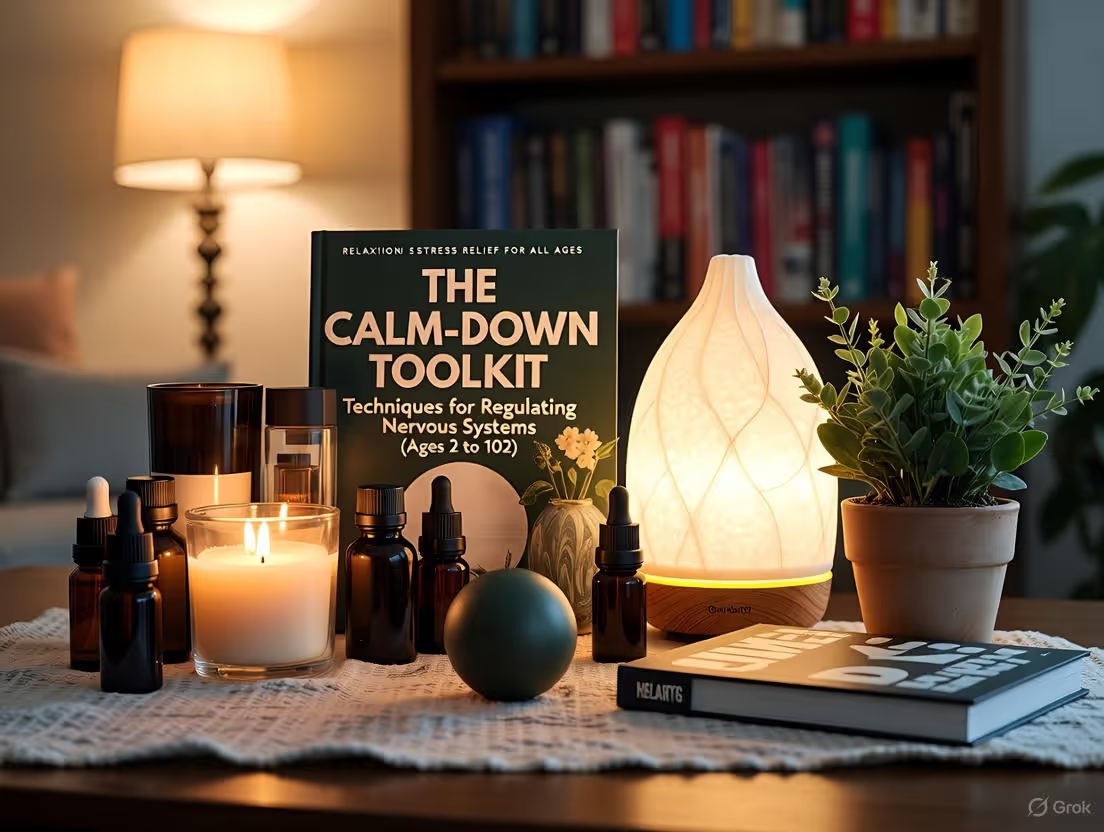
The Calm-Down Toolkit: Techniques for Regulating Nervous Systems (Ages 2 to 102)
Even with the perfect environment and routine, minds can still race, anxieties can surface, and bodies can feel restless. This is where having a toolkit of simple, evidence-based nervous system regulation techniques is invaluable. Teach these to every member of the family—they are life skills.
For Young Children (Make it Playful):
Belly Breathing with a Stuffy: Have the child lie down and place a favorite stuffed animal on their belly. Instruct them to breathe in slowly to make the animal rise, and breathe out slowly to make it fall. This diaphragmatic breathing activates the parasympathetic (rest-and-digest) system.
The 5-4-3-2-1 Grounding Game: Together, find: 5 things you can see, 4 things you can feel (the blanket, your pajamas), 3 things you can hear, 2 things you can smell, and 1 thing you can taste (maybe from brushing teeth). This anchors a worried mind in the present moment.
Progressive Muscle Relaxation (Kid Version): “Let’s be a tight, tight robot!” (squeeze all muscles). “And now, let’s be a floppy, melted snowman!” (release all muscles). This teaches body awareness and release.
For Tweens, Teens, and Adults:
Box Breathing (4-4-4-4): Inhale slowly for a count of 4, hold the breath for 4, exhale slowly for 4, hold the breath out for 4. Repeat 5-10 times. This is used by Navy SEALs to calm nerves and is incredibly effective for quieting pre-sleep anxiety.
Body Scan Meditation: Lying in bed, bring attention slowly to each part of the body, from toes to head, simply noticing sensations without judgment and inviting each part to relax. Guided versions are widely available on meditation apps (used before the Digital Sunset).
Gratitude or “Worry Download” Journaling: Writing down 3 specific things you’re grateful for from the day shifts focus from stress to positivity. Alternatively, a “worry download” involves writing down every anxious thought to get it out of your cyclical thinking and onto paper, where it can be addressed tomorrow.
The Family Co-Regulation Technique: If a child is dysregulated, a parent can sit quietly with them and consciously slow their own breathing. The child’s nervous system will often begin to sync with the parent’s calmer rhythm—a powerful, non-verbal form of connection and calming. This practice is at the heart of our vision & values for family wellness, which emphasizes connection through shared, mindful practice.
Tracking Your Tribe: Using Data to Personalize and Perfect Family Routines
Intention is the starting point, but data is the guide. How do you know if moving bedtime earlier by 15 minutes is helping your teen? Or if cutting out that after-dinner sugary snack improves your child’s sleep continuity? Subjective feeling is unreliable, especially when chronic sleep debt can make “tired” feel normal.
This is where modern wellness technology, specifically in the form of smart rings, becomes a game-changer for the health-conscious family. A device like the Oxyzen Smart Ring offers a seamless, unobtrusive way to gather objective biometric data while you sleep.
Key Metrics for Family Wellness:
Sleep Stages & Duration: It quantifies not just time in bed, but actual time asleep, and the balance of light, deep, and REM sleep. You can see if a teen’s late-night studying is cutting into their crucial deep sleep, or if a younger child is getting enough restorative sleep for growth.
Heart Rate Variability (HRV): This is the gold-standard, non-invasive metric for nervous system recovery and resilience. A higher HRV generally indicates better recovery and adaptability to stress. Tracking HRV can show how stressful events, changes in routine, or even certain foods affect each family member’s physiological resilience.
Resting Heart Rate (RHR): A lower RHR typically indicates better cardiovascular fitness and recovery. Spikes in nightly RHR can be an early sign of illness, onset of stress, or overtraining in active teens or adults.
Body Temperature & Blood Oxygen (SpO2): These provide additional layers of insight into circadian rhythm alignment and overall health trends.
Applying the Data as a Family:
Remove the Guesswork: Instead of saying, “You seem tired,” you can say, “The data shows you’ve had less deep sleep this week. Let’s see if we can tweak something.” It depersonalizes the issue and makes it a collaborative puzzle to solve.
Empowerment for Teens: Giving a teen access to their own data can be transformative. They can see the direct impact of their choices (late-night gaming vs. reading) on their readiness score for the next day. It fosters self-awareness and intrinsic motivation for healthy habits.
Tailor Individual Routines: One child might need a longer wind-down, while another might sleep better with a slightly cooler room. Data allows you to personalize routines within the family framework, moving from a one-size-fits-all model to precision wellness.
Celebrate Progress: When you see HRV trend upward or deep sleep increase after implementing a new ritual, it’s concrete proof of success, reinforcing positive habits for the whole family.
This data-driven approach represents the future of proactive family health management. To understand the technology enabling this insight, you can learn more about smart ring technology and its applications for every generation.
The Adult-Only Wind-Down: Reclaiming Recovery for the Caregivers
Parents and caregivers are often the last priority in the family wellness equation. Yet, you cannot pour from an empty cup. Your recovery is not selfish; it is the cornerstone of a healthy, patient, and present family life. The “Adult-Only Wind-Down” is the essential period after the children are asleep, dedicated to your own restoration, not just to chores or more work.
Reframing the “Me Time” Window: This 60-90 minutes is not for scrolling or mindless TV (though occasional relaxation viewing is fine). It is for activities that truly nourish you and signal to your own body that the day is complete.
Ideas for a Restorative Adult Wind-Down:
True Disconnection: Leave your phone in the charging station. Use a dedicated e-reader without internet or read a physical book.
Somatic Practices: Gentle yoga, foam rolling, or a short stretching routine can release the physical tension of the day. Pair it with mindful breathing.
Creative Unwinding: Engage in a low-stakes, enjoyable hobby—sketching, playing an instrument, knitting, etc. The key is process over product.
Connection with Partner: Have a real conversation without devices. Play a board game. Simply sit together in quiet.
Preparation for Tomorrow: A brief 5-minute review of the next day’s calendar can ease anxiety, but do not start working. Set your intentions and then let it go.
The Gratitude or Reflection Practice: Write in a journal. What went well today? What would you do differently? This helps achieve cognitive closure.
Tracking Your Own Recovery: This is where a wearable is most insightful for adults. You can track how different evening activities—a late workout, an argument, a warm bath, reading vs. watching TV—affect your sleep metrics and next-day readiness. This personalized feedback loop allows you to refine your own routine with precision. Many adults discover through their data that they need more wind-down time than they realized, a common topic in discussions about our company information and mission to empower personal health insights.
Age-by-Age Implementation: Customizing the Core Routine for Developmental Stages
A one-size-fits-all approach to bedtime creates friction and fails to meet individual needs. The core principles of darkness, consistency, and calm remain universal, but their expression must evolve. Here’s how to tailor your family’s nighttime wellness routine from toddlerhood through the teen years and into adulthood.
For Toddlers & Preschoolers (Ages 2-5): The World of Predictable Magic
Core Need: Security, predictability, and clear boundaries. Their routines are concrete and literal.
Routine Blueprint:
Visual Schedule: Use a series of pictures (bath, pajamas, toothbrush, book, bed) to guide them through the sequence. This empowers them and reduces resistance.
Physical Connection is Key: The routine should be saturated with touch—carries, cuddles, back rubs, rocking. A warm bath followed by lotion massage is a powerful sensory cue.
Simple, Repetitive Stories: Choose familiar books. The predictability of the story is as soothing as the content. This is also prime time for introducing very short, simple breathwork (“smell the flower, blow out the candle”).
The Power of Choice: Offer limited, controlled choices to foster autonomy: “Do you want the red pajamas or the blue ones?” “Which two books shall we read?”
Firm & Loving Exit: After stories and cuddles, leave the room while the child is drowsy but awake. A consistent, reassuring goodnight phrase (“I love you. See you in the morning.”) and a promise to check on them can ease separation anxiety. Data Insight: For this age group, parental consistency is the most critical factor. A smart ring for the parent can reveal how their own stress or irregular sleep impacts their patience and ability to maintain these firm, calm boundaries.
For School-Age Children (Ages 6-12): Building Independence & Mindful Awareness
Core Need: Mastery, growing independence, and tools to manage new social and academic stressors.
Routine Blueprint:
Collaborative Planning: Involve them in designing their routine. “What one quiet thing would you like to do for 20 minutes before reading?” This builds buy-in.
Wind-Down “Menu”: Create a list of approved, screen-free wind-down activities: drawing, building with LEGOs, listening to an audiobook or calm music, doing a puzzle. They can choose from the menu.
Upgrade the Connection Ritual: Story time may evolve into independent reading side-by-side or you reading a chapter of a longer book to them. The bedtime check-in becomes more important—a safe time to share triumphs and worries without immediate solutions.
Introduce Mindfulness Tools: Teach them the 5-4-3-2-1 grounding technique or a simple body scan. Frame it as a “superpower” for calming their brain. Apps like Calm or Headspace have excellent kids’ content, to be used before the Digital Sunset.
Gradual Responsibility: They can be fully responsible for their own PJs, teeth, and tidying their space. A parent’s role shifts from doer to guide and checker. Tracking their own simple goals (e.g., “in bed by 8:30, lights out by 9”) on a chart can be motivating. For families using technology to foster this independence, you can discover how Oxyzen works to provide objective feedback on the results of their choices.
For Teenagers (Ages 13-18): The Shift to Self-Management & Partnership
Core Need: Autonomy, respect for their shifting circadian biology (teens are naturally wired to stay up and sleep in), and partnership in managing immense pressures.
Routine Blueprint:
Negotiate, Don’t Dictate: Have a summit. Present the sleep science—especially the impact on learning, mood, and athletic performance. Negotiate a weekday “screens off” time and a target “in bed” time. Their buy-in is everything.
Emphasize Performance, Not Obedience: Frame sleep as the ultimate performance-enhancing drug. Share data or articles showing how deep sleep clears brain toxins linked to Alzheimer’s, or how REM sleep consolidates learning. This appeals to their goals.
The Power of Personal Data: This is the most powerful tool. If they are open to it, a smart ring provides private, objective feedback. They can see how a late-night study session actually harms next-day focus, or how even 30 more minutes of sleep improves their HRV (resilience score). It turns you from a nag into a data coach.
Respect Their Space, But Set Environmental Non-Negotiables: The phone charges outside the room. A blue-light filter is mandatory on all devices after sunset. These are health-based rules, not trust-based ones.
Wind-Down is Their Own: Their pre-sleep ritual might be listening to music, sketching, or reading. Your role is to ensure the conditions for success are met (quiet home, dark room) and to model your own excellent wind-down habits.
For Adults & Caregivers: The Foundation of the House
Dual Routines: You may have a “post-kid bedtime” routine and a “pre-adult bedtime” routine. The first is for connection/ chores; the second (starting 60 min before your bed) is for genuine wind-down.
Sync with Your Partner: If you have one, aligning your routines strengthens your relationship and household rhythm. A shared 10-minute tea ritual or brief shared gratitude practice can be profound.
Address the “Maternal Mind” or “Provider Pressure”: Caregiver brains are often in constant planning mode. A “brain dump” journaling session is critical to download tomorrow’s tasks and today’s worries onto paper, freeing the mind.
Leverage Data for Self-Compassion: Seeing a low sleep score or HRV can be a cue for self-kindness, not self-criticism. It’s data asking, “What do you need?” Perhaps it’s an earlier bedtime, a day off intense exercise, or addressing a hidden stressor. Reading about others’ similar journeys can normalize this; many share their stories in real customer reviews and user experiences.
Troubleshooting Common Family Sleep Disruptors
Even the best-laid routines face challenges. Here’s how to navigate the most common sleep disruptors with strategy, not stress.
1. The Bedtime Stall Artist (Young Children):
Strategy: Build their requests into the routine. “We will have one drink of water, two stories, and three cuddles. That’s our plan.” Use the visual schedule. After the routine is complete, be a “broken record”: “I love you. It’s time for sleep. I’ll check on you in a few minutes.” Consistency is the antidote to testing.
2. The Anxious Worrier (Any Age):
Strategy: Create a “Worry Jar” or “Brain Dump” notebook. The act of writing or drawing the worry and physically containing it outside the body can bring relief. For persistent anxiety, a daily “worry time” earlier in the evening (e.g., after dinner) can prevent it from hijacking bedtime. Teach and practice calming techniques during the day, not in the crisis of bedtime anxiety.
3. The Weekend Sleep Schedule Derailment:
Strategy: Adhere to the “One-Hour Rule.” Weekend bedtimes and wake-ups should not vary from the weekday schedule by more than 60 minutes. This protects the circadian rhythm. The weekend routine can be longer and more luxurious (more stories, a later start), but the core sequence and timing should remain familiar.
4. The “I’m Not Tired” Teen:
Strategy: Use science and data. Explain the circadian phase delay. Negotiate a later, but still reasonable, weekday bedtime in exchange for strict adherence. Most importantly, enforce the Digital Sunset. The screens are almost always the root cause of “not tired” feelings. Offer appealing alternatives like a late-night snack preparation or a special magazine subscription to read.
5. Co-Sleeping Transitions or Night Wakings:
Strategy: For moving a child to their own bed, use a gradual, predictable method like the “chair method,” where you slowly move a chair out of the room over a week. For night wakings, respond with minimal interaction—brief reassurance, a back rub, but no conversation or lights. The goal is to help them connect sleep cycles independently. For parents, fragmented sleep is a major drain; tracking your own sleep can highlight just how disruptive these wakings are, strengthening your resolve to gently teach independent sleep skills.
6. Household Inconsistency (Between Parents or Weeknights vs. Weekends):
Strategy: Unified Front & a Written Plan. Parents must agree on the non-negotiables and present them as a team. Write down the family routine and post it. Variability breeds confusion; clarity breeds compliance. For more support on aligning family strategies, our blog offers related articles on parental teamwork and communication.
The Weekend & Holiday Reset: Maintaining Rhythm Without Rigidity
Weekends and holidays are meant for relaxation, but a complete free-for-all can lead to a “Sunday Night Scramble” and a miserable Monday for everyone. The goal is flexibility within a framework.
The Framework:
Protect the Wake-Up Window: Even if you sleep in, try to keep wake-up time within that crucial one-hour window of the weekday schedule. This is the single most important factor in maintaining circadian rhythm.
Uphold the Digital Sunset: This rule is perhaps more important on weekends when screen time tends to balloon. Protect it fiercely.
Preserve the Sequence: The order of events (tidy, PJs, teeth, calm activity, connection, quiet time) can stay the same, even if the clock times shift slightly.
The Flexibility:
Special Rituals: Introduce “Weekend Only” treats: making pancakes for a next-morning breakfast together, a family movie started early enough to end before the Digital Sunset, or a board game during the wind-down period.
Longer Connection Time: Use the extra time for more involved stories, longer talks, or a family read-aloud.
The Holiday Exception: For true holidays or vacations, it’s okay to relax more. Have a plan for the “Recovery Day”—the day before returning to school/work. On that day, deliberately move bedtimes and routines back toward the normal schedule. This planned reset minimizes the pain of re-entry.
From Routine to Ritual: Building Meaningful Traditions That Bind
A routine is a series of actions; a ritual is the same series infused with meaning, attention, and connection. This is the evolution that transforms health maintenance into soul nourishment and family culture building.
How to Infuse Meaning:
Gratitude Practice: Incorporate a simple “Rose, Thorn, Bud” or “Best Part” share during the connection time for the whole family.
Storytelling: Beyond reading books, tell stories from your own childhood, or make up a continuing story together, one line per person each night.
Seasonal Adjustments: Align small elements with the season—a special blanket in winter, reading by an open window in summer, a fall-scented diffuser. This connects the ritual to the natural world.
Celebratory Markers: On the first night of a new season, or a birthday eve, add a special element—a different herbal tea, a new book, sleeping in a special fort. This builds anticipatory joy.
The Role of Technology in Ritual: Ironically, data can deepen ritual. Reviewing a “Family Sleep Score” average for the week in a lighthearted way every Sunday morning can be a ritual. Celebrating when a teen’s HRV trend improves can reinforce their positive choices. It becomes part of your family’s shared language of health. This philosophy of meaningful, data-informed wellness is at the core of our brand journey and vision.
Aligning the Tribe: Synchronizing Schedules for a Harmonious Home
A family is a system. When one member’s rhythm is off, it affects the whole. The ultimate goal is a harmonious, but not identical, synchronization.
Tactics for Synchronization:
Shared Wind-Down Start: Even if bedtimes are staggered, the entire household can enter a “Quiet Home” phase 60 minutes before the youngest person’s bedtime. Overhead lights go down, voices soften, and stimulating activities cease. This creates a collective downward slope for the home’s energy.
Respect for Individual Phases: The teen’s later biological rhythm is real. Their “Quiet Home” time might involve headphones and reading in their room, but they are still part of the low-stimulation environment.
Morning Light Synchronization: Get morning sunlight in your eyes within 30-60 minutes of waking. This is a powerful circadian anchor for all ages. Doing this as a family—even just having breakfast near a sunny window—can help align everyone’s clocks.
The Family Meeting: Regularly (e.g., monthly) check in on the routines. What’s working? What’s a struggle? Adjust the plan collaboratively. This maintains buy-in and addresses issues before they become crises.
When a family moves from a collection of individuals battling over sleep to a synchronized system prioritizing collective rest, the home atmosphere transforms. Conflict decreases, patience increases, and there is a palpable sense of mutual support.
This portion of the guide has equipped you with the strategies to customize, troubleshoot, and elevate your Family Nighttime Wellness Routine. You now have a blueprint for every age, a playbook for common problems, and a vision for turning daily habits into meaningful rituals. In the final portion, we will explore the long-term view: how these routines evolve as children grow, how to measure success beyond sleep, and how to integrate cutting-edge wellness technology seamlessly and ethically into your family’s life for generations of health. We’ll also provide actionable resources, including checklists and conversation starters, to help you implement this transformation starting tonight.
The Long Game: How Nighttime Routines Evolve from Childhood to Adulthood
A family wellness routine is not a static set of rules; it is a living practice that must mature alongside your children. The ultimate goal is not to enforce a perfect bedtime forever, but to instill the intrinsic values and self-regulatory skills that your children will carry into their independent adult lives. This is the true legacy of a Family Nighttime Wellness Routine.
The Developmental Arc of Sleep Independence:
Early Childhood (Ages 2-6): External Regulation. The parent is the architect and enforcer. The routine is concrete, repetitive, and focused on safety and connection. The child learns: My world is predictable. I am safe. Rest is a time of love.
Middle Childhood (Ages 7-12): Guided Co-Regulation. The child becomes a collaborator. They have more choice within the structure and learn basic self-regulation tools (breathing, mindfulness). The parent shifts from doer to coach. The child learns: I have some control over my calm. My body and mind are connected. Good sleep helps me feel strong.
Adolescence (Ages 13-18): Scaffolded Self-Regulation. The teen is the primary driver, with parents as consultants and environmental supporters. The focus is on cause-and-effect: how their choices impact their performance, mood, and health. Data becomes a powerful, non-judgmental feedback tool. The teen learns: My habits have measurable consequences. I am responsible for my own recovery. Rest is a tool for achieving my goals.
Young Adulthood & Beyond: Internalized Regulation. The individual has fully integrated the principles. They can design their own optimal wind-down, listen to their body’s signals, and prioritize sleep as a non-negotiable pillar of health. They carry forward the ritual of connection, perhaps with a partner or their own future family. They have learned: Rest is the foundation of a purposeful life.
Passing the Torch: The transition between these stages should be gradual and marked by increasing trust and responsibility. A poignant ritual is to eventually gift a teen their own wellness tracker—like a smart ring—not as a monitoring device, but as a tool for their own self-mastery. It symbolizes your trust in their ability to manage their own well-being, a powerful message as they approach adulthood. For parents considering this step, it’s helpful to learn more about smart ring technology and its features for independent use.
Measuring Success: Metrics That Matter Beyond Hours Slept
While sleep duration is important, it is a crude metric for the rich tapestry of family wellness. True success is multidimensional. Track these qualitative and quantitative indicators to gauge your progress.
Quantitative Metrics (The Data):
Consistency Scores: Are bedtimes and wake-times within a 60-minute window most days? (Use a simple calendar or a family wellness app).
Sleep Efficiency: The percentage of time in bed actually spent asleep (90% or above is excellent). This is a key metric provided by devices like the Oxyzen ring, showing the quality of sleep, not just the quantity.
Resting Heart Rate (RHR) Trends: A downward or stable RHR trend over weeks/months indicates improving cardiovascular fitness and recovery.
Heart Rate Variability (HRV) Trends: An upward HRV trend is one of the best objective indicators of improving resilience and nervous system balance for every family member.
Reduction in Night Wakings: For young children and adults alike, consolidated sleep is a clear sign of a working routine.
Qualitative Metrics (The Feel):
Morning Mood: Are family members waking more refreshed, with less grogginess and grumpiness?
Transition Ease: Does the evening routine flow with less negotiation and resistance?
Daytime Function: Are children more focused at school? Are adults more patient and productive at work?
Family Connection: Does the wind-down period feel like a time of genuine connection rather than a managerial task?
Self-Reported Well-being: Simply ask, “On a scale of 1-10, how rested do you feel?” once a week. Track the answers.
Celebrate improvements in any of these areas. Perhaps the sleep duration hasn’t changed much, but the morning fights have vanished. That’s a monumental win. Sharing these successes as a family reinforces the value of the effort. Reading about other families’ qualitative wins can be encouraging, as seen in real customer reviews and user experiences.
The Ethical Tech Integration: Wellness Wearables as Tools, Not Tethers
Incorporating technology like smart rings into a family wellness practice requires intention. Used poorly, it can become a source of anxiety, competition, or parental over-surveillance. Used wisely, it is a tool for empowerment and education.
Guiding Principles for Family Wearables:
Autonomy Over Surveillance: For children over ~10-12, data should be theirs. They should have primary access to their own dashboard. The parent’s role is that of a guide helping them interpret the data, not a warden judging it. Frame questions with curiosity: “I noticed your readiness score was low after you had that late soccer game. What do you think you need to recover better?”
Focus on Patterns, Not Daily Scores: A single night of poor sleep is meaningless noise. The power is in observing trends over weeks and months. Did average deep sleep increase after we started the earlier Digital Sunset? This shifts focus from daily guilt to long-term learning.
Avoid Comparison: Family data should never be used to shame or create competition (“Your sister had a better sleep score than you!”). Each person’s physiology and needs are unique. The goal is personal progress.
Data as a Conversation Starter, Not a Conclusion: The ring tells you the what (your HRV dipped), not the why. Use it to open compassionate inquiry: “Anything stressful happening at school?” or “How are you feeling about that upcoming test?”
Scheduled Check-Ins, Not Constant Monitoring: Designate a weekly “Wellness Review” time—perhaps Sunday morning—to briefly look at trends together in a positive, problem-solving way. This prevents obsessive daily checking.
When integrated with these ethics, the technology ceases to be an external tracker and becomes an internal compass, helping each family member tune into their body’s signals with greater accuracy and respect.
Your Actionable Launch Plan: Checklists, Scripts, and First Steps
Theory is vital, but action changes everything. Here is your step-by-step plan to implement your Family Nighttime Wellness Routine, starting as soon as tonight.
Phase 1: The Family Summit (This Weekend)
Call a meeting. Have snacks. Frame it positively: “We want to help everyone feel more rested and have calmer evenings.”
Present the core science simply. Use analogies: “Our brains have an internal clock that needs darkness to make sleepy juice (melatonin). Screens turn off the sleepy juice faucet.”
Co-create the “Family Sleep Charter.” On a poster board, write down the agreed-upon non-negotiables. These might include:
Adult Task: Order blackout curtains, check for LED lights to cover, consider a white noise machine.
Family Task: Each person declutters their sleep space. Create device charging stations.
Practice the Digital Sunset for just 30 minutes for three nights. Use a timer. Fill the time with board games, reading, or gentle music.
Phase 3: The Official Launch (Night 4)
Follow your co-created sequence.
Keep it light. Expect some hiccups. The goal is practice, not perfection.
After the kids are in bed, honor your own Adult Wind-Down.
Helpful Scripts:
For stalling: “I love you, and I know you want another story. Our plan was two stories, and we read two. We’ll read more tomorrow. Now it’s time for quiet sleep.” (Then use the broken-record technique).
For teen pushback: “I get that you don’t feel tired. The science says the light from your screen is blocking the chemicals that make you feel tired. Let’s test it. For one week, we both do the Digital Sunset. We can look at the data (or just see how we feel) and decide if it makes a difference.”
For your own inner critic: “Tonight was messy. That’s okay. We’re practicing. One calm breath. Tomorrow is a new night.”
The Ripple Effects: How Nighttime Wellness Transforms Your Entire Day
When you invest in the night, you are not just buying better sleep; you are upgrading every hour that follows. The ripple effects of a synchronized family routine are profound and far-reaching.
For Children: Enhanced emotional regulation, improved academic focus and memory consolidation, stronger immune systems, healthier growth patterns, and a deep-seated sense of security that underlies all future resilience.
For Teens: Better mood stability, reduced risk of anxiety and depression, sharper athletic and academic performance, improved decision-making, and the early development of lifelong self-care habits.
For Adults: Greater patience and presence as parents, improved stress management, enhanced cognitive function and creativity at work, better metabolic health, and a more connected, intimate partnership.
For the Family Unit: Reduced conflict, increased shared joy, a strong culture of mutual care, and the creation of a home that is truly a sanctuary—a place of recharge, not just consumption.
This transformation is the ultimate ROI of your consistent, loving effort. It turns wellness from a personal aspiration into a shared family value, woven into the very fabric of your daily life.
Conclusion: Embracing the Journey of Restful Nights
Building a Family Nighttime Wellness Routine is not about achieving a perfect, silent house by 7:30 PM. It is a conscious, daily choice to prioritize restoration in a world that glorifies exhaustion. It is an act of rebellion against the frenetic pace of modern life and a profound investment in the long-term health and happiness of every person under your roof.
Start small. Begin with a 15-minute earlier Digital Sunset. Introduce one new calming ritual. Have one family conversation about sleep. Track your progress not with harsh judgment, but with curious kindness. Whether you use a notebook, a spreadsheet, or a sophisticated tool like the Oxyzen Smart Ring, let the data serve you, not rule you.
Remember, you are not just teaching your children to sleep. You are teaching them to listen to their bodies, to respect their limits, to value quiet, and to cherish connection. You are building a legacy of health that they will one day carry into their own families. You are writing a new story for your home—one where the night is not an ending to be rushed through, but a peaceful, healing bridge to a brighter, more resilient tomorrow.
Tonight, as dusk falls, take that first gentle step. Breathe. Connect. Dim the lights. And begin.
From Blueprint to Bedside: Crafting Your Signature Routine
The philosophy is clear, the science is sound, and the pillars stand firm. Yet, the most common question remains: “Where do I actually begin when my life doesn’t look like a wellness blog?” The answer is in designing a routine that is uniquely yours—flexible enough to withstand life’s chaos but structured enough to provide the sanctuary your nervous system craves.
Step 1: The Honest Audit Before you build, you must survey the landscape. For one week, do nothing but observe. Use the notes app on your phone or a simple journal to track:
Pre-Bed (8 p.m. to sleep): What are you actually doing? Scrolling? Watching thrillers? Working?
Consumption: Note the time of your last caffeine, alcohol, and meal.
Mind State: Rate your anxiety level at bedtime (1-10).
Outcome: How did you feel upon waking?
Pair this with baseline data from a tracker if you have one. This audit isn’t about judgment; it’s about creating a clear “before” picture. You can’t navigate to a new destination without first plotting your current coordinates. This process of self-observation is the first, most crucial step in the journey that companies like Oxyzen champion, where data serves self-knowledge. You can discover how Oxyzen works to facilitate this kind of awareness.
Step 2: The "Non-Negotiables" vs. "Flexibles" List Your routine must have core, unbreakable rules and flexible elements that can adapt.
My Non-Negotiables (Examples):
Caffeine cutoff at 1 p.m.
Phone in kitchen charger by 9:30 p.m.
Bedroom is 66°F.
Wake-up time within 60-minute window, 7 days a week.
My Flexibles (Examples):
If I have a late social dinner, I will still do a 10-minute abbreviated wind-down with breathwork.
If I miss my workout, I will still take a 20-minute walk in the afternoon to support sleep pressure.
If I’m traveling, my sleep mask and white noise app are non-negotiable, but I may relax on the strict meal timing.
This framework prevents the “all-or-nothing” collapse. One disrupted element doesn’t torpedo the entire night.
Step 3: Stacking Your Habits The most effective way to build a new routine is through “habit stacking”—anchoring a new behavior to an existing one. The formula is: “After/Before [CURRENT HABIT], I will [NEW HABIT].”
“After I brush my teeth, I will put my phone on the kitchen charger.”
“Before I get into bed, I will write down three things I’m grateful for.”
“After I plug in my phone, I will dim all the house lights.”
These tiny, sequential actions build the neural pathways of your new ritual without relying on sheer willpower.
The Deep Work of Sleep: Addressing Psychological Barriers
Sometimes, the barrier to sleep isn’t behavioral but psychological. We may unconsciously resist sleep due to deeper beliefs.
The Productivity Trap: For many, especially high-achievers, night is the only “me time” or quiet time to tackle unfinished work. Sleep feels like surrender, like wasted time. Reframe this: Sleep is not the opposite of productivity; it is the source of it. That early morning hour of clear focus you crave is directly manufactured in the deep sleep stages you’re currently sacrificing. You are not losing time; you are investing in the quality of every waking minute that follows.
The Anxiety of Silence: In a world of constant noise, silence can feel threatening. It’s when the thoughts we’ve outrun all day finally catch up. This is why the wind-down ritual is critical—it’s a gradual deceleration, not a screeching halt. Practices like the “mind dump” or journaling formally contain those thoughts on paper, so you don’t have to hold them in your head in the dark.
The Fear of Missing Out (FOMO): This is the social counterpart to the productivity trap. Going to bed early can feel like leaving the party. Shift your perspective: You’re not missing out on the late-night lethargic scrolling or the tired conversations. You’re gaining the vibrant, engaged, fully present version of yourself for tomorrow’s experiences. You’re choosing a richer, more alert life over a longer, dimmer one.
Confronting these hidden beliefs is perhaps the most profound work of all. It moves sleep optimization from a tactical exercise to a transformative practice in self-worth and boundary-setting. The real customer stories shared in Oxyzen testimonials often touch on this very psychological shift—the moment sleep became a priority, not an afterthought.
The Synergy of Systems: Sleep, Nutrition, and Movement
Your nighttime routine does not exist in a vacuum. It is deeply intertwined with how you fuel and move your body during the day.
The Movement Synergy: Daily physical activity builds healthy sleep pressure—the physiological urge to sleep. However, timing matters. Intense exercise too close to bedtime (within 2-3 hours for some) can be overstimulating due to the release of adrenaline and cortisol. My rule is to finish vigorous workouts at least 3 hours before bed. Conversely, gentle movement like walking or stretching in the evening, as part of the wind-down, is profoundly beneficial. My Oxyzen data clearly shows a higher sleep score on days with moderate afternoon activity compared to completely sedentary days.
The Nutritional Synergy: We covered evening meals, but all-day nutrition plays a role.
Blood Sugar Stability: Large spikes and crashes in blood sugar from processed foods and sugars can cause nighttime awakenings. A diet focused on whole foods, fiber, and protein promotes stable energy and, by extension, stable sleep.
Micronutrient Sufficiency: Deficiencies in Magnesium, Vitamin D, B vitamins, and Zinc can directly impair sleep quality. For example, magnesium glycinate’s success as a sleep aid often highlights a pre-existing dietary shortfall. Eating a nutrient-dense diet is foundational sleep support.
Viewing sleep as the final, essential component of a daily cycle—fuel, movement, recovery—creates a powerful, self-reinforcing wellness loop. For a deeper exploration of these interconnected topics, resources like the Oxyzen blog offer ongoing insights into holistic health strategies.
A Note on Tools and Technology: Choosing Your Allies Wisely
The wellness technology market is saturated. From rings to headbands to under-mattress pads, the options are vast. When choosing your tool, consider:
The Balance of Accuracy and Comfort: The most accurate device is useless if you won’t wear it. A smart ring struck the perfect balance for me—medical-grade data from the finger’s rich vasculature, with the comfort and simplicity of jewelry. It’s passively worn, requiring no nightly charging ritual that could disrupt my routine.
The Intelligence of the Software: Raw data is overwhelming. The value is in the interpretation—the clear graphs, the insightful correlations, the simple scores that tell a story. Look for a platform that teaches you, not just overwhelms you with numbers.
The Philosophy of the Company: Does the brand see you as a data point or a whole person? My choice was influenced by a company that emphasized readiness and recovery over just step counts, aligning with a holistic view of health. Their focus on the human element behind the data is clear in their our story page.
Your tool should feel like a silent partner in your journey, not a demanding taskmaster.
The Ripple Effect Revisited: Beyond the Self
The transformation I experienced created ripples that extended far beyond my own well-being.
In my home, my consistent routine created a calmer, more predictable rhythm for my household. My partner, inspired by the changes he saw in me, began his own journey, leading to shared wind-down times that strengthened our connection.
In my community, by respectfully setting and communicating my boundaries (“I need to head off to protect my sleep”), I found that I gave others permission to do the same. It sparked conversations about rest, burnout, and sustainable living that were previously glossed over.
This is perhaps the most beautiful and unexpected outcome: by prioritizing my own restoration, I became a better partner, friend, colleague, and family member. I had more energy to give, more patience to offer, and more presence to share. The gift of good sleep, it turns out, is a gift you give to everyone around you.
Your Journey Forward
This guide is now complete. From the first glimmer of data-driven awareness to the advanced integration of mind, body, and technology, you have a comprehensive map.
Remember:
Start Small. Master one pillar. Let success breed success.
Trust the Data. Let your biometrics be your objective guide, cutting through the noise of how you “think” you slept.
Embrace the Practice. This is not a quick fix but a lifelong commitment to honoring your biology. Some nights will be perfect; others will be messy. The practice is in returning to the routine, without self-judgment, the very next night.
Seek Professional Help When Needed. If your data points to a potential disorder like sleep apnea or if insomnia persists, a sleep specialist is your essential partner.
The night holds a profound power—not of absence, but of restoration, repair, and renewal. It is a daily opportunity to reset, to heal, and to prepare for a life lived with vitality and purpose.
You now hold the knowledge and the framework. The path to the sleep that changes everything is before you. It begins not with a dramatic leap, but with a single, gentle step: perhaps turning off a screen 15 minutes earlier tonight, or simply noticing the quality of the darkness in your room.
Take that step. Your future, well-rested self is waiting to thank you. For any lingering questions as you begin, remember that support and community are always available, such as through the comprehensive Oxyzen FAQ.



%402x.svg)