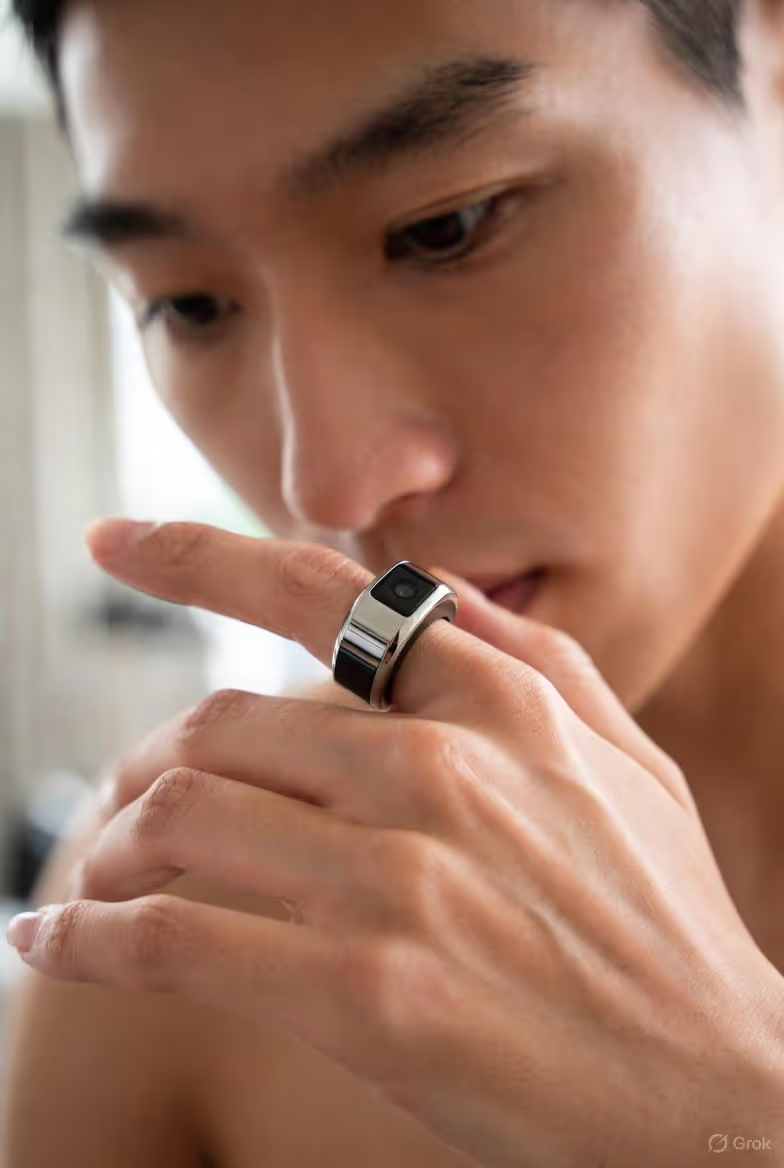
The Minimum Sleep Score for Optimal Daily Function
While individual needs vary, a score above 70 is often considered the minimum for decent daily function for most people.
The Minimum Sleep Score for Optimal Daily Function: Your Data-Driven Blueprint to Peak Energy, Mood, and Performance
You wake up after what felt like a solid eight hours. The alarm is silenced, you swing your legs out of bed, and immediately, you’re hit with a wave of grogginess that feels more like a hangover than rest. Your mind is foggy, your mood is brittle, and the thought of tackling your day is overwhelming. You did the time, so why don’t you feel the energy?
For decades, we’ve measured sleep in one dimension: time. But what if the secret to waking up refreshed wasn’t just the quantity of your sleep, but its quality? What if you had a single, actionable number that could predict your cognitive sharpness, emotional resilience, and physical vitality for the day ahead?
Enter the Sleep Score—a modern metric born from wearable technology like smart rings and trackers that distills the complex physiology of your night into a comprehensible grade. It moves us beyond guessing to knowing. But this raises a critical, life-changing question: What is the minimum Sleep Score you need to not just scrape by, but to truly thrive?
This isn't about chasing a perfect 100 every night. That’s an unrealistic goal that leads to frustration. This is about discovering your personal baseline for optimal daily function. It’s about identifying the threshold score below which your reaction time slows, your creativity dims, your patience wears thin, and your health silently pays the price. By understanding and achieving your minimum viable Sleep Score, you gain a powerful lever over your well-being, productivity, and long-term health.
In this comprehensive guide, we’ll dismantle the myth of sleep as a monolithic block of time. We’ll explore the science behind the Sleep Score, break down its core components, and, most importantly, use data and physiology to pinpoint the minimum score you should target for optimal daily function. This is your blueprint for transforming sleep from a mystery into a mastered pillar of modern wellness.
What is a Sleep Score? Decoding the Nightly Metric That’s Redefining Rest
Before we can determine a minimum, we must first understand what we’re measuring. A Sleep Score is not a random number; it’s a composite index generated by advanced algorithms in devices like the Oxyzen smart ring. By analyzing multiple biometric signals throughout the night, these devices synthesize hours of data into a single, digestible metric—typically on a scale of 0 to 100.
Think of it as your nightly report card, where different “subjects” contribute to your final grade. Unlike simply tracking hours, a Sleep Score evaluates the architecture and physiology of your sleep. It answers not just “how long,” but “how well.”
The Core Pillars of Your Sleep Score
While algorithms vary, most robust Sleep Scores are built on four foundational pillars:
Sleep Duration: The total time spent asleep. This is the most basic input, but it’s weighted alongside quality metrics. Both insufficient and excessively long sleep can negatively impact your score.
Sleep Quality (or Structure): This assesses the continuity and architecture of your sleep. It penalizes fragmentation—those annoying middle-of-the-night awakenings you might not even remember. It also evaluates the balance and progression of sleep stages: Light Sleep, Deep Sleep (the physical restorative phase), and REM Sleep (the mental and emotional processing phase).
Sleep Timing (Chronobiology): When you sleep matters as much as how long. Your body operates on a circadian rhythm. A score will often consider your consistency (going to bed and waking up at similar times each day) and your alignment with your personal circadian window. Falling asleep at 3 a.m. and waking at 11 a.m. for 8 hours will typically yield a lower score than sleeping 8 hours from 10 p.m. to 6 a.m.
Physiological Restoration: This is where next-gen devices truly shine. Metrics like Resting Heart Rate (RHR) and Heart Rate Variability (HRV) during sleep are powerful indicators of your nervous system’s recovery. A lower nighttime RHR and a higher HRV generally signal effective parasympathetic (“rest and digest”) dominance, contributing positively to your score.
“A high Sleep Score indicates that the body has successfully cycled through necessary restorative phases with minimal disruption,” explains a sleep physiologist. “It’s a proxy for the efficiency of the recovery process.”
Why a Single Number is Revolutionary
The genius of the Sleep Score is its simplicity. It takes multidimensional, complex biometric data and makes it actionable. Instead of puzzling over graphs of HRV or minutes of REM, you have one number to track over time. This allows you to observe correlations: “On mornings when my score is above 85, I breeze through my workout. When it’s below 75, I crave junk food and make more errors at work.”
This correlation is the key to finding your personal minimum. By linking your Sleep Score to tangible next-day outcomes—your energy, focus, and mood—you can begin to identify the threshold where your function shifts from optimal to impaired. For a deeper dive into how this technology translates raw data into insights, you can explore our blog for more on the science of wearables.
The Science of Sleep & Performance: The High Cost of a Low Score
To appreciate the necessity of a minimum Sleep Score, we must understand the severe, cascading consequences of poor sleep quality. This isn’t about feeling a bit tired; it’s about systemic degradation of your biological and cognitive systems.
The Cognitive Tax: Impaired Brain Function
When your Sleep Score dips, your brain is the first to send an invoice.
Executive Function Erosion: The prefrontal cortex—responsible for decision-making, problem-solving, and impulse control—is particularly vulnerable to sleep deprivation. A low score often precedes a day of poor judgment, procrastination, and emotional reactivity.
Memory Consolidation Failure: During Deep and REM sleep, your brain transfers short-term memories to long-term storage. A disrupted night (reflected in a low quality score) hinders this process, making learning and retention significantly harder.
Slowed Processing Speed & Reaction Time: Studies show that moderate sleep restriction can impair cognitive motor performance as much as legal alcohol intoxication. Your ability to process information, respond quickly, and maintain attention plummets.
The Emotional Toll: A Fragile Mindstate
Sleep and mood are intimately linked through the amygdala, the brain’s emotional center. Sleep loss amplifies the amygdala’s reaction to negative stimuli by over 60%.
Increased Irritability & Anxiety: A low Sleep Score is a reliable predictor of decreased stress tolerance and heightened anxiety the following day.
Diminished Positive Affect: You don’t just feel worse; you’re less able to experience joy, motivation, and engagement.
The Vicious Cycle: Poor sleep worsens mood, and low mood (often accompanied by rumination) then makes it harder to fall asleep, creating a self-perpetuating negative loop.
The Physical Price: Metabolic and Immune Sabotage
The body’s repair work happens during high-quality sleep. A consistently low score undermines this essential maintenance.
Hormonal Havoc: Sleep restriction disrupts leptin and ghrelin, the hormones regulating hunger and satiety. This leads to increased cravings for high-calorie, high-carbohydrate foods—a direct link between poor sleep and weight gain.
Insulin Resistance: Just a few nights of poor sleep can decrease insulin sensitivity, pushing the body toward a pre-diabetic state.
Weakened Defenses: Deep sleep is when the immune system releases cytokines, proteins that fight infection and inflammation. Skimping on quality sleep makes you more susceptible to illnesses and can slow recovery from injury. For those tracking their holistic health, understanding these biological connections is part of the mission at Oxyzen, which you can read more about in our company’s story.
The evidence is clear: allowing your Sleep Score to consistently fall below a certain threshold isn’t a lifestyle choice; it’s a compounding debt against your health and performance. The next step is to define that threshold.
Deconstructing the 100-Point Scale: What Does Your Number Really Mean?
Most sleep tracking platforms use a 0-100 scale, but not all points are created equal. The distribution is rarely linear, and understanding the typical benchmarks is crucial for interpreting your own data.
General Benchmark Ranges
While individual variation exists, most algorithms categorize scores roughly as follows:
Excellent (90-100): This is the gold standard, indicating superb sleep duration, high continuity, optimal stage balance, and strong physiological restoration. Waking up with a score in this range is correlated with peak performance days.
Good (80-89): A solid, restorative night. Sleep is mostly continuous and well-structured. You can expect to function very well, though perhaps not at your absolute peak.
Fair (70-79): This is the caution zone. Sleep may be slightly short or fragmented. While you may feel “okay,” subtle impairments in cognitive function, mood regulation, and metabolic processes are likely present. This range is critical for determining your minimum for optimal function.
Poor (60-69): Sleep is clearly insufficient or disrupted. Daytime sleepiness, brain fog, irritability, and cravings are common. Recovery from this deficit will be a priority.
Very Poor (Below 60): A major sleep debt has been incurred. Function is significantly impaired, akin to being legally intoxicated in terms of cognitive performance. Health risks increase with chronic time in this range.
The Law of Diminishing Returns & The “Good Enough” Zone
Chasing a perfect 100 every night can become a source of sleep anxiety (orthosomnia), which is counterproductive. The difference between an 85 and a 95, while positive, may not yield a dramatically different subjective experience for everyone. The most critical thresholds lie at the lower end of the “Good” spectrum and into “Fair.”
The pivotal question for optimal daily function is: At what point does my score drop from “I’m functioning well” to “My abilities are meaningfully compromised?” For most people, this cliff edge is found somewhere in the mid-70s. Falling below your personal cliff—your minimum viable score—means operating at a deficit.
The Minimum Viable Sleep Score: Is There a Universal Number?
After reviewing aggregated, anonymized data from thousands of users and cross-referencing it with clinical sleep research, a pattern emerges. For the average healthy adult seeking optimal daily function—not just survival, but effective performance in work, relationships, and personal pursuits—a Sleep Score of 75 appears to be a critical minimum threshold.
Why 75?
A score of 75 typically sits at the upper boundary of the “Fair” category. It represents a night that, while not ideal, has likely met most minimum requirements for basic restoration:
Duration: Likely at or near the lower end of your personal sleep need (e.g., 6-6.5 hours for some, but insufficient for others).
Quality: Some fragmentation is present, and sleep stage balance may be suboptimal, but core restorative processes were not completely aborted.
Restoration: Physiological signals like HRV may show moderate, but not poor, recovery.
Crossing below this 75 line is where studies show more consistent, measurable drops in:
Vigilance and sustained attention
Working memory capacity
Emotional regulation
Glucose metabolism
The Critical Caveat: Individual Variability
Declaring a universal minimum is a starting point, not a finish line. Your personal minimum is influenced by:
Genetic Factors: Some people are natural short sleepers, others need 9+ hours. Their score composition will differ.
Age: Sleep architecture changes over a lifetime. Deep sleep decreases with age, which may affect scoring and needs.
Cumulative Sleep Debt: If you’re already in debt, a 75 might feel terrible. If you’re well-rested, a 75 might be a minor, unnoticeable dip.
Health Status: Underlying conditions, stress levels, and fitness all modulate how you respond to a given night’s sleep.
Therefore, 75 is a population-level red flag, but your personal minimum for optimal function could be 78, 82, or even 85. The goal is to use this benchmark to begin your own investigation.
How to Determine Your Personal Minimum Sleep Score
Finding your unique threshold is a week-long experiment in self-awareness and data correlation. It requires moving from population averages to personal truth.
The Sleep-Score-to-Performance Journaling Method
For the next 7-10 days, commit to this two-part practice:
1. The Objective Metric: Wear your sleep tracker (like a smart ring) every night. Record your Sleep Score each morning.
2. The Subjective Assessment: Each afternoon, rate your day on three key dimensions (use a 1-10 scale):
Cognitive Energy: How sharp, focused, and mentally agile were you?
Emotional Balance: How patient, resilient, and positive did you feel?
Physical Vitality: How was your energy for exercise? Did you experience cravings or sluggishness?
Also, note any specific performance outcomes: “Nailed my presentation,” “Snapped at my partner,” “Felt strong during my run,” “Made a careless error at work.”
Analyzing the Correlation
At the end of the week, plot your Sleep Scores against your daily ratings. Look for patterns and thresholds.
The Optimization Plateau: At what score range do your subjective ratings consistently plateau at a high level? (e.g., “Any night above 82, I rate my day an 8 or higher.”) This suggests your optimal zone.
The Performance Cliff: Below what score do your ratings take a clear and consistent nosedive? (e.g., “Every time my score is below 77, my emotional balance rating is a 4 or lower.”) This is your personal minimum viable Sleep Score.
This cliff edge is your most important discovery. It is the data point that empowers you to make proactive decisions. If you see your score is a 73, you now know, for you, that this is a day to prioritize damage control: maybe you postpone a difficult conversation, avoid complex analytical work, or ensure you get to bed early that night.
The Dominant Factors: What Drags Your Score Down Below the Minimum?
When your score plummets below your personal minimum, it’s usually due to one or more of these four culprits. Identifying which lever to pull is key to bringing your score back up.
1. Sleep Fragmentation: The Silent Score Killer
You might be in bed for 8 hours, but if you’re experiencing micro-awakenings or long periods of wakefulness, your quality score collapses. Causes include:
Environmental Disruptions: Noise, light, or a partner’s movements.
Physical Discomfort: A poor mattress, room temperature too warm, or pain.
Sleep Apnea: Characterized by breathing pauses that trigger brief awakenings. This often requires medical evaluation.
Impact on Score: Directly reduces “Sleep Quality” and “Restoration” metrics. Even if duration is long, fragmentation can keep a score stuck in the 60s or 70s.
2. Insufficient Deep & REM Sleep
These stages are non-negotiable for restoration. They can be suppressed by:
Alcohol Consumption: Perhaps the greatest saboteur. Alcohol may help you fall asleep, but it demolishes REM sleep in the first half of the night and causes rebound fragmentation in the second half.
Late-Night Screen Time: Blue light suppresses melatonin, delaying sleep onset and compressing the sleep window, robbing time from later cycles where REM is more abundant.
Sleeping Inconsistent Hours: An erratic schedule confuses your circadian rhythm, preventing the synchronized hormonal release that orchestrates deep sleep.
3. Circadian Misalignment
Your score isn’t just about what happens while you’re asleep, but when it happens.
Social Jet Lag: The disconnect between your biological clock (e.g., naturally waking at 7 a.m.) and your social clock (needing to wake at 5 a.m. for work). This mismatch forces you awake during a biological sleep period, truncating your last sleep cycle.
Late Chronotype in an Early World: Night owls forced onto an early schedule consistently lose sleep quality and quantity, chronically depressing their scores.
4. Ineffective Physiological Recovery (Low HRV, High RHR)
If your nervous system is stuck in “fight or flight” (sympathetic dominance) even during sleep, your restoration score will suffer. Contributors include:
Intense Late-Evening Exercise: Can elevate core body temperature and stress hormones too close to bedtime.
Unmanaged Daytime Stress: The mind and body carry the day’s tension into the night.
Poor Nutritional Choices: A large, heavy, or sugary meal before bed diverts energy to digestion instead of restoration.
Strategic Interventions: How to Consistently Score Above Your Minimum
Knowing your minimum is pointless without a plan to exceed it. Here are targeted strategies, organized by the factor they address, to elevate your score.
For Fragmentation & Continuity
Become a Thermoregulation Pro: Your core body temperature needs to drop to initiate and maintain sleep. A cool room (65-68°F or 18-20°C) is essential. Consider a cooling mattress pad or breathable bedding.
Master the Soundscape: Use earplugs, a white noise machine, or a fan to create a consistent auditory buffer against unpredictable noises.
Optimize Your “Sleep Cave”: Total darkness is non-negotiable. Use blackout curtains and remove or cover all electronic lights. This supports melatonin production and prevents light-induced awakenings.
For Sleep Stage Optimization
Treat Alcohol as a Sleep Tax: Understand that while alcohol is a sedative, it is not a sleep aid. For every drink, expect a deduction from your Sleep Score. Avoid it within 3 hours of bedtime.
Implement a Digital Sunset: Enforce a 60-90 minute screen-free buffer before bed. The blue light isn’t the only issue; the engaging content is mentally stimulating. Read a physical book or practice relaxation instead.
Protect Your Sleep Window: Be ruthless about your bedtime. Every 30 minutes of delayed sleep can cut off a valuable sleep cycle, disproportionately reducing Deep or REM sleep.
For Circadian Alignment
Harness Morning Light: View bright, outdoor light within 30-60 minutes of waking. This is the most powerful signal to reset your master circadian clock, reinforcing a stable sleep-wake cycle.
Embrace Consistency, Even on Weekends: Try to keep your wake-up time within a 60-minute window every single day. A consistent wake time is more powerful for regulating your rhythm than a consistent bedtime.
Time Your Caffeine: Caffeine has a half-life of 5-6 hours. Consuming it after 2 p.m. can fragment sleep later that night, even if you fall asleep easily.
For Physiological Restoration
Develop a “Winding-Down” Ritual: This is a non-negotiable signal to your nervous system. It could include 10 minutes of gentle stretching, meditation, deep breathing (like 4-7-8 breathing), or journaling to dump worries from your mind onto paper.
Mind Your Last Meal: Finish eating 2-3 hours before bed. If you need a small snack, choose one with tryptophan (like a banana or a handful of almonds) and complex carbs.
Use Data to Guide Training: This is where a device like the Oxyzen smart ring provides immense value. By tracking your HRV trend, you can see if your body is adequately recovering from stress and exercise. A declining HRV trend is a clear sign to incorporate a rest day or dial back intensity. To learn more about how this technology supports holistic recovery, exploring the core technology can be insightful.
By systematically applying these interventions, you move from being a passive observer of your sleep to an active architect of it. The result is a consistently higher Sleep Score and, consequently, a higher quality of waking life.
Beyond the Number: Interpreting the Nuances of Your Sleep Data
Achieving a Sleep Score above your personal minimum is a victory, but the number itself is only the headline. The true power of sleep tracking lies in reading the full story beneath it—the nuanced data that explains why your score was an 85 versus a 92, or what specifically caused a drop to a 70. This deep interpretation turns a smart device from a simple scorer into a personal sleep coach.
Reading Between the Lines of Your Sleep Stages
Your Sleep Score is a weighted average, but the stage breakdown—Light, Deep, and REM—holds diagnostic clues.
The Deep Sleep Deficit: If your score is lower than expected and you see a short or fragmented Deep Sleep period, ask: Did I exercise too late? Was my room too warm? Did I consume alcohol? Deep sleep is the first to be sacrificed when sleep is compromised or shortened. It’s also the stage most prominent in the first half of the night, so going to bed very late directly robs you of this physical restoration.
The REM Sleep Shortfall: REM sleep, vital for emotional processing and memory consolidation, dominates the later cycles of the night. A consistently low REM percentage often points to two issues: 1) Insufficient total sleep time (you’re waking up before completing those later, REM-rich cycles), or 2) Substance interference from alcohol, cannabis, or certain medications that suppress REM.
The Balance is Key: There’s no perfect universal percentage, but dramatic deviations from typical ranges (Deep: 13-23%, REM: 20-25% for adults) can be illuminating. A night with excessive Light Sleep and minimal Deep/REM will almost always yield a low score and a foggy morning, even with 8 hours in bed.
The Vital Signs: Nighttime HRV & Resting Heart Rate
These physiological metrics are the purest measures of your nervous system’s recovery state and are heavily influential in advanced Sleep Scores.
Heart Rate Variability (HRV): Your Recovery Benchmark: HRV measures the subtle variations in time between each heartbeat. A higher HRV during sleep indicates a robust, adaptable autonomic nervous system with strong parasympathetic (“rest and digest”) activity. A trend is far more important than a single night. If your Sleep Score is stable but your nighttime HRV shows a sustained downward trend, it’s a warning sign of accumulating stress, overtraining, or impending illness. You may be sleeping, but your body is struggling to recover.
Resting Heart Rate (RHR): The Baseline of Rest: Your nighttime RHR is typically your true resting rate, stripped of the day’s activity and stimuli. A lower RHR generally indicates better cardiovascular fitness and efficient recovery. A sudden spike in your average nighttime RHR can be a red flag for stress, dehydration, inflammation, or the onset of an infection—often before you feel symptoms.
The interplay here is critical. You might have a night with decent duration and few awakenings (scoring a 78), but if your HRV is very low and RHR is elevated, the algorithm will penalize the “Restoration” pillar, preventing a higher score. This is the system telling you, “The structure was okay, but your body was under duress.” Learning to see this is a superpower. For those keen to understand the technical journey behind creating such insightful metrics, the founders’ vision detailed in our story provides a compelling look at the fusion of technology and wellness.
The Lifestyle Audit: Daily Habits That Predict Tonight’s Score
Your Sleep Score is not created in a vacuum at night; it is the final grade on a day-long exam of your habits. To consistently hit your minimum target, you must conduct a lifestyle audit, recognizing that the choices you make from the moment you wake up set the trajectory for your night.
The Day-Long Arc of Sleep-Promoting Choices
Morning (The Foundation):
Light Exposure: As mentioned, morning light is non-negotiable for circadian alignment. Without it, your internal clock drifts, making it harder to fall asleep at the desired time later.
Hydration: Starting your day well-hydrated supports every bodily function, including the natural drop in core temperature later. Dehydration can lead to nighttime cramps and disruptions.
Exercise Timing: Morning or afternoon exercise promotes deeper sleep by amplifying the body’s drive for recovery. It also helps regulate circadian rhythms.
Afternoon (The Critical Pivot):
The 2 PM Caffeine Cutoff: This is a strict rule for sleep optimizers. Caffeine’s long half-life means afternoon coffee is still active at bedtime, increasing sleep latency (time to fall asleep) and reducing depth.
Managing Stress Load: Unprocessed daytime stress manifests as high cortisol at night. Techniques like mindful breathing, short walks, or “worry time” scheduling in the afternoon can prevent this carryover.
Nutritional Balance: A lunch rich in protein and complex carbs, without excessive sugar, provides sustained energy and avoids the mid-afternoon crash that often leads to poor snack choices and energy dysregulation.
Evening (The Wind-Down):
The Last 90 Minutes: This is your sacred window. It should be governed by a relaxing, screen-light protocol. The goal is to initiate a drop in cortisol and a rise in melatonin.
The Last Meal: A heavy, greasy, or spicy meal within 3 hours of bed forces your digestive system to work overnight, raising core temperature and hindering sleep onset and quality.
Alcohol as a Choice, Not a Aid: Make a conscious decision: “I am choosing this drink for enjoyment, and I accept it may reduce my Sleep Score by X points.” Remove the illusion that it’s helping.
The Hidden Saboteurs: Light, Temperature, and Schedule
Light’s Double-Edged Sword: While morning light is essential, evening light is destructive. Beyond screens, consider the ambient light in your home. Switching to dim, warm-toned bulbs after sunset can make a profound difference.
Temperature Rhythm: Your body needs to shed about 1°F (0.6°C) to initiate sleep. A hot shower or bath 60-90 minutes before bed is actually helpful—it brings blood to your skin’s surface, and then as you cool, it accelerates that core temperature drop.
Schedule Rigidity vs. Flexibility: While consistency is king, dogmatic rigidity can cause anxiety. The “80/20 Rule” applies: be consistent 80% of the time (especially on wake-up time), and allow for 20% life flexibility without guilt. It’s the long-term trend that matters.
When Your Score Drops: Damage Control & Recovery Protocols
Even the most diligent sleep optimizer will have nights that fall below their minimum. Life happens: a sick child, a work deadline, travel, or social events. The goal is not perfection, but resilience. What you do after a low-score night determines how quickly you recover and prevent a downward spiral into sleep debt.
The Next-Day Recovery Playbook
A low Sleep Score is data, not a life sentence. Use it to inform a smarter, more compassionate day.
Cognitive Triage: Acknowledge that your brain is operating at a deficit. This is not the day for:
Making major decisions.
Tackling your most complex, creative work.
Engaging in difficult emotional conversations.
Instead, focus on administrative tasks, routine work, and consolidation of existing projects.
Strategic Energy Management:
Harness Caffeine Wisely: If you use caffeine, time your first cup for 90 minutes after waking (to avoid the adenosine rebound crash) and use it strategically to get through critical tasks. Avoid it after noon.
Prioritize Movement, Not Exercise: A brisk 10-minute walk outside in the morning light will boost alertness and circadian signaling far more effectively than a grueling, stressful workout. Save intense training for a day when your score and HRV indicate full recovery.
Nutritional Support: Double down on blood-sugar-stabilizing foods. Prioritize protein, healthy fats, and fiber at every meal. Avoid sugary breakfasts and snacks that will lead to an energy crash, compounding your fatigue.
The Power of the Power Nap: If you must reclaim alertness, a short nap can be a powerful tool.
Timing: Early to mid-afternoon (before 3 PM).
Duration: Either a short 10-20 minute “power nap” (to stay in light sleep and avoid sleep inertia) or a full 90-minute cycle nap (allowing a complete cycle through all stages). The 30-60 minute nap is dangerous—you risk waking from deep sleep and feeling worse.
The Nap Paradox: Understand that a nap will reduce your homeostatic sleep drive. This means you may take slightly longer to fall asleep that night, so an early bedtime might be more challenging. Plan for it.
The Night-After Strategy: Rebuilding, Not Overcorrecting
The biggest mistake after a bad night is going to bed extremely early with excessive pressure to sleep. This often leads to frustration and more wakefulness.
Maintain Your Schedule: Stick to your regular wake-up time at all costs. This is the anchor for your circadian rhythm. You can go to bed slightly earlier (15-30 minutes), but do not jump into bed 2 hours early.
Double Down on Wind-Down: Be extra diligent with your evening ritual. Perhaps add 5 more minutes of meditation or reading.
Create Optimal Conditions: Ensure your sleep environment is flawless—cool, dark, and quiet—to maximize the efficiency of the sleep you do get.
Release the Pressure: Remind yourself that one low score is a blip. Your body has a powerful drive to self-correct. Your job is to get out of its way and provide the right conditions, not to force sleep to happen.
By having a structured recovery protocol, you prevent a single bad night from becoming a bad week. You use the data not to punish yourself, but to practice intelligent self-management. For more personalized strategies on bouncing back from low-score nights, our community FAQ is filled with user-tested advice.
Advanced Optimization: Leveraging Long-Term Trends & Personal Baselines
Once you’re consistently meeting your minimum Sleep Score, the journey evolves from prevention to optimization. This is where long-term data analysis becomes your most valuable asset, allowing you to move from reactive tracking to predictive lifestyle design.
From Nightly Scores to Meaningful Trends
A single night’s score is a snapshot; a month of data is a documentary. Look for these powerful patterns:
Weekly Rhythms: Do your scores reliably dip on Sunday nights (“Sunday Scaries” anxiety) or Thursday nights (cumulative week fatigue)? Identifying this allows you to preemptively strengthen your wind-down routine on those nights.
Correlation with Training Load: Overlay your Sleep Score and HRV data with your workout calendar. Do you see scores plummet 48 hours after heavy leg day? This is invaluable feedback for programming your deload weeks or adjusting exercise volume.
Dietary Impact: Experiment with logging your evening meals. After a high-carb meal, do you fall asleep faster but wake up groovy? After a high-protein meal, is your Deep Sleep percentage higher? After alcohol, does your REM vanish? You become your own nutrition-sleep scientist.
Stress Event Mapping: Following a high-stress workday or difficult personal event, does your score reflect it immediately, or is there a 1-2 day lag? Understanding your personal stress-sleep latency helps you be proactive.
Establishing Your Personal Baselines
Your true baseline is not a single number, but a dynamic range informed by your life.
Resting Heart Rate (RHR) Baseline: Calculate your average nighttime RHR over a 30-day period when you feel healthy and unstressed. This is your personal benchmark. A sustained increase of 5-7 beats per minute above this baseline is a statistically significant indicator of elevated stress, fatigue, or illness.
HRV Baseline & “Readiness”: Similarly, establish your average HRV range. Many advanced wearables now use this to create a “Readiness” or “Recovery” score. If your HRV is significantly below your baseline, it’s a sign your body needs a lighter day, regardless of how many hours you slept.
The Sleep Score “Sweet Spot” Range: You’ll likely find that your optimal functioning occurs within a range (e.g., 82-92). Scores consistently above 92 might not feel different from an 87, but scores consistently below 82 do. This defines your target operating zone.
Using Data for Life Design, Not Just Sleep Tracking
This is the pinnacle of self-knowledge. Your sleep and recovery data become a foundational input for making better life decisions.
Scheduling Important Events: Got a big presentation or a major athletic event? Work backwards. You now know you need 2-3 nights of scores above your personal minimum (ideally in your optimal zone) to perform at your peak. Protect those nights fiercely.
Informed Experimentation: Want to try intermittent fasting, a new supplement, or a different workout time? Introduce one change at a time and monitor its impact on your sleep trends for 2-3 weeks. The data will give you an objective answer on whether it works for your biology.
Catching Illness Early: Often, a noticeable dip in Sleep Score and HRV, paired with a rising RHR, can signal your body is fighting something 24-48 hours before symptoms appear. This allows you to rest, hydrate, and potentially mitigate severity.
By engaging with your data at this level, you transition from a passenger to a pilot in your health journey. The Oxyzen smart ring and its platform are designed specifically for this depth of insight, helping you connect the dots across sleep, stress, activity, and recovery. To see how this integrated approach plays out in real life, you can discover authentic user stories and transformations.
The Mindset Shift: Embracing Sleep as a Performance Pillar, Not a Passive State
The final, and perhaps most crucial, component of mastering your Sleep Score is psychological. How you think about sleep determines how successfully you prioritize it. We must reframe it from a negotiable downtime to the non-negotiable foundation of all performance.
Dismantling the "Sleep is for the Weak" Culture
For too long, burning the midnight oil has been worn as a badge of honor in professional and athletic cultures. This is not just wrong; it is counterproductive.
The Science of Elite Performance: Top athletes across every sport now prioritize sleep as their number one recovery tool. NBA teams hire sleep coaches. Olympic athletes track sleep metrics with the same precision as their training loads. They know that skill consolidation, muscle repair, and reaction time improvements happen during sleep.
Cognitive Capital in Business: Forward-thinking companies are finally recognizing that a well-rested employee is more innovative, makes fewer costly errors, collaborates better, and is more resilient to stress. Sleep is an investment in human capital, not a waste of productive hours.
The Personal Truth: You cannot outperform your biology. You can temporarily override it with stimulants and willpower, but the debt always comes due—in the form of burnout, illness, or mistakes.
Integrating Sleep into Your Identity
The goal is to make seeking a high Sleep Score as inherent to your routine as brushing your teeth or eating breakfast.
Language Matters: Stop saying, “I can catch up on sleep later.” Sleep debt is not fully repayable in a linear way. Instead, say, “I prioritize my sleep because it makes me better at everything I do.”
Boundary Setting: Learn to say no to late-night events or early morning commitments that would violate your sleep window, just as you would say no to something that would sabotage another critical aspect of your health. “I have a hard stop at 10 PM to protect my recovery” is a powerful and respectable statement.
Self-Compassion Over Guilt: If you have a low-score night, practice self-compassion, not self-flagellation. View it as a data point for troubleshooting, not a moral failure. This prevents the anxiety that leads to more sleep problems.
When you view a high Sleep Score not as a luxury, but as the primary fuel for your ambitions, relationships, and health, the choices become clear. Protecting your sleep becomes an act of self-respect and intelligent life management. This philosophy is core to why we built Oxyzen, a commitment you can learn more about on our about page.
Putting It All Together: Your Action Plan for Consistent, Optimal Sleep
We have journeyed through the science, the data, the strategies, and the mindset. Now, let’s synthesize it into a concrete, actionable plan. This is your personalized protocol to not only discover and defend your minimum Sleep Score but to consistently operate in your optimal zone.
Your 7-Step Sleep Optimization Protocol
Follow these steps in order to build an unshakeable foundation.
Step 1: Establish Your Baseline (Week 1-2)
Consistently wear your tracker.
Go about your normal life without trying to change anything.
Log your daily Sleep Score and simple subjective ratings (energy, mood, focus out of 10).
Goal: Identify your current average score and your initial guess at your “Performance Cliff.”
Step 2: Optimize Your Environment (Permanent)
Temperature: Set bedroom to 65-68°F (18-20°C).
Darkness: Install blackout curtains, cover all LED lights.
Sound: Introduce white noise or use earplugs.
Bed: Ensure your mattress and pillows are supportive.
This is a one-time setup that pays nightly dividends.
Step 3: Implement the “Non-Negotiables” (Permanent)
Light: Morning light within 30 minutes of waking. Evening digital sunset 90 minutes before bed.
Caffeine: Last cup before 2 PM.
Alcohol: Understand its impact; avoid within 3 hours of bedtime for optimization.
Food: Finish last large meal 3 hours before bed.
Step 4: Craft Your Personalized Wind-Down Ritual (Permanent)
Practice this ritual for the last 60 minutes of your day, every day. It becomes a conditioned signal for sleep.
Step 5: Lock In Your Wake-Up Time (Permanent)
Choose a wake-up time you can maintain 7 days a week, with no more than a 60-minute variation on weekends.
Protect this time as the anchor of your circadian rhythm.
Step 6: Analyze & Refine (Ongoing, Monthly)
At month’s end, review your trends. Correlate scores with your journal, workout log, and life events.
Answer: What is my confirmed personal minimum score? What reliably boosts or hurts my score?
Use these insights to tweak Step 3 and 4.
Step 7: Embrace the 80/20 Principle (A Lifelong Mindset)
Strive for consistency 80% of the time.
Gracefully accept the 20% where life intervenes—travel, celebrations, emergencies.
Use your recovery protocols after low-score nights and trust your baseline to pull you back. Never let perfection become the enemy of excellent, consistent progress.
The Journey Ahead
Mastering your Sleep Score is a journey of self-discovery. It is the process of learning the unique language of your own body and giving it the conditions it needs to repair, restore, and prepare you for a vibrant, effective life.
You now possess the knowledge to move from feeling at the mercy of your sleep to becoming its architect. You have a scientific framework, practical tools, and a strategic mindset. The question is no longer, “Why am I so tired?” The question becomes, “What does my data tell me I need tonight to perform tomorrow?”
This is the promise of modern wellness technology: not to create more numbers to obsess over, but to provide clarity, empower choices, and ultimately, to give you back your energy, focus, and joy. The path to optimal daily function begins with understanding the minimum threshold, but it leads to a lifetime of elevated potential.
For continued learning and to explore how others are applying these principles, our blog is a constantly updated resource for deeper dives into sleep science, recovery techniques, and the holistic integration of data into a healthy life. Your journey to optimal function, powered by understanding and intention, starts tonight.
The Long Game: How Your Sleep Score Predicts Lifelong Health
While the immediate impact of a Sleep Score—your energy, mood, and focus the next day—is powerful motivation, the true stakes of consistently hitting your minimum target are measured in decades, not hours. Chronic sleep that falls below your optimal threshold is not just a lifestyle inconvenience; it is a primary driver of accelerated aging and chronic disease. Understanding this long-term horizon transforms sleep from a daily performance hack into a non-negotiable investment in your future self.
The Biological Wear and Tear: Sleep Deprivation as Accelerated Aging
When your Sleep Score is chronically low, your body operates in a state of heightened biological stress. This has measurable, systemic effects that mirror the aging process.
Cellular Damage & Telomere Shortening: Telomeres are the protective caps on the ends of your chromosomes, akin to the plastic tips on shoelaces. Each time a cell divides, they shorten. When they become too short, the cell can no longer divide and becomes senescent or dies. This shortening is a hallmark of aging. Chronic sleep deprivation is associated with significantly shorter telomere length, effectively accelerating cellular aging at the most fundamental level.
Chronic Inflammation: Consistently poor sleep quality elevates pro-inflammatory cytokines like IL-6 and TNF-alpha. This state of low-grade, systemic inflammation—sometimes called "inflammaging"—is the common soil in which numerous chronic diseases grow, including atherosclerosis, type 2 diabetes, and neurodegenerative conditions.
Glymphatic System Impairment: Discovered relatively recently, the glymphatic system is the brain's unique waste-clearance system. It is most active during deep, non-REM sleep, flushing out metabolic byproducts like beta-amyloid proteins, which are implicated in Alzheimer's disease. A low Sleep Score, particularly one marked by reduced deep sleep, directly impairs this nightly detox, allowing neurotoxic waste to accumulate over time.
This isn't speculative; longitudinal studies show that individuals with persistent sleep disorders or poor sleep quality have a significantly higher risk of age-related morbidity and mortality. Your Sleep Score, therefore, becomes a leading indicator of your "biological age" versus your chronological age.
The Disease Connection: From Correlation to Causation
The link between sub-optimal sleep and major disease categories is now well-established in the medical literature. Let's trace the pathways.
Cardiovascular Disease: Chronic short or fragmented sleep disrupts endocrine and metabolic regulation. It leads to increased blood pressure (nocturnal non-dipping is a dangerous pattern), heightened sympathetic nervous system activity, increased inflammation, and impaired glucose metabolism. This combination directly damages blood vessels and strains the heart. Meta-analyses show that sleeping less than 6 hours per night (a key driver of a low score) is associated with a 48% increased risk of developing or dying from coronary heart disease.
Metabolic Dysfunction & Type 2 Diabetes: As discussed, sleep loss wreaks havoc on glucose metabolism and insulin sensitivity. It's not just about appetite hormones. The body's ability to process glucose efficiently is diminished after just a few nights of poor sleep, pushing the system toward insulin resistance—the precursor to type 2 diabetes.
Neurodegeneration: Beyond the glymphatic system's role, chronic sleep disruption impairs neuronal plasticity and increases oxidative stress in the brain. This creates an environment conducive to the development and progression of diseases like Alzheimer's and Parkinson's. Sleep is not merely rest for the brain; it is essential, active maintenance.
Immune Dysregulation & Cancer Risk: The immune system's surveillance against aberrant cells (like pre-cancerous ones) is compromised by poor sleep. Natural Killer (NK) cell activity, a critical front-line defense, is suppressed. Furthermore, the disruption of circadian rhythms can dysregulate cell cycle genes, potentially increasing the risk of unchecked cellular proliferation.
The Takeaway: A Sleep Score that consistently lingers in the "Fair" or "Poor" range is not just giving you a bad morning; it is quietly contributing to a pathological internal environment. Hitting your personal minimum is, in a very real sense, preventive medicine.
The Feedback Loop: Sleep, Stress, and Emotional Well-being
One of the most potent and challenging cycles in modern wellness is the bidirectional relationship between sleep and mental health. A low Sleep Score isn't just an outcome of a stressful day; it's a primary cause of a more stressful tomorrow. Understanding this loop is key to breaking it.
The Neurochemistry of a Sleepless Mind
When sleep is insufficient or non-restorative, specific changes occur in the brain's emotional regulation centers:
Amygdala Hyperactivity: The amygdala, your brain's threat detector, becomes overreactive. Functional MRI studies show that after sleep deprivation, the amygdala's response to negative emotional stimuli is amplified by over 60%. This means you perceive situations as more threatening, leading to heightened anxiety, irritability, and a lower threshold for frustration.
Prefrontal Cortex Disconnection: Simultaneously, the prefrontal cortex (PFC)—the rational, executive control center that normally modulates the amygdala—becomes underactive. This creates a dangerous neural scenario: your emotional gas pedal is slammed down, and your brakes are failing. The result is emotional volatility and poor impulse control.
Serotonin & GABA Disruption: Sleep is crucial for the regulation of key neurotransmitter systems. Chronic sleep loss can deplete serotonin (linked to mood and calm) and alter GABA function (the brain's primary inhibitory, calming neurotransmitter), creating a neurochemical landscape primed for anxiety and depression.
Breaking the Cycle: Using Data to Intervene
This feedback loop can feel inescapable: stress causes bad sleep, and bad sleep causes more stress. However, your Sleep Score and its associated data provide the leverage points to intervene.
Using HRV as a Stress Barometer: Your Heart Rate Variability is a direct readout of your autonomic nervous system balance. A consistently low HRV trend, even with decent sleep duration, indicates your body is stuck in "fight or flight." This is a clear signal to prioritize stress-management techniques during the day—such as mindful breathing, nature exposure, or yoga—to improve the quality of your recovery at night.
Predictive Planning: If you see your Sleep Score trending downward over several days, recognize that you are becoming more emotionally vulnerable. Use this data-driven self-awareness as a cue to proactively simplify your schedule, avoid conflict, and engage in calming activities. It's a form of emotional weather forecasting.
The Ritual as a Circuit-Breaker: Your consistent wind-down ritual is more than a sleep aid; it's a daily neurological reset. It actively down-regulates the amygdala and engages the PFC, directly countering the dysregulation caused by poor sleep. It's a tangible action that says, "I am breaking the cycle now."
This profound interconnection is why companies like Oxyzen focus on holistic tracking—because sleep cannot be siloed from daily stress, and recovery is a 24-hour process. To understand this integrated philosophy better, you can read about the mission behind our approach.
Special Considerations: Athletes, Shift Workers, and Parents
While the principles of Sleep Score optimization apply to everyone, specific populations face unique, heightened challenges. For them, meeting a minimum score is not just about optimal function—it's often about safety, survival, and sustaining a demanding role.
The Athlete's Imperative: Sleep as the Ultimate Performance Enhancer
For athletes, sleep is the most potent, legal performance-enhancing "drug" available. The difference between winning and losing can literally be made in bed.
The Recovery Trinity: Physical training creates micro-tears in muscle. It is during deep sleep that Growth Hormone (GH) secretion peaks, driving the repair and strengthening of those tissues. Without sufficient deep sleep (reflected in a high-quality score), adaptation is blunted, and the risk of overtraining and injury soars.
Skill Consolidation: Motor learning and procedural memory—the "muscle memory" for a golf swing, a tennis serve, or a complex play—are consolidated during REM and stage 2 (light) sleep. A night of low REM after a day of skill practice means that practice was less effective.
Reaction Time & Decision Making: Studies on basketball players, swimmers, and tennis players show that extended sleep improves sprint times, shooting accuracy, and serve accuracy. Conversely, sleep restriction directly impairs reaction time and in-game decision-making.
The Athlete's Minimum: For a professional or serious amateur athlete, the "minimum for optimal function" is significantly higher than for the general population. A score of 80 might be a true minimum, with targets consistently in the high 80s or 90s during intense training periods. Tracking HRV becomes essential to guide training load and prevent burnout.
The Shift Worker's Dilemma: Navigating a Hostile Circadian Landscape
Shift work, especially overnight rotations, is a profound act of circadian misalignment. It forces the body to be awake and eat during its biological night and sleep during its biological day. The health risks are severe, but strategies can mitigate the damage.
Understanding the Score Impact: A shift worker will almost never score as high on a day sleep as on a night sleep, even with perfect conditions. The "Sleep Timing" and "Restoration" pillars are working against them. The goal shifts from chasing a perfect 90 to "What is the maximum score I can achieve under these constraints, and what is my personal minimum to stay safe and healthy?"
Strategic Light Management: This is the most powerful tool. Use bright, blue-enriched light during the active phase of your night shift to promote alertness. Then, strictly avoid morning sunlight after your shift by using blue-light-blocking glasses (amber-tinted) on the commute home. Create a pitch-black, cool, and quiet sleeping environment at home.
Consistency is Still King (Within the Shift): Even on days off, try to maintain a similar sleep-wake schedule. The worst pattern for health is constantly flipping between day and night living, as it never allows the circadian system to stabilize.
Nutritional Timing: Eat your largest meal during your "biological afternoon" (e.g., in the middle of your night shift) and have only a light snack before your day sleep. This helps align metabolism with your altered cycle.
The Parent's Reality: Surviving and Thriving Amidst Disruption
New parents, in particular, operate in a state of acute and chronic sleep deprivation. The goal here is not perfection, but survival, connection, and finding moments of quality amidst the chaos.
Redefining "Optimal": For a parent of a newborn, a Sleep Score of 65 with three feeding breaks might be a victory. The focus must be on maximizing sleep quality in the windows available. This means prioritizing sleep over a clean house, streaming TV, or scrolling social media during nap times.
The Power of Micro-Recoveries: When consolidated sleep is impossible, the nervous system can still benefit from short, deep rest. A 20-minute guided meditation while the baby naps, even if you don't sleep, can boost HRV and lower cortisol more than anxious chores.
Tag-Teaming for Data: If using a tracker, partners can alternate "on-duty" nights to ensure at least one of them gets a chance at a higher-score, restorative sleep cycle every other night. This is a strategic use of resources to keep the whole system functioning.
Compassion and the Long View: This is a season, not a lifetime. The data from your tracker during this phase is not for judgment, but for understanding the depth of the deficit and for celebrating the gradual improvement as your child's sleep consolidates. It's a record of your resilience.
The Technology Deep Dive: How Smart Rings and Wearables Calculate Your Truth
To trust your Sleep Score and make life decisions based on it, a basic understanding of the technology behind it is empowering. How does a device on your finger or wrist know if you're in REM sleep? The answer lies in sophisticated biometric sensing and machine learning.
The Core Sensors: More Than Just Movement
Early sleep trackers relied heavily on actigraphy (movement detection). Modern devices, especially smart rings like Ozyxen, use a multi-sensor approach for a far more accurate picture:
Photoplethysmography (PPG): This is the foundational technology. A small LED light shines onto the skin (on the underside of a ring or wrist), and a sensor measures the amount of light reflected back. With each heartbeat, blood volume in the capillaries changes minutely, altering the light reflection. This allows the device to continuously measure your heart rate (HR) and, by analyzing the subtle variations between beats, your heart rate variability (HRV).
Accelerometer/Gyroscope: These detect movement and body position. They help distinguish wakefulness from sleep and identify periods of restlessness or major position shifts that might indicate a sleep stage transition or an awakening.
Temperature Sensor: Some advanced devices, including smart rings, incorporate a skin temperature sensor. Nocturnal core body temperature drop is a key signal for sleep initiation, and the pattern of temperature change throughout the night provides additional context for circadian phase and sleep depth.
From Raw Data to Sleep Stages: The Role of Algorithms
The sensors produce streams of raw data: heart rate patterns, movement bursts, temperature trends. The magic—and the proprietary intellectual property of each company—lies in the algorithm that synthesizes this data.
Machine Learning Models: These algorithms are "trained" on massive datasets where the biometric signals from wearables were recorded simultaneously with gold-standard sleep measurements, typically polysomnography (PSG) in a sleep lab. PSG uses EEG (brain waves), EOG (eye movements), and EMG (muscle activity) to definitively label each moment of sleep with a stage.
Pattern Recognition: The algorithm learns that a specific combination of low heart rate, elevated HRV, minimal movement, and a cooling skin temperature is highly correlated with the brainwave pattern of Deep Sleep. Another pattern of moderate heart rate with high variability, rapid bursts of tiny movement (from eye movements), and no gross body movement correlates strongly with REM sleep.
Contextual Scoring: The final Sleep Score algorithm then weights these inferred stages. It awards points for duration relative to your target, penalizes for frequent awakenings (movement + heart rate spikes), rewards healthy HRV, and considers timing consistency. It's a layered, multi-factor evaluation.
Understanding Accuracy and Limitations
No consumer wearable is as accurate as a medical-grade PSG. However, for tracking trends and relative changes in your own sleep over time, they are exceptionally powerful and reliable.
Where They Excel: Detecting sleep vs. wake (especially total sleep time), measuring average nighttime HRV and RHR, and identifying broad trends in sleep quality (e.g., "my deep sleep percentage has dropped this week").
Where Caution is Needed: The exact minute-by-minute sleep stage breakdown should be taken as a probabilistic estimate. The absolute percentage of REM you get on a given night may not be perfect, but if it shows a 50% drop after nights you drink alcohol, that trend is almost certainly real and meaningful.
The Ring Advantage: Smart rings have a unique benefit for sleep tracking: they are worn on the finger, which has excellent capillary density for PPG signals and is less prone to motion artifacts during sleep than a wrist-based device that can flop around. They also seamlessly capture data without the need to remember to put them on at night—they're always on.
This technological prowess is what makes personal sleep science possible. It demystifies the night and provides the objective feedback necessary for real behavior change. For a deeper exploration of the technical capabilities and science behind these devices, our blog features ongoing analysis and updates.
Beyond the App: Integrating Sleep Wisdom into a Holistic Wellness Framework
Your Sleep Score is a critical vital sign, but it is one piece of a larger wellness puzzle. True vitality emerges when sleep is synergistically aligned with other pillars of health: nutrition, movement, stress management, and social connection. Isolating sleep optimization can yield diminishing returns if the rest of the system is out of balance.
The Synergy of Sleep and Nutrition
The relationship is a two-way street: what you eat affects your sleep, and how you sleep affects your food choices.
Nutrients for Neurotransmitters: Key sleep-regulating neurotransmitters require specific dietary precursors.
Tryptophan → Serotonin → Melatonin: Found in turkey, chicken, eggs, nuts, seeds, and dairy. Consuming these with a complex carb in the evening can facilitate uptake.
Magnesium: A natural NMDA receptor antagonist and GABA agonist, it promotes relaxation. Found in leafy greens, nuts, seeds, and dark chocolate.
Glycine: An inhibitory neurotransmitter shown to improve sleep quality. Found in bone broth, collagen protein, and meat.
The Timing & Composition of Your Last Meal: A large, high-fat meal too close to bed disrupts sleep. A light snack combining a tryptophan source with a carb (e.g., banana with almond butter, oatmeal with milk) 60-90 minutes before bed can be supportive.
The Sleep-Diet Feedback Loop: Remember, a low Sleep Score increases ghrelin (hunger hormone) and decreases leptin (satiety hormone), driving cravings for high-calorie, sugary, and starchy foods. Breaking this loop requires conscious effort: after a bad night's sleep, double down on protein and fiber at breakfast to stabilize energy and avoid the crash-and-crave cycle.
Movement as a Sleep Modulator
Exercise is one of the most potent pro-sleep behaviors, but its effects are finely tuned by timing and type.
The Overall Effect: Regular moderate-to-vigorous exercise increases total sleep time and, most notably, the amount of slow-wave (Deep) sleep. It also helps regulate circadian rhythms.
The Timing Nuance:
Morning/Afternoon: Ideal. Reinforces circadian cues and provides ample time for core temperature to drop before bed.
Evening (Within 2-3 hours of bed): This is highly individual. For most, intense exercise (HIIT, heavy weightlifting) is too stimulating. However, gentle movement like yoga, stretching, or a leisurely walk can be part of a wind-down ritual and aid sleep.
Listening to Your Data: This is where your HRV and Sleep Score are invaluable. If you consistently see your score drop and HRV plummet after evening workouts, it's a clear sign to move them earlier. If you see no negative impact, it may be fine for your physiology.
The Social and Environmental Fabric of Sleep
Sleep does not occur in a vacuum. Our relationships and living spaces fundamentally shape it.
Social Synchrony: Sharing a bed with a partner, having children, or even having pets affects sleep architecture. The goal is not necessarily sleeping alone, but sleeping in harmony. This may involve a larger mattress, separate blankets to reduce disturbance, or open conversations about sleep needs.
The Digital Environment: Our always-on culture is the arch-nemesis of sleep. Beyond blue light, the psychological "ping" of notifications creates low-grade anxiety and cognitive pre-occupation that inhibits the mental detachment necessary for sleep. Implementing app limits and notification curfews is a social-sleep hygiene practice.
The Community of Sleep: Talking openly about the importance of sleep, sharing tips, and destigmatizing the need for rest creates a culture that supports healthy habits. When your social group values sleep, it becomes easier to prioritize.
By viewing your Sleep Score as the central metric in this interconnected web, you can make adjustments that create positive feedback loops. Improving your score gives you more energy to cook healthy meals and exercise. Eating and moving better, in turn, improve your score. This is the essence of holistic wellness—a virtuous cycle powered by data and intention. Witnessing how others have built these cycles is inspiring, as seen in the personal journeys shared by our community.
The Future of Sleep Optimization: Personalized Insights and Predictive Health
We are standing at the frontier of a revolution in personal health. The future of sleep optimization moves beyond descriptive tracking ("This was your score last night") to prescriptive guidance and even predictive health alerts. This is where the convergence of biometric wearables, artificial intelligence, and personalized medicine is taking us.
From Tracking to Coaching: AI-Powered Sleep Guidance
The next generation of sleep technology won't just show you data; it will interpret it and offer tailored advice.
Context-Aware Analysis: Future algorithms will integrate data from your calendar, local weather, and even your phone's usage patterns. It might say: *"You have a high-stress meeting tomorrow at 9 AM. Your recent trend shows your HRV drops before presentations. I recommend starting your wind-down ritual 15 minutes earlier tonight and trying the 'Pre-Sleep Calm' audio session."*
Dynamic Sleep Scheduling: For individuals with flexible schedules, an AI coach could analyze your historical performance data and chronotype to suggest an ideal sleep window. "Based on your last 90 days, your optimal sleep period for a Score >85 is 11:15 PM to 7:00 AM. Your body naturally tends toward this pattern on free days."
Integrated Lifestyle Nudges: The platform could connect sleep data with other habits. "You logged a late dinner last night, and your deep sleep was 18% lower than your average. Would you like to set a reminder to finish eating by 8 PM tomorrow?"
Predictive Health: The Sleep Score as an Early Warning System
As algorithms become more sophisticated and longitudinal datasets grow, sleep metrics will become powerful predictors of broader health issues.
Identifying Sleep Disorders: Subtle patterns in heart rate, movement, and breathing rate (derived from PPG) could flag potential signs of sleep apnea, restless leg syndrome, or insomnia long before a person seeks a diagnosis, prompting them to consult a specialist.
Predicting Mental Health Flares: Research is already showing that changes in sleep regularity and HRV can precede episodes of depression or mania in individuals with bipolar disorder, or signal increased anxiety risk. A wearable could provide an early, objective warning to seek support or adjust therapy.
Infection Prediction: The correlation between elevated nighttime resting heart rate and the onset of illness (like the common cold or even COVID-19) is strong. A system that alerts you to a significant, sustained RHR increase could advise rest, hydration, and social distancing before symptoms appear.
Personalization at Scale: Your Unique Sleep Fingerprint
The ultimate goal is a completely personalized model of your sleep.
Genetic & Phenotypic Integration: In the future, with user consent, basic genetic data (e.g., are you a carrier of genes associated with being a "morning lark" or "night owl"?) could be combined with your continuous phenotypic data (your actual sleep behavior) to create a hyper-personalized sleep plan.
"N=1" Experimentation Platforms: The app could formally guide you through single-variable experiments: "Let's test the effect of 200mg of magnesium glycinate on your deep sleep for the next two weeks versus a placebo period." It would then run the statistical analysis on your personal data, telling you with confidence if it works for you.
This future is not science fiction; it is the logical extension of the technology we have today. It promises a shift from reactive healthcare to truly proactive, personalized well-being, with sleep data at its core. This visionary application of technology is what drives innovation at the forefront of companies pioneering this space, a journey you can explore further here.



%402x.svg)