


The Nighttime Routine for Light Sleepers and Insomniacs
Focus on creating an ultra-consistent schedule, using white noise, and ensuring complete darkness to minimize disruptions.
Focus on creating an ultra-consistent schedule, using white noise, and ensuring complete darkness to minimize disruptions.
%402x.svg)
For millions, the setting sun signals not a time for rest, but the beginning of a nightly struggle. As the world quiets, the mind of a light sleeper or an insomniac often does the opposite—racing through the day’s anxieties, replaying conversations, or simply dreading the exhaustion that tomorrow will bring. You might find yourself lying perfectly still, staring at the ceiling, while your partner sleeps soundly beside you. The smallest sound—a distant car alarm, a creaking floorboard—jolts you awake. You watch the clock, calculating dwindling sleep hours, a practice that only fuels the cycle of sleeplessness.
This isn't just about feeling tired. Chronic poor sleep is a stealthy thief, robbing you of cognitive clarity, emotional resilience, and long-term health. It’s linked to a weakened immune system, increased risk of cardiovascular issues, weight gain, and heightened anxiety. But here is the most crucial truth to grasp tonight: Sleep is not a passive state you "fall into." It is an active process you can prepare for and cultivate. The hours before your head hits the pillow are arguably more important for sleep quality than what happens after you close your eyes.
This guide is your comprehensive, science-backed blueprint for reclaiming the night. We will move beyond generic "sleep hygiene" tips and dive into the nuanced, personalized ritual that can coax even the most sensitive nervous system into a state conducive to deep, restorative sleep. We'll explore how modern technology, like the advanced biometric tracking from Oxyzen smart rings, provides the personalized data you need to move from guessing to knowing exactly what your body requires. This is the beginning of a journey toward understanding your unique sleep architecture and building an evening routine that acts not as a rigid chore, but as a gentle, powerful invitation to rest.
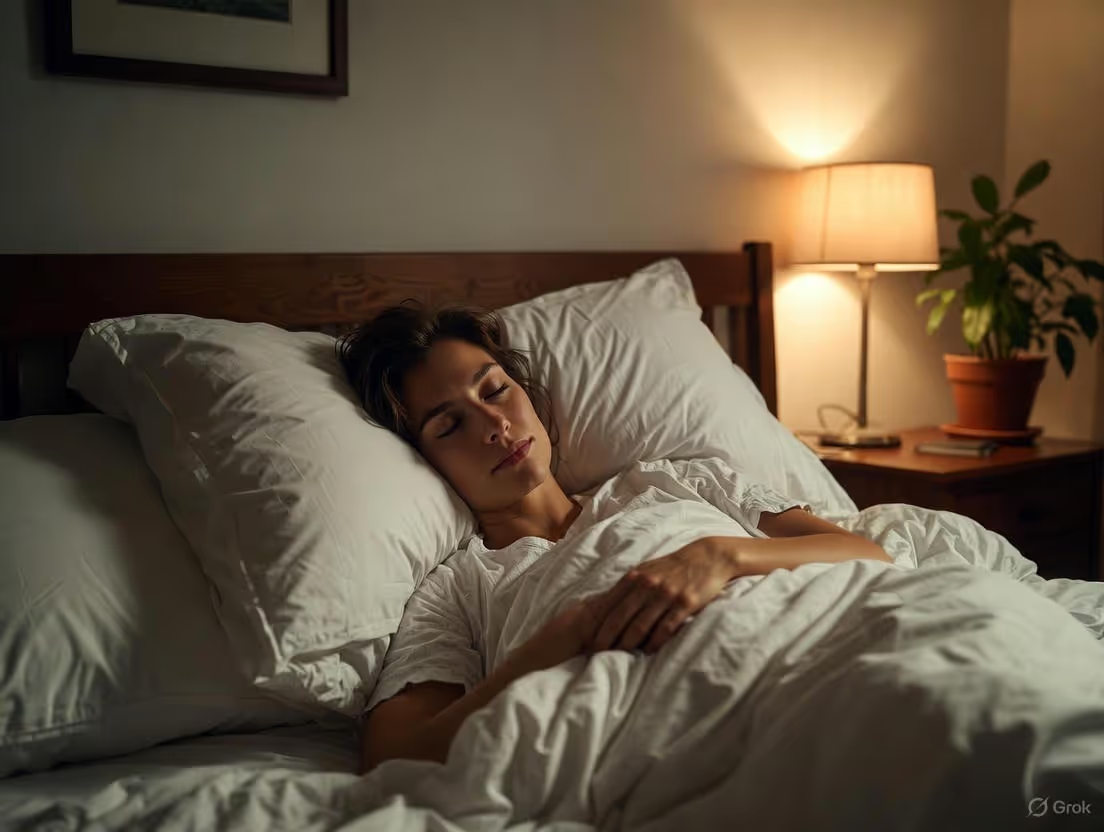
To conquer sleeplessness, you must first understand its mechanisms. Light sleep and insomnia are not character flaws or simple habits; they are often the result of a hyper-aroused nervous system and disrupted biological processes. At the core lies your circadian rhythm—your internal 24-hour clock governed by a tiny region in the brain called the suprachiasmatic nucleus (SCN). This clock regulates the ebb and flow of hormones, primarily using light as its primary cue.
When functioning correctly, daylight suppresses melatonin (the "sleep hormone") and promotes cortisol and alertness. As darkness falls, melatonin production rises, prompting drowsiness and a drop in core body temperature—a critical signal for sleep onset. For light sleepers and insomniacs, this rhythm is often desynchronized. "Night owls" may have a naturally delayed rhythm, while chronic stress can flatten cortisol curves, leaving you wired at night and exhausted by day.
Simultaneously, your sleep drive, or homeostatic sleep pressure, builds the longer you are awake. Adenosine, a byproduct of cellular energy consumption, accumulates in the brain throughout the day, creating an increasing urge to sleep. Caffeine blocks adenosine receptors, which is why that afternoon coffee can sabotage your evening. For those with insomnia, anxiety can chemically override this accumulating sleep drive, leaving you physically tired but mentally alert.
Then there’s the hyperarousal theory. Research suggests that individuals with insomnia have a state of heightened cognitive and physiological arousal 24/7. Their nervous systems are stuck in a subtle but persistent "fight-or-flight" mode, with higher resting heart rates, faster brain waves, and elevated levels of stress hormones like cortisol and adrenaline. This makes the transition into the vulnerable state of sleep feel threatening to the subconscious mind. The bedroom itself can become a conditioned cue for anxiety, not rest.
Understanding these pillars—circadian rhythm, sleep drive, and hyperarousal—is your foundation. Every element of the routine we will build addresses one or more of these systems, working to realign your clock, bolster natural sleep pressure, and, most importantly, signal profound safety to your nervous system. It’s about moving from a state of vigilance to one of trust.

The single biggest mistake light sleepers make is trying to jump from a state of high stimulation directly into bed, expecting sleep to be an immediate off-switch. The brain and body require a gradual descent. The 90-minute wind-down is a non-negotiable buffer zone between the demands of the day and the sanctuary of sleep. This period allows for the physiological shifts necessary for sleep onset: a decline in cortisol, a rise in melatonin, and a calming of the sympathetic nervous system.
Consider this phase a ritual of transition and closure. It's a time to consciously release the day’s cognitive load. A powerful practice is a "brain dump." Take 10 minutes to write down every lingering thought, worry, or to-do list item on paper. The act of externalizing these thoughts signals to your brain that it can stop clinging to them; they are captured and can be handled tomorrow. This is a direct intervention against the cognitive arousal that fuels insomnia.
The content of your wind-down matters immensely. This is not the time for adrenaline-spiking news, intense drama, work emails, or heated discussions. The blue light emitted from screens is a well-known disruptor, as it mimics daylight and suppresses melatonin. But the content is equally stimulating. Scrolling through social media or reading stressful news activates the mind’s problem-solving and emotional centers, pushing you back into a state of arousal.
Instead, curate this 90 minutes for low-stimulus, pleasurable activities. The goal is to engage the parasympathetic nervous system—your "rest-and-digest" mode. This could include:
This wind-down is your first and most critical act of self-compassion as a light sleeper. It is a declaration that your sleep is valuable and worth protecting. By establishing this buffer, you begin to dissociate the bedroom from wakefulness and re-associate it with calm.
Light is the most potent regulator of your circadian rhythm. Properly managing your light exposure is not just about avoiding screens at night; it’s a strategic 24-hour practice of seeking bright light during the day and embracing profound darkness at night.
Morning Light Anchoring: Within 60 minutes of waking, aim to get at least 15-30 minutes of bright, outdoor light exposure. This doesn't require direct sun gazing; a walk outside or even sitting near a window is effective. This morning light acts as a powerful "zeitgeber" (time-giver), resetting your SCN clock for the day. It sharply suppresses any lingering melatonin and boosts cortisol and serotonin (a precursor to melatonin at night), setting you up for daytime alertness and a stronger sleep signal later. For those in dark climates or with limited morning sun, a 10,000-lux light therapy lamp used for 20-30 minutes upon waking can be transformative.
Daytime Light Saturation: Continue to seek bright, natural light throughout the day. This reinforces the circadian signal that "this is daytime." Work near windows, take breaks outside, and ensure your indoor environments are well-lit. A bright day leads to a dark night.
The Evening Dim-Down: As sunset approaches, your goal is to mimic the natural fading of light. Begin reducing overhead bright lights 2-3 hours before bed. Switch to lamps with warm-spectrum bulbs (under 2700 Kelvin). This warmer, reddish light has a lesser impact on melatonin suppression than cool, blue-white light. Consider installing smart bulbs that can automatically shift to a warmer tone in the evening.
The Blue Light Battle: In the final 90 minutes of your wind-down, aggressively eliminate blue light. Enable "Night Shift" or "Blue Light Filter" modes on all devices, but understand this is a secondary measure. The best practice is to put devices away entirely. For essential screen use, high-quality blue-light-blocking glasses can be a worthwhile investment. They physically filter out the problematic wavelengths.
Creating Cave-Like Darkness: Your sleep environment must be pitch black. Even small amounts of light from streetlamps, chargers, or digital clocks can fragment sleep and reduce melatonin production. Assess your room: can you see your hand in front of your face after lights out? If so, it's not dark enough. Invest in:
Mastering this light-dark cycle is free, profoundly effective, and foundational. It works with your biology, not against it, gently telling your brain exactly when it's time to be awake and when it's time to sleep. For a deeper exploration of how light impacts your biometrics, you can read our complete guide on circadian health.
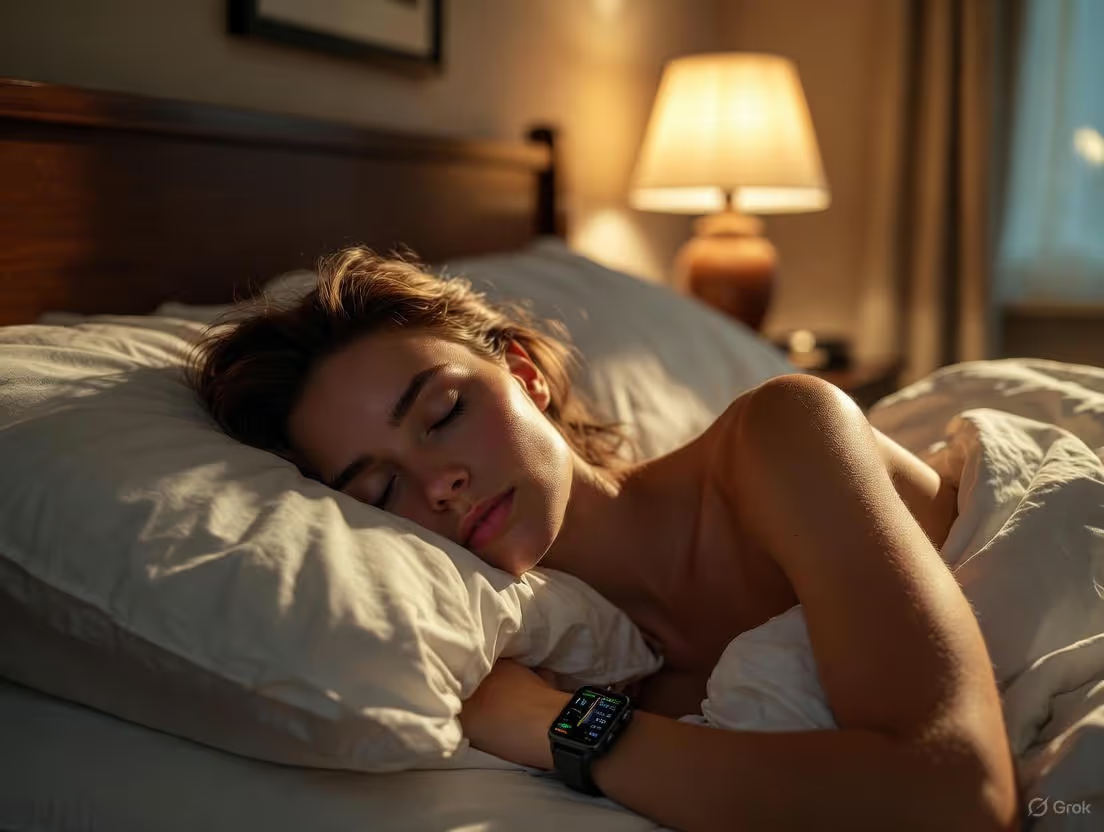
Your bedroom should be a sensory sanctuary engineered for one purpose only: sleep. Three environmental factors are paramount: temperature, sound, and psychological association.
The Thermal Window for Sleep: Core body temperature must drop by about 1-2 degrees Fahrenheit to initiate and maintain sleep. You can facilitate this. The ideal room temperature for most people is between 60-67°F (15.5-19.5°C). A room that is too warm disrupts sleep architecture, leading to more wakefulness and lighter sleep. Your bedding plays a crucial role. Opt for breathable, natural fabrics like cotton or linen. Consider a cooling mattress pad or pillow if you tend to sleep hot. The pre-sleep warm bath is effective precisely because it causes vasodilation—blood rushes to the skin's surface, and when you exit the bath, heat radiates away, accelerating the core temperature drop.
The Soundscape of Silence (or Consistency): For the light sleeper, unpredictable noise is a prime enemy. The brain remains in a state of low-level monitoring, ready to be startled awake. The solution is not perfect silence, which can also feel unnerving, but consistent, masking sound. White noise or pink noise machines generate a steady sonic blanket that drowns out irregular disturbances like traffic, snoring, or plumbing sounds. Alternatively, apps or devices that play nature sounds (steady rain, ocean waves) can be equally effective. The key is consistency; it gives the auditory system a predictable pattern to ignore.
The Psychology of the Bedroom: This is perhaps the most subtle yet powerful element. You must strengthen the mental association that Bed = Sleep (and Sex Only). If you use your bed for work, watching thrilling TV, arguing, or scrolling on your phone, you create cognitive links between the bed and states of stress, arousal, or anxiety. This fuels conditioned arousal.
To rebuild this association, practice this rule: If you are awake and frustrated in bed for more than 20 minutes, get up. Go to another room and engage in a quiet, boring activity in dim light (like reading a dull book). Only return to bed when you feel sleepy. This is called stimulus control therapy, and it is a cornerstone of cognitive behavioral therapy for insomnia (CBT-I). It breaks the cycle of anxiety and reinforces that the bed is for sleeping.
By intentionally designing this sanctuary—cool, dark, quiet, and psychologically safe—you remove environmental obstacles and send an unambiguous signal to every part of your being: here, you can let go. To see how others have transformed their sleep spaces, browse real user experiences and testimonials.
In the modern world, information is a constant stimulant. The evening information diet is about consciously choosing what you consume, because what enters your mind in the hours before bed doesn't stay at the bedroom door—it echoes in the quiet.
The Pre-Bed Scroll: Social media platforms are engineered to trigger emotional responses—outrage, envy, FOMO (Fear Of Missing Out), or even delight. These emotions release neurotransmitters like dopamine and cortisol that activate the mind, making quiet introspection and stillness feel impossible. The comparison trap ("Everyone is living a better life than me") is a direct fuel for anxiety. Set a hard digital curfew as part of your 90-minute wind-down. Use app limiters or simply charge your phone in another room.
News and Work Trauma: Consuming the day's crises via the evening news injects a global sense of threat into your personal sanctuary. Similarly, checking work email ties your sense of safety and self-worth to professional demands, activating problem-solving mode. Establish a "no news after 7 PM" rule and a strict boundary that work communication ends at a set time. Your nervous system cannot differentiate between a work crisis and a physical threat; it prepares for battle either way.
Replacing Consumption with Creation or Connection: The detox isn't about creating a void; it's about filling the space with more nourishing content. Instead of consuming fragmented digital content, try:
This practice is a form of mental hygiene. You are curating the final inputs of the day, knowing they will seed your subconscious. By choosing calm, focused, and positive inputs, you lay the groundwork for a quieter mind. For more strategies on creating healthy digital boundaries for wellness, explore our blog for additional resources.
What you eat and drink in the evening acts as direct biochemical instructions to your body. The goal is to avoid anything that causes spikes in energy, blood sugar, or bodily stress during your sleep window.
The Timing of Your Last Meal: Finish eating a substantial meal at least 3 hours before bedtime. Digestion is an active process that raises core body temperature and metabolic activity, opposing the body's natural wind-down. A large meal too close to bed can also lead to discomfort, acid reflux, and fragmented sleep. If you need a small snack closer to bed (to prevent hunger from waking you), choose something that combines a little protein with complex carbohydrates, like a small bowl of oatmeal, a banana with a spoonful of almond butter, or whole-grain crackers with cheese. These can help stabilize blood sugar and may aid in the transport of tryptophan, a sleep-promoting amino acid, to the brain.
Caffeine: The Long Shadow: Caffeine has a half-life of about 5-6 hours. This means if you have a coffee at 3 PM, by 9 PM, about half the caffeine is still active in your system. For light sleepers, the sensitivity is even greater. Establish a firm caffeine curfew of at least 8-10 hours before your intended bedtime. Be mindful of hidden sources: tea (black and green), chocolate, soda, and some medications.
Alcohol: The Deceptive Sedative: While alcohol may help you fall asleep faster, it is a notorious sleep wrecker. It metabolizes into aldehydes, which act as stimulants, leading to frequent awakenings in the second half of the night. It also profoundly suppresses REM sleep—the crucial stage for memory consolidation, learning, and emotional processing. Relying on alcohol for sleep creates a cycle of shallow, unrefreshing rest and next-day anxiety.
Hydration Balance: Dehydration can cause nocturnal awakenings (from thirst or leg cramps), but drinking too much liquid right before bed guarantees disruptive trips to the bathroom. Front-load your hydration during the day and taper off in the evening. Have your last full glass of water 60-90 minutes before bed, with only a small sip if needed after.
Sleep-Supportive Nutrients: Certain foods contain compounds that may gently support sleep. Tart cherry juice contains natural melatonin. Kiwis are rich in serotonin and antioxidants. Fatty fish (like salmon) provide vitamin D and omega-3s, which are involved in serotonin regulation. Chamomile and passionflower teas have mild anxiolytic (anxiety-reducing) properties. Incorporate these as part of your evening wind-down, not as a magic bullet, but as a supportive element of your overall routine.

Physical tension is the bodily manifestation of a hyper-aroused nervous system. For light sleepers, this tension often goes unnoticed until you lie down and feel every tight muscle. Strategic movement in the evening can be a powerful tool to release this tension and signal safety to the body.
The Paradox of Exercise: Regular daytime exercise is one of the most effective long-term promoters of deep sleep. It builds sleep pressure (adenosine), regulates mood, and reduces anxiety. However, intense exercise too close to bedtime can be overstimulating due to the release of endorphins and a rise in core temperature. The general guideline is to finish vigorous workouts at least 3 hours before bed.
Evening Movement for Relaxation: The focus in the evening should be on gentle, restorative movement that promotes parasympathetic activation. This is not about fitness; it's about sensation and release.
Body Scanning: As you lie in bed, practice a body scan. Bring your attention slowly to each part of your body, starting at your toes, and consciously invite it to soften, relax, and feel heavy. Imagine your body melting into the mattress. This practice builds somatic awareness and pulls your focus away from racing thoughts and into physical sensation—a cornerstone of mindfulness for sleep.
This nightly physical practice is a dialogue with your body. It’s you saying, "The day is over. The work is done. You can let go now." It transforms the body from a vessel of held stress into a receptive vessel for rest.
When your mind is racing, trying to "stop thinking" is like trying to smooth rough water with your hands—it only creates more turbulence. Breathwork and mindfulness offer a different approach: you learn to anchor your attention on a neutral point (the breath, a sound, a sensation), creating distance from your thoughts and allowing the nervous system to downshift.
The Physiological Sigh: Discovered by Stanford neurobiologist Dr. Andrew Huberman, this is a fast-acting tool for real-time stress reduction. Inhale fully through the nose, then take one more quick "sip" of air to maximally inflate the lungs. Then exhale slowly and completely through the mouth. Doing this 1-3 times can rapidly reduce stress and lower heart rate. Use it when you feel a spike of anxiety in bed.
4-7-8 Breathing (Relaxing Breath): Developed by Dr. Andrew Weil, this technique is a natural tranquilizer for the nervous system. Place the tip of your tongue behind your upper front teeth. Exhale completely through your mouth. Close your mouth and inhale quietly through your nose for a count of 4. Hold your breath for a count of 7. Exhale completely through your mouth (making a "whoosh" sound) for a count of 8. Repeat this cycle 4 times. It increases parasympathetic tone and can help quiet the mind.
Diaphragmatic Breathing: Simply shifting from shallow chest breathing to deep belly breathing activates the vagus nerve, the main nerve of the parasympathetic system. Place one hand on your chest and the other on your belly. Inhale slowly through your nose, feeling your belly rise. Your chest should move very little. Exhale slowly through pursed lips. Aim for 6-10 slow breaths per minute for several minutes.
Mindfulness and "Noting": As you lie in bed, thoughts will come. The practice is not to fight them, but to observe them with gentle curiosity. Label them: "Ah, that's planning." "That's worrying." Then, gently return your focus to the feeling of your breath entering and leaving your nostrils, or the rise and fall of your abdomen. Each return is a rep for your "attention muscle." This breaks the identification with thoughts—you are not your thoughts; you are the awareness observing them. This space is where relaxation can enter.
These practices are skills that improve with consistent repetition. They provide a portable, always-available toolkit for calming the storm of insomnia from the inside out. For those interested in the science behind breathwork and biometrics, you can discover how Oxyzen tracks your physiological responses.
If there is one element that rivals light in its power to regulate sleep, it is consistency. Going to bed and waking up at the same time every day—yes, even on weekends—is the bedrock of a stable circadian rhythm. This may feel restrictive, but for the light sleeper, it is profoundly liberating.
Think of your SCN as a stubborn but trainable clock. If you wake at 7 AM on weekdays but sleep until 10 AM on Saturday, you are essentially giving yourself jet lag every weekend ("social jet lag"). Come Sunday night, your body is not ready to sleep at your weekday bedtime, setting the stage for insomnia and a miserable Monday morning.
How to Implement a Fixed Schedule:
The Myth of "Catching Up": You cannot truly bank sleep or fully repay a massive sleep debt in one or two nights. A consistent schedule is far more effective and sustainable than binge-sleeping on weekends. The stability itself reduces the sleep anxiety that plagues insomniacs, because the schedule becomes a trustworthy framework you can rely on.
This consistency extends to your wind-down routine. Performing the same calming activities in the same order each night creates powerful behavioral cues that tell your brain "sleep is coming next." The predictability is deeply soothing to an aroused nervous system. It is the ultimate expression of taking control by creating a loving, reliable structure for your biology to thrive within. To understand the dedication behind creating tools for such consistency, you can learn about our company's mission and values.
For decades, managing sleep has been an exercise in guesswork and anecdote. "Maybe that tea helped?" "Perhaps I should try a different pillow?" The era of biometric tracking has changed this paradigm. For the light sleeper or insomniac, data is empowerment. It transforms subjective feeling ("I slept terribly") into objective insight ("My resting heart rate was 15% higher than normal and I had 22 awakenings").
This is where a device like the Oxyzen smart ring becomes a game-changer. Worn on the finger—a location rich in vasculature ideal for accurate sensing—it continuously tracks the biomarkers most critical to understanding your sleep:
The Personalization Feedback Loop: With this data, you move from a generic routine to a personalized protocol.
This scientific approach removes the frustration and empowers you. You can see the tangible benefits of your wind-down, proving to your anxious mind that your efforts are working. It also helps identify hidden disruptors you may not have connected, like the impact of a late social event or a particular food.
Data provides the ultimate validation and motivation. When you can see a graph showing your HRV trending upward and your sleep disturbances decreasing, it reinforces the value of your commitment. It turns the abstract goal of "better sleep" into a tangible, measurable journey of self-optimization. For practical questions on using such technology, our comprehensive FAQ and support page is an excellent resource.
For those whose sleep remains elusive despite mastering the fundamentals, advanced protocols offer targeted, evidence-based interventions. These are not replacements for a solid routine but specialized tools to be integrated when specific challenges persist.
Cognitive Behavioral Therapy for Insomnia (CBT-I): CBT-I is the gold-standard, first-line treatment for chronic insomnia, with efficacy proven to surpass sleep medications in long-term outcomes. It's a structured program that directly targets the thoughts and behaviors perpetuating sleeplessness. Key components you can integrate include:
Sensory Deprivation & Float Tanks: For the overstimulated mind, reducing sensory input to near-zero can be revolutionary. Floatation-REST (Restricted Environmental Stimulation Therapy) involves lying in a silent, lightless tank filled with body-temperature water saturated with Epsom salt, creating effortless buoyancy. This environment eliminates gravity, sound, light, and temperature variance. Studies show that just 60 minutes can significantly reduce cortisol, lower blood pressure, and increase feelings of relaxation and well-being. For the light sleeper, a weekly float session can act as a profound "reset" for the nervous system, teaching the body what deep calm feels like. While not a nightly practice, its residual effects can enhance your overall wind-down capacity.
Binaural Beats & Isochronic Tones: These are audio technologies that aim to influence brainwave states. Binaural beats involve playing two slightly different frequencies in each ear; the brain perceives a third tone equal to the difference, which may encourage brainwaves to "entrain" to that frequency. Isochronic tones use a single tone that pulses on and off. Frequencies in the delta (1-4 Hz) or theta (4-8 Hz) ranges are used for sleep and deep relaxation. While research is mixed, many users report subjective benefits. Using these as part of your in-bed listening (with headphones) can provide a focal point that discourages mental wandering.
Acupressure and Self-Massage: Applying pressure to specific points on the body is believed in Traditional Chinese Medicine to calm the shen (spirit) and smooth the flow of Qi. Two key points for sleep:
These advanced tools require more intention but can address stubborn layers of arousal that basic hygiene cannot touch. They represent an active, engaged approach to retraining your sleep system. For more on integrating technology with these practices, you can discover how Oxyzen works in tandem with behavioral change.
Even the most perfect routine can be ambushed by very real physical and interpersonal challenges. A proactive strategy for these common disruptors is essential.
Sleep and Chronic Pain/Discomfort: Pain and poor sleep form a vicious cycle; pain disrupts sleep, and sleep deprivation lowers pain tolerance. To break this:
The Hormonal Rollercoaster: Women, in particular, may find sleep patterns shifting with menstrual cycles, pregnancy, perimenopause, and menopause. Fluctuations in estrogen and progesterone directly affect body temperature regulation, anxiety, and sleep architecture.
The Partner Problem: Sharing a bed with a snorer, a restless sleeper, or someone on a different schedule is a top challenge for light sleepers.
Managing these disruptors is about pragmatic problem-solving, not resentment. Open communication with partners and healthcare providers is key. It turns shared challenges into a collaborative project for mutual well-being. Real-world solutions like these are often shared in our community of users; you can read about others' experiences and solutions.
The supplement aisle for sleep is vast and confusing. While no pill should replace a behavioral routine, some natural compounds have credible research supporting their role as adjunctive aids. Crucial Disclaimer: Always consult with a healthcare provider before starting any new supplement, especially if you are on medication or have underlying health conditions.
The Heavy Hitters (Strongest Evidence):
The Botanical Support (Traditional & Emerging Evidence):
What to Avoid & The Placebo of Routine: Be wary of supplements making extravagant claims. Remember, the act of taking a supplement as part of a dedicated wind-down ritual can itself be powerfully sleep-promotive due to the placebo effect and behavioral conditioning. The goal is to use these aids not as crutches, but as temporary supports while you solidify the behavioral and environmental foundations of your sleep. For more detailed research on supplements and biometric responses, our blog features ongoing analysis.
There will be nights when, despite your impeccable routine, sleep refuses to come. Anxiety about the sleeplessness itself then takes over, creating a panic spiral. A pre-written, compassionate "emergency protocol" is your lifeline on these nights. It removes decision-making and panic.
Step 1: The 20-Minute Rule & Graceful Exit. If you are awake and feeling distressed, start a timer when you notice it. At 20 minutes, without anger or judgment, enact your pre-planned exit. Quietly get out of bed. This is not a failure; it is part of the protocol.
Step 2: The Boring, Dim-Lit Sanctuary. Go to a pre-designated chair or couch. Have a set, dull activity waiting. This could be:
The key is that the activity must be genuinely boring and low-stimulus. The light should be minimal—use a small, warm-toned reading lamp. No screens. No food. No checking the time.
Step 3: The Return Cue. Your only instruction is to continue the boring activity until you feel unmistakable signs of sleepiness: heavy eyelids, head nodding, difficulty following the content. Only then do you return to bed. If anxiety returns, repeat the process.
The Philosophy of the Protocol: This does two things. First, it directly applies stimulus control, protecting the bed-sleep association. Second, and more profoundly, it neutralizes the fear of wakefulness. Knowing you have a kind, structured plan eliminates the catastrophic "Oh no, here we go again" thought. Wakefulness becomes simply a cue to enact your plan, not a trigger for panic. It transforms a night of suffering into a night of quiet, if boring, self-care. You are still resting, even if you are not sleeping.
Having this plan in place is the ultimate act of self-compassion for the insomniac. It means you are never helpless. You are always in charge of your response, which is the very essence of breaking the anxiety cycle.
A bad night happens. The true test of your sleep health isn't perfection, but how you respond to the inevitable off-night. Mishandling the morning after is the fastest way to trigger a second night of poor sleep.
Resist the Snooze Button & Anchor Your Wake Time. However tempting, sleeping in fragments of time after your alarm does not provide restorative sleep—it only promotes sleep inertia (grogginess) and weakens your circadian anchor. Get up at your fixed time, even if it's brutal. Expose yourself to bright light immediately. This is the single most important action to stop the cycle.
Manage Your Narrative. The stories you tell yourself about a bad night are powerful. Avoid catastrophic declarations like "I'm destroyed" or "Today is worthless." Instead, use factual, neutral language: "I had a short night. I may be tired, but I can still function. My body will prioritize deep sleep tonight." This is cognitive restructuring in real-time.
Strategic Caffeine & Napping: If you must use caffeine, have a single, modest dose before 10 AM. Do not use it as a continuous drip throughout the day. If you nap, make it a "NASA Nap": 10-20 minutes, before 3 PM. Set an alarm. This can boost alertness without dipping into deep sleep, which would rob sleep pressure from the coming night.
Adjust Expectations, Not Effort: Go easier on yourself cognitively. Delegate what you can. Don't schedule demanding mental work for the late afternoon. But do not abandon your evening routine. In fact, lean into it more gently and trustingly. The worst thing you can do is say, "My routine failed, so why bother?" Last night was not a failure of the routine; it was an outlier. The routine is what will pull you back to baseline.
The Power of Non-Sleep Deep Rest (NSDR): In the afternoon, instead of a nap, consider a 20-minute NSDR protocol like a guided Yoga Nidra or a body scan meditation. These practices can lower resting heart rate and provide a level of brain and body restoration comparable to light sleep, without affecting your sleep drive. They are a secret weapon for recovery days.
By handling the day with grace and discipline, you prevent one bad night from becoming two. You demonstrate resilience and trust in the process, which in itself reduces the performance anxiety around sleep. For guidance on tracking your recovery and resilience metrics, you can learn more about the Oxyzen smart ring's daily readiness scores.
The final, and perhaps most important, pillar is psychological. For chronic light sleepers and insomniacs, sleep can become an object of obsession, a metric of self-worth, and a source of performance anxiety. This "sleep effort" or "sleep perfectionism" is a direct driver of insomnia.
The Paradox of Letting Go: The harder you try to sleep, the more elusive it becomes. Sleep is an involuntary, passive process. You cannot force it any more than you can force digestion. Your job is not to create sleep, but to create the conditions for sleep, and then step aside. Your role is that of a gardener: you prepare the soil, plant the seeds, and provide water. You do not pull on the sprout to make it grow faster. You trust the natural process.
Redefining Success: Shift your goal from "8 hours of perfect, unbroken sleep" to "showing up consistently for my wind-down routine and being kind to myself regardless of the outcome." Make the routine itself the success metric. Did you do your 90-minute wind-down with presence? That is a win. Sleep is the likely bonus, but not the only measure of a successful night.
Practicing Sleep Effort Surrender: This is a mindfulness practice done in bed. After completing your relaxation techniques, consciously say to yourself (in your own words): "My work is done. I have created a safe space. Now I surrender the outcome. Whether sleep comes quickly or slowly is not under my control, and that is okay. I am just resting here." This active surrender of control is the antidote to the performance anxiety that keeps you awake.
Building Sleep Confidence: Each night you complete your routine, you build evidence that you are a person who cares for their well-being. Each time you use your "fail-safe" protocol effectively, you build confidence that you can handle wakefulness without panic. This confidence, built over weeks and months, is what ultimately defangs the fear of insomnia. The dread diminishes because you know you have a system and the resilience to cope.
This long-term mindset transforms your relationship with sleep from a high-stakes battle to a gentle, trusting partnership. It’s about cultivating sleep resilience—the knowledge that you can navigate the ups and downs without spiraling. This journey is as much about self-discovery as it is about rest. To understand the philosophy behind building tools that support this kind of holistic resilience, you can explore our founding story and vision.
To truly master your sleep, it helps to understand what you’re optimizing for. Sleep is not a monolithic state of unconsciousness. It’s a dynamic, cyclical journey through distinct stages, each with its own physiological purpose and brainwave signature. For the light sleeper, grasping this architecture demystifies the night—you learn that awakenings are part of the design, and that the quality of each stage matters more than rigid, unbroken time.
The Sleep Cycle Breakdown: A full sleep cycle lasts approximately 90-120 minutes and repeats 4-6 times per night. Each cycle progresses through the following stages:
The Nightly Progression: Your sleep architecture isn't flat. The first two cycles are typically rich in deep sleep (N3). As the night progresses, deep sleep diminishes, and REM and N2 sleep periods become longer. By your final cycle, you may be spending almost all your time in REM and light N2 sleep. This is why you often wake from a dream in the morning—you’re likely exiting a REM period.
What This Means for Light Sleepers and Insomniacs:
By internalizing this blueprint, you shift from being a passive victim of the night to an informed observer. You can interpret your sleep tracker data with nuance, asking not just "How long did I sleep?" but "What was the architecture of my sleep?" This knowledge empowers you to tailor your routine to protect the most vulnerable and valuable stages of your night. For a deeper look at the biometrics behind these stages, you can explore how Oxyzen analyzes sleep architecture.
Not all sleep-wake patterns are created equal. Your chronotype is your genetically predisposed natural inclination to sleep and be active at certain times. Fighting your chronotype is like swimming against a strong current—it’s exhausting and rarely successful. The classic "night owl" trying to conform to a 9-to-5 "lark" schedule is a prime example of this mismatch, often leading to chronic sleep-onset insomnia and social jet lag.
The Spectrum of Chronotypes: While most people fall somewhere in the middle, distinct types exist:
Your chronotype is largely dictated by genetics, specifically the length of your PER3 gene and the inherent settings of your master circadian clock (SCN). Environmental light exposure can nudge it, but you cannot fundamentally rewrite your genetic code.
Strategies for Each Type:
For Wolves (Night Owls):
For Lions (Early Birds):
For Dolphins (The Light Sleeper Profile):
The goal is not to force yourself into an arbitrary mold, but to understand and work compassionately with your genetic design. This self-knowledge reduces the shame and frustration of not fitting a "normal" schedule and allows you to craft a truly personalized sleep strategy. It’s about finding the rhythm that allows your biology to sing. To understand how personalized tech adapts to your unique biology, you can discover how Oxyzen works with individual patterns.
Your sleep does not exist in a vacuum. It is deeply responsive to the changing seasons, travel across time zones, and even the lunar cycle. A resilient sleep routine is a flexible one that can adapt to these external shifts.
Seasonal Sleep Challenges:
Jet Lag Protocol: Crossing time zones is the ultimate circadian assault. To minimize the impact:
The Lunar Effect & Barometric Pressure: While science is equivocal, anecdotal reports and some studies suggest people experience more fragmented sleep and less deep sleep during the full moon, possibly due to increased ambient light. Similarly, changes in barometric pressure (before a storm) can affect joints and sinuses, disrupting sleep for some. Solution: Awareness is key. If you track your sleep and notice a pattern, you can preemptively bolster your wind-down routine on those nights, perhaps adding an extra relaxation practice, and avoid self-criticism for a night of poorer sleep you couldn't fully control.
Adapting your routine shows a sophisticated understanding of sleep as an ecological process. You are not just managing your internal state, but skillfully navigating your interface with the external world. This flexibility prevents minor environmental shifts from becoming major sleep derailments. For more tips on maintaining wellness through change, our blog offers ongoing seasonal guidance.
Emerging research reveals a powerful, bidirectional communication network called the gut-brain axis. Your gastrointestinal system, home to trillions of bacteria known as the microbiome, produces neurotransmitters and sends signals that directly impact brain function, mood, and crucially, sleep.
The Vagus Nerve Highway: This is the primary physical link. The vagus nerve runs from the brainstem to the colon, carrying information in both directions. A healthy, diverse gut microbiome promotes vagal tone, which is associated with better stress resilience and parasympathetic activation—the very state needed for sleep.
Gut-Produced Sleep Chemicals:
Practical Dietary Strategies for Sleep-Promoting Gut Health:
The Fiber-Sleep Connection: Studies have shown that individuals who consume more dietary fiber have more time in deep, slow-wave sleep. Fiber helps regulate blood sugar, prevents late-night crashes or spikes, and supports a healthy microbiome. Aim for a variety of fiber sources throughout the day.
Caring for your gut is a long-term investment in your sleep architecture. By nourishing your microbiome, you are essentially cultivating an internal pharmacy that produces the very chemicals that calm your mind and invite restorative sleep. It’s a profound example of how holistic self-care translates directly into sleep quality. For user stories on how tracking wellness led to dietary insights, browse our testimonials page.
Technology is a double-edged sword for sleep. It is the source of our blue light and cognitive overstimulation, but it also holds the key to unprecedented personalization and insight. The key is intentional, sovereign use—making technology serve your sleep, not undermine it.
The Smart Ring Advantage: As discussed, a device like the Oxyzen ring represents the pinnacle of passive, comprehensive tracking. Worn on the finger, it provides clinical-grade data (HR, HRV, SpO2, temperature, sleep stages) without the discomfort of a wristband or the invasiveness of a headband. Its 24/7 wearability means it captures not just sleep, but daytime readiness scores—a crucial metric for understanding how your daily stress, activity, and recovery balance. Seeing a low readiness score can prompt you to enact a more gentle wind-down that evening.
Smart Home Automation for a Seamless Wind-Down: You can program your environment to support your routine automatically.
App-Based Guidance (Use with Caution):
Creating a "Sleep Mode" for Your Life: Many phones now have "Focus" or "Do Not Disturb" modes that can be scheduled. Automate this to silence all non-essential notifications during your wind-down and sleep window. This reduces the anticipatory anxiety of a potential late-night ping.
The philosophy of tech integration is automation and outsourcing. By automating your environment and using wearables for insight, you free up your cognitive resources. You don't have to remember to dim the lights or wonder how you slept; the system supports you and provides feedback. This allows you to focus on the irreplaceable human elements of your routine: the mindfulness, the gratitude, the gentle stretching, the act of letting go. To see the technology that embodies this philosophy, you can learn more about the Oxyzen smart ring.
Theory is powerful, but seeing how these principles adapt to real lives is illuminating. Here are three composite case studies based on common profiles, showing how a personalized nighttime routine can be constructed.
Case Study 1: Maya, The Anxious Professional (Chronic Sleep-Onset Insomnia)
Case Study 2: David, The Snorer & Restless Partner (Light Sleeper with Environmental Disruptors)
Case Study 3: Leo, The Shift Worker (Severe Circadian Disruption)
These cases illustrate there is no one-size-fits-all solution, but a set of principles—cognitive closure, environmental control, circadian management, and mindful self-compassion—that can be mixed and matched to fit any life. For more diverse stories of transformation, you can read real customer reviews and experiences.
Now, we synthesize everything into a single, actionable framework. This is not a rigid checklist, but a modular system for you to design your own perfect wind-down. Think of it as building your sleep "playlist."
Step 1: The Self-Audit (1 Week).
Before changing anything, observe. Use a notepad or a basic sleep tracker. Note:
Step 2: Lay the Non-Negotiable Foundation (Weeks 2-3).
Start with the pillars that require no equipment, just habit change.
Step 3: Add Your Core Relaxation Modules (Weeks 4-5).
Choose 2-3 activities that resonate for your wind-down. Practice them consistently.
Step 4: Integrate Tracking and Refinement (Ongoing).
Introduce a biometric tracker like the Oxyzen ring. After 2 weeks of baseline data, start one gentle experiment per week (e.g., "This week, I’ll add magnesium glycinate with dinner" or "This week, I’ll start my wind-down 15 minutes earlier"). Watch the data for objective changes in Sleep Score, Deep Sleep, and HRV.
Step 5: Develop Your "Emergency & Recovery" Protocols.
Write down your "When All Else Fails" steps and post them somewhere. Decide how you will handle a bad night before it happens. Plan your recovery day strategy.
The Sustainable Mindset: Your master routine is a living document. It will change with seasons, life stages, and stress levels. Some nights you’ll only manage the Foundation. Other nights, you’ll luxuriate in all your modules. Both are perfect. The goal is not robotic execution, but cultivating a sleep-supportive lifestyle where the routine is a welcome refuge, not a burdensome prescription.
This is your journey from fragility to resilience. It begins with a single, consistent wake time and grows into a deep, trusting partnership with your own need for rest. You are building more than a routine; you are building a sanctuary in time, a nightly haven that repairs the past and prepares you for the future. For support and answers as you build your routine, remember our FAQ page is always available.
Your Trusted Sleep Advocate: Sleep Foundation — https://www.sleepfoundation.org
Discover a digital archive of scholarly articles: NIH — https://www.ncbi.nlm.nih.gov/
39 million citations for biomedical literature :PubMed — https://pubmed.ncbi.nlm.nih.gov/
Experts at Harvard Health Publishing covering a variety of health topics — https://www.health.harvard.edu/blog/
Every life deserves world class care :Cleveland Clinic - https://my.clevelandclinic.org/health
Wearable technology and the future of predictive health monitoring :MIT Technology Review — https://www.technologyreview.com/
Dedicated to the well-being of all people and guided by science :World Health Organization — https://www.who.int/news-room/
Psychological science and knowledge to benefit society and improve lives. :APA — https://www.apa.org/monitor/
Cutting-edge insights on human longevity and peak performance:
Lifespan Research — https://www.lifespan.io/
Global authority on exercise physiology, sports performance, and human recovery:
American College of Sports Medicine — https://www.acsm.org/
Neuroscience-driven guidance for better focus, sleep, and mental clarity:
Stanford Human Performance Lab — https://humanperformance.stanford.edu/
Evidence-based psychology and mind–body wellness resources:
Mayo Clinic — https://www.mayoclinic.org/healthy-lifestyle/
Data-backed research on emotional wellbeing, stress biology, and resilience:
American Institute of Stress — https://www.stress.org/


