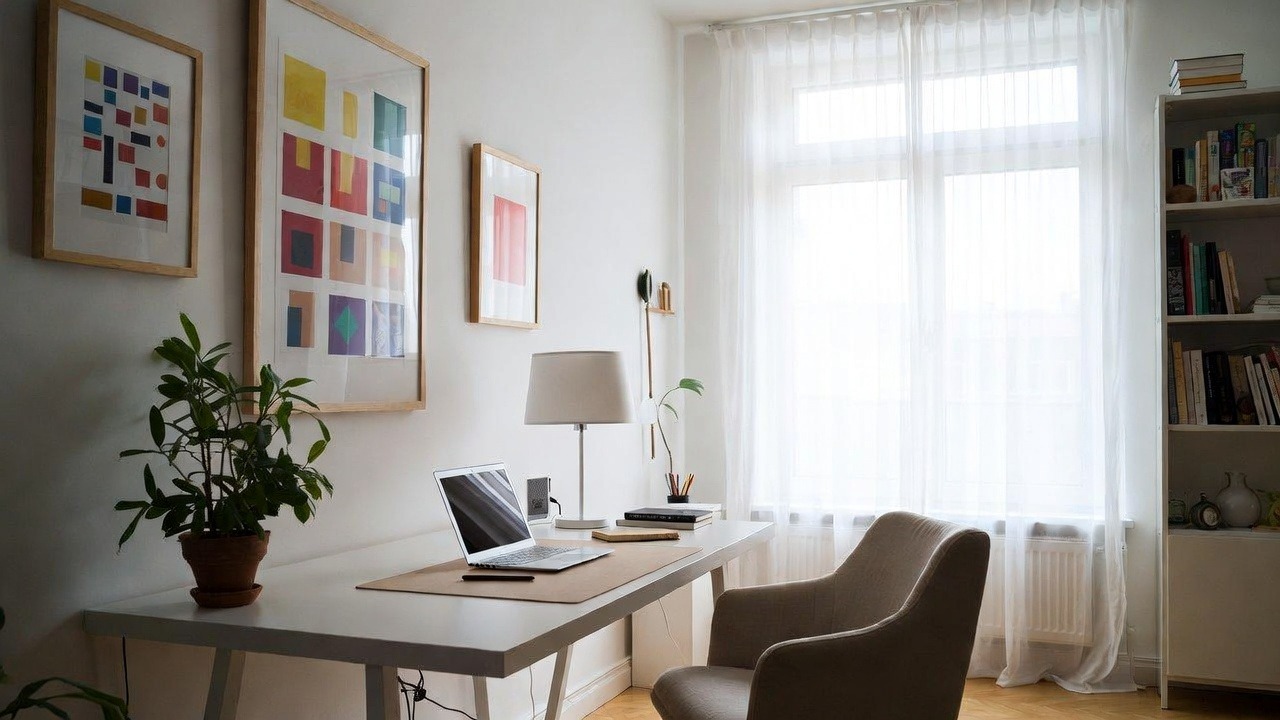
The Peaceful Living Workspace: Designing for Calm Productivity
Designing a workspace for both calm and productivity.
The Peaceful Living Workspace: Designing for Calm Productivity
In the silent hum of the early morning, before the world awakens its chorus of notifications, there exists a rare kind of clarity. It is in these moments, often at the threshold of our personal workspaces, that we glimpse the potential for a different way of working. Not the frantic, reactive hustle that has defined the modern professional era, but a state of calm, focused, and profoundly productive flow. This is not merely about working from home; it is about cultivating a sanctuary within our living spaces that fosters peace while enabling our highest contributions.
Welcome to the philosophy of the Peaceful Living Workspace. This concept moves far beyond ergonomic chairs and good WiFi (though those are important). It is a holistic design methodology that integrates the physical, digital, and physiological environments to create an ecosystem for calm productivity. It recognizes that our output is intrinsically tied to our inner state. A scattered mind, fueled by chronic stress and a chaotic environment, cannot produce truly insightful, creative, or sustainable work.
The modern worker is besieged by a paradox: we have unprecedented tools for connection and efficiency, yet rates of burnout, digital distraction, and mental fatigue are at an all-time high. The lines between “living” and “working” have blurred into a nebulous, always-on haze. The solution is not to work harder within this dysfunction, but to redesign the very container in which our work lives.
This journey begins with a fundamental shift: viewing our workspace not as a mere utility, but as a living system that interacts with our nervous system. Every element—from the quality of light and air to the invisible electromagnetic fields and the subconscious cues embedded in our decor—plays a role in signaling to our brain either “threat” or “thrive.” Calm productivity is the natural result when our environment consistently signals “thrive.”
In this comprehensive exploration, we will deconstruct the pillars of this transformative approach. We will delve into the neuroscience of space, the principles of biophilic design, the silent tyranny of digital clutter, and the revolutionary role of physiological awareness through technology like smart rings. By the end, you will possess a blueprint for constructing not just a place to work, but a space that works for you—fostering a sense of peace that fuels purpose, and a tranquility that amplifies your impact. Let’s begin designing from the inside out.
The Neuroscience of Space: How Your Environment Programs Your Brain
Before we rearrange a single piece of furniture, we must understand the most important interface in our workspace: our own brain. The human brain is not a passive processor; it is a prediction machine, constantly scanning its environment for safety and opportunity. Your workspace is a key source of data for this prediction engine.
The foundational concept here is neuroarchitecture—the study of how the built environment influences our mental states, cognitive functions, and even long-term brain health. When you step into your workspace, your limbic system (the brain’s emotional center) makes a near-instantaneous assessment. A cluttered desk, harsh lighting, and poor airflow aren’t just aesthetic complaints; they are physiological stressors. They trigger low-grade activation of the sympathetic nervous system—our “fight or flight” response. This state releases cortisol and adrenaline, hormones that, in sustained doses, inhibit the prefrontal cortex. This is the brain region responsible for deep focus, strategic thinking, and creative problem-solving—the very skills required for meaningful work.
Conversely, environments characterized by order, natural elements, and sensory comfort promote parasympathetic activation—the “rest and digest” system. This state allows for the secretion of neurotransmitters like serotonin and dopamine, which enhance mood, focus, and cognitive flexibility. In essence, a peaceful space literally changes your brain chemistry to favor higher-order thinking.
Consider the impact of sensory load. The average workspace bombards us with competing stimuli: the glare of a screen, the buzz of overhead lights, the faint hum of electronics, the visual noise of scattered papers and tangled cords. This creates what neuroscientists call “cognitive load,” exhausting the brain’s finite attentional resources before you even begin a task. Each unnoticed distraction is a micro-interruption, forcing your brain to switch contexts. Research from the University of California, Irvine, found that it takes an average of 23 minutes and 15 seconds to regain deep focus after an interruption.
The principles of neuroscience make a compelling case for intentional design:
Order and Predictability: Clear surfaces and organized storage reduce visual noise and cognitive load, signaling safety to the brain.
Sensory Modulation: Soothing colors (soft blues, greens, earth tones), natural textures, and controllable lighting provide gentle, non-threatening sensory input.
Spatial Freedom: The ability to move, stretch, and shift postures isn’t just good for the body; it stimulates different neural networks, preventing mental stagnation and fostering creativity.
Designing for calm productivity, therefore, starts with becoming the architect of your own nervous system’s experience. It’s about curating an environment that consistently sends one powerful message to your brain: You are safe here. You can think here. This foundational safety is the bedrock upon which all focused work is built. For those interested in the quantifiable side of this mind-environment connection, our blog features deeper dives into how biometrics can reveal your personal stress triggers.
Biophilic Design: Welcoming Nature Back into Your Work Habitat
Having established that our brains crave safety and low-threat signals, we find the ultimate template for such an environment: the natural world. This is the core of biophilic design—the practice of integrating direct and indirect elements of nature into our built spaces. It’s not merely about placing a potted plant on your filing cabinet; it’s a philosophical and practical approach to reconnecting our innate biological affinity for life and lifelike processes.
Why does nature have such a profound calming effect? Evolutionary psychology suggests we are hardwired to respond positively to environments that signal resource availability, shelter, and prospect (the ability to see) with refuge (the safety of a protected back). A biophilic workspace taps into this deep-seated wiring, reducing stress, enhancing creativity, and improving cognitive function. A seminal study by Dr. Roger Ulrich found that patients with a view of nature recovered from surgery faster and required fewer pain medications than those with a view of a brick wall. The principles translate directly to the workspace.
Implementing biophilic design involves three core strategies:
1. Direct Nature: This is the incorporation of living, breathing elements.
Plants: Go beyond decoration. Create a “green veil” with trailing plants like pothos or philodendron, use large floor plants (like a fiddle-leaf fig or peace lily) to define space, and consider a small desktop terrarium. Plants improve air quality by filtering volatile organic compounds (VOCs) and increase humidity, combating the dry air from HVAC systems.
Light and Air: Maximize dynamic, natural light. Position your desk to benefit from daylight cycles, which regulate circadian rhythms. Use adjustable shades to control glare. Prioritize fresh air flow—even cracking a window for 10 minutes an hour can drastically reduce CO2 buildup, which is directly linked to drowsiness and diminished cognitive performance.
Water: The sound of moving water is a powerful auditory mask for jarring noises. A small desktop fountain can provide a consistent, calming sonic backdrop.
2. Indirect Nature: This involves using materials, patterns, and shapes that evoke the natural world.
Natural Materials: Incorporate wood (in desks, shelves, or accessories), stone, wool, cotton, or linen. These materials have complex, irregular textures that are visually interesting without being overwhelming.
Organic Shapes and Forms: Choose furniture with curved lines, flowing shapes, and asymmetrical designs over rigid, stark, geometric ones. A desk with a live-edge wood slab or a chair with an organic form can subconsciously evoke a natural landscape.
Natural Color Palettes: Ground your space in colors found in nature: earthy browns, stone grays, forest greens, sky blues, and sandy neutrals. Use these as your base, adding subtle accents for energy if needed.
3. Nature of the Space: This refers to the spatial configuration itself.
Prospect and Refuge: Arrange your desk so you have a clear view of the room (prospect), ideally with your back to a solid wall or a tall piece of furniture (refuge). This satisfies a primal need for security.
Mystery: Create a sense of partial concealment that invites exploration. This could be a screen partially obscuring a reading nook or a plant obscuring the full view of a doorway, suggesting there is more to be discovered.
By weaving these elements together, you transform a sterile work area into a vibrant habitat. This connection to nature is a profound counterbalance to the abstract, digital world we inhabit for work. It grounds us, reduces mental fatigue, and provides a constant, gentle source of sensory restoration. It is the aesthetic embodiment of calm productivity. To understand how our own products are designed with these principles in mind, you can read about our commitment to natural harmony and human-centric design in our story.
The Digital Sanctuary: Decluttering the Invisible Workspace
Our physical environment is only half the battle. The most pervasive source of clutter and cognitive drain for the modern knowledge worker exists not on the desk, but on the screens. The digital workspace—encompassing your desktop, applications, files, emails, and notifications—is often a landscape of chaos. This invisible clutter is arguably more insidious than physical mess because it is dynamic, interconnected, and constantly demanding attention. Designing a peaceful living workspace requires a ruthless and elegant strategy for creating a digital sanctuary.
The core problem is interruption architecture. Our devices and apps are explicitly designed to capture and fragment our attention. Every ping, badge, and pop-up is a bid for your cognitive resources, pulling you away from deep work. Calm productivity in the digital age is an act of conscious rebellion against these default settings.
Phase 1: The Great Digital Purge Begin with a ruthless audit. This is digital feng shui.
Desktop & Downloads: Your computer desktop should be a serene vista, not a dumping ground. Create a simple filing system—active projects, archives, references—and move everything off the visual field. Schedule a monthly “Downloads folder cleanse.”
Application Hygiene: Uninstall software you haven’t used in 90 days. For essential apps, explore consolidation tools (like using a single writing app instead of three). Reduce the number of decision points in your workflow.
Browser Bankruptcy: Bookmark purges are cathartic. Use bookmark folders ruthlessly. Consider a browser extension that limits you to a set number of open tabs, forcing prioritization.
Phase 2: Designing for Focus Once the clutter is cleared, rebuild with intention.
Notification Necromancy: Turn off all non-essential notifications. This is non-negotiable. Allow only human-driven communication (direct messages/calls from key people) to break through. Schedule 2-3 specific times to check email and social media—do not live in these inboxes.
Workspace Virtualization: Use virtual desktops (available on both Mac and Windows) to create context-specific spaces. Desktop 1: Deep Writing (only your word processor and research PDFs). Desktop 2: Communication (email, Slack). Desktop 3: Creative (design software, mood boards). This allows for mental compartmentalization.
Visual Calm: Use minimalist wallpapers. Employ apps in dark mode to reduce glare and visual intensity. Organize your digital tools into clean docks or menus.
Phase 3: The Flow-State Technology Stack Curate tools that actively promote focus, not fragmentation.
Distraction Blockers: Use applications like Freedom, Cold Turkey, or Focusmate to block distracting websites during work sprints.
Ambient Sound Engineers: Combat erratic noise with controlled sound. Tools like Noisli, Brain.fm, or simply a playlist of ambient nature sounds or instrumental music can create a consistent auditory environment that masks distractions.
Single-Purpose Devices: When possible, decouple. Use a dedicated e-reader for long-form reading instead of your tablet. Use a simple digital notepad for ideas. This reduces the “context-switching vortex” inherent in multipurpose devices.
Creating a digital sanctuary transforms your computer from a slot machine of distraction into a precision instrument for thought. It reclaims your most valuable asset: your uninterrupted attention. This process of intentional digital curation is a continuous practice, much like maintaining a physical space. For practical, step-by-step guides on implementing these digital hygiene practices, our blog is regularly updated with actionable tech-wellness strategies.
The Ergonomics of Serenity: Movement, Posture, and Physiological Ease
A peaceful mind cannot reside in an uncomfortable, stagnant body. The traditional view of ergonomics—preventing injury—is merely the baseline. The advanced view, which aligns perfectly with calm productivity, is kinetic ergonomics: designing for beneficial, subtle, and varied movement throughout the workday. Serenity is not found in rigid stillness, but in the freedom of effortless, supported motion.
Static postures, even “good” ones, are the enemy of circulation, energy, and focus. When the body is locked, the mind follows. The goal is to create a workspace that invites micro-movements, posture shifts, and physical engagement, turning your work habitat into a tool for physiological vitality.
The Foundational Trinity: Chair, Desk, and Screen
The Chair: Invest in a chair that supports the natural double-S curve of your spine. Key features include adjustable lumbar support, seat depth, and armrests. However, the best chair is one you don’t sit in all day. Consider it a “home base,” not a prison.
The Desk: Height-adjustable (sit-stand) desks are no longer a luxury; they are a cornerstone of kinetic ergonomics. The ability to transition between sitting and standing every 30-60 minutes promotes lymphatic flow, varies spinal loading, and boosts alertness. The ideal standing position has elbows at a 90-degree angle, with the screen at or just below eye level.
The Screen: Position the top of your monitor at or slightly below eye level, about an arm’s length away. Use a monitor arm for ultimate flexibility. This prevents neck strain (from looking down at a laptop) and encourages a tall, open posture.
Beyond the Basics: Designing for Movement
Active Seating & Surfaces: Incorporate tools that invite subtle instability and engagement: a kneeling chair, a balance board for standing, or even a high-quality stability ball for short sitting intervals. These activate core muscles and prevent the postural collapse associated with standard chairs.
The Movement Mantra: Embed “movement prompts” in your environment. Place your water glass on a shelf that requires you to stand and reach. Use a printer in another corner of the room. Consider a under-desk cycling pedal or a small set of resistance bands hooked to your desk leg for low-intensity movement during video calls or deep thinking.
Flooring as Foundation: Hard surfaces are fatiguing for standing. Invest in a high-quality anti-fatigue mat with varying textures. For a sensory and aesthetic boost, consider a natural fiber rug (like wool or jute) that defines your workspace and provides tactile comfort.
The Posture of Breath Often overlooked, your ergonomic setup directly impacts your breathing. A slumped posture compresses the diaphragm, leading to shallow, chest-based breathing—a pattern linked to the stress response. An open, supported posture allows for deep, diaphragmatic breaths, which stimulate the vagus nerve and promote calm. Ensure your chair and desk arrangement allow your ribcage to expand freely.
By designing for movement and physiological ease, you make calm an embodied experience. You align your physical state with your mental goals, ensuring that your body supports your focus rather than sabotaging it with whispers of discomfort. This holistic approach to ergonomics turns your workspace into a partner in wellness, not just a platform for task completion.
The Light & Soundscape: Engineering Your Sensory Atmosphere
Light and sound are the invisible architecture of our awareness. They are the primary sensory inputs that our brain uses to gauge time, safety, and context. In a workspace, poorly managed light and sound are silent thieves of concentration and calm. Conversely, a consciously engineered sensory atmosphere can induce states of deep focus and tranquility. This is the art of crafting your personal sensory cocoon.
Mastering the Light Spectrum: From Circadian Rhythms to Focus Light is a drug. It directly regulates our circadian rhythm, hormone production (like cortisol for alertness and melatonin for sleep), and cognitive performance.
Harness Natural Light: Always prioritize daylight. Position your desk perpendicular to a window to minimize glare on screens. Exposure to morning sunlight is critical for setting your circadian clock, boosting mood, and enhancing daytime alertness. Use sheer curtains to diffuse harsh direct light while preserving the connection to the outside world.
Layer Artificial Light Intelligently: Overhead lighting is often the villain—too harsh, too cool, and casting unflattering shadows. Adopt a layered lighting approach:
Ambient Light: Use warm-white (2700K-3000K) ceiling fixtures on a dimmer, or better yet, rely on indirect light from floor and table lamps bouncing off walls and ceilings.
Task Light: Invest in an adjustable, high-quality desk lamp with a focused beam. Look for LEDs with high CRI (Color Rendering Index) for accurate color perception and selectable color temperatures (warm for relaxing evening work, cool for focused afternoon tasks).
Accent & Bias Lighting: Consider a gentle LED light strip behind your monitor. This “bias lighting” reduces eye strain by increasing the ambient light behind the screen, improving contrast perception and reducing pupil fatigue.
The Blue Light Nuance: While reducing blue-light exposure in the evening is crucial for sleep, some blue light during the day is beneficial for attention and reaction time. The key is control. Use software like f.lux or built-in night shades automatically after sunset, but allow full-spectrum light during core work hours.
Composing Your Soundscape: The Auditory Environment Sound is perhaps the most disruptive yet controllable element. Unwanted noise triggers a stress response, while intentional sound can mask distractions and enhance cognitive states.
Identify Noise Antagonists: First, audit your space. Is it the sporadic traffic, the HVAC hum, household chatter, or the sudden ping of a notification? Each requires a different strategy.
Embrace Noise Masking: Constant, predictable sound is less disruptive than intermittent noise. This is the principle behind:
White Noise / Pink Noise: A consistent sonic blanket that effectively masks irregular sounds like voices or distant construction. Simple machines or apps can generate this.
Nature Sounds: The rhythmic patterns of rain, ocean waves, or a forest stream are inherently calming and excellent for masking. They also connect to our biophilic instincts.
Binaural Beats & Focus Music: For some, music with a steady, lyric-free beat or specially engineered binaural beats (which use slightly different frequencies in each ear) can encourage specific brainwave states associated with focus (alpha/theta waves).
The Power of Silence (or Near-Silence): Don’t underestimate the profound calm of a truly quiet environment. High-quality noise-cancelling headphones can be a worthy investment, not just for playing sound, but for creating the auditory equivalent of a sensory deprivation chamber when needed.
By taking proactive control of your light and sound, you move from being a passive recipient of your sensory environment to its active director. You design the conditions under which your brain performs at its best, minimizing stress and maximizing the potential for sustained, calm productivity. This intentional engineering turns your workspace into a tuned instrument, perfectly calibrated for your cognitive and creative performance.
The Ritual & Rhythm Zone: Structuring Time Within a Peaceful Space
A perfectly designed physical and digital environment can still fail if the human operating within it lacks structure. The final, critical layer of the Peaceful Living Workspace is temporal design—the intentional architecture of your time and attention within the space. This is where the container meets the content. It involves establishing rituals and rhythms that leverage your environment to create transitions, foster deep work, and prevent the entropy of distraction.
Your workspace should act as a cue, not just a location. The moment you enter it, it should signal a shift in mode—from domestic life to professional focus, or from scattered tasks to deep creative work. This is achieved through ritual.
Opening & Closing Rituals: The Psychological Airlock Just as an airlock transitions between different atmospheric pressures, rituals transition your mind between different states of being.
The Opening Ritual: This marks the official start of your focused work period. It could be as simple as lighting a specific candle, brewing a cup of tea in a particular mug, arranging your tools, or spending five minutes reviewing priorities in a dedicated journal. The key is consistency. This ritual tells your brain, “We are entering the focused zone now.” At Oxyzen, we understand the power of such rituals, which is why our technology is designed to integrate seamlessly into these mindful transitions, providing data without disruption.
The Closing Ritual: This is arguably more important. It creates psychological closure, preventing work thoughts from leaching into personal time. It might involve clearing your physical desk, writing down the top three priorities for tomorrow, shutting down all work applications, or verbally stating “My workday is complete.” This ritual signals permission to disengage and rest, a core component of preventing burnout.
Designing Rhythms, Not Just Schedules Calm productivity thrives on rhythm, not just rigid scheduling. It’s about aligning your work with your natural energy cycles (ultradian rhythms) and using your space to support different modes.
The Deep Work Sanctuary: Use your most peaceful, distraction-free zone and your engineered sensory cocoon for 90-120 minute blocks of uninterrupted, high-cognitive work. This is when you do the work that truly matters.
The Administrative Clearing: Schedule shorter bursts for email, communication, and logistics. This might happen at a different spot—a standing side-table, or even a different chair—to create a physical context shift that supports the mental one.
The Creative Percolation Zone: Your workspace should include an area not for active work, but for passive thinking. A comfortable armchair with a notebook, a whiteboard for free-form sketching, or even a designated “walking path” in your room. This space is for mind-wandering, which is essential for insight and innovation.
The Mandatory Reset: Every 60-90 minutes, enforce a 5-10 minute micro-break. Step away from your screen. Look out the window at distant objects to reset your eyes. Do a quick stretch. This is not lost time; it’s an investment in sustained focus and prevents the diminishing returns of mental fatigue.
The Role of Technology in Rhythm: Use technology as a servant of your rhythm, not a master. Calendar blocks for deep work are non-negotiable appointments. Use timers (like the Pomodoro Technique) to honor your focus and break periods. The most advanced practitioners may even use physiological feedback from devices like smart rings to identify their personal peak focus times and tailor their daily rhythm accordingly. To see how real users integrate this data into their daily rituals, explore the experiences shared in our testimonials.
By designing intentional rituals and rhythms, you create a dynamic interplay between yourself and your peaceful space. The space supports your focus, and your respectful use of the space through ritual honors its purpose. This transforms your workspace from a static location into a living partnership for achieving calm, intentional, and profoundly productive work.
The Intelligent Feedback Loop: Using Biometric Data to Refine Your Sanctuary
We’ve designed for the senses, the body, and the schedule. But what if your workspace could learn from you? What if it could provide objective feedback on how its design truly impacts your nervous system? This is the frontier of the Peaceful Living Workspace: creating an intelligent feedback loop using biometric data. By moving beyond subjective feeling (“I feel stressed”) to objective measurement, you can make precise, personal adjustments to your environment that elevate calm productivity from an art to a science.
This is where discreet, continuous physiological monitoring technology, like a advanced smart ring, becomes a transformative tool. Worn seamlessly, it acts as a personal bio-sensor, translating the invisible language of your body—heart rate, heart rate variability (HRV), skin temperature, and sleep patterns—into actionable insights about your interaction with your workspace.
Decoding the Signals of Stress and Focus
Heart Rate Variability (HRV): HRV is the gold-standard, non-invasive metric for assessing autonomic nervous system balance. A higher HRV generally indicates a resilient, adaptable system with strong parasympathetic (calm) tone. By monitoring HRV trends, you can see the direct impact of your environment. Did that new lighting setup increase your afternoon HRV? Did a cluttered digital day cause a measurable dip?
Resting Heart Rate & Stress Indicators: Sudden spikes in resting heart rate or continuous stress score notifications during work can be traced back to environmental triggers. Was it the stressful video call in a noisy room? The glare from a poorly placed light at 3 PM? The data provides a timestamped clue.
Sleep as the Ultimate Report Card: The quality of your workday is fundamentally shaped by the previous night’s sleep. A smart ring tracks sleep stages, disturbances, and overall quality with clinical-grade accuracy. You can then correlate: did the deep work session in your perfectly lit, quiet space after 5 PM lead to more restorative sleep? Or did working late under cool-toned lights disrupt your sleep architecture?
Applying the Data: From Insight to Environmental Edit This data empowers you to become a forensic designer of your own well-being.
The Optimal Work-Rest Schedule: Instead of guessing when you need a break, the data can show your natural energy dips. You can schedule your most demanding cognitive work during your physiologically optimal windows and align administrative tasks with lower-energy periods.
Environmental Stressor Identification: Notice a consistent stress spike every day at 11 AM. Look around. Is it when the sun creates a blinding glare? Is it when the morning traffic noise peaks? The data directs your attention, allowing you to fix a problem you might have passively absorbed.
Validating Design Choices: You hypothesize that a 10-minute midday meditation in your designated “percolation chair” will improve afternoon focus. The biometric data provides objective validation (or reveals it’s not working), allowing you to iterate on your rituals with confidence.
This intelligent feedback loop closes the circle. You design a space for calm → the space influences your physiology → biometric data reveals the impact → you refine the design. It turns your workspace into a responsive, adaptive extension of your own biological need for balance. For those curious about the technical capabilities and how this feedback loop functions in practice, our FAQ addresses common questions on data accuracy and application.
The Minimalist Mindset: Cultivating Intentionality Over Accumulation
The pursuit of a Peaceful Living Workspace can ironically lead to a new form of clutter: the accumulation of “perfect” ergonomic gadgets, organizational systems, and wellness accessories. The final, overarching principle that governs all others is not a design rule, but a mindset: intentional minimalism. This is not sterile austerity, but a philosophy of purposeful curation. It asks of every object, digital tool, and ritual: Does this serve my calm and my focus? Does it bring value, or does it merely occupy space?
A minimalist mindset in workspace design is the practice of subtraction for the sake of addition—subtracting the superfluous to add clarity, space, and mental bandwidth. It applies to every layer we’ve discussed.
Applying Minimalism to the Physical Realm
The One-In, One-Out Rule: For every new item brought into the workspace (a new monitor, a notebook, a accessory), consider what can be removed. This prevents the slow creep of clutter.
Surfaces are Sacred: Treat your desk, shelves, and floors as active breathing space, not storage. Keep only the tools you use daily within immediate reach. Everything else should have a dedicated, out-of-sight home.
Quality Over Quantity: Invest in fewer, better-made, multifunctional items. A single beautiful, durable notebook replaces a drawer full of cheap notepads. A superb, adjustable task lamp eliminates the need for three lesser ones.
Applying Minimalism to the Digital Realm
The App Diet: Challenge the assumption that you need a specialized app for every minor function. Can your note-taking app also handle task management? Can you reduce your communication channels? Each eliminated app is one less update, login, and notification stream to manage.
Inbox Zero as a Mindset, Not a Fetish: The goal isn’t obsessive cleaning, but a systematic process to ensure nothing lingers as an open mental loop. It’s about creating a trusted system, so your mind is freed from remembering “I need to reply to that.”
File Frugality: Develop a simple, consistent naming convention and folder hierarchy. Archive or delete obsolete files quarterly. A minimalist digital file system is navigable in seconds, not minutes.
The Minimalist Schedule This mindset extends to time. A cluttered calendar is as draining as a cluttered desk.
Ruthless Prioritization: Each day, identify the 1-3 most important tasks (MITs) that will constitute a meaningful day. Protect the time for these above all else.
The Power of “No”: The most potent tool for a peaceful schedule is the graceful decline. Not every meeting is necessary, not every request is urgent. Guard your deep work blocks as you would a meeting with your most important client—your future self.
Buffer Zones: Intentionally leave space between meetings and tasks. This “white space” allows for mental reset, prevents the stress of running late, and accommodates the inevitable overrun.
By adopting a minimalist mindset, you ensure that your Peaceful Living Workspace remains just that—peaceful. It prevents the design process itself from becoming a source of complexity. It reminds us that calm productivity is an internal state that the environment supports, not a state that the environment alone can create. It is the conscious choice to own your things, your tools, and your time, rather than letting them own you. To learn more about how our company was built on the principle of intentional, focused design, you can read about our foundational philosophy on the about us page.
Personalizing Your Sanctuary: Archetypes for Different Work Styles
The principles we’ve explored—from neuroscience to minimalism—are universal, but their application is not one-size-fits-all. A Peaceful Living Workspace must be a reflection of the individual within it. Your work style, cognitive preferences, and primary tasks dictate how these principles should manifest. Forcing a deeply introverted writer into a highly stimulating, collaborative-style space, or a data analyst into a fluid, artistic studio, will create friction, not flow. Let’s explore how to tailor your sanctuary to fit four common work style archetypes.
The Deep Thinker (Analyst, Writer, Programmer)
Core Need: Uninterrupted, extended focus. Protection from external and internal distraction.
Design Manifesto: The Monastic Cell.
Physical Layout: Prioritize enclosure and clear boundaries. A dedicated room with a door is ideal. If in an open area, use room dividers, tall bookshelves, or even a high-back chair to create a visual and psychological barrier. The “prospect and refuge” principle is paramount: a clear view of the room’s entrance with a solid wall behind the desk.
Sensory Profile: Soundproofing is critical. Invest in the highest-quality noise-cancelling headphones and a substantial white noise machine. Lighting should be evenly diffused and free from glare or flicker. A warm, single task lamp creates a focused pool of light, ideal for late-night work sessions.
Tech & Tool Setup: This is the domain of the ultra-minimalist digital setup. Use a single large monitor (or better yet, a distraction-free writing tool like a Freewrite for drafting) to maintain a singular focus. Application blockers are non-negotiable. The workspace should contain zero “fun” or social digital shortcuts.
Biophilic Touch: Subtle and non-distracting. A view of nature (even a framed landscape) is more valuable than many plants. If using plants, choose simple, structural varieties like a snake plant or ZZ plant that don’t require frequent care and don’t introduce visual busyness.
The Creative Visionary (Designer, Artist, Strategist)
Core Need: Stimulation for inspiration, space for lateral thinking, and room for physical expression.
Design Manifesto: The Dynamic Studio.
Physical Layout: Ample, flexible space is key. A large central table (standing height optional) for spreading out materials is more useful than a fixed desk. Ample wall space for pinning up inspiration, mood boards, and works-in-progress is essential. Include a separate “percolation zone”—a comfortable, informal seating area for reading and brainstorming.
Sensory Profile: Sound should be inspiring, not blocking. Curated playlists, ambient soundscapes, or even the buzz of a city can be fuel. Lighting needs to be dynamic: bright, color-accurate task lighting for detail work, and softer, adjustable ambient light for ideation. The ability to change the light’s color temperature can directly influence creative mood.
Tech & Tool Setup: Multiple surfaces shine here: a primary computer, a tablet for sketching, and perhaps a separate screen dedicated to displaying references or inspiration. Digital tools should favor visual organization (like Milanote or Miro) over linear lists. Surfaces should accommodate both digital and analog tools seamlessly.
Biophilic Touch: Bold and textural. A mix of plant types, sizes, and textures creates a living, growing environment. Natural materials like raw wood, stone, and handmade ceramics provide tactile inspiration. The space should feel alive and slightly untamed.
The Connector & Communicator (Manager, Consultant, Coach)
Core Need: Professional backdrop for video, effortless switching between communication channels, and energy management between people-focused sessions.
Design Manifesto: The Professional Studio.
Physical Layout: The primary focus is the “video conferencing stage.” This area should have a clean, uncluttered, and intentionally designed background—a bookshelf with curated items, a piece of art, or a tasteful room divider. Lighting is paramount: position two soft light sources at 45-degree angles to your face to eliminate shadows. Ensure your chair and camera are at a flattering height.
Sensory Profile: Acoustic treatment is crucial for clear communication. Use sound-absorbing panels, heavy curtains, and rugs to minimize echo. Background noise should be consistently low. The space needs to feel energizing yet calm, as it directly affects your on-camera presence and the tone of your conversations.
Tech & Tool Setup: Invest in professional-grade peripherals: a high-definition webcam, a dedicated microphone (like a lavalier or boom mic), and rock-solid internet. Have a second monitor dedicated to meeting notes, shared documents, and attendee views. Cable management must be impeccable for a professional aesthetic.
Biophilic Touch: Polished and supportive. A single, striking statement plant (like a large Monstera or a sculptural orchid) in the camera frame adds life and credibility. Natural materials in your furniture (a wooden desk, a wool blanket on a chair) convey warmth and authenticity.
The Tactical Operator (Project Manager, Administrator, Entrepreneur)
Core Need: Clarity amidst complexity, efficient systemization, and rapid context-switching without burnout.
Design Manifesto: The Mission Control Center.
Physical Layout: This workspace thrives on organized density. Multiple monitors are justified for tracking dashboards, project timelines, and communication hubs. The key is ruthless organization: monitor arms to free desk space, labeled physical trays for active projects, and a central, always-visible planning system (a massive whiteboard or Kanban board).
Sensory Profile: Sound should promote alertness without stress. Upbeat, lyric-free music or binaural beats designed for concentration can be effective. Lighting needs to be bright and even to reduce eye strain during long hours of screen-juggling. An under-desk light can help balance monitor glare.
Tech & Tool Setup: This is the realm of power-user software stacks. Automation tools (Zapier, IFTTT), advanced calendar blocking, and project management software (ClickUp, Asana) are central. The digital workspace must be as meticulously organized as the physical one, with clear digital filing and a zero-inbox policy being critical for mental survival.
Biophilic Touch: Functional and air-purifying. Plants that improve air quality (like peace lilies or spider plants) are a practical choice. A small desktop fountain can provide a calming auditory anchor amidst the flurry of activity, and a natural wood desk organizer adds warmth to a tech-heavy environment.
Identifying your dominant archetype (most people are a blend) provides a powerful lens for making design decisions. It ensures your sanctuary isn’t just peaceful in theory, but perfectly attuned to the specific kind of peace you need to do your best work. For more personalized ideas and case studies on tailoring wellness tech to these different styles, our blog offers a wealth of user-inspired content.
The Invisible Layer: Managing Electromagnetic and Energetic Flow
We have addressed what we can see, hear, and touch. But a truly holistic Peaceful Living Workspace must also consider the invisible environmental factors that science shows can subtly influence our physiology and sense of well-being. This layer involves managing the unseen: the electromagnetic fields (EMFs) from our devices and the more subtle, yet perceptible, energetic “feel” of a space.
Navigating the Electromagnetic Landscape Our workspaces are saturated with artificial electromagnetic fields from WiFi routers, cell phones, Bluetooth devices, power cords, and monitors. While the long-term health impacts of low-level EMF exposure are a complex and debated scientific field, what is undeniable is that for a subset of people, high EMF environments can contribute to symptoms like brain fog, headaches, and a vague sense of agitation—antithetical to calm productivity. Adopting a principle of prudent avoidance is a wise, non-invasive strategy.
Create Distance: Intensity drops dramatically with distance. Keep your WiFi router at least 10-15 feet from your primary seating area, ideally in another room. Avoid placing laptops directly on your lap; use a desk or a lap desk. Use a wired external keyboard and mouse to reduce close-proximity Bluetooth.
Wire What You Can: The most effective method is to eliminate wireless signals where possible. Use a wired Ethernet (CAT6) connection for your computer instead of WiFi. This not only reduces EMF but provides a faster, more stable internet connection. Use wired headphones instead of Bluetooth.
Manage Power: Turn off your WiFi router at night. Cluster power strips and use a master switch to turn off all non-essential electronics (monitors, printers, chargers) when your workday is done. This not only reduces EMF but also saves energy and reinforces your closing ritual.
Consider Shielding: For those particularly sensitive, simple interventions can help. Certain plants (like snake plants) are anecdotally said to absorb some radiation. More concretely, you can use shielded cables for your internet or a small EMF shield for your router. The goal is reduction, not paranoia.
Cultivating Energetic Hygiene Beyond measurable EMFs, spaces hold “energy”—a combination of air quality, history, clutter, and intention. This is the domain of ancient practices like Feng Shui and Vastu Shastra, which offer metaphorical frameworks for arranging space to support well-being. We can adopt their intuitive wisdom without dogma.
The Power of Clearing: Just as digital clutter bogs down a computer, physical and energetic clutter can stagnate a space. Regularly clear out old papers, broken items, and things that carry negative associations. Smudging with sage (ensuring good ventilation) or using sound clearing with a singing bowl or bell are ancient rituals that can psychologically mark a fresh start.
Intentional Object Placement: Place objects that inspire joy, meaning, and motivation in your line of sight. A single piece of meaningful art, a photo of a loved one or an aspirational landscape, or a symbol of accomplishment acts as a positive energetic anchor. Conversely, face your desk toward the door (the “command position” in Feng Shui) to satisfy the subconscious need for security and awareness.
Prioritize Air & Prana: “Prana” in yoga means life force, often linked to breath. Your space’s “prana” is its air quality. As discussed, plants are purifiers. But also consider an air quality monitor paired with a true HEPA air purifier with an activated carbon filter. This removes not just dust, but VOCs from furniture, mold spores, and allergens. Moving, clean air feels fundamentally more alive than stagnant air.
The Human Energy Field: Remember, you are the most significant energy source in the room. Your stress, frustration, or joy imprints on the space. This is why opening and closing rituals are so powerful—they bookend your work energy, preventing it from leaking uncontrollably into your home life and vice versa.
Addressing this invisible layer completes the holistic picture. It demonstrates a respect for the totality of your environment, seen and unseen. When you’ve managed not just the furniture and the light, but also the air and the invisible frequencies, you create a sanctuary that feels coherent, clean, and deeply supportive on an almost instinctual level. This commitment to holistic well-being, down to the energetic details, is core to the vision & values that guide our own product development.
Sustaining the Sanctuary: Routines for Maintenance and Evolution
A Peaceful Living Workspace is not a project with an end date; it is a living system that requires tending. Without maintenance, entropy sets in: cables tangle, digital desktops fill, dust accumulates, and old rituals lose their meaning. The final skill in mastering this environment is building lightweight, sustainable routines that preserve its integrity and allow it to evolve with you. This is the practice of conscious stewardship over your primary habitat for focus.
The Daily Touch: Micro-Habits for Preservation Incorporate tiny, non-negotiable habits into your opening and closing rituals that prevent decay.
The 5-Minute Evening Reset: As part of your closing ritual, spend five minutes returning the physical space to its default state. Wipe down the desk surface, straighten your chair, put away notebooks, and coil cables. This act is a gift to your future self, ensuring you always start the next day with a clean slate.
Digital Shutdown Protocol: Don’t just put your computer to sleep. Close all applications and browser tabs. File any loose documents. This forces a deliberate review of what’s “active” and prevents the cognitive weight of 47 suspended tabs from lingering overnight.
The “One-Touch” Rule for Paper: Handle physical mail, notes, and printouts once. Immediately decide: trash, file, or act. Never set it down “for later.” This single habit prevents 90% of physical desk clutter.
The Weekly Review: System Check and Recalibration Once a week (Friday afternoon or Monday morning are ideal), dedicate 30 minutes to a systematic review.
Physical Audit: Dust surfaces, vacuum or sweep the floor, water plants, and check supplies (paper, pens, toner). This is also the time to notice what isn’t working—a chair that’s squeaking, a lightbulb that’s flickering—and schedule its repair.
Digital Deep Clean: Clear your downloads folder. Archive completed project files. Review and update your task manager, moving completed items and setting priorities for the week ahead. Unsubscribe from email lists that no longer serve you.
Ritual Reflection: Ask yourself: Are my opening/closing rituals still feeling meaningful? Have they become rote? Do they need a small refresh? This is the time to tweak your habits based on what you’ve learned about your weekly rhythm.
The Quarterly Evolution: Intentional Iteration Every three months, conduct a more thorough audit and allow for purposeful change.
The Edit: Inspired by the minimalist mindset, ask the hard questions. What tool have I not used this quarter? What piece of furniture is more hindrance than help? What digital subscription am I paying for but not utilizing? Remove what no longer serves.
The Data Review: If you’re using biometric feedback, analyze the trends from the past quarter. What patterns emerge linking your productivity, stress, and sleep to specific changes in your environment or schedule? Let this objective data guide your next evolution. Perhaps the data shows your focus wanes after 4 PM, suggesting a need for a different lighting adjustment or a new type of afternoon break.
The Inspiration Infusion: To prevent stagnation, introduce one small, intentional change. This could be rotating the art on your walls, adding a new plant, trying a new ambient soundscape, or experimenting with a different work-break interval (like the 52/17 method). The goal isn’t constant churn, but thoughtful renewal.
Adapting to Life Changes Your workspace must be fluid enough to adapt to major life and work shifts.
Project-Based Changes: A new, intense creative project might require temporarily transforming your “Connector” space into a “Deep Thinker” sanctuary for two weeks. Allow that. Have bins or drawers where you can temporarily store video call backdrops to make room for sprawling mind maps.
Life Stage Shifts: A change in family dynamics, a shift to hybrid work, or a new health consideration may require a redesign. Don’t cling to an old setup out of sentiment. The principle is the peaceful, productive outcome, not the specific arrangement of objects.
By embedding these maintenance rhythms, you move from being a designer to being a gardener of your space. You nurture it, prune it, and allow it to grow in response to your own growth. This transforms the Peaceful Living Workspace from a static achievement into a dynamic, resilient practice—a cornerstone of a sustainable and fulfilling professional life. For support and community ideas on maintaining these systems, you can always reach out through our FAQ and support channels.
Beyond the Workspace: Extending Calm Productivity into Digital Nomadism and Shared Spaces
The ultimate test of the Peaceful Living Workspace philosophy is its portability and adaptability. Not everyone has the luxury of a permanent, dedicated room. You might be a digital nomad, work from coffee shops, or share a home office with a partner. The core principles are not nullified by these constraints; they simply require more creativity and intentionality. This is about creating a portable sanctuary and cultivating harmonious shared zones.
The Art of the Portable Sanctuary (For Digital Nomads & Coffee Shop Workers) Your toolkit becomes your environment. The goal is to carry key sensory and cognitive cues with you.
The Sensory Capsule:
Sound: High-fidelity, noise-cancelling headphones are your number one investment. They instantly create an auditory bubble, whether you’re in a bustling airport or a cafe. Pre-load playlists or soundscapes that you’ve conditioned yourself to associate with deep work.
Sight: Use a privacy screen for your laptop to reduce visual distractions from your periphery and increase focus. Carry a small, foldable laptop stand to improve ergonomics wherever you are. A compact, portable task light (like a LED book light) can help you combat poor overhead lighting.
Touch & Smell: A familiar, high-quality notebook and pen can provide a tactile anchor. A small vial of an essential oil (like peppermint for focus or lavender for calm) can be dabbed on your wrists; the scent becomes a portable cue for your brain to enter work mode, overriding less pleasant environmental smells.
The Ritual Kit: Your opening ritual might be as simple as arranging your “kit”: placing down your laptop stand, connecting your wired mouse, putting on your headphones, and opening a specific digital workspace template. The consistency of the action, not the location, becomes the trigger.
The Biophilic Bridge: Carry a small, natural-textured item—a smooth stone, a wooden coaster—to place on the table. Use your laptop wallpaper as a window to a serene natural scene. These are subtle touches that provide a visual respite from synthetic environments.
Designing Harmonious Shared Workspaces Sharing a space, whether with a roommate, partner, or family, requires negotiation and clear design protocols to preserve collective and individual calm.
Establish a Shared Charter: Have an explicit conversation about the workspace’s purpose. Agree on core hours for focused work, noise-level expectations, and rules about interruptions. This is a business meeting for your shared environment.
Define Zones, Even in a Small Room: Use furniture and rugs to create visual boundaries. If you have one desk, consider a “hot desk” schedule. If you have two desks, orient them back-to-back or at perpendicular angles to minimize visual distraction, rather than facing each other.
Invest in “Personal Space” Tech: For each person, provide individual, over-ear noise-cancelling headphones. This allows one person to listen to music while the other works in silence. A personal white noise machine at each station can also help mask the other person’s keyboard clicks or occasional phone calls.
Create a Collective Calming Element: Agree on a shared biophilic element you both enjoy—a large, low-maintenance plant you care for together, or a shared air purifier. This fosters a sense of joint stewardship and contributes to a baseline ambient improvement for all.
Respect the Visual Field: Establish a “clean desk” policy for shared surfaces. What one person sees as inspiring clutter, another may experience as stress. Use closed storage solutions and be meticulous about putting communal items away.
In these non-ideal scenarios, the philosophy shines brightest. It proves that calm productivity is an internal state first, supported by portable practices and respectful agreements. The environment you influence, however small or shared, can still be curated to support focus and reduce friction. It reinforces that the Peaceful Living Workspace is ultimately a mindset you carry with you, one you can manifest anywhere with intention. To discover how others have successfully navigated these challenges, the real-world experiences shared in our testimonials page can be a great source of inspiration.
The Long-Term Impact: How a Peaceful Workspace Transforms Creativity, Health, and Legacy
Investing in a Peaceful Living Workspace is often framed as a productivity hack or an aesthetic choice. But its true value reveals itself over the long arc of months and years. This intentional design is not a lifestyle accessory; it is a foundational intervention with cascading benefits that touch every facet of your life. It becomes a vehicle for not just doing better work, but for living a healthier, more creative, and more meaningful life.
Unleashing Sustained Creativity and Innovation A brain under constant low-grade stress is a brain in survival mode, capable only of linear, reactive thinking. The prefrontal cortex, the seat of imagination and novel connections, is offline. A peaceful workspace, by consistently lowering the threat volume, keeps this creative engine humming.
The Incubation Effect: The permission to pause, to look at a plant, to step into your “percolation zone,” allows for unconscious processing—the stage where breakthrough ideas often form. A non-demanding environment gives your mind the space to wander and make novel connections, a process stifled by frantic busyness.
Reduced Cognitive Load: With your environment handling sensory regulation and organization, your brain’s RAM is freed up. This freed-up cognitive bandwidth is the very resource needed for deep, creative thought. You’re not using mental energy to ignore a buzzing light or find a document; you’re using it to solve the problem at hand.
Safeguarding Physical and Mental Health The workplace is a primary determinant of health. A poorly designed one contributes to the epidemic of sedentary disease, chronic stress, and burnout. A peaceful workspace acts as a preventive health measure.
Combating Sedentary Death: The kinetic ergonomics of sit-stand desks, movement prompts, and active seating directly combat the devastating health impacts of prolonged sitting, improving cardiovascular health, metabolic function, and musculoskeletal integrity.
Lowering Allostatic Load: Chronic stress creates a cumulative wear and tear on the body known as allostatic load, linked to hypertension, weakened immunity, anxiety, and depression. An environment that promotes parasympathetic calm directly reduces this load. The long-term data from a biometric device can show tangible improvements in resting heart rate and HRV—direct markers of this physiological resilience.
Protecting Sleep Architecture: The separation of work and rest, enforced by closing rituals and the minimization of evening blue light, protects your sleep. And sleep is the ultimate non-negotiable for cognitive function, emotional regulation, and long-term health. A peaceful workspace defends the sanctity of your sleep by creating a clear boundary.
Crafting a Legacy of Meaningful Work Finally, this approach reshapes your relationship with work itself. When you are not constantly battling your environment, you can engage with your tasks from a place of agency and purpose, not reactivity and exhaustion.
From Output to Impact: Calm productivity allows you to focus on the quality and significance of your work, not just the volume. You have the mental space to ask: “Is this the most important thing I could be doing?” This shifts your trajectory from one of busyness to one of impact.
Sustainable Performance: Burnout is not a badge of honor; it is a systems failure. A peaceful workspace is designed for the marathon, not the sprint. It enables you to perform at a high level consistently, without the destructive cycles of overwork and collapse. This sustainability is what allows for a long, fruitful career.
The Ripple Effect: The calm you cultivate in your workspace doesn’t stay there. It influences your interactions with colleagues, your patience with family, and your overall outlook. You become a source of stability and clarity for others, modeling a different, healthier way of being in the world.
In the end, designing a Peaceful Living Workspace is an act of profound self-respect. It is a declaration that your well-being is not separate from your work, but intrinsic to it. It is an investment in the person you are becoming and the work you are meant to contribute. The space you create becomes the silent partner in your journey, a testament to the belief that how you work matters as much as what you produce. To learn more about the technology designed to support this very journey—from daily focus to long-term health insights—you can explore the core of our mission on the Oxyzen homepage.
The Integrated Ecosystem: Smart Rings, AI, and the Responsive Environment
We stand at the precipice of a new era in workspace design, where the environment ceases to be a passive container and becomes an adaptive, responsive partner. This is the culmination of the Peaceful Living Workspace philosophy: an integrated ecosystem powered by biometric data and ambient intelligence. At the heart of this ecosystem is a simple, powerful device—the smart ring—acting as the translator between your body’s silent language and your space’s potential to respond.
The Smart Ring as the Central Bio-Sensor Unlike wrist-worn devices, a smart ring like Oxyzen’s flagship model is uniquely positioned for continuous, unobtrusive physiological monitoring. It measures key biomarkers from the finger’s rich vascular bed with clinical-grade accuracy:
Heart Rate Variability (HRV): Your body’s real-time stress and recovery metric.
Resting Heart Rate & Stress Score: Indicators of autonomic nervous system activity.
Body Temperature & Blood Oxygen: Early signals of illness, fatigue, or poor recovery.
Sleep Architecture: Detailed breakdown of sleep stages and quality.
This data stream transforms from a dashboard of metrics into the control layer for your environment.
Creating the Bio-Feedback Loop: “If This, Then That” for Your Space Imagine your workspace dynamically adjusting to support your state:
Scenario 1: The Focus Trigger. Your smart ring detects a sustained period of high HRV and low stress—indicating an ideal state for deep work. It signals your smart home system via IFTTT or a similar platform. Your Philips Hue lights automatically shift to a cool, focused white (5000K), your noise machine switches to a concentration soundscape, and your distraction blocker activates on your computer for a 90-minute session.
Scenario 2: The Mandatory Recovery Nudge. After 75 minutes of intense focus, the ring detects a rising stress score and dipping HRV—the precursors to mental fatigue. It triggers a gentle, cascading light cue (a soft orange pulse from a smart bulb) on your desk, signaling it’s time for a break. Your calendar auto-blocks 10 minutes, and your speaker plays a gentle, ascending tone to pull you out of flow gracefully.
Scenario 3: The Wind-Down Protocol. At the end of your workday, as part of your closing ritual, the ring confirms your work block is over. It triggers your “evening mode”: lights warm to 2700K, your air purifier shifts to a higher, white-noise-generating setting, and all non-essential work-related notifications on your phone are silenced until the next morning.
AI as Your Environmental Concierge Beyond pre-set rules, machine learning can analyze your long-term biometric trends alongside your calendar and productivity data.
It could learn that you have your most productive creative sessions on Tuesday mornings following over 7.5 hours of sleep. It would then proactively prepare your “Creative Visionary” environment every Tuesday at 9 AM.
It could notice that video calls with certain clients consistently spike your stress. It might suggest a pre-call 2-minute breathing exercise via a notification and post-call a 5-minute break with a calming visual on a smart frame.
The Ethical, Human-Centric Imperative This level of integration raises important questions. The goal is empowerment, not automation. The human must remain in control, with clear boundaries:
Data Sovereignty: You own your data. It should be encrypted, anonymized when used for aggregate learning, and you must have the power to delete it or turn off the feedback loops at any time.
Transparency & Consent: Every automated action should be understandable and adjustable. “My lights turned cool because my HRV indicated high readiness for focus” is a logical, transparent cause-and-effect.
The “Off” Switch: The system must have a simple, physical override. A peaceful workspace should never feel like a cage of automated optimizations. The technology serves the human need for calm and focus, not the other way around.
This integrated ecosystem represents the future of truly human-centric design. It closes the loop between intention, physiology, and environment, creating a workspace that doesn’t just exist around you, but actively cares for and responds to you. To see the specific technology that enables this level of integration, you can explore the capabilities detailed on our homepage.
Navigating Pitfalls and Overcoming Common Obstacles
The path to a Peaceful Living Workspace is rarely linear. Even with the best intentions, practical constraints, psychological hurdles, and life’s unpredictability can create obstacles. Anticipating these challenges allows you to navigate them with grace, not frustration. Consider this your troubleshooting guide for maintaining the sanctuary.
Obstacle 1: “I Don’t Have a Dedicated Room / My Space is Tiny.”
Solution: Embrace Verticality and Multi-Function Mastery.
Use wall-mounted shelves, pegboards, and floating desks to claim unused vertical space for storage and display. A fold-down wall desk can create a workspace that literally disappears when not in use.
Implement the “portable sanctuary” kit with extreme rigor. Your noise-cancelling headphones and laptop stand become your walls and desk.
Use a room divider, a large plant, or a strategically placed bookshelf to carve out a visual “zone” within a larger room. A consistent rug can also psychologically define the floor space as your work territory.
Obstacle 2: “I Share the Space with a Partner/Kids. It’s Never Quiet or Tidy.”
Solution: Negotiate Clear Protocols and Create Personal Bubbles.
Revisit the “Shared Charter” concept. Use visual signals: a red light outside the door/zone means “in deep focus, do not disturb unless urgent”; a green light means “available.”
Schedule focus hours like business meetings. “From 9-11 AM, this is my quiet focus time.” Use that time in headphones with a strong noise-masking soundscape.
Implement a nightly 10-minute “family reset” where everyone tidies the shared space. Make stewardship a collective responsibility.
Obstacle 3: “I Get the Design Right, But I Can’t Stick to the Rituals or Routines.”
Solution: Lower the Bar and Anchor to Existing Habits.
A ritual doesn’t need to be 15 minutes long. A 60-second breathing exercise while your computer boots is a ritual. Lighting a single candle is a ritual. Start microscopically.
Habit Stacking: Attach your new ritual to an existing, unshakeable habit. “After I pour my morning coffee, I will spend 2 minutes planning my day at my clean desk.” The existing habit is the trigger.
Use Technology as a Cue: Set gentle, non-alarmist reminders for your opening ritual, breaks, and closing ritual. The goal is a nudge, not a nag.
Obstacle 4: “I Feel Guilty Spending Time/Money ‘Designing’ When I Should Be Working.”
Solution: Reframe the Investment.
This is not decoration; it is infrastructure. You wouldn’t feel guilty investing in a reliable car for your commute or a quality computer for your tasks. This is the infrastructure for your mind and well-being.
Calculate the Return on Environment (ROE). If one hour of space design saves you 30 minutes of distracted time per day, you break even in two days. The long-term benefits to health and creativity compound this return dramatically.
Start with zero-cost interventions first: decluttering, repositioning furniture for better light, establishing a digital shutdown routine. Prove the value to yourself before spending a dime.
Obstacle 5: “Perfectionism Paralysis – I Can’t Start Until I Have the ‘Perfect’ Setup.”
Solution: Embrace the 80/20 Principle and Iterate.
Identify the 20% of changes that will deliver 80% of the peace. This is almost always: 1) Declutter the visual field, 2) Fix the worst ergonomic offense (usually chair or screen height), and 3) Control sound and light at your immediate desk.
Adopt a lab mindset. Your workspace is an experiment. Try one change for three days, observe how you feel and perform, then adjust. There is no final, perfect state—only a continuously evolving, better-suited one.
By expecting and planning for these obstacles, you disarm their power. The journey becomes one of adaptable problem-solving, reinforcing the very skills of calm and focus the workspace is meant to nurture. For more community-sourced solutions and answers to specific questions, our FAQ is a constantly evolving resource.
The Future of the Peaceful Workspace: Emerging Trends and Visionary Concepts
As technology and our understanding of human performance evolve, so too will the possibilities for our personal work sanctuaries. The Peaceful Living Workspace of the near future will be more immersive, predictive, and seamlessly integrated into the fabric of our lives. Here are the horizons we are approaching.
1. The Immersive Sensory Pod. Beyond screens, we’ll see the rise of personal immersive environments. Think of a lightweight VR/AR headset or a curved, wrap-around display that can instantly transport your visual field to a serene forest cabin, a minimalist studio overlooking the ocean, or a soundproofed library—all while keeping your actual tools and keyboard accessible. This isn’t escapism; it’s context switching on demand, allowing you to choose the sensory backdrop that best supports your current task.
2. Predictive Biophilic Integration. Future biophilic design will be dynamic. Imagine smart glass windows that can adjust their tint to optimize natural light while displaying subtle, algorithmically-generated visuals of natural patterns (flowing water, drifting clouds, leaves rustling) that are proven to induce calm. HVAC systems will not only manage temperature but will infuse the air with subtle, therapeutic phytoncides (natural compounds from forests) or negative ions, mimicking the specific atmospheric conditions of a mountain retreat or a pine forest.
3. Haptic Feedback for Posture and Presence. Your chair or a wearable device will provide gentle, subtle haptic feedback—a slight vibration or pressure shift—to correct slouching or remind you to breathe deeply. This biofeedback will be real-time and corrective, not just observational. Furthermore, haptic systems could simulate the feeling of a light breeze or the warmth of sunlight on your skin, providing somatic calm without needing to control the weather.
4. AI-Powered Digital Flow Coaches. Advanced AI will analyze your work patterns, biometric data, and calendar to become a proactive flow-state coach. It might say: “Based on your high HRV and clear calendar, the next two hours are ideal for your most challenging project. I’ve silenced all notifications and prepared your ‘deep work’ environment. Would you like to begin?” Conversely, it might intervene: “Your stress biomarkers are elevated and your typing cadence suggests frustration. I suggest a 7-minute guided body scan. Your work will be here when you return.”
5. Decentralized & Nomad-Optimized Networks. For digital nomads and hybrid workers, we’ll see the rise of certified “Peaceful Workspace” hubs—co-working spaces, hotel rooms, and even airport lounges designed to these principles, with pre-configured smart environments. Your personal biometric and preference profile could be securely uploaded to these spaces, instantly configuring the lighting, sound, and ergonomics to your personal sanctuary settings, no matter where you are in the world.
The Constant: The Human in the Center. Through all these advancements, the core philosophy remains unchanged: the technology and design must serve the human need for psychological safety, focused attention, and holistic well-being. The most advanced workspace is a failure if it makes its user feel controlled, monitored, or anxious. The future is not about more gadgets; it’s about more elegant integration and profound understanding of what it means to be a human trying to do meaningful work. Our commitment to being at the forefront of this human-centric future is part of our ongoing story.
Your Blueprint for Transformation: A 30-Day Action Plan
Understanding the philosophy is one thing; implementing it is another. This 30-day action plan breaks down the monumental task of creating your Peaceful Living Workspace into manageable, sequential steps. Follow it as a guide, not a rigid doctrine, and adapt it to your pace.
Week 1: The Foundation of Awareness & Purge
Days 1-2: The Biometric & Environmental Audit. If you have one, wear your smart ring and simply observe. Note your stress scores during different tasks and times. Without judgment, audit your current space: photograph it. List what feels draining and what, if anything, feels good.
Days 3-4: The Great Physical Purge. Apply the minimalist mindset. Remove everything from your primary work surface. Clean it thoroughly. Only return items that are essential for daily use. Donate, recycle, or trash a full bag of clutter from the surrounding area.
Days 5-7: The Digital Purge. Unsubscribe from 50 email lists. Delete unused apps. Organize your computer desktop and main documents folder. Set up a simple filing system. Turn off all non-human notifications on your phone and computer.
Week 2: The Pillars of Environment & Ergonomics
Days 8-10: Engineer Your Sensory Baseline. Address your biggest sensory pain point. Buy a cheap lamp to fix awful lighting or download a white noise app to mask sound. Get a roll of adhesive cable management clips and tame your cord chaos.
Days 11-12: Optimize Core Ergonomics. Set your chair height so feet are flat, knees at 90 degrees. Use books or a box to raise your monitor so the top is at eye level. Ensure your keyboard and mouse allow for a neutral wrist posture.
Days 13-14: Introduce One Biophilic Element. Bring in one healthy, low-maintenance plant (a snake plant or pothos). Or, if you have a window, reposition your desk to benefit from the view and light. Get a small natural material object (a stone, a pinecone) for your desk.
Week 3: The Architecture of Ritual & Rhythm
Days 15-16: Design Your Opening & Closing Rituals. Keep them under 5 minutes each. Opening: e.g., “1. Wipe desk. 2. Light candle. 3. Open priority list.” Closing: e.g., “1. Clear desk. 2. Shutdown computer. 3. State ‘work is done.’”
Days 17-19: Implement Time Blocking. Block your calendar for one 90-minute “Deep Work” session each day this week. Protect it fiercely. Use a timer.
Days 20-21: Create a Break Protocol. Set a timer for every 50 minutes. When it goes off, stand up, look 20 feet away for 60 seconds, and do two stretches. That’s it.
Week 4: Integration, Refinement & The Feedback Loop
Days 22-24: Review and Refine. What’s working? What’s not? Is your ritual too long? Is your chair still uncomfortable? Make one adjustment. Check your biometric data (if available) for any noticeable shifts in baseline stress or recovery.
Days 25-27: Tackle One Advanced Project. Choose one: Set up a digital distraction blocker for your deep work blocks. Create a proper video call backdrop. Build a simple “portable sanctuary” kit in a bag.
Days 28-30: Cement the Habits and Look Ahead. Your rituals should now be feeling more automatic. Reflect on the difference in how you feel and work. Write down three benefits you’ve noticed. Plan one small, enjoyable upgrade for the next month (e.g., a better desk mat, a premium soundscape subscription).
This plan is your catalyst. The real work is the lifelong practice of paying attention and caring for the intersection of your environment and your inner state. For ongoing inspiration, support, and new ideas as you progress on this journey, remember that a wealth of resources awaits on our blog.
Conclusion: The Sanctuary Within and Without
We began this exploration with the quiet promise of a different way of working—one defined not by frenzy, but by focused calm. We have journeyed through the neuroscience that validates our instincts, the biophilic principles that reconnect us to our evolutionary home, and the digital and ergonomic strategies that reclaim our agency from chaotic defaults.
We’ve seen that a Peaceful Living Workspace is not a luxury reserved for the few with spacious home offices and generous budgets. It is a mindful practice that can be manifested in a corner of a bedroom, a shared family room, or even a nomadic toolkit. It is as much about the daily ritual of closing a browser tab as it is about the quality of the chair you sit in.
The profound truth this journey reveals is that in designing a peaceful workspace, we are ultimately designing a peaceful mind. Each choice to reduce clutter, to welcome natural light, to honor a break, to listen to our body’s biometric signals, is a choice to value our humanity in the midst of our work. We are building a sanctuary not just from the outside world’s noise, but from our own internal pressures.
This is not a destination, but a manner of traveling. Your workspace will evolve as you do. Technology will advance, offering new tools for integration. Your needs will shift. The constant is the intention: to create an environment that supports your well-being as the foundation of your productivity.
The calm you cultivate in this dedicated space becomes a skill, a resilience you carry with you. It becomes the ability to find focus in a busy cafe, to set a boundary in an open office, to take a breath before a difficult conversation. The peaceful living workspace, therefore, is the training ground for a peaceful living life.
So, start where you are. Use what you have. Do one thing today that signals to your brain and your being that your capacity for focused, meaningful work is worth protecting and nurturing. That single act is the first step in a transformative practice—a commitment to doing not just more, but better, with a sense of purpose and a spirit of calm.
Thank you for embarking on this journey. May your workspace become a true sanctuary, and may the peace you design within it ripple out into everything you do.
— Ready to take the next step in quantifying your calm and integrating your environment? Discover how the Oxyzen smart ring can serve as the central hub for your peaceful living workspace, providing the actionable data you need to refine your sanctuary, one insight at a time. Begin your journey at Oxyzen.ai.



%402x.svg)