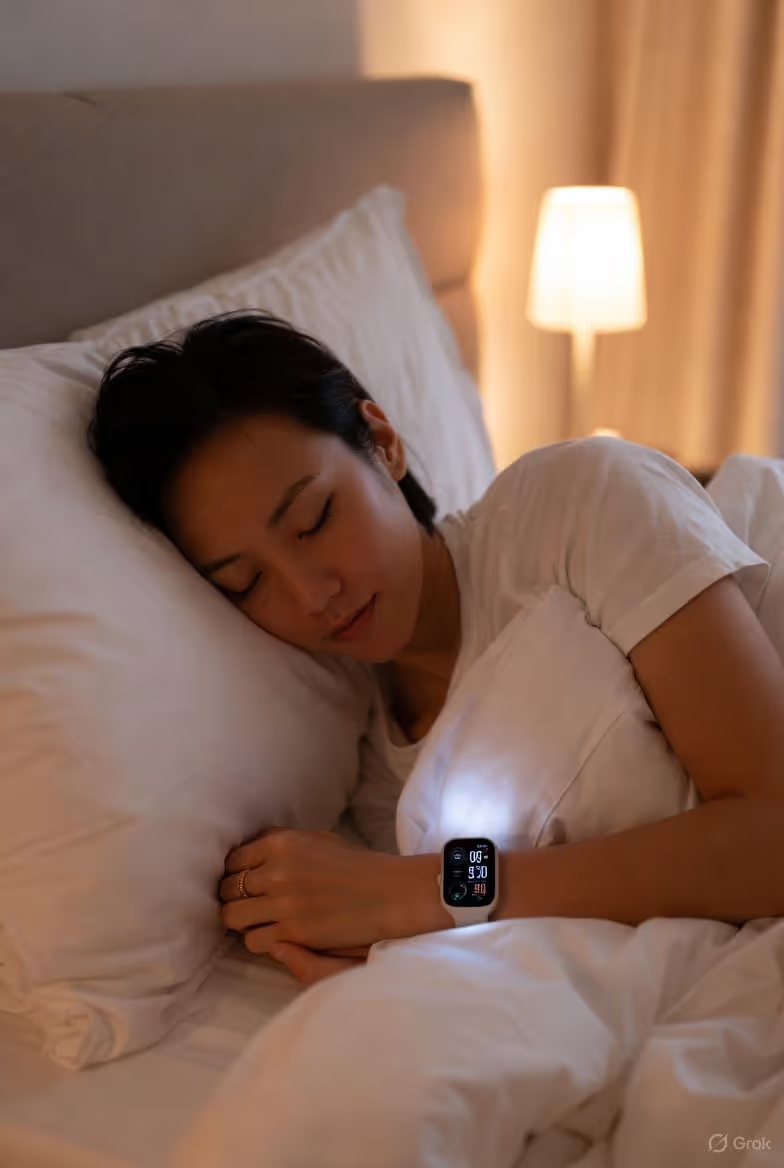
The Perfect Sleep Score: Does 100/100 Really Exist?
A perfect 100 is rare; the goal is consistent, high-quality sleep that leaves you feeling restored, not a perfect number.
The Perfect Sleep Score: Does 100/100 Really Exist?
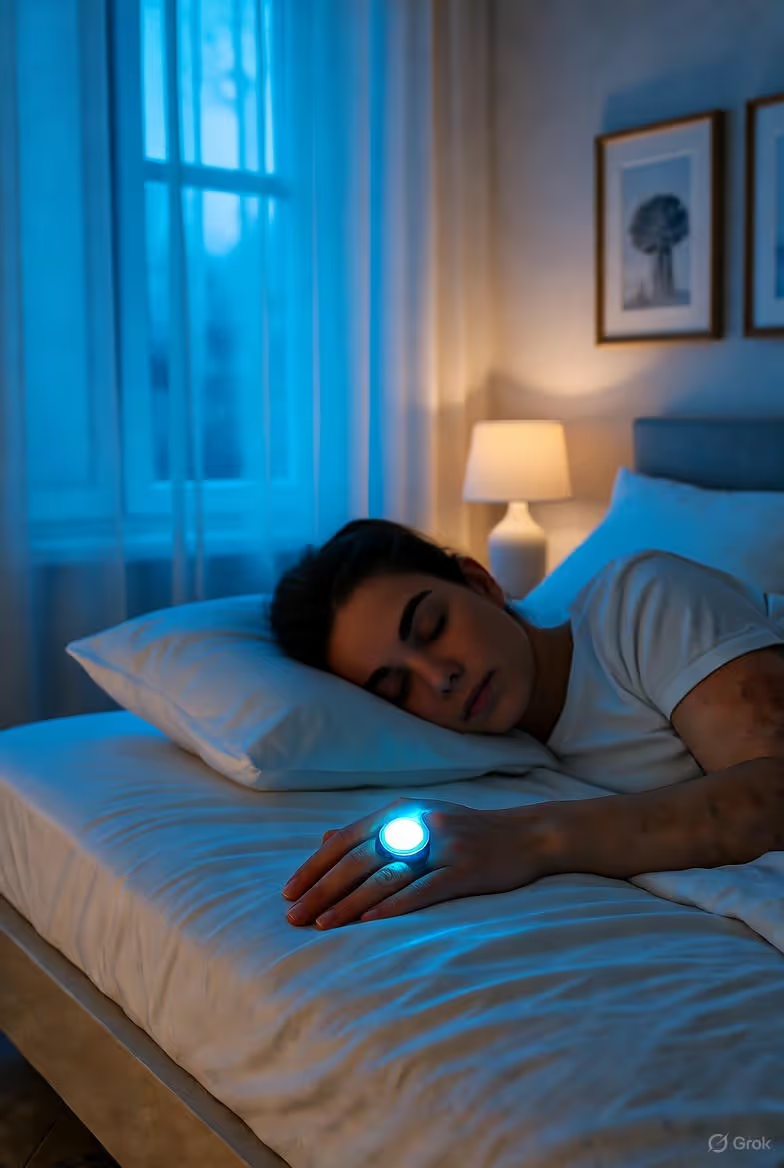
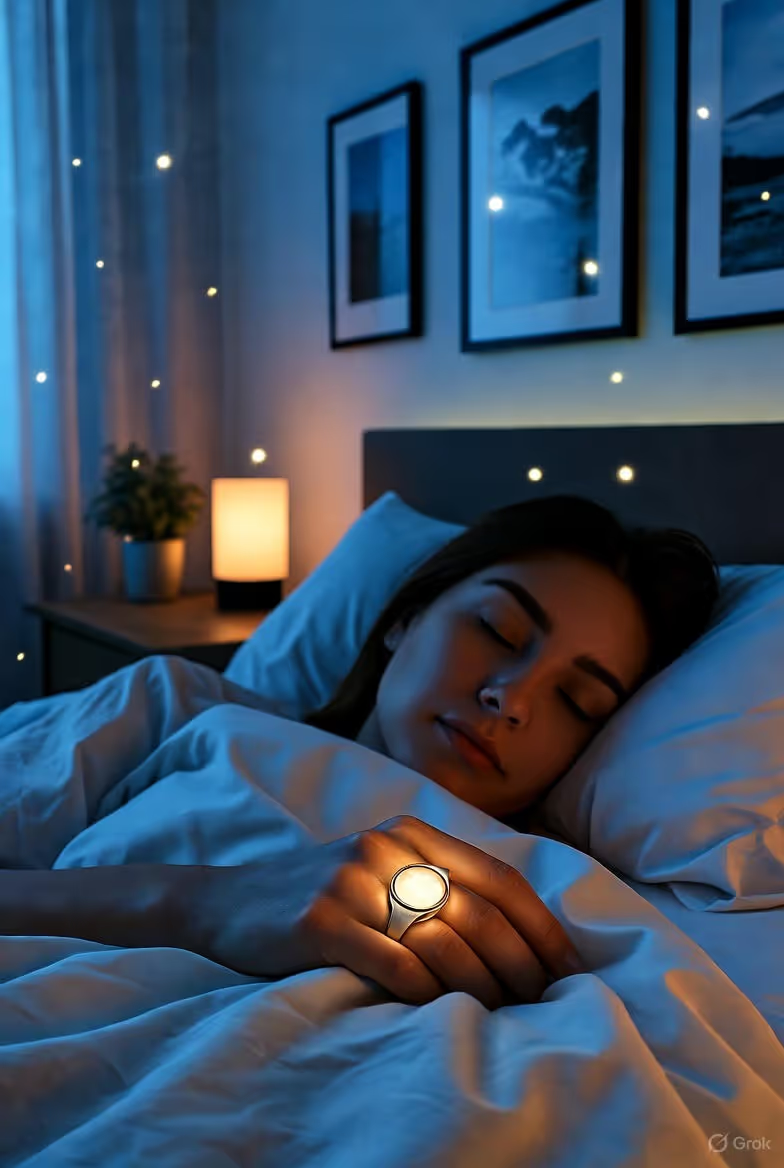
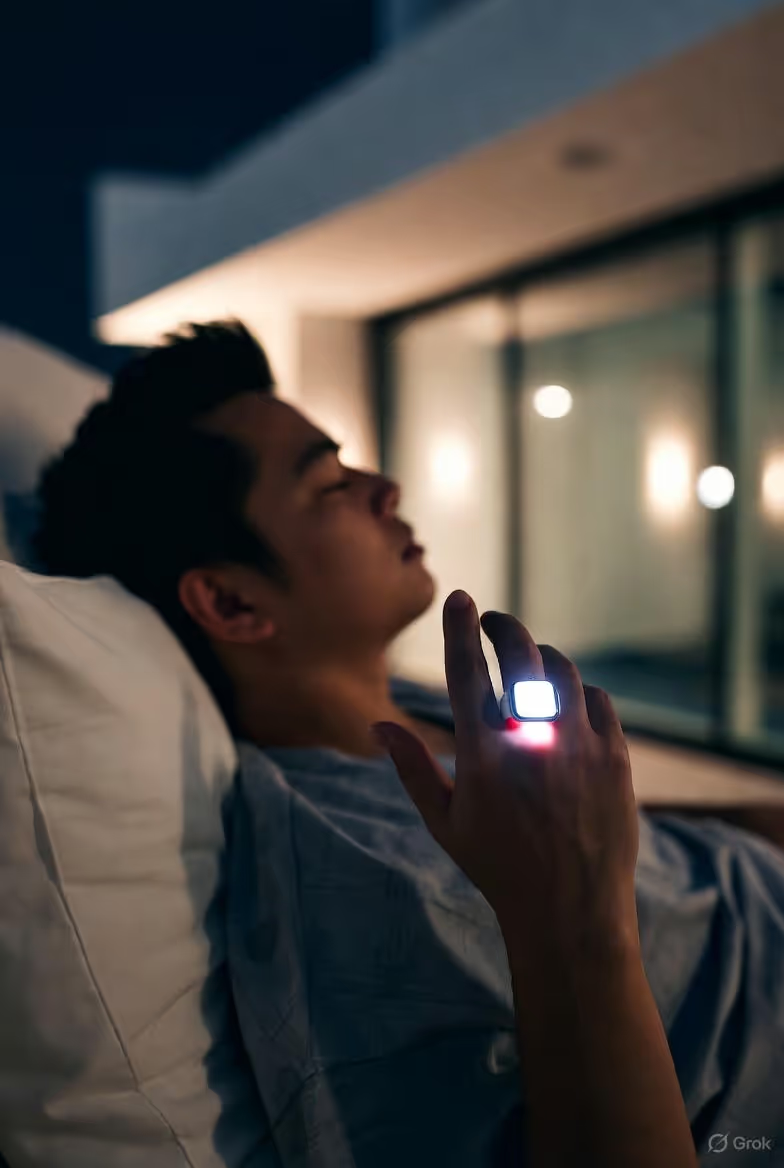
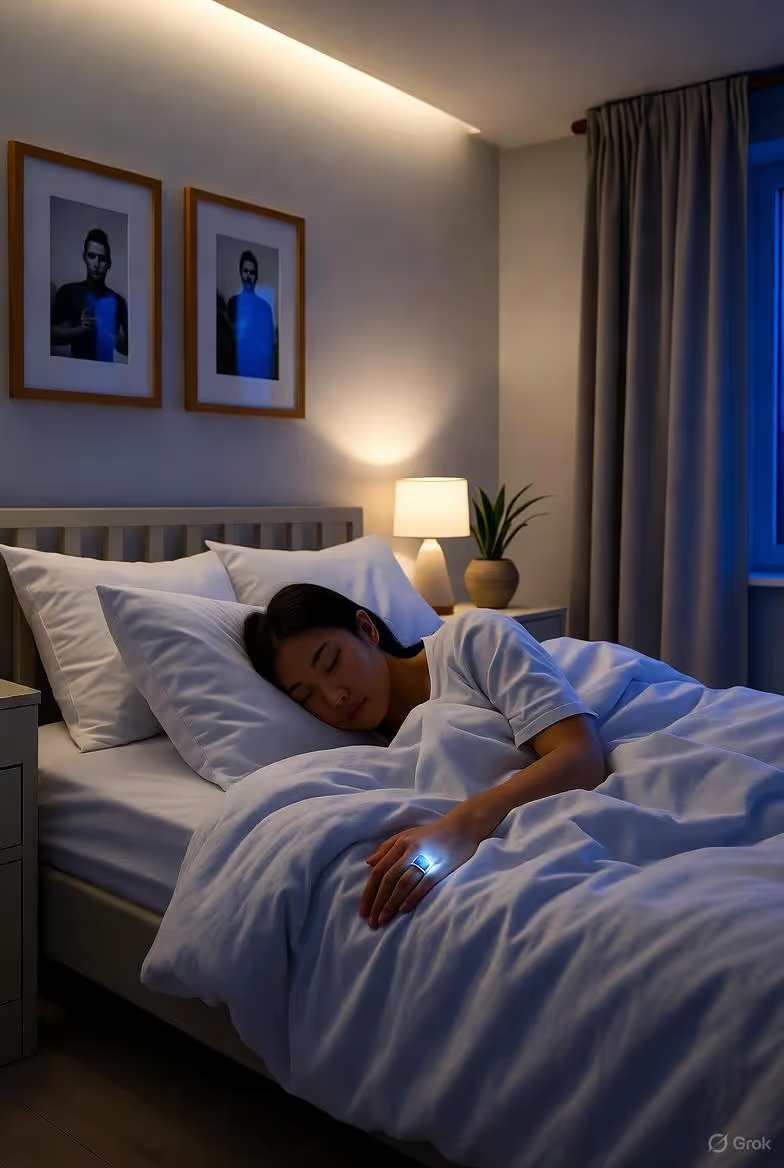
In the silent, dark hours of the night, a quiet revolution is taking place. Millions of us are now wearing sleek, intelligent rings, comfortable bands, and discreet sensors, all whispering data into our smartphones come morning. The verdict? A number. A score. 72. 85. 94. For the growing legion of quantified self-enthusiasts and wellness seekers, this sleep score has become the first metric of the day, a digital report card on our most fundamental biological process. It dictates our mood, fuels our coffee intake, and even influences our schedule. But it also begs an obsessive, almost mythical question: If I can hit an 85, what does a perfect 100 feel like? Is a flawless 100/100 sleep score a tangible, physiological reality, or is it merely a Silicon Valley unicorn—a beautiful, unattainable ideal?
This pursuit of perfection is more than curiosity; it’s a symptom of our modern relationship with health optimization. We’ve turned sleep, a state of surrender, into a performance to be measured and optimized. The promise of these devices—from advanced smart rings like those developed by Oxyzen to popular sleep trackers—is profound: decode the night, and you can master the day. But in chasing the elusive 100, are we unlocking the secrets of restorative rest, or are we engineering a new form of sleep anxiety?
This deep dive isn't just about a number. It's an exploration into the science of sleep staging, the algorithms behind the scores, the cultural obsession with optimization, and the nuanced truth about what "perfect" sleep really means for your body and mind. We'll peel back the layers of your nightly data, consult the latest research, and ask whether the quest for a perfect score is helping us sleep better or keeping us up at night. Welcome to the definitive investigation into the ultimate sleep score.
The Anatomy of a Sleep Score: What Your Tracker Is Really Measuring
You wake up, grab your phone, and there it is: "Sleep Score: 87. Good job!" It feels affirming, definitive. But what alchemy transformed your night of tossing, dreaming, and deep stillness into that neat two-digit figure? The process is far more complex than simply counting hours. Understanding this is the first step in demystifying the pursuit of perfection.
At its core, a sleep score is a composite metric, a summary statistic generated by sophisticated algorithms interpreting a stream of raw biometric data. While different brands have their proprietary formulas, they generally converge on a few key pillars, each weighted to create the final score.
The Pillars of Your Nightly Grade:
1. Sleep Duration (The Foundation): This is the most straightforward input: total time spent asleep. Most algorithms have a "goldilocks zone," typically 7-9 hours for adults, where points are maximized. Stray too far under or over, and your score begins to drop. However, duration is just the table stakes; it’s the quality of those hours that truly determines your rank.
2. Sleep Stages (The Architecture): This is where the magic—and complexity—lies. Trackers use a combination of accelerometry (movement) and heart rate variability (HRV) to infer your sleep architecture. They categorize your night into cyclical stages:
Light Sleep (N1/N2): The gateway to sleep, making up about 50-60% of your night. It's essential for memory consolidation and metabolic regulation.
Deep Sleep (N3/Slow-Wave Sleep): The physically restorative phase. This is when tissue repair, immune function strengthening, and growth hormone release peak. Algorithms heavily favor sufficient deep sleep, often in the range of 1-2 hours for a full night.
REM Sleep: The mentally restorative phase, associated with dreaming, emotional processing, and creativity. A good score expects healthy blocks of REM throughout the night.
The algorithm isn't just looking for presence of these stages; it's evaluating their timing, proportion, and cyclical regularity. A "good" architecture shows clear, repeating cycles of ~90 minutes, with deep sleep dominating the first half of the night and REM periods lengthening toward morning.
3. Restoration Metrics (The Hidden Signals): This is where advanced devices, particularly those using detailed photoplethysmography (PPG) sensors like many smart rings, add depth.
Resting Heart Rate (RHR): A lower overnight RHR compared to your daytime baseline is a strong indicator of parasympathetic (rest-and-digest) nervous system dominance, meaning your body is truly at rest.
Heart Rate Variability (HRV): Perhaps the most insightful metric, HRV measures the subtle variations in time between heartbeats. Higher overnight HRV is consistently linked to better recovery, resilience, and autonomic nervous system balance. A great sleep score often correlates with a strong, elevated HRV.
Respiratory Rate: The number of breaths per minute. Stability and a rate within a healthy range (typically 12-20 for adults at rest) are positive signals.
4. Sleep Consistency & Timing (The Rhythm): Your body craves predictability. Going to bed and waking up at consistent times—even on weekends—strengthens your circadian rhythm. Algorithms reward this consistency, as it's a cornerstone of sleep hygiene. They may also evaluate your bedtime against your personal circadian window; falling asleep during your body's natural melatonin surge is optimal.
5. Disturbances & Restlessness (The Interruptions): The frequency and duration of awakenings, as well as periods of significant movement, are subtracted from your score. Some devices now even track environmental factors like room temperature and noise spikes if paired with additional hardware.
Bringing It All Together: The algorithm takes these disparate data streams—a dance of movement, heart rhythm, and time—and weights them. For instance, achieving 8 hours in bed with poor stage distribution and a low HRV will not yield a high score. Conversely, a night with a brief awakening but excellent deep sleep and soaring HRV might still score highly. It's a holistic, if imperfect, calculation.
As you begin to learn more about smart ring technology on platforms like the Oxyzen.ai blog, you'll discover that the latest devices are moving beyond simple scoring. They aim to provide a nuanced picture, explaining why your score is what it is, and offering actionable insights, not just a judgment. The score is the headline, but the raw data and trends are the full story. Before you fixate on hitting a mythical 100, it's crucial to understand what that number is trying to summarize about the complex, beautiful biology of your sleep.
Chasing the Phantom: Why the "Perfect 100" Is a Statistical Mirage
With the inner workings of the sleep score revealed, the allure of the perfect 100 intensifies. It represents a flawless night: optimal in every measurable dimension. But here lies the critical revelation: in the real, biological world of human sleep, a consistent, verifiable 100/100 is almost certainly a phantom. It's not just difficult to achieve; the very nature of sleep measurement and individual variability makes it a statistical mirage. Let's explore why.
1. The Imperfection of Non-Clinical Measurement: First, we must confront the fundamental limit of consumer technology. The gold standard for sleep staging is polysomnography (PSG), conducted in a lab with electrodes measuring brain waves (EEG), eye movements (EOG), and muscle activity (EMG). Your wearable uses proxies—movement and heart rate patterns—to infer these stages. This act of inference, while impressively accurate for a consumer device (often 80-90% agreement with PSG for sleep/wake identification), is not perfect. It can mislabel periods of quiet wakefulness as light sleep or struggle with precise stage transitions. Therefore, a "100" based on an estimated architecture is, by definition, an approximation of perfection, not a confirmed one.
2. The Myth of the "Ideal" Night: Algorithms are built on population averages and scientific consensus. But human biology is a spectrum. Consider deep sleep. While the textbook range is 1-2 hours per night, genetic factors, age, recent physical activity, and even diet can cause healthy, restorative variation. One person might naturally cycle through 1 hour and 20 minutes of deep sleep and feel phenomenal, while another might regularly need 2 hours. An algorithm calibrated to the average might penalize the first person unfairly. A perfect 100 implies there is one universal, optimal sleep architecture, which simply isn't true. Your "100" might look different from mine.
3. The Inevitability of Natural Disruptions: Healthy sleep isn't a comatose, motionless state. In fact, micro-awakenings—brief arousals lasting only a few seconds—are a normal part of the sleep cycle, often occurring at the end of a sleep stage. You typically don't remember them. A hyper-sensitive tracker might log these as disturbances, deducting points. Furthermore, the need to shift position, the distant sound of a car, or a partner's movement are all part of a normal sleeping environment. A score that demands absolute, uninterrupted stillness is scoring an idealized laboratory condition, not real-life sleep.
4. The Dynamic Nature of Recovery Needs: Your body's needs change nightly. After an intense day of mountain hiking or a mentally taxing project, your system may demand and prioritize deep sleep for physical repair or REM for emotional processing. This could alter your stage distribution from your "normal" pattern. A rigid algorithm might see this beneficial, need-adapted sleep as a deviation from the ideal and lower your score, when in fact, it is your body performing optimally.
5. The Algorithm's Own Design: Finally, we must remember that the 100 is a marketing and psychological construct as much as a scientific one. Developers often "cap" the top end of the scale to make high scores rare and aspirational, reinforcing engagement with the app. If too many users consistently hit 100, the score loses its motivational power. The scale is designed to keep you gently striving, a feature embedded in the gamification of health.
This isn't to say high scores are meaningless. Consistently scoring in the 80s or 90s is a robust indicator of good sleep hygiene and effective recovery. But fixating on the three-digit perfect score can lead to "orthosomnia," a coined term for an unhealthy preoccupation with achieving perfect sleep data, which ironically increases anxiety and worsens sleep.
The wiser pursuit is not a perfect score, but a perfect understanding of your personal baseline. This is where the true value of a detailed tracker shines. By observing your trends over weeks and months on your device's dashboard—like those offered by Oxyzen—you can learn what a "great for you" night looks like: your typical HRV range, your personal deep sleep sweet spot, and how your body responds to stress, travel, or exercise. The goal shifts from chasing a universal phantom 100 to consistently hitting your personal best. For those curious about how individuals interpret their own data, browsing real user experiences and testimonials can provide relatable context to this very personal journey.
Beyond the Number: The Subjective Feeling of Perfect Sleep
If the perfect 100 is a digital mirage, does that mean the feeling of perfect sleep is also a myth? Absolutely not. The subjective experience of waking up refreshed is very real, tangible, and ultimately, more important than any score. This is the crucial dichotomy of sleep tracking: the objective data (the score, the graphs) versus the subjective reality (how you actually feel). Often they align, but sometimes they tell conflicting stories. Understanding this disconnect is key to using your tracker as a servant, not a master.
What Does "Perfect Sleep" Actually Feel Like?
Ask someone who has experienced a truly restorative night, and they’ll describe sensations that no algorithm can fully capture:
Effortless Waking: You wake up naturally, close to your intended time, without the soul-crushing groan of multiple alarms. There's a gentle, conscious transition from sleep to wakefulness.
Mental Clarity & Emotional Poise: The "brain fog" is absent. Your mind feels sharp, focused, and calm. You have a sense of emotional resilience, a buffer against irritability.
Sustained Energy: You don't just get a caffeine-powered jolt; you have a steady, reliable stream of energy that lasts through the early afternoon without a major crash.
Physical Lightness: Your body feels recovered, not aching or heavy. There's a sense of readiness for physical activity.
A Positive Feedback Loop: The good rest leads to better daily choices—healthier food, more motivation to exercise, more patience—which in turn promotes better sleep the following night.
When Data and Feeling Diverge: The "Good Score, Bad Feel" Paradox
It's a common and frustrating experience: your tracker declares an 88, but you feel like you wrestled a bear all night. Why?
Undetected Stress: Your nervous system may have been in a heightened state (elevated cortisol) that didn't manifest as increased movement or drastically elevated heart rate, but still prevented truly restorative sleep.
Sleep State Misperception: Especially common in those with insomnia, you may have spent more time in lighter sleep stages (which trackers can register as "sleep") while maintaining a low-level of conscious awareness.
The "Why" Behind the Score: An 88 composed of good duration but low HRV and restless deep sleep might feel worse than an 82 with slightly less time but excellent restoration metrics. The single number obscures the nuance.
The "Bad Score, Good Feel" Anomaly
Conversely, you might wake up feeling fantastic after a night your tracker scored a 72. Possible reasons:
Satisfied Core Need: Your body may have gotten the precise type of sleep (e.g., an abundance of REM after an emotionally taxing day) it most needed, even if the overall architecture looked "off" to the algorithm.
Placebo of Positivity: Starting your day without immediately checking your score can create a neutral or positive self-assessment. The good feeling is real, uninfluenced by a potentially demoralizing number.
Recovery Over Architecture: Your HRV might have been exceptionally high, indicating superb nervous system recovery, even if you had a late bedtime or a brief awakening.
Bridging the Gap: Becoming Your Own Sleep Scientist
This is where your role evolves from passive score-receiver to active investigator. Your subjective feeling is the most important data point. Use your tracker's detailed analytics not as a verdict, but as clues in a detective story about your own well-being.
Journal Briefly: Each morning, before you look at your score, note 1-3 words on how you feel: "Foggy," "Rested," "Anxious," "Energetic."
Correlate, Don't Just Obey: After a week, look for patterns. Do high-HRV nights always correlate with good feelings, regardless of the score? Do nights after evening alcohol show a specific dip in deep sleep that matches your morning fatigue?
Focus on Trends, Not Nightly Noise: A single 73 is meaningless. A trend of scores dropping from the mid-80s to the low-70s over two weeks is a valuable signal that something (stress, illness, training overload) is impacting your recovery.
By honoring your subjective experience, you reclaim authority over your sleep. The device becomes a tool for generating hypotheses ("Maybe caffeine after 2 PM is fragmenting my deep sleep?") that you can test in the real-world lab of your life. For those seeking to deepen this investigative approach, exploring additional resources and related articles on sleep science and personal biometrics can provide valuable frameworks and methodologies. The perfect night isn't defined by a score, but by the vibrant, alert, and peaceful day that follows.
The Role of Technology: How Smart Rings Are Redefining Sleep Tracking
The journey to understand our sleep has moved from laboratory polysomnography to clunky wristbands, and now, to a new generation of elegant, powerful, and minimally intrusive devices: the smart ring. This evolution isn't just about aesthetics; it represents a fundamental shift in the accuracy, comfort, and continuous nature of biometric monitoring, offering a potentially clearer path toward understanding our personal sleep ideal.
Why the Finger? A Superior Physiological Vantage Point.
The wrist has been the default location for wearable tech, but it presents challenges for certain biometrics. The finger, however, offers distinct advantages for sleep and recovery tracking:
Rich Arterial Blood Flow: The finger contains dense capillary beds and strong arterial signals (like the palmar digital arteries). This allows the PPG sensors in a smart ring to get a cleaner, stronger signal for heart rate, HRV, and blood oxygen saturation (SpO2) with less motion noise compared to the wrist.
Reduced Movement Artifact: During sleep, our hands and fingers are generally still, especially compared to our wrists, which can twist and bend. This minimizes false readings caused by movement, leading to more accurate sleep/wake differentiation and stage estimation.
24/7 Wearability: A well-designed ring is comfortable, unobtrusive, and safe to wear during almost any activity, including sleep, swimming, and heavy exercise. This enables true continuous monitoring, capturing your baseline biometrics throughout the entire day and night. This continuity is revolutionary; it means your "sleep" data isn't an isolated snapshot but part of a continuous story of daily strain and nightly recovery.
Core Sleep Tracking Capabilities of Advanced Smart Rings:
Modern smart rings like Oura, Circular, and those entering the market from innovators like Oxyzen, leverage this ideal form factor to provide deep insights:
Detailed Sleep Staging: Using the stable HRV and movement data, they provide breakdowns of light, deep, and REM sleep, along with wakefulness.
Comprehensive Recovery Metrics: They shine in measuring Nightly HRV and Resting Heart Rate, two of the most validated metrics for physiological recovery and autonomic nervous system balance. Tracking these trends is often more insightful than the sleep score itself.
Blood Oxygen (SpO2) Monitoring: This is a game-changer for identifying potential disturbances like sleep apnea events or variations in breathing patterns that can fragment sleep without full awakening.
Body Temperature Trends: Many rings now include skin temperature sensors. Tracking your distal body temperature trend across the night (which naturally dips and rises) provides another powerful signal of circadian rhythm health and can even predict the onset of illness before symptoms appear.
From Tracking to Insight: The AI-Powered Difference.
The real power of these devices is not in raw data collection, but in synthesis and guidance. This is where artificial intelligence and personalized algorithms come into play. Instead of just giving you a generic score, advanced systems:
Learn Your Personal Baseline: Over 2-4 weeks, the algorithm learns what is normal for you. Your "100" becomes personalized—it's the optimal sleep relative to your own physiology and patterns.
Provide Contextual Readiness Scores: Moving beyond just sleep, they combine last night's sleep data with daytime activity, recovery status, and body temperature to offer a "Readiness" or "Recovery" score for the day ahead. This holistic view helps you decide if it's a day for intense training or active recovery.
Deliver Actionable Nudges, Not Just Data: The best platforms offer simple, behavior-focused advice: "Your HRV is lower than usual. Consider a lighter day." or "Your temperature trend is elevated. Ensure you hydrate and rest." This transforms the device from a reporter into a coach.
The Human-in-the-Loop System.
The pinnacle of this technology is not a autonomous sleep dictator, but a human-in-the-loop system. The ring provides the deep, objective, continuous biometric story. You provide the subjective context: "I felt stressed yesterday," "I had a hard workout," "I drank wine with dinner." By reviewing your data in light of your life, you engage in a powerful feedback loop. You can see, in near real-time, the impact of your lifestyle choices on your most fundamental recovery process.
To truly discover how this integrated technology works from concept to purpose, one can delve into the brand journey and vision behind companies pushing this field forward. The smart ring, therefore, is more than a sleep tracker; it's a continuous biometric observatory on your finger, designed not to chase a phantom 100, but to illuminate the unique, dynamic, and personal path to your own version of truly restorative sleep.
The Science of Sleep Optimization: Actionable Steps Backed by Data
Armed with a nuanced understanding of sleep scores and powerful tracking technology, we move from theory to practice. How do we actually improve the substance behind the number? Optimization here isn't about hacking your way to a 100; it's about creating the ideal internal and external conditions for your body to perform its natural, restorative work. These strategies are rooted in chronobiology, sleep science, and the empirical patterns observed from millions of nights of aggregated wearable data.
1. Master Your Light Environment: Your Circadian Rhythm's Prime Director
Light is the most powerful zeitgeber (time-giver) for your master biological clock, the suprachiasmatic nucleus (SCN). Managing light exposure is non-negotiable.
Morning: Seek bright, blue-rich light (ideally sunlight) within 30-60 minutes of waking. This signals the SCN to halt melatonin production, boost cortisol (the healthy morning kind), and set a precise 24-hour timer.
Evening (The 2-Hour Wind-Down): This is critical. Dim overhead lights and avoid screens 2 hours before bed. If you must use devices, enable night shift modes and consider blue-light blocking glasses. Data from wearables consistently shows that evenings spent under bright, artificial light correlate with delayed sleep onset and reduced sleep quality. The goal is to allow your natural melatonin rise to occur unimpeded.
2. Regulate Temperature: The Sleep Switch
Your core body temperature needs to drop by about 1-2°F (0.5-1°C) to initiate and maintain sleep. You can facilitate this:
Cool Room: Aim for a bedroom temperature between 60-67°F (15.5-19.5°C). This is the range most studies find optimal.
Warm Bath Paradox: Taking a warm bath or shower 1-2 hours before bed raises your core temperature slightly, but the rapid cooling that follows afterward amplifies the temperature drop signal, encouraging drowsiness. Many users report this ritual improves their deep sleep metrics.
Bedding: Use breathable, moisture-wicking materials. Your smart ring's temperature sensor can help you experiment to find your ideal sleeping climate.
3. Cultivate Consistency: The Power of Rhythm
Your SCN thrives on predictability. This goes beyond just sleep.
Fixed Wake Time: This is the most important anchor. Waking at the same time every day (even weekends, within an hour) strengthens your circadian drive more than a fixed bedtime.
Regular Meal Times: Eating at consistent times helps regulate peripheral clocks in your digestive organs, which in turn support the master clock.
Data Insight: Look at your tracker's consistency metric. A high score here is a strong foundation for overall sleep health, often more impactful than any single supplement or gadget.
4. Strategic Nutrition & Hydration
What and when you consume has direct effects.
Caffeine Cut-Off: Caffeine has a half-life of 5-6 hours. Consuming it even 8 hours before bed can fragment sleep architecture. Data often shows reduced deep sleep and increased restlessness with late-day caffeine. Aim for a cut-off by 2 PM.
Alcohol Awareness: While it may induce sleepiness, alcohol is a sedative that suppresses REM sleep and leads to fragmented, low-quality sleep in the second half of the night. This "REM rebound" effect is clearly visible in tracker data as increased restlessness and awakenings after midnight.
Evening Meals: Avoid large, heavy, or spicy meals 3 hours before bed. Digestion can raise core temperature and cause discomfort.
5. The Wind-Down Ritual: Activating the Parasympathetic Nervous System
Transition your nervous system from "fight-or-flight" (sympathetic) to "rest-and-digest" (parasympathetic). This is where subjective calm meets objective data (like pre-sleep HRV).
Gentle Movement: Light stretching, yoga, or a leisurely walk can ease physical tension.
Cognitive Closure: Write a brief "brain dump" list for the next day to quiet anxious, ruminative thoughts.
Relaxation Techniques: Practice diaphragmatic breathing, meditation, or listen to calming audio. Many find these practices directly improve their pre-sleep HRV, a key predictor of sleep quality.
6. Daytime Habits That Build Sleep Pressure
Good sleep is built during the day.
Morning Exercise: Exposure to natural light plus movement is a powerful circadian signal.
Manage Stress: Chronic high cortisol disrupts sleep. Mindfulness, time in nature, and managing workloads are preventive medicine for your night.
Limit Naps: If you nap, keep it before 3 PM and under 30 minutes to avoid reducing your essential sleep drive.
By implementing these strategies and using your device to track their impact—notice how an earlier caffeine cut-off might boost your deep sleep, or how a cooling room temperature reduces awakenings—you move from guessing to knowing. This creates a virtuous, data-informed cycle of continuous improvement. For specific questions on implementing these strategies with your device, comprehensive support and FAQ resources can be an invaluable help. Optimization, in the end, is the process of aligning your daily life with the timeless biological rhythms that govern renewal.
The Dark Side of Optimization: When Tracking Sleep Becomes a Disorder
In our fervent pursuit of the perfect sleep score, we must confront an uncomfortable irony: the very tools designed to improve our sleep can, for some, become the source of its ruin. This phenomenon has been clinically observed and dubbed "orthosomnia" – a term coined by researchers in 2017, derived from the Greek ortho (correct) and Latin somnia (sleep). It describes a preoccupation with achieving perfect sleep data, leading to increased anxiety, worsening sleep, and a compulsive dependency on the tracker's verdict.
How Does Healthy Tracking Become Problematic?
The descent doesn't happen overnight. It's a gradual shift in mindset:
From Insight to Obsession: The daily score transitions from an interesting data point to the definitive measure of self-worth. A "good" score means you're a healthy, disciplined person. A "bad" score signifies failure.
Data Over Doctrine: You begin to trust the tracker's data over your own bodily feelings. You feel rested, but the tracker says 78, so you conclude you must be tired and act accordingly, potentially creating fatigue through belief.
Compulsive Behavior: You check your score immediately upon waking, allowing it to set your emotional tone for the day. You may engage in "sleep effort" – trying too hard to sleep, which activates performance anxiety, the antithesis of sleep's required surrender.
Life Dictated by Data: You decline social events, alter your schedule drastically, or lie rigidly in bed trying to "improve your numbers," sacrificing the spontaneity and joy of life for the sake of an algorithm's approval.
The Vicious Cycle of Sleep Performance Anxiety
This creates a scientifically validated negative feedback loop: Anxiety about sleeping well → Increased physiological arousal (elevated heart rate, cortisol) → Worse actual sleep → Poorer sleep score → Increased anxiety... The tracker becomes not a mirror reflecting your sleep, but a distorting lens that amplifies the problem.
Red Flags: Are You Developing Orthosomnia?
Ask yourself these questions:
Do I feel more anxious about my sleep since I started tracking it?
Do I sacrifice social or recreational activities to strictly adhere to a sleep schedule dictated by my tracker?
Do I spend significant time during the day researching how to improve my score?
Do I feel distressed, angry, or defeated by a "low" score, even if I feel okay?
Do I repeatedly check my sleep data throughout the day?
If you answer yes to several, it's time for a recalibration.
Reclaiming a Healthy Relationship with Sleep Data
The goal is to return the tracker to its proper role: a tool for curiosity and trend-spotting, not a judge.
Implement a "Data Sabbath": Put your device away for a weekend, or even a full week. Relearn to listen to your body's signals without digital interpretation.
Delay the Check: Make a rule not to check your score until after you've had your morning beverage, or until you've been awake for an hour. Start your day based on how you feel.
Focus on Trends, Not Nights: Open your app once a week to look at the weekly or monthly trend line. Is your average HRV improving? Are you getting more consistent? This macro view is far more valuable and less anxiety-inducing than daily fluctuations.
Use the "Why," Not Just the "What": If you get a low score, instead of feeling bad, use the detailed breakdown to form a hypothesis. "My deep sleep was low. Did I have coffee too late? Was my room too warm?" This frames it as a neutral experiment, not a personal failing.
Prioritize Subjective Feel: Every morning, state aloud how you feel before you look at the data. Give your subjective experience primacy.
The companies behind this technology are increasingly aware of this risk. Many are designing their interfaces to emphasize education, trends, and gentle guidance over punitive scores. You can learn more about this user-centric philosophy by exploring the mission and values of leading brands in the wellness tech space. Remember, the ultimate metric of success is not a number on an app, but a life lived with vitality, resilience, and joy—which is only possible when you are the master of your tools, not their servant.
Personalized Sleep: How Age, Lifestyle, and Genetics Shape Your Ideal Night
The concept of a universal "perfect sleep" shatters when we consider the magnificent diversity of human biology and experience. Your ideal sleep architecture is as unique as your fingerprint, molded by the immutable forces of age and genetics, and dynamically shaped by your daily lifestyle. Understanding these personal factors is the final step in moving from generic advice to a truly personalized sleep strategy.
The Inescapable Factor: Age
Sleep architecture evolves dramatically across the lifespan, and chasing the sleep of your 20s in your 50s is a recipe for frustration.
Childhood/Adolescence: Characterized by abundant deep sleep (crucial for growth and brain development) and high sleep need (9+ hours).
Early to Mid-Adulthood (20s-40s): This is the "baseline" period often used for algorithm calibration. Deep sleep begins a very gradual decline, but duration and structure are relatively stable with healthy habits.
Middle to Older Age (50s+): Pronounced changes occur. Deep sleep decreases significantly—by age 65, you may get only 25-50% of the deep sleep you had at 20. Sleep becomes more fragmented with more frequent awakenings. The circadian rhythm also advances ("phase-advances"), making earlier bedtimes and wake times natural. A perfect night in your 60s is not 8 hours of unbroken slumber; it's 7 hours of solid sleep with healthy circadian alignment and good subjective refreshment.
The Blueprint Within: Genetics
Your genes play a surprising role. Specific genetic variants influence:
Chronotype: Whether you are a natural "lark" (morning person) or "owl" (night person) is heavily genetic. Fighting your chronotype to meet an arbitrary bedtime is counterproductive.
Sleep Need: While the average is 7-9 hours, the natural range is likely 6-10 hours, with some rare individuals ("short sleepers") functioning optimally on significantly less due to specific genetic mutations.
Resilience to Sleep Loss: Some people are genetically more vulnerable to the cognitive effects of sleep deprivation than others.
Predisposition to Sleep Disorders: Genetics can influence the risk for conditions like insomnia or restless legs syndrome.
The Dynamic Sculptor: Lifestyle & Daily Choices
This is the domain where you have the most agency. Your daily life writes the story your sleep tracker reads at night.
Physical Activity: Regular exercise is one of the most reliable promoters of deep sleep and sleep continuity. However, timing matters. Intense exercise too close to bedtime can be overstimulating for some, while for others it has no negative effect. Your HRV data is a great guide here.
Occupational Stress: High-stress jobs or chronic worry lead to elevated cortisol and sympathetic nervous system activity, which directly fragments sleep, reduces deep sleep, and crushes HRV. The impact of a stressful day is often starkly visible in the next morning's data.
Parenthood & Caregiving: This life stage often involves severe, involuntary sleep disruption. The goal here shifts from "perfect sleep" to "strategic recovery"—maximizing sleep efficiency when you can get it, and utilizing naps and rest periods.
Dietary Patterns: Beyond caffeine and alcohol, diets high in sugar and processed foods can cause glucose spikes and crashes that disrupt sleep. The Mediterranean diet, rich in plants and healthy fats, is consistently associated with better sleep quality.
Synthesizing Your Personal Sleep Profile
So, what is "perfect" for you?
Respect Your Chronotype: If you're an owl, don't force a 9 PM bedtime. Create a schedule that aligns with your natural energy rhythms as much as life allows.
Adjust Expectations with Age: Celebrate the sleep you get. Focus on consistency, light management, and stress reduction rather than comparing your deep sleep percentage to a 25-year-old's.
Listen to Your Data in Context: A 75 for a new parent who got two 3-hour chunks of solid sleep is a monumental victory. A 75 for a sedentary office worker with no external stressors is a signal to investigate.
Use Trends to Identify Personal Triggers: Your unique data will show what specifically helps or hurts you. Maybe dairy before bed fragments your sleep, or a 20-minute afternoon walk boosts your deep sleep. You become your own expert.
This personalized view liberates you from the tyranny of the universal score. It allows a 55-year-old athlete, a 30-year-old new parent, and a 70-year-old retiree to all have their own valid, data-informed definition of a "perfect" night's rest. For more stories on how different individuals navigate their unique sleep journeys, reading through real customer reviews and experiences can be both normalizing and illuminating. Your sleep is a personal signature, not a standardized test.
Case Studies in Data: Interpreting Real (But Anonymous) Sleep Tracker Nights
Theory and science provide the framework, but nothing illuminates like real-world examples. Let's examine three anonymized case studies based on aggregated patterns from wearable data. These will illustrate how the raw numbers—duration, stages, HRV, and disturbances—tell a story when interpreted through the lenses of context, lifestyle, and personal baseline. Remember, the score is just the title; the data is the narrative.
Case Study 1: The "Overtrained Athlete"
Profile: 32-year-old male, training for a marathon. High volume of intense running.
Presenting "Issue": Feeling flat, sluggish in workouts, irritable. Sleep score has dropped from average 88 to average 78 over two weeks.
Nightly Data Snapshot:
Duration: 8 hrs 15 min (Adequate)
Deep Sleep: 45 min (Significantly below his personal baseline of ~75 min)
REM Sleep: 2 hrs 10 min (Elevated)
Restlessness: High (25+ periods of significant movement)
HRV: 35 ms (Sharp drop from his baseline of 55 ms)
Resting Heart Rate: 58 bpm (Elevation from baseline of 52 bpm)
The Story & Interpretation: This data paints a classic picture of non-functional overreaching. The body is under significant physiological strain. The elevated resting heart rate and plummeting HRV are key biomarkers of an overtaxed autonomic nervous system, struggling to recover. The lack of deep sleep—the phase for physical repair—is a direct consequence; the body is too stressed to drop into profound restoration. The elevated REM could be a compensatory mechanism for stress processing. The high restlessness is the physical manifestation of this systemic strain. The low score is an accurate alarm bell. The actionable insight isn't to "sleep better," but to reduce training load, incorporate active recovery, and prioritize nutrition and hydration to lower systemic stress.
Case Study 2: The "New Parent"
Profile: 34-year-old female, 4-month-old infant.
Presenting "Issue:" Constant fatigue, "mom brain," feeling like sleep is hopeless.
Nightly Data Snapshot:
Total Sleep Time: 6 hrs 20 min (in 3 distinct segments)
Deep Sleep: 1 hr 05 min (Surprisingly robust)
REM Sleep: 1 hr 40 min
Awake Time: 1 hr 15 min (Fragmented for feeding/soothing)
HRV: Steady at her personal baseline.
Sleep Consistency: Very low (irregular bed/wake times).
The Story & Interpretation: This data tells a story of resilience amidst disruption.
The Future of Sleep Science: Where Technology and Personalization Are Heading
The field of sleep science and personal tracking is not static. We are on the cusp of a new era where the line between consumer wellness devices and clinical-grade diagnostics will blur, and personalization will reach unprecedented levels. The dream is no longer just a score, but a dynamic, predictive, and deeply integrated understanding of sleep as the cornerstone of holistic health. Here’s where the science and technology are steering us.
1. From Descriptive to Predictive and Prescriptive Analytics
Current devices are largely descriptive: they tell you what happened last night. The next generation is becoming predictive and prescriptive.
Predictive Insights: By combining long-term trend data (sleep, HRV, temperature, activity) with machine learning, algorithms will be able to forecast. They might alert you: "Based on your declining HRV trend and elevated nighttime temperature, you have a 70% likelihood of catching a cold in the next 48 hours. Prioritize rest." Or, "Your data suggests you're optimally primed for a peak performance workout today."
Prescriptive & Personalized Guidance: Beyond generic "sleep hygiene" tips, AI coaches will generate hyper-personalized recommendations. *"For your chronotype and current stress load, a 25-minute nap at 2:15 PM today will optimize your evening alertness without affecting tonight's sleep."* Or, "To improve your deep sleep, based on your data, we suggest lowering your bedroom temperature by 2°F and having your last caffeine 30 minutes earlier than you currently do."
2. Multi-Modal Sensing and Integration
The future of accurate sleep staging and diagnosis lies in combining data streams from multiple, complementary sensors.
EEG-Integrated Wearables: Several companies are developing comfortable, wearable headbands or patches that include simplified electroencephalography (EEG) to measure brainwaves directly. This will bring consumer sleep staging much closer to lab-grade accuracy, resolving the current "inference" problem.
Environmental Integration: Devices will seamlessly integrate with smart home ecosystems. Your ring will communicate with your thermostat to optimize room temperature throughout the night, with your lights to simulate a sunrise wake-up, and with sound machines to mask disruptive noises.
Comprehensive Health Integration: Sleep data won't live in a silo. It will be cross-referenced with continuous glucose monitors (CGMs), fitness data, and even electronic health records (with user permission) to see the full picture. For example, correlating blood sugar spikes with sleep fragmentation could revolutionize dietary advice for sleep.
3. The Rise of the "Digital Sleep Clinic" and Early Diagnostics
Consumer devices are already identifying potential health issues, like irregular heart rhythms (AFib). The same will happen for sleep disorders.
Passive Sleep Apnea Screening: Advanced PPG and SpO2 sensors, coupled with microphone analysis of breathing sounds (with strict privacy controls), could provide robust, at-home screening for obstructive sleep apnea (OSA), prompting users to seek professional diagnosis.
Circadian Rhythm Disorder Identification: By analyzing months of sleep-wake and temperature data, algorithms could identify subtle circadian rhythm disruptions long before they cause major health issues, allowing for preemptive light therapy or schedule adjustments.
Mental Health Biomarkers: Research is firmly establishing links between sleep architecture (particularly REM sleep changes) and conditions like depression and anxiety. Future wearables may provide early, objective biomarkers of mental health fluctuations, empowering users and clinicians with valuable data.
4. Decentralized Clinical Research and Personalized Medicine
The vast, aggregated, and anonymized data from millions of users is creating the largest sleep dataset in history. This enables:
Faster, More Diverse Research: Scientists can study sleep patterns across demographics, geographies, and lifestyles at a scale never before possible, leading to more nuanced public health understanding.
Personalized Sleep Medicine: Instead of one-size-fits-all advice, sleep interventions—from cognitive behavioral therapy for insomnia (CBT-I) protocols to medication timing—could be tailored based on an individual's unique biometric profile and response patterns.
The Ethical Frontier: Privacy, Autonomy, and the "Quantified Self"
This powerful future comes with profound responsibilities. As companies like Oxyzen innovate, they must grapple with critical questions:
Data Sovereignty: Who owns this deeply intimate data? How is it stored, secured, and used?
Algorithmic Transparency: How are the scores and recommendations generated? Can users understand the logic behind their "prescriptions"?
Avoiding Medical Overreach: How do devices provide powerful insights without crossing the line into unauthorized diagnosis, causing undue anxiety, or creating dependency?
Equity and Access: How can this transformative technology be made accessible beyond a luxury wellness product?
The Future of Sleep Science: Where Technology and Personalization Are Heading
The field of sleep science and personal tracking is not static. We are on the cusp of a new era where the line between consumer wellness devices and clinical-grade diagnostics will blur, and personalization will reach unprecedented levels. The dream is no longer just a score, but a dynamic, predictive, and deeply integrated understanding of sleep as the cornerstone of holistic health. Here’s where the science and technology are steering us.
1. From Descriptive to Predictive and Prescriptive Analytics
Current devices are largely descriptive: they tell you what happened last night. The next generation is becoming predictive and prescriptive.
Predictive Insights: By combining long-term trend data (sleep, HRV, temperature, activity) with machine learning, algorithms will be able to forecast. They might alert you: "Based on your declining HRV trend and elevated nighttime temperature, you have a 70% likelihood of catching a cold in the next 48 hours. Prioritize rest." Or, "Your data suggests you're optimally primed for a peak performance workout today."
Prescriptive & Personalized Guidance: Beyond generic "sleep hygiene" tips, AI coaches will generate hyper-personalized recommendations. *"For your chronotype and current stress load, a 25-minute nap at 2:15 PM today will optimize your evening alertness without affecting tonight's sleep."* Or, "To improve your deep sleep, based on your data, we suggest lowering your bedroom temperature by 2°F and having your last caffeine 30 minutes earlier than you currently do."
2. Multi-Modal Sensing and Integration
The future of accurate sleep staging and diagnosis lies in combining data streams from multiple, complementary sensors.
EEG-Integrated Wearables: Several companies are developing comfortable, wearable headbands or patches that include simplified electroencephalography (EEG) to measure brainwaves directly. This will bring consumer sleep staging much closer to lab-grade accuracy, resolving the current "inference" problem.
Environmental Integration: Devices will seamlessly integrate with smart home ecosystems. Your ring will communicate with your thermostat to optimize room temperature throughout the night, with your lights to simulate a sunrise wake-up, and with sound machines to mask disruptive noises.
Comprehensive Health Integration: Sleep data won't live in a silo. It will be cross-referenced with continuous glucose monitors (CGMs), fitness data, and even electronic health records (with user permission) to see the full picture. For example, correlating blood sugar spikes with sleep fragmentation could revolutionize dietary advice for sleep.
3. The Rise of the "Digital Sleep Clinic" and Early Diagnostics
Consumer devices are already identifying potential health issues, like irregular heart rhythms (AFib). The same will happen for sleep disorders.
Passive Sleep Apnea Screening: Advanced PPG and SpO2 sensors, coupled with microphone analysis of breathing sounds (with strict privacy controls), could provide robust, at-home screening for obstructive sleep apnea (OSA), prompting users to seek professional diagnosis.
Circadian Rhythm Disorder Identification: By analyzing months of sleep-wake and temperature data, algorithms could identify subtle circadian rhythm disruptions long before they cause major health issues, allowing for preemptive light therapy or schedule adjustments.
Mental Health Biomarkers: Research is firmly establishing links between sleep architecture (particularly REM sleep changes) and conditions like depression and anxiety. Future wearables may provide early, objective biomarkers of mental health fluctuations, empowering users and clinicians with valuable data.
4. Decentralized Clinical Research and Personalized Medicine
The vast, aggregated, and anonymized data from millions of users is creating the largest sleep dataset in history. This enables:
Faster, More Diverse Research: Scientists can study sleep patterns across demographics, geographies, and lifestyles at a scale never before possible, leading to more nuanced public health understanding.
Personalized Sleep Medicine: Instead of one-size-fits-all advice, sleep interventions—from cognitive behavioral therapy for insomnia (CBT-I) protocols to medication timing—could be tailored based on an individual's unique biometric profile and response patterns.
The Ethical Frontier: Privacy, Autonomy, and the "Quantified Self"
This powerful future comes with profound responsibilities. As companies like Oxyzen innovate, they must grapple with critical questions:
Data Sovereignty: Who owns this deeply intimate data? How is it stored, secured, and used?
Algorithmic Transparency: How are the scores and recommendations generated? Can users understand the logic behind their "prescriptions"?
Avoiding Medical Overreach: How do devices provide powerful insights without crossing the line into unauthorized diagnosis, causing undue anxiety, or creating dependency?
Equity and Access: How can this transformative technology be made accessible beyond a luxury wellness product?
The vision, as seen in the long-term vision & values of pioneering companies, is not to create a society obsessed with scores, but to empower individuals with knowledge. The future of sleep science is a harmonious blend of cutting-edge technology and ancient wisdom: using data to remind us to honor our fundamental need for rest, and providing personalized pathways to achieve it in our complex modern world. The perfect sleep score of the future may not be 100/100, but a simple, confident notification: "All systems are optimally restored. You are ready."
Building Your Personal Sleep Sanctuary: An Environmental & Behavioral Deep Dive
We've explored the data, the science, and the future. Now, we land in the most practical domain of all: your bedroom and your evening routine. This is where the rubber meets the road. You can have the most advanced smart ring in the world, but if your sleep environment and habits are working against you, you're optimizing against a headwind. Creating a true sleep sanctuary isn't about expensive gadgets; it's about intentionally designing your surroundings and behaviors to send one unambiguous signal to your brain and body: It is time to rest.
The Pillars of the Sleep Sanctuary: A Multi-Sensory Approach
Your senses are the gateways to your nervous system. A sanctuary consciously manages each one to promote calm.
1. Sight: Mastering Light & Darkness
We've touched on light's power over circadian rhythm. Here’s how to engineer it:
Total Darkness: This is non-negotiable. Even small amounts of light from LEDs (on a charger, TV, or smoke detector) can disrupt melatonin production and sleep architecture. Invest in:
Blackout curtains or shades: Test them by standing in the room during the day. If you can see your hand in front of your face, light is getting in.
Electrical tape: Cover every tiny LED light in the bedroom.
A sleep mask: A high-quality, contoured mask (like those with cupped eye sockets) is a portable, foolproof solution, especially for travel or shift work.
The Sunset Simulation: In the hour before bed, dim all lights. Use lamps with warm-toned bulbs (under 2700 Kelvin) instead of overhead lights. Consider smart bulbs that can be programmed to gradually dim and shift to red tones, which have the least impact on melatonin.
2. Sound: The Symphony of Silence (or Consistent Noise)
Unexpected, variable noises are the enemy of deep sleep, triggering micro-arousals.
White Noise / Sound Machines: These aren't just for babies. A consistent, monotonous sound (white, pink, or brown noise) effectively masks disruptive noises like traffic, a partner snoring, or plumbing sounds. The key is consistency; the brain tunes it out as a non-threat.
Earplugs: For absolute control, high-fidelity musician's earplugs or moldable silicone plugs can be transformative. They reduce noise levels without creating an uncomfortable vacuum seal.
Acoustic Considerations: If you're serious, consider adding soft materials that absorb sound: rugs, heavy curtains, upholstered furniture, or even acoustic panels if your bedroom faces a noisy street.
3. Touch: The Tactile Universe of Bedding
Your skin is your largest organ, and its comfort is paramount.
The Temperature Triad: We've discussed room temperature. Now, optimize your microclimate.
Bedding Materials: Ditch polyester. Opt for natural, breathable fibers like cotton (especially percale or linen for coolness), bamboo lyocell, or wool. These wick moisture and regulate temperature.
Weighted Blankets: The deep touch pressure (DTP) from a weighted blanket (typically 10% of your body weight) has been shown in studies to increase melatonin production and reduce cortisol, lowering nighttime anxiety for many. Track your HRV and deep sleep when you try one—the effect can be visible in your data.
Cooling Mattress Pads/Pillows: If you sleep hot, these can be game-changers, actively drawing heat away from the body.
Pillow Support: An unsupportive pillow can cause neck pain and micro-awakenings. Your pillow should keep your spine in a neutral alignment, whether you sleep on your back, side, or stomach. This is a highly personal—and critical—investment.
4. Smell: The Underrated Aromatherapy Channel
Scents bypass the logical brain and directly influence the limbic system, which governs emotion and memory.
Lavender: The most evidence-backed scent for sleep. Studies show it increases slow-wave (deep) sleep and reduces restlessness. Use a diffuser with pure essential oil, a linen spray on your pillow, or sachets in your bedding.
Other Calming Scents: Chamomile, sandalwood, and bergamot can also promote relaxation. Avoid stimulating scents like citrus or peppermint in the evening.
Fresh Air: Whenever possible, ventilate your bedroom during the day. Stale air is lower in oxygen, which can subtly impair sleep quality.
The Behavioral Ritual: Programming Your Personal Shutdown Sequence
Your environment sets the stage, but your behaviors are the performance. A ritual is a series of consistent, calming actions that become a conditioned signal for sleep.
The 60-90 Minute Pre-Sleep Buffer Zone: This is sacred time. Defend it fiercely. It is not for work, intense conversations, or thrilling entertainment.
The Digital Sunset: This is the single most effective behavioral change for most people. All screens off 60 minutes before bed. The blue light is only part of the problem; the engaging, often stressful content (emails, news, social media) is what truly activates the mind. Charge your phone outside the bedroom.
The Gentle Physical Unwind:
Light Stretching or Yoga Nidra: Focus on gentle, relaxing poses like legs-up-the-wall, child's pose, or a supine twist. The goal is to release physical tension, not to exercise.
Progressive Muscle Relaxation: Systematically tense and then relax each muscle group from toes to head. This teaches the body the direct contrast between tension and deep relaxation.
The Cognitive Unload:
The "Brain Dump" Journal: Keep a notebook by your bed. Spend 5 minutes writing down every to-do, worry, or idea swirling in your head. The act of externalizing it onto paper tells your brain, "It is noted. You can let it go until tomorrow."
Gratitude Practice: Shift mental focus from anxiety to appreciation. Write down or mentally note three specific things you were grateful for that day. This cultivates a positive emotional state conducive to rest.
The Calming Consumption:
Reading: A physical book (preferably fiction or non-stimulating non-fiction) under warm light is ideal. Avoid page-turning thrillers.
Listening: Calming podcasts, audiobooks, or guided sleep meditations. Pair this with a relaxing activity like light tidying, gentle folding of laundry, or sipping herbal tea.
The Sanctuary Mindset: Your Bed is for Sleep (and Sex) Only
This is classic sleep hygiene, but it's profound. If you work, eat, watch TV, or scroll in bed, your brain weakens the association between the bed and sleep. Strengthen that association by reserving the bed for its intended purposes. If you can't fall asleep after 20 minutes, get up, go to another dimly lit room, and do something boring (like reading a dull manual) until you feel sleepy again. This preserves the bed as a powerful trigger for sleepiness.
Building your sanctuary is an iterative process. Use your tracker not to judge, but to experiment. Try blackout curtains for a week and note any changes in your sleep onset time or early morning awakenings. Introduce a sound machine and see if your "awake" time decreases. The data provides feedback on what your unique system needs. For more personalized ideas and community-sourced tips on creating the perfect sleep environment, our community blog and resources are continually updated with user experiences and expert advice. Your sanctuary is the physical and behavioral manifestation of self-respect—a daily commitment to honoring your need for profound rest.
Navigating Sleep Disorders: When to Look Beyond the Tracker
For all its insights, a consumer sleep tracker is not a medical device. While it can illuminate patterns and raise red flags, there is a critical line where self-optimization must yield to professional healthcare. Understanding this line is essential for your long-term health. Your smart ring might be the clue, but a sleep specialist is the detective who can solve the case.
Red Flags in Your Data That Warrant a Doctor's Visit
Certain persistent patterns in your tracker data, especially when paired with how you feel, are strong indicators to seek professional evaluation.
Consistently Low Blood Oxygen (SpO2): If your ring shows frequent, significant dips in blood oxygen saturation (typically below 90%) throughout the night, this is a primary sign of Obstructive Sleep Apnea (OSA). Apnea involves repeated pauses in breathing, starving the brain of oxygen and causing micro-awakenings. Other data clues include a high resting heart rate, low HRV, and lots of restlessness, despite long time in bed. Feeling: Unrefreshed sleep, loud snoring, daytime sleepiness, morning headaches.
Chronic, Unrefreshing Sleep Despite "Good" Scores: If you religiously follow sleep hygiene, your tracker shows decent duration and architecture (e.g., scores in the 80s), but you wake up exhausted and struggle with fatigue and brain fog daily, you could be dealing with a disorder like Upper Airway Resistance Syndrome (UARS) or another form of sleep-disordered breathing that doesn't always show major oxygen drops but still fragments sleep. It could also point to idiopathic hypersomnia or narcolepsy.
Extreme Sleep Timing That You Cannot Adjust: If your natural sleep window, as shown by months of consistent data, is profoundly misaligned with societal demands (e.g., you cannot fall asleep before 4 AM and need to sleep until noon), you may have Delayed Sleep Phase Disorder (DSPD), a genuine circadian rhythm disorder. Conversely, falling asleep very early (6-8 PM) and waking at 2-4 AM could be Advanced Sleep Phase Disorder (ASPD).
Uncontrollable Limb Movements & Highly Fragmented Sleep: If your data shows extreme restlessness, frequent long awakenings, and you have sensations of creepy-crawly feelings or an urge to move your legs when trying to sleep, this could indicate Restless Legs Syndrome (RLS) or Periodic Limb Movement Disorder (PLMD).
Persistent, Debilitating Insomnia: If you lie awake for hours most nights, your tracker shows long "awake" periods and low sleep efficiency, and this has lasted for more than three months despite your best behavioral efforts, you may have chronic insomnia disorder. A professional can provide structured, effective treatments like Cognitive Behavioral Therapy for Insomnia (CBT-I), which is considered first-line treatment and is more effective than medication long-term.
How to Prepare for a Sleep Specialist Appointment (Using Your Data)
Your tracker data can make you a empowered, prepared patient. Don't just say, "I'm tired." Show them.
Export Your Trends: Take screenshots or PDFs of your monthly trends: sleep consistency, HRV, resting heart rate, and SpO2 (if available).
Show "Best" and "Worst" Nights: Have 2-3 examples of your typical "good" night data and your typical "bad" night data ready to discuss.
Keep a Symptom Journal for 2 Weeks: Pair your data with notes on:
Bedtime/attempted sleep time
Estimated time to fall asleep
Number of awakenings (and why, if you know)
Wake time & how you felt (on a 1-10 scale)
Daytime naps, caffeine/alcohol intake, medication, and exercise.
Describe Your Subjective Experience: Be ready to talk about snoring, gasping for air (noted by a partner), leg sensations, vivid dreams, or sleep paralysis.
What to Expect: The Professional Diagnostic Pathway
A sleep specialist will use your history and data to decide on next steps, which may include:
Home Sleep Apnea Test (HSAT): A simplified device you use at home to measure breathing, oxygen, and heart rate. It's often the first step for suspected OSA.
In-Lab Polysomnography (PSG): The gold standard. You sleep overnight in a lab wired with EEG (brain waves), EOG (eye movements), EMG (muscle activity), EKG (heart), and breathing sensors. This can diagnose a wide range of sleep disorders with high precision.
Actigraphy: You may be given a medical-grade wrist actigraph to wear for 1-2 weeks to objectively measure your sleep-wake patterns in your home environment, useful for circadian rhythm disorders.
The Partnership: Tracker as a Management Tool
Once diagnosed, your consumer tracker can become a valuable management tool. For someone with OSA using a CPAP machine, they can correlate CPAP usage with their nightly HRV and deep sleep to see the tangible benefit. Someone with insomnia undergoing CBT-I can use the data to challenge distorted beliefs ("I didn't sleep at all!") with evidence ("The data shows I got 5 hours of fragmented sleep").
It’s crucial to remember that while companies like Oxyzen build devices to empower your health journey, they emphasize that "this product is not a medical device." For any persistent concerns, the official support and FAQ pages will always direct you to consult with a healthcare professional. The most sophisticated sleep optimization strategy is one that wisely combines cutting-edge self-tracking with the invaluable expertise of modern medicine. Your tracker gives you the questions; a sleep specialist can help you find the right answers.
Conclusion of Part One: Redefining "Perfect" in the Age of Quantified Sleep
We have journeyed far from that initial, seductive question: *Does the perfect 100/100 sleep score really exist?* We've dissected the algorithms, confronted the statistical mirage, listened to the subjective feeling, and explored the powerful technology in our hands. We've optimized our sanctuaries and learned when to seek expert help. Now, we arrive at a synthesis—a new framework for thinking about sleep in an age of abundant data.
The 100 Was Always the Wrong Destination.
The pursuit of a flawless, universal score is a fool's errand, a digital carrot dangling from a stick held by our own optimization anxiety. Human biology is too variable, sleep is too dynamic, and consumer-grade measurement is too inferential for such a rigid ideal. A 100 implies an endpoint, a finish line. But sleep is not a performance to be perfected; it is a process, a daily dialogue between your body and your life.
The New "Perfect": The Three Pillars of Intelligent Sleep
So, if not 100, what are we aiming for? We propose a tripartite model of "perfect" sleep that is personal, dynamic, and holistic.
Perfect Alignment: This is the harmony between your lifestyle, your circadian biology, and your sleep. It means living and sleeping in a rhythm that respects your innate chronotype as much as possible. It means your daily activities (exercise, meals, light exposure) support your nightly rest, and your nightly rest fuels your daily activities. It's seeing a consistent, stable wave pattern in your long-term data trends, not spiky nightly scores.
Perfect Awareness: This is the deep, intuitive understanding of your own body's signals, informed by data, not dictated by it. It's the ability to feel a slight elevation in your resting heart rate and connect it to yesterday's stress. It's knowing that a dip in your HRV means you need a lighter day, regardless of what your readiness score says. It's using the tracker to learn your unique language of restoration, and then gradually internalizing that knowledge so you can sometimes leave the ring on the charger and still know what you need.
Perfect Resilience: This is the ultimate goal. It is the capacity of your sleep system to withstand the inevitable disruptions of life—the stressful project, the sick child, the travel across time zones—and bounce back efficiently. It's seeing in your data that after a poor night, your body responds with a compensatory increase in deep sleep the next. Resilience is not about never having a bad night; it's about the speed and stability of your recovery. A "perfect" sleep practice is one that builds this resilience through consistency, smart habits, and a forgiving mindset.
Your Sleep, Your Story
Your sleep data is a biography, not a report card. Each night is a chapter reflecting your joys, your stresses, your workouts, your meals, and your quiet moments. The goal is not to edit this biography into a flawless, repetitive tale of 90+ scores. The goal is to understand its narrative arc, to identify the plotlines that lead to chapters of restoration and the subplots that lead to chapters of struggle.
The most advanced technology, like the thoughtful engineering behind platforms such as Oxyzen, serves this understanding. It exists not to judge you with a number, but to empower you with knowledge. To turn the mysterious, unconscious third of your life into a source of clarity and agency for the conscious two-thirds.
As we move forward, we will delve even deeper. In the next portion of this exploration, we will examine the cutting-edge intersections of sleep with cognitive performance, emotional regulation, and long-term disease prevention. We'll look at nutritional strategies and supplementation through the lens of biometric feedback, and explore how mindfulness and biofeedback can directly hack the sleep-state transition. We'll also tackle sleep for special populations: athletes, shift workers, and menopause.
But for now, let this be your takeaway: Stop chasing 100. Start cultivating Alignment, Awareness, and Resilience. Look at your sleep score this morning not as a verdict, but as a single piece of context in the rich, complex story of you. The perfect night’s sleep isn’t the one that scores 100. It’s the one that allows you to wake up and live your life, fully, vibrantly, and presently—no number required.
To continue this journey and learn how to apply these principles for peak daytime performance, we invite you to explore our ongoing research and insights. The story of your sleep, and its profound impact on your waking life, is just beginning to be told.



%402x.svg)