


The Recovery Window: Why the First Half of Sleep Matters Most
The first half of the night contains more deep sleep, which is crucial for the bulk of physical restoration.
The first half of the night contains more deep sleep, which is crucial for the bulk of physical restoration.
%402x.svg)
The Recovery Window: Why the First Half of Sleep Matters Most
You’ve dutifully tracked your sleep for eight hours. The app shows a decent score, a nice, neat graph, and a pat on the back. But beneath that superficial data lies a profound biological truth that most wearables fail to articulate: not all sleep is created equal. In fact, the most critical, restorative, and non-negotiable phase of your nightly recovery happens in a concentrated window during the first half of your sleep.
This is the Recovery Window—a golden period where your body and brain execute the most intensive repair work. It’s when growth hormone floods your system, memories are cemented, cellular debris is cleared, and your immune system is fortified. Shortchange this window, and no amount of “light” or "REM" sleep later in the night can fully compensate.
For decades, sleep science focused on cycles and stages. Today, with the advent of advanced biometric tracking from devices like smart rings, we can move beyond mere duration to understanding sleep quality architecture. Where you place your deepest sleep is as important as how much you get. This paradigm shift reveals why a solid six hours with a robust early recovery window can be more restorative than a fragmented eight.
This article will dive deep into the neuroscience, endocrinology, and cellular biology that make the first half of the night uniquely powerful. We’ll dismantle the myth of “catching up” on sleep, explore how modern life sabotages this critical window, and provide actionable strategies to protect and optimize it. By aligning your habits with your body’s innate recovery rhythm, you can transform your sleep from a passive state into an active, strategic tool for peak performance, longevity, and resilience. To truly understand this rhythm, it helps to track it with precision. Devices that monitor biometrics like heart rate variability and body temperature, such as those offered by Oxyzen, can provide unparalleled insight into the quality of your recovery window, helping you move beyond simple duration to understanding the architecture of your sleep.
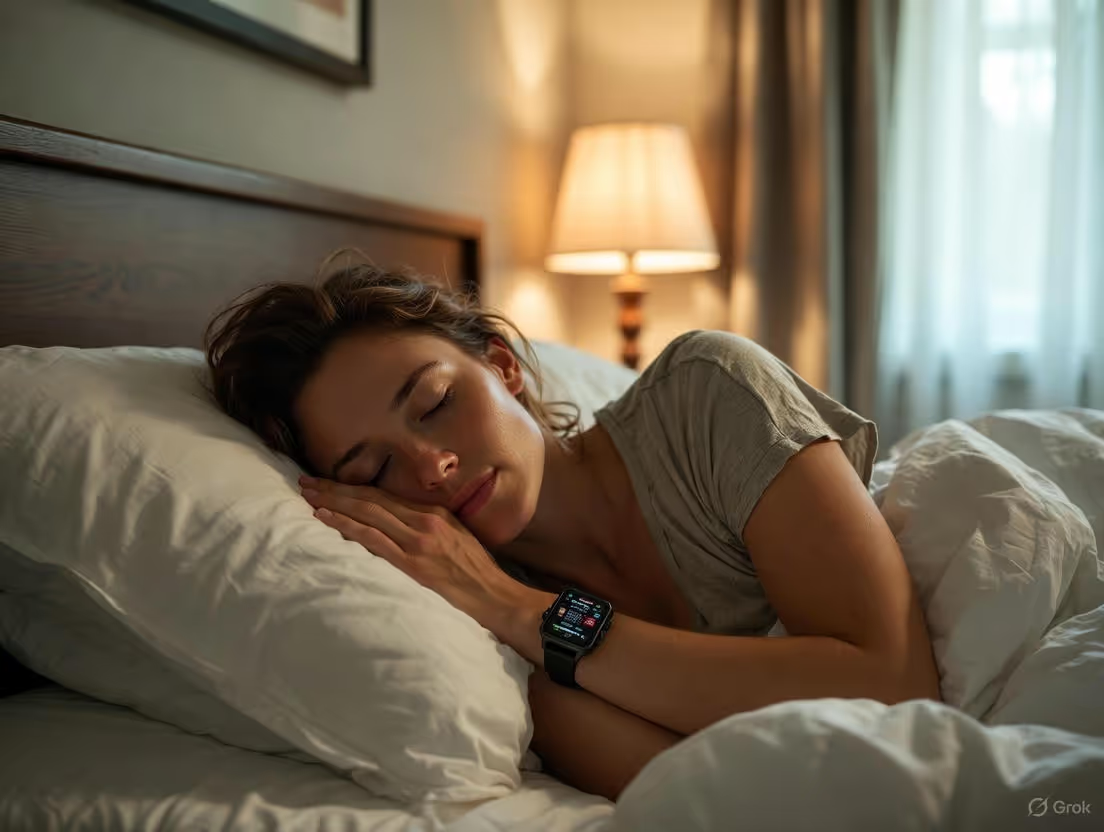
To appreciate why the first half of sleep is so pivotal, we must first understand the fundamental architecture of sleep itself. Sleep is not a monolithic state of unconsciousness but a complex, orchestrated journey through distinct stages, each with a specialized function. Traditionally, we group these stages into two broad types: Non-Rapid Eye Movement (NREM) sleep and Rapid Eye Movement (REM) sleep.
A full sleep cycle, lasting roughly 90 to 120 minutes, typically progresses from light NREM (Stage 1) into deeper NREM (Stages 2 & 3, also known as Slow-Wave Sleep or SWS), and finally into REM sleep, characterized by dreaming and brain activity similar to wakefulness. Throughout the night, you journey through four to six of these cycles. However, the composition of these cycles is not static—it changes dramatically from your first cycle to your last.
This is where the concept of sleep architecture becomes crucial. Think of it as the blueprint for your night’s recovery. A healthy architecture has a specific, evolutionarily programmed pattern:
The body prioritizes deep NREM sleep early in the night because it addresses the most urgent biological needs: physical repair, metabolic regulation, and clearing metabolic waste from the brain. It’s a hierarchical process. Your brain will sacrifice almost anything, including later REM sleep, to secure its necessary dose of deep sleep first. This is why when you are severely sleep-deprived and finally get to bed, your brain will dive into deep, slow-wave sleep almost immediately, skipping the usual lighter introductory stages—a phenomenon known as sleep rebound.
Understanding your personal sleep architecture is the first step toward optimizing it. While consumer sleep trackers have popularized the concept of cycles, they often lack the granularity to show the qualitative shift from deep-sleep-heavy early cycles to REM-heavy later ones. This is a key area where advanced physiological tracking, like the kind detailed on the Oxyzen blog, can provide a much clearer picture of your unique sleep blueprint, empowering you to make informed adjustments.
Why is this architectural pattern so consistent across the human species? The answer lies in millions of years of evolutionary programming. Deep, slow-wave sleep (SWS) is the most ancient form of sleep, observable in all mammals and birds. Its placement in the first half of the night is not an accident but a biological imperative driven by core survival functions that cannot wait.
During the deep NREM sleep of the Recovery Window, your body enters a state of profound physiological transformation:
In essence, the first half of sleep is a non-negotiable maintenance period. Your brain and body perform the equivalent of shutting down a complex city for nightly infrastructure repairs: fixing roads (tissue repair), cleaning the water supply (glymphatic clearance), and training the police force (immune system). If this window is truncated or fragmented, these essential processes are left incomplete, leading to a cumulative deficit that manifests as fatigue, brain fog, poor recovery from exercise, increased inflammation, and a higher risk of chronic disease. It’s a core part of our mission at Oxyzen to help people understand and protect this fundamental biological process through precise, accessible technology.
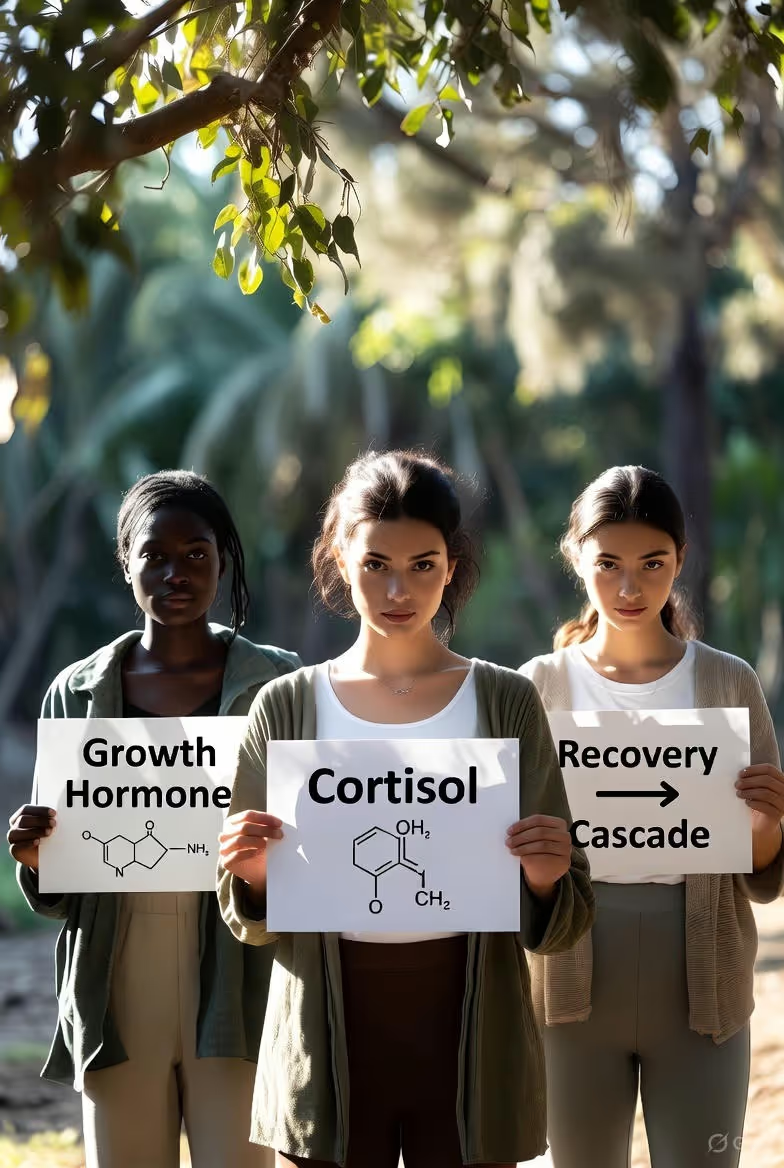
The transformative power of the Recovery Window is conducted by a precise hormonal symphony. These chemical messengers rise and fall in a tightly choreographed dance, turning sleep from a quiet state into a hive of anabolic activity. Disrupting the timing of sleep, therefore, doesn’t just make you tired—it throws this entire endocrine orchestra into disarray.
The Maestro: Human Growth Hormone (HGH)
As mentioned, the most significant pulse of HGH occurs in conjunction with the first episode of deep NREM sleep, typically about an hour after sleep onset. This isn’t a minor release; it accounts for the majority of the HGH produced in a 24-hour period. The relationship is so intimate that if you delay or fragment your deep sleep, you directly blunt this vital hormonal surge. The consequences are tangible: slower muscle recovery, increased body fat retention, weaker bones, and impaired tissue repair.
The Regulator: Cortisol
Often labeled the “stress hormone,” cortisol follows a robust diurnal rhythm. It should be high in the morning to help you wake up and feel alert (the cortisol awakening response) and then gradually decline throughout the day, reaching its lowest point around midnight. This nightly trough is essential. Low cortisol during the early sleep period creates the perfect hormonal environment for HGH to do its work. They exist in a seesaw relationship.
However, modern stressors—be it psychological anxiety, late-night screen time, or consuming caffeine or large meals too close to bedtime—can artificially elevate evening cortisol. This flattens the diurnal rhythm, keeping cortisol levels inappropriately high as you try to enter the Recovery Window. The result? The elevated cortisol antagonizes HGH release, effectively blocking the recovery cascade before it can even begin. You might sleep, but you won’t fully restore.
Supporting Players: Melatonin, Leptin, and Ghrelin
This intricate symphony explains why “shift work” and inconsistent bedtimes are so devastating to health. They don’t just displace sleep; they scramble the hormonal timing that governs recovery, metabolism, and appetite. Monitoring these subtle biological shifts can be complex, which is why many turn to tools that track physiological markers. For common questions on how technology can help decode these patterns, our Oxyzen FAQ provides detailed insights into the metrics that matter most for understanding your recovery.
While your body is busy with physical repair, your brain is undertaking an equally critical task: taking out the trash. For decades, scientists puzzled over how the brain, which lacks a traditional lymphatic system, clears the metabolic waste produced by its intense neuronal activity. The 2012 discovery of the glymphatic system was a landmark revelation, and its activity profile has profound implications for the Recovery Window.
The glymphatic system is a network that uses cerebrospinal fluid (CSF) to flush through the interstitial spaces of the brain, collecting proteins, toxins, and other debris. This process is most active during deep NREM sleep. Here’s why the first half of the night is so crucial for this cerebral cleaning:
Imagine your brain as a bustling office building. The workday (wakefulness) generates a lot of waste—paper, food wrappers, coffee grounds. The glymphatic system is the nightly cleaning crew. The first half of the night (deep NREM) is when the most aggressive cleaning happens: trash is collected from every desk, floors are mopped, bathrooms are scrubbed. The second half (REM and lighter sleep) might involve tasks like rearranging furniture (memory consolidation) or watering plants. If the cleaning crew is locked out during their prime shift, the waste accumulates. Day after day, this leads to a clogged, dysfunctional, and hazardous environment.
This underscores a terrifying truth: You cannot “catch up” on brain detox over the weekend. The damage from a week of poor deep sleep—the accumulated beta-amyloid and tau proteins—may not be fully reversible with two nights of good sleep. Protecting the early Recovery Window is a daily, non-negotiable investment in your long-term cognitive capital. To see how consistent tracking can reveal patterns in your sleep quality over time, you can explore real user experiences and testimonials from individuals who have used detailed biometric data to improve their sleep hygiene.

Sleep’s role in memory is well-known, but the process is far more nuanced than “sleep on it.” Memory consolidation—the process of stabilizing and integrating new information into long-term storage—is staged and occurs preferentially during specific sleep phases. The heavy lifting for declarative memory (facts, figures, events) happens in the deep NREM sleep of the first half of the night.
Here’s a simplified breakdown of the nightly memory workflow:
This staged process explains why pulling an “all-nighter” after studying is so counterproductive. You may have acquired the information, but by skipping the deep-sleep consolidation window, you prevent it from being properly stored. You effectively lose most of what you learned.
Furthermore, deep NREM sleep is particularly crucial for procedural memory—the “how-to” memory for skills like playing an instrument, mastering a sport, or learning a new software. Studies on musicians and athletes show that a night of deep sleep after practice leads to significant offline improvement in performance accuracy and speed, without any additional practice.
The takeaway is that the Recovery Window is your brain’s essential filing period. It takes the scattered notes of your day and organizes them into a coherent library. Disrupt this filing process, and your mental library becomes chaotic, making it hard to retrieve information, learn efficiently, or master new skills. For more on the science of sleep and performance, you can find a wealth of resources on our dedicated wellness and research blog.
Perhaps the most dangerous fallacy in modern sleep culture is the belief that you can skimp on sleep during the week and “pay off” your accumulated debt with a marathon sleep session on the weekend. While extra sleep after deprivation can alleviate feelings of sleepiness and improve some cognitive metrics in the short term, emerging research confirms that you cannot fully reverse the metabolic, cognitive, and neurological damage caused by lost deep sleep, especially from the critical early window.
The concept is known as sleep debt, and it functions more like a high-interest loan than a friendly IOU. Here’s why “catch-up sleep” fails as a strategy:
In essence, weekend recovery sleep is like eating a salad on Sunday after eating fast food all week. It’s better than nothing, but it doesn’t erase the negative health impacts of the consistent poor choices. The body’s restorative processes are designed to operate on a daily rhythm, not a weekly averaging system. Protecting the integrity of your Recovery Window every single night is the only effective strategy for long-term health. Understanding your own patterns is the first step, a journey that many have started by learning about the vision and technology behind Oxyzen and its focus on daily recovery metrics.
Our biology is primed for a perfect Recovery Window, yet our modern environment seems engineered to destroy it. We are not just passively losing sleep; we are actively engaging in behaviors that push deep, restorative sleep later, fragment it, or prevent us from reaching it altogether. Identifying these saboteurs is the first step to reclaiming your recovery.
1. Artificial Light & Blue Light Emission:
This is the arch-nemesis of early sleep. Evening light, particularly the blue wavelength emitted by LEDs, smartphones, tablets, and TVs, suppresses melatonin production more powerfully than any other wavelength. By tricking your brain into believing it’s still daytime, blue light delays the onset of sleepiness, pushing back your entire sleep schedule. This directly truncates the time available for deep sleep before the inevitable morning wake-up alarm. The later you fall asleep, the more you sacrifice of your non-negotiable early recovery period.
2. Irregular Sleep Schedules:
Consistency is the bedrock of good sleep architecture. Going to bed and waking up at wildly different times each day (a common pattern with “weekend oversleep”) confuses your circadian rhythm. Your body doesn’t know when to initiate the complex hormonal sequence that leads to deep sleep. This inconsistency often results in lighter, more fragmented sleep, even if you’re in bed for eight hours, preventing you from descending into the sustained, uninterrupted deep sleep required for the Recovery Window.
3. Late-Night Eating & Alcohol:
4. Chronic Stress & Anxious Rumination:
The mind that cannot quiet down is the body that cannot sleep deeply. Psychological stress elevates cortisol and activates the sympathetic nervous system (fight-or-flight), which is the physiological opposite of the state required for deep sleep. Lying in bed with a racing mind keeps you in lighter stages of sleep and prevents the descent into the slow-wave sleep of the Recovery Window.
5. Poor Sleep Environment:
A room that is too warm, too noisy, or too bright is inherently disruptive. Even minor disturbances that don’t fully wake you—a partner snoring, street noise, a stuffy room—can cause micro-arousals that pull you out of deep sleep, shattering its continuity. Deep sleep requires stable, unbroken periods to be effective.
Combating these saboteurs requires intentional strategy, not just willpower. It’s about engineering your environment and habits to serve your biology. Many find that data is a powerful ally in this fight, providing objective feedback on how their choices affect their recovery—a principle central to the Oxyzen story of empowering individuals with personalized health insights.
One of the most potent, yet underappreciated, levers for controlling your sleep quality and protecting the Recovery Window is your core body temperature. Your temperature rhythm is a core component of your circadian biology and is intrinsically linked to sleep propensity. Mastering it can be the key to unlocking earlier, deeper sleep.
The temperature-sleep connection follows a precise pattern:
Therefore, to fall asleep faster and initiate the deep-sleep cascade earlier, you need to facilitate this evening temperature drop. Conversely, anything that raises your core temperature too close to bedtime will hinder sleep onset.
Strategies to Harness Your Temperature Rhythm:
By proactively managing your temperature curve, you are speaking directly to your brain’s ancient sleep-initiation circuits. You’re not just “trying to sleep”; you are creating the precise physiological conditions that make deep, early sleep inevitable. This kind of bio-hacking is made easier when you can track subtle physiological changes, a topic we often explore to help users optimize their routine on our blog for advanced wellness strategies.

Not everyone is wired for a 10 p.m. to 6 a.m. sleep schedule. Your innate preference for sleep and wake times—known as your chronotype—is genetically determined and influences your ideal Recovery Window timing. Ignoring your chronotype and forcing yourself into an unnatural sleep schedule is a surefire way to degrade sleep quality, even if you’re in bed for eight hours.
Chronotypes exist on a spectrum, often simplified into categories:
The critical insight is that a Wolf trying to live on a Lion’s schedule will constantly struggle with social jetlag. They will find it hard to fall asleep early, often lying awake during the time when a Lion is already enjoying deep sleep. When forced to wake early, they are cutting off their own biologically delayed Recovery Window, which for them occurs in the early morning hours. They are chronically deep-sleep deprived, even with adequate time in bed.
How does this affect the Recovery Window?
Your deepest sleep is tied to your individual circadian low point (the nadir of your core temperature rhythm). For a Lion, this occurs around 3–4 a.m. For a Wolf, it might be 6–7 a.m. If a Wolf’s alarm rings at 6 a.m., they are being awakened during their period of deepest, most restorative sleep. This is biologically brutal and leads to profound sleep inertia, grogginess, and incomplete recovery.
Actionable Steps for Your Chronotype:
The goal is not to fight your biology but to negotiate with it. Understanding your chronotype allows you to place your Recovery Window where your body naturally wants it to be, maximizing its restorative power. For those navigating the challenges of being a Wolf in a Lion’s world, finding tools that provide insight without judgment can be transformative—part of the reason we built Oxyzen was to offer personalized data that respects individual biological difference
The journey into the Recovery Window begins long before your head hits the pillow. The final 90 minutes before bed—a period sleep scientists call "the buffer zone"—are not passive downtime. They are an active on-ramp to deep sleep, a critical phase where you either set the stage for a seamless descent into restorative slumber or sabotage it. This pre-sleep ritual is where you consciously transition your nervous system from the sympathetic "doing" state to the parasympathetic "being" state required for deep NREM sleep.
An effective ritual isn't about a single action; it's about a sequenced wind-down protocol that systematically addresses the modern saboteurs. It's a deliberate deceleration.
Phase 1: The Digital Sunset (90-60 minutes before bed)
This is non-negotiable. The blue light from screens is a potent cortisol trigger and melatonin suppressant. Instituting a digital sunset means:
This hour without screens is the single most effective change you can make to protect your Recovery Window. It tells your brain, in the language of biology, that the day is over.
Phase 2: The Physiological Cooldown (60-30 minutes before bed)
This phase is about actively lowering your core body temperature and calming your physiology.
Phase 3: The Mental & Emotional Unload (30-0 minutes before bed)
This is where you quiet the "monkey mind" and resolve the day's open loops.
Consistency is the magic ingredient. By performing the same sequence of calming actions nightly, you create powerful conditioned cues. Over time, your brain learns that "dim lights + warm bath + journaling + reading" means "deep sleep is next." This conditioning can dramatically reduce sleep onset latency, gifting more precious minutes to your Recovery Window. For more structured guidance on building these habits, our blog features numerous articles on creating sustainable wellness routines.
In the quest to protect the Recovery Window, subjective feelings of "tiredness" are unreliable metrics. You can feel moderately okay while still being in a significant deep-sleep deficit. This is where modern biometric technology, particularly the advanced sensors in smart rings like Oxyzen, transforms guesswork into knowledge. By tracking key physiological signals 24/7, these devices provide an objective, granular map of your sleep architecture and its most critical phase.
Key Metrics That Illuminate the Recovery Window:
The Power of Trend Data:
The true value isn't in a single night's score. It's in the longitudinal data. Seeing how your Recovery Window metrics change in response to lifestyle interventions is revolutionary.
This feedback loop turns you into a scientist of your own body. You move from generic advice ("get better sleep") to personalized, data-driven protocols ("I need to stop caffeine after 2 p.m. and take a warm bath at 9:30 p.m. to maximize my deep sleep"). It demystifies the Recovery Window, making it something you can actively measure, manage, and optimize. To understand the specific metrics and insights our technology provides, you can visit our detailed FAQ page for technical and user support.
You cannot out-supplement a poor diet, and this is profoundly true for sleep. The food you consume, and crucially when you consume it, acts as either fuel for the recovery cascade or a wrench in its gears. The goal of evening nutrition is to support stable blood sugar, provide the raw materials for sleep hormones, and avoid digestive or inflammatory processes that disrupt deep sleep.
The Deep Sleep Supporters:
The Deep Sleep Disruptors:
Timing is Everything:
The most powerful nutritional intervention for the Recovery Window is Time-Restricted Eating (TRE). Compressing your daily eating window (e.g., eating only between 10 a.m. and 7 p.m.) aligns your food intake with your circadian biology. It gives your digestive system a long, clean overnight fast, which has been shown to improve sleep depth and increase overnight growth hormone secretion. A 12-14 hour nightly fast is a sustainable starting point that supports, rather than fights, your body’s nightly repair cycle. For more on aligning diet with circadian rhythms, explore the resources on our wellness blog where we cover holistic health strategies.
Physical activity is a cornerstone of health and one of the most reliable ways to deepen sleep. However, its relationship with the Recovery Window is nuanced and highly dependent on timing and intensity. Exercise is a potent stressor (eustress) that breaks down tissue; sleep, particularly deep sleep, is when the supercompensation and repair happen. Aligning these two processes is key.
How Exercise Promotes Deep Sleep:
The Critical Importance of Timing:
Listening to Your Biometric Feedback:
This is where personalization is paramount. Your body’s response to evening exercise is written in your recovery data.
For most people aiming to protect and maximize their Recovery Window, finishing demanding exercise by late afternoon is the safest strategy. Reserve the evening for active recovery and relaxation. This ensures the stress of exercise serves its purpose—creating an adaptive stimulus—without encroaching on the sacred time reserved for repair. This principle of using data for personalized optimization is central to our approach at Oxyzen, helping users fine-tune every aspect of their lifestyle.
You can have the perfect pre-sleep ritual, an ideal diet, and a consistent exercise routine, yet still have your Recovery Window stolen from you nightly by a silent, dangerous, and shockingly common condition: Obstructive Sleep Apnea (OSA). OSA is characterized by repeated cessations of breathing (apneas) or significant reductions in breath (hypopneas) during sleep, often accompanied by snoring or gasping.
Here’s the critical connection to the Recovery Window: Each apnea creates a micro-arousal. Your brain, detecting a drop in blood oxygen, sends a panic signal—a surge of adrenaline and cortisol—to jolt you just enough to restart breathing. You may not remember waking, but these arousals are catastrophic for sleep architecture, particularly deep NREM sleep.
How OSA Decimates Deep Sleep:
The Insidious Part: Many people with mild to moderate OSA are completely unaware. They may attribute their chronic daytime fatigue, brain fog, morning headaches, and irritability to "stress" or "just getting older." They might even track their sleep with a basic wearable that shows "8 hours," blissfully unaware that their deep sleep has been eviscerated.
Warning Signs That OSA May Be Robbing Your Recovery:
The Path to Reclaiming Your Window:
If you suspect OSA, a sleep study (polysomnography) is essential. The gold-standard treatment is Continuous Positive Airway Pressure (CPAP) therapy. A CPAP machine delivers a gentle stream of air through a mask, acting as a pneumatic splint to keep your airway open. The results can be life-changing: the arousals stop, oxygen levels stay stable, and for the first time in years, the brain can cycle naturally into prolonged, uninterrupted deep sleep, restoring the integrity of the Recovery Window.
Protecting your deep sleep means being vigilant against this silent thief. Addressing OSA isn't just about reducing snoring; it's about reclaiming the foundational pillar of your physical and cognitive health. For those exploring how advanced tracking can sometimes highlight potential irregularities in breathing or oxygen saturation trends, our support and FAQ section offers guidance on interpreting such data and when to seek professional evaluation.
The integrity of your Recovery Window is not determined at 11 p.m.; it's built from the moment you wake up. Your daytime habits—light exposure, activity patterns, stress management, and even hydration—create the circadian momentum that either carries you smoothly into deep sleep or leaves you tossing and turning. Think of your day as priming the pump for night's restoration.
1. Master Your Light Exposure (The #1 Circadian Cue):
2. Anchor Your Wake Time:
Even more important than a consistent bedtime is a consistent wake time. Waking up at the same time every day, even on weekends, anchors your circadian rhythm. It regulates the timing of your cortisol awakening response and makes your evening melatonin rise more predictable. A fixed wake time is the bedrock of a stable Recovery Window.
3. Manage Stress Proactively, Not Reactively:
Letting stress accumulate all day and then trying to "meditate it away" at 10 p.m. is an uphill battle. Instead, practice stress inoculation throughout the day:
By discharging stress in small increments, you prevent it from reaching a debilitating level by bedtime.
4. Strategic Caffeine & Napping:
5. Hydration & Nutrition Timing:
Your day and night exist in a symbiotic loop. A chaotic, stressful, dimly-lit, sedentary day almost guarantees a poor Recovery Window. A day filled with bright light, physical activity, managed stress, and consistent rhythms is the ultimate act of setting the table for a night of profound, uninterrupted restoration. This holistic view of wellness—connecting daily choices to nightly outcomes—is a theme we explore deeply in sharing our company's mission and vision for integrated health.
When the body is ready for sleep but the mind is racing, the Recovery Window remains locked. The final bridge into deep sleep is neural. Practices that actively down-regulate the central nervous system and quiet mental chatter are not just "relaxing"—they are functional tools for triggering the neurobiological state required for deep NREM sleep.
1. Diaphragmatic Breathing (The Physiological Switch):
This is the fastest way to manually engage the parasympathetic nervous system. By taking slow, deep breaths into the belly, you stimulate the vagus nerve, which acts as a brake on the "fight-or-flight" response.
2. Body Scan Meditation (Progressive Muscle Relaxation):
This practice directs focus away from thoughts and into physical sensation, systematically releasing tension.
3. Mindfulness and "Thought Detachment":
The problem isn't having thoughts before sleep; it's clinging to them. Mindfulness teaches you to observe thoughts without judgment.
4. Guided Imagery & Visualization:
Engage your mind in a peaceful, monotonous narrative. Picture yourself walking slowly through a serene forest, or lying on a warm, quiet beach, hearing the gentle waves. The key is to make the imagery detailed but not exciting. This uses the brain's capacity for imagination to crowd out anxious thoughts.
5. The "Military Method" for Sleep Onset:
A technique reportedly used by the military to fall asleep in high-stress conditions, it combines deep relaxation with mental blankness.
These techniques work because they are forms of focused attention. A racing mind is often a scattered, unfocused mind. By giving it a simple, repetitive task (breathing, scanning, visualizing), you provide an alternative to anxious rumination. With consistent practice, they become powerful conditioned cues, telling your brain it's now safe to shut down non-essential functions and descend into the recovery state. For guided versions of these practices and further resources on mental training for sleep, our blog is a valuable repository of audio and written guides.
next one please
Your bedroom is not just a place to sleep; it is your recovery chamber. Every element within it should be engineered to serve one purpose: facilitating the rapid onset and undisturbed maintenance of deep sleep. Optimizing this environment is a non-negotiable step in protecting your Recovery Window. It removes external obstacles so your biology can perform its innate restorative functions unimpeded.
The Pillars of the Perfect Sleep Sanctuary:
1. Darkness: The Absolute Priority
Light is the primary Zeitgeber (time-giver) for your circadian clock. Even minute amounts of light through your eyelids can suppress melatonin and trigger micro-arousals.
2. Silence & Sound Management
Unexpected noises are a primary cause of sleep fragmentation, pulling you from deeper stages into lighter sleep.
3. The Perfect Temperature
The science is unequivocal: a cool room is essential for initiating and maintaining deep sleep.
4. The Bed Itself: Your Recovery Platform
You spend a third of your life here. Invest wisely.
5. Air Quality & Allergens
Poor air quality can cause subtle inflammation and congestion, disrupting breathing and sleep quality.
By treating your bedroom as a sacred, technologically-augmented recovery pod, you eliminate variables that force your brain to remain on sentry duty. You create a environment so conducive to sleep that surrendering to it becomes effortless, paving the way for a deep, uninterrupted Recovery Window. For those curious about how environmental data (like room temperature) correlates with biometric sleep data, our Oxyzen blog often explores these fascinating intersections.
While lifestyle and environment are the bedrock of sleep health, the judicious use of supplements can serve as a valuable tactical tool for specific challenges. However, they are supplements, not substitutes. They work best when used to support an already solid sleep foundation, not to compensate for a chaotic lifestyle. The goal is to use the mildest effective aid to nudge your biology, not to force it into submission with powerful pharmaceuticals.
Natural Supplements (The Supportive Cast):
The Hormone: Melatonin (Use with Precision)
Melatonin is a chronobiotic—it helps shift the timing of your circadian clock. It is not a general-purpose sleeping pill.
Pharmaceuticals & OTC Aids (A Word of Extreme Caution):
The Golden Rule: Always start with foundational lifestyle and environmental changes. If exploring supplements, start with one at a time (like magnesium glycinate) at a low dose to assess tolerance and effect. Consult with a healthcare provider, especially if you have underlying health conditions or take other medications. The goal is not to drug yourself to sleep, but to provide your system with the gentle, natural co-factors it needs to perform its own innate recovery magic. For personal accounts of how individuals have integrated various natural strategies, our testimonials page sometimes features stories of holistic sleep journeys.
Despite your best efforts with ritual, environment, and supplements, you may still find your Recovery Window elusive. When chronic, unrefreshing sleep persists, it is critical to consider the possibility of an underlying sleep disorder. These are medical conditions that require professional diagnosis and treatment. Ignoring them not only sabotages your recovery but can have severe long-term health consequences.
Beyond Sleep Apnea: Other Key Disorders
The Path to Diagnosis: The Sleep Study
If a disorder is suspected, a physician (often a sleep specialist) may recommend a polysomnogram (PSG). This is an overnight sleep study conducted in a lab or, increasingly, a home sleep apnea test (HSAT) for suspected apnea. A PSG measures brain waves (EEG), eye movements (EOG), muscle activity (EMG), heart rhythm (ECG), breathing effort, airflow, and blood oxygen levels. It is the definitive tool for diagnosing sleep apnea, narcolepsy, parasomnias, and periodic limb movement disorder.
Why Professional Help is Non-Negotiable:
Self-diagnosing and self-treating sleep disorders is dangerous. You might misattribute the fatigue of sleep apnea to insomnia and take a sedative, which could further suppress breathing. You might mistake the delayed rhythm of a teenager for laziness, creating family conflict. A proper diagnosis leads to targeted, effective treatment—CPAP for apnea, iron for RLS, CBT-I for insomnia, light therapy for circadian disorders.
Acknowledging that a sleep disorder might be at play is not a failure of your routine; it's a critical step in taking control of your health. It moves the problem from the realm of self-help into the realm of evidence-based medicine, where real, lasting solutions exist. If you're navigating the confusing process of understanding your sleep data in the context of potential disorders, our support FAQ can offer guidance on what metrics to discuss with your doctor.
The quest for longevity has moved beyond mere lifespan to healthspan—the number of years lived in good health. At the intersection of cutting-edge aging research and sleep science, a compelling truth emerges: the integrity of your nightly Recovery Window is one of the most potent, under-leveraged anti-aging interventions available. Deep NREM sleep supports the very biological hallmarks of aging.
How Deep Sleep Combats Aging at the Cellular Level:
The Evidence: Population Studies
Epidemiological data is stark. Consistently sleeping less than 6 hours (and likely missing deep sleep) is associated with a significantly elevated risk for all-cause mortality, hypertension, obesity, diabetes, and cardiovascular events. It's not just about adding years to your life, but life to your years—preserving cognitive sharpness, physical vitality, and metabolic health deep into later decades.
Protecting the Recovery Window, therefore, is not a wellness luxury; it's a longevity imperative. It is a nightly therapy session for your cells, your brain, and your DNA. In a world obsessed with expensive and experimental anti-aging bio-hacks, this one is free, natural, and profoundly effective. It is the ultimate proactive health strategy. This core belief—that understanding and optimizing fundamental biological rhythms is key to long-term vitality—is deeply embedded in our company's story and mission.
Your Trusted Sleep Advocate: Sleep Foundation — https://www.sleepfoundation.org
Discover a digital archive of scholarly articles: NIH — https://www.ncbi.nlm.nih.gov/
39 million citations for biomedical literature :PubMed — https://pubmed.ncbi.nlm.nih.gov/
Experts at Harvard Health Publishing covering a variety of health topics — https://www.health.harvard.edu/blog/
Every life deserves world class care :Cleveland Clinic - https://my.clevelandclinic.org/health
Wearable technology and the future of predictive health monitoring :MIT Technology Review — https://www.technologyreview.com/
Dedicated to the well-being of all people and guided by science :World Health Organization — https://www.who.int/news-room/
Psychological science and knowledge to benefit society and improve lives. :APA — https://www.apa.org/monitor/
Cutting-edge insights on human longevity and peak performance:
Lifespan Research — https://www.lifespan.io/
Global authority on exercise physiology, sports performance, and human recovery:
American College of Sports Medicine — https://www.acsm.org/
Neuroscience-driven guidance for better focus, sleep, and mental clarity:
Stanford Human Performance Lab — https://humanperformance.stanford.edu/
Evidence-based psychology and mind–body wellness resources:
Mayo Clinic — https://www.mayoclinic.org/healthy-lifestyle/
Data-backed research on emotional wellbeing, stress biology, and resilience:
American Institute of Stress — https://www.stress.org/


