


The Relationship Between Sleep Score and Daily Performance
Higher sleep scores typically correlate with better next-day cognitive performance, mood, and reaction times.
Higher sleep scores typically correlate with better next-day cognitive performance, mood, and reaction times.
%402x.svg)
You wake up to the blaring of your alarm. The fog in your brain feels thick enough to cut with a knife. You fumble through your morning routine, spill your coffee, and find yourself staring blankly at your computer screen, the morning’s critical tasks feeling like impossible mountains to climb. Meanwhile, your colleague breezes in, sharp, focused, and already ticking items off their to-do list with effortless efficiency. What’s the difference? It likely wasn’t set the night before—it was forged in the silent, hidden workshop of the night.
For decades, we’ve treated sleep as a passive void, a necessary downtime. But the rise of advanced biometric tracking, epitomized by sleek, intelligent devices like the modern smart ring, has ripped back the curtain. We now have a quantifiable metric that translates the complex symphony of your night into a single, powerful number: your Sleep Score. This isn’t just a digital pat on the back; it’s a direct performance readout for your brain and body.
Think of your Sleep Score as the overnight diagnostic report for your most critical piece of hardware—you. It synthesizes deep sleep, REM sleep, light sleep, restlessness, and latency into a comprehensive grade. And as we are beginning to understand, this grade is the most reliable predictor of your cognitive, emotional, and physical performance the following day. This article will dive deep into the profound and measurable relationship between that nightly number and your daily output. We’ll move beyond vague notions of “feeling tired” and into the realm of proven impact on memory, decision-making, emotional resilience, metabolic health, and even your interpersonal relationships. By the end, you will not just see sleep as rest, but as your most strategic performance enhancer.
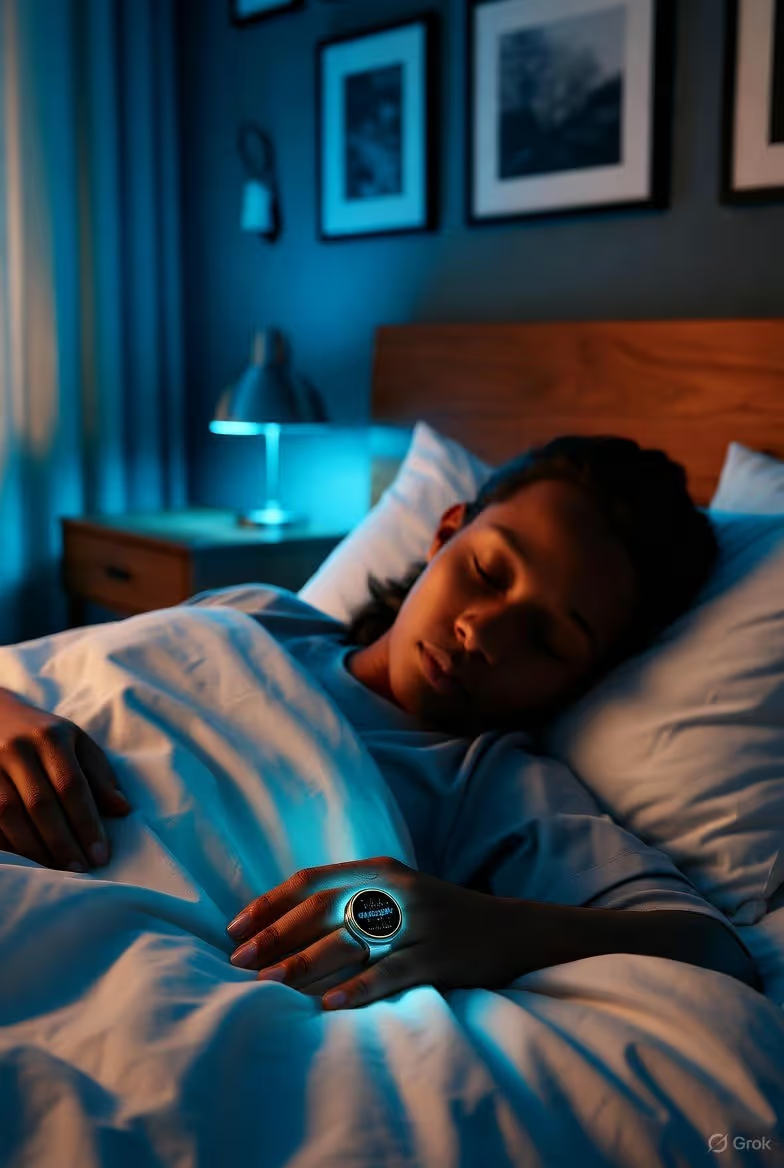
Before we can connect the dots to daily performance, we must first understand what we’re measuring. A Sleep Score is not a random number generated by a simple timer. It is a sophisticated algorithm’s interpretation of your night’s physiological data. While different platforms have their own formulas, high-quality scores from devices like the Oxyzen smart ring typically distill five key pillars of sleep architecture into a single, digestible metric.
The Pillars of Your Score:
A device like the Oxyzen smart ring captures this data unobtrusively, using sensors to track heart rate variability (HRV), heart rate, body temperature, and movement. These biomarkers are then woven together by advanced algorithms to paint a precise picture of your sleep stages and disturbances you may not even consciously recall.
Beyond the Single Number: The Narrative in the Data
While the final score is a brilliant summary, the real gold lies in the trends. A single night of poor sleep isn’t a catastrophe. But a declining Sleep Score trend over three nights is a clear warning sign of accumulating “sleep debt.” Conversely, watching your score climb as you implement better “sleep hygiene” practices provides immediate, positive reinforcement. This data transforms sleep from a subjective feeling—“I feel okay”—into an objective, manageable part of your health portfolio. You can learn more about the specific technology behind this tracking on our FAQ page, which details how we capture and interpret your nightly biometrics.
Understanding that your Sleep Score is a composite of these vital, research-backed factors is the first step. It moves us from mystery to mechanics. Now, let’s trace the direct lines from each of these mechanical failures or successes to your waking life.
If you think your brain powers down at night, you are profoundly mistaken. While your body rests, your brain enters a period of intense, structured activity. It’s running its most critical “night shift”—the shift responsible for converting your daily experiences into lasting intelligence and skill. The disruption of this shift, reflected in a poor Sleep Score, directly sabotages your cognitive capital.
Deep Sleep: The Memory Consolidator
During deep sleep, the brain engages in a process called “synaptic homeostasis.” Think of your waking day as a period of intense learning where your brain forms countless new connections (synapses). This is mentally stimulating but also metabolically costly and “noisy.” Deep sleep acts as the curator. It selectively prunes away weaker, less important neural connections while strengthening the pathways related to what you learned and experienced that day. This process transforms fragile, short-term memories into stable, long-term ones.
REM Sleep: The Problem-Solving Integrator
Following deep sleep, REM sleep takes the stage. This is where the brain gets creative. It replays memories but not in a literal sense; it interconnects them with older memories, emotional contexts, and disparate ideas. This is the phase associated with vivid dreams and is essential for abstract reasoning, creative insight, and emotional processing.
The Cost of Interruption: Fragmented Sleep’s Silent Toll
Modern life is a minefield for sleep fragmentation: a crying baby, street noise, or that late-night glance at your phone. Even if you get 7 hours of total sleep, if it’s broken into pieces, you may never complete the full, 90-minute cycles needed to reach and sustain deep and REM sleep. Your Sleep Score will reflect this fragmentation through poor “efficiency” and low “quality” metrics.
The consequence? You wake up with memories half-consolidated, skills partially encoded, and insights unrealized. Your ability to learn new information that day is also impaired, as your brain is starting its day already overcapacity, with yesterday’s “filing” incomplete. This creates a vicious cycle of cognitive deficit. By tracking your Sleep Score and its underlying components, you gain the awareness needed to protect these critical biological processes, ensuring your brain shows up for work each day fully equipped. For deeper dives into optimizing each sleep stage, our blog regularly features research-backed strategies and user experiences.
The prefrontal cortex (PFC) is the CEO of your brain. It governs executive functions: focused attention, complex decision-making, risk assessment, impulse control, and social behavior. It is also, unfortunately, exquisitely sensitive to sleep deprivation. When your Sleep Score drops, the PFC is often the first region to go offline, with dramatic consequences for your professional and personal performance.
The Impaired CEO: Decision-Making Under Sleep Debt
Under-slept, the brain shifts its decision-making strategy. It becomes more reliant on the amygdala (the emotional, reactive center) and less on the logical, deliberative PFC. This leads to:
The Shattered Lens: The Battle for Focus and Attention
Sustained attention is not a default state; it’s a cognitively expensive act maintained by the PFC. Sleep loss directly reduces the “bandwidth” available for this function.
The Real-World Cost: From Boardrooms to Classrooms
The impact is measurable. Studies of medical residents working extended shifts show a significant increase in diagnostic errors. Financial traders on poor sleep make riskier, less profitable trades. For students, a low Sleep Score the night before an exam doesn’t just mean being tired; it means the very cognitive machinery needed to recall studied information and apply it critically is impaired.
Tracking your Sleep Score provides an early-warning system. A consistently low score isn’t just about feeling groggy; it’s an indicator that your brain’s executive suite is operating at a severe deficit. You are, effectively, trying to run a Fortune 500 company with a skeleton crew. By prioritizing sleep as a non-negotiable pillar of performance, you ensure your internal CEO is present, sharp, and ready to lead. For a look at how professionals across fields use this data to guard their cognitive edge, the real-world accounts in our testimonials section are telling.

Your emotional resilience—your ability to navigate daily stressors without spiraling into anxiety, irritability, or overwhelm—is not a fixed character trait. It is a physiological state heavily dependent on the restorative processes of sleep. Your Sleep Score is, in many ways, a nightly reset for your emotional thermostat.
The Amygdala Hijack and the Weakened Brake
Recall the sensitive amygdala and the sleepy prefrontal cortex. This dynamic is the core of sleep’s impact on emotion. The amygdala processes fear and threat. The PFC acts as its regulator, applying reason and context. With ample sleep, this system is balanced. A strange noise might startle you (amygdala), but you quickly assess it’s harmless (PFC).
Sleep deprivation weakens the PFC’s braking power while amplifying the amygdala’s reactivity. The result is an emotional lability:
Stress, Cortisol, and the Vicious Cycle
Sleep and stress exist in a bidirectional, often vicious, relationship. The stress hormone cortisol naturally dips at night to allow for sleep’s restorative processes. When you are sleep-deprived, cortisol levels remain elevated into the evening. This high cortisol makes it harder to fall asleep (increasing “sleep latency,” a key score metric). The resulting poor sleep then leaves you less equipped to handle stress the next day, spiking cortisol again. It’s a debilitating feedback loop.
A high Sleep Score indicates a successful overnight “cortisol reset.” It means your body has completed the necessary cycles to downregulate stress physiology, leaving you with a larger emotional buffer for the day ahead. You are not just less likely to snap at your partner; you are more likely to approach challenges with a sense of calm competence.
Sleep as Social Glue
This emotional regulation is also the bedrock of healthy social and professional relationships. Empathy, patience, and the ability to accurately read social cues are all PFC-dependent functions eroded by poor sleep. When your Sleep Score is high, you’re not just a better performer in isolation; you’re a more collaborative teammate, a more understanding leader, and a more present partner. Protecting your sleep is an act of social and emotional intelligence. Understanding this holistic connection between physical data and emotional wellness is central to the mission you can read about at Oxyzen.ai.
Your sleep does more than restore your mind; it orchestrates a complex metabolic symphony that dictates your physical energy, body composition, and cellular repair. A low Sleep Score often means this symphony is out of tune, leading to cravings, sluggishness, and poor recovery from exercise or daily wear and tear.
The Hormonal Seesaw: Leptin, Ghrelin, and Insulin
Two key hormones control hunger: leptin (which signals fullness) and ghrelin (which stimulates appetite). Sleep deprivation creates a perfect storm:
Simultaneously, the body’s ability to manage blood sugar is impaired. Cells become more resistant to insulin, the hormone that ushers glucose out of the bloodstream. This leads to higher circulating blood sugar and, over time, an increased risk for weight gain and metabolic disorders like Type 2 diabetes.
The Energy Factory (Mitochondria) and Cellular Cleanup
During deep sleep, your body increases production of ATP (adenosine triphosphate), the fundamental currency of cellular energy. It’s also a prime time for cellular repair and the clearance of metabolic waste products from the brain and muscles. This is when your body repairs the micro-tears in muscle tissue from a workout, synthesizes proteins, and strengthens your immune system.
A night of poor sleep, indicated by a low Sleep Score with little deep sleep, short-circuits this restoration. You wake up with “empty tanks” at a cellular level. The fatigue you feel isn’t just in your mind; it’s in every muscle cell. Your workout feels harder, your post-exercise soreness lasts longer, and you’re more susceptible to common illnesses.
The Performance Impact: From the Gym to the Daily Grind
For the athlete, the link is clear: sleep is the ultimate performance-enhancing drug. But even for the non-athlete, this metabolic dysregulation matters. That mid-afternoon crash? It’s often the result of poor sleep disrupting blood sugar regulation, not just a heavy lunch. The inability to find the motivation for an evening walk? That’s depleted cellular energy, not simple laziness.
By monitoring your Sleep Score and its deep sleep component, you get an indirect readout of your body’s metabolic and recovery efficiency. A consistently high score suggests your hormonal orchestra is in harmony, your energy factories are humming, and your body is effectively repairing itself. This translates directly into more stable energy levels, better appetite control, and a greater physical capacity to engage with life. For more on how biometric tracking integrates into a holistic health picture, explore the resources available on our blog.
One night of poor sleep is a minor withdrawal from your cognitive bank. You might be a bit foggy, but you can recover. The real danger lies in sleep debt—the accumulated deficit that builds when you consistently sleep less than your body needs. This is where the relationship between your Sleep Score and daily performance moves from acute to chronic, embedding underperformance into your baseline state.
The Illusion of Adaptation
Many believe they’ve “adapted” to five or six hours of sleep. Neurobiological research resoundingly disproves this. While subjective sleepiness may plateau after a few days of restriction, objective measures of cognitive performance—reaction time, logical reasoning, working memory—continue to decline linearly. You lose self-awareness of your impairment. You feel “fine,” but you are operating at a fraction of your true capacity. A consistently middling Sleep Score is the objective truth-teller, cutting through this dangerous illusion.
The Domino Effect on Health and Performance
Chronic sleep debt doesn’t just make you tired. It initiates a cascade of detrimental effects that erode the pillars of high performance:
The Debt is Hard to Repay
A key finding from sleep research is that sleep debt is not repaid hour-for-hour. If you lose 2 hours of sleep for five nights (a 10-hour debt), sleeping 12 hours on the weekend does not fully restore cognitive function to baseline. Some aspects of performance, especially those tied to complex cognitive tasks, can take multiple nights of sufficient, high-quality sleep to recover. This is why the pattern shown by your Sleep Score over weeks is far more important than any single night’s data. It shows whether you are living at a deficit, merely breaking even, or—ideally—building a surplus of restoration.
Tracking your score over time allows you to spot a declining trend before it becomes a entrenched debt. It empowers you to intervene with proactive “sleep investments”—an earlier bedtime, a wind-down routine, managing stress—to get back in the black. Your future performance depends on the nightly deposits you make today. To understand how others have tackled sleep debt using personalized data, the experiences shared in our testimonials can be a powerful motivator.
The connection between sleep and performance is no longer just anecdotal. A growing body of scientific literature is putting hard numbers to the cost of a poor Sleep Score and the benefits of a high one. This research validates what the data from your smart ring is telling you, grounding it in rigorous science.
The Corporate and Academic Studies
Landmark studies have quantified the impact in stark terms:
From the Lab to the Living Room: The Smart Ring Validation
The proliferation of consumer wearable technology has enabled large-scale, real-world observational studies. Research utilizing data from devices like smart rings and watches has reinforced these findings:
These studies bridge the gap between clinical polysomnography (the lab gold standard) and the actionable data you see on your smartphone. They confirm that the algorithmically-derived Sleep Score from a high-fidelity device like the Oxyzen ring is a scientifically valid proxy for sleep health with real-world predictive power for your performance outcomes. For those interested in the technical research and validation behind our metrics, our about us page delves into our commitment to data integrity and science-backed insights.
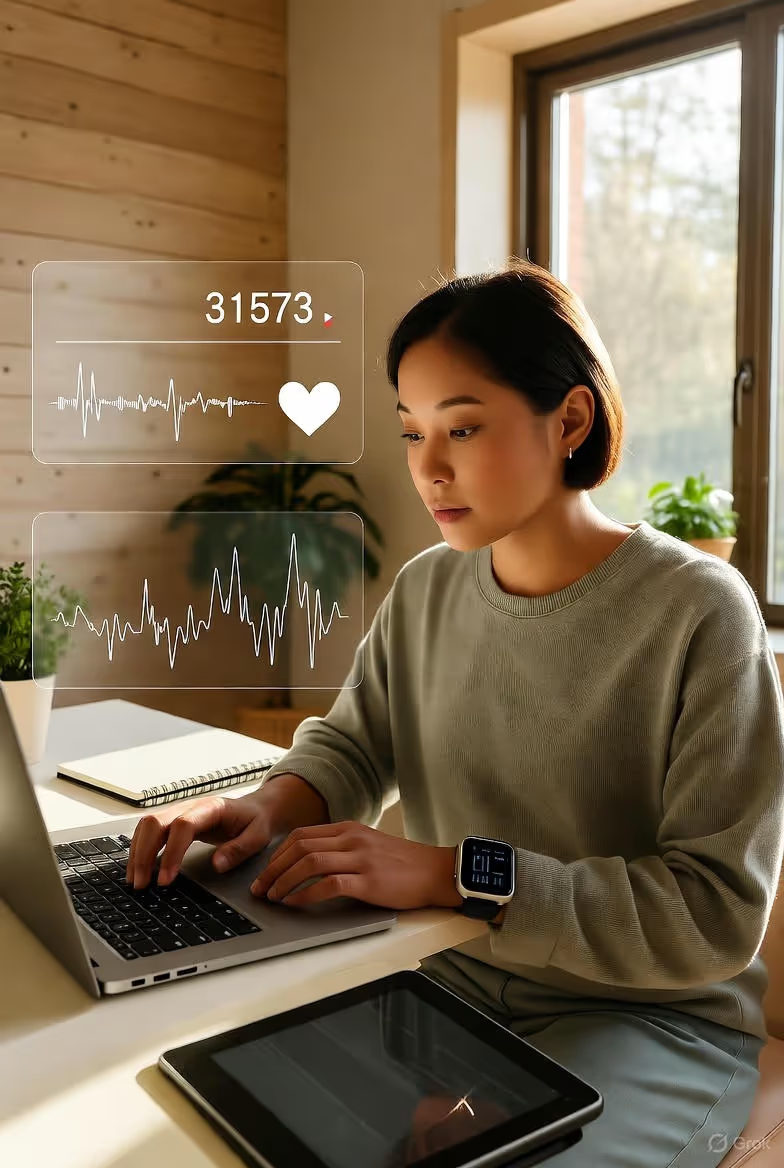
Your Sleep Score isn’t determined the moment your head hits the pillow. It’s being written all day long. A high-performance day sets the stage for a high-recovery night. Understanding this bidirectional relationship is key to breaking cycles of poor sleep and underperformance.
The Great Disruptors: Light, Timing, and Stimulation
The Wind-Down Ritual: Programming Sleep Success
Your pre-sleep hour is the onboarding process for your night shift. A purposeful ritual signals to your brain and body that it’s time to transition from performance mode to recovery mode.
By aligning your daytime habits and evening ritual with your circadian biology, you stop fighting your physiology and start working with it. You become the author of your Sleep Score, not just its passive recipient. For a curated collection of actionable tips on crafting these high-performance daily routines, our blog is an ongoing resource.
This is where the journey moves from general knowledge to personal power. The universal truths about sleep are important, but your ideal sleep, and its impact on your unique performance demands, is personal. Your Sleep Score data is the key to unlocking this personalization.
Establishing Your Baseline: What Does “Good” Mean for You?
The first step is to establish your personal baseline. Wear your tracking device consistently for at least two weeks without trying to “game” the score. Look for averages:
This baseline isn’t about judging; it’s about discovering your body’s current norms. It’s your neutral starting point.
The Experimentation Phase: Becoming Your Own Sleep Scientist
Now, conduct single-variable experiments and observe the impact on your score and, crucially, on your next-day performance.
Correlating Score with Subjective Feeling
The data is objective, but your subjective experience is the ultimate validator. Keep a simple journal note each day: “Energy: 7/10, Mood: 6/10, Focus: 8/10, Cravings: High.” After a few weeks, look back. You will likely see clear patterns: “On mornings after a Sleep Score > 85, my Focus is consistently 8 or 9. On mornings after a score < 75, my Cravings are marked ‘High’ and my Mood drops.”
This process transforms sleep from a passive activity into an active, optimized component of your performance toolkit. You learn that for you, protecting REM sleep before a big creative meeting is critical, or that an extra 30 minutes of deep sleep makes your gym session feel effortless. This is the true promise of technology like the Oxyzen smart ring: it provides the personalized feedback loop to make sleep your most powerful and predictable ally. If you have questions about starting this process of personal experimentation, our comprehensive FAQ is a great place to find detailed guidance.
Your bedroom is not just a room with a bed. It is a performance-enhancing sanctuary, a carefully calibrated chamber designed for a single, vital outcome: maximizing your Sleep Score. While willpower and routine are crucial, they fight a losing battle against a poorly engineered environment. The science of sleep architecture shows that subtle sensory inputs—light, temperature, sound, and even tactile sensations—profoundly influence sleep onset, depth, and continuity. By mastering your environment, you move from hoping for good sleep to architecting it.
Light: The Master Zeitgeber
Light is the most powerful external cue for your circadian rhythm. The intrusion of light at night, especially in the blue spectrum, directly suppresses melatonin, the hormone that signals sleepiness to your brain.
Temperature: The Goldilocks Principle in Physiology
Your core body temperature needs to drop by about 1-2 degrees Fahrenheit to initiate and maintain sleep. An environment that is too warm impedes this drop; one that is too cold causes discomfort and awakening.
Sound: Creating an Auditory Blanket
Silence is ideal, but often unrealistic. The goal is not absolute silence, but consistency. Sudden, intermittent noises—a car alarm, a barking dog, a snoring partner—are the arch-enemies of sleep continuity, causing micro-arousals that fragment sleep architecture and tank your Sleep Score’s “quality” component.
The Tactile and the Clutter-Free: A Psychology of Rest
Your brain associates your bed with specific activities. If it’s also your office, dining table, and entertainment center, the association with wakefulness is strengthened.
By treating your bedroom as a performance lab, you systematically remove barriers to a high Sleep Score. Each adjustment—a darker room, a cooler temperature, a blanket of sound—is a direct investment in the quality of your restoration, paying dividends in every aspect of your waking performance the next day. For specific product recommendations and deeper dives into environmental optimization, our community often shares their success stories and setups, which you can explore in our testimonials and resource pages.
Once the fundamentals of environment and routine are solid, you enter the realm of advanced optimization. This is where “biohacking” meets sleep science: using targeted, data-driven interventions to push your Sleep Score from good to exceptional and to engineer rapid recovery from sleep debt or disruption. This approach leverages nutrition, supplementation, and technology to give your body every possible advantage.
Nutritional Chronobiology: Eating for Sleep
Strategic Supplementation (With Caustion)
Technology-Assisted Recovery
The Data-Driven Feedback Loop
This is the core of advanced biohacking. You implement one change—say, adding a magnesium glycinate supplement—and you observe the impact over 7-10 nights in your Oxyzen data. Did your deep sleep percentage increase? Did your “time to fall asleep” decrease? Did your overall Sleep Score trend upward? Without objective data, you’re guessing. With it, you are conducting a personal N-of-1 experiment, learning exactly what moves the needle for your unique biology.
This sophisticated approach transforms you from a passive sleeper into an active architect of your own restoration. You’re not just going to bed; you’re executing a nightly protocol to ensure you wake up operating at your biological peak. For ongoing discussions on the latest research and user experiences with these advanced techniques, our blog serves as a continuous learning hub.
The daily performance boosts—sharper focus, steadier emotions, better decisions—are compelling reasons to care about your Sleep Score. But the most profound impact unfolds over years and decades. Sustaining a high average Sleep Score is not just an optimization strategy; it is a foundational pillar of longevity, disease prevention, and extending your period of peak cognitive and physical vitality. The nightly act of sleep is where your body conducts its most critical long-term maintenance.
The Brain’s Cleansing Cycle: The Glymphatic System
One of the most significant discoveries in neuroscience this century is the glymphatic system. This waste-clearance system is most active during deep, non-REM sleep. It uses cerebrospinal fluid to flush out metabolic debris that accumulates between brain cells during the day, including toxic proteins like beta-amyloid and tau.
Hormonal Harmony and Systemic Health
The systemic effects of chronic sleep debt create a fertile ground for chronic disease:
The Performance Longevity Dividend
For the knowledge worker, entrepreneur, or creative professional, this long-game perspective is about extending your prime. Cognitive aging is not just chronological; it’s heavily influenced by lifestyle. By protecting your brain’s structure through quality sleep, you are investing in your ability to think strategically, learn new skills, and maintain mental flexibility deep into your career. You are mitigating the “brain fog” and memory lapses that many mistakenly accept as an inevitable part of aging.
For the athlete or physically active individual, sleep is where growth hormone (primarily released during deep sleep) facilitates tissue repair. It’s the cornerstone of injury prevention and sustained athletic performance over a career. It’s the difference between burning out and evolving.
Sleep as a Non-Negotiable Foundation
Viewing sleep through this long-term lens elevates it from a daily performance hack to a non-negotiable component of a life well-lived. It is the single most effective thing you can do to improve your healthspan—the number of years you live in good health. Tracking your Sleep Score over months and years provides a powerful, motivating narrative. It’s not just about beating yesterday’s number; it’s about building a foundation for the next decade of high-performance living. This commitment to long-term wellness through data is at the heart of our philosophy at Oxyzen, where we believe understanding your body is the first step to empowering its potential for years to come.
Your sleep is not a solitary act. Its quality creates ripples that extend far beyond your own mind and body, influencing your team’s dynamics, your leadership efficacy, and the health of your closest relationships. A low Sleep Score doesn’t just make you less productive; it makes you a less reliable collaborator, a more volatile leader, and a less empathetic partner. Conversely, well-rested individuals act as stability anchors and positive contagions in their social ecosystems.
The Sleep-Deprived Leader: A Liability to Morale and Vision
Leadership requires emotional intelligence, strategic foresight, and the ability to inspire—all functions housed in a well-rested prefrontal cortex. A leader operating on a sleep deficit is a risk.
Team Dynamics and Collective Intelligence
A team is only as strong as its weakest cognitive link. When multiple team members are sleep-deprived, the collective intelligence of the group plummets.
The Intimate Partnership: Sleep as a Bonding Agent
In romantic partnerships, the shared bed is both a literal and metaphorical space of connection. Sleep problems can become relationship problems.
Becoming a Positive Contagion
When you prioritize your sleep and achieve a consistently high score, you become a force multiplier in your social and professional circles. You are the calm, focused presence in a crisis. You are the one who synthesizes ideas clearly in a meeting. You are the empathetic listener a friend or colleague needs. Your regulated nervous system has a calming effect on others. By investing in your own restoration, you are, in a very real sense, investing in the health and performance of your entire network. Sharing this philosophy and the tools that enable it can be transformative, a journey we’ve seen unfold within our own community, detailed in part through our story and user experiences.
Life is not a controlled laboratory. Even the most dedicated sleep optimizer will face nights of poor sleep due to travel, illness, family obligations, or unexpected stress. The goal is not perfection, but resilience. How you respond to a temporary dip in your Sleep Score is what separates those who spiral into a week of underperformance from those who course-correct rapidly. This is about damage control and strategic recovery.
The First Rule: Radical Acceptance and Non-Catastrophizing
Waking up to a low Sleep Score after a bad night can trigger anxiety and a negative self-fulfilling prophecy. “My day is ruined.” This stress only compounds the cognitive deficit. The first and most important step is radical acceptance.
The Day-After Protocol: Strategic Mitigation
The Recovery Night: Setting the Stage for a Bounce-Back
Your actions on a tired day are critical for breaking the cycle.
By having a plan for low-score days, you remove the panic and self-judgment. You move from being a victim of poor sleep to being a tactical manager of your own recovery. This resilience is a hallmark of true performance sustainability. For more personalized strategies on managing sleep disruptions, our support resources and FAQ can provide additional guidance.
Knowledge is only power when applied. This 30-day plan is designed to systematically transform your relationship with sleep, using your Sleep Score as your guiding metric. It’s phased to prevent overwhelm, build sustainable habits, and create compounding positive effects. Grab your smart ring, commit to the process, and prepare to witness a measurable shift in your nightly data and daily life.
Phase 1: Week 1 – The Foundation Audit (Days 1-7)
Phase 2: Week 2 – The Environmental Overhaul (Days 8-14)
Phase 3: Week 3 – Ritual and Routine (Days 15-21)
Phase 4: Week 4 – Advanced Fine-Tuning and Integration (Days 22-30)
This 30-day journey turns abstract concepts into lived experience. It proves to you, through your own data, that you have direct agency over your sleep and, by extension, your performance. It moves sleep from the bottom of your to-do list to the top of your non-negotiable priorities. For continued support, community stories, and advanced tips beyond the 30 days, remember that resources like our blog and community platforms are there to support your ongoing journey.
The Sleep Score, as we know it today from devices like the Oxyzen smart ring, represents a monumental leap from subjective guesswork to objective insight. But this is just the beginning. The frontier of sleep science and technology is advancing at a breathtaking pace, promising a future where our understanding of sleep is exponentially deeper, more personalized, and seamlessly integrated into proactive health management. The next generation of the Sleep Score will not just report on your night; it will predict, prescribe, and partner in your restoration.
From Tracking to Predicting: AI and Pattern Recognition
Current algorithms are brilliant at interpreting past data. The future lies in predictive analytics. Imagine your sleep tracker, powered by advanced artificial intelligence, analyzing weeks of your biometric data alongside your calendar, stress levels (via voice tone analysis or HRV trends), and even weather patterns.
Multimodal Sensing: A Holistic Picture of the Night
Future wearables and ambient sensors will move beyond heart rate and movement to create a multimodal, non-invasive picture of sleep physiology.
Closed-Loop Sleep Environments: The Ultimate Biofeedback
This leads to the concept of a truly closed-loop sleep sanctuary. Your biometric data wouldn't just inform you; it would automatically adjust your environment for optimal outcomes.
The Sleep-Health Nexus: Integration with Brother Biometric and Medical Systems
The future Sleep Score won't live in isolation. It will be a vital node in your comprehensive health dashboard.
As these technologies mature, the ethical imperative to use this profound data responsibly and transparently grows in parallel. The future of the Sleep Score is not just about smarter technology, but about fostering a wiser, more restorative relationship with the one-third of our lives we spend in sleep.
The power of biometric sleep tracking carries with it a profound responsibility—both for the companies that collect the data and for the individuals who use it. As we invite these devices into the most intimate sphere of our lives, we must navigate the fine line between empowering awareness and fostering anxiety, between personalized insight and intrusive surveillance. A healthy relationship with your Sleep Score requires not just technical understanding, but ethical and psychological mindfulness.
Data Privacy and Security: Who Owns Your Night?
Sleep data is health data. It can reveal patterns related to stress, illness, and lifestyle. Its protection is paramount.
Orthosomnia: When the Quest for Perfect Sleep Backfires
A growing phenomenon identified by sleep clinicians is orthosomnia – a preoccupation with achieving perfect sleep, driven by tracker data. Individuals become so fixated on their Sleep Score that the anxiety around achieving a high number itself becomes a primary cause of insomnia.
Cultivating a Balanced Relationship with Your Score
To harness the power of sleep data without falling into its traps, adopt these principles:
The ethical use of sleep technology demands corporate responsibility and user wisdom. It’s about creating a partnership where data serves humanity, not where humanity serves the data. By approaching our Sleep Score with curiosity instead of obsession, and with trust in our bodies alongside trust in our technology, we can walk this line wisely. For real-world perspectives on finding this balance, the shared journeys in our testimonials can be both reassuring and instructive.
In a world that glorifies hustle culture, constant connectivity, and burnout as a badge of honor, a quiet revolution is brewing. The most significant competitive edge you can cultivate is not a new productivity app, a business strategy, or a stimulant. It is the deliberate, scientifically-informed mastery of your own biology through sleep. Your Sleep Score is the quantifiable manifestation of this mastery. It represents not a retreat from performance, but the deepest possible engagement with the source of it.
Sleep as the Foundation of All Other Habits
James Clear, in Atomic Habits, posits that some habits are "keystone habits" that spark chain reactions, shifting other patterns. Sleep is the ultimate keystone habit.
The Compound Interest of Restoration
Think of each night of high-quality sleep as depositing currency into a cognitive and physiological bank account. The interest compounds daily:
The Antidote to Digital Overload
Our environments are increasingly designed to hijack attention and fragment focus. The constant ping of notifications creates a state of chronic, low-grade stress. Prioritizing sleep is a radical act of counter-programming. It is a daily declaration that you will not allow the demands of the external world to override the fundamental needs of your internal world. The wind-down ritual required for a high score is, in itself, a digital detox and a mindfulness practice.
From Scarcity to Abundance Mindset
Hustle culture is rooted in scarcity: there’s not enough time, so you must steal it from sleep. Mastering your Sleep Score flips this script to an abundance mindset. By investing in 7-9 hours of sleep, you are not losing 1-2 hours of awake time; you are gaining 14-16 hours of higher-quality, more productive, more joyful, and healthier waking time. You are trading low-value, foggy, inefficient hours for high-value, sharp, and creative ones. It is the most lucrative trade you will ever make.
In this light, the smart ring on your finger is more than a tracker. It is a compass, pointing you toward your true north of sustainable performance. It provides the objective feedback necessary to make sleep a non-negotiable pillar, not a negotiable afterthought. Embracing this is the meta-skill that makes all other skills possible. It is the silent foundation upon which a life of achievement, health, and fulfillment is built. This philosophy of empowered, data-informed self-care is the very reason Oxyzen exists—to provide the tools for this fundamental shift.
We have journeyed from the microscopic processes within your brain during deep sleep to the macroscopic impact on your career and relationships. We’ve explored the science, the strategies, the future, and the ethics. Through it all, one truth emerges with crystalline clarity: your Sleep Score is the single most reliable and actionable biomarker for daily human performance.
It is the unifying thread that connects:
This is not a soft wellness concept; it is a hard performance science. The data does not lie. A consistently high Sleep Score correlates with superior cognitive function, emotional stability, physical health, and professional outcomes. It is the ultimate biohack, but one that requires no exotic supplements—only respect for a fundamental biological imperative.
The modern smart ring, like the one offered by Oxyzen, has democratized access to this profound self-knowledge. It turns the invisible visible. It provides the "why" behind the "how you feel," transforming sleep from a mysterious black box into a manageable, optimizable system.
But the final step, as always, rests with you. Technology provides the map, but you must take the journey. It begins with the decision to view sleep not as dead time, but as live investment. It continues with the commitment to experiment, observe, and adjust based on your unique data. It culminates in the integration of this knowledge into your identity: you are someone who values performance, and therefore you value sleep.
Start tonight. Not with a drastic overhaul, but with a single, intentional step. Perhaps it’s charging your phone outside the bedroom. Perhaps it’s dimming the lights 60 minutes earlier. Observe the result in your data tomorrow. Connect that dot to how you move through your day.
You have the opportunity to rewrite the narrative of your life, one night at a time. Let your Sleep Score be your guide, your benchmark, and your proof. The highest performance of your life isn’t ahead of you; it’s waiting for you, every night, in the quiet, restorative dark. Embrace it.
For ongoing support, community, and the latest insights on living this high-performance, restorative lifestyle, we invite you to continue the conversation with us. Explore deeper dives on our blog, understand the mission that drives us on our about us page, or see how others have transformed their lives through the power of understanding their own data. The journey to mastering your performance through sleep is just beginning.
Author’s Note & Further Exploration:
This article represents a comprehensive synthesis of current sleep science, performance psychology, and biometric technology. It is intended to empower and educate. Remember, this information is not a substitute for professional medical advice. If you suspect you have a sleep disorder like sleep apnea or chronic insomnia, please consult a qualified healthcare provider.
To continue your exploration, consider these resources from the Oxyzen ecosystem:
Sleep well, perform better, live fully.
Your Trusted Sleep Advocate: Sleep Foundation — https://www.sleepfoundation.org
Discover a digital archive of scholarly articles: NIH — https://www.ncbi.nlm.nih.gov/
39 million citations for biomedical literature :PubMed — https://pubmed.ncbi.nlm.nih.gov/
Experts at Harvard Health Publishing covering a variety of health topics — https://www.health.harvard.edu/blog/
Every life deserves world class care :Cleveland Clinic - https://my.clevelandclinic.org/health
Wearable technology and the future of predictive health monitoring :MIT Technology Review — https://www.technologyreview.com/
Dedicated to the well-being of all people and guided by science :World Health Organization — https://www.who.int/news-room/
Psychological science and knowledge to benefit society and improve lives. :APA — https://www.apa.org/monitor/
Cutting-edge insights on human longevity and peak performance:
Lifespan Research — https://www.lifespan.io/
Global authority on exercise physiology, sports performance, and human recovery:
American College of Sports Medicine — https://www.acsm.org/
Neuroscience-driven guidance for better focus, sleep, and mental clarity:
Stanford Human Performance Lab — https://humanperformance.stanford.edu/
Evidence-based psychology and mind–body wellness resources:
Mayo Clinic — https://www.mayoclinic.org/healthy-lifestyle/
Data-backed research on emotional wellbeing, stress biology, and resilience:
American Institute of Stress — https://www.stress.org/


