


The Restful Living Measurement: Tracking Your Calm
Track your calm indirectly through metrics like sleep quality, resting heart rate, HRV, and subjective feelings of peace.
Track your calm indirectly through metrics like sleep quality, resting heart rate, HRV, and subjective feelings of peace.
%402x.svg)
In a world that glorifies busyness, where productivity is a currency and stress is a silent badge of honor, a quiet revolution is taking place. We are beginning to measure a new kind of wealth, one not found in bank statements or completed to-do lists, but in the quiet spaces between heartbeats, the depth of a night’s sleep, and the resilience of a nervous system at rest. This is the dawn of restful living, and for the first time in history, we have the tools to quantify our calm.
Welcome to the era of The Restful Living Measurement. This is not merely about tracking steps or counting calories; it’s a profound shift towards auditing our internal landscape. It’s the practice of using data—not from frantic clicks and scrolls, but from our own involuntary biology—to understand, nurture, and ultimately master our state of calm. The goal is no longer just to be less stressed, but to be measurably, verifiably, and sustainably more at peace.
At the heart of this movement lies a convergence of ancient wisdom and cutting-edge technology. For generations, practices like meditation and mindfulness taught us to observe our inner state. Now, wearable technology, particularly the sophisticated, unobtrusive smart ring, allows us to record it. By continuously monitoring physiological signals like heart rate variability (HRV), skin temperature, and sleep architecture, these devices transform the ephemeral feeling of “calm” into a tangible dataset. This data becomes a mirror, reflecting the impact of our choices—from that late-night cup of coffee to a morning meditation session—on our foundational well-being.
This article is your comprehensive guide to becoming the architect of your own tranquility. We will deconstruct the very concept of calm, exploring its physiological pillars and the precise metrics that define it. We will journey through the science of sleep, the language of your nervous system, and the environmental factors that subtly erode or enhance your rest. We will then translate this knowledge into a practical, personalized framework for tracking and cultivating a life of profound calm. Consider this the owner’s manual for a restful life, powered by insight and enabled by technology like the Oxyzen smart ring. The path to a more peaceful you begins not with a dramatic change, but with a simple, profound act: measurement.

We often speak of "feeling calm" as a monolithic experience—a vague, pleasant absence of anxiety. But true, restorative calm is not a void; it's a dynamic, active state orchestrated by your body's complex autonomic nervous system (ANS). To measure calm, we must first understand its biological blueprint.
Your ANS is the command center for all the automatic processes that keep you alive: heartbeat, digestion, breathing, and hormonal secretion. It operates through two primary branches, often visualized as the gas pedal and the brake of your body's engine. The sympathetic nervous system (SNS) is your fight-or-flight response. It's activated by stress—be it a work deadline, an argument, or a perceived threat—flooding your body with cortisol and adrenaline, spiking your heart rate, and diverting energy to your muscles. In contrast, the parasympathetic nervous system (PNS) is your rest-and-digest system. It promotes relaxation, recovery, and repair. It slows your heart rate, stimulates digestion, and allows your body to conserve energy.
Calm, in its physiological essence, is the state where the parasympathetic nervous system holds dominant, healthy sway. It's not that the sympathetic system is inactive; it's that the two systems are in harmonious balance, with the PNS providing a strong, resilient baseline. This balance is directly observable through a key metric: Heart Rate Variability (HRV).
If your heart beat like a monotonous metronome, it would be a sign of distress. A healthy, calm heart actually exhibits subtle, millisecond variations in the time between each beat. This is HRV. A higher HRV generally indicates a robust, adaptive nervous system—one that can respond effectively to stress and then efficiently return to a state of calm. A lower HRV often suggests a nervous system stuck in a state of chronic stress or fatigue, unable to flex and recover. By tracking HRV, you are essentially taking the pulse of your nervous system's flexibility and your body's readiness for rest and repair. As we explore on our blog, understanding your HRV data is the first step to mastering your stress response.
Beyond HRV, calm physiology is marked by other measurable signs:
This intricate dance of signals paints a real-time picture of your internal state. The revolutionary aspect of modern wellness wearables is their ability to capture this data seamlessly. A device like the Oxyzen smart ring, worn on the finger—a rich vascular bed—is uniquely positioned to collect accurate, continuous readings of pulse, temperature, and movement, translating the abstract feeling of calm into a concrete, analyzable profile. It reveals not just if you are calm, but the depth, stability, and quality of that calm. This objective feedback is the cornerstone of the Restful Living Measurement, moving you from guessing about your well-being to knowing with certainty.
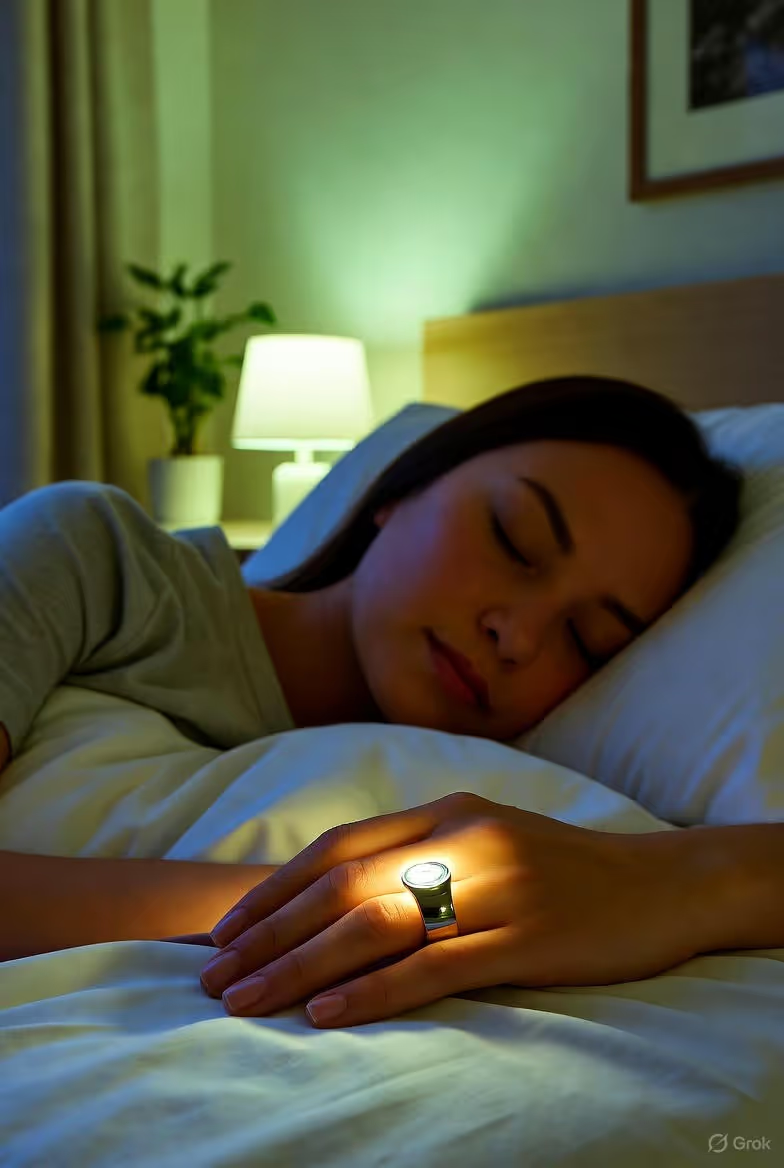
For years, the wrist was the default domain for wellness tracking. Wrist-based devices brought bio-tracking to the masses, but they come with inherent limitations for measuring the subtle physiology of calm. Their position makes them highly susceptible to motion artifacts—data noise caused by everyday arm movements. This can skew heart rate readings, especially HRV, which requires clinical-grade precision. Furthermore, to conserve battery, many wrist devices use intermittent sampling rather than continuous monitoring, potentially missing crucial physiological events.
Enter the smart ring. This unassuming piece of wearable technology is emerging as the premier tool for the Restful Living Measurement, and for compelling scientific and practical reasons.
The finger, specifically the base of the finger, hosts a dense network of capillaries and blood vessels. This vascular richness provides a stronger, cleaner photoplethysmography (PPG) signal—the optical method used to measure blood volume changes with each heartbeat. With less bone and tissue interference than the wrist, a ring sensor can capture a more accurate and consistent pulse waveform. This is paramount for calculating HRV, where accuracy is non-negotiable.
Furthermore, the finger is an ideal site for measuring core body temperature trends. While not giving a true core temperature, the proximal finger provides a reliable peripheral temperature reading that closely follows the body's circadian-driven thermal rhythms. This data is critical for assessing sleep readiness and circadian health.
The greatest advantage of a smart ring for tracking calm may be its passive nature. You wear it and forget it. Unlike a wrist device that can be bulky, get caught on sleeves, or need to be removed during certain activities, a well-designed ring integrates completely into your life. This allows for 24/7 continuous monitoring without behavior modification. It gathers data during your most authentic moments: throughout your workday, during your workout, and most importantly, throughout your entire sleep cycle without the discomfort of a wrist device.
This continuous data stream is the holy grail for building a complete picture of your restful living. It connects the dots between your daytime stress, your evening wind-down routine, and your sleep quality. You can see how a stressful afternoon meeting literally lowers your nighttime HRV, or how a yoga session in the evening improves your sleep depth. As highlighted in real user experiences on our testimonials page, this seamless integration is what makes the data actionable. It doesn't feel like you are performing for a tracker; the tracker is quietly observing the story of your life.
For a lifestyle dedicated to calm, the tool itself must not be a source of distraction or discomfort. The smart ring, by its very design, respects the tranquility it seeks to measure. It empowers you with clinical-grade insights gathered in the most natural, unobtrusive way possible, making it the definitive instrument for anyone serious about quantifying and cultivating their inner peace. To learn more about how this technology is engineered for precision, you can discover how Oxyzen works.
If calm is the currency of restful living, then sleep is its central bank. For decades, we obsessed over a single number: total hours in bed. Yet, we all know the feeling of logging "8 hours" but waking up feeling fragmented and unrefreshed. The Restful Living Measurement demands a far more sophisticated audit. It's not just about duration; it's about sleep architecture—the cyclical structure of your night—and the quality of each stage.
A full sleep cycle consists of four stages, repeated every 90-120 minutes:
A "calm" night of sleep isn't just long; it has a robust, well-proportioned architecture with sufficient cycles, ample deep sleep early in the night, and lengthening REM periods towards the morning. Disruptions to this architecture—frequent awakenings, insufficient deep sleep, or suppressed REM—are silent thieves of calm.
A advanced wellness ring tracks these stages by analyzing your heart rate, HRV, body temperature, and movement. Here’s what the data tells you:
For example, you might notice that on nights after you have alcohol—a known suppressor of REM sleep—your ring data shows a steep drop in REM duration, followed by a higher resting heart rate. Or, you may see that a consistent 10 PM bedtime correlates with a 15% increase in your deep sleep compared to nights you go to bed after midnight.
This granular sleep audit transforms you from a passive sleeper to an active sleep steward. It provides the evidence needed to tailor your environment and routines for architectural perfection. It moves the conversation from "I need more sleep" to "I need to protect my deep sleep cycle" or "I must improve my sleep consistency." This precise understanding is the first and most critical pillar in building a quantifiably calmer life. For a deeper dive into optimizing each stage of sleep, our resource library on the Oxyzen blog offers detailed guides and science-backed strategies.
While sleep provides the nightly reset, your daytime physiology tells the ongoing story of your resilience. This is where your wearable device acts as a real-time nervous system dashboard, with Heart Rate Variability (HRV) as its most important gauge.
Think of HRV as your body's most honest feedback loop. It doesn't measure how hard you're working or how stressed you feel subjectively; it measures how well your system is handling the load. A higher HRV suggests your body is in a state where it can adapt, recover, and maintain balance—the essence of calm readiness. A lower HRV indicates your system is under strain, potentially from physical training, emotional stress, illness, or poor recovery.
The power of daily HRV tracking lies in establishing your personal baseline. Unlike steps or calories, there's no universal "good" number; it's highly individual. By observing your HRV trends over time, you learn to read your body's signals:
Your Resting Heart Rate (RHR), particularly your sleeping RHR, is another vital sign on your dashboard. A elevated RHR can be an early indicator of dehydration, onset of illness, overtraining, or chronic stress.
Many devices synthesize data from HRV, RHR, and physical activity to generate a composite "Stress Score" or "Body Battery" reading. This isn't a measure of psychological anxiety, but a quantification of physiological stress on your nervous system. A high score indicates your body is in a sympathetically-dominant (fight-or-flight) state, even if you're sitting at your desk. Tracking this score throughout the day can be revelatory. You might see it spike during your commute, plummet during a walk in nature, or remain stubbornly high after a conflict.
This dashboard empowers you with proactive awareness. Instead of crashing at the end of a stressful week, you can see the signs on Wednesday. You can decide to swap a high-intensity interval training (HIIT) session for gentle yoga if your HRV is low, or you can use a breathing exercise to manually lower a high stress score before an important meeting. It turns the vague concept of "listening to your body" into a precise, data-driven dialogue. For those new to this data, our FAQ section provides clear explanations on interpreting these metrics.
Your quest for measurable calm extends beyond nightly sleep and daily stress readings; it is fundamentally governed by a 24-hour internal timer: your circadian rhythm. This biological clock, rooted in the brain's suprachiasmatic nucleus, regulates everything from hormone release (cortisol, melatonin) and body temperature to digestion and cognitive performance. True restful living is not just about getting good sleep—it's about living in sync with this innate rhythm.
When your lifestyle is misaligned with your circadian rhythm—a state known as circadian disruption—the consequences are measurable and profound. Jet lag is the acute example, but modern life creates chronic versions: social jet lag from late weekends, blue light exposure after sunset, and erratic eating schedules. This disruption fragments your physiology, leading to poor sleep, depressed HRV, dysregulated hunger hormones, and a persistent, low-grade sense of imbalance.
A smart ring provides two key proxies for assessing circadian alignment:
Aligning your rhythm, therefore, becomes a critical pillar of the Restful Living Measurement. It involves deliberate, timed behaviors:
By tracking your temperature and sleep consistency, you can experiment with these levers. You might find that eating dinner before 7 PM shifts your temperature curve favorably, or that a 20-minute morning walk boosts your daytime rhythm scores. This pillar moves you from simply sleeping well to living in a holistic, time-conscious harmony with your biology—a state where calm becomes the default, not an escape. The importance of this alignment is core to our vision at Oxyzen, which you can read more about in our story.
Life is a series of stressors—physical, mental, and emotional. The goal of restful living is not to eliminate stress, which is impossible, but to excel at recovery. Recovery is the process by which your body returns to its homeostatic baseline after a stressor, repairing tissues, rebalancing hormones, and restoring nervous system equilibrium. Your ability to do this efficiently is your Recovery Quotient, and it is the ultimate test of your calm infrastructure.
Think of it like a financial system: stress is an expenditure, and recovery is the deposit. Chronic stress without adequate recovery is like living in debt, depleting your physiological capital. High-quality recovery, on the other hand, builds resilience, making you more resistant to future stressors.
Your wearable data provides a clear window into your recovery efficacy. Here’s how to assess it:
Measuring your recovery highlights what enhances or impedes it. You will begin to see data-backed proof of what truly works for you:
By focusing on your Recovery Quotient, you shift from avoiding stress to mastering the art of the comeback. You stop fearing the expenditure because you have supreme confidence in your ability to replenish. This transforms your relationship with challenge, allowing you to engage fully with life, knowing your built-in system for calm is robust and reliable. For more on building resilience, our blog features numerous articles on recovery science.

Our physiology does not exist in a vacuum. It is in a constant, subtle dialogue with our environment. The Restful Living Measurement must, therefore, extend its gaze outward to audit the spaces where we live, work, and sleep. Often, unseen environmental factors are silently modulating our nervous system, eroding our calm in ways we've learned to ignore. By pairing physiological data with environmental observation, we can engineer spaces that actively cultivate tranquility.
Use your physiological data as a detective's tool. If you see poor sleep efficiency or elevated nighttime heart rate:
The goal is to make your environment an ally to your nervous system. When your surroundings are engineered for calm, every minute spent in them becomes a deposit into your recovery account. It reduces the background drain on your physiological resources, leaving you with greater resilience for the unavoidable stresses of daily life. It’s a powerful demonstration that restful living is not just an internal practice, but a holistic design of your life's ecosystem.
Accumulating data is only the first step. The transformative power of the Restful Living Measurement lies in the next phase: synthesis. This is where you move from being a passive observer of charts to an active author of your well-being. You begin to connect cause and effect, identify your unique triggers and boosters, and build a personalized, dynamic protocol for sustained calm.
Your wearable provides the "what"—the objective physiological outcomes. Your mindful reflection provides the "why"—the potential inputs. The magic happens when you combine them. Start a simple daily log, digital or analog, where you note:
After a few weeks, patterns will emerge that no app algorithm can fully discern for you. You are the only one who can interpret the story. For instance:
This empirical feedback loop allows you to build a "Calm Protocol" tailored exclusively to your biology and life. It consists of:
This protocol is never static. It evolves as you do, as your life changes, and as your self-knowledge deepens. The data ensures your decisions are informed, not guesswork. It removes the dogma of generic wellness advice and replaces it with the clarity of personal evidence. It is the ultimate empowerment—the wisdom that comes from truly knowing thyself, by the numbers. For support in building and refining this personal protocol, our community and resources are always available; you can reach out with your questions here.
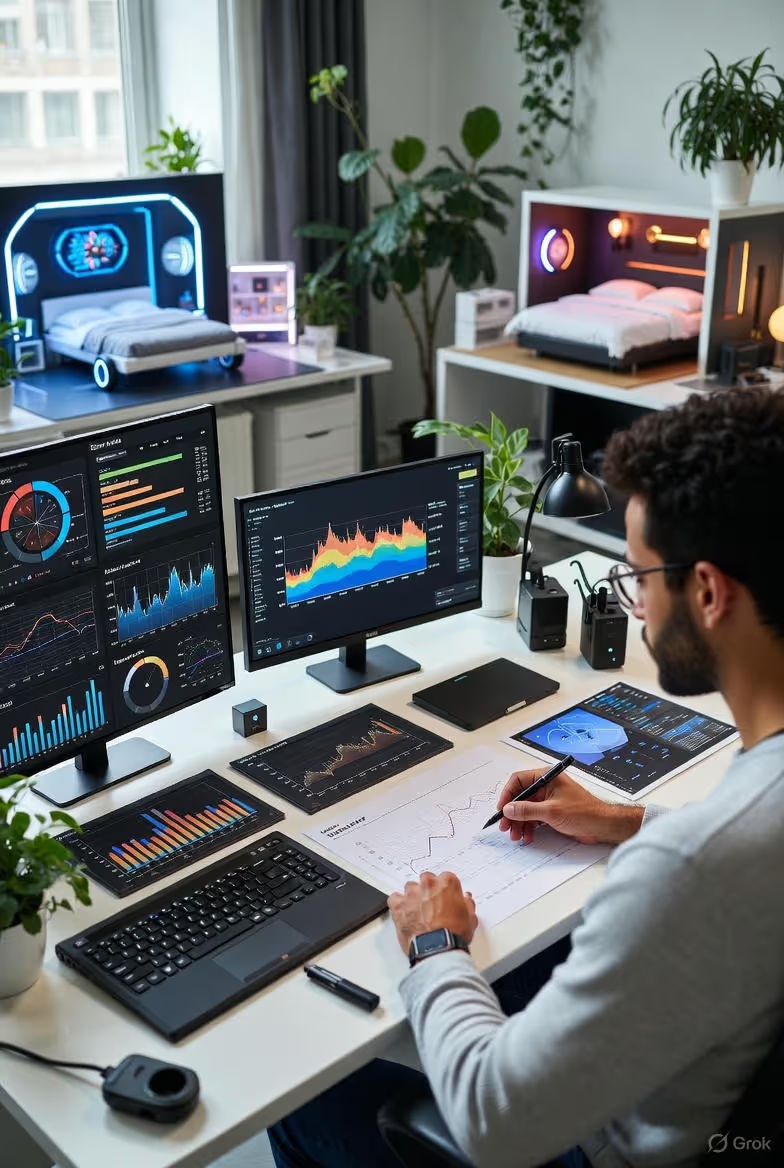
The true power of the Restful Living Measurement is not in its daily notifications, but in its long-term narrative. Daily data points can be noisy—affected by a single bad meal, a poor night's sleep, or a passing virus. The profound insights are revealed in the trendlines over weeks, months, and seasons. This macro view transforms your device from a daily coach into a strategic early-warning system, capable of identifying the slow creep toward imbalance long before it manifests as full-blown burnout or illness.
By zooming out on your HRV, sleep, and recovery scores, you can identify critical patterns:
This long-view tracking fundamentally changes your relationship with your health. You move from a reactive model—waiting until you get sick, exhausted, or anxious to take action—to a proactive, preventive model. You manage your energy and resilience like a savvy investor manages a portfolio, making small, data-informed adjustments to ensure long-term growth and stability.
It also cultivates self-compassion. On a day you feel off, you can check your trendline. If your metrics have been strong and it's just a single bad day, you can reassure yourself it's a temporary blip. If the trend has been slipping, you have clear evidence it's time to prioritize rest, without guilt or negotiation.
This is the ultimate goal: to build a life where calm is not a fleeting moment of escape, but the resilient, measurable foundation of your existence. It's about having the tools to not just chase rest, but to architect it, protect it, and understand it at a level never before possible. The journey to restful living is a lifelong practice of tuning in, and technology like the Oxyzen smart ring provides the precise tuner. To see how this long-term approach shapes our mission, you can learn more about our company's philosophy.
Data illuminates the path, but the journey towards sustained calm requires walking it. This is where the science of measurement beautifully intersects with the art of practice. By leveraging real-time physiological data as biofeedback, you can close the loop between mind and body, using concrete signals to train your nervous system toward states of deeper relaxation on demand. This transforms your wearable from a reporting tool into an interactive guide for nervous system mastery.
Biofeedback, in a clinical setting, involves using electronic monitoring to convey information about physiological processes back to the individual in real time, allowing them to gain conscious control over them. Your smart ring brings a simplified, accessible form of this powerful technique into daily life. When you can see your stress score rising or your heart rate climbing on your phone screen, that data becomes a cue—not for anxiety, but for intervention.
Here’s how to use your live data to actively cultivate calm:
1. The Breathing Pacer:
2. The Pre-Sleep Wind-Down Validation:
3. The Stress-Response Interrupt:
This active use of data fosters interoceptive awareness—the sensitivity to internal bodily signals. Over time, you begin to correlate the feeling of rising stress with the data of a rising heart rate, so you no longer need to check the app. Your own body becomes the primary feedback device. You develop an intuitive sense of your internal state and the tools to modulate it, turning moments of potential overwhelm into opportunities for practiced calm. For more techniques on harnessing this mind-body connection, our blog is a continually updated resource.
Human beings are wired for connection. Our nervous systems are not isolated units; they are permeable, influencing and being influenced by those around us through a process called co-regulation. The Restful Living Measurement, therefore, must account for the profound impact of our social ecosystem on our physiology. The quality of our relationships can be one of the most powerful modulators of calm—or one of its most potent disruptors.
Your physiological data provides an unbiased audit of your social world. It can help you answer questions like:
This isn’t about cutting people out based on data, but about bringing conscious awareness to the physiological cost or benefit of relationships. It allows you to:
By extending your measurement into the social realm, you acknowledge that restful living is not a solitary pursuit. It is fostered in communities of support and strained in environments of discord. Cultivating calm, therefore, involves consciously curating and nurturing the connections that help your nervous system feel safe and supported—a critical, often overlooked, dimension of holistic well-being.
We are familiar with the concept of food as fuel, medicine, or pleasure. In the framework of Restful Living Measurement, food becomes information—a set of instructions sent directly to your cells, immune system, and nervous system. Every meal is an experiment, and your physiological data is the result. By pairing food logging with metrics like HRV, resting heart rate, and sleep quality, you move beyond generic dietary dogma to discover your unique nutritional profile for calm.
Food influences your calm metrics through several pathways:
The goal is not to create a restrictive diet but to build a personal "Owner's Manual" for how your body responds. Here’s a methodical approach:
This process, sometimes called nutritional biofeedback, is empowering. It removes the noise of conflicting diet trends and gives you sovereign authority over your food choices based on your body’s direct communication. You stop eating according to abstract rules and start eating for measurable, serene outcomes. The food on your plate becomes a direct lever for the calm in your nervous system. For support in navigating this personal discovery, you can always find answers to common questions in our FAQ.
The fitness industry has long been obsessed with metrics of performance: faster times, heavier lifts, higher outputs. In the paradigm of restful living, we shift the focus to recovery-centric movement. The primary question becomes: "Is this activity enhancing my overall resilience and calm, or is it depleting me?" Your physiological data provides the unambiguous answer, allowing you to tailor movement as precise medicine for your nervous system.
Exercise is a classic example of hormesis—a beneficial physiological stress that, in the right dose, triggers adaptation and strengthening. However, the dose is individual and dynamic. What is strengthening one week may be damaging the next if you are under-recovered. Overtraining syndrome is essentially a severe state of nervous system exhaustion, marked by plummeting HRV, elevated RHR, insomnia, and a heightened stress response.
Your wearable data turns movement from a guessing game into a guided practice:
1. Using HRV for Daily Readiness:
Instead of following a rigid weekly workout schedule, let your morning HRV guide you.
2. Assessing the Impact of Different Modalities:
Not all exercise affects everyone the same way. Use your data to classify activities by their effect on you.
3. Timing Matters:
Your data can reveal optimal timing. For some, vigorous exercise too close to bedtime (within 2-3 hours) raises core temperature and sympathetic tone, delaying sleep onset and reducing sleep quality. For others, it has no negative effect. Only your sleep latency and deep sleep data can tell you for sure.
This data-informed approach prevents exercise from becoming another source of chronic stress. It cultivates a respectful, intuitive relationship with your body, where movement is chosen to support your holistic state of calm and resilience. It reframes fitness not as a pursuit of punishment or aesthetics, but as a foundational pillar of a restful, vibrant life. You stop working out to exhaust yourself and start moving to nourish your nervous system.
Our physical environment is only one layer of our ecosystem. Our digital environment—the constant stream of emails, notifications, news, and social media—constitutes a powerful and pervasive layer of cognitive and emotional stimulation. This "information diet" has a direct, measurable impact on our nervous system. The Restful Living Measurement must, therefore, include an audit of our cognitive load and digital consumption.
Every notification, every decision about what to click, every piece of distressing news, and every social comparison triggers micro-stressors. These activate the sympathetic nervous system in small, frequent bursts, leading to a phenomenon sometimes called "digital fight-or-flight." The cumulative effect is a background state of low-grade anxiety and cognitive fatigue, which manifests physiologically as:
Just as with food, you can use your physiological data to assess the impact of your digital habits.
The insights from this audit are not about demonizing technology, but about using it with intention. Your data provides the motivation to establish boundaries that protect your cognitive space and, by extension, your physiological calm. It proves that a cluttered mind leads to a stressed body. By consciously designing your digital consumption—scheduling email checks, curating your social media feeds, embracing single-tasking—you reduce the constant drip of cognitive stressors, freeing up immense energy for recovery and presence. This creates the mental stillness that is the perfect companion to physiological calm.
By this point, we have explored the multifaceted pillars of calm: sleep, nervous system function, circadian rhythm, recovery, environment, mind-body connection, social life, nutrition, movement, and digital hygiene. The final step in this first phase of your journey is integration. How do you synthesize this wealth of data and insight into a manageable, actionable daily practice? The answer lies in creating your personal Restful Living Dashboard—not just on your app screen, but as a holistic mindset and routine.
Structure short, focused times to consult your data and set intentions.
The Morning Review (5 Minutes):
The Evening Audit (10 Minutes):
Once a week (Sunday evening often works well), spend 15 minutes in a longer review.
The dashboard is a tool for awareness, not a report card for self-criticism. Some days, despite your best efforts, the data will be poor. That’s life. The power is in the response, not the number itself. A low HRV reading is not a failure; it’s valuable information saying, "I need care today."
The ultimate goal of this integrated practice is to internalize the dashboard. Over time, you will feel a low HRV as fatigue and a high HRV as vitality. You’ll know which foods make you feel clear and which make you feel foggy. The external device simply confirms what your attuned body already knows.
This journey of measurement is, at its heart, a journey back to yourself. It is a commitment to listening to the most fundamental parts of your being with curiosity and respect, using modern tools to honor ancient wisdom: that a calm, rested life is the foundation for everything else we wish to be and do. This is just the beginning. As you continue, you’ll delve deeper into advanced biometrics, longitudinal studies of your own data, and the profound lifestyle integration that turns measurement into transformation. To follow the next steps in this comprehensive guide, explore our ongoing blog series dedicated to mastering your well-being.
Once you have mastered the foundational pillars of sleep, HRV, and recovery, your Restful Living journey opens the door to a deeper layer of physiological insight. Advanced biometrics provided by sophisticated wearables like smart rings offer a more granular view of your internal state, allowing for earlier detection of imbalances and more precise protocol adjustments. These are the metrics that move you from general wellness to optimized human performance and resilience.
While your daily HRV score is invaluable, the raw data contains richer patterns. Two advanced concepts are RMSSD and the HRV histogram.
Respiratory Rate (RR), or breaths per minute, is a critical vital sign that has historically been overlooked in consumer health tracking. It is now accessible through the optical sensors in advanced wearables.
Blood Oxygen Saturation measures the percentage of hemoglobin in your blood that is carrying oxygen. While typically very stable (95-100%) in healthy individuals at sea level, monitoring it overnight unlocks crucial insights.
Integrating these advanced metrics transforms your understanding from a basic report to a sophisticated diagnostic panel. A pattern of rising nighttime respiratory rate, dipping SpO2, and a flattened HRV histogram becomes a clear, multi-variable signal that your system is under a specific type of strain, guiding you to seek the right kind of help or intervention. This is the cutting edge of personal physiological awareness.
The ultimate value of the Restful Living Measurement accrues over time. A single day’s data is a snapshot; a year’s data is a documentary. By committing to long-term tracking, you conduct a longitudinal study of yourself, revealing patterns influenced by seasons, hormonal cycles, life stages, and the cumulative impact of your habits. This macro view provides wisdom that daily metrics cannot.
Your body is not separate from the natural world. As daylight hours, temperature, and social rhythms change with the seasons, so does your internal biology. Tracking over a year allows you to map your personal seasonal patterns:
For individuals who menstruate, the hormonal fluctuations of the menstrual cycle create a predictable, repeating pattern in physiological data—a "infradian rhythm" layered on top of the circadian rhythm.
The Revolutionary Insight: Tracking these patterns objectively de-stigmatizes and demystifies the cycle. A drop in HRV in the luteal phase is not a "failure" or a character flaw; it is a normal, physiological event. This knowledge allows for cycle-syncing your life: planning challenging workouts and big presentations for the high-resilience follicular phase, and scheduling more rest, creative work, and self-care during the luteal phase. It turns a source of potential frustration into a powerful planning tool for sustained calm across the entire month.
Your multi-year dataset becomes a historical record of your life’s chapters. You can look back and see the physiological imprint of:
This record fosters self-compassion and provides perspective. During a difficult period, you can look back and see, "I have been through hard times before. My body recovered. This is the pattern." It proves your resilience in data form. It also helps you identify which life events took the greatest toll and which coping strategies were most effective, informing how you navigate future challenges.
This longitudinal view is the culmination of the measurement journey: you are no longer just tracking stats; you are writing the biography of your body, learning its language, respecting its rhythms, and partnering with it to build a life of enduring, documented peace.
While deeply personal, the pursuit of measurable calm has a powerful social dimension with transformative potential. As more individuals engage in self-tracking, a new possibility emerges: moving from personal insights to collective intelligence. When aggregated and anonymized, this data can paint a picture of community well-being, inform workplace policy, and even shape public health initiatives, fostering environments that are inherently more conducive to restful living for all.
Imagine a workplace where team well-being is measured as seriously as quarterly profits. With voluntary, anonymized aggregation of wearable data (with strict ethical consent), organizations could gain unprecedented insight into the physiological impact of their culture.
This is not about surveillance, but about creating evidence-based humane workplaces. It shifts the responsibility from the individual employee to "tough it out" to a shared responsibility to create a work ecosystem that sustains human energy. As explored in our company mission, we believe technology should empower human potential, not exploit it—and that includes fostering restorative work environments.
On a broader scale, aggregated, anonymized data from consenting citizens could revolutionize urban planning and public health.
This vision hinges on critical ethical pillars: consent, anonymity, transparency, and individual ownership. Data must always belong to the individual, with aggregation being a voluntary opt-in. Its purpose must be to uplift, not to judge or discriminate.
On a more intimate level, sharing your personal journey with trusted friends or family creates a "calm community." Comparing notes on how different vacations affected your sleep, or supporting a friend who sees their HRV dropping, fosters a culture where well-being is a shared value, not a competitive secret. It normalizes the conversation around stress, recovery, and the deliberate pursuit of peace.
In this way, the Restful Living Measurement transcends the self. It becomes a tool for social change, advocating for a world that is designed not just for productivity and consumption, but for the deep, sustainable well-being of its inhabitants. It’s about building a society that values calm as a public good.
In our deep dive into data, metrics, and trends, we must arrive at a crucial, humbling checkpoint: Not everything that counts can be counted. The pursuit of restful living, while magnificently illuminated by technology, is not contained by it. There are dimensions of calm, joy, and human experience that exist beyond the resolution of any sensor. A wise practitioner learns to use data as a guide, not a gospel, and to honor the essential, unmeasurable qualities of a peaceful life.
A potential pitfall of deep self-tracking is the inversion of its purpose: instead of using data to reduce stress, we become stressed by the data itself. This manifests as:
This turns the tool into a taskmaster, defeating its very purpose. Calm cannot be forced; it must be allowed. The data should inspire curiosity, not tyranny.
Some of the most profound sources of calm leave no digital fingerprint:
The goal is a harmonious integration:
The Restful Living Measurement is at its most powerful when it fades into the background of a well-lived life. It provides the scaffolding and the feedback, but the beautiful, unquantifiable moments of peace, love, and presence are what fill the structure with meaning. This balanced perspective ensures that our quest for calm enriches our humanity rather than reducing it to a dataset. For stories of how our community finds this balance, you can read real user experiences here.
As we stand at the forefront of this measurement revolution, it’s thrilling to look ahead. The technology that currently provides insightful hindsight is rapidly evolving toward predictive intelligence and deeply integrated support. The future of Restful Living Measurement lies in proactive, personalized, and contextual systems that don’t just tell you how you slept, but help you sleep better before your head even hits the pillow.
Current wearables are largely descriptive (showing what happened) and diagnostic (helping you understand why). The next leap is predictive analytics.
An AI that only sees your heart rate is blind. The future lies in systems that synthesize data from multiple life domains:
The smart ring will likely become the central, trusted biometric sensor in a wider ecosystem of health technology.
This future is not about more distracting notifications; it’s about technology that acts as a subtle, intelligent partner in crafting your well-being. It’s anticipatory, personalized, and focused on creating the conditions for calm to flourish automatically. The device becomes less of a tracker and more of an ambient guardian of your restful living. To follow the development of these integrative technologies, you can stay updated through our main platform.
After exploring the depth, breadth, and future of this paradigm, you may be wondering: "Where do I actually start?" The journey of a thousand data points begins with a single step—and that step is about intention, not perfection. Here is a practical, gentle guide to embarking on your own path to measurable calm.
Goal: Collect baseline data without judgment. Cultivate curiosity.
Goal: Start to identify one or two clear patterns.
Goal: Build your first version of a "Personal Calm Protocol."
Throughout this process, treat yourself with the kindness you would offer a friend who is learning a new skill. There will be "bad" data days. There will be weeks you ignore your protocol. This is not failure; it is data. The journey of restful living is not a linear ascent to perfect calm, but a spiral—you circle back to the same lessons at deeper levels, each time with more self-knowledge and grace.
You are not optimizing a machine. You are cultivating a relationship with the intricate, wise, and feeling organism that is you. The measurements are simply the language you are learning to speak to understand yourself better. Ready to begin? Your story of data, insight, and profound peace starts now. We are here to support your journey every step of the way; learn more about how to get started.
Your Trusted Sleep Advocate: Sleep Foundation — https://www.sleepfoundation.org
Discover a digital archive of scholarly articles: NIH — https://www.ncbi.nlm.nih.gov/
39 million citations for biomedical literature :PubMed — https://pubmed.ncbi.nlm.nih.gov/
Experts at Harvard Health Publishing covering a variety of health topics — https://www.health.harvard.edu/blog/
Every life deserves world class care :Cleveland Clinic - https://my.clevelandclinic.org/health
Wearable technology and the future of predictive health monitoring :MIT Technology Review — https://www.technologyreview.com/
Dedicated to the well-being of all people and guided by science :World Health Organization — https://www.who.int/news-room/
Psychological science and knowledge to benefit society and improve lives. :APA — https://www.apa.org/monitor/
Cutting-edge insights on human longevity and peak performance:
Lifespan Research — https://www.lifespan.io/
Global authority on exercise physiology, sports performance, and human recovery:
American College of Sports Medicine — https://www.acsm.org/
Neuroscience-driven guidance for better focus, sleep, and mental clarity:
Stanford Human Performance Lab — https://humanperformance.stanford.edu/
Evidence-based psychology and mind–body wellness resources:
Mayo Clinic — https://www.mayoclinic.org/healthy-lifestyle/
Data-backed research on emotional wellbeing, stress biology, and resilience:
American Institute of Stress — https://www.stress.org/


