


The Restful Living Travel Guide: Maintaining Calm on the Go
Maintain routines like morning meditation, pack comfort items, and schedule downtime even while traveling.
Maintain routines like morning meditation, pack comfort items, and schedule downtime even while traveling.
%402x.svg)
The suitcase is packed, the itinerary is set, and a world of new experiences awaits. Yet, for so many of us, the thrill of travel is often shadowed by a familiar undercurrent of stress. The relentless pace of airports, the disruption of routine, the constant sensory input, and the pressure to “make the most” of every moment can quietly erode the very rejuvenation we seek. We return home needing a vacation from our vacation, our bodies buzzing with fatigue rather than restored with energy. What if travel didn’t have to be this way? What if the journey itself could become a practice in restful living?
Welcome to a new paradigm of travel. This isn’t about adding more to your packing list; it’s about integrating a mindset and a toolkit for cultivating unwavering calm, no matter where you are in the world. Restful living on the go is the art of maintaining your inner equilibrium amidst external chaos. It’s about leveraging technology, psychology, and simple rituals to protect your sleep, manage your energy, and navigate the unpredictable with grace. In this comprehensive guide, we will explore how the modern traveler can move through the world not as a drained tourist, but as a centered, resilient explorer. From the neuroscience of jet lag to the portable practices of mindfulness, and the revolutionary role of biometric-tracking technology like the smart ring, we’ll equip you with everything you need to transform your travels into a truly restorative adventure.

To conquer travel stress, we must first understand it. That feeling of being “wired but tired” after a long flight, the irritability that surfaces in a crowded market, the elusive sleep in a strange hotel bed—these aren’t just inconveniences. They are physiological and psychological responses to a profound disruption of your body’s carefully calibrated systems.
At the core is the hijacking of your autonomic nervous system (ANS). Your ANS has two main gears: the sympathetic (“fight-or-flight”) and the parasympathetic (“rest-and-digest”). Travel, with its deadlines, uncertainties, and novel stimuli, is a potent sympathetic nervous system activator. The constant low-grade alertness pumps cortisol and adrenaline, increasing heart rate, blood pressure, and muscle tension. Over hours or days, this state depletes your resources, leaving you feeling shattered.
Simultaneously, your circadian rhythms—the roughly 24-hour cycles governing sleep, hormone release, and body temperature—are thrown into disarray. Crossing time zones creates the infamous phenomenon of jet lag, where your internal clock is out of sync with the external light-dark cycle. This misalignment disrupts melatonin production, digestion, and cognitive function. Research from the Sleep Research Society indicates that it can take nearly one day per time zone crossed for your circadian rhythms to fully adjust.
Furthermore, travel imposes a cognitive load that is often underestimated. Every minor decision—navigating a foreign transit system, decoding a menu, calculating currency—requires mental energy. This “decision fatigue” drains the prefrontal cortex, the brain region responsible for willpower, focus, and emotional regulation. The result? You’re more likely to snap at a partner, make poor choices, or feel overwhelmed by simple tasks.
Finally, we cannot ignore the impact of environmental factors. The low humidity in airplane cabins leads to dehydration, exacerbating fatigue and headaches. Exposure to new pathogens challenges the immune system. Even the simple act of sleeping in a new place, known as the “first-night effect,” documented in studies on sleep, causes one hemisphere of the brain to remain in a lighter, more vigilant state.
Understanding this multi-system assault is empowering. It moves the experience from “I’m bad at traveling” to “my body is having a normal response to abnormal demands.” This knowledge forms the foundation for targeted, effective interventions. It’s the first step in shifting from being a passive victim of travel stress to an active architect of travel calm. For a deeper dive into how technology can help you understand your body’s unique stress signals, the resources at Oxyzen.ai/blog offer ongoing insights into biometrics and personal wellness.
The journey to a restful trip begins long before you arrive at the airport. Proactive preparation is your most powerful tool for mitigating stress. This phase is about strategically “loading” your system with resilience, much like an athlete prepares for a race. A chaotic, last-minute scramble virtually guarantees a frazzled start, while a thoughtful blueprint sets a tone of calm control.
Start by reframing your mindset. View your travel preparation not as a stressful to-do list, but as the first act of your adventure—an exercise in intentionality. Begin at least one week out, focusing on sleep banking. Prioritize getting 7-9 hours of quality sleep per night. This builds a physiological buffer, making you more resilient to the inevitable sleep disruptions ahead. If you’re crossing multiple time zones, consider gently shifting your sleep and meal times by 30-60 minutes each day toward your destination’s schedule. This gradual adjustment can soften the blow of jet lag.
Next, master the art of the “stress-free pack.” Create a master packing list categorized by function (e.g., essentials, clothing, tech, wellness). Packing cubes are more than an organization fad; they reduce decision fatigue at your destination and create a sense of order. Crucially, assemble a “Sanity Kit.” This is a small pouch containing items specifically designed to support your nervous system:
Digitally, prepare your devices to serve your calm, not disrupt it. Download meditation apps, podcasts, and calming playlists for offline use. Set up automatic “out of office” replies and manage email expectations to create true psychological disconnection. Inform a few key clients or contacts of your limited availability. This boundary-setting is a gift to your future self.
Finally, conduct a “home base” ritual. Tidy your living space, take out the trash, and change your sheets. The powerful psychological comfort of returning to an orderly, welcoming home cannot be overstated. It removes a latent source of anxiety and provides a comforting anchor to look forward to.
By investing time in this pre-travel blueprint, you transition from your everyday life to your traveler identity with agency and grace. You are not simply fleeing your routine; you are consciously choosing a new state of being, well-equipped for the journey ahead. The story of how intentional design can transform experience is at the heart of our philosophy at Oxyzen.ai/our-story.
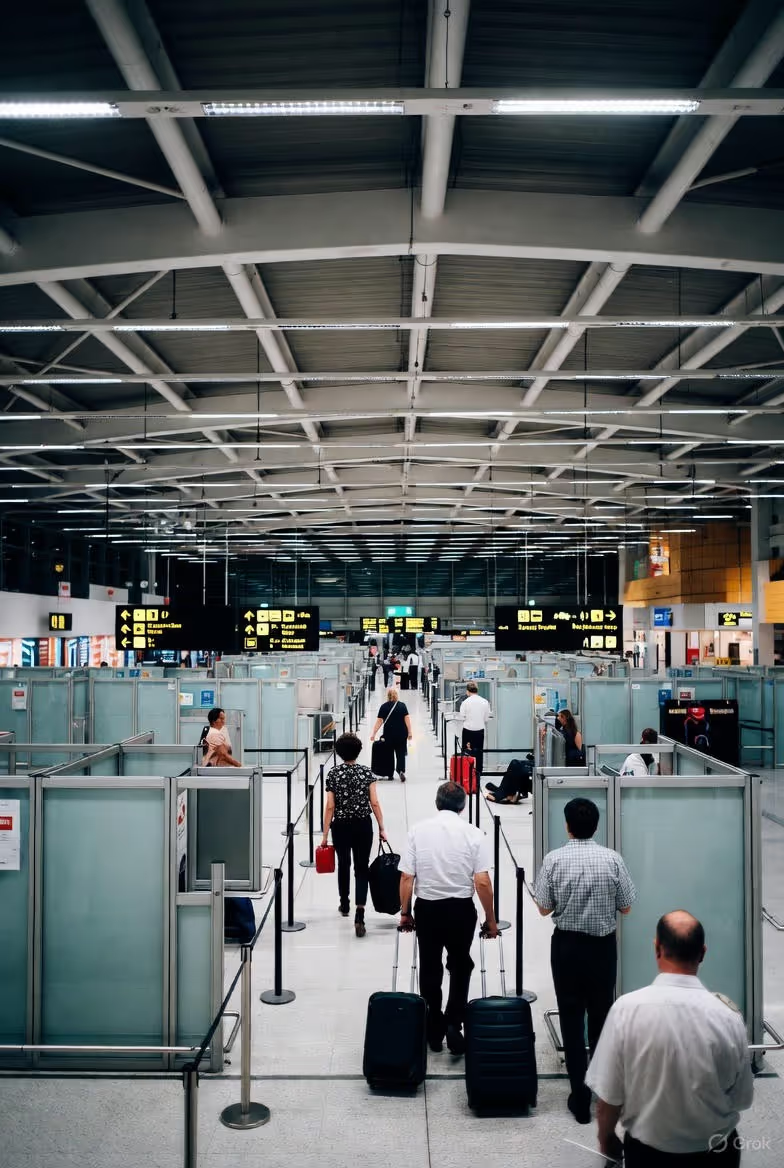
The transit phase—often the most intensely stressful part of travel—is where your preparations meet reality. It’s a marathon of waiting, lines, and confined spaces. Yet, with a shift in strategy, airports and planes can be transformed from pressure cookers into sanctuaries of transition.
Your first weapon is time abundance. The single greatest source of transit anxiety is the fear of missing a connection. Rigorously adopt the policy of “arrive early, then relax.” For international flights, aim for 3 hours. This buffer turns a frantic sprint into a leisurely stroll. Once checked in and through security, your time is your own. Seek out quiet spaces; many airports now have yoga rooms, interfaith chapels, or designated silent zones. If none exist, find a gate in a distant, less crowded terminal.
Onboard the aircraft, your mission is to signal safety to your nervous system. Create a personalized cocoon. Immediately upon sitting down, use disinfectant wipes on your immediate area (tray table, armrests, screen). This isn’t just about germs; it’s a ritual of claiming your space. Layer your tools: noise-cancelling headphones over earplugs, an eye mask, and your scarf or pashmina. This physical barrier from the environment is profoundly calming.
Hydration is a non-negotiable physiological intervention. Cabin air is notoriously dry, with humidity often below 20%. Dehydration worsens jet lag symptoms, fatigue, and headaches. Drink water consistently—aim for 8 ounces per hour in flight—and avoid alcohol and caffeine, which are diuretics and further disrupt sleep. Use a hydrating facial mist and nasal saline spray to combat mucosal dryness.
Movement is medicine, even at 35,000 feet. Set a timer to gently mobilize every 60-90 minutes. Perform seated ankle circles, knee lifts, and gentle neck rolls. When possible, stand in the aisle and do calf raises. This stimulates circulation, prevents deep vein thrombosis (DVT) risk, and alleviates physical stiffness that can amplify mental stress.
Finally, manage your sensory and mental input. Instead of binge-watching stimulating movies or scrolling through work emails, curate your entertainment for calm. Listen to an audiobook, a calming podcast, or instrumental music. Practice guided visualization: imagine yourself already at your destination, feeling relaxed and happy. This isn’t mere daydreaming; it uses the brain’s capacity for neuroplasticity to begin building positive neural pathways associated with your trip.
By approaching transit as a practice in mindful presence rather than an obstacle to endure, you arrive at your destination not as a depleted shell, but as a centered human being, ready to engage. This proactive approach to personal well-being in challenging environments mirrors the mission we pursue every day, which you can read more about here.
Sleep is the cornerstone of restful living, and its fragility during travel is a universal challenge. The “first-night effect,” unfamiliar noises, different bedding, and light pollution can turn a hotel room into a site of nightly frustration. The art, therefore, lies not in seeking perfect sleep, but in engineering an adaptable sanctuary that cues your brain for rest, anywhere.
Your primary tool is environmental control. Upon entering your accommodation, conduct a “sleep audit.” Identify and mitigate disruptors:
Next, import familiarity. Your brain seeks the known for safety. Pack a small “sleep ritual kit”: a travel-sized version of your usual pillow spray, a specific lotion you use before bed at home, or even your own pillowcase in a familiar fabric (silk or cotton). The scent and tactile sensation are powerful neural cues that it’s time for sleep.
Wind down with intention. The pre-sleep hour is sacred. Avoid screens (blue light suppresses melatonin) and stimulating conversations. Instead, adopt a “digital sunset.” Read a physical book (not a thriller!), practice a short, gentle yoga sequence like “legs up the wall,” or do a 10-minute body scan meditation. The goal is to transition your nervous system from sympathetic to parasympathetic dominance.
Be smart about jet lag management. Upon arrival, immediately align with the local light-dark cycle. If you arrive during the day, seek bright morning light exposure—go for a walk outside. Light is the primary regulator of your circadian clock. If you must nap upon arrival, limit it to a 20-minute “power nap” to avoid deepening sleep inertia and prolonging jet lag.
Finally, release the pressure. The anxiety about not sleeping is often more sleep-disruptive than the environment itself. Practice self-compassion. Remind yourself that even resting quietly with your eyes closed is restorative. If sleep doesn’t come after 20 minutes, get out of bed, read in dim light, and try again only when sleepy.
By mastering these adaptable strategies, you reclaim agency over your sleep. The bedroom, any bedroom, becomes a space you actively craft for restoration, turning one of travel’s biggest challenges into a predictable pillar of your daily calm. To see how others have successfully tackled this challenge, browse real user experiences in our testimonials section.

Travel often involves long periods of sedentariness—sitting in transit, on tours, or at cafes—punctuated by bursts of intense, often disorienting, activity. This disruption to your body’s natural movement rhythms can lead to stiffness, low energy, and a sense of disembodiment. Mindful movement and grounding practices are your antidote, reconnecting you to your physical self and anchoring you in the present moment, wherever you are.
Forget the idea of needing a full gym or a 60-minute workout. Micro-movements are your travel superpower. These are brief, intentional movements woven into the fabric of your day. Upon waking, before even getting out of bed, practice five minutes of gentle spinal twists and cat-cow stretches. While waiting for a coffee or in a queue, practice balanced standing on one foot (improving proprioception), or do subtle shoulder rolls and neck releases. These acts counteract the physical compression of travel and remind your brain of its connection to your body.
Incorporate “walking meditation” into your sightseeing. Choose a stretch of your walk—perhaps through a park or along a quiet street—and dedicate it to sensory awareness. Feel the contact of your feet with the ground. Notice the rhythm of your breath. Observe sights, sounds, and smells without judgment or the immediate need to photograph them. This transforms a simple transit from point A to point B into a profound practice of presence, deepening your experience of a place.
Seek out local movement practices. This is a beautiful way to engage with culture while caring for your body. Attend a gentle yoga class, try a Tai Chi session in a park, or find a studio offering introductory lessons in a local dance. The language of movement is universal, and participating can be incredibly grounding and connecting.
Don’t underestimate the power of barefoot grounding (earthing). When safe and appropriate, find a patch of grass, sand, or earth and stand or walk barefoot for a few minutes. A growing body of research, including reviews published in the Journal of Environmental and Public Health, suggests direct physical contact with the Earth’s surface electrons can reduce inflammation, improve sleep, and reduce stress markers. It’s a simple, potent way to literally discharge the static of modern travel and reconnect with the planet.
Finally, practice progressive muscle relaxation (PMR) in your room. Lying down, systematically tense and then release each muscle group from your toes to your head. This practice, which takes less than 10 minutes, is remarkably effective at identifying and releasing the physical tension we unconsciously carry, especially in the jaw, shoulders, and back—common storage sites for travel stress.
By prioritizing mindful movement, you ensure your body is not just a vehicle being dragged from landmark to landmark, but an active, felt participant in the journey. You combat lethargy, improve mood, and create a deeper, more integrated travel memory. For more resources on integrating mindfulness and movement into a busy life, explore our blog.
In our hyper-connected world, the smartphone is both a travel lifeline and a primary source of anxiety. The constant ping of notifications, the pressure to document and share, and the temptation to “just check work email” can fracture our attention and pull us out of the present moment. An intentional digital strategy is therefore not a luxury, but a necessity for restful travel. The goal is not to abandon technology, but to harness it consciously to support your calm.
Begin with a pre-travel digital declutter. Unsubscribe from non-essential email lists and turn off push notifications for all social media and news apps. This reduces the digital “noise” vying for your attention. On your devices, create a “Travel” folder or home screen containing only the apps you will genuinely need: maps, translation, boarding passes, a meditation app, your camera, and perhaps one or two key communication apps.
Establish sacred “tech-free zones and times.” The most powerful rule is: no phones at meals. This single practice fosters deeper connection with travel companions or allows for mindful solo dining. Make your bedroom a phone-free zone after your wind-down ritual begins; charge it across the room. Designate the first hour of your morning as screen-free, allowing your mind to wake naturally and set its own intentions for the day.
Shift from documentation to experience. The compulsion to photograph everything can create a layer of separation between you and the moment. Practice the “see it, then shoot it” method. First, take 10-30 seconds to simply observe a scene with all your senses. Then take your photo. This ensures the memory is first encoded in your nervous system, not just your camera roll. Consider using a dedicated camera for more intentional photography, leaving your phone tucked away.
Use technology for deep enhancement, not distraction. Download audiobooks or podcasts related to your destination’s history or culture. Use a language learning app for 10 minutes a day to connect with locals. Employ a star-gazing app to understand the night sky in a new hemisphere. These uses feel enriching rather than depleting.
Finally, schedule specific, limited times for “connection bursts.” Perhaps 30 minutes in the late afternoon to check messages, post a single curated update, and connect with family back home. By batching this activity, you prevent the constant, low-grade leakage of attention throughout the day. You remain the master of your digital domain, using it as a tool for deeper engagement with the world directly in front of you. For questions on balancing technology and wellness, our comprehensive FAQ page provides helpful guidance.
Travel is a feast for the senses, and local cuisine is one of its greatest joys. However, the disruption to your usual eating patterns—airplane food, irregular meal times, unfamiliar ingredients, and indulgent treats—can wreak havoc on your energy, digestion, and mood. You don’t need to deprive yourself; the strategy is to establish “nutritional anchors” that provide stability, allowing you to explore and enjoy without crashing.
The foundational anchor is hydration. We’ve mentioned it for transit, but it’s a 24/7 priority. Chronic low-grade dehydration is a common culprit behind travel fatigue, headaches, and brain fog. Carry that reusable bottle everywhere and aim to fill it multiple times a day. In hot climates or with increased activity, add an electrolyte tablet or powder to one bottle per day to replenish minerals lost through sweat.
Become a master of the stabilizing first meal. However your day starts, anchor it with a balance of protein, healthy fat, and fiber. This combination provides sustained energy, stabilizes blood sugar, and prevents mid-morning cravings that lead to poor snack choices. Examples: plain yogurt with nuts and local fruit; eggs with avocado and whole-grain toast; a smoothie with protein powder, nut butter, and spinach.
Practice strategic indulgence. The “all-or-nothing” mindset—either rigid restriction or a free-for-all—leads to stress and physical discomfort. Instead, adopt an 80/20 or “anchor and explore” approach. Ensure 80% of your meals are built around whole, recognizable foods: lean proteins, vegetables, fruits, and whole grains. Then, with 20% of your choices, freely enjoy the local pastries, rich sauces, or special desserts guilt-free. This balance prevents digestive upset and energy swings while allowing for full cultural participation.
Pack smart snacks. Never get caught “hangry” in a place where your only options are processed junk. Your pre-packed snack arsenal (nuts, seeds, dark chocolate, protein bars, dried fruit) is a lifeline. It gives you the power to wait for a good meal rather than settling for a substandard one out of desperation.
Listen to your body’s true signals. Travel excitement can mask true hunger and fullness cues. Practice mindful eating, especially with new foods. Eat slowly, savor each bite, and check in with your stomach halfway through a meal. It’s okay to leave food on your plate. Respecting your body’s signals is a profound act of self-care that maintains your energy for exploration.
By viewing food as foundational fuel first and experiential joy second, you create a stable internal environment. Your body becomes a reliable, energized partner for your adventures, not a source of unpredictable complaints. This holistic view of wellness, where nutrition, technology, and mindfulness intersect, is central to our vision at Oxyzen.ai.
In the quest for restful travel, subjective feeling is important, but objective data is transformative. This is where the silent, continuous power of a smart ring becomes your ultimate travel companion. Unlike bulky watches or phones you must remember to charge, a device like the Oura Ring or similar operates discreetly, gathering a rich stream of biometric data that offers an unprecedentedly clear window into your body’s internal state—the very state travel so profoundly disrupts.
The core superpower of a smart ring in transit is its ability to measure your stress load objectively through heart rate variability (HRV). HRV is the subtle variation in time between your heartbeats, and it’s a gold-standard, non-invasive metric for autonomic nervous system balance. High HRV indicates a resilient, adaptable system with strong parasympathetic (“rest-and-digest”) tone. Low HRV signals a stressed, taxed system dominated by sympathetic (“fight-or-flight”) activity. During a chaotic travel day, your smart ring can show you your HRV dipping in real-time, providing concrete evidence of your stress load. This awareness alone is powerful, moving you from a vague feeling of being “wired” to a quantifiable understanding.
Its second critical role is as a jet lag and recovery scientist on your finger. By tracking your sleep stages (light, deep, REM), body temperature, and respiratory rate, it gives you a precise report card on your sleep quality in that unfamiliar hotel bed. You’ll see exactly how the “first-night effect” manifests for you. More importantly, it provides a Readiness Score—a composite metric that considers your sleep, activity, and HRV to recommend how much you should push or rest each day. This is invaluable when navigating a new time zone. Should you embark on that all-day hike, or prioritize a gentle stroll? Your data can guide you toward choices that support recovery, preventing burnout halfway through your trip.
Furthermore, it helps you optimize your routines. You can run simple experiments: Does a 20-minute meditation before bed improve your deep sleep percentage? Does drinking more water during your flight improve your next-day readiness? Does that late-night espresso with dinner truly disrupt your sleep architecture? The ring provides the feedback loop to personalize and refine your travel wellness strategies with scientific precision.
Finally, it offers proactive alerts. Some advanced devices can detect notable spikes in resting heart rate or drops in HRV that may indicate your body is fighting off an illness—allowing you to prioritize rest and hydration before full-blown symptoms appear. In the context of travel, this early-warning system can save a trip.
Wearing a smart ring turns you from a passive experiencer of travel’s effects into an active researcher and manager of your own well-being. It provides the missing link between your actions and their physiological consequences, empowering you to make informed decisions that uphold your calm and vitality throughout your journey. To discover how this technology works in practice and explore the specifics, learn more about smart ring technology.
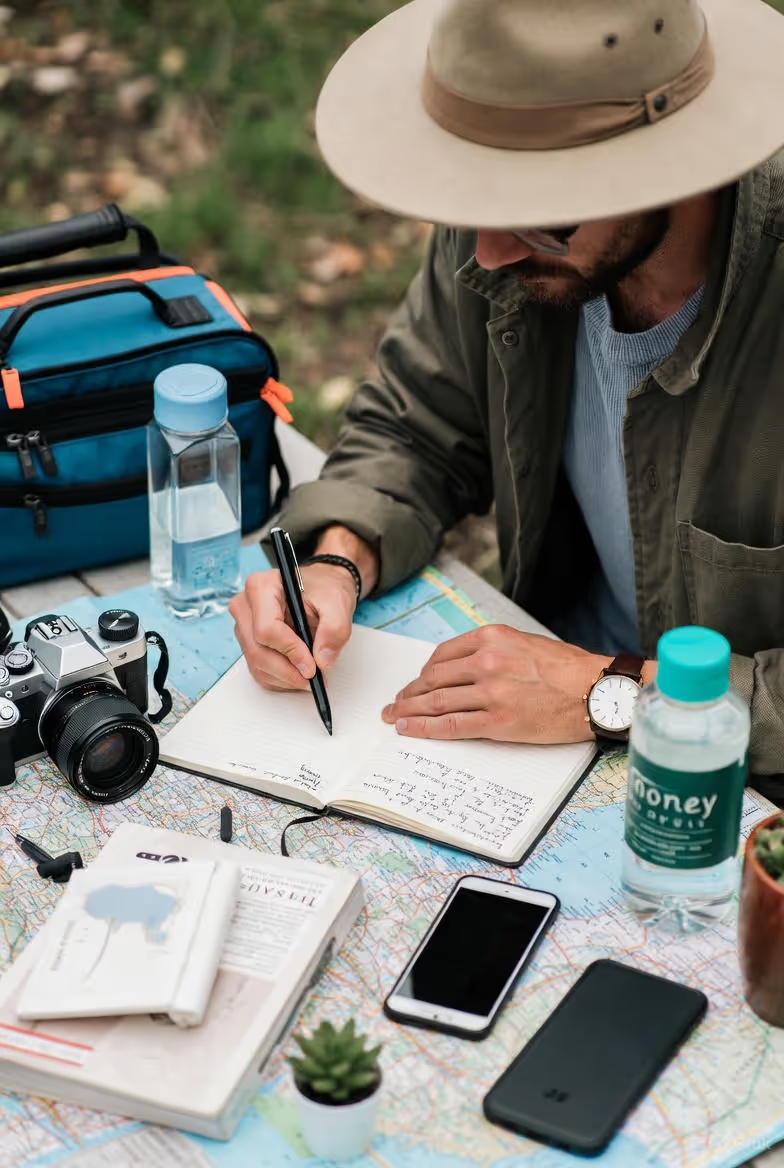
We have journeyed through the theory and science of travel stress, exploring strategies from mindset to movement, sleep to nutrition, and technology. Now, it’s time to synthesize these elements into a practical, personalized system—your own Restful Travel Toolkit. This isn’t a one-size-fits-all checklist, but a curated collection of principles, practices, and tools that resonate with your unique biology and travel style.
Start by conducting a personal travel audit. Reflect on your past trips. When did you feel your best? Your worst? What specifically drained you (e.g., was it the noise, the food uncertainty, the social overload)? What simple act restored you (e.g., a quiet morning coffee, a walk alone, an early night)? Your own history is your best data source. Use it to identify your top 2-3 vulnerability points and your top 2-3 restorative levers.
Based on this audit, create your non-negotiable core rituals. These are 3-5 simple practices you commit to every single day of your trip, no matter what. They become your portable anchor. Examples could be: “Morning: 5 minutes of stretching and 10 minutes of journaling with my coffee. Evening: 15-minute digital sunset and use of my sleep spray.” The consistency of these micro-rituals creates a thread of familiarity that weaves through the novelty of travel.
Next, assemble your physical toolkit based on the chapters we’ve covered. Use the “Sanity Kit” and “Sleep Ritual Kit” concepts, but tailor them. If you know you’re sensitive to sound, invest in high-fidelity earplugs. If digestion is your weak point, pack your preferred probiotic and digestive enzymes. If anxiety flares, include a small notecard with your favorite grounding breathing technique. The goal is lightweight, high-impact preparedness.
Integrate your biometric feedback loop. If you use a smart ring or other tracker, decide how you will engage with the data. Perhaps you check your Readiness Score each morning to guide your activity level. Maybe you review your sleep data once a week to spot trends. The key is to use the information to inform compassionate choices, not to create a new source of performance anxiety. Let it be a guide, not a judge.
Finally, build in flexibility and self-compassion. Your toolkit is a support system, not a rigid doctrine. There will be days when the ritual doesn’t happen, when you eat all the things, and stay out too late. That’s not failure; it’s part of the human experience of travel. The toolkit is there for the next day, to help you gently reset. The ultimate skill of restful living is the ability to notice when you’re off-center and, without self-criticism, use your tools to find your way back.
By taking the time to consciously build this toolkit, you embark on every future trip not as a blank slate vulnerable to chaos, but as a self-aware, well-resourced traveler. You carry with you an infrastructure for calm, ensuring that your adventures in the outer world are matched by a sustained peace in your inner world. For inspiration from others on their journeys to balanced living, you can always read real customer reviews and stories.
Travel fundamentally reshapes our social landscape. We may be navigating the intense, 24/7 company of a partner or family, the curated camaraderie of a group tour, or the profound solitude of a solo journey. Each scenario presents unique challenges to our inner equilibrium. Restful living requires not just managing our environment, but skillfully managing our social energy—the currency of interaction that can be generously spent or dangerously depleted.
The cornerstone of this management is intentional energy budgeting. Before your trip, honestly assess your social battery. Are you an introvert who recharges alone, or an extrovert who draws energy from others? There’s no right answer, only self-awareness. Once you know your default, you can plan accordingly. For the introvert traveling with others, this means proactively scheduling “appointments” with yourself—a morning walk alone, an hour reading in a cafe, retiring to your room 30 minutes early. For the extrovert traveling solo, it might mean booking a group activity or striking up conversations at a communal table to fulfill that need for connection.
Master the art of the graceful pause. In group settings, the pressure to participate in every activity is immense. Yet, succumbing to “FOMO” (Fear Of Missing Out) is a direct path to resentment and exhaustion. Practice the polite but firm decline: “That museum tour sounds amazing, but I’m going to recharge at the gardens and meet you all for dinner. Can’t wait to hear about it!” This communicates self-care, not disinterest. It allows you to engage fully when you are present, rather than being physically there but mentally drained.
For those traveling with a partner or family, establish communication protocols. Conflict on the road often stems from mismatched expectations or unspoken irritations. Implement a daily “travel check-in”—perhaps over breakfast or an evening drink. Use a simple framework: “What’s one thing you’re really looking forward to today? Is there anything you’re feeling anxious about?” This preemptively surfaces issues and aligns your rhythms. Also, don’t underestimate the power of splitting up for a few hours to pursue individual interests. You’ll reunite with stories to share and renewed appreciation for each other’s company.
Solo travelers face the opposite challenge: the potential for loneliness or the pressure to be constantly “on” and social. Here, the skill is curating meaningful micro-connections. Instead of seeking deep friendships, look for low-stakes, positive interactions: a smile and a thank you to a vendor, a question to a fellow traveler about their journey, a compliment to a local. These tiny moments of shared humanity can be incredibly nourishing. Furthermore, use solo time as a deep practice in self-connection. Journal extensively, sit in a square and people-watch, or enjoy a long meal where you savor every bite without distraction. This isn’t loneliness; it’s a cultivated, rich solitude.
Finally, leverage technology wisely for connection back home. Scheduled, short video calls can alleviate homesickness, but constant texting and scrolling through social media feeds can foster a sense of disconnection from your present reality and incite comparison. Be intentional: share a few highlights, then return to the world directly in front of you.
By consciously orchestrating the rhythm of connection and disconnection, you protect your most valuable travel resource: your authentic presence. You ensure that your interactions are chosen, not imposed, and that your solitude is restorative, not lonely. This mindful approach to social energy is a sophisticated form of self-respect that pays dividends in every relationship, a topic we often explore in depth on our blog for modern wellness.
In a world obsessed with checklist tourism—rushing from one iconic landmark to the next to capture the perfect photo—the most radical act of restful living may be to simply slow down. Slow travel is not a pace; it’s a philosophy. It shifts the goal from consuming places to communing with them. It argues that true restoration and cultural understanding arise not from how many miles you cover, but from the depth of your engagement within a single neighborhood, town, or region.
At its heart, slow travel is an antidote to the frenetic sightseeing that leaves us more exhausted than enlightened. It begins with a fundamental reframing: You are not a tourist passing through, but a temporary local settling in. This mindset change alters every decision. Instead of a packed itinerary, you might have just one or two intentions for the day: to master the local bakery’s pastry selection, to have a conversation with the owner of the small antique shop, or to read a book in the same park every afternoon.
The practical application starts with your base. Choose a single location—an apartment in a residential neighborhood, a guesthouse in a village—and stay there for a week or more. Unpack fully. Shop at the local market. Learn the rhythm of the place. Which café fills with workers at 8 AM? When do the elderly residents take their evening passeggiata? This daily observation and participation is where the magic happens. You start to notice details invisible to the hurried eye: the pattern of light on a building at sunset, the specific birdsong at dawn, the scent of a particular flower in the evening air.
Slow travel naturally encourages immersive, skill-based experiences over passive viewing. Rather than visiting five museums in a day, you might take a half-day ceramics workshop from a local artisan. Instead of a bus tour, you might hire a guide for a botanical walk to learn about native plants you can then identify on your own hikes. These activities engage your hands and mind, creating lasting neural connections and memories far more vivid than any photograph.
This approach also has profound physiological benefits. By reducing the sheer volume of logistical decisions (checking out, navigating to a new town, checking in, orienting yourself), you drastically lower cognitive load and sympathetic nervous system activation. Your body settles into a gentler rhythm. Sleep improves as you’re not anticipating an early alarm for a train. Digestion settles as you eat at more regular times from familiar sources. The biometric data from a device like a smart ring would likely show a stabilization of HRV and improved sleep scores—quantifiable proof of the calm induced by slowing down.
Ultimately, slow travel is an exercise in quality over quantity. It acknowledges that a profound sense of calm and connection cannot be rushed. It’s about trading the bragging rights of a stamped passport for the intimate, untold stories of a single place. It’s in this spirit of deep, intentional engagement that we built Oxyzen, focusing on quality of data and depth of insight over mere tracking. You can discover more about our story and this philosophy here.
Restful travel is not about importing a rigid, Western-centric wellness routine into every culture. It is about observing, learning, and respectfully integrating the local, time-honored practices of well-being that have evolved in that specific place. This approach, which we might call “cultural wellness intelligence,” deepens your experience, shows respect for your hosts, and often leads you to more authentic and effective methods of finding calm.
The first step is pre-travel research. Move beyond guidebook highlights to investigate local attitudes toward health, community, and leisure. In Spain, the concept of the siesta and late, social dinners structure the day around heat avoidance and family connection. In Japan, the ritual of onsen (hot spring bathing) and forest bathing (shinrin-yoku) are woven into the national consciousness as essential for physical and mental purification. In Scandinavia, friluftsliv (“open-air living”) emphasizes a deep, simple connection with nature regardless of weather. Understanding these frameworks allows you to participate meaningfully, not as a spectator.
On the ground, practice observational learning. Watch how locals navigate their day. When do they seem most relaxed? Where do they gather? You might notice that in Italy, the evening stroll, the passeggiata, is a non-negotiable social decompression ritual. In Vietnam, you might see groups practicing Tai Chi in parks at dawn. In Greece, the pace of life slows dramatically in the afternoon. Allow these observed rhythms to influence your own. Instead of fighting the afternoon closure of shops in a Mediterranean town, embrace it as a mandated rest period.
Seek out authentic experiences with humility. If you wish to try a local wellness practice, do so through reputable, often locally-owned, establishments. Book a traditional Turkish hammam treatment, a Thai massage from a school-trained practitioner, or a guided meditation session at a Buddhist temple (following all dress and conduct codes). The key is to approach these as a student, not a consumer. Ask polite questions, follow instructions carefully, and be open to a different definition of what “feels good”—a Thai massage, for instance, can be intensely therapeutic rather than simply relaxing.
Be mindful of cultural appropriation versus appreciation. Appreciation involves understanding context, giving credit, and participating respectfully without claiming ownership. It’s okay to learn and practice a few yoga poses you learned in India; it’s not okay to then market yourself as a guru without proper lineage and training. Purchase wellness items (like teas, spices, or tools) directly from local artisans when possible, and learn about their traditional uses.
This mindful integration offers a double benefit. It alleviates the stress of trying to maintain an unfamiliar routine in a new place, and it often introduces you to profoundly effective practices you can incorporate into your life long after you return home. Your travel becomes a course in global well-being wisdom. For travelers curious about how technology can complement these ancient practices with modern data, our FAQ page addresses many common questions on this synergy.
The final, and perhaps most neglected, act of restful travel is the return home. We often plummet back into our routines—laundry, work, responsibilities—with a sense of jarring whiplash. The calm we cultivated fades quickly, leaving only a nostalgic photo album and a deeper pile of emails. But what if the transition home could be a conscious, gentle integration? What if the true purpose of travel was not escape, but to gather practices and perspectives that upgrade your daily life?
The process begins before you even board your return flight. On your last day, take 15 minutes to journal. Write down not just what you saw, but how you felt at your best moments. Was it the freedom of an unplanned morning? The connection of a shared meal? The awe of a natural vista? Identify the specific elements that contributed to your sense of calm and vitality. This list becomes your blueprint for integration.
Upon returning, engineer a buffer zone. If possible, give yourself a full day at home before re-engaging with work. This is a “re-entry day.” Its sole purposes are logistical reset (unpacking, laundry, grocery shopping) and psychological decompression. Do not check work email. Instead, take a long walk in your own neighborhood with the observational eyes you cultivated abroad. Cook a simple meal with spices you brought back. Look at your photos and share stories with a loved one.
Next, conduct a “home sanctuary audit.” With fresh eyes, look at your daily environment. Does it support the calm you experienced on the road? Perhaps you realized abroad how much you valued morning light—can you rearrange your sitting area to capture it? Did you thrive on the simplicity of a limited wardrobe? Consider a gentle closet edit. Did evening screen time destroy your wind-down routine? Reinstate the “digital sunset” you practiced in your hotel room. Use the insights from your travel to consciously edit your home life.
Selectively import your travel rituals. Choose one or two key practices that were most impactful and make them non-negotiable in your weekly routine. It could be the Saturday morning market visit you loved in France, translated to your local farmer’s market. It could be the 20-minute afternoon riposo (rest) you adopted in Italy, where you simply lie down and listen to music. It could be the commitment to a weekly “slow meal” with friends or family, phone-free. The goal is not to recreate the trip, but to transplant its essence.
This is also the time to review your biometric data if you used a smart ring. Look at the trends over your trip. When were your Readiness scores highest? What behaviors correlated with your best sleep? This objective feedback is invaluable for reinforcing what truly worked. It can provide the motivation to maintain that daily walk or earlier bedtime, proving with data that these choices tangibly improve your physiology. You can learn more about how this long-term tracking benefits daily life on our main site.
Finally, practice gratitude without comparison. It’s easy to fall into the trap of comparing your daily life unfavorably to the high points of travel. Instead, use the expanded perspective from your journey to appreciate your home with new depth. Notice its comforts, its familiar rhythms, its own unique beauty. The ultimate sign of a truly restful trip is not a longing to escape again, but a renewed capacity to be fully, calmly present right where you are.
For the frequent business traveler, long-term nomad, or anyone whose life is fundamentally peripatetic, the concepts of restful living move from being a trip-specific strategy to an essential operating system. The challenges are amplified: perpetual jet lag, the absence of a permanent home base, “travel fatigue,” and the difficulty of forming stable habits. Here, the approach must be more systemic, resilient, and embedded into your identity as a mover.
The foundational shift is from packing for a trip to curating a portable lifestyle. Your luggage is no longer a suitcase, but a capsule of your life. Every item must earn its place through multifunctionality and emotional resonance. Beyond the physical, this means digitizing your life ruthlessly. Use cloud services for documents, photos, and entertainment. Establish a virtual mailbox and a reliable VPN. Your “home” becomes less a place and more a set of reliable practices and a few cherished objects you carry with you.
Master the science of chronic jet lag management. For those crossing time zones weekly, the goal is not to fully adapt, but to minimize the damage. Here, strategic light exposure is your most powerful tool. Use apps that calculate your personal jet lag plan based on your itinerary. The general rule: seek bright light during the local morning of your new time zone to advance your clock, and avoid bright light in the evening to delay it. For eastward travel, morning light is critical; for westward, evening light avoidance is key. Supplementation like melatonin can be useful, but should be researched and used precisely, ideally under guidance.
Develop a geographically agnostic routine. Instead of a routine tied to a place (my kitchen, my gym), create one tied to time or action. Your morning ritual might be: Wake -> 5 minutes of hydration and gratitude -> 10 minutes of mobility (a standard sequence you can do anywhere) -> Meditate with an app -> Prepare a simple breakfast (oatmeal or eggs, which are universally available). This sequence can be executed in a hotel room in Tokyo or an Airbnb in Berlin with minimal adaptation, creating a powerful anchor of familiarity.
Prioritize community and connection on the road. Long-term travel loneliness is a real health risk. Proactively build your “nomadic network.” Use co-working spaces not just for work, but for social connection. Attend meetups, language exchanges, or workshops. Consider platforms that connect travelers with shared interests. Furthermore, invest in maintaining a few deep, stable relationships back “home” through regular, scheduled calls. These become your emotional keels.
Finally, schedule mandatory resets. Even the most adaptable system needs downtime. For the digital nomad, this means planning “stationary months” in a single location every quarter, or booking accommodations with kitchens and longer-term amenities specifically to recover. For the business traveler, it might mean blocking out a “recovery weekend” after a series of trips with absolutely no plans except rest and reconnection with your local space.
In this lifestyle, a biometric tracker becomes not a gadget, but a critical health dashboard. It provides the only consistent feedback in an ever-changing environment. Tracking trends in HRV, resting heart rate, and sleep across climates, time zones, and stressors allows you to make hyper-personalized adjustments. You can identify that your body needs two full sleep cycles to adjust after a red-eye, or that working from cafes more than three days a week spikes your stress markers. This data is the bedrock of sustainable, long-term travel wellness, a concept central to those who design tools for living well anywhere. Discover how others are leveraging this data in their nomadic lives through real user experiences and testimonials.
While the smart ring stands out for its continuous, passive data collection, the ecosystem of technology available to the modern traveler is vast. Used wisely, it can create a seamless web of support that minimizes friction and maximizes calm. However, the key principle remains intentional curation: each app or device must prove its value by actively reducing stress, not adding to digital clutter.
Sleep Environment Tech goes beyond the eye mask and earplugs. Portable white noise machines with non-looping sounds can mask unpredictable noises more effectively than a phone app (which can drain battery and emit light). Consider a travel humidifier for arid climates or airplane-dry hotel rooms; newer ultrasonic models are pocket-sized. For light control, smart, portable LED bulbs that can screw into any lamp allow you to set a warm, dimmable evening light schedule from your phone, signaling to your brain that it’s time to wind down regardless of the room’s default harsh lighting.
Navigation and Logistics Tech should be your invisible concierge, eliminating uncertainty. Offline mapping apps like Maps.me or downloaded Google Maps are essential. But go further: use apps like Citymapper for seamless multimodal transit in major cities. For flight anxiety, apps like Flighty provide hyper-accurate, proactive notifications on gate changes, delays, and baggage claim, often before airport displays update. This returns a sense of control and reduces the need to vigilantly check screens. For the digital nomad, co-working space aggregators and review sites remove the stress of finding a reliable place to work.
Mindfulness and Focus Tech needs to be deliberately separated from your distraction devices. Dedicate an old phone or tablet as a “wellness device.” Strip it of social media, email, and browsers. Load it only with meditation apps (like Calm, Headspace), journaling apps (like Day One), perhaps a blue-light filter, and an audiobook or podcast library. Using a separate device creates a powerful psychological boundary; picking it up cues your brain for calm, not stress.
The “Digital Detox” Tech that facilitates disconnection is ironically some of the most valuable. A simple watch removes the need to check your phone for the time, avoiding notification rabbit holes. A standalone camera encourages presence. Physical guidebooks and notebooks provide plan-making and journaling without screens. Perhaps the most advanced tool is a lockbox timer or a kitchen safe for your phone. For those with severe digital discipline issues, physically locking the phone away for set periods during the day can be liberation.
The unifying thread is that technology should act as a force multiplier for your intentions. It should automate decision-making, provide environmental control, and deliver restorative content—all while demanding as little attention from you as possible. The smart ring sits at the pinnacle of this philosophy, offering profound insight without ever requiring you to open an app during your day. It’s the epitome of calm technology. To explore the full potential of how such seamless tech integrates into a wellness-focused life, we invite you to explore our blog for more wellness tech insights.
As we look ahead, the confluence of technology, wellness science, and a growing cultural desire for meaning over materialism is shaping a new future for travel. Restful living on the go will become less of a personal hack and more of an expected, integrated standard. Understanding these trends allows you to be an early adopter of calm, continuously evolving your personal practice.
One significant trend is the rise of “neuro-travel” or brain-centric itineraries. We’re moving beyond generic spa retreats to journeys designed with specific neurological outcomes in mind. This could involve travel packages curated for sensory regulation (for the highly sensitive person), trips built around “flow state” activities like surfing or rock climbing, or retreats that use neurofeedback and biometric tracking as part of the experience. The destination becomes a tool for cognitive and emotional optimization, with guides trained in the basics of nervous system regulation.
The personalization of travel wellness through AI and biometrics will become mainstream. Imagine your smart ring data syncing with a travel app to recommend activities: “Your HRV is high today, indicating good resilience—a good day for that challenging hike.” Or, conversely: “Your sleep was fragmented and body temp is elevated—suggesting a museum day and an early bedtime.” Flight and hotel bookings might one day integrate with your circadian chronotype, suggesting optimal flight times and light-exposure plans. Your biometrics become the key to a truly customized, health-supportive journey.
Furthermore, we will see a deeper integration of biophilic and sensory design in hospitality. Hotels and rentals won’t just boast of thread count, but of scientifically-proven sleep environments: true blackout, circadian lighting systems that mimic the sun’s path, advanced air purification, and soundscapes tuned to promote specific sleep stages. Architecture and interiors will consciously use materials, spatial flow, and nature integration to reduce stress hormones and promote a sense of safety and awe.
On a personal level, your evolution as a restful traveler is a lifelong practice. It involves cultivating travel resilience as a core life skill. This means regularly challenging yourself with manageable doses of discomfort to expand your window of tolerance. It means refining your toolkit after each trip, discarding what didn’t work and adding new insights. It means viewing every journey, be it a commute or a global adventure, as an opportunity to practice presence, adaptability, and self-compassion.
The ultimate destination of this journey is not a place on a map, but a state of being. It is the ability to carry an unshakable inner sanctuary within you—a calm that is not dependent on perfect conditions, but is built on self-knowledge, intelligent preparation, and mindful engagement. In this future, travel ceases to be an escape from life and becomes, instead, a vivid, enriching expression of a life well-lived. This vision of empowered, informed, and balanced living is what drives us forward, and you can read more about our vision and values here.
The principles of restful travel provide a universal framework, but their application must be beautifully adapted to the specific canvas of your destination. The strategies that foster calm in the misty highlands of Scotland will differ from those needed in the bustling medinas of Morocco or the humid tropics of Bali. Mastering this adaptation is the mark of a truly resilient traveler, one who moves in harmony with their environment rather than fighting against it.
In Bustling Metropolises & Urban Jungles: Cities like Tokyo, New York, or Mexico City are engines of overstimulation. Here, your strategy is strategic withdrawal and urban oasis hunting. Your accommodation’s location is paramount; staying in a slightly quieter residential neighborhood just outside the core can provide a nightly sanctuary while keeping attractions accessible. Master the subway map to move efficiently, but also plan “green routes”—walks through parks, along rivers, or through university campuses—to break up the concrete visual field. Schedule museum or gallery visits for midday, when streets are most hectic, using the curated, interior calm as a respite. Practice “micro-meditations” in crowded places: in a taxi, focus on the sensation of your breath; in a queue, feel your feet grounded. Seek out the city’s traditional tea houses, bathhouses (sentō in Japan, jjimjilbang in Korea), or quiet reading libraries—these are cultural institutions designed for public quietude.
In Arid & High-Altitude Environments: Deserts and mountain destinations like Sedona, the Andes, or the Sahara present physiological challenges that directly impact well-being. Hydration and pacing are your sacred texts. At altitude, your body is working harder with less oxygen, leading to faster fatigue and potential headaches (AMS). A smart ring can be particularly insightful here, as it may show an elevated resting heart rate as your body adapts. The key is aggressive, proactive hydration with electrolytes—don’t wait to feel thirsty. Sun protection is a non-negotiable 24/7 ritual, including UV-blocking clothing, wide-brimmed hats, and sunglasses. Embrace the local rhythm of rising at dawn, being active in the cool morning, and seeking shade or rest during the intense midday heat (siesta culture evolved for excellent reason). The dry air can also disrupt sleep; a portable humidifier for your room can be a game-changer.
In Tropical & Humid Climates: The constant heat and moisture of destinations like Southeast Asia or the Caribbean can be enervating. Your focus shifts to thermoregulation and microbial mindfulness. Dress in loose, light-colored, breathable natural fabrics (linen, cotton). Plan activities around the cooler parts of the day, and don’t fight the afternoon rain shower—use it as a mandated rest period. Water is your friend: stay near it, swim in it, use a cooling mist on your skin. Be meticulous about food and water safety to avoid traveler’s diarrhea, a major disruptor of calm. Enjoy the bounty of local hydrating fruits like watermelon, cucumber, and coconut water. Sleep can be challenging in the heat; seek accommodations with strong, quiet air conditioning or ceiling fans, and use lightweight, moisture-wicking bedding.
In Remote & Wilderness Settings: Trekking in Patagonia, sailing the Greek Isles, or camping in national parks removes the crutches of modern infrastructure. Here, restful living is about embracing primal readiness and digital disconnection. Preparation is your source of calm; thorough research, proper gear, and physical conditioning build confidence. Your toolkit expands to include items for self-reliance: a comprehensive first-aid kit, water purification, a reliable power bank, and a physical map and compass. Sleep relies on mastering your portable system: a comfortable sleeping pad, a temperature-appropriate sleeping bag, and earplugs for unfamiliar night sounds. Paradoxically, this “harder” environment often leads to deeper psychological rest—the simplicity of needs (shelter, food, water, warmth) and the awe of vast landscapes powerfully regulate the nervous system. A device like a smart ring can track your impressive recovery sleep after long days of physical exertion, providing fascinating data on your body’s response to pure, natural fatigue.
By thoughtfully adapting your approach, you honor the unique character of the place while protecting your own well-being. You learn to draw calm from the city’s hidden courtyards, the desert’ expansive silence, the jungle’s rhythmic rains, and the mountain’s demanding purity. This flexibility is the core of resilient travel, a concept explored through various lenses on our blog dedicated to modern wellness practices.
For travelers managing chronic health conditions, anxiety disorders, dietary restrictions, or physical disabilities, the idea of travel can feel daunting, layered with extra logistical and emotional challenges. Yet, restful travel is not only possible—it can be profoundly therapeutic. It requires shifting from a mindset of limitation to one of proactive empowerment and hyper-preparedness. The goal is to build a framework so robust that it creates a bubble of safety and predictability, allowing you to explore with confidence.
The foundation is a pre-travel medical consultation. Don’t just get generic travel shots; have a detailed conversation with your specialist or GP about your specific itinerary. Discuss time zone management for medication schedules, climate considerations for your condition, and how to handle potential flares. Obtain a doctor’s letter summarizing your condition, treatments, and necessary medications (using generic drug names), and a prescription for extra medication in case of delays. Research the generic names of your medications in the destination’s language and identify reputable hospitals or clinics at your location.
Create a “Health First” packing list. This goes beyond the standard first-aid kit. It’s a personalized medical arsenal:
Leverage technology as your external nervous system. Use apps to locate allergy-friendly restaurants (like HappyCow for vegan/vegetarian, or Find Me Gluten Free), map out wheelchair-accessible routes, or find pharmacies. A smart ring or wearable can provide invaluable, objective data for conditions like anxiety or POTS (Postural Orthostatic Tachycardia Syndrome), showing how travel stressors like flights or crowded markets affect your heart rate and HRV, helping you identify triggers and needed rest periods. This turns subjective worry into manageable data.
Practice scenario planning for “what-ifs.” Anxiety often flares in the unknown. Mentally walk through potential challenges: “What if I can’t find a safe meal?” (Answer: I have my snacks and my translation card.) “What if I feel a flare coming on?” (Answer: I know the location of the nearest clinic and have my doctor’s letter; I will cancel my plans and rest.) Having a pre-rehearsed plan for worst-case scenarios paradoxically makes them less frightening and less likely to happen, as you operate from a place of preparedness rather than fear.
Communicate your needs clearly and without apology. Inform airlines, hotels, and tour operators of your requirements in advance. A good hotel will accommodate requests for a quiet room, a refrigerator for medication, or early check-in if needed for rest. When dining out, politely but firmly speak with the manager or chef about dietary restrictions—your safety is worth the extra minute.
By embracing this level of intention, you transform your health management from a travel obstacle into the very architecture of your journey. You become the expert navigator of your own body in the world, which can be an incredibly empowering and confidence-building experience. For those curious about how biometric data can support the management of specific conditions on the go, our FAQ page offers a starting point for exploration.
Family travel holds the potential for priceless bonding and shared wonder, yet it is often synonymous with peak stress—a symphony of mismatched needs, logistical nightmares, and overstimulated little ones (and parents). Cultivating restful living as a family unit requires a paradigm shift: from a rigid, adult-centric itinerary to a flexible, rhythm-based expedition that honors the biological and emotional needs of every member, especially the smallest.
The core philosophy is lowering expectations and raising presence. Abandon the notion of covering ten landmarks in a day. With children, especially young ones, pace is everything. Adopt the “one major thing” rule per day. That “thing” could be a children’s museum, a beach afternoon, or a historic train ride. The rest of the day is built around it with ample buffers for transit, snacks, meltdowns, and spontaneous discovery of a perfect puddle or interesting bug. This slow pace is, ironically, the fast track to a calmer experience for all.
Structure is a child’s (and a parent’s) best friend. While the location changes, anchor routines provide critical security. Maintain the core pillars of your child’s day: morning cuddle/quiet time, regular meal and snack times, and a consistent, portable bedtime ritual (favorite book, same stuffy, familiar song). Pack a small “comfort kit” from home: their own pillowcase, a night light, a beloved blanket. For naps on the go, a sturdy, lightweight travel stroller or a baby carrier can be a mobile sanctuary, allowing them to sleep while you explore a museum or enjoy a café.
Manage sensory and social energy with foresight. Museums are overwhelming. Practice “museum hunting”—give older kids a list of three specific things to find in the galleries. For younger kids, limit time inside and always have an exit strategy to a nearby park. Schedule “energy burn” sessions twice a day: morning at a playground, afternoon swim in the hotel pool. Equally important, schedule “quiet zone” time. This could be post-lunch reading or drawing in the hotel room, or a quiet audio story during a train ride. This teaches children—and reminds adults—the vital skill of regulating stimulation.
Embrace technology as a strategic ally, not a villain. Load a tablet with downloaded movies, audiobooks, and games for unavoidable waiting times (long meals, train delays). This is a tool for preserving collective calm, not a default activity. For older kids and teens, involve them in the planning. Let them research and choose an activity. Give them a journal or a disposable camera to document their own journey. This engagement reduces resistance and increases buy-in.
Finally, prioritize parental partnership and solo resets. Travel exacerbates family dynamics. Parents must function as a co-piloting team. Have a quiet conversation each morning to align on the day’s priorities and potential pain points. Use code words to signal when one partner is reaching their limit and needs a 15-minute break. If possible, take turns giving each other a genuine hour alone—one parent takes the kids to the pool while the other reads in a café. This isn’t selfish; it’s essential maintenance for the primary caregivers’ nervous systems, ensuring the family ship is steered by calm captains. Sharing the challenges and joys of building a balanced family life is part of our community’s story, as you’ll find in our customer testimonials and shared experiences.
In our pursuit of personal calm, we must not neglect the calm of the places we visit. The most profound and lasting form of restful travel is one that leaves both the traveler and the destination restored. Sustainable travel is not a sacrifice; it is an evolution of the restful living philosophy, extending its principles of mindfulness, respect, and long-term well-being to the environment and host communities. This integrated approach leads to deeper, more meaningful experiences and a lighter conscience.
Start with the mindset of a guest, not a consumer. You are entering a living ecosystem and a functioning community. Research the environmental and social challenges your destination faces—water scarcity, overtourism, cultural erosion—and let that inform your choices. Opt for destinations in their shoulder seasons to disperse economic benefits and reduce crowding. Choose locally-owned guesthouses, riads, or homestays over international chain resorts. This not only keeps money within the community but often provides a more authentic, calm base from which to explore.
Your daily travel practices have direct ecological impacts. Embrace slow transportation where possible: trains over short-haul flights, bicycles, walking, or local buses. This reduces your carbon footprint and, by its very nature, forces a slower, more observant pace—the cornerstone of restful travel. Be fanatical about plastic avoidance: carry a reusable water bottle (with purification tablets or a filter if needed), a reusable shopping bag, and a bamboo cutlery set. Refuse single-use plastics relentlessly; your calm insistence can be a gentle form of advocacy.
The concept of “regenerative tourism” takes sustainability a step further, aiming to leave a place better than you found it. This could mean volunteering a few hours with a beach clean-up, booking a tour with a company that reinvests in conservation, or simply practicing “Leave No Trace” principles meticulously on hikes. It means respecting wildlife by observing from a safe, quiet distance, not feeding animals or using exploitative animal attractions. Your restful presence should be silent and non-extractive.
Culturally, sustainability means respectful engagement. Learn a few basic phrases in the local language. Dress modestly where appropriate. Ask permission before photographing people. Buy souvenirs directly from artisans, not from generic souvenir shops. Dine at restaurants that source local ingredients. These actions show respect, build positive connections, and support the preservation of cultural heritage. The calm you feel when you are in respectful harmony with your surroundings is qualitatively different from the calm of a insulated, resort bubble.
Ultimately, sustainable serenity recognizes that the health of the outer environment is inextricably linked to our inner peace. Breathing clean air, drinking pure water, witnessing thriving ecosystems, and engaging in equitable exchanges contribute directly to our sense of well-being. It is the practice of traveling with a legacy of calm in mind. This ethos of holistic, forward-thinking wellness is woven into the fabric of our mission, which you can read more about in our company’s story.
Restful travel is not a finite skill you master, but a lifelong practice you refine—a personal philosophy that eventually permeates not just your journeys, but your entire approach to life. It is the art of holding two seemingly opposite states in each hand: the thrilling uncertainty of adventure and the deep, unwavering knowing of inner calm. Cultivating this is the ultimate destination.
This philosophy begins with the understanding that calm is not the absence of challenge, but your response to it. The adventurous part of you seeks out the new, the unknown, the slightly uncomfortable edge where growth happens. The calm part of you observes the physiological and emotional reactions this provokes—the quickened pulse, the flutter of anxiety—and meets them with breath, self-talk, and the trusted tools in your kit. You learn to be excited and steady, curious and grounded. Each trip becomes a training ground for this balance, making you more resilient in your daily life.
Embrace the practice of post-journey reflection as a sacred ritual. After each trip, don’t just unpack your suitcase; unpack your experience. Revisit your journal, your photos, your biometric data. Ask yourself: What drained me most? What surprised me with its restorative power? Which tool was indispensable? Which expectation was I wrong about? This honest audit is how your personal philosophy evolves. You might discover that you thrive on solo mornings even when traveling with others, or that you need two full recovery days after red-eye flights. This self-knowledge is gold.
Your philosophy will also be shaped by the seasons of your life. The restful travel of your 20s—hostel-hopping and night trains—will look different from the family safaris of your 40s or the slow, culinary tours of your 60s. Your needs, priorities, and physical capacities will change. The core principles of preparation, mindfulness, and self-care remain, but their expression adapts. The restless adventurer matures into the calm explorer, finding depth where they once sought breadth. A device like a smart ring can provide fascinating longitudinal data across these life stages, showing how your body’s response to travel stress and recovery evolves over decades.
Ultimately, this philosophy leads you to seek adventures in your own backyard. When you’ve cultivated the tools to find calm anywhere, you realize you don’t need a passport to practice. A “travel mindset” can be applied to a new neighborhood in your own city, a weekend camping trip an hour away, or even a “digital nomad” day working from a different café. The world becomes full of potential micro-adventures, all opportunities to practice presence, adaptability, and gratitude.
The journey of restful living, therefore, comes full circle. It starts with a desire to escape stress and culminates in the realization that the peace you sought abroad was always a capacity within you, waiting to be nurtured. Travel becomes the beautiful, expansive mirror that shows you who you are under pressure, in awe, in discomfort, and in joy. And with that knowledge, you can craft a life—at home and in the world—that is inherently more calm, curious, and whole. For those ready to begin or deepen this journey with the support of cutting-edge, personal data, we invite you to explore the possibilities and learn more about integrating this philosophy into your life.
Your Trusted Sleep Advocate: Sleep Foundation — https://www.sleepfoundation.org
Discover a digital archive of scholarly articles: NIH — https://www.ncbi.nlm.nih.gov/
39 million citations for biomedical literature :PubMed — https://pubmed.ncbi.nlm.nih.gov/
Experts at Harvard Health Publishing covering a variety of health topics — https://www.health.harvard.edu/blog/
Every life deserves world class care :Cleveland Clinic - https://my.clevelandclinic.org/health
Wearable technology and the future of predictive health monitoring :MIT Technology Review — https://www.technologyreview.com/
Dedicated to the well-being of all people and guided by science :World Health Organization — https://www.who.int/news-room/
Psychological science and knowledge to benefit society and improve lives. :APA — https://www.apa.org/monitor/
Cutting-edge insights on human longevity and peak performance:
Lifespan Research — https://www.lifespan.io/
Global authority on exercise physiology, sports performance, and human recovery:
American College of Sports Medicine — https://www.acsm.org/
Neuroscience-driven guidance for better focus, sleep, and mental clarity:
Stanford Human Performance Lab — https://humanperformance.stanford.edu/
Evidence-based psychology and mind–body wellness resources:
Mayo Clinic — https://www.mayoclinic.org/healthy-lifestyle/
Data-backed research on emotional wellbeing, stress biology, and resilience:
American Institute of Stress — https://www.stress.org/


