


The Sleep Score Myth: Why Chasing Perfection Backfires
Obsessively chasing a perfect score can create sleep anxiety, which ironically worsens sleep quality.
Obsessively chasing a perfect score can create sleep anxiety, which ironically worsens sleep quality.
%402x.svg)
You wake up, groggy and far from refreshed. Before you even sit up, your hand reaches for your phone. You open your sleep tracker app with a familiar mix of anticipation and dread. The number loads: 72. A pang of disappointment hits. You were in bed for eight hours, you followed the wind-down routine, you avoided blue light. Yet, the verdict is clear—another “fair” night, another failure to hit that elusive “excellent” 90+.
This ritual, repeated in millions of bedrooms worldwide, is the hallmark of the modern sleep optimization craze. We’ve outsourced the feeling of rest to an algorithm, trading subjective morning grogginess for objective digital judgment. A single, composite number—the Sleep Score—has become the north star for wellness, the definitive measure of a night well spent. But what if this quantifiable pursuit is leading us astray? What if our obsession with the perfect score is, paradoxically, degrading the very quality of rest we seek?
Welcome to the heart of the sleep score myth. In an age where data is king, we’ve been sold a powerful narrative: that sleep can be perfectly optimized, scored, and improved like a credit rating. This article isn’t an attack on sleep tracking technology itself—far from it. Devices like the Oura Ring, Whoop, and smartwatches have democratized access to fascinating physiological data, offering unprecedented insights into our bodies’ nocturnal rhythms. The problem isn’t the data; it’s our relationship with it. The danger lies in the reduction of a complex, deeply personal, and inherently variable biological process into a single, high-stakes digit.
When a score becomes a source of daily anxiety, when we ignore our body’s whispers in favor of the tracker’s shout, we’ve entered the realm of toxic quantification. This backfire effect is real: performance anxiety about sleep, known as orthosomnia, is a clinically observed phenomenon where perfect sleep becomes an unhealthy obsession, leading to more sleeplessness. We chase a numerical ideal, often based on opaque or generic algorithms, at the expense of listening to our unique needs. The promise was better sleep. The unintended consequence is a new form of sleep-related stress.
In this deep exploration, we will dismantle the myth piece by piece. We’ll journey into the science of how these scores are created, revealing the assumptions and generalizations baked into every algorithm. We’ll examine the psychological toll of nightly grading and explore why the most restful sleep might not always wear a perfect score. Our goal is not to make you throw your tracker away, but to help you forge a smarter, healthier, and more empowered relationship with your data. It’s time to break free from the tyranny of the perfect 100 and rediscover what truly makes a good night’s sleep.

To understand the present obsession, we must look at its origins. The sleep score didn’t emerge from a vacuum; it’s the culmination of decades of technological convergence and cultural shift.
From Subjective Feeling to Objective Metric
For most of human history, sleep quality was a purely subjective experience. You knew you slept well if you woke up feeling restored, energetic, and clear-headed. You knew you slept poorly if you felt foggy, irritable, and slow. This internal barometer, while imperfect, was intimately personal. The rise of polysomnography (PSG) in sleep labs in the 20th century introduced objective measurement—brain waves, eye movements, muscle tone, heart rate—but it was confined to clinical settings. The breakthrough came with the miniaturization of sensors. Accelerometers could detect movement, optical heart rate monitors could track pulse, and soon, these technologies migrated from the lab to the wrist and the finger.
The first generation of consumer sleep trackers were simple movement-based devices. They could broadly distinguish between “restless” and “restful” periods, offering a rough estimate of sleep duration. But the real transformation occurred with the introduction of the composite score. Companies realized that raw data—heart rate variability (HRV), resting heart rate (RHR), time in various sleep stages—was overwhelming for the average user. The solution? A simple, digestible number that synthesized it all. The sleep score was born: a CEO-friendly, shareable, and gamified summary of your night.
The Gamification of Rest
This was a masterstroke in user engagement. Suddenly, sleep wasn’t just a biological necessity; it was a daily challenge to be won. Apps featured progress bars, achievement badges for consistent sleep, and weekly reports. You weren’t just sleeping; you were “leveling up” your recovery. This gamification tapped into powerful psychological drivers: the desire for mastery, the satisfaction of completion, and the fear of missing out (FOMO) on optimal health. Platforms like Oxyzen have refined this approach, providing detailed analytics to those genuinely seeking to understand their patterns, not just chase a score. You can learn more about this philosophy on our About Us page.
The Cultural Perfect Storm
The sleep score ascended in a culture already primed for optimization. The wellness industry exploded, preaching biohacking, peak performance, and data-driven living. In a fast-paced, competitive world, sleep was framed as the “ultimate performance enhancer”—the one free tool you weren’t using correctly. The narrative was compelling: elite athletes and top CEOs all prioritized sleep, and now you could, too, with the same precision. The sleep score became the dashboard metric for this high-performance life.
But this cultural adoption came with a hidden cost. The score migrated from being a tool for insight to a goal in itself. We stopped asking, “How do I feel?” and started asking, “What’s my score?” The internal barometer was switched off, and the external algorithm was put in charge. This shift laid the foundation for the myth: the belief that this number was an absolute, infallible truth about the quality of our restoration, rather than a limited algorithmic interpretation of select data points. For a deeper look at the technology enabling these insights, our blog explores the science behind the sensors.
To demystify the score, we must open the black box. While algorithms are proprietary and vary by brand, most sleep scores are composite figures derived from a handful of common metrics. Understanding these components is the first step toward seeing the score as a rough sketch, not a detailed photograph.
The Common Pillars of a Sleep Score:
The Critical Gaps and Assumptions:
This seems comprehensive, but the gaps are significant:
The Algorithm is a Storyteller, Not a Scientist
Think of the sleep score algorithm as a storyteller with a specific, simplified script. It takes a messy, complex set of biological data and forces it into a narrative with a beginning, middle, end, and a moral (the score). When your data fits the script—long duration, perfect timing, “ideal” stage distribution, calm physiology—it tells the story of “Perfect Sleep.” When your data is messy—short, fragmented, with “off” biomarkers—it tells the story of “Poor Sleep.”
But your body’s truth is more nuanced. A night of lower sleep efficiency after a hard workout, where your body is inflamed and prioritizing repair (deep sleep) over dreaming (REM), is a successful night of adaptation. The algorithm, seeing high resting heart rate and maybe less REM, might call it subpar. This is the core of the myth: we confuse the algorithm’s simplified story for the full, complex truth of our recovery. If you have questions about how specific metrics are tracked, our comprehensive FAQ addresses many common user inquiries.
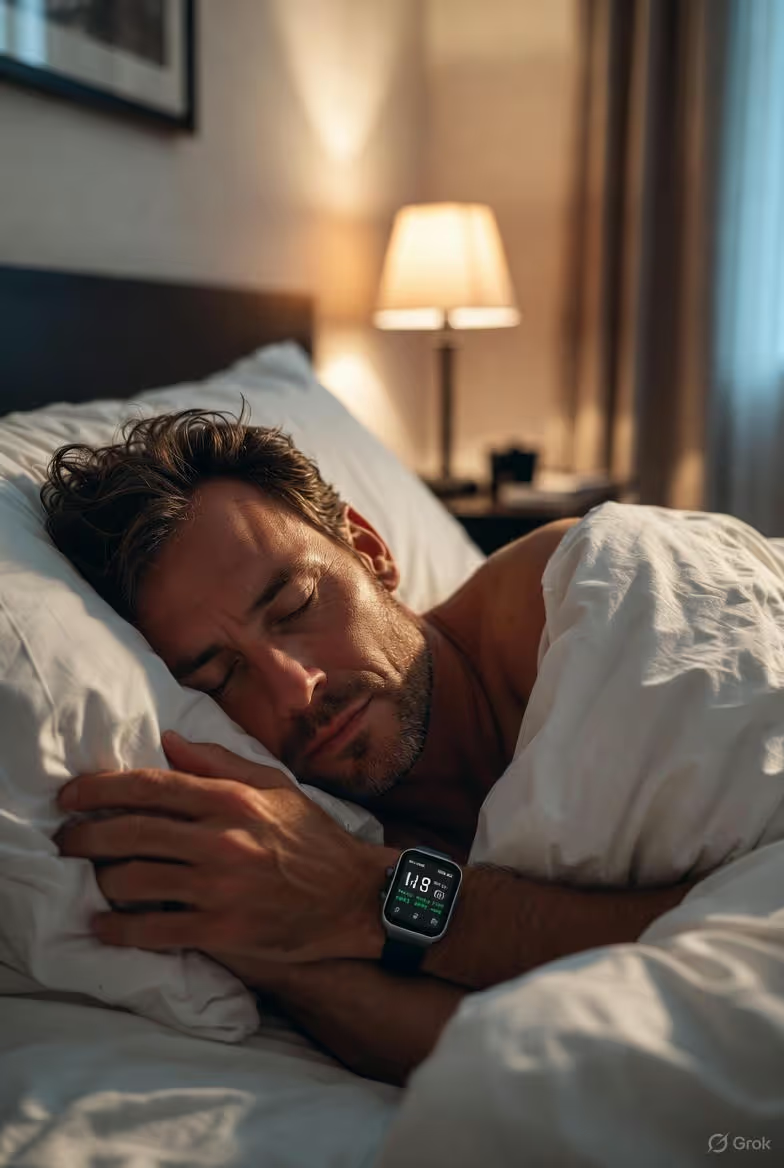
The moment a biological function is scored, psychology enters the equation. The sleep score transforms our bedroom into a testing center, and every night becomes a high-stakes exam. This shift has profound and often negative psychological consequences.
Performance Anxiety in the Bedroom: Orthosomnia
Clinicians have identified a new patient profile: individuals who develop significant anxiety and insomnia precisely because of their sleep trackers. This condition has been termed “orthosomnia” (from “ortho,” meaning correct, and “somnia,” meaning sleep). Patients present with distress over their imperfect sleep data, spending excessive time in bed trying to improve their scores, and experiencing a crippling fear of insufficient sleep. Their trust in the device completely overrides their trust in their own bodily sensations. The tracker’s “poor” rating becomes a self-fulfilling prophecy, creating the anxiety that perpetuates poor sleep.
The Nocebo Effect of a Bad Score
The nocebo effect is the evil twin of the placebo effect: if you believe something will harm you, it likely will. Waking up to a low sleep score can prime you for a bad day. You attribute every moment of fatigue, every mental slip, to that “terrible” sleep. This cognitive framing can actually impair your daytime performance and mood more than the sleep itself might have. You’ve been handed a script for failure, and you unwittingly follow it.
Loss of Internal Body Trust (Interoception)
Interoception is your sense of the internal state of your body—hunger, thirst, fatigue, anxiety. Relentless external quantification erodes this skill. Instead of lying in bed and asking, “Do I feel sleepy?” we check our device’s readiness score. Instead of noticing midday energy dips, we check our sleep data from the night before for an explanation. We outsource our self-awareness to a device, becoming less literate in our own body’s language. This disconnection is perhaps the greatest cost of the score-chasing game.
The Illusion of Control and Magical Thinking
Sleep is, by its nature, a surrender. It is an involuntary state we must let happen. The sleep score, however, feeds the illusion that sleep is a system to be controlled. We engage in magical thinking: “If I just hit all the targets—blue light blockers by 8 p.m., room temperature at 65°F, no food after 7 p.m.—I will get a 90.” When this doesn’t happen, frustration sets in. This quest for perfect control is antithetical to the release required for true rest. It turns the pre-sleep period into a tense checklist of behaviors rather than a gentle wind-down.
The psychological impact is clear: the tool designed to improve our relationship with sleep can become the very thing that poisons it. The score ceases to be a passive report and becomes an active stressor, trapping us in a cycle of measurement, anxiety, and worsened sleep. Breaking this cycle requires a fundamental reevaluation of what the data is for. For stories of how others have navigated this relationship, our testimonials page shares real user experiences.
Human physiology is not a machine. It is a dynamic, adaptive system constantly responding to a multitude of inputs. Expecting your sleep architecture—and by extension, your sleep score—to be consistent night after night is a fundamental misunderstanding of how your body works. This is the Variability Principle: healthy sleep has inherent, meaningful variation.
Sleep as Adaptation, Not Repetition
Your sleep is your body’s nightly processing and repair shift. What it needs to process changes daily.
The Myth of the Static Baseline
Wellness tracking encourages us to seek our “baseline”—a stable, optimal set of numbers. But in reality, your healthy baseline is a range, not a point. A healthy HRV has day-to-day variation of 15-20%. Your resting heart rate fluctuates with hydration, stress, and hormones. A “good” night’s sleep one week might last 7 hours with high REM; a “good” night’s sleep the next might be 8.5 hours with abundant deep sleep. Chasing the exact same score is like expecting to have the same exact thoughts or mood every day—it’s not only impossible, it would be a sign of a system that isn’t adapting and living.
Listening to the Story Behind the Numbers
This is where moving from a score-focused to a data-curious mindset is crucial. Instead of fixating on the 75, look at the trends and the context.

If the sleep score is an imperfect proxy, what should we be paying attention to? The answer lies in reintegrating the subjective dimension—the lived experience of sleep and wakefulness. The most valid measure of good sleep may be the simplest: how you feel and function during the day.
The "Upon Waking" Checklist
Before you ever look at your phone, ask yourself a few questions in those first quiet moments:
These subjective markers are direct feedback from your nervous system. They often correlate with data, but when they diverge, your lived experience should hold more weight.
Daytime Function: The Ultimate Litmus Test
The primary purpose of sleep is to enable optimal waking life. Therefore, the most important metrics are diurnal:
If you are functioning well in these domains, you are likely getting good enough sleep for you, regardless of what your score says. A perfect 90 is meaningless if you spend the day in a brain fog. Conversely, a “mediocre” 75 might be the foundation for a highly productive, energetic day.
Reconciling the Two Worlds
The goal is not to choose between data and feeling, but to create a dialogue between them. The power of a device like the Oxyzen smart ring is that it provides the objective data to inform your subjective investigation.
By prioritizing how you feel and function, you dethrone the sleep score and place your own well-being back at the center of the equation. It becomes one piece of information in a much larger puzzle. Discover how others have balanced this approach by reading their our story of developing technology that supports, rather than dictates, wellness.
Sleep science is largely built on studies of healthy, young-to-middle-aged adults. Consumer sleep algorithms are extrapolated from this generalized science. This creates enormous blind spots for vast swaths of the population whose sleep patterns legitimately and healthfully deviate from the “norm.”
Life Stages and Sleep Architecture:
Health Conditions and Medications:
The Individual Chronotype
The most common algorithmic blind spot is chronotype—your genetically influenced predisposition to being a morning person (lark), evening person (owl), or somewhere in between. Society—and most sleep scores—reward early risers. An owl who goes to bed at 1 a.m. and wakes at 9 a.m., getting 8 hours of solid sleep, will often be penalized for “late” bedtime and wake time, despite being perfectly aligned with their biology. Chasing a score here means fighting your own genetics, a battle that guarantees stress and poor sleep.
Recognizing these blind spots is empowering. It allows you to see your data through the correct lens. If you fall into one of these categories, your sleep score is even less of an absolute truth. It is a generic piece of information that must be filtered through the specific reality of your body, your health, and your life stage. For personalized support in navigating these nuances, our FAQ and customer resources are designed to help.
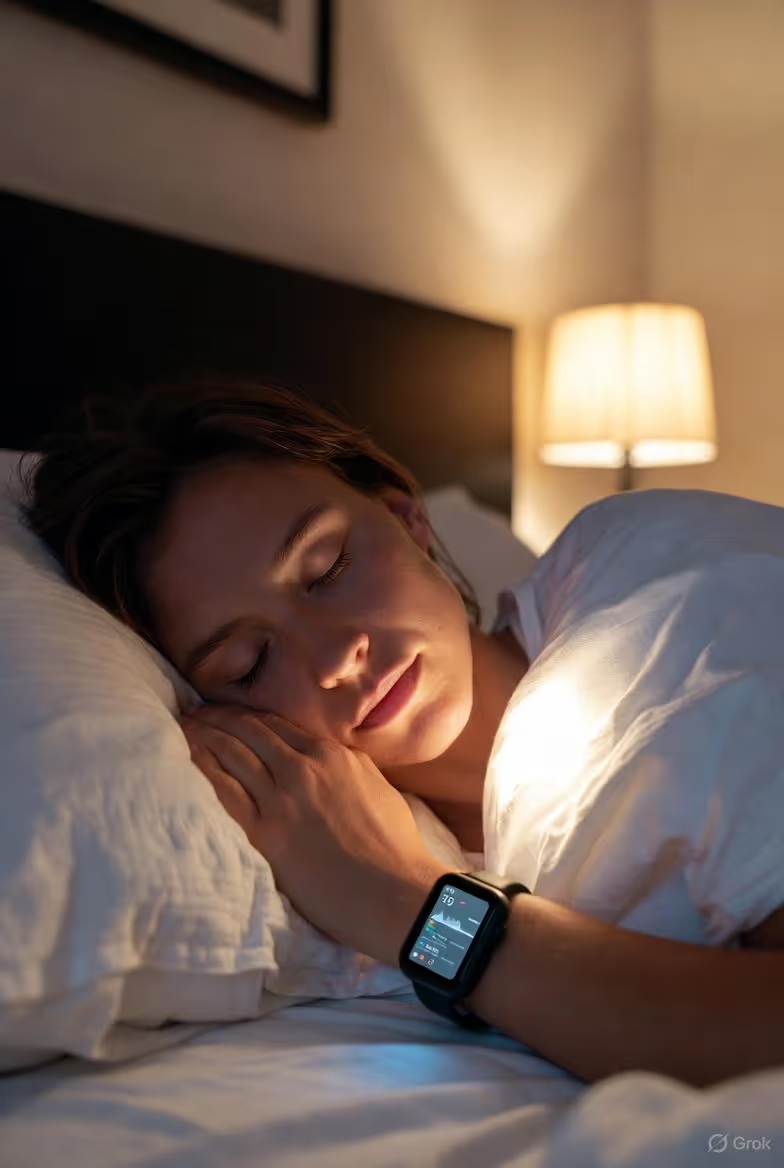
Armed with this understanding, we can now rebuild a healthy relationship with sleep tracking. The goal is to make the tool work for you, not you for the tool. This is a “data-driven detox”—a mindful approach to using technology for insight rather than judgment.
1. Shift from Micro-Monitoring to Macro-Trending.
Stop judging every single night. Instead, look at your data over a wider window—weekly or monthly trends. This smooths out the natural variability and reveals true patterns.
2. Prioritize One Metric at a Time.
Instead of being overwhelmed by the composite score, choose one metric that feels most relevant to a current goal for a few weeks.
3. Establish a "No Phone" Buffer Zone Upon Waking.
This is the single most effective habit change. Commit to not looking at your sleep data for at least 30-60 minutes after waking. Use that time to:
4. Use Data to Ask "Why?" Not "How Bad?"
Reframe your interaction with the data. When you see a low score or a concerning metric, don’t internalize it as failure. Use it as a prompt for curious, non-judgmental investigation.
5. Schedule Regular "Data-Free" Breaks.
Consider taking your tracker off for a weekend, a vacation, or one week per month. This serves as a reset, reminding you that you can listen to your body, enjoy rest, and have a wonderful day without a device’s approval. It breaks the dependency and reaffirms that you are the authority on your own well-being.
By implementing these strategies, you transform your tracker from a grading authority into a collaborative informant. The data becomes a conversation starter with yourself, not the final word. To see how this philosophy is integrated into a product’s design, you can learn more about Oxyzen’s approach to holistic wellness tracking.
Let’s construct a new, more resilient definition of “good sleep” that can coexist with technology but is not enslaved by it. This framework is built on pillars that encompass both behavior and mindset.
Pillar 1: Sufficiency & Satisfaction (The Core Question)
Pillar 2: Regularity & Rhythm
Pillar 3: Daytime Vigor & Function
Pillar 4: Contextual Harmony
The "Good Enough" Sleep Mindset
Embrace the concept of “good enough” sleep. In a world chasing optimization, “good enough” can feel like settling. In reality, it is liberation. It’s the understanding that sleep, like nutrition or exercise, operates on a curve of diminishing returns. The difference between “good enough” and “perfect” is minimal in terms of health benefits but maximal in terms of the anxiety and effort required. “Good enough” sleep is sustainable, forgiving, and integrated into a full life. It allows for late nights with friends, periods of stress, and the natural variability of being human.
This holistic framework puts you back in the driver’s seat. You use tools to inform these pillars, not define them. A tracker can help you assess regularity (Pillar 2) and provide clues about sufficiency (Pillar 1), but the final judgment on satisfaction (Pillar 1) and daytime function (Pillar 3) rests with you. For more resources on building a holistic sleep practice, our blog is continually updated with expert insights.
The current paradigm of the monolithic sleep score is already beginning to shift. The next generation of sleep technology is moving away from being a judge and toward being a coach and a contextual sensing system.
Personalized Baselines and Dynamic Algorithms
Future devices will use longer-term learning to establish your personal healthy ranges for metrics, not compare you to population averages. They will account for your chronotype, your menstrual cycle, and even learn your personal biomarkers for stress or illness onset. The “score” may become a personal deviation index (“You’re 15% off your personal best recovery”) rather than an absolute grade.
Context-Aware Integration
Imagine a device that knows you had a late work dinner (via connected calendar or audio sensing), can tell you had an argument (via elevated evening stress markers), or knows you completed a hard workout. It would then interpret your subsequent sleep data through that lens: “Given your stressful evening, your elevated RHR during sleep is an expected response. Focus on wind-down techniques tomorrow.” This moves from judgment to empathetic insight.
Focus on Prescriptive Insights, Not Descriptive Scores
The value will shift from “Here’s your number” to “Here’s what to do.” Advanced AI could analyze weeks of your data alongside lifestyle inputs to offer small, personalized, and actionable recommendations: “Based on your data, a 20-minute afternoon walk on days you have back-to-back meetings significantly improves your deep sleep.” The focus becomes behavioral change, not numerical achievement.
Seamless and Invisible Monitoring
The goal is for monitoring to become so seamless it fades into the background. Non-wearable sensors in the bedroom environment (under-mattress pads, bedside devices) or ultra-comfortable, jewelry-like wearables like the Oxyzen ring aim to provide data without the friction or nightly ritual of “putting on your sleep tracker.” This reduces the psychological weight of actively measuring.
This future is not about abandoning data, but about sophisticating our relationship with it. The technology evolves to understand the human context, and we evolve to use it as a guide for a better life, not a replacement for living one. To follow this journey as it unfolds, you can explore the vision and values driving these innovations on our Our Story page.
While consumers chase scores, the medical and scientific community has been engaged in its own evaluation of consumer sleep technology. Their perspective is crucial, balancing cautious optimism with clear-eyed skepticism. Understanding what experts value—and discard—in your nightly data can be a game-changer in how you use it.
From Novelty to Clinical Adjuvant
Initially, sleep specialists largely dismissed consumer trackers as "fancy pedometers for sleep." The inaccuracies, particularly in sleep stage estimation, were too great for clinical diagnosis. However, the stance is evolving. "We are moving from a phase of dismissal to one of thoughtful integration," says Dr. Michael Grandner, a leading sleep researcher. "The data isn't perfect for diagnosing sleep apnea or insomnia, but it's incredibly powerful for measuring adherence to treatment and understanding 24/7 patterns we could never see in a one-night sleep lab study."
The key shift is in application. In clinical settings, tracker data is increasingly used as an adjuvant—a supplementary tool. For a patient undergoing treatment for insomnia, a therapist might review weekly sleep consistency graphs to see if sleep restriction therapy is working, using the device's estimate of time-in-bed versus actual sleep. The raw numbers are less important than the multi-week trend lines, which provide objective corroboration of the patient's subjective reports.
The Red Flags vs. The Noise
Sleep physicians emphasize that trackers are excellent at detecting certain red flags but poor at diagnosing their cause.
The Dangers of Self-Diagnosis
This is where practitioners sound the loudest alarm. "The most common and dangerous pitfall is the patient who walks in convinced they have a sleep stage deficiency," notes Dr. Cathy Goldstein, a neurologist specializing in sleep. "They've read online that low deep sleep is linked to dementia, and their tracker confirms they have 'low deep sleep.' The anxiety this creates is itself insomniagenic. We spend the first half of the visit deconstructing the tracker's report before we can even address their actual symptoms."
Self-diagnosis based on algorithmically derived data can lead to two bad outcomes: 1) False Reassurance: Ignoring debilitating daytime fatigue because your score is "good." 2) Catastrophizing: Becoming convinced you have a serious disorder because of a "low" metric, leading to health anxiety that worsens sleep. The professional consensus is clear: Use the data to inform conversations with your doctor, not to replace them. Bring your monthly trend graphs to your appointment, not your daily score.
A Tool for the Therapeutic Alliance
Forward-thinking clinicians are using tracker data to build stronger partnerships with patients. Instead of the patient vaguely reporting "I sleep terribly," they can point to a graph showing consistent 2 a.m. awakenings. This creates a concrete starting point for investigation: "What's happening at 2 a.m.? Pain? Urination? Anxiety?" It turns a subjective complaint into a collaborative puzzle to solve. This is the highest and best use of the technology in a medical context—not as a judge, but as a shared document for understanding a patient's life. For those seeking to understand the science behind the data they bring to their doctor, resources are available on the Oxyzen blog.
Theory is helpful, but real-world stories cement understanding. Let’s examine three anonymized case studies where a strict adherence to the sleep score would have led individuals astray, while a nuanced interpretation of data alongside subjective experience revealed the truth.
Case 1: The "Poorly Scoring" Super-Recoverer
Case 2: The "High-Scoring" but Exhausted New Parent
Case 3: The Chronotype War
These cases illustrate a universal truth: The sleep score is a commentary on how well your sleep conformed to a model. Your energy, mood, and health are commentaries on how well your sleep served you. When the two disagree, trust the latter and use the former as a clue for investigation, not a condemnation.
It’s vital to recognize that the sleep score and the app experience around it are not neutral scientific outputs; they are carefully designed products. Their interfaces, notifications, and reward systems are crafted to drive specific user behaviors—primarily, engagement and retention. Understanding this design psychology is key to disentangling your well-being from the platform’s business goals.
Gamification: The Double-Edged Sword
Gamification—using game-like elements in non-game contexts—is the engine of most wellness apps. It’s powerful because it works.
The problem arises when the game becomes more real than the outcome. The goal shifts from "feeling rested" to "maintaining my streak." You might go to bed when you’re not tired just to log sleep time, or avoid a late social event not because you need the sleep, but because you don’t want to "break the chain." The tool designed to serve your sleep now dictates your life.
The Tyranny of Notifications and "Insights"
Push notifications are a primary engagement driver. "Your sleep data is ready!" "Ready for bed? It’s your optimal time in 30 minutes." "You’ve been logging less sleep this week." While sometimes helpful, these alerts can externalize your bodily awareness. Instead of feeling tired, you wait for the app to tell you it’s bedtime. They also create a sense of surveillance, making sleep feel like a performance being monitored.
Furthermore, automated "insights" can be reductive. "Your deep sleep was lower on nights you had alcohol." This is scientifically true on a population level, but for an individual, the relationship might be more nuanced (one glass of wine with dinner vs. three drinks before bed). The algorithm presents correlation as a simple, causative rule, which can foster a rigid, fearful relationship with normal life activities.
The Illusion of Precision and Authority
The presentation of data matters. Showing sleep stages to the minute (e.g., "REM: 1h 24m") implies a precision that doesn’t exist with current consumer technology. This false precision lends the data an air of unassailable authority, making it harder for users to question it. Coupled with sleek, scientific-looking graphs, the entire package is designed to feel more definitive than it is. Companies like Oxyzen focus on presenting data trends and ranges, emphasizing personal baselines over false precision, to combat this very issue.
The "Problem-Solution" Loop
Many wellness apps operate on a capitalistic "problem-solution" model. To keep you engaged, they must first convincingly define a problem (your sleep is suboptimal, your recovery is incomplete), then offer their platform as the solution (keep tracking, follow our premium advice). There is a subtle incentive for the algorithm to occasionally give you a "poor" score or highlight a "deficiency." This creates a need, a slight anxiety that you can resolve by continuing to use the product, perhaps even upgrading to a premium tier for "deeper insights."
As a user, recognizing these design patterns is empowering. Ask yourself: Is this feature helping me understand my body, or is it hooking me into checking the app? Am I changing a healthy behavior because of a badge? By bringing conscious awareness to the design, you can reclaim agency, using the tool for the insights you choose and ignoring the manipulative layers built on top of them.
Moving beyond the score requires building your own "sleep literacy"—the ability to interpret your raw data with context, curiosity, and critical thinking. Here’s a practical guide to becoming fluent in the language of your own physiology.
Focus on the Quartet of Core Metrics (Forget the Score)
Shift your primary attention to these four data points and their relationships:
The Art of Connecting Data to Context
Keep a simple digital or paper note for a week. Each morning, before looking at data, note:
Then, look at your data. Don’t look for a perfect correlation every day. Look for patterns over 3-4 days.
This practice builds a powerful, personal biofeedback loop. You stop being a passive recipient of scores and become an active investigator of your own biology.
Asking Better Questions
Replace score-focused questions with data-curious ones:
This framework turns anxiety into inquiry. A "bad" night is no longer a failure; it’s a data point in your ongoing self-study. For those looking to dive deeper into interpreting specific metrics, our blog offers a library of educational content designed to build this exact literacy.
The ultimate antidote to sleep score anxiety is the cultivation of mindfulness—both in general and specifically around sleep. Mindfulness and technology are often framed as opposites, but they can be integrated to create a balanced approach where data informs awareness, and awareness contextualizes data.
Pre-Sleep: From Checklist to Wind-Down
Transform your evening routine from a rigid series of optimization tasks ("blue light blockers on, room temperature set, magnesium taken") into a mindful wind-down. The goal is to signal safety to your nervous system, not to satisfy an app.
In-Bed: Practicing Sleep Effortlessness
The greatest irony of sleep optimization is that sleep itself cannot be forced. Mindfulness teaches "effortless effort."
Upon Waking: The Primacy of First Sensations
As established, defend your first moments of consciousness. Before your brain can jump to the digital score, bathe in your direct experience.
Using Data as a Mindful Mirror
In this integrated model, you review your data mindfully later in the day. Look at it with curiosity and non-attachment. See the graphs as a story of your recent life—your stresses, your joys, your efforts. Notice if seeing a low number triggers a negative emotional reaction, and practice letting that reaction pass without buying into its narrative. The data becomes a mirror reflecting patterns, not a hammer judging your worth.
This synthesis allows you to benefit from technological insight without becoming subservient to it. You are the conscious observer, using all available tools—both internal awareness and external data—to navigate toward well-being. The story of Oxyzen is rooted in this balance, which you can explore further in our Our Story narrative.
While this article focuses on sleep scores from wearables, it’s critical to remember that sleep quality is determined by a vast ecosystem that extends far beyond what a ring or watch can measure. Obsessing over the score while neglecting these foundational pillars is like polishing a car’s dashboard while the engine is out of oil.
The Foundational Pillars (Non-Negotiables):
The Social & Relational Layer
Sleep is not an individual sport. It exists in a social context.
The Tracker as an Ecosystem Sensor
When you understand this ecosystem, you can repurpose your tracker. Instead of a sleep scorer, see it as an ecosystem sensor. Its data reflects how well your entire day—your light, movement, stress, nutrition—set the stage for sleep.
By zooming out to this ecosystem view, the sleep score shrinks to its proper size: one small output in a vast, interconnected system. Optimizing sleep, therefore, becomes less about hacking the night and more about crafting a balanced, health-supportive day. For support in building this holistic approach, our community’s testimonials often highlight how integrating data with lifestyle was the key to their success.
Now, we arrive at the synthesis. It’s time to move from understanding the problem to building your solution. Your Personal Sleep Philosophy is a set of guiding principles, informed by science and self-knowledge, that will govern your relationship with sleep and technology. This is your manifesto against toxic optimization.
Step 1: Conduct a "Relationship Audit"
Spend a week observing your interactions with your sleep tracker without judgment.
Step 2: Define Your "Why"
Why do you care about sleep? Get specific beyond "to be healthy."
Step 3: Establish Your Non-Negotiables & Flexibilities
Based on your ecosystem knowledge, identify 2-3 foundational habits you will commit to 80-90% of the time. These are your non-negotiables.
Step 4: Design Your Data Protocol
Create clear rules for how you will use your technology. For example:
Step 5: Craft Your Release Ritual
Develop a phrase or mantra to disarm sleep-related anxiety when it hits.
Putting It All Together: A Sample Philosophy
This philosophy is a living document. It can change as your life does. It places you firmly in the driver’s seat, using technology as a map you can choose to follow, not a backseat driver dictating every turn.
Your Trusted Sleep Advocate: Sleep Foundation — https://www.sleepfoundation.org
Discover a digital archive of scholarly articles: NIH — https://www.ncbi.nlm.nih.gov/
39 million citations for biomedical literature :PubMed — https://pubmed.ncbi.nlm.nih.gov/
Experts at Harvard Health Publishing covering a variety of health topics — https://www.health.harvard.edu/blog/
Every life deserves world class care :Cleveland Clinic - https://my.clevelandclinic.org/health
Wearable technology and the future of predictive health monitoring :MIT Technology Review — https://www.technologyreview.com/
Dedicated to the well-being of all people and guided by science :World Health Organization — https://www.who.int/news-room/
Psychological science and knowledge to benefit society and improve lives. :APA — https://www.apa.org/monitor/
Cutting-edge insights on human longevity and peak performance:
Lifespan Research — https://www.lifespan.io/
Global authority on exercise physiology, sports performance, and human recovery:
American College of Sports Medicine — https://www.acsm.org/
Neuroscience-driven guidance for better focus, sleep, and mental clarity:
Stanford Human Performance Lab — https://humanperformance.stanford.edu/
Evidence-based psychology and mind–body wellness resources:
Mayo Clinic — https://www.mayoclinic.org/healthy-lifestyle/
Data-backed research on emotional wellbeing, stress biology, and resilience:
American Institute of Stress — https://www.stress.org/


