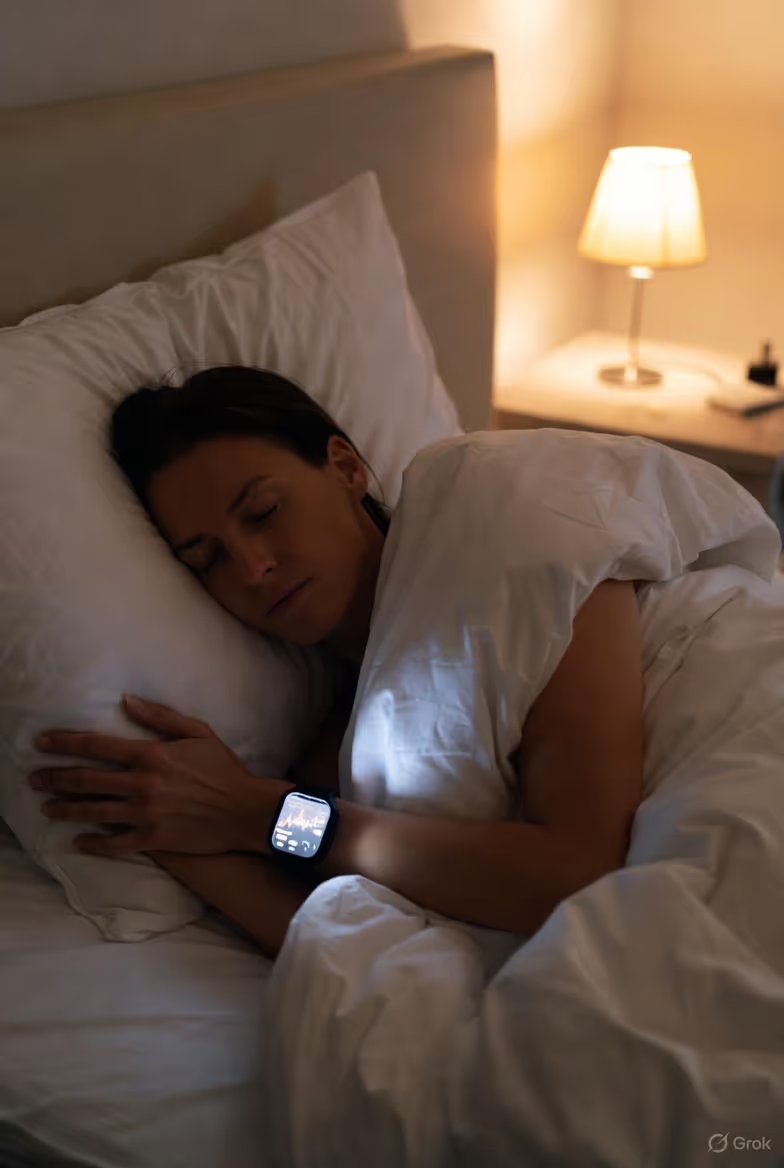
The Sleep Score Sweet Spot: Finding Your Personal Target
The sweet spot is the score range where you consistently feel your best, which may be an 85 rather than a 100.
The Sleep Score Sweet Spot: Finding Your Personal Target
In the quiet, darkened theater of the night, a silent performance unfolds. Your body, no longer the conscious director, becomes the stage for a complex physiological ballet. Cells repair, memories consolidate, hormones recalibrate. For centuries, the success of this nightly performance was judged by a single, crude metric: did you wake up feeling rested? Today, we’ve traded that subjective feeling for a cold, hard number: the Sleep Score.
On your phone, your wearable, or your smart ring’s companion app, a digit—85, 72, 91—awaits you each morning. It’s a verdict on your night. For many, this number has become a source of pride, anxiety, or confusion. We chase a higher score with the same vigor we chase a higher step count, often without truly understanding what we’re chasing, or why. Is 100 the ultimate goal? Is anything below 80 a failure? The stark truth is that the wellness industry’s obsession with quantified perfection has led us astray. We’re all striving for a generic “excellent” badge, blind to the most important variable in the equation: ourselves.
The quest for perfect sleep has become a universal pursuit, yet the definition of “perfect” is intensely personal. Your ideal sleep isn’t a fixed point on a universal scale; it’s a Sweet Spot—a unique, dynamic range where your biology, your lifestyle, and your goals harmonize. Finding it requires moving beyond one-size-fits-all benchmarks and into the nuanced landscape of your own body’s needs.
This isn’t just about feeling groggy or refreshed. Chronic misalignment with your personal sleep needs is a stealthy underminer of cognitive function, emotional resilience, metabolic health, and long-term vitality. The Sleep Score is a powerful compass, but it’s useless if you’re navigating with the wrong map. This journey is about drawing your own.
Through the lens of cutting-edge research and personalized data, we will dismantle the myth of the perfect score and guide you toward discovering your true target. We’ll explore how factors like age, genetics, stress, and even your fitness regimen reshape what “good sleep” means for you. With the right understanding and tools—like the nuanced data provided by advanced wearables such as the Oxyzen smart ring—you can stop chasing an arbitrary number and start cultivating the restorative sleep your unique life demands.
Welcome to the beginning of a deeper rest. Let’s find your Sweet Spot.
Decoding the Digits: What Your Sleep Score is Really Measuring
Before you can find your target, you must understand the instrument. Your Sleep Score is not a single measurement but a composite grade, a final report card assembled from several key physiological subjects. Different apps and devices weigh these subjects differently, but the core curriculum remains remarkably consistent. Let’s pull back the curtain on the algorithms.
The Pillars of the Score:
Most sophisticated sleep tracking systems, including the technology behind the Oxyzen smart ring, synthesize data from four primary pillars to generate your nightly score:
Duration: The Foundation. This is the simplest metric: total time spent asleep. While foundational, it’s a blunt instrument. The National Sleep Foundation provides age-based guidelines (7-9 hours for adults), but these are population averages, not personal prescriptions. The algorithm rewards you for hitting a pre-set duration window, but as we’ll see, this is just the starting line.
Quality & Architecture: The Structure. This is where the story gets interesting. Sleep isn’t a monolithic state. It’s a cyclical journey through light sleep (NREM Stage 1 & 2), deep sleep (NREM Stage 3), and REM (Rapid Eye Movement) sleep. Each stage serves a distinct purpose:
Deep Sleep: The physical restoration phase. Tissue growth and repair occur, energy is restored, and the immune system is bolstered. It’s often called “slow-wave sleep” for the characteristic brainwaves.
REM Sleep: The mental restoration phase. This is where dreaming, memory consolidation, learning, and emotional processing are believed to occur. Your brain is almost as active as when you’re awake. A “good” score requires not just passing through these stages, but spending adequate time in each. Disproportionate time in light sleep can lead to a low score, signaling fragmented, non-restorative rest.
Regularity: The Rhythm. Your body craves a schedule. Going to bed and waking up at consistent times—even on weekends—strengthens your circadian rhythm, your internal 24-hour clock. Algorithms heavily favor this consistency. A perfect 8-hour sleep at erratic times will often score lower than a slightly shorter sleep at your habitual time because regularity is a stronger predictor of long-term health than a single night’s perfect duration.
Latency & Disturbances: The Efficiency. How you bookend the night matters. Sleep Latency (the time it takes to fall asleep) is a key metric; an ideal window is typically between 10-20 minutes. Taking too long can indicate stress or poor sleep hygiene, while falling asleep instantly (in under 5 minutes) may signal significant sleep deprivation. Furthermore, the number of times you wake up during the night, even if you don’t remember them, and your overall restlessness (measured by movement or heart rate variability) deducts from your efficiency score.
Beyond the Pillars: The Physiological Symphony
Advanced devices now integrate more subtle biometrics to paint a fuller picture:
Resting Heart Rate (RHR): A well-rested body typically shows a lower, steadier RHR during sleep. A elevated or erratic nocturnal heart rate can signal poor recovery, stress, or illness.
Heart Rate Variability (HRV): This is the subtle, millisecond variation in time between heartbeats. Higher HRV during sleep generally indicates a resilient, recovered nervous system and is a strong positive contributor to advanced recovery scores, which feed into overall sleep quality assessment.
Respiratory Rate: The number of breaths per minute. Tracking this can reveal patterns and unusual events during the night.
Understanding this multi-variable equation is liberating. It moves you from asking “Why is my score low?” to asking more precise questions: “Was my deep sleep insufficient last night?” or “Did my 2 AM wake-up crash my efficiency score?” This is the power of detailed data. To dive deeper into how this technology captures your nightly symphony, you can explore our detailed FAQ on sensor technology and data accuracy.
Your Sleep Score, therefore, is a narrative summary of a complex night. It’s not a judgment, but a diagnostic starting point. The next step is realizing that the ideal plot of this nightly story is different for every person.
The Myth of the Perfect 90: Why One Size Does NOT Fit All
The siren song of a high Sleep Score is powerful. We see a “90” and equate it with vitality, productivity, and moral superiority. We see a “75” and feel a pang of failure. This mindset is not only counterproductive—it’s scientifically flawed. The relentless pursuit of a generic high score, typically anything above 85 or 90, ignores the beautiful and frustrating complexity of human biology.
The Variables That Redefine Your Target:
Age: The Great Reshaper. Sleep architecture changes profoundly across a lifespan. A teenager’s circadian rhythm is naturally delayed, making early bedtimes a biological struggle, and they require copious amounts of deep sleep. A healthy 70-year-old will naturally spend less time in deep sleep and experience more frequent nighttime awakenings; a score of 80 for them might represent exceptionally robust sleep for their age, while the same score for a 25-year-old could indicate room for improvement. Comparing scores across ages is like comparing athletic performance across generations—the context is everything.
Genetics: Your Built-In Blueprint. Emerging research into “sleep genotypes” reveals that some people are naturally short sleepers (functioning optimally on 6 hours) due to genetic variants like DEC2, while others are long sleepers requiring 9+ hours. Furthermore, the proportion of deep vs. REM sleep you naturally gravitate toward has a genetic component. Forcing a natural short sleeper into an 8.5-hour box in pursuit of a higher score can lead to fragmented, unsatisfying sleep and morning grogginess.
Activity Level & Training Stress. Your sleep score is a mirror of your daily exertion. On the night after an intense strength training session or a long endurance workout, your body will prioritize deep sleep for physical repair. Your score might dip slightly if the strain causes elevated resting heart rate or more disturbances, but the composition of your sleep is what matters. Conversely, during a rest or deload week, your sleep architecture may shift, possibly featuring more REM. An athlete shouldn’t panic over a score drop after a hard training day; they should interpret it in context of their recovery needs.
Psychological & Mental Load. A day of high cognitive stress—a major work presentation, intense study, or emotional turmoil—creates a different kind of debt, often paid in REM sleep. Your brain uses this stage to process emotions and consolidate memories. You might sleep for 8 hours but wake feeling unrefreshed if your REM was truncated by alcohol (a notorious REM suppressant) or extreme stress. A score that doesn’t account for your mental state is missing a key piece of the puzzle.
The Problem with Chasing a Number:
When the score itself becomes the goal, we engage in behaviors that can ironically undermine true sleep health:
We stay in bed longer than needed, leading to fragmented, shallow sleep.
We become anxious about sleep (“orthosomnia”), which is one of the fastest ways to cause insomnia.
We ignore how we feel in favor of what the app says.
The testimonies on our testimonials page often highlight this shift. Users frequently describe a transition from “score anxiety” to “data-informed insight.” They learn that a steady 82 that leaves them feeling energetic and clear-headed is far superior to a volatile chase between 75 and 90 that leaves them obsessed and tired.
The takeaway is pivotal: Your Sweet Spot is not a universal number. It’s a personalized range where your physiological data (the score) aligns with your subjective reality (how you feel and function). The goal is not to maximize the score, but to optimize the congruence between the two. In the next section, we’ll begin the practical work of listening to your body’s own signals.
Listening to Your Body: The Subjective Metrics That Matter Just as Much
Your wearable provides the objective data—the “what.” But your conscious experience provides the subjective context—the “why” and the “so what.” Ignoring this inner narrative is like reading the sheet music without ever listening to the symphony. To find your Sweet Spot, you must become a perceptive translator between your body’s signals and your device’s data.
The Morning Interrogation: How to Truly Assess Your Wake-Up.
Before you even glance at your sleep score, ask yourself these questions within the first 60 minutes of waking:
Sleep Onset: Did I fall asleep relatively easily, or was my mind racing? (This validates or questions your sleep latency data).
Morning Alertness: Do I feel groggy, clear-headed, or somewhere in between? Rate it on a scale of 1-10. This “sleep inertia” period is telling.
Physical Sensation: Do my muscles feel recovered or sore? Is there any lingering tension or pain?
Cognitive Readiness: Can I focus on a simple task like reading the news? Is my mind fuzzy or sharp?
Emotional Baseline: Do I feel generally balanced, irritable, anxious, or flat? Sleep deeply affects emotional regulation.
The Daytime Dashboard: Tracking Performance & Energy.
Your sleep’s quality is ultimately proven during waking hours. Track these markers:
Energy Levels: Do you experience a stable energy curve, or a drastic afternoon crash? Post-lunch drowsiness is normal, but a debilitating crash is not.
Cognitive Function: Is your memory reliable? Is your creativity or problem-solving ability where you expect it to be?
Physical Performance: In your workouts, is your strength, endurance, and coordination meeting your baselines? Are you recovering well between sets?
Emotional Resilience: Are you overreacting to minor stressors? Do you feel emotionally depleted by the early evening?
The Art of Correlation: Merging Objective and Subjective.
This is where the magic happens. For one week, keep a simple journal. Each morning, record:
Your Sleep Score and key metrics (Deep Sleep, REM, Awake Time).
Your subjective morning assessment (Alertness score, mood, physical feel).
A note on your previous day’s stress and activity.
By week’s end, patterns will emerge. You may discover:
Scenario A: A score of 88 after a relaxing weekend day, feeling fantastic. Conclusion: This is likely within your Sweet Spot for recovery from low stress.
Scenario B: A score of 85 after a brutal double workout day, feeling exhausted and sore. Conclusion: Despite a “good” score, your body needed more. The score captured duration and structure, but not your extreme recovery demand.
Scenario C: A score of 78 after a night you went to bed later than usual, but you woke up alert and had a supremely productive day. Conclusion: Your Sweet Spot may prioritize consistency and feeling over a raw number. The lower score reflected shorter duration, but the quality was high.
This practice cultivates Sleep Intelligence—the ability to understand what your data means for you. It moves you from being a passive recipient of a grade to an active investigator of your own health. For many, this investigative journey is supported by the nuanced, 24/7 biometric tracking of a device like the Oxyzen ring, which provides the objective data stream for this crucial correlation. You can read our blog for deeper dives on correlating specific metrics like HRV with daily performance.
When you consistently match a certain score range with peak subjective functioning, you’ve identified the borders of your personal Sweet Spot. Now, we must understand the powerful external forces that can push you out of it.
Circadian Rhythms & Chronotypes: Aligning Sleep with Your Biological Clock
Imagine trying to run a marathon at 3 AM, or host a dinner party at 6 AM. It feels wrong because it is wrong—it’s misaligned with your body’s deep-seated timing system. Your sleep is governed by the same principle. Your circadian rhythm is a roughly 24-hour internal clock, primarily set by light and darkness, that regulates not just sleep-wake cycles, but also hormone release (cortisol, melatonin), body temperature, digestion, and cellular function. Your chronotype is your personal expression of this rhythm—your genetically predisposed inclination to be a morning person, an evening person, or somewhere in between.
Understanding Your Chronotype: It’s Not Laziness, It’s Biology.
Popularized by sleep researcher Dr. Michael Breus, chronotypes are often categorized by animal archetypes:
The Bear (≈55%): Follows the solar cycle. Wakes easily, most productive before noon, energy dips in the afternoon. Sleep schedule: 11 PM - 7 AM.
The Wolf (≈15%): The night owl. Struggles to wake early, hits peak energy and creativity in the evening. Sleep schedule: 12 AM - 8 AM or later.
The Lion (≈15%): The early riser. Wakes before the alarm, ultra-productive in the morning, energy fades by early evening. Sleep schedule: 9 PM - 5 AM.
The Dolphin (≈10%): The light, anxious sleeper. Often has insomnia, wakes easily, functions best in spurts. Irregular sleep schedule.
Fighting your chronotype is like swimming against a powerful current—exhausting and ineffective. A Wolf forced onto a Lion’s schedule will consistently get lower sleep scores (due to poor latency and efficiency when trying to sleep early) and underperform in the morning. Their “poor” sleep is often just misaligned sleep.
How Chronotype Directly Impacts Your Sleep Score:
Sleep Latency & Efficiency: A Wolf trying to sleep at 9 PM will have a long sleep latency, killing their efficiency score. A Lion trying to stay up past midnight will experience fragmented, shallow sleep in the early morning hours.
Sleep Stage Composition: The timing of deep and REM sleep is tied to your circadian phase and core body temperature minimum. Disrupting your natural rhythm can truncate or displace these vital stages.
Regularity Metric: Your body thrives on a consistent schedule that fits your type. A consistent 1 AM - 9 AM schedule for a Wolf is far healthier than an erratic schedule bouncing between 10 PM and 1 AM bedtimes.
Finding Your Sweet Spot Within Your Rhythm:
Your chronotype doesn’t give you carte blanche to ignore societal commitments, but it should inform your strategy:
Lions: Protect your early evening. Your Sweet Spot is likely an early, firm bedtime. Your high scores will come from honoring your natural early wind-down.
Wolves: Advocate for flexible start times if possible. Focus on impeccable sleep hygiene for your later schedule—blackout curtains, strict evening routines. Your Sweet Spot score will come from sleeping well on your later schedule, not from forcing an earlier one.
Bears: You have the most flexibility, but still need consistency. Your Sweet Spot is a solid, solar-aligned 8-hour window.
Dolphins: Your focus should be on stress reduction and creating a supremely calm, sleep-conducive environment. Your Sweet Spot may be a slightly lower duration score but with high marks on quality once asleep.
Aligning with your chronotype is the single most effective way to improve sleep efficiency and subjective feeling of rest. It ensures you are trying to sleep when your biology is primed for it. This philosophy of personalized alignment, rather than rigid conformity, is at the heart of our approach to wellness technology at Oxyzen. You can learn more about our mission to personalize health data on our about page.
Once you’ve made peace with your internal clock, you can begin to fine-tune the external environment to support it, building a sanctuary for your unique sleep.
Crafting Your Sleep Sanctuary: Environmental & Behavioral Levers to Pull
Your sleep environment and pre-sleep behaviors are the dials and switches on the control panel of your night. You can have the perfect chronotype alignment, but if your environment is working against you, reaching your Sweet Spot will be a constant struggle. This is about engineering the external conditions to invite and protect high-quality sleep.
The Non-Negotiables of the Sleep Environment:
Darkness: The Ultimate Melatonin Trigger. Even small amounts of ambient light (from a streetlamp, a charging LED, or a crack under the door) can disrupt sleep architecture and suppress melatonin. Action: Invest in blackout curtains. Use an eye mask if needed. Eliminate or cover all electronic lights. Aim for pitch black.
Coolness: The Thermal Gateway to Sleep. Your core body temperature must drop to initiate and maintain sleep. A hot room prevents this drop. Action: Set your bedroom thermostat between 60-67°F (15-19°C). Use breathable, moisture-wicking bedding. Consider a cooling mattress pad or weighted blanket designed for temperature regulation.
Quiet & Consistency. Sudden noises cause micro-arousals, fragmenting sleep. Action: Use earplugs, a white noise machine, or a fan to create a consistent auditory blanket. Soundproof where possible.
The Bed is for Sleep (and Sex). Your brain should associate your bed with rest, not wakefulness. Action: Banish TVs, laptops, and stressful work from the bedroom. If you can’t sleep after 20 minutes, get up and do a quiet, non-stimulating activity in dim light until you feel sleepy.
The Behavioral Wind-Down: Ritualizing Relaxation.
Your nervous system needs time to transition from “fight-or-flight” (sympathetic) to “rest-and-digest” (parasympathetic) mode. A consistent, 60-90 minute wind-down routine signals this shift.
The Digital Sunset: Blue light from screens is a potent melatonin blocker and mental stimulant. Action: Institute a strict no-screens rule 60 minutes before bed. Use blue light filters earlier in the evening if you must use devices.
The Light-Dim Curve: Mimic the sunset. Action: Use dim, warm-colored lights (under 2700K) in the evening. Smart bulbs that automatically dim and shift color are powerful tools.
Calming Activities: Engage in low-stimulus, enjoyable activities. Action: Read a physical book (non-thrilling!), listen to calming music or a sleep story, practice gentle stretching or yoga nidra, take a warm bath (the subsequent cooldown aids temperature drop), or journal to “download” worries from your mind.
Mindful Consumption: Be strategic about evening intake.
Caffeine: Its half-life is 5-6 hours. Action: Cut off caffeine at least 8, preferably 10, hours before bedtime.
Alcohol: It may help you fall asleep faster but it ravages sleep architecture, suppressing REM and leading to fragmented second-half sleep. Action: Avoid alcohol within 3 hours of bed.
Food: A heavy meal too close to bed forces your digestive system to work, elevating core temperature. Action: Finish large meals 2-3 hours before bed. A small, sleep-supportive snack (like kiwi, tart cherry juice, or a handful of almonds) 45 minutes before bed is okay if you’re hungry.
Tracking the Impact:
This is where your wearable becomes a brilliant feedback tool. After implementing one change—say, installing blackout curtains—observe the data over a week. Did your “Awake Time” metric decrease? Did your “Deep Sleep” increase? Did your overall score become more consistent? This creates a powerful positive feedback loop: behavior change → measurable improvement → motivation to continue.
For a wealth of practical tips and product-neutral advice on optimizing these levers, our blog is a continually updated resource for the sleep-optimizing community.
With your environment mastered, we must address the most common and complex disruptor of the modern sleep score: stress and its nighttime manifestation.
Stress, Anxiety, and Sleep: Navigating the Nighttime Mind
You can have a perfect cave-like bedroom and a textbook wind-down routine, yet still watch your sleep score plummet. Why? Because the most disruptive element to sleep often isn’t external—it’s the internal landscape of your mind. Stress and anxiety activate the sympathetic nervous system, flooding your body with cortisol and adrenaline, the very chemicals your body is trying to suppress for sleep. This creates a vicious cycle: poor sleep lowers stress resilience, which causes more anxiety about sleep, which further degrades sleep.
How Stress Wrecks Your Score (and Your Night):
Sleep Latency Skyrockets: A racing mind is the enemy of sleep onset. You’re physically in bed, but mentally solving problems, rehearsing conversations, or worrying.
Sleep Fragmentation Increases: Stress causes lighter, more vigilant sleep. You wake more frequently, often without full consciousness, destroying your sleep efficiency metric.
REM Sleep Disruption: While acute stress can sometimes increase REM (as the brain processes emotions), chronic anxiety often leads to restless, less restorative REM sleep.
Physiological Noise: Stress elevates resting heart rate and lowers Heart Rate Variability (HRV), both of which advanced algorithms interpret as signs of poor recovery and lower your overall score.
Breaking the Cycle: Pre-Bed and In-Bed Strategies.
The goal is not to eliminate stress (an impossibility), but to manage your nervous system’s response to it.
1. The “Brain Dump” Journal: This is a pre-emptive strike. 30-60 minutes before bed, write down everything on your mind—tasks, worries, ideas. The act of externalizing them onto paper signals to your brain, “It’s noted. We can handle this tomorrow.” This is profoundly effective at reducing pre-sleep cognitive arousal.
2. Diaphragmatic Breathing & The 4-7-8 Method: This directly activates the parasympathetic nervous system. In bed, if you feel anxious:
Breathe in quietly through your nose for 4 seconds.
Hold your breath for 7 seconds.
Exhale slowly through your mouth for 8 seconds. Repeat 4-5 cycles. This physiological hack forces calm.
3. Cognitive Defusion & Mindfulness: When anxious thoughts arise, practice observing them without judgment. Instead of “I’m going to be a wreck tomorrow if I don’t sleep,” try thinking, “I’m having the thought that I’ll be a wreck tomorrow.” This creates psychological distance, reducing the thought’s power.
4. The “Postpone Your Worry” Technique: If a worry is persistent, tell yourself, “This is important, but now is not the time. I will dedicate 15 minutes to worrying about this tomorrow at 10 AM.” Often, the permission to not engage with the worry now is enough to release it.
Reframing the Sleep Score in the Context of Stress:
On a high-stress day—a family conflict, a work crisis—your sleep score should reflect that. A lower score isn’t a failure; it’s an accurate biometric report of your nervous system’s load. The goal is to use the score as a prompt for self-compassion and recovery, not self-criticism. Ask: “Given the stress of yesterday, what does my body need today to recover?” Perhaps it’s a lighter workout, a walk in nature, or an earlier wind-down.
This journey of managing the mind for better sleep is a core part of our users’ experiences. Many share how tracking biometrics like nighttime HRV with their Oxyzen ring provided the first objective proof of how meditation or breathing exercises directly improved their sleep physiology, turning abstract stress management into a tangible, data-driven practice. You can read their personal stories of transformation here.
Once you’ve begun to quiet the mind, you can leverage the most powerful tool for solidifying your Sweet Spot: the consistency of your schedule.
The Power of Consistency: Why Your Sleep Schedule is More Important Than You Think
If you could only optimize one thing for your sleep, the unequivocal choice of sleep scientists would be: consistency. Going to bed and waking up at the same time every day—yes, even on weekends—is the bedrock of sleep health. It is arguably more influential for your long-term well-being than the occasional “perfect” 9-hour night. Think of your circadian rhythm not as a rigid clock, but as a predictable, loyal orchestra. A consistent schedule keeps every instrument in tune and ready to play at the right time. A erratic schedule is the conductor showing up randomly, creating cacophony.
The Science of Social Jet Lag:
When you sleep in on Saturday and Sunday, you are essentially giving yourself “Social Jet Lag.” You’re forcing your internal clock to shift time zones, only to violently shift it back on Sunday night for Monday morning. This phenomenon:
Desynchronizes Internal Clocks: Your master clock in the brain gets out of sync with peripheral clocks in your organs (liver, gut, muscles), a state linked to metabolic dysfunction, inflammation, and weight gain.
Degrades Sleep Quality: The sleep you get during “catch-up” periods on weekends is often lighter and less architecturally sound.
Impairs Monday Morning Performance: That Monday grogginess isn’t just a mindset; it’s a mild form of jet lag.
How Consistency Builds Your Sweet Spot:
Optimizes Sleep Latency: A consistent schedule trains your body to start the wind-down process at the same time each night. Melatonin release becomes precisely timed, making falling asleep easier and faster—a direct boost to your sleep efficiency score.
Stabilizes Sleep Architecture: With a regular schedule, your cycles of deep and REM sleep become more predictable and robust. You spend less time in light sleep and more in the restorative stages.
Supercharges Your Regularity Metric: This is the most direct impact. All advanced sleep scoring algorithms heavily weight consistency. A rock-solid schedule is the most reliable way to elevate and stabilize your score over time.
Improves Daytime Function: A stable rhythm leads to more stable energy, mood, and hunger cues throughout the day.
Practical Implementation: Finding Your Consistent Schedule.
The goal isn’t to force a 10 PM-6 AM schedule if you’re a Wolf. The goal is to pick a sustainable schedule that fits your chronotype and obligations and stick to it within a 30-60 minute window.
Step 1: Use your subjective feeling and data to find your natural wake-up time (when you tend to wake without an alarm on a relaxed day). This is your anchor.
Step 2: Count back 7-9 hours (based on your personal duration need) to find your target bedtime.
Step 3: Commit to this schedule for 14 days. Use alarms for both bedtime and wake-up time.
Step 4: On weekends, allow yourself to drift no more than 60 minutes from your weekday schedule. If you stay up an hour later, wake up an hour later. Avoid the 2+ hour sleep-in.
The results can be transformative. Users often report that focusing on consistency, more than any other variable, led to the greatest jump in their average sleep score and, more importantly, their daily energy. It’s the ultimate “set it and forget it” sleep hack. For more on the science of habit formation and circadian health, our blog features several expert-guided articles.
With a foundation of consistency, you are now ready for the final, integrative step: learning to adjust your target dynamically, because life is not static.
Adapting Your Target: How to Adjust for Illness, Travel, and Life Stress
Your Sleep Score Sweet Spot is not a prison. It’s a home base. And just as you might travel for work or hunker down when sick, your sleep needs to adapt to life’s changing demands. A rigid attachment to a specific score during these times is a recipe for frustration. The mark of true sleep intelligence is knowing when and how to pivot your expectations and behaviors.
1. Illness & Infection: The Non-Negotiable Shift. When your body is fighting a virus or infection, sleep is medicine. Your immune system releases cytokines that directly promote sleepiness, especially deep sleep, which is critical for immune function.
What Happens to Your Score: It will likely drop. Fever, congestion, and discomfort cause restlessness, frequent awakenings, and elevated heart rate. Your efficiency and quality scores will suffer.
The Adaptive Mindset: Let go of the number. Your target is now “maximize restorative sleep,” not “achieve 85.” Sleep as much as your body demands, even if it’s 10+ hours of fragmented sleep. Hydrate, rest, and understand that the low score is a reflection of the battle being fought, not a failure of your habits.
2. Travel & Time Zone Changes: Managing the Jet Lag Equation. Crossing time zones is the ultimate circadian challenge. Your internal clock is out of sync with the external light-dark cycle.
Pro-Tip Before You Go: If traveling east, try going to bed 15-30 minutes earlier each night for a few days before departure. If traveling west, go to bed later.
Upon Arrival: Use light strategically. To shift earlier (eastward travel), seek bright morning light and avoid evening light. To shift later (westward travel), seek afternoon/evening light.
What Happens to Your Score: It will be chaotic and low for several days. Focus on the metrics of regularity and latency in your new zone. Your immediate target is not a high score, but resynchronization. Give yourself 3-5 days per time zone crossed to fully adjust before expecting your baseline scores.
3. Major Life Stressors: Grief, Job Change, Relocation. During periods of intense psychological stress, sleep architecture is disrupted, often with reduced REM or fragmented deep sleep.
The Adaptive Strategy: Double down on your sleep sanctuary and wind-down routine as anchors of stability. However, accept that your scores may be lower and more variable. This is normal. Your target shifts from “optimization” to “support and damage control.” Prioritize sleep consistency above all else, even if the quality within that time isn’t perfect.
4. Intense Training Blocks or Athletic Competition. As covered earlier, physical stress demands adaptation.
Post-Competition/Extreme Training: Your score may be lower due to inflammation and elevated nervous system activity. Your target is “supporting recovery.” This may mean prioritizing more time in bed, even if the score isn’t pretty, and using other metrics like HRV trend as a better guide.
Taper/Recovery Week: Expect your sleep to improve, with scores potentially rising as your body supercompensates. This is a positive sign of adaptation.
The Golden Rule of Adaptation: Return to Baseline.
After the disruptive event passes—you recover from illness, adjust to the new time zone, or the project deadline passes—consciously guide yourself back to your foundational habits. Re-establish your consistent schedule, reinforce your sleep sanctuary, and resume your wind-down routine. Your scores will naturally drift back toward your established Sweet Spot.
This adaptive philosophy reflects a core tenet of our vision at Oxyzen: that wellness technology should empower you to navigate real life, not just ideal conditions. It’s about providing the data to understand your body’s unique responses, so you can respond with intelligence and compassion, not rigid rules. To understand the human-centric thinking behind this approach, you can discover our story and values here.
You now possess the foundational knowledge to interpret your sleep data, align it with your biology, optimize your environment, manage stress, prioritize consistency, and adapt to life’s ebbs and flows. In the final section of this portion, we will bring it all together into a actionable, personalized protocol to begin your journey of discovery.
Integrating Your Data: A Protocol for Discovering Your Unique Sweet Spot
Knowledge is only as valuable as the action it inspires. You now understand the components of your sleep score, the myth of the universal target, and the levers you can pull. Now, it’s time to synthesize this into a personalized, 28-day discovery protocol. This is not a rigid training plan, but a structured experiment with a single subject: you. The goal is to move from theory to self-knowledge, identifying the specific conditions that yield your optimal blend of high-functioning data and high-functioning days.
Phase 1: The Baseline Week (Days 1-7) – Observe Without Judgment
Do not change anything. Your sole job is to be a meticulous recorder.
Action:
Track Relentlessly: Wear your sleep tracker every night. Each morning, record your Sleep Score and key metrics (Duration, Deep Sleep, REM, Awake Time, HRV if available).
Journal Subjectively: Before checking your data, answer the Morning Interrogation questions from Section 4. Rate your alertness, mood, and physical feeling on a 1-10 scale.
Log Your Day: Briefly note key factors from the previous day: stress level (high/medium/low), exercise type/intensity, caffeine/alcohol intake and timing, major meals.
Note Your Chronotype Tendencies: What time do you naturally get sleepy? When do you wake without an alarm?
Goal: To establish an honest, no-frills baseline. You’ll likely see variability. The aim is to spot initial, obvious correlations (e.g., “Alcohol after 8 PM = low REM score and poor morning mood”).
Phase 2: The Environmental Optimization Week (Days 8-14) – Master Your Cave
Focus solely on fixing your sleep environment and evening wind-down. Do not worry about bedtimes yet.
Action:
Implement Sanctuary Rules: Make your bedroom pitch black, cool (65-68°F), and quiet. Banish all screens and work from the bed.
Institute a Digital Sunset: No phones, tablets, or laptops 60 minutes before your current bedtime. Use this time for your wind-down ritual.
Create a 45-Minute Wind-Down: Adopt a consistent, calming sequence. E.g., Dim lights → gentle stretching → warm shower → read a book (with a warm, non-LED reading light) → lights out.
Mind Your Intake: Enforce a caffeine curfew (at least 8 hours before bed) and avoid alcohol within 3 hours of bed.
Goal: To maximize sleep quality within your current schedule. Look for improvements in Sleep Latency, Awake Time, and the subjective depth of your sleep. Your score may not jump dramatically, but the quality metrics should improve.
Phase 3: The Consistency & Chronotype Alignment Week (Days 15-21) – Find Your Rhythm
Now, layer in timing. You will find a consistent schedule that better aligns with your natural tendencies.
Action:
Analyze Your Baseline: From Week 1, identify the wake-up time after which you felt most naturally alert. This is your target Wake-Up Anchor.
Set Your Schedule: Count back 7.5 hours from your Wake-Up Anchor. This is your preliminary Target Bedtime. Commit to being in bed, lights out, within a 30-minute window of this time for all 7 days, including weekends.
Use Light: Get bright light exposure (outside if possible) within 30 minutes of your Wake-Up Anchor. In the evening, continue your dim-light wind-down.
Continue all environmental optimizations from Week 2.
Goal: To stabilize your circadian rhythm. Expect to see improvements in the Regularity metric and overall score stability. The Sleep Efficiency score should also benefit from faster sleep onset.
Phase 4: The Refinement & Stress Mitigation Week (Days 22-28) – Calm the Mind
With environment and rhythm set, now address internal disruptors.
Action:
Introduce a Pre-Sleep Brain Dump: 30 minutes before your wind-down begins, spend 10 minutes journaling. Dump all tasks, worries, and ideas onto paper.
Practice a Mindfulness Technique: Integrate 5 minutes of diaphragmatic breathing or a body-scan meditation into your wind-down routine.
Analyze and Pivot: At the end of this week, conduct a full review of your 28-day data journal. Look for your personal patterns.
Goal: To reduce sleep anxiety and cognitive arousal. Look for further improvements in falling asleep and a sense of calm upon waking. This week solidifies the holistic practice.
The Grand Analysis: Mapping Your Sweet Spot
At the end of 28 days, ask these synthesizing questions:
What is my functional score range? Ignore the highest and lowest outliers. What is the common score range (e.g., 82-88) on days you rated your morning alertness and daytime energy as 8/10 or higher?
What is my optimal duration? On those high-functioning days, how many hours of sleep did I actually get? Not what I aimed for, but what I achieved. Is it 7 hrs 15 min? 8 hrs 30 min?
What are my non-negotiable habits? Which interventions from Weeks 2-4 correlated most strongly with better scores and feelings? Was it the digital sunset? The absolute darkness? The consistent wake-up? These are your keystone habits.
What are my personal disruptors? What specific behaviors (late alcohol, evening arguments, high-stress days without decompression) reliably cratered my score and my feeling?
The answers to these questions define your Sweet Spot. It might be: “My Sweet Spot is a score between 84-87, achieved with 7h45m of sleep, by ensuring a digital sunset, a 10:30 PM bedtime, and a brain dump journal on work days.”
This is your personalized owner’s manual. For continued tracking and deeper dives into interpreting long-term trends, many find value in the comprehensive data dashboards and insights provided by devices designed for this level of personal inquiry, like those you can explore at Oxyzen. The protocol transforms data from a daily grade into the map for your unique territory of well-being.
Beyond the Night: How Daytime Habits Power Your Sleep Score
Sleep is not an isolated event. It is the culmination of your day. The choices you make from the moment you wake set the biochemical and hormonal stage for the night to come. Optimizing your sleep, therefore, requires a 24-hour perspective. Your daytime habits are the upstream currents that determine the quality of the water flowing into your sleep reservoir.
Morning Light: The Master Zeitgeber
Your circadian rhythm is set by light. Exposure to bright, ideally natural, light within the first hour of waking is the most powerful signal you can send to your internal clock. It:
Suppresses melatonin production that should have ceased overnight.
Elevates cortisol at its healthy, natural morning peak, promoting alertness.
Firmly anchors your rhythm, making it easier to fall asleep and wake at consistent times.
Action: Get 10-30 minutes of outdoor light without sunglasses. If indoors, sit by a bright window. Consider a light therapy lamp (10,000 lux) for dark winter mornings.
Movement & Exercise: Timing is Everything
Physical activity is a profound sleep promoter, but its timing modulates its effect.
Morning/Afternoon Exercise: Raises body temperature and promotes healthy cortisol dynamics, leading to a deeper temperature drop and stronger sleep drive at night. This is ideal for most.
Evening Exercise (The Caveat): Intense exercise within 90 minutes of bedtime can be overstimulating for some, raising core temperature and heart rate too close to sleep. However, gentle movement like stretching, yoga, or a leisurely walk can be part of a wind-down. Listen to your data: If you see your sleep latency increase after evening workouts, shift them earlier.
Consistency Over Intensity: Regular daily movement, even just walking, improves sleep quality more than sporadic, intense workouts.
Nutritional Rhythms: Fueling for Sleep
What and when you eat plays a critical role in nocturnal biochemistry.
The Consistent Meal Schedule: Eating at regular times supports circadian rhythms in your digestive organs.
The Last Meal: Finish large, heavy meals 2-3 hours before bed to allow digestion to settle. A small snack rich in tryptophan (precursor to melatonin) and complex carbs about 45 minutes before bed (e.g., banana with almond butter, a few whole-grain crackers with turkey) can aid sleep if you’re hungry.
Hydration: Stay well-hydrated throughout the day, but taper liquid intake 90 minutes before bed to minimize disruptive nighttime trips to the bathroom.
Caffeine & Alcohol Revisited: Remember, caffeine has a long half-life. Alcohol is a sedative that destroys sleep architecture. Their daytime management is a non-negotiable sleep strategy.
Stress Management as a Daylong Practice
You cannot compartmentalize stress into a 10-minute pre-bed meditation if you’ve been in “fight-or-flight” mode all day. Building stress resilience throughout the day is key:
Strategic Breaks: Incorporate 5-minute breathing breaks or short walks every 90-120 minutes during work.
Non-Sleep Deep Rest (NSDR): Practices like a 10-20 minute guided yoga nidra or even a simple eyes-closed rest period in the afternoon can lower cortisol and recharge the nervous system without entering sleep.
Nature Exposure: “Green time” or even viewing nature scenes has been shown to reduce stress hormones.
By viewing your day as the preparation for sleep, you take proactive control. You are not just reacting to a poor score; you are engineering the conditions for a good one. This holistic, 24/7 approach to wellness is what modern technology is best suited to support, providing feedback not just on your night, but on how your daily choices manifest in your physiology. For more on integrating these daytime pillars, our blog offers numerous guides on holistic habit stacking.
The Long Game: Tracking Trends, Not Nights
A single night’s sleep score is a data point. A week of scores is a trend. A month of data reveals a truth. The ultimate power of sleep tracking lies not in the daily verdict, but in the longitudinal insight. Obsessing over a single night’s 75 is like a meteorologist panicking over one afternoon shower. The climate—your overall sleep health—is revealed over seasons, not hours.
Why the Trend is Your True Guide:
It Averages Out Noise: A poor score due to a late-night party, a sick child, or a passing stressor gets absorbed into the broader trend. You can see that despite a bad night, your 7-day average remains solid, preventing unnecessary anxiety.
It Reveals Underlying Patterns: Only by looking at weeks or months of data can you spot cyclical patterns. Perhaps your scores dip predictably in the week before a major project deadline, or improve during vacation periods. This awareness allows for proactive management.
It Measures the Impact of Lifestyle Changes: Did switching to decaf after 2 PM actually move the needle? The long-term trend will show you. Did starting a morning walk routine improve your deep sleep average over 6 weeks? The trend validates (or refutes) your experiments.
It Focuses on Health, Not Performance: Sleep is a pillar of long-term health—metabolic, cognitive, cardiovascular. A sustained, positive trend in your sleep metrics is a powerful indicator of improving overall health, far more meaningful than any single night’s “perfect” score.
Key Metrics to Track Over Time:
7-Day & 30-Day Average Sleep Score: Your truest measure of baseline sleep health.
Sleep Score Stability: Are you bouncing between 70 and 90, or holding steady in the low 80s? Stability is often better than volatile highs and lows.
Trendlines for Deep Sleep & REM: Are these gradually increasing, decreasing, or holding steady with your interventions?
Resting Heart Rate (RHR) & HRV Trends: These are powerful biomarkers of recovery and autonomic nervous system balance. A gradually decreasing nighttime RHR and increasing HRV are strong signs of improved physiological resilience, often mirrored by better sleep quality.
How to Use This Long-View Perspective:
Weekly Check-In: Each Sunday, review your 7-day averages. Don’t judge—observe. “My average score was 83, down 2 points from last week. I had two late work nights. That tracks.”
Monthly Review: At the month’s end, look at the 30-day trend. What’s the general direction? Is your Sweet Spot range becoming clearer? Celebrate consistency, not perfection.
Seasonal Adjustments: Recognize that your sleep needs may change with the seasons (often requiring more sleep in darker winter months). Your yearly trend will show this.
This long-view philosophy is embedded in the design of sophisticated wellness platforms. The goal is to help you see the story of your health over time, empowering you with patience and perspective. It’s a journey shared by our community, whose long-term progress and insights you can discover through shared user experiences. By tracking trends, you graduate from a sleep score tourist to a sleep health resident, intimately familiar with the landscape of your own well-being.
When to Ignore the Score: Trusting Your Body's Wisdom
Paradoxically, a critical component of sleep intelligence is knowing when to disregard the quantified data in favor of your innate, subjective wisdom. Technology is a guide, not a guru. There will be times when your body’s signals contradict the number on your screen, and in those moments, your lived experience must take precedence.
Scenarios Where Your Feeling Trumps the Score:
The "High Score, Low Energy" Paradox: You wake to a celebratory 92, but feel foggy, heavy, and sluggish. This can happen if you slept too long, entering excessive amounts of light sleep or experiencing “sleep drunkenness.” It can also occur if the algorithm rewarded long duration and regularity, but your sleep was fragmented by subtle disturbances (e.g., sleep apnea events) that the sensor couldn’t fully characterize. Your body is telling you the quality wasn’t there, regardless of the grade.
The "Low Score, High Function" Enigma: You see a disappointing 78, but you spring out of bed alert, crush your morning workout, and have a focused, productive day. This is a powerful clue! Perhaps you needed less sleep that night (a natural short-sleep tendency expressing itself). Perhaps the score was dinged for a long sleep latency because you were reading a great book in bed, but once asleep, your sleep was exceptionally efficient and restorative. Your performance is the ultimate validation.
During Illness or Major Recovery: As discussed, scores will be low. Trust your body’s overwhelming demand for rest over the algorithm’s judgment of that rest as “poor quality.” The need for sleep is the metric that matters.
When Tracking Causes Anxiety ("Orthosomnia"): If checking your score first thing creates dread, or you find yourself altering healthy behaviors (e.g., avoiding evening social events to protect a score), the tool has become a tyrant. This anxiety itself degrades sleep. In this case, you must disconnect for a period. Hide the app, or only review data weekly. Recalibrate your relationship with sleep based on feeling.
How to Cultivate Body Trust:
Perform the Morning Check-In Before the Data Check: Make your subjective assessment (alertness, mood, physical feel) a non-negotiable first step. Write it down. Then look at your score. Over time, you’ll see which metric is more predictive of your actual day.
Ask "Why?" Not "Why Not?": When there’s a discrepancy, engage in curious inquiry. "I feel great but my score is low. What did I do differently yesterday? Maybe I needed that shorter sleep." This builds intuitive understanding.
Use the Score as a Diagnostic, Not a Definitive: Think of it like a check-engine light. A low score prompts you to investigate: check your stress, your habits, your health. It’s a starting point for a conversation with yourself, not the final word.
The most sophisticated health technology is that which empowers you to become your own expert. It provides the data, but you provide the context. The ultimate Sweet Spot is found in the harmony between the two—where the objective data generally confirms what you subjectively know to be true about your own energy, health, and needs. This balance between tech and intuition is at the core of our approach, a journey we detail in our story of building human-centric wellness tools.
Advanced Insights: Interpreting HRV, RHR, and Respiratory Data
For those using advanced wearables like smart rings or chest straps, the sleep story extends beyond duration and cycles into the realm of the autonomic nervous system (ANS). Metrics like Heart Rate Variability (HRV), Resting Heart Rate (RHR), and respiratory rate provide a real-time readout of your recovery status and physiological stress during sleep—the quality of your rest on a cellular level.
Heart Rate Variability (HRV): The Gold Standard of Recovery
What it is: The subtle variation in time intervals between consecutive heartbeats, measured in milliseconds. It is not about your heart rate speeding up or slowing down, but the nuanced, millisecond adjustments from one beat to the next.
What it Means for Sleep: Higher HRV generally indicates greater parasympathetic ("rest-and-digest") activity and a resilient, adaptable nervous system. During deep sleep, you should see your HRV rise as your body enters its most profound state of repair. A low or declining nocturnal HRV trend can indicate overtraining, chronic stress, illness, or poor recovery.
How to Use It: Don’t obsess over daily numbers; track the trend. Is your nightly HRV gradually rising as you improve sleep habits? Does it crash after a day of extreme stress or a hard workout? It’s your best objective indicator of whether your lifestyle and sleep are truly regenerative.
Resting Heart Rate (RHR): The Pulse of Recovery
What it is: Your heart rate at complete rest, optimally measured during sleep when you are free from physical and mental stimuli.
What it Means for Sleep: A lower sleeping RHR typically indicates better cardiovascular fitness and efficient recovery. During deep sleep, your RHR should reach its nightly minimum. An elevated sleeping RHR, or a lack of the typical nighttime dip, can signal inflammation, dehydration, stress, or the onset of illness.
How to Use It: Watch for anomalies. If your sleeping RHR is 5-10+ BPM higher than normal for several nights in a row, it’s a clear flag from your body to prioritize rest, hydration, and stress reduction.
Respiratory Rate: The Silent Signifier
What it is: The number of breaths you take per minute during sleep.
What it Means for Sleep: For a healthy adult, a stable rate between 12-20 breaths per minute is typical. Significant increases can be an early sign of respiratory issues, sleep apnea, or even fever/infection. Remarkable consistency is a sign of stable, efficient sleep.
Synthesizing the Data: The Full Picture
The most powerful insights come from layering these metrics:
Ideal Recovery Night: High sleep score, increasing/deep HRV during sleep, low and dipping RHR, stable respiratory rate.
Stress/Overreaching Night: Maybe a moderate sleep score, but with suppressed HRV and elevated RHR. This tells you the structure of sleep was okay, but the physiological restoration was poor.
Illness Onset: Often, a rising RHR and falling HRV are the very first signs, appearing even before a drop in sleep score or the onset of symptoms.
Mastering this level of interpretation transforms you from a sleep tracker into a true biohacker. You’re not just observing sleep; you’re auditing your nervous system’s recovery. For those ready to dive into this level of detail and have technical questions, our FAQ section provides deeper explanations on these advanced biometrics. This data empowers you to make precise adjustments, confirming, for instance, that your new meditation practice isn’t just calming your mind—it’s objectively improving your nocturnal HRV.
Troubleshooting Common Sleep Score Plateaus and Dips
You’ve found a routine, your scores have improved, and then… stagnation. Or worse, a sudden, unexplained dip. This is a normal part of the journey. Progress is rarely linear. Here’s how to diagnose and address common stalls in your sleep optimization path.
The Plateau: When Scores Stop Rising
You’re doing everything “right,” but your average is stuck in the low 80s.
Potential Causes & Solutions:
Adaptation: Your body has adapted to your current routine. It’s your new baseline. Solution: Introduce a novel, positive stimulus. Try a new wind-down activity (e.g., swap reading for listening to a sleep story), adjust your room temperature a degree cooler, or experiment with a different pillow.
Unaddressed Subclinical Issue: Minor, undiagnosed issues like mild sleep apnea, restless leg syndrome, or nutrient deficiencies (e.g., magnesium, vitamin D) can cap your quality. Solution: If you snore, wake gasping, or have persistent fatigue despite decent scores, consult a sleep specialist.
Chronic Low-Grade Stress: You’ve optimized the obvious, but a persistent background stress (a demanding job, caregiving) is keeping your nervous system on alert. Solution: Double down on daytime stress resilience—schedule NSDR breaks, increase nature exposure, consider talking to a therapist or coach.
Fitness Overtraining: Your exercise regimen may have crossed from challenging into chronically depleting. Solution: Monitor your HRV/RHR trend. Incorporate a deliberate deload week with reduced intensity and see if your sleep scores and biomarkers improve.
The Sudden Dip: When Scores Fall Off a Cliff
Your stable 85 average plummets to the mid-70s for a week.
Potential Causes & Solutions:
Illness (Even Asymptomatic): Your body may be fighting something off before symptoms appear. Check for elevated RHR. Solution: Prioritize rest, hydration, and sleep. Don’t try to “push through.”
Life Stress Event: A work crisis, family argument, or financial worry. Solution: Acknowledge the cause. Revert to stress-management fundamentals (journaling, breathing). Accept that scores will be lower temporarily; focus on maintaining routine as an anchor.
Change in Environment/Routine: A new pet in the bedroom, a partner’s schedule change, vacation jet lag, or even a change of season. Solution: Identify the new variable. Can you mitigate it (a white noise machine for the pet)? If it’s temporary (vacation), ride it out and gently guide yourself back.
Device or Algorithm Issue: Rare, but possible. Solution: Ensure your device is clean, charged, and worn correctly. See if the app has updated its scoring algorithm (check update notes).
The Mental Framework for Troubleshooting:
Don’t Panic. View the dip or plateau as a diagnostic puzzle, not a failure.
Review the 24-Hour Context. What changed in your days? Stress, food, exercise, sunlight exposure?
Check Correlated Biomarkers. Are HRV and RHR also trending poorly? This suggests a physiological cause. Are they stable while only the sleep architecture score is down? This might be more environmental or behavioral.
Experiment with One Variable. Change only one thing at a time (e.g., add a magnesium supplement, move your workout earlier, try a weighted blanket) for at least 5-7 nights before assessing its impact.
Seek Community or Professional Insight. Sometimes, an outside perspective helps. Reading about others’ similar experiences can provide clues. You can often find shared troubleshooting stories and community advice by exploring user discussions and resources on our blog.
Remember, the goal of tracking is awareness and improvement, not perfection. Plateaus and dips are part of the data-rich conversation you’re having with your body. They provide the contrast needed to truly appreciate and understand your Sweet Spot when you’re consistently within it.



%402x.svg)