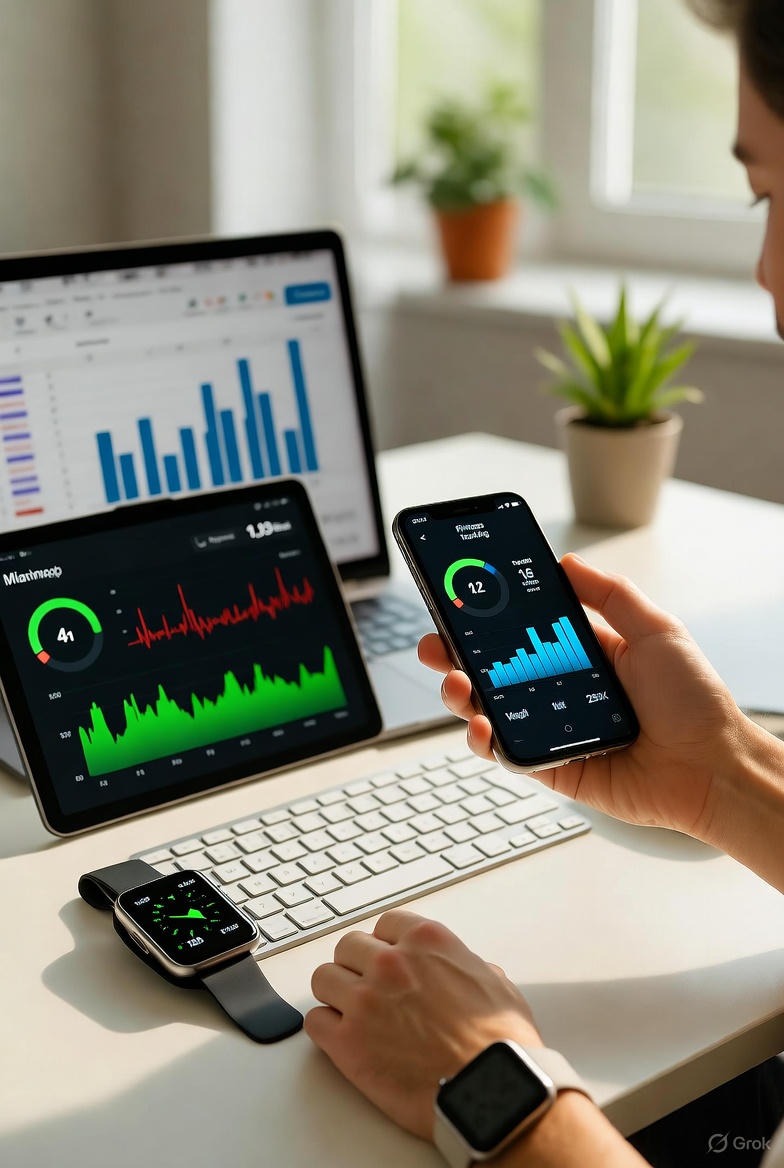
The Smart Ring HRV Dashboard: Understanding Every Metric
A guide to understanding every metric on your smart ring's HRV dashboard.
The Smart Ring HRV Dashboard: Understanding Every Metric
You wake up feeling... off. Not sick, exactly, but not your sharp, resilient self. The coffee doesn’t hit the same. Your patience is thinner. The day feels heavier. For years, this state existed in a fog of guesswork—was it poor sleep? Latent stress? An oncoming bug? You had no objective data, only subjective fog.
Enter the modern smart ring, a sleek piece of wearable technology that does the seemingly impossible: it translates the silent, complex symphony of your autonomic nervous system into a clear, actionable language. At the heart of this translation is one paramount biomarker: Heart Rate Variability (HRV). But HRV is not a solitary number. It is a gateway into a dashboard of interconnected metrics, each a vital sign for your resilience, recovery, and overall well-being.
Gone are the days of simply counting steps and tracking sleep duration. We are now in the era of deep physiological intelligence. A smart ring like Oura, Ultrahuman, or Circular continuously collects raw biometric signals, and through sophisticated algorithms, presents a detailed HRV dashboard. This dashboard is your personal command center for understanding your body’s inner workings. Yet, for many, this dashboard remains a cryptic array of graphs, numbers, and terms—a high-tech report card they haven’t been taught to read.
This guide is your definitive decoder ring. We will move beyond the surface, beyond the simple "high HRV is good" mantra, and dive into the profound depth of what each metric on your smart ring’s HRV dashboard truly means. We’ll explore not just what each number represents, but why it matters for your daily performance, long-term health, and ability to navigate stress. We’ll translate the science into strategy, empowering you to move from passive observation to active optimization.
Whether you’re a biohacker fine-tuning your peak performance, someone navigating chronic stress, or simply a curious individual seeking a deeper connection with your body’s signals, mastering this dashboard is the key. It’s the difference between wearing a ring and understanding what it’s telling you. Let’s begin the journey from data to wisdom.
The Autonomic Nervous System: The Master Conductor Your Ring Is Listening To
Before we can interpret the dashboard, we must understand the source of the signal. Every metric derived from HRV is, fundamentally, a reflection of the state of your Autonomic Nervous System (ANS). Think of your ANS as the master conductor of your body’s unconscious functions—the 24/7 operations that keep you alive and adapting. It’s divided into two primary branches that work in a dynamic, delicate balance.
The Sympathetic Nervous System (SNS) is your accelerator. It’s the "fight-or-flight" system, mobilizing energy in response to stress, danger, or excitement. It increases your heart rate, diverts blood to muscles, and sharpens focus. It’s essential for survival and performance.
The Parasympathetic Nervous System (PNS), often associated with the vagus nerve, is your brake. It’s the "rest-and-digest" system, promoting recovery, digestion, immune function, and calm. It lowers heart rate, conserves energy, and facilitates restoration.
Health and resilience are not about having a strong SNS or a strong PNS in isolation. They are about having a highly adaptive system—one that can powerfully accelerate when needed (tackling a work deadline, finishing a workout) and then efficiently downshift into recovery mode afterward. This constant, subtle tug-of-war between the accelerator and the brake is what creates Heart Rate Variability.
Heart Rate Variability is the measure of the time variation between successive heartbeats. Contrary to popular belief, a healthy heart is not a metronome. It is a responsive, nuanced instrument. When you inhale, your heart rate slightly increases (SNS influence); when you exhale, it slightly decreases (PNS influence). This is called respiratory sinus arrhythmia, and it’s a sign of a healthy, adaptive ANS. High HRV generally indicates a balanced system with strong parasympathetic (recovery) tone and good adaptability. Low HRV can indicate a system stuck in sympathetic overdrive (chronic stress), illness, or poor recovery.
Your smart ring uses photoplethysmography (PPG) sensors—tiny LEDs that measure blood flow changes in your finger—to capture your pulse wave. Advanced algorithms then filter this signal to extract the precise millisecond differences between beats, constructing the foundational data for your entire HRV dashboard. This is the symphony your ring is recording every night, and each metric we will discuss is a different way of analyzing its composition, rhythm, and harmony.
Beyond the Single Number: Deconstructing the HRV Dashboard Framework
When you open your companion app, you’re typically greeted by a "Readiness" or "Recovery" score. This composite score is useful as a quick glance, but it’s the underlying HRV dashboard where the true story unfolds. This dashboard breaks down the complex signal of HRV into its constituent parts, each offering a unique lens.
Think of it like analyzing a financial portfolio. Your net worth (the Readiness score) is important, but a wise investor looks at the asset allocation—stocks, bonds, cash—to understand risk, stability, and growth potential. Similarly, your HRV dashboard breaks down your "physiological portfolio" into its key assets.
A comprehensive dashboard will include metrics derived from both Time-Domain Analysis (looking at the intervals between beats directly) and Frequency-Domain Analysis (using mathematical transforms to see the power of different rhythmic components in the heart rate signal). Some advanced platforms even include Nonlinear Analysis, which examines the complexity and predictability of the heartbeat pattern.
Here’s a conceptual overview of what you’ll typically find, which we will explode into detailed sections:
The Core Metric: Your Nightly Average HRV. This is your baseline, time-domain snapshot.
HRV Balance & Trends: Understanding your personal baseline and directional movement.
Resting Heart Rate (RHR) & Its Relationship to HRV: The two are a powerful duo.
Respiratory Rate (RR): The often-overlooked vital sign tied directly to nervous system state.
Deep Sleep HRV: The gold standard measurement window.
HRV During Sleep Stages: Contrasting sympathetic vs. parasympathetic dominance.
RMSSD: The Purest Measure of Recovery Tone. A critical time-domain metric.
LF/HF Ratio: Decoding the Sympathetic-Parasympathetic Dialogue. A key frequency-domain metric.
SDNN: The Big Picture of Total Adaptive Capacity. Another essential time-domain metric.
Mastering this framework transforms your app from a novelty into a powerful diagnostic tool. As we explore each metric, remember that context is king. A single night’s data is a data point; trends over time are the truth. For more on interpreting trends and building a personal baseline, our resource library on the Oxyzen.ai blog offers continued learning.
Your Nightly Average HRV: The Foundation Metric Explained
This is the number you likely see most prominently: your average HRV score for the night, often expressed in milliseconds (ms). It’s calculated by taking all the normal beat-to-beat intervals (NN intervals) recorded during your sleep period and averaging the variability between them.
What It Tells You: Your nightly average HRV is a robust, general indicator of your overall autonomic nervous system balance and recovery status from the day before. After the stimuli of the day—physical, mental, emotional—sleep is when your body should be deeply in recovery (parasympathetic) mode. A higher average HRV during this period suggests your system has successfully downshifted and is engaged in repair. A lower average suggests your system may still be under strain, struggling to fully disengage from sympathetic arousal.
Crucial Nuances to Understand:
It’s Personal, Not Competitive: This cannot be overstated. An average of 45ms might be catastrophically low for one person and a personal best for another. Genetics, age, fitness level, and even gender influence baseline HRV. The most important comparison is you vs. you. What is your normal range? Deviations from your baseline are what hold meaning.
The Directional Trend is Key: Is your weekly or monthly average trending gently upward? This is often a sign of improving fitness, effective stress management, or positive lifestyle adaptations. Is it trending downward? This could be a early warning sign of overtraining, chronic stress, poor sleep hygiene, or an impending illness.
Absolute Drops Matter: Even with a personal baseline, a sudden, significant drop (e.g., 20% or more below your rolling average) is a bright red flag. Your body is signaling significant strain. This is the dashboard saying, "Something is wrong. Prioritize rest."
Actionable Insight: Don’t chase an arbitrary high number. Chase consistency within your personal range and positive long-term trends. If you see a sustained drop, audit your lifestyle: stress load, training intensity, nutrition, alcohol intake, and sleep quality. The story of our founders’ personal journeys with these precise signals is part of the Oxyzen story and mission.
HRV Balance & Personal Baseline: What’s "Normal" for YOU?
The concept of a "personal baseline" is the cornerstone of intelligent HRV interpretation. Your smart ring app should help you establish this, typically by calculating a rolling average (e.g., over the past 30-60 days) to define your unique range.
How to Find Your Baseline: Most apps will display a graph of your nightly HRV over weeks or months. Your baseline isn’t the single highest point, but the band or range where the majority of your data points cluster during periods of stable health and routine. This creates your "HRV Balance" zone.
Interpreting Deviations:
Consistently Above Baseline: A period where your nightly HRV is consistently hovering above your personal average range. This is a strong positive indicator. It often results from:
Effective recovery from a deload week or vacation.
Positive adaptations from consistent, well-managed training.
Mastery of stress management techniques (meditation, breathwork).
Improved sleep duration and quality.
Consistently Below Baseline: This is a state of sustained physiological strain. Potential causes include:
Overtraining or excessive exercise volume without adequate recovery.
High mental or emotional stress loads (work, relationships).
Poor dietary choices, dehydration, or increased alcohol consumption.
The buildup phase of an infection or illness.
Significant sleep deprivation.
Why This Matters: This personalized framework moves you away from harmful comparisons and anxiety. It turns the dashboard into a true feedback loop. For instance, if you start a new meditation practice and, over three weeks, see your HRV balance shift upward, you have objective, personal proof of its efficacy for your nervous system. This is the power of personalized data. For common questions on how apps calculate these baselines, our comprehensive FAQ provides detailed answers.
Resting Heart Rate (RHR) and Its Intimate Dance with HRV
Resting Heart Rate is a familiar metric, but when viewed alongside HRV, its meaning deepens exponentially. While HRV measures the variability between beats, RHR is simply the number of beats per minute when you are completely at rest (optimally measured during sleep).
The Inverse Relationship: Generally, a lower RHR indicates higher cardiovascular fitness and stronger parasympathetic tone. There is often an inverse, non-linear relationship with HRV: as RHR trends down healthily, HRV often trends up. Both point to a resilient, efficient system. However, this dance has critical, telling exceptions.
The Four Key Scenarios:
Low RHR + High/Stable HRV: The optimal scenario. This indicates superior cardiovascular fitness coupled with a highly adaptive, recovery-capable nervous system. Think of a well-trained athlete in a rested state.
High RHR + Low HRV: The clear "stress" or "strain" scenario. This combination strongly suggests dominant sympathetic nervous system activation. Your body is in a state of high alert and low adaptability. Causes include acute stress, illness, dehydration, or severe overtraining.
Low RHR + Low HRV: This is a paradox that requires careful attention. A surprisingly low RHR coupled with a dropping HRV can be a warning sign of overtraining syndrome or extreme fatigue. The heart muscle itself may be highly efficient (low RHR), but the autonomic nervous system is exhausted and losing its adaptive flexibility (low HRV). It’s a state of "fitness without resilience."
High RHR + High/Stable HRV: Less common but possible during periods of heat exposure, certain hormonal fluctuations, or very high aerobic training loads where the cardiovascular system is working but the nervous system is still managing the stress adaptively.
The Nighttime Dip: A healthy circadian rhythm shows a distinct dip in RHR during the middle of the night, typically coinciding with deep sleep. Your smart ring tracks this. A blunted or absent nighttime dip is a significant marker of poor autonomic regulation and is often associated with stress, poor sleep quality, or other health issues. Observing the synergy—or disconnect—between your RHR curve and your HRV graph across the night is a master class in self-understanding.
Respiratory Rate (RR): The Forgotten Vital Sign in the HRV Equation
While heart metrics take center stage, your nightly Respiratory Rate (RR)—the number of breaths you take per minute during sleep—is a silent but powerful player in the HRV dashboard. It’s not derived from HRV but is a core vital sign that directly influences and reflects autonomic state.
Why It Matters: Breathing is unique—it’s an automatic function that we can also consciously control. This places it at the crossroads of the unconscious ANS and our conscious mind. Your resting respiratory rate is a direct window into metabolic and autonomic demand.
A Lower Resting RR (e.g., 12-14 breaths/min during sleep) generally indicates metabolic efficiency, calm, and strong parasympathetic influence. It’s a sign of a body at rest, not struggling.
A Higher Resting RR (e.g., 16-20+ breaths/min during sleep) can be a sign of increased metabolic demand (from illness, fever, or digestion), physiological stress (from sleep apnea or hypoxia), or psychological stress manifesting physically.
The Direct Link to HRV: Remember respiratory sinus arrhythmia? The rhythmic speeding and slowing of your heart rate with your breath is the primary engine of HRV. The depth, rhythm, and rate of your breathing directly modulate this signal. Erratic, fast, or shallow breathing (reflected in a higher RR) will typically correspond with lower HRV. Slow, deep, rhythmic breathing (lower RR) promotes higher HRV by stimulating the vagus nerve and enhancing parasympathetic tone.
Actionable Insight: Tracking your RR provides context for your HRV. If you see a night with both elevated RR and depressed HRV, the cause may be respiratory in nature (allergies, a stuffy nose, mild sleep-disordered breathing) or related to systemic stress. Furthermore, your daytime breathing practices directly affect these nighttime numbers. Incorporating deliberate slow-breathing exercises (e.g., 4-7-8 breathing, box breathing) can train your nervous system, potentially lowering your average sleep RR and boosting HRV over time. Many users share how tracking RR provided their first clue to undiagnosed sleep issues; you can read some of these transformative experiences in our customer testimonials.
Deep Sleep HRV: The Gold Standard Measurement Window
Not all sleep is created equal for HRV measurement. While your nightly average is valuable, the HRV recorded specifically during deep sleep (N3 or Slow-Wave Sleep) is considered the purest read of your recovery potential and parasympathetic nervous system dominance.
Why Deep Sleep is the Golden Hour: During deep sleep, external influences are minimized. Your conscious mind is offline, movement is minimal, and the drive for physical restoration is paramount. This is when the parasympathetic nervous system should be most dominant, creating an ideal environment for the highest, most stable HRV of the 24-hour cycle. It’s your body’s most honest report on its recovery capacity.
Contrast with Other Sleep Stages:
REM Sleep: This stage is neurologically active and can be emotionally intense. It’s characterized by a more variable, often lower HRV, with spikes of sympathetic activity (similar to waking states) mixed in. This is normal.
Light Sleep: HRV during light sleep typically sits between the peaks of deep sleep and the lows of REM.
What to Look For: A healthy pattern shows clear peaks of HRV coinciding with your deep sleep periods on the nightly graph. This rhythmic fluctuation is a sign of a healthy, well-regulated sleep architecture and robust autonomic flexibility.
Red Flags in Deep Sleep HRV:
Absence of Peaks: If your HRV graph is flatlined or shows no discernible rise during your recorded deep sleep segments, it suggests your nervous system is not achieving full parasympathetic restoration, even when given the opportunity.
Low HRV Despite Long Deep Sleep: If your app reports substantial deep sleep duration but the accompanying HRV is low, it may indicate that the "deep sleep" is not truly restorative—possibly due to factors like pain, low-grade inflammation, or medication effects.
This metric moves you from asking "How much deep sleep did I get?" to the more profound question: "How restorative was my deep sleep?" It’s a qualitative insight hidden within quantitative data. Understanding these nuances is part of our commitment to user education, a principle central to the Oxyzen mission and values.
HRV Across Sleep Stages: A Narrative of Your Night
Expanding from the deep sleep focus, observing how HRV ebbs and flows across your entire sleep cycle tells a dynamic story of your night. Your smart ring’s minute-by-minute or stage-by-stage HRV graph is a narrative of your autonomic journey through the night.
The Ideal Nocturnal Narrative:
Sleep Onset: As you drift from wakefulness into light sleep, there should be a noticeable increase in HRV as the sympathetic hold of the day begins to loosen.
Deep Sleep Cycles (usually in the first half of the night): Pronounced, sustained peaks of high HRV. This is the chorus of the recovery symphony.
REM Cycles (more prevalent in the second half of the night): HRV dips and becomes more variable. Spikes of heart rate (and lower HRV) during intense dreams are normal and reflect the brain’s emotional processing.
Morning/Light Sleep Prior to Waking: HRV may begin a gentle decline as the sympathetic system starts to prepare the body for wakefulness (the cortisol awakening response).
Interpreting Disruptions in the Narrative:
Frequent, Sharp Drops in HRV: These could correspond to micro-arousals you’re not aware of—caused by noise, sleep apnea events (where breathing stops), pain, or restless leg syndrome. The nervous system is repeatedly jolted into a sympathetic state.
An Overall Flat, Low HRV Graph: A lack of rhythmic variation, looking more like a straight line at a low value, is a strong indicator of chronic autonomic imbalance, high allostatic load (cumulative stress), or poor sleep quality. The system lacks the dynamism needed for restoration.
Early Morning HRV Crash: If your HRV plummets and stays low in the hours before you wake, it could be linked to blood sugar dysregulation, anxiety, or an overactive stress response at dawn.
By learning to read this narrative, you can start to correlate events with data. Did that late, heavy meal result in a turbulent HRV graph? Did a stressful argument before bed prevent the initial sleep-onset HRV rise? This turns your sleep from a black box into a transparent process you can begin to optimize.
RMSSD: The Time-Domain Workhorse for Recovery Assessment
Delving into specific analytic methods, we encounter RMSSD (Root Mean Square of Successive Differences). This is a core time-domain metric that many experts and apps prioritize, often even over the simple average HRV, for assessing short-term, beat-to-beat variability and parasympathetic activity.
What It Measures: RMSSD calculates the root mean square of the differences between adjacent normal heartbeats. In simpler terms, it’s exceptionally good at capturing the high-frequency, rapid changes in heart rate that are primarily influenced by the parasympathetic nervous system (via the vagus nerve) and the respiratory cycle.
Why It’s So Valuable:
Parasympathetic Proxy: RMSSD is considered one of the most direct non-invasive measures of vagal tone—your body’s capacity for instant relaxation and recovery. A higher RMSSD suggests a strong, responsive "brake" on your nervous system.
Resistant to Noise: It is less influenced by long-term, slow trends in heart rate (which reflect other factors) and more focused on the rapid neural modulation that signifies healthy autonomic reflexes.
Acute Sensitivity: RMSSD can react very quickly to acute stress and recovery interventions. A hard workout will suppress it; a meditation session or good sleep may boost it. This makes it excellent for tracking daily fluctuations.
Interpreting Your RMSSD: Like average HRV, RMSSD is highly personal. You will establish your own baseline. Key patterns to note:
A rising trend in your RMSSD (e.g., weekly average) is a fantastic sign of improving recovery capacity and stress resilience.
A sharp drop is a clear indicator of acute strain—physical, immune, or psychological.
Compared to SDNN (which we’ll discuss next), RMSSD is more focused on the short-term, vagal influence, while SDNN gives a broader picture of total variability.
For athletes and biohackers, RMSSD is often the go-to metric for guiding daily training decisions—"Is my nervous system recovered enough for a hard session today?" It places a numerical value on your body’s whisper to "take it easy." Learning to apply these insights practically is a theme we explore regularly for our community on the Oxyzen.ai blog.
LF/HF Ratio: Deciphering the Sympathetic-Parasympathetic Dialogue
To truly appreciate the conversation happening within your autonomic nervous system, we must move from the time domain into the frequency domain. This is where the LF/HF Ratio emerges as a pivotal, though often misunderstood, metric on your HRV dashboard. Unlike RMSSD or average HRV, which give a composite score, the LF/HF Ratio attempts to quantify the balance—or imbalance—between the two branches of your ANS.
Understanding the Frequency Bands: Frequency-domain analysis uses a mathematical technique (like Fourier transform) to break down your heart rate signal into its underlying rhythmic components, much like separating a musical chord into its individual notes. The power, or strength, of these components is measured in different frequency bands:
High Frequency (HF) Power (0.15–0.4 Hz): This band is tightly coupled with your respiratory cycle. It is a clear, direct reflection of parasympathetic (vagal) activity. When you breathe slowly and deeply, you amplify power in this band. High HF power indicates strong vagal tone and a capacity for calm.
Low Frequency (LF) Power (0.04–0.15 Hz): This band is more complex and debated. Historically, it was labeled a proxy for sympathetic activity. Modern consensus views it as a reflection of both sympathetic and parasympathetic influences, heavily modulated by baroreceptor activity—the body's blood pressure regulation system. It represents longer-term regulatory rhythms.
Very Low Frequency (VLF) Power: Related to even slower processes like hormonal cycles (e.g., cortisol), thermoregulation, and the renin-angiotensin system.
The LF/HF Ratio: What Does It Actually Mean? The ratio is calculated as: LF Power ÷ HF Power. The traditional, oversimplified interpretation was: A higher ratio = sympathetic dominance (stress), and a lower ratio = parasympathetic dominance (recovery).
A More Nuanced, Modern Interpretation: The ratio is best understood as a measure of autonomic balance and flexibility, not a simple stress gauge.
A Moderate, Stable Ratio suggests a harmonious dialogue between both branches. Your system can engage (LF) and disengage (HF) appropriately.
A Chronically Elevated Ratio (especially when paired with low total HRV) often does indicate a shift toward sympathetic predominance and reduced parasympathetic activity—a classic "stressed" state.
A Very Low Ratio is not necessarily "better." It might indicate an under-engaged system or a specific physiological state. Context from other metrics (like activity levels) is essential.
Crucial Caveats: The LF/HF ratio is highly sensitive to breathing rate. If you breathe very slowly (e.g., 4.5 breaths per minute, or 0.075 Hz), you move your primary respiratory rhythm into the LF band! This can dramatically alter the ratio, not due to a change in sympathetic activity, but simply due to conscious breathing. Therefore, never view the LF/HF ratio in isolation. Always cross-reference it with:
Your Respiratory Rate (RR): Is your breathing artificially affecting the ratio?
Your Total HRV (SDNN) and RMSSD: Is overall variability high or low?
Your subjective feeling: Does the data match your lived experience?
In practice, for most smart ring users, significant, sustained shifts in the LF/HF trend are more meaningful than daily values. A creeping rise over weeks during a demanding work project, coupled with dropping RMSSD, is a powerful, objective confirmation of cumulative strain. It’s the dashboard showing you the gradual tilt of the balance. Understanding this complexity is part of providing a complete picture, which is why we detail our analytical approach in our company information and mission.
SDNN: The Big-Picture Metric of Total Adaptive Capacity
While RMSSD zooms in on the short-term, vagally-mediated beats, and the LF/HF ratio examines spectral balance, SDNN (Standard Deviation of NN Intervals) pulls back for the widest-angle view. It is arguably the single most comprehensive time-domain metric for assessing your overall autonomic nervous system's total adaptive capacity.
What SDNN Measures: In its simplest form, SDNN is the standard deviation of all normal heart beat intervals over a recording period. For a smart ring, this is typically calculated across the entire night's sleep (24-hour SDNN is the clinical gold standard but impractical for wearables). Standard deviation is a statistical measure of "spread" or variability. A high SDNN means there is a wide variation in the time between heartbeats—your heart rhythm is dynamically responsive. A low SDNN indicates a more rigid, monotonous heart rhythm.
Why It's the "Big Picture" Metric: SDNN captures the totality of influences on your heart rate across all time scales—the rapid respiratory-linked changes (HF), the slower blood pressure rhythms (LF), and the very slow circadian/hormonal cycles (VLF). It reflects the full bandwidth of your system's responsiveness. Think of it as the measure of your physiological "orchestra's" range, from the high notes of the violin (parasympathetic) to the low notes of the cello (sympathetic/modulatory) and everything in between.
Interpreting Your SDNN:
High SDNN (within your personal range): Indices a robust, flexible, and resilient system. Your body has a wide repertoire of responses to handle various internal and external demands. It is a strong predictor of cardiovascular health and general resilience.
Low SDNN: Suggests a system with limited adaptive range—it's stuck in a narrower band of operation. This is associated with increased risk in numerous health contexts, from heart disease to mortality post-heart attack, and is a hallmark of aging, chronic stress, and poor fitness.
SDNN vs. RMSSD: RMSSD is like measuring the agility of a sports car (quick, vagal responses). SDNN is like measuring the vehicle's overall performance envelope, including top speed, cornering, and braking (total system variability). A car needs both agility and a wide performance envelope to handle different tracks.
Actionable Insights from SDNN:
Long-Term Trend Tracking: Because SDNN integrates so many systems, a gradual upward trend over months is one of the best objective signs that your lifestyle—be it training, diet, stress management, or sleep—is genuinely improving your foundational physiological resilience.
Major Life Impact: Significant life stressors (bereavement, job loss) or major positive interventions (extended meditation retreats, long vacations) often show their most pronounced effect in SDNN.
The Ultimate Recovery Metric: If you only look at one metric after a particularly grueling life phase or athletic event, SDNN's recovery back to baseline can tell you when your system has truly regained its full adaptive capacity, not just its acute recovery (RMSSD).
While SDNN is less sensitive to daily acute stressors than RMSSD, a sharp, sustained drop is a serious signal worth heeding. It’s your body reporting a reduction in its overall operational bandwidth. Many users first grasp the profound value of this metric when they see concrete data reflecting life changes, a connection vividly illustrated in some of the real user stories we've gathered.
Putting It All Together: A Case Study in Dashboard Interpretation
Theory is essential, but true understanding crystallizes with application. Let’s walk through a hypothetical but realistic three-night scenario for "Alex," a 35-year-old professional who wears a smart ring. We’ll interpret the interconnected dashboard to tell a cohesive story.
The Story: All metrics are squarely within Alex’s normal range. The HRV graph shows clear peaks during deep sleep cycles and the expected dip during REM. The LF/HF ratio is 1.7. RHR shows a nice dip to 50 bpm in the middle of the night. This is the signature of a well-recovered system operating within its healthy homeostasis. The dashboard suggests "proceed as normal."
Night 2: After an Intense Evening Workout and Late Dinner
Scores: Readiness 72. HRV: 41 ms (↓25%). RMSSD: 32 ms (↓). SDNN: 58 ms (↓). RHR: 58 bpm (↑). RR: 15.1 (↑). Deep Sleep: 1h 10m. LF/HF Ratio: 2.8 (↑).
The Interconnected Story: This is a classic "acute stress" signature. The intense physical stress (workout) and metabolic stress (late meal) have created a significant strain.
The elevated RHR and Respiratory Rate show increased metabolic and sympathetic load.
The drop in HRV, RMSSD, and SDNN confirms reduced parasympathetic activity and total adaptive capacity.
The elevated LF/HF Ratio supports the picture of a sympathetic shift.
The reduced deep sleep is both a cause and effect—the strained system couldn’t access full restorative sleep.
The dashboard is unified: all metrics point to incomplete recovery. The recommendation would be for a light day, emphasizing hydration, gentle movement, and an early bedtime.
Night 3: After a Conscious Recovery Day
Scores: Readiness 89. HRV: 60 ms (↑ from baseline!). RMSSD: 48 ms (↑). SDNN: 70 ms (↑). RHR: 52 bpm (↓). RR: 12.8 (↓). Deep Sleep: 1h 55m. LF/HF Ratio: 1.5.
The Supercompensation Story: By heeding Night 2’s signals, Alex prioritized recovery. The result is a "supercompensation" effect, where the body not only recovers but rebounds to a state better than baseline.
RHR and RR are at new lows, indicating exceptional calm and efficiency.
HRV, RMSSD, and SDNN are at new highs, showing expansive vagal tone and total adaptability.
The LF/HF Ratio has dropped back into a lower, balanced range.
Deep sleep increased, suggesting the nervous system permitted deeper restoration.
This dashboard is green across the board, indicating a primed, resilient state ready for challenge.
This case study illustrates the power of synthesizing metrics. No single number told the whole story. The rise in RHR, the drop in RMSSD, the spike in the LF/HF ratio, and the elevated RR together created an indisputable narrative of strain. Their collective return to baseline—and beyond—confirmed effective recovery. Learning to see these patterns is the art and science of using your dashboard effectively. For more examples and detailed breakdowns of different scenarios, our blog features ongoing analysis and guides.
Beyond the Night: Daytime HRV, Stress Scores, and Live Metrics
While nighttime HRV provides the cleanest, most standardized reading, the frontier of smart ring technology is expanding into daytime and live HRV metrics. This includes features like a continuous "Stress" or "ANS Balance" score and on-demand HRV readings, which open a window into how your nervous system navigates the demands of waking life.
How Daytime HRV is Different: Daytime measurements are inherently noisier. Movement, talking, eating, caffeine, and emotional stimuli constantly modulate your ANS. Therefore, absolute values are not directly comparable to nighttime scores. The value lies in trends, patterns, and reactions.
Understanding the "Stress" or "ANS Balance" Score: This is typically a derived score (e.g., 1-100) that estimates your sympathetic vs. parasympathetic balance in near-real-time, often using a combination of HRV (likely RMSSD-based), heart rate, and movement data.
A low score indicates a state of calm, relaxation, or "parasympathetic dominance."
A high score indicates physiological stress or "sympathetic activation."
Crucially, a high score is not inherently "bad." It is appropriate—and healthy—to see this score rise during a workout, an important meeting, or a challenging cognitive task. The problem arises when the score remains elevated during periods of intended rest or low demand, indicating an inability to downshift.
Using Live Metrics for Biofeedback:
Identify Stress Triggers: Notice what consistently spikes your daytime stress score. Is it your commute? Certain meetings? Social media? This is objective data to pinpoint hidden stressors.
Measure Relaxation Techniques: Do a 5-minute breathing exercise or meditation session while watching your live HRV or stress score. Does it drop? How quickly? This turns abstract practices into concrete, rewarding feedback.
Understand Your Recovery Curve: After a stressful event or workout, how long does it take for your live stress score to return to a calm baseline? This "recovery half-life" is a powerful measure of your nervous system's resilience.
Limitations and Best Practices:
For a reliable snapshot, take on-demand readings when still and calm for at least 1-2 minutes.
Don't obsess over momentary spikes. Look for sustained patterns over hours.
Use daytime data to complement, not replace, the foundational truth of your nighttime data.
This real-time layer transforms your smart ring from a nightly historian into a daily coach. It allows for moment-to-moment awareness and course correction, bridging the gap between how you slept and how you are living. It’s a tool for practicing nervous system hygiene throughout the day. For practical tips on integrating these live metrics into your daily routine, we’ve compiled helpful strategies in our FAQ and user support section.
Actionable Strategies: How to Positively Influence Your HRV Dashboard
Data without action is merely trivia. The ultimate purpose of understanding your HRV dashboard is to leverage it for tangible improvement. Here are evidence-based strategies, tiered by impact, to move your metrics in a positive direction.
Foundational Tier (Non-Negotiable):
Prioritize Sleep Quality & Consistency: This is the number one lever. Your dashboard is literally a sleep report. Aim for 7-9 hours, a cool, dark room, and a consistent bedtime/wake time—even on weekends. This directly boosts deep sleep HRV and SDNN.
Manage Chronic Stress: Identify and address persistent stressors. This is where techniques like mindfulness, meditation, and yoga shine. They are "vagal toning" exercises that directly improve RMSSD and lower the LF/HF ratio over time. Consistent practice is key.
Hydrate & Nourish Properly: Dehydration is a direct stressor that elevates RHR and crushes HRV. Aim for adequate electrolyte-balanced water intake. Similarly, avoid large, high-fat, or high-sugar meals close to bedtime, which can disrupt nighttime HRV and RR.
Optimization Tier (Performance & Resilience):
Practice Intentional Breathwork: Slow, diaphragmatic breathing (e.g., 4-7-8, 5-5-5 box breathing) is the fastest way to manually stimulate your vagus nerve. Daily practice, especially before sleep, can lower resting RR and elevate HRV. It’s a direct dial for your parasympathetic system.
Apply Intelligent Training Principles: Use your dashboard to guide your exercise. If your HRV is significantly depressed and RHR elevated, opt for gentle recovery (walk, yoga) over intense training. This prevents overtraining and fosters positive adaptation (trending up SDNN). Periodize your training with deload weeks.
Cold Exposure: Brief, controlled cold exposure (cold showers, ice baths) is a potent hormetic stressor that, when used correctly, can strengthen autonomic flexibility and boost vagal tone, improving HRV over time. Start gradually.
Mindful Caffeine & Alcohol Management: Observe how these substances affect your dashboard. For many, caffeine late in the day disrupts sleep HRV. Alcohol, despite aiding sleep onset, dramatically suppresses REM and deep sleep HRV and elevates nighttime RHR and RR.
Advanced Tier (Lifestyle Integration):
Cultivate Positive Social Connection: Meaningful social engagement and laughter are potent vagus nerve stimulants. They can trigger immediate improvements in HRV and contribute to long-term resilience.
Get Morning Sunlight Exposure: Viewing bright light within an hour of waking helps regulate your circadian rhythm, which in turn supports a healthy autonomic rhythm and better nighttime HRV.
Listen to Your Trends, Not Your Daily Score: Avoid the trap of daily score anxiety. Make decisions based on 3-5 day trends, not a single low score. The goal is a higher baseline, not a perfect daily number.
By systematically addressing these levers, you transition from being a passive observer of your data to an active architect of your well-being. Your dashboard becomes the feedback mechanism that tells you what’s working. The journey of discovering what uniquely works for you is at the core of the Oxyzen experience and vision.
Common Pitfalls and Misinterpretations to Avoid
As powerful as the HRV dashboard is, it is susceptible to misinterpretation. Avoiding these common pitfalls will save you from unnecessary anxiety and lead to more insightful use of your data.
Pitfall 1: Chasing Someone Else's Numbers.
The Mistake: Comparing your 35 ms HRV to a friend’s 80 ms and feeling discouraged.
The Reality: HRV is profoundly personal. A younger person, an endurance athlete, or someone with different genetics will have a different baseline. Your only meaningful benchmarks are your own past data.
Pitfall 2: Overreacting to a Single Night's Data.
The Mistake: Seeing a 30% drop in HRV one morning and cancelling all plans, assuming you're ill or overtrained.
The Reality: A single data point is noise. Look for patterns. Was it a late night? Did you drink alcohol? Was the ring’s data potentially noisy? Give it 2-3 nights to see if a trend emerges before making drastic changes.
Pitfall 3: Misunderstanding the "Stress" Score.
The Mistake: Believing a high daytime stress score is always negative and must be minimized at all costs.
The Reality: A healthy nervous system is dynamic. High scores during exercise, intense work, or exciting events are normal and healthy. The issue is failing to recover from them. Focus on your ability to return to a low score during downtime.
Pitfall 4: Ignoring the Context of Your Life.
The Mistake: Staring at a low Readiness score while ignoring the fact you have a demanding project deadline or are in a heavy training block.
The Reality: Your dashboard reflects your life. Data should be interpreted with context, not in a vacuum. A lower score during a period of intentional, well-managed stress (like training for a marathon) is expected. The key is managing that stress and planning for adequate recovery afterward.
Pitfall 5: Assuming the Ring is Infallible.
The Mistake: Treating every data point as absolute medical-grade truth.
The Reality: Smart rings are fantastic consumer wellness tools, but they have limitations. Poor fit (too loose/tight), very cold fingers, or significant movement can create artifact noise. If a data point seems wildly off, check the raw sleep graph for gaps or irregularities. The ring is a guide, not an oracle.
Pitfall 6: Data Overwhelm and Anxiety.
The Mistake: Becoming so obsessed with optimizing scores that it creates a new source of performance anxiety, which in turn lowers your HRV.
The Solution: Periodically, take a break from checking the app. Use the data to build habits, then trust the habits. Let the ring work in the background, and review your trends weekly instead of daily. The goal is enhanced well-being, not a perfect graph.
By steering clear of these pitfalls, you maintain a healthy, productive relationship with your biometric data. It should empower and inform you, not rule or anxiety you. For further guidance on navigating these nuances and getting the most from your device, our support and FAQ resources are always available.
The Advanced Dashboard: HRV Metrics for Specific Health & Performance Goals
Your HRV dashboard is not a one-size-fits-all monitor; it's a customizable toolkit. Depending on your primary focus—be it athletic performance, mental resilience, metabolic health, or managing a chronic condition—different metrics and patterns take center stage. Let’s explore how to tailor your interpretation.
For the Athlete & Performance Seeker: For this group, the dashboard is a daily prescription for training load.
Primary Metrics: RMSSD and RHR are the king and queen. Their acute sensitivity makes them ideal for daily "train/don't train" decisions. The Recovery Score (often heavily weighted on HRV) is your guide.
Key Pattern: The Acute-to-Chronic Workload Ratio via HRV. Track your weekly average HRV (chronic load/adaptation) against your daily value (acute strain). A daily HRV that plummets well below your weekly average suggests your acute load is too high relative to your adapted capacity—a risk for overtraining.
The Supercompensation Signal: Look for the rebound. After a period of intentional strain (training block) followed by a deload week, your HRV (especially SDNN) should not just return to baseline but surpass it. This is the dashboard confirming you've achieved a new level of fitness.
The Overtraining Alarm: The most telling sign is a consistently low HRV with an unusually low RHR (that "fitness without resilience" paradox). Combined with a flatlined HRV graph during sleep, it's a strong signal to force rest. The insights from elite athletes who use this data are often shared on our blog for performance optimization.
For the Stress Manager & Mental Wellness Advocate: Here, the goal is autonomic flexibility and resilience to life's psychological stressors.
Primary Metrics: The LF/HF Ratio trend and daytime Stress Score are paramount. SDNN is your measure of overall resilience bandwidth.
Key Pattern: Recovery Speed. Use the live stress score. After a stressful meeting or event, time how long it takes to drop below a threshold (e.g., 25). Improving your ability to "snap back" is a direct measure of increasing stress resilience.
Biofeedback Loop: Use the real-time HRV or stress score during meditation or breathwork. The goal is to see the number drop during the practice, providing instant positive reinforcement. This trains the mind-body connection.
The Chronic Stress Signature: A gradually climbing resting RHR, a slowly declining SDNN, and an LF/HF Ratio that trends upward over weeks, all point to cumulative allostatic load. This data is invaluable for justifying lifestyle interventions before burnout occurs. Learning to manage this is part of the holistic journey we support, as reflected in our company's mission.
For Metabolic & Longevity Focus: Metabolic health is deeply entwined with autonomic function, particularly through glucose regulation and inflammation.
Primary Metrics: Nighttime Respiratory Rate (RR) and Deep Sleep HRV. SDNN as a marker of systemic health.
Key Pattern: Nocturnal Stability. Metabolic dysregulation (e.g., from poor diet or insulin resistance) can create autonomic instability during sleep. Look for elevated and erratic nighttime RR and a lack of clear HRV peaks during deep sleep. A high RHR that doesn't dip properly is also a red flag.
The Food as Intervention Test: Have a standardized meal (e.g., a glucose challenge) and observe your HRV and stress score for the following 3-4 hours, and then your nighttime data. A significant suppression of HRV and elevation of stress/RHR suggests a high metabolic cost to that food. This turns your ring into a personal nutrition sensor.
The Inflammation Link: Low-grade inflammation can directly suppress vagal activity (the cholinergic anti-inflammatory pathway). A sustained, unexplained drop in RMSSD and SDNN, without a clear life stressor, can sometimes signal a rise in inflammatory markers, prompting a closer look at diet and lifestyle.
For Chronic Condition Management (e.g., POTS, Long COVID, Anxiety): Here, the dashboard shifts from optimization to monitoring and pacing.
Primary Metrics: All core metrics, but with an emphasis on trends over absolute values. RHR and RR become critical vital signs.
Key Pattern: The Energy & Symptom Correlate. The goal is to identify your personal "autonomic thresholds." Does a daytime stress score above 50 consistently precede a crash or symptom flare-up 24 hours later? Does a nighttime HRV below a certain level predict a difficult next day? This allows for "preemptive pacing."
The Orthostatic Test (At Home): With some rings, you can do a simple lie-to-stand test. Note your live RHR while lying still for 3 minutes, then stand and observe the spike and stabilization over 2 minutes. An excessive spike (>30 bpm) or failure to stabilize can indicate orthostatic intolerance, common in dysautonomias. Tracking this over time can show progress.
Objective Validation: For those with conditions often dismissed as "just anxiety," a dashboard showing a chronically elevated LF/HF ratio, high RHR, and low SDNN provides objective, physiological validation of the struggle, which can be empowering and guide treatment. The stories of users who have found such validation are a powerful part of our community testimonials.
By focusing on the metrics most relevant to your goals, you transform the dashboard from a general health report into a precision tool for your unique journey.
The Science of HRV Biofeedback: Training Your Nervous System
Understanding your dashboard is step one. Actively improving it is step two. This is where HRV Biofeedback (HRV-B) moves from concept to practice. HRV-B is a structured, evidence-based technique that uses real-time feedback about your heart rhythm to teach you self-regulation of your autonomic nervous system.
The Core Principle: You are shown your live HRV (often as a wave or a number) and guided to increase its amplitude and coherence. Through trial and error, you discover the mental, emotional, and physiological states that optimize your HRV, and you practice inducing those states on command.
Why It Works: The Learning Loop.
Feedback: You see your HRV in real-time—a direct window into your ANS state.
Experiment: You try different techniques: slow breathing, visualizing a calm scene, relaxing specific muscles.
Success Reinforcement: When you hit the right state, you see your HRV wave become smoother, larger, and more rhythmic. This positive reinforcement trains your brain to associate that state with physiological coherence.
Generalization: Over time, you learn to evoke this coherent state without the device, in daily stressful situations.
Key Physiological State: Coherent Breathing. The most direct lever in HRV-B is respiration. The goal is to breathe at your resonance frequency—typically between 4.5 and 6.5 breaths per minute for most adults. At this rate, the rhythms of your heart, blood pressure, and respiration synchronize, creating maximal efficiency and HRV amplitude. Your smart ring’s live HRV display is a perfect tool to find your personal resonance frequency.
A Practical HRV-B Session with Your Smart Ring:
Setup: Sit comfortably, back supported. Initiate a live HRV or "moment" reading on your app.
Observe: For one minute, just breathe normally and watch the trace. It will likely be erratic.
Guide: Begin to slow your breathing. Aim for a 5-second inhale and a 5-second exhale (5.0 bpm).
Optimize: Gently adjust your breath pace and depth. Try a longer exhale (e.g., 4-sec inhale, 6-sec exhale). Watch the live feedback. When you hit your resonance frequency, you should see the HRV wave become a smooth, high-amplitude, sine-wave-like pattern.
Sustain: Maintain this breathing pattern for 5-10 minutes, using the visual feedback to stay in the zone.
Practice: Daily 10-minute sessions can yield significant improvements in baseline HRV, stress resilience, and emotional regulation within weeks.
Beyond Breathing: Emotional & Cognitive Techniques. Once breathing is mastered, you can use the biofeedback to explore other levers:
Heart-Focused Breathing: As you breathe coherently, focus attention on the area of your heart, cultivating a feeling of appreciation or care.
Progressive Muscle Relaxation: Systematically relax muscle groups while observing the effect on your HRV trace.
Guided Imagery: Visualize a deeply peaceful, safe place and note which images produce the most coherent HRV pattern.
The Long-Term Payoff: Consistent HRV-B doesn't just change your scores; it can induce neuroplastic changes. It strengthens the prefrontal cortex's (the "CEO" of the brain) inhibitory control over the amygdala (the fear center) and enhances vagal tone. This translates to less emotional reactivity, better focus, and a physiological buffer against stress. Integrating this science into accessible practice is central to the educational resources we provide at Oxyzen.
A Comparative Lens: How Different Smart Rings Calculate & Present HRV
Not all HRV dashboards are created equal. While the underlying physiology is constant, different smart ring manufacturers (Oura, Ultrahuman, Circular, Whoop, etc.) use different sensors, algorithms, sampling rates, and proprietary metrics. Understanding these differences is crucial for accurate interpretation, especially if you switch devices or compare data with friends.
1. Measurement Window & Primary Metric:
Oura Ring: Focuses on a 5-minute sampling window during your longest deep sleep period. It reports this as your "HRV" score. It also provides a nightly average. This aims for the cleanest, most comparable snapshot.
Whoop: Calculates an RMSSD value derived from the last 5 minutes of slow-wave sleep each night. It then uses this RMSSD as the core input for its "Recovery" score.
Ultrahuman/Circular: Tend to provide nightly average HRV alongside other metrics, often with a focus on trends and "energy" scores.
Key Takeaway: An "HRV" of 50 on Oura is not directly comparable to an "RMSSD" of 50 on Whoop, as they are different metrics from different sleep stages.
2. Sampling Rate & Sensor Fidelity: The frequency at which the PPG sensor reads your pulse wave matters. A higher sampling rate can capture more subtle beat-to-beat variations, potentially leading to more accurate RMSSD calculations. This is a technical specification that varies between devices and generations.
3. Proprietary Scores & Algorithms: This is where brands differentiate themselves. They take raw HRV, RHR, RR, sleep data, and sometimes temperature, and run them through a black-box algorithm to produce a single score.
Oura: "Readiness Score" (weighted heavily on HRV balance, RHR, sleep).
Whoop: "Recovery Score" (weighted heavily on HRV/RMSSD, RHR, sleep).
Others: "Energy Score," "ANS Balance," etc.
The Critical Insight: Trust the trend of the proprietary score, but diagnose with the raw metrics. If your Readiness is low, don't just accept it—drill down. Is it low because HRV dropped? Or because RHR spiked? Or because you had no deep sleep? The raw dashboard metrics (HRV, RHR, RR) are the universal language; the proprietary score is one brand's dialect.
4. Presentation of Frequency-Domain Data: Most consumer rings shy away from showing raw LF/HF ratios due to complexity and potential for misinterpretation. Some advanced platforms (like Elite HRV paired with a chest strap) provide this. Your ring's "stress" score is often a derivative estimate of this balance.
5. The Gold Standard Caveat: It's vital to remember: Chest strap ECG monitors (like Polar H10) are the gold standard for HRV accuracy. PPG on a finger or wrist is excellent for tracking trends and nightly averages but can have more artifact and slightly different absolute values. If you see a discrepancy between a ring and a chest strap, the chest strap is likely more accurate for that specific moment. For day-to-day trend tracking and sleep measurement, however, the ring's convenience and continuous data are unmatched.
Choosing Your Lens: The "best" ring is the one whose data presentation you understand and trust enough to act upon. Consistency with one device is more valuable than obsessing over minor differences between devices. For an unbiased look at how different technologies approach wellness tracking, our FAQ section covers common comparative questions.
The Future of Autonomic Dashboarding: Where Technology is Heading
The current HRV dashboard is impressive, but it is merely the first chapter. The convergence of advanced sensors, artificial intelligence, and personalized medicine is set to explode the depth and utility of this data. Here’s a glimpse at the near future of your smart ring’s insights.
1. Multi-Modal Sensor Fusion: Future rings won't rely on PPG alone. They will fuse data from:
EDA (Electrodermal Activity): To directly measure sympathetic nervous system arousal via skin conductance, adding a crucial missing piece to the stress picture.
Skin Temperature & Continuous Core Temperature Estimation: For circadian rhythm tracking, ovulation prediction, and early illness detection with greater precision.
Pulse Arrival Time (PAT): A proxy for blood pressure changes, offering insight into another key cardiovascular autonomic reflex.
Blood Oxygenation (SpO2) & Perfusion: Continuously, not just spot checks, for sleep apnea screening and metabolic insight. Fusing these signals will allow AI to disambiguate the causes of HRV changes. Did HRV drop because of stress (EDA spikes), physical strain (temp elevation), or respiratory disturbance (SpO2 drop)?
2. Hyper-Personalized Baselines & AI Coaching: Instead of a 30-day rolling average, AI will learn your unique patterns across seasons, hormonal cycles, and life phases. It will know that for you, a slight HRV dip on a Tuesday is normal post-Monday workout, but the same dip on a Saturday is a red flag.
Predictive Insights: Algorithms will move from describing last night to predicting tomorrow. "Based on your current autonomic strain and planned calendar, there's an 85% probability you will feel fatigued by 3 PM tomorrow. Suggested intervention: 20-minute lunchtime walk and postpone intense meetings."
Context-Aware Interpretation: Your ring will sync with your calendar, location, and weather to add context. "Your stress score spiked at 10:05 AM. This coincided with your quarterly review meeting. Recovery took 90 minutes."
3. The Expansion of "Resonance" Tracking: Beyond HRV, the concept of physiological coherence—the synchronization of heart, breath, and brain rhythms—will become a primary metric. The dashboard will show your level of coherence throughout the day, coaching you towards states that enhance cognitive function, emotional stability, and immune response.
4. Integrated Digital Therapeutics: Your ring won't just diagnose; it will treat. It will connect to:
Personalized Meditation & Breathwork Apps: Automatically suggesting a specific breathing pace (your resonance frequency) when stress is detected.
Smart Home & Environment: Triggering calming lighting or soundscapes when nighttime HRV shows restlessness.
Clinical Pathways: For those with conditions like hypertension or anxiety, HRV data could be securely shared with clinicians to monitor treatment efficacy and adjust medication or therapy in near-real-time.
5. From Wellness to Early Pathological Detection: By establishing a hyper-detailed baseline of your autonomic "fingerprint," long-term deviations could serve as early warning systems for conditions like atrial fibrillation, onset of autoimmune flares, or metabolic syndrome long before standard symptoms appear. This shifts the paradigm from reactive sick-care to proactive health-care.
This future is not science fiction; it's the logical extension of the technology in your hand today. The companies leading this charge, including those with a vision like Oxyzen's story, are building the infrastructure for this deeply personalized, predictive, and participatory model of health. Your current dashboard is the foundational language you are learning to speak for this coming revolution.
Integrating Your HRV Dashboard into a Holistic Health Ecosystem
Your smart ring’s HRV dashboard is a powerful node, but it shines brightest when connected to other data streams in your life. True insight emerges at the intersections. Building a holistic health ecosystem means allowing your biometric, lifestyle, and subjective data to converse.
1. Sync with Lifestyle Tracking Apps:
Nutrition (e.g., Cronometer, MyFitnessPal): Correlate macronutrient intake, meal timing, and hydration with next-morning HRV and RHR. Does a high-carb day affect your deep sleep HRV? Does dehydration spike your nighttime RR?
Training & Activity (e.g., Strava, Apple Health, Google Fit): Import workout duration, intensity (heart rate zones), and type. This allows you to see the precise impact of a long run vs. a strength session on your recovery metrics. The goal is to quantify your personal "training stress cost."
Menstrual Cycle Tracking (e.g., Natural Cycles, Apple Health): For those who menstruate, syncing cycle phases is non-negotiable. It’s normal for HRV to drop and RHR to rise in the luteal phase. Without this context, you might misinterpret a perfectly normal physiological shift as poor recovery.
2. Incorporate Subjective Logging: Your feelings are data. Use a simple journal (digital or analog) or an app like Daylio to track:
Energy Levels (1-10)
Mood & Stress (1-10)
Muscle Soreness
Digestive Quality
Cognitive Clarity After a few weeks, look for correlations. Do you consistently rate your mood a "3" on days when your previous night's RMSSD was below a certain threshold? This subjective-objective link validates both your perception and the ring's data.
3. Environmental & Social Data:
Sleep Environment: Note changes like a new pillow, room temperature, or outside noise. Did your deep sleep HRV improve with a white noise machine?
Social Calendar: Mark days with high social interaction or conflict. Do big social days lead to a sympathetic hangover (elevated RHR) the next morning, or do they fuel you (stable or improved HRV)?
4. Advanced Medical Data Integration (Where Possible):
Continuous Glucose Monitors (CGM): This is the holy grail intersection for metabolic health. You can see in real-time how a glucose spike from a meal triggers a sympathetic nervous system response (elevated stress score, lowered HRV). It vividly illustrates the metabolic-autonomic connection.
Blood Tests: Note the dates of blood draws. When you get results (like cortisol, CRP for inflammation, HbA1c), look back at your HRV trends from the preceding weeks. You may find that a period of low SDNN preceded an elevated CRP, solidifying the link.
Creating Your Personal Health Command Center: Use a platform like Apple Health or Google Fit as a central aggregator, pulling in data from your ring, lifestyle apps, and manual entries. The goal is not to create more work, but to periodically review—perhaps in a weekly "health audit"—to spot patterns.
The Ultimate Goal: Informed Intuition. The end state of this integration is not being a slave to data, but developing a refined intuition. You start to feel when your HRV is likely low. You learn to sense the early signs of sympathetic overload. The dashboard becomes a tool for calibrating your own internal sense, leading to better, faster decisions about rest, nourishment, and effort. This journey from fragmented data to embodied wisdom is what we aim to facilitate, a principle explored in our broader resource library.
Limitations, Ethical Considerations, and the Path Forward
As we embrace the power of biometric dashboards, it is equally critical to acknowledge their boundaries, the ethical landscape they inhabit, and our responsibility as informed users. A tool this powerful demands thoughtful engagement.
Technical & Physiological Limitations:
It's a Proxy, Not a Direct Measure: HRV is an indirect indicator of autonomic function. It can be influenced by many factors, and a change in HRV does not specify the exact cause (e.g., was it stress, infection, or caffeine?). It prompts investigation; it does not provide a diagnosis.
The "Why" is Still Yours to Discover: The dashboard excels at telling you what is happening (your system is strained), but rarely the precise why. It points your attention—"look here"—but you must do the detective work with context.
Not a Medical Device: Smart rings are wellness devices classified under general wellness. They are not FDA-approved for diagnosing or treating medical conditions. While their data can be incredibly valuable to share with a clinician, it should not replace professional medical advice.
Psychological & Behavioral Risks:
Orthosomnia: The unhealthy preoccupation with achieving perfect sleep scores, which in itself creates anxiety that degrades sleep. If checking your app causes stress, you've undermined its purpose.
Data Narcissism & Over-Identification: Over-identifying with your scores ("I am a 45 HRV person") can be limiting. The data describes a state, not your immutable identity.
The Suppression of Subjective Wisdom: Ignoring how you feel in favor of what the data says ("The ring says I'm recovered, so I'll train even though I feel awful") severs the mind-body connection the tool is meant to enhance.
Ethical & Privacy Considerations:
Data Ownership & Portability: Who truly owns your intimate physiological data? You must understand the company's privacy policy. Can you export your raw data? Where is it stored and how is it anonymized and used (e.g., for aggregate research)?
Algorithmic Bias & Inclusivity: HRV algorithms are often trained on specific populations. How do they perform across different ages, ethnicities, body compositions, and health conditions? A one-size-fits-all algorithm may misinterpret data from underrepresented groups.
The Risk of Biometric Determinism: In the future, could this data be used by insurers or employers to assess risk or productivity? The ethical frameworks for such uses are lagging far behind the technology.
Navigating the Path Forward Responsibly:
Be the CEO of Your Data: Use the tool with agency. Set boundaries—perhaps only check weekly trends. Periodically take breaks from wearing the ring to reconnect with unmeasured living.
Pursue Correlation, Not Just Collection: The value is in connecting data to life outcomes, not in amassing data for its own sake. Always ask, "What will I do with this information?"
Advocate for Ethical Standards: Support companies that are transparent about their algorithms, prioritize user privacy, and allow true data ownership. The vision for a responsible future in this space is something we are deeply committed to, as outlined in our company's core values.
Integrate, Don't Isolate: Keep your dashboard in perspective. It is one lens on your health, alongside community, purpose, joy, and connection—metrics no ring can yet quantify.
By acknowledging these limitations and ethical dimensions, we mature from naive consumers of technology into empowered, critical partners in our own well-being. The smart ring is a remarkable companion on the journey, but you remain the author of your story.



%402x.svg)