


The Visualization Technique for Anxiety Reduction: Safe Place Imagery
Using guided mental imagery to create calm and reduce anxiety.
Using guided mental imagery to create calm and reduce anxiety.
%402x.svg)
We live in an age of hyper-connection, yet a staggering epidemic of internal disconnection. Our minds, perpetually pulled between digital notifications, work deadlines, and the complexities of modern life, have become breeding grounds for chronic anxiety. The numbers speak a silent, stressful truth: according to the World Health Organization, anxiety disorders are among the most common mental health conditions globally, with millions reporting daily battles with overwhelming worry, nervousness, and fear. In this constant hum of low-grade panic, we’ve turned to countless solutions—from meditation apps to pharmaceutical interventions. But what if one of the most potent, accessible, and scientifically-backed tools for calming the nervous system has been within us all along, hidden in the theater of our own imagination?
Welcome to the profound practice of Safe Place Imagery, a cornerstone visualization technique for anxiety reduction. This is not mere daydreaming or whimsical escapism. It is a structured, evidence-based method of psychological self-regulation that leverages our brain’s innate inability to distinguish, on a deep neurological level, between a vividly imagined experience and a real one. By consciously crafting and visiting a detailed, peaceful mental sanctuary, we can directly dial down the body’s stress response, quiet the mind’s alarm bells, and cultivate a portable oasis of calm that is available anytime, anywhere.
This journey into your inner sanctuary is more than a coping mechanism; it is a reclaiming of your mental sovereignty. As we delve into the depths of this technique, we will explore not only the “how-to” but the fascinating “why” behind its power. We’ll bridge ancient wisdom with modern neuroscience, provide step-by-step guides for building your personalized safe haven, and address the common challenges that arise. Furthermore, we’ll examine how integrating this practice with cutting-edge biofeedback technology, like that found in advanced wellness wearables from Oxyzen, can create a powerful feedback loop, transforming subjective feeling into objective data and deepening your mastery over your own wellbeing. Consider this your comprehensive guide to building—and consistently returning to—the one place designed solely for your peace: your safe place.
Safe Place Imagery, also known as the “safe haven” or “calm place” exercise, is a guided visualization technique rooted in several established therapeutic traditions, including mindfulness-based stress reduction (MBSR), hypnotherapy, and trauma-focused therapies like EMDR (Eye Movement Desensitization and Reprocessing). At its core, it involves the intentional creation of a detailed, multisensory mental environment where one feels utterly secure, peaceful, and in control. This place can be real or entirely fictional, a memory or a fantastical creation—its only criteria are that it evokes a visceral sense of safety and relaxation for you.
Unlike generic guided meditations that might describe a beach or forest, an effective safe place is deeply personal. For one person, it might be a sun-drenched corner of a childhood library, the smell of old books and the feel of a worn armchair. For another, it could be a futuristic pod floating in silent space, looking down at the serene blue marble of Earth. It could be a cozy cabin in the woods, a vibrant garden you cultivated, or a memory of your grandmother’s kitchen. The location is irrelevant; the emotional resonance is everything.
The process works by engaging the brain's limbic system, the seat of emotion and memory. When you vividly imagine your safe place, you are essentially sending a cascade of calming signals to your amygdala—the brain’s fear center. You’re telling your nervous system, through the rich language of imagery, sound, and sensation, that you are not under threat. This can begin to countermand the "fight-or-flight" response, activating the parasympathetic nervous system instead, which is responsible for "rest-and-digest" functions. Heart rate slows, breathing deepens, and muscle tension releases. The brain releases neurochemicals associated with wellbeing. In this state, anxiety cannot coexist in its heightened form.
This technique’s beauty lies in its dual nature: it is both a practice and a resource. As a practice, the regular visitation of your safe place strengthens the neural pathways associated with calm, making it easier to access over time. As a resource, it becomes a tool you can deploy in moments of acute stress—before a difficult conversation, in a crowded airport, or during a sleepless night. It is a psychological anchor you can drop anywhere. To understand how this anchor works so effectively, we must first look at the intricate dance between anxiety and the brain's processing systems, a topic we explore further in resources available on our blog.
To appreciate why Safe Place Imagery is so potent, we need to dismantle a common misconception: that imagination is “just in your head” and therefore less real or impactful. Modern neuroscience paints a radically different picture. Functional MRI (fMRI) studies have shown that when individuals vividly imagine a scene, the brain’s visual cortex, auditory cortex, and somatosensory cortex light up in remarkably similar ways as when they are actually seeing, hearing, or feeling those stimuli in reality. The brain is, in a very real sense, practicing the experience.
This neural reality forms the basis of the technique’s efficacy. When you are caught in an anxiety spiral, your brain’s default mode network (DMN)—a network associated with self-referential thought, mind-wandering, and, crucially, rumination—is often hyperactive. You are trapped in a loop of “what if” and worst-case scenarios. Safe Place Imagery acts as a circuit breaker. It forcibly redirects cognitive resources away from the DMN’s worry loops and into the task of constructing and inhabiting a sensory-rich, positive environment. This shift in focus is not trivial; it’s a fundamental reprogramming of attentional resources.
Furthermore, the practice engages the hippocampus, a brain region vital for memory and spatial navigation. By building and repeatedly navigating your safe place, you strengthen the hippocampus, which is often adversely affected by chronic stress and anxiety. You are literally building a healthier brain structure. The amygdala, once again, is key here. Under stress, the amygdala is overactive and can hijack the prefrontal cortex—the brain’s executive center responsible for rational thought and decision-making. Visualization has been shown to reduce amygdala reactivity, effectively calming the guard dog so the prefrontal cortex can come back online. This is why, after a few minutes in your safe place, solutions to problems often seem clearer—you’ve regained access to your full cognitive capacity.
The biochemical cascade is equally important. Visualization can stimulate the release of endorphins (natural painkillers and mood elevators) and dopamine (involved in pleasure and motivation), while reducing levels of cortisol, the primary stress hormone. It’s a natural, side-effect-free neurochemical rebalancing act. This scientific backing is what aligns so powerfully with the mission of companies focused on quantifiable wellbeing. At Oxyzen, we believe in marrying subjective practices like visualization with objective data, allowing you to see the tangible physiological impact—like a lowered heart rate or improved heart rate variability—of your mental sanctuary work, creating a powerful confirmation loop that reinforces the practice.
Knowing science is one thing; building your sanctuary is another. This is a creative and deeply personal process that should be approached with curiosity, not pressure. There is no “wrong” safe place. The following step-by-step guide is designed to help you construct a robust, multi-sensory haven. Find a quiet time where you can be undisturbed for 15-20 minutes. You may wish to read through the steps first, then guide yourself through them, or record yourself reading the instructions slowly to play back.
Step 1: The Foundation – Intention and Posture. Begin by settling into a comfortable position, either seated or lying down. Close your eyes if it feels comfortable. Take three slow, deep breaths, noticing the air moving in and out of your body. Set a gentle intention, such as, “I am creating a place of perfect peace and safety for myself.”
Step 2: Choosing the Location. Let your mind begin to wander over potential places. Don’t censor anything. It could be:
Allow the first place that feels intuitively right to emerge. Don’t overthink it. This is your starting point.
Step 3: Populating the Senses – The Key to Vividness. This is where your sanctuary comes to life. Systematically explore it with each sense:
Step 4: Embodying the Emotion. As you explore, tune into the emotional tone of the place. The predominant feeling must be one of absolute safety, peace, and comfort. You are in complete control here. Nothing and no one can enter without your invitation. Feel this sense of security soak into every cell of your imagined body. You might place a hand over your heart and feel it beating calmly, steadily in this safe space.
Step 5: Establishing an Anchor. Choose a simple word, phrase, or gesture that you will associate exclusively with this safe place. As you are deeply immersed in the feeling, gently say your word to yourself (e.g., “peace,” “sanctuary,” “home”) or make a subtle gesture (like touching your thumb and forefinger together). This creates a conditioned anchor—a quick-access key—that you can use in everyday life to trigger a micro-visit to your sanctuary.
Step 6: The Return. When you are ready to leave, know that this place is always here for you. Count slowly from one to three, and on three, gently open your eyes, bringing with you any lingering sense of calm and safety. It can be helpful to journal about the experience afterwards, sketching or describing what you discovered. For those interested in tracking how this practice affects their physiology over time, you can learn more about smart ring technology that monitors stress indicators, providing concrete feedback on your progress.
While a tropical beach is a classic for a reason, limiting yourself to clichés can sometimes dilute the personal power of the practice. Your safe place should feel uniquely yours. If traditional scenes don’t resonate, consider these alternative archetypes that can offer profound psychological benefits:
The Sanctuary of Solitude: For those overwhelmed by social demands, a place of utter, blissful aloneness can be revolutionary. This could be a minimalist, soundproofed pod, a secluded mountain peak, a private library in a tower, or a deserted space station. The key element is the complete absence of any other presence, granting total freedom from perceived social scrutiny or obligation.
The Nurturing Cocoon: Ideal for moments when you feel fragile, vulnerable, or in need of healing. Imagine being gently held in a warm, luminous cocoon, a healing pod filled with restorative light, or submerged in a pool of perfectly temperate, buoyant water. This archetype focuses on the sensations of being supported, swaddled, and passively healed by the environment itself.
The Command Center: For anxiety rooted in feeling out of control, a safe place that embodies mastery and perspective can be transformative. Imagine a futuristic bridge looking out at the stars, a wise wizard’s observatory with scrying pools showing your life, or a serene cockpit with calm, blinking lights. Here, you are not escaping reality but viewing it from a place of empowered detachment and clarity.
The Memory Palace of Joy: This involves curating a space built from fragments of your happiest, safest real memories. One wall might be the fireplace from your grandparent’s house, the floor the grass from a perfect summer picnic, the scent from your favorite bakery, the sound from a comforting lullaby. It’s a collage of your personal history of joy, proving to your nervous system that safety has existed for you and therefore can be accessed again.
The Organic Symbiosis: For those who find peace in nature but want to go deeper. Imagine being a tree, with roots sinking deep into stable, nourishing earth and branches reaching to the sky. Or imagine being a stone in a river, feeling the water flow over you, shaping you slowly and gently over eons. This archetype dissolves the boundary between self and environment, fostering a powerful sense of belonging to something larger and timeless.
Experiment without judgment. You might have one primary safe place or several for different needs. The journey of finding what truly resonates is part of the therapeutic process. Sharing and discussing these personal journeys is a core part of our community, and you can read about others’ experiences in our testimonials to find inspiration and connection.

A very common and frustrating experience is the belief that you’re “bad at visualization.” You may feel like you see nothing behind your eyelids, or your safe place feels flat, unconvincing, or even invaded by anxious thoughts. This is not failure; it is a critical part of the process. The anxious mind is a skeptic, and it will resist a new, calming practice precisely because that practice threatens its familiar, hyper-vigilant patterns. Here’s how to navigate these roadblocks:
“I Can’t See Anything!” (The Non-Visualizer): First, release the pressure to have a high-definition, movie-like experience. Visualization engages all senses, not just sight. Focus on the knowing rather than the seeing. You know you are on a beach. What do you know is around you? Feel the sun’s warmth, hear the waves, taste the salt air. For some, the experience is more conceptual or somatic—a feeling of space, safety, and light. That is more than enough. Your brain is still processing the intention.
Intrusive Thoughts and “Contamination”: If worrying thoughts or unpleasant images intrude, don’t fight them aggressively. Acknowledge them with gentle detachment: “Ah, there’s a worry thought.” Then, use your authority as the creator of this space. You might imagine the intrusive thought as a leaf floating down a stream out of your sanctuary, or as a cloud passing through the sky without touching you. Gently return your focus to one sensory detail—the sound of your safe place, the feeling under your feet.
The Safe Place Doesn’t Feel Safe: This is a vital signal. If a place you thought would be calming instead feels eerie, empty, or threatening, honor that feeling. You are the sole authority. Change it immediately. Turn on a light, summon a protective but gentle animal companion, imagine a force field of calming energy around the perimeter, or simply leave and choose an entirely new location. The control is the therapy.
Emotional Overwhelm or Crying: Sometimes, when we finally grant ourselves permission to feel safe, pent-up emotions surface. If you feel tears coming, let them. This is often a release of held stress. Your safe place is now serving as a container for this release. Imagine the tears washing away tension. Breathe through it. You are safe here to feel whatever arises.
Inconsistency and “Forgetting” the Place: This is why practice is key. Neurological pathways are built through repetition. Don’t wait for a crisis to visit your sanctuary. Practice for just 5 minutes daily, perhaps by reviewing your sensory details or using your anchor word. Consistency trumps duration. For support and answers to common practice questions, our FAQ is a great resource to help you stay on track.
The true power of Safe Place Imagery is realized not in the dedicated 15-minute practice session, but in its seamless integration into the fabric of your daily life. Your sanctuary should become a psychological tool as readily accessible as your phone—and far more beneficial for your wellbeing. Here’s how to make it a living resource:
The Micro-Visit: This is the most practical application. When you feel the first flutter of anxiety—in a traffic jam, before a meeting, in a grocery line—use your anchor. Take one deep breath, say your anchor word to yourself, or make your subtle gesture. For just 10-20 seconds, recall one vivid sensory detail from your safe place: the feeling of the sun, the specific sound. This brief mental touchstone can halt the stress response before it escalates.
Ritualistic Bookends: Anchor your day with your sanctuary. Spend 2-3 minutes in your safe place upon waking, setting a calm tone for the day. Revisit it for 5 minutes before sleep, releasing the day’s tensions and signaling to your nervous system that it’s time to rest. This ritualization builds a powerful circadian rhythm for your mental state.
The Pre-emptive Visit: Don’t wait for stress to strike. Before entering a known stressor (a difficult conversation, a medical appointment, a long flight), take 5 minutes to immerse yourself in your safe place. This “pre-loads” your nervous system with calm, increasing your resilience and emotional bandwidth for the challenge ahead.
Combining with Breath: Pair your visualization with physiological sighs or coherent breathing (like 4-7-8 breath). As you inhale, imagine drawing in the peaceful energy of your safe place. As you exhale, release tension and anxiety. This combines a cognitive tool with a physiological one for a synergistic effect.
Journaling from the Sanctuary: After a visualization session, write in a journal from the perspective of being in your safe place. What insights arise from this calm center? How do your problems look from this new vantage point? This can unlock creative solutions and foster a wiser, more detached perspective on life’s challenges. For more techniques on combining tech with traditional practices for holistic health, you can explore our blog for more wellness tips.
While the feeling of calm is subjective, its effects on the body are concretely measurable. This is where the ancient art of visualization meets the modern science of biofeedback, creating a revolutionary loop for self-mastery. By observing your body’s real-time data during and after safe place practice, you move from hoping it works to knowing it works, which in itself reduces anxiety.
Key physiological markers that a successful safe place visualization directly influences include:
This is the frontier of personalized wellness. Imagine completing a 10-minute safe place session and then viewing a graph on your phone that shows your heart rate dipping and your HRV climbing steeply during the practice. That data is powerful reinforcement. It turns an abstract feeling into a validated achievement. It answers the skeptical mind with hard evidence: “See? You did calm your nervous system.” This empirical validation deeply motivates consistent practice.
Companies at the forefront of this integration, like Oxyzen, are developing wearable technology designed to provide this exact feedback. A smart ring, worn continuously, can track these biomarkers passively, allowing you to see not only the acute effects of your visualization session but also the long-term trends: Is your resting heart rate decreasing over weeks of practice? Is your baseline HRV improving? This transforms wellbeing from a vague concept into a trackable, optimizable aspect of your life, aligning perfectly with the vision & values of making advanced self-knowledge accessible for everyone.
While Safe Place Imagery is a powerful self-help tool, its structured application is also a cornerstone of professional therapeutic interventions. Understanding its clinical use can deepen your respect for the technique and inform your own practice.
In Trauma Therapy (EMDR): In EMDR, establishing a “safe/calm place” is one of the very first steps in the preparation phase, before processing traumatic memories. It serves as a vital resource for clients to contain distress if the processing becomes overwhelming. The therapist meticulously helps the client build and strengthen this place, ensuring it is robust enough to serve as a psychological refuge during the challenging work of healing trauma.
In Mindfulness-Based Therapies (MBSR, MBCT): Visualization is used as a formal meditation practice to cultivate a specific quality of mind—in this case, safety and calm. It teaches clients that they can actively shift their inner state through mental discipline, empowering them against depressive relapse or anxious rumination.
In Hypnotherapy: The safe place is often the initial “induction” point—the entryway into a more focused, suggestible state of consciousness. A hypnotherapist will guide a client into their sanctuary in great sensory detail to achieve deep relaxation, from which therapeutic suggestions for behavior change or healing can be more effectively integrated.
In Somatic Therapies: Therapies that focus on bodily sensations, like Somatic Experiencing, use safe place imagery to help clients “pendulate” between a small amount of distress or activation and a felt sense of safety in the body. This gradual process helps discharge trapped survival energy (from fight/flight/freeze responses) without becoming re-traumatized.
If you are dealing with significant trauma, PTSD, or severe anxiety disorders, working with a qualified therapist to establish and use a safe place is highly recommended. They can provide skilled guidance through any blocks or emotional upheavals that arise and integrate the practice into a broader, personalized treatment plan. For those exploring all avenues of wellness, understanding the full spectrum of tools—from clinical therapy to supportive technology—is key. Learning about the brand journey of companies innovating in this space can provide insight into how different approaches to wellbeing are converging.
As with any powerful practice, approaching Safe Place Imagery with the right mindset ensures it remains a helpful resource, not another source of pressure or escapism. Sustainable integration is about quality, not just quantity, and respect for the mind’s natural rhythms.
Avoid Perfectionism: Your safe place does not need to be a static, perfectly-rendered CGI scene. It can change and evolve. The weather might be different each time you visit. You might add a new feature one day. The goal is the felt sense, not architectural consistency. Let it be a living space in your mind.
Distinguish Between Avoidance and Resource-Building: This is crucial. Using your safe place to numb out or avoid necessary life tasks is counterproductive. The purpose is to resource yourself so you can engage with life from a calmer, more capable state. Ask yourself: “Am I using this to hide from life, or to recharge so I can better meet life?”
Respect Resistance: If you find yourself consistently avoiding the practice, explore the resistance with curiosity, not judgment. Is there a fear of stillness? A belief that you don’t deserve peace? Does feeling safe feel unfamiliar or vulnerable? Journaling about this resistance can be as therapeutic as the visualization itself.
Combine with Action: Visualization is a mental rehearsal, but it works best in tandem with real-world action. If your anxiety is about a presentation, use your safe place to calm your nerves, and practice your speech. The technique prepares the ground; you still must plant the seeds.
The Long Game: The benefits of Safe Place Imagery are cumulative. Neurological repatterning takes time. Track your progress not by each session’s perfection, but by trends over weeks and months. Do you recover from stressors slightly faster? Do you reach for your anchor word instinctively? These are the true markers of success. For ongoing support and to see how others have sustainably integrated wellness tech into their lives, consider reaching out through our dedicated support and questions portal.
Engaging with your safe place is not a one-time stress reliever akin to taking an aspirin. It is a disciplined practice, a form of mental strength training. The long-term benefits extend far beyond momentary calm, fundamentally reshaping your relationship with anxiety and your capacity for emotional resilience. When practiced consistently, this visualization technique becomes a cornerstone of preventative mental healthcare.
Neuroplasticity and the "Calm Default" Network: Our brains are not hardwired; they are malleable, shaped by repeated thought patterns—a concept known as neuroplasticity. Every time you successfully navigate to your safe place and evoke the associated feelings of security, you are strengthening specific neural circuits. Over time, with regular practice, you are literally building a "calm default" pathway. This means that in moments of low-grade stress, your brain may begin to automatically drift toward this familiar, self-soothing pattern rather than down the well-worn rut of catastrophic thinking. You are changing your mind's habitual destination.
Increased Emotional Granularity and Tolerance: Chronic anxiety often blurs our emotional landscape into a monochrome of "bad" or "scared." The safe place practice requires you to identify and cultivate a very specific positive emotional state: safety. This act of precise emotional cultivation enhances what psychologists call "emotional granularity"—the ability to differentiate between subtle emotional states. As you get better at recognizing and generating "safe and peaceful," you also become more adept at identifying "frustrated but not threatened," or "concerned but still in control." This precision gives you more power to address what you're actually feeling, rather than being swamped by a generalized anxiety attack.
Enhanced Self-Efficacy and Internal Locus of Control: Anxiety thrives on a sense of helplessness, a feeling that external events control your internal state. Safe Place Imagery is a profound exercise in self-efficacy. It proves, through direct experience, that you have the agency to alter your physiological and emotional reality using only your mind. This fosters an internal locus of control—the belief that you have influence over your own life and reactions. This shift is arguably one of the most therapeutic outcomes of the practice. You move from "This situation is making me anxious" to "I am feeling anxiety, and I have a tool to work with it."
Improved Sleep Architecture: The pre-sleep ritual of visiting your safe place is exceptionally powerful. It displaces the rumination and mental "chatter" that often prevents the onset of sleep. By guiding your mind into a state of parasympathetic activation (rest-and-digest) before bed, you are more likely to experience quicker sleep onset and deeper, more restorative sleep cycles. Over time, this can reset dysfunctional sleep patterns linked to anxiety, creating a virtuous cycle: better sleep reduces anxiety, and reduced anxiety leads to better sleep.
These cumulative benefits represent a form of deep psychological capital. They don't just help you survive stressful moments; they build a more robust, adaptable, and peaceful you. For individuals interested in quantifying this growth, integrating the practice with a device that tracks long-term trends in sleep and stress biomarkers can provide remarkable validation of these internal changes. You can discover how Oxyzen works to provide this kind of longitudinal, encouraging feedback on your resilience journey.
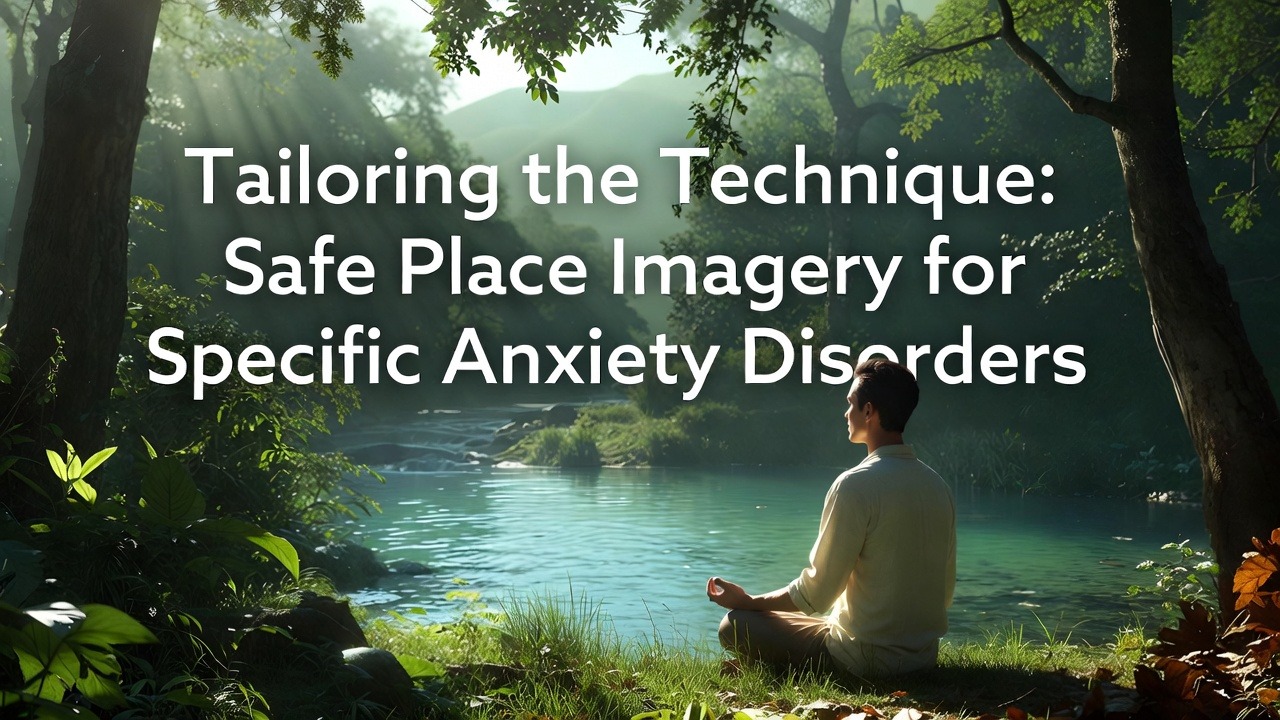
While Safe Place Imagery is a versatile tool, its application can be finely tuned to address the unique contours of different anxiety disorders. Understanding these nuances can help you—or a therapist guiding you—adapt the basic framework for maximum effectiveness.
For Generalized Anxiety Disorder (GAD): Characterized by persistent, excessive worry about a wide range of everyday things, GAD can make it hard to settle on a single safe image because the "what ifs" invade everything. Here, the practice of compartmentalization within the safe place is key. One might visualize a "worry depository" outside the sanctuary—a locked chest, a mailbox, a stream that carries thoughts away. The ritual becomes: "I acknowledge these worries. For now, I am placing them here, outside my place of peace, where they cannot reach me. I can choose to retrieve them later if needed." This practice trains the mind in deliberate non-engagement with rumination.
For Social Anxiety Disorder: The core fear here revolves around negative evaluation by others. A safe place for social anxiety must be a place of unconditional acceptance and absolute solitude or benign presence. It could be a place where you are completely alone, or it could involve the imagined presence of a supremely accepting, non-judgmental being—a wise animal, a spiritual figure, or even a future, more confident version of yourself. The focus is on experiencing a state where the perceived "social threat" is entirely absent.
For Panic Disorder: The fear is often of the panic attack itself—of losing control, having a heart attack, or going crazy. A safe place for someone prone to panic attacks should emphasize grounding, stability, and control. The environment should feel immovable and secure: a solid stone room deep in the earth, a sturdy ship in a calm harbor. Incorporating strong, grounding physical sensations is crucial: feeling the solid floor, holding a heavy, smooth stone, wrapping oneself in a weighted blanket. The mantra here is, "Here, I am solid. Here, I am stable. Here, I am in control of my breath and my body."
For PTSD and Trauma-Related Anxiety: Safety is often the fundamental compromised element. Therefore, building a safe place must be done with extreme care and, ideally, with therapeutic support. The sanctuary must be impregnable. Features like clear, 360-degree visibility (no places for threats to hide), a perimeter fence or force field, and a guaranteed ability to leave instantly (a door, a teleportation device) are often necessary. The sense of personal agency and choice is paramount. It may start as a very small, simple space—a single beam of light, a protective bubble—and expand only as the individual's nervous system can tolerate it.
For Health Anxiety (Illness Anxiety Disorder): When fear is fixated on the body betraying you, the safe place can focus on imagery of healing, vitality, and bodily integrity. This could be a place bathed in restorative light that soothes every cell, a pool of healing energy, or a futuristic scanner that shows the body in perfect, glowing health. The emphasis shifts from fear of dysfunction to a felt sense of wellness and strength within the imagined body.
Adapting the technique in these ways makes it a more precise instrument. It's a reminder that the core principle—creating a felt sense of safety—can be achieved through many different imaginative doorways. For more personalized strategies and discussions on managing specific anxiety profiles, our community and resources on the blog offer continued exploration and support.
Safe Place Imagery does not exist in a vacuum. Its power is magnified exponentially when woven together with other established wellness and therapeutic practices. This integration creates a holistic toolkit for nervous system regulation.
With Breathwork (Pranayama, Coherent Breathing): The breath is the most direct lever we have to influence the autonomic nervous system. Pairing specific breathing patterns with visualization creates a bidirectional feedback loop. For example, practice the 4-7-8 breath (inhale 4, hold 7, exhale 8) while in your safe place. Imagine inhaling the peace and safety of the environment, and exhaling any residual tension out into the expansive space. The breath deepens the immersive quality of the visualization, and the visualization gives the breathwork a calming mental context.
With Progressive Muscle Relaxation (PMR): PMR involves systematically tensing and then releasing muscle groups. You can perform PMR within your safe place. As you lie or sit in your sanctuary, guide your awareness through your body. Tense the muscles in your feet for a few seconds, then release, imagining the tension dissolving into the soft ground beneath you. Move up through the body. This combines a physical release technique with the psychological container of safety, making the relaxation more profound.
With Mindfulness Meditation: Mindfulness teaches non-judgmental awareness of the present moment. These can be sequenced powerfully. Start with a 5-minute mindfulness meditation, simply observing thoughts and sensations. When you notice anxiety arising, rather than just observing it, you can then transition to a 5-minute safe place visualization as an active response. This combines the acceptance of mindfulness with the proactive resource-building of visualization. It’s the difference between noticing your house is cold (mindfulness) and choosing to build a fire (visualization).
With Gratitude Practice: While in your safe place, cultivate gratitude for the sanctuary itself and for your mind's ability to create it. "I am grateful for this feeling of peace. I am grateful for this beautiful place my mind has built." This reinforces the positive valence of the experience and ties it to the well-documented benefits of gratitude, which include increased happiness and reduced stress.
With Journaling: Post-visualization journaling is a way to download and analyze the experience. Write from the perspective of being in your safe place. What wisdom does this calm version of you have about a current challenge? Journaling can also be used to problem-solve the visualization itself: "Today my safe place felt dim. Next time, I will imagine turning up the light." This reflective practice, much like reviewing data from a wellness tracker, turns subjective experience into a learning process. For those who appreciate this data-informed approach to growth, learning about the founding story behind technologies that enable it can be inspiring.
These combinations prevent the practice from becoming rote. They keep it dynamic, responsive, and deeply integrated into a broader lifestyle committed to wellbeing. The safe place becomes the home base from which you launch other restorative practices.
The utility of this technique extends beyond personal adult practice. It can be a gentle, powerful gift to share with children and a tool to foster connection within relationships.
For Children: Children are naturally imaginative, making them exceptional candidates for safe place work. It can help them manage fears, separation anxiety, and big emotions. The guidance must be age-appropriate:
In Romantic and Family Relationships: Shared anxiety or conflict can dysregulate an entire household. Couples or families can practice a form of shared or parallel safe place imagery.
Applying the technique in these relational contexts transforms it from a private escape into a shared language of calm and a mechanism for creating safer emotional dynamics between people. It underscores that inner peace is not solitary; it radiates outward and improves our connections. For families exploring wellness together, finding tools and real customer reviews for supportive technology can be a collaborative step.
While "Safe Place Imagery" is a modern therapeutic term, the act of cultivating an inner sanctuary is a human impulse with deep historical and cultural roots. Exploring this tapestry ennobles the practice, connecting us to a timeless lineage of seekers using imagination for solace and strength.
Spiritual and Religious Traditions: Virtually every wisdom tradition has a version of this practice.
The Philosophical Underpinnings: Stoic philosophers like Marcus Aurelius practiced a form of this. In his Meditations, he routinely retreats to his "inner citadel," a mental fortress of reason and virtue that is impervious to external chaos and emotional turmoil. This is not an escape from reality, but a retreat to a place of core principles from which to engage with reality more wisely.
The Artistic Expression: Throughout history, art has served as both a representation of and a gateway to safe places. The breathtakingly detailed and peaceful landscapes of Renaissance paintings, the harmonious gardens of Persian poetry, and the cozy, idealized domestic scenes of genre paintings all offer visual templates for the mind's eye. Artists create these sanctuaries for themselves and then offer them to the viewer.
This historical context liberates the practice from being seen as a mere "therapy exercise." It is part of a grand tradition of inner exploration. We are not just managing symptoms; we are participating in an ancient human ritual of finding refuge and meaning within the boundless landscape of the mind. Modern companies that build tools for inner exploration are, in a sense, continuing this tradition with new mediums. You can read more about the company information and mission of those dedicated to this modern synthesis of ancient wisdom and technology.
To illustrate the transformative potential of a committed, integrated practice, let's follow a hypothetical but data-informed case study of "Alex," a 34-year-old professional with Generalized Anxiety Disorder.
Baseline (Month 0): Alex's anxiety is chronic, characterized by constant background worry and nightly rumination that delays sleep. Resting heart rate averages 72 BPM, HRV is low (average 35 ms), and sleep tracker shows frequent awakenings. Alex begins therapy and is introduced to Safe Place Imagery. His initial safe place is a vague, unconvincing beach. He practices inconsistently, frustrated by intrusive work thoughts.
Integration & Refinement (Months 1-2): With guidance, Alex refines his sanctuary. It becomes a detailed, secluded treehouse in a redwood forest, with the sound of wind in the needles and the feel of solid wood. He starts a ritual: 10 minutes in the treehouse every night before bed, wearing his Oxyzen smart ring to observe the impact. He learns to use an anchor word ("Redwood") during micro-visits when work stress peaks. Data shows that during his nightly practice, his HRV spikes to an average of 55 ms, and heart rate drops to 65 BPM. This objective feedback motivates him. He begins reading related articles on our blog for tips on deepening the practice.
Habit Formation & Early Benefits (Months 3-4): The practice is now a non-negotiable habit. Alex notices he's using his anchor word "Redwood" almost unconsciously during the day. His partner remarks he seems less irritable. His sleep data shows a 15-minute reduction in sleep onset time and fewer wake-ups. His weekly average HRV has risen to 42 ms, and resting heart rate is down to 68 BPM. He experiences his first major test: a high-stakes project presentation. Before walking into the room, he takes 60 seconds in a bathroom stall for a micro-visit. He reports feeling nervous but grounded, not paralyzed.
** Consolidation and Resilience (Months 5-6):** Alex's treehouse has evolved; he's added a small desk for "leaving" work thoughts. He now combines his visualization with a 4-7-8 breath. His anxiety is not gone, but it is manageable. He describes having a "space" between a stressor and his reaction. His long-term data is compelling: average resting HR is 66 BPM, average HRV is 48 ms—a 37% improvement from baseline. His sleep efficiency score has significantly improved. The safe place is no longer just an exercise; it is a reliable part of his psychological infrastructure.
Alex's journey demonstrates the synergy of subjective practice and objective measurement. The visualization built the new neural pathways, and the biofeedback provided the confirmation and motivation to continue. This loop accelerates progress and turns healing from a hope into a measurable journey. For anyone starting this path, understanding that progress is incremental and data-backed can be the key to perseverance.

As we look forward, the intersection of visualization techniques and emerging technology promises to make practices like Safe Place Imagery even more accessible, immersive, and personalized. We are on the cusp of a new era in mental training.
Virtual Reality (VR) as a Training Wheel: VR can serve as a powerful bridge for individuals who struggle with traditional visualization. Donning a headset, one could be immediately transported to a pre-rendered, 360-degree peaceful environment—a photorealistic forest, a tranquil planetarium. This provides an undeniable, immersive sensory experience that can teach the nervous system what "safe and calm" feels like in the body. Over time, this exogenous experience can help train the mind to generate the endogenous version more easily. VR-assisted therapy for PTSD and anxiety is already showing remarkable promise in clinical trials.
AI-Powered Personalization: Imagine an AI assistant that helps you design your safe place. You tell it, "I want a place that feels ancient, secure, and slightly warm," and it generates a series of detailed, multi-sensory descriptions or even images for you to choose from and refine. It could then guide you through personalized visualization scripts, adapting the language and pacing in real-time based on your biometric feedback (e.g., "I notice your heart rate is still elevated. Let's focus on the feeling of the solid stone wall beside you...").
Biometric-Triggered Interventions: The next generation of wellness wearables will move beyond passive tracking to active intervention. If your device detects a significant stress spike (a plunge in HRV, a spike in heart rate), it could send a gentle, haptic nudge—a vibration in a specific pattern—that is your pre-programmed anchor cue. Your phone might automatically open to a 90-second guided safe place audio prompt. The technology becomes an always-available, intelligent companion in your self-regulation efforts.
Neurofeedback Integration: Advanced neurofeedback systems, which show users real-time activity in their own brains, could be used to train the safe place state directly. Users could see a visual representation of their brainwaves calming (increased alpha waves) as they enter their sanctuary, giving them the ultimate biofeedback: a direct window into the brain's state of peace.
These advancements are not about replacing the human imagination but about supporting and enhancing it. They lower the barrier to entry and provide unprecedented levels of guidance and feedback. The core of the practice—the individual's conscious choice to seek an inner state of safety—will always remain. Technology is simply providing better maps and vehicles for that profound inner journey. To stay abreast of how these futures are being built today, you can learn more about smart ring technology that is paving the way.
Despite the evidence, a rational, anxious mind can be a skeptical one. It may dismiss visualization as “wishful thinking,” “new-age fluff,” or simply something it’s “not good at.” This resistance is not a flaw; it’s a protective mechanism. To move from hesitant dabbling to committed practice, these doubts must be met with clarity and compassion.
Objection: “This is just escapism. I need to deal with reality, not hide from it.”
This is perhaps the most profound misunderstanding of the practice. Effective Safe Place Imagery is not denial or avoidance; it is strategic resourcing. Consider a firefighter: before running into a burning building (dealing with reality), they don a heat-resistant suit and fill an air tank (resourcing). Your safe place is that psychological suit and tank. It does not change the external fire, but it allows you to enter it without being consumed. The goal is not to live in the sanctuary, but to return to reality equipped with greater calm, clarity, and resilience. It is training for engagement, not a substitute for it.
Objection: “I can’t see anything. My imagination just doesn’t work that way.”
As touched on earlier, this is a near-universal experience at the start. The key is to decouple “visualization” from purely visual experience. Think of it as simulation or embodied imagining. You don’t need a high-resolution image. You need the knowing. You know what the sun feels like on your skin. You know the sound of rain. You know the scent of pine. Focus on the felt sense and the concept. If your mind’s eye shows only darkness, but you have the clear thought, “I am in a cozy library,” and you feel a slight relaxation in your shoulders, the practice is working perfectly. The neurological benefits are still in effect.
Objection: “It feels silly or childish.”
This socialized judgment often masks a fear of vulnerability. Granting oneself permission to feel safe can be surprisingly daunting. Reframe it as a sophisticated neurological exercise. Athletes use visualization to perfect free throws or downhill runs; CEOs use it to rehearse speeches. You are using it to master your own nervous system—an endeavor that is the antithesis of silly. It is a mature, proactive investment in your mental operating system. For those who appreciate a more technical, data-driven approach, pairing the practice with a device that provides physiological feedback can quickly dissolve this feeling of silliness into one of scientific inquiry.
Objection: “What if my safe place gets ‘contaminated’ by a bad memory or thought?”
This fear speaks to the desire for a perfectly controlled experience, which life—and the mind—rarely provides. The solution lies in reclaiming your agency. You are the architect, governor, and guardian of this space. If an unwanted element appears, you have infinite power: delete it, transform it (the scary figure becomes a harmless rabbit), or surround it with a bubble of light and float it away. This very act of taking control within the visualization is therapeutic. It reinforces the core message: In here, I am in charge. If contamination is a persistent, distressing issue, it may indicate that working with a therapist to establish safety would be beneficial, a step many have found supportive as noted in our testimonials.
Objection: “I don’t have time for this.”
This is the anxiety itself speaking, prioritizing the hamster wheel of worry over the repair shop of calm. The beauty of this practice is its scalability. The dedicated 10-minute session is ideal, but the 60-second micro-visit is where its true power meets a busy life. One deep breath paired with your anchor word and a single sensory flash is a complete neural circuit reset. It takes less time than scrolling through three social media posts. The question is not about having time, but about priority: is managing your anxiety a priority? If so, this tool offers efficiency that scales to your schedule.
By meeting skepticism with these reasoned, practical responses, we honor the rational mind while inviting it to try a new, evidence-based solution. The proof, ultimately, is in the physiological pudding: a lowered heart rate, a deeper breath, a calmer evening. That tangible result is the most convincing argument of all.
Even for seasoned practitioners, there will be days when accessing the safe place feels like trying to tune a radio through static. High stress, grief, illness, or trauma anniversaries can make the mind’s pathway to peace feel barricaded. These are not failures; they are invitations to deepen and adapt the practice.
Scenario 1: Emotional Numbness or Flatness. Sometimes, especially in states of burnout or depression, you may reach for your safe place and feel… nothing. It’s like describing a beautiful painting to someone who is colorblind. The concept is there, but the emotional resonance is absent.
Scenario 2: High Activation or Panic. In a full-blown anxiety attack, the idea of constructing a detailed forest glade is laughably impossible. The cognitive bandwidth is simply not available.
Scenario 3: Grief or Loss. If your safe place was connected to a person who is gone or a time that is lost, visiting it might trigger sadness rather than comfort.
Scenario 4: Boredom and Staleness. After months of visiting the same mental location, it can lose its potency. The brain habituates.
These advanced adaptations ensure the practice remains a resilient tool throughout life’s changing seasons. It grows with you. For more ideas on adapting wellness practices to challenging circumstances, our blog offers a continuously updated repository of insights and strategies.
While Safe Place Imagery is an intimate, internal practice, it does not have to be a solitary one. Engaging with a community of like-minded individuals can provide validation, inspiration, and accountability, breaking the isolation that often accompanies anxiety.
Validation Through Shared Experience: Hearing others describe their struggles with visualization—the intrusive thoughts, the blankness, the frustration—normalizes your own. It confirms you are not “doing it wrong,” but are navigating a common human process. This validation reduces secondary anxiety (anxiety about your anxiety, or about your ability to manage it) and fosters self-compassion.
Inspiration and Idea Cross-Pollination: Listening to how others construct their sanctuaries can spark ideas you’d never considered. Someone might describe their safe place as the interior of a giant, warm seashell, and that image might resonate with you profoundly. Communities become a brainstorming forum for peace, expanding the collective imagination of what safety can look and feel like.
Accountability and Gentle Encouragement: Committing to a daily or weekly “check-in” with a partner or group where you briefly share your practice experience (e.g., “I visited my meadow three times this week; today it was very vivid”) creates gentle accountability. It turns the practice from a private “should” into a shared commitment.
Forms of Community:
The journey inward can feel lonely, but you are part of a vast, quiet multitude learning to be their own sanctuary. Sharing the path, even in small ways, reminds us that seeking peace is a fundamental and shared human endeavor.

The utility of this technique is not bound by age or life stage. It is a flexible skill that can serve as a lifelong companion, adapting its form to meet the evolving needs of a human life.
In Childhood: As discussed, it’s a tool for managing big emotions and fears. It builds early neural architecture for self-regulation.
In Adolescence and Young Adulthood: A turbulent time of identity formation and social pressure, a safe place can serve as an unchanging, personal haven amidst external chaos. It can be a resource for coping with academic stress, social anxiety, and the uncertainties of the future.
In Midlife: Juggling career, family, aging parents, and financial pressures, the safe place becomes a crucial space for decompression and re-centering. It can shift to emphasize themes of restoration, balance, and personal identity beyond roles.
In Later Life: Facing transitions like retirement, physical health changes, and grief, the sanctuary can focus on themes of legacy, peace, continuity, and spiritual connection. It can become a place to integrate a life’s experiences and cultivate serenity.
In Facing Illness: For those navigating chronic or acute illness, a safe place can be a powerful tool for pain and anxiety management. It can be tailored as a “healing chamber” within the body, where the individual visualizes wellness, or as a peaceful escape from the clinical environment.
In Bereavement: The safe place can evolve to include a space for communing with the memory of a loved one, or it can become a sanctuary specifically designed to hold and comfort grief, separate from the demands of the outside world.
This lifespan perspective reveals the technique’s true depth. It is not a hack for a discrete problem, but a foundational skill for emotional literacy and resilience. As life changes, your relationship with your inner sanctuary deepens. It becomes less of a “technique” and more of a inner home—a familiar, welcoming space within yourself that you carry everywhere. For those interested in a tool that can accompany them on this lifelong journey, providing consistent feedback and insight, exploring the complete guide to integrative wellness technology is a logical step.
We have journeyed from the neuroscientific mechanisms of a single vivid image to its place in the grand tapestry of human history; from the step-by-step instructions for building a mental refuge to the advanced adaptations for life’s storms; from a solitary practice to one shared in community. The through-line is singular and powerful: You possess an innate, trainable capacity to generate safety and peace within your own mind.
Safe Place Imagery demystifies self-regulation. It takes the vague instruction to “calm down” and provides a concrete, operational blueprint: build, visit, and anchor. It proves that the mind is not just a source of anxiety but can be its most potent antidote. By consciously directing our imagination, we do not escape reality—we change our physiological and emotional reality to better meet the world.
This practice invites a paradigm shift: from being a passive victim of your nervous system’s reactions to becoming an active architect of your inner state. The anxiety may still knock at the door, but you are no longer huddled in the hallway. You are secure in your well-fortified inner chamber, able to choose your response.
As you move forward, remember that the goal is not perfection, but progression. Some days your sanctuary will be a crystal-clear paradise; other days it will be a faint impression in the fog. Both are valid. Both are practice. The cumulative effect is what reshapes the landscape of your mind.
We live in an era where this ancient wisdom is being supercharged by modern understanding and technology. You have the unique opportunity to pair the timeless art of introspection with the immediate feedback of biometric data, creating a powerful loop of self-knowledge and growth. Your journey to a calmer, more resilient you is both an art and a science—and it begins with a single, imagined step into a place of your own creation. Your sanctuary, in all its personalized, peaceful detail, awaits your arrival.
Your Trusted Sleep Advocate (Sleep Foundation — https://www.sleepfoundation.org/)
Discover a digital archive of scholarly articles (NIH — https://www.ncbi.nlm.nih.gov/
39 million citations for biomedical literature (PubMed — https://pubmed.ncbi.nlm.nih.gov/)
experts at Harvard Health Publishing covering a variety of health topics — https://www.health.harvard.edu/blog/)
Every life deserves world class care (Cleveland Clinic -
https://my.clevelandclinic.org/health)
Wearable technology and the future of predictive health monitoring. (MIT Technology Review — https://www.technologyreview.com/)
Dedicated to the well-being of all people and guided by science (World Health Organization — https://www.who.int/news-room/)
Psychological science and knowledge to benefit society and improve lives. (APA — https://www.apa.org/monitor/)
Cutting-edge insights on human longevity and peak performance
(Lifespan Research — https://www.lifespan.io/)
Global authority on exercise physiology, sports performance, and human recovery
(American College of Sports Medicine — https://www.acsm.org/)
Neuroscience-driven guidance for better focus, sleep, and mental clarity
(Stanford Human Performance Lab — https://humanperformance.stanford.edu/)
Evidence-based psychology and mind–body wellness resources
(Mayo Clinic — https://www.mayoclinic.org/healthy-lifestyle/)
Data-backed research on emotional wellbeing, stress biology, and resilience
(American Institute of Stress — https://www.stress.org/)


