


The Wellness Ring Guide to Heart Rate Zones and Health
A wellness ring guide to heart rate zones and their health implications.
A wellness ring guide to heart rate zones and their health implications.
%402x.svg)
In the quiet moments of our day—as we sip our morning coffee, rush to a meeting, or finally lay our heads down at night—a silent, powerful rhythm pulses within us. Our heartbeat. For centuries, it has been the most fundamental sign of life, a simple thump-thump we associate with emotion and exertion. Today, however, thanks to the advent of smart wearable technology, that rhythm has become a profound language, a real-time data stream narrating the intimate story of our health, fitness, and overall well-being.
Gone are the days when heart rate was a number checked only in a doctor’s office. We now live in an era of bio-awareness, where devices like the advanced wellness ring from Oxyzen transform your pulse into a personalized health oracle. This elegant piece of technology, worn on your finger, does more than count beats; it deciphers them. It understands that not all heartbeats are created equal. The elevated rhythm of a morning run tells a different story than the elevated rhythm of a stressful work call, and the gentle, slow pace of deep sleep is as crucial as any workout.
This guide is your key to unlocking that story. We will move beyond the basic "beats per minute" to explore the sophisticated world of heart rate zones. These zones are not arbitrary lines on a chart; they are physiological states, each with distinct effects on your cardiovascular system, metabolism, and longevity. Understanding them is the difference between exercising harder and exercising smarter, between managing stress and being managed by it.
Whether you are a dedicated athlete seeking to optimize performance, a wellness enthusiast aiming to improve recovery, or someone simply wanting to take a more proactive role in their health, this knowledge is power. And with a continuous health monitor like the Oxyzen ring—a device that tracks your heart rate variability, sleep stages, and activity 24/7—you possess the perfect tool to apply this knowledge to your unique life. Your journey to mastering your inner rhythm starts here. Let’s begin by listening to what your heart has been trying to tell you all along.
To the uninitiated, a heart rate monitor displays a single, fluctuating number: your heartbeats per minute (BPM). But this number is merely the surface. Dive deeper, and you’ll find that your heart operates in distinct intensity bands, each tied to specific physiological processes and benefits. These are your heart rate zones.
Think of your heart not as a simple pump, but as a multi-gear engine. Idling in first gear is different from cruising in third, and both are distinct from pushing into overdrive. Each "gear," or zone, utilizes a different blend of fuel (fat vs. carbohydrates) and triggers unique adaptations in your body, from building endurance to boosting peak power. Training effectively isn't about keeping your heart rate "high" or "low" indiscriminately; it's about spending intentional time in the right zone to achieve a specific goal.
The Science Behind the Zones
At the core of zone-based training is your Maximum Heart Rate (HRmax), the highest number of beats your heart can achieve in one minute under maximum physical exertion. While age-based formulas (like the common "220 minus your age") provide a rough estimate, they are notoriously generic. The most accurate way to determine your true HRmax is through a graded exercise test, often monitored by a professional. However, modern wellness technology provides a powerful alternative. By analyzing data from high-intensity activities, a device like the Oxyzen ring can help you pinpoint a personalized, dynamic HRmax, making your zones far more accurate and actionable.
These zones are typically divided into five categories, expressed as a percentage of your HRmax:
Why does this segmentation matter? Because exercising at 65% of your max feels and functions profoundly different in your body than exercising at 85%. One might be your prime fat-burning, endurance-building pace, while the other is sharpening your lactate threshold and cardiovascular capacity. Without this framework, you're navigating your fitness journey without a map. You might be putting in tremendous effort (constantly in Zone 4) but missing the critical, foundational benefits of lower-zone work, or conversely, never challenging your system enough to see improvement.
This is where the magic of a 24/7 wellness tracker comes into play. It moves the concept of heart rate zones from the gym into your entire life. Your ring understands that a stressful day at work that elevates your resting heart rate by 10 BPM is data as relevant as a 5K run. It sees the full picture. For a deeper dive into the technology that makes this possible, you can explore our blog for articles on photoplethysmography (PPG) sensors and advanced biometric analysis.
Mastering your zones begins with knowing your own personal numbers, not textbook averages. It's the first, most critical step in transforming your heart rate data from a passive metric into an active tool for crafting a healthier, more balanced you.
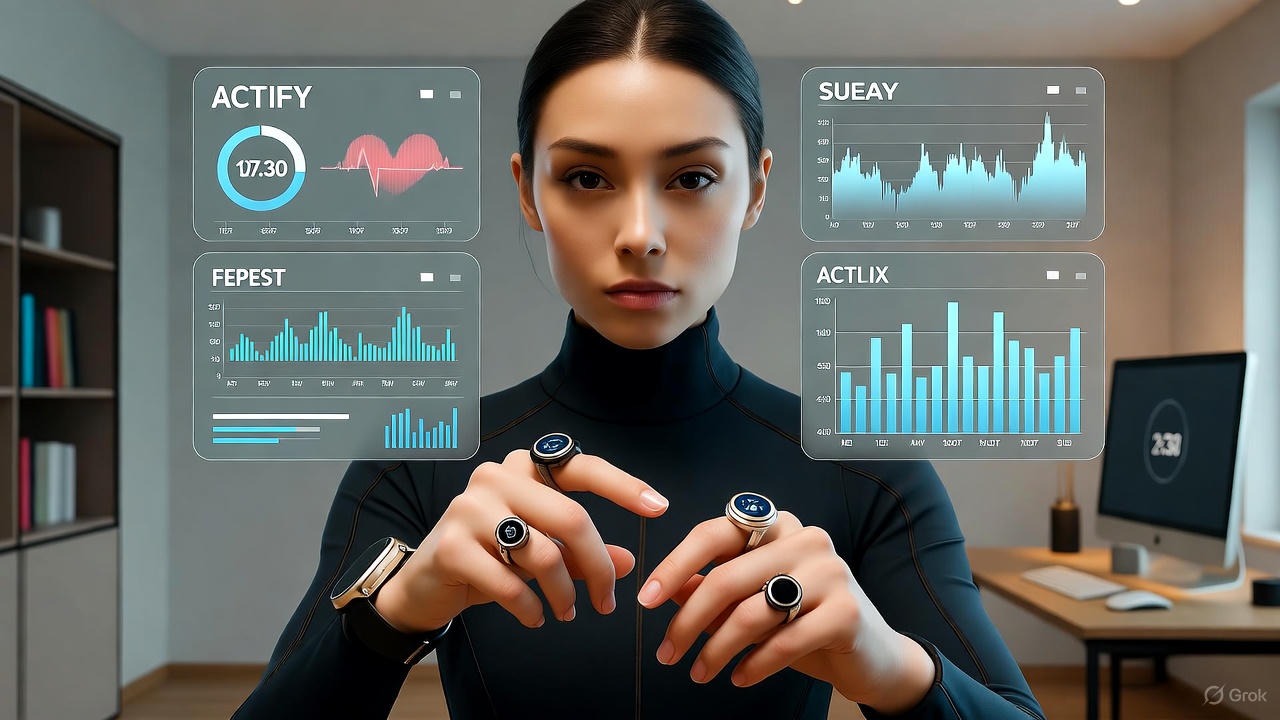
If heart rate zones are about how your heart performs under stress, your Resting Heart Rate (RHR) is about its fundamental efficiency at peace. Measured as the number of beats per minute when you are completely at rest—typically first thing in the morning, before rising—RHR is a stunningly simple yet powerful barometer of your overall cardiovascular health and fitness.
A lower resting heart rate generally indicates a stronger, more efficient heart. A well-conditioned heart muscle can pump a greater volume of blood with each contraction (stroke volume), meaning it doesn’t need to beat as often to supply your body with oxygen. Think of a powerful athlete versus a deconditioned individual: the athlete’s heart works economically, while the other’s has to work harder to achieve the same outcome. Studies consistently link a lower RHR with greater cardiovascular fitness and a reduced risk of heart disease.
The Dynamic Nature of Your RHR
However, your RHR is not a static number carved in stone. It’s a dynamic signal that responds to everything in your life. This is what makes daily tracking so insightful:
This is the true value of wearing a wellness device like the Oxyzen ring. It establishes your personal baseline. Instead of comparing your 58 BPM to a population average, you learn what your normal is. Then, you can observe meaningful deviations. Seeing your RHR trend downward over months is a fantastic motivator. Conversely, noticing a sustained upward creep can be a crucial early warning to prioritize rest, manage stress, or check in with your hydration.
A Window into Your Nervous System
Importantly, RHR is deeply intertwined with your autonomic nervous system (ANS). A lower RHR often reflects a stronger "vagal tone," meaning the calming, restorative parasympathetic branch of your ANS is more dominant at rest. This state is conducive to recovery, digestion, and immune function. Monitoring your RHR, especially in conjunction with Heart Rate Variability (a topic we will explore in depth later), gives you direct feedback on your nervous system balance. It tells you if your body is in "rest and digest" mode or stuck in a subtle state of "fight or flight."
By paying attention to this quiet morning number, you move from simply tracking fitness to practicing true health mindfulness. It encourages behaviors that lower your resting load on the heart: better sleep, stress-management techniques, consistent aerobic exercise, and proper hydration. For answers to common questions about how devices measure RHR accurately, our comprehensive FAQ page provides detailed technical insights.
Your resting heart rate is the silent, steady drumbeat of your well-being. Listening to it daily is one of the simplest, most profound acts of self-care you can perform.
If your resting heart rate is the steady drumbeat, then Heart Rate Variability (HRV) is the complex, syncopated rhythm within it. It measures the subtle, millisecond variations in the time intervals between each heartbeat. Contrary to what one might assume, a higher, more variable HRV is generally a sign of better health, resilience, and fitness. It signifies a responsive, adaptable heart and a balanced autonomic nervous system.
Think of it this way: a metronome is perfectly steady but utterly rigid. A skilled jazz drummer has variability—responsive, dynamic, and adaptable to the music. Your heart, under the influence of your two branches of the autonomic nervous system, should be the jazz drummer. The sympathetic branch ("fight or flight") speeds up the heart rate, making intervals slightly shorter. The parasympathetic branch ("rest and digest") slows it down, making intervals slightly longer. HRV is the outcome of this continuous, nuanced tug-of-war.
HRV as Your Ultimate Recovery Metric
This is why HRV has become a cornerstone of modern recovery tracking. It provides a direct window into your body’s stress load and its readiness to perform.
For anyone engaged in serious training, ignoring HRV is like flying a plane without instrument navigation. You might feel subjectively "okay," but your nervous system is telling a different story. Training hard on a day with a significantly depressed HRV can lead to diminishing returns, increased injury risk, and prolonged burnout.
Personalization and Long-Term Trends
The most critical principle of HRV is that it is deeply personal. Comparing your number to someone else’s is meaningless. A value of 60 might be normal for you but low for another. The power lies in establishing your own baseline and observing trends over time. This is the unique strength of a 24/7 wearable like the Oxyzen ring. By taking nightly, consistent measurements during sleep—the most standardized state—it builds a highly reliable picture of your unique HRV landscape.
Watching your HRV trend upward over months is a powerful confirmation that your lifestyle and training regimen are improving your body’s fundamental resilience. Conversely, a sudden, sharp drop can be an early warning system, prompting you to act before you feel overtrained or get sick. For real-world examples of how users leverage this data, our testimonials page shares stories of improved recovery and performance.
Integrating HRV awareness into your life means moving from arbitrary training schedules to responsive, body-guided planning. It fosters a dialogue with your physiology, teaching you to respect the signals of fatigue as much as you revel in the feelings of strength. It is, perhaps, the most sophisticated tool in the modern wellness arsenal for achieving true balance.
Understanding the theory of heart rate zones, RHR, and HRV is one thing. Integrating them seamlessly into the messy, unpredictable flow of daily life is another. This is where the rubber meets the road—where data transforms from numbers on an app into actionable wisdom that shapes your decisions, workouts, and recovery. Let’s build a practical framework for application.
Step 1: Establish Your Personal Baselines
Before you can act, you need to know your normal. Wear your wellness ring consistently for at least two weeks, focusing on your:
Step 2: Plan with Purpose, Not Just Passion
Abandon the "just go hard" mentality. Structure your weekly movement with zone intention:
This is just a template. The key is balancing stress (high zones) with adaptation (low zones and rest).
Step 3: Listen and Pivot with Real-Time Feedback
Your plan is a guide, not a dictator. This is the most powerful daily application of your ring.
Step 4: Connect the Dots to Lifestyle
Your heart’s signals are influenced by everything. Use the data to connect cause and effect:
This holistic view is what turns a fitness tracker into a true wellness companion. It encourages a systems-thinking approach to health, where sleep, stress management, nutrition, and training are seen as interconnected levers you can adjust. For more ideas and advanced strategies on synthesizing this data, our blog is a continually updated resource.
By applying these principles, you stop working against your body and start working with it. You become the expert on your own physiology.
A fitness watch you wear only during workouts tells a fragmented story—a series of disconnected highlights. A wellness ring you wear continuously, especially through the night, writes a novel. It captures the full narrative of your physiology, revealing patterns and connections that are otherwise invisible. This 24/7 data stream is what unlocks a truly personalized understanding of your health.
The Critical Link Between Sleep and Daytime Performance
Your body does not compartmentalize. The quality of your sleep directly dictates the quality of your waking hours, and vice-versa. Continuous tracking illuminates this bidirectional relationship with stunning clarity.
Unmasking Hidden Stress
Psychological stress doesn't clock out at 5 PM. It manifests physiologically, and continuous tracking captures its footprint.
The Power of the Longitudinal Health Record
The greatest advantage of continuous wear is time. Over weeks, months, and years, your device builds a longitudinal health record that is more valuable than any single snapshot.
This holistic, 24/7 perspective is at the core of Oxyzen's mission: to provide not just data, but meaningful, contextual insights that empower lifelong health. It shifts the paradigm from episodic measurement to continuous understanding, helping you connect the dots between all aspects of your life and the single most important rhythm that sustains it.
The application of heart rate science extends far beyond the track or gym. It is an equally powerful framework for navigating the internal landscape of our minds and emotions. Our heart rate is exquisitely sensitive to psychological states, making it a real-time barometer for stress, anxiety, and focus. By learning to read and influence these signals, we can actively cultivate mental resilience and well-being.
The Anatomy of a Stress Spike
When you encounter a stressor—a looming deadline, a conflict, even a distressing news headline—your sympathetic nervous system activates. This triggers the release of adrenaline, causing an immediate, often perceptible, rise in your heart rate. With a wellness ring, you don't just feel this spike; you can see it. You might notice your heart rate jump 10-20 BPM while sitting at your desk, a physiological signature of the "fight or flight" response. This isn't inherently bad—it's an adaptive mechanism. The problem in modern life is chronic, low-grade activation without physical release, keeping our hearts and nervous systems in a sustained state of high alert.
Using Your Zones for Nervous System Balance
Just as you use Zone 2 to build aerobic base, you can use low-heart-rate activities to actively strengthen your parasympathetic ("rest and digest") response. The goal here is to consciously spend time in a physiological state of calm.
From Reaction to Response
Continuous awareness is the first step toward regulation. By noticing the heart rate spikes associated with email anxiety or meeting stress, you can begin to insert a pause. See the spike on your app, take three deep coherent breaths, and watch the number fall. This creates a powerful feedback loop: you are no longer at the mercy of your stress physiology; you are learning to steer it.
This application turns your wellness ring into a mindfulness tool. It helps answer questions like: "Does my morning meditation actually calm my body?" or "How stressed does that weekly meeting really make me?" The data provides objectivity, moving mental wellness from the realm of vague feeling into tangible practice. For those curious about how other users apply these principles for mental clarity, the shared experiences on our testimonials page can be a source of inspiration and community.
In a world of constant demands, your heart rate data becomes a guide back to your center. It teaches you not just how to train your body, but how to train your nervous system for greater peace, focus, and resilience in everyday life.
We’ve journeyed through the science of zones, the wisdom of resting metrics, and the profound insights of continuous tracking. Now, let’s synthesize it all into a cohesive, personalized roadmap—a sustainable operating system for long-term health, not just short-term fitness. This isn't a rigid 12-week program; it's a flexible, intelligent approach to living that uses your body's own signals as its guide.
The Three Pillars of the Integrated System
Imagine your well-being supported by three interdependent pillars:
Your wellness ring is the monitoring hub that keeps these pillars in balance. It tells you when you’ve applied enough stress, when you are fully recovered and ready for more, and when your lifestyle foundation is cracking under pressure.
Building Your Weekly Rhythm
Using this framework, design a flexible weekly template:
The Long Game: From Performance to Longevity
The ultimate goal of this integrated approach is to shift your focus from acute performance (a faster 5K time) to chronic longevity (a healthier, more vibrant life for decades). The same Zone 2 training that improves mitochondrial health is linked to reduced risk of chronic disease. The recovery practices that boost HRV are associated with better mental health and resilience. The stress awareness you cultivate protects your cardiovascular system from the silent wear and tear of chronic anxiety.
This is a journey of self-knowledge. You will learn what a truly restorative night of sleep looks like for you. You will discover the specific workout intensity that leaves you energized, not depleted. You will identify the non-negotiable lifestyle habits that keep your biometrics in the green. For ongoing support and answers as you build this system, remember that our FAQ and support resources are always available.
By marrying the ancient wisdom of listening to your body with the modern power of biometric feedback, you create a partnership for health that is greater than the sum of its parts. You are no longer guessing. You are guided, informed, and empowered by the most relevant data source in existence: your own living, beating heart.
To appreciate the power of the modern wellness ring, it’s helpful to understand its evolution. The journey from clunky heart rate monitors to seamless, 24/7 biometric rings is a story of miniaturization, sensor fusion, and a fundamental shift in our approach to health data. It reflects a move from episodic fitness tracking to continuous well-being insight.
For decades, heart rate data was the domain of elite athletes and clinical settings. Chest straps, while accurate, were uncomfortable for all-day wear. The advent of the optical heart rate sensor (PPG) in wrist-based fitness trackers brought monitoring to the masses, but introduced limitations. The wrist is a dynamic location—prone to movement noise, temperature fluctuations, and a weaker pulse signal due to its distance from the heart. Furthermore, taking a device off to charge creates data gaps, missing the critical nocturnal window where our bodies reveal their truest recovery state.
The smart ring emerged as an elegant solution to these problems. The finger, specifically the base of the finger, offers a superior physiological vantage point. It houses dense vascular beds, providing a stronger, cleaner PPG signal for heart rate, heart rate variability, and blood oxygen saturation. Its natural position reduces motion artifacts compared to the flailing wrist. Most importantly, its form factor makes it unobtrusive enough to wear 24/7, through sleep, showers (for many models), and all daily activities, creating that essential, unbroken data stream.
Beyond Step Counting: The Rise of the Health Ring
Early wearables were focused on outputs: steps taken, calories “burned,” active minutes. The wellness ring generation is focused on inputs and states: the quality of your sleep, the balance of your nervous system (HRV), the efficiency of your breathing (SpO2), and your body’s readiness for stress. This is a profound paradigm shift. It’s not about how much you do, but how well you are—and how what you do affects how you are.
This aligns perfectly with the science of heart rate zones and recovery. You cannot accurately assess your recovery (HRV, RHR) without nighttime data. You cannot properly dose your training stress without knowing your readiness. The ring, by its very design, is built for this holistic, systems-based view of health. It’s less a fitness tracker and more a personal health dashboard.
The mission at Oxyzen has always been rooted in this evolution—to leverage this ideal form factor not just for convenience, but for clinical-grade insights delivered in a user-friendly, actionable way. The goal is to make advanced biometrics not intimidating, but empowering. For a deeper look at the technical journey and sensor innovation behind this category, our blog features detailed explorations of the technology that makes it all possible.
The smart ring represents the maturation of wearable technology. It has moved from our wrists to a more sensitive location, and in doing so, has moved from tracking our activity to understanding our physiology.
While heart rate and its zones form the core narrative, they are chapters in a larger story. To truly understand your body’s status, you need subplots—contextual data that explains why your heart is behaving a certain way. This is where advanced biomarkers like skin temperature, blood oxygen saturation (SpO2), and the nuanced layers of HRV come in. Together, they create a multi-dimensional health portrait that is far more diagnostic than any single metric.
Skin Temperature: The Silent Sentinel
Your peripheral body temperature is a finely tuned signal, regulated by your circadian rhythm, metabolism, and immune system. A continuous temperature sensor in a wellness ring can detect subtle, meaningful shifts:
Blood Oxygen Saturation (SpO2): The Breath of Life
SpO2 measures the percentage of hemoglobin in your blood that is carrying oxygen. While it’s typically stable (95-100%) in healthy individuals at sea level, nocturnal dips can be highly informative:
The Layers of HRV: Time, Frequency, and Nonlinear Domains
We’ve discussed HRV as a general metric, but advanced analysis breaks it into components that speak to different aspects of nervous system control:
The fusion of these biomarkers is where the magic happens. For example: A low HRV, elevated nighttime heart rate, slightly higher skin temperature, and mild SpO2 dips could collectively point to your body fighting off a virus. A high HRV, low resting heart rate, stable temperature, and solid SpO2 is the full picture of optimal recovery. This integrated analysis is what transforms a ring from a data collector into an intelligent health companion. Users often share how these combined insights have changed their approach to health; you can read some of these powerful stories in our user testimonials.
By paying attention to this ensemble of signals, you move from managing a single metric to stewarding a complex, interconnected system—your own body.

For the dedicated athlete—whether amateur or elite—the difference between good and great, and between healthy progress and injury, often lies in the margins. This is where heart rate zone mastery and advanced biometrics cease to be optional and become the cornerstone of intelligent training. The modern athlete’s toolkit is no longer just shoes and a stopwatch; it’s a data-driven understanding of stress, adaptation, and supercompensation.
Periodization Powered by Physiology
Periodization is the structured planning of training cycles to peak for key events while minimizing burnout and injury. Traditionally, it’s been based on the calendar and perceived effort. Now, it can be dynamically guided by live physiology.
The Holy Grail: Preventing Overtraining Syndrome (OTS)
OTS is a state of prolonged maladaptation, characterized by performance decline, persistent fatigue, mood disturbances, and hormonal disruption. It’s the athlete’s nightmare, often requiring months to recover from. Biometric monitoring is the most effective early-warning system available.
Precision Peaking and Tapering
The final weeks before a competition—the taper—are about reducing fatigue while maintaining fitness. Biometrics take the guesswork out. A well-executed taper should result in a significant rise in HRV and a drop in RHR, indicating the body is fully recovering and supercompensating. If these metrics don’t improve, your taper might be too aggressive or not aggressive enough. This allows for last-minute adjustments to ensure you arrive at the start line truly fresh and primed.
The New Competitive Advantage
This approach democratizes the coaching insights once reserved for professionals with full-time support staff. An athlete with a wellness ring becomes their own biofeedback lab. They learn their unique responses: how many days of hard training they can absorb before needing a down day, how travel affects their metrics, which recovery modalities (ice bath, compression, massage) actually move their HRV needle.
This isn't about replacing intuition; it's about enhancing it with objectivity. It builds resilience, not just physically, but in decision-making. It teaches the discipline of rest with the same rigor as the discipline of hard work. For athletes looking to delve deeper into these advanced applications, our blog regularly features content on data-driven periodization and recovery science.
In the pursuit of peak performance, the ultimate edge is no longer just training harder, but recovering smarter. Your biometrics provide the roadmap.
In today’s knowledge economy, performance is no longer measured in miles run or weight lifted, but in cognitive output, creative problem-solving, and sustained mental energy. Yet, the principles of stress and recovery are identical. The modern professional faces a marathon of cognitive loads, back-to-back meetings, and digital distractions. Burnout—characterized by emotional exhaustion, cynicism, and reduced professional efficacy—is the occupational equivalent of overtraining syndrome. Fortunately, the same biometric framework that guides an athlete can guide a professional toward sustainable performance and well-being.
Cognitive Workload as "Training Stress"
Every demanding project, difficult conversation, or prolonged period of deep work is a stressor on your nervous system. It activates the sympathetic "fight or flight" pathway, raising cortisol and heart rate. Just like back-to-back hard workouts, back-to-back cognitive sprints without recovery lead to diminishing returns, mental fatigue, and errors.
Using Your Ring for Cognitive Periodization
Your wellness data provides the structure to intentionally manage your mental energy.
Combating Digital Stress and the Always-On Culture
The constant ping of notifications and the blue light from screens are chronic low-grade stressors that dysregulate your nervous system and disrupt sleep. Your ring’s sleep and recovery data quantifies this cost.
Preventing Professional Burnout
Burnout doesn’t happen overnight. It’s a creeping process of accumulated stress without adequate recovery. Your longitudinal biometric trends are the canary in the coal mine.
By applying the lens of athletic training to cognitive work, you reframe productivity. It’s not about hours logged; it’s about energy invested wisely. Your ring becomes a tool for managing your most precious professional resource: your focused, creative, and resilient mind. To learn more about our philosophy on integrating technology with human performance beyond fitness, you can explore our company's mission and values.
If heart rate zones are the chapters of your day, sleep is the editor that compiles, revises, and prepares the manuscript for the next edition. It is the non-negotiable foundation upon which all other health and performance pillars rest. Without quality sleep, effective training is impossible, stress becomes unmanageable, and cognitive function declines. A wellness ring provides one of the most accessible and comprehensive windows into this critical process, moving beyond simple duration to analyze the architecture and quality of your rest.
The Stages of Sleep and Their Unique Roles
Sleep is not a monolithic state. It’s a cyclic journey through distinct stages, each with a specific physiological purpose:
A healthy night involves cycling through these stages 4-6 times. Disruptions to this architecture—whether from alcohol, stress, apnea, or poor sleep hygiene—have direct consequences on your waking life.
Key Sleep Metrics from Your Ring
Your ring uses a combination of heart rate, HRV, movement, and temperature to estimate these stages and provide actionable scores:
Connecting the Dots: How Your Day Writes Your Night
Your ring’s power lies in showing the cause-and-effect relationships:
Actionable Steps for Better Sleep Hygiene
Use your data to run experiments:
By treating sleep with the same respect and analysis as your training, you unlock its full regenerative power. It is the ultimate recovery tool, and mastering it is the single most effective thing you can do for your health, performance, and well-being. For more detailed guides on interpreting sleep data and improving sleep hygiene, our resource library on the blog is an excellent place to start.

You can have perfect training plans and impeccable sleep hygiene, but if the furnace isn’t fueled properly, the system will falter. Nutrition and hydration are not just about calories and thirst; they are direct modulators of your cardiovascular system, nervous system balance, and recovery processes. Your wellness ring provides a unique feedback loop, offering physiological responses to your dietary choices, helping you move beyond generic advice to personalized fueling strategies.
Hydration: The First and Most Immediate Signal
Water is the medium for every metabolic process. Even mild dehydration (a loss of 1-2% of body weight) has measurable effects:
Your ring can act as a hydration prompt. If you notice an unexplained rise in your RHR or a dip in your HRV during a normal day, your first question should be: "Have I drunk enough water today?" Tracking the effect of proper hydration can be a powerful motivator—seeing your metrics improve after drinking a liter of water is immediate, positive reinforcement.
Nutrition’s Impact on Metabolism and Recovery
What you eat, and when you eat it, influences your biometrics in profound ways:
Using Data to Personalize Your Approach
The goal isn't to eat for perfect ring scores, but to use the scores to understand your body’s unique responses.
This biofeedback turns nutrition from a static set of rules into a dynamic conversation. You’re not just following a diet; you’re learning how to nourish your physiology for the life you want to lead. It empowers you to make food choices that support your energy, your workouts, and your recovery. If you have specific questions about integrating biometrics with nutrition, our FAQ section covers common topics on data interpretation and lifestyle integration.
Ultimately, the pursuit of optimized heart rate zones, improved HRV, and quality sleep is not just about feeling better next week or running a faster race next month. It is an investment in your healthspan—the number of years you live in good health, free from chronic disease and disability. A growing body of research connects the very metrics tracked by a wellness ring with the fundamental biological processes of aging and longevity.
Resting Heart Rate and Cardiovascular Mortality
The correlation is strong and consistent across large population studies: a higher resting heart rate is an independent risk factor for cardiovascular disease and all-cause mortality. Every 10-beat-per-minute increase in RHR is associated with a significant rise in risk. Why? A perpetually high RHR suggests a heart working inefficiently under higher sympathetic tone, which can contribute to hypertension, arterial stiffness, and increased cardiac workload over decades. The process of lowering your RHR through aerobic fitness is, in essence, a direct intervention in your long-term cardiovascular health.
Heart Rate Variability: A Marker of Biological Age
HRV is often described as a proxy for autonomic resilience—your body’s ability to adapt to stress and return to balance. This resilience declines with age. In fact, HRV is one of the most sensitive biomarkers of biological age (how old your body functions) versus chronological age (your years).
The Protective Power of Zone 2 (Aerobic Efficiency)
The mitochondrial biogenesis stimulated by regular Zone 2 training is a direct assault on one of the hallmarks of aging: mitochondrial dysfunction. As we age, our mitochondria become less efficient and more prone to producing damaging free radicals.
Sleep as the Nightly Repair and Cleansing Cycle
During deep sleep, the brain’s glymphatic system becomes highly active, clearing out metabolic waste products like beta-amyloid, which is associated with Alzheimer’s disease. Chronic sleep deprivation or poor sleep quality impairs this process, potentially accelerating neurodegenerative decline. Furthermore, the hormonal repair and immune strengthening that occur during sleep are fundamental to maintaining tissue health and fighting the cellular damage that accumulates over time.
Creating Your Longevity Protocol
Viewed through this lens, your daily choices become longevity interventions:
Your wellness ring provides the feedback to ensure these interventions are effective. A rising HRV trend, a lowering RHR, and consistent good sleep scores are more than just "good stats"—they are indicators that you are actively extending your healthspan. They are the measurable outputs of a lifestyle designed for vitality. This long-term, preventative approach to health is central to the vision behind Oxyzen, where technology serves as a guide not just for today's workout, but for decades of well-being.
By aligning your daily habits with the science of longevity, you are not just adding years to your life; you are adding life to your years. Your heart’s rhythm, in all its complexity, is the most personal guide you have on that journey.
For nearly half the population, the standard model of heart rate zones and recovery metrics operates on a 24-hour cycle. For women, however, this model is beautifully and fundamentally complicated by a second, powerful biological rhythm: the menstrual cycle. Ignoring this rhythm means interpreting your biometric data through a foggy lens. Understanding it unlocks a level of personalization and body literacy that is truly transformative. A wellness ring, with its continuous tracking, is the perfect tool to illuminate this connection.
The Two-Phase Metabolic Engine
The menstrual cycle is divided into two main hormonal phases, each creating a distinct internal physiological environment:
What Your Ring Shows You: The Data Patterns
By tracking your cycle alongside your biometrics, you will likely observe clear, repeating patterns:
Syncing Your Training with Your Cycle (Cycle Syncing)
Armed with this knowledge, you can move from fighting your physiology to flowing with it, optimizing both performance and well-being.
Beyond Performance: A Tool for Holistic Health
This tracking has profound implications beyond the gym:
By embracing cycle-aware tracking, women can reclaim their data from a male-centric model and build a deeply personalized, compassionate, and highly effective approach to health. It is the ultimate form of bio-individuality. For more resources on women’s health and biometrics, our blog features dedicated guides on this evolving topic.
We’ve explored how your nervous system affects your heart rate data (e.g., stress lowering HRV). Now, let’s flip the equation and explore how you can use your heart rate data to directly influence your nervous system. This is the realm of biofeedback—using real-time physiological data to gain conscious control over involuntary processes. Your wellness ring transforms from a passive monitor into an active training device for your mind and nervous system.
The Principle of Biofeedback
Biofeedback works on a simple loop: Measure → Display → Change. By seeing a physiological signal you normally don’t perceive (like your heart rhythm), you can experiment with thoughts, breathing, and focus to alter that signal. The immediate feedback tells you what works. Over time, you learn to create the desired state (calm, focus) without the device.
Coherent Breathing: The Direct Line to Calm
The most accessible and powerful biofeedback practice is heart rate coherence training, often achieved through coherent breathing.
Meditation and Mindfulness with Objective Feedback
Many people wonder if they’re "doing it right." Your ring provides the answer.
Training for Focus and Flow States
The "flow state"—being fully immersed and effective in a task—has a physiological signature. It’s often associated with moderate arousal, not high stress. You can use your ring to find your personal "focus zone."
Building Nervous System Resilience
The goal of this training is not to live in a state of permanent calm, but to increase your range of adaptability. A resilient nervous system can ramp up effectively for a challenge (strong sympathetic response) and then wind down completely afterward (strong parasympathetic rebound). This is reflected in high HRV.
By using your biometrics for biofeedback, you build agency over your internal world. You learn that calm is a skill, focus is a state you can induce, and resilience is a capacity you can train. This bridges the gap between physical health and mental mastery. If you're curious about how others are applying these techniques, you can find inspiring examples in real user stories and testimonials.
A perfectly trending HRV graph and a steadily dropping RHR are satisfying, but life is not a laboratory. Sickness, jet lag, intense work projects, and emotional upheavals are inevitable. During these times, your biometric data won’t look “optimal”—and that’s precisely when it’s most valuable. Learning to interpret and respond to data during setbacks separates sophisticated users from casual trackers. It turns your ring into a guide for navigating life’s storms with wisdom.
The Biometric Signature of Illness
Your body’s priority shifts from performance to defense. Your ring will often know before you do.
Jet Lag and Circadian Disruption
Crossing time zones is a profound stressor on your circadian system, which governs sleep, hormone release, and metabolism. Your ring’s temperature and sleep data are key here.
Emotional and Psychological Stress
Grief, relationship strain, or financial worry create a physiological burden that is indistinguishable from physical stress to your nervous system.
The Golden Rule of Setbacks: Trend Over Snapshot
During any setback, ignore the single daily score. Look at the trend over 3-5 days. Is the RHR starting to descend? Is the HRV curve beginning to bend upward? These are signs of emerging recovery, even if the absolute numbers are still “bad.” This perspective prevents panic and fosters patience.
By learning to read your data with nuance during difficult times, you cultivate resilience. You understand that health is not a straight line upward, but a resilient system that can withstand dips and recover strongly. This is the true mark of a sustainable, lifelong wellness practice. For support and common questions on data interpretation during life’s challenges, our FAQ resource is always available.

We stand at the frontier of a revolution in personal health. The current model of wearable technology is largely descriptive and reactive: it tells you what your heart rate was, how you slept, and suggests you rest if your HRV is low. The next leap, powered by artificial intelligence and machine learning, is into the realms of the predictive and prescriptive. This is where your wellness ring evolves from a historian into a personal health advisor.
From Descriptive to Predictive Analytics
Today’s devices are brilliant at telling your story. Tomorrow’s will be able to forecast chapters.
Truly Personalized Zone Prescription
Currently, zones are based on a percentage of a generic max heart rate. AI can dynamically personalize this in real-time.
The Prescriptive, Proactive Ecosystem
Prediction is only half the battle. The true value is in the actionable prescription.
The Human-in-the-Loop
This future is not about replacing human intuition or the doctor-patient relationship. It’s about augmenting it with a continuous stream of objective, personalized data. The AI provides the “what” and the “when”; you and your healthcare providers provide the “why” and the final decision. It shifts healthcare from a sick-care model (“fix me when I break”) to a true wellness model (“help me stay optimized and avoid breaking”).
This proactive, predictive, and deeply personalized future is the logical endpoint of the journey we’ve been on—from counting steps to understanding heart rate zones, to balancing the nervous system. It represents the full flowering of the promise made by devices like the Oxyzen ring: to provide not just data, but wisdom. To learn more about how we’re thinking about this future, you can explore our company’s vision and ongoing mission.
The power of this technology lies in its ability to make the invisible visible, the silent audible, and the future, to a remarkable degree, knowable. It empowers you to become the author of your own health story with more insight and agency than ever before.
We have traversed a vast landscape—from the fundamental physiology of heart rate zones to the advanced frontiers of AI-powered health. We’ve explored how these metrics apply to athletes, professionals, and women uniquely; how they connect to sleep, nutrition, and stress; and how they form the bedrock of a long, healthy life. This knowledge, however, remains abstract until it is woven into the fabric of your days.
As we conclude this first portion of the guide, the imperative is integration. The goal is not to become a slave to your data, anxiously checking every metric. It is to use the data to develop a refined, embodied intuition—to internalize the principles so they become second nature.
Start with One Insight
If this feels overwhelming, begin with a single, powerful practice. For the next two weeks, commit to this:
This simple act creates the feedback loop. You will experience how respecting your body’s signals leads to better performance and greater well-being. You will start to feel the difference between a green and red day before you even look at the data.
Build Your Personal Framework
As you grow more comfortable, layer in the other principles:
You Are Your Own Best Expert
No algorithm, article, or coach will ever know your body as you can. The combination of your subjective feeling (“I feel drained”) and objective data (“My HRV has been low for 4 days”) is the most powerful diagnostic tool in existence. Your wellness ring is the translator in this dialogue.
This journey is a lifelong practice of curiosity and compassion. It’s about learning the unique language of your own heart—its zones of operation, its resting state, its variable rhythm—and building a life that allows it to sing with health, resilience, and vitality for years to come.
The path forward is one of empowered self-knowledge. You now have the map and the compass. The adventure continues.
Your Trusted Sleep Advocate (Sleep Foundation — https://www.sleepfoundation.org/)
Discover a digital archive of scholarly articles (NIH — https://www.ncbi.nlm.nih.gov/
39 million citations for biomedical literature (PubMed — https://pubmed.ncbi.nlm.nih.gov/)
experts at Harvard Health Publishing covering a variety of health topics — https://www.health.harvard.edu/blog/)
Every life deserves world class care (Cleveland Clinic -
https://my.clevelandclinic.org/health)
Wearable technology and the future of predictive health monitoring. (MIT Technology Review — https://www.technologyreview.com/)
Dedicated to the well-being of all people and guided by science (World Health Organization — https://www.who.int/news-room/)
Psychological science and knowledge to benefit society and improve lives. (APA — https://www.apa.org/monitor/)
Cutting-edge insights on human longevity and peak performance
(Lifespan Research — https://www.lifespan.io/)
Global authority on exercise physiology, sports performance, and human recovery
(American College of Sports Medicine — https://www.acsm.org/)
Neuroscience-driven guidance for better focus, sleep, and mental clarity
(Stanford Human Performance Lab — https://humanperformance.stanford.edu/)
Evidence-based psychology and mind–body wellness resources
(Mayo Clinic — https://www.mayoclinic.org/healthy-lifestyle/)
Data-backed research on emotional wellbeing, stress biology, and resilience
(American Institute of Stress — https://www.stress.org/)


