


Wearable Health Tech Guide: Choosing the Right Device for You
A guide to choosing the right wearable health device for your needs.
A guide to choosing the right wearable health device for your needs.
%402x.svg)
Your heartbeat is a rhythm, your sleep a cycle, your stress a wave. For centuries, these intimate biological signatures were silent, felt but not quantified, known but not understood. Today, a quiet revolution sits on our wrists, fingers, and clothing—a revolution that speaks the language of our bodies. Welcome to the era of wearable health technology, where data transforms into self-knowledge, and the line between lifestyle and healthcare blurs.
This isn't just about counting steps anymore. We've moved far beyond the basic pedometer. The modern wearable is a holistic health guardian, a personal lab, and a wellness coach, all miniaturized into a device you can wear 24/7. From smart rings that monitor your core temperature and blood oxygen while you sleep to advanced watches that can take an electrocardiogram (ECG), the options are vast, powerful, and, frankly, overwhelming. How do you choose the right sentinel for your health?
This comprehensive guide is your compass. We will journey beyond the marketing specs and delve into the core of what makes wearable tech transformative. We’ll explore the critical sensors, decode the meaning behind the metrics, and help you align technology with your personal health philosophy. Whether you're a biohacker optimizing every percentage of performance, someone managing a chronic condition, or simply a wellness-curious individual seeking better sleep and less stress, the perfect device exists for you. The journey to finding it starts here.
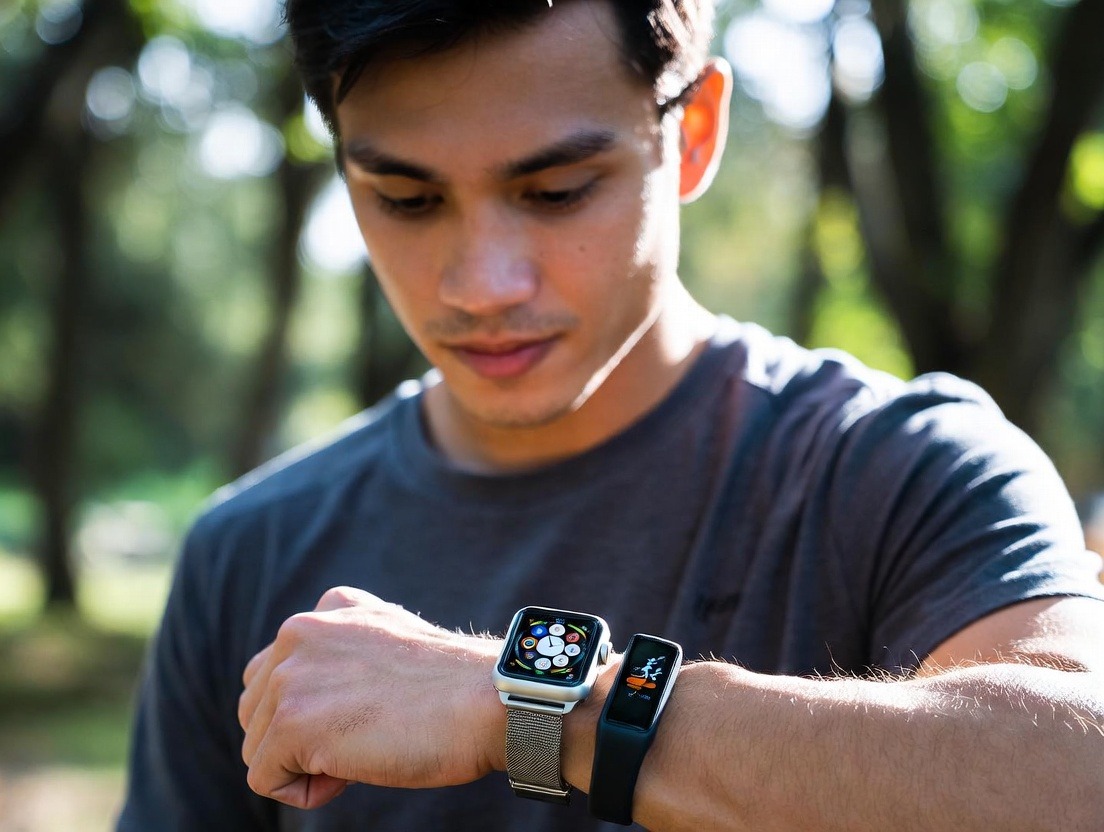
Gone are the days when wearables were glorified pedometers with a notification buzz. The paradigm has shifted from fitness tracking to health sensing. This is a fundamental distinction. Fitness is about output—steps taken, calories burned, floors climbed. Health sensing is about input and state—the quality of your recovery, the balance of your nervous system, the subtle shifts in your physiology that signal stress, illness, or imbalance long before you feel symptoms.
This evolution is powered by a sensor revolution. Early devices relied primarily on accelerometers. Today’s advanced wearables incorporate a sophisticated array of biometric tools:
The magic isn’t in any single sensor, but in their sensor fusion. By layering heart rate, HRV, temperature, and movement data, algorithms can paint a remarkably detailed picture. They can distinguish between deep, light, and REM sleep. They can pinpoint the onset of a fever before you feel chills. They can tell you if that elevated heart rate is due to a good workout or unmanaged anxiety.
This holistic approach turns data into a narrative about your health. Instead of just a step count, you get a "Readiness Score" suggesting whether you should train hard or focus on rest. Instead of just sleep duration, you get a "Sleep Quality" analysis with actionable feedback. This is the new era: technology that doesn't just track your life, but helps you understand and improve it. For a deeper dive into how these technologies are shaping personalized wellness, explore our blog for ongoing analysis and insights.
Before you compare a single spec or price tag, the most critical step is internal. You must define your primary "Why." A device perfect for a marathon runner may be overkill for someone focused on mindfulness, and vice-versa. Clarity here is the key to satisfaction and avoiding tech waste.
Let’s explore common user profiles and the features that matter most to them:
The Performance Optimizer & Athlete:
The Health-Conscious & Biohacker:
The Chronic Condition Manager:
The Wellness Beginner & Mindfulness Seeker:
The Fashion-Forward & Discreet User:
Your "Why" likely blends a few of these profiles. Perhaps you're a health-conscious professional who also values discretion. This self-audit is your filter. As you read about the different form factors and features in the following sections, continually refer back to your core objectives. Our FAQ page addresses many common questions from users with diverse goals just starting their wearable journey.
The vessel for this biometric intelligence matters immensely. It dictates comfort, aesthetics, battery life, and even the type of data collected. Let’s break down the pros and cons of the dominant wearable categories.
The smartwatch is the Swiss Army knife of wearables. It’s a mini-computer on your wrist.

The smart ring represents a paradigm shift towards unobtrusive, continuous monitoring. Devices like Oura, RingConn, and Movano’s Evie Ring have pioneered this space.
The humble band evolved into a sleek, focused health tool.
The landscape is expanding:
The Bottom Line: Your choice in form factor is a choice about your relationship with the device. Do you want a commanding, interactive command center (watch), a silent, always-on guardian (ring), or a simple, dedicated tool (band)? This decision will frame your entire experience.

Spec sheets are full of sensor names, but what wisdom do they actually impart? Let’s translate technology into actionable health intelligence.
Heart Rate (HR): The Fundamental Rhythm
Heart Rate Variability (HRV): The Symphony of Your Nervous System
Sleep Staging & Quality: Beyond Just Hours in Bed
Skin Temperature: The Subtle Shift Detector
Blood Oxygen (SpO2): The Breath of Life, Measured
Electrocardiogram (ECG/EKG): The Electrical Map
Understanding these metrics empowers you to move from passive data collection to active health management. The story they tell together is far greater than the sum of their parts.
The hardware collects the dots; the software connects them into a coherent picture. A wearable is only as good as its app and the intelligence of its algorithms. Evaluating the ecosystem is non-negotiable.
User Experience (UX) & Interface Design:
Is the app intuitive and inviting, or cluttered and confusing? Can you find your key metrics in three taps or less? A good app should feel like a helpful coach, not a spreadsheet. Look for clear visualization of trends (weekly, monthly views) and the use of scores and summaries (like a Sleep Score or Readiness Score) that synthesize complex data into an understandable takeaway.
Actionable Insights & Personalization:
Does the app just show data, or does it guide you? The best ecosystems provide contextual nudges. "Your HRV was low last night. Consider a lighter workout today." "You’ve had consistent sleep deprivation this week. Your immune system may be compromised." Some apps offer guided meditation, breathing exercises, or workout suggestions based on your recovery status.
Data Ownership & Integration:
Can you export your raw data (via CSV or through Apple Health/Google Fit)? This is crucial for biohackers and those wanting to use third-party analysis tools. How well does it sync with other health apps you use? A closed ecosystem locks you in; an open one empowers you. The ability to see your wearable data alongside your nutrition log, menstrual cycle tracker, or meditation app creates a true holistic dashboard.
Algorithm Transparency & Validation:
While proprietary algorithms are the secret sauce, some companies are more transparent than others about how they derive scores. Have their sleep staging or AFib detection algorithms been clinically validated in peer-reviewed studies? This doesn't mean you need a medical device, but scientific backing adds credibility to the insights you're basing decisions on.
The ecosystem is your daily touchpoint. A powerful sensor in a device with a poorly designed app is a frustrating and ultimately useless investment. Spend time reading reviews about the app experience, not just the hardware. For examples of how real users interact with and benefit from their device's insights, you can read authentic user experiences and testimonials.
A dead wearable is a useless one. Battery life isn't just a convenience spec; it determines the continuity of your data. Gaps in data create gaps in understanding, especially for trends like temperature and HRV that require consistent overnight tracking.
The Reality of "Up To" Claims: Manufacturer claims ("up to 7 days") are best-case scenarios, often with all but the most basic features disabled. Real-world usage with continuous heart rate, sleep tracking, and SpO2 measurements will reduce that significantly.
Form Factor Realities:
The Charging Ritual: Consider your lifestyle. Is plugging in a device every night alongside your phone a non-issue? Or would a weekly charge align better with your routine? For 24/7 health monitoring, the charging system must be convenient enough that you don’t skip wearing the device. The goal is seamless integration, not another daily chore.
The Bottom Line: Prioritize the battery life that matches your commitment to continuous tracking. If you want uninterrupted sleep and recovery data, a device that needs daily daytime charging or dies mid-week is a fundamental flaw.
Technology that isn’t worn is technology that fails. If a device is uncomfortable, too bulky for sleep, or doesn't fit your personal style, you will take it off. And when it's off, it tells you nothing.
The 24/7 Test: Ask yourself: Can I sleep with this? Can I shower with it (if it's water-resistant)? Is it comfortable during both typing at a keyboard and working out? For smart rings, a perfect, snug fit is essential for sensor accuracy and comfort. For watches, a heavy case can dig into your wrist while sleeping.
Materials & Craftsmanship:
Water Resistance: This is not just for swimmers. It’s for sweat, rain, and showers. Look for a minimum of 5 ATM (50 meters) for full swim and shower compatibility. IP ratings (like IP68) are for dust and water immersion but are not suited for swimming pressure.
The Style Equation: A wearable is an accessory. Does it look out of place with a business suit or a nice dinner outfit? The discreet nature of a smart ring or a classic-looking smartwatch often wins for users who want one device for all life's scenarios. The philosophy behind creating health tech that feels like natural personal adornment is part of a larger vision, one you can discover more about in our brand story.
Your chosen device should feel like a part of you, not a gadget attached to you. Never underestimate the importance of this human-technology interface.

You are entrusting a company with your most intimate data: your heartbeat while you sleep, your location patterns, your physiological signs of stress. This is not trivial. A robust privacy policy is as important as battery life.
Key Questions to Investigate:
The "Free" Service Trap: Be wary of devices or apps that seem too cheap. Often, the business model is monetizing your data. If you're not paying for the product, you are the product.
Your Responsibility: Use strong, unique passwords for your associated account. Enable two-factor authentication if offered. Be mindful of sharing detailed health reports on social media.
Your health data is a vault. Choose a wearable company that acts as a trustworthy guardian, not a curious bystander with a master key. We believe transparency in this area is fundamental, and you can learn more about our commitment to data integrity and user privacy.
Wearables span from $50 basic bands to $800+ luxury smartwatches and $300-$450 smart rings. The price tag reflects materials, sensor quality, brand, and ecosystem development.
The Total Cost of Ownership:
Value Alignment: Does the price align with the value for your specific goals? Paying for a top-tier sports watch with multi-band GPS is poor value if you only walk and care about sleep. Conversely, investing in a device with superior sleep and recovery algorithms might be worth a premium if that's your focus.
Think Investment, Not Expense: Framed correctly, a wearable is an investment in proactive health management. The insights gained—catching poor sleep patterns, managing stress, optimizing workout timing—can lead to better health outcomes, potentially saving money on healthcare costs and improving quality of life. It's a tool for self-empowerment.
The market is dynamic, but several key players define the categories. This is not an exhaustive list, but a snapshot of archetypes.
In the Smart Ring Arena:
In the Smartwatch Arena:
The Verdict: There is no single "best." There is only "best for you." Your choice of smartphone (iOS vs. Android) may already narrow the field for smartwatches. Your primary goal (sleep vs. sports) will point you to different form factors. The journey to find your perfect health tech companion continues as we delve into the future of this technology and how to make your final, confident choice.
We are standing on the precipice of a new frontier in personal health. The wearable devices of today, as advanced as they seem, are merely the foundational layer for what is to come. Driven by breakthroughs in sensor miniaturization, artificial intelligence, and biotechnology, the next generation of wearables promises to move from monitoring to predictive, diagnostic, and even interventional tools. Understanding these trends isn't just about future-gazing; it shapes the longevity and relevance of the device you choose today.
Non-Invasive Blood Glucose & Metabolic Monitoring:
This is the holy grail. Continuous Glucose Monitors (CGMs) have revolutionized diabetes management, but they require a subcutaneous filament. Multiple major tech and wearable companies are pouring billions into developing optical (using lasers or light) or radiofrequency sensors that can estimate blood glucose levels through the skin, without a single puncture. Success here would open metabolic health tracking to the masses, providing real-time feedback on how food, sleep, and stress uniquely affect an individual's blood sugar—a cornerstone of metabolic health, energy, and longevity.
Multimodal Sensor Fusion & AI-Driven Predictions:
The future lies not in adding more single-purpose sensors, but in making existing sensors smarter through AI. Imagine an algorithm that cross-references a slight uptick in resting heart rate, a dip in HRV, a subtle elevation in skin temperature, and an increase in nighttime movement to not only tell you "you might be getting sick," but to predict "there's an 85% probability you will experience cold symptoms in 36 hours." This shift from descriptive to predictive analytics will be the next major leap, allowing for truly proactive intervention.
Advanced Biomarkers & "Liquid Biopsy" Concepts:
Research is exploring the potential of wearables to analyze biomarkers in sweat, interstitial fluid, or even the tiny amounts of vapor emitted from the skin. This could eventually lead to non-invasive tracking of electrolytes (for hydration), cortisol (for stress), lactate (for athletic performance), and inflammatory markers. While likely a decade from mainstream use, it points to a future where a wearable could provide a daily, mini blood-panel-like snapshot of your internal biochemistry.
Mental Health & Emotional Wellbeing Sensing:
The quantifiable self is expanding to include the mind. Beyond stress scores based on HRV, future devices may incorporate more sophisticated analysis of voice patterns (via connected earbuds or a phone's microphone), typing dynamics, and even pupillary response via future smart glasses to assess cognitive load, mood states, and early signs of anxiety or depressive episodes. The ethical considerations here are immense, but the potential to provide objective data on subjective mental states is a powerful frontier.
Closed-Loop Systems & Adaptive Interventions:
This is where sensing meets action. Imagine a wearable that doesn't just tell you you're stressed, but automatically initiates a tailored breathing exercise on your device or smart speaker. Or a device for diabetics that not only monitors glucose but communicates with an insulin pump to autonomously regulate doses. For the general population, a wearable could integrate with smart home systems to gently adjust lighting and temperature as your bedtime approaches, based on your real-time circadian readiness signals.
Regulatory Shifts & The Rise of Prescription Wearables:
The line between wellness and medicine is blurring. The FDA clearance of the Apple Watch's AFib feature and Oura's temperature algorithm for fertility tracking are just the beginning. We will see more devices and specific algorithms undergo clinical validation for managing conditions like hypertension, COPD, and post-operative recovery. This doesn't mean all wearables will become medical devices, but a new category of "prescription digital therapeutics" worn on the body will emerge, prescribed by doctors and often covered by insurance.
For those fascinated by the cutting-edge intersection of technology and wellness, staying informed is key. We regularly analyze these trends and their practical implications; you can explore our blog for deeper dives into the future of health tech.
With the landscape mapped and the future in view, it's time to make your decision. This framework is designed to move you from overwhelmed to confident, ensuring your choice is deliberate and aligned.
Step 1: Re-Clarify Your Prime Directive.
Return to your core "Why." Write it down in one sentence. E.g., "My primary goal is to improve deep sleep and manage daily stress levels," or "I need detailed running metrics and recovery guidance for marathon training." This is your decision anchor.
Step 2: Lock in Your Form Factor.
Based on your goal, lifestyle, and aesthetic preference, choose your category. This is a major filter.
Step 3: List Your Non-Negotiable Features.
These are the deal-makers. Limit this to 3-4 items. Examples:
Step 4: Establish Your Budget (Including Subscriptions).
Set a hard ceiling for the first-year total cost (Device + any required annual subscription). This prevents feature creep from luring you into a price bracket you'll regret.
Step 5: The Shortlist & Deep Dive.
Select 2-3 final contenders that pass Steps 1-4. Now, go beyond marketing:
Step 6: Embrace the Trial Period (If Available).
Many companies offer a 30-day or longer trial. Use it aggressively. Wear the device constantly. Test every feature relevant to your goals. Does it provide insights that lead to actionable behavior change? Or does it become just another source of noise?
Step 7: Make the Call & Commit.
No device is perfect. There will always be trade-offs. Choose the contender that best satisfies your Prime Directive and Non-Negotiables, within your budget. Then, commit to using it consistently for at least 60-90 days. The true value of a wearable is unlocked over time, as it learns your baselines and you learn to interpret its unique language.
This process transforms the choice from an impulsive tech purchase to a strategic investment in your well-being. For common questions that arise during this selection and onboarding process, our comprehensive FAQ resource is designed to provide clear, immediate guidance.
The purchase is complete. The box is open. Now begins the most important phase: integration. A wearable is a tool, and like any tool, its value is determined by the skill and intention of the user. The goal is to move from data obsession to informed intuition.
The Onboarding & Baseline Period (Weeks 1-4):
Do not make drastic judgments or lifestyle changes in the first month. Your device is learning your personal baselines for HRV, temperature, and sleep. You are also learning its rhythms and quirks. Focus on consistent wear, especially during sleep. Ignore daily scores; instead, look at the weekly averages and trends that start to emerge. This period is about calibration, not optimization.
Interpreting Scores Without Obsession:
Your "Readiness" or "Sleep" score is a helpful summary, but it is not a grade. A low score is not a failure; it's information. It’s your body’s report card on the previous day's inputs (stress, food, alcohol, exercise, etc.). The question isn't "Why is my score bad?" but "What from yesterday might have contributed to this, and what can I learn?" Use scores as a guide, not a gospel.
Finding Your Unique Patterns & Triggers:
This is the superpower. After a few months, you can start true self-experimentation.
You are building a personalized blueprint of what "optimal" and "depleted" look like for you. This knowledge is far more valuable than any generic health advice.
Avoiding "Analysis Paralysis" & Health Anxiety:
Wearables can, for some, become a source of anxiety—a phenomenon sometimes called "orthosomnia" (an unhealthy preoccupation with perfect sleep data). Set boundaries:
The Long-Term Relationship:
Over time, the goal is for the insights to become internalized. You start to feel when your HRV is likely low or when your body needs rest, using the device as a confirmation rather than a discovery tool. It becomes a silent partner in your health journey, providing an objective check on your subjective experience and helping you make more informed daily choices that compound into lasting well-being. Hearing how others have navigated this journey can be inspiring; you can find these stories of transformation in our collection of real customer reviews and experiences.
The final third of this guide will bring all these threads together. We will explore advanced use cases, from leveraging your data with healthcare providers to integrating wearables into family wellness plans. We'll conclude with a forward-looking synthesis, helping you build a future-proof and holistic approach to personal health technology that evolves with you.
The proliferation of personal health data creates a fascinating new dynamic in the patient-provider relationship. No longer is the annual physical the sole snapshot of your health; you now bring a continuous, longitudinal story to your doctor’s office. Used wisely, this can transform care from reactive to collaborative and preventative. However, it requires a thoughtful, structured approach from both patient and provider.
From Anecdote to Evidence: Preparing for the Appointment.
Walking in and saying, "My smartwatch says my sleep is bad" is less effective than presenting organized data. Before your appointment:
What Data is Clinically Actionable?
While doctors may be skeptical of raw step counts, certain wearable-derived information is increasingly seen as valuable adjunctive data:
Navigating the Conversation with Your Healthcare Provider.
The Emerging Model of "Data-Enabled Care":
Forward-thinking clinics and specialists are beginning to integrate patient-generated health data (PGHD) into their workflows. Some cardiology practices now schedule "device check" appointments. Functional medicine doctors routinely analyze wearable data to guide lifestyle interventions. This model treats you as the CEO of your health, with the wearable as your reporting tool and the doctor as your expert consultant.
To successfully bridge the gap between personal tech and professional care, clear communication and organized data are your most vital tools. For those looking to understand how one company envisions this data-enabled future, you can learn more about our mission to connect personal insights with holistic wellness.
For the engaged user, wearable tech becomes the foundation for sophisticated health optimization and shared well-being. These advanced applications showcase the transformative potential of consistent, multimodal data.
The Biohacker’s Playbook: Self-Experimentation at Scale.
Biohackers use wearables as objective measurement tools for n-of-1 experiments.
The Athlete’s Edge: Precision Performance.
Elite and amateur athletes alike use data for fine-tuning.
Family & Shared Wellness: A Connected Health Ecosystem.
Wearables are moving beyond the individual to create shared health awareness.
These use cases illustrate that the value of a wearable compounds with intention. It’s a platform for curiosity, a tool for connection, and a lens through which to see the invisible connections between your daily choices and your long-term vitality. For more ideas and community-driven applications, our blog serves as a hub for advanced wellness strategies.
In our enthusiasm for data-driven health, we must maintain a critical eye. Wearable technology is powerful, but it is not omniscient, and its rise brings important questions about ethics, accuracy, and psychological impact.
The Accuracy Question: Clinical Grade vs. Consumer Grade.
This is the most crucial limitation to internalize. With rare exceptions (like FDA-cleared ECG apps), consumer wearables are wellness devices, not medical devices. Their value is in tracking trends and relative changes for a single user over time.
The Risk of Data Misinterpretation & Self-Diagnosis.
Armchair diagnostics are a real danger. A few premature atrial contractions (PACs) detected by an ECG app, while usually benign, can send a user into a spiral of anxiety. A low SpO2 reading during sleep could be a sensor slip, not apnea. Wearable data should inform conversations with professionals, not replace them. Any persistent concern generated by a device must be validated through proper clinical pathways.
Privacy, Again: The Expanding Data Moat.
As devices collect more intimate data—predicted illness, mental state inferences, fertility windows—the stakes of a data breach or misuse grow exponentially. Could this data be used by employers, insurers, or advertisers in discriminatory ways? Robust, transparent privacy policies are non-negotiable, and users must advocate for their digital rights. We believe trust is the foundation of this relationship, and you can review our commitment to these principles.
The "Quantified Self" vs. The "Qualified Self":
There is a risk of externalizing our sense of well-being. We may start to feel "good" only when our sleep score is 85+, forgetting the innate wisdom of our own bodies. The goal of wearable tech should be to reconnect us with our somatic intuition, not to replace it. It's a tool to help you listen better, not a replacement for your own inner voice.
Acknowledging these limitations isn't a critique of the technology, but a guide for its wise use. It keeps the tool in service to the human, and not the other way around. For balanced perspectives and user discussions on navigating these very issues, our community-driven testimonials and stories often reflect this learning journey.
Your wearable is likely not the only digital tool in your wellness arsenal. The concept of a "Personal Health Tech Stack" is emerging—a curated set of interconnected devices and apps that provide a comprehensive view of your health. Your choice of wearable should be the cornerstone that integrates with this ecosystem.
The Core Layers of a Modern Health Stack:
The Power of Integration:
The true magic happens when these layers talk to each other. Imagine your:
Now, in your aggregator (Apple Health), you can see correlations that were previously invisible: "On days I meditate for 10 minutes, my deep sleep increases by 12%." Or, "When my carbohydrate intake is above 300g, my overnight heart rate is elevated." This is systems thinking applied to personal biology.
Choosing a Wearable That Plays Well with Others.
When selecting your device, its integration capabilities are a key feature. Prioritize devices that:
Your wearable shouldn't be a silo. It should be the most prolific and reliable data generator in your interconnected web of health tools, providing the physiological context for everything else you track. For support in setting up these integrations and making the most of your data, our FAQ section provides technical guidance and best practices.
We have journeyed from the foundational shift from fitness to health sensing, through the intimate details of sensor technology and form factors, and into the practical realities of daily use, professional integration, and future possibilities. You now possess a map of the wearable landscape that emphasizes depth over hype, and alignment over features for features' sake.
The core thesis of this guide is that the "right" device is the one that fades into the background of your life while bringing your health into the foreground. It is the device you forget you're wearing but whose insights you consistently remember to use. It aligns with your goals, fits your lifestyle, respects your data, and speaks to you in a language of actionable feedback—not overwhelming data points.
The decision is significant because this tool, when chosen well and used wisely, becomes a long-term companion on your health journey. It holds up a mirror to your daily choices, not to judge, but to inform. It can detect silent patterns, validate your intuitions, and sometimes, challenge your assumptions. In doing so, it empowers you to move from being a passenger in your own body to becoming its skilled navigator.
As you move forward, carry these key principles:
The world of wearable health technology is dynamic and exciting. New sensors, smarter algorithms, and deeper integrations are on the horizon. By making a choice rooted in your personal needs and this comprehensive understanding, you invest in a tool that will not only serve you today but will also evolve in relevance as the field advances. Your journey toward a more informed, quantified, and ultimately healthier life is ready to begin.
If the fitness boom of the 80s and 90s glorified "no pain, no gain," the wearable era has ushered in the science of strategic recovery. This represents a paradigm shift in athletic training and everyday wellness: understanding that progress—be it building muscle, enhancing cognitive function, or improving metabolic health—doesn't happen during the stress of a workout, but during the body's repair processes afterward. Wearables have become the essential tool for quantifying and optimizing this critical phase.
Recovery is a multi-system process involving the nervous system, endocrine system, and muscular system. Wearables provide proxy metrics for each:
The practical application of this data has revolutionized training regimens. Athletes and fitness enthusiasts now use "readiness" or "recovery" scores to decide their daily workload. The rule is simple: Let the data guide the intensity.
This scientific approach to recovery has filtered down from elite athletes to everyday users. The office worker can use their recovery score to decide whether to hit a spin class or take a walk. It validates the importance of rest and provides permission to slow down, backed by hard data. It turns recovery from a vague concept of "taking it easy" into a precise, managed component of a high-performance life. For anyone looking to delve deeper into the principles of data-driven recovery, the Oxyzen blog offers a wealth of resources on interpreting these signals for better daily decisions.
The grand promise of the genomic age was personalized medicine. While that future is still unfolding, wearable technology has delivered personalized wellness at scale, right now. It has definitively proven that universal health mantras are often useless, and sometimes even counterproductive, because they ignore individual differences in physiology, lifestyle, and genetics.
Wearables demolish the "average" by establishing your personal baseline. Consider the classic advice: "Get 8 hours of sleep."
This personalization extends to all aspects of wellness:
This hyper-personalization is powered by machine learning. The more you wear the device, the better it understands your patterns, your responses, and your normal. The recommendations move from generic ("more sleep") to specific ("try finishing your last meal 3 hours before bed based on your digestive stress pattern").
The cultural impact is the death of dogmatic wellness fads. It's harder to sell a restrictive diet or an extreme workout protocol when individuals have tools showing them what actually works for their own biology. It fosters a culture of self-experimentation and bio-individuality, where the ultimate authority on your health is not a guru or a magazine, but the data from your own body. This journey of self-discovery is one many users share, as seen in the testimonials and stories from real users, who often speak about finally understanding their own unique rhythms.
The wearable revolution is far from complete. The next frontier is the holy grail of non-invasive, continuous monitoring of biomarkers that currently require blood draws, cuffs, or clinical visits. The integration of these metrics will blur the line between wellness tracking and medical-grade monitoring, further empowering individuals with chronic conditions and providing unprecedented insights into metabolic health for everyone.
1. Non-Invasive Blood Glucose Monitoring (NIBGM):
This is the most sought-after breakthrough. Continuous Glucose Monitors (CGMs) have changed diabetes management, but they require a subcutaneous sensor. Several tech giants and startups are racing to develop optical (using spectroscopy) or radio-frequency sensors that can estimate glucose levels through the skin. Success here would be transformative:
2. Continuous Blood Pressure Monitoring:
Today, we get snapshots with inflatable cuffs. The future is a wearable that provides continuous, beat-to-beat blood pressure trends. Technologies like photoplethysmography (PPG) pulse wave analysis and electrocardiogram (ECG) are being combined in devices (some already in clinical validation) to estimate blood pressure. This would allow for:
3. Advanced Biomarkers on the Horizon:
The convergence of these technologies into a single, comfortable device will create the most comprehensive picture of personal health ever available outside a hospital. It will enable true "healthspan" extension—not just living longer, but living healthier for longer. The companies at the forefront of this research, often driven by a mission to solve these hard problems, share their progress and vision in places like their company about pages, outlining the roadmap from today's capabilities to tomorrow's breakthroughs.
The initial wave of wearables focused almost exclusively on the physical body. The most profound and necessary evolution is their expansion into the realm of mental and emotional wellbeing. Recognizing that the mind and body are inextricably linked, the next generation of wearables is aiming to quantify aspects of our psychological state, creating tools for emotional awareness and resilience.
This is a complex challenge, as emotions are subjective. However, wearables can detect their powerful physiological correlates:
The goal is not to diagnose mental illness but to provide emotional intelligence feedback. Imagine your device, after a meeting, providing a summary: "Your physiological signs indicated elevated stress for 45 minutes, with a slow recovery. Consider a 5-minute breathing exercise." Or, noticing a week-long trend of reduced activity and fragmented sleep, it might gently suggest: "Your recent patterns can sometimes correlate with low mood. Would you like to review some wellness resources?"
This pushes wearables into sensitive territory, raising major questions about privacy and the ethics of emotion-sensing. However, if deployed responsibly with user control, it could destigmatize mental health struggles by framing them as measurable physiological states and empower people with tools for self-regulation. It completes the holistic picture: a wearable that cares for your heart rate and your heart. For those interested in the intersection of technology and holistic well-being, following the latest research and articles on the Oxyzen blog can provide insights into how these frontiers are being explored responsibly.
The wearable revolution has not stayed in the home gym; it has marched straight into the office. Corporate wellness programs, once limited to subsidized gym memberships and annual flu shots, are being transformed by the data-driven, personalized insights of wearable technology. This represents a massive shift in how organizations view employee health—from a peripheral benefit to a core component of productivity, engagement, and talent retention.
Companies are increasingly offering subsidized wearables (like smart rings or watches) as part of comprehensive wellness initiatives. The value proposition is mutual:
For the Employee:
For the Employer:
Of course, this raises critical ethical and privacy red flags. The most successful and ethical programs are built on foundational principles:
When implemented ethically, corporate wearables programs can create a culture of well-being that benefits everyone. They align the company's success with the health of its people, fostering a more resilient, engaged, and human-centric workplace. The mission of many wellness tech companies aligns with this ethical, empowerment-focused approach, as detailed on pages like Oxyzen's "our story", which often emphasize putting individual user benefit first.
As wearables become more powerful and ubiquitous, they force a urgent and complex societal conversation about ethics. The data they collect is not like social media browsing history; it is a intimate diary of our corporeal existence. Navigating this new terrain requires careful consideration of privacy, algorithmic bias, and the long-term implications of a permanently quantified life.
1. The Privacy Imperative:
Your sleep pattern can reveal your work schedule. Your heart rate data could indicate substance use, sexual activity, or emotional states. Your location and activity data can paint a detailed picture of your daily life. The stakes for data breaches or misuse are extraordinarily high.
2. Algorithmic Bias and Health Equity:
The algorithms that interpret sensor data are trained on datasets. If those datasets are not diverse, the insights can be flawed for underrepresented groups.
3. Psychological and Social Impacts:
We've touched on data anxiety. Broader social questions loom. Could wearable data be used in social scoring? Could employers subtly favor candidates with "better" sleep scores? Will we face pressure from peers or ourselves to always be "optimized," leaving no room for the natural, unquantified ebbs and flows of human life?
4. The Diagnostic Responsibility:
As devices add ECG and potential future medical-grade features, the line between wellness and medical device blurs. This creates a regulatory grey area and a user education challenge. Companies must be scrupulously clear about the intended use of their devices—for "general wellness and fitness," not for diagnosis—while still responsibly flagging significant anomalies that warrant professional consultation.
The ethical development of wearable tech is not a side issue; it is central to its sustainable and beneficial future. Engaging with these questions is a responsibility for manufacturers, regulators, and users alike. For consumers, a good starting point is to review a company's privacy policy and stance on these issues, which are often addressed in their FAQ and support documentation.
The most promising—and challenging—frontier for wearable health tech is its formal integration into the traditional healthcare system. Today, a disconnect exists: a torrent of data flows on the individual's smartphone, while the doctor's electronic health record (EHR) contains only episodic clinical measurements. Bridging this gap could revolutionize preventive care and chronic disease management, creating a collaborative, continuous-care model.
The vision is a future where your physician can securely access relevant, longitudinal trends from your wearable alongside your medical history. This integration is happening gradually:
1. Remote Patient Monitoring (RPM):
This is the leading edge, already reimbursed by insurers for specific conditions. Patients with hypertension might use a connected blood pressure cuff, those with heart failure a connected scale and wearable, and those with diabetes a Continuous Glucose Monitor (CGM). Data streams directly to a care team dashboard, alerting them to dangerous trends before a crisis occurs. Consumer wearables with validated sensors are beginning to play a role in these official programs.
2. Pre-Visit Data Preparation:
Forward-thinking patients are already bringing PDF summaries of their wearable trends to appointments. The next step is apps that allow users to generate a "Health Report" from their wearable data—highlighting trends in resting heart rate, sleep, activity, and detected anomalies like AFib—and securely share it with their doctor before a visit. This makes the 15-minute annual physical vastly more productive.
3. Clinical Research and Drug Trials:
Wearables are a game-changer for research. They enable decentralized trials, where participants can be monitored from home, increasing diversity and reducing dropout rates. They provide objective, continuous endpoints (like activity levels, sleep quality, heart rate) that are more sensitive than periodic questionnaires.
4. Post-Discharge and Surgical Recovery:
After surgery or hospitalization, patients could be sent home with a wearable to monitor recovery. Trends in activity, sleep, heart rate, and SpO2 could provide early warning of complications like infection or indicate when a patient is safely ready to increase activity.
Significant Hurdles Remain:
Despite the challenges, the direction is clear. The future of healthcare is hybrid: the deep clinical expertise of providers combined with the continuous, real-world data from patient-worn devices. This partnership promises more preventive, personalized, and effective care for all. Companies aiming to be part of this future are often building their technology with these standards and partnerships in mind, a vision you can explore on pages like Oxyzen's about us.
We have traversed the remarkable journey of wearable health tech, from its humble pedometer origins to its current status as a cornerstone of modern wellness. We've seen it unmask the mysteries of sleep, quantify the invisible specter of stress, elevate recovery to a science, and shatter the myth of one-size-fits-all health. It has empowered individuals, infiltrated corporate culture, and begun knocking on the door of traditional medicine.
The change is permanent. We have crossed a threshold into an era where ignoring our body's continuous data stream will feel as anachronistic as never checking the weather forecast. Personal wellness is no longer a guessing game; it is an informed, dynamic practice of self-optimization and prevention.
Yet, as this first part of our exploration concludes, we stand at the beginning of an even more uncharted path. The foundational changes discussed here are merely the prelude. The next phase—covered in the subsequent portion of this article—will delve into the emerging world where wearable data converges with artificial intelligence to provide true health coaching, the rise of decentralized patient networks, the long-term societal impacts of a quantified generation, and the ultimate destination: seamlessly integrated technology that fosters not just longer life, but a life of greater vitality, purpose, and well-being.
The story of how wearable health tech changed personal wellness forever is still being written, with each of us as both author and subject. To continue this exploration and learn how to leverage these insights for your own journey, a wealth of information awaits on resources like the Oxyzen blog and through understanding the technology and mission behind the devices themselves. The future of wellness is personalized, proactive, and powered by data—and it is already on your wrist, your finger, and seamlessly integrating into your life.
Your Trusted Sleep Advocate: Sleep Foundation — https://www.sleepfoundation.org
Discover a digital archive of scholarly articles: NIH — https://www.ncbi.nlm.nih.gov/
39 million citations for biomedical literature :PubMed — https://pubmed.ncbi.nlm.nih.gov/
Experts at Harvard Health Publishing covering a variety of health topics — https://www.health.harvard.edu/blog/
Every life deserves world class care :Cleveland Clinic - https://my.clevelandclinic.org/health
Wearable technology and the future of predictive health monitoring :MIT Technology Review — https://www.technologyreview.com/
Dedicated to the well-being of all people and guided by science :World Health Organization — https://www.who.int/news-room/
Psychological science and knowledge to benefit society and improve lives. :APA — https://www.apa.org/monitor/
Cutting-edge insights on human longevity and peak performance:
Lifespan Research — https://www.lifespan.io/
Global authority on exercise physiology, sports performance, and human recovery:
American College of Sports Medicine — https://www.acsm.org/
Neuroscience-driven guidance for better focus, sleep, and mental clarity:
Stanford Human Performance Lab — https://humanperformance.stanford.edu/
Evidence-based psychology and mind–body wellness resources:
Mayo Clinic — https://www.mayoclinic.org/healthy-lifestyle/
Data-backed research on emotional wellbeing, stress biology, and resilience:
American Institute of Stress — https://www.stress.org/


