


The Weekend Sleep Pattern Problem (Social Jet Lag)
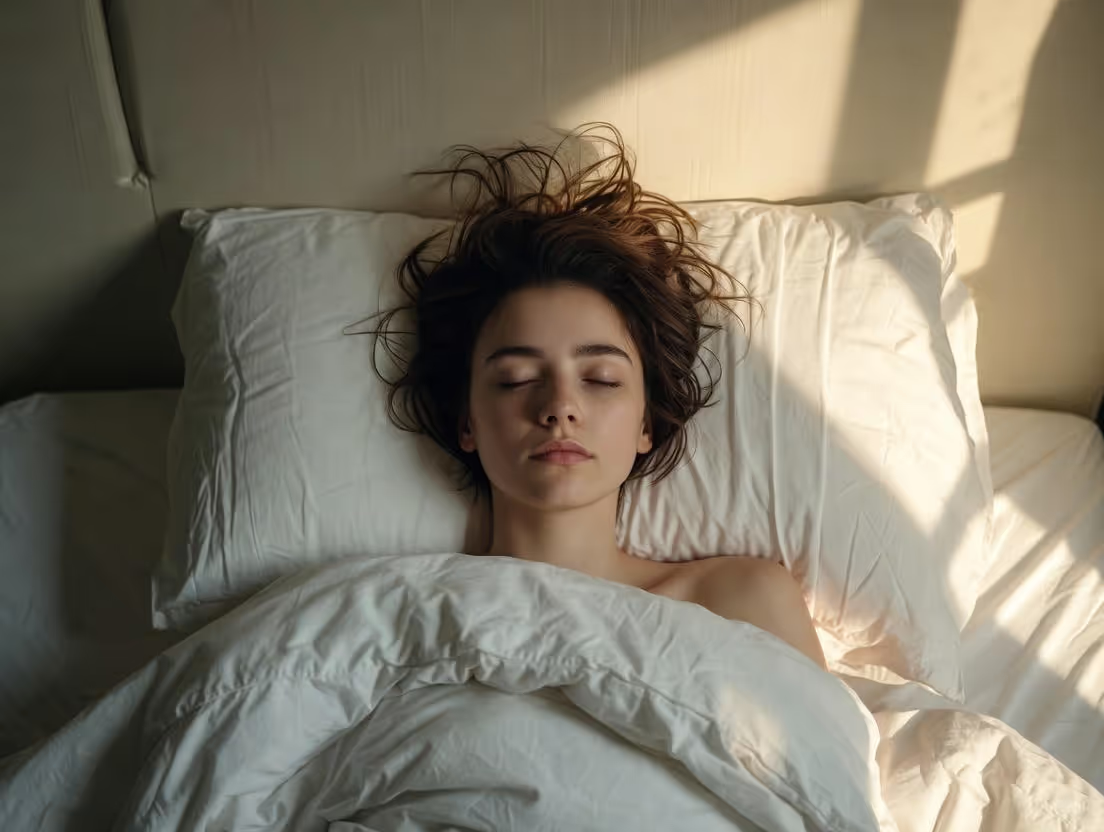
Social jet lag is the fatigue caused by shifting your sleep pattern later on weekends and back earlier for weekdays, confusing your internal clock.
Social jet lag is the fatigue caused by shifting your sleep pattern later on weekends and back earlier for weekdays, confusing your internal clock.
%402x.svg)
The Silent Epidemic Sabotaging Your Health: Unmasking the Weekend Sleep Pattern Problem
You wake on Monday morning feeling like you’ve been hit by a truck. The alarm screams into the peaceful dark, a brutal shock to your system. Your brain is fogged in cotton, your body aches with a deep, cellular fatigue. You drag yourself through the day on a river of caffeine, waiting for that elusive “second wind” that never quite arrives. By Wednesday, you’re maybe starting to feel human again—just in time for the cycle to restart come Friday.
Sound familiar? You chalk it up to a classic case of the “Monday Blues,” a necessary evil of modern life. But what if this weekly struggle wasn’t just a minor inconvenience or a lack of willpower? What if it was a measurable, diagnosable form of biological distress with a real scientific name, one that’s quietly undermining your metabolism, your mood, your focus, and your long-term health?
Welcome to the world of Social Jet Lag.
This isn't about pulling an all-nighter or dealing with a newborn. This is the chronic, weekly mismatch between your biological clock—your internal, genetically programmed rhythm telling you when to sleep and wake—and your social clock, dictated by work schedules, school runs, and social commitments. For most, it manifests in a glaringly predictable pattern: during the week, you force yourself to bed earlier and wrestle yourself awake earlier than your body wants. Come the weekend, you “catch up,” staying up late and sleeping in, creating a sleep pattern that looks less like a consistent line and more like a rollercoaster.
This phenomenon, first coined by chronobiologist Till Roenneberg, is so pervasive it’s considered a normal part of adult life. But “normal” does not mean “harmless.” Social Jet Lag is a form of chronic circadian misalignment, a state where your internal biology is perpetually out of sync with your external world. It’s like flying from New York to Los Angeles and back every single weekend, without ever leaving your bedroom.
The consequences are far-reaching and insidious. Research is now linking this weekend sleep pattern problem to weight gain and difficulty losing weight, increased risk for type 2 diabetes and heart disease, heightened anxiety and depression, impaired cognitive performance, and a weakened immune system. It’s a public health issue disguised as a lazy Sunday morning.
In this deep exploration, we will dissect the anatomy of your weekend sleep rebellion. We’ll journey into the science of your circadian rhythm, understand why “catching up” is a biological myth, and expose the true cost this pattern is exacting on every system in your body. Most importantly, we will move beyond simply identifying the problem. With the advent of personalized health technology, like the advanced biometric tracking offered by smart rings such as those from Oxyzen, we now have the tools to move from guesswork to precision. This is about transforming your relationship with sleep from one of conflict to one of harmony, using data to finally align your daily life with your body’s innate, healthy tempo.
Your weekend sleep-in isn’t a treat. It’s a symptom. Let’s uncover the root cause.

To understand the gravity of the weekend sleep pattern problem, we must first meet the two opposing forces governing your life: your biological clock and your social clock. Their conflict is the very genesis of Social Jet Lag.
Your Biological Clock: The Master Circadian Rhythm
Deep within your brain’s hypothalamus lies a tiny region of about 20,000 neurons called the suprachiasmatic nucleus (SCN). This is your body’s master clock. It doesn’t track hours and minutes; it orchestrates a 24-hour cycle of physiological processes known as your circadian rhythm. This rhythm dictates not just sleep and wakefulness, but also core body temperature fluctuations, hormone production (like cortisol for alertness and melatonin for sleep), digestion, cell repair, and gene expression.
The SCN is intrinsically set to a cycle that is, for most adults, slightly longer than 24 hours. To stay precisely synchronized with the Earth’s rotation, it relies on powerful external cues called zeitgebers (German for “time givers”). The most potent zeitgeber is light, especially the blue-wavelength light of a sunrise. Morning light signals the SCN to suppress melatonin, boost cortisol, and initiate the “day” phase of the cycle. Darkness does the opposite, triggering melatonin release to prepare the body for sleep.
Your biological clock is stubbornly individual. This is your chronotype—whether you are naturally an early “lark,” a late “owl,” or somewhere in between. Your chronotype is largely genetic, explaining why some people spring out of bed at 5 AM feeling fantastic while others don’t hit their cognitive stride until 10 PM.
Your Social Clock: The Demands of the Modern World
In stark contrast stands the social clock. This is the rigid schedule imposed by society: the 9-to-5 workday, school start times, meeting schedules, and even social events. For the estimated 40-50% of the population with an intermediate-to-late chronotype (the “owls”), this creates an immediate problem. The social clock demands they wake up hours before their biological clock has given the all-clear.
During the week, owls are in a state of chronic sleep deprivation and mild circadian misalignment. They use alarm clocks (a form of “social curfew”) to truncate their natural sleep cycle, often waking during a critical period of deep or REM sleep. This is like aborting a crucial software update for your brain and body every single night.
The Weekend Rebellion and the “Jet Lag” Effect
Enter the weekend. Liberated from alarms, the body’s innate rhythm reasserts itself. The late chronotype individual naturally goes to bed later and, crucially, sleeps later. This is the body’s desperate attempt to pay down the accumulated “sleep debt” from the week.
But herein lies the critical flaw: while you may be getting more sleep hours, you are violently resetting your circadian phase. Sleeping until noon on Sunday delays your internal clock. Come Monday morning at 7 AM, your biological clock—now shifted later—believes it is 4 AM. You have effectively given yourself the internal experience of flying three time zones west. You are wide awake when you should be asleep, and desperately sleepy when you need to be alert. This is the “lag.”
Social Jet Lag is quantitatively defined as the difference in mid-point of your sleep on workdays versus free days. For example, if you sleep from 11 PM to 6 AM on weekdays (mid-point at 2:30 AM) and from 1 AM to 10 AM on weekends (mid-point at 5:30 AM), you have three hours of Social Jet Lag. Studies show that even one hour of Social Jet Lag can have measurable negative effects, and many people live with two to three hours weekly.
It’s a self-perpetuating cycle: the social grind creates a deficit, the weekend rebound creates a lag, and the lag worsens the struggle of the following week. Unlike travel jet lag, which your body can eventually adjust to, Social Jet Lag is a weekly shock with no recovery period. Your circadian system is in a state of permanent destabilization, and as we will see in the next section, the body keeps a devastating score.
We often treat sleep as a luxury or a passive state. Social Jet Lag exposes this as a dangerous misconception. Sleep is an active, complex, and non-negotiable physiological process. When you destabilize it weekly, you are not just “tired.” You are systematically dysregulating the foundational pillars of your health. The price is paid across every major system.
Metabolic Mayhem: The Weight Gain Connection
One of the most robustly documented effects of Social Jet Lag is its impact on metabolism. Your circadian rhythm meticulously times the release of hormones that govern hunger and satiety: ghrelin (the “hunger hormone”) and leptin (the “fullness hormone”). When your sleep-wake cycle is erratic, this system goes haywire.
Research, including pivotal work by Dr. Roenneberg’s team, consistently shows that individuals with higher Social Jet Lag have a higher body mass index (BMI) and are at greater risk for obesity. The mechanism is multifaceted:
Cardiovascular Strain: More Than Just Fatigue
Your heart and blood vessels follow a strong circadian rhythm. Blood pressure naturally dips at night (“nocturnal dipping”), a critical period of rest for the cardiovascular system. Social Jet Lag blunts this dip and contributes to sustained higher blood pressure. Furthermore, the stress hormone cortisol, which should peak in the early morning to help you wake, can become dysregulated, contributing to chronic inflammation—a key driver of atherosclerosis (hardening of the arteries). A landmark study published in Sleep found that for every hour of Social Jet Lag, the risk of heart disease increases by 11%.
Cognitive Impairment: The “Weekend Hangover” Is Real
Monday morning fog isn’t in your head; it’s in your brain chemistry. The prefrontal cortex—the seat of executive functions like decision-making, focus, emotional regulation, and complex thought—is exquisitely sensitive to sleep disruption.
The Mental Health Toll: Anxiety, Depression, and Burnout
The link between circadian disruption and mood disorders is now undeniable. Social Jet Lag creates a chronic, low-grade stress on the body’s HPA axis (the hypothalamus-pituitary-adrenal system governing stress response). This dysregulated cortisol rhythm is a common feature in both anxiety and depression. A study involving over 3,000 participants found that individuals with even one hour of Social Jet Lag reported significantly worse mood and higher levels of fatigue. For those predisposed to mood disorders, this weekly rhythm disruption can be a powerful trigger or exacerbating factor, contributing to feelings of burnout and life dissatisfaction.
Immunity Compromise: An Open Door for Illness
Your immune system is also circadian-regulated. Key immune cells are released from bone marrow and traffic through the body on a precise schedule. Nightly sleep is when the body conducts critical “surveillance” and repair. Chronic misalignment suppresses immune function, making you more susceptible to common infections like colds and flu. It can also affect the body’s ability to mount an effective response to vaccines and may even play a role in the development of autoimmune conditions.
In essence, living with Social Jet Lag is like running a factory where the day shift and night shift keep swapping schedules weekly. Production lines (metabolic processes) break down, quality control (immune function) fails, and management (cognitive function) makes poor decisions. The factory keeps running, but at a tremendous, hidden cost. The first step to repair is accurate measurement, which moves us from feeling vaguely unwell to understanding the precise mechanics of our misalignment.

A fundamental challenge in tackling Social Jet Lag is that our subjective perception of sleep is often wildly inaccurate. We are notoriously poor judges of our own sleep quality, duration, and consistency. You might feel like you slept “pretty well” after a weekend lie-in, but your biology could be telling a completely different story. Relying on intuition alone is like trying to navigate a complex city without a map.
The Self-Assessment Trap
Common misconceptions that perpetuate the cycle include:
The Need for Objective Data
To break free from these myths, you need objective, personalized data. This is where wellness technology transitions from a novelty to a necessity. You can’t manage what you don’t measure. Key metrics vital for diagnosing and addressing Social Jet Lag include:
Traditionally, measuring these biomarkers required a clinical sleep lab. Today, advanced wearable technology, particularly those worn on the finger, provides a continuous, unobtrusive window into this vital data. A device like the Oxyzen smart ring, for example, captures precisely these metrics night and day, creating a personalized map of your circadian rhythm and sleep patterns. It moves the question from “How do I feel?” to “What is my data telling me?” For a deeper understanding of how this technology translates raw data into actionable insights, our blog offers a wealth of resources on biometric tracking.
Armed with this data, you can finally see the true shape and scale of your weekend sleep pattern problem. It transforms the abstract concept of “Social Jet Lag” into a concrete, measurable pattern you can begin to correct. The journey to alignment starts with awareness, and awareness in the digital age is powered by precise, personal data.
To craft a personalized solution for Social Jet Lag, you must first identify your natural position on the chronotype spectrum. This isn’t about preference or discipline; it’s about your genetic predisposition for sleep and wake timing. Understanding your chronotype is the key to working with your biology, not against it.
Defining the Types
Chronotypes exist on a continuum, but they are commonly grouped into categories:
The Biology Behind Your Type
Your chronotype is governed by the intrinsic period length of your suprachiasmatic nucleus (SCN). “Larks” tend to have a circadian period slightly shorter than 24 hours, which makes them cycle ahead and ready for sleep earlier. “Owls” have a period longer than 24 hours, causing a natural drift to later times. This is reinforced by differences in the timing of melatonin release (“dim-light melatonin onset” or DLMO). In owls, melatonin secretion begins later in the evening, delaying the signal for sleepiness.
Discovering Your True Chronotype
Forget generic online quizzes. The most reliable way to discover your chronotype in the real world is through a combination of self-observation and data tracking during a period of freedom from social constraints—like a vacation or a long weekend without alarms.
Why This Matters for Fixing Social Jet Lag
You cannot change your chronotype. An owl cannot will themselves into becoming a lark. The goal of mitigating Social Jet Lag is not to fight your nature, but to minimize the mismatch. Knowing you are an owl means the strategy isn’t about forcing a 9 PM bedtime (which will likely fail), but about strategically using light and schedule adjustments to gently shift your rhythm as early as sustainably possible and reducing the size of the weekend swing.
Trying to implement a one-size-fits-all sleep solution is a recipe for frustration. The advice for a lark (“get morning sun!”) is different in nuance and timing from the advice for an owl (“avoid evening light!”). Your chronotype is your starting point on the map. Only once you acknowledge it can you plot a sensible course toward a more stable, healthy relationship with the social clock. This foundational self-knowledge directly informs the practical tools we will explore next, starting with the most powerful zeitgeber of all: light.

If you could only do one thing to combat Social Jet Lag, it would be to strategically manage your light exposure. Light is the primary lever for resetting your suprachiasmatic nucleus (SCN). Used correctly, it’s medicine. Used haphazardly, as most of us do, it’s poison for your circadian rhythm.
The Science of Light as a Zeitgeber
Specialized cells in your retina, called intrinsically photosensitive retinal ganglion cells (ipRGCs), are tuned to detect short-wavelength “blue” light. They send signals directly to your SCN, bypassing the visual pathways. When these cells detect blue light:
The Modern Light Environment: A Recipe for Disruption
Our ancestors lived by the sun: bright, blue-rich light during the day, and darkness or firelight (rich in red/yellow wavelengths, which have minimal circadian impact) at night. Our modern environment is inverted:
This pattern weakens the daytime “anchor” signal and amplifies the evening “delay” signal, pushing everyone, especially owls, to a later phase—exacerbating Social Jet Lag.
A Strategic Light Protocol
To strengthen your rhythm and reduce weekly swings, you must become a master of light timing.
Morning (Within 1 Hour of Waking):
Daytime:
Evening (2-3 Hours Before Bed):
Consistency is Key: The power of this protocol is cumulative and depends on consistency. Doing it perfectly on weekdays but staying out under bright lights until 2 AM on Saturday night will undo your progress. The goal is to reduce the difference in your light exposure pattern between weekdays and weekends. This might mean being slightly more disciplined about evening light on weekends and making a concerted effort to get morning light even on Saturday and Sunday, perhaps after a slightly later wake-up.
By taking conscious control of your light environment, you give your biological clock the clear, consistent signals it craves. This is the bedrock upon which all other behavioral adjustments are built. It’s the first active step in shrinking the gap between your two clocks and moving from a state of conflict to one of growing alignment.
If light exposure is the steering wheel for your circadian rhythm, then the consistency of your sleep schedule is the engine that keeps it running smoothly. The single most effective behavioral change you can make to reduce Social Jet Lag is to dramatically narrow the gap between your weekday and weekend sleep and wake times. This doesn’t mean you can never sleep in, but it does mean redefining what “sleeping in” looks like.
Why Consistency Trumps Duration
Your SCN thrives on predictability. A consistent sleep-wake time, even if it’s not perfectly aligned with your ideal chronotype, is less harmful than a highly variable one. When you go to bed and wake at roughly the same time every day, you:
The 60-Minute Rule: A Practical Framework
Aiming for perfection (identical times daily) is unrealistic and can create its own stress. Instead, adopt the 60-Minute Rule: Do not allow your wake-up time to vary by more than 60 minutes from one day to the next, including weekends.
For an owl forced to wake at 7 AM on weekdays, this means waking no later than 8 AM on weekends. This is a profound shift from the common 10 AM or noon sleep-in, but it is the crux of the solution.
Implementing a Sustainable Schedule
Managing Social Realities
This is often the biggest hurdle. “But my social life happens at night!” The key is advanced planning and moderation.
The discipline of consistency pays exponential dividends. It is the behavioral anchor that stabilizes the biological anchor set by light. By committing to a regular schedule, you are telling your body, “You can trust me. The world is predictable.” This reduces the internal chaos that defines Social Jet Lag. To see how consistency interacts with other lifestyle factors, our FAQ section addresses common questions on balancing schedule with life’s demands.
You are not just when you sleep; you are also when you eat. Emerging research in the field of chrononutrition reveals that the timing of your meals acts as a powerful secondary zeitgeber for peripheral circadian clocks in organs like your liver, pancreas, and gut. A misaligned eating schedule can worsen Social Jet Lag and its metabolic consequences.
The Peripheral Clock System
While your SCN is the master clock, almost every organ and tissue has its own circadian clock. These peripheral clocks are synchronized by the SCN but can also be reset by local signals, with food intake being the most potent. When you eat late at night, you are signaling to your liver that it’s “daytime,” causing a misalignment between your central brain rhythm and your metabolic organs.
How Late Eating Fuels the Problem
The classic weekend pattern often involves late-night dinners, snacking while watching movies, or next-morning brunches that push the first meal of the day far later. This creates a double whammy:
Strategies for Circadian-Aligned Eating
The goal is to create a consistent, time-restricted eating window that aligns with your sleep-wake cycle and has minimal variation between weekdays and weekends.
Aligning your eating schedule reinforces the consistent signals you’re sending with light and sleep times. It turns your daily routine into a harmonious symphony for your circadian system, rather than a cacophony of conflicting cues. This holistic approach is at the heart of modern wellness strategy, something we’ve woven into the very fabric of our approach at Oxyzen, as detailed in our story of building technology for holistic health.
Physical activity is a double-edged sword in the context of circadian rhythm. Done at the right time, it can be a potent synchronizer, helping to advance or delay your clock as needed. Done at the wrong time, it can exacerbate misalignment and hinder sleep. For someone battling Social Jet Lag, strategic exercise timing is a valuable tool.
Exercise as a Circadian Zeitgeber
Movement generates physiological signals—changes in body temperature, hormone release (like cortisol), and metabolic activity—that can influence your peripheral clocks and, to a lesser extent, your master clock. The effect depends largely on timing:
Tailoring Exercise to Your Chronotype and Goal
Your exercise strategy should support your goal of reducing the weekday-weekend swing.
The Non-Negotiable: Consistency Over Intensity
Just like with sleep and eating, a consistent daily habit of moderate movement is far better for circadian health than sporadic, intense bursts. A daily 30-minute walk at a similar time each day provides a reliable cue. This consistency reduces the metabolic and physiological “shock” to your system between your structured weekday and unstructured weekend, further smoothing out the rollercoaster of Social Jet Lag.
Remember, the goal is to use all levers—light, schedule, food, and movement—in concert to create a stable, predictable daily rhythm. This multi-pronged approach doesn’t just minimize weekly jet lag; it builds a foundation of robust circadian health that enhances every aspect of your well-being. Tracking how your body responds to these exercise timing changes is where personalized data becomes invaluable, allowing you to refine your approach for maximum benefit.
Understanding the science and crafting an ideal protocol is one thing. Implementing it in a world of late-night dinners, social commitments, early morning responsibilities, and family demands is another. The fear of missing out (FOMO) or being perceived as rigid is a major barrier to conquering Social Jet Lag. Success lies not in monastic isolation, but in flexible strategy and smart compromise.
The Art of the Strategic Exception
The goal is progress, not perfection. An 80% consistent routine can withstand a 20% flexibility. The key is to make exceptions strategic and infrequent, not the default.
Communication Without Apology
You don’t need to deliver a lecture on chronobiology. Simple, confident communication is effective:
Creating a Supportive Environment
Travel and Time Zone Changes
Social Jet Lag is essentially mini-travel. The principles for minimizing travel jet lag apply directly:
The journey to overcoming the weekend sleep pattern problem is as much about psychology and habit formation as it is about biology. It’s about becoming the conscious architect of your daily life, rather than a passive passenger on a chaotic schedule. For ongoing support and community insights from others on the same journey, our blog is a continually updated resource. The final piece of the puzzle, which we will explore next, is how modern technology provides the feedback loop necessary to make this entire process personalized, precise, and ultimately, successful.
We have now equipped you with the foundational knowledge and behavioral strategies to combat Social Jet Lag: master light, enforce consistency, align eating, time exercise, and navigate social pressures. Yet, implementing these strategies effectively requires something that has been, until recently, accessible only in sleep labs: continuous, objective, personalized feedback. This is where cutting-edge wellness technology transitions from a helpful accessory to a transformative tool.
From Generic Advice to Personal Prescription
Generic advice has limits. “Get 8 hours of sleep” ignores chronotype. “Avoid blue light at night” doesn’t tell you if your 9 PM is biologically equivalent to someone else’s midnight. “Wake up at the same time daily” doesn’t show you the impact of your 45-minute weekend variance versus a 3-hour one.
A smart wearable, particularly one worn on the finger like the Oxyzen ring, closes this loop. It acts as a personal circadian observatory, collecting data on the key biomarkers we’ve discussed:
The Power of the Feedback Loop
This data creates a powerful biofeedback mechanism:
Technology as a Guide, Not a Warden
The goal of this technology is not to create anxiety over perfect scores, but to provide empowerment through insight. It helps you identify your non-negotiable anchors and shows you where you have flexibility. It turns the abstract concept of “circadian health” into a tangible, manageable set of metrics.
For the individual seeking to permanently solve their weekend sleep pattern problem, this data-driven approach is the final, critical piece. It combines the ancient wisdom of living in rhythm with the modern power of biometric intelligence. To explore how this technology integrates these insights into a seamless user experience, you can learn more about Oxyzen’s comprehensive approach.
Implementing the strategies to minimize Social Jet Lag is an investment with compounding returns. The immediate reward is escaping the brutal Monday morning fog and the weekly energy crash. But the true payoff unfolds over months and years, transforming not just how you feel on Monday, but the very trajectory of your long-term health and performance. Resolving this chronic misalignment is a shift from a state of biological survival—where your body is constantly fighting to stabilize—to a state of thriving, where your systems operate with synchronized efficiency.
Metabolic Resilience and Sustainable Weight Management
When your circadian rhythm is stable, your metabolism functions as intended. The hormonal symphony of insulin, leptin, ghrelin, and cortisol plays in harmony.
Cardiovascular Protection
A stable circadian rhythm is a guardian of heart health. The nightly dip in blood pressure becomes more pronounced, giving your cardiovascular system the rest it requires. Reduced inflammation, stabilized cortisol rhythms, and improved autonomic nervous system balance (evidenced by a healthier HRV) all contribute to lower long-term risk for hypertension, atherosclerosis, and major cardiac events. Your heart, quite literally, beats to a steadier, healthier drum.
Cognitive Optimization and Emotional Equilibrium
The brain is perhaps the greatest beneficiary of circadian stability.
Immune System Vigilance
A well-regulated circadian system ensures your immune defenses are deployed on schedule. Immune cell production, trafficking, and inflammatory responses become more efficient. This means:
The Foundation for Healthy Aging
Perhaps the most profound long-term benefit is in the realm of healthy aging. Circadian disruption is a hallmark of aging; as we get older, our rhythms naturally dampen. By actively strengthening and stabilizing your circadian system now, you are effectively building resilience against age-related decline. Research suggests strong circadian rhythms are associated with better cognitive function in later life, reduced risk of neurodegenerative diseases, and overall longevity. You are not just fixing your Monday; you are investing in your vitality for decades to come.
In essence, conquering Social Jet Lag is a keystone habit. It doesn’t just improve sleep; it optimizes the foundational biological process that regulates everything else. The journey to get there requires awareness, strategy, and tools. It requires moving from a place of guesswork to a place of knowledge, which is precisely where personalized technology and a commitment to understanding your own data become non-negotiable allies in your pursuit of lasting well-being.
Misinformation is a major barrier to solving the weekend sleep pattern problem. Our culture is rife with sleep myths that normalize exhaustion and justify harmful patterns. Let’s dismantle the most pervasive ones, replacing folklore with science.
Myth 1: “I can catch up on sleep on the weekend.”
The Truth: You can repay a portion of acute sleep debt (the sheer number of hours missed), but you cannot “catch up” on the circadian disruption caused by shifting your schedule. In fact, the large weekend sleep-in worsens the circadian misalignment, making the following week harder. It’s a toxic cycle, not a solution.
Myth 2: “My body will just adjust to less sleep.”
The Truth: The brain adapts to chronic sleep deprivation by lowering your subjective perception of sleepiness. You may feel “used to it,” but objective measures of cognitive performance, reaction time, hormone levels, and metabolic health continue to show severe deficits. This adaptation is a dangerous illusion of resilience.
Myth 3: “Alcohol helps me sleep.”
The Truth: Alcohol is a sedative, not a sleep aid. It profoundly disrupts sleep architecture, suppressing vital REM sleep in the first half of the night and causing fragmented, low-quality sleep in the second half as your body metabolizes it. It also relaxes throat muscles, worsening snoring and sleep apnea.
Myth 4: “Watching TV in bed helps me unwind.”
The Truth: Screens are a triple threat: 1) They emit sleep-suppressing blue light, 2) The content is often stimulating (even “relaxing” shows can trigger emotional engagement), and 3) They create a mental association between your bed and wakeful activity, weakening the bed-sleep connection crucial for insomnia prevention.
Myth 5: “If I lie in bed long enough, I’ll eventually fall asleep.”
The Truth: This practice fuels insomnia. The bed should be strongly associated with sleep (and sex only). If you’re awake and frustrated for more than 20-30 minutes, the science-backed advice is to get up, go to another room, and do a quiet, dimly lit activity (like reading a physical book) until you feel sleepy. Then return to bed.
Myth 6: “Snoring is harmless.”
The Truth: While not all snoring is dangerous, loud, chronic snoring is a primary symptom of Obstructive Sleep Apnea (OSA), a serious condition where breathing repeatedly stops and starts during sleep. OSA fragments sleep and deprives the body of oxygen, leading to severe daytime fatigue, high blood pressure, and increased cardiovascular risk. It requires medical evaluation.
Myth 7: “I don’t have time for 8 hours, so I’ll just sleep less.”
The Truth: This is a classic trade-off with catastrophic hidden costs. Sacrificing sleep for productivity is counterproductive. The cognitive decline, impaired decision-making, and increased errors from even moderate sleep loss will nullify any extra hours gained and likely create more work through mistakes. Sleep is not lost time; it’s the process that makes your waking time effective.
Myth 8: “Exercising at any time is good, so timing doesn’t matter.”
The Truth: As covered, timing matters significantly for circadian health. While any exercise is better than none, late-night vigorous exercise can delay sleep onset and disrupt circadian phase. Aligning exercise with your circadian goals (morning for phase advance, afternoon for performance) optimizes both your fitness and your rhythm.
Myth 9: “Older adults need less sleep.”
The Truth: Sleep changes with age, but the need (7-9 hours for most adults) does not dramatically decrease. Older adults often experience a fragmentation of sleep—lighter sleep, more awakenings, and earlier circadian phases (becoming “lark-like”). This can create the illusion of needing less sleep when the issue is an inability to consolidate it. The requirement for restorative sleep remains.
Myth 10: “Sleep trackers just make you anxious about sleep.”
The Truth: This is a risk if data is interpreted poorly or obsessively. However, used correctly—as a guide for observing trends and measuring the impact of behavioral experiments over weeks, not fixating on a single night’s score—a quality tracker is an invaluable tool for education and motivation. It provides the objective feedback necessary to break free from myths and understand your unique patterns. For those curious about using data without anxiety, our FAQ addresses how to interpret wellness metrics constructively.
By dispelling these myths, we clear the path for evidence-based practices. We stop justifying harmful patterns and start building a framework for truly restorative sleep, seven days a week. This clarity is essential before we can address the specific challenges faced by different demographics.
While the 9-to-5 worker is the archetype for Social Jet Lag, several populations experience it in more extreme, involuntary, and challenging forms. Their circumstances make the standard advice seem impossible, yet the principles of circadian hygiene become even more critical for survival and health.
Shift Workers: The Ultimate Circadian Challenge
Shift workers—nurses, factory workers, first responders—live in a state of enforced, severe Social Jet Lag. Their work schedule is often in direct opposition to their biological night. The health consequences are starkly documented: significantly higher rates of metabolic syndrome, cardiovascular disease, certain cancers, and mental health issues.
Parents of Young Children: Survival Mode and Fragmented Rhythms
New parents experience a form of “biological Social Jet Lag” imposed by their infant’s needs. Later, parents of young children face early wake-up calls that conflict with their own chronotype.
Students: The Perfect Storm of Late Nights and Early Classes
High school and college students are a high-risk group. Biologically, adolescent circadian rhythms shift later—teens are naturally owls. This clashes catastrophically with early school start times. They then compound it with erratic study schedules, socializing, and weekend rebound.
For all these groups, self-compassion is key. The conditions are suboptimal. The goal is not to achieve a perfect circadian graph, but to use the principles of light, consistency, and timing to create as much stability as the situation allows. Every small step toward rhythm is a step toward better health and functioning within demanding constraints. This often requires a deeper level of personal insight, which is where moving from generic tracking to advanced, personalized analysis becomes critical.
While basic sleep trackers provide a foundational view of duration and rough timing, solving complex circadian issues like Social Jet Lag requires a deeper dive into the physiological signals that reveal your internal state. This is the frontier of personal health technology: moving from counting to diagnosing, from tracking steps to interpreting your body’s language of rhythm and recovery.
Heart Rate Variability (HRV): The Master Metric of Autonomic Balance
HRV is not your heart rate; it’s the subtle variation in the milliseconds between each heartbeat. A higher HRV (more variability) generally indicates a healthy, resilient autonomic nervous system with a strong balance between the “fight-or-flight” (sympathetic) and “rest-and-digest” (parasympathetic) branches.
Resting Heart Rate (RHR) Trends: A Window into Systemic Stress
Your nighttime RHR is a beautifully sensitive metric. During deep, restorative sleep, it should reach its lowest point. A elevated or erratic RHR during sleep can indicate:
Body Temperature: The Core Circadian Driver
Core body temperature is one of the most reliable markers of circadian phase position. Its rhythm is tightly controlled by the SCN.
Respiratory Rate: The Quiet Signal of Sleep Quality and Stress
The number of breaths you take per minute during sleep is a stable metric for healthy adults. Significant increases in your sleeping respiratory rate can be an early indicator of:
A consistent, low respiratory rate during sleep is a marker of efficient, restorative rest. Spikes or a gradually rising trend can prompt you to investigate other lifestyle or health factors.
Integrating the Data: The Readiness Score
The most powerful application of these advanced metrics is their synthesis into a single, personalized “Readiness” or “Recovery” score. A good algorithm doesn’t just average numbers; it weighs changes in HRV, RHR, temperature, and sleep quality against your personal baselines.
This level of insight transforms your approach from guesswork to precision medicine. It allows you to have a dialogue with your body. For those dedicated to mastering their circadian health, exploring technology that offers this depth of analysis is the logical next step. You can discover how Oxyzen integrates these advanced metrics to provide a holistic view of your readiness and recovery, turning complex data into simple, actionable guidance.
Knowledge is only power when applied. Now that we understand the problem, the science, the tools, and the metrics, it’s time to synthesize everything into a actionable, personalized plan. This is not a rigid set of rules, but a flexible framework you can adapt to your life. Think of it as building your personal circadian fortress, one habit at a time.
Phase 1: The Assessment & Baseline Week (Week 1)
Before you change anything, you must understand your starting point. This requires objective data and honest observation.
Phase 2: Implementing the Foundational Anchor (Weeks 2-3)
Start with the single most powerful change: Your Consistent Wake Time + Morning Light.
Phase 3: Layering in Secondary Cues (Weeks 4-6)
Once your wake time is stable, add the next layer.
Phase 4: Optimization & Advanced Fine-Tuning (Ongoing)
This is where you use your advanced metrics to run personal experiments.
The Plan Template:
Troubleshooting Your Plan:
This personalized plan is your roadmap out of Social Jet Lag. It turns the overwhelming concept of “fixing your sleep” into a series of manageable, sequential steps, each validated by your own personal data. The journey requires commitment, but the destination—a life of stable energy, resilient health, and optimized performance—is worth every step.
We stand at the precipice of a revolution in health optimization, one that moves from treating disease to sustaining peak human performance by honoring our biological design. The understanding and mitigation of Social Jet Lag is a microcosm of this larger shift. The future lies in the seamless integration of circadian science, advanced biometrics, and artificial intelligence to create hyper-personalized, predictive, and proactive health ecosystems.
From Reactive Tracking to Predictive Insights
The next generation of wellness technology won’t just tell you what happened last night; it will forecast what you need today and tomorrow.
Seamless Environmental Integration
The future is ambient and automatic.
Precision Chronotherapy
The timing of medical interventions—from medication to chemotherapy—based on circadian rhythms is a field known as chronotherapy. The future will make this mainstream.
The Role of Community and Shared Data (Ethically)
Anonymized, aggregated circadian data from millions of users could reveal population-level insights about how work schedules, school start times, and even time zone policies affect public health. This could fuel powerful advocacy for systemic change, like widespread adoption of later school start times for adolescents or more circadian-friendly shift rotations for nurses.
In this future, conquering Social Jet Lag becomes trivial because our environment and technology actively support our biology, rather than working against it. The tools we use today, like the Oxyzen smart ring, are the foundational stepping stones to this future. They are building the datasets and proving the value of a circadian-centric approach to health. This vision is core to our story of innovation—not just creating a device, but participating in a paradigm shift toward proactive, personalized well-being.
Your Trusted Sleep Advocate: Sleep Foundation — https://www.sleepfoundation.org
Discover a digital archive of scholarly articles: NIH — https://www.ncbi.nlm.nih.gov/
39 million citations for biomedical literature :PubMed — https://pubmed.ncbi.nlm.nih.gov/
Experts at Harvard Health Publishing covering a variety of health topics — https://www.health.harvard.edu/blog/
Every life deserves world class care :Cleveland Clinic - https://my.clevelandclinic.org/health
Wearable technology and the future of predictive health monitoring :MIT Technology Review — https://www.technologyreview.com/
Dedicated to the well-being of all people and guided by science :World Health Organization — https://www.who.int/news-room/
Psychological science and knowledge to benefit society and improve lives. :APA — https://www.apa.org/monitor/
Cutting-edge insights on human longevity and peak performance:
Lifespan Research — https://www.lifespan.io/
Global authority on exercise physiology, sports performance, and human recovery:
American College of Sports Medicine — https://www.acsm.org/
Neuroscience-driven guidance for better focus, sleep, and mental clarity:
Stanford Human Performance Lab — https://humanperformance.stanford.edu/
Evidence-based psychology and mind–body wellness resources:
Mayo Clinic — https://www.mayoclinic.org/healthy-lifestyle/
Data-backed research on emotional wellbeing, stress biology, and resilience:
American Institute of Stress — https://www.stress.org/


