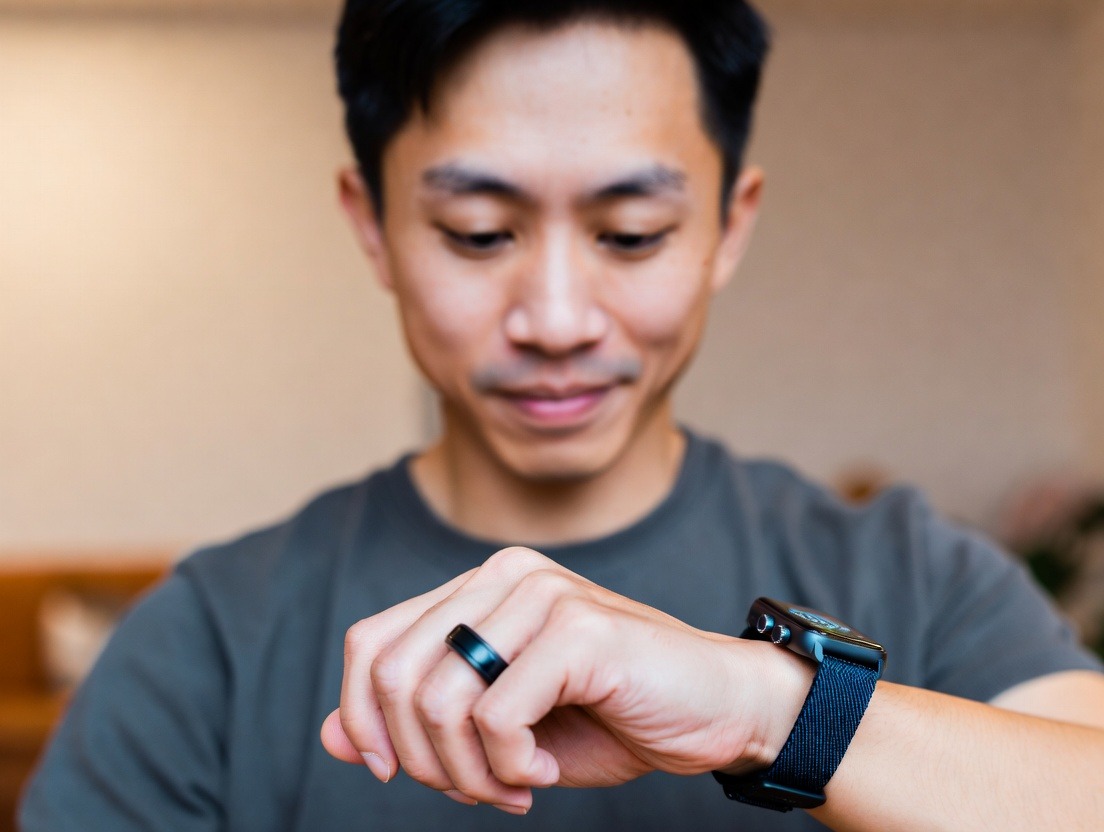
The first sip of morning coffee, the first chapter of a gripping novel, the first day of a new journey—there’s a unique, often illuminating power in beginnings. This is especially true for the data that flows from your body. You’ve just strapped on a smart ring or clipped on a sensor, intrigued by the promise of unlocking a deeper understanding of your health. Among the metrics now quietly tracking your rhythm, one stands out for its profound simplicity and complexity: Heart Rate Variability, or HRV.
Forget everything you think you know about a “steady” heartbeat. HRV measures the subtle, millisecond variations in the time between each heartbeat. It’s not an irregularity; it’s a sign of a responsive, resilient nervous system. A higher HRV generally indicates a body that can adapt to stress, recover effectively, and maintain balance. A lower HRV can signal that your system is under strain, chronically stressed, or not recovering well. It’s a direct, real-time window into your autonomic nervous system—the autopilot that controls your stress (sympathetic) and relaxation (parasympathetic) responses.
But here’s where most people get lost. They see a single number on an app—say, 45 ms—and ask, “Is that good?” The truth is, HRV is deeply personal. Your number is unique to you, and its true power isn’t revealed in a single snapshot, but in the story told by its trends. Your first week of data is the prologue to that story. It’s not about diagnosing or setting lifelong benchmarks. It’s about establishing your personal baseline, observing initial patterns, and beginning the most important conversation you’ll ever have: the one with your own body.
This initial phase is about shifting from seeking a “score” to listening for a signal. Over the next several thousand words, we’ll walk through exactly what your first seven days of HRV tracking can teach you. We’ll move from the fundamentals of collection to the patterns that emerge, the lifestyle factors that sway your numbers, and how to interpret this data without spiraling into obsession. This is the foundation upon which a truly transformative, data-informed wellness practice is built. Let’s begin.
What Is HRV, and Why Does This First Week Matter So Much?
To appreciate the lessons of your first week, we need a firm grasp on the "why" behind the metric. Heart Rate Variability is not merely a measure of your heart; it's a top-tier biomarker of your entire system's adaptability and resilience. Imagine your heartbeat not as a robotic metronome, but as the rhythm of a skilled jazz drummer—responsive, dynamic, and subtly changing in response to the music (your life's demands).
Physiologically, HRV originates from the continuous tug-of-war between the two branches of your autonomic nervous system. Your sympathetic nervous system (SNS) is the accelerator, preparing you for "fight or flight" by increasing heart rate and reducing variability between beats. Your parasympathetic nervous system (PSNS) is the brake, promoting "rest and digest" by slowing the heart and increasing variability. HRV is the reflection of this dynamic interplay. A high HRV suggests a strong, dominant brake—meaning you can ramp up effectively when needed but also downshift into recovery with ease. A low HRV can indicate an overtaxed system where the accelerator is perpetually pressed, leaving less capacity for restoration.
This is why elite athletes, CEOs, and biohackers have prized HRV for years. It provides an objective, internal readout of stress and recovery that often precedes how you feel subjectively. You might feel "fine," but a consistently depressed HRV trend could be your body's early whisper that you're overreaching, fighting an illness, or chronically under-slept.
Which brings us to the critical importance of Week One. This initial period is explicitly not for judgment. It is for curious, non-judgmental observation. You are gathering the raw materials of your personal biology. Everyone starts this journey with questions: "What's a good number?" The most honest answer is: "We don't know yet—for you." A reading of 60 ms might be catastrophically low for one person and a personal best for another. The population averages are meaningless at an individual level.
Your first week establishes your personal baseline—the foundational "normal" against which all future deviations will be measured. It begins to reveal your natural diurnal rhythm (does your HRV peak at a certain time of day?). It introduces you to the signal-to-noise ratio of your own data. Without this baseline week, you’re interpreting a data point in a vacuum. With it, you begin the process of learning your body's unique language. As we explore on our blog dedicated to foundational wellness concepts, this shift from comparison to self-referencing is the first and most critical step in any meaningful biofeedback journey.
Setting Up for Success: The Pre-Data Rituals
Before you glean a single insight, the stage must be set correctly. How you prepare for and collect your data in this inaugural week dramatically impacts its quality and usefulness. Think of it as calibrating a sensitive scientific instrument—you.
First, consistency in measurement is paramount. HRV is sensitive to a multitude of factors, so to see the signal through the noise, you must measure under the same conditions each day. The gold standard for consumer wearables is a morning measurement, taken immediately upon waking, before you get out of bed, check your phone, or drink water. This "morning readiness" reading captures your body's state after a night of intended recovery, isolated from the day's activities. It’s your cleanest data point. If you're using a device like the Oxyzen ring that measures continuously, pay closest attention to your sleeping HRV average and that first waking snapshot.
Second, mind your context. Your device is recording a physiological number, but you must provide the narrative. Use the journaling feature in your accompanying app, or keep a simple note. Each morning, jot down:
Quality of sleep (1-10 scale)
Time you went to bed and woke up
Alcohol consumption the night before
Intense evening exercise
Perceived stress or excitement
Any signs of impending illness
This context turns a cryptic number into a teachable moment. Seeing a low HRV and noting "3 glasses of wine" or "argument with spouse before bed" creates a clear, personal cause-and-effect lesson that generic advice cannot match.
Third, ensure proper device fit. A smart ring should be snug but comfortable, worn on a finger where it makes consistent contact. Refer to the detailed FAQ for device-specific guidance to avoid motion artifacts or gaps in data. Poor data is worse than no data, as it can lead to incorrect conclusions.
Finally, set your intention. Approach this week not as a test to pass, but as a discovery mission. Your goal is not to "achieve" a high HRV, but to faithfully record your body's truth. This mindset of neutral observation is the bedrock of effective biometric tracking. It’s a principle deeply embedded in our story and mission at Oxyzen—that technology should facilitate self-awareness, not anxiety. By ritualizing your data collection, you transform it from a chore into a meaningful moment of morning connection.
Finding the Beat: How Algorithms Detect Each Heartbeat from a Noisy Signal
If the PPG sensor provides the raw, unedited footage, the algorithms are the masterful film editors. Their task is monumental: pinpoint the exact millisecond of each heartbeat from a signal that is often messy, imperfect, and full of interference. This process is called peak detection or beat-to-beat interval extraction, and it’s the critical bridge between analog biology and digital data.
The Signal vs. The Noise: A Constant Battle
The PPG waveform coming from your finger isn't a clean, textbook-perfect sine wave. It’s a living signal from a living body. It’s contaminated with what engineers call "noise," which includes:
Motion Artifact: The biggest culprit. Swinging your arms, typing, gesturing, even subtle tremors—all these movements cause changes in blood flow and light coupling that masquerade as heartbeat signals.
Poor Perfusion: Cold hands, poor circulation, or a loosely fitted ring can weaken the signal.
Environmental Light: Though the ring is designed to block ambient light, extreme conditions can sometimes interfere.
The Smart Ring’s Secret Weapon: The Accelerometer
This is where a multi-sensor approach is non-negotiable. Alongside the PPG sensor, your smart ring contains a 3-axis accelerometer (the same type of sensor that tells your phone its orientation). This accelerometer isn't there for step counting in a ring; its primary role is motion cancellation.
The algorithms run a sophisticated comparison. They take the motion data from the accelerometer and subtract patterns that match the noise in the PPG signal. It’s like having a dedicated microphone picking up only background chatter so the main microphone can isolate the speaker's voice. By filtering out motion-related noise, the algorithms can uncover a much cleaner blood flow signal.
Pinpointing the Peak: The “When” of Each Heartbeat
With a cleaner signal, the algorithm scans for the characteristic shape of a PPG pulse wave. It looks for the steep, rapid upstroke caused by the surge of blood (the systolic peak) and identifies the very apex. The timestamp of this apex is recorded with millisecond precision. The time elapsed between one apex and the next is a beat-to-beat interval, also known as an R-R interval (a term borrowed from ECG).
This creates a list: Beat #1 at 12:00:00.000, Beat #2 at 12:00:01.124, Beat #3 at 12:00:02.181... The differences between these timestamps (1124ms, 1057ms, etc.) are the raw data of HRV.
Validation and Garbage Collection: Ensuring Data Integrity
Not every detected peak is a true heartbeat. Sometimes noise can slip through, creating a "false positive." The algorithms employ sanity checks:
Physiological Plausibility: Is the calculated heart rate between 30 and 200 beats per minute? If an interval suggests a heart rate of 250 BPM, it's likely garbage.
Beat Consistency: Does the shape and amplitude of the suspected pulse match the ones before and after it?
Contextual Smoothing: Statistical filters smooth out unlikely, abrupt jumps in interval length that the human heart simply doesn't produce under resting conditions.
This entire process happens continuously, 24/7, in the background. It’s a relentless, automated hunt for the truth of your heartbeat amidst the chaos of daily life. For a deeper dive into the technical specs and how we ensure data accuracy, our FAQ page addresses many common questions about measurement and technology.
From Milliseconds to Meaning: Calculating the HRV Metric (RMSSD, SDNN, etc.)
We now have our prize: a long list of beat-to-beat intervals, measured in milliseconds, straight from your heart. But a list of numbers like *1050, 1022, 1103, 987, 1015* isn't an HRV score. It's just the raw notes. To hear the music, we need to compose it into a score. This is where HRV metrics come in—they are the mathematical formulas that distill those thousands of intervals into a single, interpretable number.
There isn't one "HRV." There are multiple methods for calculating it, each highlighting a slightly different aspect of your nervous system's activity. Smart rings and most consumer wearables focus on a few key metrics, calculated over short-term periods (usually 2-5 minutes for a "spot check" or averaged over the night).
1. RMSSD: The Gold Standard for Smart Rings
Root Mean Square of Successive Differences (RMSSD) is arguably the most important metric for wearable-derived HRV. Here’s what it does, in simple terms:
It looks at each pair of adjacent heartbeats.
It calculates the difference in time between them.
It squares all those differences (making them positive and emphasizing larger variations).
It takes the average of all these squared differences.
Finally, it takes the square root of that average to bring the number back to a normal scale (milliseconds).
Why RMSSD? It is particularly sensitive to the rapid, beat-to-beat changes mediated by the parasympathetic nervous system (your "brake"). It captures the quick, responsive adjustments your heart makes with every breath. A higher RMSSD suggests stronger parasympathetic influence and better vagal tone, which is linked to recovery and resilience. It's also less affected by longer-term trends in heart rate over a 5-minute window, making it ideal for the shorter, cleaner data segments a wearable can reliably capture.
2. SDNN: The Big Picture View
Standard Deviation of NN Intervals (SDNN) is a broader measure. "NN intervals" is just a clinical term for the normal beat-to-beat intervals we've been discussing.
It takes all the intervals over a recording period (e.g., 5 minutes or a full night).
It calculates how much, on average, each interval deviates from the mean (average) interval length.
Why SDNN? It reflects total variability—influenced by both the sympathetic and parasympathetic systems. It’s a measure of the overall "spread" of your heartbeats. A higher SDNN indicates greater overall autonomic flexibility. However, it is more influenced by longer, slower cycles in heart rate (like those related to circadian rhythms or temperature regulation) and requires very stable data over longer periods to be most accurate.
Other Metrics in the Toolkit:
pNN50: The percentage of adjacent intervals that differ by more than 50 milliseconds. Another good parasympathetic indicator.
LF/HF Ratio: (Less common in rings due to need for longer, pristine data). Attempts to quantify the balance between sympathetic (Low Frequency) and parasympathetic (High Frequency) activity. It's powerful in clinical settings but trickier for consumer wearables.
The Smart Ring's Choice: For the balance of accuracy, reliability, and physiological relevance from PPG data, RMSSD has become the benchmark metric reported by leading smart rings. When you open your app and see your nightly HRV score, you are most likely looking at an average of RMSSD values calculated over short windows throughout your sleep—the period when motion is minimal and the signal is purest.
This transformation—from a list of intervals to a single, powerful number like RMSSD—is the final step of computation. But the journey isn't over. A number in isolation is meaningless. It must be contextualized. This leads us to the most personal and crucial phase: making sense of what the number means for you.
Your Baseline, Not the Average: The Critical Importance of Personal Trends
This is the most important paradigm shift in using HRV data: Do not compare your HRV number to anyone else's. Comparing your RMSSD of 42 to your friend's 85 is as meaningless as comparing your shoe size. HRV is highly individualized, influenced by a myriad of factors including age, genetics, sex, fitness level, and even the specific device you're using.
The "Normal" Range is Vastly Useless
You might find charts online showing "average" HRV by age. Ignore them for personal guidance. A number that is low for one person might be perfectly normal and healthy for another. The true power of HRV lies not in the absolute value, but in the trends and deviations from your own personal baseline.
Establishing Your Baseline: The Foundation of Insight
Your personal baseline is your HRV signature. It's the range where your body typically operates when it's in a state of relative balance—well-rested, not overly stressed, and not fighting illness. Smart rings excel here because they collect data continuously, especially during sleep, which is the best time to establish a clean, comparable baseline.
To find your baseline, you need consistent data over weeks, not days. The ring will observe your body across different cycles—workdays, weekends, after workouts, during relaxation—and start to calculate what "normal" looks like for you. This is why most apps show a multi-week or multi-month graph. The trend line is the story.
Reading the Story: What Changes in Your HRV Mean
Once a baseline is established, deviations become meaningful signals:
A Significant Drop Below Baseline: This is a red flag. Your body is signaling extra strain. This could be due to:
Physical Stress: An intense workout, insufficient recovery, or the onset of an illness.
Mental/Emotional Stress: A demanding work project, relationship tension, or anxiety.
A Rise Above Baseline: This is generally a green flag. It suggests your body is in a superior recovery state. This can happen after:
A deload training week.
A period of exceptional sleep and relaxation (like a vacation).
Positive lifestyle changes (like starting meditation or improving your diet) starting to take effect.
A Gradual Upward Trend Over Months: This is the ultimate goal for many. It suggests improved autonomic fitness and resilience, often resulting from consistent training, stress management, and good sleep hygiene.
The Ring as a Daily Biofeedback Tool
This transforms your smart ring from a passive tracker into an active biofeedback device. Instead of wondering why you feel tired, you can check your HRV trend. Did it plummet two days ago, perhaps predicting this fatigue? This allows for proactive adjustment: maybe today is a day for a gentle walk instead of a heavy lift, or an early night instead of late Netflix.
Understanding your personal trends is the core of the value proposition. It turns data into actionable wisdom. For real-world examples of how people use these trends, you can explore user testimonials and experiences to see the impact of this personalized approach.
The Grand Revelation: Your Personal Baseline (It's Not What You Think)
After three to four days of consistent tracking, a shape will begin to emerge from the fog. This is the revelation of your personal baseline. It’s likely the most important takeaway from your entire first week, and it often defies expectations.
Calculating Your Baseline: Most apps will not give you a stable "baseline" number until you have at least 5-7 days of data. They often use a rolling average (e.g., a 7-day average) to smooth out daily spikes and dips. By the end of Week One, you’ll have a preliminary number that represents your typical state. Do not Google this number. Its value is not in its absolute position on a global scale, but as your reference point. Let’s say your 7-day average HRV settles at 38 ms. That is now your "38." It is neither good nor bad; it is yours.
The "Comparison Trap" and How to Avoid It: This is the pivotal moment where many go astray. You hear a friend boasts an HRV of 100, or you see an influencer post a screenshot showing 120. A sense of inadequacy can creep in. You must consciously reject this. Genetics, age, fitness level, and even the type of sensor used (optical vs. ECG) create massive variations. A 65-year-old ultra-marathoner may have a lower HRV than a 25-year-old yogi, yet both may be at their personal peak resilience. The only valid comparison is You vs. You.
What Your Baseline Really Tells You: This initial number is a composite snapshot of your recent life—your chronic stress load, your fitness, your sleep hygiene, and your overall health. A baseline that is lower than you hoped isn't a verdict; it's a starting line. It might indicate that your nervous system is carrying a significant load, offering you a concrete reason to prioritize recovery. Conversely, a higher-than-expected baseline can be affirming, validating lifestyle choices you’ve already made.
This process of establishing a self-referenced benchmark is the core of personalized health. It moves you from abstract wellness goals ("I should relax more") to a measured, personal reality ("My baseline HRV is 42, and I want to see if I can gently nudge my 7-day average to 45 through better sleep habits"). It’s the foundation for all future experimentation. To understand more about how we designed our technology to support this personal journey, you can learn about our philosophy and approach.
The Daily Dance: Observing Your Natural Fluctuations
With a baseline emerging, your attention can now turn to the daily dance—the ups and downs that occur from one day to the next. In your first week, these fluctuations can seem random and alarming. "My HRV was 52 yesterday, why is it 41 today?!" The lesson here is to expect and accept variability. It is the entire point of the metric.
Understanding Daily Shifts: A change of 10-20% from one day to the next is entirely normal and even healthy. It shows your system is responsive. The key is to correlate these shifts with your contextual notes. The most common patterns you’ll witness in your first week include:
The Alcohol Dip: This is often the most dramatic and consistent lesson. Even one or two drinks in the evening can lead to a significantly suppressed HRV the next morning, as your body works to metabolize the toxin, disrupting sleep architecture and stressing your system.
The Exercise Response: A moderate, well-timed workout might boost HRV the next day (a sign of positive adaptation). An excessively intense or late-night session can crush it (a sign of excessive strain). You’ll begin to see your unique tolerance.
The Stress Signature: A day of high emotional anxiety, a difficult work deadline, or even exciting life events (a wedding, a trip) can manifest as a lower morning HRV. Your body doesn't distinguish between "good" and "bad" stress—only demand.
The Sleep Correlation: You will likely see a direct, though not always perfect, correlation between your reported sleep quality/duration and your HRV. Poor sleep almost always equals lower HRV.
The Story of Two Days: To illustrate, let’s walk through a hypothetical first-week journal entry:
Day 5 HRV: 35 ms. Notes: 6 hours broken sleep, late work call until 10 PM, felt anxious.
The 26% drop isn't a mystery; it's a clear report card from your nervous system on the previous day's events. This is the feedback loop in action. The data validates your subjective feeling ("I feel wiped") with an objective measure, and it starts to quantify the impact of different behaviors. These early correlations are powerful motivators for change, far more than any generic health advice.
The Lifestyle Audit: Your Data as a Mirror
By the midpoint of your first week, your HRV data stops being just numbers and starts acting as a startlingly honest mirror held up to your daily habits. This is the unvarnished "lifestyle audit." It removes guesswork and self-deception, showing you the direct physiological cost or benefit of your choices.
The Most Common First-Week Insights: Nearly every new user stumbles upon one or two of these revelations:
The Evening Unwind Is Non-Negotiable: You may discover that scrolling social media in bed or watching an intense show right before sleep correlates with a lower next-day HRV. The data makes the case for a true digital sunset and relaxation routine.
Meal Timing & Composition Matters: A large, heavy, or late meal may appear in your data the next morning. Your body diverts energy to digestion, taxing your system and potentially lowering HRV.
Caffeine's Long Shadow: That 4 PM coffee might not feel like it affects your sleep, but your HRV might tell a different story about your nervous system's recovery overnight.
"Active Recovery" vs. "Lazy Recovery": You might see that a day of complete inactivity leads to a slightly lower HRV than a day with gentle movement like walking or stretching, highlighting the importance of parasympathetic-promoting activity.
From Observation to Empowerment: This audit isn't meant to foster a restrictive, punitive relationship with your life. The opposite is true. It’s about empowerment through clarity. For example, if you’ve always suspected that wine affects your sleep, now you have a graph that shows it. This evidence can empower you to make different choices from a place of self-knowledge, not deprivation. You’re not "giving up" wine; you're "choosing" higher HRV and better recovery on a night before an important day.
This is where wearable technology transcends gadgetry and becomes a tool for self-evolution. It answers the perennial question, "What works for me?" As you’ll find in the real user experiences shared in our testimonials, this moment of personalized insight is often the turning point where people move from casual tracking to meaningful lifestyle integration. The data becomes a compassionate, neutral guide in your own wellness journey.
The Sleep-HRV Symbiosis: Decoding Your Nightly Recovery Score
If there is one relationship to pay rapt attention to in your first week, it is the intimate, bidirectional dance between sleep and HRV. They are inextricably linked. Your HRV during sleep is a pure measure of your nervous system's state of repair, and the quality of your sleep is both a driver and a reflection of that state.
Sleep as the Prime HRV Booster: During deep sleep (NREM), your parasympathetic nervous system is most dominant. This is when you should see your HRV reach its nightly peaks. Your heart rate is low and variable, a sign of profound recovery. Continuous tracking from a device like a smart ring shows this beautifully—a HRV graph that rises and falls in concert with your sleep cycles. In your first week, observe:
Does your HRV steadily rise as you progress through the night, indicating deepening recovery?
Does it spike erratically or stay low, potentially correlating with restless sleep, apnea events, or environmental disruptions?
HRV as a Sleep Quality Metric: Conversely, your morning HRV is a brilliant summary metric of how restorative that night's sleep actually was. You can sleep for 8 hours but have low HRV if the sleep was fragmented or shallow. Your data will start to show you that sleep quality trumps mere duration. You might have a 7-hour night with high HRV that leaves you feeling more restored than a 9-hour night with low HRV.
First-Week Sleep Patterns: You’ll likely notice:
The Catch-Up Effect: After a night of poor sleep/low HRV, if you then have a night of excellent sleep hygiene (early bed, dark room, no alcohol), you may see a "rebound" HRV that is even higher than your baseline—your body's grateful response.
The Weekend Pattern: For many, Friday or Saturday night shows a dip (due to social activities, alcohol), followed by a rebound on Sunday night as routines return. This "sin curve" is incredibly common.
Understanding this symbiosis is fundamental. It tells you that investing in sleep hygiene is the single most effective lever you can pull to improve your HRV and, by extension, your resilience. It reframes sleep from passive downtime to active, measurable physiological maintenance. For a deeper dive into optimizing this critical relationship, our blog features extensive resources on sleep science.
Stress Signatures: How Your Body Logs Pressure Before Your Mind Does
One of the most profound lessons of HRV tracking is its role as an early warning system for stress. Your nervous system often registers strain long before your conscious mind acknowledges feeling "stressed." Your first week of data can introduce you to your unique "stress signature."
The Physiology of a Stress Dip: When you encounter a stressor—be it psychological (a work problem), physical (a hard workout), or immunological (a virus)—your sympathetic nervous system activates. This suppresses HRV. If the stress is acute and short-lived, HRV dips and then recovers. If the stress is chronic, HRV can remain suppressed, painting a picture of allostatic load—the cumulative wear and tear on the body.
Identifying Your Triggers: In Week One, look for dips that aren't explained by alcohol, late meals, or obvious poor sleep. Can you tie them to:
A demanding day of back-to-back meetings?
A stressful commute or travel?
Family or relationship tensions?
Even excessive excitement about a positive event?
The data objectifies stress. It allows you to say, "My body experienced Tuesday as significantly more taxing than Wednesday," even if your subjective memory doesn't distinguish them. This is invaluable for learning your true capacity and for practicing stress-reduction techniques with measurable feedback.
The Recovery Rate: Perhaps just as important as the dip itself is the speed of recovery. A resilient system will dip and bounce back quickly. A system near its limits will dip and stay low. By the end of your first week, you might get a preliminary glimpse of your recovery tempo. This insight is gold for planning your week. After a high-stress day, the data may counsel you to prioritize light activity, meditation, and an early bedtime instead of another intense effort.
This ability to see the invisible imprint of stress is a superpower. It fosters somatic awareness—a reconnection between your mental state and your physical reality. It validates the need for recovery and provides a non-negotiable reason to honor it. At its core, this aligns perfectly with Oxyzen's vision of using technology not for productivity hacking alone, but for fostering sustainable human performance and well-being, by teaching us to heed our body's signals.
Navigating Confusion and Common First-Week Questions
Despite the excitement, the first week can also breed confusion, frustration, and a barrage of questions. This is completely normal. You are learning a new language, and ambiguity is part of the process. Let's address the most common head-scratchers.
"Why was my HRV higher after a bad night's sleep?" This paradoxical response happens. Sometimes, after a night of very poor sleep or significant stress, your body may mount a strong compensatory parasympathetic response the next night, leading to a supercharged HRV. It can also be a sign of your body fighting an illness, as the immune system activates various pathways. Don't force the data to be linear. Observe the trend over time.
"My HRV is all over the place with no pattern." In the first week, this is typical. You are collecting data during a period of potentially heightened awareness (the "observer effect"), and the sample size is tiny. True patterns require consistency over weeks, not days. The "noise" will start to smooth into a "signal" with time and consistent tracking.
"Should I measure more than once a day?" For the purpose of establishing your baseline and morning readiness, stick to the morning measurement. Continuous tracking throughout the day is fascinating (showing dips after meals or caffeine, rises during meditation), but it's advanced data that can be overwhelming at first. Master the morning rhythm first.
"What if my data seems wrong?" Ensure device fit. Optical sensors can be fooled by cold fingers, poor circulation, or loose wear. If a reading seems like a wild outlier (e.g., 15 ms when you feel great, or 100 ms when you feel terrible), check your context notes and consider it an anomaly. One-off readings are meaningless; trust the trend.
"I'm getting obsessed with checking the number." This is a crucial warning sign. The goal of HRV tracking is to inform your life, not become your life. Set a specific time to check your data (e.g., with your morning coffee) and then close the app. The value is in the weekly review, not the minute-by-minute monitoring. The data should serve you, not the other way around. If you have more technical questions, our comprehensive FAQ resource is designed to provide clear, supportive answers.
From Data to Wisdom: Framing Your First Week's Findings
As your first week of HRV tracking draws to a close, it’s time to shift from daily scrutiny to a holistic review. This is where data transforms into personal wisdom. Set aside 20 minutes for this reflective practice.
The Weekly Review Ritual:
Look at the Trend Line: In your app, view your 7-day HRV graph. Don't fixate on the highest or lowest point. Look at the shape. Is it generally flat? Trending gently up or down? Or a jagged mountain range? The overall direction (even over just one week) can be informative.
Revisit Your Notes: Go through your daily journal entries alongside the corresponding HRV numbers. Highlight the clearest correlations (e.g., "Alcohol = Dip," "8+ hours sleep = Rise").
Ask Three Questions:
What was the most surprising correlation I observed?
What is one habit that seems to support my recovery, according to my data?
What is one experiment I want to try next week based on this insight? (e.g., "I will finish eating 3 hours before bed to see if my morning HRV rises.").
Setting Intentions for Week Two: Your first week provided a baseline and initial correlations. Week Two is about gentle, informed experimentation. Choose one small, positive change inspired by your data. For example:
"Based on my alcohol dip, I will have two alcohol-free nights this week and note the HRV difference."
"Because my sleep seems fragmented, I will implement a 30-minute no-screen buffer before bed for three nights."
The goal is not to overhaul your life, but to start a conversation with your biology using the scientific method: observe, hypothesize, experiment, measure.
This concluding frame is vital. It prevents the journey from becoming a stressful performance metric and instead cultivates a mindset of curiosity and self-compassion. You have begun to listen to a subtle, powerful signal from within. You've taken the first step off the shores of generalized health advice and into the waters of truly personalized understanding. This is just the beginning. The narrative of your resilience is being written, one night's recovery, one mindful day, one data point at a time.
The Foundation of Context: Why Your “Why” Changes Everything
You now have a week’s worth of numbers and notes. The temptation is to immediately seek “hacks” to boost your score. But before we explore levers to pull, we must solidify the context in which your data exists. Your “why” for tracking—your overarching goal—fundamentally shapes how you should interpret and act upon your HRV data.
The Spectrum of Tracking Intentions: Are you tracking to:
Optimize Athletic Performance? Here, HRV is a daily readiness metric. The focus is on preventing overtraining, guiding workout intensity, and maximizing adaptation. A suppressed HRV might signal the need for a recovery day instead of a high-intensity session.
Manage Chronic Stress or Burnout? In this context, HRV is a barometer of your nervous system’s load and a validation tool. The goal is often to gently elevate a chronically low baseline by identifying and mitigating stressors, not to chase peak performance.
Improve General Wellness and Sleep? This is a more holistic use, where HRV serves as a feedback loop for lifestyle experiments. It’s about finding balance and understanding the personal impact of nutrition, sleep, and daily habits.
Navigate a Life Transition or Illness Recovery? HRV can be a sensitive gauge of your body’s healing process, showing you when you’re pushing too hard and when you’re genuinely recovering.
How Your “Why” Interprets the Same Data: Let’s say your HRV dips 15% for two consecutive days.
The Athlete sees this as a clear sign to deload, prioritizing sleep and hydration, potentially avoiding a future injury or performance plateau.
The Stress Manager sees this as crucial evidence that their current workload is unsustainable, empowering them to set boundaries or schedule deliberate rest.
The Wellness Enthusiast cross-references their journal to see if a new supplement, food, or late work night was the culprit.
Your intention acts as the lens. It determines whether a dip is a warning sign, a neutral data point, or even a positive sign of hard training adaptation. This is why generic advice fails. The data must be filtered through your personal objectives. For those exploring the broader philosophy of using data for personalized well-being, our blog delves into these nuanced applications.
The Levers of Influence: An Introduction to the Primary HRV Drivers
With your personal context defined, you can now systematically explore the factors that influence your HRV. Think of these as dials you can adjust, some with immediate effects, others requiring long-term tuning. Your first week gave you hints; now we build a framework.
The Big Five HRV Influencers:
Sleep (The Non-Negotiable Foundation): As explored, sleep quality and consistency are the most powerful direct influencers of next-day HRV. This includes duration, timing (circadian alignment), and continuity (minimal awakenings). It is the bedrock.
Nutrition & Hydration (The Fuel & Fluid):
Timing: Late-night meals can impair nocturnal recovery.
Composition: Heavy, inflammatory, or high-glycemic meals may cause dips. Conversely, balanced nutrients support system stability.
Hydration: Dehydration increases physiological stress, reducing blood volume and forcing the heart to work harder, often lowering HRV.
Exercise & Movement (The Dual-Edged Sword):
Acute Effect: Intense or prolonged exercise is a sympathetic stressor, typically suppressing HRV for 24-72 hours post-exercise as part of the normal recovery process.
Chronic Effect: Consistent, appropriate training builds physiological resilience, raising your baseline HRV over time. The key is balancing stress with recovery.
Psychological & Emotional Stress (The Silent Load): Mental workload, anxiety, relationship strain, and even excessive excitement apply a direct load on the autonomic nervous system. Mindfulness, meditation, and breathwork are direct tools to modulate this lever.
Circadian & Environmental Rhythms (The External Cues): Light exposure (especially morning sunlight and minimizing blue light at night), consistent meal times, and stable waking/bedtimes reinforce your body’s natural rhythms, promoting higher and more stable HRV.
Understanding Lever Hierarchy: In your initial weeks, focus on the biggest levers first: Sleep and consistent timing. It’s futile to micro-optimize a supplement or a breathing technique if you are chronically sleep-deprived or eating at midnight. Your data will show this. As you stabilize these foundations, you can experiment with more subtle interventions. This structured approach prevents overwhelm and provides clear priorities, a methodology we champion in our user guides and resources.
The Art of the Experiment: Designing Your First Personal HRV Intervention
Armed with your baseline data and a map of the primary levers, you are now ready to move from passive observation to active, intelligent experimentation. This is where the science of HRV becomes the art of self-discovery.
The Golden Rule of Biometric Experimentation: Change One Thing at a Time. If you decide to start meditating, take magnesium, and go to bed an hour earlier all in the same week, you will have no idea which change moved the needle. Isolate variables.
A Framework for Your First Experiment:
Choose Your Lever: Based on your first-week audit, pick the area with the clearest opportunity. Example: "Evening screen time seems linked to restless sleep and lower HRV."
Form a Hypothesis: Make a specific, testable prediction. *Example: "If I implement a 60-minute no-screen buffer before bed for 5 nights, my average morning HRV for those nights will increase by at least 5% compared to my baseline week."*
Define the Protocol: Be precise.
Intervention: No phones, tablets, or TVs after 9:30 PM. I will read a book or listen to an audiobook instead.
Duration: 5 weeknights (Monday-Friday).
Control: Keep all other habits (diet, exercise, caffeine) as consistent as possible.
Execute and Measure: Stick to the protocol and continue your morning measurements and journaling.
Analyze the Results: At the end of the 5-day period, look at your HRV average for those nights versus your baseline. Did it change? How did your subjective sleep quality feel? Did you notice any other effects?
Interpreting the Outcome:
Positive Result (HRV increased): Fantastic! You’ve found a potent, personal tool. Consider making this habit permanent.
Neutral Result (No change): This is still valuable data. It tells you this particular lever may not be a major constraint for you, right now. It might be worth revisiting later, or you can now test a different lever with confidence.
Negative Result (HRV decreased): Don’t discard it. Ask why. Was the change stressful in itself? Did reading a thriller novel replace screen time? Refine your hypothesis.
This iterative process of self-experimentation turns you into the expert on your own body. It replaces dogma with data. The stories from our community at Oxyzen Testimonials are filled with these personal "aha!" moments born from simple, structured experiments like this one.
Beyond the Morning Readiness: Exploring Your 24-Hour HRV Rhythm
While the morning reading is your north star, continuous tracking (a key feature of devices like the Oxyzen ring) unlocks a richer story: your 24-hour HRV rhythm. Observing this pattern over your second and third weeks provides profound insights into your daily physiology.
The Healthy Daily Pattern: In a well-regulated system, you should see a recognizable circadian wave:
During Sleep: HRV should be at its highest, particularly during deep sleep phases, as the parasympathetic system dominates.
Morning Waking: A slight dip upon waking (sympathetic activation to start the day) is normal, followed by a stabilization.
Throughout the Day: HRV will be lower than nighttime levels, fluctuating with activities. Expect dips after meals (especially large ones), during focused mental work, and in response to stressors.
Evening Wind-Down: As you relax, HRV should begin to rise again in preparation for sleep. A failure to see this evening rise can indicate difficulty disengaging from sympathetic drive.
What to Look for in Your Daily Graph:
The Post-Prandial Dip: Notice how your body responds to lunch. A large, sharp dip may suggest choosing a lighter, more balanced meal for sustained afternoon energy and less physiological stress.
The Exercise Signature: See the immediate HRV suppression during and after a workout, followed by a gradual recovery. How long does it take your system to return to its pre-exercise baseline? This is a direct measure of your recovery speed.
The Stress Response: Spot acute stress events in real-time—a difficult conversation, a tight deadline. The graph shows the magnitude and duration of the physiological impact.
The Effectiveness of Recovery Practices: Do a 10-minute breathing exercise or a walk in nature. Can you see a corresponding rise in your real-time HRV? This is powerful positive feedback, showing you tangible evidence of your nervous system calming.
Analyzing this 24-hour rhythm helps you connect specific daily moments to their internal cost or benefit. It makes the abstract concept of "stress" concrete and identifies not just that you recover, but when and how you do it best. For a deeper exploration of circadian health and tracking, our blog features expert insights on the topic.
The Social Stressor: How Relationships and Environment Shape Your Data
Your HRV is not measured in a vacuum. It is exquisitely sensitive to your social and physical environment—a dimension many new users are surprised to see reflected in their data so clearly.
Social Connections as a Buffer: Positive, supportive social interactions can have a calming, parasympathetic effect. Conversely, conflict, loneliness, or socially demanding situations are potent sympathetic stressors. In your data, you might see:
A higher HRV after a relaxing evening with close friends or family.
A suppressed HRV after a day of difficult interpersonal dynamics at work or home, or even after excessive socializing when you're an introvert.
The Physical Environment’s Impact:
Nature vs. Urban Settings: Time in nature (“forest bathing”) is consistently shown to boost HRV. A week spent in a hectic, noisy, polluted urban environment may suppress it compared to a week in a tranquil setting.
Temperature and Comfort: Extremely hot or cold environments strain the body’s homeostatic systems, often lowering HRV. Sleeping in a cool, dark, quiet room is ideal for recovery.
Travel and Time Zones: These are massive disruptors. Jet lag scrambles circadian rhythms, and the general stress of travel (cramped seats, dehydration, schedule disruption) often leads to a significant, multi-day HRV suppression.
Using This Data for Boundary Setting: This is where HRV becomes a tool for self-advocacy and intentional living. If the data consistently shows that certain social scenarios or environments are highly taxing, it gives you objective grounds to:
Limit your exposure or duration in those settings.
Buffer them with extra recovery time before and after.
Approach them with better preparation (e.g., ensuring good sleep beforehand, practicing mindfulness during).
Seeing your social and environmental life reflected in your physiology reinforces that wellness is holistic. It’s not just about what you eat or how you exercise, but about who you are with and where you spend your time. This aligns with a comprehensive view of well-being, a topic we are passionate about at Oxyzen, as detailed in our company's vision.
When the Data Confuses: Navigating Anomalies, Illness, and Paradoxical Responses
As you accumulate more data, you will inevitably encounter readings that seem to defy logic. Your HRV might be high when you feel terrible, or plummet for no apparent reason. Learning to interpret these anomalies is part of advanced literacy.
The “I’m Sick But My HRV Is High” Paradox: This is common in the early stages of an immune response. As your body mounts a defense, it can initially activate certain anti-inflammatory pathways that are parasympathetically mediated, leading to a transient HRV rise. This is often followed by a steep drop as the illness takes hold. A sudden, unexplained spike, especially if accompanied by a higher resting heart rate and a feeling of “offness,” can be an early warning of impending illness.
The “I Partied But My HRV Is OK” Illusion: Sometimes, after a night of poor choices, your HRV doesn’t dip as expected. This doesn’t mean you’ve beaten physiology. It can indicate that your body is not mounting an appropriate stress response, which can be a sign of chronic adaptation to poor habits—a reduced sensitivity that is itself unhealthy. Or, it could simply be that other positive factors (e.g., being on vacation with low mental stress) offset the negative impact.
Unexplained Multi-Day Dips: If your HRV trends down for several days without a clear lifestyle cause, consider:
Subclinical Stress: Are you worrying about something subconsciously?
Overtraining: Even if you feel fine, your body may be accumulating fatigue.
Dietary Sensitivity: A food intolerance or sensitivity can create low-grade inflammation.
Environmental Factors: Poor air quality, seasonal allergies, or a change in weather.
The Protocol for Confusion:
Don’t Panic. A single data point or a short trend is not a diagnosis.
Double-Check Context. Revisit your notes. Was there something you forgot to log?
Observe Correlated Metrics. Look at resting heart rate (RHR). Typically, when HRV drops, RHR rises. If both are moving in tandem, it’s a stronger signal of systemic stress.
Wait and See. Give it a few more days. Often, the pattern clarifies itself. The body is complex, and not every blip has an immediate, obvious explanation.
Navigating these nuances requires patience and a commitment to the long-term trend. It’s a reminder that you are interpreting a biological signal, not a perfect, infallible score. For support with common tracking dilemmas, our FAQ section is always available.
Building Your Personal HRV Playbook: From Insights to Daily Practices
By the end of your second and third weeks, you are no longer just a data collector; you are an architect of your own resilience. It’s time to synthesize your experiments and observations into a Personal HRV Playbook—a set of go-to strategies you know work for you.
Categorize Your Levers: Organize your proven interventions into buckets for easy reference.
The Recovery Boosters (For daily use or when HRV is low):
The Stress Buffers (For anticipated high-stress days):
*A 5-minute morning meditation before checking email.*
*Scheduling a 15-minute post-meeting quiet break.*
Using blue-light blocking glasses after sunset on work-heavy days.
The Reset Protocols (For when data shows sustained depletion):
A full “digital sunset” weekend with nature immersion.
*A deliberate 48-hour deload from intense training.*
A week of strict 9:30 PM bedtime to reset sleep.
Creating “If-Then” Rules: Translate your playbook into simple decision matrices.
“IF my morning HRV is >10% below my rolling average, THEN I will prioritize a recovery day—light exercise only, extra hydration, and an early bedtime.”
*“IF I have a late work dinner scheduled, THEN I will ensure my lunch is light and plant-based, and I will take a 10-minute walk afterward.”*
Integrating, Not Isolating: The goal is for these practices to weave seamlessly into your life, not to be burdensome chores. Your playbook should feel like a curated set of personalized tools for navigating modern life with more grace and resilience. This process of building a data-informed lifestyle is at the heart of what we enable at Oxyzen, and seeing our users develop their own unique playbooks is part of our most rewarding story.
The Long Game: Shifting from Daily Scores to Trending Resilience
The final, and perhaps most vital, lesson of your early HRV journey is to lift your gaze from the daily fluctuations to the horizon of long-term trends. The real measure of success is not a single high score, but a gradually rising baseline and increased stability over months and years.
What a Positive Long-Term Trend Indicates:
Improved Physiological Resilience: Your body is better able to handle stress and return to balance.
Effective Lifestyle Integration: The habits in your playbook are working.
Enhanced Metabolic and Cardiovascular Health: A higher HRV is correlated with better overall health outcomes.
How to Track the Trend:
Use the Rolling Average: Focus on your 7-day or 30-day average in your app. This smooths out daily noise and shows the true trajectory.
Monthly Check-Ins: Once a month, review your data holistically. Compare monthly averages. Look at the range of your daily readings—is the band of variation becoming more stable?
Celebrate Non-Linear Progress: Improvement is rarely a straight line upward. It looks like a stock market chart with an overall upward trend—peaks, valleys, and plateaus are all part of the process.
The Ultimate Goal: Autonomy and Intuition: The beautiful paradox of long-term HRV tracking is that its highest purpose is to eventually become less reliant on it. As you internalize the lessons—how certain foods, behaviors, and situations affect you—you cultivate a sharper somatic awareness. You begin to feel the dip coming. The data simply confirms what your body is already whispering. It becomes a periodic check-in system, a coach rather than a crutch.
You have now moved from the "what" and "why" of HRV into the "how" of practical application and long-term integration. You've built a baseline, conducted experiments, identified key drivers, and started crafting a personal playbook. The journey from a single data point to a narrative of resilience is well underway.
The Biomarker Symphony: Correlating HRV with Other Key Metrics
By now, HRV has become a trusted narrator of your internal state. But its story gains profound depth and clarity when read in concert with other physiological data. Your first few weeks focused on HRV in isolation; now, we conduct the full orchestra. This multi-metric correlation transforms vague feelings into precise, actionable insights.
The Essential Trio: HRV, Resting Heart Rate (RHR), and Sleep Data These three metrics form a powerful diagnostic cluster. They should be analyzed together, as their relationships tell a more complete story than any one alone.
The Classic Stress/Recovery Signature:
Scenario: HRV ↓ / RHR ↑ / Sleep Quality ↓
Interpretation: This is the clearest sign of systemic stress, whether from training, illness, or psychological load. Your nervous system is strained (low HRV), your cardiovascular system is working harder (high RHR), and your restoration is impaired (poor sleep). Action: Prioritize rest, reduce load, and lean on your recovery playbook.
The Fitness Adaptation Signal:
Scenario: HRV temporarily ↓ / RHR stable or slightly ↑ / Sleep Deep ↑
Interpretation: After a legitimately challenging but well-tolerated workout, you may see a dip in HRV as part of the normal recovery process, while RHR remains stable and deep sleep increases (as your body repairs). Action: This is a positive sign of effective training. Proceed as planned, but ensure recovery continues.
Interpretation: A multi-day trend of this trio suggests your body is failing to recover and may be fighting something. The elevated RHR upon waking is a particularly strong red flag. Action: Significant deload, focus on nutrition and hydration, and consider if you're falling ill.
Integrating Body Temperature and Activity:
Basal Body Temperature: A sustained elevation can indicate inflammation, immune activation, or hormonal shifts, often correlating with a suppressed HRV.
Daily Activity & Strain: Use your activity score or calorie expenditure to contextualize HRV dips. A dip after a high-activity day is expected; a dip after a sedentary day points to non-physical stressors.
The Power of the Dashboard View: Modern wellness platforms allow you to view these metrics on a single timeline. Learning to "read" this dashboard is a superpower. You stop asking, "Why is my HRV low?" and start observing, "My HRV is low, and my RHR is up 5 bpm, and my sleep was light—my system is clearly under load from that project deadline." This objective picture removes guilt and guesswork, replacing them with clarity and a targeted response. For those using advanced wearables, exploring these correlations is a key topic covered in our resource blog.
Life Stages and Longitudinal Tracking: How Your HRV Story Evolves
Your HRV is not a static number to be maximized and held. It is a dynamic biomarker that will naturally ebb and flow across different chapters of your life. Understanding this broader narrative prevents frustration and fosters a compassionate, long-term relationship with your data.
The Natural Arc:
Aging: It is biologically normal for HRV to gradually decline with age as autonomic flexibility decreases. The goal shifts from "increasing" HRV to "preserving" it relative to age-based norms and maintaining a high degree of variability for your stage of life.
Major Training Cycles: An athlete in a heavy training block will have a different baseline than during the off-season. The trend within the cycle is what matters.
Pregnancy and Postpartum: Pregnancy dramatically alters cardiovascular dynamics and stress load, typically lowering HRV. The postpartum period, with its sleep fragmentation and hormonal shifts, also presents a unique HRV landscape. Tracking here is less about optimization and more about monitoring recovery and ensuring the nervous system is supported.
Navigating Major Life Stressors: Divorce, career change, grief, or moving house will leave their mark on your HRV trends, often for months. During these times, the data serves a crucial purpose: to validate the need for self-care. A suppressed HRV during a period of grief isn't a failure; it's a physiological testament to your experience, reminding you to be gentle with yourself.
The Menstrual Cycle and Hormonal Influence: For those who menstruate, the hormonal cycle is a powerful, predictable driver of HRV variation.
Follicular Phase (Post-period to Ovulation): Often associated with gradually rising estrogen, which can support parasympathetic tone, leading to potentially higher, more stable HRV.
Luteal Phase (Post-ovulation to period): Increased progesterone and its thermogenic effect can raise body temperature and resting heart rate, often correlating with a slight decrease in HRV and increased variability day-to-day.
Tracking for Empowerment: Observing this monthly pattern normalizes these fluctuations. You can learn that a pre-menstrual dip is typical for you, allowing you to plan accordingly—scheduling harder workouts in your follicular phase and embracing more recovery-focused practices in your luteal phase.
This longitudinal view turns HRV into a lifelong companion, bearing witness to your body’s journey through seasons of stress, growth, rest, and change. It underscores that the goal is not to control the metric, but to understand its dialogue with your life. This philosophy of compassionate, long-term self-awareness is central to the story behind Oxyzen.
Breaking Through Plateaus and Managing Setbacks
After several months of consistent tracking and improvement, you will likely hit a plateau—a period where your HRV baseline stabilizes and refuses to budge despite your best efforts. Conversely, life will inevitably throw curveballs that cause noticeable setbacks. Navigating these phases is part of the advanced practice.
Strategies for a Plateau:
Revisit the Basics: Plateaus often occur when foundational habits have become slightly lax. Audit your sleep consistency, hydration, and nutrition with the rigor of your first week. Have evening screens crept back in? Has your dinner time slowly gotten later?
Introduce Novelty: Your body adapts. The stressor of a new, positive stimulus can sometimes provoke a new level of adaptation. Consider:
A New Recovery Modality: Try contrast therapy (sauna/cold plunge), float tank sessions, or a different style of yoga.
A Different Training Stimulus: If you’re a runner, try adding cycling or swimming. Novel movement patterns can create positive physiological stress.
A Mindfulness Upgrade: Move from basic meditation to a heart-coherence breathing practice or guided somatic exercises.
Consider a Deliberate Overreach: Under guidance (and if you are healthy), a strategically planned week of increased training load or work intensity followed by a dedicated recovery week can sometimes "shock" the system into a higher level of resilience, lifting your baseline post-recovery.
Patience: Sometimes, a plateau is simply your body consolidating gains at a new level. Holding a higher baseline for 3-6 months is an achievement in itself.
Managing Setbacks with Grace: A sickness, a period of intense work travel, or a personal crisis will cause a downturn in your data. The key is to not view this as "ruining your progress."
Reframe It: A setback is not an erasure of your baseline; it's a temporary departure from it. Your established baseline is your body's "home." The goal after a setback is simply to navigate back home efficiently.
Use Your Playbook: This is exactly what your personal recovery protocols are for. Implement them without self-criticism.
Observe the Recovery Curve: Pay attention to how quickly you rebound. Over time, a sign of increased resilience is not the absence of dips, but a faster return to your normal range.
Plateaus and setbacks are data points, not judgments. They are part of the nonlinear path of any meaningful growth. The community stories shared in our testimonials section often highlight these moments as the most instructive parts of the journey.
From Self-Tracking to Shared Insight: The Social and Collaborative Future of HRV
While HRV tracking begins as a deeply personal endeavor, its future—and perhaps its greatest potential—lies in shared understanding and collaborative application. We are moving from an age of isolated data to one of connected insight.
Informed Dialogue with Healthcare Providers: Bringing longitudinal HRV trends to a doctor or therapist can revolutionize a clinical conversation. Instead of describing "I feel tired and stressed," you can show a 3-month graph of a declining HRV trend correlated with sleep disruption. This objective data can help guide more precise investigations into thyroid function, adrenal health, anxiety, or sleep disorders.
Team and Group Dynamics (The Future Frontier): Imagine a sports team where the coach sees aggregated, anonymized HRV readiness scores, helping to tailor training loads for the week. Or a corporate team that, with full consent and privacy, uses group wellness trends to identify periods of collective burnout, prompting leadership to adjust deadlines or offer recovery resources. This is not about surveillance, but about using physiological signals to foster healthier, more sustainable group performance and well-being.
Building a Supportive Community: Sharing experiences (not just numbers) with others on a similar path can be incredibly motivating. Discussing what experiments worked, how you navigated a stressful period, or simply normalizing the ups and downs reduces anxiety and fosters collective learning. The key is to focus on the process and patterns, not a competition of scores.
This evolution from a private metric to a tool for shared human understanding reflects a broader shift in wellness technology. It’s about creating a language that bridges subjective experience and objective biology, fostering empathy and better decisions, whether for oneself or for teams we care for. This vision of connected, compassionate health is what drives us forward at Oxyzen, and you can learn more about our mission to be part of this future.
Cementing the Practice: Making HRV Wisdom a Lifelong Pillar of Health
As we conclude this deep exploration, the ultimate goal is to integrate HRV awareness so seamlessly into your life that it becomes as natural as noticing your hunger or fatigue. It ceases to be a "tracking practice" and becomes a facet of your somatic intelligence.
The End Goal: Embodied Awareness The most proficient HRV users check their apps less frequently. They’ve internalized the feedback. They know the feeling of a high-variability state—a sense of calm alertness, emotional balance, and physical readiness. They also recognize the early somatic signs of dipping into low variability—a subtle tightness in the chest, irritability, or a feeling of being "wired but tired." The data becomes a periodic calibration tool, a check-in to confirm or refine what they already sense.
Creating Sustainable Rituals, Not Chores: Your Personal HRV Playbook should evolve into a set of non-negotiable wellness rituals that you maintain not because the data demands it, but because they make you feel fundamentally better. The data simply provided the proof to establish them.
The Ethical and Balanced Use of Data: Always remember: You are not your HRV score. It is a single, valuable stream of information in the complex symphony of your being. Protect yourself from metric fixation. Schedule regular "data vacations"—a weekend or a holiday where you leave the device behind and simply live, guided by intuition and feeling. This prevents the tool from becoming a source of stress itself.
Passing on the Wisdom: As you master this language of your body, you become a guide for others. You can help friends, family, or colleagues interpret their own beginnings, not by offering your numbers, but by sharing the process: the power of non-judgmental baselining, the value of a single, clean experiment, and the importance of self-compassion through the dips.
Your journey from that first week of curious observation to this point of integrated wisdom is a profound act of self-respect. You have chosen to listen to one of your body's most subtle and honest voices. In doing so, you have equipped yourself with a compass for navigating modern life—not toward an abstract ideal of health, but toward a state of dynamic balance, resilience, and authentic vitality that is uniquely your own. This, more than any single data point, is the true gift of understanding your Heart Rate Variability.



%402x.svg)