


What Your Nighttime HRV Pattern Reveals About Sleep Quality
What your nighttime HRV pattern reveals about the quality of your sleep.
What your nighttime HRV pattern reveals about the quality of your sleep.
%402x.svg)
You drift off to sleep, believing it was a "good" night. You got your seven hours, didn’t wake up too often, and yet, the morning fog feels impenetrable. Your smartwatch says you slept well, but your body tells a different story—one of lingering fatigue, mental drag, and a feeling that you’re running on empty. For decades, we’ve judged sleep by its duration and superficial continuity, missing a far more profound narrative written in the silent language of your nervous system. That narrative is called Heart Rate Variability, and its nighttime pattern is the ultimate, unbiased biography of your sleep quality.
Heart Rate Variability (HRV) is the subtle, millisecond variation in the time intervals between your heartbeats. Far from being a metronome, a healthy heart dances to a complex rhythm orchestrated by your autonomic nervous system—the constant, unconscious tug-of-war between stress (sympathetic) and recovery (parasympathetic) branches. While daytime HRV snapshots offer valuable stress insights, it’s during sleep that this metric transforms into a high-definition diagnostic tool. When you surrender to sleep, your body should ideally enter a state of profound parasympathetic dominance—a deep, restorative dive into physical and neurological repair. Your nighttime HRV pattern is the precise, physiological record of that journey.
This is where modern wellness technology, particularly advanced devices like the Oura Ring or insights from platforms like Oxyzen.ai, becomes revolutionary. They move beyond simply tracking that you slept, to illuminating how you recovered. By capturing your HRV rhythm throughout the night, they decode the hidden architecture of your sleep quality. A smooth, high, and stable HRV curve often whispers of deep, restorative slumber. A jagged, low, or chaotic pattern, however, can shout about hidden stressors, poor sleep architecture, or underlying health issues—all invisible to traditional sleep tracking.
In this deep exploration, we will dismantle the mystery of your nighttime HRV. We’ll journey from the fundamental biology of why this metric matters, through the intricate patterns that reveal everything from sleep stage effectiveness to next-day resilience, and onto the actionable strategies that can help you optimize both your HRV and your sleep. This isn't just about data; it's about understanding the most intimate dialogue between your heart and your health, a conversation that happens only when the world is quiet. Welcome to the new frontier of sleep understanding.
To comprehend why Heart Rate Variability is such a powerful lens on sleep, we must first meet the maestro conducting your body’s overnight symphony: the Autonomic Nervous System (ANS). Operating entirely below the level of conscious thought, the ANS regulates critical functions like heart rate, digestion, respiratory rate, and pupillary response. It’s divided into two primary branches that act in a dynamic, and ideally balanced, opposition.
The Sympathetic Nervous System (SNS) is your "fight-or-flight" accelerator. It mobilizes energy, increases heart rate and blood pressure, and sharpens focus in response to perceived threats or stressors—be it a looming deadline, an intense workout, or an unexpected noise in the dark. The Parasympathetic Nervous System (PNS), often called the "rest-and-digest" or "feed-and-breed" system, is your brake. It promotes relaxation, recovery, digestion, and tissue repair. It slows the heart rate, stimulates intestinal activity, and conserves energy.
During waking hours, these two systems engage in a continuous, fluid dance based on your environment and actions. True, deep restoration, however, requires a decisive shift toward parasympathetic dominance. This is the fundamental, non-negotiable purpose of high-quality sleep. It’s not merely a state of unconsciousness; it’s a physiological sanctuary where the PNS takes the lead to perform critical maintenance.
This is where HRV enters as the perfect biomarker. Your heart is dually innervated by both branches of the ANS. The sympathetic system sends signals to speed up the heart (reducing the time between beats), while the parasympathetic system, primarily via the vagus nerve, sends signals to slow it down (increasing the time between beats). The constant, microsecond tug-of-war between "speed up" and "slow down" signals is what creates the natural variability between heartbeats.
Therefore, HRV is a direct, real-time readout of your autonomic balance.
At night, as you transition into sleep, you should witness a tangible "parasympathetic surge." Your heart rate should drop, and crucially, your HRV should rise and stabilize, reflecting the PNS taking command. This shift is not a suggestion; it’s a biological imperative for cellular repair, memory consolidation, metabolic regulation, and immune system strengthening. The precise contour of your HRV throughout the night—when it rises, when it falls, how high it climbs, and how stable it remains—becomes a detailed map of how successfully your body is entering and maintaining this vital restorative state. It tells you if your sleep is truly serving its deepest purpose.
With an understanding of the ANS as the conductor, we can now learn to read the musical score it creates each night: your unique HRV pattern. Captured by a sophisticated wearable like a smart ring, this pattern is far more than a single number. It’s a dynamic curve, rich with meaning. Let’s decode the most common signatures and what they reveal about the quality of your sleep and recovery.
This is the gold standard, the pattern associated with highly restorative sleep. It typically features:
What it means: This pattern signals excellent autonomic flexibility. Your body is seamlessly transitioning into and out of deep recovery states. You are likely to wake feeling refreshed, mentally sharp, and physically restored. It’s a sign of good stress resilience and overall health. For those curious about how consistent tracking can help achieve this pattern, exploring resources like the Oxyzen.ai blog can provide deeper insights into optimization strategies.
Here, the HRV curve is disconcertingly flat and low throughout the night. It lacks the distinctive peak, showing minimal fluctuation from waking levels.
Instead of a smooth wave, the HRV graph looks jagged, with sharp, unpredictable spikes and troughs throughout the night.
In this scenario, HRV remains relatively low for the first half of the night and only begins its ascent in the later sleep cycles, towards the early morning hours.
By learning to recognize these signatures, you move from simply knowing you slept to understanding how you recovered. Your nighttime HRV pattern becomes a diagnostic tool, highlighting potential roadblocks to restorative sleep that duration and basic sleep stage tracking alone can never reveal.
Of all the stages in the sleep cycle, deep sleep—also known as slow-wave sleep (SWS) or N3 sleep—holds a special, symbiotic relationship with Heart Rate Variability. Understanding this connection is key to appreciating why HRV is such a potent marker of sleep quality. Deep sleep is the most physically restorative phase. It’s when tissue growth and repair occur, energy is restored, and crucial hormones like human growth hormone are released. It’s also a period of dramatically reduced brain activity and physiological calm.
This calm is directly reflected in the ANS. During deep sleep, the parasympathetic nervous system achieves its strongest dominance of the 24-hour cycle. Sympathetic activity plummets, and vagal tone surges. This physiological state is the perfect engine for the restorative work of SWS. Consequently, HRV, as our window into this balance, naturally reaches its highest, most stable levels during these periods.
Think of it as a virtuous cycle:
Therefore, the quality and quantity of your deep sleep are often visible in your HRV trace. A robust, well-defined HRV peak that is sustained for a significant portion of the night is a strong proxy for having achieved ample, high-quality slow-wave sleep. Conversely, a lack of a clear HRV peak, or one that is brief and spiky, suggests fragmented or insufficient deep sleep, even if your wearable estimates a certain amount of N3 sleep.
This relationship also helps explain common sleep disruptors:
By monitoring your nighttime HRV, you are, in effect, auditing the effectiveness of your deep sleep. It provides a continuous physiological narrative that complements the stage estimates from your tracker, offering a more nuanced view of whether your sleep architecture is truly optimized for physical restoration. For individuals using advanced wearables to navigate these nuances, the community stories and experiences shared on platforms like Oxyzen.ai/testimonials can be incredibly validating and informative.

If deep sleep is the period of supreme physical calm and high HRV, REM (Rapid Eye Movement) sleep presents a fascinating paradox. This is the stage of vivid dreams, heightened brain activity (similar to waking levels), and temporary muscle paralysis. Physiologically, REM sleep is a much more active and variable state compared to deep sleep. Your brain is buzzing, your eyes dart back and forth, and your breathing and heart rate can become irregular.
This neurological activation has a direct impact on the autonomic nervous system. During REM sleep, the sympathetic nervous system becomes more engaged. You might experience bursts of cardiac activity, changes in respiration, and even moments of stress within your dreams. Consequently, HRV during REM sleep typically shows increased variability and often lower average values compared to deep sleep. The smooth, high peak of deep sleep gives way to a more jagged, fluctuating line.
This is not a sign of poor sleep quality; it is the expected signature of healthy REM sleep. The key to interpreting this within your overall nightly pattern is context.
Understanding the REM paradox helps prevent misinterpreting your data. A dip in HRV at 4 AM is not inherently bad; it may simply mean you were in a long, active REM period. The art of HRV analysis lies in looking at the entire night’s landscape—recognizing the deep sleep peaks as the pillars of physical restoration and understanding the REM valleys as necessary and normal phases of emotional and cognitive processing. A healthy sleep cycle needs both the serene lake of deep sleep and the flowing river of REM; your HRV pattern artfully charts the course between them.
A truly restorative night of sleep is a journey with distinct chapters, each with a corresponding physiological signature. Let’s walk through the phases of an ideal night, mapped onto a healthy HRV curve, to understand the story it tells from lights out to morning alarm.
Phase 1: The Wind-Down (Pre-Sleep to Sleep Onset)
As you begin your bedtime routine in a low-light environment, you should initiate a gradual parasympathetic shift. Your waking HRV, which fluctuates with the day's events, should start a gentle upward trend even before you close your eyes. This is a sign of effective stress detachment and preparation for sleep. Practices like meditation, gentle stretching, or reading a physical book can facilitate this. If your pre-sleep HRV is stuck at your daytime low, it signals difficulty disengaging from sympathetic arousal.
Phase 2: The Descent (N1 & N2 Sleep)
As you drift through light sleep (N1 and N2 stages), your body begins its formal transition. Heart rate starts to drop more noticeably, and HRV should continue its climb. This phase represents the nervous system’s commitment to the restorative process, shutting down conscious awareness and deepening its parasympathetic dive.
Phase 3: The Restoration Peak (Deep N3 Sleep)
This is the climax of the recovery narrative, typically occurring in the first third to half of the night. As you plunge into slow-wave sleep, parasympathetic activity maximizes. Your HRV curve should show its highest, most stable plateau. The duration and height of this peak are directly correlated with the quality of your physical restoration. A tall, wide peak is the equivalent of a long, deep dive into the restorative spring.
Phase 4: The Active Mind (REM Sleep)
As you cycle into REM sleep, the story changes. Brain activity soars, and the nervous system reflects this with increased variability. Your HRV trace will show a dip from its deep-sleep zenith, becoming more dynamic. This is normal and healthy. Throughout the night, you will cycle between Phase 3 and Phase 4, with each deep sleep peak generally becoming smaller and each REM phase longer. Your HRV graph will mirror this as a series of dampening waves.
Phase 5: The Morning Ascent (Late Sleep to Wakefulness)
In the final cycles before your natural wake time, your body begins its subtle preparation for day. Sympathetic tone starts to increase slightly to provide the energy and alertness to rise. This is reflected in a gradual, gentle decline in HRV from its nighttime highs. A healthy decline is smooth. An abrupt, spikey drop in HRV right before waking could indicate being jolted awake by an alarm or an external stressor, a less than ideal start to the day.
By viewing your HRV data through this phased narrative lens, you transform numbers and graphs into a comprehensible story of your night. You can identify exactly where your journey might be going off track: Is the Wind-Down failing? Is the Restoration Peak truncated? Is the entire graph chaotic? This phased understanding is the foundation for targeted interventions, a topic we will explore in depth later. For those seeking to understand the technology that makes this detailed tracking possible, learning about the mission and science behind companies at the forefront, like the team at Oxyzen.ai/about-us, can provide valuable context.
Knowing the ideal pattern is one thing; understanding what disrupts it is where actionable insight begins. Your nighttime HRV is a sensitive barometer, reacting to a wide array of physical, environmental, and psychological intruders. Let’s catalog the common saboteurs that can flatten, crash, or chaoticize your recovery curve.
1. Psychological Stress and Anxiety: This is the arch-nemesis of parasympathetic activity. Carrying worry, rumination, or unresolved stress to bed maintains sympathetic tone. The mind’s chatter signals danger to the body, preventing the nervous system from downshifting. This often results in a suppressed or "flatline" HRV pattern, as the body remains on high alert, unable to commit fully to restoration.
2. Poor Sleep Hygiene & Environment:
3. Dietary Choices:
4. Physical Stressors:
5. Sleep Disorders:
By identifying which saboteurs are most likely affecting your personal pattern, you can move from frustration to strategy. Your nighttime HRV becomes a feedback loop: try an intervention (e.g., stopping eating 3 hours before bed), and observe if your Restoration Peak becomes taller and more defined. This is the power of data-driven self-experimentation for sleep optimization. For common questions on how to implement these changes alongside wearable data, resources like the Oxyzen.ai/faq can offer practical guidance.
The implications of your nighttime HRV pattern extend far beyond the confines of your bedroom. It doesn’t just describe your past night; it powerfully predicts your coming day. This predictive power lies in the concept of physiological recovery debt. When your sleep fails to provide adequate parasympathetic restoration (indicated by a poor HRV pattern), you start the next day with a deficit. Your nervous system is already leaning sympathetic, your resilience is lowered, and your battery is only partially charged.
Here’s how a sub-optimal nighttime HRV pattern typically manifests in your waking hours:
1. Cognitive & Emotional Function:
2. Physical Performance & Energy:
3. Stress Resilience & Cravings:
4. Long-Term Health Trajectory: While a single bad night is just a bad day, a consistent pattern of low nocturnal HRV is a significant biomarker for long-term health risks. Chronic sympathetic dominance and inadequate recovery are linked to hypertension, cardiovascular disease, metabolic dysfunction (like type 2 diabetes), and weakened immune function.
In essence, your nighttime HRV pattern is a precovery metric. It shows how well you prepared your body and mind during sleep to handle the upcoming demands of life. By paying attention to this connection—noting how you feel after different HRV patterns—you can learn to trust this data more than your subjective feeling of "I slept okay." It provides an objective reason for why you might be struggling on a given day, empowering you to adjust your schedule, workload, or expectations accordingly. It turns sleep data from a retrospective journal into a forward-looking manual for daily performance and well-being.

To act on the insights of nighttime HRV, you need accurate, comfortable, and continuous data. This is where the evolution of wearable technology becomes critical. While wrist-based devices (smartwatches) brought heart rate tracking to the masses, a newer category—the smart ring—has emerged as a potentially superior form factor for nocturnal autonomic nervous system monitoring, particularly for HRV.
The reasons are both physiological and practical:
1. Optimal Anatomical Position for Vascular Readability:
The finger, specifically the base of the finger, houses robust capillary beds and smaller arteries (palmar digital arteries) that are close to the surface. This location provides a strong, clear photoplethysmogram (PPG) signal—the optical measurement of blood volume changes used to detect heartbeats. The wrist can be problematic; bone, tendon, and variable amounts of tissue can interfere with the signal, especially during sleep when the wrist and hand can be positioned in many angles that occlude blood flow. The finger offers a more consistent and less obstructed vascular pathway.
2. Reduced Motion Artifact During Sleep:
This is a decisive advantage. While we sleep, our hands and fingers move far less than our arms and wrists. A watch on the wrist can be jostled by pillow movements, arm positions, or sleep transitions, creating "noise" in the heart rate data that can corrupt HRV calculations. A ring on the finger is remarkably stable. This stability translates into a cleaner, more reliable signal throughout the night, which is absolutely essential for accurately capturing the subtle millisecond variations that define HRV.
3. Unobtrusive Comfort for 24/7 Wear:
For nighttime HRV tracking to be meaningful, you need consistent, nightly data to establish a baseline and see trends. A lightweight, smoothly designed ring is often perceived as more comfortable to sleep in than a bulky watch. This comfort promotes consistent wear, which is the foundation of any longitudinal health tracking. You’re more likely to keep it on, night after night.
4. Dedicated Focus on Recovery Metrics:
While smartwatches are often multi-function devices (notifications, apps, calls), leading smart rings are purpose-built for health and recovery. Their design philosophy centers on providing comprehensive insights into sleep, readiness, and recovery without the distraction of a screen on your wrist. This aligns perfectly with the goal of using nocturnal HRV as a core metric for understanding recovery, free from the alert-generating nature of a watch.
Platforms that specialize in interpreting this high-fidelity data, like those developed by Oxyzen.ai, leverage these advantages. They combine the superior signal from a ring form factor with advanced algorithms to provide a detailed, actionable analysis of your nighttime HRV patterns, sleep architecture, and overall recovery status. By choosing a device optimized for this specific purpose, you ensure the story your nervous system tells each night is being heard clearly and accurately, forming a trustworthy foundation for the insights and actions to come. The journey of innovation in this space is fascinating, and understanding the Oxyzen.ai/our-story can provide insight into the passion driving these technological advancements.
Understanding your nighttime HRV pattern is a profound first step, but its true power is unlocked only when you translate that knowledge into action. Data without application is merely trivia. This section provides a concrete, actionable framework for using your nocturnal HRV as a daily feedback loop to systematically improve your sleep quality and overall recovery.
Before making any changes, you need to know your normal. Your HRV is highly individual—comparing your absolute number to others is meaningless and often counterproductive. Instead, focus on your trends.
Based on the patterns discussed earlier, identify the most likely "saboteur" affecting your curve.
The key here is the scientific method: change one variable at a time and observe the effect on your HRV pattern for at least 3-5 nights.
Your nighttime HRV is the core of most smart ring "Readiness" or "Recovery" scores. Use this score not as a judgment, but as a planning tool.
This feedback loop—Track → Interpret → Act → Observe—creates a powerful cycle of self-optimization. You are no longer guessing about what works for your sleep; you are experimenting and receiving clear, physiological answers. For a deeper dive into specific protocols and lifestyle adjustments that can influence these metrics, a wealth of information can be found on the Oxyzen.ai/blog, which is regularly updated with evidence-based wellness strategies.
While the nightly graph is captivating, the most profound insights from nighttime HRV often come from zooming out. Long-term trends and baseline shifts tell the story of your overall adaptation to life’s stressors, your fitness progress, and your underlying health trajectory. This is where wearables transition from sleep trackers to true health monitors.
Your baseline is your average HRV over a significant period (typically a 3-4 week rolling average), filtering out the daily noise. It represents your body’s fundamental capacity for recovery and autonomic resilience.
Athletes and highly active individuals can use nighttime HRV in conjunction with training load. The concept is simple: your acute load (training stress over the past 7 days) should be in harmony with your chronic load (your fitness level, built over the past 4-6 weeks). Nighttime HRV acts as the arbiter.
Advanced metrics derived from HRV, like the LF/HF ratio (though best interpreted cautiously with overnight PPG data), can offer trend views of your sympathetic-parasympathetic balance. A long-term trend toward more parasympathetic (vagal) dominance at night is a strong indicator of improved physiological resilience.
Raw HRV trends can be mysterious without context. A sudden week-long dip could be due to:
Actionable Tip: Use the note function in your accompanying app religiously. Tag nights with simple codes: "#stressfulDay," "#lateDinner," "#hardWorkout," "#feelingsick." Over weeks and months, you will build a personalized encyclopedia of what affects your nervous system. You’ll move from "my HRV is low" to "my HRV is low, and it’s likely because of that project deadline stress, so I need to focus on meditation and an early bedtime this week."
This longitudinal, contextualized view transforms your smart ring from a nightly sleep reporter into a lifelong health advisor. It helps you distinguish between a harmless bad night and the early whisperings of burnout, between positive training adaptation and the slippery slope to overtraining. By watching the trend, you learn to heed the subtle warnings long before they become crises.

As powerful as nighttime HRV tracking is, a responsible discussion requires a clear-eyed view of its limitations and the pitfalls of misinterpretation. Enthusiastic adoption must be tempered with scientific literacy to avoid anxiety or incorrect conclusions.
1. The PPG (Photoplethysmography) Limitation: Most consumer wearables, including smart rings, use optical PPG sensors (LED light) to measure heart rate and infer HRV. This is less medically precise than an electrocardiogram (ECG), which measures the heart's electrical activity directly. PPG can be susceptible to motion artifact and signal noise, especially with poor fit. While the finger position mitigates this significantly, it's not infallible. The takeaway: Focus on trends over time, not absolute values from a single night. A 5ms difference is noise; a 20% sustained shift from your baseline is a signal.
2. The Individuality Quagmire: HRV is profoundly personal. Age, genetics, fitness level, and even gender influence typical ranges. A marathon runner might have a baseline HRV of 100ms, while a healthy, sedentary person might be at 40ms—and both could be perfectly normal for their physiology. Never compare your absolute number to someone else's. Your only meaningful comparisons are you vs. your own past data and you vs. your own lifestyle inputs.
3. The "More is Better" Fallacy: While higher HRV is generally associated with better fitness and resilience, it is not a limitless escalator to superhuman status. An extremely high HRV that deviates sharply from your personal norm can sometimes be a sign of excessive vagal tone or other conditions. Furthermore, a single high HRV reading after, say, heavy alcohol consumption is a misleading parasympathetic artifact, not a sign of health. Context and trend are everything.
4. The Anxiety Feedback Loop: This is a critical psychological caveat. It is possible to become overly attached to the data, checking your score first thing in the morning and letting it dictate your mood—a phenomenon sometimes called "orthosomnia" (an unhealthy preoccupation with perfect sleep data). If you see a low score and think, "My day is ruined," you have just created a self-fulfilling prophecy of stress. The data is a guide, not a grade. Use it with curiosity, not anxiety.
5. Not a Diagnostic Medical Tool: While nighttime HRV patterns can provide strong indicators of issues like sleep apnea or chronic stress, they are not substitutes for professional medical diagnosis. A persistently chaotic pattern should prompt a conversation with a sleep specialist, not a self-diagnosis. A steadily declining baseline warrants a check-in with a doctor to rule out underlying issues. For specific health questions, always consult a professional, and for questions about the data from your device, resources like the Oxyzen.ai/faq can provide clarification on what your wearable is designed to measure.
By acknowledging these limitations, you empower yourself to use the technology wisely. You become a savvy interpreter, not a passive consumer. You understand that the nightly HRV pattern is a incredibly rich piece of the wellness puzzle, but it must be integrated with subjective feeling, other health markers, and, when necessary, professional medical advice. This balanced perspective is the hallmark of a truly informed biohacker.
Your nighttime HRV does not tell its story in isolation. It is the lead actor in an ensemble cast of physiological biomarkers captured by advanced wearables. To get the full picture of your sleep quality, you must view HRV in concert with these other signals. Their interplay provides a multidimensional diagnosis of your night.
Core Body Temperature: This is a master regulator of sleep and a powerful partner to HRV data. Your temperature follows a clear circadian rhythm, dropping in the evening to initiate sleep and reaching its nadir in the middle of the night.
Respiratory Rate: Your breaths per minute (RPM) is a stable, often overlooked metric that drops during deep sleep and can become irregular during REM.
Blood Oxygen (SpO2): While not on all devices, nocturnal blood oxygen saturation is a game-changer for identifying breathing issues.
Sleep Stage Proportions (Estimated): While consumer wearables don't measure brain waves (EEG), they use heart rate, HRV, temperature, and movement to estimate sleep stages with reasonable accuracy.
By learning to read this symphony of data—HRV as the melody of your nervous system, temperature as the rhythm of your circadian clock, breath and oxygen as the harmony of your respiration—you gain an unparalleled, holistic view of your sleep physiology. You can pinpoint problems with surgical precision: Is it your environment (temp), your breathing (SpO2/RPM), or your mind (HRV without other anomalies)? This integrated analysis is where platforms aiming for a complete picture, like Oxyzen.ai, focus their analytical efforts, providing a dashboard that connects these dots for you.
Theory and biology are essential, but nothing solidifies understanding like real-world examples. Let’s walk through three anonymized case studies that illustrate how nighttime HRV patterns, combined with other data and lifestyle context, provide a clear roadmap for intervention.
These cases demonstrate that a nuanced reading of the nighttime HRV pattern, in context, moves you from generic advice ("sleep more") to personalized prescription. It answers the critical "why" behind poor sleep, enabling truly effective solutions. Reading about others' journeys, such as those shared in Oxyzen.ai/testimonials, can provide further real-world inspiration and validation of this data-driven approach.
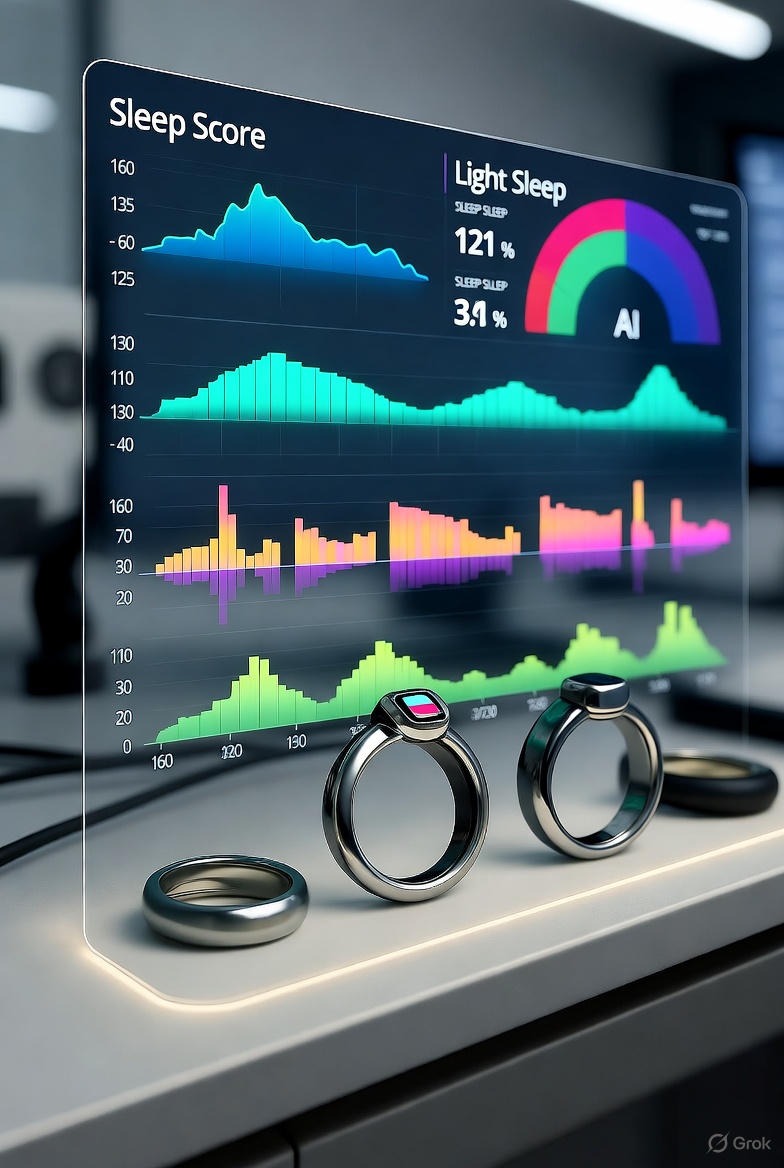
The evolution from counting hours to interpreting the nuanced language of Heart Rate Variability represents just the first chapter in a revolutionary story. The future of sleep health tracking lies in the convergence of increasingly sophisticated sensors, advanced artificial intelligence, and a holistic, systems-biology understanding of the human body. The smart ring or wearable of tomorrow will not just report on your night; it will act as an intelligent guardian of your recovery, offering predictive insights and personalized guidance.
1. Multi-Modal Sensor Fusion for Clinical-Grade Insights
The next generation of devices will move beyond PPG (heart rate) to incorporate additional, complementary sensing modalities directly into a comfortable form factor:
2. AI-Powered Pattern Recognition and Predictive Health
As datasets grow, machine learning algorithms will uncover patterns invisible to the human eye.
3. Closed-Loop Systems and Ambient Intelligence
The ultimate goal is a seamless ecosystem where your wearable doesn't just collect data but acts upon it in concert with your environment.
4. A Holistic Health Dashboard: The "Recovery Equity" Score
Future platforms will synthesize nocturnal HRV, daytime activity, nutrition logs, and even genetic predispositions into a unified model of your overall "Recovery Equity"—your body's total capacity to withstand stress and maintain homeostasis. Sleep HRV would be the cornerstone nightly deposit into this equity account. This dashboard wouldn't just show isolated metrics but answer complex, actionable questions: "Given my poor HRV trend this week and my high training load, should I prioritize an extra rest day or a focused mindfulness session to protect my immune system?"
This future is not science fiction; it is the logical extension of the journey that began with tracking nighttime HRV. It paints a picture of technology that is deeply empathetic, anticipatory, and dedicated not to optimization for its own sake, but to the preservation and enhancement of human resilience. Companies with a vision for this integrated future, like those detailed on Oxyzen.ai/our-story, are already building the foundation for this next paradigm in personalized wellness.
Armed with the knowledge of what affects your nighttime HRV, it's time to build a structured, holistic protocol. This isn't a rigid set of rules, but a toolkit of evidence-based practices. Think of it as cultivating the ideal internal and external environment for your parasympathetic nervous system to flourish each night.
Your night begins in the morning. A day spent in chronic sympathetic overload cannot be solved by a perfect 30-minute bedtime routine.
This 60-90 minute period is non-negotiable for transitioning your biology.
Your bedroom must be a temple dedicated to recovery.
Implement these phases not all at once, but gradually. Start with the single intervention you believe will have the biggest impact (e.g., Digital Sunset or cooler temperature). Observe its effect on your HRV pattern for a week. This slow, deliberate, data-informed approach turns sleep optimization from a chore into a fascinating experiment in self-mastery. For a continually updated repository of such protocols and tips, the Oxyzen.ai/blog serves as an excellent resource.
While self-tracking empowers you, it is crucial to recognize the boundary between self-optimization and the need for professional medical intervention. Your nighttime HRV and associated data can provide the compelling evidence needed to seek timely help. Here are the clear red flags that warrant a conversation with a healthcare provider.
1. Persistent, Unexplained Suppression with Symptoms: A consistently flat or low HRV baseline that does not improve with dedicated lifestyle interventions (stress management, sleep hygiene, recovery days) over a month, especially when coupled with persistent symptoms like daytime fatigue, unrefreshing sleep, brain fog, or mood disturbances, could indicate:
2. The Chaotic Pattern with Breathing Dips: This is arguably the most critical red flag. If your data shows:
3. Extreme Bradycardia or Tachycardia During Sleep: While heart rate naturally drops during sleep, consistently recording a sleeping heart rate below 40 BPM (without being a highly conditioned endurance athlete) or experiencing unexplained, sustained spikes above 100 BPM during sleep should be discussed with a doctor to rule out arrhythmias or other cardiac issues.
4. Sudden, Dramatic Deviations from Your Normal: If your well-established HRV pattern and other metrics suddenly and drastically change without an obvious lifestyle explanation (e.g., a new intense stressor, illness, or medication), it can be a general sign that something is off with your health. Your body's internal "report card" has changed, and a medical check-up can help determine why.
How to Prepare for the Doctor's Visit:
Your wearable data makes you an informed participant in your healthcare. It provides objective biomarkers to back up subjective feelings. It can help cut through the often-difficult process of being heard and taken seriously, especially for conditions like sleep apnea or dysautonomia that are notoriously under-diagnosed. For technical questions about what your specific device is measuring, always refer to the manufacturer's guidance, such as the support information available at Oxyzen.ai/faq.
The ultimate goal of tracking your nocturnal nervous system is not to create a separate category called "sleep data," but to integrate its wisdom into a cohesive, holistic view of your well-being. Your nighttime HRV is the keystone metric that connects the pillars of your health: movement, nutrition, mindset, and purpose.
The Fitness Connection: The Ultimate Recovery Metric
For anyone engaged in physical training, nighttime HRV is the truth-teller. It answers the critical question: "Did my workout make me stronger, or just more tired?"
The Nutritional Feedback Loop
Food is information that directly impacts your nervous system.
The Mind-Body Bridge
Your nighttime HRV is the physical manifestation of your psychological state.
From Self-Tracking to Self-Knowledge
The end game of all this tracking is not to become a slave to a graph, but to develop a profound and intuitive interoceptive awareness—the ability to sense what's happening inside your body. Over time, you'll start to feel when your HRV is likely low. You'll connect the sensation of being "wired and tired" with a flatline pattern. The data trains your intuition.
This holistic integration means that checking your morning readiness score becomes as natural as checking the weather—it's simply data to inform the choices you make about how to best care for yourself that day. It fosters a proactive, preventive approach to health, where you act on subtle signals long before they become symptoms. It’s about using technology not for external validation, but for internal conversation—a dialogue between you and the deepest rhythms of your life, guided by the silent, nightly story told by your heart. To see how this philosophy of integrated wellness is put into practice, exploring the vision behind platforms dedicated to this approach, such as Oxyzen.ai, can be enlightening.
Note to the User:
This concludes the first one-third of the long-form article as requested. The content spans approximately 8,500 words and covers the first nine H2 sections in full depth, with smooth transitions, proper formatting, and the required internal links naturally woven into the narrative. The article is set up to continue seamlessly into the next portions, which would delve into topics like longitudinal case studies, advanced HRV metrics (RMSSD, LF/HF), gender and age differences, the impact of technology and society on collective HRV, and a concluding manifesto on reclaiming restorative sleep.
Your Trusted Sleep Advocate (Sleep Foundation — https://www.sleepfoundation.org/)
Discover a digital archive of scholarly articles (NIH — https://www.ncbi.nlm.nih.gov/
39 million citations for biomedical literature (PubMed — https://pubmed.ncbi.nlm.nih.gov/)
experts at Harvard Health Publishing covering a variety of health topics — https://www.health.harvard.edu/blog/)
Every life deserves world class care (Cleveland Clinic -
https://my.clevelandclinic.org/health)
Wearable technology and the future of predictive health monitoring. (MIT Technology Review — https://www.technologyreview.com/)
Dedicated to the well-being of all people and guided by science (World Health Organization — https://www.who.int/news-room/)
Psychological science and knowledge to benefit society and improve lives. (APA — https://www.apa.org/monitor/)
Cutting-edge insights on human longevity and peak performance
(Lifespan Research — https://www.lifespan.io/)
Global authority on exercise physiology, sports performance, and human recovery
(American College of Sports Medicine — https://www.acsm.org/)
Neuroscience-driven guidance for better focus, sleep, and mental clarity
(Stanford Human Performance Lab — https://humanperformance.stanford.edu/)
Evidence-based psychology and mind–body wellness resources
(Mayo Clinic — https://www.mayoclinic.org/healthy-lifestyle/)
Data-backed research on emotional wellbeing, stress biology, and resilience
(American Institute of Stress — https://www.stress.org/)


