


Why Waking During Different Sleep Stages Feels So Different
Waking from deep sleep typically causes grogginess, while awakening from REM sleep often leads to clearer recall of dreams.
Waking from deep sleep typically causes grogginess, while awakening from REM sleep often leads to clearer recall of dreams.
%402x.svg)
Have you ever jolted awake from a nightmare, heart pounding, your mind still trapped in the vivid, chaotic landscape of a dream? Or perhaps you’ve experienced the opposite: a gentle, natural awakening where you drift seamlessly into consciousness, feeling refreshed and clear-headed. Then there are those brutal mornings when the alarm feels like a physical assault, tearing you from a deep, seemingly bottomless slumber, leaving you groggy, disoriented, and heavy for hours. This isn't just random chance or a reflection of your willpower. The profound differences in how you feel upon waking are a direct result of where your brain was in its complex, 90-minute sleep cycle the moment consciousness returned.
We often think of sleep as a single, uniform state of "offline" time. But in reality, it's a dynamic, architecturally precise journey through distinct neurological landscapes, each with its own unique brainwave patterns, physiological functions, and chemical signatures. Waking up is not simply flipping a switch from "off" to "on." It is an abrupt transition from one world to another, and the shock of that transition—or the smoothness of it—depends entirely on the world you were pulled from.
Modern sleep science has decoded these stages, but for most of us, their impact remains a mysterious, daily roulette wheel. You set the same alarm, go to bed at the same time, yet you can feel like two completely different people from one morning to the next. The secret lies in the intricate choreography of non-REM (NREM) and REM sleep. This article will embark on a deep exploration of this phenomenon. We will dissect the neuroscience behind each sleep stage, explain why waking from each feels uniquely disorienting or refreshing, and ultimately, reveal how harnessing this knowledge—with the aid of modern technology like the advanced sensors in a smart ring from Oxyzen.ai—can transform your mornings and your overall well-being. By understanding the architecture of your own sleep, you can move from being a passive passenger to an active pilot, learning to navigate your nights for optimal days. For a deeper look at how technology is making this possible, you can explore our blog for more insights on sleep science and wearable tech.
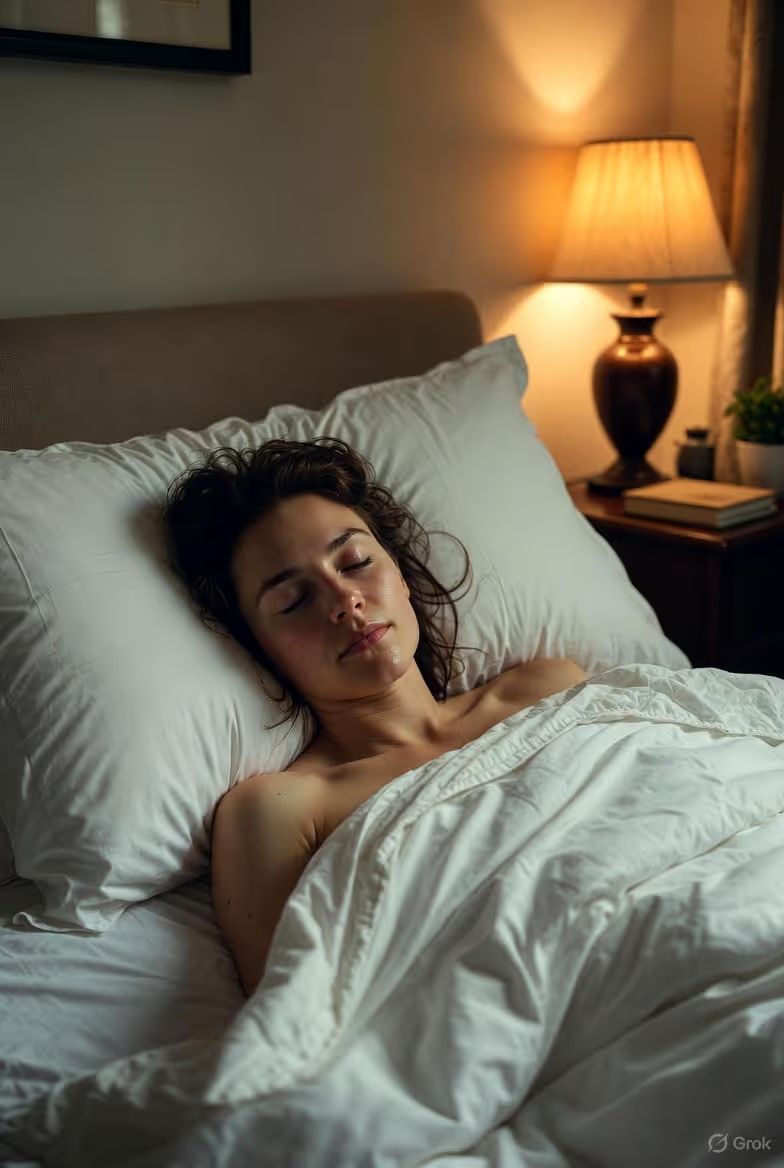
To understand why waking feels so different, we must first map the terrain. Sleep is not a linear descent into unconsciousness and back. It is a cyclical voyage through four distinct stages, repeated four to six times per night. Each cycle lasts roughly 90 to 120 minutes, and the composition of these cycles changes as the night progresses.
The journey begins with NREM Stage 1 (N1), the brief, twilight zone between wakefulness and sleep. Lasting only a few minutes, this stage features slow eye movements and a relaxation of muscles. Brainwaves begin to slow from their daytime beta rhythms into alpha and then theta waves. If awakened from N1, you might not even believe you were asleep, feeling as if you were simply "drifting off."
Next comes NREM Stage 2 (N2), which constitutes nearly 50% of an adult's total sleep. Here, the body goes into more pronounced shutdown. Heart rate slows, body temperature drops, and eye movements stop. The brain produces unique electrical signatures called sleep spindles (brief bursts of rapid brainwaves) and K-complexes (large, slow waves believed to be a gatekeeping mechanism for external stimuli). This is the stage of consolidated sleep where you are truly disengaged from your environment.
Then we enter the deep, restorative waters of NREM Stage 3 (N3), often called slow-wave sleep (SWS) or deep sleep. Characterized by very slow, high-amplitude delta waves, this is the most physically restorative phase. It’s notoriously difficult to wake someone from N3; if you succeed, they will experience "sleep inertia"—that thick, groggy, cognitively impaired feeling we’ll explore in detail. This stage is crucial for tissue repair, immune function, and memory consolidation. It dominates the first half of the night.
Finally, we reach REM (Rapid Eye Movement) Sleep, the stage most famous for its association with vivid dreaming. Physiologically, it's a paradox: the brain becomes highly active, with brainwaves resembling wakefulness (a mix of beta and theta waves), while the body enters a state of temporary muscle paralysis (atonia) to prevent you from acting out your dreams. Your heart rate and breathing become irregular, and yes, your eyes dart rapidly beneath your lids. REM periods grow longer as the night goes on, with the final REM stage before waking lasting up to an hour.
This architecture—the ordered progression from N1 to N2 to N3, then back to N2 before launching into REM—is the canvas upon which your waking experience is painted. The point in this 90-minute cycle where your alarm sounds determines everything. Waking from the depths of N3 is a neurological shock. Waking from a lighter part of N2 or REM, while still potentially disorienting, is a fundamentally different experience. In the following sections, we will descend into each of these stages to explore the unique "flavor" of awakening from each one, starting with the most jarring transition of all.
Imagine being lifted from the deepest part of the ocean and immediately placed on a bustling city street. The pressure change alone would be catastrophic. Waking from Slow-Wave Sleep (N3) is the neurological equivalent. This stage represents the peak of brain synchrony, where vast networks of neurons fire in slow, united pulses. Your brain is operating on a profoundly different wavelength—literally. It is engrossed in internal housekeeping: flushing metabolic waste via the glymphatic system, repairing tissues, and strengthening the immune system. Consciousness is not just absent; it is profoundly inaccessible.
When an external stimulus (like an alarm, a loud noise, or a partner's nudge) pierces this deep state, the brain must execute a chaotic emergency shutdown of its restorative processes and reboot its conscious-operating systems. This abrupt transition results in sleep inertia—a state of severe cognitive and sensory-motor impairment that can last from a few minutes to over an hour, and in some cases, even up to four hours for those with significant sleep debt.
The feeling is unmistakable: a heavy, almost physical weight pressing on your mind and body. Your thoughts are syrupy and slow. Simple tasks like turning off the alarm or formulating a coherent sentence feel Herculean. You may experience "sleep drunkenness" or confusional arousal, where you perform actions automatically with no memory of them later. This inertia is caused by several factors:
The evolutionary purpose of this inertia is debated, but one theory suggests it acts as a protective buffer, preventing easy awakening from this vital, vulnerable restorative state. For the modern human with a strict morning schedule, however, it's a major impediment to performance and safety. Studies have shown that cognitive performance immediately after awakening from SWS is comparable to, or even worse than, being legally drunk. This is why understanding your sleep cycles is critical. Waking during N3 is the primary culprit behind "alarm clock rage" and the feeling that you need hours and multiple coffees to become human. It’s a stark contrast to the experience of waking from the next stage we’ll explore.

If waking from deep sleep is a violent upheaval, awakening from the lighter stages of NREM is more like stepping out of a quiet room into a slightly busier hallway. The transition is far less jarring, though not without its own unique characteristics.
Waking from NREM Stage 1 (N1) is often so seamless that it barely registers as waking up at all. Since N1 is the direct gateway from wakefulness, your brain is still humming with alpha and theta waves that are not radically dissimilar from a relaxed, waking state. You might experience hypnagogic imagery—those strange, fleeting sensory hallucinations as you drift off (a feeling of falling, hearing someone call your name). If nudged awake from this stage, you’ll likely feel as if you were just "resting your eyes" and will dispute having been asleep. There is minimal to no sleep inertia, but you also gain none of the restorative benefits of deeper sleep.
Waking from NREM Stage 2 (N2), however, is the most common and arguably the "sweet spot" for many targeted wake-ups. While you are genuinely asleep and disconnected from your environment, the brain is in a more flexible state than in N3. The presence of sleep spindles is key here. Research suggests these spindles act as a protective mechanism, inhibiting external stimuli from processing fully and thus preserving sleep stability. But if a stimulus is strong or persistent enough to break through, the awakening is relatively swift.
When you wake from N2, you might feel a brief moment of disorientation—a quick "Where am I?"—but it typically passes in seconds. You are alert enough to function but may still carry a mild desire to return to sleep. Your cognitive faculties come online much faster than from deep sleep. This is why you might sometimes wake up a minute or two before your alarm goes off; you've likely emerged naturally at the tail end of an N2 phase into a lighter sleep state, making the transition to wakefulness easy.
The experience of waking from light NREM sleep is generally neutral to mildly positive. You won’t feel the crushing grogginess of deep sleep inertia, but you also may not feel spectacularly refreshed unless you’ve completed several full cycles. It’s a functional, clean awakening. This reliability makes N2 a prime target for smart alarm technology. Devices like the Oura Ring or the advanced sensor-packed smart ring from Oxyzen.ai can track your movement and heart rate variability to estimate your sleep stage. Instead of blaring at a fixed time, a smart alarm aims to wake you during a window of light sleep (N1 or N2) within, say, 30 minutes of your desired time, thereby minimizing sleep inertia. To understand how this technology interprets your body's signals, you can read more about our sensor technology and approach.
Awakening from REM sleep is an experience unto itself, one that trades physical grogginess for psychological disorientation. REM is the theater of the mind. Your brain is electrically active, your eyes are darting, and you are immersed in the often bizarre, emotionally charged narrative of a dream. Yet your body is locked down by muscle atonia, a protective paralysis. This creates a profound mind-body split.
When an alarm or other disturbance pulls you from REM, the transition is abrupt but in a different way than from deep sleep. Instead of battling through mental sludge, you are catapulted from a fully realized, internal reality back into the external, physical world. The primary sensation is dream hangover or sleep inertia of the psyche.
You may lay in bed for several minutes, the vivid scenes and intense emotions of the dream clinging to you, feeling more real and immediate than the room around you. This is because the neurochemical state of REM—high in acetylcholine (which drives internal attention and dreaming) and low in norepinephrine and serotonin—persists for a time after waking. Your brain is literally still in "dream mode," struggling to reorient its focus to sensory input and logical processing.
The content of the dream heavily colors your waking mood. A joyful or exciting dream can leave you with a lingering, unexplained euphoria. A terrifying nightmare can leave you with a pounding heart, sweat-dampened skin, and a sense of dread that shadows you for hours. This emotional residue is powerful because the brain regions involved in emotion and memory, like the amygdala and hippocampus, are highly active during REM.
Furthermore, the sudden dissolution of muscle atonia can sometimes lead to unsettling physiological sensations. You might experience a hypnic jerk (a sudden muscle twitch) or, more rarely, sleep paralysis—a terrifying few seconds or minutes where the atonia persists even as you become conscious, leaving you unable to move while possibly still sensing dream-like hallucinations in your room. While generally harmless, it's a stark reminder of the REM state's power.
Waking from REM is less about cognitive impairment and more about narrative and emotional dissonance. You have to consciously reconcile two parallel realities: the one you were just living in your mind and the one you now physically inhabit. For those interested in dream recall or lucid dreaming, targeted awakenings from REM are a common technique. And for the average sleeper, understanding that a sour or anxious morning mood might simply be the echo of a forgotten REM dream can be a liberating insight.
Given the wildly different experiences of waking from different stages, a compelling question arises: Is there a biologically ideal time to wake up? The answer lies in understanding not just sleep architecture, but the body's innate circadian rhythm and a related concept known as the Wakefulness Rhythm or the Sleep Inertia Gradient.
Your circadian rhythm is your master 24-hour internal clock, regulated by the suprachiasmatic nucleus (SCN) in the brain. It dictates the broad pattern of sleepiness and alertness, with a primary dip at night (for sleep) and a strong drive for wakefulness during the day. However, superimposed on this are the 90-minute ultradian cycles of sleep stages. The "ideal" awakening occurs at the peak of an upward swing in both these rhythms.
In practice, this means waking at the end of a completed sleep cycle, during a period of light NREM sleep (N2 or N1) or even REM, while also coinciding with a natural rise in your circadian-driven alertness. For most people, the circadian alertness signal begins to rise sharply in the last hour or two of a typical night's sleep, fighting against the sleep pressure that has built up. When you wake at the end of a cycle, you are surfacing during a natural, lighter phase of sleep as your body is already preparing for morning. The sleep inertia is minimal.
Conversely, the "worst" awakening is in the trough of both rhythms: in the middle of a deep N3 sleep stage, while your circadian drive for wakefulness is still at its nocturnal low. This creates a "perfect storm" of disorientation.
Finding your personal Goldilocks window requires consistency and observation. It involves:
This is where modern wearable technology shines. A device that tracks heart rate, heart rate variability (HRV), and body movement can provide a reliable proxy for your sleep stages. By analyzing this data, it can attempt to find that light-sleep window for an alarm. While not as precise as a clinical polysomnogram, it is a powerful tool for moving from random awakenings to intentional ones. For those curious about how real people have used such data to transform their mornings, the customer testimonials on our site provide compelling stories.

We've mentioned sleep inertia repeatedly, but it deserves its own deep dive as the primary villain of poor awakenings. Sleep inertia is a formal, measurable state of neurocognitive impairment characterized by decreased vigilance, slower reaction times, poorer short-term memory, and a diminished ability to perform complex tasks. It's not just "feeling sleepy"; it's a temporary brain dysfunction.
Scientists study sleep inertia in labs by waking participants at different stages and immediately administering cognitive tests. The results are clear: performance is worst after awakenings from SWS, and the severity and duration of the inertia depend on three key factors:
The physiological mechanisms are a cascade of events:
Understanding this science underscores that hitting snooze is the worst possible response to sleep inertia. Each time you fall back asleep, you risk plunging into a new sleep cycle and likely waking from an even deeper stage a few minutes later, resetting and potentially worsening the inertia. The most effective countermeasures are light (especially blue light to suppress melatonin), gentle movement, and hydration. But the ultimate strategy is to avoid severe inertia altogether by timing your awakening correctly.
The method by which you are awakened plays a critical role in shaping the experience. A jarring, persistent alarm is a brutal neurological event, while a gradual, physiological nudge can ease the transition.
The Traditional Alarm Clock: The classic buzzer or beep is a stressor. It triggers a startle response, flooding your system with cortisol (the stress hormone) and adrenaline to force you into action. This creates a state of stress-induced wakefulness, which masks underlying sleep inertia with anxiety and a racing heart. You are "up," but you are not optimally alert; you are stressed and groggy—a terrible combination for starting the day.
Gradual and Smart Alarms: These are designed to work with your biology.
Natural Awakenings: Waking spontaneously, without an alarm, is generally the smoothest transition of all—provided you've gotten sufficient sleep. It means you've emerged at the natural end of a sleep cycle when your sleep pressure is low and your circadian drive is high. This is the hallmark of a well-regulated sleep system.
The environment matters immensely. A dark, quiet, cool room supports deep, uninterrupted sleep cycles. An unexpected noise (a garbage truck, a snoring partner) that pulls you from SWS can cause significant inertia, even if you don't fully remember waking. Optimizing your sleep environment is thus a foundational step toward better awakenings. For common questions on optimizing sleep with technology, our comprehensive FAQ page addresses many user queries.
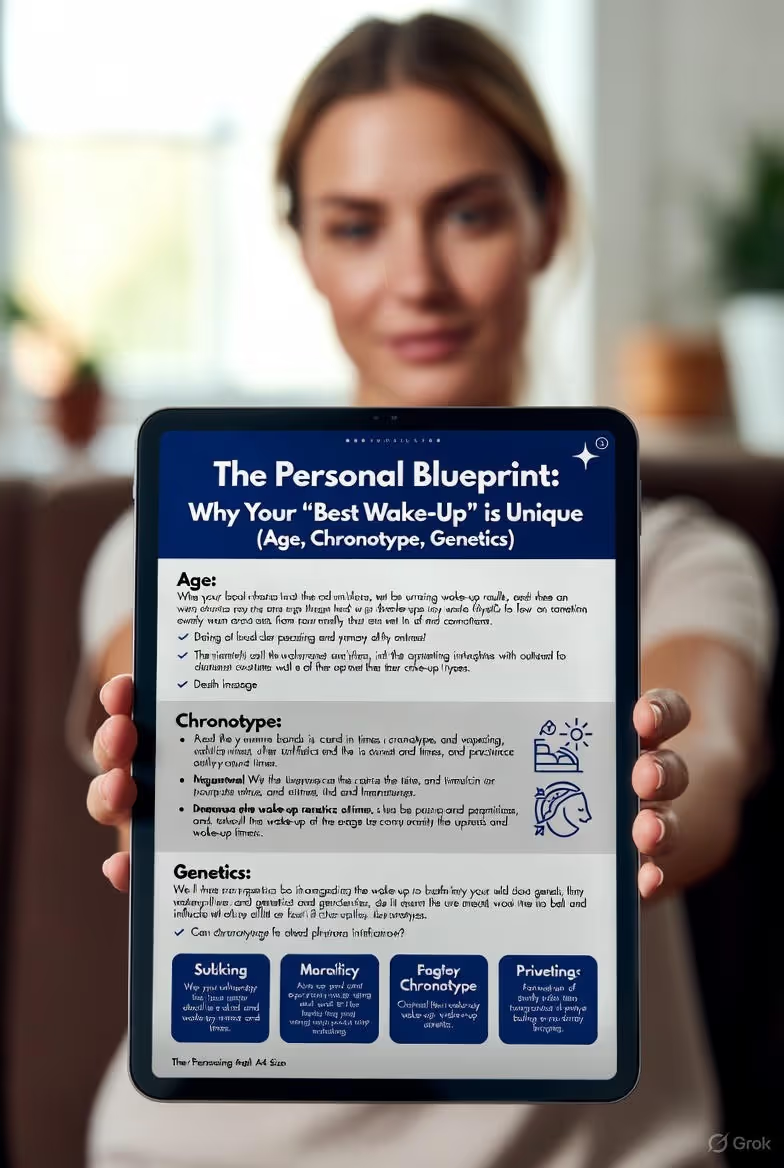
While the sleep stage architecture is universal, the experience of waking up is deeply personal. Your age, your innate chronotype, and even your genetics paint unique details on the general canvas.
Age: Sleep architecture changes dramatically over a lifetime. Young children spend up to 40% of the night in deep N3 sleep, which is why they can be virtually impossible to wake and often experience confusional arousals (sleep terrors). Adolescents have a pronounced circadian delay, making early school start times biologically cruel. From middle age onward, the percentage of deep sleep decreases significantly and sleep becomes more fragmented with more frequent awakenings. An older adult may spend very little time in deep SWS, so their worst awakenings might come from REM or lighter sleep, but they may also wake up more often overall, leading to a different kind of fatigue.
Chronotype: Are you a lark, an owl, or something in between? Your chronotype is your genetically predisposed preference for morningness or eveningness. An owl forced to wake at 6 AM for work is perpetually being awakened during what their body still considers the biological night, likely from a deep sleep phase. A lark waking at 6 AM may be rising near the end of their natural cycle. Fighting your chronotype is a guaranteed recipe for brutal awakenings and persistent sleep inertia. The societal bias toward early risers often ignores this biological diversity, to the detriment of many people's well-being and productivity.
Genetics: Specific gene variants, like those in the DEC2 gene, are associated with "natural short sleepers" who thrive on less than 6 hours. Others may have genes that make them more sensitive to sleep disruption. Your personal sleep drive and depth are influenced by this blueprint.
This variability is why off-the-shelf sleep advice often fails. Tracking your own data becomes paramount. Using a consistent method—like a smart ring that measures movement, heart rate, and temperature—allows you to see your personal patterns over time. You can identify what time you typically enter deep sleep, how long your cycles last, and when you naturally tend toward lighter sleep in the morning. This personalized feedback loop is the key to moving from generic advice to a custom sleep strategy. To learn more about the company dedicated to providing these personalized insights, you can visit our about page.
For millennia, we've been blind to the internal journey of our sleep. The advent of consumer sleep tracking technology, particularly the rise of the smart ring, has granted us a revolutionary window into this nocturnal world. But how do these devices, worn on your finger, purport to know if you're in light, deep, or REM sleep?
The gold standard for sleep staging is a clinical polysomnogram (PSG), which measures brain waves (EEG), eye movements (EOG), and muscle activity (EMG). Consumer devices cannot directly replicate this. Instead, they use actigraphy (movement tracking) combined with photoplethysmography (PPG)—the flashing green LEDs that measure blood volume changes in your capillaries to derive heart rate (HR) and heart rate variability (HRV).
Here's how they build the picture:
Advanced algorithms, often powered by machine learning, take these three data streams—movement, HR, and HRV—and compare them to massive datasets of PSG-verified sleep. By finding patterns, the algorithm makes a probabilistic estimate of your sleep stage every minute or so. It's an estimate, not a medical diagnosis, but for understanding the macro-architecture of your sleep (e.g., "I got 1.5 hours of deep sleep spread across the first half of the night," or "My final REM period was 40 minutes long"), it is remarkably accurate and immensely valuable.
A smart ring form factor is particularly suited for this as the finger provides a strong, consistent PPG signal, and people are more likely to wear it consistently than a wrist device they might remove. This consistency is the foundation of useful data. By reviewing your sleep graph each morning, you can start to connect the dots: "Ah, I woke up feeling terrible, and my ring shows I was in deep sleep when my alarm went off. Last Thursday I felt great, and I woke up from light sleep."
Knowledge is power, but only if applied. Understanding your sleep stages is fascinating, but the true goal is to use that understanding to engineer consistently better awakenings. Here is a practical framework, leveraging both behavioral science and technology:
Step 1: Establish Your Baseline and Target. Use a consistent tracking method for at least two weeks. Don't change anything yet. Just observe. What's your average total sleep? How much deep and REM do you get? Most importantly, note how you feel upon waking and correlate it with your estimated sleep stage graph. Identify your natural wake-up time on free days.
Step 2: Optimize Your Schedule for Cycle Completion. Based on your average cycle length (~90 mins), calculate a bedtime that allows for 5 or 6 full cycles before your desired wake time. For a 6 AM wake-up, aim for sleep onset around 10:30 PM (5 cycles) or 9:00 PM (6 cycles). Consistency is more important than perfection.
Step 3: Employ a Smarter Wake-Up Method. If you must use an alarm, make it work for you.
Step 4: Master the Morning Routine to Dissipate Inertia. Have a post-awakening protocol:
Step 5: Iterate and Refine. Your sleep is not static. Stress, exercise, diet, and travel affect it. Use your data not to obsess over nightly scores, but to spot trends. Are your deep sleep percentages dropping? Maybe you need to dial back late-night workouts. Is your wake-up time becoming more variable? Re-commit to a consistent schedule.
The goal is not to achieve a "perfect" sleep score every night—that's an unrealistic pressure that can backfire. The goal is to build a resilient, predictable sleep system that minimizes the chaos of your awakenings. You are using technology not as a judge, but as a guide to your own unique biology. For a continuous stream of research-backed strategies and deeper dives into topics like chronotype optimization and HRV training, be sure to explore the resources available on our blog.
Understanding the acute shock of waking from the wrong sleep stage is one thing. But what happens when that jarring, groggy, or disoriented awakening isn't an occasional misfortune, but a daily reality? The impact doesn't end when the fog lifts an hour later. Chronic poor awakenings create a ripple effect that permeates every aspect of your daytime existence, from your cognitive sharpness and emotional stability to your long-term physical health. This isn't merely about being a "slow starter"; it's about the cumulative toll of repeatedly starting your day with a neurological handicap.
When you consistently wake with significant sleep inertia—especially from deep sleep—you are beginning each day with a functional brain deficit. Studies using fMRI scans show that key regions for attention, decision-making, and self-control remain underactive. This sets a low baseline for your entire day's performance. You're not operating at 100% and trying to excel; you're starting at 60% and struggling to reach normal. The consequences are measurable and profound.
Cognitive & Performance Consequences:
Emotional & Psychological Toll:
Perhaps even more insidious is the emotional impact. The brain state of sleep inertia is not cognitively neutral; it's often negatively biased. The sluggish prefrontal cortex fails to properly regulate the amygdala, the brain's emotional center. This can lead to:
The Metabolic and Physical Domino Effect:
The disruption extends into your body's core systems. A chaotic awakening dysregulates your hypothalamic-pituitary-adrenal (HPA) axis—your central stress response system. Instead of a smooth, natural cortisol awakening response (CAR), you get a jagged, stress-induced spike. This misalignment can:
In essence, by repeatedly waking poorly, you are systematically eroding your cognitive potential, emotional balance, and metabolic health. It creates a vicious cycle: poor sleep leads to a bad wake-up, which leads to a stressful, inefficient day, which increases anxiety and unhealthy habits, which in turn leads to worse sleep the next night. Breaking this cycle requires more than just a better alarm; it requires a systemic approach to sleep health, beginning with recognizing the profound stakes of how you start your day. For those navigating this cycle, finding a supportive tool can be transformative. Many users share how consistent tracking helped them identify and break these patterns, as seen in the real-world experiences shared in our testimonials.
For most, a terrible awakening is an occasional nuisance. But for millions, it is a nightly or near-nightly torment rooted in clinical sleep disorders. These conditions fundamentally distort sleep architecture and the waking process, creating pathological versions of the experiences we've described. Understanding these disorders is crucial, as they represent the extreme end of the spectrum and highlight why simply "trying to sleep better" is never enough for those affected.
Sleep Apnea and the Gasping Awakening: Obstructive Sleep Apnea (OSA) is characterized by repeated collapses of the airway during sleep, causing breathing to stop (apneas) or become shallow (hypopneas). Each event ends with a micro-arousal—a brief, often unconscious awakening as the brain jolts the body to restart breathing. These arousals fragment sleep, preventing sustained deep sleep and REM. The classic awakening for someone with untreated severe apnea is not from an alarm, but from their own gasping or choking. They may wake with a pounding heart, sweating, and a sense of panic. Despite spending 8+ hours in bed, they wake feeling utterly unrefreshed, with crushing fatigue, severe brain fog, and a headache—a direct result of oxygen desaturations and sleep architecture shredded into non-restorative fragments.
Insomnia and the Hyperalert Wake-Up: Insomnia, particularly maintenance insomnia (difficulty staying asleep), is defined by problematic awakenings. Individuals often wake in the middle of the night and find themselves instantly, fully awake, their minds racing with anxiety. This is the opposite of sleep inertia; it's a state of hyperarousal. Their brain and body fail to make the normal transition back into sleep. The awakening itself is often from a light sleep stage, but the psychological reaction—the "oh no, I'm awake again" panic—triggers a stress response that hijacks any chance of returning to deeper stages. Morning awakenings can then be a mix of exhaustion from lack of sleep and residual anxiety.
Narcolepsy and the Blurred Boundary: Narcolepsy offers a fascinating window into the fragility of sleep-wake boundaries. A disorder of REM sleep regulation, its hallmark is overwhelming daytime sleepiness and "sleep attacks." But relevant to awakenings is the common symptom of sleep paralysis and hypnagogic/hypnopompic hallucinations. Upon waking (hypnopompic), individuals with narcolepsy may experience terrifying hallucinations and be unable to move for several seconds or minutes. This is essentially an intrusion of REM sleep paralysis and dreaming into the waking state. The awakening is a traumatic, dissociative event where dream and reality horrifically overlap.
Delayed Sleep Phase Disorder (DSPD) and the Forced Awakening: DSPD is a profound misalignment of the circadian rhythm where the natural sleep period is shifted several hours later (e.g., 4 AM to 12 PM). When individuals with DSPD are forced to wake at 7 AM for work or school, they are essentially being awakened in the middle of their biological night, during what should be their deepest sleep. The resulting sleep inertia is catastrophic and chronic, contributing to a misdiagnosis of insomnia or simple laziness. Their bodies are perpetually in a state of jet lag.
Recognizing these patterns is vital. If your awakenings consistently involve gasping, a racing heart, paralyzing panic, or extreme disorientation that doesn't resolve, it is not an optimization problem—it is a medical one. Consumer trackers can provide clues (e.g., consistently low blood oxygen readings might suggest apnea), but diagnosis requires a sleep specialist. The first step toward better mornings for those with disorders is proper treatment: a CPAP machine for apnea, CBT-I for insomnia, or chronotherapy for circadian disorders. A holistic view of wellness technology acknowledges its role as a complement to, not a replacement for, medical care, a principle central to the vision and values behind our approach at Oxyzen.
Once foundational sleep health is addressed and disorders are ruled out or managed, a world of precision optimization opens up. "Biohacking" sleep moves beyond generic advice into the realm of personalized experimentation, using data and targeted interventions to fine-tune sleep architecture and engineer near-perfect awakenings. This is for those who wish to leverage a deep understanding of their own physiology to achieve peak mental and physical performance.
Chronotype Fine-Tuning and Light Manipulation: Advanced biohacking starts with honoring your chronotype, but can involve strategically manipulating light to gently nudge it if necessary. This involves:
Temperature Cycling: The body's core temperature needs to drop to initiate and maintain sleep. Biohackers optimize this:
Nutritional Supplementation for Sleep Architecture: Certain supplements, used strategically, can influence neurotransmitter levels to promote specific sleep stages. Caution: This should be done with research or professional guidance.
Heart Rate Variability (HRV) Training: Since HRV is a key marker of recovery and autonomic nervous system balance, biohackers use it as a daily guide. Techniques like resonant frequency breathing (e.g., 5.5 seconds inhale, 5.5 seconds exhale) before bed can increase HRV and prime the body for recovery. Monitoring morning HRV can tell you if you’re truly recovered from yesterday's stress; a low reading may indicate you need a lighter day or more recovery-focused sleep.
The Role of Wearable Data: All of this is powered by data. A advanced wearable, like a smart ring, provides the feedback loop. You can test a new intervention (e.g., a magnesium supplement) and observe not just how you feel, but how your objective data changes: does your deep sleep percentage increase? Does your resting heart rate drop? Does your HRV rise? This moves you from subjective guesswork to objective, personalized science. For the dedicated biohacker, this data is the compass for all experimentation. Those interested in the technical capabilities that enable such precise tracking can learn more about our sensor technology and data precision.
While technology and physiology are critical, the psychological approach to sleep and waking is a powerful, often overlooked lever. The states of sleep and wakefulness are not just biological but also states of consciousness. Cultivating mindfulness and setting intention can act as a "mind-bridge," smoothing the transition between these two worlds. This isn't mystical; it's about leveraging the brain's neuroplasticity to create healthier patterns around the sleep-wake boundary.
Evening Wind-Down as a Neurological Ritual: The quality of your awakening is partially set the night before. A mindful wind-down signals to the brain that the transition to sleep is beginning. This is the opposite of collapsing into bed with a racing mind.
Setting a Wake-Up Intention: This is a simple but profound practice. As you are falling asleep, gently plant the thought: "I will wake up feeling refreshed and calm." Or, more specifically, "I will wake up easily at 6:30 AM." This isn't about willing it to happen magically, but about priming the subconscious. There is evidence that expectation influences perception; setting a positive expectation for the morning can change how you interpret those first groggy sensations.
Mindfulness Upon Waking (The "First Five Minutes" Rule): Instead of grabbing your phone and flooding your brain with information, commit to five minutes of conscious presence.
This mindful approach is particularly effective for counteracting the psychological disorientation of REM awakenings and the anxiety that can accompany insomnia-related awakenings. It builds what psychologists call "metacognition"—the ability to observe your own state. Instead of being groggy, you can note, "I am experiencing grogginess," which is a subtly but powerfully different neurological position that grants more control. For more on cultivating a holistic wellness practice that includes these mental frameworks, our blog features regular content on mindfulness and performance.
We are on the cusp of a revolution in sleep science, moving from retrospective tracking to predictive, personalized guidance. The next generation of sleep technology will leverage artificial intelligence, a broader array of biomarkers, and closed-loop systems to not just report on your sleep, but actively optimize it in real time.
AI-Powered Sleep Coaches: Current devices tell you what happened. Future systems will tell you why it happened and what to do about it. Imagine an AI that analyzes a year of your sleep, heart rate, HRV, activity, and lifestyle data (logged diet, stress, caffeine intake), cross-references it with weather and pollen data, and identifies hyper-personalized patterns: "When you have more than 40mg of caffeine after 2 PM and your daily step count is below 8,000, your deep sleep decreases by 15%." It could then offer predictive guidance: "Based on your high-stress day and evening plans, there's an 80% probability you'll have poor sleep efficiency tonight. I recommend your 20-minute breathing session at 9 PM and a 65°F room temperature."
Multi-Biomarker Integration: Future wearables may move beyond PPG to include:
Closed-Loop Environmental Systems: The ultimate expression of this tech is a system that automatically adjusts your environment based on your real-time physiological state.
Pharmacogenetic Personalization: On the horizon is the integration of genetic data. Understanding how your genes affect your metabolism of caffeine, your sensitivity to light, or your propensity for certain sleep disorders could lead to ultra-personalized recommendations for sleep hygiene, supplement regimes, and even medication if needed.
This future is not about outsourcing your sleep, but about creating a seamless, intelligent partnership between you and your biology. The goal is to remove guesswork and friction, allowing your natural sleep processes to unfold optimally every night. The mission of companies at the forefront of this field, like Oxyzen, is to build this bridge between human intuition and machine intelligence, making deep health insights accessible and actionable.
Theory and data are compelling, but the true power of this knowledge is revealed in personal stories. Here are composite case studies based on common patterns seen by sleep coaches and in user testimonials, illustrating how understanding sleep stages transforms real lives.
Case Study 1: The "Coffee-Dependent" Executive
Case Study 2: The "Anxious" New Parent
Case Study 3: The "Chronically Fatigued" Fitness Enthusiast
These stories underscore that there is no one-size-fits-all solution. The key was using objective data to uncover the specific disruption in their sleep-wake transition, leading to a targeted, personalized intervention. For a broader collection of such transformative journeys, our testimonials page offers further inspiration.
We have journeyed from the basic neuroscience of sleep stages to the cutting edge of personalized sleep technology, uncovering the profound reasons why waking up feels so different from one morning to the next. This isn't academic trivia; it is the key to unlocking better days, improved health, and heightened performance.
The core truth is this: Your awakening is a neurological event of profound significance. It sets the functional and emotional tone for your next 16 hours. Waking from deep sleep is a legitimate biological shock with measurable deficits. Waking from REM is a psychological dislocation. Waking from light sleep is a clean, manageable transition. And waking naturally, at the end of a cycle as your circadian rhythm ascends, is the gold standard—the feeling of being truly in sync with your biology.
The path to mastering this transition involves a trilogy of awareness:
You are not powerless at the mercy of your alarm clock. By embracing the science and tools available, you can transform the daily roulette of waking into a predictable, gentle, and even empowering ritual. You can replace confusion and grogginess with clarity and calm. The journey toward perfect mornings begins with a single night of understanding.
The subsequent sections of this comprehensive guide will delve even deeper. We will explore the symbiotic relationship between sleep and other pillars of health like nutrition and exercise, debunk pervasive myths about sleep and waking, provide a detailed toolkit for troubleshooting common sleep problems, and offer a visionary look at how society can reshape itself around healthy sleep rhythms. The quest for the perfect awakening is, ultimately, a quest for a more conscious, intentional, and vibrant life.
To continue your exploration and access the next installments of this guide, along with a wealth of supporting resources on sleep optimization and holistic wellness technology, be sure to visit our main blog hub at Oxyzen.
The journey to a perfect awakening doesn't begin when your head hits the pillow; it starts hours, even days, before. Your sleep architecture—the proportion and quality of light, deep, and REM sleep—is not a closed system. It is deeply and dynamically influenced by three daytime pillars: nutrition, physical activity, and your pre-sleep routine. By understanding this symbiosis, you can actively sculpt your sleep stages to promote more restful nights and easier mornings.
Every meal and snack is a directive to your body’s chemical orchestra, influencing neurotransmitters and hormones that directly dictate sleep onset, maintenance, and staging.
Macronutrients as Precursors:
The Stimulant & Depressant Trap:
Timing is Everything: The when is as crucial as the what. The body's core temperature needs to drop for sleep. Digestion generates heat. Therefore, finishing your last large meal 2-3 hours before bedtime allows digestion to subside and thermoregulation to proceed optimally. A small, sleep-friendly snack 60 minutes before bed is fine, but a feast is a recipe for a night of tossing and turning and a groggy, digestion-focused awakening.
Hydration’s Double-Edged Sword: Dehydration can lead to nocturnal leg cramps and dry mouth, disrupting sleep. However, chugging water right before bed guarantees sleep fragmentation via trips to the bathroom. The key is front-loading hydration during the day and tapering off in the evening, ensuring you’re hydrated but not full.
By viewing food as a sleep-modulating tool, you can make choices that support, rather than sabotage, your nightly neurological journey. A diet rich in whole foods, fiber, and healthy fats, with mindful timing and moderation of stimulants and depressants, provides the clean chemical substrate for stable, restorative sleep cycles. For more detailed explorations on the nexus of nutrition and recovery, resources like those found on the Oxyzen blog can offer continued guidance.
Physical activity is one of the most powerful, evidence-based promoters of good sleep—but its effects are nuanced, depending on type, intensity, duration, and, critically, timing.
Exercise as a Sleep Deepener: Regular exercisers consistently report better sleep quality and fall asleep faster. Aerobic exercise, in particular, has been shown to increase the amount of slow-wave deep sleep (N3) you get. This is the most physically restorative stage. The mechanism is multifaceted: exercise depletes muscle glycogen, elevates body temperature (followed by a compensatory drop later that aids sleep onset), and helps regulate circadian rhythms through daylight exposure and metabolic signals. It also reduces anxiety and depressive symptoms, common psychological barriers to sleep.
The Intensity & Timing Matrix:
The Overtraining Paradox: While consistent exercise improves sleep, too much can backfire. Overtraining syndrome is characterized by a persistently elevated resting heart rate, decreased HRV, and increased wakefulness during sleep. The body is in a chronic state of stress and catabolism, unable to recover. This manifests as difficulty falling asleep, frequent awakenings, and non-restorative sleep. This is where tracking devices become invaluable. A smart ring that shows a downward trend in HRV and an upward trend in resting heart rate, despite adequate sleep, is a clear biofeedback signal to incorporate more rest days or deload training volume. Listening to this data prevents the negative cycle where poor sleep impairs recovery, which further degrades sleep.
In essence, exercise builds the need for deep sleep, but its timing and intensity dictate whether it becomes a catalyst for recovery or a source of stress. Aligning your movement with your circadian rhythm—energizing exercise in the morning or afternoon, restorative movement in the evening—creates a powerful synergy that builds a more robust and resilient sleep architecture, leading to mornings where you wake up feeling truly repaired. For athletes and active individuals, understanding this feedback loop is essential, a topic frequently explored by experts whose insights are shared on our company's resource pages.
If your day is the preparation, the final hour before bed is the launch sequence. This is where you actively disengage from the waking world and guide your biology into the sleep state. A consistent, mindful pre-sleep ritual is not a luxury; it is a non-negotiable signal to your brain that it's time to shift states. It directly lowers physiological arousal, making the transition into sleep smoother and deeper, and setting the stage for a stable night with a natural, easy awakening.
Phase 1: The Digital Sunset (T-60 minutes): This is the most critical step. The blue light emitted from screens suppresses melatonin production by up to 50%, delaying sleep onset. But the content is equally damaging. Scrolling through work emails, engaging in social media debates, or watching intense dramas activates the brain's cognitive and emotional centers, flooding it with stress hormones and novel information. Enforce a hard stop. Use device features to enable "Night Shift" or "Blue Light Filter" earlier in the evening, but aim for a complete disconnect in the final hour. Charge your phone outside the bedroom.
Phase 2: The Environmental Shift (T-45 minutes): This is about curating your physical space for sleep.
Phase 3: The Nervous System Downgrade (T-30 minutes): Engage in activities that promote parasympathetic dominance.
Phase 4: The Mental Offload (T-15 minutes): Prevent your bed from becoming a conference room for your anxieties.
Phase 5: The Transition to Sanctuary (Lights Out): Get into bed only when you feel sleepy—eyes heavy, head nodding. If sleep doesn't come within 20 minutes, get up, go to a dimly lit chair, and read something dull until you feel sleepy again. This reinforces the powerful association: Bed = Sleep. It breaks the cycle of anxiety and frustration that can turn your bed into a place of wakefulness.
A ritual is powerful because of its predictability. When performed consistently, it becomes a conditioned response. Your brain and body learn the sequence: dim lights, then tea, then reading, then bed, means sleep is coming. This conditioning lowers the "activation energy" required to fall asleep, leading to quicker sleep onset, more consolidated sleep, and a greater likelihood of waking at the natural, optimal point in your cycle. For individuals struggling with insomnia or erratic sleep, establishing this ritual is the single most effective behavioral change they can make. Common challenges in establishing these habits are addressed in our comprehensive FAQ section.
The world of sleep is rife with well-intentioned but inaccurate advice. These myths persist because they often contain a kernel of truth or offer simplistic solutions to complex problems. Let's dismantle some of the most pervasive ones to clear the path for evidence-based practice.
Myth 1: "You must get 8 hours of sleep, no matter what."
Myth 2: "Watching TV in bed helps me relax and fall asleep."
Myth 3: "If I can't sleep, I should just lie in bed with my eyes closed. It's almost as good."
Myth 4: "A nightcap helps you sleep better."
Myth 5: "Snoring is harmless and just a sign of deep sleep."
Myth 6: "You can 'catch up' on sleep over the weekend."
By abandoning these myths, you free yourself to pursue strategies that actually work. The foundation of good sleep is built on consistent timing, a dark/cool/quiet environment, a mindful wind-down, and an understanding of your own personal needs—not on folklore or quick fixes. Educating oneself is the first step, and platforms dedicated to wellness science, like the Oxyzen blog, are valuable resources for cutting through the noise.
Your Trusted Sleep Advocate: Sleep Foundation — https://www.sleepfoundation.org
Discover a digital archive of scholarly articles: NIH — https://www.ncbi.nlm.nih.gov/
39 million citations for biomedical literature :PubMed — https://pubmed.ncbi.nlm.nih.gov/
Experts at Harvard Health Publishing covering a variety of health topics — https://www.health.harvard.edu/blog/
Every life deserves world class care :Cleveland Clinic - https://my.clevelandclinic.org/health
Wearable technology and the future of predictive health monitoring :MIT Technology Review — https://www.technologyreview.com/
Dedicated to the well-being of all people and guided by science :World Health Organization — https://www.who.int/news-room/
Psychological science and knowledge to benefit society and improve lives. :APA — https://www.apa.org/monitor/
Cutting-edge insights on human longevity and peak performance:
Lifespan Research — https://www.lifespan.io/
Global authority on exercise physiology, sports performance, and human recovery:
American College of Sports Medicine — https://www.acsm.org/
Neuroscience-driven guidance for better focus, sleep, and mental clarity:
Stanford Human Performance Lab — https://humanperformance.stanford.edu/
Evidence-based psychology and mind–body wellness resources:
Mayo Clinic — https://www.mayoclinic.org/healthy-lifestyle/
Data-backed research on emotional wellbeing, stress biology, and resilience:
American Institute of Stress — https://www.stress.org/


