


The Workload Management Method: Preventing Overwhelm
Manage review anxiety by preparing documentation of your work year-round, viewing feedback as growth data, and practicing self-compassion.
Manage review anxiety by preparing documentation of your work year-round, viewing feedback as growth data, and practicing self-compassion.
%402x.svg)
You know the feeling. It starts as a low hum in the back of your mind—a forgotten email, a looming deadline. Then, it multiplies. Your calendar becomes a mosaic of colored blocks with no white space. Your to-do list scrolls like the credits of an epic film. Your phone pings, your laptop dings, and a deep, physiological tension settles into your shoulders. This isn’t just being busy; this is overwhelm. It’s the silent throttling of modern productivity, the enemy of focus, and the thief of well-being.
For decades, we’ve fought this feeling with more effort. We’ve adopted complex productivity systems, tried to “hack” our time, and glorified the burnout hustle. Yet, the overwhelm persists, often exacerbated by the very tools meant to free us. What if we’ve been approaching it all wrong? What if the solution isn’t about doing more, faster, but about managing our cognitive and physiological capacity with the same precision we manage our schedules?
This is the promise of The Workload Management Method. It’s a paradigm shift from mere time management to holistic capacity management. It integrates the latest neuroscience of stress, the principles of sustainable performance, and the groundbreaking, real-time data from wearable technology. We are no longer guessing at our limits; we can now see them, measured in heart rate variability, sleep stages, and stress biomarkers. This article is your guide to building a system that doesn’t just organize your tasks, but protects your energy, aligns with your body’s signals, and prevents overwhelm from ever taking root.
We stand at a unique intersection of self-awareness and technology. By understanding the true architecture of overwhelm and pairing that knowledge with tools like the advanced biometric tracking from Oxyzen smart rings, you can move from reactive survival to proactive thriving. Let’s begin the journey to reclaim your focus, your calm, and your capacity.

We often label overwhelm as a mental or emotional state—a product of too many thoughts. But to manage it effectively, we must first understand it as a full-body, biological event. Overwhelm is, at its core, your nervous system’s response to perceived threats that exceed your capacity to cope.
When your brain registers demands as excessive (whether from a hostile email, a packed deadline day, or a cacophony of notifications), it triggers the same ancient survival cascade as facing a physical predator: the sympathetic nervous system activates. Stress hormones like cortisol and adrenaline flood your system. Your heart rate increases, blood pressure rises, and blood flow is directed away from your prefrontal cortex—the brain’s executive center responsible for decision-making, focus, and rational thought—and toward your limbs for a “fight or flight” response.
This is the biological crux of the problem. When you are overwhelmed, the very part of your brain you need to think clearly and prioritize effectively goes offline. You are biologically impaired for complex cognitive work. You become reactive, short-tempered, and prone to poor decisions or paralysis. It’s not a character flaw; it’s a neurobiological state.
Modern life has weaponized this system. Our threats are no longer occasional and physical, but chronic and psychological: the infinite scroll of tasks, the constant connectivity, the pressure to perform. This leads to a state neuroscientists call “allostatic load”—the cumulative wear and tear on the body from chronic stress. Symptoms manifest as:
The first pillar of The Workload Management Method is this radical recognition: You cannot think your way out of overwhelm while you are in it. You must address the physiological state first. This is where modern technology becomes not a culprit, but a cure. A device like the Oxyzen ring passively monitors key biomarkers of this stress response, such as Heart Rate Variability (HRV)—a direct window into your autonomic nervous system balance. By tracking your HRV trends, you gain an objective measure of your recovery and stress load, moving from guessing (“I feel tired”) to knowing (“My HRV has been depressed for three days, indicating high cumulative stress”). This data is the foundational insight for the entire method, allowing you to tailor your workload to your actual capacity, not your optimistic ambition. For a deeper dive into the science behind these metrics, our blog features extensive resources on interpreting biometric data for mental performance.
For a century, productivity culture has been obsessed with time. We’ve sliced our days into Pomodoros, color-coded our calendars, and chased the mythical “zero inbox.” Yet, we remain overwhelmed. Why? Because time is a constant; it passes at the same rate for everyone. Your capacity, however, is a variable. It fluctuates hourly, daily, and weekly based on sleep, nutrition, stress, physical health, and even your social interactions.
The Workload Management Method demands a fundamental reframe: Stop managing your time. Start managing your energy and cognitive capacity.
Think of it like this: If your workday is a battery, time management is about scheduling when you’ll use the battery. Capacity management is about monitoring the battery’s actual charge level and adjusting your usage accordingly. You wouldn’t start a complex software update on a phone at 5% battery. Yet, we routinely schedule high-concentration, strategic work for times when our cognitive battery is in the red.
Your capacity has different “types” or reservoirs, as identified by productivity experts like Tony Schwartz of The Energy Project:
A task like “prepare the quarterly strategy deck” drains primarily your mental capacity. A task like “mediate a conflict between team members” drains your emotional and mental capacity. A day filled with back-to-back Zoom meetings drains all four. Effective workload management requires you to:
This is impossible to do with intuition alone. Biometric data provides the missing link. Observing that your resting heart rate is elevated and your sleep was poor provides an objective signal that your physical capacity is low. You would then deliberately plan a lighter cognitive load for that day. This proactive adjustment is the essence of preventing overwhelm. It’s about working with your biology, not against it. At Oxyzen, we built our technology with this principle at its core, a philosophy you can explore in our mission and company story.

Intuition about our stress levels is famously flawed. We often don’t realize we’re overwhelmed until we’re deep in the valley of burnout. The great promise of wearable biometrics is the gift of objective self-awareness. It turns subtle, ignored signals into clear, actionable data.
For The Workload Management Method, three core biomarkers serve as your primary dashboard:
1. Heart Rate Variability (HRV): Your Stress Resilience Score
HRV is the measure of the subtle variations in time between each heartbeat. It is the single most insightful metric for assessing the balance of your autonomic nervous system. A higher HRV generally indicates a strong, resilient system—one that can adapt to stress and recover quickly. A lower, or depressed, HRV suggests your sympathetic (stress) system is dominant and your body is under strain. By tracking your HRV trend over time—especially your overnight average—you get a daily report card on your recovery and readiness to handle load. A consistently low HRV is a bright red warning light that overwhelm is near or present.
2. Resting Heart Rate (RHR) & Heart Rate Trends
While HRV is nuanced, Resting Heart Rate is a blunt but powerful instrument. A sustained elevation in your RHR (5-10+ BPM above your baseline) is a classic sign of physiological stress, whether from illness, overtraining, or psychological strain. Furthermore, observing your heart rate throughout the day can reveal “stress spikes”—moments where a meeting, email, or task triggers a pronounced cardiac response you might not have consciously noticed. This is invaluable feedback for identifying hidden stressors in your workflow.
3. Sleep Architecture: The Foundation of Capacity
Sleep is non-negotiable for cognitive capacity. It’s not just about duration, but quality and structure. Biometric tracking reveals your time in Light, Deep, and REM sleep. Deep sleep is crucial for physical recovery and memory consolidation, while REM sleep is vital for emotional processing and creativity. Consistently lacking in one stage can create specific capacity deficits. Poor sleep one night means you must intentionally downgrade your planned cognitive workload the next day.
Implementing the Data:
The method involves a simple morning ritual:
This data-driven approach removes guilt and guesswork. It’s not that you’re “lazy” on a low-capacity day; your body is communicating a legitimate need for pacing. Honoring that signal is the ultimate act of sustainable productivity. Many of our users share how this shift transformed their relationship with work, a theme echoed in their personal testimonials and stories.
The modern workday is a masterpiece of compression. We schedule meetings back-to-back, allowing zero time for transition, reflection, or the biological necessity of a dip in alertness. This relentless continuity is a direct pipeline to overwhelm. The brain is not designed for sustained, high-focus output for 8-10 hours straight. It operates in natural cycles called ultradian rhythms—roughly 90-minute periods of peak focus followed by a 20-minute period of lower alertness.
The Workload Management Method institutionalizes these rhythms through The Strategic Pause.
A Strategic Pause is a deliberately scheduled, non-negotiable buffer between units of work. It is not a distraction (like scrolling social media) or a task (like making a quick call). It is a true cognitive and physiological reset. Its purposes are to:
Types of Strategic Pauses:
Implementation Strategy:
The result is counterintuitive but proven: By scheduling less work and more pauses, you accomplish more high-quality work. You prevent the cognitive fatigue that leads to errors, rework, and evening burnout. This practice aligns perfectly with a holistic wellness philosophy, something we discuss in the context of integrating technology and well-being in our founder’s vision and our story.

Your brain’s prefrontal cortex is a brilliant executive, but a terrible storage cabinet. The phenomenon of “cognitive load”—the mental effort required to hold ideas, tasks, and decisions in your working memory—is a primary source of overwhelm. Every unresolved task, every “I should…”, every vague worry occupies a “slot” in your cognitive RAM. When these slots are full, your ability to process new information and make decisions plummets. This is the “brain fog” of overwhelm.
The solution is Cognitive Triage: a rapid, systematic process for getting every commitment, idea, and task out of your head and into a trusted external system, where they can be evaluated and organized without consuming mental energy.
This is more than a to-do list. It is a clinic for your commitments. The triage nurse (you) assesses each incoming “patient” (task/idea) and routes it to the right place.
The Triage Protocol:
The Power of Closure:
The magic of this system is psychological closure. Once an item is captured and triaged, your brain can let it go. It trusts the system. The cognitive “slot” is freed up. You are no longer haunted by the ghost of unfinished work. Weekly, you conduct a “Weekly Review”—a sacred time to process all captured items, review your system, and plan the coming week. This ritual is the keystone habit that prevents the system from collapsing and overwhelm from creeping back in.
This disciplined approach to task management creates the mental clarity necessary to then layer on the more sophisticated capacity management techniques, allowing you to work from a place of choice, not chaos. For practical questions on integrating such systems with daily life, our comprehensive FAQ resource addresses common challenges and setups.
You’ve identified your capacity via biomarkers, you’ve built in Strategic Pauses, and you’ve triaged your tasks into a trusted system. Now comes the art and science of the calendar: Energy-Aware Scheduling. This is where you move from having a list of things to do to designing a day that respects your human biology.
The goal is simple: Place your most demanding cognitive tasks (Deep Work) into the windows of your day when your mental energy is naturally highest, and schedule low-cognitive tasks (Shallow Work) for when it ebbs.
Step 1: Identify Your Chronotype & Peak Windows.
Are you a morning lark, a night owl, or something in between? Your chronotype dictates your natural energy curve. Most people experience a primary peak in the morning (2-3 hours after waking), a post-lunch dip (the “siesta zone”), and a secondary, smaller peak in the late afternoon. Use a week of observation and your biometric data (note when you feel most alert and when your device shows stable, lower heart rates indicating focus) to map your personal rhythm.
Step 2: Categorize Your Tasks by Cognitive Demand.
Step 3: The Block-and-Stack Method.
Step 4: Let Data Inform Ambition.
This is where biometrics supercharge the system. On a morning where your HRV is high and sleep was excellent, you might schedule two Deep Work blocks. On a “Yellow” or “Red” capacity day, you might schedule only one, or replace a Deep Work block with a batch of lighter, administrative tasks. The schedule is a flexible framework, not a rigid prison.
By designing your days this way, you achieve a state flow more often, produce higher-quality output with less effort, and finish the day with energy to spare instead of being cognitively bankrupt. It is the practical application of working smarter, not harder.
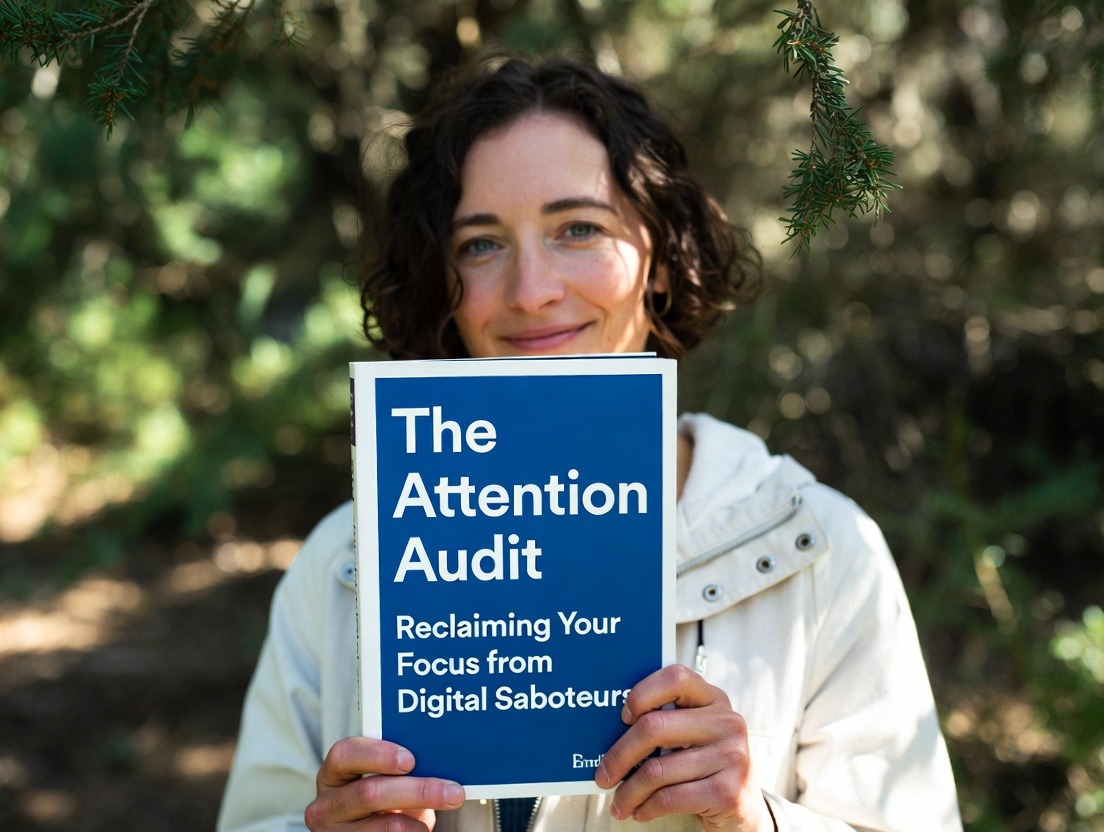
Our environment, particularly our digital environment, is engineered to fracture attention. Each notification, each app icon, each open browser tab is a potential “attentional capture”—a siren call pulling you away from your intended focus. The cost of these context switches is astronomically high in terms of cognitive load and time. Studies show it can take over 23 minutes to fully refocus on a task after an interruption.
The Workload Management Method requires you to conduct a ruthless Attention Audit—a systematic review and restructuring of your digital and physical workspace to serve your focus, not undermine it.
Part 1: The Digital Declutter.
Part 2: The Physical Workspace Reset.
Part 3: The Intentional Input Diet.
Just as you manage your task intake via Cognitive Triage, you must manage your information intake. Set specific times to check news or social media (e.g., once mid-morning, once after work). Unsubscribe from newsletters you don’t read. Be ruthless about what you allow into your mental space.
By conducting this audit, you dramatically reduce the “attentional tax” you pay every day. You reclaim sovereignty over your focus, which directly reduces the feeling of being mentally pulled in a dozen directions—a core component of overwhelm. For more strategies on creating a distraction-free environment for deep work, our blog is a continual source of updated tips and research.
A workload, by definition, is the sum total of commitments you have said “yes” to. Overwhelm is often the direct result of an imbalance between your capacity and your commitments. Therefore, a critical skill in The Workload Management Method is developing the Art of Principled Pushback—the ability to decline, renegotiate, or defer requests in a professional and respectful manner to protect your core priorities and capacity.
This is not about being obstinate or unhelpful. It is about being a strategic steward of your most valuable asset: your focused time and energy. A “no” to a non-essential request is a “yes” to your Deep Work, your strategic goals, your recovery, and your family.
The Mindset Shift:
Practical Tactics for Principled Pushback:
Using Data as Your Ally:
This is another moment where biometric awareness empowers you. If you are in a period of recovering from a stress load (indicated by a recovering HRV), you have objective data to support a need for protective boundaries. You can frame it not as reluctance, but as necessary stewardship of your performance: “Based on my current project load and my need to maintain sustainable performance, I need to pass on this to ensure I deliver on my existing commitments.”
Mastering this art reduces the incoming stream of tasks, giving you the space to execute brilliantly on the work that truly matters. It is the ultimate proactive defense against overwhelm. Learning to set these boundaries is part of a larger journey to sustainable performance, a topic we explore from various angles in our collection of user experiences and insights.
In a culture that glorifies busyness, recovery is often seen as passive, lazy, or unproductive. The Workload Management Method flips this script: Recovery is an active, skilled, and non-negotiable component of high performance. You cannot sustainably spend from your capacity reservoirs without deliberate and effective replenishment.
A Recovery Ritual is a planned sequence of activities designed to transition you from work mode to rest mode and actively facilitate physiological and psychological recovery. It’s the “cool down” for your brain.
Why Standard “Relaxation” Fails: Plopping on the couch and scrolling through your phone or watching TV is often low-grade stress, not recovery. The blue light suppresses melatonin, the content can be agitating, and the posture is restrictive. It’s passive consumption, not active restoration.
Components of an Effective Recovery Ritual:
Measuring Recovery Quality:
Your biometric device provides the ultimate feedback loop on your recovery ritual’s effectiveness. Are your evening wind-down practices correlating with higher HRV and more deep sleep? Is a late-night screen session causing a noticeable dip in sleep quality? This data allows you to refine your rituals for maximum impact.
By designing and protecting your recovery time with the same intention you design your work time, you ensure you start each day from a place of replenishment, not deficit. This is the flywheel of sustainable performance: effective work enables guilt-free recovery, and high-quality recovery enables more effective work.
All the techniques discussed so far—data tracking, triage, energy-aware scheduling, pushback, recovery—require maintenance. Without a regular touchpoint, even the best system will gather dust and overwhelm will seep back in through the cracks. The keystone habit of The Workload Management Method is The Weekly Alignment.
This is a dedicated, 60-90 minute block of time, ideally at the same time each week (Friday afternoon or Sunday evening are popular choices), where you step back from the fray to review, reflect, recalibrate, and plan. It is the captain’s meeting with yourself to chart the course for the next week.
The Weekly Alignment Agenda:
This ritual transforms your workflow from reactive to proactive. You enter each week with clarity, control, and a plan that respects your capacity. It is the master control panel for the entire Workload Management Method. For individuals and teams looking to implement such systematic reviews, we often share frameworks and templates within our broader resource library.
Understanding the principles of The Workload Management Method is one thing; weaving them into the fabric of your daily existence is another. This transition from theory to practice is where most systems fail—not due to flawed concepts, but from a lack of integration strategy. True behavior change doesn't happen through willpower alone; it happens through designed environments, keystone habits, and feedback loops that make the right action the default, easy action.
The first week of implementation is critical. It should be treated as an experiment, not a conversion. Start by choosing one or two foundational pillars to focus on, rather than attempting all eleven at once. For most people, the highest-leverage starting points are:
The goal is not perfection, but pattern recognition. Did honoring a "Yellow" day prevent an afternoon crash? Did that 3:00 PM walk actually improve your focus for the final hour of work? These small wins build the neural pathways and the trust in the system.
Creating Your Personalized Workload Management Dashboard:
A physical or digital "command center" reinforces the method. This isn't just a to-do list; it's a consolidated view of your key metrics and priorities.
This dashboard should take less than 5 minutes to update each morning and serves as your true north throughout the day. It actively displaces the overwhelming, reactive pull of an overflowing email inbox as your primary guide.
Overcoming the Inevitable Friction:
You will encounter resistance—both internal and external.
Integration is the art of making the method yours. It will look different for a remote software engineer, an in-office manager, and a freelance creator. The core principles are universal, but their expression is personal. The data from your smart ring provides the objective feedback to iterate toward your own perfect formula. For those curious about how others have personalized this approach, the real-world stories from our community offer a wealth of inspiration and practical tweaks.
Your most meticulously managed personal capacity can be obliterated in minutes by a dysfunctional team dynamic. "Collaborative overload"—a term coined by Rob Cross—refers to the crushing weight of excessive meetings, constant messaging, and cross-functional coordination that defines modern knowledge work. It is the silent killer of deep work and a primary vector for organizational overwhelm.
The Workload Management Method must scale beyond the individual to be truly sustainable. This involves both protecting your own capacity within the collective and advocating for practices that elevate the entire team's effectiveness.
Strategies for Self-Protection in a Collaborative Culture:
Strategies for Leading a Low-Overload Team:
If you are in a position of influence, you can architect a team culture that prevents overwhelm.
The data from individual wellness trackers can even inform team planning at a high level. If multiple team members are showing signs of cumulative stress (trending lower HRV), it's a powerful, objective indicator to leadership that deadlines may be unrealistic or resources are overstretched. It moves the conversation from subjective complaints ("We're too busy!") to objective risk assessment ("The team's physiological stress biomarkers indicate unsustainable load"). This data-driven approach to team health is at the heart of Oxyzen's vision for the future of work.
Even with perfect systems, periods of intense, unavoidable workload will arrive: the product launch, the fiscal year-end, the major client presentation. The traditional approach is "crunch mode"—all-nighters, canceled plans, and white-knuckling through on adrenaline and caffeine. This method extracts a horrific tax on health, relationships, and often, the quality of the final product due to error-prone, fatigued work.
The Workload Management Method offers a superior alternative: The High-Stakes Project Protocol. This is a pre-planned, deliberate intensification that respects biological limits, designed to deliver peak performance without precipitating a collapse.
Phase 1: The Pre-Mortem & Capacity Reservation (2-4 Weeks Before)
Phase 2: The Controlled Burn (During the Project)
Phase 3: The Mandatory Reset (After the Project)
This protocol transforms crisis mode from a chaotic, damaging event into a managed, high-performance sprint. You trade the long tail of burnout for a short, intentional recovery period. It proves that peak performance and sustainable practice are not opposites, but partners. For teams embarking on such sprints, having a shared resource for managing collective wellness and FAQs can be invaluable.
Workload management is not just about navigating today's tasks; it's about building a robust system that protects you from the chronic attrition known as burnout. Burnout is not a single bad week; it's the culmination of chronic workplace stress that has not been successfully managed. It is characterized by emotional exhaustion, cynicism, and a reduced sense of professional accomplishment.
Think of your long-term resilience as a financial portfolio. You wouldn't put all your assets in one volatile stock. Similarly, you shouldn't rely on a single source of replenishment (like vacation) to counteract years of stress withdrawal. You need a diversified Resilience Portfolio with ongoing investments.
The Four Asset Classes of Resilience:
Managing Your Portfolio:
Your weekly alignment is the perfect time to audit your resilience portfolio. "Did I invest in my physical assets this week? Have I neglected my social connections?" Your biometric data is your portfolio's performance report. A declining HRV trend is like a warning of a portfolio downturn—it signals you need to rebalance your investments, perhaps prioritizing sleep and social connection over extra work hours.
Building this portfolio turns resilience from a vague concept into a concrete, manageable practice. It ensures you are not just managing workload, but actively growing your capacity to handle life's inevitable pressures. This long-term view is integral to the broader story of why we create technology focused on holistic well-being.
A critical concern in any method reliant on technology is dependency: does the tool serve you, or do you serve the tool? The Workload Management Method advocates for a symbiotic relationship with technology, particularly with AI and biometric wearables like the Oxyzen ring. The goal is to use these tools to augment human intelligence and self-awareness, not replace it.
Biometrics as an Externalized Nervous System:
Your body is always communicating, but you are often too busy or distracted to listen. A smart ring acts as a real-time translator for your autonomic nervous system. It externalizes internal states, turning subtle cues into clear data. This is not about outsourcing your intuition; it's about enhancing your interoceptive awareness—your sense of the internal state of your body. Over time, users often find they can better sense when their HRV is likely low or their stress is high, because the data has trained their own attention.
AI as a Predictive Planning Partner:
The next evolution is predictive analytics. Imagine your wellness app, analyzing weeks of your biometric data, sleep patterns, and calendar, offering proactive suggestions:
This transforms the tool from a passive tracker to an active co-pilot in workload management. It handles the pattern recognition so you can focus on the decision-making and the work itself.
Guarding Against Data Anxiety:
The pitfall of any quantification system is "analysis paralysis" or anxiety over the numbers themselves. A low HRV score can become a source of stress. To prevent this:
The symbiotic relationship is achieved when you feel the technology has become a seamless, almost invisible part of your self-care routine—a gentle guide back to balance, not a demanding overseer. It should feel like having a supremely insightful personal coach who never sleeps, but whose advice you are always free to accept or decline. Navigating this relationship wisely is a common topic in our community discussions and support resources.
Ultimately, any method is only as strong as the mindset that underlies it. The cultural script we've inherited equates success with constant hustle, sacrifice, and the ability to withstand overwhelming pressure. The Workload Management Method requires a fundamental mindset shift: from a philosophy of heroic endurance to one of sustainable achievement.
This mindset is built on several core beliefs:
1. Rest is a Skill, Not a Reward.
In the old model, you work until exhaustion, then "earn" rest. This creates a destructive boom-bust cycle. The sustainable model views rest (strategic pauses, quality sleep, true downtime) as a skilled input that enables high-quality output. It is scheduled proactively, not taken reactively as a last resort. You are not resting from work; you are resting for work.
2. Progress is Nonlinear.
Our obsession with productivity porn—the perfectly color-coded calendar, the completed to-do list—implies that good days are linear, upward marches. Sustainable achievement embraces the biological truth of rhythms. Some days will be 90% deep work. Others will be 50% recovery and administrative tasks. Both are essential to the long-term trajectory. A "low-output" day where you recovered from stress is not a wasted day; it is an investment in the next five high-output days.
3. Your Capacity is Your Greatest Professional Asset.
You would not knowingly run machinery 24/7 without maintenance and expect it not to break down. Yet, we do this with our minds and bodies. The sustainable professional sees their cognitive clarity, emotional stability, and physical health not as personal concerns, but as core professional tools. Protecting them is not self-indulgence; it is asset management. Investing in a wellness tracker, a standing desk, or a therapy session is no different than investing in a faster computer or a better software license—it's an upgrade to your primary work instrument: you.
4. Completion is an Illusion; Balance is a Dynamic Process.
The fantasy of "getting everything done" so you can finally relax is a trap. The nature of knowledge work is that it is infinite. Therefore, the goal cannot be completion. The goal must be dynamic balance—the skillful, daily adjustment of demands and resources, guided by your values and your body's signals. It is a continuous dance, not a destination.
Adopting this mindset is the final, and most important, piece of the puzzle. It turns the techniques from a defensive struggle against overwhelm into a proactive art of living and working well. It allows you to derive satisfaction not just from what you produce, but from the quality of the process itself—from the focused calm of a deep work block to the genuine replenishment of a well-spent evening. This philosophy is woven into the very fabric of our brand's journey and values.
A critical failure of many productivity systems is that they optimize you for professional output at the expense of everything else. You become a efficient machine at work, only to come home too depleted to engage with family, pursue hobbies, or manage your personal life, which then becomes its own source of overwhelm. The Workload Management Method is holistic; its principles must scale down to protect and enhance your life beyond your job.
The Home Cognitive Triage:
Your personal life is full of "open loops" that create mental clutter: the pile of unsorted mail, the half-finished home project, the vague plan to "get in shape." Apply the same capture-and-closure process. Have a dedicated notebook or app for personal "stuff." Triage it weekly. "Organize garage" becomes "Buy 3 clear storage bins this Saturday." This frees mental RAM from domestic worries.
Energy-Aware Living:
Just as you schedule deep work for peak times, schedule demanding personal tasks accordingly. Are you sharpest in the morning? Use that time for personal writing, complex meal prep for the week, or tackling a financial review. Save low-energy times for tidying, watching a show, or listening to a podcast while folding laundry.
Strategic Pauses for Relationships:
The constant pull of work notifications can erode presence with loved ones. Implement "phone-free zones" or times—during meals, the first hour home, or weekend mornings. This is a Strategic Pause for your relationships, allowing for genuine connection that replenishes your emotional capacity. The data can be revealing here, too; you might notice your stress biomarkers decrease during these disconnected, quality times.
Passion Projects Without Pressure:
A hobby pursued with a punishing, output-focused mentality becomes another job. Apply the mindset of sustainable achievement. If you love painting, don't set a goal to "finish a painting a week." Instead, schedule "Thursday nights, 7-9 PM: Studio Time." The outcome is the engagement with the activity itself, which is replenishing. Let the projects unfold at their own pace, driven by joy, not obligation.
The Integrated Weekly Alignment:
Your weekly review should encompass all domains of life. Review not just work projects, but personal goals, family calendar, and health metrics. Plan the week's meals, schedule your workouts, and block time for your partner or children. This creates a unified, realistic view of your total life load, allowing you to make trade-offs consciously rather than having personal life consistently sacrificed to the urgent demands of work.
By scaling the method down, you create a virtuous cycle. A fulfilling personal life makes you more resilient and creative at work. Effective work management creates the time and energy for a rich personal life. They cease to be competing domains and become mutually reinforcing. For many, achieving this integration is the ultimate goal, a journey documented by numerous members of our community in their shared experiences.
You will have weeks where it all falls apart. A family emergency, a critical system outage at work, an illness—life is inherently unpredictable. During these times, the beautifully crafted schedule, the strategic pauses, and the meticulous triage system can seem like a distant fantasy. This is not a sign that the method has failed; it is the moment its deepest strength is revealed.
The Workload Management Method is not a rigid cage of rules; it is a flexible framework for navigation. Its true purpose is to give you the tools and awareness to navigate chaos effectively and return to balance as swiftly as possible.
The Crisis Protocol:
Learning from the Breakdown:
After you've recovered, conduct a calm post-mortem. What triggered the cascade? Was it truly unforeseeable, or were there warning signs (like an already-full plate)? How did the system's components hold up? Did having a trusted capture system prevent total mental fragmentation? This analysis strengthens the method for the future, turning the setback into a source of wisdom.
The measure of a system is not whether it prevents all storms, but how well it helps you sail through them and repair the ship afterward. This resilience in the face of reality is what separates a living, breathing practice from a rigid dogma that shatters under pressure. Building systems that can bend, not break, is a core tenet of our approach, detailed further in our resource library for long-term wellness.
The Workload Management Method, as described, is built on the cutting edge of today's accessible biometrics: HRV, sleep architecture, and resting heart rate. But this is merely the beginning. The frontier of physiological monitoring is advancing rapidly, promising a future where our understanding of "capacity" becomes exponentially more nuanced and predictive. Staying informed about these developments allows us to adapt our methods for even greater precision and prevention.
Beyond HRV: The Next Wave of Biomarkers
From Descriptive to Predictive and Prescriptive Analytics
The true power lies not in more data, but in smarter interpretation. The future is predictive wellbeing platforms. By combining your longitudinal biometric data with your calendar, task load, and even environmental data (weather, pollen count), AI will move beyond telling you what happened to predicting what will happen and suggesting what to do about it.
This shifts the paradigm from reactive management ("I'm overwhelmed") to proactive stewardship ("I can see the conditions for overwhelm forming and will adjust course now"). It embodies the ultimate goal of the method: prevention. Staying abreast of these innovations is part of committing to the method long-term, a topic we frequently explore in our research and development insights on the blog.
While individuals can achieve remarkable results with personal workload management, the greatest leverage point for preventing systemic burnout and unlocking collective performance is organizational culture. A company that proactively builds a Culture of Capacity doesn't just offer wellness benefits as a perk; it engineers its operations, norms, and leadership behaviors to sustainably support human performance.
This is not about mandatory biometric tracking (which raises serious ethical concerns). It's about creating an environment where the principles of the method are encouraged and enabled.
Pillars of a Capacity-Conscious Organization:
The Role of Technology (Ethically):
Organizations can provide access to wellness technology like Oxyzen rings as an optional benefit, with strict privacy protections. The data belongs to the employee, for their personal use. The company's role is to provide the tool and education, not the surveillance. The organizational benefit is an empowered, self-aware workforce that can better manage its own energy, leading to reduced absenteeism, lower turnover, and higher engagement.
When a company's values align with sustainable human performance, it attracts and retains top talent. It becomes a place where people can do the best work of their careers without sacrificing their health. This vision of a healthier, more human-centric workplace is central to our company's mission and the problem we aim to solve.
The Workload Management Method is not a static set of rules you learn once. It is a living practice that must evolve with you. Your capacity, priorities, and external demands will shift dramatically across different seasons of life: the intense early-career climb, parenting young children, caring for aging parents, pursuing a major career transition, or entering a semi-retirement "encore" career. Each season presents unique overload challenges and requires a thoughtful adaptation of the core principles.
Adapting the Method for Major Life Seasons:
The Constant: The Weekly Alignment
Through all seasons, the Weekly Alignment ritual remains the anchor. Its questions may evolve—from "What are my key deliverables?" to "What are my key intentions for my family and myself?"—but the act of stepping back, reviewing, and planning with self-compassion is the through-line that prevents any season from becoming a period of reactive chaos.
Embracing the method as a lifelong practice means giving yourself permission to change it. The tools, the metrics you prioritize, and the boundaries you set will all shift. The unwavering core is the commitment to listening to your capacity and designing your workload, in all its forms, to honor it. This journey of adaptation is part of the ongoing narrative we see in the lives of our users.
As we embrace a data-driven approach to managing our lives, we must navigate significant ethical questions. The Quantified Self movement promises self-knowledge through numbers, but it also risks reducing the rich, subjective experience of being human to a dashboard of metrics. The Workload Management Method must be applied with wisdom to avoid these pitfalls.
1. Data Privacy & Sovereignty:
Your biometric data is among the most personal information that exists. It can reveal your stress patterns, sleep habits, and potentially, your state of health.
2. The Risk of Metric Fetishization:
It is easy to become obsessed with "hacking" your HRV or sleep score, turning recovery into another performance sport. This creates a paradoxical stressor: "performance anxiety" about your recovery metrics.
3. Protecting Autonomy and Avoiding Determinism:
A predictive AI that suggests you cancel a meeting because of a data pattern must remain an advisor, not a commander. You must retain the final agency to override suggestions based on context, values, and intuition. The data might say you have low capacity, but you might choose to push through for a deeply meaningful reason (e.g., supporting a friend in crisis). The method should expand your choices, not limit them.
4. The Dangers of Comparison and Bio-Social Norming:
Wellness data can invite unhealthy social comparison. Your friend's HRV baseline is 20 points higher than yours—does that make them "healthier" or "more resilient"? No. Biomarkers are highly individual. Trends within your own biology are meaningful; comparisons between individuals are often meaningless and demoralizing.
Applying the method ethically ensures it remains a tool for human flourishing, not a source of new anxieties or a mechanism of control. It keeps the focus on the ultimate goal: not a perfect biometric chart, but a life lived with more intention, presence, and sustainable vitality. Navigating these questions responsibly is a commitment we take seriously, as outlined in our principles and public FAQs.
We have traversed the landscape of The Workload Management Method—from its neurobiological foundations to its future-facing applications. Now, it's time to synthesize this knowledge into a actionable, personalized blueprint. This is not a one-size-fits-all checklist, but a guided process to create your system.
Step 1: The Foundation Audit (Week 1)
Step 2: The Core Habit Installation (Weeks 2-4)
Choose ONE of these to master first. Add no others until it feels automatic.
Step 3: The Integration Phase (Month 2 & 3)
Step 4: The Advanced Personalization (Ongoing)
Your Blueprint Mantras:
This blueprint is yours to draw, erase, and redraw. The goal is not a flawless execution of every technique, but the cultivation of a profound self-awareness and a set of responsive tools that allow you to navigate your unique workload with grace and resilience. For continuous support and new ideas as you build your system, remember that our blog is a living resource for this ongoing journey.
We began this exploration in the familiar, frantic waters of overwhelm—that feeling of being pulled underwater by a riptide of demands, gasping for air and control. The Workload Management Method is the lifeline and the navigation chart. It does not promise to calm the sea of modern life, but to teach you how to build a more seaworthy vessel and become a more skillful captain of your own energy, attention, and time.
The shift is from overwhelm to orchestration.
Overwhelm is chaotic, reactive, and depleting. It feels like being a single instrument blasted by noise from all sides.
Orchestration is intentional, proactive, and generative. It is the conscious arrangement of your resources—cognitive, emotional, physical, temporal—to create a harmonious and impactful performance.
This orchestration is made possible by two profound allies:
The Oxyzen smart ring and the philosophy behind it represent one powerful expression of this second ally. By making the invisible visible—your stress, your recovery, your readiness—it grants you the superpower of foresight. It allows you to manage your workload not from a place of guesswork and guilt, but from a place of evidence and self-compassion.
This journey is not a destination with a finish line. It is a practice, like yoga or meditation. There will be days when you flow effortlessly, your schedule a masterpiece of aligned energy and meaningful output. And there will be days when the system collapses, and you end up binge-watching TV with a bag of chips. The method is not nullified by the bad days; it is defined by how quickly and kindly you use its principles to return to center.
The ultimate goal is freedom. Not freedom from work, but freedom within your work. The freedom to engage deeply without fear of burnout. The freedom to disconnect completely without anxiety. The freedom to know that your worth is not measured by your busyness, but by the quality of your attention and the integrity of your presence in all facets of your life.
We invite you to begin. Start with one pause. One weekly review. One moment of checking in with your breath before reacting. Let that small action be the first note in the beautiful, complex, and uniquely yours symphony of a well-managed life.
Your Trusted Sleep Advocate: Sleep Foundation — https://www.sleepfoundation.org
Discover a digital archive of scholarly articles: NIH — https://www.ncbi.nlm.nih.gov/
39 million citations for biomedical literature :PubMed — https://pubmed.ncbi.nlm.nih.gov/
Experts at Harvard Health Publishing covering a variety of health topics — https://www.health.harvard.edu/blog/
Every life deserves world class care :Cleveland Clinic - https://my.clevelandclinic.org/health
Wearable technology and the future of predictive health monitoring :MIT Technology Review — https://www.technologyreview.com/
Dedicated to the well-being of all people and guided by science :World Health Organization — https://www.who.int/news-room/
Psychological science and knowledge to benefit society and improve lives. :APA — https://www.apa.org/monitor/
Cutting-edge insights on human longevity and peak performance:
Lifespan Research — https://www.lifespan.io/
Global authority on exercise physiology, sports performance, and human recovery:
American College of Sports Medicine — https://www.acsm.org/
Neuroscience-driven guidance for better focus, sleep, and mental clarity:
Stanford Human Performance Lab — https://humanperformance.stanford.edu/
Evidence-based psychology and mind–body wellness resources:
Mayo Clinic — https://www.mayoclinic.org/healthy-lifestyle/
Data-backed research on emotional wellbeing, stress biology, and resilience:
American Institute of Stress — https://www.stress.org/


