


Workplace Stress and Work-Life Integration: Beyond Balance
Strategies include noise-cancelling headphones, visual barriers, scheduled "focus time," and agreements about quiet zones.
Strategies include noise-cancelling headphones, visual barriers, scheduled "focus time," and agreements about quiet zones.
%402x.svg)
The alarm screams at 6 AM, a digital siren for another day in the grind. You haven't even opened your eyes, but your mind is already racing through a mental checklist: the 8:30 AM presentation, the overdue project report, the daycare drop-off, the grocery run for dinner. A low-grade thrum of anxiety, your new normal, has already settled into your chest. You reach for your phone—37 new emails, 12 Slack pings. The workday hasn't officially begun, but it’s already colonized your personal space.
For decades, we’ve been sold a compelling, yet ultimately flawed, ideal: work-life balance. It conjures images of a serene scale, perfectly poised with "work" on one side and "life" on the other. We strive for this elusive equilibrium, believing that if we can just allocate our hours correctly, we’ll find peace. Yet, for most modern professionals, this pursuit feels like a cruel joke. The scale is perpetually tipped, and the constant effort to right it becomes a primary source of stress itself. The boundaries between office and home have dissolved, blurred by smartphones, hybrid schedules, and a culture of perpetual availability. The result isn’t balance; it’s a messy, exhausting blend where we are physically present but mentally absent, constantly switching contexts but never fully engaged in any.
This chronic state of divided attention and sustained pressure has a name: workplace stress. But to call it mere "stress" is to undersell its systemic impact. It’s a silent epidemic eroding our health, fracturing our relationships, and stifling our potential. It manifests in the midnight cortisol spike checking a work email, the Sunday scaries that start Saturday afternoon, and the pervasive fatigue that coffee can no longer mask.
But what if the problem isn’t our failure to achieve balance, but the very metaphor we’re using? What if, instead of trying to segment our lives into competing halves, we aimed for something more fluid, more sustainable, and more human?
This article moves Beyond Balance to explore a new paradigm: Work-Life Integration. This isn't about blending work and life into a 24/7 slog. It’s about intentionally designing a life where professional ambitions and personal values can coexist, not in perfect equilibrium, but in a dynamic harmony that supports your overall well-being. It’s about leveraging data, not just willpower, to understand your unique stress signatures and reclaim agency over your energy, focus, and time.
Here, technology isn’t the villain of our burnout story; it can be a powerful ally. Emerging tools, like the advanced biometric tracking offered by smart rings from innovators like Oxyzen, provide an unprecedented window into our physiological responses to stress. They move us from subjective feeling—“I’m overwhelmed”—to objective understanding—“My heart rate variability has dropped 30% during back-to-back meetings, and my sleep latency has doubled.” This is the foundation of intelligent integration: making visible the invisible costs of our current workflow, so we can design a better one.
We are on the cusp of a revolution in personal well-being science, where data empowers personal change. The journey begins by dismantling the myth of balance and confronting the true anatomy of modern workplace stress.

We often wear "busyness" as a badge of honor, a proxy for productivity and importance. But workplace stress is a distinct and more sinister creature. It's the physiological and psychological response to chronic, excessive demands and pressures that outstrip our perceived resources and capabilities. It’s not a hectic day; it’s the relentless, accumulated weight of hundreds of hectic days.

Modern work has evolved, and so have its primary stress agents. Three interconnected forces are primarily to blame:
1. The Always-On Digital Tether: The smartphone dissolved the physical barrier of the office. Slack, Teams, and email create a low-grade, persistent expectation of responsiveness. This ambient availability generates "anticipatory stress"—the brain’s background process of waiting for the next ping or notification, preventing true cognitive downtime. Studies show that even the presence of a smartphone reduces available cognitive capacity.
2. Blurred Boundaries in the Hybrid Era: While offering flexibility, the hybrid model has created role ambiguity and "context collapse." Your home is now your office, your gym, your school, and your sanctuary—all at once. The mental load of constantly switching hats—from professional to parent to partner, often within minutes—is cognitively exhausting and emotionally depleting.
3. The Productivity Paradox & Output Obsession: In an age of digital tools meant to save time, we are measured by ever-increasing output. The focus has shifted from hours worked to tasks completed, creating an infinite treadmill. The "performance self," constantly curated and optimized, must now be "on" at all times, leading to a phenomenon psychologists call ego depletion, where our willpower and self-regulatory resources are steadily drained.
Stress is not an abstract concept; it’s a measurable, physiological event. When the brain perceives a threat (a looming deadline, a tense email), it triggers the hypothalamic-pituitary-adrenal (HPA) axis, flooding the body with cortisol and adrenaline. This "fight-or-flight" response is life-saving for acute threats but corrosive when triggered chronically by daily work pressures.
The biometric markers are clear:
This is where passive, continuous biometric tracking becomes revolutionary. A device like a smart ring from Oxyzen can monitor HRV, sleep stages, and resting heart rate nightly, providing an objective dashboard of your nervous system’s health. You can’t manage what you don’t measure. For a deeper dive into the science behind these metrics, our blog features extensive resources on interpreting your biometric data.
By understanding stress not as a feeling but as a series of biological events, we can begin to intervene with precision. The first step is recognizing that the old goal of "balance" is ill-equipped to handle these 21st-century stressors. We need a new framework.
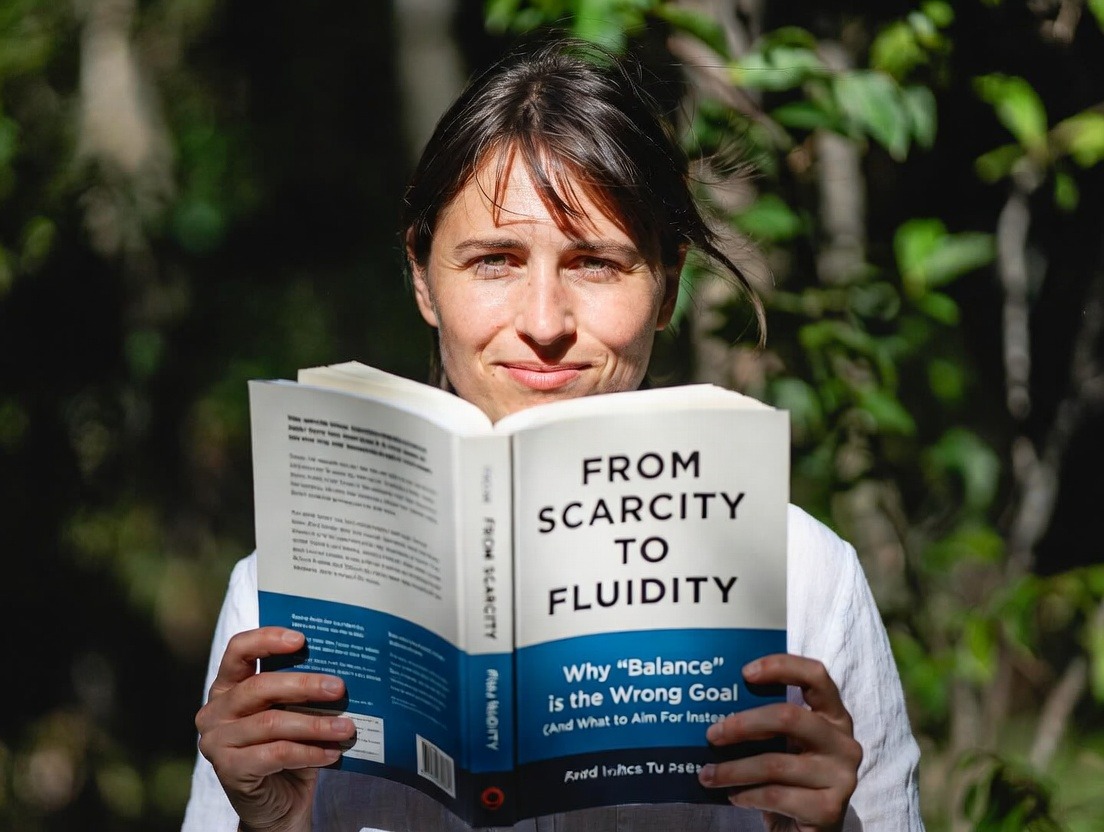
The pursuit of work-life balance is fundamentally a pursuit of scarcity. It assumes time and energy are finite pies to be divided, with every slice given to work inherently taking away from life, and vice-versa. This creates a zero-sum mindset, where success in one domain feels like a failure in the other. The working parent leaves the office at 5 PM and feels guilt; the person taking a vacation checks email and feels shame. The scale is always tipping, and we are always to blame.
This paradigm is broken because it fails to reflect the dynamic, interconnected nature of a human life. We are not compartmentalized beings. A personal crisis affects work focus; a work triumph fuels personal energy. The goal shouldn't be rigid separation, but intentional integration.
Work-Life Integration is a philosophy that moves beyond the binary of work vs. life. It proposes designing a life where professional and personal spheres can coexist and even synergize, flowing together in a way that supports your overarching values and well-being. Think of it not as a scale, but as a river with many tributaries—sometimes work runs stronger, sometimes family, sometimes health, but they all contribute to the whole.
The core principles of Integration are:
This shift cannot be powered by guesswork. How do you know your energy cycles? How do you measure the impact of a "productive" workday on your sleep? This is where biometric intelligence becomes the cornerstone of effective integration.
Imagine ending your day and receiving a Readiness Score—not just a sleep score, but a holistic metric factoring in your sleep quality, HRV, resting heart rate, and even temperature trends. This score, provided by devices like the Oxyzen ring, tells you your body’s capacity to handle stress and engagement for the day ahead. A low score isn't a failure; it's critical data. It tells you, "Your nervous system is fatigued. Today, prioritize recovery, delegate demanding tasks, and schedule a digital sunset."
This transforms integration from a theoretical concept into a daily, actionable practice. You move from reacting to stressors to proactively designing your workload and personal time based on your body’s actual state. You learn, for instance, that back-to-back video calls tank your HRV, so you insist on buffer breaks. You see that a 20-minute afternoon walk significantly improves your sleep depth, so you integrate it as non-negotiable.
This data-driven self-awareness is the antidote to burnout. It empowers you to have informed conversations with employers about flexible schedules, to set boundaries with evidence, and to advocate for your well-being not as a luxury, but as a prerequisite for sustainable performance. To understand how this technology fits into a larger journey, you can explore our story and the vision behind creating tools for empowered well-being.
The promise of integration is a life that feels whole. But to build it, we must first dismantle the biggest barrier: the invisible architecture of our work culture.
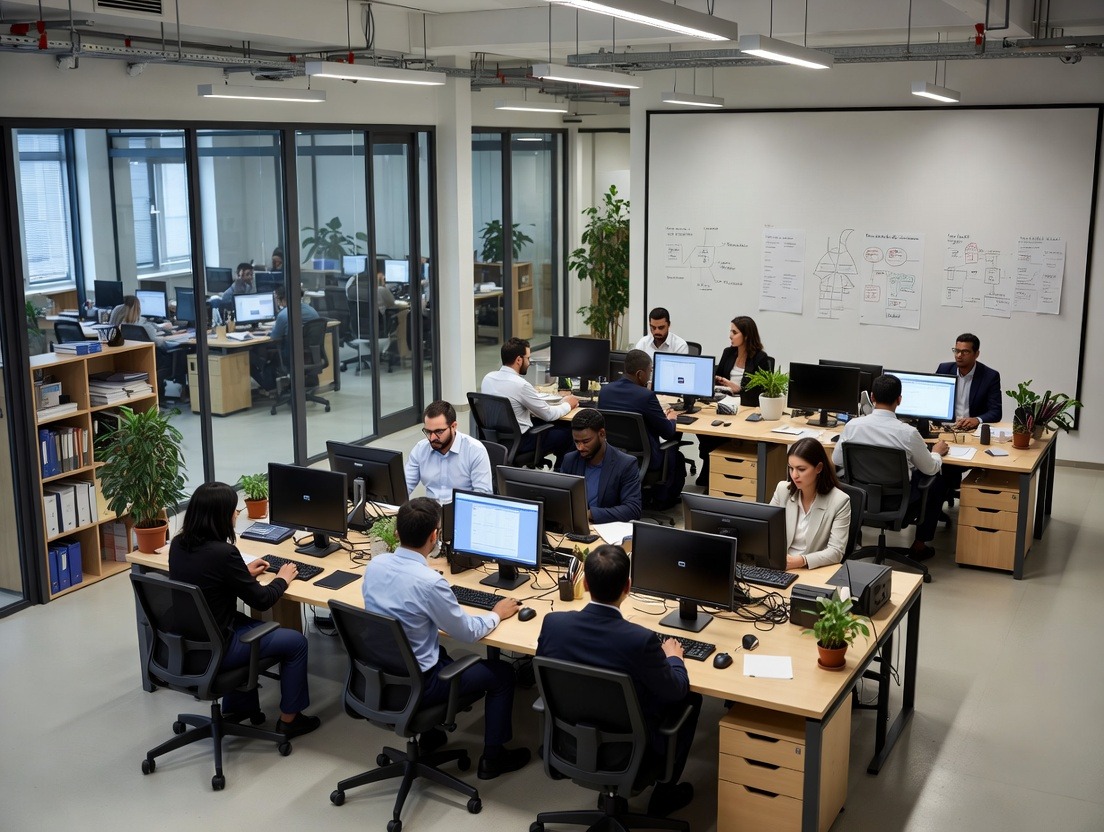
Our stress is often personalized. We blame our inability to "handle it all," our poor time management, our lack of resilience. But while personal strategies are vital, they are defenses erected against a system often designed, unintentionally or not, to create the very pressure we seek to manage. To move toward integration, we must examine two powerful, often invisible, forces: organizational culture and the design of the tools we use.
Company culture is the water in which employees swim. When that water is infused with hustle culture—the glorification of overwork, sleeplessness, and constant busyness as markers of dedication and success—it creates a toxic environment. Subtle signals are everywhere:
This culture doesn't just increase hours; it inculcates psychological presenteeism—the feeling that you must be constantly mentally engaged with work to be valued. It makes true disconnection feel like a professional risk.
Our digital tools are not neutral. Their business models are often predicated on capturing and holding our attention for as long as possible. This design philosophy has leaked into enterprise software, creating what productivity expert Nir Eyal calls "interruption factories."
This designed chaos directly contradicts our neurological need for focused attention blocks to do meaningful work. It keeps us in a state of reactive, shallow busywork, which is both less productive and more draining.
The shift from a burnout culture to an integration-friendly culture requires more than just perk-additions (like nap pods). It requires a fundamental redesign of expectations and tools, grounded in evidence.
This is where aggregated, anonymized biometric data can be transformative for forward-thinking organizations. Imagine a company that, with full employee consent and privacy safeguards, views trends in aggregate Readiness Scores or HRV across teams. They might discover:
This moves the conversation from subjective complaints ("We're stressed") to objective organizational health metrics. Leaders can make policy decisions—about meeting norms, email protocols, after-hours communication, and workload planning—based on their actual impact on human performance systems. They can champion integration not as a fluffy benefit, but as a strategic imperative for innovation, retention, and resilience.
For employees, using personal biometric data provides the language and evidence to advocate for change. You can approach your manager not with a vague feeling, but with a observation: "I've noticed my sleep quality and recovery metrics drop significantly when I have more than four hours of video conferences in a day. Can we discuss strategies to make our meetings more focused or asynchronous?"
By making the invisible architecture visible, we can begin to redesign it. The next step is equipping ourselves with the most foundational tool for this new paradigm: a radical understanding and optimization of our sleep.
In the quest for productivity, we have perpetually mortgaged our sleep, treating it as a flexible commodity to be squeezed by the demands of work and life. This is a catastrophic error. Sleep is not downtime; it is the most critical, non-negotiable active recovery and integration phase for the human brain and body. For a work-life integration model to succeed, high-quality sleep is its bedrock. Without it, all other strategies for managing stress and energy will crumble.
When we cut sleep short, we don't just lose hours. We incur a compound-interest debt that extracts payment from every domain of our lives:
Not all sleep is equal. Understanding your sleep architecture—the cyclical progression through light, deep, and REM sleep stages—is like getting a nightly report card on how well your nervous system is recovering from the day's stresses.
A device that tracks sleep stages, like the Oxyzen smart ring, provides profound insight. You might see that on days with high work anxiety, your sleep latency increases and your deep sleep percentage drops. Or that alcohol, often used to "unwind," devastates your REM sleep. This data shifts sleep from a vague concept of "rest" to a precise, manageable pillar of health.
Armed with this knowledge, you can practice true sleep-centric integration:
By honoring sleep as the foundation, we build a self that is resilient, focused, and emotionally regulated—a self capable of navigating the fluid demands of an integrated life. From this foundation of recovery, we can now explore the active skill of managing our most precious resource: our energy.
Time management is a lie. We manage 24 hours, but we do not possess 24 hours of equal capacity. An hour at 9 AM, fresh after a good night's sleep, is not the same as an hour at 4 PM, after a day of decision fatigue and back-to-back meetings. The core currency of integration is not minutes, but energy. Mastering your personal energy economics—the inflow, expenditure, and renewal of your physical, mental, and emotional resources—is what allows for sustainable high performance and personal fulfillment.
Our bodies don't operate on a 24-hour clock alone. We also have ultradian rhythms—biological cycles that repeat multiple times throughout the day. The most relevant for work is the Basic Rest-Activity Cycle (BRAC), a 90-120 minute rhythm where we naturally move from high alertness into a physiological dip.
During the high-alertness phase, we can enter a state of deep focus or "flow." After about 90 minutes, the body signals for a break through symptoms like restlessness, hunger, difficulty concentrating, or increased errors. Ignoring these signals and pushing through with caffeine or willpower leads to a rapid drain of energy reserves and a buildup of stress hormones.
The integrated individual learns to synchronize with, not fight, these rhythms. This means planning work in 90-120 minute "sprints" focused on a single, high-value task, followed by a deliberate 15-20 minute recovery period to truly disengage—to walk, stretch, meditate, or have a non-work conversation.
Energy is multidimensional. To avoid burnout and thrive, we must invest in and renew all four quadrants:
An integrated life requires audits across all four. Are you investing only in mental energy (work) at the expense of physical (no exercise) and emotional (no social connection)? The inevitable result is bankruptcy.
This is where continuous biometrics act as your personal CFO for energy. You move from guessing to knowing.
Mastering energy economics flips the script. You stop being a victim of your calendar and start being the architect of your capacity. It allows you to be fully present and effective in your work and fully available and engaged in your personal life, because you are strategically renewing the resources required for both. For practical tips on applying these principles, our FAQ page addresses common questions on using data for daily energy management.
With a foundation of sleep and an understanding of energy, we must now address the practical tool that makes integration possible: the art of setting boundaries in a boundary-less world.
In the integrated life, presence is the prize. Yet, our cognitive real estate—the space for deep thought and meaningful engagement—is under constant siege by digital trespassers. Notifications, endless feeds, and the myth of multitasking have shattered our attention into fragments. To achieve integration, we must become ruthless guardians of our focus, building digital boundaries that protect our energy and allow us to be wholly in whatever we are doing, whether it's a work project or a family dinner.
Every ping, buzz, or badge is more than an interruption; it's a cognitive hijacking. Research by Gloria Mark of UC Irvine shows it takes an average of 23 minutes and 15 seconds to return to the original task after an interruption. But the cost is deeper:
Boundaries are not walls; they are gates. You control what gets in and when. Here’s how to architect your digital environment:
1. The Notification Purge: Go through every app on your phone and computer. Turn off all non-essential notifications. Essential = only from a human who needs your immediate, time-sensitive response (e.g., your child's school, a true work emergency system). Email, social media, news, and most work chat apps are not essential. Schedule 2-3 times a day to process these batches.
2. Create "Focus Sprints" with Technology: Use app blockers (Freedom, Cold Turkey) or focus modes on your devices to create immovable digital boundaries during your 90-120 minute deep work sprints. During these periods, your digital world should look like it's 1995—silent and incapable of distraction.
3. Implement Communication Protocols: Advocate for team or company norms. Examples: "No expectation of response after 6 PM or on weekends." "Urgent matters use the phone call function." "Slack/Teams status set to 'Deep Focus' should be respected like a closed office door." This creates a culture of respect for cognitive space.
This is where your biometric data provides powerful positive reinforcement. After a week of implementing strict digital boundaries and focused work sprints, check your trends:
This data transforms boundary-setting from a rigid discipline into an act of self-care with visible, physiological rewards. You can literally see your body and mind thanking you for the protection.
Furthermore, use your device to practice conscious transitions. When finishing work, engage in a 10-minute "shutdown ritual"—close tabs, make a list for tomorrow, then take a walk without your phone. Watch how your heart rate drops and your heart rate variability begins to improve as you consciously signal to your body, "Work is done. I am now present here."
By reclaiming your attention, you reclaim your agency. You stop being a reactive node in a network and start being the conscious author of your day. This sets the stage for the most challenging aspect of integration: navigating the emotional landscape and the relationships within it.
Work-life integration isn't a sterile efficiency hack; it's lived in the messy, beautiful realm of human emotion. The blurring of domains means the emotional spillover from work can poison home life, and personal worries can cloud work judgment. Furthermore, the very act of setting boundaries and managing energy can trigger guilt, anxiety, and interpersonal friction. Mastering the emotional landscape is therefore not a side note to integration; it is its core relational work.
The command to "leave your personal problems at the door" is neurologically impossible. The brain regions that process work stress (the amygdala, prefrontal cortex) are the same ones that process personal stress. When you're anxious about a performance review, that underlying anxiety doesn't switch off when you hug your partner; it manifests as irritability or distractedness. Similarly, a fight with a loved one can deplete the emotional energy needed for patient collaboration at work.
Integration acknowledges this spillover. Instead of futilely trying to compartmentalize, it encourages emotional awareness and processing. The goal is to recognize the emotion, understand its source, and choose a context-appropriate response, rather than letting it unconsciously dictate your behavior.
When you start saying "no" to late meetings to protect family dinner, or turn off notifications to focus, you may encounter external pushback. More insidiously, you will almost certainly face internal pushback—guilt. This guilt is the programmed response of an old paradigm, where worth was tied to perpetual availability.
Data can be a powerful ally here, externalizing your justification. The conversation shifts from "I don't feel like working late" to "My biometric data shows my recovery and next-day capacity are severely impacted when I work past 7 PM. To bring my best self to this project tomorrow, I need to protect my downtime tonight." It's a reason, not an excuse.
Our emotions have a physiological footprint long before we consciously acknowledge them. Anxiety, for instance, often begins with a subtle increase in heart rate and a decrease in HRV. A smart ring can serve as an objective early-warning system for emotional overwhelm.
By using objective data to understand subjective states, we gain a powerful tool for emotional regulation. We can intervene earlier, communicate more clearly, and navigate the complex emotional exchanges of work and personal life with greater grace and self-awareness. For real-world examples of how individuals use these insights, our testimonials page shares stories of improved relationships and emotional resilience.
This emotional mastery prepares us for the ultimate expression of an integrated life: aligning our daily actions with a deeper sense of purpose and contribution.
At its highest level, work-life integration transcends the management of time, energy, and stress. It becomes a quest for coherence—a life where what you do professionally and personally is meaningfully connected to who you are and what you believe matters. This is the domain of purpose and contribution. When your work feels aligned with your values and contributes to something larger than yourself, it ceases to be a drain and becomes a source of energy. Conversely, when personal time is spent on activities that feel meaningful, it replenishes you for professional challenges.
Psychologists refer to the stress caused by acting against one's core values as value dissonance. This is the salesperson who values honesty but must push a flawed product, or the parent who values connection but is constantly too drained from unfulfilling work to be present. This dissonance is one of the most profound and insidious sources of burnout. It creates a chronic, soul-level fatigue that no amount of sleep can cure.
Conversely, value alignment generates intrinsic motivation and resilience. Challenges become missions. Effort feels meaningful. You can work long hours on a project you believe in without the same corrosive stress as working long hours on a project you find empty or unethical.
Integration asks you to craft a cohesive narrative about your contribution to the world, one that encompasses both your professional output and your personal actions.
While purpose is qualitative, your physiological data can provide startlingly clear feedback on alignment versus dissonance.
This data isn't meant to tell you to quit your job tomorrow. It's meant to inform a gradual job crafting process. Can you delegate or minimize the tasks that cause the worst physiological distress? Can you seek out or propose more projects in your "alignment zone"? Can you increase the proportion of your personal time spent on value-aligned activities to counterbalance necessary but draining work?
Ultimately, integration at this level is about becoming the author of a life that feels true. It recognizes that we are whole people, and fulfillment cannot be segmented. The final piece of this first portion of our exploration is to look forward, to see how the very technology that contributed to our fragmentation is now evolving to champion our wholeness.
We stand at an inflection point in the history of personal well-being. The "Quantified Self" movement of the past decade—tracking steps, sleep, calories—was often fragmented and surface-level. It provided data, but not always wisdom. The next evolution, already underway, is Biometric Intelligence (BI). This is the sophisticated synthesis of multiple, high-fidelity physiological data streams (like HRV, skin temperature, blood oxygen, sleep architecture) with contextual AI to provide not just numbers, but actionable insights, predictions, and personalized guidance for a life of integration. This is the future where technology doesn't distract, but protects; doesn't demand, but guides.
The current generation of devices, like advanced smart rings, already moves beyond simple tracking. The future lies in predictive analytics:
We have established that stress is a physiological event with measurable biomarkers. This understanding unlocks a powerful possibility: we can use the body’s signals not just as a warning system, but as a training ground for the mind. By creating a conscious feedback loop between our physical state and our mental awareness, we can cultivate the two core competencies of an integrated life: mindfulness and resilience. This is where the abstract concept of "well-being" becomes a tangible, trainable skill.
For centuries, Eastern contemplative practices have taught that the mind and body are one. Modern science and technology now provide the tools to see this unity in real-time. Biofeedback is the process of using electronic monitoring to convey information about physiological processes like heart rate, skin conductance, or muscle tension. The goal is to gain voluntary control over these normally involuntary functions.
A smart ring that provides real-time heart rate and HRV data is a powerful, accessible form of biofeedback. It makes the invisible visible. When you feel a flush of anxiety, you can glance at your device and see the corresponding heart rate spike. This simple act of non-judgmental observation is the first step of mindfulness. It creates a slight pause between stimulus and reaction, allowing you to say, "Ah, this is my body's stress response. It is a physiological event, not my entire reality."
Resilience is not the absence of stress; it is the speed and efficiency of recovery from a stressor. Biometric intelligence allows us to train for faster recovery, just as an athlete trains for faster mile times.
One of the most effective methods is heart rate variability biofeedback (HRV-B). Techniques like coherent breathing (breathing at a steady rate of around 5-6 breaths per minute) have been shown to increase HRV and synchronize the rhythms of the heart and respiratory system, creating a state of "physiological coherence." In this state, the nervous system is balanced, cognitive function is enhanced, and emotional regulation is improved.
Here’s how you can practice with a biometric device:
This trained awareness transforms daily integration challenges. Let's walk through two scenarios:
This loop—Sense → Measure → Acknowledge → Regulate—becomes a self-reinforcing cycle of empowerment. You are no longer at the mercy of your reactions. You become the operator of your own human machinery. For those curious about the practical, daily application of these techniques, our blog offers guided practices combining breathing exercises with biometric awareness.
Building this internal resilience is the cornerstone of sustainable integration. However, our environment and the people in it play an equally critical role. The next essential step is to translate this personal practice into the realm of communication and collaboration.
One of the greatest challenges in moving toward work-life integration is the social and professional conversation around it. Expressing needs for focus time, recovery, or flexibility can feel vulnerable. We fear being perceived as lazy, uncommitted, or difficult. This is where shifting from subjective feelings to objective data transforms the dialogue. Biometric information provides a neutral, authoritative language that depersonalizes the request and frames it as a shared interest in sustainable performance and well-being.
Consider the difference between these two approaches to a manager:
The second approach is collaborative, strategic, and performance-oriented. It aligns your personal need with a business outcome (being sharp for the sprint review). It presents you as someone who is self-aware and managing a valuable asset—your capacity—responsibly.
The most progressive organizations understand that human sustainability is a competitive advantage. You can use your personal insights (even at a high level, without sharing raw data) to advocate for team-wide or cultural shifts that benefit everyone.
This data-informed advocacy helps build a culture of psychological safety, where discussing human limits and optimal work design is not taboo, but a mark of professional sophistication.
Integration extends to personal relationships. Data can also help communicate needs to partners, family, or friends in a way that avoids blame.
By externalizing the "reason" onto neutral data, you remove the stigma from self-care. It becomes about optimizing the human system, not about being antisocial or unavailable.
This new language of integration, grounded in the shared reality of human physiology, is what allows the paradigm to scale from a personal practice to an interpersonal and organizational norm. As we learn to communicate our needs effectively, we naturally begin to design our days and environments to support them.
With a foundation of sleep, an understanding of energy, tools for focus, emotional regulation skills, and a language for communication, we now arrive at the practical synthesis: the daily blueprint. Work-life integration is not a theoretical concept; it is a series of intentional choices made throughout the day. This framework is not a rigid schedule, but a flexible, principle-based approach that you can adapt using your own biometric feedback as your guide.
The first hour of the day sets the neurological tone. Resist the digital reflex. Your integrated morning ritual should be a claiming of your own consciousness before the world's demands pour in.
Structure your workday as a series of sprints and recoveries, not a marathon.
The transition from "work mode" to "personal mode" is the most critical and often failed integration point. A deliberate shutdown ritual signals to your brain that work is over, allowing for true psychological detachment.
Just as the day has rhythms, so does the week. Use weekends not as a frantic catch-up on life, but as a rebalancing of your energy portfolio.
This framework is a starting template. Its success is measured not by perfect adherence, but by the biometric feedback it generates. Is your HRV trending upward? Is your sleep score consistently high? Do you feel a greater sense of agency and presence? This is the data that matters. For more personalized ideas and user-tested routines, you can often find inspiration in the experiences shared by our community.
An integrated day feels purposeful, rhythmic, and sustainable. It is the ultimate expression of moving beyond the frantic struggle for balance and into the graceful flow of a life consciously designed.
The pursuit of an integrated life can sometimes be misconstrued as a solitary, self-optimization journey. Nothing could be further from the truth. Human beings are inherently social creatures; our nervous systems are wired for connection. Chronic workplace stress and burnout are profoundly isolating experiences. Therefore, true integration must actively weave a supportive social fabric—both professionally and personally—that sustains us, holds us accountable, and provides the connection that buffers against stress. This isn't about networking for advancement; it's about cultivating communities for resilience.
Social connection isn't just a nice-to-have; it's a biological imperative. Positive social interaction triggers the release of oxytocin, a hormone that dampens the activity of the amygdala (the fear center) and reduces cortisol levels. This process, known as co-regulation, is where our nervous systems positively influence one another. A calming presence can literally lower our heart rate. Conversely, toxic or lonely environments keep us in a state of defensive high-alert.
In the context of work-life integration, this means:
The distributed, hybrid work model poses a unique challenge to this social fabric. We must be intentional about creating connection where casual collisions no longer happen.
Strategies for Integrated Social Design:
Your biometrics can provide surprising insights into your social well-being, serving as a guide to nurture this critical dimension.
By viewing social connection as a core pillar of integration—as vital as sleep or focused work—we build a life that is not only productive but also nourished and resilient. This leads us to confront one of the most pervasive obstacles to this wholeness: the deep-seated cultural myths that equate busyness with worth.
At the heart of our collective struggle with stress and imbalance lies a powerful, often unconscious, story: that our worth is synonymous with our output, our busyness is a badge of honor, and rest is a reward for exhaustion. This "Hustle Identity" is the internalized engine of burnout culture. To achieve sustainable work-life integration, we must consciously deconstruct this narrative and author a new, more humane definition of success—one that your biometric data can help validate and reinforce.
The hustle identity doesn't emerge in a vacuum. It's cultivated by:
This identity is seductive because it provides a clear, if punishing, metric for self-evaluation: I am what I accomplish.
Your body’s data is the ultimate truth-teller against the hustle lie. It cannot be argued with. When you live by the hustle code, your biomarkers tell the real story:
This data provides the objective evidence needed to confront the subjective story. You can no longer tell yourself "I'm thriving on the hustle" when your physiology is screaming otherwise. It creates a cognitive dissonance that can be the catalyst for real change.
The new narrative is not one of laziness, but of strategic renewal. It shifts the core question from "What did I produce today?" to "How sustainably am I able to contribute my best self?"
Steps to Rewrite Your Narrative:
This new identity—the Integrated Professional—understands that the highest performance is a function of cycles: effort and recovery, focus and diffuse thinking, engagement and detachment. Success is measured over a quarter, a year, a lifetime, not in daily crossed-off tasks. This long-term perspective is the final, strategic layer of integration.
Work-life integration is not a static state you achieve and forever maintain. Life is dynamic. You will face promotions, career changes, parenthood, caring for aging parents, personal health challenges, and global upheavals. Each season brings new demands that can shatter a rigid system but can be navigated by a fluid, resilient one. The ultimate test of integration is not how you function in a calm week, but how you adapt and sustain your core well-being through inevitable disruption.
Integration accepts that the blend of work and life will change—sometimes radically. A new baby means life demands 90% of your energy for a season. A critical launch at work might require a temporary 70% professional focus. The key is conscious, temporary recalibration, not accidental collapse.
Just as animals store fat for winter, we must build resilience capital—excess capacity in our nervous system—during easier seasons to draw upon in hard ones. This is proactive integration.
Ultimately, work-life integration viewed as a long game is about designing a life architecture that allows you to bloom across all seasons of your life. It rejects the notion that we must sacrifice our health in our 30s for career success, our family in our 40s for a promotion, or our curiosity in our 50s for stability.
It envisions a career that is a meaningful thread in the rich tapestry of a life, not the entire canvas. It is made possible by a shift from external validation to internal guidance, aided by the mirror of our own physiological truth.
This journey—from the myth of balance to the practice of integration—is both personal and collective. It requires new tools, new skills, and new stories. It begins with the courageous decision to listen, not just to the demands of the world, but to the wisdom of your own body. By leveraging technology like advanced biometric wearables from Oxyzen, we gain that dialogue. We move from feeling overwhelmed to understanding our unique overwhelm signature. We move from guessing to knowing.
The promise of this paradigm is not a stress-free life—that is an impossibility. The promise is agency. It is the power to design your days with intention, to contribute meaningfully without consuming yourself, and to craft a life that feels not balanced, but whole. As you continue to explore this path, remember that the community and resources, like those found on our blog for deeper learning, are here to support your unique journey toward sustainable fulfillment.
Your Trusted Sleep Advocate: Sleep Foundation — https://www.sleepfoundation.org
Discover a digital archive of scholarly articles: NIH — https://www.ncbi.nlm.nih.gov/
39 million citations for biomedical literature :PubMed — https://pubmed.ncbi.nlm.nih.gov/
Experts at Harvard Health Publishing covering a variety of health topics — https://www.health.harvard.edu/blog/
Every life deserves world class care :Cleveland Clinic - https://my.clevelandclinic.org/health
Wearable technology and the future of predictive health monitoring :MIT Technology Review — https://www.technologyreview.com/
Dedicated to the well-being of all people and guided by science :World Health Organization — https://www.who.int/news-room/
Psychological science and knowledge to benefit society and improve lives. :APA — https://www.apa.org/monitor/
Cutting-edge insights on human longevity and peak performance:
Lifespan Research — https://www.lifespan.io/
Global authority on exercise physiology, sports performance, and human recovery:
American College of Sports Medicine — https://www.acsm.org/
Neuroscience-driven guidance for better focus, sleep, and mental clarity:
Stanford Human Performance Lab — https://humanperformance.stanford.edu/
Evidence-based psychology and mind–body wellness resources:
Mayo Clinic — https://www.mayoclinic.org/healthy-lifestyle/
Data-backed research on emotional wellbeing, stress biology, and resilience:
American Institute of Stress — https://www.stress.org/


