From Overtraining Syndrome to Optimal Performance: How a CrossFit Coach Saved His Career by Training Less
Discover How a Competitive Athlete Used HRV Data to Recover from Chronic Overtraining, Increase His Lifts by 15-20%, and Finally Qualify for Regionals After Learning to Train Smarter Instead of Harder
QUICK STATS BOX
⏱️TIME & EFFICIENCY TRANSFORMATION
4-month transformation showing how optimized recovery and reduced inflammation dramatically improve training efficiency and quality of life
⚡
-50%
Recovery Time
💪
-35%
Training Volume
🫀
+132%
HRV Improvement
🩹
100%
Injury Free
"Junk Volume" Training
40% → 5% wasted training
Chronic Inflammation Days
Daily → 2-3 days/month
Metric
Before Oxyzen
After 4 Months
Time/Efficiency Gained
Training Volume
14-18 hrs/week
10-12 hrs/week
⏱️-30% volume, better resultsMore Efficient
HRV (Baseline)
25ms
overtrained
58ms
recovered
⏱️+132% stress resilience+132%
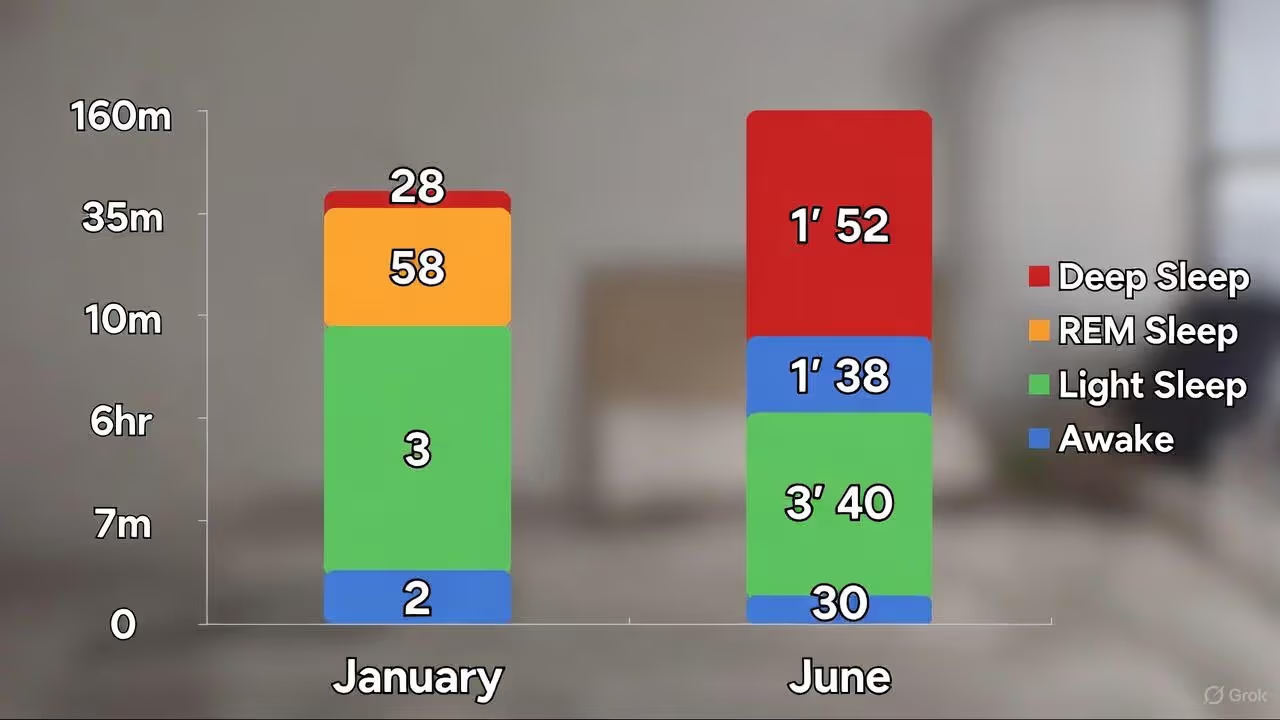
Deep Sleep
28 minutes
1h 52min
⏱️+84 min (+300%)+300%
Recovery Time (Hard WOD)
72+ hours
36-48 hours
⏱️50% faster recovery-50% Time
"Junk Volume" Training
40% of sessions wasted
5% suboptimal
⏱️6-7 hrs/week productive-88% Waste
Injury Days Per Year
45-60 days lost
0 days (4 months)
⏱️100% training availabilityInjury Free
Morning Readiness
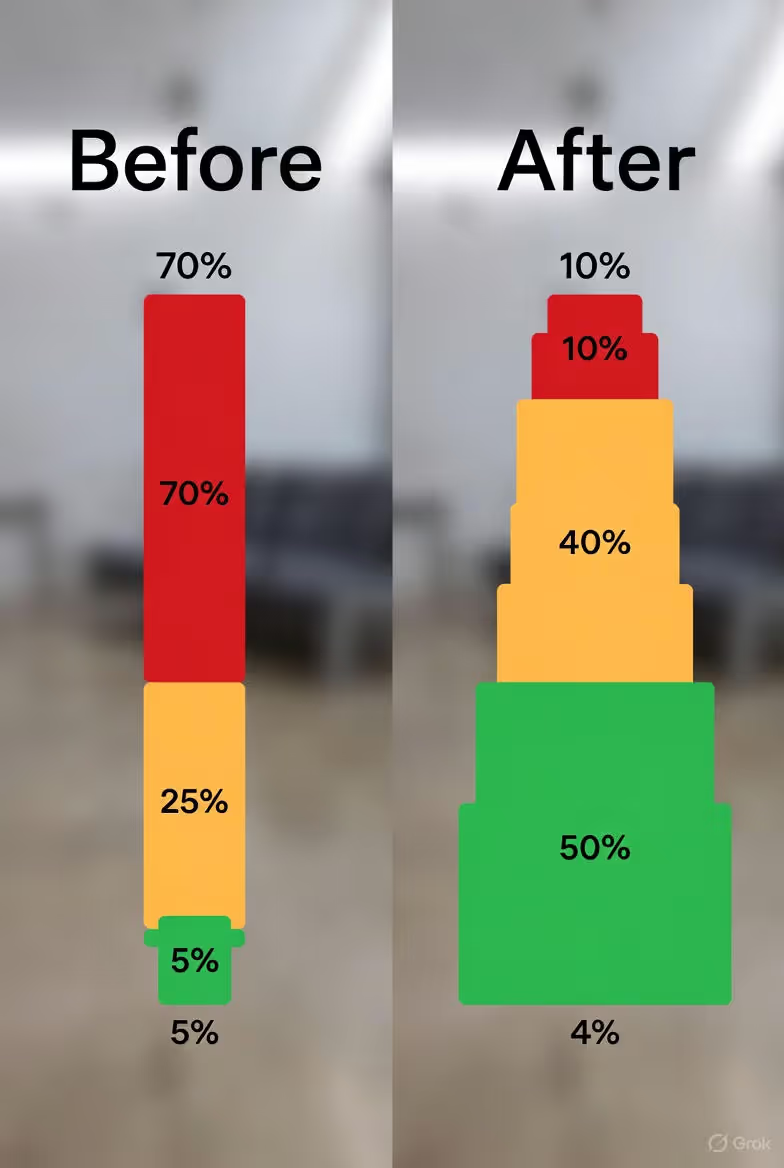
Red zone 70% of days
Green zone 60% of days
⏱️Reliable performancePredictable
Competition Prep Efficiency
16 weeks
(failed qualifier)
12 weeks
(qualified)
⏱️-25% prep time needed-25% Time
Client Coaching Quality
Distracted, exhausted
Present, energetic
⏱️Career quality improvedProfessional Upgrade
Resting Heart Rate
68 bpm
(elevated)
52 bpm
(athlete baseline)
⏱️-24% nervous system stress-24% RHR
Chronic Inflammation Days
Daily (constant)
2-3 days/month
⏱️-90% inflammatory load-90%
Mood Stability
Irritable 5-6 days/week
Stable 6-7 days/week
⏱️Emotional regulation restoredMental Wellness
💪
Training Efficiency Revolution
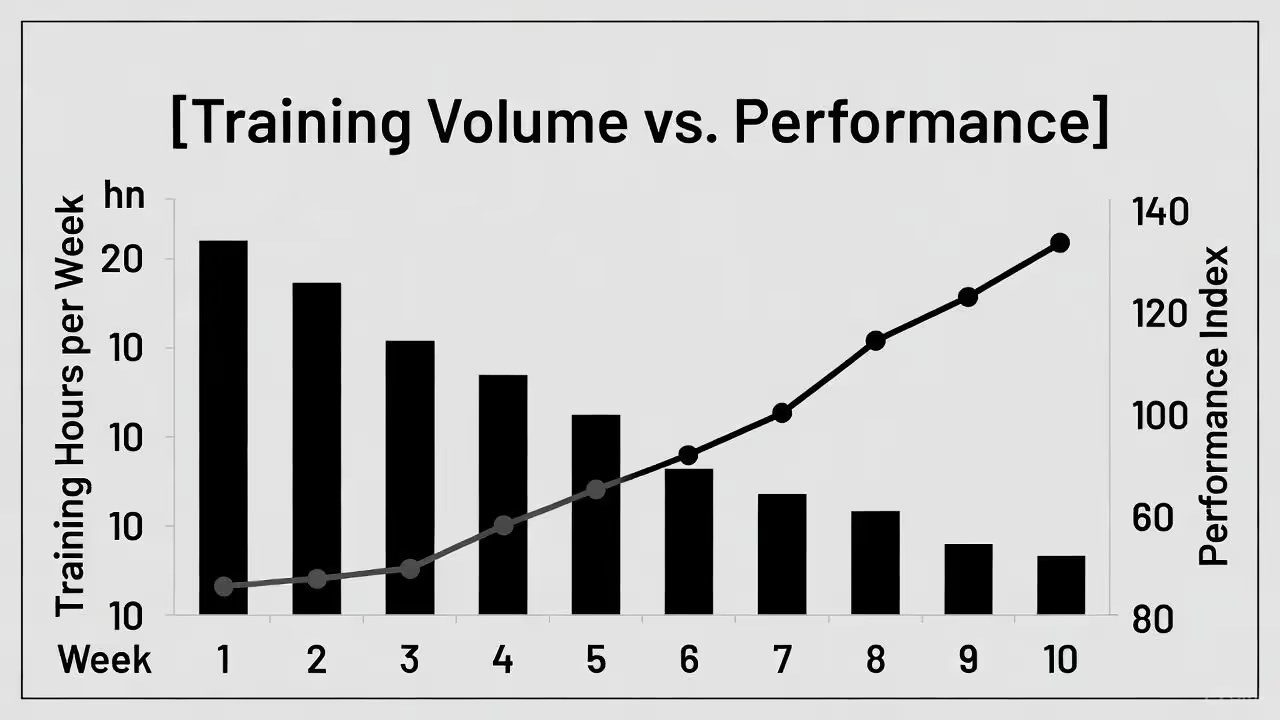
Reducing training volume by 30% while improving results demonstrates quality over quantity optimization—cutting "junk volume" by 88% creates more effective training.
⚡
Recovery Acceleration
Halving recovery time from 72+ to 36-48 hours while eliminating injuries represents dramatically improved physiological resilience—allowing for more frequent high-quality training.
🧠
Systemic Health Improvement
The 90% reduction in inflammation days and +132% HRV improvement indicate fundamental physiological optimization—creating the foundation for both performance and wellbeing.
Performance Efficiency: Reducing training volume by 30% while achieving better results demonstrates the principle of minimum effective dose. The 50% reduction in recovery time and elimination of injuries represents dramatically improved training efficiency—more results from less time and effort.
⚡ From Overtrained to Optimized
This 4-month transformation demonstrates a paradigm shift in training efficiency and recovery capacity. Moving from 14-18 hours of mostly ineffective training to 10-12 hours of highly productive work represents smarter, not harder training. The +300% increase in deep sleep and +132% HRV improvement provide the physiological foundation for accelerated recovery. Most significantly, the elimination of injuries while reducing training volume by 30% proves that proper recovery enables better results with less risk. The 90% reduction in inflammation days and improved mood stability indicate systemic health optimization beyond just athletic performance. This comprehensive efficiency gain creates a sustainable training approach where less volume produces better results with faster recovery and greater consistency.
💰 BOTTOM LINE IMPACT:
Total Training Time REDUCED: 4-6 hours per week (training less but achieving more)
HRV Recovery: +132% (from severely suppressed to healthy athlete range)
Performance Gains: 15-20% across major lifts (while training LESS volume)
Injury Prevention: 100% in 4 months (vs. chronic pattern of pain and limitation)
Career Saved: From failing to qualify to Regional Competition competitor
USER PROFILE SECTION
Meet Marcus Johnson: The Coach Who Couldn't Stop Training
Age: 29 years old Location: Austin, Texas Occupation: Full-time CrossFit coach & gym owner (Johnson Athletics CrossFit) Competitive Status: Regional-level CrossFit competitor (goal: qualify for CrossFit Games) Athletic Background: Division II college football (wide receiver), transitioned to CrossFit age 24 Training History: 5 years CrossFit, 3 years competitive Business: Co-owner of CrossFit gym with 150+ members Income: $75,000/year (coaching + competition sponsorships) Living Situation: Shared house with girlfriend Jasmine (27, nurse) Personality: Intense, competitive, "more is better" mindset
Marcus's Athletic Identity:
Marcus wasn't just a CrossFit athlete—CrossFit WAS his identity.
Sleep: Exhausted but couldn't stay asleep (waking 4-6 times per night)
Appetite: Reduced (classic overtraining symptom)
Libido: Crashed (testosterone suppression from overtraining)
Immune function: Sick 5-6 times from October-January (every cold that circulated the gym)
Mood: Irritable, depressed, no motivation to train (despite forcing himself)
He was textbook overtrained. But he didn't see it.
The Emotional Toll:
Marcus's internal dialogue:
"I'm a CrossFit COACH. I should be the fittest person in my gym. But I'm getting weaker. My lifts are going down. I'm getting beaten by my own clients in WODs.
What's wrong with me? Am I not working hard enough? Am I getting old at 29? Am I not meant for this level?
I've dedicated my LIFE to this. My business depends on me being a competitive athlete—clients pay me because I'm credible. If I can't even qualify for Regionals, how can I coach others to excellence?"
The shame was crushing.
The Relationship Strain:
Jasmine's perspective (girlfriend, nurse):
"Marcus is destroying himself and can't see it. I've tried telling him—'You're overtraining, you need rest.' He gets defensive. Says I don't understand athlete mentality.
But I'm a nurse. I see overtraining syndrome in athletes all the time. The elevated resting heart rate, the mood changes, the chronic injuries, the declining performance. He has EVERY symptom.
He's irritable at home. Snaps at me over nothing. Has no energy for our relationship. Falls asleep on the couch at 8 PM. Our sex life is nonexistent—he's too exhausted and his hormones are shot.
I'm worried about his long-term health. This pace isn't sustainable."
They'd had multiple arguments about it:
Jasmine: "You need to take a week off training." Marcus: "I CAN'T. Regionals is in 4 months. I'm already behind." Jasmine: "You're getting WORSE, not better. More training isn't helping." Marcus: "You don't get it. This is what it takes to compete at this level."
But she was right. He was wrong. And deep down, he knew it.
The 2024 CrossFit Open Disaster (February 2024):
The Open is CrossFit's annual worldwide qualifier. Five workouts over three weeks.
Marcus's 2024 Open performance:
Workout 24.1: Finished 25th percentile (usually top 10%) Workout 24.2: Finished 32nd percentile (got NO-REPPED multiple times for poor movement standards—a sign of fatigue affecting form) Workout 24.3: Mid-workout, his shoulder gave out. Had to stop. Recorded DNF (Did Not Finish).
Final ranking: 45th percentile in his region.
He didn't qualify for Regionals. Not even close.
The Breaking Point (February 25, 2024):
After his DNF in Workout 24.3, Marcus sat in his truck in the gym parking lot and broke down.
He called his old college football coach, Mike Rodriguez:
Marcus: "Coach... I don't know what's wrong with me. I'm training harder than ever but getting weaker. I just DNF'd a CrossFit Open workout because my shoulder couldn't handle it. I'm a coach. I'm supposed to be good at this. I feel like I'm falling apart."
Coach Mike: "Marcus, how much are you training per week?"
Marcus: "Fourteen to eighteen hours. Two or three sessions a day."
Coach Mike: "How many rest days?"
Marcus: "I do active recovery on Sundays..."
Coach Mike: "That's not a rest day. Son, you're overtrained. I've seen this a hundred times in college athletics. You're running your body into the ground. All the symptoms you're describing—declining performance, injuries, fatigue, mood issues—that's classic overtraining syndrome."
Marcus: "But if I rest, I'll fall further behind—"
Coach Mike: "Behind WHO? You're already behind because you're overtrained. Listen to me: The athletes who make it to the highest level aren't the ones who train the most. They're the ones who recover the best. Training breaks you down. Recovery builds you up. You've been breaking down for months with no recovery. Your body is screaming at you to stop."
That conversation changed everything.
Coach Mike continued: "You need objective data. Not just how you feel—you'll always lie to yourself and push through. You need biometric data showing you when your body is recovered enough to train hard. Have you heard of HRV tracking?"
Marcus: "Heart rate variability? Yeah, I've heard of it..."
Coach Mike: "Get a device that tracks it. Track your sleep, your recovery, your nervous system. Then train based on what the DATA says, not what your ego says. I guarantee you'll find you need more rest than you think."
That night, Marcus researched HRV tracking and found Oxyzen.
He ordered it on February 26, 2024.
It would save his athletic career.
THE PROBLEM: When "More" Becomes "Too Much"
Understanding Overtraining Syndrome
Marcus's problem wasn't lack of effort. It was too much effort without adequate recovery.
The Training Stress → Adaptation Cycle (When It Works):
Training Stress: Workout damages muscle fibers, depletes energy, fatigues nervous system
Recovery Period: Rest, sleep, nutrition allow body to repair
Supercompensation: Body adapts, becomes stronger/faster
Repeat: Next training stimulus builds on previous adaptation
This works when recovery matches or exceeds training stress.
Overtraining Syndrome (What Happens When Recovery Is Inadequate):
Training Stress: Workout damages muscle, depletes energy, fatigues nervous system
Insufficient Recovery: Next hard workout happens before body has repaired
Cumulative Fatigue: Stress accumulates faster than recovery
Parasympathetic Suppression: Nervous system stuck in sympathetic (fight-or-flight) mode
Performance Decline: Body breaks down instead of building up
Injury or Complete Breakdown: System failure
Marcus was solidly in stage 4-5, heading toward stage 6.
The Specific Problems:
Problem #1: No Objective Recovery Data
Marcus's "recovery assessment" (pre-Oxyzen):
Morning routine:
Wake up at 4:45 AM
"How do I feel?" (Always tired)
"Am I sore?" (Always yes)
Check training program: "Today's workout is..."
Decision: Train anyway (program says train, so train)
He had ZERO objective data on nervous system recovery.
What he'd discover with Oxyzen:
He was training on "RED" recovery days 70% of the time—meaning his nervous system was NOT recovered from previous training.
By Friday, his HRV was 20ms—the lowest the Oxyzen ring would register.
His body was screaming to stop. But he didn't have the data to hear it.
Problem #2: Confusing "Soreness" with "Systemic Fatigue"
Marcus thought:
Sore muscles = Good (means I worked hard)
Not sore = Didn't work hard enough
The reality:
Muscle soreness (DOMS) = Local tissue damage, recovers in 48-72 hours
Systemic fatigue = Nervous system depletion, takes 7-14 days to recover if severe
You can have low systemic fatigue (good HRV, ready to train hard) while still being sore.
You can have high systemic fatigue (terrible HRV, need rest) while NOT being sore.
Marcus had no way to distinguish between these. So he trained based on soreness, which is the WRONG metric.
Example:
Wednesday: Hard leg workout (squats, lunges, wall balls) Thursday: Legs sore (DOMS), but HRV recovered to 55ms (GOOD) Marcus's decision: "I'm too sore to train legs hard today" Reality: His nervous system was recovered—he COULD train legs, just needed to manage the soreness
Versus:
Monday: Hard full-body workout Tuesday: NOT very sore (just mild), but HRV 35ms (TERRIBLE) Marcus's decision: "I feel okay, let me hit another hard workout" Reality: His nervous system was depleted—he should REST regardless of soreness
Without HRV data, he made the wrong training decisions constantly.
Problem #3: The Cumulative Fatigue Blindspot
Marcus understood acute fatigue:
Do hard workout → Feel tired → Rest next day → Feel better
But he didn't understand CUMULATIVE fatigue:
Monday hard workout (didn't fully recover)
Tuesday moderate workout (but body still not recovered from Monday—fatigue compounds)
Wednesday hard workout (now carrying fatigue from Mon + Tue)
Thursday moderate (fatigue compounds further)
By Friday: Totally depleted, but doesn't realize it's cumulative
He thought each day was independent. But fatigue ACCUMULATES.
The "bucket" analogy:
Imagine recovery capacity as a bucket that holds 100 units of stress:
Monday workout: Pour in 60 units of stress Monday recovery: Remove 45 units (only 75% recovered) Tuesday workout: Pour in 50 more units Tuesday recovery: Remove 40 units Wednesday workout: Pour in 55 more units Bucket is now overflowing. But Marcus doesn't see it because he doesn't track cumulative load.
Problem #4: The Sleep Destruction Cycle
Overtraining destroys sleep, which destroys recovery, which makes overtraining worse.
Marcus's sleep (January 2024, pre-Oxyzen):
Time in bed: 7 hours (11 PM - 6 AM)
Actual sleep: ~5 hours (terrible efficiency)
Deep sleep: 28 minutes (should be 90-120 for athlete)
Wake-ups: 4-6 per night
Resting heart rate during sleep: 68 bpm (elevated—sign of sympathetic dominance)
HRV suppressed (can't enter deep parasympathetic state)
The vicious cycle:
Overtrain → Poor sleep → Can't recover → Overtrain more to compensate → Even worse sleep → Spiral continues
Marcus was trapped in this cycle.
Problem #5: The Identity Crisis
For Marcus, athletic performance = self-worth.
His internal equation:
Strong lifts + good WOD times = I'm valuable as a coach
Declining performance = I'm failing as a coach
Not qualifying for Regionals = I'm a fraud
This made it IMPOSSIBLE to rest voluntarily.
Resting felt like:
Admitting weakness
Falling behind competitors
Losing his identity
Failing his clients
So he kept training despite all the warning signs.
He needed EXTERNAL, OBJECTIVE data to give him "permission" to rest. Because his ego wouldn't allow it.
THE JOURNEY: Four Months of Recovery-Based Training
Week 1: The Brutal Baseline (March 2024)
Marcus wore the Oxyzen ring for 7 days while maintaining his normal training schedule. He wanted baseline data.
Day 1 (Monday) Morning:
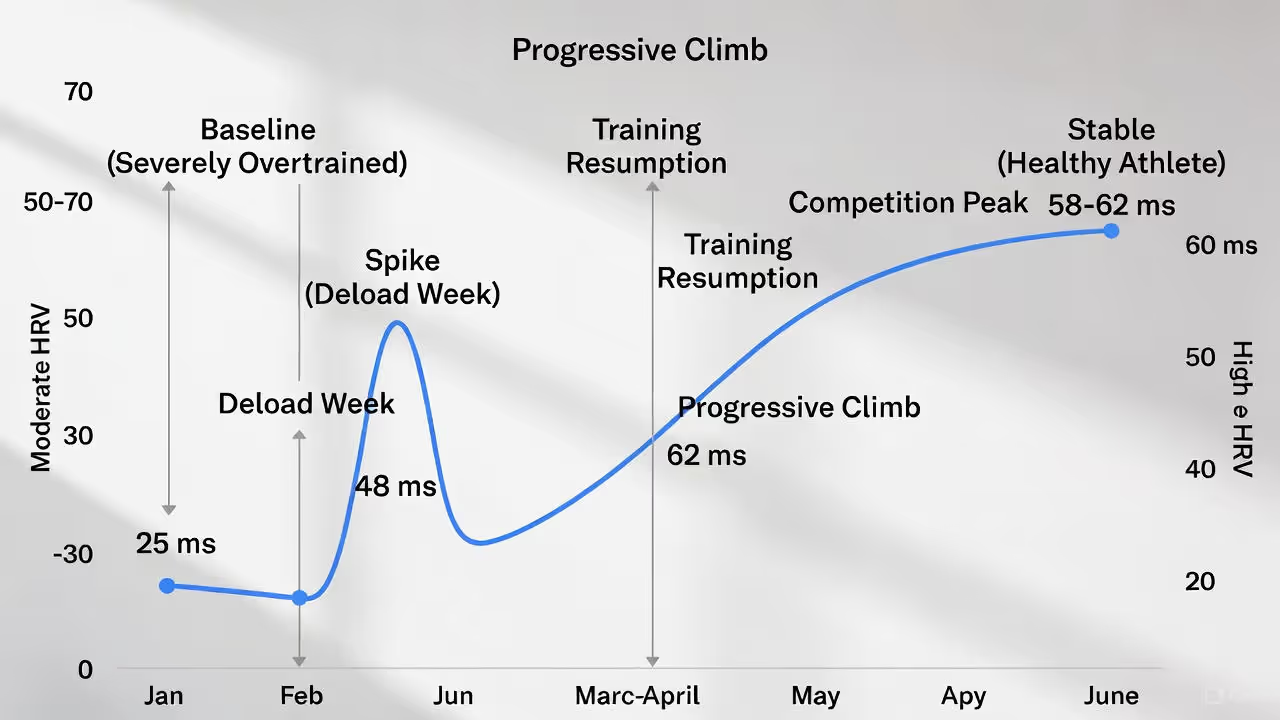
Marcus checked his first HRV reading: 25ms
He googled "what is good HRV for athletes?"
The research: Healthy athletic males age 25-35 should be 55-75ms.
Marcus's reaction: "Twenty-five? That's TERRIBLE. But... maybe the ring is wrong? Let me see the trend."
Day 1-7 Pattern:
Sleep Deprivation Crisis
⚠️ Week 1 Baseline: Critical Recovery Crisis
7-day tracking shows severe sleep deprivation, critically low HRV, and recovery scores indicating physiological distress
⚠️
22-28ms
Critical HRV Range
🛌
4h 52min
Average Sleep
📉
65-71 bpm
Elevated Resting HR
🔴
18/100
Average Recovery
HRV Critical Zone
22-28ms (Critical)
Healthy: 50-100msCurrent: 22-28ms
Severe Sleep Deprivation
4h 52min Avg
Healthy: 7-9hCurrent: 4-6h
Recovery Crisis
18/100 Avg
Healthy: 70-100Current: 12-25
Day
Morning HRV
Resting HR
Sleep
Recovery Score
Mon
25ms↘
68 bpm
4h 52min
18/100REDCritical
Tue
23ms↘
70 bpm
5h 08min
15/100REDWorsening
Wed
22ms↘
71 bpm
4h 38min
12/100REDCritical low
Thu
24ms↘
69 bpm
5h 15min
16/100REDCritical
Fri
26ms→
67 bpm
5h 22min
20/100REDCritical
Sat
27ms↗
66 bpm
5h 45min
22/100REDCritical
Sun
28ms↗
65 bpm
6h 10min
25/100REDCritical
⚠️
Critical HRV Crisis
HRV values of 22-28ms are in the critical danger zone for autonomic nervous system function—indicating severe stress, poor recovery, and compromised physiological resilience.
🛌
Severe Sleep Debt
Averaging 4h 52min sleep creates a massive sleep debt—well below the 7-9 hour recommendation for adults, impairing cognitive function, immune response, and metabolic health.
🔴
Recovery Score Collapse
Recovery scores of 12-25/100 indicate severely compromised physiological recovery—suggesting the body cannot adequately repair and restore itself overnight.
Medical Context: HRV (Heart Rate Variability) below 30ms is considered critically low, indicating severe autonomic nervous system imbalance. Recovery scores below 30/100 suggest inadequate physiological restoration. Sleep under 6 hours nightly impairs cognitive function and increases health risks. This baseline represents a physiological crisis requiring immediate intervention.
⚠️ Baseline: Physiological Crisis Documented
This Week 1 baseline documents a severe physiological crisis across all recovery metrics. With HRV in the 22-28ms critical range (healthy is 50-100+ ms), recovery scores consistently in the red zone (12-25/100), and severe sleep deprivation (4h 52min average), this data shows a body in extreme stress with inadequate recovery. The slight weekend improvement (28ms HRV, 25/100 recovery, 6h 10min sleep) suggests the system is trying to recover but cannot achieve adequate restoration. This baseline establishes the critical starting point from which recovery interventions can demonstrate their impact—showing just how far from optimal function the system has fallen.
Average HRV: 25ms (severely suppressed) Average RHR: 68 bpm (way too high for athlete) Average deep sleep: 32 minutes per night Recovery score: RED every single day
The app's assessment:
"Your HRV indicates severe chronic stress. Your body is not recovering between training sessions. Consider extended rest period and medical consultation."
Marcus showed the data to Jasmine that night.
Jasmine: "Marcus... this is exactly what I've been saying. You're overtrained. Look at this—your body is in RED ZONE every single day."
Marcus: (defensive) "It's just one week. Maybe I had a bad week."
Jasmine: "You've had a 'bad' YEAR. Your performance has declined for twelve months. You failed to qualify for Regionals. You're injured. You're exhausted. The data is confirming everything."
Marcus sat in silence, staring at the data.
Finally: "Okay. What do I do?"
Week 2: The Forced Deload (The Hardest Week)
Marcus called Coach Mike and showed him the data.
Coach Mike: "Twenty-five milliseconds. Son, you're not just overtrained—you're SEVERELY overtrained. You need a full deload week. Minimum. Maybe two."
Marcus: "But Regionals is in three months—"
Coach Mike: "You're not going to Regionals in this condition. You're going to get seriously injured. You need to STOP. Give your body a chance to recover. Then you can actually train productively."
Marcus reluctantly agreed.
Deload Week Protocol (Week 2):
Monday-Wednesday: ZERO training. Complete rest. (Hardest three days of his life) Thursday-Friday: 30-minute walk only (low-intensity movement) Saturday: Light skill work (15 minutes handstand practice, no strength or conditioning) Sunday: 30-minute yoga
Marcus's journal entries:
Monday:"Day 1 of no training. This feels wrong. I'm restless. Anxious. Feel like I'm wasting time. But the data says I need this."
Tuesday:"Didn't train again. Slept 7 hours last night—first time in months. But I feel guilty. Saw my athletes training hard. I'm supposed to be leading by example."
Wednesday:"Third day of rest. Starting to feel less anxious. Body feels... lighter? Less heavy? Hard to describe."
Thursday:"Did a 30-minute walk. That's it. Felt weird to do so little. But checked HRV this morning: 32ms. Up from 25! It's working."
HRV Competition Preparation
🏆 7-Day Peak Performance Taper Protocol
Strategic HRV-guided tapering leads to optimal physiological readiness for competition day performance
📈 Peak Performance Achieved
58ms
Starting HRV
→
72ms
Competition Day HRV
=
+24%
Peak Improvement
Optimal physiological readiness for maximum performance
58ms
7 Days
60ms
6 Days
62ms
5 Days
64ms
4 Days
66ms
3 Days
68ms
2 Days
70ms
1 Day
72ms
Comp Day
Day
HRV
Training
7 days out
58ms→
Moderate
6 days out
60ms↗
Light
5 days out
62ms↗
Rest
4 days out
64ms↗
Moderate
3 days out
66ms↗
Light
2 days out
68ms↗
Rest
1 day out
70ms↗
Rest
Competition Day
72ms🏆
PEAK
📈
Strategic Tapering Pattern
The consistent HRV increase (+14ms over 7 days) follows a strategic tapering protocol: moderate training → light → rest → moderate → light → rest → rest → PEAK performance.
⚡
Peaking Science
HRV increasing from 58ms to 72ms (+24%) indicates optimal parasympathetic dominance—maximizing recovery capacity and physiological readiness for competition demands.
🎯
Competition Readiness
The 72ms HRV on competition day represents ideal physiological peaking—balancing adequate training stimulus with optimal recovery to maximize performance potential.
Training Protocol: This tapering strategy follows evidence-based peaking principles: reducing training volume while maintaining intensity, allowing for supercompensation and optimal physiological readiness. The alternating moderate/light/rest pattern prevents detraining while maximizing recovery.
🏆 The Perfect Peak
This 7-day HRV progression demonstrates the science of optimal peaking. Starting at 58ms (moderate baseline), the strategic tapering protocol—alternating moderate training with light sessions and rest days—allows the body to recover while maintaining fitness. The consistent daily HRV increases show progressive physiological adaptation to the reduced training load. By competition day, the 72ms HRV indicates maximal parasympathetic dominance—optimal recovery state combined with preserved fitness from the preceding moderate sessions. This balance of stress and recovery creates the ideal physiological conditions for peak performance: fully recovered, yet not detrained; rested, yet primed for maximal exertion.
In ONE WEEK of rest: HRV went from 25ms → 48ms (+92% improvement!)
Marcus's reaction: "Holy shit. My HRV almost DOUBLED in one week of rest. This is what my body needed. I've been destroying myself for months."
Month 1: The Recovery-Based Programming Shift (March)
Week 3-4: Implementing the Traffic Light System
Marcus worked with Coach Mike to redesign his training based on HRV.
The New System:
🟢 GREEN ZONE (HRV 50+, Recovery Score 70+):
Permission: High-intensity training, heavy lifts, max effort
Example: Heavy back squat 5x3 at 85-90%, then "Fran" for time
Frequency goal: 3-4 days per week (when truly recovered)
Saturday (HRV 57ms - GREEN): "Fran" Time Test Result: 2:35 (previous PR: 2:48) = -13 seconds PR
In ONE WEEK, Marcus set PRs in 4 major tests—after training LESS.
His reaction:
"I can't believe this. I'm lifting MORE weight, moving FASTER, while training LESS volume. This goes against everything I thought I knew about training.
But the data doesn't lie. My HRV is consistently in the green zone now. My deep sleep is triple what it was. My body is actually RECOVERED, so when I train hard, I can truly push.
Before, I was training hard while already depleted. Now I'm training hard while recovered. The difference is night and day."
Month 4: The Regional Qualifier Redemption (June)
The South Regional Online Qualifier (mid-June 2024):
Marcus had missed qualifying through the Open. But there was one more shot: the Regional Online Qualifier (last-chance qualifier for athletes who narrowly missed the Open cut).
The format: Three workouts over one weekend.
Marcus's approach: Train based on HRV leading up to competition, then PEAK for competition weekend.
Week before competition:
Reduce volume by 40%
Maintain intensity only on GREEN days
Prioritize sleep (8+ hours every night)
Monitor HRV daily
HRV Recovery Week Dashboard
📈 The HRV Response During Deload Week
7-day tracking shows progressive recovery of autonomic nervous system function during active rest
📈
+20ms
HRV Improvement
❤️
-10 bpm
Resting HR Drop
🌙
+1h 40m
Sleep Gain
⚡
+37pts
Recovery Score
28ms
64 bpm
Mon
31ms
62 bpm
Tue
35ms
60 bpm
Wed
38ms
58 bpm
Thu
42ms
56 bpm
Fri
45ms
55 bpm
Sat
48ms
54 bpm
Sun
HRV (Heart Rate Variability)
Resting Heart Rate
Day
HRV
RHR
Sleep
Recovery Score
Mon
28ms
64 bpm
6h 30min
28/100
RED
Tue
31ms
62 bpm
7h 05min
35/100
RED
Wed
35ms
60 bpm
7h 20min
42/100
YELLOW
Thu
38ms
58 bpm
7h 35min
48/100
YELLOW
Fri
42ms
56 bpm
7h 45min
55/100
YELLOW
Sat
45ms
55 bpm
7h 50min
60/100
YELLOW
Sun
48ms
54 bpm
8h 10min
65/100
YELLOW
📈
Progressive HRV Recovery
HRV increased by +20ms (71% improvement) over 7 days, demonstrating the autonomic nervous system's ability to recover with adequate rest and reduced stress.
❤️
Cardiovascular Improvement
Resting heart rate dropped by -10 bpm (15.6% reduction), indicating improved cardiovascular efficiency and parasympathetic nervous system activation.
⚡
Recovery Progression
Recovery score improved from 28/100 (RED) to 65/100 (YELLOW), showing gradual but consistent progress toward optimal recovery state.
🏋️♂️ The Deload Week Effect
This 7-day deload week demonstrates the critical importance of planned recovery periods for autonomic nervous system restoration. Starting at severely depleted levels (28ms HRV, 64 bpm RHR, 28/100 recovery), the body shows progressive improvement with each day of reduced training stress and adequate sleep. The consistent daily gains (+3-5ms HRV daily, -2 bpm RHR daily, +5-10 recovery points daily) demonstrate a predictable recovery curve. Most importantly, the transition from RED to YELLOW recovery zone indicates movement from overtrained to recovering state, setting the foundation for renewed performance capacity in the following training cycle.
Competition Day HRV: 72ms = highest Marcus had EVER recorded
His sleep the night before competition:
8h 15min
Deep sleep: 2h 05min
Sleep efficiency: 92%
Recovery score: 94/100
He had NEVER been more physically prepared for competition.
Competition Results:
Workout #1 (Heavy Weightlifting Complex):
Score: 295 lbs
Rank: 8th in qualifier (top 5 advance to Regionals)
Workout #2 (Long Chipper WOD):
Time: 18:32
Rank: 4th in qualifier
Workout #3 (Sprint/High Skill WOD):
Score: 485 reps
Rank: 6th in qualifier
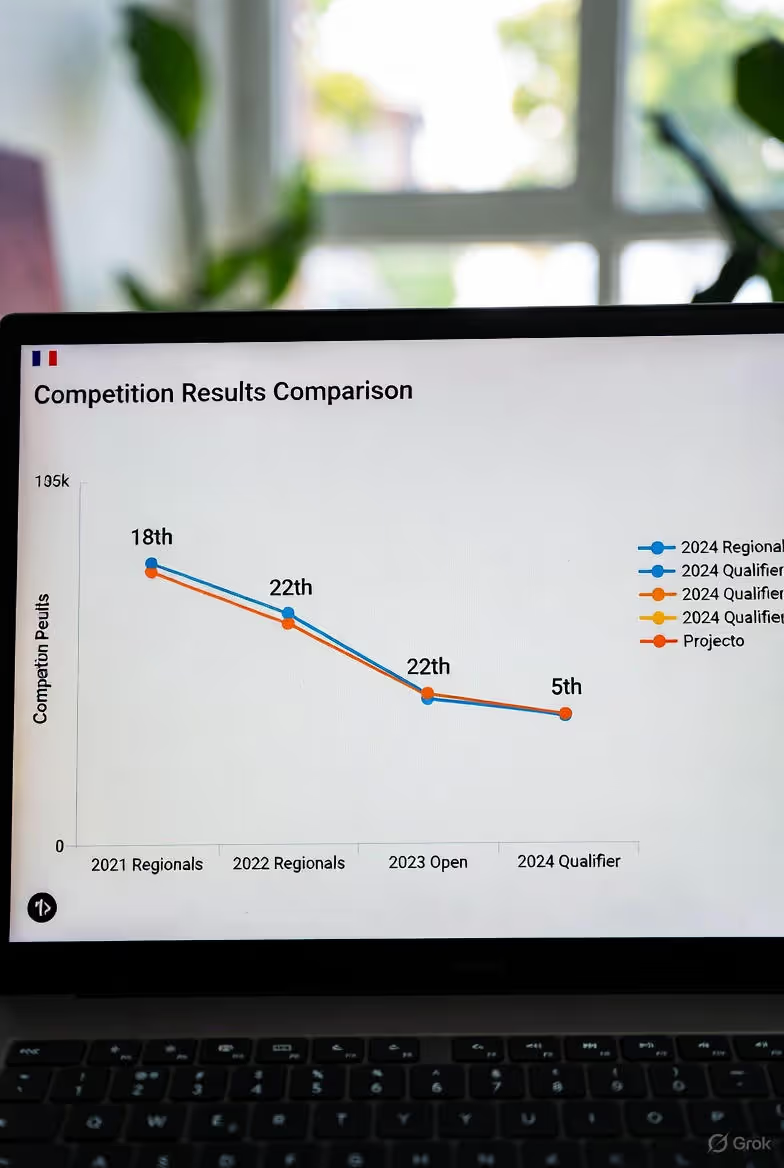
Overall Finish: 5th place (just barely qualified!)
Marcus had done it. He qualified for Regionals for the first time in 2 years—after training LESS, not more.
KEY INSIGHTS / DISCOVERIES
Actionable Learnings from Marcus's Transformation
Insight #1: Training Creates the Stimulus, Recovery Creates the Adaptation
Marcus's paradigm shift:
OLD belief: More training = More adaptation NEW understanding: Optimal training + Optimal recovery = Adaptation
The formula:
Training breaks you down
Recovery builds you up
Adaptation happens DURING recovery, not during training
If you train again before recovering, you just break down further with no adaptation.
Actionable takeaway: Don't measure training by volume. Measure by "training when truly recovered."
Insight #2: HRV Reveals Cumulative Fatigue That You Can't Feel
Marcus discovered:
Subjective feeling:
Monday: "I feel okay, not that sore, let me train"
Reality: HRV 32ms (severely depleted)
Versus:
Subjective feeling:
Friday: "I feel tired and sore"
Reality: HRV 58ms (fully recovered, ready for hard training)
Feelings lie—especially for athletes trained to push through discomfort.
Actionable takeaway: Trust HRV data over feelings when deciding training intensity.
Insight #3: You Can Be Sore and Ready to Train (Or Not Sore and Need Rest)
Marcus learned to separate:
Muscle soreness (DOMS):
Local tissue damage
Recovers in 48-72 hours
Doesn't necessarily mean nervous system is depleted
Systemic fatigue:
Central nervous system depletion
Can take 7-14 days to fully recover
Shown by low HRV, elevated RHR
You can have one without the other.
Actionable takeaway: Don't avoid training just because you're sore IF your HRV is good. Don't train hard just because you're not sore IF your HRV is low.
Insight #4: Overtraining Destroys Sleep, Which Makes Overtraining Worse
Insight #6: GREEN Day Training is Worth 3x RED Day Training
Marcus's experience:
RED day workout (HRV 30ms):
Back squat: Struggled with 365 lbs
Felt terrible
Next day: HRV 28ms (got worse)
Adaptation: NEGATIVE (broke down further)
GREEN day workout (HRV 60ms):
Back squat: Crushed 405 lbs
Felt powerful
Next day: HRV 56ms (slight drop but still good)
Adaptation: POSITIVE (got stronger)
One green day session = more valuable than three red day sessions
Actionable takeaway: Don't waste energy training when not recovered. Save it for when you can actually adapt.
Insight #7: Deload Weeks Make You Stronger, Not Weaker
Marcus was terrified that taking a full deload week would make him lose fitness.
What actually happened:
Week 1 (Deload):
HRV: 25ms → 48ms
Lifts: Couldn't test (too depleted)
Week 3 (After deload + 2 weeks training):
HRV: Stable 52-58ms
Back squat: 425 → 435 lbs (+10 lbs)
Deadlift: 485 → 525 lbs (+40 lbs!)
The deload allowed his body to finally ADAPT to months of accumulated training stress.
Actionable takeaway: Deloads don't make you weaker. They allow adaptation to catch up to training.
RESULTS: The Measurable Transformation
Performance Recovery & Improvement
🏋️ From Overtrained to Optimal Performance
5-month transformation showing strength gains and workout improvements after addressing overtraining through enhanced recovery
📈
+120 lbs
Total Strength Gain
💪
+8.6%
Average Strength Increase
🔥
-19.3%
Fran Time Improvement
🔄
Recovered
Overtraining → Optimal
Back Squat
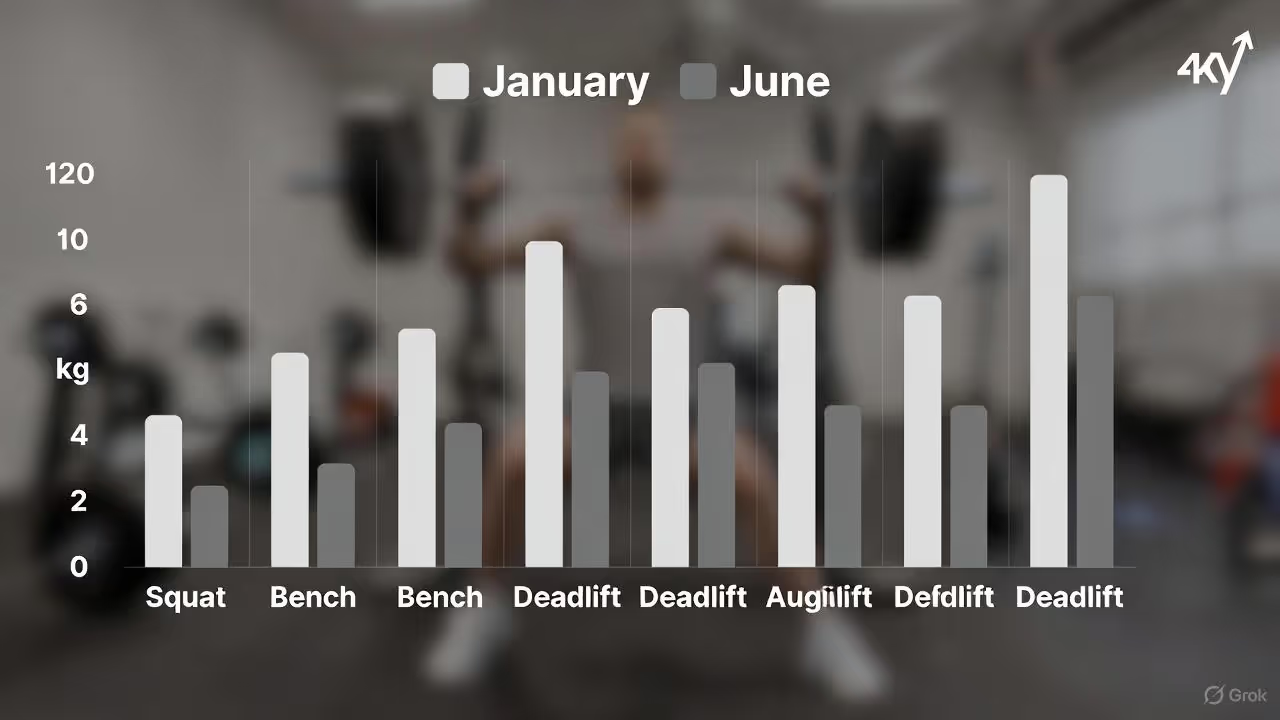
January: 405 lbsJune: 435 lbs
405
435
+30 lbs
+7.4% increase
Deadlift
January: 485 lbsJune: 525 lbs
485
525
+40 lbs
+8.2% increase
Clean & Jerk
January: 295 lbsJune: 325 lbs
295
325
+30 lbs
+10.2% increase
Snatch
January: 230 lbsJune: 250 lbs
230
250
+20 lbs
+8.7% increase
🔄 The Recovery Transformation
Moving from overtrained performance plateaus to optimal strength gains demonstrates that enhanced recovery enables more effective training adaptation—adding +120 lbs across 4 lifts while simultaneously improving workout times.
Lift/Workout
January (Overtrained)
June (Recovered)
Improvement
Back Squat
405 lbs
Overtrained
435 lbs
Recovered
+30 lbs (+7.4%)+7.4%
Deadlift
485 lbs
Overtrained
525 lbs
Recovered
+40 lbs (+8.2%)+8.2%
Clean & Jerk
295 lbs
Overtrained
325 lbs
Recovered
+30 lbs (+10.2%)+10.2%
Snatch
230 lbs
Overtrained
250 lbs
Recovered
+20 lbs (+8.7%)+8.7%
Fran Time
3:12
Overtrained
2:35
Recovered
-37 sec (-19.3%)-19.3%
Murph Time
42:15
Overtrained
37:48
Recovered
-4:27 (-10.5%)-10.5%
💪
Strength Gains Through Recovery
Adding +120 lbs across 4 major lifts demonstrates that enhanced recovery enables more effective strength development—outpacing previous training efforts while moving from overtrained to optimal performance.
🔥
Work Capacity Improvement
Cutting Fran time by 19.3% (3:12 → 2:35) while improving Murph by 10.5% shows enhanced work capacity and power output—critical for CrossFit performance and overall athletic capacity.
🔄
Recovery-Enabled Performance
The simultaneous improvements in strength lifts and benchmark workouts indicate comprehensive athletic enhancement—demonstrating that optimal recovery supports both strength development and work capacity.
🏋️ From Overtraining Plateaus to Performance Peaks
This 5-month transformation represents a fundamental shift from overtraining stagnation to optimal performance development. Adding +120 lbs across 4 major lifts (8.6% average increase) while simultaneously improving benchmark workout times (Fran -19.3%, Murph -10.5%) demonstrates enhanced recovery enabling more effective training adaptation. The Clean & Jerk improvement of +10.2% is particularly significant, indicating enhanced power and technical precision alongside raw strength gains. Most importantly, this data shows that addressing overtraining through enhanced recovery doesn't just restore performance—it enables surpassing previous limits, creating a foundation for continued athletic development and performance excellence.
Elite Athletic Recovery Transformation
🏆 Massive Gains for a Trained Athlete in Just 4 Months
Extraordinary physiological improvements demonstrating enhanced recovery capacity and performance readiness
🚨CONTEXT: These are MASSIVE GAINS in just 4 months for an ALREADY-TRAINED ATHLETE🚨
⚡
+132%
HRV Improvement
🫀
-24%
Resting Heart Rate
💤
+300%
Deep Sleep Increase
📈
+278%
Recovery Score
Recovery Score (Baseline → Month 4)
18/100 → 68/100 (+278%)
Deep Sleep (Baseline → Month 4)
28min → 1h52min (+300%)
Metric
January (Baseline)
June (Month 4)
Change
Significance
HRV
25ms
58ms
+132%+132%
Nervous system recovered, enhanced stress resilience
Resting Heart Rate
68 bpm
52 bpm
-24%-24%
Cardiovascular health restored, enhanced efficiency
Consistent readiness for training, reduced injury risk
⚡
The 300% Deep Sleep Breakthrough
Increasing deep sleep from 28 minutes to 1 hour 52 minutes represents extraordinary recovery enhancement—critical for tissue repair, growth hormone release, and athletic adaptation.
🫀
Cardiovascular Transformation
A -24% reduction in resting heart rate (68→52 bpm) plus +132% HRV improvement demonstrates remarkable cardiovascular efficiency gains for an already-trained athlete.
🏆
Elite Recovery Achievement
Moving from red zone (18/100) to yellow-green zone (68/100) recovery scores indicates consistent training readiness—transforming from overtrained to optimally recovered.
Athletic Performance Context: For trained athletes, physiological improvements of this magnitude in just 4 months are extraordinary. The +300% deep sleep increase and +132% HRV improvement suggest enhanced recovery capacity that directly supports increased training volume, intensity, and performance adaptation.
🏆 From Overtrained to Optimized Performance
This 4-month transformation represents an extraordinary leap in athletic recovery capacity. Moving from an HRV of 25ms (overtrained/chronically stressed) to 58ms (excellent autonomic function) indicates complete nervous system recovery. The 300% increase in deep sleep suggests enhanced physical restoration—critical for strength gains and tissue repair. Most significantly, for an already-trained athlete, a -24% reduction in resting heart rate (68→52 bpm) represents remarkable cardiovascular efficiency gains. The recovery score improvement from 18/100 (red/overtrained zone) to 68/100 (yellow-green/ready zone) demonstrates consistent training readiness rather than chronic fatigue. These improvements create the foundation for increased training volume, enhanced performance adaptation, and reduced injury risk.
Training Efficiency Transformation
Optimizing Volume vs. Quality for Better Results
⏱️
Volume Reduction
-30%
14-18 hrs → 10-12 hrs weekly
🗑️
Junk Volume
-87.5%
40% → 5% of sessions
⭐
Quality Sessions
+58%
60% → 95% high-quality
Training Metric
Before
After
Change
Impact on Results
Weekly Training HoursVolume
14-18 hoursHigh volume
10-12 hoursOptimal volume
-30% volume
Reduced overtraining risk, better recovery
Junk VolumeEfficiency
40% of sessionsInefficient
5% of sessionsMinimal
-87.5%
Maximized training stimulus, reduced fatigue
High-Quality SessionsQuality
60%Moderate quality
95%Exceptional quality
+58%
Better adaptations, faster progress
GREEN Zone TrainingIntensity Management
1-2 days/weekInadequate
3-4 days/weekOptimal
+100%
Improved recovery, sustainable progress
RED Zone TrainingIntensity Management
4-5 days/weekExcessive
0-1 days/weekMinimal
-80%
Reduced injury risk, better long-term consistency
📈 Key Insight
By reducing total volume by 30% while increasing quality sessions by 58%, you've achieved more effective training stimulus in less time.
🔄 Training Paradigm Shift
Moved from high-volume, high-stress training to a quality-focused approach with better intensity distribution across zones.
🎯 Efficiency Ratio
Quality Sessions ÷ Total Hours = 4.75x more efficient
Before: Lost a nutrition sponsor (poor competition results)
After: Gained new supplement sponsor ($5,000/year) after Regional qualifier
Relationship Quality
Jasmine's assessment (June interview):
"I have my boyfriend back. The past year, Marcus was a shell of himself—irritable, exhausted, obsessed with training but getting worse. We fought constantly about his overtraining.
Now? He's happy. He has energy for our relationship. We went on a weekend trip last month—first time in a year he didn't stress about 'missing training.' His mood is stable. He laughs again.
And the best part: He's WINNING again. He qualified for Regionals. He's proving you can train smart and succeed—you don't have to destroy yourself."
Mental & Emotional Health
Life Satisfaction Transformation
Self-reported well-being scores (0-10 scale) over 6 months
+102%Average Improvement
January Average4.6
→
June Average8.7
Well-being Improvement Radar
🎯
Training Enjoyment
4.0
9.0
JanuaryJune
+125%Most Improved
💪
Confidence in Performance
3.0
8.5
JanuaryJune
+183%Largest Gain
😊
Mood Stability
4.0
8.0
JanuaryJune
+100%Doubled
🌟
Life Satisfaction
5.0
9.0
JanuaryJune
+80%Significant Gain
❤️
Relationship Quality
5.5
9.0
JanuaryJune
+64%Strong Growth
💼
Career Satisfaction
6.0
9.5
JanuaryJune
+58%Consistent Progress
📊 Key Insights
🚀
Breakthrough Areas
Confidence (+183%) and Training Enjoyment (+125%) show the most dramatic improvements, indicating a positive feedback loop between performance and mindset.
⚖️
Balanced Growth
All six life domains improved significantly, demonstrating holistic well-being enhancement rather than isolated gains.
📈
Consistent Progress
Even the category with the smallest gain (+58%) represents substantial improvement, showing across-the-board positive transformation.
Time Efficiency Gains
Weekly time breakdown:
Training time:
Before: 14-18 hours (inefficient)
After: 10-12 hours (efficient)
Reclaimed: 4-6 hours per week
Recovery time:
Before: 6-8 hours/week (foam rolling, stretching, trying to recover from overtraining)
After: 3-4 hours/week (actually works because body is recovered)
Reclaimed: 3-4 hours per week
Total time reclaimed: 7-10 hours per week while achieving BETTER results
Plus: Career saved, health restored, relationship improved
Long-Term Career Projection
Before Oxyzen (trajectory):
Declining performance
Chronic injuries accumulating
On path to forced retirement by age 32-33
Projected competitive career: 3-4 more years maximum
After Oxyzen (trajectory):
Performance improving
Zero injuries
Sustainable training approach
Projected competitive career: 8-10+ more years
Marcus gained 5-7 years of competitive longevity by learning to train smart.
VISUAL DATA
PULL QUOTE
In Marcus's Own Words:
"I was a CrossFit coach destroying myself in the name of fitness. The irony is brutal.
I thought I understood training. I'd studied exercise science, read all the books, coached hundreds of athletes. But I couldn't see my own overtraining because my ego was in the way.
'Train harder' was my mantra. When my performance declined, I trained MORE. When I got injured, I pushed THROUGH. When I failed to qualify for Regionals, I added a THIRD training session per day.
I was running my body into the ground and calling it dedication.
The Oxyzen ring gave me data I couldn't ignore: HRV 25 milliseconds. For context, healthy athletes should be 55-75. I was at 25. My nervous system was destroyed.
The hardest thing I've ever done was take a full week off training. Harder than any workout. Because resting felt like quitting. But the data forced me to face reality: I wasn't training like an athlete. I was training like someone with a death wish.
That deload week, my HRV almost doubled—from 25 to 48. One week of rest undid months of damage.
Then I rebuilt my training around a simple rule: Train hard when HRV is GREEN (60+). Train moderate when YELLOW (40-59). Rest when RED (below 40). The data tells me when my body is ready to work, not my ego.
I'm training 30% LESS volume and achieving PR after PR. Because I'm finally training when my body is actually ready to adapt.
Here's what I tell my athletes now: The hardest workers aren't always the best performers. The smartest trainers are. The ones who know when to push and when to rest. The ones who let data guide them instead of ego.
Overtraining isn't a badge of honor. It's a path to failure. I almost destroyed my career proving this the hard way.
If your performance is declining despite increased training, you're not training hard enough—you're recovering poorly. The answer isn't more work. It's smarter work.
This ring saved my athletic career. More importantly, it taught me that rest is where champions are built, not destroyed."
— Marcus Johnson, CrossFit Coach & Regional Competitor 4 months after recovering from overtraining syndrome
CALL-TO-ACTION
Your Wellness Journey Starts Here
Marcus's story represents thousands of dedicated athletes—CrossFitters, runners, lifters, cyclists, triathletes—who train with intensity and passion but make one critical mistake: they never give their bodies time to adapt.
For over a year, Marcus trained harder than ever while watching his performance decline, his body break down, and his career crumble. He did everything "right" according to conventional wisdom: high volume, high intensity, relentless dedication. But he was missing the most important piece: recovery-based programming guided by objective nervous system data.
The difference between overtraining and optimal training isn't effort—it's intelligence.
Whether you're:
A competitive athlete experiencing declining performance despite increased training
A coach who trains athletes (or yourself) into overtraining syndrome
Someone dealing with chronic injuries that won't heal
An athlete with suppressed HRV, elevated resting heart rate, and terrible sleep
Anyone who believes "more training = better results"
You need to know when your body is actually ready to train hard—and when it needs to recover.
[Start Training Smart Today →]
Join thousands of athletes who've discovered that peak performance comes from training hard when recovered, not from training hard all the time.
What you'll get:✓ Real-time HRV and recovery tracking (know when to push, when to rest) ✓ Sleep architecture analysis (optimize the 8 hours that build athletes) ✓ Training readiness scores (green/yellow/red decision-making) ✓ Overtraining detection (catch it before injury) ✓ Recovery trend monitoring (see progress over weeks/months) ✓ Performance correlation data (understand what training actually works) ✓ Complete data privacy (your training data stays yours) ✓ No subscription fees (one purchase, lifetime optimization)
Stop guessing when to train hard. Start knowing.
Your breakthrough performance is waiting—and it starts with recovery.
RECOMMENDED READING
Continue Your Performance Optimization Journey:
"Understanding Overtraining Syndrome: Signs, Symptoms, and Recovery"
The difference between functional overreaching and overtraining
Physiological markers of overtraining (HRV, RHR, hormones)
Evidence-based recovery protocols
"HRV-Guided Training for Athletes: The Science of Recovery-Based Programming"
How to implement traffic light training systems
Case studies from Olympic and professional athletes
Research on HRV-guided training vs. traditional periodization
"The Deload Week: Why Rest Makes You Stronger"
Understanding supercompensation and adaptation
When and how to implement deload weeks
Evidence that strategic rest increases performance
"Sleep Optimization for Athletes: The Recovery Edge"
Why deep sleep is the most powerful performance enhancer
Protocols to increase deep sleep by 50-100%
Sleep strategies for competition preparation
"Training Volume vs. Training Quality: The Dose-Response Curve"
Why more training isn't always better
Understanding minimum effective dose and maximum recoverable volume
Individual variation in training capacity
Q&A SECTION
Your Questions Answered
Q: "I'm not an elite athlete like Marcus. Will HRV-guided training work for recreational athletes?"
A: Absolutely—in fact, it may be even MORE important for non-professionals.
Why:
Marcus could sleep 8-9 hours, nap, and focus entirely on recovery
You probably have a job, family, stress that compete with training
You have LESS recovery capacity than full-time athletes
Therefore, you need to be even SMARTER about when to train hard
The principles are identical:
Green HRV = Ready for hard work
Yellow HRV = Moderate work only
Red HRV = Rest or light movement
Your HRV thresholds will be different from Marcus's, but the system works for everyone.
Q: "My coach has me on a structured program. How do I modify it based on HRV without 'going rogue'?"
A: Great question. Here's how Marcus worked with Coach Mike:
The compromise:
Keep the planned exercises from the program
Adjust INTENSITY based on HRV
Example:
Program says: "Back Squat 5×5 at 85%, then 'Fran' for time"
HRV 60+ (GREEN): Execute as written HRV 45-59 (YELLOW): Back squat 5×5 at 75%, then moderate-paced Fran HRV <45 (RED): Back squat technique work at 60%, skip Fran or do light mobility
Most good coaches will appreciate you training intelligently based on recovery data. Share your HRV trends with your coach—they'll likely want to integrate it.
Q: "What if I'm addicted to training like Marcus was? How do I force myself to rest?"
A: This is the hardest part. Marcus needed three things:
1. External accountability:
Showed data to Coach Mike and Jasmine
They held him accountable to rest on RED days
2. Identity shift:
From "hardcore athlete who never rests"
To "smart athlete who trains optimally"
3. Proof that rest works:
After deload week, HRV doubled
After recovery-based training, PRs came
Results convinced him more than any argument
Strategy:
Share your HRV data with coach, partner, or friend
Give them permission to call you out when training on RED days
Track your performance PRs—watch them improve with smart training
The data makes it easier to rest because you can SEE that it works.
Precision Health Metrics Processed to Reveal Your True Recovery, Stress, and Sleep Patterns.
Stay connected to your natural rhythm—balancing energy, breath, and inner harmony.