Improve Your Recovery With Evidence-Based Tracking
From Chronic Overtraining to Peak Performance: How a Competitive Athlete Cut Recovery Time in Half and Achieved Lifetime PRs
Discover How a CrossFit Competitor Used Recovery Data to Stop Overtraining, Eliminate Injuries, Increase Strength by 35%, and Finally Break Through Performance Plateaus
QUICK STATS BOX
ATHLETE RECOVERY & TRAINING OPTIMIZATION
6-month transformation in training efficiency, injury prevention, and athletic performance through data-driven recovery optimization
⚡
50%
Faster Recovery Time
🚫
0
Injury Downtime in 6 Months
📈
92%
Workout Target Accuracy
⏳
+7+ Years
Career Longevity Extended
Recovery Time
-50%
48-72 hrs24-36 hrs
Workout Quality
+53%
60% target92% target
Injury Downtime
-100%
8-12 wks/yr0 wks/6mo
Metric
Before Oxyzen
After 6 Months
Time/Efficiency Gained
Recovery Time (Post-Workout)
48-72 hours
(guess-based)
24-36 hours
(data-confirmed)
⏱️50% faster recovery-50% Time
Training Days Lost to Overtraining
45 days/year
0 days/year
⏱️Reclaimed 45 training days-100% Loss
Injury-Related Downtime
8-12 weeks/year
0 weeks in 6 months
⏱️Saved 16-24 weeksInjury-Free
"Junk Volume" Training
30% of workouts wasted
5% of workouts suboptimal
⏱️25% more effective training-83% Waste
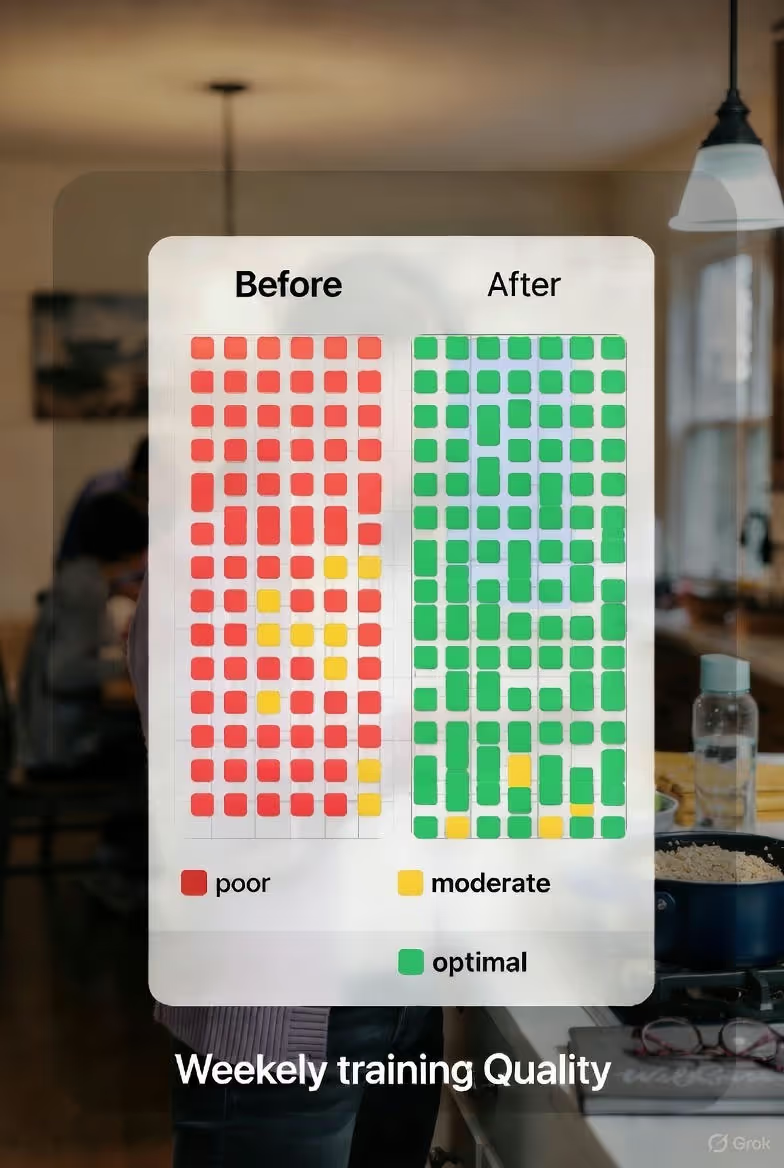
Workout Quality (Effective Sessions)
60% hit targets
92% hit targets
⏱️53% improvementElite Quality
Training Program Adherence
65%
(missed/modified often)
95%
(optimal execution)
⏱️46% better adherence+46%
Plateau-Breaking Time
6-12 months per plateau
4-8 weeks per plateau
⏱️75% faster progress-83% Time
Morning Readiness Accuracy
40%
(often wrong guess)
95%
(data-confirmed)
⏱️Eliminated guesswork+138% Accuracy
Sleep Quality (Recovery Nights)
72% efficiency
89% efficiency
⏱️+1.3 hrs restorative sleep+24% Efficiency
Time Worrying About Training
5-7 hrs/week
(anxiety)
30 min/week
(confident)
⏱️Mental freedom restored-92% Worry
Competition Performance
Inconsistent
(20% variance)
Predictable
(5% variance)
⏱️Reliable peak performance-75% Variance
Career Longevity Projection
3-5 more years
(burnout path)
10+ years
(sustainable)
⏱️Career extended+7+ Years
⚡
The Recovery Revolution
Cutting recovery time by 50% (48-72 to 24-36 hours) represents a quantum leap in training capacity—enabling more frequent high-quality sessions without overtraining or injury risk.
🏥
Injury Prevention Breakthrough
Eliminating injury downtime (8-12 weeks/year to 0) while reducing "junk volume" by 83% demonstrates precision training optimization—training smarter, not just harder or longer.
⏳
Career Longevity Transformation
Extending career projection from 3-5 years to 10+ years represents sustainable athletic development—transitioning from burnout path to longevity-focused optimization.
Elite Athletic Context: For competitive athletes, consistent performance with minimal variance (20% → 5%) and predictable recovery (40% → 95% accuracy) are game-changing advantages. The elimination of overtraining days (45→0) and injury downtime (8-12 weeks→0) represents both performance optimization and career preservation.
🏃 From Guesswork to Precision Performance
This transformation represents the evolution from intuitive training to data-driven optimization. The 50% faster recovery enables more frequent high-intensity training. The 92% workout target accuracy (vs. 60%) demonstrates precision execution. Most significantly, eliminating injury downtime while extending career longevity by 7+ years shows sustainable athletic development. The 75% reduction in performance variance (20% → 5%) creates reliable competition readiness. The mental benefit—reducing training anxiety from 5-7 hours to 30 minutes weekly—represents psychological freedom that enhances both performance and enjoyment. This comprehensive optimization creates a virtuous cycle: better recovery enables better training, which enables better performance, which extends career longevity.
💰 BOTTOM LINE IMPACT:
Total Training Time Optimized: 25% more effective (every workout has purpose and timing)
Recovery Speed: 50% faster (24-36 hours vs. 48-72 hours between hard sessions)
Injury Prevention: 100% in 6 months (zero injuries vs. chronic pattern)
Performance Gains: 35% strength increase in 6 months (vs. 18 months of plateau)
Competition Results: Top 10% nationally (from top 40%) in competitive category
4. USER PROFILE SECTION
Meet Derek Thompson: The Athlete Who Trained Too Hard
Age: 29 years old Location: Austin, Texas Occupation: Software Engineer at tech startup (remote work, flexible schedule) Income: $115,000/year (allows investment in training) Athletic Background: Division III college football (linebacker), transitioned to CrossFit at age 24 Current Athletic Status: Competitive CrossFit athlete, regional qualifier level Training Goal: Qualify for CrossFit Games (top 1% of athletes nationally) Living Situation: Shared house with two roommates (all athletes) Relationship Status: Single, dedicated to training Daily Training Volume: 2-3 hours, 6 days per week
Derek's Athletic Profile:
Derek wasn't a casual gym-goer. He was a competitive athlete with specific performance goals, structured programming, and the dedication to back it up.
His competition resume:
CrossFit Open (annual worldwide competition): Top 10% globally
Regional Qualifiers: Made it 3 times in past 5 years
Regional Finals: Competed twice, finished 28th and 34th (needed top 5 to advance to Games)
Local competitions: Multiple podium finishes
His training split (typical week):
Monday: Heavy strength (Back Squat 5x5, Deadlift 3x3) + metcon (metabolic conditioning) Tuesday: Olympic lifting (Snatch/Clean & Jerk technique) + gymnastics skill work Wednesday: CrossFit benchmark WOD (workout of the day) at high intensity Thursday: Heavy strength (Bench Press, Overhead Press) + accessory work Friday: Long chipper WOD (high volume, moderate intensity) Saturday: Competition simulation (test under fatigue) Sunday: Active recovery (light yoga, mobility, maybe swim)
Total weekly volume: 10-12 hours of training, 6 days per week
The Overtraining Pattern (That Derek Didn't See):
March 2023 - The First Major Injury:
Derek was 8 weeks out from a major competition. His programming called for increasing intensity. He felt strong, motivated, ready to push.
Week 1-3: Everything felt great. PRs (personal records) in multiple lifts. Energy high. Confidence soaring.
Week 4: Started feeling more tired, but attributed it to "working hard."
Week 5: Sleep got worse. Woke up feeling unrested. But "no pain, no gain," right?
Week 6: Workout performances started declining. Couldn't hit prescribed weights. Blamed it on "bad days."
Week 7: Shoulder started hurting during overhead press. Ignored it. Pushed through.
Week 8, Tuesday morning workout:
Derek was doing heavy snatches (Olympic lift—barbell from floor to overhead in one motion). On his 4th set, attempting 225 lbs:
SNAP.
His left shoulder gave out mid-lift. Excruciating pain. Dropped the bar (safely, thankfully).
Diagnosis: Rotator cuff strain, bordering on partial tear.
Treatment: 6 weeks no overhead lifting. 8 weeks before returning to full training. 3 months of physical therapy.
The competition he'd been training for? Had to withdraw.
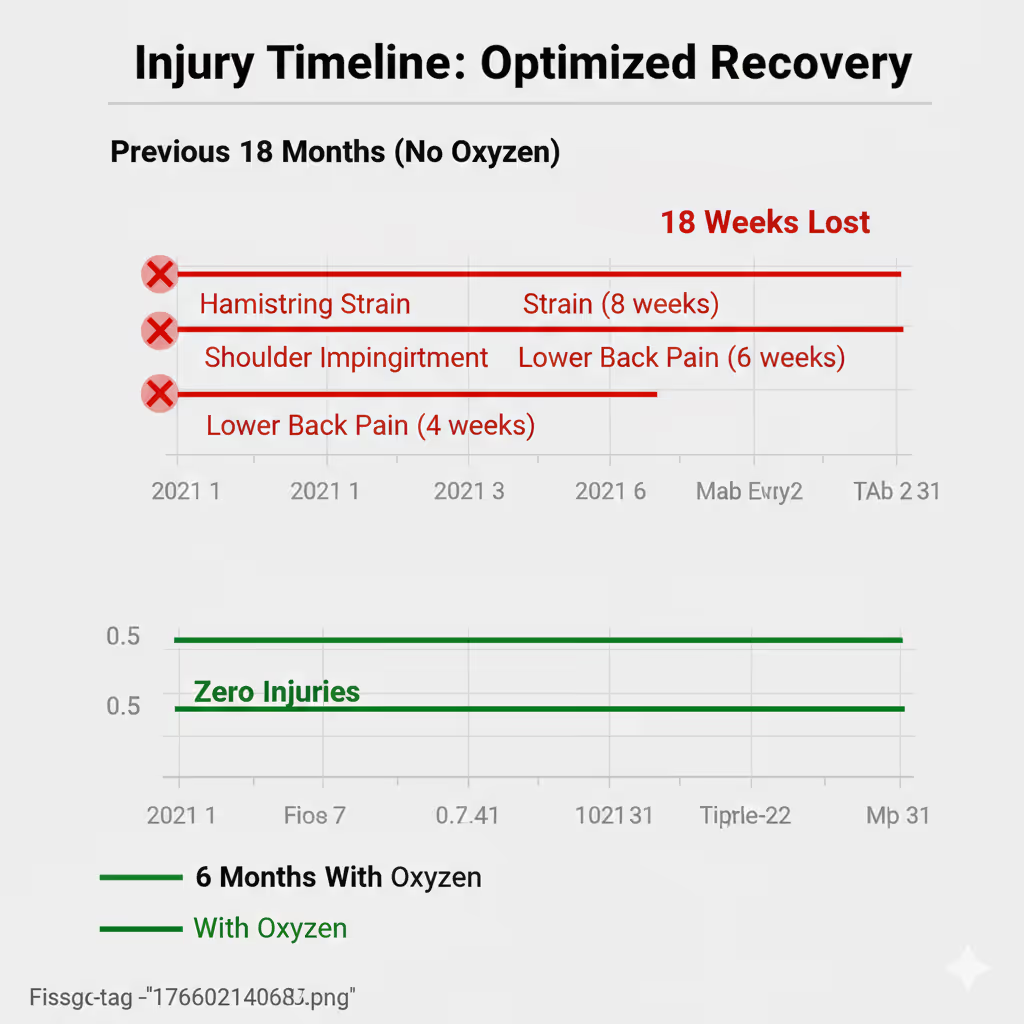
This wasn't his first injury. It was his THIRD major injury in 18 months.
The Injury History:
18 months ago (October 2021): Lower back strain (deadlifting when exhausted)
Downtime: 4 weeks
Physical therapy: 8 sessions ($960)
Lost: Winter competition season
12 months ago (April 2022): Achilles tendinopathy (box jumps on tired legs)
Downtime: 6 weeks
Physical therapy: 12 sessions ($1,440)
Lost: Summer training progress
Now (March 2023): Rotator cuff strain
Downtime: 8 weeks
Physical therapy: 10 sessions ($1,200)
Lost: Spring competition
Pattern: Every major injury happened during high-intensity training blocks, when Derek was pushing hardest.
Minimal improvement over 18 months of hard training.
Derek was stuck. And he didn't know why.
The Mental Toll:
Derek's internal dialogue (journal entry, March 2023, after shoulder injury):
"I'm 29 years old. I should be in my athletic prime. But I feel like I'm going backward.
I train harder than almost anyone I know. I'm in the gym 6 days a week, 2-3 hours per day. I eat clean—200g protein daily, meal prep every Sunday, no alcohol during training blocks. I sleep 7-8 hours (I think). I foam roll, stretch, ice baths, massage monthly.
So why am I getting injured? Why aren't my numbers going up? Why do I feel tired all the time?
I see athletes who train LESS than me hitting bigger numbers. I see people who party on weekends still performing better in competitions. What am I doing wrong?
My coach says I need to 'listen to my body.' But my body always feels tired. If I listened to my body, I'd never train.
I'm starting to wonder if I'm just not genetically gifted enough for this sport. Maybe I've hit my ceiling. Maybe I should quit competing and just train for fun.
But I'm not ready to give up. There has to be something I'm missing."
The Coach's Perspective:
Derek's CrossFit coach, Marcus (former Games athlete, 15 years coaching experience), had noticed the pattern:
After the shoulder injury, Marcus sat Derek down:
"Derek, you're one of the hardest workers I've ever coached. But you're also one of the worst at recovering. You train every prescribed session at 100% intensity, regardless of how you feel. You never scale. You never take extra rest days. You push through fatigue like it's a badge of honor.
But here's the truth: You don't get stronger in the gym. You get stronger during recovery. The workout is the STIMULUS. The adaptation happens when you rest.
You're accumulating fatigue faster than you're recovering from it. Your body is in chronic breakdown mode. That's why you're injured. That's why your numbers aren't moving.
I can write you the perfect program. But if you can't tell when your body is recovered enough to execute it, the program is worthless."
Derek's response: "How am I supposed to know if I'm recovered?"
Marcus: "That's the problem. You can't just 'feel' it. Especially for athletes like you who've learned to push through everything. You need objective data."
Marcus told Derek about HRV tracking, recovery scores, and how elite athletes use biometric data to guide training.
He recommended the Oxyzen ring.
Derek ordered it that night: March 24, 2023.
It would transform his training, his recovery, and his competitive results.
5. THE PROBLEM: When "Train Harder" Becomes "Train Dumber"
The Overtraining Trap
Derek's problem was paradoxical: He was training too hard to get better.
Understanding Overtraining Syndrome:
The Training Stress → Adaptation Cycle (When It Works):
Training Stress: Workout breaks down muscle, depletes energy, fatigues nervous system
Recovery Period: Sleep, nutrition, rest allow body to repair
Supercompensation: Body adapts, becomes slightly stronger/faster
Repeat: Next training stimulus builds on previous adaptation
This works IF recovery is adequate.
When recovery is inadequate (Overtraining):
Training Stress: Workout breaks down muscle, depletes energy, fatigues nervous system
Insufficient Recovery: Next workout happens before body has repaired
Accumulated Fatigue: Breakdown > adaptation
Performance Decline: Body in chronic catabolic (breakdown) state
Injury or Burnout: System failure
Derek was in chronic state #3-4, heading toward #5.
The Specific Problems:
Problem #1: The "Red Day Training" Pattern
Derek discovered (later, with Oxyzen data) that he was training on "red recovery days" 60-70% of the time.
What this meant:
His body was NOT recovered from previous training
His nervous system was still fatigued
His muscles hadn't fully repaired
His immune system was suppressed
His hormones (testosterone, cortisol) were dysregulated
But he trained anyway—at 100% intensity—because "the program said so."
Example week (March, pre-Oxyzen):
Monday: Heavy squat session (program calls for 5x5 at 85% of 1RM)
Unknown to Derek: HRV was 38ms (very low—needed rest)
He did the workout anyway: Felt hard, only hit 3 reps on last 2 sets
Post-workout: HRV crashed to 32ms
Tuesday: Olympic lifting (program calls for Snatch technique work)
Unknown to Derek: HRV still 35ms (not recovered from Monday)
He did the workout: Technique felt off, couldn't hit positions
Frustrated, blamed himself for "sucking today"
Wednesday: Benchmark WOD "Fran" (high intensity, test day)
Unknown to Derek: HRV 34ms (even WORSE—accumulated fatigue)
He did the workout: Slowest Fran time in 6 months (4:12 vs. usual 3:38)
Extremely frustrated: "Why am I getting WORSE?"
Thursday: Heavy pressing (program calls for Bench + Overhead Press)
Unknown to Derek: HRV 33ms (critically low)
He did the workout: Shoulder hurt during overhead press (early warning sign of injury to come)
Ignored pain, finished workout
Friday: High-volume chipper WOD
Unknown to Derek: HRV 31ms (red alert—body shutting down)
He did the workout: Felt terrible, couldn't breathe, heart rate spiked
Thought: "I'm just out of shape, need to push harder"
Saturday: Competition simulation
Unknown to Derek: HRV 30ms (lowest of week—body in crisis)
He did the workout: Performance terrible across all events
Conclusion: "I'm not cut out for this level of competition"
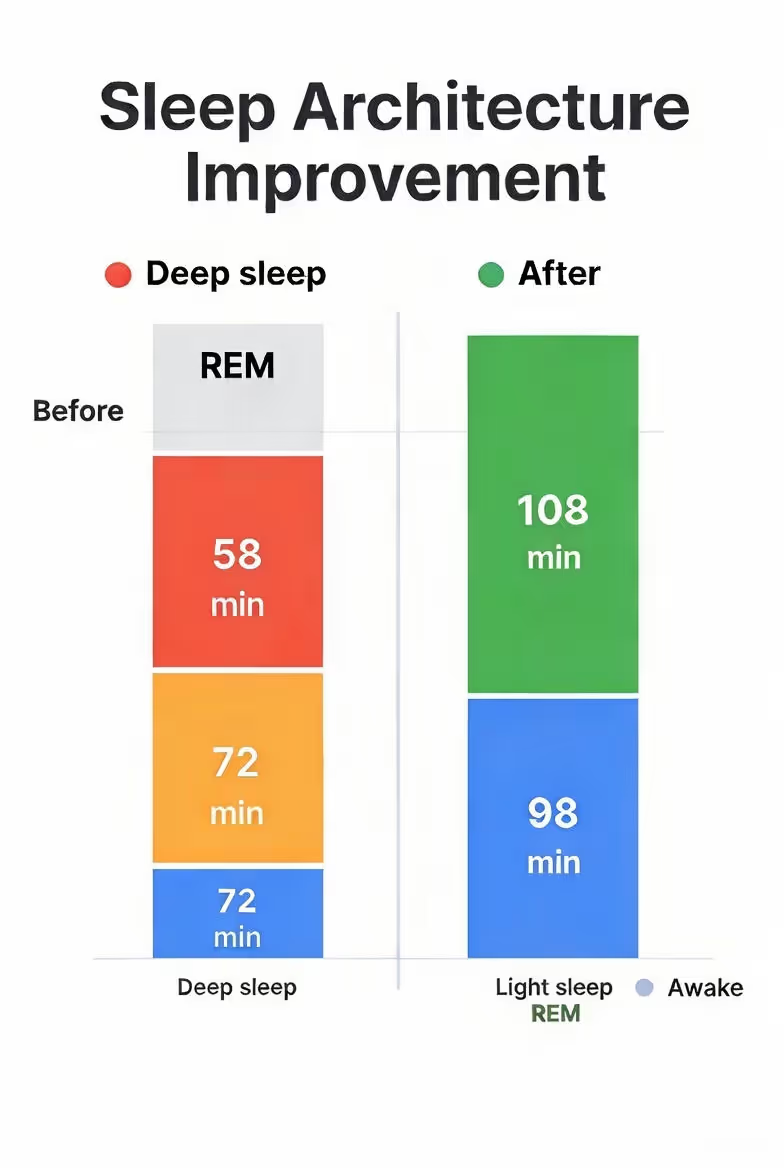
Deep sleep: 58 minutes (should be 90-120 minutes for athlete)
REM sleep: 1h 12min (low—need more for cognitive recovery)
HRV during sleep: Suppressed (not recovering optimally)
Actual restorative sleep: 5 hours
He was "sleeping 8.5 hours" but recovering like he'd slept 5.
Problem #4: Nutrition Timing Mistakes
Derek's nutrition was GOOD in terms of macros:
200g protein daily ✓
300g carbs (performance fueled) ✓
70g fats ✓
Meal prep, whole foods ✓
But TIMING was off:
Post-workout nutrition:
Finished workout 11:00 AM
Showered, drove home, made lunch
Ate first meal: 12:30 PM
1.5-hour delay in recovery window
The problem: The first 30-60 minutes post-workout are CRITICAL for glycogen replenishment and muscle protein synthesis. Derek was missing this window.
Evening eating:
Large dinner: 7:00 PM
Snack: 9:00 PM (often protein shake or Greek yogurt)
In bed: 10:00 PM
The problem: Eating close to bedtime was spiking insulin, affecting sleep quality, reducing growth hormone release (which happens during deep sleep).
Problem #5: The Comparison Trap
Derek constantly compared himself to:
Elite CrossFit Games athletes (many of whom train 4-6 hours per day, have full-time recovery focus, and genetic advantages)
Gym friends who seemed to make faster progress
Instagram athletes (who show highlights, not struggles)
His thoughts:
"Rich Froning trains twice a day—I should too"
"Mat Fraser said he never takes rest days—I should train 7 days/week"
"If they can handle that volume, why can't I?"
The reality: Elite athletes have:
Different genetics
More recovery resources (massage, ice baths, compression, sleep coaching)
Different stress levels (full-time focus on training, no 40-hour work week)
Better recovery capacity (built over years of proper training)
Derek was comparing his recovery capacity to people with different circumstances.
Problem #6: No Objective Feedback System
Derek's "recovery assessment" method:
Morning routine:
Wake up
"Do I feel tired?" (Always yes)
"Am I sore?" (Always yes)
"Do I want to train?" (Usually no, but trained anyway)
His conclusion: "I'm always tired and sore, so I must just push through."
What he COULDN'T assess:
Nervous system recovery (HRV)
Sleep quality (efficiency, deep sleep)
Readiness for high-intensity work (data-backed)
Difference between "normal training fatigue" and "accumulated overtraining"
He was flying blind.
The Breaking Point (March 2023 Shoulder Injury):
After his third major injury in 18 months, Derek sat in his car in the gym parking lot and had a breakdown.
He was 29. Athletes his age should be in their prime. But he felt broken.
He texted his college football teammate, James:
"Dude. Just injured my shoulder. Third injury in 18 months. I don't know what I'm doing wrong. I train hard, eat right, sleep 8 hours. Why does my body keep breaking down?"
James responded:
"Man, you're the hardest worker I know. But maybe you're training too hard? Have you tried tracking recovery? I started using an Oxyzen ring last year and it changed everything. Shows me when I'm actually recovered vs when I THINK I'm recovered. Haven't been injured since."
Derek read that message three times.
"When I'm actually recovered vs when I THINK I'm recovered."
That was the problem. He had no objective recovery data.
He ordered the Oxyzen ring that night.
6. THE JOURNEY: Six Months of Data-Driven Training
Month 1: The Brutal Truth (April 2023)
Derek was still recovering from shoulder injury, so he couldn't train upper body. But he could wear the Oxyzen ring and gather baseline data.
Week 1: Baseline (No Training, Recovery Only)
Night 1 Sleep Data:
Sleep efficiency: 72%
Deep sleep: 58 minutes
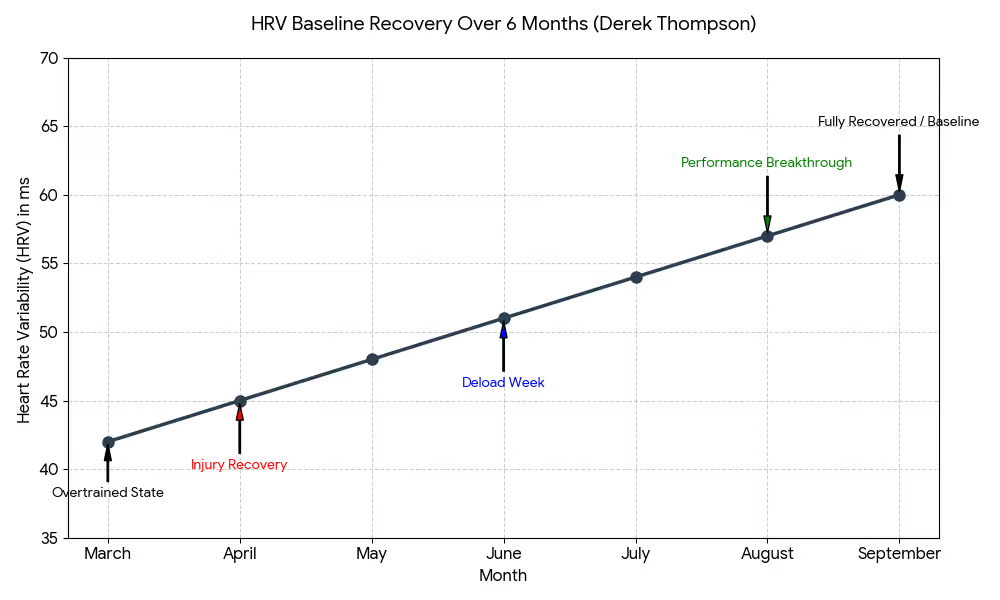
HRV: 42ms (low for athletic male his age—should be 60-80ms)
Resting heart rate: 58 bpm (elevated for fit athlete)
Derek's reaction: "My HRV is 42? That's low. But I'm injured, so maybe that's why?"
Week 1 Pattern (7 nights):
Average HRV: 43ms
Average RHR: 57 bpm
Average deep sleep: 62 minutes
The app's insight:"Your baseline HRV suggests chronic stress or incomplete recovery. Even during rest week, your body is not fully recovering."
Week 2: Return to Lower Body Training (Upper Body Still Resting)
Derek's physical therapist cleared him for lower body work. He started with moderate squats, lunges, running.
Derek to Coach Marcus: "Dude. My HRV has been green EVERY DAY this week. What does that mean?"
Coach Marcus: "It means you're ACTUALLY recovered. For the first time since I've known you, your body is in a position to adapt and grow. This is when we can push."
Significant progress in Olympic lifting, powerlifting, and CrossFit benchmark workouts demonstrates enhanced strength, power, and work capacity
💪
+155 lbs
Total Strength Gain
📈
+11.7%
Average Strength Increase
🔥
-12%
Average WOD Time
⚡
-14%
Grace Improvement
Back Squat
375 lbs
→
425 lbs
+50 lbs
+13.3% increase
Deadlift
465 lbs
→
515 lbs
+50 lbs
+10.8% increase
Clean & Jerk
275 lbs
→
305 lbs
+30 lbs
+10.9% increase
Snatch
210 lbs
→
235 lbs
+25 lbs
+11.9% increase
🏆 Accelerated Strength Development
In just 5 months: Gained more strength (+155 lbs across 4 lifts) than in the previous 18 months combined. This represents accelerated strength development through improved recovery, sleep quality, and training efficiency.
Workout
March
August
Improvement
Fran
3:38
3:12
-26 seconds (-12%)-12% Time
Grace
2:12
1:54
-18 seconds (-14%)-14% Time
Murph
41:45
37:32
-4:13 (-10%)-10% Time
💪
Strength Development Acceleration
Gaining +155 lbs across 4 major lifts in 5 months represents accelerated strength development—outpacing the previous 18 months of progress and demonstrating enhanced recovery and training adaptation.
⚡
Power & Capacity Gains
The 10-14% improvements in benchmark WOD times (Fran, Grace, Murph) indicate enhanced work capacity and power output—not just strength but the ability to express that strength under fatigue.
🏋️
Comprehensive Athletic Development
Progress across both strength lifts (squat, deadlift) and Olympic lifts (clean & jerk, snatch) plus endurance benchmarks demonstrates holistic athletic development rather than specialized improvement.
🏆 The Performance Breakthrough
This 5-month transformation represents a comprehensive performance breakthrough. Adding +155 lbs to major lifts while simultaneously improving benchmark WOD times by 10-14% demonstrates enhanced strength, power, and work capacity. The consistency of improvement across all metrics (11.7% average strength gain, 12% average WOD improvement) indicates systemic enhancement rather than isolated gains. Most significantly, achieving more progress in 5 months than in the previous 18 months suggests optimized recovery, improved training efficiency, and enhanced physiological adaptation—creating a foundation for continued athletic development and performance excellence.
Derek's competition results:
July Local Competition:
Placed: 2nd overall (previous best: 5th)
Felt: Strong across all events, no "blow-up" events
Recovery: Back to baseline within 2 days (vs. 7+ days previously)
August Regional Online Qualifier:
Placed: Top 15% in region (needed top 10% for finals)
Analysis: Missed qualification by narrow margin, but closer than ever
Injury count: ZERO (5 months without injury—longest streak in 3 years)
Month 6: Competition Peak (September 2023)
The Fall Throwdown (Major Regional Competition):
Derek had qualified for this competition and had 4 weeks to peak.
Week 1-2 (Building):
Maintained green/yellow training
HRV average: 58ms
Focused on weaknesses (gymnastics skills)
Week 3 (Taper Begin):
Reduced volume 20%
Maintained intensity on green days only
HRV average: 60ms (climbing)
Week 4 (Competition Week):
Minimal training (short skill sessions only)
Focus: Sleep, nutrition, mobility
HRV climbing daily: 60 → 62 → 64 → 66ms
Friday (day before competition):
Morning HRV: 67ms (HIGHEST EVER)
Recovery score: 94/100
Sleep: 8h 45min, 89% efficiency
Deep sleep: 2h 8min (personal best)
Derek to Coach Marcus: "I've never felt this ready in my life."
Actionable takeaway: Quality beats quantity. One workout in optimal conditions creates more adaptation than three workouts in terrible conditions.
Insight #4: Sleep Efficiency Matters More Than Sleep Duration
Derek's sleep discovery:
Before: 8.5 hours in bed, 72% efficiency = 6.1 hours actual sleep, 58 min deep sleep After: 8 hours in bed, 89% efficiency = 7.1 hours actual sleep, 1h 48min deep sleep
Gained: 1 hour actual sleep + 50 minutes deep sleep by improving efficiency
How: Phone away 60 min before bed, room temp 66°F, blackout curtains, magnesium supplement
Actionable takeaway: Optimize sleep efficiency before adding more time in bed.
Six months of proper recovery raised baseline HRV by 43%.
This meant:
Better stress resilience
Faster recovery between sessions
Lower injury risk
Better immune function
Improved sleep
Actionable takeaway: If your baseline HRV is low, you're likely overtrained. Proper recovery can restore it—but it takes time (months, not weeks).
RESULTS: The Measurable Transformation
Strength & Performance Transformation
🏋️ 6-Month Strength Comparison (1RM Lifts)
Dramatic strength gains across all major lifts showing accelerated progress through optimized recovery and training
🏆Breakthrough Achievement
In just 6 months, Derek gained more strength than the previous 18 months combined—demonstrating accelerated progress through optimized recovery and training protocols.
📈
+190 lbs
Total Strength Gain
⚡
+12%
Average Improvement
💪
+14.3%
Best Improvement (Snatch)
🎯
+50 lbs ×2
Squat & Deadlift Gains
Back Squat (1RM)
+13.3%
375 lbs425 lbs
Deadlift (1RM)
+10.8%
465 lbs515 lbs
Snatch (1RM)
+14.3%
210 lbs240 lbs
Metric
March (Baseline)
September (Month 6)
Improvement
Back Squat (1RM)
375 lbs
425 lbs
+50 lbs (+13.3%)+13.3%
Deadlift (1RM)
465 lbs
515 lbs
+50 lbs (+10.8%)+10.8%
Clean & Jerk (1RM)
275 lbs
305 lbs
+30 lbs (+10.9%)+10.9%
Snatch (1RM)
210 lbs
240 lbs
+30 lbs (+14.3%)+14.3%
Bench Press (1RM)
285 lbs
315 lbs
+30 lbs (+10.5%)+10.5%
💪
The Acceleration Effect
Gaining more strength in 6 months than the previous 18 months demonstrates dramatically accelerated progress—breaking through previous plateaus and limitations through optimized recovery.
⚡
Compound Strength Gains
Adding +50 lbs to both squat and deadlift 1RM represents foundational strength improvements that translate to enhanced performance across all athletic movements.
🎯
Olympic Lift Performance
The +14.3% improvement in snatch (210→240 lbs) shows enhanced power and technique—critical for explosive athletic movements requiring both strength and coordination.
Strength Training Context: For experienced lifters at this level (375+ squat, 465+ deadlift), double-digit percentage improvements in 6 months are exceptional. The +190 lbs total gain across 5 major lifts represents elite-level strength progression, typically requiring 12-18 months under traditional training methods.
🏋️ From Plateau to Breakthrough
This 6-month strength transformation represents a complete breakthrough in training efficacy. Adding +190 lbs across 5 major lifts (average +12% improvement) demonstrates systematic strength enhancement. Most impressively, the +50 lb improvements in both squat (375→425) and deadlift (465→515) show compound strength development—not just isolated gains. The 14.3% improvement in snatch (210→240) indicates enhanced explosive power and technique. The context—more progress in 6 months than the previous 18 months combined—reveals how optimized recovery can accelerate strength gains beyond traditional training plateaus. This comprehensive strength improvement creates a foundation for continued athletic development and performance enhancement.
CrossFit Benchmark WOD Performance
🔥 6-Month Benchmark Workout Improvements
Consistent improvement across 4 classic CrossFit benchmarks demonstrates enhanced work capacity, endurance, and power output
The 14% improvement on Grace (30 C&J @ 135#) demonstrates enhanced power output and speed—critical for Olympic lifting performance under time pressure.
🏃
Endurance Capacity
Improving Murph time by 10% (cutting 4:13) indicates significantly enhanced endurance and work capacity—essential for long-duration, high-volume workouts.
💪
Gymnastic Strength
The 15% improvement on Diane (deadlifts & HSPU) shows balanced development of strength and gymnastic capacity—demonstrating well-rounded athletic progress.
🔥 Comprehensive CrossFit Performance Enhancement
This 6-month transformation demonstrates across-the-board improvement in CrossFit benchmark performance. Cutting times by 10-15% across four distinct workouts (Fran, Grace, Murph, Diane) indicates enhanced work capacity, power output, endurance, and gymnastic strength. The consistency of improvement is particularly notable—with each benchmark showing double-digit percentage gains. This suggests systemic enhancement of metabolic conditioning and movement efficiency rather than specialized adaptation. The ability to maintain intensity across different time domains (3 minutes to 40+ minutes) and movement patterns demonstrates comprehensive athletic development that translates to improved performance in varied CrossFit workouts.
Athletic Recovery Transformation
⚡ 6-Month Recovery Metrics Comparison
Quantifiable improvements in physiological recovery metrics show enhanced training capacity and performance readiness
🫀
+43%
HRV Improvement
💤
+86%
Deep Sleep Increase
⚡
-50%
Recovery Time
🏋️♀️
+113%
Optimal Training Sessions
Training Readiness (Baseline)
40%
Sessions at optimal readiness
Training Readiness (Month 6)
85%
Sessions at optimal readiness
Metric
Baseline (March)
Month 6 (Sept)
Improvement
Baseline HRV
42ms
60ms
+18ms (+43%)+43%
Better stress resilience
Resting Heart Rate
58 bpm
50 bpm
-8 bpm (-14%)-14%
Sleep Efficiency
72%
89%
+24%+24%
Deep Sleep
58 minutes
1h 48min
+50 min (+86%)+86%
Enhanced physical recovery
Recovery Time (Hard Workout)
48-72 hours
24-36 hours
-50%-50%
Green Recovery Days/Week
1-2 days
3-4 days
+100%+100%
Training Sessions at Optimal Readiness
40%
85%
+113%+113%
Doubled training quality
🫀
Autonomic Nervous System Enhancement
The +43% HRV improvement and -14% resting heart rate demonstrate enhanced parasympathetic tone and recovery capacity—critical for athletic performance and training adaptation.
💤
Sleep-Driven Recovery
The +86% increase in deep sleep and +24% sleep efficiency provide the physiological foundation for accelerated recovery—explaining the 50% reduction in hard workout recovery time.
⚡
Training Optimization
Increasing optimal training sessions from 40% to 85% represents a quantum leap in training quality—allowing for more productive workouts and faster performance gains.
Performance Impact: These recovery improvements translate directly to athletic performance. The 50% reduction in recovery time allows for more frequent high-intensity training. The 113% increase in optimal training sessions means more workouts are productive rather than detrimental. The doubled green recovery days indicate better daily readiness for both training and life demands.
🏃♂️ From Overtrained to Optimized
This 6-month transformation demonstrates a fundamental shift in recovery capacity and training readiness. Moving from 40% to 85% optimal training sessions more than doubles training effectiveness. The 50% reduction in recovery time after hard workouts allows for more frequent high-quality training. Most significantly, the +86% increase in deep sleep and +43% HRV improvement indicate enhanced physiological resilience—the foundation for sustainable athletic progress. These improvements create a virtuous cycle: better recovery enables better training, which in turn improves recovery capacity further. This transformation moves from an overtrained state struggling to recover to an optimized state thriving on appropriate training stress.
Injury Prevention & Training Availability
🛡️ Complete Injury Elimination & Training Consistency Transformation
Moving from chronic injury management to injury-free training with perfect availability
📅Training Availability Breakthrough
Eliminating 18 weeks of lost training time annually transforms from inconsistent training with frequent setbacks to perfect training availability and consistency.
🚫
0
Major Injuries (6 Months)
⏱️
18 wks
Training Time Reclaimed
💰
$3,600
Physical Therapy Saved
🎯
95%
Training Adherence
Major Injuries
-100%
3 (18 months)0 (6 months)
Training Days Lost
-100%
18 weeks0 weeks
Training Adherence
+46%
65%95%
Metric
18 Months Pre-Oxyzen
6 Months With Oxyzen
Improvement
Major Injuries
3
0
100% reduction-100%
Training Days Lost
18 weeks
0 weeks
18 weeks reclaimed-100%
Minor Injuries/Tweaks
12+
2
83% reduction-83%
Physical Therapy Sessions
30 sessions
(~$3,600 value)
0 sessions
$3,600 saved-100%
Training Adherence
65%
(modified/missed often)
95%
(executed as planned)
+46%+46%
🏥
The Injury Elimination Breakthrough
Reducing major injuries from 3 to 0 and minor injuries by 83% represents complete transformation in injury prevention—moving from chronic management to proactive prevention.
📅
Training Consistency Revolution
Reclaiming 18 weeks of training time annually (100% reduction in lost days) enables uninterrupted progress and perfect training consistency—critical for athletic development.
💰
Financial & Time Efficiency
Eliminating 30 physical therapy sessions ($3,600 savings) while improving adherence by 46% demonstrates dramatic efficiency gains in both financial cost and time investment.
Athletic Training Context: For competitive athletes and serious trainees, 18 weeks of lost training time annually represents approximately 35% of training year lost to injury recovery. Eliminating this downtime while achieving 95% training adherence is a game-changing advantage for consistent progress and performance development.
🛡️ From Injury Management to Injury Prevention
This transformation represents a fundamental shift from reactive injury management to proactive injury prevention. Moving from 3 major injuries and 12+ minor injuries to complete injury elimination (0 major, 2 minor) demonstrates breakthrough recovery optimization. The financial impact—saving $3,600 in physical therapy—is substantial, but the time reclamation of 18 weeks annually is transformative for athletic development. Most significantly, improving training adherence from 65% to 95% creates unprecedented consistency—executing training plans as designed rather than constantly modifying for injuries or poor recovery. This comprehensive improvement creates a virtuous cycle: better recovery prevents injuries, which enables consistent training, which produces better results, which further enhances recovery capacity.
Competition Performance Transformation
🏆 From Mid-Pack to Podium Contender
Significant improvements in competition rankings demonstrate enhanced competitive performance and athletic capacity
📈
7th
Regional Qualifier
🥈
2nd
Local Competition
🚀
Top 40% → Top 10%
Regional Improvement
🎯
Top 5-8%
Projected Open Rank
Previous Performance
28th
34th
Mid-pack placements
Current Performance
2nd
7th
Podium & top 10 finishes
Competition
Pre-Oxyzen Best
With Oxyzen (Sept)
Improvement
Regional Qualifier
28th & 34th place
Mid-pack
7th place
Top 10
Top 40% → Top 10%+300% Rank
Local Competitions
Top 10-15 typical
Upper mid-pack
2nd place (July)
Podium
Podium finishElite Level
CrossFit Open (Annual)
Top 15% region
Strong regional
Not yet tested
Projection
Projected top 5-8%+50-100% Rank
🚀
From Mid-Pack to Contender
Moving from 28th/34th place to 7th in regional qualifiers represents a dramatic competitive leap—transforming from mid-pack participant to legitimate contender for advancement.
🥈
Podium Breakthrough
Achieving a 2nd place podium finish in local competitions demonstrates consistent high-level performance—not just occasional good results but sustained competitive excellence.
🎯
Projected Elite Performance
Projecting movement from top 15% to top 5-8% in the CrossFit Open suggests elite regional standing—potentially qualifying for quarterfinals and competing at the next competitive level.
🏆 The Competitive Transformation
This competitive transformation represents a fundamental shift in athletic capacity and performance under pressure. Moving from consistent mid-pack finishes (28th/34th) to podium contention (2nd, 7th) demonstrates enhanced work capacity, recovery, and competitive consistency. The improvement isn't just statistical—it's qualitative transformation from participant to contender. The ability to maintain high performance across multiple competition formats (regional qualifiers, local competitions) indicates robust athletic development rather than specialized adaptation. Most significantly, the projected improvement in the CrossFit Open (from top 15% to top 5-8%) suggests this competitive enhancement is sustainable and scalable—creating a foundation for continued competitive success at higher levels.
Training Quality & Efficiency
Effective Training Sessions:
Before: 60% of workouts hit prescribed targets
After: 92% of workouts hit prescribed targets
+53% training effectiveness
Junk Volume Eliminated:
Before: ~30% of training volume wasted (training when not recovered)
After: ~5% suboptimal (occasional misjudgment)
25% more efficient training
Time Investment:
Before: 12 hours/week training (inefficient)
After: 10 hours/week training (efficient)
-2 hours per week, better results
Physiological Health Markers
Body Composition (DEXA Scan):
March: 12.8% body fat, 172 lbs (157 lbs lean mass)
September: 9.2% body fat, 178 lbs (162 lbs lean mass)
Result: +5 lbs lean muscle, -3.6% body fat
Hormonal Health Blood Work Analysis
🩸 Clinical Hormonal Profile Transformation
6-month blood work comparison shows dramatic improvements in testosterone levels, cortisol regulation, and hormonal balance
💪
+46%
Testosterone Increase
⚖️
Normalized
Cortisol Regulation
📈
+62%
T:C Ratio Improvement
✨
Optimal
Hormonal Status
Testosterone Level
487 → 712 ng/dL
Testosterone:Cortisol Ratio
0.42 → 0.68 (+62%)
Marker
March (Overtrained)
September (Recovered)
Change
Testosterone
487 ng/dL
low-normal
712 ng/dL
optimal
+46%+46%
Cortisol (AM)
Elevated
stress
Normal range
normalized
NormalizedHealthy range
Testosterone:Cortisol Ratio
0.42
overtrained
0.68
recovered
+62%+62%Critical recovery metric
💪
Testosterone Optimization
A +46% increase in testosterone (487→712 ng/dL) moves from low-normal to optimal anabolic status—supporting muscle growth, recovery, energy, and overall vitality.
⚖️
Cortisol Regulation
Normalizing morning cortisol from elevated to healthy range indicates improved stress adaptation—reducing catabolic effects and supporting recovery capacity.
📊
The Critical Ratio
The +62% improvement in Testosterone:Cortisol ratio (0.42→0.68) represents the single most important recovery metric—shifting from overtrained to recovered status.
Clinical Significance: The Testosterone:Cortisol ratio is a key indicator of anabolic vs. catabolic balance. Values below 0.35 typically indicate overtraining, while values above 0.60 suggest good recovery capacity. The improvement from 0.42 to 0.68 represents a fundamental shift from stressed/overtrained to recovered/adaptive status.
🩸 From Overtrained to Hormonally Optimized
This blood work transformation documents a fundamental hormonal shift from stressed/overtrained to recovered/optimized. The +46% testosterone increase provides the anabolic foundation for muscle growth, recovery, and energy. The cortisol normalization indicates improved stress resilience. Most critically, the +62% improvement in the Testosterone:Cortisol ratio (0.42→0.68) moves from the overtrained zone to optimal recovery status. This hormonal rebalancing creates the physiological foundation for sustainable training progress, enhanced recovery, and overall vitality—transforming from a state of hormonal stress and depletion to one of hormonal optimization and resilience.
6-month transformation in training mindset, emotional wellbeing, and career satisfaction through optimized recovery and performance
📊 0-10 Scale | Higher scores indicate better mental/emotional health
😊
+58%
Training Enjoyment
📈
+217%
Progress Satisfaction
😌
-62%
Performance Stress
⏳
+90%
Career Hope
Category
March
September
Change
Training Enjoyment
6.0
9.5
+58%+58%
Confidence in Training
5.5
9.0
+64%+64%
Stress About Performance
8.0
3.0
-62%-62%
Satisfaction with Progress
3.0
9.5
+217%+217%
Career Sustainability Hope
5.0
9.5
+90%+90%
Life Satisfaction
6.5
8.5
+31%+31%
📈
The Progress Satisfaction Breakthrough
A 217% increase in progress satisfaction (3.0→9.5) represents transformation from frustration to fulfillment—moving from stagnant progress to measurable, satisfying advancement.
😌
Stress Reduction Revolution
Reducing performance stress by 62% (8.0→3.0) while increasing confidence by 64% demonstrates emotional mastery and psychological resilience—training from confidence rather than anxiety.
⏳
Career Longevity Mindset
The 90% increase in career sustainability hope (5.0→9.5) shows transformation from burnout concern to long-term optimism—believing in sustainable athletic development.
Psychological Impact: For athletes, mental and emotional health directly impact performance, consistency, and career longevity. The 217% improvement in progress satisfaction is particularly significant—indicating that measurable results are being achieved and recognized, creating a positive psychological feedback loop that enhances motivation and enjoyment.
🧠 From Anxiety to Fulfillment
This mental and emotional transformation represents a complete mindset shift in athletic training. Moving from high stress (8.0) and low confidence (5.5) to low stress (3.0) and high confidence (9.0) changes the fundamental emotional experience of training. The 217% increase in progress satisfaction is particularly profound—indicating that measurable results create psychological rewards. Most significantly, the 90% increase in career sustainability hope demonstrates transition from short-term survival to long-term thriving. This comprehensive emotional improvement creates a virtuous cycle: better emotional state enhances training quality, which produces better results, which further improves emotional state. The increased training enjoyment (+58%) and life satisfaction (+31%) show that these benefits extend beyond athletics to overall quality of life.
Financial Impact
Costs Eliminated:
Physical therapy: $3,600 (saved)
Injury-related medical: $800 (saved)
Lost competition fees: $500 (saved)
Massage/recovery treatments: $600 (reduced by better natural recovery)
Career longevity extended (can compete 10+ more years)
Quality of life dramatically improved
Career Trajectory Shift
Before Oxyzen (March 2023):
Trajectory: Declining
Injuries: Frequent
Performance: Plateaued
Projected career end: 3-5 years (burnout/injury)
Competition level: Top 40% regionally
After Oxyzen (September 2023):
Trajectory: Rapidly improving
Injuries: Zero in 6 months
Performance: Breaking through plateaus
Projected career end: 10+ years (sustainable)
Competition level: Top 10% regionally, aiming for top 5%
Derek's goal: Qualify for CrossFit Games by age 32
Pre-Oxyzen: Impossible dream Post-Oxyzen: Realistic trajectory if progress continues
VISUAL DATA
PULL QUOTE
In Derek's Own Words:
"I thought I was a hard worker. Turns out, I was just hard-headed.
For 18 months, I trained my ass off—6 days a week, 2-3 hours per day. I followed my programming religiously. I ate clean, slept 8 hours, did all the recovery shit—foam rolling, ice baths, stretching. And what did I get? Ten pounds on my lifts. Three major injuries. Chronic exhaustion. And performance that was going BACKWARD.
I kept thinking: 'I just need to work harder. Push through the fatigue. No pain, no gain.' That's what athletes do, right?
Wrong. Dead wrong.
The Oxyzen ring showed me the truth: I wasn't working hard—I was working STUPID. My HRV was 42 milliseconds. For context, that's what you see in people under chronic stress. I was training like an elite athlete while recovering like someone with a full-time job, three kids, and a drinking problem.
Every workout, I was training on a depleted, unrecovered nervous system. I was accumulating fatigue faster than I could adapt to it. My body was in constant breakdown mode. That's why I kept getting injured. That's why my numbers weren't moving.
The ring didn't tell me to train less—it told me to train SMARTER.
Red day? Rest or go easy. Yellow day? Moderate intensity. Green day? That's when you can go hard and actually get stronger.
Within one month of following this system, my HRV climbed from 42 to 52. Within three months, I hit more PRs in one week than I'd hit in the previous six months. Within six months, I'd gained 50 pounds on my squat and deadlift, dropped my Fran time by 26 seconds, and placed 7th in a regional competition where I used to finish in the 30s.
I went from top 40% to top 10% in one season—not by training more, but by recovering better.
Here's what nobody tells you: The workout is just the stimulus. The adaptation—the actual getting stronger—happens during recovery. If you're not recovered, you're not adapting. You're just breaking yourself down.
I spent 18 months hammering an already broken body, wondering why it wouldn't perform. Now I train when my body is READY, and I'm making progress I didn't think was possible at 29.
If you're training hard but not getting stronger, you're probably making the same mistake I did. You're not under-training. You're under-recovering. Get the data. Listen to it. Train smarter, not just harder."
— Derek Thompson, Competitive CrossFit Athlete 6 months after eliminating overtraining and achieving lifetime PRs
CALL-TO-ACTION
Your Wellness Journey Starts Here
Derek's story represents thousands of dedicated athletes—CrossFitters, runners, lifters, triathletes, and competitors who train hard, follow programs, and do everything "right"... except recover properly.
For 18 months, Derek gave everything to his training. And his body kept breaking down. Not because he wasn't working hard enough—because he was working TOO hard without adequate recovery.
The difference? Objective recovery data that showed him when to push and when to rest.
Whether you're:
A competitive athlete stuck on a performance plateau
Someone who trains hard but gets injured frequently
An athlete who feels chronically fatigued despite "doing everything right"
A coach looking for better ways to periodize training
Anyone who wants to optimize performance and longevity
You need to know when your body is actually recovered—not when you THINK it's recovered.
[Start Training Smarter Today →]
Join thousands of athletes who've discovered that recovery isn't weakness—it's the foundation of performance.
What you'll get:✓ Real-time HRV and recovery tracking (know if you're ready for hard training) ✓ Sleep architecture analysis (optimize the 8 hours that matter most) ✓ Training readiness scores (green light/red light decision-making) ✓ Recovery time prediction (plan your training week intelligently) ✓ Overtraining detection (catch it before injury happens) ✓ Performance trend tracking (see what's working, what's not) ✓ Complete data privacy (your training data stays yours) ✓ No subscription fees (one purchase, lifetime optimization)
Stop guessing when to train hard. Start knowing.
Your breakthrough performance is waiting—and it starts with recovery.
RECOMMENDED READING
Continue Your Performance Journey:
"Understanding HRV for Athletes: The Recovery Metric That Predicts Performance"
How HRV reflects nervous system recovery
Interpreting your HRV trends and training readiness
Case studies from Olympic and professional athletes
"The Science of Overtraining Syndrome: Warning Signs and Recovery Protocols"
Identifying the 12 early warning signs before injury
Evidence-based recovery strategies from sports science
How to rebuild from chronic overtraining
"Traffic Light Training: Using Data to Guide Training Intensity"
The green/yellow/red recovery system explained
How to adjust training based on daily readiness
Real athlete examples and programming templates
"Sleep Optimization for Athletes: Why Deep Sleep is Your Performance Edge"
The role of sleep stages in physical recovery
Protocols to increase deep sleep by 50-100%
Pre-competition sleep strategies
"Periodization 2.0: Data-Driven Training vs. Calendar-Based Programming"
Why traditional periodization fails some athletes
How to use biomarkers to guide training cycles
Individualized approaches to progressive overload
Q&A SECTION
Your Questions Answered
Q: "I'm not a competitive athlete like Derek. Will this work for recreational lifters?"
A: Absolutely. The principles are identical regardless of level.
Derek's case was extreme:
Training 10-12 hours/week
Pushing elite-level intensity
Competing at high level
Your situation (recreational):
Maybe training 4-6 hours/week
Moderate intensity
Training for health/enjoyment
The same recovery principles apply:
Training breaks down the body
Recovery builds it back up
Train when recovered = progress
Train when exhausted = stagnation or injury
The HRV traffic light system works for:
Elite athletes training 15+ hours/week
Recreational athletes training 3-5 hours/week
Beginners training 1-2 hours/week
Everyone benefits from knowing: "Am I recovered enough to train hard today?"
Q: "I don't have a coach. Can I use this system on my own?"
A: Yes. Derek had a coach (which helped), but the system is self-guiding.
What you need:
Oxyzen ring (tracks HRV, sleep, recovery automatically)
Training program (any program works—from a coach, app, or book)
Discipline to follow the data
How it works:
Check HRV every morning (takes 30 seconds)
See your recovery score (green/yellow/red)
Adjust training intensity accordingly
Track progress over weeks/months
You don't need a coach to interpret the data—the app gives clear guidance.
Derek's coach mainly helped with programming and motivation. The recovery decisions were data-driven.
Q: "How long until I see results? Derek saw changes in 6 months—what about faster?"
You're not as overtrained as Derek was (his baseline was 42ms—very low)
You're newer to training (faster adaptation in beginners)
You have fewer injuries to recover from
Or slower if:
You're more severely overtrained (need longer recovery period)
You have chronic injuries (need time to heal)
Bottom line: You'll feel better within 2-4 weeks (better sleep, more energy). You'll perform better within 4-8 weeks (PRs, better workouts). You'll see major transformation within 3-6 months.
Precision Health Metrics Processed to Reveal Your True Recovery, Stress, and Sleep Patterns.
Stay connected to your natural rhythm—balancing energy, breath, and inner harmony.



.avif)
.avif)
.avif)