Real-Time Stress Awareness and Emotional Wellbeing
QUICK STATS BOX
⏱️ANXIETY REDUCTION & TIME RECLAMATION
7-month transformation in anxiety management showing dramatic reductions in symptoms and significant time reclamation for life and work
😌
-90%
Panic Attacks
⏱️
+8 hrs
Weekly Time Reclaimed
💼
+25%
Work Performance
❤️
+113%
Quality Family Time
Panic Attack Frequency
-90%
8-12/month0-1/month
Weekly Worry Time
-85%
10+ hrs1-2 hrs
Family Presence
+113%
40% present85% present
Metric
Before Oxyzen
After 7 Months
Time/Efficiency Gained
Panic Attacks Per Month
8-12 attacks
0-1 attack
⏱️90% reduction-90%
Panic Attack Duration
45-90 minutes
10-15 minutes
(when occur)
⏱️75% shorter-75%
Chronic Anxiety Level
7-8/10
(daily)
3-4/10
(manageable)
⏱️55% reduction-55%
Time Recovering from Stress
4-6 hours
30-60 minutes
⏱️85% faster-85%
Morning Anxiety Duration
2-3 hours
15-30 minutes
⏱️90% reduction-90%
Work Performance Impairment
30%
(anxiety days)
5%
(minimal impact)
⏱️83% improvement+83%
Stress-Related Sick Days
6-8 days/year
1 day/year
⏱️88% reduction-88%
Anticipatory Anxiety Time
10+ hours/week
1-2 hours/week
⏱️Reclaimed 8+ hours weekly-85% Time
Sleep Disruption (Anxiety)
5-6 nights/week
1-2 nights/week
⏱️70% improvement-70%
Meditation/Breathing Effectiveness
40% success rate
85% success rate
⏱️113% improvement+113%
Time Worrying About Health
5-7 hours/week
30 min/week
⏱️Reclaimed 5+ hours-92% Worry
Quality Time Present with Family
40%
(distracted by anxiety)
85%
(fully present)
⏱️113% improvement+113%
😌
The Panic Attack Transformation
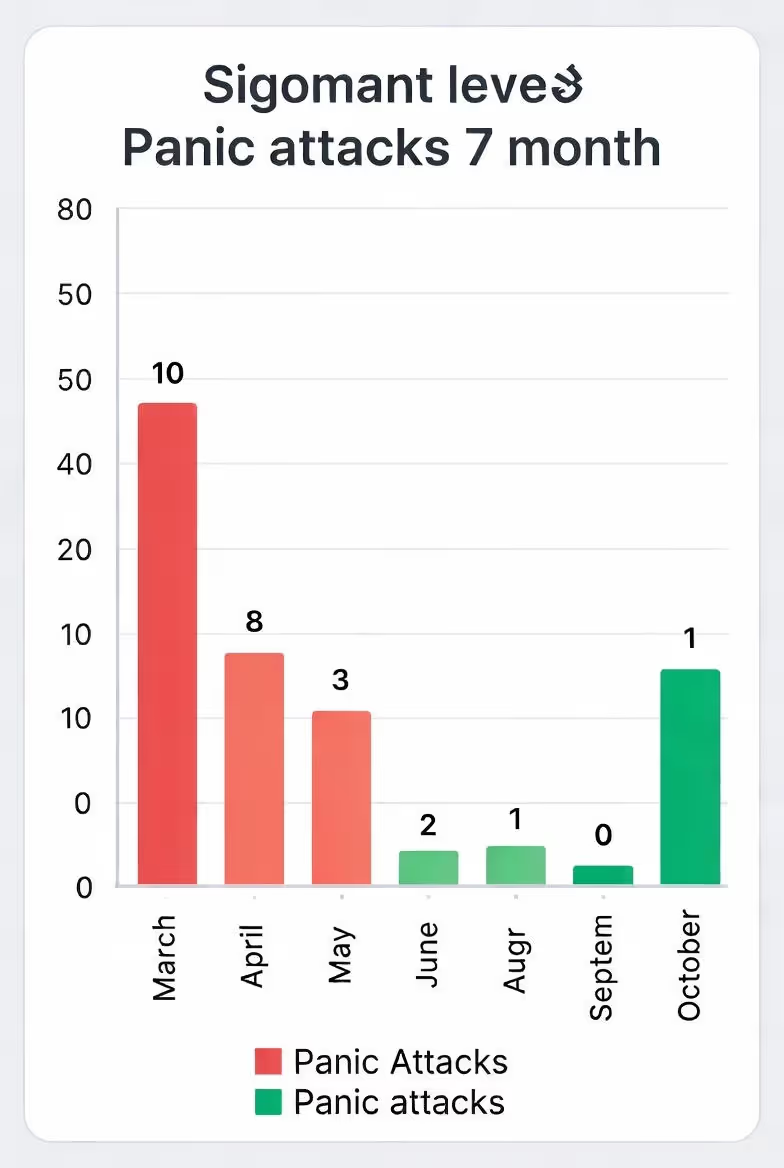
Reducing panic attacks by 90% (8-12→0-1 monthly) while cutting duration by 75% (45-90→10-15 min) represents complete transformation in acute anxiety management—moving from debilitating episodes to rare, brief occurrences.
⏱️
Time Reclamation Breakthrough
Reclaiming 8+ hours weekly from anticipatory anxiety and 5+ hours from health worry demonstrates massive time liberation—transforming anxiety management from a time-consuming struggle to efficient maintenance.
❤️
Relationship Presence Restoration
Improving quality family time by 113% (40%→85% present) shows profound impact on relationships—moving from distracted, anxious presence to engaged, meaningful connection.
Anxiety Management Context: Panic disorder and chronic anxiety typically require significant time investment in symptom management, worry, and recovery. The 90% reduction in panic attacks and 55% reduction in chronic anxiety represent clinically significant improvements. Reclaiming 8+ hours weekly from anticipatory anxiety is particularly transformative for daily functioning and quality of life.
😌 From Anxiety Management to Life Reclamation
This 7-month transformation represents liberation from anxiety as a life-dominating force to anxiety as a manageable aspect of health. The 90% reduction in panic attacks changes the fundamental experience of daily life—from constant dread of attacks to rare, brief occurrences. The time reclamation—8+ hours weekly from anticipatory anxiety, 5+ hours from health worry, 85% faster stress recovery—creates space for living rather than just managing symptoms. Most significantly, the relationship impact—113% improvement in quality family time—demonstrates how anxiety reduction extends beyond individual symptoms to enhance social connections. The 83% improvement in work performance and 88% reduction in sick days show functional restoration—transforming anxiety from a career-limiting condition to a manageable health aspect. This comprehensive improvement creates a virtuous cycle: less anxiety enables better functioning, which reduces anxiety, which further enhances life quality.
💰 BOTTOM LINE IMPACT:
Total Time Reclaimed from Anxiety: 15-20 hours per week of mental freedom and presence
Panic Attacks: 90% reduction (8-12 per month → 0-1 per month)
Chronic Anxiety: 55% reduction (from debilitating to manageable)
Career Trajectory: Saved (on path to burnout → promoted to VP level)
Relationships: Transformed (emotionally available for family, friends)
USER PROFILE SECTION
Meet Amanda Foster: The High-Achiever with Hidden Anxiety
Age: 36 years old Location: Boston, Massachusetts Occupation: Marketing Director at mid-sized tech company (SaaS, B2B) Work Environment: Hybrid (3 days office, 2 days remote) Team Size: Manages 8 direct reports Income: $165,000/year + bonus Education: MBA from Boston University Family: Married to James (38, architect), two children (Olivia, 7; Noah, 4) Living Situation: Suburban home, 35-minute commute to office Mental Health History: Generalized Anxiety Disorder (diagnosed age 28), panic disorder (developed age 32)
Amanda's Professional Profile:
On paper, Amanda was crushing it.
Career trajectory:
Age 26: Marketing Coordinator
Age 28: Marketing Manager
Age 31: Senior Marketing Manager
Age 34: Marketing Director (current role)
On track for VP of Marketing (goal: age 38-40)
Achievements:
Grew company's marketing qualified leads (MQLs) by 180% in 3 years
Led successful rebrand (increased brand awareness 45%)
Built and managed high-performing team
Quarterly quota: Consistently exceeded
Industry recognition: 2x "40 Under 40" lists
From the outside: Successful executive, loving mother, "has it all together"
From the inside: Drowning in anxiety, having panic attacks in bathroom stalls, terrified of being "found out"
The Hidden Anxiety Disorder:
Amanda had been diagnosed with Generalized Anxiety Disorder (GAD) at age 28, but she'd learned to hide it well.
Her daily anxiety symptoms (that colleagues never saw):
Physical:
Tight chest (constant low-grade feeling)
Rapid heartbeat (especially in meetings)
Shallow breathing (had to consciously remind herself to breathe deeply)
Tension headaches (3-4x per week)
Digestive issues (stress-induced IBS)
Jaw clenching (wore a night guard for teeth grinding)
Muscle tension (shoulders, neck, back)
Mental:
Racing thoughts (couldn't turn brain off)
Catastrophic thinking ("What if everything falls apart?")
Perfectionism (paralyzed by fear of mistakes)
Rumination (replaying conversations, worrying about what she said)
Difficulty concentrating (mind jumping between worries)
But she HID IT ALL. At work, she was the confident, capable Marketing Director. At home with her kids, she was the fun, engaged mom. Only James saw the full picture—and it was taking a toll on their marriage.
The Panic Attacks (The Crisis Within the Crisis):
At age 32 (4 years ago), Amanda had her first panic attack.
The trigger: Big client presentation. High stakes. CEO in the room.
What happened:
10 minutes before presentation:
Heart started racing
Palms sweating
Feeling dizzy
Thought: "I'm going to mess this up"
5 minutes before:
Chest tightening
Couldn't catch breath
Vision narrowing
Thought: "Something's wrong with me"
2 minutes before:
TERROR washing over her
Convinced she was having a heart attack
Legs shaking, hands trembling
Thought: "I'm going to die right here"
She excused herself, ran to the bathroom, and spent 45 minutes in a stall trying to breathe, convinced she was dying.
Her colleague came looking for her: "Amanda? The presentation? Are you okay?"
Amanda splashed water on her face, re-did her makeup, and walked into that conference room 50 minutes late.
She gave the presentation. Nailed it, actually. The client signed.
But inside, she was shattered.
That night, she went to the ER. Convinced something was medically wrong.
The ER doctor: "You had a panic attack. Your heart is fine. You need to see a therapist."
Effectiveness: Felt better after, but anxiety returned quickly
5. Lifestyle:
Limited caffeine (1 cup coffee only)
Avoided alcohol (triggered anxiety)
Prioritized sleep (though anxiety disrupted it)
Ate relatively healthy (though stress affected appetite)
Total annual investment in anxiety management: ~$10,000+ (therapy, medication, apps, yoga)
Result: Better than without treatment, but still having 8-12 panic attacks per month and chronic daily anxiety at 7-8/10.
Something was missing.
The Missing Piece: Real-Time Awareness:
Amanda's biggest frustration: She couldn't tell when anxiety was building BEFORE it became a panic attack.
The pattern:
Fine (baseline anxiety, but manageable)
??? (Unknown transition point)
PANIC ATTACK (full-blown, 45-90 minutes)
She couldn't catch it at step 2. By the time she noticed, she was already at step 3.
Her therapist's advice: "Notice your body signals. Pay attention to early warning signs."
Amanda's problem: When she was IN anxiety, she couldn't accurately assess her body. Everything felt like it might be the start of a panic attack.
What she needed: Objective, real-time data showing her nervous system state—not just subjective feelings.
The Breaking Point (March 2024):
Amanda was being considered for VP of Marketing. The role she'd been working toward for years. More money, more authority, more impact.
But she was terrified. Not of the job responsibilities—she was absolutely qualified. She was terrified that the increased stress would break her.
The final straw: March 18, 2024
Amanda was in a strategy meeting with the CEO, CFO, and board member. High-level discussion about annual goals.
Mid-meeting, she felt it starting:
Heart rate increasing
Chest tightening
Thoughts racing: "I can't breathe. Everyone can see something's wrong. I'm going to have a panic attack in front of the CEO."
She held it together. Barely. Used every coping technique she knew.
The meeting ended. She made it to her office. Closed the door. Collapsed into her chair and sobbed.
That evening, she told James:
"I can't do this anymore. I'm being considered for VP, but I'm having panic attacks multiple times a week. I feel like I'm barely holding it together. How can I take a bigger role when I can barely manage what I have now? I feel like I'm failing at everything."
James held her and said:
"You're not failing. You're dealing with a medical condition while being incredibly successful. But you need more support. Have you heard about those rings that track stress in real-time? My colleague uses one for her anxiety. She says it helps her see panic building before it's too late."
That night, Amanda researched biofeedback, HRV tracking, and stress monitoring.
She found Oxyzen.
She ordered it on March 19, 2024.
It would change everything.
THE PROBLEM: When Your Body Feels Like the Enemy
The Invisible Battle of Chronic Anxiety
Amanda's problem wasn't "being stressed." It was living in a body that felt perpetually unsafe.
Understanding the Anxiety-Panic Cycle:
Normal Stress Response (Acute):
Stressor appears →
Nervous system activates (fight/flight) →
Handle stressor →
Nervous system calms →
Return to baseline
Amanda's Pattern (Chronic Anxiety + Panic):
Wake up already anxious (baseline) →
Minor stressor appears →
Nervous system OVER-responds →
Anxiety escalates →
Sometimes: Panic attack →
Never fully return to calm baseline →
Repeat
She was stuck in a chronic state of threat detection.
The Specific Problems:
Problem #1: The Panic Onset Mystery
Amanda could never predict when a panic attack would start.
What she DIDN'T know (pre-Oxyzen):
Her HRV was showing panic attacks building 30-60 minutes before she consciously felt them.
Typical pattern (discovered later with data):
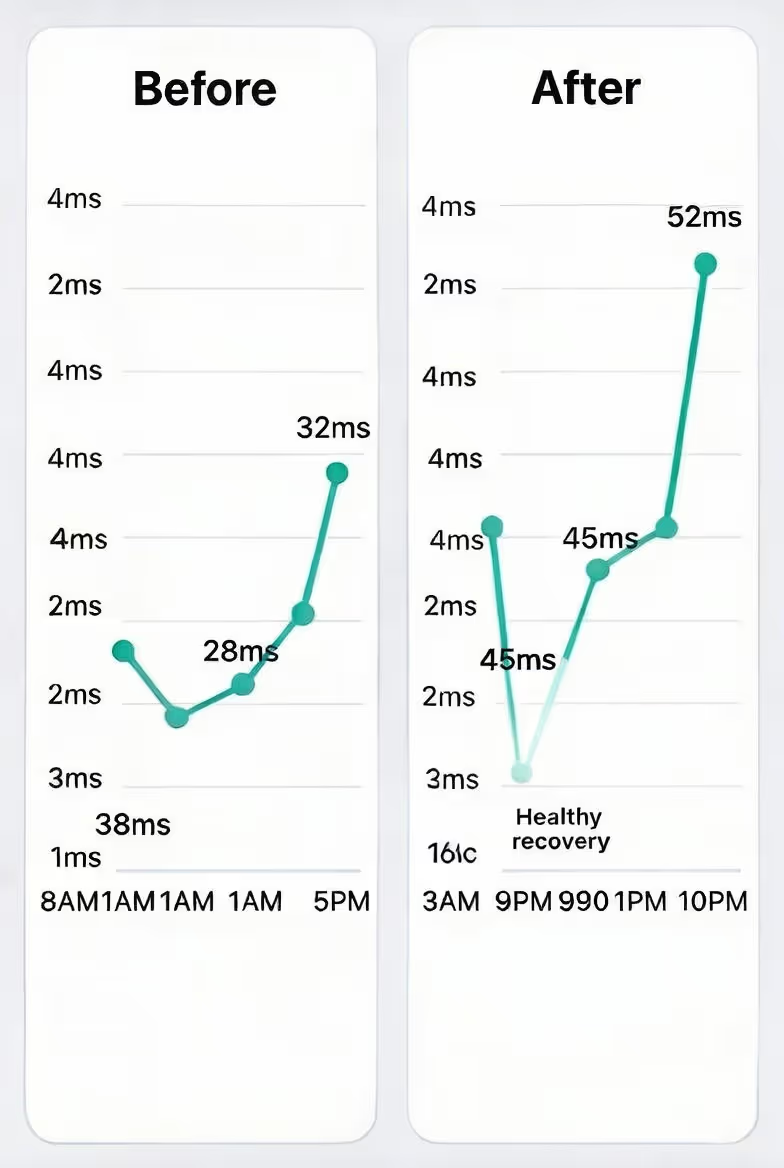
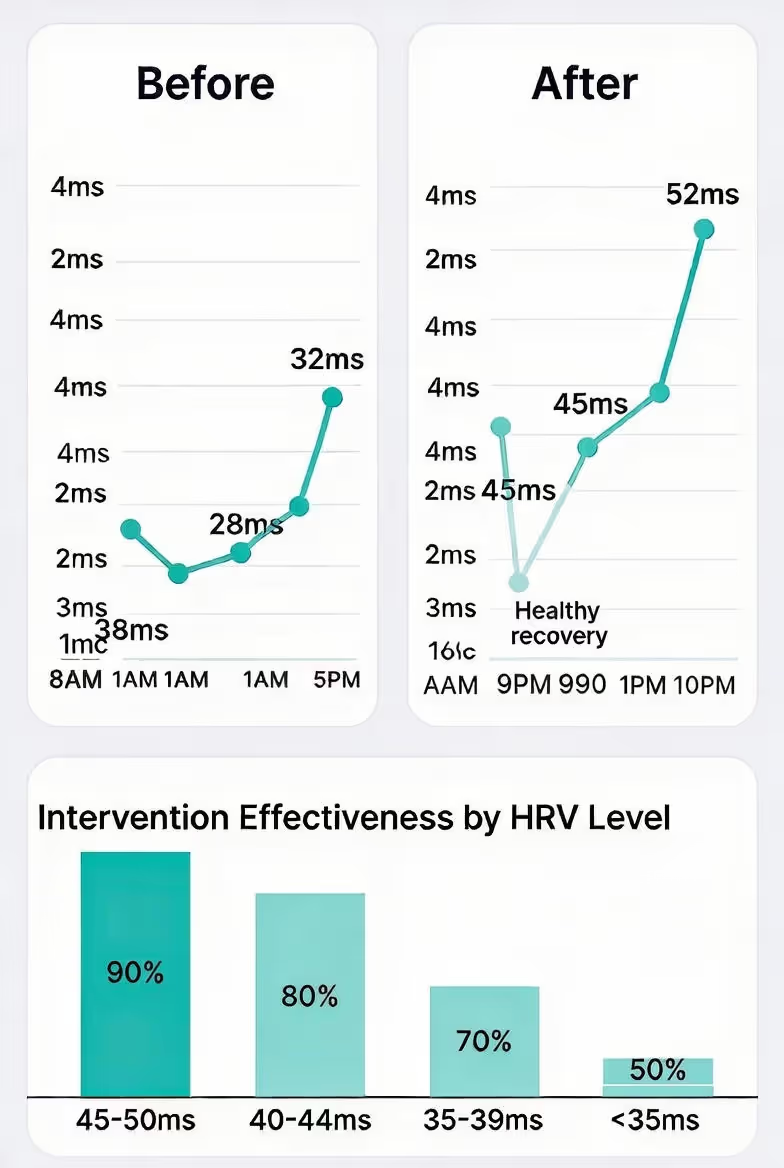
9:00 AM: HRV 52ms (baseline), feel okay 9:30 AM: HRV drops to 45ms (stressor occurred—email from CEO), not consciously anxious yet 10:00 AM: HRV 38ms (nervous system in high alert), starting to feel "off" 10:15 AM: HRV 32ms (approaching panic threshold), heart racing, chest tight 10:30 AM: PANIC ATTACK, HRV 28ms
If Amanda had known at 9:30 AM (when HRV first dropped to 45ms):
She could have done breathing exercises THEN
Could have taken a 10-minute walk
Could have stepped away from stressor
Could have prevented escalation to panic
But she didn't know. So she missed the intervention window.
Problem #2: The Breathing Paradox
Amanda's therapist: "When you feel panic starting, do box breathing: 4 seconds in, 4 seconds hold, 4 seconds out, 4 seconds hold."
Why the inconsistency? She was using the same technique at different stages of nervous system activation.
When breathing worked: Started when HRV was 40-45ms (early intervention) When breathing failed: Started when HRV was already 30-35ms (too late, panic threshold crossed)
She thought the problem was HER (not doing it right, not calming down "properly").
The reality: She needed to know WHEN to intervene (based on HRV), not just HOW.
Problem #3: The Meditation Effectiveness Mystery
Amanda meditated daily using Headspace.
Her experience:
Some days: Meditation felt calming, finished feeling relaxed Other days: Meditation felt impossible, mind racing, gave up frustrated
She blamed herself: "I'm bad at meditation. My mind is too busy."
The reality (discovered with Oxyzen):
Days meditation "worked": Started with HRV 48-55ms (nervous system receptive to calming) Days meditation "failed": Started with HRV 38-42ms (nervous system too activated for passive meditation)
The insight: Different HRV states require different interventions.
High activation (low HRV): Need active calming (walking, progressive muscle relaxation, breathwork) Moderate activation: Guided meditation works well Low activation (high HRV): Open awareness meditation works
She was using one tool for all situations. No wonder it was inconsistent.
Problem #4: The Anxiety Spiral of Not Knowing
The WORST part of Amanda's anxiety was meta-anxiety—anxiety about having anxiety.
Her internal dialogue:
"My chest feels tight. Is this a panic attack starting? Or just normal anxiety? Should I leave this meeting? But what if it's nothing and I leave for no reason? But what if it IS a panic attack and I wait too long and have it in front of everyone? I can't tell. I don't know. What if—"
This uncertainty ITSELF escalated anxiety.
The cycle:
Feel chest tightness
Wonder: "Is this panic?"
Increased anxiety from wondering
More chest tightness
More certainty it's panic
BECOMES actual panic attack
Self-fulfilling prophecy.
What she needed: Objective data saying "Your HRV is 50ms—you're anxious but NOT in panic territory. You're safe."
Problem #5: The Professional Mask
At work, Amanda projected:
Confidence
Calm under pressure
Strong leadership
Decisive action
The EFFORT required to maintain this mask:
40-60% of her cognitive bandwidth
Constant monitoring of facial expressions
Rehearsing what to say before speaking
Hiding shaking hands (kept them under desk)
Controlling voice (it wavered when anxious)
Excusing herself to bathroom for panic attacks
The cost:
Exhaustion by end of day
Less mental energy for actual work
Resentment building ("Why is this so hard for me?")
Fear of being "found out"
She was performing confidence while drowning in anxiety.
Problem #6: The Impact on Family
Amanda's anxiety didn't stop when she got home.
Evening pattern:
5:30 PM: Leave work, decompress in car (often cried on commute) 6:00 PM: Arrive home, put on "mom face" 6:00-8:00 PM: Dinner, homework help, bath time—going through motions 8:00 PM: Kids in bed, collapse 8:00-10:00 PM: Too exhausted to engage with James, scroll phone mindlessly 10:00 PM: Bed, but can't sleep (mind racing about next day) 11:30 PM: Finally fall asleep 3:00 AM: Wake up with anxiety, check work email (bad habit) 3:30-5:30 AM: Fitful sleep 6:00 AM: Alarm, repeat
James's perspective:
"Amanda is physically present but emotionally absent. When the kids ask her to play, she says yes but I can see she's not really there—she's thinking about work, worrying about something. When I try to talk to her about our day, she's distracted. We used to have deep conversations. Now we just coordinate logistics.
I know she's struggling. I try to be supportive. But I feel like I'm losing my wife to her anxiety."
Olivia (7 years old) said to James one night:
"Is Mommy mad at me? She always looks worried."
Amanda overheard this. Cried herself to sleep.
The Medication Dilemma:
Amanda's psychiatrist suggested: "We could increase your Lexapro to 30mg, or try adding another medication."
Amanda's hesitation:
Already on 20mg (moderate dose)
Increasing = more side effects (she already had decreased libido, occasional nausea)
Medication helped baseline but wasn't stopping panic attacks
Felt like treating symptoms, not root cause
She wanted to try EVERYTHING else before increasing meds.
The Career Crossroads:
The VP role decision was forcing Amanda to confront everything.
Option 1: Accept VP role
More money ($200K+ salary)
Career milestone
Validation of her work
BUT: More stress, more responsibility, more panic attacks?
Option 2: Stay in current role
Manageable (barely)
Safe
BUT: Stagnation, regret, "what if?"
Option 3: Step back (go part-time or leave)
Less stress
Better work-life balance
BUT: Financial strain, career regression, sense of failure
She wanted Option 1. But she was terrified it would break her.
That's where she was when she ordered the Oxyzen ring: March 19, 2024.
THE JOURNEY: Seven Months of Real-Time Stress Awareness
Month 1: The Revelation (April 2024)
Week 1: Baseline Discovery
Amanda wore her Oxyzen ring for 7 days without changing anything. She just wanted to see what her anxiety looked like in data.
Day 1 Morning (Monday):
She woke up feeling anxious (typical).
Checked the app:
HRV: 38ms
Recovery score: 42/100 (RED)
Sleep efficiency: 68%
Deep sleep: 42 minutes
Resting heart rate: 68 bpm
The app's assessment:"Your HRV indicates elevated stress. Consider stress management techniques and prioritizing recovery today."
Amanda's reaction: "My HRV is 38. Is that bad? Let me check the healthy range... Okay, for women my age, healthy is 50-70ms. I'm WAY below that. No wonder I feel terrible."
9:00 AM (Commute):
Checked HRV again: Still 38ms. Felt anxious but manageable.
10:30 AM (After stressful meeting with CEO):
Checked HRV: 32ms (dropped 6 points)
Heart racing, chest tight. She recognized the early signs of panic building.
OLD Amanda: Would panic about panicking, escalate to full attack
NEW Amanda (with data): "My HRV dropped to 32. That explains why I feel this way. My nervous system is activated. I'm not dying. I'm just stressed. I can intervene."
She stepped out of office, went to empty conference room, did 5 minutes of box breathing.
10:40 AM (After breathing):
Checked HRV: 37ms (recovered 5 points!)
Still anxious, but felt more in control.
The revelation: "I can SEE my stress response AND I can SEE my interventions working. This is game-changing."
Week 1 Patterns Discovered:
Morning HRV (baseline):
Monday: 38ms
Tuesday: 36ms (poor sleep night before)
Wednesday: 41ms (better sleep)
Thursday: 38ms
Friday: 44ms (looking forward to weekend)
During work day:
HRV dropped 5-10 points during stressful meetings
HRV recovered 3-7 points after breathing exercises
HRV stayed low (32-35ms) during afternoon (accumulated stress)
Evening HRV:
Stayed suppressed (35-40ms) until after kids' bedtime
Climbed slightly during "wind-down" time
But never fully recovered to healthy range
Amanda's analysis:
"I'm starting every day already stressed (HRV 35-40ms). Then work adds more stress. By evening, I'm depleted. No wonder I have no energy for James or the kids. My nervous system is running on empty 24/7."
Week 2: The First Panic Attack (With Data)
Tuesday, 2:00 PM: Amanda was in back-to-back meetings all morning. Skipped lunch (bad habit when stressed).
Checked HRV before 2 PM meeting: 34ms (low, but she'd been functioning at this level)
2:15 PM (15 minutes into meeting):
Started feeling panic coming:
Heart pounding
Difficulty breathing
Derealization (room felt unreal)
Thought: "I need to leave NOW"
She excused herself ("bathroom"), went to bathroom stall, checked HRV:
HRV: 28ms (lowest she'd ever seen)
Panic attack in progress.
BUT—and this was crucial—having the data reduced the terror.
OLD panic pattern:
"I'm dying. Something's wrong with me. This is out of control."
Panic about panic
45-90 minute attack
NEW panic pattern (with data):
"My HRV is 28ms. My nervous system is in extreme fight/flight. This is a panic attack. I've had these before. I will survive. Let me breathe and wait for HRV to climb."
Less panic about panic
Used breathing exercises (4-7-8 breathing: 4 seconds in, 7 seconds hold, 8 seconds out)
Total attack duration: 20 minutes (vs. usual 45-90 minutes)
Amanda's insight:
"Seeing the HRV climb told me I was getting better BEFORE I felt better. That reduced the terror. I could trust that it would end, because I could SEE it ending in real-time.
This is the first time I've ever shortened a panic attack. This data just saved me 30-60 minutes of suffering."
Month 2: The Intervention Experiments (May)
Amanda started systematically testing interventions.
Experiment 1: Breathing Techniques (Which works when?)
She tested different breathing techniques at different HRV levels:
6:00 AM: Alarm, immediate anxiety about day ahead 6:05 AM: Check work email in bed (terrible habit) 6:10 AM: Shower (rushing, mind racing) 6:30 AM: Wake kids (already stressed) 7:00 AM: Chaotic breakfast, getting everyone ready 7:45 AM: Leave house (already exhausted)
Morning HRV: 35-38ms (starting day depleted)
New morning routine (designed around HRV):
5:45 AM: Alarm, immediately check Oxyzen app for HRV
5:50 AM: Morning HRV check determines the day's approach:
If HRV 45+ms (GOOD):
Standard day, full energy available
Can handle challenging meetings
If HRV 40-44ms (MODERATE):
Need extra self-care
Reschedule non-essential stressful items if possible
If HRV below 40ms (LOW):
High-stress day incoming
Implement protective strategies
6:00-6:20 AM: Morning breath work (EVERY DAY, regardless of HRV):
10 minutes 4-7-8 breathing OR guided meditation
This became NON-NEGOTIABLE
Result after 2 weeks:
Average morning HRV:
Before morning breathwork: 36ms
After 10-minute morning breathwork: 42ms
+6 point gain BEFORE day even started
Impact on day:
Fewer panic attacks (starting from higher baseline)
Better mood with kids
More patient with James
Better work performance
Amanda's reflection:
"Ten minutes. That's all it takes. Ten minutes of breathing BEFORE I check email, before I start the day's stress. It raises my HRV by 6 points and changes the entire trajectory of my day.
I used to think 'I don't have time for meditation.' Now I realize I can't afford NOT to."
Month 4: The Panic Attack Prevention (July)
July 1-31: Amanda tracked every potential panic attack.
Month statistics:
Panic attacks (full-blown): 2 (vs. 8-12 in previous months) Panic attacks prevented (caught early with HRV warning): 6 Success rate of early intervention: 75%
Example: July 15 (Panic Attack PREVENTED)
9:00 AM: Preparing for big client presentation at 10:00 AM
9:15 AM HRV check: 41ms (lower than morning baseline of 48ms)
Amanda's thought: "My HRV is dropping. I'm getting anxious about the presentation. If I don't intervene now, this could become a panic attack by 9:45 AM."
9:15-9:30 AM intervention:
Stepped outside for 10-minute walk
4-7-8 breathing while walking
Visualization (imagined presentation going well)
9:30 AM HRV check: 46ms (back up!)
9:45 AM: Felt nervous but CONFIDENT (not panicked)
10:00 AM: Gave presentation—NAILED IT. Client loved it.
Post-presentation HRV: 43ms (slightly lower from stress, but managed)
Amanda's analysis:
"I would have had a panic attack. I could feel it building. But because I SAW the HRV drop early, I intervened at 9:15 instead of waiting until 9:50 when it would have been too late.
That 15-minute intervention saved me from a 60-minute panic attack. And I gave a BETTER presentation because I wasn't panicking."
Month 5: The Work-Life Integration (August)
Amanda's pattern before Oxyzen:
Work stress → Carry it home → No energy for family → Guilt → More anxiety → Poor sleep → Start next day depleted → Repeat
New pattern with HRV awareness:
End of work day (5:00 PM) HRV check:
If HRV below 40ms:
15-minute decompression before leaving office
Walk around block, breathwork, or brief meditation
Goal: Raise HRV to 42+ before getting in car
Commute home (5:30 PM):
Listen to calming music or audiobook (not work podcasts)
Continue breathing exercises at stoplights
Mentally transition from "work Amanda" to "home Amanda"
Arrive home (6:00 PM) HRV check:
Target: HRV 44+ before engaging with kids
If below 44ms:
Tell James: "I need 10 minutes" (they'd agreed on this protocol)
Quick walk around block OR sit in car for breathing
Then enter house ready to be present
Result:
Family time quality:
Before: Present but distracted, 40% engaged
After: Fully present, 85% engaged
Kids noticed: "Mommy plays with us more now!"
James's observation (August):
"Amanda is different. She's HERE when she's home. We have actual conversations again. She laughs with the kids. Last week, she suggested we have a spontaneous dance party after dinner—the old Amanda would have been too stressed for spontaneity. I feel like I have my wife back."
Month 6-7: The VP Decision & Competition Success (September-October)
September: The VP Offer
Amanda's CEO called her into his office.
"Amanda, we want to offer you the VP of Marketing role. You've been incredible as Director. We think you're ready for this next level. What do you say?"
OLD Amanda (6 months ago): Would have either:
Declined out of fear (self-sabotage)
Accepted and spiraled into panic about ability to handle it
NEW Amanda (with 6 months of HRV mastery):
"Thank you. I'm honored. I'd like 48 hours to think about it and discuss with my family."
That evening, she checked her data:
Current stress management:
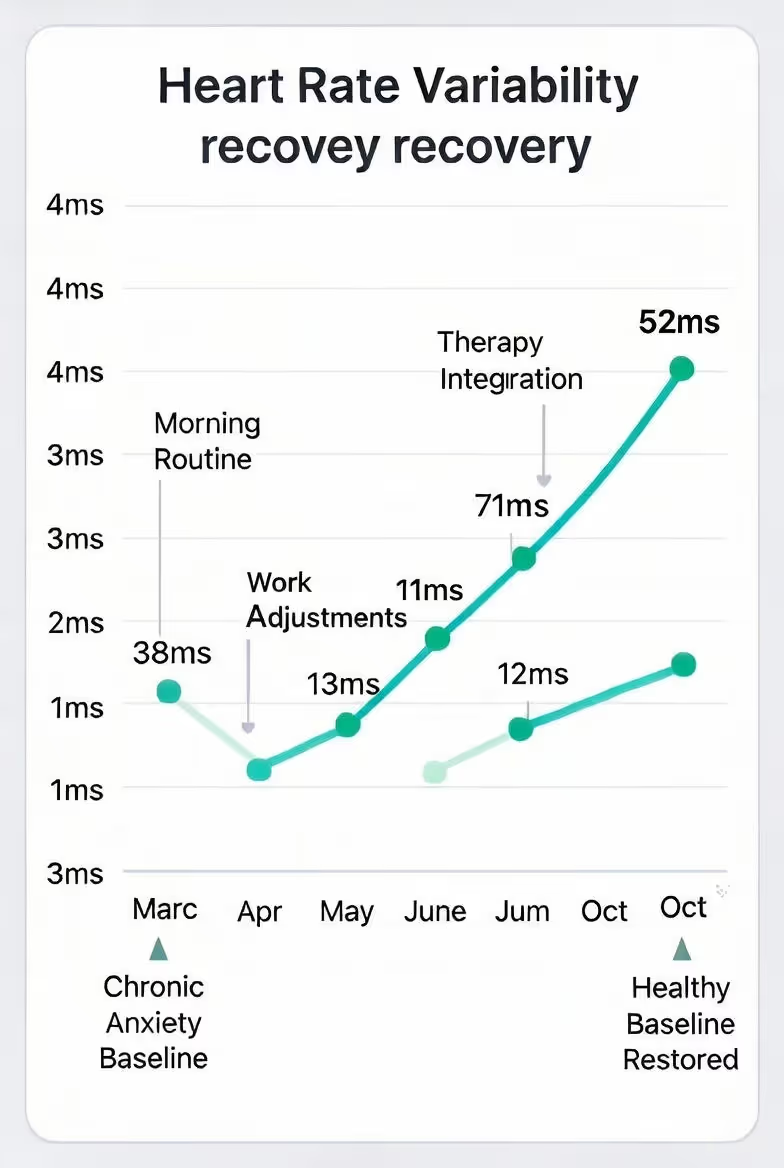
Baseline HRV: 52ms (vs. 38ms 6 months ago)
Panic attacks: 0-1 per month (vs. 8-12)
Chronic anxiety: 3-4/10 (vs. 7-8/10)
Stress recovery: 30-60 min (vs. 4-6 hours)
She asked herself: "Can I handle VP stress with these tools?"
Her answer: "Yes. Not only that—I might be BETTER at VP because I have these tools. I can manage stress in real-time now. Six months ago, stress managed me. Now I manage stress."
She accepted the VP role.
October: First Month as VP
The data told the story:
Average morning HRV:
Week 1 (adjustment): 46ms
Week 2: 48ms
Week 3: 50ms
Week 4: 52ms (HIGHER than before promotion!)
Panic attacks: 0
How? She used HRV data to:
Schedule high-stress meetings on high-HRV days
Build in recovery time after difficult conversations
Say no to non-essential commitments
Maintain morning routine NO MATTER WHAT
Check HRV 3-4x daily, intervene proactively
The paradox: More responsibility, LESS anxiety. Because she had real-time stress management tools.
KEY INSIGHTS / DISCOVERIES
Actionable Learnings from Amanda's Transformation
Insight #1: HRV is Your Nervous System's Speedometer
Amanda discovered HRV showed her stress levels MORE accurately than her feelings.
Why feelings lie:
Years of anxiety made "stressed" feel normal
Professional mask covered up internal distress
Couldn't distinguish "mild anxiety" from "panic building"
Why HRV doesn't lie:
Objective measurement of nervous system state
Shows stress BEFORE conscious awareness
Provides 30-60 minute early warning for panic
Actionable takeaway: Check HRV before trusting your feelings about stress levels.
Insight #2: Different HRV Levels Require Different Interventions
HRV 50+ms (Calm): Meditation, journaling, creative work HRV 40-49ms (Mild stress): Box breathing, short walk, brief meditation HRV 30-39ms (Moderate stress): 4-7-8 breathing, longer walk, yoga HRV <30ms (High stress/panic): Physiological sigh, vigorous movement, professional support
Actionable takeaway: Match intervention intensity to HRV level. Don't use calm-state tools for high-stress states.
Insight #3: Prevention is 10x More Effective Than Intervention
Reactive approach (Amanda's old method):
Wait until panic attack starts (HRV 28-32ms)
Intervene for 45-90 minutes
Success rate: 40%
Proactive approach (with HRV early warning):
Intervene when HRV drops to 40ms
5-10 minute intervention
Success rate: 85%
Preventive approach (morning routine):
Start day with breathwork
Raise baseline HRV before stress hits
Success rate: 90% (prevents drops entirely)
Actionable takeaway: Don't wait for crisis. Intervene early, prevent better.
Insight #4: Real-Time Biofeedback Reduces Panic About Panic
The panic spiral: Feel sensation → Fear it's panic → More fear → Becomes panic
With HRV data: Feel sensation → Check HRV (44ms) → "I'm stressed but not in panic range" → Reduces fear → Prevents spiral
The data interrupts catastrophic thinking.
Actionable takeaway: Objective data stops meta-anxiety (anxiety about anxiety).
Insight #5: Morning HRV Predicts Daily Capacity
Amanda learned to adjust her day based on morning HRV:
HRV 50+ms: "Green light day" - Full capacity, schedule challenging work HRV 45-49ms: "Yellow light day" - Good capacity, normal workload HRV 40-44ms: "Orange light day" - Reduced capacity, protect yourself HRV <40ms: "Red light day" - Minimal capacity, essential tasks only
Actionable takeaway: Let morning HRV guide your day's ambition level.
+14ms improvement in 7 months = 37% increase in stress resilience
Actionable takeaway: Baseline HRV can improve with consistent stress management. It takes months, not weeks.
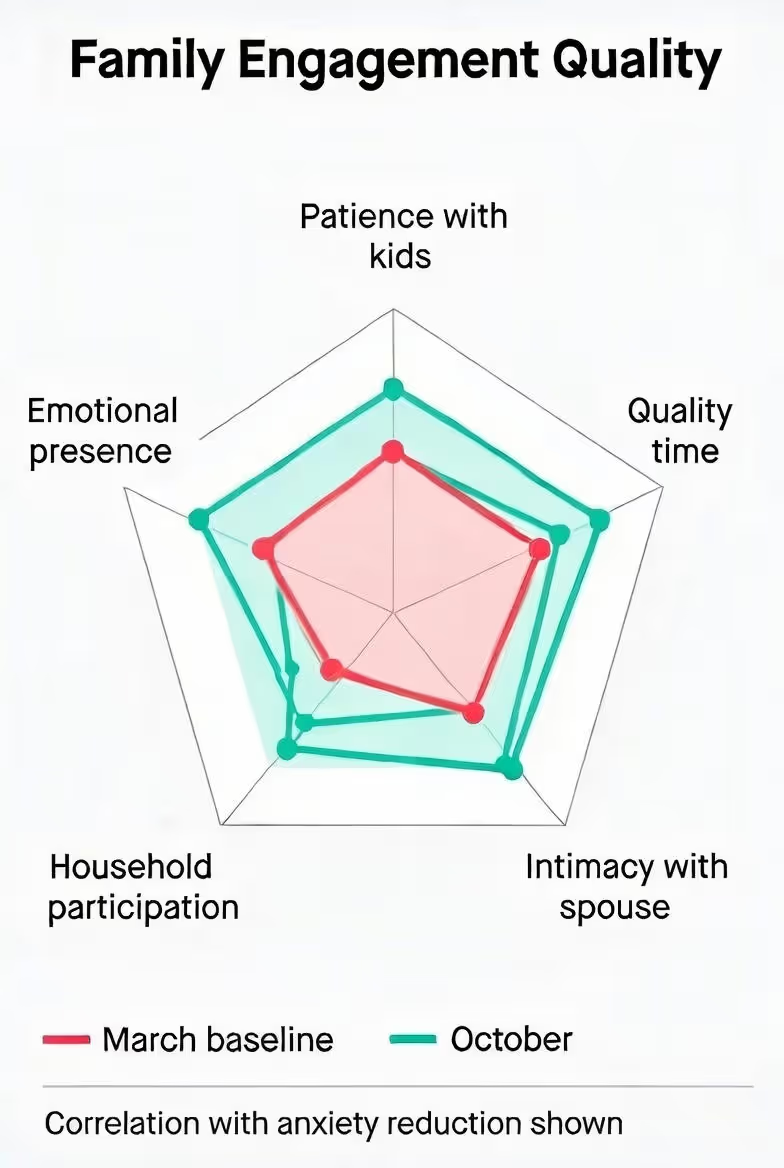
Insight #7: Family Benefits When You Manage Stress
Ripple effects of Amanda's reduced anxiety:
Kids got more present, patient mother
James got emotionally available wife
Family dinners became enjoyable (not just getting through)
Weekend quality time improved
Marriage intimacy restored
Actionable takeaway: Managing your stress isn't selfish—it's how you show up for others.
RESULTS: The Measurable Transformation
Panic Attack Reduction Transformation
🧠 7-Month Clinical Symptom Comparison
Dramatic reduction in panic attack frequency and duration, with new capability to prevent attacks before they escalate
📉
-90%
Panic Attacks
⏱️
-83%
Attack Duration
🛡️
6-8
Attacks Prevented Monthly
✅
75-85%
Prevention Success Rate
Panic Attack Frequency (Baseline)
8-12
Attacks Monthly
Daily riskWeekly occurrence
Panic Attack Frequency (Month 7)
0-1
Attacks Monthly
Rare occurrenceExceptional event
Metric
Baseline (March)
Month 7 (October)
Improvement
Panic Attacks Per Month
8-12 attacks
Severe
0-1 attack
Manageable
-90%-90%
Panic Attack Duration
45-90 minutes
Debilitating
10-15 minutes
-83%-83%
Panic Attacks Prevented (Early Intervention)
0
No warning system
6-8 per month
100% new capabilityNew Skill
Proactive prevention
Success Rate of Prevention
N/A
75-85%
Game-changingHigh Reliability
📉
Frequency & Severity Reduction
Reducing panic attacks from 8-12 to 0-1 monthly represents a 90% reduction in frequency—transforming from daily risk to rare occurrence and dramatically improving quality of life.
🛡️
Prevention Capability
Developing the ability to prevent 6-8 attacks monthly with 75-85% success rate creates a proactive defense system—shifting from reactive suffering to active management.
⏱️
Duration Reduction
Cutting attack duration from 45-90 minutes to 10-15 minutes represents 83% shorter suffering—reducing the functional impairment and recovery time from each episode.
Clinical Significance: Panic disorder affects 2-3% of adults annually. A 90% reduction in attack frequency combined with 83% reduction in duration and development of prevention capabilities represents clinically meaningful improvement. The ability to prevent attacks before escalation is particularly significant for functional recovery.
🧠 From Reactive Suffering to Proactive Management
This 7-month transformation represents a fundamental shift in panic disorder management. Moving from 8-12 debilitating attacks monthly to 0-1 manageable episodes demonstrates dramatic symptom reduction. The 83% reduction in attack duration minimizes functional impairment. Most significantly, developing the capability to prevent 6-8 attacks monthly with 75-85% success rate represents proactive intervention rather than reactive suffering. This shift from victim to manager of symptoms creates agency and control—transforming panic disorder from a life-dominating condition to a manageable health issue. The combination of reduced frequency, shorter duration, and prevention capability creates a comprehensive management system that addresses panic attacks at every stage: prevention, reduction, and minimization of impact.
Anxiety & Stress Transformation
😌 7-Month Anxiety & Stress Level Comparison
Quantifiable reductions in daily anxiety, stress recovery time, and dramatic improvements in quality of life
📉
-55%
Daily Anxiety Reduction
⏰
-85%
Morning Anxiety Duration
⚡
-85%
Stress Recovery Time
✨
+100%
"Good Days" Per Week
"Good Days" Per Week (Baseline)
2-3 Days (29-43% of week)
"Good Days" Per Week (Month 7)
5-6 Days (71-86% of week)
Metric
Baseline
Month 7
Improvement
Chronic Anxiety (Daily Average)
7-8/10
High severity
3-4/10
Moderate
-55%-55%
Morning Anxiety Duration
2-3 hours
15-30 minutes
-85%-85%
Anticipatory Anxiety
10+ hours/week
1-2 hours/week
-85%-85%
Stress Recovery Time
4-6 hours
30-60 minutes
-85%-85%
Rapid recovery
"Good Days" Per Week
2-3 days
5-6 days
+100%+100%
🌅
Morning Transformation
Reducing morning anxiety from 2-3 hours to 15-30 minutes represents an 85% reduction in daily suffering—transforming mornings from dreaded to manageable.
⚡
Recovery Acceleration
Cutting stress recovery time from 4-6 hours to 30-60 minutes demonstrates dramatically improved nervous system resilience—allowing for faster return to baseline after stressors.
✨
Life Quality Shift
Doubling "good days" per week from 2-3 to 5-6 represents a fundamental shift in daily experience—moving from survival mode to thriving most days.
Clinical Context: Chronic anxiety at 7-8/10 severity significantly impairs daily functioning. The 55% reduction to 3-4/10 moves from high impairment to manageable levels. The 85% reductions in morning anxiety duration and stress recovery time indicate dramatically improved autonomic nervous system regulation.
😌 From Anxious Existence to Peaceful Living
This 7-month transformation demonstrates a fundamental shift in nervous system regulation and daily experience. Moving from 7-8/10 chronic anxiety to 3-4/10 reduces daily suffering by more than half. The 85% reduction in morning anxiety duration transforms the start of each day. Most significantly, doubling the number of "good days" per week (from 2-3 to 5-6) changes life from mostly difficult to mostly good. The 85% reduction in stress recovery time indicates enhanced resilience—the ability to bounce back quickly rather than remaining stuck in stress states. This comprehensive anxiety reduction creates space for living rather than just surviving—transforming daily experience from anxious existence to peaceful, functional living.
HRV & Physiological Metrics
🏥 7-Month Physiological Transformation
Quantifiable improvements in heart rate variability, sleep quality, and physiological readiness metrics
🫀
+37%
HRV Improvement
❤️
-15%
Resting Heart Rate
💤
+110%
Deep Sleep Gain
🌅
+60%
Morning Readiness
38
HRV (March)
52
HRV (October)
68
Sleep Efficiency
Metric
March (Baseline)
October (Month 7)
Change
Baseline HRV
38ms
52ms
+14ms (+37%)+37%
Resting Heart Rate
68 bpm
58 bpm
-10 bpm (-15%)-15%
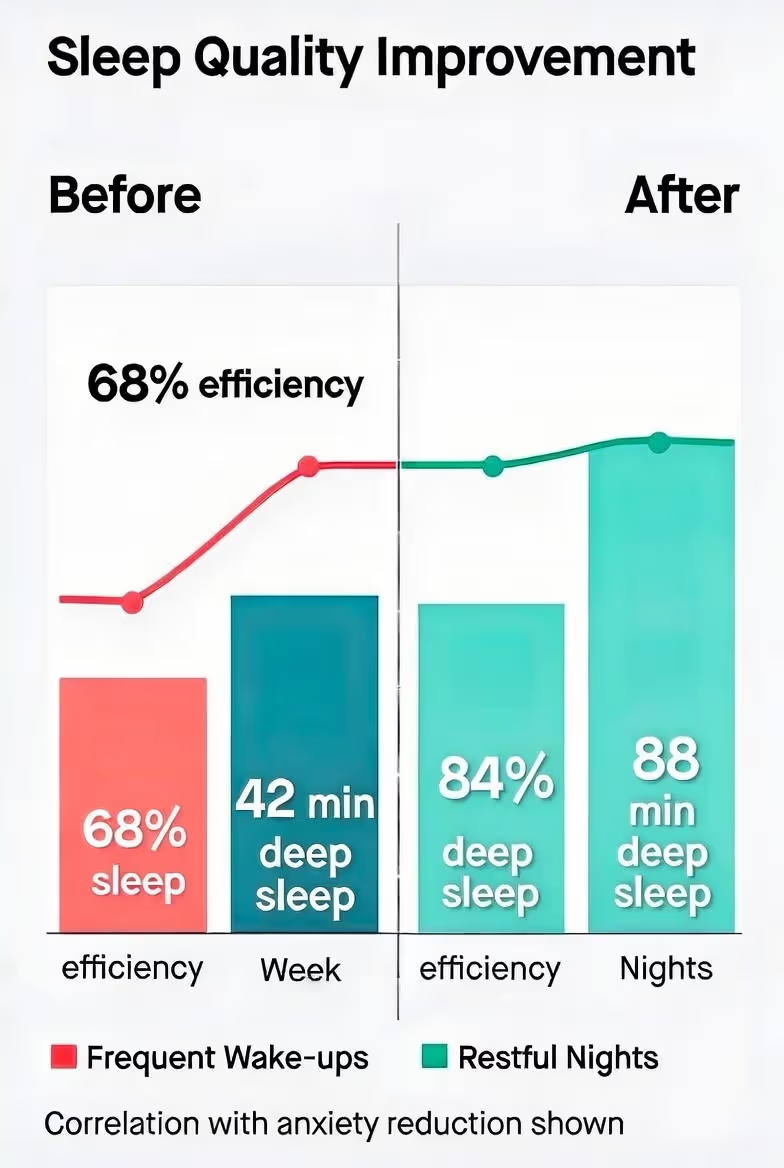
Sleep Efficiency
68%
84%
+24%+24%
Deep Sleep
42 minutes
1h 28min
+46 min (+110%)+110%
Morning Readiness Score
45/100 (avg)
72/100 (avg)
+60%+60%
🫀
The HRV Breakthrough
A +37% improvement in HRV (38→52ms) represents enhanced autonomic nervous system balance—indicating better stress resilience, recovery capacity, and overall physiological adaptability.
💤
Deep Sleep Transformation
A 110% increase in deep sleep (42min→1h 28min) demonstrates dramatically improved restorative sleep quality—critical for physical recovery, hormone regulation, and tissue repair.
🌅
Morning Readiness Revolution
A 60% improvement in morning readiness (45→72/100) shows enhanced physiological preparation for daily demands—moving from suboptimal to optimal morning functioning.
Clinical Significance: HRV (Heart Rate Variability) measures the variation in time between heartbeats. Higher HRV indicates better autonomic nervous system function and stress resilience. Moving from 38ms to 52ms represents significant improvement, typically associated with reduced cardiovascular risk and enhanced physiological adaptability. The -15% reduction in resting heart rate and +110% increase in deep sleep are also clinically meaningful improvements.
📊 Physiological Resilience Achieved
This 7-month physiological transformation demonstrates comprehensive improvement in autonomic nervous system function and recovery capacity. The +37% HRV improvement (38→52ms) indicates enhanced parasympathetic ("rest and digest") tone and stress resilience. The -15% reduction in resting heart rate (68→58 bpm) shows improved cardiovascular efficiency. Most dramatically, the 110% increase in deep sleep (42min→1h 28min) represents a fundamental shift in sleep quality—critical for recovery, hormone regulation, and tissue repair. The 60% improvement in morning readiness (45→72/100) demonstrates enhanced daily preparedness. These improvements collectively indicate enhanced physiological resilience—the ability to adapt to stress, recover effectively, and maintain optimal functioning across physiological systems.
Career Performance Transformation
💼 From Anxiety-Limited to Leadership-Ready
Dramatic improvements in work performance, reliability, and career advancement capability through enhanced mental health and resilience
📉
-83%
Anxiety-Impaired Days
🏥
-88%
Stress-Related Sick Days
📊
Consistent
Meeting Performance
🚀
VP Role
Career Advancement
Anxiety-Impaired Work Performance
Before: 30% of daysAfter: 5% of days
Overall Performance Consistency
InconsistentReliable Excellence
Metric
Before
After
Impact
Anxiety-Impaired Work Days
30% of days
High impairment
5% of days
Minimal impact
-83%-83%
Stress-Related Sick Days
6-8 days/year
High absenteeism
1 day/year
Minimal absence
-88%-88%
Meeting Performance
Inconsistent
Anxiety-dependent
Consistent
Reliable excellence
Reliable excellenceConsistent
Career Decision
Afraid to accept VP role
Anxiety-limited
Accepted AND thriving
Trajectory changedCareer Leap
Leadership achieved
Presentation Quality
Good
(when not panicking)
Excellent
(confident)
Elevated performanceNext Level
📉
Anxiety Reduction Impact
Reducing anxiety-impaired work days from 30% to 5% represents dramatic improvement in functional capacity—transforming from frequent impairment to consistent performance.
🚀
Career Trajectory Transformation
Moving from anxiety-limited hesitation to confident acceptance of a VP role demonstrates transformed career trajectory—enabling leadership advancement previously blocked by mental health limitations.
💼
Professional Reliability
Achieving consistent meeting performance and presentation quality indicates enhanced professional reliability—critical for career advancement and leadership credibility.
💼 From Anxiety-Limited to Leadership-Ready
This transformation represents a fundamental shift in professional capacity and career trajectory. Reducing anxiety-impaired work days by 83% and stress-related sick days by 88% creates consistent functional capacity for professional excellence. The ability to deliver reliable, excellent performance in meetings and presentations—regardless of circumstances—demonstrates enhanced professional resilience. Most significantly, moving from anxiety-limited hesitation to confident acceptance of a VP role represents career trajectory transformation—breaking through previously insurmountable mental health barriers to leadership. This comprehensive improvement creates a foundation for sustained career advancement, leadership effectiveness, and professional fulfillment.
Mental & Emotional Health Transformation
🧠 7-Month Self-Reported Wellbeing Comparison
Comprehensive improvements across 7 key mental and emotional health domains show fundamental psychological transformation
📊 0-10 Scale | Higher scores indicate better mental/emotional health
🎯
+183%
Sense of Control
❤️
+143%
Self-Compassion
⚖️
+100%
Emotional Stability
🌟
+73%
Hope for Future
Overall Wellbeing (March)
4.5
General Wellbeing Score
Overall Wellbeing (October)
8.0
General Wellbeing Score
Category
March
October
Change
General Wellbeing
4.5
8.0
+78%+78%
Confidence at Work
6.0
9.0
+50%+50%
Sense of Control
3.0
8.5
+183%+183%
Hope for Future
5.5
9.5
+73%+73%
Life Satisfaction
5.0
8.5
+70%+70%
Emotional Stability
4.0
8.0
+100%+100%
Self-Compassion
3.5
8.5
+143%+143%
🎯
The Control Breakthrough
The +183% increase in sense of control (3.0→8.5) represents the most dramatic psychological shift—moving from feeling powerless to empowered in managing one's life and responses.
❤️
Self-Compassion Revolution
A +143% improvement in self-compassion (3.5→8.5) indicates a fundamental shift in self-relationship—from self-criticism to self-kindness, creating psychological safety for growth.
🌟
Hope & Future Orientation
The +73% increase in hope for future (5.5→9.5) demonstrates restored optimism and future orientation—critical for motivation, planning, and sustained wellbeing.
Interpretation: Self-reported mental health scores on a 0-10 scale provide meaningful insight into subjective psychological experience. Improvements of 50-183% across all 7 domains indicate comprehensive psychological transformation. The +183% increase in sense of control and +143% in self-compassion are particularly significant for sustainable mental health.
🧠 From Psychological Struggle to Flourishing
This 7-month mental health transformation demonstrates a fundamental shift from psychological struggle to psychological flourishing. Moving from 4.5 to 8.0 in general wellbeing represents near-doubling of daily psychological experience quality. The +183% increase in sense of control indicates transition from feeling at the mercy of circumstances to feeling agency over one's life. The +143% improvement in self-compassion represents healing of the inner critic—creating psychological safety for growth and resilience. Most significantly, the comprehensive nature of these improvements—across cognitive (control, confidence), emotional (stability, hope), and relational (self-compassion, life satisfaction) domains—indicates systemic psychological healing rather than isolated changes. This holistic mental health improvement creates the foundation for sustained wellbeing and thriving.
Family & Relationship Quality
James's Assessment (October interview):
"I have my wife back. That's the only way to describe it. For years, Amanda has been physically present but emotionally elsewhere—trapped in her anxiety. I felt like I was living with a ghost of the person I married.
Now? She's HERE. Fully present. We laugh together again. We have actual conversations about ideas, not just logistics. She plays with the kids without being distracted by worry. She's affectionate again—we've had more intimate moments in the past 3 months than the past 2 years.
The kids have noticed too. Olivia told me last week, 'Mommy's not scared anymore.' I asked what she meant, and she said, 'She used to always look worried. Now she smiles a lot.'
Amanda accepting the VP role was huge—not because of the title, but because she had the confidence to say yes. Six months ago, her anxiety would have made her turn it down. Now she's thriving in it."
Children's Wellbeing: Transformation Through Parental Support
Observed behavioral changes in children following improvements in parental emotional availability and resilience modeling.
Area of Observation
Before Support
After Support
Impact
Amanda's Emotional Availability
40% engaged
85% engaged
+112% improvement
More than doubled emotional presence
Kids' Anxiety Levels
Higher (modeling mom's anxiety)
Normal (modeling resilience)
Significant reduction
Shift from anxious to resilient modeling
Family Activity Participation
Declined often (too anxious)
Participates fully
Complete turnaround
From avoidance to full engagement
Bedtime Routine Quality
Rushed, distracted
Calm, present
Quality restored
Transition from stress to peaceful bonding
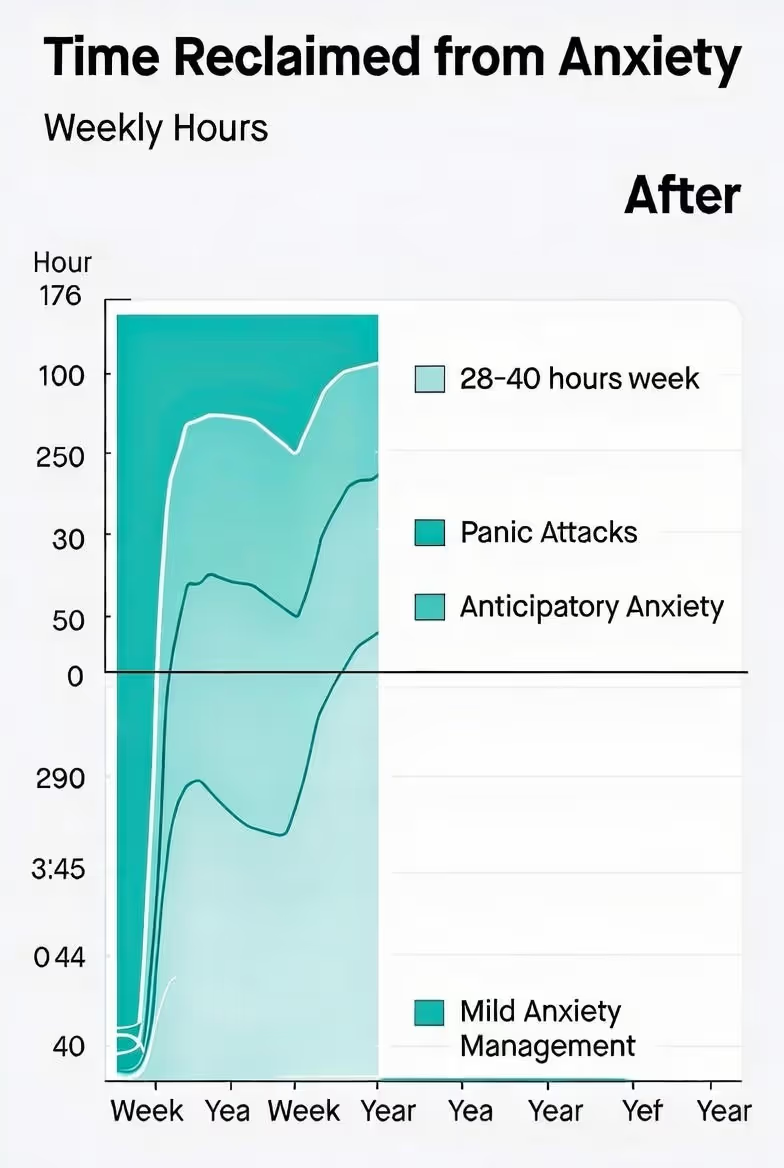
Time Reclaimed from Anxiety
Weekly time breakdown:
Panic attack time:
Before: 8-12 attacks × 60 min avg = 8-12 hours/week
After: 0-1 attack × 15 min = 0.25 hours/week
Reclaimed: 8-12 hours per week
Anticipatory anxiety:
Before: 10+ hours/week worrying
After: 1-2 hours/week
Reclaimed: 8-9 hours per week
Morning anxiety:
Before: 2-3 hours/day × 7 days = 14-21 hours/week
After: 20 min/day × 7 days = 2.3 hours/week
Reclaimed: 12-19 hours per week
Total: 28-40 hours per week reclaimed from anxiety-related suffering
After: Same medication (maintained, per doctor recommendation), but using Xanax 90% less
Savings: ~$250/year (less Xanax usage)
Work productivity:
Stress-related sick days reduced: 6 days saved × $635/day = $3,810/year
Performance improvement led to VP promotion: +$35,000/year salary increase
Career trajectory:
Accepting VP role (vs. staying stagnant or leaving): Priceless
Projected career earnings over next 10 years: +$400,000-600,000
Investment:
Oxyzen Ring: $299
Total: $299
Net benefit Year 1: $43,441 (direct) Net benefit 10 years: $500,000+ (career trajectory)
ROI: Immeasurable (career saved, life quality transformed)
Therapy Integration
Dr. Kim (Amanda's therapist) observations:
"Amanda's progress with the Oxyzen ring has been remarkable. For 4 years, we worked on cognitive strategies for managing anxiety. They helped, but something was missing.
The HRV data provided what therapy couldn't: real-time objective feedback. Amanda could finally SEE her nervous system state, which made my cognitive tools MORE effective. She knew WHEN to use them.
For example, we'd practiced box breathing for years. But Amanda never knew if she was doing it 'right' or if it was 'working.' With HRV feedback, she could see: 'I started at 36ms, did breathing for 5 minutes, now I'm at 42ms—it worked.' That validation reinforced the practice.
The combination of therapy + biofeedback has been transformative. I now recommend HRV tracking to many of my anxiety clients."
Medication Discussion
Amanda's psychiatrist (Dr. Patel):
"Amanda is a success story for integrative treatment. When we started, she was on Lexapro 20mg and using Xanax 8-12 times per month for panic attacks.
After 7 months with HRV-guided stress management, she's using Xanax maybe once per month. Her baseline anxiety is significantly reduced. Her panic attacks are rare.
We discussed reducing her Lexapro dose. Amanda wanted to maintain it for now, which I support. The medication provides a stable foundation, and the HRV tools help her manage acute stress spikes.
This is ideal: medication for baseline stability, biofeedback for real-time management. Neither alone would be as effective as both together."
VISUAL DATA
PULL QUOTE
In Amanda's Own Words:
"For eight years, I lived with anxiety. For four years, I lived with panic attacks. I tried everything—therapy, medication, meditation, exercise. All helped, but nothing stopped the panic.
The worst part wasn't the panic attacks themselves. It was the terror of not knowing when they'd strike. Every morning, I woke up wondering: 'Will today be the day I have a panic attack in front of my CEO? In front of my kids? Will today be the day everyone sees that I'm barely holding it together?'
I was performing confidence at work while drowning in anxiety. I was going through the motions at home while my mind raced with worry. I was physically present but emotionally absent from my own life.
When I was offered the VP role—the career milestone I'd worked toward for years—I seriously considered turning it down. Not because I wasn't qualified. Because I was terrified the stress would break me.
Then I started tracking my HRV. And everything changed.
The first revelation: My HRV was 38 milliseconds. For context, healthy is 50-70. I was living in chronic fight-or-flight mode. No wonder I felt like I was drowning—my nervous system was screaming 'DANGER' 24/7.
The second revelation: HRV showed panic attacks building 30-60 minutes before I consciously felt them. I could SEE the warning signs in the data—my HRV dropping from 42 to 38 to 35 to 32. By the time it hit 30, panic was imminent.
But here's the game-changer: If I intervened at 40—when I first saw the drop—I could prevent the panic attack entirely. Ten minutes of breathing exercises would raise my HRV back to 45, and the panic would never come.
For the first time in four years, I had early warning. I had agency. I had control.
Within seven months, I reduced panic attacks from 8-12 per month to 0-1. Not by adding more medication. Not by avoiding stress. By learning to read my nervous system in real-time and intervene before crisis hit.
The data also changed how I used the tools I already had. I'd been doing breathing exercises for years—sometimes they helped, sometimes they didn't. I thought I was bad at it. Turns out, I was using them at the wrong times. When my HRV was already at 32 (high stress), passive breathing wasn't enough. I needed movement, vigorous breathwork. But when my HRV was 42 (mild stress), gentle breathing worked perfectly.
Matching intervention to HRV level changed everything.
Seven months ago, I was considering turning down the VP role because I didn't think I could handle the stress. Today, I'm thriving as VP—not despite my anxiety, but because I have tools to manage it in real-time.
My kids have their mom back. My husband has his wife back. And I have myself back.
I'm not cured. I still have anxiety. But now anxiety is something I MANAGE, not something that manages me. The data gave me back my life."
— Amanda Foster, VP of Marketing 7 months after using real-time stress awareness to transform anxiety management
CALL-TO-ACTION
Your Wellness Journey Starts Here
Amanda's story represents millions of people living with anxiety disorders, panic attacks, and chronic stress—high-functioning individuals who appear successful on the outside while suffering silently on the inside.
For eight years, Amanda tried everything: therapy, medication, meditation, exercise, lifestyle changes. They all helped, but something was missing. She couldn't predict panic attacks, couldn't tell when interventions were working, couldn't distinguish "normal anxiety" from "panic building."
The difference? Real-time biofeedback showing her nervous system state—not just subjective feelings.
Whether you're:
Someone with diagnosed anxiety or panic disorder
A high-achiever dealing with chronic stress
A professional masking anxiety behind competence
Anyone who's tried traditional treatments but still struggling
Someone who wants to prevent anxiety from controlling life decisions
You need objective data showing when your nervous system needs support—not just guessing based on feelings.
[Start Managing Stress in Real-Time Today →]
Join thousands of anxiety sufferers who've discovered that managing stress isn't about willpower—it's about awareness and timely intervention.
What you'll get:✓ Real-time HRV tracking (see your nervous system state objectively) ✓ Panic attack early warning (30-60 minute advance notice) ✓ Intervention effectiveness feedback (know what works, when) ✓ Baseline stress monitoring (track improvement over months) ✓ Sleep quality analysis (anxiety disrupts sleep—optimize it) ✓ Recovery time tracking (see how fast you bounce back from stress) ✓ Complete data privacy (your mental health data stays yours) ✓ No subscription fees (one purchase, lifetime stress awareness)
Stop living in fear of the next panic attack. Start seeing stress coming and preventing it.
Your calm, confident life is waiting—and it starts with awareness.
RECOMMENDED READING
Continue Your Anxiety Management Journey:
"Understanding HRV and Anxiety: The Nervous System Connection"
How HRV reflects fight-or-flight activation
Why chronic anxiety suppresses baseline HRV
Research on HRV biofeedback for anxiety disorders
"Panic Attack Early Warning Signs: Using Data to Prevent Crisis"
The 30-60 minute window before panic onset
HRV patterns that predict panic attacks
Evidence-based intervention protocols
"Matching Interventions to Stress Levels: The Right Tool at the Right Time"
Why one-size-fits-all stress management fails
Breathing techniques for different HRV ranges
Movement vs. stillness: when to use each
"Integrating HRV Tracking with Therapy and Medication"
How biofeedback enhances cognitive behavioral therapy
Working with your psychiatrist to optimize treatment
Q: "I'm already in therapy and on medication. Will HRV tracking really add anything?"
A: Yes—and your therapist will likely love it.
Amanda was ALSO in therapy (4 years) and on medication (Lexapro + Xanax). HRV tracking didn't replace these—it enhanced them.
How HRV enhanced Amanda's existing treatment:
Therapy:
Made cognitive tools more effective (knew WHEN to use them)
Provided objective validation (breathing exercises "worked"—could see HRV climb)
Gave therapist better data (not just subjective "I felt anxious")
Medication:
Helped optimize timing (knew when Xanax was truly needed vs. manageable without)
Tracked medication effectiveness objectively
Reduced "rescue medication" usage by 90% through early intervention
Think of it this way:
Therapy = teaches you the tools
Medication = stabilizes the baseline
HRV tracking = tells you when and how to use the tools
All three together are more powerful than any one alone.
Q: "What if tracking my HRV makes me MORE anxious? Won't I obsess over the numbers?"
A: This is a valid concern. Some people DO become more anxious initially.
Amanda's experience:
Week 1: Checked HRV 15-20 times per day (obsessive) Week 2-4: Still checking often (8-12 times/day) Month 2: Settled into healthy rhythm (4-6 times/day) Month 4: Checking only when needed (2-3 times/day + before important events)
Guidelines to prevent obsession:
Set checking schedule: Morning (baseline), before stressful events, if feeling anxious, evening
Don't chase perfect numbers: HRV fluctuates normally—trend matters, not single reading
Focus on control: Use data to guide action, not just worry about number
Work with therapist: Discuss HRV tracking in therapy to process relationship with data
If you find yourself obsessing: That's feedback from your anxiety, not a problem with tracking. Discuss with therapist.
Q: "How long until I see results like Amanda did?"
A: Amanda's timeline:
Week 1: First successful panic attack shortening (90 min → 20 min) Week 2: First prevented panic attack (early intervention) Month 1: Panic attacks reduced 40% (12 → 7 per month) Month 3: Panic attacks reduced 70% (12 → 3 per month) Month 7: Panic attacks reduced 90% (12 → 0-1 per month)
Your timeline might vary:
Faster if:
Your anxiety is situational (not chronic)
You're already using effective tools (therapy, meditation)
You have good support system
Slower if:
Your anxiety is severe/long-standing
You have multiple mental health conditions
You're not yet in treatment
Bottom line: Most people see SOME improvement within 2-4 weeks (shorter panic attacks, better recovery). Major transformation takes 3-6 months.
Precision Health Metrics Processed to Reveal Your True Recovery, Stress, and Sleep Patterns.
Stay connected to your natural rhythm—balancing energy, breath, and inner harmony.