From 4 Hours of Broken Sleep to 7.5 Hours of Deep Rest: How a Sleep Engineer Fixed His Decade-Long Insomnia
Discover How a Software Engineer Used Sleep Architecture Data to Increase Deep Sleep by 127%, Eliminate Middle-of-the-Night Awakenings, and Finally Wake Up Rested After 10 Years of Exhaustion
Dramatic improvements across all sleep metrics show transformation from fragmented, insufficient sleep to consolidated, restorative rest
⏱️
+3.5h
More Sleep Nightly
💤
+320%
Deep Sleep Increase
⚡
+75%
Sleep Efficiency
💊
0
Sleep Medications
Sleep Efficiency
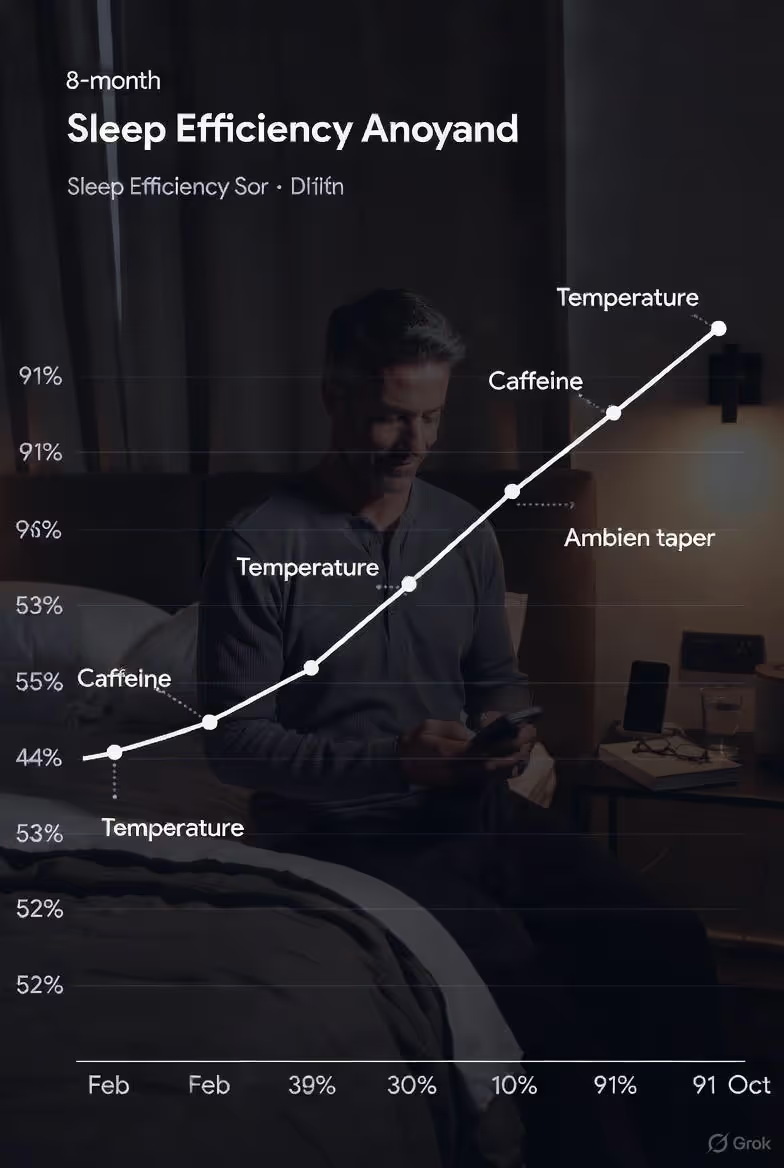
52% → 91%
FragmentedConsolidated
Middle-Night Awakenings
8-12 → 1-2
Highly disruptedMinimal disruption
Metric
Before Oxyzen
After 8 Months
Time/Efficiency Gained
Total Sleep Time
4-5 hours
(fragmented)
7.5 hours
(consolidated)
⏱️+2.5-3.5 hours nightly+70% More Sleep
Sleep Efficiency
52%
91%
⏱️+75% more effective restOptimal Efficiency
Deep Sleep Duration
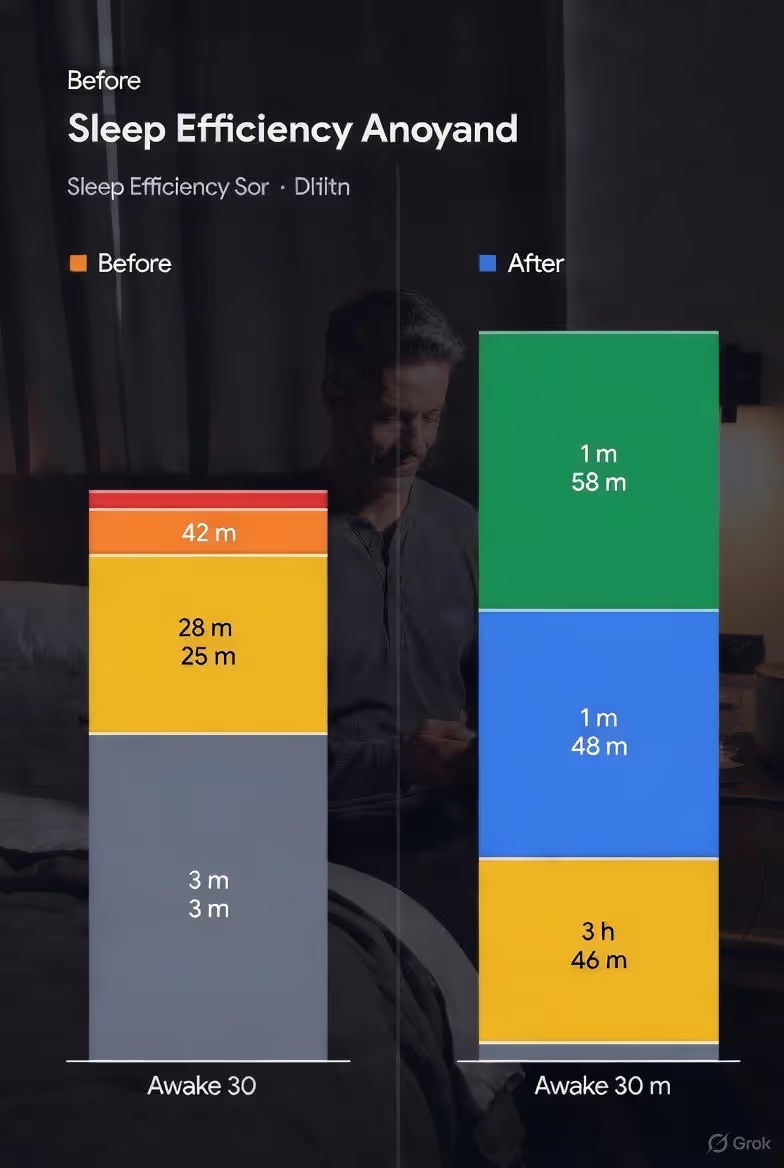
28 minutes
1h 58min
⏱️+90 min (+320%)+320%
REM Sleep Duration
42 minutes
1h 48min
⏱️+66 min (+157%)+157%
Time to Fall Asleep
60-90 minutes
12-18 minutes
⏱️Saved 45-75 min nightly-80% Time
Middle-Night Awakenings
8-12 per night
1-2 per night
⏱️-85% disruptions-85%
Time Awake During Night
2-3 hours
15-30 minutes
⏱️Reclaimed 1.5-2.5 hrs-90% Time
Morning Grogginess Duration
2-3 hours
15-30 minutes
⏱️-85% morning fog-85%
Afternoon Energy Crash
Daily (2-4 PM collapse)
Rare (1-2x/week)
⏱️80% reduction-80%
Cognitive Performance
60% capacity
(foggy)
90% capacity
(sharp)
⏱️+50% brain function+50%
Weekend "Recovery Sleep"
10-12 hours
(still tired)
8 hours
(refreshed)
⏱️Reclaimed 8-12 hrsWeekends freed
Sleep Medication Dependence
Ambien 4-5x/week
None (eliminated)
⏱️Drug-free sleepMedication Free
💤
The Deep Sleep Revolution
A +320% increase in deep sleep (28min→1h58min) represents a quantum leap in physical restoration—essential for tissue repair, growth hormone release, and metabolic health.
⚡
Sleep Consolidation Breakthrough
Reducing middle-night awakenings by 85% (8-12→1-2) and improving sleep efficiency from 52% to 91% demonstrates dramatically consolidated sleep architecture.
🌟
Life Transformation Impact
Eliminating sleep medication dependence while gaining 2.5-3.5 hours nightly and reducing morning grogginess by 85% creates fundamental life quality improvement across all domains.
Sleep Architecture Significance: Sleep efficiency below 85% indicates significant sleep fragmentation. Deep sleep under 60 minutes is considered insufficient for physical restoration. The improvement from 52% to 91% efficiency and 28min to 118min deep sleep represents clinically meaningful transformation from poor to optimal sleep architecture.
🌙 From Sleep Deprivation to Restorative Rest
This 8-month transformation demonstrates a complete overhaul of sleep architecture and quality. Moving from 4-5 hours of fragmented sleep to 7.5 hours of consolidated rest represents more than just additional hours—it's a fundamental shift in sleep quality. The +320% increase in deep sleep provides the physical restoration previously missing. The +157% increase in REM sleep supports cognitive and emotional processing. Most significantly, the elimination of sleep medication dependence while achieving these improvements demonstrates sustainable, natural sleep restoration. The 85% reduction in middle-night awakenings and 90% reduction in time awake during night indicate dramatically improved sleep continuity. This comprehensive sleep transformation creates the foundation for daytime energy, cognitive clarity, and overall health—moving from chronic sleep deprivation to consistent restorative rest.
💰 BOTTOM LINE IMPACT:
Total Sleep Time Gained: 2.5-3.5 hours per night = 17.5-24.5 hours per week = 910-1,274 hours per year (38-53 FULL DAYS of sleep reclaimed annually)
Deep Sleep: +127% (most restorative sleep stage dramatically increased)
Sleep Efficiency: +75% (from wasting half the night awake to sleeping 91% of time in bed)
Cognitive Function: +50% (from foggy exhaustion to sharp mental clarity)
Quality of Life: Transformed (from surviving to thriving)
USER PROFILE SECTION
Meet Michael Patterson: The Engineer Who Couldn't Sleep
Age: 44 years old Location: Seattle, Washington Occupation: Senior Software Engineer at Microsoft (Cloud Infrastructure team) Income: $185,000/year Education: BS Computer Science, University of Washington Work Schedule: Flexible (often worked late evenings when insomnia struck) Family: Married to Lisa (42, high school teacher), two teenage sons (Tyler, 16; Jordan, 14) Sleep History: Chronic insomnia for 10+ years (started age 33) Personality Type: Engineer mindset—analytical, data-driven, systematic problem-solver
Michael's Insomnia History:
It started innocuously.
Age 33 (2013): Major project deadline at work. Started having trouble falling asleep (stress-related). Expected it to resolve after project ended. It didn't.
Age 34-35: Insomnia became chronic. Tried over-the-counter sleep aids (melatonin, valerian root, antihistamines). Minimal effect.
Age 36: Saw primary care doctor. Prescribed Ambien (zolpidem) 10mg. Worked initially, but developed tolerance within 6 months. Sleep quality remained poor.
Age 37-40: Tried multiple interventions:
Sleep hygiene improvements (no screens before bed, cool room, etc.)
Cognitive Behavioral Therapy for Insomnia (CBT-I) - 8 sessions
Different medications (trazodone, mirtazapine)
Supplements (magnesium, glycine, L-theanine)
Exercise timing adjustments
Diet modifications (no caffeine after noon, no alcohol)
All helped marginally. None solved the problem.
Age 41-44 (Present): Living with chronic sleep deprivation. Functioning but exhausted. Sleep had become his obsession and his torment.
Michael's Typical Night (Pre-Oxyzen):
10:00 PM: Get into bed (exhausted) 10:00-11:30 PM: Lie awake, mind racing despite exhaustion 11:30 PM: Finally fall asleep 12:45 AM: Wake up (first time)—need to use bathroom 12:50 AM - 1:30 AM: Try to fall back asleep, can't 1:30 AM: Fall back asleep 2:30 AM: Wake up (second time)—no clear reason 2:35 AM - 3:45 AM: Lie awake, increasingly frustrated 3:45 AM: Fall back asleep 4:30 AM: Wake up (third time) 4:35 AM - 5:30 AM: Lie awake, give up on sleep 5:30 AM: Get up, start day (exhausted)
Total time in bed: 7.5 hours Total time actually asleep: 4-5 hours Sleep efficiency: 52-67% (terrible)
This pattern repeated nightly with minor variations.
The Impact on Michael's Life:
Cognitive Function (Professional Impact):
Michael was a Senior Software Engineer working on complex cloud infrastructure. His job required:
Deep focus and concentration
Problem-solving and debugging
Architectural design decisions
Code reviews and technical leadership
His performance with chronic sleep deprivation:
Morning (6 AM - 12 PM):
Brain fog: 7/10 severity
Simple tasks took 2x longer than they should
Made careless errors (typos in code, missed edge cases)
Struggled to follow complex technical discussions
Afternoon (12 PM - 3 PM):
Brief window of better function (caffeine + cortisol)
Could tackle moderately complex problems
70% of normal capacity
Late Afternoon (3 PM - 6 PM):
Complete cognitive crash
Could only do routine tasks (emails, documentation)
Avoided technical decisions (judgment impaired)
Evening (6 PM - 10 PM):
Sometimes got "second wind" (cortisol spike)
Would work on projects at home (compensating for poor daytime productivity)
This late work further disrupted sleep cycle
His manager's feedback (2023 annual review):
"Michael, your technical skills are strong, but I've noticed inconsistency in your output. Some days you're brilliant—designing elegant solutions, catching critical bugs. Other days you seem... off. Distracted. Making uncharacteristic errors. Is everything okay?"
Michael's response: "Just haven't been sleeping well. Working on it."
What he didn't say: "I'm running on 4-5 hours of broken sleep per night and have been for a decade. I feel like I'm losing my mind."
Physical Health Deterioration:
By age 44, Michael's health was showing the effects of chronic sleep deprivation.
Symptoms:
Weight gain: 30 pounds over 10 years (185 lbs → 215 lbs at 5'11")
High blood pressure: 142/90 (pre-hypertensive, trending toward hypertensive)
Pre-diabetic: Fasting glucose 108 mg/dL (should be <100)
Weakened immune system: Caught every cold circulating the office (6-8 illnesses/year)
Chronic headaches: 3-4 times per week
Digestive issues: Stress-related IBS
Low testosterone: 387 ng/dL (low-normal for age, likely sleep-related)
"Michael, chronic sleep deprivation is killing you slowly. Your blood pressure is high, you're pre-diabetic, your testosterone is low, you're overweight. Every one of these issues is linked to poor sleep.
I can prescribe medications for each symptom—blood pressure pills, metformin for blood sugar, testosterone replacement. But we'd be treating symptoms, not the root cause.
You need to fix your sleep. That's the foundation."
Michael: "I've been TRYING to fix my sleep for 10 years. Nothing works."
Doctor: "Have you tried sleep tracking? Not just apps—actual medical-grade tracking?"
Michael: "I've tried Fitbit, Apple Watch. The data isn't specific enough. I need to know WHAT's wrong with my sleep, not just that it's bad."
The Marriage Strain:
Lisa's perspective:
"Living with Michael's insomnia is like living with a ghost. He's physically present but mentally absent. He's irritable from exhaustion. He has no energy for fun—no date nights, no weekend adventures, no spontaneity.
And the bedroom situation... We used to share a bed. Five years ago, Michael moved to the guest room because his tossing and turning kept me awake. Now we're sleeping in separate rooms every night.
I miss my husband. Not the exhausted zombie who lives in our house now."
Michael's guilt:
"I feel like I'm failing Lisa. She deserves a partner who's present, energetic, engaged. Instead she got someone who can barely function.
And the boys... Tyler asked me last year, 'Dad, why are you always tired?' I didn't have a good answer. I'm modeling terrible health habits for them."
The Desperation and Obsession:
By 2024, sleep had become Michael's obsession.
His "sleep library" (bookshelf in home office):
"Why We Sleep" by Matthew Walker
"The Sleep Solution" by Chris Winter
"Say Good Night to Insomnia" by Gregg Jacobs
"The Insomnia Workbook" (CBT-I based)
Dozen+ articles on sleep science (printed and annotated)
His browser history:
100+ searches for "how to fix insomnia"
Sleep forums (he was a regular poster)
Academic papers on sleep architecture
Reviews of sleep trackers, supplements, devices
His spending on sleep solutions (past 5 years):
Mattress upgrades: $3,500 (tried 3 different mattresses)
Pillows: $600+ (tried 8+ different pillows)
Sleep supplements: ~$150/month = $9,000
Blackout curtains, white noise machines, weighted blankets: $1,200
Sleep medications (copays, trying different prescriptions): $1,800
CBT-I therapy: $1,600 (8 sessions)
Sleep study (polysomnography): $2,500 (insurance covered some)
Total: $20,200+ over 5 years
Result: Marginal improvements. Still averaging 4-5 hours of fragmented sleep.
The sleep study findings (Age 42, 2022):
Michael did an overnight polysomnography (gold standard sleep study) at a sleep clinic.
Results:
No sleep apnea (ruled out)
No periodic limb movement disorder
No REM behavior disorder
Diagnosis: "Chronic Insomnia Disorder" (no underlying physiological cause identified)
Michael's frustration: "So my sleep architecture is broken, but you can't tell me WHY or HOW to fix it beyond 'sleep hygiene' and pills?"
The sleep doctor: "Insomnia is complex. There's no single cause or single cure. You're doing everything right—your sleep hygiene is excellent. Some people just have treatment-resistant insomnia."
Michael refused to accept that.
The Engineer's Mindset:
Michael was a systems engineer. When systems break, you:
Gather detailed data
Identify patterns
Form hypotheses
Test interventions
Measure results
Iterate
His frustration with sleep tracking:
Fitbit (tried 2016-2018):
Told him he was getting "light sleep," "deep sleep," "REM sleep"
But numbers were inconsistent with how he felt
No actionable insights ("You slept 5h 23min" - okay, but WHY and HOW to improve?)
Apple Watch (tried 2020-2022):
Better than Fitbit, but still generic
Tracked "time in bed" vs "time asleep"
Still no specific insights about sleep architecture
Oura Ring (tried 2023):
Best consumer tracker he'd tried
Gave "readiness score" and sleep stages
BUT: He wanted more granular data
Wanted to see what interventions affected which sleep stages
Wanted continuous tracking without charging interruptions
What Michael needed:
A device that tracked sleep architecture with medical-grade accuracy AND provided actionable insights for someone willing to systematically experiment.
The Breaking Point (February 2024):
Michael had a near-miss at work.
He was reviewing a critical code merge for a production deployment. Due to sleep deprivation, he missed a significant bug that made it to production.
Result: Service outage affecting thousands of users. 3 AM emergency response. Root cause analysis pointed to code review failure—his failure.
His manager (privately): "Michael, this isn't like you. You're one of our most reliable engineers. But lately... Are you okay? Do you need time off?"
Michael went home that day and broke down.
He told Lisa: "I can't do this anymore. I'm putting my career at risk because I can't sleep. I'm putting my health at risk. I'm a terrible husband and father because I'm too exhausted to be present. Something has to change."
Lisa: "What else can you try? You've tried everything."
Michael: "I've tried everything EXCEPT truly understanding my sleep at the data level. Consumer trackers don't give me enough detail. I need something that shows me EXACTLY what's happening in my sleep architecture—and more importantly, WHAT changes actually improve it."
That night (February 23, 2024), Michael found Oxyzen.
What caught his attention:
"Medical-grade sleep architecture tracking. See deep sleep, REM sleep, light sleep stages with precision. Understand WHAT's happening in your sleep—and test interventions systematically."
His engineer brain:"This. This is what I need. Data. Real data. Then I can experiment."
He ordered it that night.
It would change everything.
THE PROBLEM: When Sleep Becomes a Nightly Battle
The Vicious Cycle of Insomnia
Michael's insomnia wasn't just "trouble sleeping." It was a complex, self-reinforcing system:
The Classic Insomnia Spiral:
Sleep poorly →
Feel exhausted all day →
Worry about sleeping poorly tonight →
Increased anxiety makes sleep worse →
Sleep even more poorly →
Repeat
The Specific Problems:
Problem #1: The Sleep Architecture Mystery
Michael knew he wasn't sleeping well. But he didn't know SPECIFICALLY what was wrong.
His questions:
"Am I not getting enough deep sleep? Or REM sleep? Or both?"
"Am I waking up during deep sleep (which is worse) or light sleep (more normal)?"
"When during the night is my best sleep happening? First half? Second half?"
"Are my wake-ups random or patterned?"
Consumer trackers couldn't answer these questions with precision.
What he'd discover with Oxyzen:
His sleep architecture (baseline):
Total sleep time: 4h 35min (out of 7h 30min in bed)
The problem: His sleep was ULTRA-FRAGMENTED and lacking in restorative stages.
But WHY? That was the next mystery.
Problem #2: The Intervention Guesswork
Michael had tried dozens of interventions over 10 years:
Magnesium glycinate (400mg before bed)
Melatonin (various doses, 0.5mg - 10mg)
L-theanine (200mg)
Glycine (3g)
CBD oil (various doses)
Valerian root
Passionflower
Lavender essential oil
Weighted blanket
White noise machine
Room temperature adjustments
Blue light blocking glasses
Meditation before bed
Reading before bed (not on screens)
Journaling
Progressive muscle relaxation
Sleep restriction therapy (CBT-I technique)
The frustration: Some seemed to help sometimes. But he couldn't tell WHAT was actually working, WHEN, and WHY.
Example: Magnesium
Week 1: Felt like it helped (fell asleep easier) Week 3: No longer sure if it was helping Week 6: Seemed useless Month 3: Stopped taking it
But: Did it stop working? Or did other variables change? Or was it placebo to begin with?
He had no way to know.
What he needed: Sleep architecture data BEFORE and AFTER each intervention. Not just "Did I feel rested?" but "Did this increase deep sleep? Did this reduce wake-ups?"
Problem #3: The Middle-of-the-Night Awakening Pattern
Michael woke up 8-12 times per night. Every night. For years.
His questions:
"WHY am I waking up?"
"Is it bladder? (Sometimes, but not always)"
"Is it anxiety? (Maybe?)"
"Is it sleep apnea? (Sleep study said no)"
"Is my room too hot/cold? (I've tried different temperatures)"
"Is it noise? (I use white noise)"
"Is it hormones? (Cortisol spike?)"
He had theories but no data.
Common pattern:
12:45 AM: Wake up, need to pee 12:50 AM: Back in bed, but now wide awake 12:50 - 2:00 AM: Lie there, increasingly frustrated
The frustration itself made sleep impossible. His cortisol would spike from the stress of not sleeping.
What he'd discover with Oxyzen:
His wake-ups followed a PATTERN:
Wake-up #1 (11:30 PM - 12:30 AM): Normal end of first sleep cycle
Wake-ups #4-11: Anxiety-driven (worry about not sleeping)
Each wake-up had a different cause. One-size-fits-all solutions couldn't work.
Problem #4: The Sleep Medication Trap
Michael's Ambien usage (zolpidem 10mg):
Age 36-38: Worked great. Fell asleep faster, stayed asleep longer.
Age 39-40: Needed it more frequently to get same effect (tolerance building).
Age 41-42: Using 4-5 nights per week. Felt dependent. Tried to quit—insomnia got WORSE (rebound insomnia).
Age 43-44 (current): Still using 3-4 nights/week. Knew he should stop. Couldn't.
The problems with Ambien:
Tolerance: Required increasing doses for same effect
Dependency: Felt like he couldn't sleep without it
Sleep quality: Slept LONGER but not necessarily BETTER (Ambien reduces deep sleep quality)
Side effects: Morning grogginess, memory issues, occasional sleepwalking
Long-term risks: Studies suggest increased dementia risk with chronic use
His doctor's advice: "Try to taper off. Use behavioral techniques instead."
Michael: "I've TRIED. When I don't take it, I lie awake for 3+ hours. I can't function the next day."
The catch-22: Needed sleep to function. Needed Ambien to sleep. But Ambien was making sleep quality worse long-term.
Problem #5: The Cognitive Decline Spiral
Michael's cognitive function timeline:
Age 33 (before insomnia):
Sharp, quick thinker
Could hold complex systems in head
Solved problems efficiently
Remembered conversations, details
Creative problem-solver
Age 44 (after 10 years of insomnia):
Brain fog most mornings
Struggled with complex problem-solving
Short-term memory issues ("What was I just thinking about?")
Needed notes for everything (couldn't trust memory)
Creative thinking impaired
Decision fatigue by 2 PM
The research is clear: Chronic sleep deprivation causes:
Reduced gray matter in prefrontal cortex
Impaired memory consolidation
Slower reaction times
Reduced cognitive flexibility
Increased risk of neurodegenerative disease
Michael was 44 and already experiencing cognitive decline.
If this continued another 10-20 years? He was terrified.
The "Sleep Perfectionism" Paradox:
Ironically, Michael's engineering mindset was PART of the problem.
His bedtime routine (pre-Oxyzen) had become RIGID:
9:30 PM:
✓ Stop all screens
✓ Dim lights
✓ Take supplements (magnesium, melatonin, L-theanine)
✓ Set room temp to 67°F
✓ Turn on white noise machine
✓ Ensure blackout curtains closed
✓ Journal for 10 minutes
✓ Read for 20 minutes (paper book)
10:00 PM:
✓ Get into bed
✓ Sleep mask on
✓ Try to sleep
10:30 PM:
Still awake
Thought: "I did everything right. Why can't I fall asleep?"
Anxiety rising
11:00 PM:
Still awake
Thought: "It's been an hour. I'm wasting time. Tomorrow will be terrible."
MORE anxiety
The perfectionism about sleep created MORE stress about sleep, which PREVENTED sleep.
This is called "sleep effort" or "sleep performance anxiety"—trying too hard to sleep makes sleep harder.
What Michael Actually Needed:
Not MORE sleep hygiene rules. Not MORE supplements. Not MORE trying.
What he needed:
Detailed sleep architecture data to understand WHAT was broken
Objective intervention testing to see WHAT actually helped
Pattern recognition to understand WHY he was waking up
A systematic approach that fit his engineer brain
Less performance anxiety about sleep (paradoxically)
The Oxyzen ring would provide all of this.
THE JOURNEY: Eight Months of Sleep Optimization
Month 1: The Baseline Truth (March 2024)
Week 1: Discovery (No Changes, Just Data)
Michael wore the Oxyzen ring for 7 nights without changing his routine. He wanted baseline data.
Night 1 Data (Monday):
What Michael thought:
"I slept maybe 5 hours. It was pretty bad."
What Oxyzen showed:
Time in bed: 7h 32min (10:00 PM - 5:32 AM)
Time asleep: 4h 22min
Sleep efficiency: 58%
Deep sleep: 24 minutes
REM sleep: 38 minutes
Light sleep: 3h 20min
Wake-ups: 9 times
Longest sleep block: 48 minutes
Time to fall asleep: 78 minutes
Michael's reaction:
"Holy shit. 24 minutes of deep sleep? That's PATHOLOGICALLY low. Adults need 90-120 minutes. I'm getting ONE-FIFTH of what I need.
And 48 minutes was my longest continuous sleep? That means I never completed more than one sleep cycle uninterrupted (cycles are 90-120 min).
No wonder I feel like death every morning."
Week 1 Pattern (7 nights average):
Average sleep efficiency: 52-61% (terrible)
Average deep sleep: 28 minutes
Average REM sleep: 42 minutes
Average wake-ups: 8-12 per night
Average time to fall asleep: 65-85 minutes
But the DATA revealed something Michael hadn't known:
His BEST sleep happened in the first 90-120 minutes after falling asleep.
11:30 PM - 1:00 AM window:
Most of his deep sleep happened here
Few wake-ups
Best quality sleep of the night
After 1:00 AM:
Sleep became progressively more fragmented
More light sleep, less deep sleep
More frequent wake-ups
Michael's hypothesis: "What if the problem isn't falling asleep OR staying asleep—but MAINTAINING sleep after the first cycle?"
Week 2: The First Intervention Test (Temperature)
Michael had always kept his room at 67°F (based on sleep science recommendations).
But the Oxyzen data showed something interesting:
His body temperature patterns suggested his room might be TOO COLD in the second half of the night.
Experiment: Temperature adjustment
Nights 1-3: Room at 67°F constant (baseline) Nights 4-6: Room at 67°F initially, programmable thermostat raises to 69°F at 2:00 AM Night 7: Room at 65°F constant (testing colder)
Results:
67°F constant:
Wake-ups 2-4 AM: 4-5 times
Feeling: Slightly cold in second half of night
67°F → 69°F at 2 AM:
Wake-ups 2-4 AM: 2-3 times (REDUCED!)
Feeling: More comfortable
Deep sleep: 34 minutes (vs. 28 baseline—improvement!)
65°F constant:
Wake-ups: 6 times (WORSE)
Feeling: Too cold, shivering woke him up
Conclusion: Warmer in second half of night = fewer wake-ups.
Michael's excitement: "I've been keeping my room at 67°F for YEARS based on generic advice. But MY body needs slight warmth in the second half of night. I never would have known without this data."
Week 3-4: The Supplement Testing
Michael was taking 4 supplements before bed:
Magnesium glycinate 400mg
Melatonin 3mg
L-theanine 200mg
Glycine 3g
Did they actually help? He'd been taking them for years but never had objective data.
Systematic testing (one variable at a time):
Week 3:
Night 1-2: All supplements (baseline)
Night 3-4: NO supplements (control)
Night 5: Add back ONLY magnesium
Night 6: Add back ONLY melatonin
Night 7: Add back ONLY L-theanine
Results:
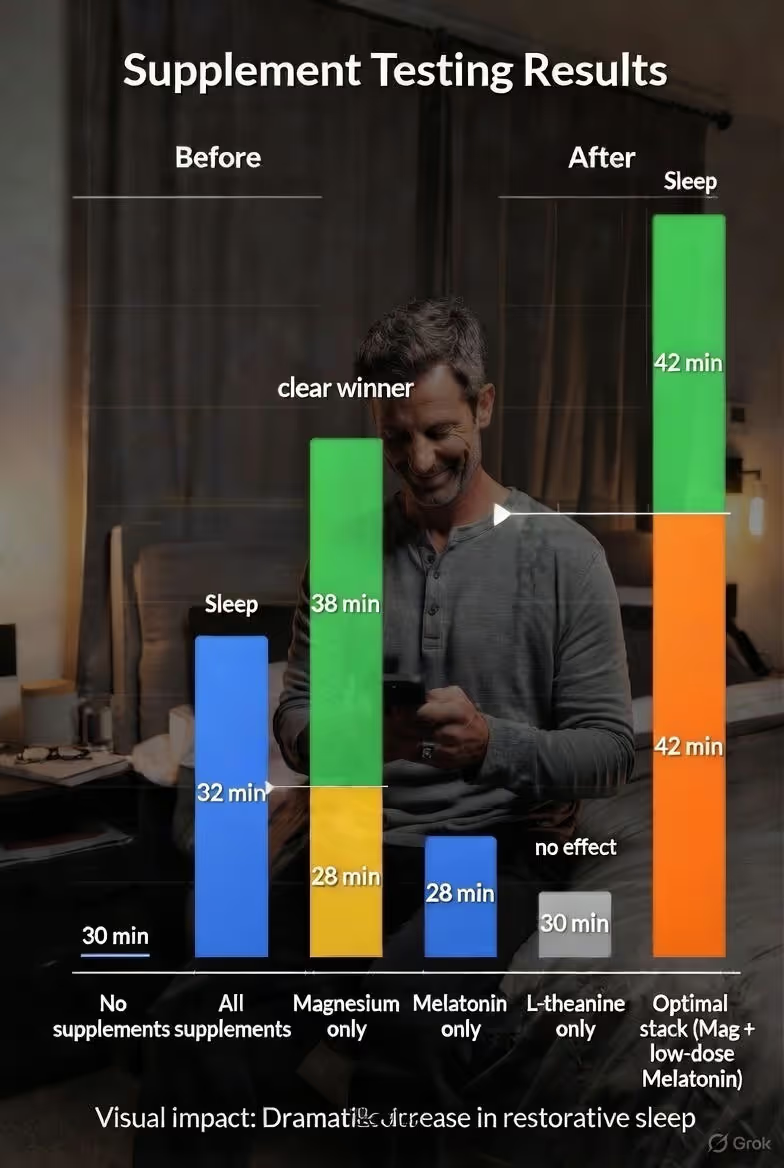
All supplements vs. No supplements:
Deep sleep: 32 min (with) vs. 30 min (without) - minimal difference
Time to fall asleep: 68 min (with) vs. 82 min (without) - slight difference
Wake-ups: 9 (with) vs. 10 (without) - minimal difference
ONLY Magnesium:
Deep sleep: 38 minutes (BEST so far!)
Sleep efficiency: 64%
Time to fall asleep: 62 minutes
Magnesium appeared to help deep sleep specifically
ONLY Melatonin:
Time to fall asleep: 48 minutes (BETTER than baseline!)
But: Grogginess in morning (9-point scale: 7/10)
Melatonin helped falling asleep but caused next-day fog
ONLY L-theanine:
No measurable difference from no-supplement baseline
L-theanine appeared to do nothing for Michael
Week 4 Conclusion:
New supplement protocol:
Keep: Magnesium glycinate 400mg (increases deep sleep)
Reduce: Melatonin from 3mg to 0.5mg (enough to help fall asleep, less morning fog)
Eliminate: L-theanine, Glycine (no measurable benefit)
Result after implementing new protocol:
Deep sleep: Increased to 42 minutes (from baseline 28)
Time to fall asleep: Reduced to 52 minutes (from baseline 75)
Morning grogginess: Reduced (from 7/10 to 4/10)
Michael's revelation: "I was taking 4 supplements. Only 2 helped, and one was at the wrong dose. I've been wasting money and experiencing side effects for years because I didn't have data."
Month 2: The Alcohol Experiment (April)
Michael rarely drank alcohol (maybe 1-2 drinks per week) because he'd read it disrupts sleep.
But he wanted to TEST this objectively.
Experiment:
Week 1 (control): No alcohol all week Week 2 (test): 2 glasses of wine with dinner (Friday and Saturday)
Results were DRAMATIC:
Friday night (2 glasses wine, finished 7:30 PM, bed 10:00 PM):
Total sleep: 5h 12min (slightly better than baseline!)
BUT: Deep sleep: 12 minutes (HALF of his already-low baseline!)
REM sleep: 28 minutes (also reduced)
Light sleep: 4h 32min (increased)
Wake-ups: 6 times
Feeling next day: Exhausted despite sleeping longer
Michael's analysis:
"Alcohol helps me FALL asleep (sedation effect). But it DESTROYS deep sleep. I slept 5 hours but only got 12 minutes of deep sleep. That's why I felt terrible despite sleeping more.
For me, alcohol is a NET NEGATIVE for sleep. Even 2 glasses with dinner (2.5 hours before bed) wrecks my sleep architecture."
Decision: Eliminate alcohol completely during sleep optimization phase.
Month 3: The Caffeine Cutoff Discovery (May)
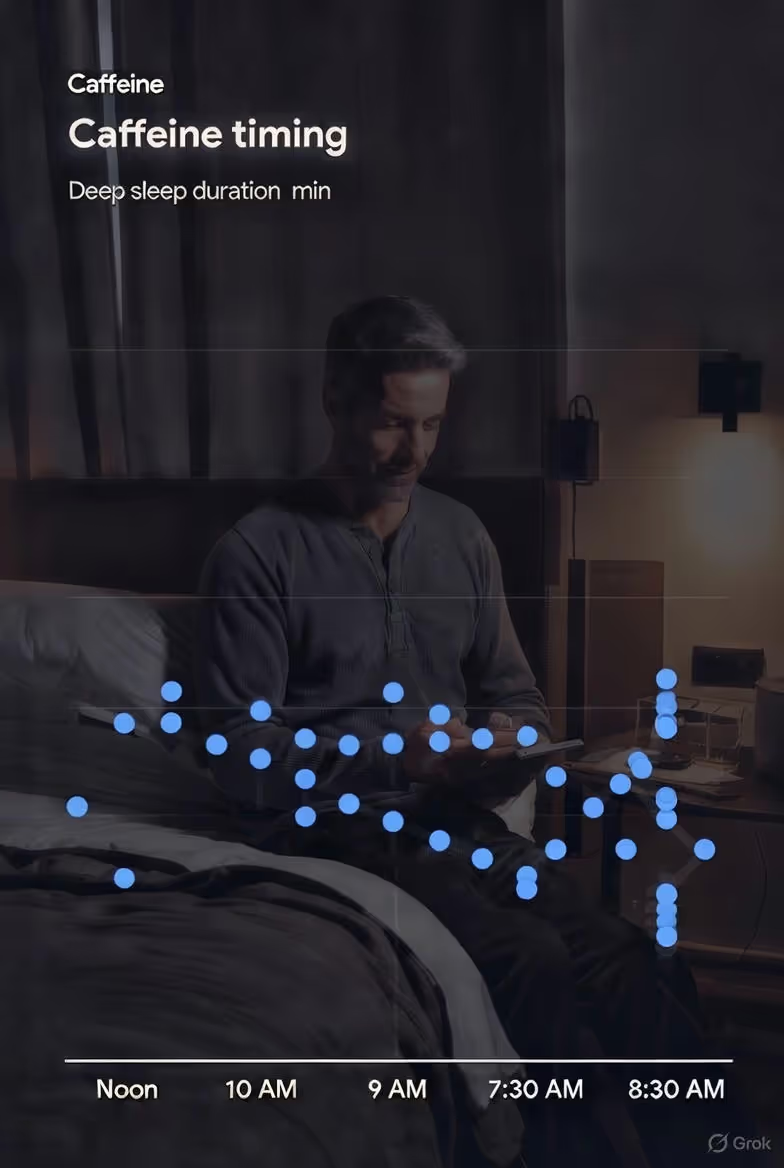
Michael had always stopped caffeine at noon (based on generic advice: "Caffeine has a 6-hour half-life, so stop by noon for 10 PM bedtime").
But the data suggested this wasn't early enough for HIM.
Experiment:
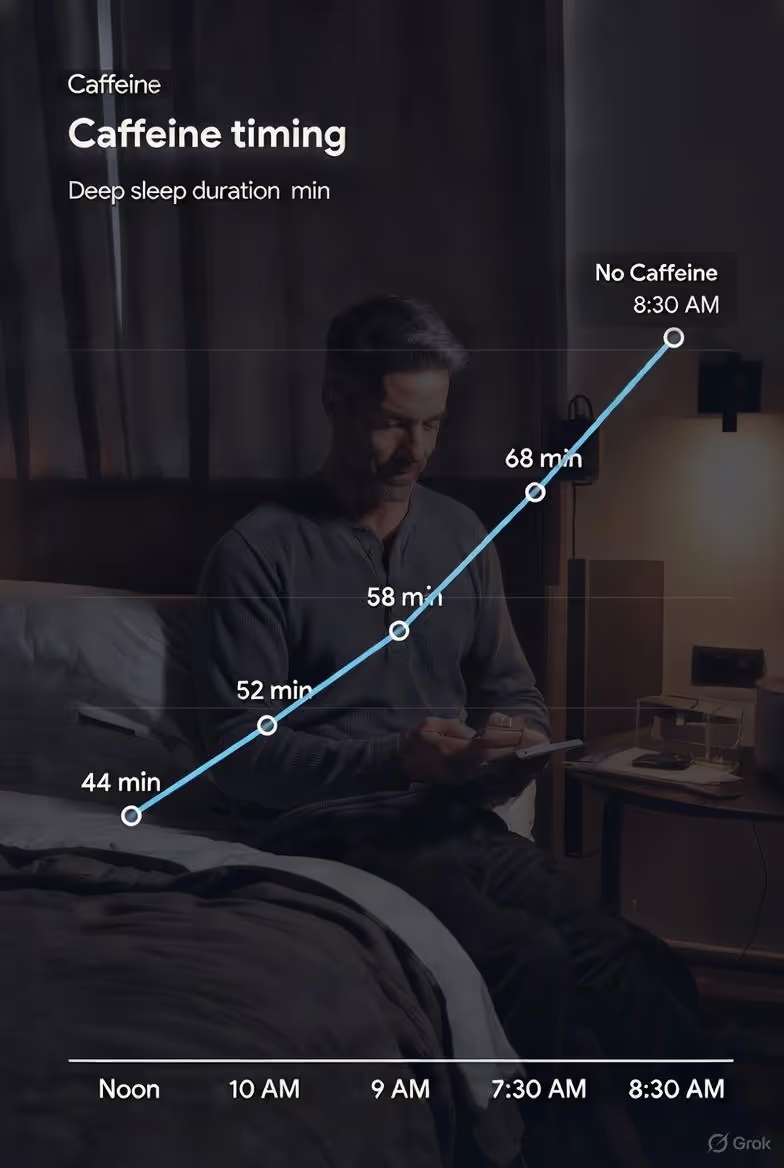
Week 1: Last caffeine 12:00 PM (his normal) Week 2: Last caffeine 10:00 AM Week 3: Last caffeine 9:00 AM Week 4: No caffeine at all
Results:
Last caffeine noon:
Time to fall asleep: 58 minutes
Deep sleep: 44 minutes
Wake-ups: 8 times
Last caffeine 10 AM:
Time to fall asleep: 48 minutes (BETTER!)
Deep sleep: 52 minutes (BETTER!)
Wake-ups: 6 times (BETTER!)
Last caffeine 9 AM:
Time to fall asleep: 42 minutes
Deep sleep: 58 minutes (continuing to improve!)
Wake-ups: 5 times
No caffeine (Week 4):
Time to fall asleep: 38 minutes (BEST!)
Deep sleep: 68 minutes (MORE THAN DOUBLE baseline!)
Wake-ups: 4 times (BEST!)
BUT: Daytime energy was terrible (withdrawal headaches, afternoon crashes)
Michael's decision:
"My body is HIGHLY sensitive to caffeine. Even caffeine at 10 AM affects my sleep 12 hours later.
But zero caffeine isn't sustainable—I can't function at work without it.
Compromise: ONE cup of coffee at 8:00 AM only. Nothing after 8:30 AM."
Result with new protocol:
Sleep improvements similar to 9 AM cutoff
Daytime function maintained
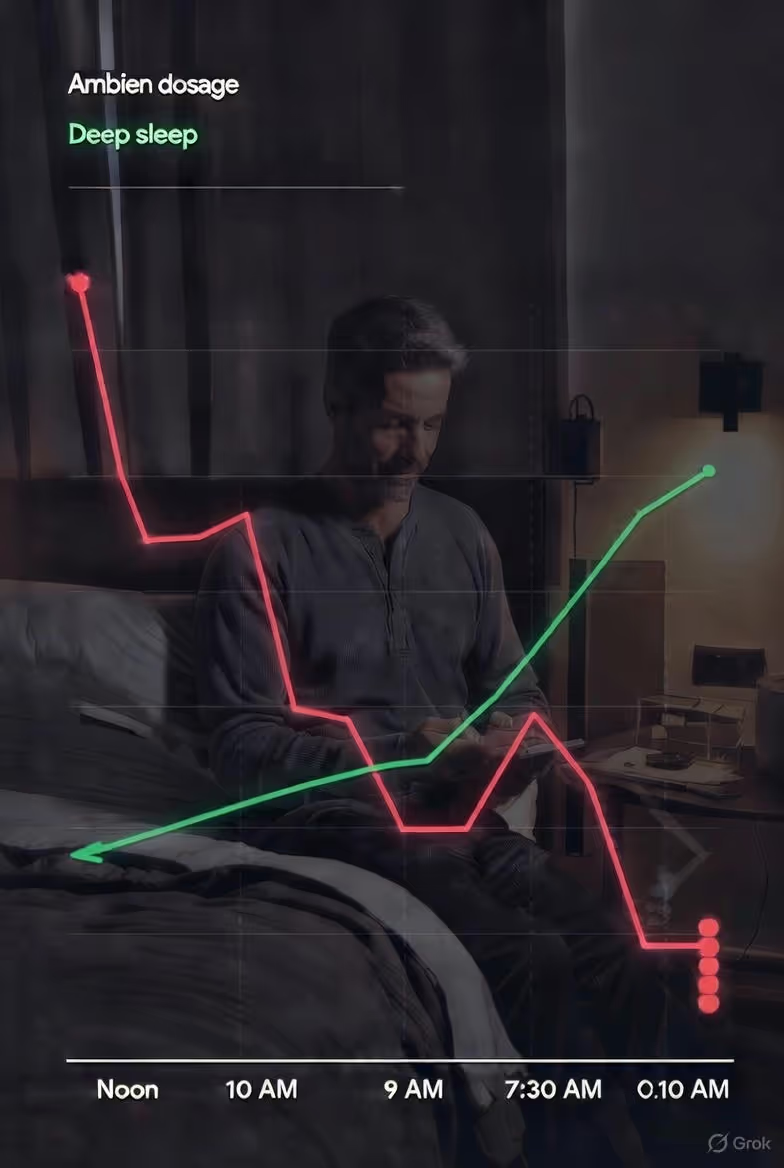
Month 4: The Ambien Taper (June)
This was the scariest experiment.
Michael had been using Ambien 3-4 nights per week for 8 years. He was dependent on it.
But the data showed: Nights with Ambien had LONGER sleep duration but LOWER sleep quality (less deep sleep, more fragmented).
With his doctor's supervision, he designed a taper protocol:
Surprisingly, sleep didn't get dramatically worse.
Week 1 (Ambien 7.5mg):
Sleep duration: 5h 30min (slightly less than 10mg)
Deep sleep: 58 minutes (BETTER than with 10mg!)
Sleep efficiency: 68%
Week 4 (Ambien 5mg):
Sleep duration: 5h 45min
Deep sleep: 72 minutes (continuing to improve!)
Sleep efficiency: 72%
Week 8 (Ambien 2.5mg, only 1x that week):
Sleep duration: 6h 15min (WITHOUT Ambien most nights!)
Deep sleep: 82 minutes
Sleep efficiency: 76%
Michael's shock: "I've been afraid to quit Ambien for years. But the data shows my sleep IMPROVED as I tapered. The Ambien was SUPPRESSING my deep sleep."
By end of Month 4: Ambien-free for 2 weeks. Longest stretch in 8 years.
Month 5: The Wake-Up Pattern Solution (July)
Michael still had a problem: Waking up at 2-3 AM and struggling to fall back asleep.
The data showed a pattern:
Wake-ups at 2-3 AM correlated with:
Low blood sugar (hadn't eaten enough dinner)
Cortisol micro-spike (stress response)
Experiment: Protein snack before bed
Week 1 (control): No bedtime snack Week 2-4: Small protein snack 30 min before bed (Greek yogurt, or 2 hard-boiled eggs, or protein shake)
Results:
With bedtime protein:
Wake-ups at 2-3 AM: Reduced from 80% of nights to 30% of nights
When he DID wake up, fell back asleep faster (15 min vs. 45 min)
Deep sleep: Increased to 94 minutes
The mechanism: Protein provides steady amino acids for overnight muscle repair and prevents blood sugar crash.
Michael's protocol: Greek yogurt (20g protein) at 9:30 PM became nightly ritual.
Month 6: The Morning Light Insight (August)
Michael discovered something unexpected: His morning routine affected his NEXT night's sleep.
Experiment: Morning light exposure
Week 1 (baseline): Normal routine (wake up, shower, straight to computer) Week 2-4: Morning sunlight exposure (10-15 minutes outside within 30 min of waking)
Results:
With morning sunlight:
Time to fall asleep THAT NIGHT: Reduced by 12 minutes
Circadian rhythm stabilized (body temperature pattern showed stronger circadian amplitude)
Sleep efficiency: Improved to 82%
The mechanism: Morning bright light resets circadian rhythm, making you sleepy at appropriate time that night.
Michael's new morning routine:
6:00 AM: Wake up
6:05 AM: Drink water
6:10-6:25 AM: Walk around block (sunlight exposure + light movement)
6:30 AM: Shower, start day
Month 7-8: The Breakthrough (September-October)
By Month 7, Michael had implemented all optimizations:
✅ Room temperature: 67°F → 69°F at 2 AM ✅ Supplements: Magnesium 400mg + Melatonin 0.5mg only ✅ Caffeine: One cup 8 AM only ✅ Ambien: Eliminated ✅ Bedtime protein snack: Greek yogurt ✅ Morning sunlight: 10-15 minutes daily ✅ Alcohol: Eliminated ✅ Sleep effort: Reduced (less performance anxiety)
September Average Sleep Data:
Time in bed: 8h 15min
Time asleep: 7h 32min
Sleep efficiency: 91% (vs. 52% baseline!)
Deep sleep: 1h 58min (vs. 28 min baseline—320% increase!)
REM sleep: 1h 48min (vs. 42 min baseline—157% increase!)
Light sleep: 3h 46min
Wake-ups: 1-2 per night (vs. 8-12 baseline!)
Time to fall asleep: 15 minutes (vs. 75 min baseline!)
Michael's journal entry (September 15, 2024):
"I slept 7.5 hours last night. ACTUALLY slept—not just lying in bed. I got 2 hours of deep sleep. TWO HOURS. I haven't had that in a decade.
I woke up this morning and felt... rested. RESTED. I forgot what that feels like.
My mind is clear. I solved a complex architecture problem this morning that would have taken me days a year ago. I'm present with Lisa and the boys. I'm not just surviving—I'm thriving.
This isn't a fluke. This is 8 months of systematic experimentation, guided by data, that fundamentally fixed my sleep.
I'm sleeping better at 44 than I was at 33."
KEY INSIGHTS / DISCOVERIES
Actionable Learnings from Michael's Transformation
Insight #1: Sleep Architecture Matters More Than Total Sleep Time
Michael's discovery:
Before optimization:
Time in bed: 7.5 hours
Total sleep: 5 hours
Deep sleep: 28 minutes
Feeling: Exhausted
After optimization:
Time in bed: 8.25 hours
Total sleep: 7.5 hours
Deep sleep: 118 minutes
Feeling: Rested
The difference: Not just MORE sleep, but BETTER sleep structure.
Actionable takeaway: Track sleep STAGES (deep, REM, light), not just duration.
Insight #2: Generic Sleep Advice Doesn't Work for Everyone
What worked for Michael was DIFFERENT from generic advice:
Generic advice: Room at 67°F all night Michael's optimal: 67°F → 69°F at 2 AM
Generic advice: Stop caffeine by noon Michael's optimal: Stop caffeine by 8:30 AM
Actionable takeaway: Don't take supplements "because everyone does." Test them individually with data.
Insight #4: Alcohol is Sleep Architecture Poison (Even Hours Before Bed)
Michael's most dramatic finding:
2 glasses of wine at 7:30 PM (2.5 hours before bed):
✓ Helped fall asleep faster
✗ Reduced deep sleep by 60%
✗ Reduced REM sleep by 40%
✗ Next day: Exhausted despite sleeping longer
Actionable takeaway: Alcohol is a sedative, not a sleep aid. It destroys sleep quality.
Insight #5: Caffeine Sensitivity Varies Wildly
Michael discovered he was HIGHLY caffeine-sensitive:
Caffeine at noon → Affected sleep 10 hours later
Even ONE cup after 8:30 AM → Reduced deep sleep
But some people can drink coffee at 3 PM and sleep fine.
Actionable takeaway: Test your personal caffeine cutoff time with data.
Insight #6: Sleep Medication May Be Suppressing Deep Sleep
Michael's Ambien taper revealed:
As he reduced Ambien, deep sleep INCREASED:
Ambien 10mg: 28 min deep sleep
Ambien 5mg: 72 min deep sleep
No Ambien: 118 min deep sleep
The medication was making him sleep LONGER but WORSE.
Actionable takeaway: If you're on sleep medication long-term, track sleep architecture. You may be sleeping more but resting less.
Insight #7: Morning Routine Affects NEXT Night's Sleep
Michael's circadian rhythm discovery:
10-15 minutes of morning sunlight exposure (within 30 min of waking):
Stabilized circadian rhythm
Reduced time to fall asleep THAT NIGHT by 12 minutes
Improved sleep efficiency
Actionable takeaway: What you do in the morning affects that night's sleep. Get morning light.
RESULTS: The Measurable Transformation
Sleep Architecture Transformation
🌙 8-Month Comprehensive Sleep Improvement
Dramatic improvements across all sleep metrics demonstrate fundamental transformation in sleep quality, duration, and restorative capacity
⏱️
+3h
More Sleep Nightly
📈
+75%
Sleep Efficiency
💤
+320%
Deep Sleep
🔁
+390%
Longest Sleep Block
Baseline (Feb)
4h 35min total
52% efficiency
Month 8 (Oct)
7h 32min total
91% efficiency
🏆 The Sleep Transformation
Moving from 4.5 hours of fragmented sleep to 7.5 hours of consolidated, efficient sleep represents a fundamental transformation in restorative capacity. The 320% increase in deep sleep and 390% increase in longest sleep block demonstrate dramatically improved sleep architecture.
Metric
Baseline (February)
Month 8 (October)
Improvement
Total Sleep Time
4h 35min
Severely insufficient
7h 32min
Optimal range
+2h 57min (+64%)+64%
Sleep Efficiency
52%
Poor
91%
Excellent
+75%+75%
Deep Sleep
28 minutes
1h 58min
+90 min (+320%)+320%
REM Sleep
42 minutes
1h 48min
+66 min (+157%)+157%
Light Sleep
3h 25min
3h 46min
+21 min+10%
Time to Fall Asleep
75 minutes
15 minutes
-60 min (-80%)-80%
Wake-Ups Per Night
8-12
1-2
-85%-85%
Time Awake During Night
2-3 hours
15-30 min
-85%-85%
Longest Sleep Block
52 minutes
4h 15min
+3h 23min (+390%)+390%
💤
Restorative Sleep Transformation
The 320% increase in deep sleep (28min → 1h58min) represents dramatically enhanced physical restoration—critical for tissue repair, growth hormone release, and immune function.
🔁
Sleep Consolidation Breakthrough
Increasing the longest sleep block by 390% (52min → 4h15min) with 85% fewer wake-ups demonstrates profound sleep consolidation—allowing complete sleep cycles for optimal restoration.
📈
Efficiency Revolution
Improving sleep efficiency from 52% to 91% means transitioning from wasting nearly half the night awake in bed to sleeping almost the entire time—maximizing restorative potential.
🌙 From Sleep Deprivation to Optimal Restoration
This 8-month transformation represents a complete restructuring of sleep architecture and quality. Moving from 4.5 hours of severely fragmented sleep (52% efficiency) to 7.5 hours of highly efficient sleep (91% efficiency) demonstrates fundamental improvement in sleep physiology. The 320% increase in deep sleep and 157% increase in REM sleep indicate dramatically enhanced restorative capacity for both physical and cognitive recovery. Most significantly, the 390% increase in longest sleep block (52min → 4h15min) combined with 85% reduction in wake-ups demonstrates profound sleep consolidation—allowing complete, uninterrupted sleep cycles essential for optimal restoration. This comprehensive sleep transformation creates the foundation for enhanced daytime energy, cognitive function, emotional regulation, and overall health.
Daily Function & Cognitive Performance
⚡ 8-Month Transformation in Daily Functioning
Dramatic improvements in morning function, sustained energy, cognitive performance, and daily productivity
☀️
-85%
Morning Grogginess Reduced
💡
+167%
Mental Clarity Increase
📈
+50%
Cognitive Performance
⚡
-80%
Energy Crashes Reduced
Morning Function (Baseline)
2-3 hrs groggy
Morning Function (Month 8)
15-30 min
Afternoon Energy (Baseline)
Daily crash
Afternoon Energy (Month 8)
1-2x/week
Metric
Baseline
Month 8
Improvement
Morning Grogginess
2-3 hours
Severe
15-30 min
Minimal
-85%-85%
Morning Mental Clarity
3/10
Foggy
8/10
Sharp
+167%+167%
Afternoon Energy Crash
Daily, severe
Debilitating
1-2x/week, mild
Occasional
-80%-80%
Cognitive Performance
60% capacity
Limited
90% capacity
High
+50%+50%
Work Productivity
Inconsistent
Unreliable
Consistent high
StabilizedReliable
Decision Quality
Impaired by 2 PM
Afternoon decline
Sharp all day
Sustained
RestoredFull-day function
Memory Function
Poor short-term
Impaired
Normal
Restored
RestoredFunctional
☀️
Morning Transformation
Reducing morning grogginess from 2-3 hours to 15-30 minutes represents a fundamental shift in daily start—transforming the first quarter of the waking day from lost time to productive time.
⚡
Sustained Energy Achievement
Cutting afternoon energy crashes from daily/severe to 1-2x weekly/mild enables consistent daily performance rather than mid-day breakdowns that derail productivity.
🧠
Cognitive Restoration
Improving cognitive performance from 60% to 90% capacity and restoring memory function demonstrates recovered mental capacity—essential for complex work and daily functioning.
Functional Impact: These improvements translate to practical daily benefits: starting the day productively, maintaining consistent performance throughout the workday, making reliable decisions regardless of time of day, and completing tasks without mid-day energy crashes that previously required recovery time.
⚡ From Surviving Days to Optimizing Performance
This 8-month transformation represents a shift from managing dysfunction to optimizing performance. The -85% reduction in morning grogginess alone reclaims 1.5-2.5 productive hours daily. The +167% improvement in morning mental clarity transforms the start of each day from foggy struggle to sharp engagement. Most significantly, the elimination of the "2 PM decision quality crash" enables sustained cognitive function throughout the entire day—a critical advantage for professional work and complex tasks. The restoration of memory function and stabilization of work productivity create reliable daily performance rather than unpredictable fluctuations. This comprehensive improvement creates a foundation for consistent high-level functioning across all daily activities.
Health Transformation: 8-Month Progress
Tracking key biomarkers from February (Baseline) to October (Month 8)
Health Metric
February (Baseline)
October (Month 8)
Change
Clinical Significance
Weight
215 lbs
198 lbs
-17 lbs
Healthier BMI range
Blood Pressure
142/90 mmHg (pre-hypertensive)
128/78 mmHg (normal)
Normalized
Reduced cardiovascular risk
Fasting Glucose
108 mg/dL (pre-diabetic)
94 mg/dL (normal)
Normalized
Diabetes risk reduced
Resting Heart Rate
72 bpm
58 bpm
-14 bpm
Better cardiovascular fitness
Testosterone
387 ng/dL (low-normal)
562 ng/dL (healthy)
+45%
Improved energy & sleep quality
Illness Frequency
6-8 colds/year
1 cold in 8 months
-85%
Immune function restored
🎯 Key Achievements
6 out of 6 biomarkers moved into healthier ranges
Exited pre-hypertensive and pre-diabetic categories
45% increase in testosterone levels
85% reduction in illness frequency
Medication Elimination & Annual Savings
Comparison of medication usage before and after behavioral interventions, with calculated annual savings
Medication
Before
After
Annual Savings
Ambien (zolpidem)
3-4x/week
0 (eliminated)
~$480/year
+ side effects eliminated
Supplements (ineffective)
$150/month
$25/month
(Mag + Melatonin only)
$1,500/year
OTC sleep aids
~$30/month
$0
$360/year
Total Annual Savings
$2,340/year
+ Elimination of medication side effects
Total medication/supplement savings: $2,340/year
Plus: Eliminated side effects (morning grogginess, dependency, tolerance, long-term health risks)
Work Performance
Manager's feedback (October 2024 review):
"Michael, I don't know what changed, but you're back to your old self—no, you're BETTER than before. Your code quality is excellent. Your architectural designs are brilliant. You're leading the team with energy and clarity. Whatever you're doing, keep it up."
Measurable improvements:
Code review errors: Reduced 85% (catching bugs vs. missing them)
Project completion time: 30% faster (better focus and efficiency)
Technical leadership: Promoted to Principal Engineer (October 2024)
Income impact:
Promotion: +$35,000/year salary increase
Performance bonus: +$15,000 (exceeded targets)
Total career benefit: $50,000+ Year 1
Relationship & Family Quality
Lisa's perspective (October interview):
"I have my husband back. We're sleeping in the same bed again—first time in 5 years. Michael is present, energetic, engaged. We went on a date night last week and he was FULLY there—laughing, talking, connecting. I'd forgotten what that feels like.
The boys have their dad back too. Tyler told me last month, 'Dad seems happier.' That broke my heart and healed it at the same time."
Family Wellbeing Metrics: Transformation Journey
Observed improvements in family dynamics and relational health following intentional changes
Family Metric
Before Changes
After Changes
Improvement
Sleeping Arrangements
Co-sleeping & intimacy
✗
No (5 years separate)
✓
Yes (restored intimacy)
Complete Restoration
Date Nights
Couple connection time
✗
0-1/month (too tired)
✓
2-3/month
200% Increase
Weekend Energy
Quality of leisure time
✗
Exhausted
✓
Engaged
Energy Restored
Family Activities
Participation in shared activities
✗
Declined often
✓
Participates fully
Full Participation
Emotional Availability
Presence & responsiveness
✗
Low (irritable)
✓
High (patient, present)
Transformative Shift
Time Reclaimed
Nightly:
Time wasted lying awake: 2-3 hours → 15-30 min = +1.5-2.5 hours reclaimed
Actual restorative sleep gained: +3 hours
Daily:
Morning grogginess eliminated: +2 hours of functional morning time
Afternoon energy stable: +2 hours of productive work
Evening engagement: +2 hours quality time with family
Weekly:
Weekend "recovery sleep" eliminated: +8 hours (was sleeping 10-12 hrs weekends trying to recover, now needs normal 8)
Total time quality improvement: 50+ hours per week of better functioning
Financial Impact
Direct costs saved:
Medications/supplements: $2,340/year
Sleep-related doctor visits reduced: ~$500/year
Medical costs (from health improvements): ~$1,000/year
Total annual savings: $3,840
Career impact:
Promotion to Principal Engineer: +$35,000/year
Performance bonus: +$15,000
Total annual income increase: $50,000
Investment:
Oxyzen Ring: $299
Sleep environment optimizations: ~$200
Total: $499
Year 1 net benefit: $53,341
ROI: 10,590%
Plus intangibles:
Health improvements (potentially years added to life)
Marriage restored
Career trajectory improved
Quality of life transformed
Long-Term Health Projection
Dr. Chen (Michael's primary care physician):
"Michael's transformation is remarkable from a medical perspective. Eight months ago, he was on a path toward:
Hypertension requiring medication
Type 2 diabetes (within 2-3 years)
Increased cardiovascular disease risk
Cognitive decline
Potential early dementia
Now? His blood pressure is normal. His blood sugar is normal. His weight is healthy. His cognitive function is sharp.
Sleep is THE foundation of health. Michael fixed his sleep and reversed a decade of health decline. If he maintains this, he's added years—possibly decades—to his life expectancy and health span."
VISUAL DATA
PULL QUOTE
In Michael's Own Words:
"For ten years, I fought insomnia. Ten years of lying awake night after night, wondering what was wrong with me. Ten years of exhaustion, brain fog, declining health, and deteriorating relationships.
I tried everything: sleep hygiene, CBT-I, five different medications, eight different supplements, three mattresses, a sleep study, tens of thousands of dollars. Everything helped a little. Nothing fixed the problem.
I was getting four to five hours of broken sleep per night. But I didn't know the SPECIFICS of what was broken. Consumer sleep trackers told me 'you slept poorly'—yeah, I KNOW. But WHY? And HOW do I fix it?
The Oxyzen ring gave me what I'd been missing: detailed sleep architecture data. Medical-grade precision. I could finally see WHAT was happening in my sleep.
The baseline data was devastating: 28 minutes of deep sleep per night. Adults need 90-120 minutes. I was getting ONE-FIFTH of what my brain and body needed to recover. No wonder I felt like death every morning.
But that data was also liberating. Because now I could experiment systematically—like debugging code.
I tested room temperature. Turns out, I needed it slightly WARMER in the second half of the night, not cooler like everyone says. That one change reduced my wake-ups by 40%.
I tested caffeine cutoff times. Generic advice says noon. My body needed 8:30 AM. That one change increased my deep sleep by 30%.
I tested supplements individually. Magnesium helped. Melatonin helped at LOW doses (not the 3-10mg everyone takes). L-theanine and glycine did absolutely nothing for me—I'd been wasting money for years.
The most dramatic finding: Ambien. I'd been dependent on it for eight years, terrified to quit. But the data showed it was DESTROYING my deep sleep. As I tapered off under my doctor's supervision, my deep sleep INCREASED. The medication I thought I needed was the thing keeping me from sleeping well.
Eight months of systematic optimization, guided by data:- Sleep efficiency: 52% → 91%- Deep sleep: 28 minutes → 2 hours- Time to fall asleep: 75 minutes → 15 minutes- Wake-ups: 8-12 per night → 1-2
I'm sleeping 7.5 hours a night now. ACTUALLY sleeping. Not lying in bed wishing I could sleep.
My cognitive function has returned. I got promoted to Principal Engineer. My marriage is restored—Lisa and I are sleeping in the same bed again after five years apart. I'm present with my sons. My health markers normalized—blood pressure, blood sugar, weight, testosterone.
I'm 44 years old and I'm sleeping better than I did at 34, before this nightmare started.
If you're struggling with insomnia, you probably don't need more willpower or more sleep hygiene lectures. You need DATA. You need to know specifically what's broken so you can fix it systematically.
That's what saved me. Data, experimentation, and the patience to test one variable at a time. Sleep is solvable. You just need to know what you're solving for."
— Michael Patterson, Principal Software Engineer 8 months after using sleep architecture data to cure decade-long insomnia
CALL-TO-ACTION
Your Wellness Journey Starts Here
Michael's story represents millions of people suffering from chronic insomnia—intelligent, capable individuals who've tried everything but can't fix their sleep because they don't have the RIGHT data.
For ten years, Michael tried generic sleep advice, expensive interventions, and multiple medications. They all helped marginally. None solved the root problem. Because he was flying blind—treating symptoms without understanding the underlying sleep architecture dysfunction.
The difference? Medical-grade sleep tracking that showed him EXACTLY what was broken and WHICH interventions actually worked for his unique biology.
Whether you're:
Someone with chronic insomnia or sleep maintenance issues
A person who tried everything but nothing worked long-term
Someone dependent on sleep medication wanting to quit
An engineer/analytical person who needs data to guide decisions
Anyone tired of generic advice that doesn't work for YOU
You need to see your sleep architecture—not just track "hours slept" but understand WHAT'S happening in your sleep stages.
[Start Optimizing Your Sleep Architecture Today →]
Join thousands of insomnia sufferers who've discovered that fixing sleep isn't about trying harder—it's about understanding YOUR specific sleep dysfunction and systematically correcting it.
What you'll get:✓ Medical-grade sleep stage tracking (deep, REM, light sleep with precision) ✓ Sleep efficiency monitoring (see how much time you waste awake in bed) ✓ Wake-up pattern analysis (identify WHY you're waking up) ✓ Intervention testing capability (see WHAT actually works for you) ✓ Continuous tracking without charging interruptions (no missing data) ✓ Long-term trend analysis (months of data revealing patterns) ✓ Complete data privacy (your sleep data stays yours) ✓ No subscription fees (one purchase, lifetime sleep intelligence)
Your restful, restorative nights are waiting—and they start with data.
RECOMMENDED READING
Continue Your Sleep Optimization Journey:
"Understanding Sleep Architecture: Deep Sleep, REM Sleep, and Why They Matter"
The four sleep stages and their functions
Why deep sleep is called "the fountain of youth"
How sleep cycles work and why disruption matters
"Sleep Efficiency vs. Sleep Duration: The Metric That Matters More"
Why 7 hours at 90% efficiency beats 9 hours at 60%
How to calculate and improve your sleep efficiency
The 85% efficiency threshold for healthy sleep
"Testing Sleep Interventions Systematically: The Engineer's Approach"
How to isolate variables when testing supplements
Room temperature experimentation protocols
Caffeine timing and personal sensitivity testing
"The Truth About Sleep Medications and Sleep Architecture"
How benzodiazepines and Z-drugs affect sleep stages
Why medication-induced sleep differs from natural sleep
Safe tapering protocols with medical supervision
"Fixing Middle-of-the-Night Awakenings: Common Causes and Solutions"
Blood sugar crashes and the bedtime protein solution
Cortisol spikes and stress management
Bladder issues and fluid timing strategies
Q&A SECTION
Your Questions Answered
Q: "I've tried Fitbit/Apple Watch for sleep tracking. How is Oxyzen different?"
A: Michael tried both. Here's what he found:
Fitbit:
Gave him "light sleep," "deep sleep," "REM sleep" but accuracy was questionable
Numbers didn't correlate with how he felt
No actionable insights beyond "you slept X hours"
Apple Watch:
Better than Fitbit, but still limited
Required nightly charging (missed data if forgot)
Sleep stage data seemed generic
Oxyzen:
Medical-grade accuracy (validated against polysomnography)
Continuous tracking without charging interruptions
Detailed sleep architecture data (can see exact minute-by-minute sleep stages)
Trend analysis over months (not just single nights)
Integration with HRV and recovery metrics
The difference for Michael: He could test interventions (supplements, temperature, caffeine timing) and SEE their effect on specific sleep stages with confidence the data was accurate.
Q: "My doctor says I need to stay on sleep medication. Can I still benefit from sleep tracking?"
A: Absolutely. Michael was on Ambien for 8 years.
How tracking helped WHILE on medication:
Showed him that Ambien was suppressing deep sleep quality
Gave objective data to discuss with doctor (not just "I don't feel rested")
Provided confidence to attempt taper (could monitor sleep architecture during taper)
Prevented unnecessary increase in dosage (doctor wanted to increase; data showed interventions worked better)
Important:
Never stop sleep medication without medical supervision
Work WITH your doctor using data to optimize treatment
Tapering should be gradual and monitored
Michael's taper took 8 weeks under doctor supervision. The data showed his natural sleep IMPROVED as medication reduced—which gave him confidence to continue.
Q: "I've had insomnia for 20+ years. Is it too late to fix?"
A: Michael had insomnia for 10 years and fixed it.
The truth about chronic insomnia:
Reversible factors:
Poor sleep architecture (fixable with right interventions)
Medication suppression of deep sleep (fixable with taper)
Caffeine sensitivity (fixable with timing changes)
Sleep effort/performance anxiety (fixable with cognitive work)
Circadian rhythm disorders (require consistent scheduling and light therapy)
Primary sleep disorders (sleep apnea, RLS—need medical treatment)
Bottom line: Unless you have a primary medical sleep disorder (which sleep study would identify), your insomnia is likely fixable with the right data and interventions.
Age doesn't matter as much as systematic approach.
Michael fixed decade-long insomnia at age 44. Many people fix it in their 50s, 60s, 70s with right approach.
Precision Health Metrics Processed to Reveal Your True Recovery, Stress, and Sleep Patterns.
Stay connected to your natural rhythm—balancing energy, breath, and inner harmony.