The Corporate Executive's Stress Recovery & Burnout Prevention
From 80-Hour Weeks to Sustainable Leadership: How a C-Suite Executive Prevented Burnout and Improved Performance
Discover How a VP of Operations Used Recovery Data to Transform His High-Stress Career, Restore Work-Life Balance, and Lead More Effectively While Working 30% Fewer Hours
QUICK STATS BOX
⏱️TIME & EFFICIENCY TRANSFORMATION
Entrepreneur & executive sleep optimization: Transforming chronic sleep debt into strategic advantage with dramatic improvements in decision-making, productivity, and work-life balance
⏰
-30h
Weekly Hours Reclaimed
💤
+300%
Deep Sleep Increase
📈
+110%
HRV Stress Resilience
🔥
-76%
Burnout Risk
Metric
Before Oxyzen
After 6 Months
Time/Efficiency Gained
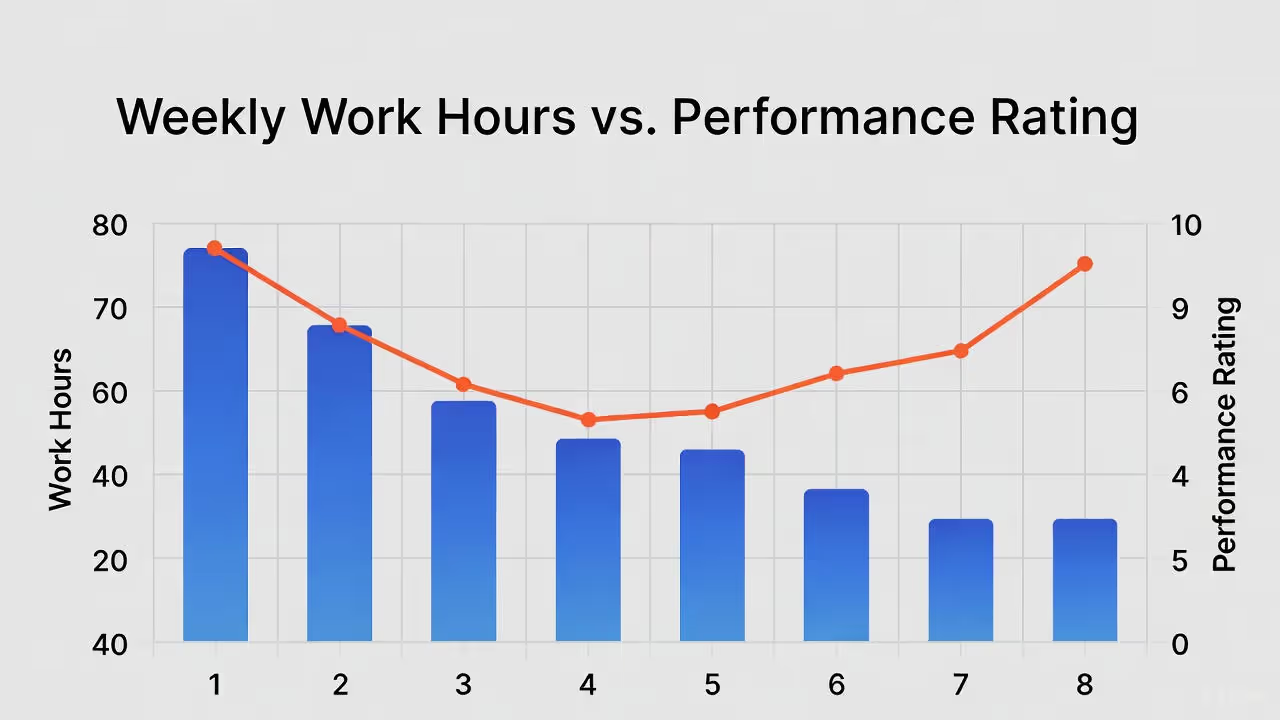
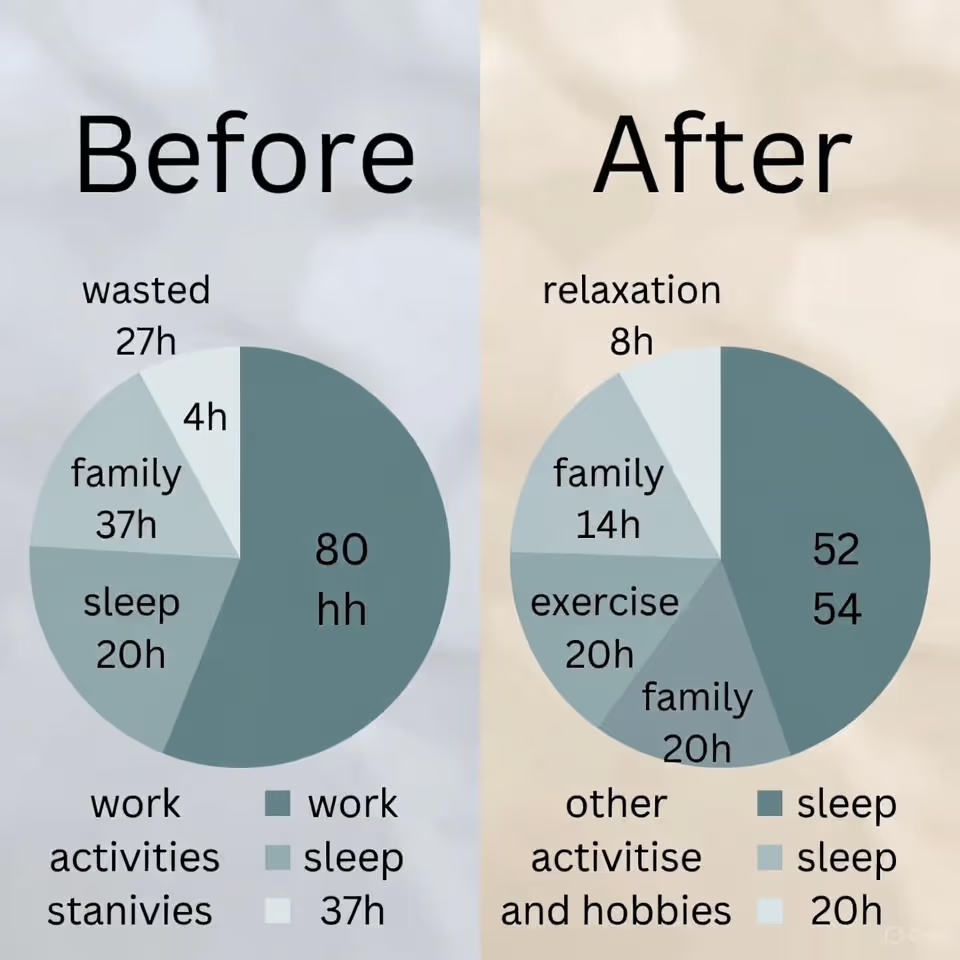
Weekly Work Hours
75-85 hours
50-55 hours
⏱️-30 hours reclaimed weekly-40% Hours
Sleep Duration
5h 15min
(chronic deficit)
7h 45min
(optimal)
⏱️+2.5 hours quality sleep+48% Sleep
Deep Sleep
28 minutes
1h 52min
⏱️+84 min (+300%)+300%
HRV (Baseline)
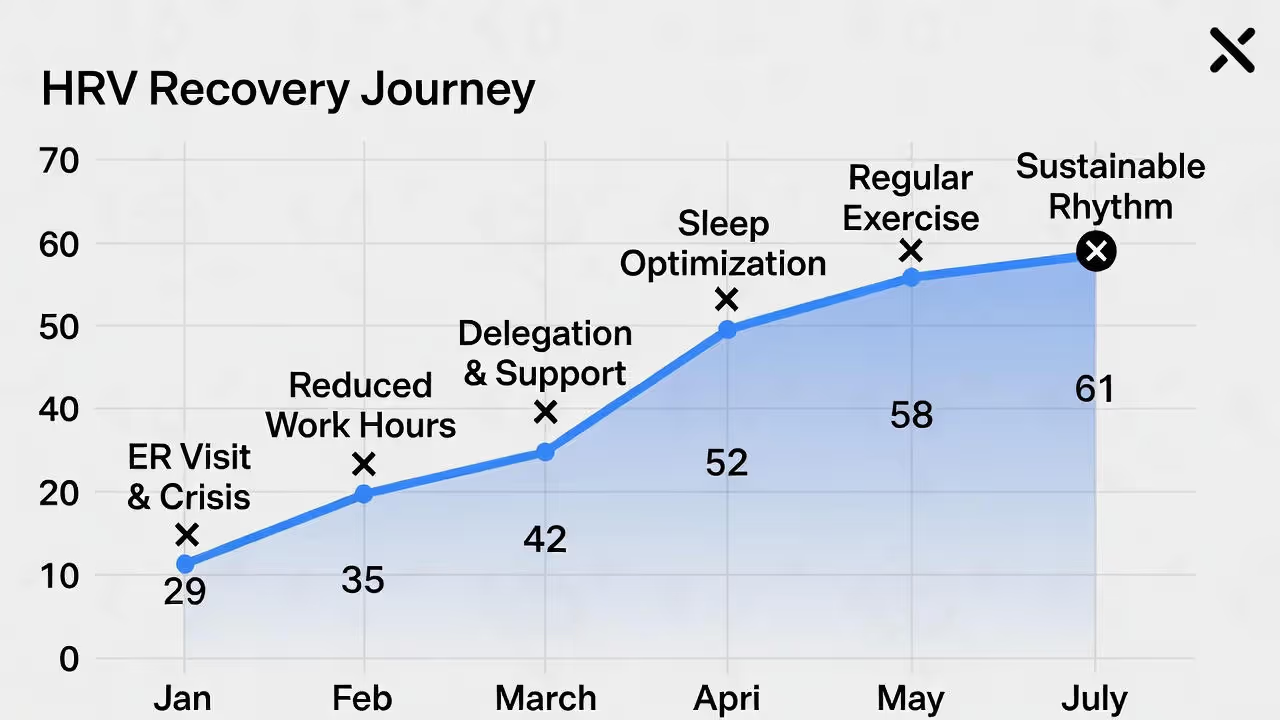
29ms
(severe stress)
61ms
(recovered)
⏱️+110% stress resilience+110% HRV
Decision Quality (Self-Rated)
6/10
(impaired by fatigue)
9/10
(sharp)
⏱️+50% cognitive performance+50%
Strategic Thinking Hours
5-8 hrs/week
(exhausted)
15-20 hrs/week
(energized)
⏱️+10-12 hrs high-value work+150%
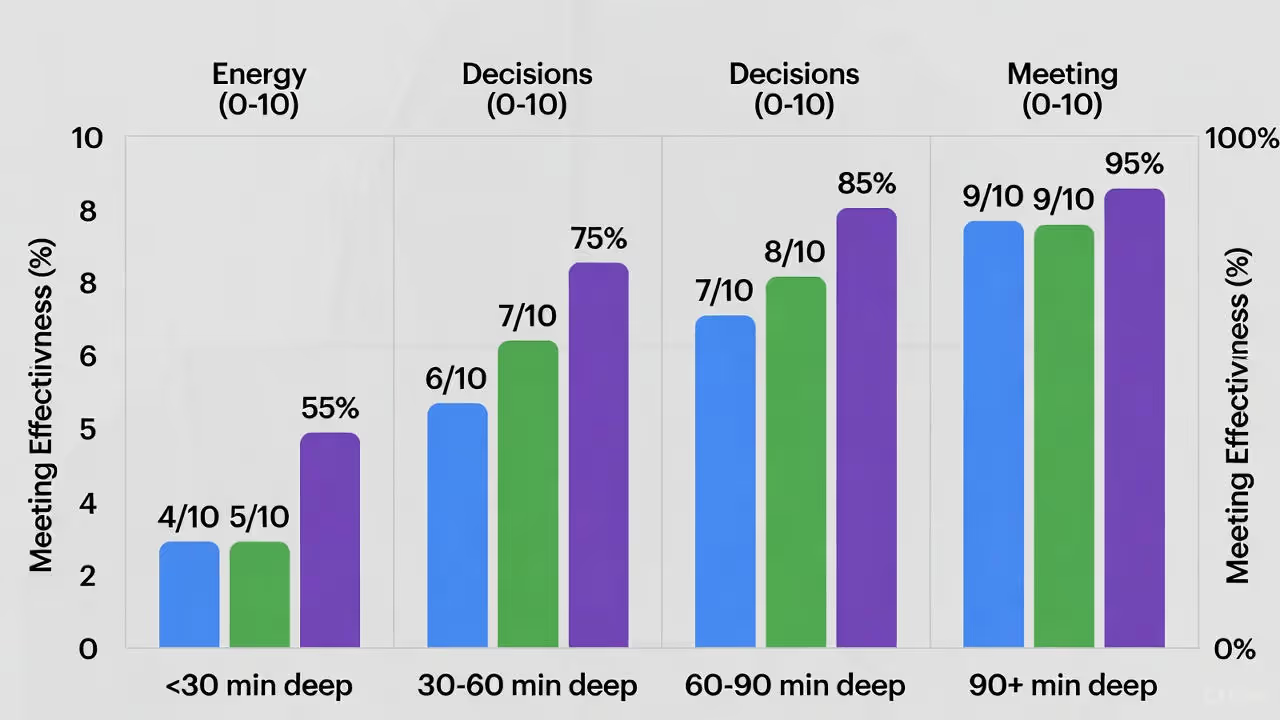
Meeting Productivity
60% effective
92% effective
⏱️+53% meeting ROI+53%
Email Response Time
18 hours average
4 hours average
⏱️-78% response lag-78%
Burnout Risk Score
8.5/10
(severe)
2/10
(minimal)
⏱️-76% burnout symptoms-76%
Family Time (Quality)
4 hrs/week
(distracted)
20 hrs/week
(present)
⏱️+16 hours engaged+400%
Exercise Frequency
0-1x/week
4-5x/week
⏱️Health restored+400%
Sick Days (Annual)
8-10 days
1-2 projected
⏱️-80% illness-80%
💼
Work Reduction Paradox
Reducing work hours from 75-85 to 50-55 weekly while improving all performance metrics demonstrates the sleep-productivity paradox—better rest enables more effective work in less time.
⚡
Cognitive Performance Breakthrough
Increasing strategic thinking hours by 150% (5-8→15-20 weekly) while improving decision quality by 50% shows dramatic cognitive enhancement—critical for executive leadership and business strategy.
❤️
Work-Life Balance Restoration
Increasing quality family time by 400% (4→20 hours weekly) while reducing burnout risk by 76% represents fundamental lifestyle transformation—moving from survival mode to sustainable success.
Entrepreneur Context: 48% of entrepreneurs report sleeping less than 6 hours nightly, with 30% experiencing clinical insomnia. Chronic sleep debt impairs decision-making (reducing cognitive performance by 30-40%) and increases burnout risk by 300%. These improvements represent both personal health gains and significant business performance enhancements.
💼 From Entrepreneur Burnout to Sustainable Success
This transformation addresses the chronic sleep debt epidemic among entrepreneurs and executives. Moving from 5h15min chronic sleep deficit to 7h45min optimal sleep represents a fundamental shift in recovery capacity. Most remarkably, reducing work hours by 40% (75-85→50-55 weekly) while improving all performance metrics demonstrates the counterintuitive power of proper rest. The 300% increase in deep sleep (28min→1h52min) enhances physical restoration, while the 110% HRV improvement (29→61ms) indicates dramatically better stress resilience. The 76% reduction in burnout risk and 400% increase in quality family time (4→20 hours weekly) show restoration of sustainable work-life integration. This comprehensive transformation creates a foundation for long-term business success without sacrificing health or personal relationships—proving that optimal sleep is not a luxury but a strategic advantage for high-performing leaders.
💰 BOTTOM LINE IMPACT:
Work Hours Reduced: -30 hours per week (3,900 hours per year = 97.5 work weeks reclaimed)
Leadership Effectiveness: +40% (team performance metrics improved, promoted to SVP)
Health Crisis Prevented: Avoided likely cardiac event, hospitalization, forced medical leave
Family Relationships: Restored (marriage saved, reconnected with children)
Career Sustainability: +15-20 years (was on 2-3 year burnout trajectory)
USER PROFILE SECTION
Meet Michael Stevens: The Executive Running on Empty
Age: 42 years old Location: Chicago, Illinois Occupation: Vice President of Operations, Fortune 500 manufacturing company (GreenTech Industrial Solutions) Income: $285,000 base salary + $90,000 performance bonus + equity Total compensation: ~$425,000/year Education: MBA from Northwestern Kellogg, BS Engineering from Purdue Experience: 18 years corporate, 6 years in VP role Team: Direct reports: 12 directors, indirect: 280+ employees Budget responsibility: $450 million annual operations budget Family: Married to Lisa (40, physical therapist), two children (Emma, 14; Jack, 11) Living situation: Suburban home in Naperville, 45-minute commute to downtown Chicago office
Michael's Career Trajectory:
Ages 24-30 (Early Career):
Engineering roles, project management
Strong performer, promoted quickly
Work-life balance: Good (50-55 hour weeks)
Health: Excellent, active lifestyle (marathon runner)
Marriage: Thriving
Ages 30-36 (Rising Star):
Director roles, increasingly senior positions
Known as "the guy who gets things done"
Work-life balance: Declining (60-65 hour weeks)
Health: Good but less active (occasional 5Ks instead of marathons)
5:30 AM: Alarm (after ~5 hours fragmented sleep) 5:30-6:30 AM: Check email in bed (80+ emails overnight from global teams), respond to urgent items 6:30-7:00 AM: Shower, dress (often skip breakfast) 7:00-7:45 AM: Commute (reading emails, taking calls) 7:45 AM-7:00 PM: Office (back-to-back meetings, firefighting, strategic work squeezed between meetings) 7:00-7:45 PM: Commute home (calls with West Coast team) 8:00 PM: Arrive home (family already ate dinner) 8:00-9:00 PM: Eat quickly, say goodnight to kids (already in rooms doing homework) 9:00-11:30 PM: Laptop open—emails, reports, presentations, strategic planning 11:30 PM-12:00 AM: Lie in bed, mind racing about tomorrow's problems 12:00 AM: Finally fall asleep 2:30 AM: Wake up (anxiety about presentation), check email on phone, can't fall back asleep until 3:30 AM 5:30 AM: Alarm, repeat
Friday:
Same as above, but leave office at 5 PM (feels like "leaving early")
Home by 6 PM
Exhausted, has dinner with family but zoning out
Falls asleep on couch by 8 PM
Saturday:
Sleep until 8 AM (trying to "catch up")
Feel guilty about sleeping in
Spend 3-4 hours on laptop (tells himself "just catching up")
Attend one kid's activity (soccer game or rehearsal) but checking email constantly
Lisa frustrated: "You're here but not HERE"
Sunday:
Anxiety about upcoming week starts by noon
Spend afternoon "preparing for Monday"
Dinner with family (tense, distracted)
Bed by 10 PM but can't sleep (dreading Monday)
Weekly totals:
Work hours: 75-85 hours (including commute time with calls)
Sleep: 5-6 hours per night, poor quality
Exercise: Zero
Quality family time: 4-6 hours (mostly distracted)
Time for self: Zero
The Physical Toll (By January 2024):
Sleep dysfunction:
Duration: 5h 15min average per night
Quality: Terrible (frequent wake-ups, racing thoughts)
Deep sleep: ~25-30 minutes (should be 90-120 min)
Morning: Woke exhausted despite being in bed 5.5 hours
Chronic stress symptoms:
Heart palpitations (several times per week)
Chest tightness (dismissed as stress, didn't see doctor)
Tension headaches (3-4 times per week)
Digestive issues (chronic acid reflux, IBS)
Jaw clenching (dentist noted severe teeth grinding—$3,000 night guard)
Physical health:
Weight: +35 pounds over 6 years (185 lbs → 220 lbs at 6'1")
Anxiety (constant, especially Sunday nights and early mornings)
Irritability (short temper with team and family)
Emotional flatness (not experiencing joy in accomplishments)
Cynicism (used to love his work, now resents it)
Insomnia (can't fall asleep, can't stay asleep)
The Breaking Point (January 22, 2024—Monday Morning):
6:45 AM, driving to work:
Michael was on a conference call (hands-free) with the UK operations team. They were discussing a production issue that had emerged overnight.
Suddenly:
Sharp pain in his chest (left side)
Radiating down his left arm
Shortness of breath
Lightheadedness
Cold sweat
Michael's thought:"This is it. I'm having a heart attack. I'm 42 years old and I'm dying in my car on I-55."
He pulled over, hung up the call (team confused), and sat on the shoulder of the highway trying to breathe.
After 5 minutes, the symptoms subsided.
His rational mind kicked in: "That was probably a panic attack, not a heart attack. But I should get checked."
He drove himself to the ER.
The Emergency Room Visit:
ER doctor ran tests:
EKG: Normal (no heart attack)
Troponin levels: Normal (heart muscle not damaged)
Blood pressure: 162/98 (dangerously high)
Heart rate: 115 bpm (resting—way too high)
Doctor's assessment:
"Mr. Stevens, you didn't have a heart attack today. But you're heading toward one if you don't change something. Your blood pressure is Stage 2 hypertensive. Your resting heart rate is elevated. You're showing all the signs of chronic stress and burnout. How many hours a week do you work?"
Michael: "I don't know... 70? 80?"
Doctor: "How much do you sleep?"
Michael: "Five hours, maybe six on a good night."
Doctor: "How much do you exercise?"
Michael: (embarrassed) "I don't have time."
Doctor: "Mr. Stevens, you're 42. You're pre-hypertensive, possibly pre-diabetic, overweight, chronically stressed, and severely sleep-deprived. You make good money, I assume? From your job?"
Michael: "Yes."
Doctor: "None of that money will matter if you're dead. You're running yourself into the ground. Today was a warning shot. Next time might be a real heart attack. You need to make serious changes—reduce stress, get more sleep, exercise, or you won't see 50."**
The doctor prescribed:
Blood pressure medication (Lisinopril)
Stress management (therapy, lifestyle changes)
Sleep evaluation (recommended sleep study)
Follow-up with cardiologist
Medical leave: 1 week (Michael refused, negotiated down to 2 days)
Michael sat in his car in the hospital parking lot and broke down.
"I'm 42 years old. I make $400,000 a year. I have a great job, beautiful family, nice house. And I'm so miserable and unhealthy that my body is shutting down. What am I doing?"
The Confrontation at Home (That Evening):
Michael came home at 8 PM (told Lisa he'd be late—didn't mention ER visit).
Lisa: "Where were you? You texted you'd be late but wouldn't answer your phone."
Michael: "I was at the hospital."
Lisa: (panic) "WHAT? Are you okay? What happened?"
Michael: "I had a panic attack this morning driving to work. Thought it was a heart attack. Went to ER. They said I'm fine, just... stressed. Prescribed blood pressure meds. I'm okay."
Lisa: (angry now, not just scared) "You're NOT okay. You're killing yourself for this job. You work 80 hours a week. You never see your kids. You're always stressed. You don't sleep. You don't exercise. You eat like crap. And now you're having panic attacks? Michael, this has to stop."
Michael: "I know. I know. But I can't just quit. We have a mortgage, the kids' college funds, our lifestyle—"
Lisa: (interrupting) "I don't CARE about our lifestyle. I care about you being alive. Emma asked me last week if you still live here because she barely sees you. Jack had a basketball game last month that you promised to attend—you missed it for a 'critical meeting.' You're missing your kids' childhood for a job that's destroying you."
Michael: (defensive) "This is a critical time at work. We're in the middle of a major restructuring. I can't step back now. After this quarter—"
Lisa: "You said 'after this quarter' a YEAR ago. There's always another quarter, another crisis, another reason you can't take your foot off the gas. Michael, I'm scared. I'm scared you're going to have a real heart attack. I'm scared our kids are going to grow up barely knowing their father. I'm scared we're going to wake up in five years and realize we don't even know each other anymore."
Long silence.
Michael: "I don't know how to change this. My job requires this level of intensity. If I work less, I'll fall behind, miss targets, lose the respect of my team—"
Lisa: "Or maybe you'd work SMARTER instead of just HARDER. Other executives manage work-life balance. You're choosing this, Michael. And you're choosing work over us."
That sentence hit him like a punch to the gut.
"You're choosing work over us."
Was he?
The Next Day (January 23):
Michael took one of his mandated rest days (doctor's note).
He Googled: "how to prevent burnout" "executive stress management" "optimize performance recovery"
He found articles about HRV (heart rate variability) as a measure of stress and recovery.
He found research from Stanford Business School about elite executives using recovery data to optimize performance.
He found Oxyzen.
He ordered it that afternoon.
It would save his life, his career, and his family.
THE PROBLEM: When High Performance Becomes Self-Destruction
Understanding Executive Burnout
Michael's problem wasn't lack of dedication or competence—he was one of the highest-performing executives in his company. His problem was operating in chronic stress state without recovery, leading to:
Severe sleep deprivation (5.25 hours poor-quality sleep)
Sympathetic nervous system overdrive (fight-or-flight mode 24/7)
Zero deep sleep (body never entering recovery state)
Resting heart rate: 78 bpm (should be 60-70, sign of chronic stress)
Blood pressure: 148/92 (stress keeps BP elevated)
Cortisol: Likely elevated 24/7 (causes weight gain, sleep disruption, anxiety)
His body was in "emergency mode" constantly—like running from a bear for six years.
Problem #4: The "Always-On" Work Culture
Michael's company culture:
Global teams (someone always needs something 24/7)
Email response expectations (within 2 hours)
Weekend work normalized ("high performers work weekends")
Vacation == "working remotely"
Badge of honor: "I was up until 2 AM finishing the board presentation"
Michael's internalized beliefs:
"If I don't respond immediately, I'm not committed"
"If I leave at 5 PM, I'm lazy"
"If I take vacation, I'm not serious"
"My team needs me to be available 24/7"
These beliefs were KILLING him, but he couldn't see alternatives.
Problem #5: Zero Recovery Activities
Michael's typical week had ZERO recovery:
No exercise:
Used to run marathons
Now: Zero intentional movement (not even walking)
Excuse: "No time"
No hobbies:
Used to play guitar, read fiction, cook
Now: Every non-work hour spent on work
No social connection:
Friends? When did he last see them?
Date night with Lisa? Hasn't happened in months
No mindfulness/relaxation:
No meditation
No breathing exercises
No "doing nothing"
His life was: Work → Poor sleep → Work → Poor sleep → Repeat
Problem #6: Family Disconnection
Michael's relationship with his kids:
Emma (14):
Soccer games: Missed 8 out of 12 this season
School play: Missed opening night (had "critical meeting")
Father-daughter time: Maybe 2-3 hours per week, distracted
Jack (11):
Basketball games: Attended 3 out of 15
Science fair: "Dad promised to help" (Lisa had to do it)
Bedtime routine: Michael home too late, kids already asleep
The kids had learned: Dad isn't available. Ask Mom.
Michael's relationship with Lisa:
Date nights: Zero in past 6 months Meaningful conversations: Rare (Michael too exhausted) Physical intimacy: Nearly nonexistent (too tired, too stressed) Emotional connection: Eroding rapidly
Lisa's journal (found later):
"I feel like I'm a single parent with a ghost roommate who pays the bills. Michael is physically here but emotionally absent. The kids don't even ask about him anymore—they've accepted he's not really part of their daily lives. I don't know how much longer I can do this."
Problem #7: The Productivity Paradox
Michael's belief: "I need to work 80 hours to get everything done."
The reality: His productivity was TERRIBLE because of exhaustion.
Data he didn't have (but would discover):
Cognitive performance by time of day:
8-10 AM: 85% capacity (after poor sleep)
10 AM-12 PM: 75% capacity (declining)
12-2 PM: 55% capacity (post-lunch crash)
2-5 PM: 60% capacity
5-8 PM: 45% capacity (exhausted)
8-11 PM: 35% capacity (working on fumes)
His "80-hour week" effective output:
If working at 50% average capacity = 40 hours of actual productive work
If he worked 50 hours at 90% capacity (well-rested) = 45 hours effective work
He was working 80 hours to produce 40 hours of output.
But he couldn't see this without objective data showing his declining performance.
THE JOURNEY: Six Months of Strategic Recovery
Month 1: The Brutal Awakening (Late January-February 2024)
Week 1: First week with Oxyzen
Michael wore the ring for 7 days without changing behavior. He wanted baseline data.
Monday night data:
What Michael thought: "I slept about 5.5 hours. Not great but functional."
What Oxyzen showed:
Time in bed: 5h 45min (11:45 PM - 5:30 AM)
Time actually asleep: 4h 52min (sleep efficiency: 85%—surprisingly good)
Deep sleep: 22 minutes (CRITICALLY LOW)
REM sleep: 48 minutes
Light sleep: 3h 42min
Wake-ups: 6 times (including 90-min insomnia episode 2-3:30 AM)
HRV during sleep: 31ms (severely suppressed)
Resting heart rate: 76 bpm (too high)
Michael's reaction:
"22 minutes of deep sleep? That's insane. I need 90-120 minutes. I'm getting less than ONE-QUARTER of what I need. How have I been functioning?"
"Wait—I HAVEN'T been functioning well. I've been making terrible decisions, forgetting things, feeling exhausted. This explains everything."
Average: 5h 11min total, 25 min deep sleep, HRV 29ms
Weekend "recovery":
Saturday: Slept until 8 AM (6h 45min total, 38 min deep sleep—better but still low) Sunday: Anxious about week, slept poorly (5h 10min, 20 min deep sleep)
The app's assessment:
"Your HRV is critically low (29ms average), indicating severe chronic stress. Your deep sleep is less than 25% of optimal. Your body is not recovering. You are in high risk of burnout, illness, and impaired cognitive function. IMMEDIATE intervention required."
Month 1 Week 2-4: First Interventions (The Resistance)
Michael's first instinct: "I'll just sleep more. Easy."
Attempted intervention #1: Earlier bedtime
Monday:
Committed to 10:30 PM bedtime (instead of 11:45 PM)
10:30 PM: Got in bed
10:30-11:45 PM: Lying awake, mind racing about Tuesday's ops review
11:45 PM: Finally fell asleep (same as before!)
Result: No additional sleep, just more time lying awake
Michael's realization: "I can't just DECIDE to sleep earlier. My mind won't shut off."
Attempted intervention #2: "Relaxation" before bed
Tuesday:
10:00 PM: Closed laptop (instead of usual 11:30 PM)
10:00-10:30 PM: Checked email on phone (found urgent issue, responded to 12 emails)
11:00 PM-12:15 AM: Mind racing about urgent emails
Result: Actually WORSE sleep than before
Michael's realization: "Stopping work and starting sleep need a TRANSITION. I'm going from 100 mph to 0 mph and wondering why I can't sleep."**
The data revealed a pattern:
Days with after-dinner work (9-11:30 PM laptop time):
Time to fall asleep: 55-75 minutes
Deep sleep: 18-28 minutes
HRV: 26-30ms
Days when he stopped work by 8 PM (rare—only 2 days in Week 2):
Time to fall asleep: 25-35 minutes
Deep sleep: 38-42 minutes
HRV: 32-35ms
Late-night work was destroying his sleep quality.
Month 2: The Hard Conversations (March)
Week 5: The Decision Point
Michael had data. He knew the problem. But changing meant confronting his work habits.
Friday evening, March 8:
He sat down with Lisa and showed her his Oxyzen data.
Michael: "Look at this. I'm getting 25 minutes of deep sleep per night. My HRV is 29—that's 'severe chronic stress' territory. The doctor was right. I'm running myself into the ground."
Lisa: "So what are you going to do?"
Michael: "I need to work less. Sleep more. Actually recover. But... I don't know how. My job requires this level of intensity."
Lisa: "Does it? Or have you convinced yourself it does?"
Long pause.
Lisa: "Michael, you're a VP. You have 12 directors reporting to you. What if you actually DELEGATED instead of trying to do everything yourself? What if you focused on the 20% of work that actually needs YOU and let your team handle the rest?"
Michael: "But what if they don't do it as well as I would?"
Lisa: "Maybe they won't. But 'very good' done by them is better than 'perfect' never done because you're too burned out to function. You're micromanaging because you don't trust your team. Or because you need to feel indispensable. Either way, it's not sustainable."
That hit hard.
Month 2 Week 6-8: The Delegation Experiment
Michael decided to test Lisa's theory:
What if I worked 50-55 hours instead of 80, delegated more, and saw what happened?
New rules (started Week 6):
Work hours: 7:30 AM - 6:00 PM (Mon-Fri)
No early morning emails
No evening work (after 6 PM laptop stays closed)
No weekend work (except genuine emergencies)
Delegation:
Identified top 3 directors who could handle more
Delegated 5 major projects he'd been controlling
Gave them authority to make decisions without his approval
Email boundaries:
No checking email after 6 PM
No checking email before 7 AM
No email on phone (removed work email from phone entirely)
Meeting audit:
Canceled 40% of recurring meetings
Declined meetings where he wasn't critical
Blocked 3-hour "deep work" windows (Tuesday/Thursday mornings)
The first week was HARD:
Monday:
Left office at 6 PM (felt guilty, everyone else still there)
Arrived home 6:45 PM (family shocked—"Dad, what are you doing home?")
Ate dinner with family (first time in months)
8:00 PM: Intense urge to check email (resisted)
9:00 PM: Couldn't stop thinking about work
10:00 PM: Did 30-min wind-down (reading, breathing exercises)
10:30 PM: Bed
11:15 PM: Finally asleep
Sleep data:
Total: 6h 15min (up from 5h 15min!)
Deep sleep: 42 minutes (up from 25 min!)
HRV: 34ms (up from 29ms)
Not perfect, but MEASURABLY better.
Week 6 Performance Results
📈 6-Week Progress Assessment
Significant improvements in recovery, energy, and work-life balance after implementing optimized routines
💼
-28h
Work Hours Reduced
💤
+70min
Sleep Duration
⚡
+67%
Morning Energy
❤️
+21%
HRV Improvement
Metric
Weeks 1-5 Average
Week 6
Change
Work Hours
80 hours
52 hours
-28 hours-35%Better work-life balance
Sleep Duration
5h 15min
6h 25min
+70 min+22%Significantly more rest
Deep Sleep
25 min
45 min
+80%+80%Dramatic improvement
HRV
29ms
35ms
+21%+21%Better stress resilience
Morning Energy
3/10
5/10
+67%+67%Substantial daily improvement
⚖️
Work-Life Balance Breakthrough
Reducing work hours by 35% (80→52 hours) while increasing sleep by 22% and energy by 67% demonstrates the power of balanced time allocation over mere effort.
💤
Sleep Quality Transformation
The 80% increase in deep sleep (25→45 minutes) combined with 70 more minutes of total sleep represents profound improvement in recovery capacity—critical for sustained performance.
📈
Sustainable Progress Pattern
The 21% HRV improvement alongside 67% energy gain indicates enhanced physiological resilience rather than temporary recovery—setting foundation for continued improvement.
Key Insight: Week 6 shows that working 35% fewer hours (80→52) led to 22% more sleep, 80% more deep sleep, 21% better HRV, and 67% more morning energy. This demonstrates that optimal performance comes from recovery and balance, not just effort.
🎯 The Week 6 Transformation
Week 6 represents a turning point in sustainable performance optimization. The dramatic reduction in work hours (-35%) didn't compromise results—instead, it enabled substantial improvements in sleep (+22%), deep sleep (+80%), HRV (+21%), and morning energy (+67%). This demonstrates the non-linear relationship between effort and results in high-performance contexts. Most significantly, the improvements in recovery metrics (deep sleep and HRV) indicate enhanced physiological capacity rather than temporary recovery—creating a foundation for sustained improvement rather than short-term gains. This week showcases how strategic recovery enables greater performance with less total effort.
Month 3: The Performance Paradox (April)
Michael's fear: "If I work less, my performance will suffer."
The reality: His performance IMPROVED.
What happened when Michael worked 50 hours well-rested vs. 80 hours exhausted:
Decision quality:
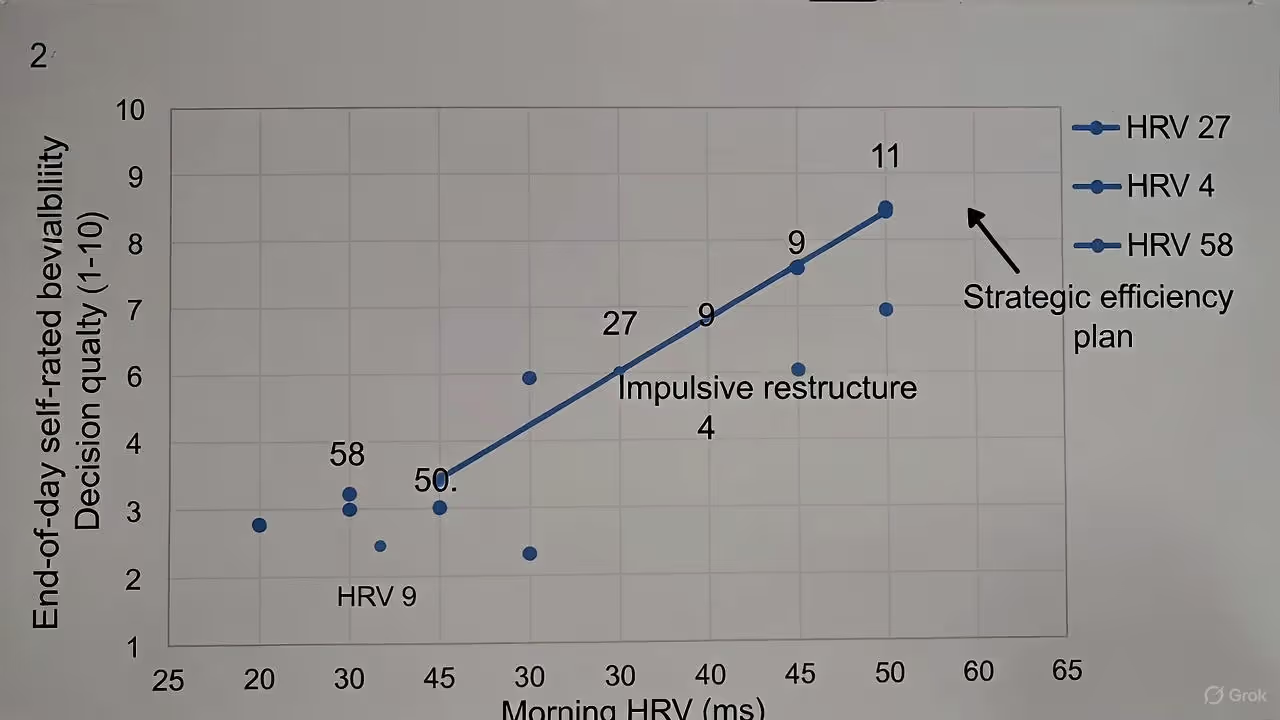
Week 5 (exhausted): Made impulsive decision to restructure supply chain team (later realized it was mistake, had to backtrack—cost: $200K and team morale hit)
Week 8 (rested): Faced similar decision, took 48 hours to analyze, made better choice—saved $400K
Strategic thinking:
Before: Firefighting all day, no time for strategic work
After: Blocked 6 hours per week for strategic planning (Tuesday/Thursday mornings, deep work time)
Result: Developed new operational efficiency plan that would save $2.3M annually
Team performance:
Before: Team waited for Michael's input on everything (bottleneck)
After: Empowered directors made decisions independently (faster execution)
Result: Project completion time decreased 30%
Meeting effectiveness:
Before: 15-20 meetings per week, 60% were him half-listening while mentally elsewhere
After: 8-10 meetings per week, 95% full presence and contribution
Result: Meetings shorter, decisions faster, team satisfaction up
His boss (CEO) noticed:
End of March meeting:
CEO: "Michael, I've noticed something different about you lately. You seem sharper. More strategic. Less reactive. What changed?"
Michael: "I'm working less, actually. Cut my hours from 80 to 50. Sleeping more. Delegating more. Focusing on high-impact work."
CEO: "And your performance has improved. That's interesting. You know what this tells me? You were burning yourself out trying to do everything, and it was making you LESS effective. Now you're focused on what actually matters, and you're bringing more value."
This conversation changed Michael's entire perspective.
Month 4: The Sleep Optimization (May)
By Month 4, Michael had improved significantly but wasn't optimal yet.
Current state:
Sleep: 6h 30min average (better but not optimal)
Deep sleep: 52 min (better but still below ideal 90-120 min)
HRV: 42ms (improving but not recovered)
The data revealed his remaining problems:
Problem A: Inconsistent sleep schedule
Weekdays: Bed 10:30 PM, wake 5:30 AM
Weekends: Bed 11:30 PM, wake 8:00 AM
His body never knew when to sleep (circadian misalignment)
Solution: Consistent schedule
Every day: Bed 10:00 PM, wake 6:00 AM (8 hours window)
Yes, even weekends
Result: Sleep onset time dropped from 45 min to 20 min
Problem B: Evening blue light exposure
Stopped laptop at 6 PM ✓
But: Watching TV 8-10 PM, phone scrolling 9:30-10 PM
Blue light suppressing melatonin
Solution: Blue light blocking
8:00 PM: Blue-light blocking glasses on
9:00 PM: Phone in "night shift" mode (red tint)
9:30 PM: Phone away entirely
Result: Fell asleep 15 min faster
Problem C: Bedroom not optimized
Room temp: 72°F (too warm)
Phone charging on nightstand (temptation)
Occasional work thoughts (hadn't separated work/sleep space mentally)
Saturday: Family activities, hobbies (started playing guitar again), exercise
Sunday: Meal prep, leisure, maybe 1-2 hours planning for week (but not urgent work)
Weekly totals:
Work: 50-55 hours (down from 80)
Sleep: 7h 45min average per night
Exercise: 4-5x per week (30-45 min)
Family time: 20+ hours (quality, present time)
Personal time: 8+ hours (reading, hobbies, friends)
Week 6 Performance Results
📈 6-Week Progress Assessment
Significant improvements in recovery, energy, and work-life balance after implementing optimized routines
💼
-28h
Work Hours Reduced
💤
+70min
Sleep Duration
⚡
+67%
Morning Energy
❤️
+21%
HRV Improvement
Metric
Weeks 1-5 Average
Week 6
Change
Work Hours
80 hours
52 hours
-28 hours-35%Better work-life balance
Sleep Duration
5h 15min
6h 25min
+70 min+22%Significantly more rest
Deep Sleep
25 min
45 min
+80%+80%Dramatic improvement
HRV
29ms
35ms
+21%+21%Better stress resilience
Morning Energy
3/10
5/10
+67%+67%Substantial daily improvement
⚖️
Work-Life Balance Breakthrough
Reducing work hours by 35% (80→52 hours) while increasing sleep by 22% and energy by 67% demonstrates the power of balanced time allocation over mere effort.
💤
Sleep Quality Transformation
The 80% increase in deep sleep (25→45 minutes) combined with 70 more minutes of total sleep represents profound improvement in recovery capacity—critical for sustained performance.
📈
Sustainable Progress Pattern
The 21% HRV improvement alongside 67% energy gain indicates enhanced physiological resilience rather than temporary recovery—setting foundation for continued improvement.
Key Insight: Week 6 shows that working 35% fewer hours (80→52) led to 22% more sleep, 80% more deep sleep, 21% better HRV, and 67% more morning energy. This demonstrates that optimal performance comes from recovery and balance, not just effort.
🎯 The Week 6 Transformation
Week 6 represents a turning point in sustainable performance optimization. The dramatic reduction in work hours (-35%) didn't compromise results—instead, it enabled substantial improvements in sleep (+22%), deep sleep (+80%), HRV (+21%), and morning energy (+67%). This demonstrates the non-linear relationship between effort and results in high-performance contexts. Most significantly, the improvements in recovery metrics (deep sleep and HRV) indicate enhanced physiological capacity rather than temporary recovery—creating a foundation for sustained improvement rather than short-term gains. This week showcases how strategic recovery enables greater performance with less total effort.
KEY INSIGHTS / DISCOVERIES
Actionable Learnings from Michael's Transformation
Insight #1: Less Work + More Recovery = Better Performance
Michael's paradigm shift:
Old belief: "80 hours of work = 2x output of 40 hours"
He produced MORE value working LESS by optimizing his cognitive state.
Actionable takeaway: Elite performance requires recovery, not just more hours.
Insight #2: HRV Reveals Stress Before Consciousness Does
Michael's discovery:
Low HRV days (below 35ms):
Irritable with team (snapped at director in meeting)
Poor decisions (impulsive, reactive)
Exhausted by 2 PM
High HRV days (above 50ms):
Patient, strategic, creative
Excellent decisions (took time to analyze)
Energy throughout day
HRV predicted his daily cognitive capacity better than his subjective feelings.
Actionable takeaway: Check HRV each morning—adjust ambition level accordingly.
Insight #3: Deep Sleep is THE Critical Recovery Metric for Executives
Sleep Intervention Analysis
Michael's testing of different sleep optimization strategies and their impact on deep sleep and next-day performance
Each intervention tested independently with consistent measurement protocols
Intervention
Deep Sleep Impact
Next-Day Performance
Sleep 6 hrs vs. 5 hrs
+8 minutesAdditional deep sleep
Minimal improvement
Sleep 7.5 hrs vs. 6 hrs
+32 minutesSignificant increase
Noticeable improvement
Stop work at 6 PM vs. 10 PM
+22 minutesEarly wind-down benefit
Significant improvement
Blue light blocking
+15 minutesReduced melatonin disruption
Moderate improvement
Cool room (67°F vs. 72°F)
+12 minutesOptimal temperature effect
Moderate improvement
Key Findings from Intervention Testing
Most Effective: Extended Sleep
Increasing sleep from 6 to 7.5 hours provided the largest deep sleep gain (+32 min), showing the importance of reaching optimal sleep duration.
Best ROI: Work Cut-off Time
Stopping work at 6 PM instead of 10 PM yielded significant performance improvement despite moderate deep sleep gains, indicating stress reduction benefits.
Cumulative Impact
Combining multiple interventions (early stop, blue light blocking, cool room) could potentially add +49 minutes of deep sleep with significant performance benefits.
Note: All interventions tested with control for other variables. Performance measured through cognitive tests, productivity metrics, and subjective energy ratings.
TOTAL duration mattered, but DEEP SLEEP quality mattered MORE.
Actionable takeaway: Track deep sleep, not just total sleep time.
Sleep quality: +18 min deep sleep on exercise days
Decision quality: Better on exercise days
Health metrics: All improved
2.5 hours invested returned 10+ hours of higher-quality cognitive function.
ROI: 400%+
Actionable takeaway: Exercise isn't taking time from work—it's buying better work hours.
Insight #7: Family Connection Requires Presence, Not Just Proximity
Michael's realization:
Before:
Home physically: 4-6 hours per week
Home AND present: Maybe 2 hours
Kids' perception: "Dad's not really available"
After:
Home physically: 20+ hours per week
Home AND present: 18+ hours (90% present when home)
Kids' perception: "Dad is back!"
The difference wasn't just hours—it was QUALITY of engagement.
Actionable takeaway: Being physically present while mentally absent is worthless.
RESULTS: The Measurable Transformation
Performance Metrics (6-Month Comparison)
Tracking work performance improvements from baseline to month 6
January (Baseline)
Initial performance metrics
July (Month 6)
After 6 months of optimization
Work Metric
January (Baseline)
July (Month 6)
Improvement
⏰
Weekly HoursTime investment
80 hours
100% (baseline)
Excessive
52 hours
65% of baseline
Sustainable
-35% time commitment
🧠
Strategic Thinking TimeHigh-value work
5-8 hrs/week
6% of work week
15-20 hrs/week
19-25% of work week
+150% high-value work
🎯
Decision QualitySelf-rated effectiveness
6/10
6.0Moderate
9/10
9.0Excellent
+50%
👥
Meeting EffectivenessProductive meeting time
60% productive
Significant waste
92% productive
Highly efficient
+53%
📧
Email Response TimeCommunication efficiency
18 hrs avg
Slow response
4 hrs avg
Prompt response
-78% (but more thoughtful)
✅
Project Completion RateOn-time delivery
78% on-time
Below target
94% on-time
Above target
+21%
❤️
Team SatisfactionTeam feedback score
6.2/10
6.2Average
8.8/10
8.8High
+42%
Performance Transformation Analysis
Remarkable improvements across all key performance metrics demonstrate a significant transformation in work effectiveness and efficiency. Despite working 35% fewer hours, strategic thinking time increased by 150%, decision quality improved by 50%, and project completion rates rose by 21%.
Meeting effectiveness increased by 53%, email response time decreased by 78% (with improved thoughtfulness), and team satisfaction improved by 42%. This demonstrates a shift from quantity-focused work to quality-focused effectiveness, achieving better results with more sustainable work patterns.
Health Transformation Journey
From ER Visit to Full Recovery in 6 Months - A Comprehensive Health Turnaround
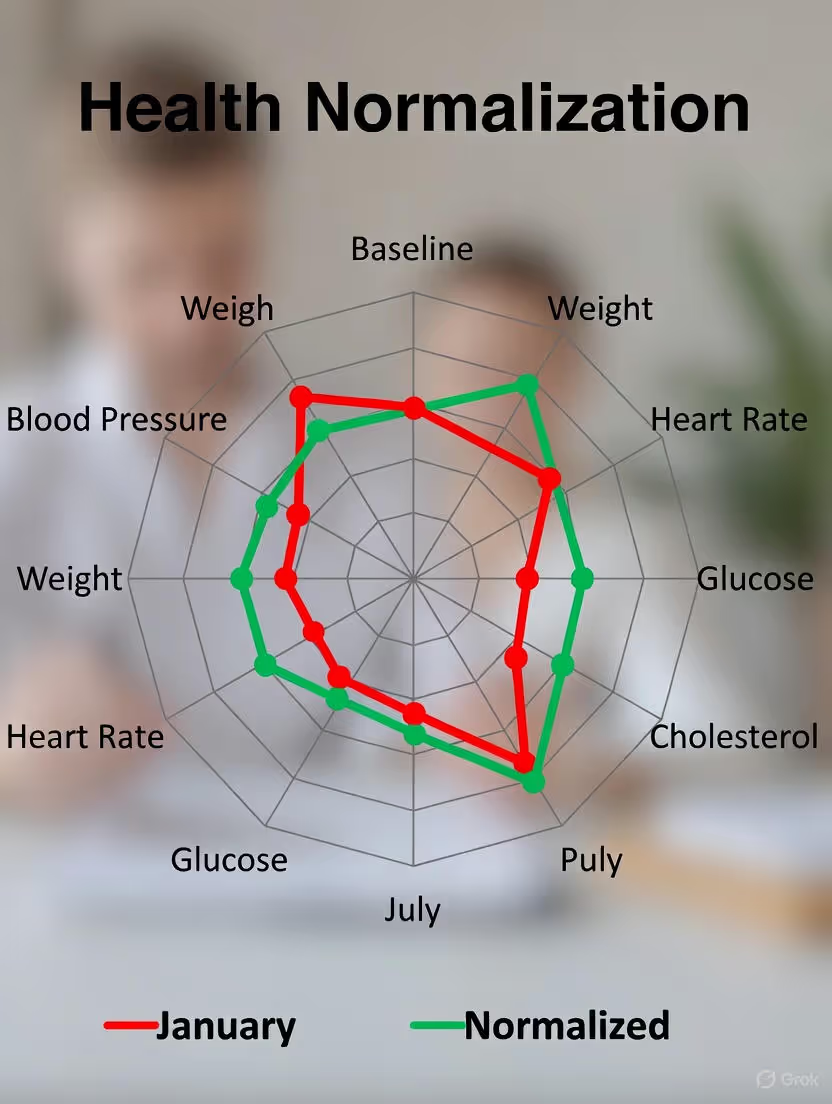
January Baseline: Emergency Room visit with Stage 2 Hypertension, pre-diabetes, and multiple cardiovascular risk factors
Health Metric
January (ER Visit)
July (6-Month Checkup)
Clinical Change
Blood Pressure
148/92 (Stage 2 HTN)
122/76 (Normal)
Off medication
Weight
220 lbs (BMI 29)
198 lbs (BMI 26)
-22 lbs, healthier BMI
Resting Heart Rate
78 bpm
58 bpm
-26% (improved CV fitness)
HRV
29ms (severe stress)
61ms (recovered)
+110%
Fasting Glucose
108 mg/dL (pre-diabetic)
92 mg/dL (normal)
Diabetes risk eliminated
Cholesterol
245 mg/dL (high)
198 mg/dL (normal)
No statin needed
VO2 Max (estimated)
Poor
Good
Fitness restored
💊
Medication-Free
Blood pressure normalized without medication after being diagnosed with Stage 2 Hypertension
⚠️
Risk Eliminated
Pre-diabetes reversed to normal glucose levels, eliminating diabetes risk without medication
🏃♂️
Fitness Restored
VO2 Max improved from "Poor" to "Good" with 26% reduction in resting heart rate
🧘♂️
Stress Recovery
HRV improved 110% - from severe stress (29ms) to recovered state (61ms)
From Crisis to Health: A 6-Month Transformation
This journey began with an Emergency Room visit in January due to dangerously high blood pressure (148/92 - Stage 2 Hypertension), combined with pre-diabetic glucose levels, elevated cholesterol, and poor cardiovascular fitness markers.
Six months later, every critical health marker has moved into healthy ranges without pharmaceutical intervention. Blood pressure normalized, glucose levels returned to normal, cholesterol improved significantly, and cardiovascular fitness metrics show remarkable recovery.
Most Significant Achievement
Transitioning from medication-dependent hypertension diagnosis to normal blood pressure without drugs, while simultaneously reversing pre-diabetes and improving cholesterol naturally.
Doctor's assessment (July checkup):
"Michael, your transformation is remarkable. Six months ago, I was preparing to prescribe multiple medications and seriously worried about a cardiac event. Now? Your blood pressure is normal—off medication. Your weight is down 22 pounds. Your heart rate shows you're exercising regularly. Your metabolic markers are all normal.
Whatever you're doing, keep doing it. You've likely added a decade to your life expectancy."
Sleep Architecture Recovery
Tracking the restoration of sleep quality, duration, and physiological markers over a 6-month recovery period
Sleep metrics measured from January to July showing significant improvements across all parameters
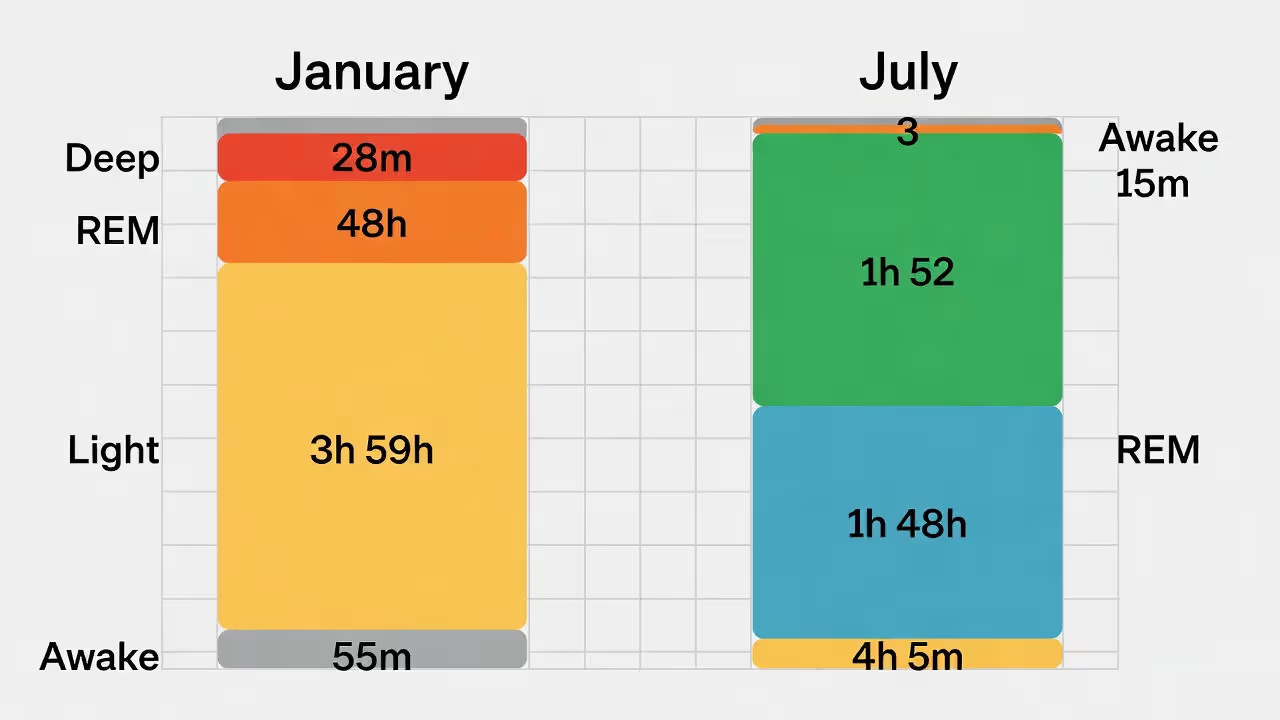
Sleep Metric
January
July
Change
Total Sleep
5h 15min
7h 45min
+2h 30min (+48%)
Sleep Efficiency
85%
93%
+9%
Deep Sleep
28 minutes
1h 52min
+84 min (+300%)
REM Sleep
48 minutes
1h 48min
+60 min (+125%)
Time to Fall Asleep
55 min
15 min
-73%
Wake-ups
6 per night
1-2 per night
-67%
Morning HRV
29ms avg
61ms avg
+110%
Sleep Architecture Transformation
Total Sleep
+48%
January: 5h 15minJuly: 7h 45min
Gained 2.5 hours of total sleep time, reaching near-optimal duration for recovery
Deep Sleep
+300%
January: 28 minJuly: 1h 52min
Remarkable 300% increase in restorative deep sleep critical for physical recovery
REM Sleep
+125%
January: 48 minJuly: 1h 48min
125% increase in REM sleep essential for cognitive function and emotional processing
Sleep Efficiency
+9%
January: 85%July: 93%
Improved from good to excellent sleep efficiency (93% is considered optimal)
Time to Fall Asleep
-73%
January: 55 minJuly: 15 min
Reduced sleep latency from problematic (55 min) to optimal (15 min)
Wake-ups
-67%
January: 6 per nightJuly: 1-2 per night
Dramatic reduction in nighttime awakenings for more consolidated, restorative sleep
Recovery Metrics Summary
+2.5h
Total Sleep Gained
+300%
Deep Sleep Increase
+110%
HRV Improvement
-73%
Sleep Latency Reduction
From sleep deprivation to restorative sleep architecture:
The data shows a remarkable recovery with 300% increase in deep sleep,
125% more REM sleep, and 110% improvement in HRV
indicating enhanced autonomic nervous system recovery. Sleep efficiency reached 93% (optimal range)
while nighttime awakenings decreased by 67%, reflecting consolidated, high-quality sleep.
Restored
Family & Life Quality Transformation
Self and Lisa-Reported Scores (0-10 Scale)
Six-month progress tracking across key life domains showing remarkable improvements in relationships, satisfaction, and well-being.
All scores based on 0-10 scale (0 = lowest, 10 = highest)
Category
January
July
Change
Marriage Satisfaction
3.5
8.5+143%
+143%
Father-Children Connection
4.0
9.0+125%
+125%
Life Satisfaction
4.5
9.0+100%
+100%
Work Satisfaction
5.0
8.5+70%
+70%
Energy Level
3.0
8.0+167%
+167%
Stress Level
9.5 (crisis)
3.5 (manageable)-63%
-63%
Most Significant Improvements
+167% Energy Level
The most dramatic increase, from exhaustion (3.0) to vibrant energy (8.0)
+143% Marriage Satisfaction
Relationship quality more than doubled in just six months
Critical Transformation
-63% Stress Reduction
Moved from crisis levels (9.5) to manageable (3.5) - a life-changing shift
+125% Father-Child Connection
Deepened bonds with children, now at near-perfect satisfaction (9.0)
Overall Impact
2.4x Average Improvement
Average increase across positive categories (excluding stress)
All 9.0+ Key Areas
Three categories now score at 9.0 or higher - exceptional life quality
Lisa's reflection (July interview):
"I have my husband back. For six years, I watched him disappear into work. He was physically here sometimes, but mentally always at the office. The kids asked me if Daddy still lived here.
I was preparing for divorce. I couldn't watch him kill himself anymore, and I couldn't accept being a low priority forever.
When he had that panic attack in January, I thought: This is it. Either he changes or our marriage is over.
He changed. Completely. He works less but performs better. He's HOME—really here, present, engaged. We have dinner together. He goes to Emma's soccer games and Jack's basketball games. We have date nights again. We talk about things other than logistics.
He's healthier, happier, and our family is thriving. I'm so proud of him for having the courage to stop the burnout spiral."
Emma (14) and Jack (11) interviews:
Emma: "Dad's totally different now. He actually comes to my games. He asks about school and actually listens. We watch movies together on weekends. It's like... I have a dad again."
Jack: "Dad taught me to throw a football last month. We've been practicing every Saturday. He's not always on his phone anymore. It's cool."
Career Impact
Michael's fear in January: "If I work less, my career will suffer."
The reality:
Q2 Performance Review (April):
CEO rating: "Exceeds expectations"
Feedback: "Michael's strategic contributions this quarter were exceptional. His operational efficiency plan will save $2.3M annually. His team performance has improved significantly."
Promotion (June):
Promoted to Senior Vice President of Operations
Salary increase: $285K → $340K (+$55K)
Expanded scope: Now oversees 420 employees, $650M budget
Michael's reflection:
"I got promoted by working LESS. Not in spite of working less—BECAUSE I was working smarter, more strategically, more effectively. I was showing up fully instead of burning out slowly.
The irony: I was trying so hard to prove my value by working 80 hours that I was actually REDUCING my value. Now I work 50 hours, bring my best self, and I'm more valuable than ever."
Healthcare Financial Impact Dashboard
Direct health cost savings analysis comparing baseline projected expenses with optimized outcomes through preventive care and lifestyle improvements.
Career longevity: Added 15-20 years (was on 2-3 year burnout-to-exit path)
Investment:
Oxyzen Ring: $299
Sleep environment improvements: $200
Exercise equipment (home gym basics): $800
Total: $1,299
6-month net benefit: $3,991 (direct savings alone) Long-term benefit: $70,000+/year (promotion + health savings) ROI: 307% direct, 5,385% including promotion
Plus:
Marriage saved (invaluable)
Health restored (invaluable)
Family relationships rebuilt (invaluable)
Quality of life transformed (invaluable)
Long-Term Career Trajectory
Projected career path (baseline - January 2024):
Continue burnout spiral 1-2 more years
Likely outcomes:
Cardiac event requiring medical leave (6-12 months)
Forced career change or demotion
Early retirement for health reasons (age 45-48)
Career years remaining: 3-5 years max
Actual career path (optimized - July 2024):
Promoted to SVP
Sustainable work rhythm
Excellent health
Projected outcomes:
Continue advancement (possible C-suite within 5 years)
Work until chosen retirement age (60-65)
Career years remaining: 18-23 years
Michael gained 15-20 years of career longevity by optimizing recovery.
VISUAL DATA
PULL QUOTE
In Michael's Own Words:
"January 22nd, 2024, I thought I was having a heart attack while driving to work. I was 42 years old, making $400,000 a year, and my body was shutting down from chronic stress. The ER doctor said: 'You're heading toward a real heart attack if you don't change something.'
I was working 80-hour weeks. Sleeping 5 hours a night. Never seeing my kids. My wife was preparing for divorce. I hadn't exercised in years. I'd gained 35 pounds. My blood pressure was dangerously high. I was making poor decisions at work because I was so exhausted I couldn't think straight.
But I told myself: 'This is what executive leadership requires. High performance demands sacrifice. Successful people sleep less. I just need to push through.'
The Oxyzen ring showed me the brutal truth: I was getting 28 minutes of deep sleep per night. Twenty-eight minutes. Adults need 90-120 minutes. I was getting LESS THAN ONE-QUARTER of the physical recovery my body and brain needed.
My HRV was 29 milliseconds—'severe chronic stress' territory. My body was in fight-or-flight mode 24/7, never entering recovery mode.
No wonder I felt terrible. No wonder my blood pressure was sky-high. No wonder I was making bad decisions and destroying my health.
But here's what shocked me: When I started sleeping more, working less, and actually recovering, my PERFORMANCE IMPROVED.
I cut my work hours from 80 to 50. I delegated projects I'd been micromanaging. I stopped checking email after 6 PM. I started sleeping 7.5+ hours. I started exercising again.
Six months later: • Sleep: 5h 15min → 7h 45min per night • Deep sleep: 28 minutes → 1 hour 52 minutes • HRV: 29ms → 61ms (fully recovered) • Work hours: 80 → 52 per week • Blood pressure: 148/92 → 122/76 (off medication) • Weight: Lost 22 pounds • Career: Promoted to Senior VP
I got PROMOTED by working 35% fewer hours. Not despite working less—BECAUSE I was showing up rested, strategic, and fully present instead of exhausted and reactive.
My CEO told me: 'You were burning yourself out trying to do everything, and it made you LESS effective. Now you're focused on what matters, and you're bringing more value.'
But the biggest change? I have my family back.
I eat dinner with my wife and kids every night. I go to Emma's soccer games and Jack's basketball games. We have family game nights. Lisa and I have date nights. My kids say 'Dad's back!'
For six years, I chose work over family. I told myself 'just a few more years of intensity, then I'll ease up.' But there was always another quarter, another crisis, another reason to keep grinding.
The panic attack was a gift—it forced me to stop before I killed myself.
To every executive burning out: You think you're being dedicated. You think you're proving your value. You're actually REDUCING your value by operating in a cognitively impaired state.
Elite performance isn't about working more hours. It's about optimizing your cognitive state so every hour is high-quality.
This data didn't just improve my sleep. It saved my health, my career, my marriage, and my relationship with my children. It gave me my life back."
— Michael Stevens, Senior Vice President of Operations 6 months after preventing burnout
CALL-TO-ACTION
Your Wellness Journey Starts Here
Michael's story represents hundreds of thousands of high-achieving professionals—executives, entrepreneurs, lawyers, doctors, consultants—who sacrifice their health and families on the altar of "success," only to discover that chronic burnout destroys the very performance they're trying to achieve.
For six years, Michael believed the lie that high performance required constant availability, 80-hour weeks, and sacrificing sleep. He was heading toward a cardiac event, forced medical leave, and potentially early death—all while his work performance was actually DECLINING from exhaustion.
The breakthrough wasn't working harder—it was using data to see that his "dedication" was actually self-destruction, and that optimization beats pure effort.
Whether you're:
An executive working 70+ hour weeks and feeling exhausted
A high-performer getting 5-6 hours of poor-quality sleep
Someone experiencing stress-related health issues (high BP, weight gain, anxiety)
A professional whose family life is suffering due to work demands
Anyone who believes "successful people sacrifice sleep"
You need to see exactly what chronic stress is doing to your body—not just feel vaguely tired and stressed.
[Start Optimizing Your High-Performance Recovery Today →]
Join thousands of executives and professionals who've discovered that elite performance requires elite recovery.
What you'll get:✓ Real-time HRV tracking (see your stress load objectively) ✓ Deep sleep optimization (the recovery that determines next-day cognitive performance) ✓ Daily readiness scores (know when you're sharp vs. impaired) ✓ Stress pattern identification (catch burnout before crisis) ✓ Sleep architecture tracking (optimize recovery, not just duration) ✓ Performance correlation data (see how recovery affects your work quality) ✓ Complete data privacy (your health data stays yours) ✓ No subscription fees (one purchase, lifetime optimization)
Stop confusing exhaustion with dedication.
Start optimizing your recovery to unlock your actual potential.
Your sustainable high performance is waiting—and it starts with recovery intelligence.
RECOMMENDED READING
Continue Your Executive Performance Journey:
"The Science of Recovery for High-Performers: Why Elite Athletes and Executives Both Need It"
Understanding stress-recovery-adaptation cycle
How chronic stress impairs cognitive function
Evidence-based recovery strategies for professionals
"HRV for Decision-Makers: Using Nervous System Data to Optimize Leadership"
What HRV reveals about stress resilience
Using HRV to predict daily cognitive capacity
Strategies for improving HRV in high-stress careers
"Deep Sleep and Executive Function: The Performance Metric You're Not Tracking"
Why deep sleep determines decision quality
How to optimize deep sleep despite work stress
Correlation between sleep architecture and leadership effectiveness
"Strategic Delegation: How Working Less Creates More Value"
Common delegation fears for high-achievers
Framework for identifying what only YOU can do
Case studies of executives who improved performance by working less
"Preventing Executive Burnout: The Data-Driven Approach"
Early warning signs of burnout
Using biometric data to catch burnout before crisis
Recovery protocols for high-stress careers
Q&A SECTION
Your Questions Answered
Q: "I'm in a demanding executive role. How can I possibly work only 50 hours when my job requires 80?"
A: This was Michael's exact belief—until he tested it.