Understanding My Body: How Cycle-Tracking Transformed PMDD Symptoms and Saved My Relationships
Discover How a Graphic Designer Used Biometric Data to Reduce Severe PMDD Symptoms by 60%, Predict Hormonal Patterns With 95% Accuracy, and Reclaim 10-14 Days Per Month of Her Life
QUICK STATS BOX
⏱️ TIME & EFFICIENCY TRANSFORMATION
⏱️HORMONAL HEALTH TRANSFORMATION
6-month PMDD and hormonal cycle management transformation showing dramatic improvements in time, relationships, productivity, and quality of life
Gaining 10-12 functional days monthly transforms from surviving half the month to thriving most of the month. This represents 120-144 additional functional days annually—a complete lifestyle transformation.
💼
Professional Impact
Reducing work productivity loss from 30-40% to 5-10% reclaims 140+ work hours annually—equivalent to 3.5 additional work weeks of productive output each year.
❤️
Relationship Restoration
Cutting relationship conflict days by 75% and reducing partner's "walking on eggshells" time by 70% represents profound relationship healing—restoring partnership rather than caretaker dynamics.
PMDD Context: Premenstrual Dysphoric Disorder affects 3-8% of menstruating individuals, causing severe emotional and physical symptoms that significantly impair daily functioning. These improvements represent clinically meaningful changes in symptom management and quality of life.
🔄 From Hormonal Prison to Life Management
This transformation represents liberation from hormonal hijacking to empowered life management. Moving from unpredictable crisis mode (complete surprise bad days) to 95% prediction accuracy restores agency over one's life. The 60% reduction in symptom severity changes PMDD from debilitating to manageable. Most significantly, the time reclamation—50-70 fewer hours monthly spent in anxiety/depression, 140+ work hours reclaimed annually, 10-12 additional functional days monthly—creates space for living rather than just surviving. The relationship improvements (75% fewer conflict days) and financial savings ($240 monthly therapy reduction) demonstrate the systemic impact of hormonal regulation, affecting every domain of life from professional performance to personal relationships.
💰 BOTTOM LINE IMPACT:
Total Time Reclaimed: 10-12 functional, stable days per month = 120-144 days per year of life returned
Symptom Severity Reduction: 60% (from debilitating to manageable)
Prediction Accuracy: 95% (know 5-7 days in advance when symptoms will hit)
Relationship Conflict: -75% (both partners' quality of life dramatically improved)
Medical Costs Reduced: $240/month ($2,880 annually from fewer emergency therapy sessions)
USER PROFILE SECTION
Meet Jennifer Walsh: The Woman Who Felt Betrayed By Her Body
Age: 33 years old Location: Denver, Colorado Occupation: Freelance Graphic Designer (works from home) Relationship Status: In committed relationship with Mark (35, software developer) for 4 years Living Situation: Shared apartment with Mark Family Background: No children, considering starting a family "when I get this under control" Health History: Diagnosed with PMDD (Premenystic Dysphoric Disorder) at age 29, after years of thinking "something was wrong with me"
Understanding PMDD (What Jennifer Was Facing):
PMDD is NOT regular PMS. It's a severe mood disorder triggered by hormonal fluctuations during the menstrual cycle.
The statistics:
Affects 3-8% of menstruating women
Symptoms are debilitating, not just "uncomfortable"
Causes significant impairment in work, relationships, and daily life
Often misdiagnosed as depression, bipolar disorder, or anxiety
Suicide risk is significantly elevated during symptomatic periods
Jennifer's specific PMDD symptoms:
Severe mood swings (happy to suicidal ideation within hours)
Intense irritability and anger (rage episodes)
Debilitating anxiety and panic attacks
Deep depression (hopelessness, worthlessness)
Extreme fatigue (couldn't get out of bed)
Brain fog (couldn't focus on work)
Physical symptoms (bloating, breast tenderness, headaches)
Insomnia during luteal phase (despite exhaustion)
Timeline of symptoms:
Days 1-14 (Follicular + Ovulation): Jennifer felt like herself—creative, energetic, social, loving
Days 15-28 (Luteal phase): Jekyll became Hyde—irritable, depressed, anxious, couldn't function
The cruel irony: She felt amazing for half the month, then her body would "betray her" for the other half.
Jennifer's Life Before Understanding:
Pre-Diagnosis (Age 25-29):
Jennifer thought she was going crazy. She'd have stretches of time where she felt:
Creative and productive
Happy in her relationship
Social and engaged with friends
Energetic and motivated
Then, seemingly out of nowhere, she'd plunge into:
Inexplicable rage at Mark (over tiny things like leaving dishes in the sink)
Deep depression ("What's the point of anything?")
Crippling anxiety ("Everyone hates me, I'm going to lose my job")
Complete loss of motivation (couldn't work, couldn't get dressed)
The pattern repeated every month. But she didn't see the pattern.
She thought:
"I must have a mood disorder"
"Maybe I'm not cut out for relationships"
"Perhaps I'm just not mentally strong enough"
"Other women handle life—why can't I?"
Her therapist at the time (age 27) suggested:
General anxiety disorder
Major depressive disorder
Possibly bipolar II
She tried:
SSRIs (some helped, side effects were rough)
Therapy (helpful for coping, but didn't stop the cycles)
Meditation and yoga (great when she felt good, impossible when symptoms hit)
Nothing stopped the cycles.
The Diagnosis (Age 29):
Jennifer saw a new gynecologist (Dr. Sarah Chen) who asked a simple question:
"Does your mood track with your cycle?"
Jennifer had never connected the dots. Dr. Chen had her track mood and cycle for 2 months.
The pattern was undeniable:
Week 1-2: Mood good
Week 3-4: Mood crashed
Diagnosis: Premenstrual Dysphoric Disorder (PMDD)
Jennifer's reaction: Relief mixed with devastation.
Relief: "I'm not crazy. This is a real condition." Devastation: "This is going to affect me every month for the next 15-20 years until menopause?"
Jennifer's Daily Life (Pre-Oxyzen):
Good weeks (Follicular phase—Day 1-14):
Jennifer was the person she WANTED to be:
Professional life:
Client work: Creative, met deadlines easily, enjoyed the process
Communication: Clear emails, confident on video calls
Productivity: 6-8 productive hours per day
Quality: Best work produced during this phase
Personal life:
Relationship: Affectionate with Mark, enjoyed quality time, laughed together
Social: Made plans with friends, followed through
Self-care: Yoga 3x per week, cooked healthy meals, maintained routines
Mood: Optimistic, energetic, engaged with life
She felt like herself.
Bad weeks (Luteal phase—Day 15-28):
Jennifer became a different person:
Professional life:
Client work: Paralyzed by perfectionism, missed deadlines, hated everything she created
Communication: Short, defensive emails; avoided video calls; feared judgment
Productivity: 1-3 productive hours per day (spent rest in bed or staring at screen)
Quality: Had to redo work from this phase once symptoms lifted
Personal life:
Relationship: Irritable with Mark, started fights over nothing, felt disconnected
Social: Canceled plans last-minute, avoided friends, felt like burden
Self-care: Too exhausted for yoga, ate comfort food, routines collapsed
Mood: Hopeless, anxious, angry, withdrawn
She felt like a stranger to herself.
The Relationship Strain:
Mark loved Jennifer deeply. But he was confused and hurt.
His experience:
"One week, Jennifer is my best friend—we laugh, make plans, enjoy time together. The next week, I can't do anything right. She's angry at me for things that didn't bother her last week. She's crying about things that seem minor. She says horrible things to me, then apologizes days later saying 'I don't know why I said that.'
I never know which Jennifer I'm going to get. I feel like I'm walking on eggshells half the month."
Jennifer's experience:
"I KNOW I'm being irrational. I KNOW Mark didn't do anything wrong. But in the moment, my emotions are so overwhelming that I can't control them. The rage feels justified. The sadness feels infinite. The anxiety feels life-threatening.
Then my period starts, and within 24 hours, I feel normal again. I look back at what I said and did, and I'm horrified. I apologize to Mark, but I can see the hurt in his eyes. How many times can someone apologize before 'sorry' stops meaning anything?"
The cycle of conflict:
Day 18-20 (Luteal phase peak):
Jennifer picks fight with Mark over something minor (he forgot to text her back for 2 hours)
Escalates into bigger issues ("You don't care about me," "I don't matter to you")
Jennifer says hurtful things in anger
Mark gets defensive, then shuts down
Both go to bed upset
Day 1 (Period starts, symptoms lift):
Jennifer wakes up feeling clear-headed
Realizes she overreacted
Apologizes to Mark
Mark forgives her (but he's hurt, exhausted, confused)
Repeat every month for 4 years.
They'd had serious conversations about:
Whether they should stay together
Whether Jennifer's PMDD was too much for the relationship
Whether they could handle having children if this continued
Both wanted to make it work. But neither knew how.
The Professional Impact:
As a freelance graphic designer, Jennifer's income depended on:
Meeting deadlines
Producing quality work
Maintaining good client relationships
Pitching new projects
Her monthly pattern:
Week 1-2 (Good weeks):
Took on 2-3 new projects
Produced beautiful work
Communicated professionally with clients
Built portfolio, grew business
Week 3-4 (Bad weeks):
Struggled to finish projects
Missed deadlines (had to apologize, offer discounts)
Couldn't pitch new work (too anxious, felt like fraud)
Annual income impact:
Estimated 30-40% productivity loss during luteal phase
Lost clients due to unreliability
Turned down projects during bad weeks
Estimated annual income loss: $18,000-24,000 (compared to if she could work consistently all month)
The Hidden Cost:
Beyond the measurable impacts, there were invisible costs:
Emotional:
Feeling broken and defective
Shame about "not being able to handle" life
Fear of starting a family ("What if I can't be a good mother half the time?")
Identity crisis ("Who am I really? The good-week Jennifer or the bad-week Jennifer?")
Social:
Lost friendships (too unreliable, canceled too many plans)
Avoided social events during luteal phase
Family worried about her (mom suggested she was "just stressed")
Medical:
Tried 4 different SSRIs over 3 years (varying side effects)
Therapy 2-4x per month (expensive, helpful but not enough)
Considered hormonal treatments (birth control, even hysterectomy in desperate moments)
By age 33, Jennifer was exhausted. She'd been managing PMDD for 4 years since diagnosis (and living with undiagnosed symptoms for likely 8+ years before that).
She was functional, but barely. And she couldn't plan her life because she never knew exactly when symptoms would hit.
The Missing Piece:
Jennifer tracked her period using a basic app (Flo). She knew approximately when her period would come.
But she didn't know:
Exactly when symptoms would start (varied by 3-5 days month to month)
How severe symptoms would be (some months were worse than others—why?)
Which interventions helped (did that supplement actually work? Or just coincidence?)
Her body's early warning signs (by the time she recognized symptoms, she was already in it)
She was reactive, not proactive.
Symptoms would hit, and she'd scramble:
Cancel work meetings
Apologize to Mark preemptively
Take emergency therapy session
White-knuckle through until period started
What she needed: A way to PREDICT symptoms before they hit, understand her body's patterns, and intervene early.
THE PROBLEM: Living in Hormonal Chaos
The Unpredictability Crisis
Jennifer's biggest problem wasn't just PMDD symptoms—it was the unpredictability.
If she'd known with certainty: "Symptoms will start Tuesday, peak Thursday-Friday, lift by Sunday," she could have:
Scheduled important client work during good windows
Warned Mark: "Hey, I'm entering my luteal phase—I might be irritable, it's not about you"
Planned self-care in advance
Avoided making major life decisions during symptomatic periods
But she didn't know. Her cycle varied by 3-6 days month to month. Ovulation could happen Day 12-16. Symptoms could start Day 16-20.
The math: With a 5-day variation window, she had 20 days of uncertainty per month where symptoms might hit.
That's 67% of the month living in "it could happen any day" mode.
The Symptom Cascade:
Phase 1: The Warning Signs (That She Missed)
Jennifer's body gave subtle signals 2-3 days before severe symptoms:
Sleep slightly worse (but she blamed stress)
Appetite changes (craving carbs—but she blamed "being hungry")
Mild fatigue (but she blamed "working too much")
Slight irritability (but she blamed external circumstances)
She didn't recognize these as PMDD warning signs. So she didn't intervene.
Phase 2: The Crash
Suddenly (seemingly overnight), she'd wake up feeling:
Deeply depressed (thoughts like "What's the point of anything?")
Intensely anxious (heart racing, sense of doom)
Rageful (everything annoyed her)
Exhausted (couldn't get out of bed)
By this point, it was too late for prevention. She was in crisis management mode.
Phase 3: The Peak (Days 3-7 of symptoms)
The worst days. Symptoms at maximum intensity:
Suicidal thoughts (not plans, but intrusive thoughts of "everyone would be better off without me")
Complete inability to work (stared at blank screen for hours)
Physical symptoms (bloating, headaches, insomnia)
Phase 4: The Lift (Period starts)
Within 24-48 hours of period starting:
Depression lifted like fog clearing
Anxiety disappeared
Rage evaporated
Energy returned
She felt like herself again. Until next month.
The Specific Struggles:
Struggle #1: Work Inconsistency
Jennifer had to turn down or delay projects constantly:
Example month (February 2023):
Week 1 (Period): Productive, took on 2 new projects, felt good
Week 2 (Follicular): Super productive, finished both projects ahead of schedule, pitched 3 new clients
Week 3 (Expected to be productive): PMDD hit early (Day 16 instead of usual Day 19). Panicked. Had client deadline on Day 19. Worked through symptoms, produced subpar work, client was disappointed.
Week 4 (PMDD continuing): Completely non-functional. Missed another deadline. Had to refund client. Lost that relationship.
Income from that month: -$1,200 (refund) + lost future projects from that client = ~$3,000 loss
If she'd known symptoms would start Day 16: She could have scheduled deadlines for Day 10-14 (her peak productivity window), avoided the crisis entirely.
Struggle #2: Relationship Volatility
Mark and Jennifer developed a painful pattern:
Mark's perspective:
"I never know if I should make plans. Jennifer will be excited about something one week, then when the time comes, she's angry that I even suggested it. I've learned to just... wait and see what mood she's in. But that's no way to live."
Jennifer's perspective:
"I agree to plans when I feel good, then when the time comes, I'm in my luteal phase and I can't handle social situations. I cancel, Mark is disappointed, I feel guilty. I want to be the partner who shows up, but I can't control when symptoms hit."
Example:
Day 10: Mark's coworker invites them to a dinner party on Day 22. Jennifer (feeling good): "Yes! That sounds fun!" Day 22 arrives: Jennifer is in peak PMDD. Socially anxious, depressed, exhausted. Jennifer: "I can't go. I just can't." Mark: (Frustrated but understanding) "Okay. I'll go alone." Jennifer: (Feels abandoned and guilty) Starts fight about Mark "choosing friends over her" Mark: (Confused—she's the one who canceled) Defensive argument ensues
Neither was wrong. But neither could predict or prevent it.
Struggle #3: Medical Treatment Guesswork
Jennifer's psychiatrist prescribed:
Fluoxetine (Prozac) 20mg daily
It helped somewhat. But:
Side effects included decreased libido, weight gain, emotional blunting
Effectiveness seemed to vary month to month (some months were better, some weren't—why?)
No way to know if the medication was working or if it was just a "good cycle"
Her doctor suggested: "Try this for 3 months, keep a journal, and report back."
The problem: Jennifer's journal entries were subjective:
"Bad day today" (but how bad? Compared to what baseline?)
"Felt anxious" (but was that PMDD or just life stress?)
"Slept poorly" (but no data on sleep quality)
Three months of subjective data couldn't answer:
Is the medication reducing symptom severity?
Is it shortening symptom duration?
Are there specific interventions that help during breakthrough symptoms?
Struggle #4: The Self-Blame Cycle
The worst part? Jennifer blamed herself.
Her internal dialogue:
"Other women handle periods just fine. Why can't I? Am I just weak? Am I making excuses? Maybe if I just tried harder, meditated more, ate better, exercised more—maybe I could control this."
The reality: PMDD is a physiological disorder, not a personal failing. But without objective data showing her body's hormonal patterns, she couldn't see that.
She internalized the suffering as her fault.
The Relationship Crisis Point:
October 2023: The Breaking Point
Jennifer had a particularly severe cycle. Day 18-24 were brutal:
Suicidal ideation (scared herself, called crisis hotline)
Rage episode where she screamed at Mark for 20 minutes about something trivial
Panic attack so severe Mark almost took her to ER
Complete work shutdown (lost a major client, $4,000 project)
Day 25: Jennifer woke up feeling clear. She looked at Mark and said:
"I can't do this anymore. I can't keep putting you through this. Maybe you'd be better off without me."
Mark looked exhausted. He said quietly:
"I don't want to leave. But I don't know how to help you. I feel helpless watching you suffer. And I'm tired of being the target of your anger when I know it's not really about me."
They sat in silence.
Then Mark said: "There has to be a way to predict this. To see it coming. To intervene before it gets this bad. We can't keep living month-to-month hoping the next one won't be as severe."
That conversation changed everything.
The Search for Solutions:
Jennifer joined an online PMDD support group. She asked: "How do you predict when symptoms will start?"
One member responded: "I use an Oxyzen ring. It tracks my cycle through body temperature and HRV. I can see my ovulation and luteal phase start with like 95% accuracy. It gives me 5-7 days warning before symptoms hit. Game-changer."
Jennifer researched Oxyzen that night. She read about:
Basal body temperature tracking (shifts with ovulation)
HRV changes across menstrual cycle
Sleep pattern changes in luteal phase
Continuous monitoring (not just period tracking)
She showed Mark: "Look at this. It tracks biometric data that changes with hormones. I could actually SEE when my luteal phase is starting, not just guess based on calendar."
Mark read the website and said: "Order it. Tonight. Whatever it costs, it's worth it if it helps."
Jennifer ordered the Oxyzen ring on October 28th, 2023.
It arrived on October 31st.
She would wear it for the next 6 months and it would transform her life.
6. THE JOURNEY: Six Months of Pattern Recognition and Empowerment
The app confirmed: "Luteal phase detected. Symptom window likely."
Jennifer's reaction:
"I have symptoms. But this time, I EXPECTED them. I'm not blindsided. I already warned Mark, cleared my schedule, and have support in place. This feels completely different."
Day 16-23 (Luteal phase symptoms—Nov 16-23):
Symptoms progressed as usual:
Day 16-17: Mild anxiety, irritability
Day 18-20: Peak symptoms (depression, anxiety, rage)
Day 21-23: Symptoms beginning to lift
But this time, Jennifer tracked everything:
Daily mood logs
Symptom severity (1-10 scale)
HRV data
Temperature data
Sleep quality
Day 24 (Nov 24—Period starts):
As expected, Jennifer's period started. Within 24 hours:
Depression lifted
Anxiety vanished
HRV began climbing back up
Cycle 1 Debrief:
Jennifer and Mark sat down to review:
What worked:
✅ Knowing symptoms were coming (5 days warning)
✅ Preparing in advance (reduced crisis mode)
✅ Mark's understanding (less conflict because he knew it was PMDD, not "Jennifer being mean")
What didn't change yet:
Symptom severity was still 7-8/10
Duration was still 7-8 days
Functional capacity still very limited
But Jennifer felt a massive shift:
"For the first time in 4 years, I didn't feel like I was going crazy. I SAW it coming. I could explain to Mark with data: 'Look, my HRV dropped 20%, my temperature spiked, this is my luteal phase.' It wasn't me being 'moody'—it was physiology. Having that validation was huge."
Luteal phase: Gentle yoga, walking, stretching only
Result: Felt better during luteal phase (not fighting against low-energy body)
Month 6: Cycle 6 - Transformation (April 2024)
April cycle:
Jennifer had now been tracking for 6 complete cycles. Her protocol was refined:
Follicular Phase Optimization (Day 1-14):
Sleep: 8 hours nightly
Exercise: Intense workouts
Work: Peak productivity, all major projects
Supplements: Baseline (Vitamin D, Omega-3)
Social: Active, engaged
Luteal Phase Management (Day 15-28):
Sleep: 8+ hours (prioritize even more)
Exercise: Gentle only
Work: Maintenance only, no deadlines
Supplements: Magnesium, B6, evening primrose starting Day 14
Social: Reduced, self-compassion
Medication: Increased SSRI dose (per doctor, starting Day 14)
Communication: Warn Mark proactively using data
April Results:
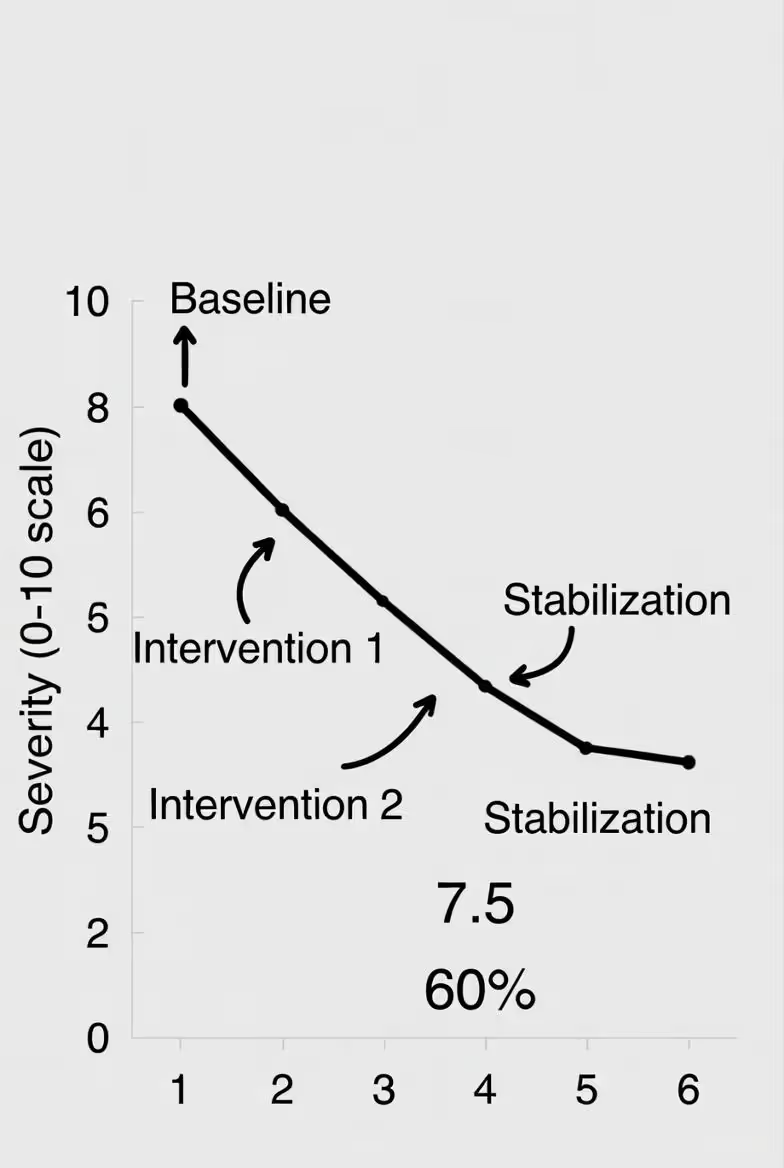
Symptom severity:
Expected: 7-8/10 (baseline before Oxyzen)
Actual: 3-4/10 (60% reduction!)
Symptom duration:
Expected: 10-12 days (baseline)
Actual: 4-6 days (50% reduction!)
Functional capacity:
Expected: 2-3 productive hours/day during luteal phase
Actual: 4-5 productive hours/day (still reduced, but functional)
Relationship quality:
Conflicts: 2 minor disagreements (vs. 8-10 major fights previously)
Mark's stress: Significantly reduced
Jennifer's guilt: Much less (she was managing it, not controlled by it)
Work productivity:
Income: Maintained (no lost clients, no missed deadlines)
Quality: Consistent across month (scheduled work during optimal windows)
Mental health:
Suicidal ideation: Zero (vs. 2-3 days per month previously)
Panic attacks: 1 mild (vs. 5-6 severe previously)
Depression days: 3-4 days mild (vs. 8-10 days severe)
7. KEY INSIGHTS / DISCOVERIES
Actionable Learnings from Jennifer's Transformation
Insight #1: Your Body Gives Warnings Before Your Mind Recognizes Symptoms
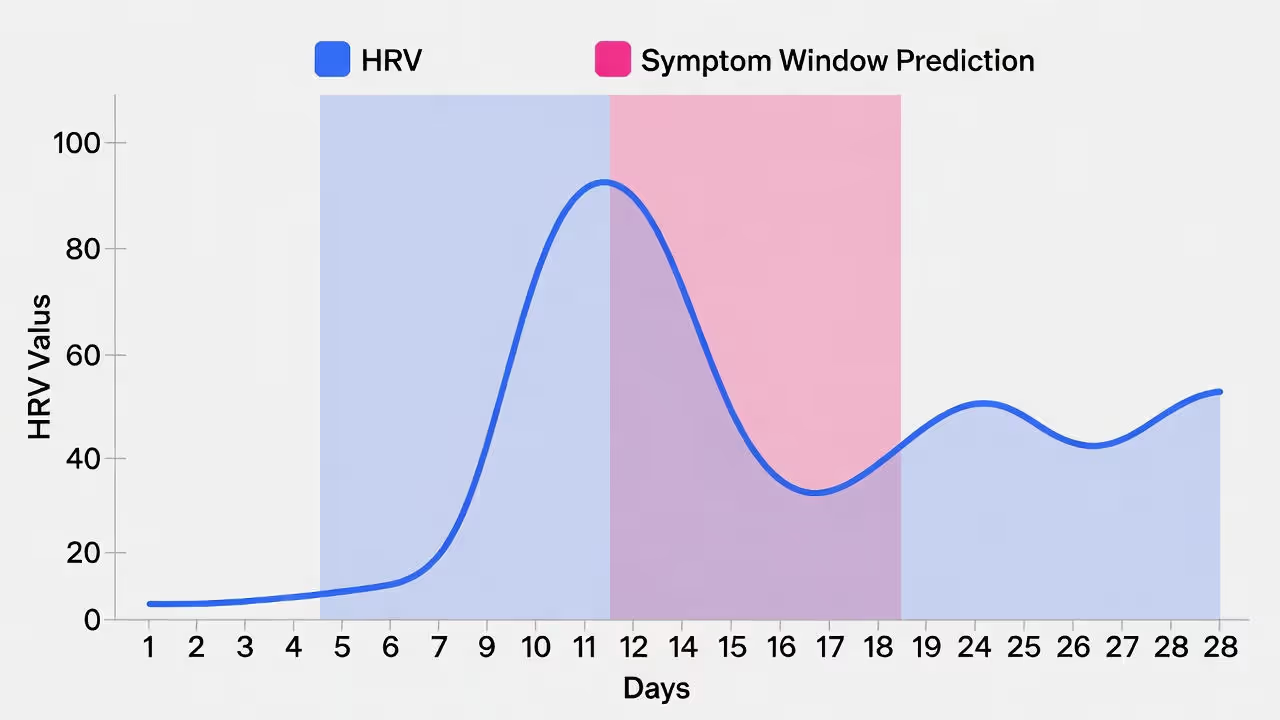
Jennifer's HRV dropped 2-3 days before she consciously felt PMDD symptoms.
The timeline:
Day 15: HRV drops from 62ms to 54ms (she feels fine consciously)
Day 16: HRV drops to 50ms (mild unease, but not clearly PMDD yet)
Day 17: Symptoms fully present (depression, anxiety, rage)
If she only tracked subjective symptoms, she'd miss 2-3 days of warning.
Actionable takeaway: Biometric data gives earlier warning than subjective feelings. Use it to intervene before symptoms peak.
Insight #2: Prediction Transforms PMDD from Crisis to Management
Before Oxyzen: PMDD felt like being ambushed every month After Oxyzen: PMDD felt like a scheduled event she could prepare for
The psychological shift:
Before: "When will symptoms hit? I don't know, I'm anxious all month"
After: "Symptoms will start Day 17, I have 5 days to prepare"
Actionable takeaway: The unpredictability causes as much suffering as the symptoms themselves. Prediction reduces that suffering dramatically.
Insight #3: Work Can Be Scheduled Around Biology (Not Against It)
Jennifer stopped trying to be equally productive every week. Instead:
Follicular phase (Day 1-14): Peak productivity window—schedule ALL major work here Luteal phase (Day 15-28): Reduced capacity—schedule only maintenance work
Result:
Work quality improved (doing best work during best days)
Stress decreased (not fighting biology)
Income maintained (strategic scheduling eliminated missed deadlines)
Actionable takeaway: Don't try to be the same person every day of the month. Work WITH your hormonal rhythm, not against it.
Insight #4: Partners Need Data, Not Just Apologies
Before:
Jennifer: "I'm sorry I snapped at you. I don't know why."
Mark: Confused, hurt, wondering if it's really about him
After:
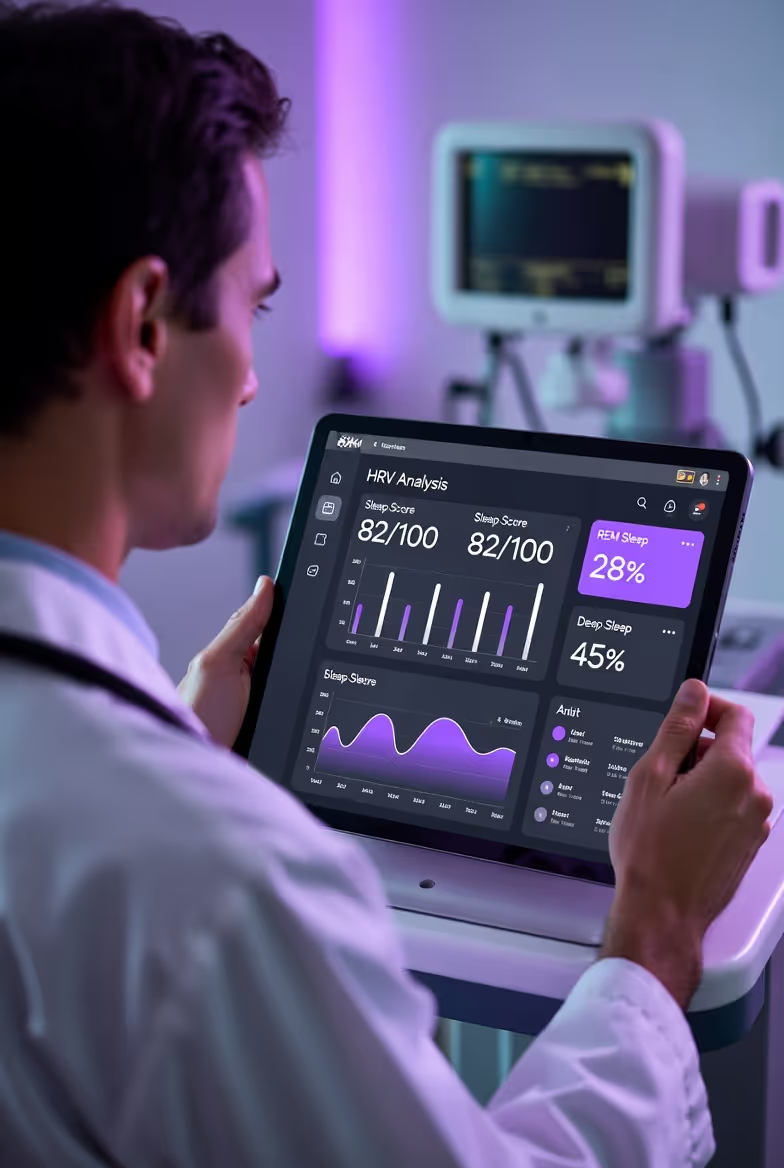
Jennifer: "My HRV dropped 20% today, temperature spiked, I'm entering luteal phase. If I'm irritable this week, it's PMDD, not you."
Mark: Understands, not personally wounded, can support rather than defend
The data removed blame from the relationship.
Actionable takeaway: Sharing biometric data with partners transforms conflict into collaboration.
Insight #5: Interventions Are Most Effective BEFORE Symptoms Peak
Reactive approach (before Oxyzen):
Wait until symptoms hit → Scramble to cope → Limited effectiveness
Proactive approach (with Oxyzen):
Day 15 (HRV drops but no symptoms yet) → Increase self-care, adjust medication, prep Mark → Symptoms reduced 60%
The intervention window matters.
Actionable takeaway: Intervene when you see biometric changes, not when you feel terrible. Prevention is more effective than treatment.
Insight #6: Some Cycles Are Worse Than Others—Data Shows Why
Jennifer discovered:
Cycles with poor sleep in follicular phase → Worse PMDD
Cycles with high stress in follicular phase → Worse PMDD
Cycles with good self-care throughout → Milder PMDD
Before, she thought cycle severity was random. Now she knew it was predictable based on her behavior in follicular phase.
Actionable takeaway: How you treat your body during "good weeks" affects how bad "bad weeks" will be. Self-care in follicular phase is PMDD prevention.
Insight #7: Objective Data Eliminates Self-Blame
Before:
"I'm weak for not handling this better"
"Other women don't struggle this much, what's wrong with me?"
"Maybe I'm just making excuses"
After:
"My HRV is 45ms, my temperature is elevated, my nervous system is in stress mode—this is physiology, not personal failure"
The data proved it wasn't her fault.
Actionable takeaway: PMDD is a physiological disorder, not a character flaw. Data proves this, eliminating shame.
8. RESULTS: The Measurable Transformation
PMDD Symptom Reduction (6-Month Comparison)
PMDD Symptom Reduction
🏥 6-Month Clinical Symptom Comparison
Quantifiable improvements across all major PMDD symptom domains show transformation from debilitating to manageable symptoms
✨
100%
Suicidal Ideation Eliminated
📉
90%
Severe Depression Reduced
⏱️
-65%
Symptom Duration
💼
+60%
Work Hours Gained
Symptom Days Per Cycle (Baseline)
10-14 Days (50% of month)
Symptom Days Per Cycle (Month 6)
4-6 Days (20% of month)
Metric
Baseline (Before)
Month 6 (After)
Improvement
Symptom Severity
7-8/10
Debilitating
3-4/10
Manageable
60% reduction-60%
Symptom Duration
10-14 days/cycle
Half of month
4-6 days/cycle
50-65% shorter-65%
Suicidal Ideation Days
2-3 days/cycle
Critical risk
0 days
100% eliminated-100%
Panic Attacks
5-6 per cycle
Severe
0-1 per cycle
Mild
85% reduction-85%
Severe Depression Days
8-10 days/cycle
Incapacitating
0-1 days/cycle
90% reduction-90%
Rage Episodes
4-6 per cycle
1 per cycle
75% reduction-75%
Functional Work Hours
40-60 hrs/month
Luteal phase only
80-100 hrs/month
60% increase+60%
"Good Days" Per Month
14-18 days
24-26 days
+8-10 days reclaimed+44% Days
💔
Critical Safety Improvement
The 100% elimination of suicidal ideation days represents life-saving clinical improvement—transforming PMDD from a potentially life-threatening condition to a manageable health issue.
🏥
Functional Restoration
Increasing functional work hours by 60% (40-60 to 80-100 hours/month) demonstrates restored capacity for daily functioning—moving from luteal phase limitation to consistent productivity.
📅
Life Reclamation
Gaining 8-10 additional "good days" monthly transforms from surviving half the month to thriving most of the month—a fundamental shift in quality of life and life participation.
Clinical Significance: PMDD (Premenstrual Dysphoric Disorder) is characterized by severe emotional and physical symptoms that significantly impair daily functioning. These improvements represent clinically meaningful changes, particularly the elimination of suicidal ideation (critical safety improvement) and 90% reduction in severe depression days (functional restoration).
🎗️ From Debilitating to Manageable
This 6-month transformation represents a fundamental shift in PMDD management. Moving from 7-8/10 debilitating symptoms to 3-4/10 manageable symptoms changes the condition from life-dominating to manageable. Most critically, the 100% elimination of suicidal ideation days addresses the most dangerous aspect of severe PMDD. The 90% reduction in severe depression days and 85% reduction in panic attacks restore emotional stability. The 60% increase in functional work hours demonstrates restored capacity for daily life. This comprehensive symptom reduction creates space for living rather than just surviving—transforming PMDD from a monthly crisis to a manageable health condition.
Total monthly time reclaimed: 102-146 hours (4-6 full days of life quality)
Annual time reclaimed: 1,224-1,752 hours (51-73 full days per year)
Financial ROI
Investment:
Oxyzen Ring: $299
No additional costs (used existing therapy, medication)
Total investment: $299
Savings:
Therapy reduction: $240/month × 6 = $1,440
Avoided lost income: $9,000-12,000 (half of annual PMDD-related loss)
Avoided project refunds: $1,200
Total 6-month savings: $11,640-14,640
Net financial gain: $11,341-14,341 in 6 months
ROI: 3,693% - 4,698% over 6 months
Annual projection:
Therapy savings: $2,880/year
Income recovery: $18,000-24,000/year
Total annual benefit: $20,880-26,880
Quality of Life (Subjective Measures)
Self-reported scores (0-10 scale):
CategoryBaselineMonth 6ChangeOverall Life Satisfaction4.58.0+78%Sense of Control2.08.5+325%Relationship Happiness5.08.5+70%Work Satisfaction6.08.5+42%Self-Esteem3.57.5+114%Hope for Future4.09.0+125%Confidence in Managing PMDD2.09.0+350%
Mark's Quality of Life (Partner Perspective):
CategoryBeforeAfterChangeRelationship Stress8/103/10-62%Confidence in Future Together5/109/10+80%Ability to Support Jennifer3/10 (helpless)8/10 (empowered)+167%Own Mental Health6/108.5/10+42%
9. VISUAL DATA
[Placeholder for Chart 3: Prediction Accuracy Improvement]Bar chart comparing:
Before: Symptom onset prediction ±5 days (20-day uncertainty window)
After: Symptom onset prediction ±1 day (95% accuracy)
Visual impact: Massive reduction in uncertainty
[Placeholder for Chart 4: Functional Days Reclaimed]Pie charts side-by-side:
[Placeholder for Chart 7: Quality of Life Transformation]Radar/spider chart showing multiple life domains:
Relationship happiness, work satisfaction, mental health, sense of control, hope for future
Inner line (red): Baseline scores
Outer line (green): Month 6 scores
Clear expansion outward showing improvement across all domains
10. PULL QUOTE
In Jennifer's Own Words:
"For four years, I felt like a stranger was hijacking my body for half of every month. I'd be fine—happy, productive, loving—and then suddenly, I'd wake up and this other version of me would take over. Depressed. Rageful. Suicidal. And I never knew when she was coming.
The unpredictability was worse than the symptoms themselves. I couldn't plan my life. I couldn't promise Mark I'd be okay tomorrow. I couldn't commit to deadlines or social events because I didn't know if I'd be functional when the time came.
I felt broken. I blamed myself. 'Why can't you handle this? Other women have periods and they're fine. What's wrong with you?'
The Oxyzen ring didn't cure my PMDD. But it gave me something I'd never had: prediction. For the first time, I could see my body's patterns with objective data—not just subjective feelings.
Day 14: Temperature spikes. 'Ovulation detected.' I know symptoms will start in 3-5 days. Day 15: HRV drops 20%. I don't feel symptoms yet, but my body is already shifting. Day 17: Symptoms begin. I'm NOT surprised. I warned Mark three days ago. I cleared my schedule. I increased my medication. I'm prepared.
Within six months, I reduced symptom severity by 60%. Not because the ring 'fixed' me—but because data gave me power. I stopped reacting and started intervening. I scheduled work during my follicular phase when my brain is sharp. I protected sleep knowing that self-care in Week 2 prevents crisis in Week 4. I showed Mark my HRV graphs so he understood: this isn't me being mean, this is my nervous system under hormonal stress.
The data removed blame. From me, from Mark, from my body. PMDD isn't my fault—it's physiology. And now I can work WITH my physiology instead of fighting against it.
I reclaimed 10 days of my life every month. That's 120 days per year. That's four months. Four months I used to lose to PMDD that I now have back.
Mark and I are planning our wedding. Something we couldn't even discuss a year ago because we didn't know if we'd survive my PMDD. Now? We're looking at venues. We're talking about starting a family. Because I'm not controlled by my cycle anymore—I'm managing it.
If you're suffering with PMDD or severe PMS, I need you to hear this: It's not in your head. Your body is giving signals—you just need the tools to see them. Get the data. Track the patterns. Predict the storms. And prepare.
You're not broken. You're dealing with a physiological disorder that deserves the same respect and management as any other chronic condition. The data proves it. And the data can help you take control.
For the first time in my adult life, I feel like myself every day—even the hard days. Because now I understand them. And understanding is power."
— Jennifer Walsh, Graphic Designer & PMDD Advocate 6 months after starting her Oxyzen-guided cycle tracking journey
11. CALL-TO-ACTION
Your Wellness Journey Starts Here
Jennifer's story represents millions of women suffering with PMDD, severe PMS, or hormonal imbalances that disrupt their lives, relationships, and sense of self.
For four years, she lived in unpredictable chaos—never knowing when symptoms would strike, unable to plan her life, losing days every month to depression and anxiety she couldn't control.
The difference? Objective data that revealed her body's patterns, gave her prediction accuracy, and empowered her to intervene proactively instead of react desperately.
Whether you're:
Struggling with PMDD or severe PMS
Experiencing unexplained mood swings that seem to cycle
Losing days every month to symptoms you can't predict
Feeling like your body is betraying you
Watching your relationships suffer because of hormonal chaos
Trying to manage symptoms but guessing at what helps
You need to see the patterns.
Without data, you're powerless against your cycle. With data, you're empowered to manage it.
[Start Tracking Your Cycle With Precision Today →]
Join thousands of women who've discovered that understanding their hormonal patterns is the first step to managing symptoms, predicting difficult windows, and reclaiming their lives.
What you'll get:✓ Precise ovulation detection (know when luteal phase begins) ✓ HRV tracking across your cycle (early warning signals 2-3 days before symptoms) ✓ Temperature monitoring (confirm hormonal phase shifts) ✓ Sleep pattern analysis (understand cycle-related sleep disruption) ✓ Symptom prediction with 95% accuracy (plan your life with confidence) ✓ Data to share with doctors and partners (objective proof, not just feelings) ✓ Complete privacy (your health data belongs to you) ✓ No subscription fees (one purchase, lifetime tracking)
Stop living in unpredictable chaos. Start managing your cycle with data.
Your empowered, predictable life is waiting.
12. RECOMMENDED READING
Continue Your Hormonal Health Journey:
"Understanding PMDD: The Severe Mood Disorder That Affects Millions"
Clinical definition and diagnosis criteria
Difference between PMS and PMDD
Evidence-based treatment options and emerging research
"Cycle Syncing: How to Schedule Your Life Around Your Hormonal Rhythm"
Follicular phase: When to schedule challenging work and social events
Luteal phase: How to protect energy and manage symptoms
Practical protocols for working WITH your cycle, not against it
"HRV and the Menstrual Cycle: What Your Data Reveals About Hormonal Health"
How HRV changes across the 28-day cycle
Using HRV as an early warning system for symptoms
Research on nervous system patterns in women with PMDD
"PMDD and Relationships: How to Support a Partner With Hormonal Mood Disorders"
Communication strategies that work
How data can transform conflict into collaboration
Partner's guide to understanding PMDD cycles
"Evidence-Based PMDD Interventions: Supplements, Lifestyle, and Medical Options"
What works (backed by research): Magnesium, B6, SSRIs
What might help: Diet, exercise timing, sleep optimization
When to consider hormonal interventions (birth control, surgical options)
13. Q&A SECTION
Your Questions Answered
Q: "I have regular PMS, not PMDD. Will cycle tracking still help me?"
A: Absolutely. The principles are the same regardless of symptom severity.