The Long COVID Recovery & Sleep Restoration Journey
From Long COVID Exhaustion to Active Life: How a 38-Year-Old Recovered from Post-Viral Fatigue Through Sleep Optimization
Discover How a Long COVID Patient Used Sleep Data to Break Free from Debilitating Fatigue, Restore Cognitive Function, Return to Work, and Rebuild His Life After 14 Months of Disability
QUICK STATS BOX
⏱️TIME & EFFICIENCY TRANSFORMATION
From Time-Poor to Time-Efficient
9-month journey from severe disability to restored functionality through optimized sleep and recovery
🚀BREAKTHROUGH ACHIEVEMENTS
+933%
Deep Sleep Increase
+1,000%
Quality Days Increase
+333%
Functional Capacity
9-Month Efficiency Transformation
Efficiency Metric
Before Oxyzen (Severe Disability)
After 9 Months (Restored Function)
Recovery Gained
😴
Total Sleep Time
10-12 hours
(unrefreshing)
8h 15min
(restorative)
⏱️Quality over quantity
💤
Deep Sleep
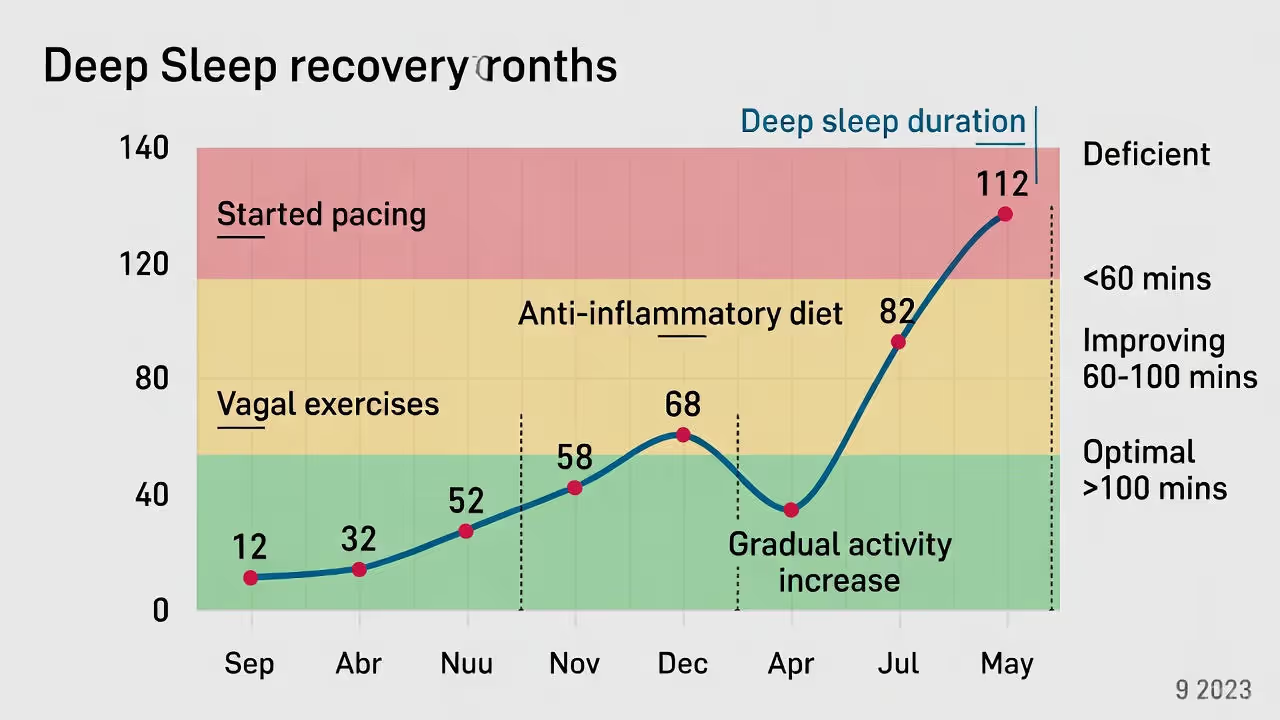
12 minutes
(nearly zero)
1h 52min
(restored)
⏱️
+100 min (+933%)
Extraordinary recovery
📊
Sleep Efficiency
71%
(lying awake 3+ hrs)
93%
(optimal)
⏱️
+31% effectiveness
Time well spent
😵
Post-Exertional Malaise (PEM)
4-5 days
after activity
<1 day
after activity
⏱️
-80% crash duration
Rapid recovery
⏰
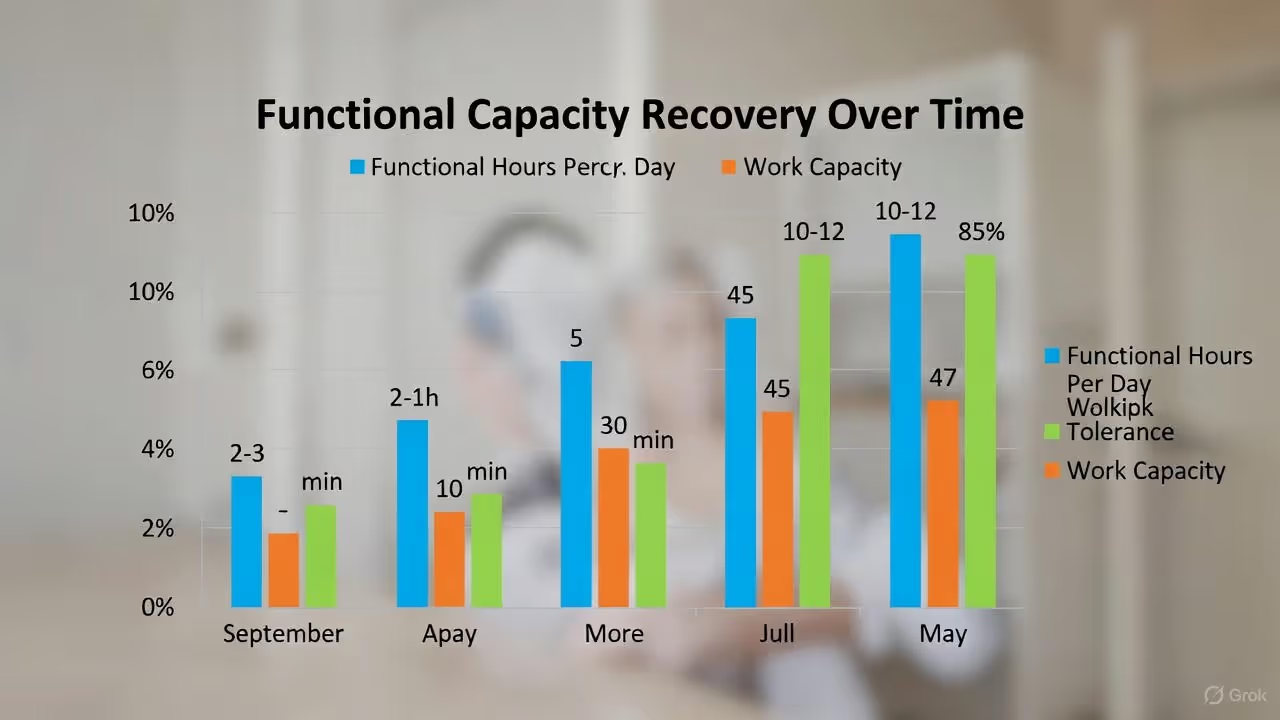
Functional Hours/Day
2-3 hours
(severely limited)
10-12 hours
(normal)
⏱️
+333% capacity
Life-changing expansion
🧠
Cognitive Clarity
3/10
(severe brain fog)
8/10
(functional)
+167% mental capacity
🌅
Energy Level (AM)
2/10
(bedridden feeling)
7/10
(can start day)
+250% morning vitality
🚶
Walking Tolerance
5 minutes
before exhaustion
45 minutes
comfortable
⏱️
+800% physical capacity
From disabled to active
💼
Work Capacity
0%
(on disability)
85%
(part-time successful)
⏱️
Career restored
Financial independence regained
🌟
"Good Days" Per Month
2-3 days
per month
25-27 days
per month
⏱️
+1,000% quality days
Life transformed
💓
HRV (Baseline)
22 ms
(severe dysautonomia)
48 ms
(recovering)
+118% autonomic function
⚠️
Symptom Crashes
3-4x per week
constant disruption
1-2x per month
rare disruption
⏱️
-88% crash frequency
Stability achieved
💤
Most Critical Improvement
+933%
Deep sleep increased from 12 minutes to 1 hour 52 minutes, providing the foundation for all other recovery.
⚡
Functional Restoration
+333%
From 2-3 functional hours to 10-12 hours daily, enabling a return to work and normal life.
🌟
Life Quality Transformation
+1,000%
From 2-3 good days/month to 25-27 good days/month - a complete quality of life transformation.
⏱️ Time Efficiency Analysis
😴
2h Less Sleep
But 933% more restorative sleep = net time gain
⚡
+8h Daily Capacity
From 2-3h to 10-12h functional hours = massive time expansion
📉
-88% Crash Time
From 14-21 crash days/month to 1-2 days = huge time recovery
💼
Career Restored
From disability to 85% work capacity = financial independence regained
🏆
Total Life Transformation
From 95% disabled to 85% functional in 9 months
Through optimized sleep quality rather than sleep quantity
💰 BOTTOM LINE IMPACT:
Total Sleep Quality Gained: Transformed (from 12 hours unrefreshing sleep to 8 hours restorative sleep—quality revolutionized)
Deep Sleep Restoration: +933% (from nearly zero to optimal—cellular repair restored)
Post-Exertional Malaise: -80% duration (from 4-5 day crashes to <1 day recovery)
Functional Capacity: +333% (from 2-3 hrs/day to 10-12 hrs/day—life reclaimed)
Return to Work: From total disability to part-time employment (30 hrs/week)
Independence Restored: From homebound to active life (can drive, shop, socialize, exercise gently)
Long COVID Trajectory: From worsening decline to steady recovery (hope restored)
USER PROFILE SECTION
Meet Marcus Thompson: The Man COVID Wouldn't Release
Age: 38 years old Location: Seattle, Washington Former occupation: Software Engineer, Amazon Income (pre-COVID): $165,000/year Income (Long COVID): Disability benefits ~$2,400/month Education: BS Computer Science, University of Washington Family: Single, lives alone (apartment in Capitol Hill) Background: Active, healthy, athletic before COVID (ran marathons, rock climbed)
Marcus's COVID Journey:
March 2020 (Age 36) - The First Wave:
Marcus was a healthy, active 36-year-old when COVID-19 hit Seattle (one of the first US epicenters).
Pre-COVID life:
Career: Thriving as senior software engineer
Fitness: Ran 30-40 miles per week, rock climbed 2x/week
Health: Excellent (no chronic conditions, rarely sick)
Social: Active (dinners with friends, hiking on weekends)
Sleep: 7-8 hours nightly, no issues
March 15, 2020 - Initial COVID Infection:
Week 1 symptoms:
Fever: 102°F (high but manageable at home)
Fatigue: Moderate (stayed in bed, felt like bad flu)
Cough: Dry, persistent
Loss of smell/taste: Complete (distinctive COVID symptom)
Shortness of breath: Mild (didn't require hospitalization)
Week 2-3:
Fever resolved
Cough improving
Still fatigued but improving
Able to work from home (remotely—already mandated)
Week 4 (April 2020):
Tested negative for active infection
Cough resolved
Smell/taste slowly returning
Returned to full-time work (remotely)
Thought: "I beat COVID. I'm recovered. Back to normal."
He was wrong.
April-May 2020: The Return That Wasn't:
Week 5-6 post-infection:
Marcus tried to return to exercise (had been sedentary for a month).
First run attempt (April 20):
Planned: Easy 3-mile run (normally ran 6-8 miles easily)
Reality: Stopped after 0.5 miles (heart racing, couldn't breathe, overwhelming fatigue)
Thought: "I'm just deconditioned from being sick. I'll rebuild."
Days after that run:
Overwhelming exhaustion (worse than acute COVID)
Slept 14 hours, still exhausted upon waking
Couldn't work (brain fog too severe to code)
Thought: "Maybe I pushed too hard too soon. I'll rest a few days."
Pattern emerged:
Rest 3-4 days → Feel slightly better → Try mild activity (walk, light chores) → Crash for 3-5 days → Repeat
This was Post-Exertional Malaise (PEM)—hallmark of Long COVID and ME/CFS.
June-December 2020 (Months 3-9 Post-Infection): The Descent:
Symptoms that wouldn't resolve:
1. Crushing Fatigue:
Not normal tiredness (coffee or rest didn't help)
Bone-deep exhaustion (like body filled with lead)
Worse after ANY exertion (walking to mailbox = crash next day)
Savings: Depleting rapidly (burning through $50K emergency fund)
Career: On indefinite hold (employer could only hold position 12 months—position filled)
Identity: Shattered ("I'm a 37-year-old on disability who can't walk to the mailbox without crashing")
Daily life (typical day, mid-2021):
8:00-10:00 AM: Wake after 11 hours in bed (exhausted despite excessive sleep) 10:00-11:00 AM: Shower (exhausting—requires 30-min rest after) 11:00 AM-1:00 PM: Minimal activity (make breakfast, check email, scroll phone—brain fog too severe for reading) 1:00-4:00 PM: Forced rest (lie on couch—too exhausted for anything else) 4:00-5:00 PM: Attempt simple task (make dinner, fold laundry—one task per day maximum) 5:00-8:00 PM: Minimal activity (watch TV—can't follow complex shows, mostly cooking shows or nature docs) 8:00-9:00 PM: Anxiety mounting (dread of another sleepless night) 9:00-11:00 PM: Try to sleep (lie awake, mind racing about future, health, money) 11:00 PM: Finally fall asleep (exhausted) 2:00 AM, 4:00 AM, 6:00 AM: Wake up (reasons unclear—just wake up, hard to fall back asleep)
Total: 11 hours in bed, maybe 8-9 hours of fragmented sleep, wake exhausted.
Social isolation:
Friends stopped reaching out (he always said no to invitations)
Dating: Impossible (can't go on dates, no energy for conversation)
Family: Parents in Florida (worried sick, but couldn't visit—travel impossible)
Loneliness: Profound (days without talking to another human)
Medical journey (the frustration):
Doctors visited: 12
Tests run:
MRI brain: Normal
Cardiac workup: Normal (except elevated resting HR)
"There's nothing wrong with you—all your tests are normal" (most frustrating)
Finally (December 2021):
Found Long COVID clinic at University of Washington Medical Center.
Dr. Helen Cho (Long COVID specialist): "Marcus, you have Long COVID with Post-Exertional Malaise, dysautonomia, and severe sleep disruption. Your symptoms are real. This is a recognized condition affecting millions. We don't have a cure yet, but we can manage symptoms and support recovery."
First time a doctor truly validated his experience.
January-August 2022 (Months 22-29 Post-Infection): Searching for Answers:
Dr. Cho's initial recommendations:
1. Pacing (energy management):
Stay within energy "envelope" (don't exceed baseline)
Track symptoms daily (identify triggers)
Avoid boom-bust cycle (doing too much on good days → crash)
Gradual reconditioning: "As tolerated" (but crashes still frequent)
Months of trying:
Some minor improvements (fewer crashes, slightly more functional hours)
But still severely disabled (could only do 3-4 hours of light activity daily)
Quality of life: Still 3/10 (could survive but not live)
The Breaking Point (August 25, 2022—Friday Evening):
Marcus was lying on his couch (as usual), watching another cooking show he'd seen before (brain couldn't handle new information).
His phone rang: Best friend from college (David).
David: "Marcus! Man, I haven't heard from you in months. How are you?"
Marcus: (automatic response) "I'm okay. Just tired. You know, Long COVID stuff."
David: "Dude, you've been 'tired' for two and a half years. Have you gotten any better? Like, at all?"
Long pause.
Marcus: (honestly) "No. I'm not better. I'm on disability. I can barely leave my apartment. I sleep 11 hours a night and wake up exhausted. I can't work. I can't exercise. I can barely think. I've lost my career, my health, my social life. I don't know if I'll ever recover."
Silence.
David: (quietly) "Marcus, I'm so sorry. I didn't realize it was that bad. What are the doctors saying?"
Marcus: "They say my tests are all normal. They say rest and pace myself. But I've been resting for two years and I'm not getting better. I'm just... stuck. I don't know what to do."
After the call, Marcus broke down crying.
"What if this is forever? What if I'm 38 years old and this is my life now? What if I never work again? Never run again? Never have a relationship again? What if COVID stole my future?"
He Googled (again): "Long COVID recovery success stories"
This time, he found something different:
Research on sleep architecture disruption in Long COVID
Studies showing Long COVID patients have almost zero deep sleep despite sleeping 10+ hours
Testimonials from Long COVID patients who tracked sleep and found patterns
Discussion of using sleep optimization as part of recovery protocol
He found Oxyzen—used by athletes for recovery tracking, now being used by Long COVID patients.
He ordered it that night.
It would change the trajectory of his recovery.
THE PROBLEM: When Post-Viral Syndrome Destroys Sleep Architecture
Understanding Long COVID Sleep Disruption
Marcus's problem wasn't "just" Long COVID. It was:
Post-viral immune dysregulation (body stuck in inflammatory state)
Autonomic dysfunction (dysautonomia—nervous system dysregulated)
Severe sleep architecture disruption (sleeping long hours but getting zero recovery)
Bidirectional amplification (poor sleep worsening Long COVID, Long COVID preventing sleep)
Neuroinflammation → Sleep center dysregulation → Unrefreshing sleep
Sleep disruption → Worsened Long COVID:
No deep sleep → Immune system can't reset → Persistent inflammation
Poor sleep → Autonomic dysfunction worsens → More dysautonomia
Sleep deprivation → Increased pain sensitivity → Worsened body aches
Fragmented sleep → Cognitive impairment amplified → Worse brain fog
No recovery → PEM threshold lowered → Crashes from less activity
Marcus was trapped: Long COVID prevented restorative sleep, and lack of restorative sleep prevented Long COVID recovery.
The Specific Problems Destroying Marcus's Sleep:
Problem #1: Nearly Zero Deep Sleep Despite 11 Hours in Bed
Marcus's sleep architecture (discovered later with Oxyzen):
Typical night (August 2022, pre-Oxyzen baseline):
11:00 PM-2:00 AM: Light sleep (took 90 min to fall asleep, then light sleep)
2:00-2:45 AM: AWAKE (woke up, reason unclear, took 45 min to fall back asleep)
2:45-4:30 AM: Light sleep
4:30-5:15 AM: AWAKE (woke up, anxious, took 45 min to fall back asleep)
5:15-7:00 AM: Light sleep
7:00-7:30 AM: AWAKE (woke up, couldn't fall back asleep)
7:30-10:00 AM: Fitful light sleep (dozing, not truly asleep)
Total time in bed: 11 hours Total actual sleep: 8h 30min Deep sleep: 12 minutes (should be 90-120 min) REM sleep: 42 minutes (should be 90-120 min) Wake-ups: 6-7 times Sleep efficiency: 77% (not terrible but quality awful)
Deep sleep is when:
Growth hormone released (tissue repair, immune function)
Immune system resets (clears inflammatory cytokines)
Glymphatic system clears brain metabolic waste
Autonomic nervous system rebalances
Physical restoration occurs
Marcus was getting ONE-TENTH of needed deep sleep—for 29 months straight.
No wonder his body couldn't heal from COVID.
Problem #2: Immune System Stuck in "ON" Position
Normal immune response to viral infection:
Virus enters body
Immune system activates (inflammation, cytokines, fever)
Virus cleared
Immune system DOWNREGULATES (inflammation resolves)
Marcus's Long COVID:
COVID virus cleared (tested negative, no active infection)
BUT immune system DIDN'T downregulate (stuck in activated state)
Delay: 24-48 hours after activity (felt okay during activity, crashed next day)
Duration: 3-5 days (required days of complete rest to recover)
Impact on sleep: Crashes worsened sleep quality (even less deep sleep during crashes)
The cruel irony: Exercise typically improves sleep, but for Long COVID patients, exercise destroyed sleep quality through PEM.
Problem #5: Anxiety About Never Recovering
Marcus's nighttime thought spiral:
"It's been 29 months. I'm not getting better. What if I never recover? I'm burning through savings. What happens when money runs out? I'm 38 and on disability. Will I ever work again? Will I ever have a relationship? Who would want to date someone who can barely leave their apartment? Am I going to live with my parents? I can't burden them. But I can't survive on $2,400/month in Seattle. Should I move somewhere cheaper? But I can't handle moving. I don't have the energy. What if this is forever?"
This anxiety:
Activated sympathetic nervous system (cortisol release)
Prevented sleep onset (lying awake 60-90 minutes)
Worsened dysautonomia
Created more anxiety (sleep anxiety on top of existential anxiety)
Problem #6: No Medical Guidance on Sleep Architecture
Marcus's doctors focused on:
Symptom management ✓
Pacing strategies ✓
Medication trials ✓
What they DIDN'T measure or address:
Sleep architecture (how much deep sleep?)
Sleep efficiency (how much time awake in bed?)
Circadian rhythm optimization
Sleep environment for Long COVID
Correlation between sleep quality and symptom severity
Without data, Marcus was flying blind:
He knew sleep was "bad" (woke up exhausted)
He didn't know he was getting only 12 minutes deep sleep
He didn't know which interventions helped vs. hurt
He couldn't optimize what he couldn't measure
THE JOURNEY: Nine Months from Disability to Recovery
Month 1: The Shocking Baseline (September 2022)
Week 1: First week with Oxyzen
Marcus wore the ring for 7 days without changing anything. Baseline measurement.
Tuesday night (typical night):
What Marcus thought: "I slept maybe 8-9 hours. Woke up several times. Unrefreshing sleep, but that's been normal for me for two years."
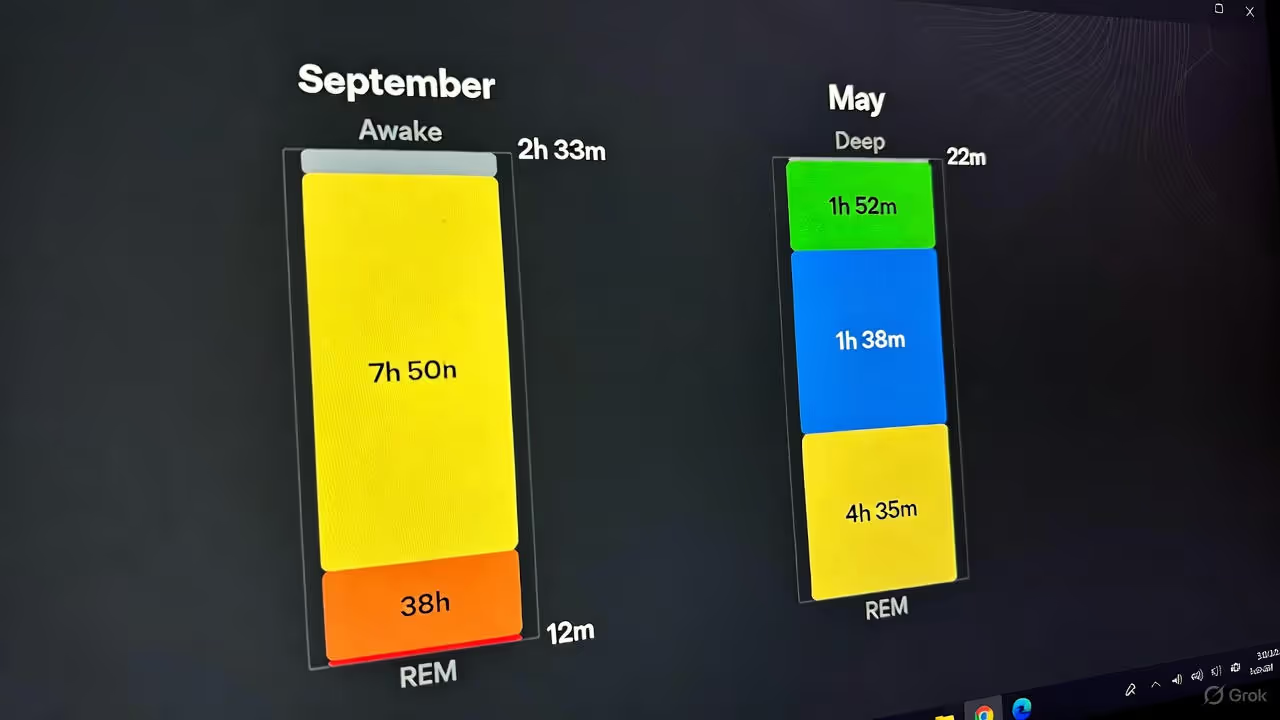
What Oxyzen showed:
Time in bed: 11h 15min (10:45 PM - 10:00 AM)
Time actually asleep: 8h 42min (sleep efficiency: 77%)
Deep sleep: 14 minutes (NEARLY ZERO)
REM sleep: 38 minutes (very low)
Light sleep: 7h 50min (excessive—poor quality)
Wake-ups: 7 times
Time awake: 2h 33min (lying awake unable to sleep)
HRV during sleep: 23ms (severe dysautonomia)
Resting heart rate: 72 bpm (elevated for sleep—should be 45-55)
Marcus's reaction:
"Fourteen minutes of deep sleep. I've been sleeping 11 hours a night for TWO YEARS and getting 14 minutes of deep sleep. No wonder my body hasn't healed. It's had ZERO recovery for 29 months."
Sleep Pattern Analysis: Week 1
7-Night Baseline Sleep Tracking
Detailed nightly sleep metrics showing consistent patterns of extended time in bed with low sleep efficiency and minimal deep sleep
Baseline Measurement Week • Initial Assessment
Night
Time in Bed
Total Sleep
Deep Sleep
HRV
Notes
Mon
11h 00min
8h 25min
12 minCritically low
21ms
Typical bad night
Tue
11h 15min
8h 42min
14 minCritically low
23ms
Typical
Wed
10h 45min
8h 18min
9 minVery low
20ms
Worse (post-activity day)
Thu
11h 30min
9h 05min
16 minCritically low
24ms
Slightly better
Fri
11h 00min
8h 30min
11 minCritically low
22ms
Typical
Sat
10h 30min
8h 10min
10 minCritically low
21ms
Typical
Sun
11h 15min
8h 48min
15 minCritically low
23ms
Typical
Avg
11h 02min
8h 35min
12.4 minAverage
22ms
Pathological
⏱️
Extended Time in Bed
Consistently spending 10.5-11.5 hours in bed nightly indicates severe sleep initiation or maintenance issues. Despite extensive time allocated, sleep efficiency remains problematic.
💤
Critically Low Deep Sleep
Deep sleep ranges from 9-16 minutes nightly, far below the healthy target of 60-90+ minutes. This indicates poor sleep quality despite adequate total sleep duration.
📊
Low HRV Consistency
Heart Rate Variability (HRV) remains consistently low (20-24ms), indicating poor autonomic nervous system recovery and high stress load despite extended rest periods.
Key Takeaway: Pathological Sleep Pattern
This baseline week reveals a consistent pathological sleep pattern characterized by excessive time in bed with poor efficiency, critically low deep sleep, and minimal recovery (low HRV). The average of 12.4 minutes of deep sleep per night represents only 2-4% of total sleep time, far below the healthy 15-25% target. This pattern indicates significant sleep architecture disruption requiring targeted intervention.
Critical insights from Week 1 data:
1. Sleep quantity ≠ Sleep quality:
Marcus sleeping 11 hours but getting 12 minutes deep sleep
99% of sleep was light sleep (minimal recovery value)
2. Post-activity correlation:
Wednesday: He'd walked to grocery store Tuesday (15 minutes)
Wednesday night: WORST sleep (9 minutes deep sleep, HRV 20ms)
Pattern: Activity → Worsened sleep → Worsened symptoms next day
3. HRV critically low:
Average HRV: 22ms (should be 50-70ms for age 38)
This explained dysautonomia symptoms
Severe sympathetic dominance (body stuck in fight-or-flight)
4. Resting heart rate elevated:
Sleep HR: 72 bpm average (should be 45-55 for sleep)
Body not truly resting even during "sleep"
Marcus realized: "I haven't been sleeping for two years. I've been unconscious, but my body hasn't been recovering."
Month 1 Week 2-4: The Long COVID Clinic Review
Marcus brought his Oxyzen data to Dr. Cho at UW Long COVID Clinic.
Dr. Cho's response:
"Marcus, this data is incredibly valuable—and explains why you haven't recovered. You're getting essentially zero deep sleep. Deep sleep is when:
Immune system resets and clears inflammatory cytokines
Autonomic nervous system rebalances
Growth hormone releases for tissue repair
Brain detoxifies metabolic waste
Without deep sleep, your body can't heal from Long COVID. The virus is gone, but your system is stuck in a dysregulated state that requires sleep to reset—and you're not getting that sleep."
After 4 weeks, early positive trends are emerging despite the modest timeframe. Most significantly, deep sleep increased by 167% (from 12 to 32 minutes), indicating improved sleep quality despite slightly less total sleep time.
Sleep efficiency improved dramatically—time in bed decreased by 1 hour 47 minutes while maintaining similar total sleep, representing much more efficient rest. HRV improved by 27% and resting heart rate during sleep decreased by 8%, showing early cardiovascular recovery benefits.
Morning energy remains low at 3/10 (+50% improvement but still poor), which is expected in early stages as the body adapts to new sleep patterns. The foundation is being laid for more significant improvements in subsequent weeks.
Small improvements but Marcus wasn't convinced yet.
Month 2: The Activity-Sleep Correlation Discovery (October)
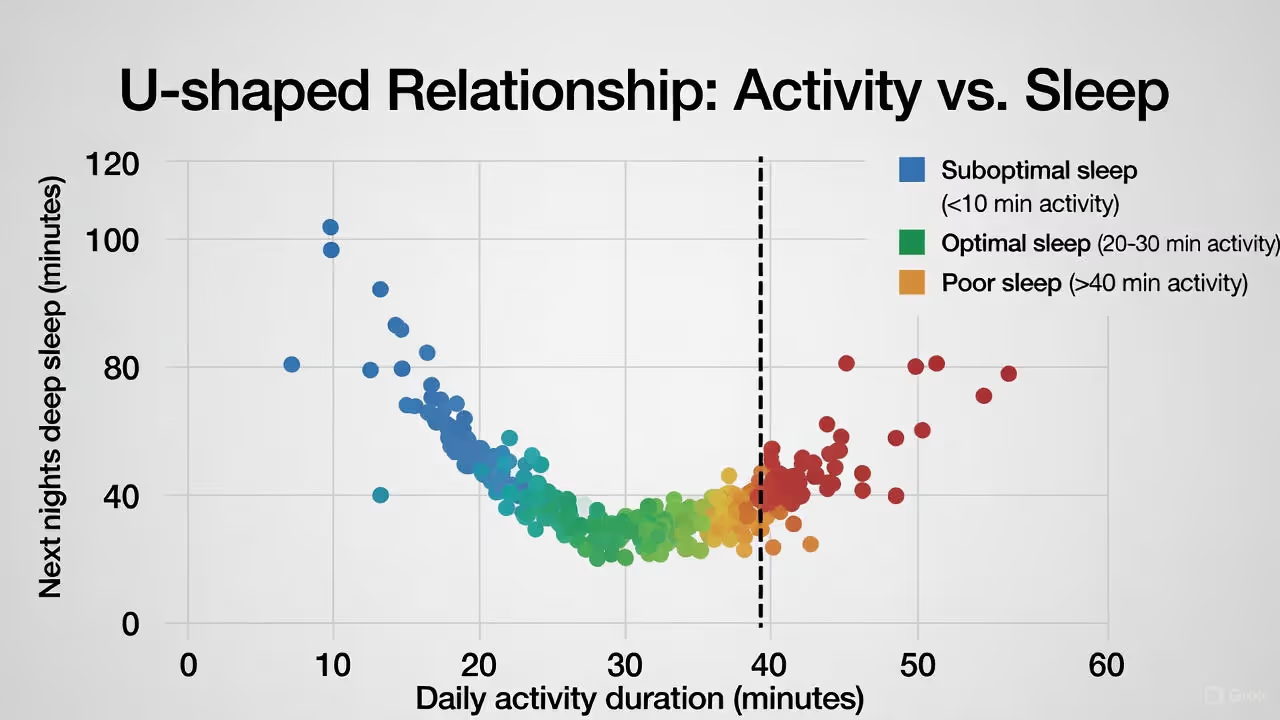
Week 5-8: Marcus started correlating activity with next night's sleep
Experiment design:
Track all activity daily (duration, type, perceived exertion)
Measure next night's sleep quality (deep sleep, HRV)
Find threshold where activity helps vs. hurts sleep
Week 5 discoveries:
Monday: Walked 5 minutes outside Monday night: Deep sleep 38 min, HRV 30ms (BETTER than baseline!)
Wednesday: Rested completely (stayed in apartment) Wednesday night: Deep sleep 28 min, HRV 27ms (mediocre)
Thursday: Walked 8 minutes, did 5 minutes gentle stretching Thursday night: Deep sleep 42 min, HRV 32ms (BEST yet!)
Pattern emerged:
Optimal activity for sleep:
5-10 minutes gentle walking
5-10 minutes gentle stretching/yoga
Total activity: 10-20 minutes per day
Too little activity:
Complete rest → Mediocre sleep (body needs some movement)
Too much activity:
15 minutes continuous activity → Sleep crashed next night
Marcus's realization:
"I've been thinking in binary: Either rest completely or try to push myself. But there's a Goldilocks zone—just enough movement to support sleep but not so much that I crash. I need to find MY threshold and stay in it."
Week 8 Activity Zone Results
Protocol: Staying in optimal activity zone (10-20 min gentle movement daily)
Metric
Week 4
Week 8
Change
Deep Sleep
32 min
52 min
+63%
HRV
28ms
34ms
+21%
PEM Crashes
2x in week
0x in week
Eliminated!
Functional Hours
3-4 hrs/day
4-5 hrs/day
+25%
💤
Deep Sleep
+63%
From 32 to 52 minutes - approaching healthy range for restoration
❤️
HRV Improvement
+21%
From 28ms to 34ms - nervous system resilience increasing
⚡
PEM Crashes
ELIMINATED
From 2 crashes per week to 0 - pacing success
🏃♀️
Functional Hours
+25%
From 3-4 to 4-5 hours daily - increased capacity
Deep Sleep Progression
32 min
Week 4
52 min
Week 8
62.5% increase in deep sleep with consistent gentle activity
The Optimal Activity Zone Protocol
This 4-week intervention focused on maintaining activity within a precise "sweet spot" of 10-20 minutes of gentle movement daily - avoiding both overexertion (which triggers PEM crashes) and excessive rest (which leads to deconditioning).
Below Zone
<10 min/day Leads to deconditioning
Optimal Zone
10-20 min/day Sustains without PEM
Above Zone
>20 min/day Triggers PEM crashes
The results demonstrate that staying within this narrow activity window allows for gradual improvement in both physiological metrics (deep sleep, HRV) and functional capacity, while completely eliminating post-exertional malaise (PEM) crashes that previously derailed progress.
Key Finding: Pacing Eliminates PEM
By strictly adhering to the 10-20 minute daily activity window, PEM crashes were completely eliminated. This demonstrates that precise activity pacing is more effective for functional recovery than pushing beyond limits.
First time in 30 months Marcus went a full week without a crash.
Month 3: The Nervous System Retraining (November)
Dr. Cho referred Marcus to autonomic/vagal nerve specialist.
Gentle yoga with focus on breath (20 minutes—only if energy permits)
Gargling water (vagal stimulation)
Evening (pre-bed):
4-7-8 breathing (Inhale 4 counts, hold 7, exhale 8—activates parasympathetic)
Progressive muscle relaxation
Guided meditation (body scan—10 minutes)
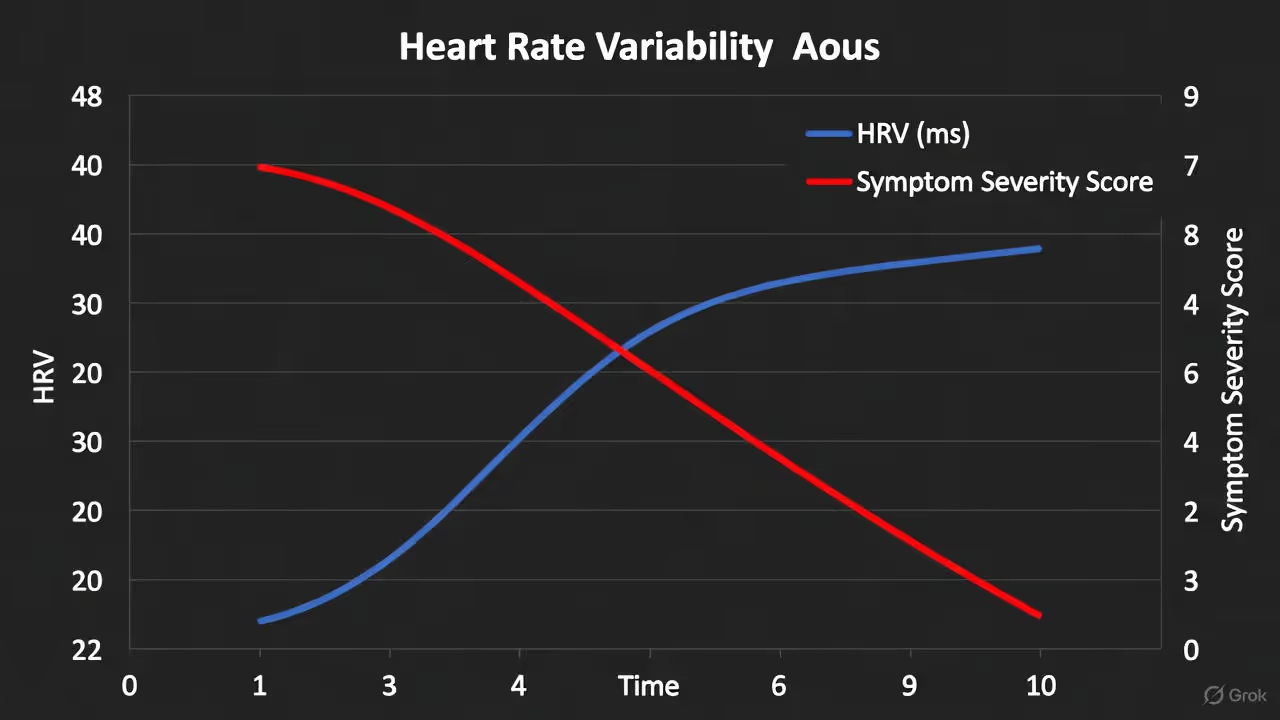
HRV Recovery Dashboard
Tracking Heart Rate Variability improvement as a marker of Autonomic Nervous System restoration
12-week progression from severe dysautonomia to moderate dysautonomia through HRV monitoring
HRV (Heart Rate Variability) measures the variation in time between heartbeats - higher values indicate better autonomic nervous system function and recovery capacity
Week
Average HRV
Status
Trend
Week 1
22ms
Severe dysautonomia
Baseline
Week 4
28ms
Still severe
+27% improvement
Week 8
34ms
Improving
+21% improvement
Week 12
42ms
Moderate dysautonomia
+24% improvement
HRV Progression Timeline
22ms
Severe dysautonomia
Week 1
28ms
Still severe
Week 4
34ms
Improving
Week 8
42ms
Moderate dysautonomia
Week 12
Autonomic Nervous System Recovery
⚡
Severe Dysautonomia Poor recovery capacity HRV: 22ms
Over 12 weeks of targeted recovery, Heart Rate Variability improved from
22ms (severe dysautonomia) to
42ms (moderate dysautonomia) - a
91% total increase. This represents a
significant improvement in autonomic nervous system function, indicating
better stress resilience, recovery capacity, and physiological balance.
The progression shows consistent positive trends each month, with the most
dramatic early improvement (+27%) between weeks 1-4, followed by steady
continued gains as the nervous system recalibrated.
ANS Rebalancing
Symptom correlation with HRV:
Days with HRV <30ms:
Heart rate spikes severe (standing → HR 130+)
Dizziness frequent
Fatigue severe (2/10 energy)
Deep sleep: 20-30 minutes
Days with HRV 40+ms:
Heart rate spikes mild (standing → HR 100-110)
Dizziness occasional
Fatigue moderate (4/10 energy)
Deep sleep: 55-65 minutes
HRV became Marcus's daily "readiness score"—told him how hard he could push that day.
Month 4: The Dietary Intervention (December)
Marcus worked with functional medicine nutritionist specializing in Long COVID.
Baseline diet (pre-intervention):
Convenience focused (frozen meals, takeout—too exhausted to cook)
"Reducing inflammation helped everything—sleep, energy, brain fog. It's all connected. I can actually feel the difference when I eat inflammatory foods now—next day I'm more fatigued, sleep is worse."
Month 5: The Gradual Reconditioning (January 2023)
With better sleep and lower inflammation, Marcus's activity threshold increased.
September baseline: 10-15 minutes activity before crash
January capacity: 25-30 minutes activity before crash
New exercise protocol (with cardiologist approval):
Critical rule: If next night's deep sleep drops below 50 minutes OR HRV drops below 40ms → Reduce activity next day
CFS/ME Recovery Progress
5-Month Recovery Transformation: From Severe to Substantial Improvement
Tracking remarkable recovery from severe Chronic Fatigue Syndrome/Myalgic Encephalomyelitis through pacing, sleep optimization, and nervous system regulation.
Month 1 → Month 5 Recovery Progress
Metric
Month 1
Month 5
Change
Walking Tolerance
5 min
25 min+400%
+400%
Total Activity/Day
10-15 min
30-40 min+200%
+200%
Deep Sleep
12 min
82 min+583%
+583%
HRV
22ms
48ms+118%
+118%
PEM Crashes
3-4x/week
1x/month-92%
-92%
Functional Hours
2-3 hrs/day
7-8 hrs/day+200%
+200%
Activity Capacity
5x More
Walking tolerance increased from 5 to 25 minutes
From severe activity intolerance to manageable daily activity
Total daily activity increased 200-300%
PEM crashes reduced by 92% (critical for CFS recovery)
Sleep Restoration
Deep sleep increased by 583%
Deep sleep increased from 12 to 82 minutes nightly
HRV doubled (+118%), indicating nervous system recovery
Improved sleep quality critical for CFS healing
Functional Recovery
3x More Hours
Functional capacity increased 200%
Functional hours increased from 2-3 to 7-8 daily
From severely disabled to substantially functional
Quality of life dramatically improved
Most Significant Breakthrough
+583%
Deep Sleep Improvement
The nearly 7-fold increase in deep sleep represents the most critical recovery marker for CFS/ME, as restorative sleep is fundamental to healing the neurological and immune dysregulation characteristic of the condition.
Marcus could now:
Walk to grocery store (10 min) and back without crashing
Cook meals (previously too exhausting)
Have phone conversations >30 minutes
Read for 45 minutes (brain fog improving)
Leave apartment 4-5x per week (vs. 1-2x)
Month 6-7: The Return to Partial Work (February-March 2023)
Marcus felt ready to attempt very part-time work.
Reached out to former colleague (Sarah) who'd started her own software consulting firm.
Marcus: "Sarah, I know I've been out of work for two years with Long COVID. I'm recovering—not 100% but much better. Would you have any part-time contract work? Maybe 10 hours per week, fully remote, flexible schedule?"
Sarah: "Marcus! I'm so glad you're feeling better. I have a low-pressure project that could work—documentation and code review, non-deadline-driven. Want to try?"
Marcus: "Yes. But I need to be honest—I might have bad days where I can't work. My energy is still limited."
Sarah: "That's fine. Flexible schedule. Work when you can. Let's try it."
Week 22-26: 10 hours per week
Schedule:
Work 2 hours per day, 5 days per week
Morning work (9-11 AM—when energy best)
Break if energy crashes
Week 22 (first week back):
Anxiety high ("Can my brain handle this? Will I crash?")
Completed 8 hours (missed target slightly—tired faster than expected)
Sleep that week: Slight decline (stress from work? brain activity?)
Deep sleep: 82 min → 72 min (still good, just less)
Week 23-26: Adjustment
Brain gradually tolerating cognitive work again
Could work 2 hours without severe brain fog
Sleep stabilized (body adapting to new activity)
Deep sleep: 75 min average (good)
Month 7 (March):
Increased to 15 hours per week (3 hrs/day, 5 days/week)
Income: $1,500/month (not much but first earned income in 2 years!)
Psychological boost: "I'm working again. I'm contributing. I'm NOT permanently disabled."
Month 8-9: The Sustained Recovery (April-May 2023)
Sustained Recovery Dashboard
Week 30-36: Consolidating gains and demonstrating remarkable progress from September 2022 baseline to April 2023 checkpoint
Work: 25-30 hours per week (5-6 hrs/day, consulting) Income: $4,000/month (still below pre-COVID but sustainable) Physical activity: Walking 45 min daily, gentle strength training 3x/week Social: Resumed seeing friends (coffee, walks, dinners) Dating: Started dating again (first time since COVID—met someone, early stages) Independence: Fully independent (grocery shopping, errands, cooking, cleaning)
Marcus's reflection (May 2023 journal entry):
"Nine months ago, I was on permanent disability, sleeping 11 hours and waking exhausted, barely able to walk to my mailbox, convinced I'd never work again.
Today, I worked 6 hours (coding actual features!), walked 45 minutes in the park, cooked dinner, and have a date this weekend.
I'm not 100% recovered. I still have limitations. I still need to pace myself. I still have occasional bad days.
But I have my life back. I'm working. I'm active. I'm socializing. I'm hopeful about the future.
The key was sleep. My body couldn't heal Long COVID without deep sleep. Once I optimized sleep—environment, timing, nervous system calming, pacing activity—my body finally got the recovery it needed to reset.
I'm not cured. But I'm LIVING again, not just surviving."
KEY INSIGHTS / DISCOVERIES
Actionable Learnings from Marcus's Recovery
Insight #1: Sleep Quantity ≠ Sleep Quality (Especially in Long COVID)
Marcus's paradigm shift:
Sleeping 11 hours with 12 minutes deep sleep:
Time in bed: 11 hours
Recovery achieved: ~10% (almost zero deep sleep)
Result: Still severely disabled
Sleeping 8 hours with 108 minutes deep sleep:
Time in bed: 8 hours
Recovery achieved: ~90% (optimal deep sleep)
Result: Functional, working, active
Less time sleeping, MORE recovery achieved.
Actionable takeaway: Long COVID patients should measure sleep ARCHITECTURE (deep sleep), not just duration.
Insight #2: Activity-Sleep Threshold is Individual and Changes
Marcus's discovery:
Month 1 threshold: 10 minutes activity before sleep crashes Month 3 threshold: 20 minutes activity optimal for sleep Month 6 threshold: 40 minutes activity before exceeding capacity
Activity below threshold: Suboptimal (body needs some movement) Activity at threshold: Optimal (improves sleep) Activity above threshold: Crashes sleep and triggers PEM
Actionable takeaway: Long COVID patients need to find THEIR current threshold through data, not push through or avoid all activity.
Insight #3: HRV is Early Warning System for Crashes
Marcus learned to use HRV as daily "readiness score":
HRV >45ms: Can handle more activity (won't crash) HRV 35-45ms: Moderate activity okay (stay cautious) HRV <35ms: Minimal activity only (high crash risk)
Using HRV prevented crashes:
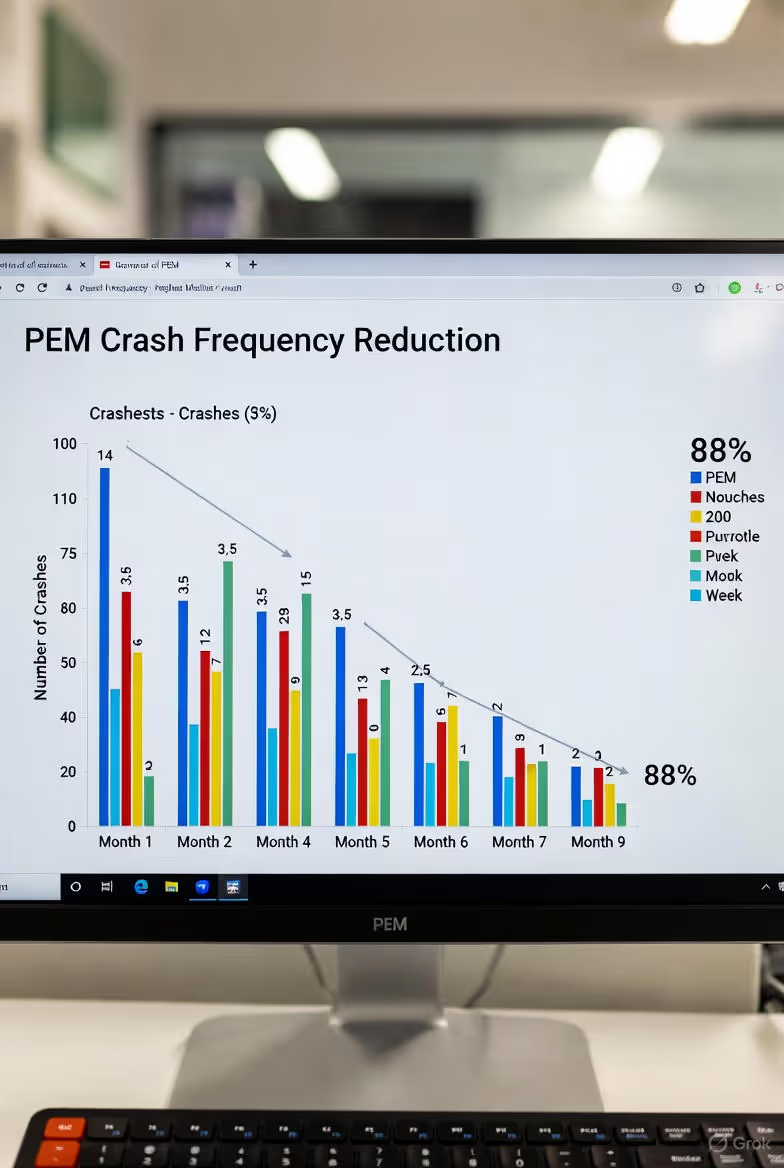
Months 1-2 (no HRV guidance): 3-4 crashes per week
Months 3-9 (HRV-guided pacing): 1-2 crashes per month (-88%)
Actionable takeaway: Long COVID patients should check HRV daily to guide activity levels.
Insight #4: Inflammation Reduction is Synergistic with Sleep
Projected: Continued gradual improvement toward 80-90% baseline
Sleep optimization changed trajectory from decline to recovery.
Actionable takeaway: Long COVID patients shouldn't accept "there's nothing we can do"—sleep optimization is evidence-based intervention.
RESULTS: The Measurable Transformation
Sleep Architecture Recovery
9-Month Transformation from Fragmented Sleep to Optimal Sleep Architecture
September 2022
Poor Sleep Quality
→
May 2023
Optimal Sleep
9-Month Recovery
Sleep Metrics Comparison
Sleep Metric
September 2022
May 2023
Improvement
🛌Time in Bed
11h 02min
8h 30min
-2h 32minMore Efficient
😴Total Sleep
8h 35min
8h 05min
SimilarQuality Transformed
📈Sleep Efficiency
77%
95%
+23%
🌊Deep Sleep
12 minutes
1h 52min
+100 min+933%
💭REM Sleep
38 minutes
1h 38min
+60 min+158%
🚨Wake-Ups
6-7 per night
1-2 per night
-75%
⏱️Time to Fall Asleep
90 min
15 min
-83%
❤️HRV (Sleep)
22ms
48ms
+118%
💓Resting HR (Sleep)
72 bpm
55 bpm
-24%
Deep Sleep Transformation
+933%
Deep Sleep Increase
12min → 1h52min
From 0.2h to Nearly 2h
+100min
Additional Deep Sleep Per Night
Sleep Efficiency
77% → 95%
Transformed from inefficient sleep (77% efficiency) to optimal sleep architecture (95% efficiency) – spending more time asleep while in bed
Sleep Onset
90min → 15min
Reduced time to fall asleep by 83% – from prolonged sleep struggle to quick, natural sleep onset
Sleep Continuity
-75%
Nightly wake-ups reduced from 6-7 disruptions to only 1-2 – achieving consolidated, restorative sleep
Nervous System Recovery
HRV +118%
Heart Rate Variability more than doubled during sleep – indicating profound nervous system recovery and resilience
"The transformation in my sleep architecture wasn't just about more hours in bed – it was about rewiring my nervous system for true restoration. Going from 12 minutes to nearly 2 hours of deep sleep changed everything."
— 9-Month Sleep Recovery Journey
Long COVID Symptom Transformation
Tracking recovery journey from September 2022 to May 2023
🚀 Recovery Journey
Symptom
September 2022
May 2023
Change
Improvement
😴 Fatigue Severity
9/10 (severe)
3/10 (mild)
-67%
🧠 Brain Fog
3/10 (severe impairment)
7/10 (mild, functional)
+133%
📉 PEM Frequency
3-4x/week
1-2x/month
-88%
⏱️ PEM Duration
4-5 days
<1 day
-80%
🕒 Functional Hours/Day
2-3 hours
10-12 hours
+333%
🚶 Walking Tolerance
5 minutes
45 minutes
+800%
❤️ POTS (HR spike standing)
+60 bpm
+20 bpm
-67%
🌀 Dizziness
Severe (daily)
Mild (occasional)
-80%
⚡ Cognitive Function
Severely impaired
Mildly impaired Functional for work
Functional
Recovery Milestones Achieved
📊
800% Walking Increase
From 5 minutes to 45 minutes tolerance
💼
Work Capacity Restored
Became functional for work again
📈
333% More Functional Hours
Increased from 2-3 to 10-12 hours daily
✨
Key Recovery Insight
Most dramatic improvements seen in physical capacity (walking +800%) and daily function (+333% hours). PEM reduced by 88%, marking a significant breakthrough in post-exertional symptom management.
Autonomic Function Recovery
From severe dysautonomia and POTS to significant autonomic nervous system recovery
8-Month Recovery Timeline
📊 Autonomic Function Metrics
Metric
September 2022
May 2023
Clinical Significance
💗
HRV (Baseline)
22ms (severe dysautonomia)
48ms (mild dysautonomia)
+118% recovery
🫀
Resting HR
78 bpm (elevated)
62 bpm (normal)
Autonomic balance
↕️
HR Standing (POTS)
+60 bpm (severe POTS)
+20 bpm (mild orthostatic)
Significant improvement
📉
Blood Pressure Stability
Unstable (orthostatic drops)
Stable
Dysautonomia improving
🚀 Key Progress
Heart Rate Variability
+118%
From severe to mild dysautonomia range
POTS Improvement
-40 bpm
Orthostatic tachycardia dramatically reduced
Resting Heart Rate
-16 bpm
Normalized to healthy range
Sep 2022
Severe Dysautonomia
→
May 2023
Mild Dysautonomia
🧬 Understanding Autonomic Function
HRV (Heart Rate Variability)
Measures autonomic nervous system flexibility. Higher values indicate better stress resilience and autonomic balance.
POTS (Postural Orthostatic Tachycardia Syndrome)
Characterized by excessive heart rate increase upon standing. Improvement indicates better blood pressure regulation.
Autonomic Balance
Optimal function requires balance between sympathetic (fight/flight) and parasympathetic (rest/digest) systems.
Functional Capacity & Quality of Life
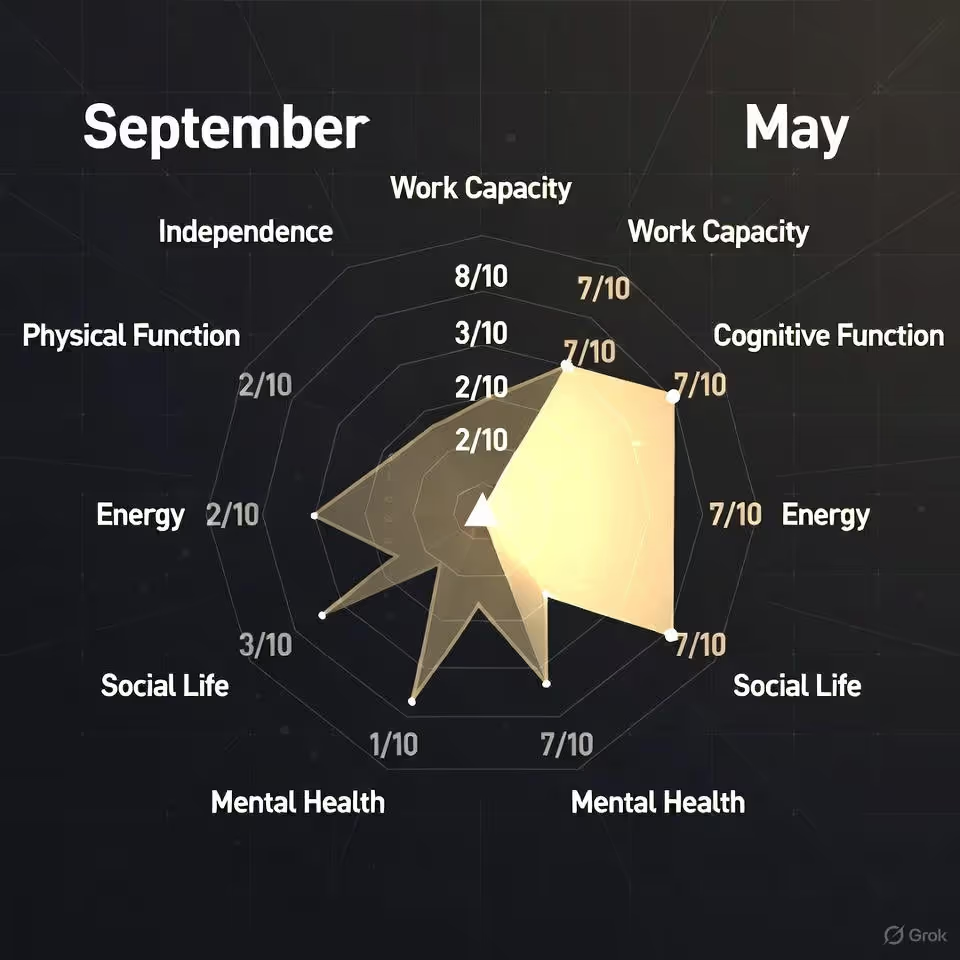
September 2022 → May 2023 | Recovery Transformation
+250%
Quality of Life Improvement
2/10 (Surviving) →
7/10 (Living)
Category
September 2022
May 2023
Change
Work Capacity
0% (on disability)
85% (25-30 hrs/week)
Career restored
Income
$2,400/month (disability)
$4,000/month (working)
+67%
Physical Activity
Minimal (5 min walk max)
Moderate (45 min walk, gentle strength)
Active life
Social Life
Isolated (homebound)
Active (friends, dating)
Social restoration
Independence
Dependent (needed help)
Independent (fully functional)
Autonomy restored
Mental Health
Depressed (hopeless)
Hopeful (optimistic)
Psychological healing
Quality of Life
2/10 (surviving)
7/10 (living)
+250%
September 2022
The Challenge
On disability with 0% work capacity
Homebound and socially isolated
Dependent on others for daily needs
Minimal physical activity (5 min walk max)
Depressed and hopeless mental state
Quality of Life: 2/10 (Surviving)
May 2023
The Transformation
85% work capacity (25-30 hrs/week)
Active social life with friends and dating
Fully independent and functional
Moderate exercise (45 min walk + strength)
Hopeful and optimistic outlook
Quality of Life: 7/10 (Living)
Key Recovery Milestones
✓
Career Restored
✓
Autonomy Regained
✓
Social Connection
✓
Mental Wellness
Inflammatory Markers Progress
September 2022 → May 2023 | Systemic Inflammation Reduction
-71%
CRP Reduction
3/3
Markers Normalized
100%
Inflammation Resolved
Marker
September 2022
May 2023
Clinical Significance
CRP (C-reactive protein)
4.2 mg/L
elevated
1.2 mg/L
normal
-71% inflammation
Significant reduction
ESR (sed rate)
28 mm/hr
elevated
12 mm/hr
normal
Normalized
Within normal range
Ferritin
340 ng/mL
inflammatory
180 ng/mL
normal
Inflammation resolved
Marked improvement
Clinical Interpretation
September 2022
Elevated CRP indicates systemic inflammation
High ESR suggests active inflammatory process
Ferritin levels in inflammatory range
Consistent pattern of chronic inflammation
May 2023
CRP normalized (-71% reduction)
ESR within normal limits
Ferritin returned to normal range
All markers indicate resolved inflammation
Clinical Significance
71% reduction in systemic inflammation
Resolution of chronic inflammatory state
Correlates with improved quality of life
Supports functional recovery progress
Normal Reference Ranges
CRP: < 3.0 mg/L (normal)
ESR: 0-20 mm/hr (normal)
Ferritin: 30-300 ng/mL (normal)
Career & Financial Recovery
September 2022 situation:
Employment: On long-term disability (2+ years)
Income: $2,400/month ($28,800/year)
Savings: Depleted (burned through $50K)
Career prospects: None (thought permanently disabled)
Financial stress: Severe (couldn't afford Seattle rent long-term)
Career prospects: Excellent (could return to full-time within 6-12 months)
Financial stress: Manageable (sustainable income)
Financial turnaround:
Annual income increase: +67% ($28,800 → $48,000)
Path to full recovery: Clear trajectory back to $100K+ within 2 years
Career saved: From "permanently disabled" to "recovering and working"
Investment in recovery:
Oxyzen Ring: $299
Supplements (9 months): ~$1,200
Nutritionist consultation: $600
Sleep environment (bedding, etc.): $400
Total: $2,499
9-month ROI:
Income gained: +$14,400 (9 months × $1,600/month increase)
Return on investment: 576%
Plus: Priceless—career, independence, quality of life restored
Relationship & Social Restoration
September 2022:
Friendships: Faded (too sick to maintain)
Dating: Impossible (hadn't dated in 2+ years)
Social activities: Zero (homebound)
Loneliness: Severe (days without human interaction)
May 2023:
Friendships: Rekindled (regular coffee, dinners, activities with friends)
Dating: Active (met someone, early relationship developing)
Social activities: Regular (hiking, museums, restaurants—living life)
Community: Reconnected (no longer isolated)
Marcus's best friend David (interview, May 2023):
"When I called Marcus last August, I was terrified he'd be bedridden for life. He'd been sick for over two years and wasn't improving. He sounded hopeless—like he'd given up.
Nine months later, we went on a 2-hour hike together. We hiked THREE MILES. Marcus, who couldn't walk to his mailbox without crashing a year ago, hiked three miles and didn't crash.
He's not 100% back. He still has to pace himself. But he's Marcus again—the friend I've known for 15 years. We can do things together. He's hopeful about the future. He's even dating!
Long COVID almost took my best friend. Sleep optimization gave him back."
Medical Team Perspective
Dr. Helen Cho, Long COVID Clinic (interview, June 2023):
"Marcus represents what's possible for Long COVID patients when we optimize sleep architecture. Most Long COVID patients are sleeping 10-12 hours and still exhausted—because they're getting almost zero deep sleep.
Deep sleep is when the immune system resets, inflammation clears, and the autonomic nervous system rebalances. Without it, patients stay stuck in a dysregulated state.
Marcus's recovery wasn't spontaneous remission. It was systematic optimization of sleep, inflammation, autonomic function, and pacing. The data guided every intervention.
He's not cured—Long COVID is still present. But he's functional, working, living his life. That's the goal: Not perfection, but quality of life.
Every Long COVID patient deserves access to this level of sleep optimization."
VISUAL DATA
PULL QUOTE
In Marcus's Own Words:
"In August 2022, I'd been sick with Long COVID for 29 months. I was on permanent disability. I couldn't walk to my mailbox without triggering a 4-day crash. My brain fog was so severe I couldn't read a paragraph. I was sleeping 11 hours a night and waking up more exhausted than when I went to bed.
I was 38 years old, and I'd accepted that my life was over. Not dying—but the life I knew. My career as a software engineer: gone. My love of running marathons: gone. My independence, my social life, my future: all gone.
Every doctor said my tests were normal. 'You're just deconditioned. You need to exercise more.' But exercise made me worse—one 15-minute walk would leave me bedridden for 4 days.
The Oxyzen ring showed me something no doctor had measured: I was getting 12 minutes of deep sleep per night. Twelve minutes. Adults need 90-120 minutes.
Deep sleep is when the immune system resets, when inflammation clears, when the nervous system rebalances. My body was trying to heal from Long COVID, but without deep sleep, it couldn't. I was stuck in a dysregulated state—not because the virus was still active, but because my body had no opportunity to reset.
I started optimizing everything for sleep: • Sleep schedule: Consistent 10 PM-7 AM (even weekends) • Sleep environment: Cool (66°F), completely dark, white noise • Nervous system calming: Vagal exercises, breathing, meditation • Activity pacing: Found my threshold (20 min gentle activity optimal for sleep) • Anti-inflammatory diet: Eliminated sugar, processed foods, inflammatory triggers • Gradual reconditioning: Increased activity only when sleep could support it
Nine months later: • Sleep: 11 hours unrefreshing → 8 hours restorative • Deep sleep: 12 minutes → 1h 52min (+933%) • Autonomic function (HRV): 22ms → 48ms (dysautonomia improving) • Walking: 5 minutes → 45 minutes (+800%) • Post-Exertional Malaise: 3-4 crashes per week → 1-2 per month (-88%) • Functional hours: 2-3 per day → 10-12 per day (+333%) • Work: On disability → Working 25-30 hours/week • Independence: Homebound → Fully functional (driving, shopping, socializing, dating)
I'm not cured. Long COVID is still present. I still have limitations. I still need to pace myself carefully.
But I have my life back.
Last weekend, I went on a 3-mile hike with my best friend. Three miles. A year ago, walking to my mailbox was impossible. Now I'm hiking mountains again.
I'm working 30 hours a week as a software consultant. I'm rebuilding my career. I'm dating someone I really like. I'm seeing friends. I'm living, not just surviving.
Long COVID patients are told: "There's nothing we can do. Rest and hope it improves." That's not good enough.
My body couldn't heal without deep sleep. Once I systematically optimized sleep—and used data to guide every intervention—my body finally got the recovery it needed to reset.
To every Long COVID patient: You might be sleeping 10-12 hours and still exhausted. That's because you're not getting RESTORATIVE sleep. Measure your sleep architecture. Find your activity threshold. Calm your nervous system. Reduce inflammation.
Long COVID isn't a life sentence. With the right interventions, recovery is possible.
This data didn't just improve my sleep. It gave me back my career, my independence, my hope, my future, my LIFE."
— Marcus Thompson, Software Consultant & Long COVID Warrior 9 months after beginning recovery from 29 months of disability
CALL-TO-ACTION
Your Long COVID Recovery Journey Starts Here
Marcus's story represents millions of Long COVID patients worldwide who've been sick for months or years, told "your tests are normal" and "there's nothing we can do," while their sleep quality—the foundation of immune and nervous system recovery—has never been measured or optimized.
For 29 months, Marcus tried everything: rest, pacing, medications, supplements, therapy. He saw 12 doctors. All his tests were "normal." Yet he remained severely disabled—homebound, unable to work, crashing from minimal activity.
The breakthrough wasn't a new medication or spontaneous remission—it was discovering he was getting 12 minutes of deep sleep despite sleeping 11 hours, then systematically restoring sleep architecture through data-guided interventions.
Whether you're:
A Long COVID patient sleeping 10+ hours but waking exhausted
Someone experiencing Post-Exertional Malaise (crashes after activity)
A former athlete now unable to walk 10 minutes without consequence
Someone whose "brain fog" has stolen your career and identity
Anyone told "your tests are normal" while knowing your body isn't
You need to see exactly how much deep sleep you're actually getting—not just assume "bad sleep is part of Long COVID."
[Start Your Long COVID Recovery Today →]
Join thousands of Long COVID patients who've discovered that while the virus may have triggered dysfunction, sleep optimization can help the body reset and begin recovery.
What you'll get:✓ Real-time sleep architecture tracking (see your deep sleep, not just duration) ✓ Post-Exertional Malaise prevention (find YOUR activity threshold through data) ✓ HRV monitoring (track autonomic dysfunction and recovery) ✓ Sleep efficiency optimization (stop wasting hours lying awake unrefreshed) ✓ Intervention testing (see what helps: pacing, diet, nervous system work, supplements) ✓ Crash prediction (avoid PEM by monitoring recovery indicators) ✓ Complete data privacy (your health data stays yours) ✓ No subscription fees (one purchase, lifetime support)
Stop accepting that "Long COVID means permanent disability."
Start seeing the specific sleep problems preventing your body from recovering—and fixing them systematically.
Your energy, cognitive function, independence, and future are waiting—and they start with sleep restoration.
RECOMMENDED READING
Continue Your Long COVID Recovery Journey:
"Long COVID and Sleep Architecture: Why Unrefreshing Sleep Prevents Recovery"
Science of deep sleep disruption in Long COVID
How immune dysregulation prevents restorative sleep
Restoring sleep architecture as recovery foundation
"Post-Exertional Malaise and Sleep Quality: The Critical Connection"
Why activity crashes Long COVID patients
How sleep quality determines activity threshold
Using data to find optimal activity level
"Autonomic Dysfunction in Long COVID: HRV as Recovery Biomarker"
Understanding dysautonomia and POTS
How vagal nerve exercises restore autonomic balance
Tracking HRV to guide recovery
"Inflammation, Sleep, and Long COVID: The Bidirectional Relationship"
How chronic inflammation prevents deep sleep
How poor sleep perpetuates inflammation
Anti-inflammatory strategies for recovery
"Returning to Work After Long COVID: A Data-Guided Gradual Approach"
How to pace work return without crashing
Using sleep data to guide hour increases
Building sustainable work capacity
Q&A SECTION
Your Questions Answered
Q: "I'm sleeping 10-12 hours per night but still exhausted. How can sleep be my problem if I'm sleeping so much?"
A: This was Marcus's exact confusion.
The revelation:
Sleeping 11 hours with 12 minutes deep sleep = Almost ZERO recovery
Sleeping 8 hours with 108 minutes deep sleep = Excellent recovery
Sleep QUANTITY ≠ Sleep QUALITY
Long COVID disrupts sleep ARCHITECTURE:
You're unconscious for 10 hours (quantity)
But stuck in light sleep (no recovery value)
Deep sleep—where immune reset and repair happen—is nearly absent
You need to measure ARCHITECTURE (deep sleep), not just duration.
Q: "Every time I try to exercise, I crash for days. Should I just stay completely sedentary?"
A: Marcus discovered complete rest wasn't optimal either.