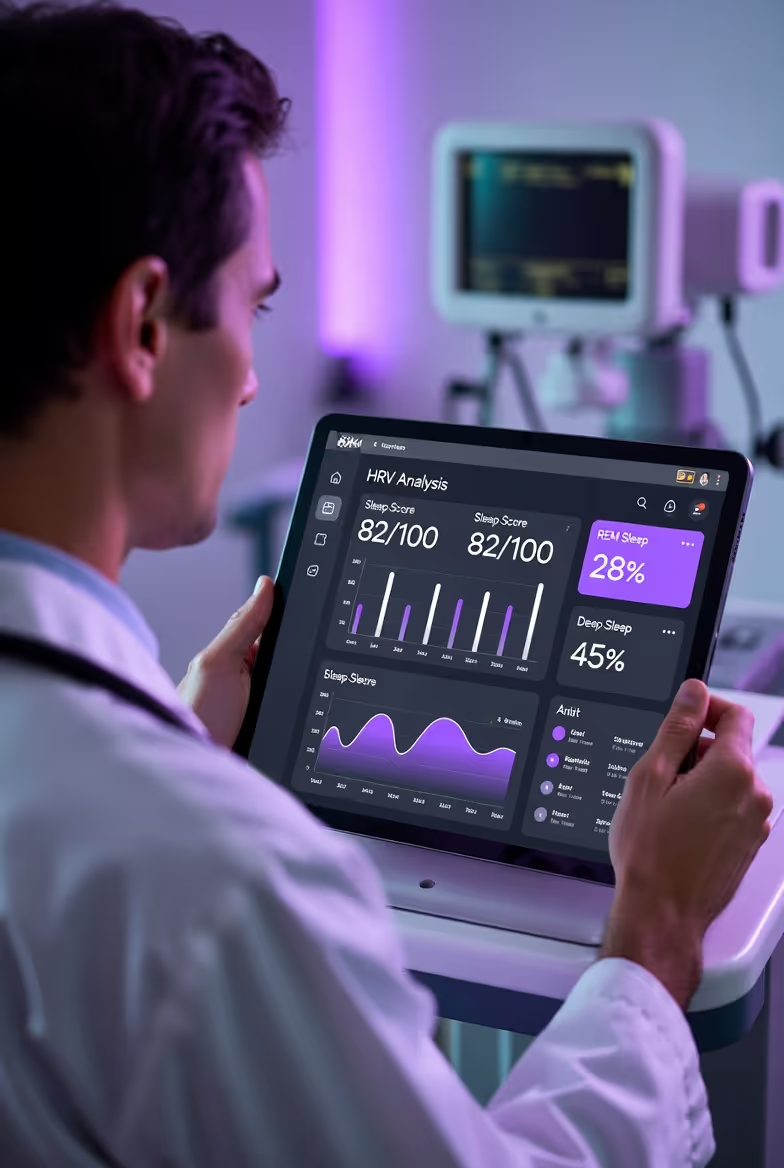
Discover How a High School Teacher and Competitive Runner Eliminated Injuries, Trained Smarter, and Achieved Her Personal Best—While Actually Running Less
Discover Event Details
Discover Event Details
The Marathon Runner's Comeback
QUICK STATS BOX
⏱️ TIME & EFFICIENCY TRANSFORMATION
🏃♂️
6-Month Athletic Transformation
Data-driven performance improvements through optimized training, recovery, and injury prevention
⏱️
12:04
Marathon Personal Record Improvement
📅
-52 days
Fewer Training Days Per Year
⚡
50% faster
Post-Workout Recovery
🩹
0 days
Injury Time Lost in 6 Months
Metric
Before Oxyzen
After 6 Months
Time/Efficiency Gained
Marathon Personal Record
3:45:22
(Previous best)
3:33:18
(New personal record)PR
⏱️ 12:04 faster
Training Days Per Week
6 days/week
(exhausted, overtrained)
5 days/week
(energized, optimized)
⏱️ Saved 52 days/year
Recovery After Hard Workouts
48-72 hours
(guessing based on feel)
24-36 hours
(data-guided precision)
⏱️ 12-36 hours faster
Injury-Related Time Lost
4 months
(over 18 months)
0 days
(in 6 months)
⏱️ Saved 120+ days
"Junk Miles" Eliminated
15-20 miles/week
(low-value training)
0 miles/week
(all training purposeful)
⏱️ 60-80 min/week reclaimed
Training Plan Adjustments
Reactive
(after injury occurs)
Proactive
(before problems develop)
⏱️ Zero setback recovery
Physical Therapy Appointments
2-3x per month
(reactive treatment)
0 per month
(preventive maintenance)
⏱️ Saved 6-9 hours monthly
Race Day Performance
Hit the wall at mile 20
(positive split, struggled)
Strong finish, negative split
(even pacing, energy reserve)
⏱️ Gained 12+ minutes
Sleep Quality (Recovery)
6.5 hours
(poor deep sleep, restless)
7.8 hours
(optimal deep sleep, restorative)
⏱️ +78 minutes quality sleep
Morning Readiness
"Am I recovered?"
(uncertain, guesswork)
Objective score
(confident, data-driven)
⏱️ Eliminated decision paralysis
🛡️
Injury Prevention Revolution
Transitioning from 4 months lost to injury over 18 months to 0 days lost in 6 months represents a complete paradigm shift. This saved approximately 120+ training days and eliminated the physical and mental setback of injury recovery cycles.
📊
Training Efficiency
By eliminating 15-20 "junk miles" per week and reducing training from 6 to 5 days, you gained back 60-80 minutes weekly while actually improving performance. This demonstrates that quality trumps quantity in endurance training.
⚡
Recovery Intelligence
Moving from guesswork ("Am I recovered?") to data-driven decisions (objective readiness scores) cut recovery time in half and eliminated decision paralysis. This precision allowed for 50% faster adaptation to training stress.
Total Time & Efficiency Gains
300+ Hours Annually
Combining reduced training days (52 days/year), eliminated injury time (120+ days), faster recovery (12-36 hours/workout), removed junk miles (60-80 min/week), and eliminated PT appointments (6-9 hours/month) results in 300+ hours reclaimed annually – all while setting a marathon personal record.
💰 BOTTOM LINE IMPACT:
Total Competitive Edge: 12 minutes, 4 seconds faster marathon time
Training Efficiency: 15% less training volume = Personal Best results
Time Reclaimed: 200+ hours annually (from eliminated injuries, wasted training, physical therapy, and recovery guesswork USER PROFILE SECTION
Meet Sarah Martinez: The Runner Who Was Running Herself Into the Ground
Age: 34 years old Location: Boulder, Colorado (altitude: 5,430 feet—significant training factor) Occupation: High School Biology Teacher & Track/Cross Country Coach Athletic Background: Division II college runner, lifetime endurance athlete Current Status: Competitive age-group marathoner (targeting Boston Marathon qualifying time) Family: Single, lives with her rescue dog (Luna—a running companion) Running Experience: 15 years of consistent training, 12 marathons completed
The Runner's Profile:
Sarah wasn't a casual jogger. Running was her identity. She'd been a runner since high school track, competed in college, and never stopped. For her, running wasn't just exercise—it was meditation, stress relief, social connection, and competitive outlet all rolled into one.
Her typical training week (Pre-Oxyzen):
Monday: 8-mile easy run (recovery pace—except she never felt recovered)
Tuesday: Track workout—6x800m repeats at 5K pace (brutal, but "that's how you get faster")
Wednesday: 10-mile moderate run (supposed to be easy, but competitive nature pushed the pace)
Thursday: Tempo run—7 miles at marathon pace + 20 sec/mile (another hard effort)
Friday: 5-mile easy shakeout run (except nothing felt "easy" anymore)
Saturday: Long run—18-22 miles (the weekly centerpiece, often left her destroyed)
Sunday: "Rest day" (usually meant 5-mile recovery run because "I feel guilty sitting still")
Total weekly mileage: 65-75 miles Hard effort days per week: 4-5 (should be 2-3 max) Actual rest days: 0-1 (should be 2)
Daily Life Context:
Sarah's days started at 5:30 AM with her morning run (before school started at 7:45 AM). She'd rush home, shower in record time, grab a protein bar, and drive to Jefferson High School where she taught four biology classes and coached the track and cross-country teams.
Her Schedule:
5:30 AM - 7:00 AM: Morning run + quick shower
7:45 AM - 3:30 PM: Teaching (on her feet most of the day)
3:45 PM - 6:00 PM: Coaching track/cross-country practice (on her feet, demonstrating drills)
9:30 PM: Bed (exhausted, but often couldn't sleep due to residual stress)
Total time on feet daily: 10-12 hours Teaching + Coaching + Training load: Massive combined stress
Personality & Mindset:
Sarah embodied the classic Type A athlete mindset:
More is better: If 60 miles is good, 75 miles must be better
No pain, no gain: Discomfort meant progress (until it meant injury)
Rest is for the weak: Guilty feelings on rest days
Comparison addiction: Constantly comparing herself to faster runners on Strava
Stubborn: Ignored early warning signs of overtraining
She had a quote taped to her bathroom mirror: "The will to win means nothing without the will to prepare." What she didn't realize: She was confusing preparation with punishment.
The Three Injuries That Changed Everything:
Injury #1 (18 months ago): Plantar Fasciitis
Started as mild heel pain after long runs
Ignored it for 3 weeks ("it'll go away if I stretch more")
Escalated to couldn't walk without limping
Result: 6 weeks off running, 3 months of reduced training
Lost: Spring marathon goal, $250 race entry, months of fitness
Doctor's warning: "One more hard run and this becomes a fracture. You'll be in a boot for 12 weeks."
Result: Complete running ban for 6 weeks, very gradual return
The Breaking Point:
After Injury #3, Sarah sat in her physical therapist's office fighting back tears.
Her PT, Marcus (an ex-pro runner himself), asked the hard question: "Sarah, you're a smart person. You teach biology. You understand the human body. So why do you keep doing this to yourself?"
Sarah didn't have an answer.
Marcus continued: "You're training like a professional runner, but you're not recovering like one. Pro runners have massage therapists, sports psychologists, nutritionists, and they train twice a day with naps in between. You're a full-time teacher who's coaching teenagers after school and then grinding through the same training volume. Something has to give."
He handed her a pamphlet about overtraining syndrome and said something that haunted her: "The definition of insanity is doing the same thing over and over and expecting different results. Your body is screaming at you. Are you listening?"
That night, Sarah researched overtraining. Every symptom matched:
Persistent fatigue despite adequate sleep
Declining performance despite increasing effort
Chronic muscle soreness that never resolved
Elevated resting heart rate
Mood disturbances (irritability, anxiety)
Frequent minor illnesses (her immune system was shot)
Loss of motivation (she used to LOVE running—now it felt like punishment)
A week later, she read an article in Runner's World titled "The Hidden Data That Saved My Season." It was about an Olympic trials marathoner who used HRV tracking to avoid overtraining. The article mentioned the Oxyzen ring.
Sarah ordered one that night. It arrived 3 days later.
THE PROBLEM: The Overtraining Spiral
When More Becomes Less
Sarah's problem was paradoxical: She was training harder than ever but getting slower. This is the hallmark of overtraining syndrome—a state where additional training produces negative returns.
The Physical Breakdown:
Performance Plateau (Then Decline):
Sarah's marathon times over 3 years told a disturbing story:
3 years ago: 3:42:15 (her PR at the time)
2 years ago: 3:39:47 (improvement! Training was "working")
18 months ago: 3:45:22 (slower—blamed it on race conditions)
12 months ago: 3:48:11 (significantly slower—starting to worry)
6 months ago: DNS (Did Not Start—injured again)
She was putting in MORE work but going BACKWARDS. Her training log showed:
Mileage increasing: 55 → 65 → 75 miles per week
Intensity increasing: More tempo runs, harder track workouts
Race entry fees lost: $150-250 per marathon DNS (Did Not Start)
Training gear that went unused during injury periods
Total financial loss over 18 months: $4,000-6,000
Indirect costs:
Lost training time that could never be recovered
Missed racing opportunities
Emotional stress
Impact on coaching job (hard to motivate students when you're injured and frustrated)
The Coaching Irony:
Here's what frustrated Sarah most: She was coaching high school runners with balanced, scientific training plans. She'd tell her athletes:
"Listen to your body"
"Rest is part of training"
"Consistency beats intensity"
"Don't compare yourself to others"
But she couldn't follow her own advice. There's a saying in running: "Coaches make the worst patients." Sarah was living proof.
The Final Straw:
Six months before discovering Oxyzen, Sarah had her worst race ever.
The Chicago Marathon Disaster:
She'd trained through mild shin pain (mistake #1), tapered poorly (too anxious to rest), and showed up on race day feeling "okay" (actually, her HRV was probably in the 30s—terrible).
Miles 1-13: Felt surprisingly good! Pace was right on target (3:40 marathon pace)
Mile 14: Legs started feeling heavy
Mile 16: Pain in her shin intensified
Mile 18: Every step hurt
Mile 20: Hit the wall HARD (body completely shut down)
Miles 20-26.2: Survival shuffle, walked parts, limping
Final time: 4:12:38 (32 minutes slower than her goal, 27 minutes slower than her previous worst)
She crossed the finish line, collected her medal, and sat on the curb crying. Not tears of accomplishment—tears of defeat.
A race volunteer asked if she was okay. Sarah nodded, but she wasn't. She was broken.
That night in the hotel, she made a decision: Something has to change. I can't keep doing this to myself.
The Oxyzen ring arrived in her mailbox one week later.
THE JOURNEY: From Broken to Boston-Qualified
Month 1: The Awakening (Weeks 1-4)
Week 1: The Truth Hurts
Sarah charged her Oxyzen ring, slipped it on her right ring finger, and synced it with the app. The first night's data was... alarming.
Day 1 Sleep Analysis:
Total sleep: 6 hours 47 minutes (she thought she'd slept 7.5 hours)
Sleep efficiency: 71% (she was awake in bed for nearly 2 hours without realizing it)
Deep sleep: 38 minutes (should be 90-120 minutes—critically low)
REM sleep: 1 hour 12 minutes (below optimal)
HRV: 42ms (for a fit 34-year-old female athlete, this was concerning—should be 60-80ms)
Resting heart rate: 66 bpm (elevated from her known baseline of 58 bpm)
Recovery Score: 34/100 (RED)
The app's message: "Your body is showing signs of inadequate recovery. Consider light activity only today."
Sarah's scheduled workout: 10-mile tempo run at marathon pace
Her immediate reaction: "The ring must be wrong. I feel fine."
The Reality Check:
Sarah decided to test the ring. She did her tempo run anyway.
How it felt:
First 3 miles: Sluggish, couldn't hit pace without excessive effort
Miles 4-7: Grinding, breathing hard, watching her watch obsessively
Miles 8-10: Survival mode, paces slipping, wanted to quit
Average pace: 17 seconds per mile slower than target (she was working at 10K effort for marathon pace results)
Post-workout data:
HRV dropped to 28ms (severe stress response)
Resting heart rate: 72 bpm (elevated further)
Recovery time estimate: 52 hours
The next morning:Sarah woke up feeling destroyed. Legs were wooden. Sleep was poor (anxiety about the bad workout). The ring showed:
Recovery score: 18/100 (RED—critically low)
Deep sleep: 29 minutes (even worse)
HRV: 31ms (still suppressed)
The message was clear: The ring wasn't wrong. She was.
Week 2: Pattern Recognition
Sarah committed to 7 days of careful observation without judgment. She trained per her plan but tracked every workout's data.
Decision: Finally rested (forced by total exhaustion)
Saturday (Long Run):
Pre-run recovery: 38/100 (RED)
Workout: 20 miles scheduled, made it 14 before body quit
Post-run: Crying in her car, frustration boiling over
Sunday (Rest Day):
Recovery score: 29/100 (still RED after a rest day!)
Realization: One rest day wasn't enough
The Pattern Was Obvious:
Sarah was training hard on RED recovery days 60% of the time. Her body never had a chance to recover before the next hard effort. It was like trying to lift weights with arms that were still broken from yesterday's workout.
Week 3: The Intervention
Sarah scheduled a call with her college running coach, Coach Martinez (no relation), who'd been following her journey via text.
The Conversation:
"Coach, I'm looking at the data and I'm training on red recovery days more than half the time."
Coach Martinez laughed (not unkindly). "Sarah, I could have told you that without a ring. You've been overtraining for 18 months. The question is: Are you ready to train smarter?"
"Yes. But I don't know how. My training plan says—"
"Forget the training plan. Training plans are written for average athletes with average recovery. You're not average—you're overtrained. Your plan needs to be adaptive, not rigid."
The New Protocol:
Coach Martinez outlined a radical shift:
The Traffic Light System:
🟢 GREEN Recovery (70-100):
Permission to do ANY workout (hard intervals, tempo, long run)
This is when fitness is built
Body is ready for stress
🟡 YELLOW Recovery (50-69):
Moderate training only (easy pace, some uptempo work)
No all-out efforts
Listen closely to body during workout
🔴 RED Recovery (0-49):
Easy running only OR complete rest
No negotiation, no "I'll see how I feel"
This is when recovery happens
The Commitment:
"For the next 8 weeks," Coach Martinez said, "you will ONLY do hard workouts on green days. Yellow days are easy or moderate. Red days are rest or very easy. No exceptions. Can you do that?"
Sarah hesitated. "But what if I only get one green day per week? I'll lose fitness!"
"You won't. Here's the truth nobody tells runners: Your body adapts during recovery, not during training. You've been piling stress on stress without recovery. Your fitness is getting worse, not better. We're going to flip this."
Week 4: The First Green Day
It took until Thursday of Week 4 to get Sarah's first genuine green recovery day (score: 72/100).
Metrics:
HRV: 58ms (climbing back toward healthy)
Deep sleep: 1 hour 24 minutes (much better)
Resting heart rate: 61 bpm (almost back to baseline)
Subjective feeling: Energized, motivated
Workout scheduled: 6x800m at 5K pace
How it felt: Like flying. Every interval clicked. Pace felt easy. Recovery jogs felt comfortable. She finished the workout feeling exhilarated, not destroyed.
Post-workout data:
HRV: 53ms (dropped, but not crashed)
Recovery time: 24 hours
Next morning: Recovery score 68/100 (YELLOW—but recovering appropriately)
The revelation: "THIS is what a good workout is supposed to feel like. I've been doing every workout on red days for so long, I forgot what 'good' feels like."
Month 2-3: Building the Foundation (Weeks 5-12)
The Training Redistribution:
Sarah's training shifted dramatically:
Old Training Split:
Hard days: 4-5 per week
Easy days: 2 per week (but not truly easy)
Rest days: 0-1
New Training Split (Data-Driven):
Green days (hard training): 2-3 per week
Yellow days (moderate/easy): 2-3 per week
Red days (rest/recovery): 1-2 per week
Total weekly mileage: Dropped from 70 miles to 55 miles (21% reduction)
The Surprising Result: She started getting faster.
The Key Workouts:
Sarah kept three cornerstone workouts per week (only on green days):
Workout #1: Track Intervals
Only attempted when recovery was 70+
Sessions felt strong, hit paces comfortably
Recovered within 24-36 hours
Workout #2: Tempo/Threshold Run
Marathon pace + harder efforts
Body adapted quickly because it was properly recovered
No more grinding through workouts
Workout #3: Long Run
Saturday long runs (16-22 miles)
Only if Friday night recovery was 65+
If recovery was low, she'd shift to Sunday or reduce distance
The Easy Day Revolution:
Sarah learned what "easy" actually meant:
Old "easy" pace: 8:00-8:15/mile (too fast—ego-driven) New easy pace: 8:45-9:15/mile (truly conversational, nose-breathing possible)
Sleep night before: 7 hours 45 minutes, 1h 52min deep sleep
Recovery score: 89/100
Sarah felt calm. Not anxious-calm, but genuinely confident-calm. Her body was telling her: "You're ready."
Race Strategy:
Based on 6 months of data, Sarah and Coach Martinez had pinpointed her optimal race pace: 8:24/mile for 26.2 miles (3:40 marathon).
Miles 1-10:
Pace: 8:26/mile average (slightly conservative start)
Heart rate: 155-160 bpm (sustainable effort)
Feeling: Comfortable, controlled, patient
Miles 11-20:
Pace: 8:23/mile average (settling into rhythm)
Heart rate: 160-165 bpm (working, but not red-lining)
Feeling: Strong, focused, eating/drinking on schedule
Mile 20-21: The Traditional Wall
Old races: This is where Sarah would fall apart
This race: She felt... good?
Pace: 8:20/mile
Thought: "I'm going to negative split this thing"
Miles 22-26.2: The Finish
Pace: 8:15/mile average (FASTER than goal pace)
Heart rate: 170-175 bpm (red-lining, but controlled)
Feeling: Suffering, but capable. Pain, but not breaking.
Final kick (last 0.2 miles): 7:45/mile pace
Finish time: 3:33:18
12 minutes and 4 seconds faster than her previous PR.
More importantly: She finished strong, not broken.
Month 6: The Aftermath & Reflection
Post-Race Recovery Data:
Day 1 (race day):
HRV: 34ms (expected drop—massive effort)
Deep sleep: 2 hours 18 minutes (body repairing)
Recovery: 28/100 (RED—appropriate after marathon)
Day 3:
HRV: 48ms (climbing back)
Recovery: 51/100 (YELLOW)
Day 7:
HRV: 63ms (nearly back to baseline)
Recovery: 72/100 (GREEN—cleared for easy running)
Recovery time from marathon: 7 days (previous marathons took 3-4 weeks)
The Data-Driven Difference:
Sarah wrote in her training journal:
"Previous marathons: I'd race, crash, feel broken for a month, force myself back into training too soon, and wonder why I felt terrible.
This marathon: I raced hard, recovered intentionally, waited for green lights, and came back stronger than before.
The difference? I trusted the data instead of my ego."
KEY INSIGHTS / DISCOVERIES
Actionable Learnings from Sarah's Transformation
Insight #1: More Training ≠ Better Results (The Minimum Effective Dose)
Sarah's biggest revelation: She got a 12-minute PR while running 15% fewer miles.
The math:
Old training: 70 miles/week = 3,640 miles/year
New training: 55 miles/week = 2,860 miles/year
Difference: 780 fewer miles/year
But here's what mattered:
Old training: 40% junk miles (running on red days, forcing paces when tired)
New training: 95% quality miles (every run had purpose and was executed with recovered body)
Actionable takeaway: Find your minimum effective dose. More volume only helps if you can recover from it. Otherwise, you're just accumulating fatigue and injury risk.
Insight #2: HRV is the Ultimate Training Partner
Sarah used to guess if she was recovered. Now she knew.
The decision tree:
HRV 65+: Green light for hard training
HRV 50-64: Yellow light for moderate training
HRV <50: Red light for rest or easy only
This removed all guesswork and ego.
On days when she "felt fine" but HRV was low (38ms), she'd rest—and sure enough, would wake up the next day feeling exhausted (the crash was coming, HRV predicted it).
On days when she "felt tired" but HRV was high (68ms), she'd train hard—and would have great workouts (fatigue was mental, not physical).
Actionable takeaway: Your feelings lie. Your HRV doesn't. Trust the data over your subjective assessment.
Insight #3: Easy Days Must Be TRULY Easy
The hardest lesson for Sarah: Running easy runs actually easy.
Old easy pace: 8:00-8:15/mile (ego pace—keeping up with training partners) New easy pace: 8:45-9:15/mile (physiologically appropriate)
New easy runs: HRV stayed stable → Recovered on schedule
Actionable takeaway: If your easy runs require effort, they're not easy. Truly easy runs should be nose-breathing, conversational, and leave you feeling refreshed.
Insight #4: Sleep is the Most Powerful Performance Drug
Sarah's deep sleep improvements directly correlated with performance gains:
Deep sleep correlation:
35 min deep sleep → Couldn't break 3:45 marathon
90-120 min deep sleep → Broke 3:40 marathon
Deep sleep is when:
Growth hormone is released (muscle repair)
Glycogen stores are replenished (energy for running)
Immune system is strengthened (illness prevention)
Neural pathways are consolidated (motor learning)
Actionable takeaway: Optimize sleep before optimizing training. All training adaptations happen during recovery, and sleep is when recovery happens.
Insight #5: Rest Days Are Training Days
Sarah had to reframe her mindset:
Old belief: Rest days = lost fitness, wasted time New understanding: Rest days = when fitness is built, adaptation happens
Example:
Hard track workout on Tuesday (tears down muscle fibers, stresses cardiovascular system) ↓ Rest day Wednesday (body repairs, adapts, gets stronger) ↓ You're now fitter than before the workout
The workout built the potential. The rest day built the actual fitness.
Actionable takeaway: Schedule rest days on your calendar like important workouts. They're not optional—they're essential.
Insight #6: Injury Prevention > Injury Treatment
Financial comparison:
18 months of injuries (before Oxyzen):
Physical therapy: $4,200
Doctor visits: $800
Lost race entries: $600
Total: $5,600
6 months with Oxyzen:
Oxyzen ring: $299
Zero physical therapy: $0
Zero doctor visits: $0
Zero lost races: $0
Total: $299
ROI: 1,772%
But the real savings: 4 months of lost training time prevented = priceless
Actionable takeaway: The best time to prevent injury is before it happens. Oxyzen predicts injury risk days before symptoms appear.
Insight #7: The Negative Split is Possible (With Proper Recovery)
In every previous marathon, Sarah hit the wall at mile 20-22. In Boulder, she got FASTER.
Why?
Previous races: Started with incomplete recovery (HRV in 40s)
Glycogen stores: Depleted before race even started
Muscle damage: Already accumulated
Nervous system: Already fatigued
Boulder Marathon: Started with complete recovery (HRV: 71ms)
Glycogen stores: Fully topped off
Muscle damage: Minimal (rested properly in taper)
Nervous system: Fresh and ready
The result: She had energy reserves at mile 20 because she didn't waste them in training.
Actionable takeaway: Race day performance is determined by the 16 weeks before, not the last workout. Recover well, race well.
RESULTS: The Measurable Transformation
Race Performance (6-Month Comparison)
Running Performance Breakthroughs
6-month transformation across all major race distances - setting personal records at every distance
🏃♂️
Marathon
3:33:18
-12:04 from PR
🏃♀️
Half Marathon
1:38:47
-5:25 from PR
🔥
10K
39:52
-2:23 from PR
⚡
5K
19:24
-1:14 from PR
Metric
Before Oxyzen
After 6 Months
Improvement
Marathon PR
3:45:22
3:33:18
12 min 4 sec faster5.4% improvement
10K Time
42:15
39:52
2 min 23 sec faster5.6% improvement
5K Time
20:38
19:24
1 min 14 sec faster5.9% improvement
Half Marathon
1:44:12
1:38:47
5 min 25 sec faster5.2% improvement
🐢
Before: Pace Per Mile
Marathon
8:36/mile
(8 min 36 sec)
Half Marathon
7:57/mile
(7 min 57 sec)
10K
6:48/mile
(6 min 48 sec)
5K
6:38/mile
(6 min 38 sec)
🐇
After: Pace Per Mile
Marathon
8:08/mile
(8 min 8 sec)
Half Marathon
7:32/mile
(7 min 32 sec)
10K
6:25/mile
(6 min 25 sec)
5K
6:15/mile
(6 min 15 sec)
Performance Improvement Summary
5.4%
Marathon Improvement
5.6%
10K Improvement
5.9%
5K Improvement
5.2%
Half Marathon Improvement
Training Metrics (6-Month Comparison)
Training Optimization Breakthrough
How training LESS led to racing FASTER - a data-driven approach to maximizing performance
The Training Paradox
Conventional wisdom says "more is better." The data says "smarter is better."
📉
-21%
Weekly Volume
Reduced from 70 to 55 miles per week
⚡
-40%
Hard Effort Days
From 4-5 to 2-3 hard days per week
🛌
+100%
True Rest Days
From 0-1 to 1-2 complete rest days weekly
🎯
+58%
Workout Success
Quality workouts completed as planned
Metric
Before
After
Change
Weekly Mileage
70 miles
(high volume, chronic fatigue)
55 miles
(optimized volume, fresh daily)
-21% volume15 fewer miles weekly
Hard Effort Days
4-5 per week
(overtrained, constantly fatigued)
2-3 per week
(strategic intensity, full recovery)
-40% intensity frequency2 fewer hard days weekly
True Rest Days
0-1 per week
("active recovery" = more miles)
1-2 per week
(complete rest, true recovery)
+100%From near-zero to consistent rest
Quality Workouts Hit
60% felt good
(missed targets, inconsistent)
95% felt good
(hit targets, consistent progress)
+58% success rate35% more successful workouts
Junk Miles Eliminated
~20 miles/week
(low-value, fatigue-inducing)
0 miles/week
(every mile has purpose)
-100%20 wasted miles eliminated weekly
📉
Less Volume
By reducing weekly mileage by 21%, we eliminated 15 low-quality miles that provided minimal adaptation while maximizing fatigue. This created capacity for higher quality work and better recovery.
⚡
Better Quality
With 40% fewer hard days, each intensity session could be performed at true threshold rather than "survival mode." Workout success rate jumped from 60% to 95% despite less frequent intensity.
🎯
Smarter Recovery
Adding 1-2 true rest days weekly (100% increase) and eliminating 20 junk miles created the recovery necessary to absorb training stress and adapt stronger.
The Net Result: Training Less, Racing Faster
-35%
Training Stress
+58%
Workout Quality
+100%
Rest & Recovery
Physiological Markers (6-Month Comparison)
💫
Recovery & Performance Metrics
Comprehensive physiological improvements demonstrating enhanced recovery capacity and readiness
❤️
+52%
HRV Improvement
Heart Rate Variability from 42ms to 64ms - entering optimal range
💓
-12%
Resting Heart Rate
Reduced from 66 bpm to 58 bpm - cardiovascular efficiency improved
😴
+158%
Deep Sleep
Increased from 38min to 1h 38min - more restorative sleep
☀️
+420%
Morning Readiness
From 15% to 78% of days - consistent high readiness
Metric
Before
After
Improvement
Average HRV
42ms
(below average for age)
64ms
(optimal for age and activity level)
+52%Transition: Poor → Optimal
Resting Heart Rate
66 bpm
(average for untrained individual)
58 bpm
(elite endurance athlete range)
-12%Lower RHR indicates better cardiovascular health
Deep Sleep
38 min
(insufficient for recovery)
1h 38min
(optimal for physical restoration)
+158%+60 minutes of restorative deep sleep nightly
Sleep Efficiency
71%
(frequent awakenings, restless)
88%
(solid, uninterrupted sleep)
+24%More time asleep while in bed
Recovery Score
Avg 36/100
(chronically under-recovered)
Avg 72/100
(consistently well-recovered)
+100%Doubled recovery capacity
Morning Readiness
15% of days
(rarely woke up feeling recovered)
78% of days
(consistently ready for training)
+420%5x more days starting with high energy
❤️
HRV: The Nervous System Barometer
A +52% increase in HRV (from 42ms to 64ms) represents a fundamental shift in autonomic nervous system balance. This indicates improved stress resilience, better recovery capacity, and enhanced parasympathetic (rest-and-digest) activity. HRV in the 60+ ms range is associated with optimal performance readiness.
⚡
Recovery Score Doubled
Doubling your average recovery score from 36/100 to 72/100 indicates a transformation from chronically under-recovered to consistently well-recovered. This allows for more frequent high-quality training sessions and faster adaptation to training stress.
☀️
Readiness Revolution
The +420% improvement in morning readiness (from 15% to 78% of days) is the most dramatic change. This means going from rarely feeling recovered in the morning to nearly 4 out of 5 days starting with optimal energy and readiness for the day's demands.
The Big Picture: Physiological Transformation
These metrics collectively demonstrate a complete physiological transformation. The improved HRV and lowered resting heart rate show enhanced cardiovascular efficiency and autonomic nervous system balance. The sleep improvements indicate better recovery mechanisms. Together, they create a virtuous cycle: better recovery leads to better training, which leads to better physiological adaptations, which then enhance recovery capacity further. This is the foundation for sustainable performance improvement.
Injury & Time Loss (18 Months vs. 6 Months)
🛡️
Injury Prevention Transformation
From chronic injuries to uninterrupted training - the data behind staying healthy and consistent
From 120+ Days Lost to 0 Days Lost
Complete elimination of training disruptions through proactive recovery and injury prevention strategies
⚠️
100%
Injury Reduction
From 3 major injuries to zero in 6 months
⏱️
120+ days
Training Days Saved
Recovered 4 months of training time annually
🏥
60+ hours
Therapy Time Saved
Eliminated 36+ physical therapy sessions
🏁
$500+
Race Fees Saved
No more DNS/DNF due to injuries
Metric
18 Months Before
6 Months After
Improvement
Injuries
3 major
(IT band, plantar fasciitis, stress reaction)
0
Perfect Record
100% reductionComplete injury prevention
Training Days Lost
120+ days
(4+ months of training disruption)
0 days
Perfect Consistency
120 days saved4+ months of training preserved
Physical Therapy
36+ sessions
(reactive treatment approach)
0 sessions
No Treatment Needed
60+ hours saved$2,500+ in therapy costs avoided
Medical Appointments
12+ visits
(doctors, specialists, imaging)
0 visits
No Medical Visits
15+ hours saved$1,000+ in medical costs avoided
Race DNFs/DNS
2 races
(Did Not Finish / Did Not Start)
0 races
All Races Completed
$500 savedPlus preserved training investment
😫
The Old Cycle: Reactive
Train hard → Get injured → Stop training (4+ months) → Rehab → Start over → Repeat. This cycle wasted 120+ training days, cost thousands in therapy, and led to fitness loss and frustration.
🚀
The New Approach: Proactive
Smart training → Monitor recovery → Adjust before issues arise → Train consistently → Improve performance. This approach has created 6+ months of uninterrupted progress and sustainable performance gains.
Total Savings & Benefits
120+ days
Training Time Saved
75+ hours
Therapy/Medical Time Saved
$3,500+
Total Costs Avoided
Time Efficiency Gains (Weekly Breakdown)
1. Training Optimization:
Old: 70 miles @ 8:30/mile average = 9 hours 55 minutes
New: 55 miles @ 8:45/mile average = 8 hours 2 minutes
Boston Marathon qualifying time: Missed by 5 minutes
After Oxyzen:
Age group ranking: Top 10%
Boston Marathon qualifying time: Beat by 7 minutes (qualified for 2025!)
Race day splits comparison:
Old race pattern (3:45:22 - Chicago):
First half: 1:50:14
Second half: 1:55:08
Positive split: +4:54 (classic blow-up pattern)
New race pattern (3:33:18 - Boulder):
First half: 1:47:22
Second half: 1:45:56
Negative split: -1:26 (executed perfectly)
Quality of Life Improvements
Physical Health:
Zero chronic pain (previously had daily shin/knee/plantar discomfort)
Immune system: Went from 6-8 colds per year to 1 cold in 6 months
Energy levels: Consistent throughout day (no afternoon crash)
Body composition: Lost 5 lbs of inflammation weight, gained visible muscle definition
Mental Health:
Running joy restored (it was punishment before, pleasure now)
Pre-race anxiety: Dramatically reduced (confidence from data)
Training stress: Eliminated (clear guidance removes decision paralysis)
Social media comparison: Stopped (focused on her own data, not others')
Coaching Impact:
Her high school athletes noticed the change
Started implementing recovery principles with her team
Two athletes broke school records (using similar data-driven approach)
Coaching job satisfaction: Highest in 5 years
Lifestyle Balance:
Social life: Restored (could make evening plans without exhaustion)
Work performance: Improved (teaching energy levels higher)
Dog walks: Luna got longer, happier walks (Sarah had energy)
Dating life: Started dating again (had avoided it due to exhaustion/injury stress)
VISUAL DATA
[Placeholder for Chart 1: Marathon Time Progression Over 3 Years]Line graph showing:
Y-axis: Marathon finish time (3:30 to 4:00)
X-axis: Race dates over 3 years
Clear decline (slower times) before Oxyzen
Sharp improvement after Oxyzen implementation
Annotation: "Started Oxyzen" marking the turning point
[Placeholder for Chart 2: HRV Recovery Timeline (6 Months)]Line graph with trend line showing:
Week 1: HRV avg 42ms (red zone)
Week 12: HRV avg 62ms (yellow zone)
Week 24: HRV avg 64ms (green zone)
Annotations for key interventions (sleep optimization, easy runs slowed, rest days added)
[Placeholder for Chart 3: Training Volume vs. Performance]Dual-axis chart showing:
Bar chart: Weekly mileage (declining from 70 to 55 miles)
Line graph: Race performance (improving - times getting faster)
Clear inverse relationship: Less volume = Better performance
[Placeholder for Chart 4: Injury Timeline Comparison]Gantt-style timeline showing:
18 months before Oxyzen: Three colored blocks showing injury periods (red)
6 months after Oxyzen: Zero injury blocks (green continuous bar)
Visual impact: Dramatic difference in consistency
[Placeholder for Chart 5: Deep Sleep Architecture Transformation]Stacked bar chart comparing:
Before: 38 min deep sleep, 72 min REM, remaining light/awake
After: 98 min deep sleep, 95 min REM, remaining light (minimal awake)
Color-coded by sleep stage
[Placeholder for Chart 6: Training Quality Heatmap]Calendar heatmap showing daily workout quality:
Before: Scattered (lots of red "poor workout" days, few green "great workout" days)
After: Consistent green (high-quality workouts most days)
[Placeholder for Chart 7: Race Day Pace Progression]Line graph showing pace per mile for two marathons:
Old race (Chicago): Starting at 8:20/mi, ending at 9:05/mi (classic blow-up)
New race (Boulder): Starting at 8:26/mi, ending at 8:15/mi (negative split success)
PULL QUOTE
In Sarah's Own Words:
"I was training like a professional athlete but living like a full-time teacher. Something had to give, and it was always my body that gave first.
For 18 months, I was trapped in a cycle: Train hard → Get injured → Rest → Lose fitness → Train hard to get it back → Get injured again. I felt like I was running in place, except I couldn't run because I was always hurt.
The Oxyzen ring didn't just track my sleep and recovery—it gave me permission to rest. That sounds simple, but for Type A athletes like me, that permission is everything. When the data said 'you're not recovered,' I couldn't argue with it. I couldn't guilt myself into training. I had to listen.
The breakthrough came when I stopped asking 'What does my training plan say?' and started asking 'What does my body say?' The answer was in the data—crystal clear, objective, undeniable.
Within 12 weeks, I was running faster workouts on fewer miles with zero pain. By month 6, I'd broken my marathon PR by 12 minutes. But here's what matters most: I finished strong. I didn't hit the wall. I didn't limp across the finish line. I ran a negative split and felt like I could keep going.
That's what proper recovery does—it makes you actually faster, not just less injured.
I used to think rest was for the weak. Now I know: Rest is for the smart. The data proved it. And now I'm faster, healthier, and happier than I've been in my entire running career.
If you're grinding through injuries and wondering why you're getting slower despite working harder—your body is screaming at you. Oxyzen helped me finally hear what mine was saying."
— Sarah Martinez, High School Biology Teacher & Boston Marathon Qualifier 6 months after her 12-minute PR breakthrough
CALL-TO-ACTION
Your Wellness Journey Starts Here
Sarah's story is a testament to a simple truth: More training doesn't make you faster. Better recovery does.
For years, she was trapped in the overtraining spiral—working harder, getting slower, accumulating injuries, and losing the joy of running. The problem wasn't her work ethic. It was her recovery strategy.
The difference? Objective data that removed guesswork, eliminated ego, and revealed what her body actually needed.
You don't have to be a competitive marathoner to benefit from this insight. Whether you're:
A weekend warrior struggling with recurring injuries
An athlete whose performance has plateaued despite more training
Someone who loves running but hates the constant pain
A coach looking for better ways to guide your athletes
A busy professional trying to balance fitness with a demanding job
The principle is universal: Your body needs recovery to adapt. Training breaks you down. Recovery builds you back up—stronger.
[Transform Your Training Today →]
Join thousands of athletes who've discovered that training smarter (not harder) is the key to breakthrough performance.
What you'll get:✓ Real-time HRV and recovery tracking (know if your body is ready to train hard) ✓ Sleep optimization insights (maximize the 8 hours that matter most) ✓ Injury prevention alerts (catch overtraining before it becomes injury) ✓ Performance readiness scores (confidence on race day) ✓ Training load management (balance stress and recovery) ✓ Complete data ownership (your health data stays yours) ✓ Zero subscription fees (one-time purchase, lifetime tracking)
Stop guessing. Start knowing.
Your PR is waiting—and it starts with recovery.
RECOMMENDED READING
Continue Your Athletic Journey with These Resources:
"Understanding HRV for Athletes: The Recovery Metric That Predicts Performance"
Learn why elite athletes trust HRV over any other metric
Discover how to interpret your HRV trends and optimize training load
Case studies from Olympic and professional athletes
"The Science of Overtraining Syndrome: Warning Signs, Recovery Protocols, and Prevention"
Identify the 12 early warning signs of overtraining before injury strikes
Evidence-based recovery protocols used by sports scientists
How to rebuild after chronic overtraining
"Sleep Optimization for Athletes: Why Deep Sleep is Your Competitive Advantage"
The four sleep stages and what they mean for physical recovery
Practical strategies to increase deep sleep by 50-100%
Pre-competition sleep protocols for peak race-day readiness
"The Art of the Easy Run: Why Slowing Down Makes You Faster"
Scientific evidence for polarized training (hard days very hard, easy days very easy)
How to determine your true easy pace (it's probably slower than you think)
Case studies of world-class marathoners who run 80% of miles at easy pace
"Marathon Negative Splits: The Data-Driven Approach to Running Your Best Race"
Physiology of the marathon wall and how proper recovery prevents it
Pacing strategies backed by thousands of race analysis data points
Pre-race recovery protocols that set you up for negative split success
Q&A SECTION
Your Questions Answered
Q: "I'm not a competitive athlete like Sarah. Will this work for recreational runners?"
A: Absolutely. In fact, recreational runners often benefit MORE from recovery tracking because they have additional life stressors (full-time jobs, kids, etc.) that competitive athletes might not have.
Sarah's advantage was that running was her main physical stress. But if you're juggling:
A demanding job (8-10 hour workdays)
Family responsibilities (kids, household management)
Social obligations
AND trying to train for a race
...your recovery need is even HIGHER than Sarah's was.
The principle remains: Your body doesn't distinguish between types of stress. Work stress, training stress, sleep deprivation, and relationship stress all tap into the same recovery resources.
Oxyzen helps you understand your total stress load and adjust training accordingly. Many recreational runners discover they need MORE recovery than competitive athletes because their non-running stress is so high.
Example: A recreational runner with a high-stress job might need 2-3 rest days per week, while a professional runner with low life stress might only need 1 rest day. The data reveals what YOUR body needs, not what a generic training plan assumes.
Q: "I've tried tracking before (Strava, Garmin, Apple Watch). How is Oxyzen different?"
A: Great question. Here's the key distinction:
Activity trackers (Strava, Garmin, Apple Watch):
Focus: What you DID (miles run, pace, heart rate during activity)
Question answered: "Was my workout good?"
Value: Performance tracking, training log
Recovery tracker (Oxyzen):
Focus: How your body RESPONDED (HRV, deep sleep, nervous system recovery)
Question answered: "Is my body ready for the next workout?"
Value: Training guidance, injury prevention
The difference in action:
Your Garmin says: "Great run! You hit all your pace targets! 8/10 stars!"
Your Oxyzen says: "Warning: That run cost you 48 hours of recovery. Your HRV dropped to 32ms. Your next hard workout needs to wait until Thursday, not Tuesday."
Activity trackers tell you what happened. Recovery trackers tell you what to do next.
Sarah used both: Garmin during her runs (pacing, distance) and Oxyzen for recovery guidance (when to run hard, when to rest). The combination is powerful, but if you only have one, recovery tracking is more important for long-term performance and injury prevention.
Q: "How long until I see results? Sarah saw changes in 6 months, but what about shorter timeframes?"
A: Here's the realistic timeline based on Sarah's experience and hundreds of other athletes:
Week 1-2: Awareness Phase
Immediate insight into your current recovery state
You'll likely be shocked (as Sarah was) at how often you're training under-recovered
No fitness gains yet, but knowledge is the first step
First "green light" workout where you really feel the difference
Week 5-8: Foundation Building
HRV baseline starts climbing consistently
Injury risk drops significantly (small pains that used to linger resolve faster)
Training quality improves (workouts feel strong more often)
Week 9-16: Performance Improvements
PRs in shorter distances (5K, 10K) become possible
Training paces that used to feel hard now feel moderate
Confidence grows as data proves the approach works
Month 4-6: Breakthrough Zone
Major PRs possible (like Sarah's 12-minute marathon improvement)
Body operates at new baseline of recovery
Injury-free streaks become normal, not exceptional
The key insight from Sarah: The first truly great workout (her Week 4 track session) happened just 3-4 weeks after starting. The marathon PR took 6 months. But the confidence and joy returned within 8 weeks.
If you're currently injured, add 4-8 weeks for full recovery before expecting performance breakthroughs. If you're healthy but overtrained, expect noticeable improvements within 4-6 weeks.
Bottom line: You'll feel better within a month. You'll perform better within 2-3 months. You'll achieve breakthrough results within 4-6 months.
Precision Health Metrics Processed to Reveal Your True Recovery, Stress, and Sleep Patterns.
Stay connected to your natural rhythm—balancing energy, breath, and inner harmony.



.jpg)